February 14, 2015

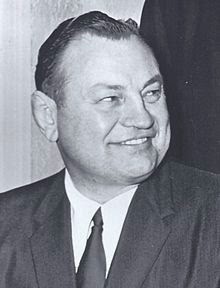
Highlighted Year: Marv Bateman, 1976

Punter, Buffalo Bills


Age: 26
5th season in pro football, 3rd with Bills (2nd complete)
College: Utah
Height: 6’4”   Weight: 214

Prelude:
Twice a consensus first-team All-American in college in 1970 and ‘71, Bateman was chosen by the Dallas Cowboys in the third round of the 1972 NFL draft. Veteran Ron Widby was traded away and Bateman averaged 38.2 yards on 51 punts as a rookie and 41.6 yards on 55 punts in ’73. A poor start in 1974 caused the Cowboys to waive him midway through the season and he was picked up by Buffalo. Bateman’s performance improved and he averaged 43.9 yards for the Bills, up from 36.9 in his first seven games for Dallas. He had a good 1975 season, averaging 41.6 yards.

1976 Season Summary
Appeared in all 14 games
[Bracketed numbers indicate league rank in Top 20]

Punting
Punts – 86 [8]
Most punts, game – 11 at Dallas 11/15
Yards – 3678 [4]
Average – 42.8 [1]
Best average, game – 46.8 (on 5 punts) at New England 11/7
Punts blocked – 1
Longest punt – 78 yards

Awards & Honors:
2nd team All-AFC: UPI

Bills went 2-12 to finish fifth in the AFC East.

Aftermath:
Bateman averaged 39.9 yards on 81 punts in 1977 but was released during the ’78 preseason. An attempt to come back with the 49ers ended with his choosing to retire during the preseason, but he did try one more abortive comeback with the Cardinals in ’80 before leaving the game for good. Over the course of six years, Bateman punted 401 times and averaged 40.9 yards, with 262 punts for a 41.7-yard average coming with the Bills. He was inducted into the Utah Sports Hall of Fame in 1987.

--

Highlighted Years features players who were first-team All-League* selections or league* or conference** leaders in the following statistical categories:

Rushing: Yards, TDs (min. 10)
Passing: Yards, Completion Pct., Yards per Attempt, TDs, Rating
Receiving: Catches, Yards, TDs (min. 10)
Scoring: TDs, Points, Field Goals (min. 5)
All-Purpose: Total Yards
Defense: Interceptions, Sacks
Kickoff Returns: Average
Punt Returns: Average
Punting: Average

*Leagues include NFL (1920 to date), AFL (1926), AFL (1936-37), AAFC (1946-49), AFL (1960-69), WFL (1974-75), USFL (1983-85)

**NFC/AFC since 1970

February 12, 2015

2006: NFC Wins Turnover-Filled Pro Bowl


The AFC-NFC Pro Bowl on February 12, 2006 marked the 27th consecutive game in the series to be played at Aloha Stadium in Honolulu. Coaches were John Fox of Carolina for the NFC and Denver’s Mike Shanahan for the AFC.

There were 50,190 fans in attendance and they sat in a steady rain that began to fall as the game commenced and didn’t let up until the second quarter. The tone for a sloppy first half was set in the opening series when the AFC was twice penalized for false starts. Indianapolis QB Peyton Manning threw to WR Marvin Harrison, a teammate with the Colts, for a 33-yard gain but the AFC ultimately had to punt.

Following a punt by the NFC from its end zone, the AFC had good field position for its next possession but Manning, again intending a pass for Harrison, was intercepted by Chicago CB Nathan Vasher, who returned it 30 yards. Five plays later, the NFC returned the favor when QB Matt Hasselbeck of the Seahawks was picked off by Denver FS John Lynch. The AFC then drove 45 yards in seven plays that featured three runs by RB Edgerrin James of the Colts that covered 22 yards and three completions by Manning, the last to Miami WR Chris Chambers for a 16-yard touchdown. The score was not without controversy as Chambers came down with only one foot in bounds, but it was ruled a catch due to the defender, CB DeAngelo Hall of the Falcons (pictured below), pushing the receiver out of bounds even though it appeared on the replay that Chambers was not touched. Cincinnati’s Shayne Graham added the extra point.


As the game entered the second quarter, the teams exchanged punts. The NFC put together a 10-play, 73-yard series as Atlanta QB Michael Vick completed three passes, the longest to WR Larry Fitzgerald of the Cardinals for 32 yards, although Vick fumbled a third down snap to force a field goal attempt. Arizona’s Neil Rackers was successful from 32 yards to narrow the score to 7-3.

The AFC responded with a 62-yard drive in 11 plays and resulted in a 31-yard Graham field goal. Vick tossed an interception and Manning threw two more as the first half wound down. The third Manning interception of the game was by Dallas SS Roy Williams, who returned it 11 yards and then lateraled to Hall who picked up 57 yards to give the NFC the ball at the AFC 20. The NFC used up 18 of the last 20 seconds of the half to run three plays, the last of which was a Vick throw to Atlanta teammate TE Alge Crumpler for a 14-yard TD. Rackers added the point after and the score was tied at 10-10 at halftime.

Following a trade of punts to start the third quarter, Carolina QB Jake Delhomme passed the NFC into AFC territory, but he fumbled when sacked by DT Casey Hampton of the Steelers and DT Marcus Stroud of the Jaguars recovered at the AFC 49. However, three plays later a pass by Kansas City QB Trent Green was intercepted by LB Derrick Brooks of the Buccaneers (pictured at top), and he returned it 59 yards for a touchdown. Rackers added the PAT and the NFC held a 17-10 lead.

The AFC had to punt following its next possession but got the ball right back thanks to a fumble by WR Santana Moss of the Redskins at the end of a 20-yard run that was recovered by Denver CB Champ Bailey. In a series that extended into the fourth quarter, the AFC went 68 yards in 10 plays as Green completed three passes and RB Larry Johnson, also of the Chiefs, had a 20-yard carry. Green ran for the last yard and a TD and, with Graham kicking the point after, the score was again tied at 17-17.

The NFC drove 59 yards in 13 plays before facing a fourth-and-two situation after a Hasselbeck pass to Atlanta RB Warrick Dunn picked up 14 yards to the AFC four on a third-and-16 play. While the crowd booed the decision to settle for a field goal, Rackers connected from 22 yards to put the NFC back in front by 20-17 with 6:29 remaining to play.

The next two AFC possessions ended with QB Steve McNair of the Titans fumbling the ball away, with Philadelphia LB Jeremiah Trotter recovering the second at the AFC 18. A Vick bootleg on a third-and-17 play picked up the necessary yardage for a first down at the eight, and the series ended with Rackers kicking a 20-yard field goal to make it a six-point game with 1:13 remaining on the clock.

McNair came out passing for the AFC and two completions got the ball to the NFC 49. But the next three throws fell incomplete and McNair was sacked on the last play of the game. The NFC won by a final score of 23-17.

There were 10 turnovers in all, with six by the AFC. The AFC’s turnovers came on four interceptions and two fumbles, and while the NFC fumbled six times, only two led to turnovers in addition to two interceptions. The NFC gained the most total yards (279 to 260) while the AFC had the edge in first downs (19 to 18).

Matt Hasselbeck completed 10 of 17 passes for 85 yards and no touchdowns while giving up one interception. Michael Vick was four of 12 for 69 yards and a TD while also being picked off once and ran for 17 yards on two carries. Carolina WR Steve Smith had 8 catches for 46 yards. RB Tiki Barber of the Giants led the NFC with 33 yards on 11 rushing attempts. Derrick Brooks, playing in his ninth consecutive Pro Bowl, was named MVP of the game due to his key interception for a touchdown.

For the AFC, Peyton Manning was successful on 13 of 26 throws for 139 yards and a touchdown, but gave up three interceptions while Trent Green went to the air 11 times and had five complete for 39 yards and one interception. Kansas City TE Tony Gonzalez had 5 pass receptions for 36 yards and Marvin Harrison gained 74 yards on his four catches. Larry Johnson rushed for 33 yards on 8 carries.

 “It all goes to the players because there isn’t a lot of scheming,” said Coach Fox of the NFC. “They went out and made plays.”

The win for the NFC, which had lost four of the previous five contests, tied the series at 18-18 since it had gone to the AFC vs. NFC format following the 1970 season.

February 10, 2015

Highlighted Year: Michael Jackson, 1996

Wide Receiver, Baltimore Ravens


Age: 27
6th season in pro football & with Browns/Ravens
College: Southern Mississippi
Height: 6’4”   Weight: 195

Prelude:
Jackson, a college teammate of Brett Favre, was chosen by the Browns in the sixth round of the 1991 NFL draft thanks to a recommendation from ex-Cleveland star TE Ozzie Newsome. He started seven games as a rookie and caught 17 passes for 268 yards, impressing with his height and speed but lacking in refinement. Jackson improved to a team-leading 47 catches for 755 yards (16.1 avg.) and seven touchdowns in ‘92 and followed up with 756 yards on 41 receptions for an 18.4-yard average and eight TDs in 1993. A hamstring injury limited him to nine games in 1994, but he bounced back in ’95 with 44 catches for 714 yards (16.2 avg.) and nine touchdowns in an otherwise down season for the team. The franchise moved to Baltimore and was re-named the Ravens for 1996 (with the Cleveland Browns name and history staying behind).

1996 Season Summary
Appeared in all 16 games
[Bracketed numbers indicate league rank in Top 20]

Pass Receiving
Receptions – 76 [17]          
Most receptions, game – 9 (for 150 yds.) vs. Jacksonville 11/24
Yards – 1201 [6]
Most yards, game – 150 (on 9 catches) vs. Jacksonville 11/24
Average gain – 15.8 [15]
TDs – 14 [1, tied with Tony Martin]
100-yard receiving games – 4

Scoring
TDs – 14 [5, tied with Tony Martin]
2-point PATs – 2 [2, tied with Edgar Bennett, Mark Brunell & Keenan McCardell]
Points – 88

Ravens went 4-12 to finish fifth in the AFC Central although ranking second in the NFL in passing yards (3978) and first in the conference in TD passes (34).

Aftermath:
Jackson followed up on his outstanding 1996 season by catching 69 passes for 918 yards (13.3 avg.) and four touchdowns in ’97, slowed by nagging injuries and affected by the offense becoming more ground-oriented. Further injuries limited him to 38 receptions for 477 yards and no TDs in 13 games in 1998, in what was his last season. After failing to catch on as a free agent with Seattle, he retired. Overall, Jackson caught 353 passes for 5393 yards (15.3 avg.) and 46 TDs over the course of eight years with the Browns and Ravens.

--

Highlighted Years features players who were consensus first-team All-League* selections or league* or conference** leaders in the following statistical categories:

Rushing: Yards, TDs (min. 10)
Passing: Yards, Completion Pct., Yards per Attempt, TDs, Rating
Receiving: Catches, Yards, TDs (min. 10)
Scoring: TDs, Points, Field Goals (min. 5)
All-Purpose: Total Yards
Defense: Interceptions, Sacks
Kickoff Returns: Average
Punt Returns: Average
Punting: Average

*Leagues include NFL (1920 to date), AFL (1926), AFL (1936-37), AAFC (1946-49), AFL (1960-69), WFL (1974-75), USFL (1983-85)

**NFC/AFC since 1970

February 9, 2015

1960: Oakland Hires Eddie Erdelatz as First Head Coach


On February 9, 1960 the last of the new American Football League franchises to name a head coach for the inaugural season did so. Eddie Erdelatz, a native Californian who had been successful at Navy for nine years, was introduced as the new head coach of the as yet unnamed Oakland football team.

The 46-year-old Erdelatz (he turned 47 prior to the ’60 season) played college football at St. Mary’s and became an assistant coach there and at the Univ. of San Francisco afterward. Following service in World War II in which he was a naval officer, he was an assistant coach at Navy before first entering the professional ranks as defensive coach for the San Francisco 49ers of the AAFC. He returned to the Naval Academy, this time as head coach, in 1950.

The Midshipmen had posted losing records prior to his arrival, winning a total of just five games in the preceding four years. By 1952, the third year under Erdelatz’s direction, they had a 6-2-1 record, and they didn’t post a losing tally for the remainder of his tenure. Overall, Navy went 50-26-8 under Erdelatz, including wins in the Sugar and Cotton Bowls.

Erdelatz abruptly resigned in April of 1959 due to a dispute that had developed with the athletic department. He sat out the ‘59 season and had recently been passed over for the head coaching position at the Univ. of California, where he was considered a leading candidate, losing out to Marv Levy.

“We’re just getting started and I don’t know any more about this than the next guy,” said Erdelatz, whose signing was viewed as a step toward gaining credibility for the fledgling club.

The Oakland franchise had not yet been named, did not have a home field, and had not signed any players. They were a latecomer to the new circuit, having replaced the team that was originally slated to play in Minnesota but was lured away by the NFL (to begin play in 1961). As a result, the franchise’s draft choices had gone unpursued. To help the late-starting team fill out its roster, it was allowed to choose five unprotected players from each of the other seven AFL clubs. Oakland had an eight-member ownership group, the leader of which, Chet Soda, attempted to foist the name Senors on the new club before it was named the Raiders. Finding a place to play in the Oakland area proved more difficult, as the regents of the Univ. of California turned down a request to use that school’s stadium and the Raiders were forced to share San Francisco’s Kezar Stadium with the 49ers.

Oakland lost its first two games, including the opener at Kezar Stadium against the Houston Oilers with only 12,703 fans in attendance (which proved to be the season high). However, the Raiders then beat the Oilers in the rematch at Houston and that was the first of three wins in four contests to get them to .500. They were 5-5 before losing three straight games, including back-to-back defeats by lopsided scores to the Chargers, and finished at 6-8 which, all things considered, was viewed as a respectable result and put them in third place, ahead of Denver, in the Western Division.

Veteran Babe Parilli and newcomer Tom Flores from the Univ. of the Pacific alternated at quarterback, and Flores led the AFL in completion percentage at 54.0. The offense was ground-oriented and topped the circuit in rushing yards with 2056. HB Tony Teresa led the way with 608 yards on 139 carries (4.4 avg.) and six touchdowns. FB Billy Lott contributed 520 yards on 99 attempts for a healthy 5.3-yard average gain and also led the club in pass receiving with 49 catches for 524 yards. End Gene Prebola and flanker Al Goldstein were the best of the receivers.

Several rookies that the Raiders were able to sign made good on the offensive line, including center Jim Otto out of the Univ. of Miami (pictured below), who moved directly into the starting lineup and ended up being an All-AFL selection. G Don Manoukian was another first-year player who started, garnering second-team All-AFL honors, and while the other guard, Wayne Hawkins, didn’t receive any honors in ’60, he did as a mainstay on the line over the remainder of the decade.


The defense was far less impressive. While there were capable performers at defensive end in Charley Powell and Carmen Cavalli, the tackles were undersized and had difficulty stopping the run. MLB Tom Louderback was steady and CB Eddie Macon, who intercepted nine passes, and safety Alex Bravo were ex-NFL and CFL players who did well in the backfield. But only the Broncos gave up more yards than Oakland’s 4983 and the Raiders surrendered 28 touchdown passes, tying with Houston in that category for the most in the league.

Beyond what happened on the field, the Raiders averaged a league-low of 9875 in attendance at each home game. It was hoped that a move to Candlestick Park for 1961 would help (it would be another year before a temporary home was finally constructed in Oakland). The situation was not helped by disarray in the front office and ongoing financial problems. Only six of the 30 draft choices were signed for ’61. Commissioner Joe Foss stepped in to broker a consolidation of the ownership syndicate down to three people.

The Raiders traded Babe Parilli to the Patriots, making Tom Flores the unchallenged starting quarterback. However, any optimism regarding the ability of the Raiders to build upon their 1960 foundation was quickly quashed when Oakland lost its first two games by a combined score of 99-0 (55-0 to Houston and 44-0 to the Chargers). Erdelatz suffered the distinction of being the first AFL head coach to be fired and assistant Marty Feldman took over. It didn’t help, as the club finished at 2-12.

Erdelatz ended up with a 6-10 record as coach of the Raiders in what was his last coaching job. After failing to land head coaching positions with Army and the St. Louis Cardinals of the NFL for 1962, he left football for a business career that ended with his death from cancer just four years later.

The Raiders would sink to 1-13 in 1962 before the hiring of Al Davis as head coach and general manager in ’63 brought about a turnaround in the troubled franchise’s fortunes.

February 8, 2015

Highlighted Year: Jamal Anderson, 1998

Running Back, Atlanta Falcons


Age: 26 (Sept. 30)
5th season in pro football & with Falcons
College: Utah
Height: 5’11” Weight: 234

Prelude:
Anderson was chosen by the Falcons in the seventh round of the 1994 NFL draft and was strictly a backup during his first two seasons who also returned kickoffs in ’95. He broke out in 1996, beating out Craig Heyward, the starter for the previous two seasons, and gaining 1528 yards from scrimmage, with 1055 yards on 232 carries and 473 yards on 49 catches. A powerful runner and at his best between the tackles, he also could be graceful and had the ability to burst to the outside. Anderson was hindered by an ankle sprain in ’97 but still rushed for 1002 yards and caught 29 passes for another 284 yards.

1998 Season Summary
Appeared and in all 16 games
[Bracketed numbers indicate league rank in Top 20]

Rushing
Attempts – 410 [1]
Most attempts, game – 32 (for 104 yds.) at New England 11/8
Yards – 1846 [2, 1st in NFC]
Most yards, game – 188 yards (on 31 carries) at St. Louis 11/29
Average gain – 4.5 [7]
TDs – 14 [2, tied with Fred Taylor]
100-yard rushing games – 12

Pass Receiving
Receptions – 27      
Most receptions, game – 4 (for 58 yds.) vs. Indianapolis 12/6
Yards – 319
Most yards, game – 58 (on 4 catches) vs. Indianapolis 12/6
Average gain – 11.8
TDs – 2

Passing
Attempts – 2
Completions – 0
Interceptions – 0

All-Purpose yards – 2165 [4]

Scoring
TDs – 16 [4]
2-pt PATs – 1 [6, tied with many]
Points – 98 [20, tied with Todd Peterson]

Postseason: 3 G
Rushing attempts – 70
Most rushing attempts, game – 29 vs. San Francisco, NFC Divisional playoff
Rushing yards – 276
Most rushing yards, game – 113 vs. San Francisco, NFC Divisional playoff
Average gain rushing – 3.9
Rushing TDs – 2

Pass receptions – 10
Most pass receptions, game – 6 at Minnesota, NFC Championship
Pass receiving yards – 59
Most pass receiving yards, game – 33 at Minnesota, NFC Championship
Average yards per reception – 5.9
Pass Receiving TDs – 1

Awards & Honors:
1st team All-NFL: AP, PFWA, Sporting News
1st team All-NFC: Pro Football Weekly
Pro Bowl

Falcons went 14-2 to finish first in the NFC West. Won NFC Divisional playoff over San Francisco 49ers (20-18) and NFC Championship over Minnesota Vikings (30-27). Lost Super Bowl to Denver Broncos (34-19).

Aftermath:
After setting a NFL record for rushing attempts in 1998, Anderson’s 1999 season ended in the second game with a knee injury that required surgery. He came back in 2000 and, following a slow start, rushed for 1024 yards and caught 42 passes for another 382 yards. However, another major knee injury in 2001 proved to be career-ending. Overall, Anderson rushed for 5336 yards on 1329 carries (4.0 avg.) and caught 156 passes for 1645 yards (10.5 avg.), scoring a total of 41 touchdowns (34 rushing, 7 receiving).

--

Highlighted Years features players who were consensus first-team All-League* selections or league* or conference** leaders in the following statistical categories:

Rushing: Yards, TDs (min. 10)
Passing: Yards, Completion Pct., Yards per Attempt, TDs, Rating
Receiving: Catches, Yards, TDs (min. 10)
Scoring: TDs, Points, Field Goals (min. 5)
All-Purpose: Total Yards
Defense: Interceptions, Sacks
Kickoff Returns: Average
Punt Returns: Average
Punting: Average

*Leagues include NFL (1920 to date), AFL (1926), AFL (1936-37), AAFC (1946-49), AFL (1960-69), WFL (1974-75), USFL (1983-85)

**NFC/AFC since 1970

February 6, 2015

1969: Vince Lombardi Introduced as Head Coach of Redskins


On February 6, 1969 the owner of the Washington Redskins, Edward Bennett Williams, introduced Vince Lombardi as the team’s new head coach, executive vice-president, and part-owner at a press conference held at the Sheraton-Carlton Hotel, two blocks from the White House.

The 55-year-old Lombardi was hardly an unknown quantity to the assembled media, and his quip that “to set the record straight, I can’t walk across the Potomac even when it’s frozen” reflected the high esteem to which he was held, as well as the high expectations that accompanied his arrival in Washington. He had led the Green Bay Packers to an 89-29-4 record from 1959 through ’67, winning six Western Conference titles in those nine seasons and five NFL Championships. Three of those league titles were consecutive and the last two were topped by victories in the first two Super Bowls. He stepped down as head coach at that point, although he remained the team’s general manager in 1968.

Restless in a front office role, Lombardi was open to a return to coaching, and while rumors had him going to any one of several teams with coaching vacancies, he had hit it off well with Williams, who offered an ownership share in the team in addition to complete control over personnel. There had been a delay in the hiring due to the Packers being slow in agreeing to release Lombardi from his contract, which had five years left to run, but the way was finally cleared for him to move on (Phil Bengtson, who had succeeded Lombardi as head coach, took over the GM duties as well). 

Green Bay had been a losing team in the decade preceding his arrival, and now Lombardi would be taking over a Washington club that had not finished with a winning record since 1955. Most recently, they had gone 17-22-3 in three years under the guidance of Lombardi’s predecessor, Otto Graham, and the best record was 7-7 in the first of those seasons. The team had featured the passing game, with QB Sonny Jurgensen throwing to an excellent group of receivers that included split end Charley Taylor, flanker Bobby Mitchell, and TE Jerry Smith. But Jurgensen was coming off of a sub-par, injury-plagued season in ’68 and Mitchell, moved back to his original position of halfback, was less productive while Smith was shifted to flanker. Moreover, Jurgensen would be 35 by the opening of the 1969 season and Mitchell 34, and there was much speculation as to how the paunchy quarterback, known for his after-hours carousing, would get along with the strict head coach, who nevertheless spoke highly of him during the introductory press conference.

In his remarks to the assembled media, Lombardi also emphasized the need to improve the running game, and Washington’s had been mediocre in recent years.  In 1968, HB Gerry Allen led the club with 399 yards while averaging 3.2 yards per attempt. The line had talent, most notably Pro Bowl center Len Hauss. The defense gave up 4683 yards and 358 points in ‘68, but had able performers at linebacker and in the backfield. OLB Chris Hanburger was outstanding, and Lombardi coaxed 35-year-old MLB Sam Huff out of retirement to lend his veteran presence. Pat Fischer and Rickie Harris were capable cornerbacks, and SS Brig Owens intercepted eight passes.   

“As of now everybody turns out fresh and with a new start,” summed up Lombardi regarding the personnel that he was inheriting. “That’s the only decent thing to do. This is a new regime.”

The Redskins got off to a 4-1-1 start in 1969 before giving up 41 points apiece in losses to the Colts and Cowboys, with a tie against Philadelphia in between. The end result was 7-5-2, a notable improvement and similar to the 7-5 record in Lombardi’s first year in Green Bay.

Sonny Jurgensen was healthy and benefited from Lombardi’s coaching, leading the league in overall passing in addition to attempts (442), completions (274), completion percentage (62.0), and yards (3102), although he was also sacked 40 times. While Bobby Mitchell retired during training camp, ex-Packer Bob Long caught 48 passes for 533 yards (11.1 avg.) in his place at flanker. Charley Taylor was solid once again with 71 receptions for 883 yards (12.4 avg.) and eight touchdowns and Jerry Smith was a consensus first-team All-NFL selection at tight end with his 54 catches for 682 yards (12.6 avg.) and nine TDs.

Gerry Allen and FB Henry Dyer were the starting running backs in the season-opening game, but they were replaced by HB Larry Brown and FB Charley Harraway in the second half, and it was Brown and Harraway the rest of the way. Brown, a rookie eighth round draft choice out of Kansas State, excelled once Lombardi recognized that a hearing problem caused him to be habitually late off the snap count and had him fitted with a hearing aid. He led the team with 888 yards on 202 carries (4.4 avg.), which was the highest rushing total for a Washington running back in 18 years, and added another 302 yards on 34 catches. Harraway, who had spent his first three seasons with Cleveland, gained 428 yards on the ground and caught 55 passes for 489 yards while proving to be an able blocker.  

Len Hauss again went to the Pro Bowl, but the offensive line lacked overall consistency. The defense, while improved, still had holes, giving up 319 points. The pass rush was lacking but, on the upside, Chris Hanburger was joined by rookie Harold McLinton at linebacker, with good results, and the backfield remained a strong suit, with Pat Fischer and Mike Bass at the corners and Brig Owens and Rickie Harris at safety. 

Unfortunately for the Redskins, and tragically for Lombardi, there would be no second season to build upon the initial success. The legendary coach was diagnosed with cancer the following June and died on September 3, 1970. Bill Austin, an assistant coach in Green Bay who reunited with Lombardi in Washington following a head coaching stint with the Steelers, guided the club to a 6-8 record in ’70 and it would be another coach, George Allen, who would take the Redskins to the playoffs in 1971 and the NFC Championship in ‘72. Larry Brown, Charley Harraway, and Harold McLinton, as well as Charley Taylor, Jerry Smith, Len Hauss, Pat Fischer, Brig Owens, and Chris Hanburger, would be part of those playoff teams (so would Sonny Jurgensen, but as an injury-plagued backup to Bill Kilmer). In his brief stay in Washington, Vince Lombardi managed to lay groundwork that Allen would be able to build upon.

February 5, 2015

Highlighted Year: Jim Bakken, 1964

Placekicker, St. Louis Cardinals


Age:  24 (Nov. 2)
3rd season in pro football & with Cardinals
College: Wisconsin
Height: 6’0”   Weight: 200

Prelude:
A quarterback in high school, Bakken played defensive back in addition to placekicking in college. He was chosen by the Los Angeles Rams in the seventh round of the 1962 NFL draft, was waived prior to the season, and picked up by the Cardinals. Bakken saw some action in the defensive backfield and missed his only field goal attempt, but he became the team’s placekicker in ’63 and was successful on 11 of 21 field goal attempts and all 44 of his extra points.

1964 Season Summary
Appeared in all 14 games
[Bracketed numbers indicate league rank in Top 20]

Kicking
Field goals – 25 [1]
Most field goals, game – 5 vs. Philadelphia 12/13
Field goal attempts – 38 [1, tied with Paul Hornung]
Most field goal attempts, game – 6 vs. Philadelphia 12/13
Field goal percentage – 65.8 [3]
PATs – 40 [4, tied with Fred Cox]
PAT attempts – 40 [5]
Longest field goal – 51 yards at Cleveland 9/20

Scoring
Field Goals – 25
PATs – 40
Points – 115 [2, tied with Lou Groza]

Cardinals went 9-3-2 to finish second in the NFL Eastern Conference.

Aftermath:
Bakken went on to kick for another 15 seasons, all with the Cardinals. He was chosen to the Pro Bowl in 1965 after leading the NFL in field goal percentage (67.7) as he connected on 21 of 31 attempts. Bakken led the league in number of field goals (a career-high 27), field goal percentage (69.2), and scoring (117 points) in 1967, a year in which he set a single-game record with 7 field goals in 9 attempts against the Steelers, and received first-team All-Eastern Conference honors from The Sporting News as well as again being selected for the Pro Bowl. He remained a steady performer, only twice dropping below a field goal percentage of 60 between 1967 and ’77 and remaining effective in his mid-thirties after the goal posts were moved to the back of the end zone in 1974. He was a consensus first-team All-NFL selection in 1975 and ’76, connecting on career-highs of 79.2 and 74.1 percent of his field goal attempts, respectively. Bakken’s performance finally dropped off in 1977 and ’78, his last two seasons. At the time of his retirement, he ranked second in NFL history in scoring (1380 points) and was tied for third in career field goals (282) with his contemporary, Fred Cox. His overall field goal percentage was 63.1. He also ranked third all-time in extra points (534, out of 553 attempts). Bakken was twice a consensus first-team All-NFL selection and was chosen to the Pro Bowl four times. One of the best of the old-school straight-ahead placekickers, he was chosen to the All-1960s team by the Pro Football Hall of Fame and was a second-team selection for the ‘70s.

--

Highlighted Years features players who were consensus first-team All-League* selections or league* or conference** leaders in the following statistical categories:

Rushing: Yards, TDs (min. 10)
Passing: Yards, Completion Pct., Yards per Attempt, TDs, Rating
Receiving: Catches, Yards, TDs (min. 10)
Scoring: TDs, Points, Field Goals (min. 5)
All-Purpose: Total Yards
Defense: Interceptions, Sacks
Kickoff Returns: Average
Punt Returns: Average
Punting: Average

*Leagues include NFL (1920 to date), AFL (1926), AFL (1936-37), AAFC (1946-49), AFL (1960-69), WFL (1974-75), USFL (1983-85)

**NFC/AFC since 1970