March 3, 2012

1985: Gunslingers Beat Outlaws with Late Safety to Cap 4th Quarter Surge


The San Antonio Gunslingers had gone 7-11 in 1984, their inaugural United States Football League season, and played poorly in losing their 1985 season-opening game to Memphis by a score of 20-3. There did not appear to be much reason for optimism for the team coached by 38-year-old Jim Bates. The offense averaged just 17.2 points per outing in ’84, but QB Rick Neuheisel (pictured at right), a rookie out of UCLA in the team’s first year, at least now had a season of experience under his belt although his supporting cast was largely the same. It was the “Bounty Hunter” defense that kept the team competitive. However, the organization seemed shaky as owner Clinton Manges, an oil man, had difficulty paying its bills and presented a fly-by-night front with its offices housed in a double-wide trailer that was kept in the Alamo Stadium parking lot.

On March 3, 1985 the Gunslingers hosted the Arizona Outlaws before a small crowd of 11,151. Coached by Frank Kush, the Outlaws were a combination of 1984’s Arizona Wranglers and Oklahoma Outlaws. Several of the veterans who had been with the Wranglers under retired Head Coach George Allen supplemented the Outlaws squad that featured ex-Tampa Bay Buccaneers QB Doug Williams.

The Outlaws get off to a fast start, scoring on their first possession. They went 71 yards in 13 plays capped by RB Kevin Long’s one-yard scoring carry to take a 7-0 lead that held up until the final period. San Antonio threatened once in the second quarter, reaching the Arizona nine yard line after a 46-yard drive, but a 33-yard field goal attempt by Nick Mike-Mayer was aborted when Neuheisel fumbled the snap.

Arizona missed out on opportunities to extend the lead as Luis Zendejas failed on field goal attempts of 42 and 51 yards. Still, it seemed as though the one-touchdown lead might be enough against San Antonio’s weak offense.

In the fourth quarter the Gunslingers finally got on the board following a bad snap on an Arizona punt. Punter Case de Bruijn dropped the ball, recovered, but was tackled at his two yard line. Two plays later RB Scott Stamper scored a one-yard TD and, with the successful extra point, it was a tie game.

However, the Outlaws came right back, driving 75 yards in 12 plays that was again completed by Long on a one-yard scoring dive. But on the first play of San Antonio’s ensuing possession, Neuheisel came up with a big play as he threw to WR Danny Buggs for a 69-yard touchdown. The successful extra point again tied the game at 14-14.

There were more problems on special teams for Arizona as San Antonio LB Reggie Mathis blocked the punt following the next series and DB Jim Bob Morris recovered at the Arizona two. But the Outlaws kept the Gunslingers out of the end zone and, following yet another bad snap on a field goal attempt on fourth down, Neuheisel threw an incomplete pass.

The Outlaws had dodged a bullet but also had the ball deep in their own territory. On the second play, DE Jeff Chaffin sacked Doug Williams in the end zone with just over a minute remaining in the contest to provide the winning margin. San Antonio, having scored all of its points in the final period, came away with a 16-14 win.

Arizona outgained the Gunslingers (304 to 168) and had more first downs (16 to 10). The Outlaws sacked Neuheisel seven times, giving up two (although one was the game-deciding safety), and punted only twice, while San Antonio had to kick the ball away on six occasions. But they only managed to score the two touchdowns, and sloppy special teams play had a huge effect (although both clubs were so afflicted).

Rick Neuheisel completed 10 of 22 passes for 155 yards, with 69 of that total coming on his one touchdown pass, along with one interception. It was also the only reception for Danny Buggs, who nevertheless led the team in receiving yards, while RB Don Roberts and TE James Hadnot each caught two passes, for 15 and 12 yards, respectively. The Gunslingers gained just 54 rushing yards, and Scott Stamper led the way with 22 yards on 8 carries.

For Arizona, Doug Williams was successful on 24 of 34 throws for 211 yards with no TDs but two interceptions. TE Ron Wheeler caught 6 of those passes for 61 yards. Kevin Long led the team with 36 rushing yards on 12 attempts that included the two short TDs and also contributed 5 pass receptions for 49 more.


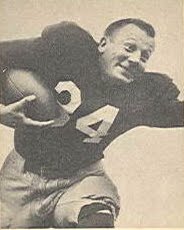
Coach Kush (pictured at left) expressed understandable disappointment with his club’s special teams play. Special teams “had to be the difference in the game,” said Kush. He added “San Antonio should get credit, though, because they hung in there.”

The tough defense that went on to score a total of four safeties over the course of the season wasn’t enough to carry the Gunslingers to many victories – they ended up with a 5-13 record for sixth place in the Western Conference. The off-field ineptness continued to distract the team, with missed paydays causing Coach Bates to quit before it was over. Arizona was 8-10, two places above San Antonio. The Outlaws won the rematch between the teams by a 13-3 score.

March 2, 2012

Past Venue: Universal Stadium

Portsmouth, OH
aka Spartan Municipal Stadium


Year opened: 1930
Capacity: 8200

Names:
Universal Stadium, 1930-70
Spartan Municipal Stadium, 1970 to date

Pro football tenants:
Portsmouth Spartans (NFL), 1930-33

Postseason games hosted:
None

Other tenants of note:
Portsmouth High School
Notre Dame High School

Notes: Designated an Ohio state historical site, 2003. Owned by City of Portsmouth and originally constructed to accommodate the NFL Spartans. Venue was renamed in honor of the Spartans in 1970, long after the franchise had moved to Detroit. Fire in 1990s caused significant damage, resulting in replacement of the press box. First football game was Spartans vs. Newark Tornadoes, Sept. 14, 1930. Used by Kentucky Warriors of semipro Heartland Football League. Also used for soccer matches.

Fate: Still in use

February 29, 2012

MVP Profile: Joe Montana, 1989

Quarterback, San Francisco 49ers


Age: 33
11th season in pro football & with 49ers
College: Notre Dame
Height: 6’2” Weight: 195

Prelude:
Lightly regarded coming out of college for his slight build and seemingly weak arm, Montana was taken by the 49ers in the third round of the 1979 NFL draft. After seeing scant action as a rookie backing up Steve DeBerg, he moved into the starting lineup during the ’80 season and led the league in completion percentage (64.5). An excellent fit in Head Coach Bill Walsh’s West Coast offense, Montana broke out in 1981, passing for 3565 yards and 19 TDs and again placing at the top in completion percentage (63.7) as he achieved selection to the Pro Bowl. The team also prospered, going 13-3 and winning the Super Bowl. While the 49ers slumped in the strike-shortened ’82 season, Montana led the NFL in pass attempts (346) and TD passes (17). He had three straight Pro Bowl years from 1983 to ’85 and the 49ers went 33-13 during his starts (4-2 in the postseason) and won another NFL title in 1984. It seemed as though his career might come to an end when he had back surgery in 1986, but Montana only missed half the season and achieved consensus first-team All-Pro status as well as a return to the Pro Bowl in ’87, when he passed for a career-high 31 touchdowns. However, the 49ers were upset in the playoffs and he faced a challenge from younger backup Steve Young. Montana came back strong in a 1988 season that ended with a game-winning drive in the Super Bowl.

1989 Season Summary
Appeared and started in 13 of 16 games
[Bracketed numbers indicate league rank in Top 20]

Passing
Attempts – 386 [16]
Most attempts, game – 42 vs. Green Bay 11/19, at LA Rams 12/11
Completions – 271 [11]
Most completions, game – 30 vs. Green Bay 11/19, at LA Rams 12/11
Yards – 3521 [8]
Most yards, game – 458 at LA Rams 12/11
Completion percentage – 70.2 [1]
Yards per attempt – 9.1 [1]
TD passes – 26 [4]
Most TD passes, game – 5 at Philadelphia 9/24
Interceptions – 8
Most interceptions, game – 2 at Tampa Bay 9/17, at LA Rams 12/11
Passer rating – 112.4 [1]
400-yard passing games – 2
300-yard passing games – 4
200-yard passing games – 10

Rushing
Attempts – 49
Most attempts, game - 9 (for 21 yds.) at Tampa Bay 9/17
Yards – 227
Most yards, game – 40 yards (on 3 carries) vs. New England 10/22
Yards per attempt – 4.6
TDs – 3

Scoring
TDs – 3
Points - 18

Postseason: 3 G
Pass attempts – 83
Most attempts, game - 30 vs. LA Rams, NFC Championship
Pass completions – 65
Most completions, game - 26 vs. LA Rams, NFC Championship
Passing yardage – 800
Most yards, game - 297 vs. Denver, Super Bowl
TD passes – 11
Most TD passes, game - 5 vs. Denver, Super Bowl
Interceptions – 0

Rushing attempts – 5
Most rushing attempts, game - 2 vs. Minnesota, NFC Divisional playoff, vs. Denver, Super Bowl
Rushing yards – 19
Most rushing yards, game - 15 vs. Denver, Super Bowl
Average gain rushing – 3.8
Rushing TDs – 0

Awards & Honors:
NFL MVP: AP, PFWA, NEA, Bert Bell Award, Sporting News
NFL Offensive Player of the Year: AP
1st team All-NFL: AP, PFWA, NEA, Pro Football Weekly, Sporting News
1st team All-NFC: UPI, Pro Football Weekly
Pro Bowl

49ers went 14-2 to win the NFC West and gain top seed in the conference for the postseason while leading the league in total yards (6268) and scoring (442 points). Won NFC Divisional playoff over Minnesota Vikings (41-13), NFC Championship over Los Angeles Rams (30-3), and Super Bowl over Denver Broncos (55-10).

Aftermath:
Montana had another MVP season in 1990, throwing for a career-high 3944 yards, but the 49ers fell short of a third consecutive NFL title when they were beaten in the NFC Championship game by the Giants. An injury suffered in that game caused Montana to miss all of 1991 and virtually all of ’92 (he appeared in one game) and the team committed to Young as the starting quarterback. Montana moved on to Kansas City, where he had two productive seasons and was chosen for one last Pro Bowl (his 8th) in 1993. He retired following the ’94 season with the second-highest passer rating in NFL history (92.3) as he threw for 40,551 yards and 273 TDs as well as compiling a record of 117-47 as a starting QB (16-7 in the playoffs). Known for his coolness under pressure and admired for his class, Montana’s #16 was retired by the 49ers and he was inducted into the Pro Football Hall of Fame, Class of 2000.

--

MVP Profiles feature players who were named MVP or Player of the Year in the NFL, AAFC (1946-49), AFL (1960-69), WFL (1974), or USFL (1983-85) by a recognized organization (Associated Press, Pro Football Writers Association, Newspaper Enterprise Association, United Press International, The Sporting News, Maxwell Club – Bert Bell Award, or the league itself).

[Updated 2/9/14]

February 27, 2012

Past Venue: Sun Devil Stadium

Tempe, AZ


Year opened: 1958
Capacity: 71,706, down from 74,865 at highest when Cardinals played there, up from 30,450 at opening

Names:
Sun Devil Stadium, 1958-96
Sun Devil Stadium, Frank Kush Field, 1996 to date

Pro football tenants:
Arizona Wranglers/Outlaws (USFL), 1983-85
Phoenix/Arizona Cardinals (NFL), 1988-2005

Postseason games hosted:
USFL Semifinal playoff, Wranglers 35 Express 23, July 7, 1984
Super Bowl XXX, Cowboys 27 Steelers 17, Jan. 28, 1996

Other tenants of note:
Arizona State University (college football), 1958 to date

Notes: Hosted annual Fiesta Bowl, 1971-2006. Hosts annual Insight Bowl, 2006 to date. Hosted one home game of NFL San Diego Chargers, 2003. Playing surface was named Frank Kush Field in 1996 for the long-time Arizona State football coach. First football game was Arizona State vs. West Texas State, 1958. First pro football game at stadium was 1975 preseason contest, New York Jets vs. Minnesota Vikings. Constructed between two buttes that provide a natural setting.

Fate: Still in use.

February 25, 2012

MVP Profile: Pat Harder, 1948

Fullback/Linebacker, Chicago Cardinals


Age: 26
3rd season in pro football & with Cardinals
College: Wisconsin
Height: 5’11” Weight: 205

Prelude:
Chosen in the first round of the 1944 NFL draft (second overall) by the Cardinals, Harder joined the club in ’46 after completing military service. A straight-ahead power runner who also blocked well, he proved to be a good complement to halfbacks Elmer Angsman and, from ’47, Charley Trippi. He also kicked five extra points as a rookie and added field goal kicking in 1947, leading the league with 7 in 10 attempts for a 70 % success rate, which also topped the NFL, and was the top scorer with 102 points. He was a second-team All-NFL selection by Pro Football Illustrated in 1946 and a first-team choice by Pro Football Illustrated, the New York Daily News, and UPI in ’47 as the Cardinals won the NFL title.

1948 Season Summary
Appeared in all 12 games
[Bracketed numbers indicate league rank in Top 20]

Rushing
Attempts – 126 [6]
Yards – 554 [6]
Yards per attempt – 4.4 [9]
TDs – 6 [4, tied with Charley Trippi]

Pass Receiving
Receptions – 13
Yards – 93
Yards per catch – 7.2
TDs – 0

Kicking
Field goals – 7 [2]
Field goal attempts – 17 [1]
Percentage – 41.2 [3]
PATs – 53 [1]
PAT attempts – 53 [1]
Longest field goal – 35 yards at LA Rams 10/31

Scoring
TDs – 6 [16, tied with four others]
Field goals – 7
PATs - 53
Points – 110 [1]

Postseason: 1 G (at Philadelphia, NFL Championship)
Rushing attempts – 11
Rushing yards – 30
Average gain rushing – 2.7
Rushing TDs – 0

Field goals – 0
Field goal attempts – 1

Awards & Honors:
NFL MVP: UPI
1st team All-NFL: UPI, Chicago Herald-American, Pro Football Illustrated, NY Daily News
2nd team All-NFL/AAFC: Sporting News

Cardinals went 11-1 to win the Western Division while leading the NFL in total offense (4694 yards), rushing yards (2560), and scoring (395 points). Lost NFL Championship to Philadelphia Eagles (7-0).

Aftermath:
Harder again received first-team All-NFL recognition in 1949 from UPI and the New York Daily News as he rushed for a career-high 554 yards and led the league in scoring for the third straight year with 102 points. The team was going into decline, however, and after a Pro Bowl year in ’50 he threatened to retire unless traded. Harder was dealt to the Detroit Lions, a team on the rise, and continued to be a valued contributor at fullback. When HB/PK Doak Walker was lost to injury in ’52, Harder again handled the bulk of the placekicking and booted a career-high 11 field goals for the NFL Champion Lions, again gaining selection to the Pro Bowl. By 1953, however, bad knees forced his retirement. In eight years, he rushed for 3016 yards and 33 TDs, caught 92 passes for another 864 yards and 5 TDs, kicked 35 field goals and 198 extra points, and scored 531 points.

--

MVP Profiles feature players who were named MVP or Player of the Year in the NFL, AAFC (1946-49), AFL (1960-69), WFL (1974), or USFL (1983-85) by a recognized organization (Associated Press, Pro Football Writers Association, Newspaper Enterprise Association, United Press International, The Sporting News, Maxwell Club – Bert Bell Award, or the league itself).

[Updated 2/9/14]

February 24, 2012

1985: Kelly Passes for 574 Yards as Gamblers Defeat Express


The opening week United States Football League contest between the Houston Gamblers and Los Angeles Express on February 24, 1985 featured two of the most highly-regarded young quarterbacks in the league. Houston’s Jim Kelly (pictured above) had a remarkable rookie season in 1984, throwing for 5219 yards and 44 touchdowns. The Gamblers, coached by Jack Pardee and utilizing a run-and-shoot offense, went 13-5 and only a first-round loss to Arizona in the playoffs could put a damper on the outstanding year.

Steve Young of the Express joined the club after the ’84 season was already underway and, while not putting together the spectacular numbers that his fellow rookie did in Houston, nevertheless performed capably and had a positive effect on the offense. LA was 2-3 and having difficulty generating points when the mobile lefthander out of Brigham Young took over, but rallied to finish at 10-8 and gain a spot in the postseason in the weak Pacific Division (and defeated Houston in the first head-to-head encounter between the two quarterbacks). Following a triple-overtime win over the defending-champion Michigan Panthers in the first round of the playoffs, LA had finally succumbed to the Arizona Wranglers.

There was a typically sparse crowd of 18,828 in attendance at the LA Memorial Coliseum for the untelevised game. The Gamblers took the early advantage as Kelly threw two one-yard touchdowns to WR Ricky Sanders in the first quarter to build up a 13-0 lead (the extra point attempt was missed following the second of the TDs). The Express responded with two field goals by Tony Zendejas, of 26 and 48 yards, in the second quarter and the score was 13-6 at halftime.

Zendejas added a 37-yard field goal in the third quarter, and then Young connected with WR JoJo Townsell for a 64-yard touchdown. RB Kevin Nelson ran for a two-yard TD and the Express, aided by Houston turnovers, was ahead by 23-13 after three quarters.

LA appeared to put the game away in the fourth quarter when safety Troy West intercepted a Kelly pass and returned it 42 yards for a touchdown, making the score 33-13 with less than ten minutes to play. However, two plays from scrimmage later Houston narrowed the gap in lightning fashion as Kelly threw to WR Richard Johnson for a 52-yard touchdown.

The Express played conservatively, trying to run out the clock, and the Gamblers got the ball back at the LA 43 following a poor 16-yard punt by Jeff Partridge with the clock down to 4:05. This time it took five plays to drive to another Kelly scoring pass as he connected with WR Vince Courville from 20 yards out. With the successful extra point it was now a six-point game at 33-27.

LA managed only a running play and two incomplete passes in its next series. Following another punt, the Gamblers had possession with just under two minutes to go. They only needed 40 seconds to cover 84 yards and cap their furious comeback as Kelly found Sanders open over the middle, beating West (who had two interceptions in the game and returned one for a score) for a 39-yard touchdown. Toni Fritsch kicked his fourth extra point of the game to provide a one-point margin.

Still, there was time on the clock for LA to attempt to drive into field goal range, and Zendejas had been successful on all four of his attempts. But Young was intercepted by LB Mike Hawkins to nail down the 34-33 win for Houston.

The Gamblers rolled up 585 total yards, with only 25 of that total on the ground, on a mere 8 carries. The Express ran the ball 20 times, but for just 49 yards while gaining a total of 267. Houston also had the edge in first downs (26 to 12), although the Gamblers hindered themselves by turning the ball over five times, to just one by LA.

Jim Kelly completed 35 of 54 passes for 574 yards and 5 touchdowns. In doing so, he not only surpassed Bobby Hebert’s USFL record of 444 yards, but Norm Van Brocklin’s NFL record of 554 and was just 12 yards short of Sam Etcheverry’s 586 yards with Montreal of the CFL in 1954. It was the second time Kelly had tossed five TDs in a game, tying the league record that he shared with four others.

Three Houston receivers gained over a hundred yards, led by Richard Johnson with 174 on 11 catches, including one score, and followed by Ricky Sanders with 9 receptions for 108 yards and three TDs and RB Sam Harrell’s 105 on 6 catches. Harrell led the almost non-existent running attack with 16 yards on four carries.


For the Express, Steve Young (pictured at right) was successful on 13 of 27 passes for 255 yards with a TD and an interception and was the leading rusher with 27 yards on five carries. JoJo Townsell gained 104 yards on his two catches, including the one long touchdown, while WR Duane Gunn had four receptions for 42 yards.

“I've been in some comebacks before, but never anything like that,” said Kelly. “Pulling out that win was the best feeling I ever had in my life.”

“He's a great quarterback; that's a great offense,” summed up Steve Young, whose own efforts had come up short.

“I got too conservative in the fourth quarter,” lamented Express Head Coach John Hadl.

It was the beginning of another outstanding year for Houston and Jim Kelly. While the second-year quarterback out of Miami missed several games due to injury, he still led the USFL in pass attempts (567), completions (360), yards (4623), touchdowns (39), and passer rating (97.9). The Gamblers finished third in the Western Conference with a 10-8 record but were the league’s highest-scoring club with 544 points. They qualified for the postseason but once again lost in the first round, falling to Birmingham by a 22-20 score.

They were far ahead of the Los Angeles Express, who finished at a miserable 3-15 and wound up the year playing at Pierce College’s small venue while unsuccessfully seeking new ownership. It was a tough season for Steve Young as well, who threw for 1741 yards with 6 TD passes and 13 interceptions and rushed for 368.

With the demise of the USFL, both quarterbacks made their way to the NFL. Kelly played for Buffalo, the team that had his rights after drafting him in the first round in 1983, and led the Bills to four straight AFC titles – although the club fell short in the Super Bowl after each. Young went to Tampa Bay and was then dealt to the 49ers, where he was a backup on two Super Bowl-winning squads, was the starting quarterback when San Francisco won the NFL Championship in 1994, and led the league in passing six times. They both eventually ended up in the Pro Football Hall of Fame – the USFL performances were just the opening chapter.

February 22, 2012

1962: Wally Lemm Leaves Oilers for Cardinals


On February 22, 1962 Wally Lemm, who had guided the Houston Oilers to the AFL Championship in ’61, quit to become head coach of the St. Louis Cardinals of the NFL. The 42-year-old Lemm signed a one-year contract in succeeding Frank “Pop” Ivy, who resigned with two games left in the season.

Lemm had started out more inclined to write about football then coach it. He graduated from Carroll College, where he was a halfback on the football team, with a journalism degree. Following service in World War II in which he commanded a torpedo boat, he became an assistant coach under Hugh Devore at Notre Dame in 1945. It was a quick jump to head coach at Waukesha High School in ’46 and then back to the college level. Lemm was an assistant coach for three years at Lake Forest College, as well as head basketball coach, before becoming head coach in 1954. The team won the conference title in his first year and he left after compiling an 11-4-1 record. From there it was on to Montana State and again, in his first season, his team won a title, gaining the Rocky Mountain Conference championship with an 8-1 tally.

In 1956, Lemm moved to pro coaching for the first time, serving as a defensive assistant for the then-Chicago Cardinals. The team, under Head Coach Ray Richards, had its first winning season in seven years and the defense was a big part of it as the unit intercepted 33 passes and allowed only nine touchdowns. However, in keeping with a pattern in which he didn’t stay in one place for long, Lemm returned to Lake Forest College as head coach in ’57 and came away with another conference title.

After returning to the Cardinals as an assistant in 1959, he moved to the Oilers of the new AFL in ’60. Houston won the first AFL Championship under Head Coach Lou Rymkus, but Lemm resigned to go into the sporting goods business. When the Oilers got off to a 1-3-1 start in 1961 and it was apparent that Rymkus was losing control of the club, owner Bud Adams hired Lemm to take over.

His coaching methods were rather unconventional for the time and made him unpopular with some of his peers. Lemm was low-key and took a relaxed approach with the players and kept the offense, in particular, as simple as possible in order to eliminate the potential for errors. His attitude was summed up in his statement that “football is supposed to be fun and if you treat the players like adults they will usually respond like adults. The game is not really simple anymore because the defenses change so much, but we try to keep it as clear, straightforward and pleasurable as we can.”

The philosophy worked in Houston. The intense Rymkus had sown dissension among the players, but Lemm relaxed the atmosphere. He also returned veteran QB George Blanda to the starting lineup and installed Willard Dewveall at tight end. The defense was simplified and Fred Glick replaced Charlie Milstead at safety, where he had been badly overmatched in the team’s defeats. The results were spectacular – the Oilers went 10-0 the rest of the way and repeated as AFL champs.

Lemm had initially agreed to a contract extension but was frustrated with the front office alignment in Houston despite the team’s success, and with the excuse of being able to work closer to home (he lived in Libertyville, Illinois), he accepted the offer to coach the Cardinals.

While there were rumors that the Oilers were interested in Sammy Baugh or former Dallas Cowboys assistant Babe Dimancheff to replace Lemm, in the end they hired Ivy, making it a straight swap of coaches (he lasted two seasons).

The Cardinals, all-too-typically a losing team, went 6-5-1 in 1960, the first year in St. Louis, and were 7-7 in ’61. Injuries played a key role in the team’s failing to show greater improvement, in particular the loss of star HB John David Crow for virtually the entire year. Canadian Football League legend Sam Etcheverry had moved south of the border after an outstanding nine-year career to take over at quarterback, but his arm was worn out and he was no longer the player he had been in the CFL.

Lemm didn’t have the same initial success as he did in his college stops and with the Oilers. St. Louis dropped to 4-9-1 in 1962. However, the seeds were planted for future success. Etcheverry started the year at quarterback but was replaced by second-year QB Charley Johnson, who showed promise and had outstanding receivers in fleet split end Sonny Randle and dependable flanker Bobby Joe Conrad. Crow was back at halfback and there was a good stable of young backs developing. The defense gave up too many points, but there was young talent in the backfield with 22-year-old CB Pat Fischer and 24-year-old FS Larry Wilson.

In the draft for the 1963 season, the Cards had two first round draft choices and used them to shore up the defense, adding safety Jerry Stovall from LSU and Purdue DE Don Brumm. The team dramatically improved to 9-5. Johnson had an outstanding year at quarterback, setting club records with 3280 passing yards and 28 TDs. Despite again losing Crow to injury for virtually the entire season, Bill Triplett was shifted from defensive back to offensive halfback and was a good replacement, running for 652 yards while averaging 4.9 yards per carry and catching 31 passes for 396 more. Perennial backup Joe Childress became the starting fullback and led the team with 701 rushing yards and grabbed 25 passes. Conrad led the NFL with 73 pass receptions, for 967 yards and 10 touchdowns, while Randle gained 1014 yards on his 51 catches and scored 12 times. Rookie TE Jackie Smith contributed 28 receptions for 445 yards. The line, built around C Bob DeMarco and G Ken Gray, was also improved.

The defensive line was augmented by the addition of Brumm and Stovall proved to be an asset in the backfield, along with Jimmy Burson. The linebacker corps, anchored by MLB Dale Meinert, was a good one. Jim Bakken, who had originally joined the team as a reserve defensive back, proved to be a reliable placekicker (and would for the next 15 seasons in St. Louis).

The stage was set for the Cards to contend in 1964 and they battled the Browns to the wire, ending up second in the Eastern Conference at 9-3-2. Indeed, they went 1-0-1 against Cleveland and won three of their first four and all of their last four contests - only a midseason slump prevented them from finishing on top. The team was well balanced. Johnson passed for 3045 yards, although he threw more interceptions (24) than touchdowns (21). Conrad had another Pro Bowl year (61 catches, 780 yards) but Randle missed considerable time with a shoulder injury - backup WR Billy Gambrell performed admirably in his place. Jackie Smith continued his development at tight end with 47 receptions for 657 yards. Triplett was out for the year at halfback due to a bout with tuberculosis, but Crow was back and led the club with 554 yards rushing. On defense, the small (5’9”, 170) but aggressive Fischer intercepted 10 passes and the club ranked second in the league with 25 overall.

The success did not continue as anticipated in 1965, however. After getting off to a 4-1 start, they lost eight of their last nine games to sink to 5-9. The line and receivers were still outstanding, but Johnson, who started out well, was plagued by injuries and seemed to regress. Injuries also struck among the running backs, and they were lacking the clutch play of Crow, who had been dealt away to the 49ers. On defense, the linebacker corps was still a strength but the line failed to rush opposing passers effectively and Wilson and Stovall missed time in the backfield.

The failure to meet expectations meant the end of the line for Lemm in St. Louis. He left with an overall record of 27-26-3 and returned to the Oilers as head coach in 1966 (including Ivy, they had gone through three head coaches since ‘62). While the Cards had some good seasons under his successor, Charley Winner, they were never able to win a division title. Houston, with Lemm back at the helm, utilized a conservative offense and outstanding defense to win the Eastern Divison in ’67, but was decimated by Oakland in the AFL Championship game. It was Lemm’s last hurrah as a pro head coach, and he quit for good following the 1970 season, citing health issues. His overall pro record was 64-64-7 and he was 1-2 in the postseason, with the one AFL title to his credit.