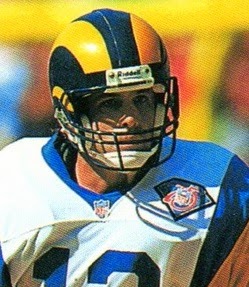
Showing posts with label Steve Young. Show all posts

September 6, 2016

1998: Hearst’s 96-Yard Run in OT Propels 49ers Over Jets


The season-opening NFL game in San Francisco on September 6, 1998 featured the 49ers, a perennial contender, hosting the New York Jets, a team that was on the rise.

The 49ers were a savvy veteran club that was used to winning, having been to the postseason in each of the previous six seasons and 16 of the past 18 years. Steve Mariucci had taken over as head coach in 1997 and the result was a conference-best 13-3 record and an appearance in the NFC Championship game. 36-year-old QB Steve Young routinely won passing titles, and while there were concerns that he could no longer deliver the long ball, the return of star WR Jerry Rice, who was lost for the year in the first week of ‘97, was expected to help, even coming off of two knee surgeries.

New York was just two years removed from a dreadful 1-15 campaign in 1996 but had perked up considerably to 9-7 in the first year under Head Coach Bill Parcells. QB Glenn Foley, taking over for the departed Neil O’Donnell, brought a gunslinger attitude to the offense but was also inexperienced, and underachieving veteran QB Vinny Testaverde was signed during the offseason. RB Curtis Martin was obtained from New England, where he had previously played with distinction under Parcells, and there was a young pass receiving corps led by brash WR Keyshawn Johnson. The team was in rebuilding mode but appeared poised to move up.


There were 64,419 fans in attendance on an unseasonably warm day at 3Com Park. The 49ers had the game’s first possession but turned the ball over when a pass by Steve Young was intercepted by FS Kevin Williams, who returned it 34 yards to the San Francisco 27. Glenn Foley (pictured at right) completed two passes to Keyshawn Johnson and John Hall kicked a 24-yard field goal to give the Jets the early lead.

The teams exchanged punts before San Francisco put together an 84-yard drive in eight plays. Young completed four passes along the way, with the longest to WR Terrell Owens for 23 yards, and RB Garrison Hearst (pictured at top) capped the series with a five-yard touchdown run up the middle. Wade Richey kicked the extra point and the home team was ahead by 7-3.

The Jets had the ball for the remainder of the opening period, but on the first play of the second quarter CB Antonio Langham picked off a Foley pass to give the 49ers possession at the New York 48. Hearst burst up the middle for 19 yards on first down, but three consecutive incomplete passes forced a long field goal try by Richey, and his 47-yard attempt missed the mark. Seven plays later, Foley connected with Johnson for a 41-yard TD and, with Hall’s point after, the visitors were back on top by 10-7.

The teams again traded punts before the 49ers put together a seven-play, 63-yard scoring drive. Young threw to WR J.J. Stokes for 25 yards and followed up with a completion to FB Marc Edwards for 16 yards to reach the New York 17. The drive bogged down but a defensive holding penalty on a third-and-six play gave the Niners a first down at the eight and, two plays later, it was Young to Stokes for a six-yard touchdown. Richey’s conversion had San Francisco ahead by 14-10.

There were still two minutes remaining in the first half following RB Leon Johnson’s 33-yard kickoff return, and Foley fired passes to WR Dedric Ward for 19 yards and Keyshawn Johnson for nine to reach the San Francisco 32. The Jets got a break when an interception was nullified by a penalty on the 49ers and, three plays later, Foley tossed a pass to WR Wayne Chrebet for a six-yard TD with 37 seconds left on the clock. Hall booted the extra point and, in see-saw fashion, the Jets took a 17-14 lead into halftime.

Following a possession by the Jets that concluded with a punt to start the third quarter, the 49ers tied the score with a 38-yard drive in seven plays that ended with a Richey field goal from 22 yards. However, New York came right back when, on the first play of the next series, Foley threw to Chrebet for a 48-yard gain to the San Francisco 30. Three plays later, with a roughing-the-passer penalty mixed in to move the Jets closer, Foley connected with Keyshawn Johnson for a 21-yard touchdown and, with Hall providing the extra point, the visitors were up by 24-17.

The 49ers responded with a 68-yard series in seven plays that featured Young completing consecutive passes to Owens for 19 yards and WR Jerry Rice for 21. Facing fourth-and-one at the New York 14, it was Young to Rice for a TD but the extra point attempt was blocked by DT Jason Ferguson and New York remained in the lead by a point.

The Jets had the ball in a possession that extended into the fourth quarter. Foley threw to Curtis Martin for 18 yards and to Chrebet twice, once for eight yards in a third-and-seven situation and then for 22 to get the ball to the San Francisco 29. But New York came up empty when the drive stalled and Hall missed a 45-yard field goal attempt.

The teams exchanged punts before the Jets advanced to another score. Foley completed passes to Martin for 22 yards, Keyshawn Johnson for 14, and Chrebet for 22 and, after Martin ran twice to get to the San Francisco 14, Hall booted a 32-yard field goal to make the score 27-23.


After the ensuing kickoff, the 49ers took possession with 3:38 remaining in regulation. On first down, Young passed to Hearst for a 35-yard gain to the New York 41. Four plays later, it was Young to Stokes (pictured at left), who out-jumped Kevin Williams and dove into the end zone for a 31-yard touchdown and, with Richey making the extra point, the Niners were in the lead by three points at 30-27 with the clock down to 1:32.

There was still time for the Jets, and they drove 60 yards in 12 plays. Foley converted a third-and-ten play with a throw to Chrebet for 19 yards and a fourth-and-ten situation with a toss to Ward for 22 to the San Francisco 32. Another pass to Ward on third down picked up 19 yards and, as time expired, Hall booted a 31-yard field goal to make it 30-30 and send the contest into overtime.

The Jets had the ball first in the extra period but went three-and-out. CB R.W. McQuarters returned Nick Gallery’s punt 16 yards to give San Francisco good field position at the New York 43, but the 49ers were unable to move and punted in return.

The visitors, helped by a face mask penalty, drove to their 47 before having to punt again, and Gallery’s 49-yard kick had the 49ers taking possession at their four yard line. But on the next play, Hearst broke away off right tackle, stiff-armed Williams at the 20, and was off to the races for a 96-yard touchdown run, reaching the end zone just ahead of LB Mo Lewis’ desperation tackle. In stunning fashion, San Francisco came away the winner by a final score of 36-30.

The teams combined for 1003 yards, with the 49ers having the edge (557 to 465) as well as in first downs (26 to 25). New York, whose yardage total was its most in eight years, led in time of possession (34:43 to 29:25). Each club turned the ball over once.

Steve Young completed 26 of 46 passes for 363 yards and three touchdowns while giving up one interception. Boosted by the game-winning run that was the longest in franchise history, Garrison Hearst accumulated 187 yards on 20 carries that included two TDs. J.J. Stokes had 7 catches for 111 yards and two touchdowns and Jerry Rice pulled in 6 passes for 86 yards and a score.


For the Jets, Glenn Foley had a career day as he succeeded on 30 of 58 throws for 415 yards and three TDs with one interception. There were two receivers with over a hundred yards led by Keyshawn Johnson, who caught 9 passes for 126 yards and two touchdowns, along with Wayne Chrebet (pictured at right) with 6 receptions for 125 yards and a TD. Dedric Ward was four yards short of the century mark as he gained 96 yards on five catches. Curtis Martin had a fairly quiet rushing day, gaining 58 yards on 22 attempts, but also had four pass receptions for 41 yards. 

“It’s disappointing to fight that hard and lose,” said a drained Coach Parcells. “You just put players in a position to make plays and you’ve got to make them. Hearst was right there. We missed some tackles there.”

San Francisco went on to a 12-4 record that placed second in the NFC West and qualified for a Wild Card playoff spot. The 49ers defeated Green Bay in the first round before falling to Atlanta at the Divisional level. The Jets were a bigger surprise in also going 12-4 and topping the AFC East. They reached the AFC Championship game before finally succumbing to the Denver Broncos.

Steve Young had another stellar year, passing for a career-high 4170 yards and a league-leading 36 touchdowns. He was chosen to a seventh straight Pro Bowl, his last. Garrison Hearst went on to gain 1570 yards on 310 carries with seven TDs and was also a Pro Bowl selection for the first time. J.J. Stokes achieved career bests with 63 pass receptions for 770 yards and eight touchdowns and Jerry Rice returned to Pro Bowl form as he caught 82 passes for 1157 yards and nine TDs.

For Glenn Foley, the big opening performance against the 49ers proved to be the highlight of his season. Two lackluster starts while also being sidelined with a rib injury in between caused him to be relegated to the bench in favor of Vinny Testaverde, who put together a Pro Bowl year in quarterbacking the Jets to the postseason.

February 7, 2016

1993: AFC Wins First Overtime Pro Bowl


The AFC-NFC Pro Bowl on February 7, 1993 was played before 50,007 fans at Aloha Stadium on a sunny day with intermittent clouds. It marked the 14th consecutive year that the game was played in Honolulu. Coaches were Don Shula of the Dolphins for the AFC and San Francisco’s George Seifert for the NFC.

The NFC took the opening kickoff and drove 65 yards in 14 plays. QB Steve Young of the 49ers scrambled for eight yards in a third-and-three situation and completed five passes, the longest to his San Francisco teammate, TE Brent Jones, for 17 yards. The advance finally stalled at the AFC 10 and Morten Andersen of the Saints kicked a 27-yard field goal.

The AFC punted following their first series but got the ball back four plays later when a Young pass was intercepted by Denver FS Steve Atwater at the AFC 29. Miami QB Dan Marino completed consecutive throws to WR Anthony Miller of the Chargers for 16 yards and Houston WR Haywood Jeffires for 11 to get the ball into NFC territory, but a holding penalty moved them back, and on third down Marino was sacked by Minnesota DE Chris Doleman for a 15-yard loss, resulting in a punt.

The AFC managed to get on the scoreboard when, on the first play of the second quarter, LB Junior Seau of the Chargers intercepted a Young pass and returned it 31 yards for a touchdown. Kansas City’s Nick Lowery added the extra point to give the AFC a 7-3 lead. The NFC responded with a 10-play, 58-yard possession. An illegal blitz (an infraction specific to the Pro Bowl) on the AFC converted a third down and Dallas RB Emmitt Smith broke away for a 23-yard gain to the AFC 34. The NFC converted another third down before the drive came to an end at the AFC 20 and Andersen kicked a 37-yard field goal to narrow the score to 7-6.


QB Troy Aikman of the champion Cowboys (pictured at right) was behind center for the next NFC series and came out throwing, hitting on three straight passes to pick up 25 yards, two of them to his Dallas teammate, WR Michael Irvin. The nine-play drive covered 54 yards and ended with Aikman passing to Irvin once more for a nine-yard TD. Andersen converted and the NFC took a 13-7 lead.

The AFC went three-and-out and punted, and with 56 seconds remaining in the first half, Aikman again went to the air, connecting with Atlanta WR Andre Rison for 18 yards, RB Barry Sanders of the Lions for 19, and Rison again for 11 yards. But Aikman’s next two passes fell incomplete, with a Sanders run for no gain in between, and Andersen’s field goal try was blocked by DE Leslie O’Neal of the Chargers and returned by Miami LB Bryan Cox to the NFC 35.

Houston QB Warren Moon completed a pass to Jeffires and it appeared that time had run out in the half before the receiver got out of bounds. Players began to head to the locker room and technicians started to pull sets for the halftime show onto the field. But the officials ruled that there were still two seconds remaining and the field was cleared. On the final play of the half, Lowery booted a 42-yard field goal and the NFC margin was narrowed to 13-10 at halftime.

The AFC started the third quarter off with a short series and punted. On the NFC’s third play, Aikman threw to Dallas TE Jay Novacek for 26 yards, but after Sanders ran twice to gain another 14 yards, Aikman’s next pass was picked off by SS Henry Jones of the Bills, who returned it 32 yards to the NFC 42. With Pittsburgh RB Barry Foster (pictured at top) running effectively and his teammate with the Steelers, QB Neil O’Donnell, completing a pass, the AFC reached the 11 before settling for a 29-yard Lowery field goal to tie the score at 13-13.

Atlanta CB Deion Sanders returned the ensuing kickoff 46 yards and the NFC started with good field position near midfield. QB Brett Favre of the Packers was in the game and misfired on his first three passes before connecting with San Francisco WR Jerry Rice for 48 yards to the AFC two. RB Ricky Watters of the 49ers lost two yards on first down and, while Rice picked up three yards on a short toss from Favre, the AFC defense held as Favre was stuffed for no gain on a quarterback sneak and, on fourth down, Watters dove for the end zone and came up short.

The AFC had possession as the game headed into the fourth quarter. O’Donnell completed passes to Houston WR Ernest Givins for six yards and WR Andre Reed of the Bills for nine, but the AFC had to punt. RB Johnny Bailey of the Cardinals returned the kick but fumbled when hit by Buffalo WR Steve Tasker, the AFC’s special teams representative, and punter Rohn Stark of the Colts recovered at the AFC 39. However, on the next play O’Donnell’s pass was intercepted by Phoenix SS Tim McDonald.

The NFC punted for the first (and only) time following a short series and a 20-yard return by Indianapolis WR Clarence Verdin had another 15 yards tacked on for unnecessary roughness. Starting at the NFC 37, the AFC netted a yard in three plays and Lowery missed a 54-yard field goal attempt.

Favre threw to WR Fred Barnett of the Eagles for 16 yards on first down and the NFC maintained possession when an apparent interception was nullified by a pass interference penalty. Favre was sacked by DE Howie Long of the Raiders on third down and that set up another big play for the AFC on special teams. A field goal try by Andersen was blocked by Tasker and CB Terry McDaniel of the Raiders recovered and ran 28 yards for a touchdown. Lowery converted and the AFC was back in front by 20-13 with eight minutes left in regulation.

Young was back at quarterback for the NFC and he threw to Irvin for 19 yards and ran for eight. Sanders ran for six yards and it was Young to Irvin again for 12 to the AFC 35, but a holding penalty backed the NFC up and the next two passes were incomplete before Young was intercepted by Buffalo CB Nate Odomes.

The AFC punted following the next series and the NFC took over at its 22 with less than three minutes remaining on the clock. Young threw to Rice for 16 yards but was sacked by DE Neil Smith of the Chiefs for a loss of eight. Two plays later, he passed to Brent Jones for 16 yards and a first down and, after another sack, connected with Rison for 18. Throws to Novacek and Rison got the ball to the AFC 20, but the next two passes were incomplete and Young was sacked by Cox on third down. Facing fourth down and with time running out, a scrambling Young completed a throw to RB Rodney Hampton of the Giants at the goal line for a 23-yard touchdown with ten seconds remaining in regulation. Andersen tied the score at 20-20 with the point after and, with the score tied at 20-20 at the end of four quarters, the game went into overtime.

The NFC won the toss and had the first possession in overtime, but Young fumbled when caught from behind by Kansas City LB Derrick Thomas while scrambling and Long recovered for the AFC at the NFC 28. Foster ran the ball four times to reach the NFC 16 before Lowery came on to kick the game-winning 33-yard field goal at 4:09 into OT. The AFC won the first overtime Pro Bowl game by a final score of 23-20.

The NFC far outgained the AFC (472 yards to 114) and also had big margins in first downs (30 to 9) and offensive plays (90 to 50). However, the NFC turned the ball over six times, to one suffered by the AFC, and the AFC had both an interception and blocked field goal returned for touchdowns.

Dan Marino completed just three of nine passes for 31 yards and Neil O’Donnell had the most completed passes for the AFC, with four, out of seven attempts for 23 yards with one intercepted. Barry Foster rushed for 57 yards on 15 carries to lead the team by far (runner-up was RB Harold Green of the Bengals with nine yards on four attempts). Haywood Jeffires led the receivers with three catches for 26 yards and Anthony Miller contributed 23 yards on his two receptions. Steve Tasker (pictured below) was named the game’s MVP as he accounted for four tackles, a forced fumble, and a blocked kick. Regularly recognized for his outstanding play on special teams, Tasker was appearing in his fourth of an eventual seven Pro Bowls.


For the NFC, Steve Young was successful on 18 of 32 throws for 196 yards and a TD, but gave up three interceptions and had the disastrous fumble in overtime. He also led the team in rushing with 34 yards on six carries. Troy Aikman was 10-of-15 for 120 yards with a touchdown and an interception and Brett Favre, making his first Pro Bowl appearance, completed four of eight passes for 74 yards with no TDs or pickoffs. Andre Rison had 8 catches for 80 yards and Jerry Rice gained 78 yards on his four receptions while Michael Irvin scored a TD among his 5 catches for 59 yards.

The game marked the first time that the Pro Bowl went into overtime and reduced the NFC’s lead in the series to 13-10 since going to the AFC vs. NFC format following the 1970 AFL/NFL merger.

January 17, 2016

1993: Cowboys Defeat 49ers to Win NFC Championship


The Dallas Cowboys were appearing in the NFC Championship game for the first time in ten years as they faced the San Francisco 49ers on January 17, 1993. The Cowboys had improved steadily under Head Coach Jimmy Johnson and topped the NFC East with a 13-3 record during the ’92 season. The offense was built around QB Troy Aikman (pictured above), RB Emmitt Smith, and WR Michael Irvin and the defense was outstanding behind a solid line that included DE Charles Haley and tackles Russell Maryland and Tony Casillas. Dallas blew out the Eagles in the Divisional playoff round to advance to the conference title game.

The 49ers, coached by George Seifert, finished first in the NFC West at 14-2, having bounced back from a 1991 season in which they missed the playoffs for the first time in nine years. QB Steve Young, emerging from the shadow of his illustrious predecessor Joe Montana, was coming off a MVP season and WR Jerry Rice, despite dealing with some injuries, was chosen to his seventh straight Pro Bowl. RB Ricky Watters, in his first season after having missed his entire rookie year due to injury, gained 1418 yards from scrimmage and also was selected to the Pro Bowl. San Francisco defeated Washington in its Divisional game the previous week and had not lost since November 1 for a string of nine straight wins.

There were 64,920 fans in attendance at Candlestick Park on a rainy day, and the field was muddy. The 49ers had the game’s first possession and had to punt following a series in which an apparent 63-yard scoring play to Jerry Rice was nullified due to a holding penalty called on guard Guy McIntyre. Dallas reached the San Francisco 48 before also having to punt, but the Cowboys regained possession at the 22 when CB Alan Grant fumbled on the return and FB Daryl Johnston recovered. Troy Aikman immediately threw to Michael Irvin for 21 yards to the one, but the 49ers held as Emmitt Smith was thrown for a one-yard loss and two Aikman passes were incomplete. Lin Elliott kicked a 20-yard field goal to put the visitors ahead by 3-0.

RB Marc Logan returned the ensuing kickoff 50 yards and San Francisco advanced 48 yards in eight plays during which Steve Young completed three passes and Ricky Watters had a 16-yard run. Young gained the final yard on a quarterback sneak and, with Mike Cofer adding the extra point, the Niners were in front at 7-3.

With the rain falling again, the Cowboys were forced to punt following their next possession and Grant returned it 15 yards to give San Francisco good starting field position at the Dallas 47. As the game entered the second quarter, the 49ers advanced to the 28 but came up empty when Cofer was wide to the left on a 47-yard field goal attempt.

Once again the Cowboys had to punt, but on the 49ers’ next offensive play Watters fumbled after being hit by CB Larry Brown at the end of a 16-yard run and CB Kevin Smith recovered and returned it 11 yards to the San Francisco 39. Smith carried three straight times for a total of 23 yards and two short passes got Dallas to the eight. Three plays later it was Smith running around end for a four-yard touchdown and, with Elliott’s conversion, the Cowboys were back in the lead by a 10-7 score.

The Niners came back on offense with 5:05 to play in the first half and Young completed three passes, the longest to Rice for 26 yards. The drive was finally halted at the Dallas nine and Cofer tied the game with a 28-yard field goal.


There was still time for the Cowboys, and after Smith (pictured at left) ran for 15 yards and caught two passes for another 14, Aikman threw to Michael Irvin for 14 yards to the San Francisco 22. Aikman was sacked by LB Tim Harris, however, and the visitors were forced to try for a 43-yard field goal with eight seconds left on the clock. Elliott’s kick was wide to the right and the contest remained tied at the half.

Dallas took the second half kickoff and drove 78 yards in eight plays. Smith again ran effectively and Aikman completed three passes, the biggest to WR Alvin Harper for 38 yards to the San Francisco seven. Johnston ran for a three-yard TD and, with Elliott’s point after, the Cowboys were back in front by a 17-10 margin.

The 49ers responded with a seven-play, 66-yard series that also featured a big pass play when Young connected with Rice for 36 yards to the Dallas 32. They had to settle for a field goal, and Cofer’s 42-yard boot narrowed the score to 17-13.

The Cowboys were in the midst of a long 14-play possession that covered 78 yards as the game headed into the fourth quarter. Aikman completed seven passes along the way, four of them on third down plays. That included the last, which was to Smith for a 16-yard touchdown. Elliott’s extra point put Dallas ahead by 24-13.

The next series for the 49ers ended with a Young pass being intercepted by LB Ken Norton and returned to the San Francisco 44. Smith burst up the middle for 28 yards on first down, but the Cowboys failed to add to their lead when they chose to forgo a field goal when facing fourth-and-one at the seven and Smith was stopped for no gain.

Young passed the 49ers down the field, connecting on seven throws as the home team went 93 yards in nine plays. Four were to Watters, including the first two that covered 17 and 10 yards, and the last was to Rice for a five-yard TD. Cofer converted to narrow the margin to 24-20 with 4:22 remaining in regulation.

On the first play following the ensuing kickoff, the Cowboys, choosing not to play it safe, came through with a huge play when Aikman passed to Harper, who beat the man-to-man coverage for a 70-yard gain. Three plays later, it was Aikman to WR Kelvin Martin, who dove and barely made it into the end zone for a six-yard touchdown. Elliott’s extra point attempt was blocked, but the visitors were ahead by ten points with the clock down to 3:43.

Young again came out passing, but after three completions to the Dallas 45 he was again picked off, this time by FS James Washington. It effectively finished off the 49ers as the Cowboys were able to run the clock down to 22 seconds before punting and won by a final score of 30-20.

Statistically, the game was very evenly played. Dallas outgained the 49ers by just a yard (416 to 415) and each team accumulated 24 first downs, although the Cowboys led significantly in time of possession (35:20 to 24:40). However, the 49ers turned the ball over four times, to none by the Cowboys.


Troy Aikman completed 24 of 34 passes for 322 yards and two touchdowns while giving up no interceptions. Emmitt Smith had a big day on the muddy turf as he rushed for 114 yards on 24 carries that included a TD and had 7 catches for another 59 yards and a score. Michael Irvin contributed 6 pass receptions for 86 yards and, thanks to the one long catch, Alvin Harper (pictured at right) gained 117 yards on his three receptions.

For the 49ers, Steve Young was successful on 25 of 35 throws for 313 yards and a TD but was picked off twice. He also rushed for 33 yards and a touchdown on eight attempts. Ricky Watters gained 69 yards on 11 carries and had 6 catches for 69 yards. Jerry Rice gained 123 yards on 8 pass receptions that included a touchdown.  

“We’ve played aggressive all year long,” said Coach Johnson of the Cowboys. “But that’s our style.”

“A lot of people would have been conservative, but they took chances and it worked for them,” said San Francisco’s Coach Seifert regarding the Cowboys. “They made good calls in key situations.”

Dallas went on to rout the Buffalo Bills in the Super Bowl. It was the first of two straight NFL Championships for the Cowboys (and three in four years), who repeated as NFC East champs in 1993. The 49ers won the NFC West and the teams met again for the conference title, with the Cowboys once more coming out on top.

January 9, 2016

1999: Falcons Edge 49ers in Divisional Playoff Game


The NFC Divisional Playoff game in Atlanta on January 9, 1999 featured two NFC West teams. The upstart Atlanta Falcons had topped the division with a 14-2 record while the San Francisco 49ers finished second at 12-4 and were the top Wild Card entry.

The rise of the Falcons had been stunning in that they were coming off of two losing seasons, and five of the previous six had resulted in records under .500. Head Coach Dan Reeves, previously with the Broncos and Giants, was in his second year with the club but underwent heart surgery in December and was just returning to the sideline a month later to coach in the playoffs. The offense was ball control-oriented, keyed by RB Jamal Anderson (pictured above), who rushed for 1846 yards on a record-setting 410 carries. QB Chris Chandler was unspectacular but efficient and a good leader. The defense featured a solid line plus Pro Bowlers in MLB Jessie Tuggle, CB Ray Buchanan, and FS Eugene Robinson.

San Francisco, coached by Steve Mariucci for the second year, was used to contending, having reached the playoffs for the seventh consecutive year in 1998 and 15th time in 16 seasons, with a Super Bowl victory as recently as 1994. The team was aging but still strong with 37-year-old QB Steve Young and 36-year-old WR Jerry Rice leaders of an offense that benefited from the presence of RB Garrison Hearst (1570 rushing yards) and third-year WR Terrell Owens. The defensive line was missing injured DT Bryant Young, but DE Charles Haley came out of retirement to lend his pass-rushing expertise.

The teams split their regular season meetings and the 49ers defeated Green Bay in the Wild Card round the previous week to advance to the Divisional game.   

There were 70,262 fans in attendance at the Georgia Dome. Things went badly for the 49ers on their first play from scrimmage when Garrison Hearst suffered a broken leg, which significantly affected their ability to run the ball for the rest of the game. The teams exchanged punts until, following a 36-yard return by WR Tim Dwight, the Falcons took possession at the San Francisco 38 and scored in six plays. Jamal Anderson ran for 14 yards on first down and Chris Chandler threw to WR Terance Mathis for 19 yards on a third down play to the three yard line. Two plays later, Anderson ran for a two-yard touchdown, Morten Andersen added the extra point, and Atlanta held a 7-0 lead.

The clubs returned to trading punts as the game headed into the second quarter. Starting from their 18 with 7:35 remaining in the first half, the Falcons advanced 82 yards in seven plays. Jamal Anderson rushed for 16 yards on his first two carries, Chandler (pictured below) again connected with Mathis for 19 yards, and then it was Anderson breaking away for a 34-yard TD. Morten Andersen again added the point after and the home team was up by 14-0.


The 49ers responded with an 80-yard possession of their own. A pass interference call was good for 16 yards and Steve Young completed passes to WR J.J. Stokes for 12 yards, but the advance was nearly derailed when RB Terry Kirby mishandled a lateral and, after DE Chuck Smith appeared to recover and ran for an apparent touchdown, it was ruled that Kirby had gained possession and was down by contact before the ball got away from him again. Making the most of the reprieve, Young then threw to RB Chuck Levy for 34 yards and TE Greg Clark for nine before hitting Jerry Rice for a 17-yard touchdown. Wade Richey narrowed the score to 14-7 with the successful conversion.

There was still 1:06 left before halftime as the Falcons regained possession, but after Chandler passed to WR Ronnie Harris for 22 yards, his next throw was deflected by Charles Haley and picked off by DT Junior Bryant. San Francisco now had the ball at the Atlanta 36 and Young threw to Stokes for 16 yards and ran once himself for seven to set up a 36-yard Richey field goal. Atlanta’s lead was 14-10 at the intermission and the Niners appeared to have the momentum.

The Falcons had the ball first and drove to the San Francisco 42, but attempting to convert a fourth-and-one situation, Anderson was stopped for no gain. Now it was the 49ers moving effectively as Young threw to Terrell Owens for 20 yards and to Rice for eight. But following a short gain on another completion to Owens, Young’s next pass was picked off at the Atlanta three by Eugene Robinson, who returned it 77 yards to the San Francisco 20. While the turnover didn’t lead to a touchdown, it did lead to a Morten Andersen field goal from 29 yards and, instead of the Niners potentially taking the lead, the Falcons were ahead by seven points at 17-10.

San Francisco had the ball heading into the fourth quarter and Young threw to Rice for a 38-yard gain to the Atlanta 44, but once again the Falcons came up with an interception. This time it was SS William White picking off Young’s pass intended for Clark and returning it 14 yards to the San Francisco 36. Chandler converted a third-and-eight situation with a toss to WR Tony Martin that picked up 16 yards and, while the drive bogged down inside the 20, Atlanta again came up with points on a 32-yard Andersen field goal.

With Young completing seven passes, the 49ers advanced 87 yards in 13 plays in response. Two were to Owens, one of which gained seven yards in a third-and-five situation, and two more were caught by Stokes, the longest for a 33-yard gain to the Atlanta 12. Young kept the ball himself on an eight-yard scramble for a touchdown carry and the Niners added an improvised two-point conversion when the holder for the placekick, QB Ty Detmer, had to leap for a high snap, rolled out, and connected with Clark. It was now a two-point contest with 3:57 to play.

The try for an onside kick failed and, with Anderson running on every play, the Falcons managed to hold onto the ball until punting with 49 seconds left on the clock. The 49ers had to start from their own four and, while Young was able to connect with Levy for a gain of 24 yards, the game ended with White intercepting one last Young pass to seal the 20-18 win for Atlanta.

The 49ers had more total yards (334 to 289), but without Garrison Hearst gained just 46 yards on the ground, to 136 for the Falcons, who had the edge in first downs (16 to 15). San Francisco also turned the ball over three times, to one suffered by Atlanta, and the 49ers were penalized eight times, to six flags thrown on the Falcons.


Chris Chandler didn’t go to the air often, completing 13 of 19 passes for 169 yards and giving up an interception. Jamal Anderson rushed for 113 yards on 29 carries that included two touchdowns. Terance Mathis (pictured at right) topped the Atlanta receivers with 5 catches for 71 yards and Tony Martin was right behind with his 63 yards on four receptions.

For the 49ers, Steve Young was successful on 23 of 37 throws for 289 yards and a TD, but also gave up three interceptions. He also led the team with 28 yards on six rushes that included a score. Terrell Owens caught 8 passes for 73 yards and J.J. Stokes contributed 76 yards on his five receptions. Jerry Rice had three receptions for 63 yards and a TD and set a NFL record by catching a pass in 23 straight playoff games. 

“It’s unbelievable. The whole year has been incredible,” exclaimed Atlanta’s Coach Reeves. “To get to this point is beyond our wildest dreams.”

The Falcons moved a level higher as they upset the Minnesota Vikings in overtime to win the NFC Championship. However, they lost decisively to Denver in the Super Bowl and returned to earth with a 5-11 record in 1999. The loss for the 49ers marked the end of a long and successful era as they dropped to 4-12 in ‘99. They next returned to the postseason in 2001.

December 1, 2015

1985: Packers Shut Out Bucs in “Snow Bowl”


It was a snowy day in Green Bay on December 1, 1985 as the Packers hosted the Tampa Bay Buccaneers. A foot of snow had already fallen by game time and it was accompanied by high winds that gusted to 40 mph and made for a wind chill of zero degrees.

Neither team was in contention coming into the game. The Packers, coached for the second year by Forrest Gregg, had a 5-7 record, although they had won two of their last three contests. WR James Lofton was outstanding but QB Lynn Dickey was showing signs of wear. There was a fair group of running backs but, overall, the team was mediocre. Tampa Bay, under Head Coach Leeman Bennett, also won two of its last three, but had lost the nine games before that and was at 2-10. There was talent in workhorse RB James Wilder and promising new QB Steve Young, who had gained experience in the USFL and recently moved into the starting lineup, but the defense was a liability.  

Attendance was held to 19,856 at Lambeau Field due to the severe weather. The snow did not let up and the conditions didn’t improve during the course of the game, obliterating the yard markers and obscuring visibility. Green Bay won the toss but chose to kick. The Buccaneers thus had the first possession, ran the ball three times, and punted. Lynn Dickey completed a pass to James Lofton, but the star receiver fumbled after gaining 27 yards to midfield and LB Ervin Randle recovered for Tampa Bay. The Bucs were unable to generate offense and punted once again. Green Bay responded with a long drive that took up nearly the remainder of the first quarter. RB Eddie Lee Ivery and FB Jessie Clark carried the ball for the most part but Dickey completed passes to Lofton for 14 and 17 yards and to TE Ed West for 11. The advance finally stalled at the Tampa Bay eight and the Packers came up empty when Al Del Greco’s 25-yard field goal attempt was blocked.

As the game proceeded into the second quarter, the Bucs again had to punt and the Packers put together a 61-yard possession in 11 plays that was helped along when, forced to punt, the Buccaneers were penalized for running into the kicker. Dickey completed passes to Lofton for 11 yards and WR Phillip Epps for seven to start the series and, following the penalty that kept the drive alive, he threw to Lofton for a pickup of 18 yards. Three plays later, and facing third-and-22, Dickey passed to TE Paul Coffman for 19 yards and shortly thereafter, unable to find an open receiver, kept the ball on a one-yard touchdown run. Del Greco added the extra point and the home team was ahead by 7-0.

That remained the score at halftime as the teams traded punts for the remainder of the half. While Dickey was able to complete passes and the Packers generated 243 yards in the wintry conditions, the Bucs were held to 43 yards and one first down.

RB Gerry Ellis returned the second half kickoff 40 yards and it took the Packers just four plays to score again. On second-and-12, Dickey connected with Coffman for a gain of 19 yards and, two plays after that, Ellis broke away for a 35-yard touchdown run. Del Greco again converted to put the home team up by 14-0.

Following another punt by the Bucs, the Packers, starting with good field position at their 48, again drove into Tampa Bay territory, helped along by a pass interference penalty. However, they came up empty this time when Del Greco was wide to the left on a 24-yard field goal attempt.

Another short series by the visitors concluded with another punt, and the teams exchanged turnovers in short order as FS Ivory Sully intercepted a Dickey pass at the goal line, CB Tim Lewis picked off a Steve Young throw two plays later, and Clark fumbled the ball back two plays after that. It appeared that the Bucs might finally get on the board when a long pass by Young intended for WR Kevin House on first down drew a 34-yard pass interference penalty on Lewis that put the ball at the Green Bay 30. Young completed a pass to House for 10 yards but the drive stalled at the 16 and Donald Igwebuike’s 33-yard field goal attempt to start the fourth quarter sailed wide to the left.

The Packers responded by advancing 80 yards in nine plays. Ivery gained 11 yards on a draw play and Ellis had a 15-yard run. Dickey had four pass completions, two of them to Epps for 19 and 18 yards, and the second set up Clark’s three-yard touchdown run up the middle. Del Greco added the extra point and, with Tampa Bay unable to threaten for the remainder of the game, it capped Green Bay’s 21-0 win.

The Packers completely dominated the Buccaneers, gaining far more yards (512 to 65) and first downs (31 to 5), and running 72 plays to Tampa Bay’s 36. Green Bay almost evenly distributed the yardage between running (232) and passing (280). The Packers were credited with five sacks, to two by the Bucs, but also turned the ball over four times, to one suffered by Tampa Bay.


Lynn Dickey completed 22 of 36 passes for 299 yards, and while none were for touchdowns and two were intercepted, it was still a fine showing under the circumstances. Eddie Lee Ivery (pictured at right) and Gerry Ellis both gained over a hundred rushing yards, with Ivery accumulating 109 yards on 13 carries and Ellis contributing 101 on just 9 attempts that included a TD. James Lofton had 6 catches for 106 yards.

For the Bucs, Steve Young was successful on just 8 of 17 throws for 53 yards with no TDs and one interception. He also led the club with 31 rushing yards on 7 carries. James Wilder was held to 23 yards on 12 attempts but led the team with 6 pass receptions for 33 yards.

“Some people can handle cold weather and some can’t. The big thing is, you have to give Lynn Dickey a lot of credit. To be able to throw the football in these conditions is phenomenal,” said Green Bay’s Coach Gregg with reference to his quarterback’s strong outing. “He did a hell of a job.”

Green Bay lost the next week but won the last two games of the season to finish with an 8-8 record for the third straight year, which placed a distant second behind the Bears in the NFC Central. The Buccaneers lost their remaining games, including the rematch with the Packers in the more agreeable climate of Tampa, to end up last in the division at 2-14. While the “Snow Bowl” had no impact on the race for the 1985 postseason, it has maintained a place in the lore regarding pro football games played in extreme weather conditions.

October 13, 2015

1991: Opportunistic Falcons Outlast 49ers for Wild Win


The Atlanta Falcons were off to a 2-3 start as they traveled to San Francisco to take on the 49ers on October 13, 1991. Coached by Jerry Glanville, the Falcons were coming off of eight consecutive losing seasons and had lost in their last five meetings with the 49ers. The club employed a run-and-shoot offense directed by talented but injury-prone QB Chris Miller (pictured at right) with WR Andre Rison as the leading receiver. The defense featured an outstanding cornerback tandem in Deion Sanders, who was also excellent at returning kicks, and Tim McKyer, a sixth-year veteran who started out with the 49ers.

San Francisco had been to the playoffs in each of the previous eight years under, first, Bill Walsh and now George Seifert, and that included three Super Bowl victories, most recently in 1988 and ’89. The 49ers reached the NFC Championship game in 1990 but were in a transition year. Most notably, the team lost 35-year-old star QB Joe Montana, who was out for the season with a torn elbow tendon in his throwing arm. Backup QB Steve Young was getting his chance, but the results had been uneven thus far and the Niners were also at 2-3.

There were 57,343 fans in attendance at Candlestick Park on a sunny afternoon. The Falcons had the ball first and quickly went 73 yards in four plays. Chris Miller started off with a completion to Andre Rison for 39 yards to the San Francisco 34 and, following two carries by RB Erric Pegram, Miller fired long for WR Michael Haynes in the end zone and it was good for a 27-yard touchdown. Norm Johnson added the extra point.


Steve Young (pictured at left) threw to Jerry Rice for a 15-yard pickup on the Niners’ first play from scrimmage, but RB Dexter Carter fumbled on the next one and SS Brian Jordan recovered for the Falcons at the San Francisco 49. Miller rolled out and threw to Haynes for a gain of 41 yards on first down and, three plays later, it was Miller to Rison for a seven-yard TD. Johnson’s point after put the visitors ahead by 14-0.

The teams traded punts before FS Scott Case intercepted a Young pass at the San Francisco 38. The Falcons made their way to the San Francisco 12 as the opening period came to an end and, two plays into the second quarter, Johnson kicked a 29-yard field goal to make it a 17-0 contest.

The 49ers responded by driving 72 yards in six plays. Young completed two passes to TE Jamie Williams for 16 and 15 yards and a long throw to WR Mike Sherrard picked up 31 yards to the Atlanta 10. FB Tom Rathman gained four yards up the middle and then Young, rolling to his left, ran for a six-yard touchdown. Mike Cofer converted to narrow Atlanta’s lead to 17-7.

The Falcons reached midfield on their next series before punting and the 49ers had to punt from their own 25 in turn, with Joe Prokop’s deflected kick traveling only 17 yards to give the visitors good field position at the San Francisco 41. They reached the 23 at the two-minute warning and Johnson kicked a 43-yard field goal to put the Falcons up by 20-7.

There was still time for the 49ers following Carter’s 34-yard kickoff return, and they advanced 66 yards in five plays. The big one was a long pass by Young that WR John Taylor caught for a 54-yard touchdown. Cofer’s extra point narrowed the Atlanta lead to 20-14 at halftime.

San Francisco had the first possession of the third quarter and traveled 70 yards in five plays. Young ran twice for 14 yards and, while an apparent 20-yard completion to Taylor was called back due to an illegal motion penalty, a Young throw to Rice was good for a 57-yard TD. Atlanta’s Jordan blocked Cofer’s extra point attempt, but the game was now tied at 20-20.

It didn’t stay tied for long when Deion Sanders gathered in the ensuing kickoff and returned it 100 yards for a touchdown. Johnson’s conversion put the Falcons back in front by seven points. The 49ers came back with a nine-play, 69-yard drive. Young completed four passes, most notably to Rice for 22 yards in a third-and-six situation and to Williams for 15 yards to the Atlanta 10. Two passes into the end zone fell incomplete but, following a defensive holding penalty, RB Harry Sydney swept around end to a five-yard TD. Cofer made the point after and the score was knotted once more at 27-27.

The Falcons drove 80 yards in 10 plays in response. Miller had four completions along the way, connecting with WR Mike Pritchard for 15 yards and Rison and Haynes for 10 yards apiece. RB Steve Broussard ran for 10 yards on a draw play and an end run picked up 23 yards to set up a one-yard Miller to Rison touchdown pass. The extra point attempt failed when holder/punter Scott Fulhage fumbled the snap, but the visitors were again in the lead by 33-27.

Carter returned the ensuing kickoff 39 yards to the San Francisco 49 and the Niners had the ball heading into the fourth quarter, putting together a 51-yard drive in eight plays. Young threw to Taylor for 20 yards and scrambled to a seven-yard touchdown, leaping into the end zone at the end. Cofer kicked the extra point and the 49ers had a one-point lead at 34-33 with 12 minutes to play.


Once more the Falcons fought back, advancing 48 yards in six plays that resulted in a 44-yard Johnson field goal and a regained lead of 36-34. The 49ers methodically drove into Atlanta territory, but after reaching the 20 thanks to an 11-yard completion to Rice, Sydney lost nine yards when attempting to reverse field on a failed running play, an intentional grounding penalty moved the Niners back another 10 yards, and a third-and-29 pass by Young was intercepted by Tim McKyer (pictured above), the ex-49er. McKyer returned it 24 yards, cutting to the middle of the field, and then tossed a lateral to Sanders, who picked up another 13 yards to the San Francisco 35.

Broussard, following a short gain, ran for 23 yards and while the Falcons couldn’t reach the end zone, they added a 30-yard field goal by Johnson to pad their lead to five points with 1:45 left on the clock. It was the icing on the cake. Young completed passes to Rice for 14 yards and WR Sanjay Beach for 20, but a desperate fourth down pass from his own 39 was intercepted by McKyer, his second of the fourth quarter, to seal the 39-34 win for Atlanta.  

The 49ers, playing catchup throughout the game, led in total yards (437 to 368) and first downs (24 to 19). However, San Francisco also turned the ball over four times, to none by the Falcons. Atlanta was also very effective running the ball, gaining 160 yards on the ground to San Francisco’s 94.

Chris Miller completed 16 of 28 passes for 208 yards and three touchdowns, with no interceptions. Andre Rison had 6 catches for 69 yards and two TDs and Michael Haynes gained 94 yards on his five receptions that included a score. Steve Broussard rushed for 104 yards on just 10 attempts.

For the 49ers, Steve Young was successful on 22 of 38 throws for 348 yards and two TDs, but also gave up three interceptions, and led the club in rushing with 68 yards on 11 carries that included two more touchdowns. Jerry Rice caught 7 passes for 138 yards and a TD and John Taylor contributed 80 yards on his three catches that also included a score.

“There was one bad play and boom-boom, there were two more bad plays and we were out of it,” said San Francisco’s Coach Seifert. “There are a number of disappointing things happening. I’m obviously devastated.”

The Falcons lost to Phoenix the next week but then won seven of eight games, including the rematch with the 49ers, on the way to a 10-6 record. San Francisco won two, lost two, and was at 4-6 before putting together a six-game winning streak to finish the season also at 10-6. However, the sweep of the season series by Atlanta made the difference in which team went to the postseason. As a result, the Falcons attained second place in the NFC West and grabbed a Wild Card slot, beating New Orleans in the first round before succumbing to the Redskins at the Divisional level. The 49ers ended up in third place and out of the playoffs for the first time since 1982.


Chris Miller passed for 3103 yards and a career-high 26 touchdowns and was selected to the Pro Bowl. Andre Rison also received Pro Bowl honors as he caught 81 passes for 976 yards (12.0 avg.) and 12 TDs and Michael Haynes led the NFL by averaging 22.4 yards-per-catch on his 50 receptions for 1122 yards that included 11 scores. Deion Sanders (pictured at left) intercepted 6 passes, one of which was returned for a touchdown, and averaged 22.2 yards on 26 kickoff returns, with his return against the 49ers the lone TD, and 8.1 yards on 21 punt returns. He was chosen to the first of eight Pro Bowls in this, his third pro season.

Things would get better for Steve Young, who led the league with a 101.8 passer rating, although he also missed time due to a knee injury. Jerry Rice had a typically outstanding year, catching 80 passes for 1207 yards and a NFL-leading 14 touchdowns.  

May 26, 2015

1984: Late Scores Propel Express Past Wranglers


Two teams struggling to remain in contention in the Pacific Division of the United States Football League met in a Saturday contest on May 26, 1984. The visiting Arizona Wranglers and the hosts, the Los Angeles Express, each came into the contest with 6-7 records that put them one behind the division-leading Denver Gold.

Arizona was having trouble with consistency despite being a veteran-dominated club coached by George Allen. The Wranglers were coming off a big win against Denver the previous week, but had yet to win consecutive games. 16-year veteran QB Greg Landry led the ball control offense that also featured WR Trumaine Johnson and the running back combination of Tim Spencer and Kevin Long. DE John Lee was leading the USFL in sacks and the defense was stingy. But the team tended to hurt itself with penalties and turnovers.

The Express was a young club, coached by John Hadl. High-priced rookie QB Steve Young provided a huge lift once he joined the team in the sixth week with his passing and mobility.  WR JoJo Townsell led the receiving corps and there was a good group of young running backs, although injuries were giving rookie Kevin Mack an opportunity to start.

There was a typically sparse crowd of 11,702 fans in attendance for the Memorial Day weekend game at the Memorial Coliseum. Following a punt by the Express, the Wranglers drove 67 yards in nine plays on their first possession, concluding with a five-yard touchdown carry by Tim Spencer. Frank Corral added the extra point.

Los Angeles responded by advancing into Arizona territory with Steve Young passing effectively and running for a first down on a third-and-short play.  A 15-yard carry by JoJo Townsell got the ball to the five yard line and, from there, Young ran for a TD. Tony Zendejas tied the score at 7-7 with the successful conversion.

The Express nearly scored on the ensuing kickoff when it was mishandled, but the ball went out of bounds for a touchback. The game remained tied as the contest headed into the second quarter. A promising LA possession ended with CB Carl Allen intercepting a Young throw at the Arizona 12. Following an exchange of punts, the Wranglers moved into LA territory thanks to a Greg Landry pass to Kevin Long for 27 yards in a third-and-three situation. Completions to Trumaine Johnson and WR Lenny Willis got the ball to the 15 but a sack by DE Fletcher Jenkins backed the visitors up and they settled for a 34-yard Corral field goal with 20 seconds remaining in the first half. Arizona took a 10-7 lead into halftime.

The teams exchanged punts to start the third quarter before the Wranglers, taking advantage of good field position, drove 55 yards in ten plays with Spencer bulling three yards for a touchdown. Corral’s extra point made it a ten-point advantage for Arizona. The Express came back on a series highlighted by Young throws to RB Tony Boddie for 32 yards and 20 yards to Townsell and completed by Mack running for a nine-yard TD on a third down draw play. It was the rookie’s first pro touchdown and, with Zendejas converting, the score was 17-14 heading into the final period.

The teams traded punts and a time-consuming drive by the Wranglers had them in Los Angeles territory, but Spencer fumbled the ball away at the 24. Young immediately fired to TE Darren Long for 36 yards and the Express tied the score with a 43-yard field goal by Zendejas.

Arizona had the ball back with two minutes remaining in regulation and, facing third-and-13, took advantage of back-to-back penalties to maintain possession and get to near midfield. However, in the key play of the game, a Landry pass was intercepted by DB Troy West, who sped down the sideline for 58 yards to the three yard line. RB Kevin Nelson, entering the game late due to a broken rib, took a pitchout and gained the last three yards for the touchdown. Zendejas booted the point after and the Express came away with a 24-17 win.

The Wranglers had the edge in total yards (355 to 282) and first downs (25 to 15). But the two late turnovers proved to be their undoing, to one suffered by the Express, and Arizona was also hurt by nine penalties to four called on LA. The Express accumulated four sacks, to two by the Wranglers.

Steve Young did not have an impressive completion percentage, hitting on 11 of 23 passes, but they were good for 184 yards with one interception. The nimble Young also ran the ball four times for 23 yards (and avoided several near-sacks) and scored one touchdown. Kevin Mack led the LA runners with 44 yards on 14 carries. JoJo Townsell had three catches for 38 yards and Darren Long gained 55 yards on his two receptions.


For the Wranglers, Greg Landry was successful on 19 of 37 throws for 232 yards and gave up the one big interception. Trumaine Johnson caught 12 of those passes for 145 yards and Tim Spencer rushed for 81 yards on 15 attempts, scoring two TDs although also making a costly fumble.

The win put the Express alone in second place and had Arizona in jeopardy of both not making the playoffs and becoming the first George Allen-coached team to finish with a losing record. LA won its next two games while the Wranglers finally caught fire and won three straight, leading to a final-week rematch that Arizona won. Both teams ended up at 10-8, with tiebreakers giving the Express the division title and the Wranglers second place and a Wild Card playoff slot (Denver collapsed, meanwhile, falling to third place at 9-9). The Express won in dramatic fashion over the Michigan Panthers in the first postseason round, prevailing in the third overtime period. Arizona edged the Houston Gamblers, and that set up a third meeting between Los Angeles and the Wranglers for the Western Conference Championship. Arizona won to advance to the USFL Championship game, falling to the Philadelphia Stars.

November 20, 2014

1994: Rice Has 16 Catches, 3 TDs as 49ers Overcome Rams


The San Francisco 49ers were cruising along at 8-2 as they hosted the rival Los Angeles Rams on November 20, 1994. Head Coach George Seifert’s team had an outstanding offense built around the nucleus of QB Steve Young, WR Jerry Rice (pictured at right), and RB Ricky Watters, and there were plenty of other fine players around them. The defense benefited from the addition of CB Deion Sanders and was anchored by young DTs Dana Stubblefield and Bryant Young.  

The Rams, coached by Chuck Knox, were struggling at 4-6 and had been beaten handily by the 49ers at home earlier in the season. QB Chris Miller was talented but injury prone and RB Jerome Bettis was having difficulty duplicating his first-year exploits, although rookie WR Isaac Bruce was showing promise.

There were 62,774 fans in attendance for the Sunday night game at Candlestick Park. The 49ers took the opening kickoff and drove 72 yards in eight plays. Steve Young completed five passes, three of them to Jerry Rice and the last to WR John Taylor for a seven-yard touchdown. Doug Brien added the extra point.

The Rams responded with a seven-play drive of their own that covered 48 yards. Chris Miller was sacked by DT Bryant Young for a loss of eight yards on first down and had to leave the game, but backup QB Tommy Maddox completed passes to RB David Lang for ten yards and WR Todd Kinchen for 39 to the San Francisco 21. Los Angeles reached the 14 before the drive stalled and Tony Zendejas kicked a 31-yard field goal.

San Francisco put together another methodical drive of 67 yards in 13 plays. Young completed five more passes, two of them to Ricky Watters and two to Rice, the second for a seven-yard TD. Brien converted and the Niners took a 14-3 lead into the second quarter.

LA benefited from a roughing-the-passer penalty on Miller, who was back in the game, and two completions to Isaac Bruce picked up 18 yards to the San Francisco 10. Once again the Rams were unable to reach the end zone, but Zendejas added another field goal from 27 yards to narrow the home team’s lead to 14-6.

The scoring parade finally ended as the teams exchanged punts. Starting from their own eight, the 49ers advanced 92 yards in 12 plays. Watters gained 22 yards on two carries to start, RB Dexter Carter ran twice more for 17 yards, and Young completed five passes and scrambled once for a first down. Rice again had two catches, and again the second was good for a touchdown, this time from six yards out. Brien added the PAT and the Niners took a 21-6 lead into halftime.

The Rams took the second half kickoff and drove 70 yards in six plays, the biggest of which was an end-around in which Kinchen raced 44 yards for a TD. The try to pass for two points failed and the score stayed at 21-12.

Once again the 49ers moved effectively down the field. Young had completions to Rice for 29 yards and Watters for 14, but this time they ended up with a field goal by Brien from 28 yards, still keeping them comfortably in the lead by 24-12.

LA faced a third-and-12 situation on its next series but Miller completed a pass to Kinchen for the needed yards and, three plays later, the Rams pulled off another big play when Miller threw long down the left sideline for WR Willie “Flipper” Anderson, who beat Deion Sanders and went the distance for a 50-yard touchdown. Zendejas added the extra point and the visitors were now just five points behind at 24-19.


On San Francisco’s second play after the ensuing kickoff, Young (pictured at left) went deep for Watters to pick up 35 yards and, adding on an unnecessary roughness penalty, the Niners advanced all the way to the LA 26. But the 49ers were able to gain only three more yards and Brien’s 41-yard field goal attempt was wide to the right.

The Rams were on the move as the game headed into the fourth quarter. Miller completed passes to Anderson for 14 yards and Jerome Bettis for 20 to reach the San Francisco 36. Two runs by Bettis, plus a facemask penalty, picked up another 14 yards before Miller fired a pass toward the goal line that WR Jessie Hester caught for a 22-yard TD. Bettis successfully ran for a two-point conversion and the upset-minded Rams were ahead by 27-24.

The 49ers again reached Los Angeles territory, but a penalty for an illegal forward pass by Young, who was a yard past the line of scrimmage on what would have been a long completion to TE Brent Jones, forced them to punt. The Rams went three-and-out and had to punt in turn and the 49ers, starting from their 43, advanced back into LA territory. But after a six-yard run by Watters gave the Niners a first down at the 25, Rice fumbled when hit by LB Shane Conlan after catching a pass and DE Gerald Robinson recovered for the Rams.

LA again couldn’t move on offense and punted following a short series, and San Francisco responded with a 10-play, 67-yard drive. Young threw to Jones for 19 yards and to Rice for 14 yards in a third-and-six situation. The drive was capped by another Young pass to Rice that resulted in an 18-yard touchdown. Brien’s extra point put the 49ers back on top by four.

The Rams regained possession with 1:56 remaining in regulation. Miller passed them to the San Francisco 38, but a holding penalty backed them up, Deion Sanders deflected a throw into the end zone that was intended for Anderson, and Lang dropped a fourth-down pass to seal the 31-27 win for the 49ers.

San Francisco had significant edges in total yards (459 to 358) and first downs (32 to 17). They also recorded the game’s only two sacks, but also the only turnover and led in penalties (7 for 60 yards to five for 50).

Jerry Rice set a then- club record with 16 catches, good for 165 yards and three TDs, and made up for his fourth quarter fumble with the game-winning reception. Steve Young completed 30 of 44 passes for 325 yards and four touchdowns with none intercepted and also ran for 23 yards on 10 carries. Ricky Watters gained 81 yards on 20 rushing attempts and added 74 more yards on five pass receptions. John Taylor also had five catches, for 49 yards and a score.


For the Rams, Chris Miller (pictured above) was successful on 16 of 33 throws for 228 yards and two touchdowns, also with no interceptions. Willie Anderson caught five passes for 99 yards and a TD while Todd Kinchen contributed 51 yards on two receptions and had the one 44-yard scoring run, which made him the team’s leading rusher. Jerome Bettis was held to 29 yards on 15 attempts.

San Francisco kept on winning, finishing atop the NFC West with a league-best 13-3 record and going on to thrash San Diego in the Super Bowl. The Rams didn’t win again the rest of the way, ending up at the bottom of the division with a 4-12 tally. It was the franchise’s last season in Los Angeles as it departed for St. Louis the following year.

Jerry Rice led the NFL with 1499 yards on 112 catches that included 13 touchdowns. It marked his ninth consecutive season with over a thousand receiving yards and he was a consensus first-team All-NFL selection for the eighth time and a Pro Bowl selectee for the ninth straight year. Steve Young led the league in passing with a 112.8 rating and in touchdown passes with 35. He received consensus league MVP honors in addition to being a first-team All-NFL choice for the third year in a row and a Pro Bowl selection.

July 7, 2014

1984: Fourth Quarter Rally Propels Wranglers Past Express


The teams meeting for the championship of the United States Football League’s Western Conference on July 7, 1984 both had 10-8 regular season records and had recently been hot, winning six of their previous seven games. But beyond that, there were significant differences in the composition and style of the two clubs.

The Arizona Wranglers were coached by George Allen, a 66-year-old veteran of 12 NFL head coaching seasons and one in the USFL’s inaugural year. As was typical of Allen’s teams, the Wranglers relied on veteran pro talent, with strong defense that ranked at the top of the league complemented by a conservative, ball-control offense. 37-year-old QB Greg Landry (pictured above) directed the attack that featured two thousand-yard rushers in Tim Spencer (1212 yards) and Kevin Long (1010 yards) as well as a talented wide receiver in Trumaine Johnson. Still, Arizona got off to a slow start before coming on strong to conclude the season and, qualifying for the playoffs as a Wild Card team after finishing second in the Pacific Division, came from behind to defeat the high-powered Houston Gamblers by a 17-16 score in the Quarterfinal round.

The Express, on the other hand, consisted of a large number of first- and second-year players and had an offensive-minded first-year head coach in John Hadl, a former AFL and NFL quarterback. Following a 2-3 start, the offense benefited from the arrival of rookie QB Steve Young, with talent that matched a huge contract. An effective left-handed passer with outstanding mobility, Young had second-year WR JoJo Townsell leading the receiving corps plus a group of three effective rookie running backs in Kevin Nelson, Mel Gray, and Kevin Mack to handle the ground game. The Express won the Pacific Division and then eliminated the defending-champion Michigan Panthers the previous week in a game that wasn’t settled until the third overtime period. Unfortunately, Gray, in scoring the winning touchdown, also suffered a broken leg.

There had been controversy in the week leading up to the game when Hadl accused Allen of putting a bounty on Steve Young. Beyond that, there was bad feeling between the two teams, and numerous scuffles broke out during the contest.

There were 33,188 fans in attendance at Sun Devil Stadium, as the Express had forfeited home field advantage due to lack of an available venue (although lack of fan support may have been the bigger consideration). USFL Commissioner Chet Simmons moved the starting time back by eight hours due to concerns about the intense daytime heat, but it was still 100 degrees at the 8:30 pm kickoff, mitigated somewhat by a light breeze.

Los Angeles took the opening kickoff and methodically drove 73 yards down the field, with running backs Kevin Nelson and Kevin Mack, who had a 34-yard carry, running effectively. The series stalled at the Arizona seven yard line and Tony Zendejas kicked a 25-yard field goal for the first score of the game.

Following a short series and punt by the Wranglers, Young threw a pass that was intercepted by FS Luther Bradley, thus giving Arizona good field position. The Wranglers took advantage of it, driving 36 yards in four plays culminating in a four-yard touchdown run by Tim Spencer. Frank Corral added the extra point and the tally remained 7-3 at the end of the opening period.


Early in the second quarter, the Express took advantage of a pass interference penalty to retake the lead on an 11-yard run by Nelson. On their next possession, the visitors again drove 62 yards to a score, once again on a Nelson carry, this time from a yard out. Zendejas successfully added both extra points for a 17-7 lead.

A promising Arizona drive came to naught when DB Darrell Pattillo picked off a Landry pass. However, up by ten points and with time running down in the first half, the Express attempted a fake punt, with Jeff Partridge trying to throw to DB Troy West, but the pass was broken up. Taking possession at the LA 35, the Wranglers were able to score a touchdown on a six-yard run by Spencer followed by a Corral PAT that narrowed the margin to three points going into halftime.

The defenses dominated the third quarter as the teams traded punts. Young had difficulty completing passes, not helped by injuries to his receivers, and Los Angeles, which was already missing Mel Gray, lost Kevin Nelson, who left the game in the third quarter with a sprained neck.

Still, the Express held a three-point lead and got a break when CB Wymon Henderson intercepted a Landry pass and returned it 28 yards to gain possession in Arizona territory. But, with the partisan crowd roaring, the Wranglers sacked Young on successive plays to force a punt from midfield.

Arizona responded with a long scoring series. A pass to RB Allan Clark picked up 44 yards and, on the second play of the fourth quarter, Kevin Long ran for a touchdown from a yard out. Corral’s extra point gave the home team a 21-17 lead.

A short LA possession that ended in a punt gave the Wranglers good starting field position at the Express 45 and they again drove to a score, this time with Landry throwing to Tim Spencer for a five-yard TD that extended the lead to 28-17.

Any prospect for a comeback by the Express, now being thoroughly dominated by the Wranglers, was snuffed out a few plays later when LB Jim Fahnhorst intercepted a pass by Young. Arizona moved methodically 36 yards down the field in eight plays and FB Mack Boatner finished off the spree of three touchdowns in 11 minutes by rushing five yards for a score. With less than three minutes left on the clock, the Wranglers were up by 18 points.

The Express came alive to score once, with a scrambling Young connecting with a leaping TE David Hersey in the end zone for a 20-yard touchdown. But the try for a two-point conversion failed, as did the attempted onside kick. Time ran out on LA and the Wranglers advanced by a final score of 35-23.

The Wranglers overcame a significant deficit in the first half to lead in total yards (329 to 283) although Los Angeles maintained the edge in first downs (19 to 18). Each team turned the ball over twice, but the Wranglers recorded four sacks, for a loss of 36 yards, to just one by LA. Both teams were also penalized ten times apiece.


Greg Landry completed 10 of 21 passes for 158 yards and a touchdown along with two interceptions, but was at his best during the fourth quarter surge. Tim Spencer (pictured at right) rushed for 94 yards on 18 carries that included two TDs and Kevin Long contributed 60 yards on 13 attempts. WR Lenny Willis topped the receivers with three catches for 60 yards.

For the Express, Steve Young had his worst statistical game of the season, succeeding on only 7 of 23 throws for 126 yards and a TD, but with two picked off. Kevin Mack ran the ball 14 times for 88 yards and Kevin Nelson added 72 yards on 18 attempts that included two for scores before having to leave the game, with most of that production coming in the first half. David Hersey was the only LA receiver to catch two passes, for 27 yards and the one late TD, while WR Freddie Scott gained 39 yards on his lone reception.

“We never really got going,” said Steve Young in defeat. “It’s my job to make things happen. I’m the guy who’s supposed to be the catalyst, and unfortunately I didn’t do that. I’ve got to take the blame.”

The Wranglers were beaten the next week for the USFL Championship by the Philadelphia Stars, which proved to be the end of the line for George Allen, who stepped down as head coach. Arizona was merged with the Oklahoma Outlaws for 1985 and went 8-10 to finish fourth in the revamped Western Conference. Things got much worse for the financially strapped Express, who fell to the bottom of the conference at 3-15.