Showing posts with label Brett Favre. Show all posts

February 7, 2016

1993: AFC Wins First Overtime Pro Bowl


The AFC-NFC Pro Bowl on February 7, 1993 was played before 50,007 fans at Aloha Stadium on a sunny day with intermittent clouds. It marked the 14th consecutive year that the game was played in Honolulu. Coaches were Don Shula of the Dolphins for the AFC and San Francisco’s George Seifert for the NFC.

The NFC took the opening kickoff and drove 65 yards in 14 plays. QB Steve Young of the 49ers scrambled for eight yards in a third-and-three situation and completed five passes, the longest to his San Francisco teammate, TE Brent Jones, for 17 yards. The advance finally stalled at the AFC 10 and Morten Andersen of the Saints kicked a 27-yard field goal.

The AFC punted following their first series but got the ball back four plays later when a Young pass was intercepted by Denver FS Steve Atwater at the AFC 29. Miami QB Dan Marino completed consecutive throws to WR Anthony Miller of the Chargers for 16 yards and Houston WR Haywood Jeffires for 11 to get the ball into NFC territory, but a holding penalty moved them back, and on third down Marino was sacked by Minnesota DE Chris Doleman for a 15-yard loss, resulting in a punt.

The AFC managed to get on the scoreboard when, on the first play of the second quarter, LB Junior Seau of the Chargers intercepted a Young pass and returned it 31 yards for a touchdown. Kansas City’s Nick Lowery added the extra point to give the AFC a 7-3 lead. The NFC responded with a 10-play, 58-yard possession. An illegal blitz (an infraction specific to the Pro Bowl) on the AFC converted a third down and Dallas RB Emmitt Smith broke away for a 23-yard gain to the AFC 34. The NFC converted another third down before the drive came to an end at the AFC 20 and Andersen kicked a 37-yard field goal to narrow the score to 7-6.


QB Troy Aikman of the champion Cowboys (pictured at right) was behind center for the next NFC series and came out throwing, hitting on three straight passes to pick up 25 yards, two of them to his Dallas teammate, WR Michael Irvin. The nine-play drive covered 54 yards and ended with Aikman passing to Irvin once more for a nine-yard TD. Andersen converted and the NFC took a 13-7 lead.

The AFC went three-and-out and punted, and with 56 seconds remaining in the first half, Aikman again went to the air, connecting with Atlanta WR Andre Rison for 18 yards, RB Barry Sanders of the Lions for 19, and Rison again for 11 yards. But Aikman’s next two passes fell incomplete, with a Sanders run for no gain in between, and Andersen’s field goal try was blocked by DE Leslie O’Neal of the Chargers and returned by Miami LB Bryan Cox to the NFC 35.

Houston QB Warren Moon completed a pass to Jeffires and it appeared that time had run out in the half before the receiver got out of bounds. Players began to head to the locker room and technicians started to pull sets for the halftime show onto the field. But the officials ruled that there were still two seconds remaining and the field was cleared. On the final play of the half, Lowery booted a 42-yard field goal and the NFC margin was narrowed to 13-10 at halftime.

The AFC started the third quarter off with a short series and punted. On the NFC’s third play, Aikman threw to Dallas TE Jay Novacek for 26 yards, but after Sanders ran twice to gain another 14 yards, Aikman’s next pass was picked off by SS Henry Jones of the Bills, who returned it 32 yards to the NFC 42. With Pittsburgh RB Barry Foster (pictured at top) running effectively and his teammate with the Steelers, QB Neil O’Donnell, completing a pass, the AFC reached the 11 before settling for a 29-yard Lowery field goal to tie the score at 13-13.

Atlanta CB Deion Sanders returned the ensuing kickoff 46 yards and the NFC started with good field position near midfield. QB Brett Favre of the Packers was in the game and misfired on his first three passes before connecting with San Francisco WR Jerry Rice for 48 yards to the AFC two. RB Ricky Watters of the 49ers lost two yards on first down and, while Rice picked up three yards on a short toss from Favre, the AFC defense held as Favre was stuffed for no gain on a quarterback sneak and, on fourth down, Watters dove for the end zone and came up short.

The AFC had possession as the game headed into the fourth quarter. O’Donnell completed passes to Houston WR Ernest Givins for six yards and WR Andre Reed of the Bills for nine, but the AFC had to punt. RB Johnny Bailey of the Cardinals returned the kick but fumbled when hit by Buffalo WR Steve Tasker, the AFC’s special teams representative, and punter Rohn Stark of the Colts recovered at the AFC 39. However, on the next play O’Donnell’s pass was intercepted by Phoenix SS Tim McDonald.

The NFC punted for the first (and only) time following a short series and a 20-yard return by Indianapolis WR Clarence Verdin had another 15 yards tacked on for unnecessary roughness. Starting at the NFC 37, the AFC netted a yard in three plays and Lowery missed a 54-yard field goal attempt.

Favre threw to WR Fred Barnett of the Eagles for 16 yards on first down and the NFC maintained possession when an apparent interception was nullified by a pass interference penalty. Favre was sacked by DE Howie Long of the Raiders on third down and that set up another big play for the AFC on special teams. A field goal try by Andersen was blocked by Tasker and CB Terry McDaniel of the Raiders recovered and ran 28 yards for a touchdown. Lowery converted and the AFC was back in front by 20-13 with eight minutes left in regulation.

Young was back at quarterback for the NFC and he threw to Irvin for 19 yards and ran for eight. Sanders ran for six yards and it was Young to Irvin again for 12 to the AFC 35, but a holding penalty backed the NFC up and the next two passes were incomplete before Young was intercepted by Buffalo CB Nate Odomes.

The AFC punted following the next series and the NFC took over at its 22 with less than three minutes remaining on the clock. Young threw to Rice for 16 yards but was sacked by DE Neil Smith of the Chiefs for a loss of eight. Two plays later, he passed to Brent Jones for 16 yards and a first down and, after another sack, connected with Rison for 18. Throws to Novacek and Rison got the ball to the AFC 20, but the next two passes were incomplete and Young was sacked by Cox on third down. Facing fourth down and with time running out, a scrambling Young completed a throw to RB Rodney Hampton of the Giants at the goal line for a 23-yard touchdown with ten seconds remaining in regulation. Andersen tied the score at 20-20 with the point after and, with the score tied at 20-20 at the end of four quarters, the game went into overtime.

The NFC won the toss and had the first possession in overtime, but Young fumbled when caught from behind by Kansas City LB Derrick Thomas while scrambling and Long recovered for the AFC at the NFC 28. Foster ran the ball four times to reach the NFC 16 before Lowery came on to kick the game-winning 33-yard field goal at 4:09 into OT. The AFC won the first overtime Pro Bowl game by a final score of 23-20.

The NFC far outgained the AFC (472 yards to 114) and also had big margins in first downs (30 to 9) and offensive plays (90 to 50). However, the NFC turned the ball over six times, to one suffered by the AFC, and the AFC had both an interception and blocked field goal returned for touchdowns.

Dan Marino completed just three of nine passes for 31 yards and Neil O’Donnell had the most completed passes for the AFC, with four, out of seven attempts for 23 yards with one intercepted. Barry Foster rushed for 57 yards on 15 carries to lead the team by far (runner-up was RB Harold Green of the Bengals with nine yards on four attempts). Haywood Jeffires led the receivers with three catches for 26 yards and Anthony Miller contributed 23 yards on his two receptions. Steve Tasker (pictured below) was named the game’s MVP as he accounted for four tackles, a forced fumble, and a blocked kick. Regularly recognized for his outstanding play on special teams, Tasker was appearing in his fourth of an eventual seven Pro Bowls.


For the NFC, Steve Young was successful on 18 of 32 throws for 196 yards and a TD, but gave up three interceptions and had the disastrous fumble in overtime. He also led the team in rushing with 34 yards on six carries. Troy Aikman was 10-of-15 for 120 yards with a touchdown and an interception and Brett Favre, making his first Pro Bowl appearance, completed four of eight passes for 74 yards with no TDs or pickoffs. Andre Rison had 8 catches for 80 yards and Jerry Rice gained 78 yards on his four receptions while Michael Irvin scored a TD among his 5 catches for 59 yards.

The game marked the first time that the Pro Bowl went into overtime and reduced the NFC’s lead in the series to 13-10 since going to the AFC vs. NFC format following the 1970 AFL/NFL merger.

January 8, 2015

1994: Packers Overcome Lions in NFC Wild Card Playoff Game


The NFC Wild Card playoff game on January 8, 1994 featured two NFC Central rivals that had faced each other the week before to finish out the 1993 regular season. In that instance, the Detroit Lions defeated the Green Bay Packers by a 30-20 score, wrapping up the division title with a 10-6 record. The Packers ended up in third at 9-7 to qualify for a Wild Card slot (Minnesota was also 9-7 and got second place thanks to a season sweep of Green Bay).

Detroit was coached by Wayne Fontes and rebounding from a 5-11 record in ’92 after going all the way to the NFC Championship game the year before. RB Barry Sanders, who posted his fifth Pro Bowl season in as many years, was back in action after being lost with a sprained left knee on Thanksgiving that cost him the last five games of the regular season and a shot at the league rushing title. WR Herman Moore was a rising star and WR Brett Perriman was solid on the other side, but quarterback had been a problem area. Following the firing of offensive coordinator Dan Henning after 12 games, Erik Kramer was installed as the starter and performed well. There were injury concerns on defense, which was missing CB Ray Crockett while LB Pat Swilling was playing with a pulled hamstring.

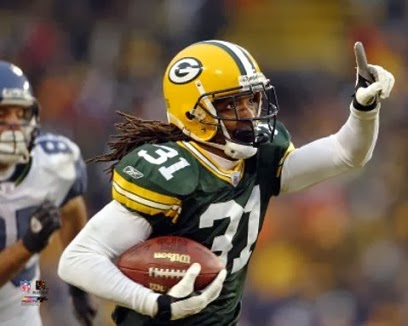
The Packers, in their second season under Head Coach Mike Holmgren, were in the playoffs for the first time since 1982. 24-year-old QB Brett Favre (pictured above), who had taken over the starting job during the previous year, displayed tremendous potential and was named to the Pro Bowl, but was also inconsistent. He gave up four interceptions in the season-ending loss to the Lions, giving him a league-leading 24 in all, against 19 touchdowns. WR Sterling Sharpe was a consensus first-team All-Pro who caught a NFL-high 112 passes for 1274 yards and 11 TDs, but none of the other receivers were exceptional, nor were the running backs. The defensive line was anchored by DE Reggie White, while Bryce Paup recorded 11 sacks from the outside linebacker position and SS LeRoy Butler was an All-NFL selection.  

There were 68,479 fans in attendance for the late Saturday afternoon contest at the Pontiac Silverdome. The teams exchanged punts to start the game before the Lions drove to the Green Bay 17 thanks to a pass from Erik Kramer to Brett Perriman that covered 18 yards in a third-and-12 situation and a 25-yard run by Barry Sanders. However, Kramer’s pass intended for Herman Moore was intercepted by CB Terrell Buckley.

The Packers had to punt following the ensuing series and the Lions again drove into Green Bay territory, advancing 50 yards in nine plays and not coming up empty. Kramer completed four passes, three of them to Perriman, and a pass interference penalty added nine yards. But Detroit was backed up by a false start penalty, a sack, and a run by Sanders that lost two yards, and while a throw to TE Rodney Holman was completed, it could not overcome a third-and-20 situation. Jason Hanson kicked a 47-yard field goal on the last play of the opening period.

The Packers started off the second quarter by putting together a 13-play, 80-yard possession. Brett Favre was successful on four passes and had a ten-yard run along the way. Two of the completions were to Sterling Sharpe, the last of which was good for a 12-yard touchdown. Chris Jacke added the extra point to put the visitors in front by 7-3.


The next Detroit series got off to a less-than-promising start when WR Mel Gray, normally an outstanding kick returner, fumbled on the return. The ball bounced back to hit his face mask and went out of bounds at the six yard line. Kramer hit on two passes, to Holman for 16 yards and Perriman for 12, and Sanders took off around end for a gain of 44 yards to the Green Bay 20. A false start moved the Lions back and, following an incomplete pass, Sanders ran for seven yards. Facing third-and-eight, Perriman caught a pass from Kramer for 13 yards to reach the five. Two carries by Sanders got the ball to the one, and from there Kramer threw to Perriman once more for a TD. Hanson’s point after made it a 10-7 tally with just over two minutes remaining in the first half, and that was the score at the intermission.

The teams started the third quarter by again trading punts. The Packers were pinned back at their five and Favre threw a pass that was intercepted by CB Melvin Jenkins and returned 15 yards for a TD. Hanson’s conversion put the Lions ahead by ten points at 17-7.

Green Bay responded by driving 72 yards in seven plays. Favre completed four passes, including one to TE Ed West for 23 yards and the last to Sharpe for a 28-yard touchdown. Jacke’s extra point reduced the home team’s lead to 17-14.

The Lions came back with Kramer throwing to Perriman for 19 yards, an unnecessary roughness penalty that picked up 15 yards on what had been an incompletion, and then another pass to Perriman for 31 yards to the Green Bay eight. Following a three-yard carry by Sanders, Kramer went to the air again, but this time FS George Teague intercepted in the end zone and returned it 101 yards for a TD. Jacke tacked on the PAT, and in stunning fashion the Packers were in the lead by 21-17.

As the game headed into the fourth quarter, the Lions put together a 15-play, 89-yard series. Kramer completed four passes and Sanders had a 13-yard run that set up a five-yard touchdown carry by RB Derrick Moore. Hanson added the extra point and Detroit was back in front at 24-21.

The Packers had a short possession and punted and the Lions drove to their 44 before they had to punt in turn. There was 2:26 left on the clock as the Green Bay offense regained possession at its 29. Favre threw a screen pass to RB Edgar Bennett for 12 yards and to West for nine. A run by Bennett picked up four more yards and Favre tossed a short pass to Sharpe for another six. On the next play, Favre was forced to scramble and found Sharpe, alone in the end zone thanks to a blown coverage, for a 40-yard touchdown (pictured below). Jacke’s extra point put Green Bay back in front by four points with 55 seconds to play.


The Lions, following a kickoff return of just eight yards by Gray, weren’t able to move past their own 20 in the remaining time and the Packers won by a final score of 28-24.

Detroit had wide leads in total yards (410 to 293) and first downs (25 to 16), and was especially dominant on the ground (175 to 89). However, the Lions turned the ball over twice, both in Green Bay territory, to one by the Packers, who also recorded the only four sacks of the game. Special teams were a factor as Corey Harris averaged 29.7 yards on three kickoff returns while Mel Gray was held to 11.0 yards on four returns.

Brett Favre completed 15 of 26 passes for 204 yards and three touchdowns while giving up one interception. Sterling Sharpe had 5 catches for 101 yards and all three of the TDs. Darrell Thompson led the Packers with 41 yards on 12 carries and added 32 yards on three pass receptions and Edgar Bennett rushed for 30 yards on 9 attempts while catching two passes for 21 yards. On defense, two of the sacks were accounted for by Reggie White.


For the Lions, Barry Sanders (pictured above) showed no ill effects from his layoff with 169 yards on 27 carries. Brett Perriman caught 10 passes for 150 yards and a touchdown. Erik Kramer was successful on 22 of 31 throws for 248 yards and a TD, but gave up two interceptions.

Following the dramatic win against Detroit, the Packers lost to the Cowboys the next week by a 27-17 score. But after the long postseason dry spell, 1993 marked the first of six straight playoff appearances, two of which resulted in Super Bowl appearances, won of them a victory. The Lions reached the playoffs after each of the next two seasons, losing in the Wild Card round each time, including to the Packers again the next year.

December 7, 2014

1997: Packers Defeat Buccaneers in NFC Central Showdown


Two strong defensive teams, the Green Bay Packers and Tampa Bay Buccaneers, met on December 7, 1997 in Tampa with the NFC Central title on the line.

The Packers, coached by Mike Holmgren, were the defending NFL Champions and had a 10-3 record thus far. QB Brett Favre (pictured at right) was the key to the offense and was helped by the presence of wide receivers Robert Brooks and Antonio Freeman as well as capable RB Dorsey Levens. Star DE Reggie White was hindered by back pain but overall, the defense was tough and aggressive.

Tampa Bay was right behind the Packers at 9-4, having gotten off to a 5-0 start before losing three straight contests, starting with a defeat at Green Bay. No longer a perennial loser with the arrival of Head Coach Tony Dungy, the offense benefited from the presence of rookie RB Warrick Dunn, who teamed well with RB Mike Alstott in the conservative offense that was directed by QB Trent Dilfer. DT Warren Sapp anchored a solid defensive line and linebackers Hardy Nickerson and Derrick Brooks were outstanding. 

There were a franchise-record 73,523 fans in attendance at Houlihan’s Stadium on a clear afternoon. The Buccaneers had the opening possession and advanced into Green Bay territory as Trent Dilfer threw to WR Karl Williams for a 35-yard gain, but the drive stalled at the 39 and they punted. The Packers gave the ball right back on their first play when TE Mark Chmura fumbled when hit hard by SS John Lynch and CB Donnie Abraham after catching a short pass and LB Hardy Nickerson (pictured below) recovered at the Green Bay 13. Two carries by Mike Alstott picked up seven yards and the Bucs got on the board when Michael Husted kicked a 24-yard field goal.


The Packers had to punt following a short series, but it was their turn to benefit from a turnover when Alstott fumbled the ball away at the Tampa Bay 36, FS Eugene Robinson recovering. A loss on a running play and false start penalty backed the visitors up, but Brett Favre, scrambling away from pressure, threw deep to Robert Brooks for a 43-yard touchdown. Ryan Longwell added the extra point and the Packers were in front by 7-3.

The teams exchanged punts as the game headed into the second quarter. Tampa Bay got a break when Dorsey Levens fumbled and Abraham recovered at his 40, and while the Bucs lost ground and again had to punt, they got the ball back on yet another turnover when Lynch intercepted an overthrown Favre pass and returned it 28 yards to the Green Bay 30. The home team still wasn’t able to move the ball on offense, and Dilfer suffered a sprained ankle when sacked on third down by Reggie White, but they managed to not come up empty when Husted kicked a 48-yard field goal to narrow the score to 7-6.

Taking over with 1:52 remaining in the first half, the Packers moved into Tampa Bay territory as Favre completed six straight passes, the longest to Antonio Freeman for 27 yards to the Bucs’ 14. But Longwell’s 31-yard field goal attempt was blocked by Nickerson and the tally remained unchanged at halftime.

The teams traded punts to start the third quarter until the Packers put together a 10-play, 73-yard series. Favre again completed six passes, including one of 18 yards to Freeman to convert a third down and two to Chmura that picked up 20 and 10 yards to reach the Tampa Bay 15. Favre’s last completion was to Levens for an eight-yard touchdown and, with Longwell’s point after, Green Bay was ahead by 14-6.

The Buccaneers advanced methodically to the Green Bay 47, but once again a third down sack, this time by Robinson, forced another punt. As the game entered the final period, the Packers put together a long possession that covered 88 yards in 16 plays and used up over ten minutes of playing time. Levens started the drive off with runs of 17 and 15 yards and Favre completed five passes. Longwell kicked a 27-yard field goal and Green Bay’s lead was up to 11 points with 6:24 to play.

With Dilfer finally forced from the game by his injured ankle, Steve Walsh was at quarterback when the Buccaneers got the ball back, and he converted a third-and-12 situation with a completion to Williams (pictured below) that picked up 38 yards to the Green Bay 36. But three plays later, an interception snuffed out the threat.


Tampa Bay got one last shot with the clock down to 2:37 following a punt by the Packers, but three passes netted nine yards and an incompletion on fourth down effectively ended the game. Green Bay came away the winner by a final score of 17-6.

The Packers generated far more offense than the Buccaneers, reflected in their lead in total yards (362 to 161) and first downs (20 to 8). While Green Bay was held to 82 yards on the ground, Tampa Bay’s normally robust running game was held to 67. The Packers had more turnovers, with three to the Bucs’ two, but theirs all came in the first half and Green Bay also recorded all of the game’s four sacks.

Brett Favre completed 25 of 33 passes for 280 yards and two touchdowns, giving up one interception. Dorsey Levens rushed for 54 yards on 22 carries but also led the Packers in pass receptions with 8, good for 64 yards and a TD. Antonio Freeman gained 73 yards on 5 catches and Robert Brooks (pictured below) was right behind with 71 yards on his three receptions that included a score.


For the Buccaneers, Trent Dilfer was successful on just 6 of 17 throws for 67 yards and no TDs, although also no interceptions. Steve Walsh was four-of-nine for 50 yards and was picked off once. Karl Williams caught 5 passes for 87 yards, by far the biggest performance of any of the Tampa Bay receivers, while Mike Alstott gained just 34 yards on 10 carries and Warrick Dunn was held to 33 yards on 12 attempts.

“In my 43 years, I’m not sure I’ve been around a better effort than the one today,” said Green Bay defensive coordinator Fritz Shurmur regarding his unit’s performance.

“We had some chances, some turnovers,” said Coach Dungy of his Buccaneers. “We couldn’t convert. They converted theirs. That was pretty much the difference.”

The win clinched a third straight NFC Central title for the Packers, who ended the regular season with a 13-3 record. Tampa Bay placed second at 10-6, the franchise’s best record since 1979, and qualified for the playoffs as a Wild Card. A win over Detroit in the first round set up another meeting for the Buccaneers with the Packers at the Divisional level, and for a third time they lost to Green Bay. The Packers went on to win the NFC Championship, losing a close contest to Denver in the Super Bowl.

Brett Favre led the NFL in touchdown passes (35) and the NFC in passing yards (3867). He was Associated Press MVP, consensus first-team All-NFL, and a Pro Bowl selection for the third consecutive year. Dorsey Levens was also named to the Pro Bowl as he placed second in NFC rushing with 1435 yards, in addition to catching 53 passes for another 370 yards and scoring a career-high 12 touchdowns.

January 4, 2014

2004: Harris INT Return in Overtime Gives Packers Win Over Seahawks


The NFC Wild Card playoff game on January 4, 2004 featured the Green Bay Packers, winners of the NFC North with a 10-6 record, against the visiting Seattle Seahawks, also a 10-6 team that had placed second in the NFC West.

The Packers, coached by Mike Sherman for the fourth year, had struggled through much of the season and were at 6-6 after a Thanksgiving loss at Detroit, but won their remaining games to win the division. The key to the offense was 34-year-old QB Brett Favre (pictured above), as had been the case for over a decade. Seemingly indestructible, Favre had been playing with a broken thumb on his throwing hand for the previous eleven weeks. RB Ahman Green rushed for a NFC-leading 1883 yards during the season. Second-year WR Javon Walker emerged as a fine deep threat while WR Donald Driver remained the top receiver. The midseason addition of NT Grady Jackson boosted the defense and rookie MLB Nick Barnett led the club in tackles.

Seattle was coached by Mike Holmgren, who had led the Packers to two NFC Championships and a Super Bowl win in 1996-97. Now he had the Seahawks in the playoffs for the first time in four years, but while they had been undefeated at home, they were only 2-6 on the road. QB Matt Hasselbeck, who had originally been drafted by Green Bay, directed the offense with skill and RB Shaun Alexander was productive. The pass defense was suspect, ranking 27th in the NFL during the regular season.

It was a 20-degree day with a wind chill that was far lower and there were 71,457 fans in attendance at Lambeau Field. The Packers punted following their first possession and Seattle drove 57 yards in ten plays. Matt Hasselbeck completed consecutive passes to WR Koren Robinson for 11 and 15 yards to get the series underway and with Shaun Alexander contributing runs of 8 and 17 yards along the way, the Seahawks reached the Green Bay nine. However, from there Alexander lost yardage on two carries and, after Hasselbeck’s third down pass fell incomplete, Josh Brown kicked a 30-yard field goal.

The teams traded punts for the remainder of the opening period. Early in the second quarter, the Packers took possession at midfield following a punt and moved quickly to the Seattle 21 when Brett Favre threw to FB William Henderson for a 29-yard gain. Two carries by Ahman Green (pictured below) picked up eight yards and, after an incomplete pass on third down, Ryan Longwell tied the score with a 31-yard field goal.


The Seahawks came back with an eight-play, 51-yard drive. Hasselbeck had a 28-yard completion to WR Bobby Engram to get the ball to the Green Bay 28, but after getting a first down at the 17, Hasselbeck was held to three incomplete passes and Seattle settled for a 35-yard field goal by Brown that put the visitors back in front.

Green Bay came back quickly, taking five plays to advance 80 yards. Favre immediately connected with Javon Walker for a 44-yard gain to the Seattle 36. Another pass, this time to Green, picked up another 13 yards and Favre finished the series with a throw to TE Bubba Franks for a 23-yard touchdown. Longwell kicked the extra point and the Packers had a 10-6 lead.

The Seahawks lost yardage and had to punt following their next series and the Packers got the ball back in Seattle territory with 2:18 remaining in the half. In a possession featuring a Favre pass to Donald Driver that gained 23 yards, the Packers managed to add to their lead when Longwell booted a 27-yard field goal. The score was 13-6 at halftime.

The Seahawks had the first possession in the third quarter and drove 74 yards in ten plays. Hasselbeck completed five passes along the way, starting with a throw to WR Darrell Jackson that picked up 25 yards to start things off. TE Itula Mili had two receptions that totaled 29 yards and, on fourth-and-goal at the Green Bay one, Alexander scored a touchdown. Adding Brown’s extra point, the game was tied at 13-13.

Following a punt by the Packers, Seattle again mounted a scoring drive, this time advancing 77 yards in 11 plays. Six of the plays were Hasselbeck pass completions, including one to Engram for 15 yards on third-and-four and another to Robinson that picked up 33 yards to the Green Bay 19. Once again, Alexander ran for a one-yard TD and, adding on Brown’s PAT, the visitors were up by 20-13.

Green Bay came back with a 12-play, 60-yard series that extended into the fourth quarter. Favre completed all five of his passes and Green ran for two yards on a fourth-and-one play at the Seattle three. Green followed up by gaining the last yard for a touchdown and, with Longwell adding the extra point, the game was once again tied at 20-20 with ten minutes remaining in regulation.

The Seahawks went three-and-out on their next possession and Tom Rouen’s punt was returned 21 yards by WR Antonio Chatman for good field position at the Seattle 49. Favre completed three passes and Green again converted a fourth down with a two-yard carry (although he lost the ball at the end, it was ruled that his forward progress had been stopped before the fumble, much to the consternation of Mike Holmgren), one of his six during the 12-play, 51-yard drive. He picked up a total of 21 yards, including one yard for a TD. Longwell’s extra point again made it a seven-point contest with the clock now down to less than three minutes.

The Seahawks took over at their 33 following the kickoff and Hasselbeck immediately passed to Robinson for nine yards and Jackson for another 16. Now at the Green Bay 42, on the second play after the two-minute warning Hasselbeck connected with Engram for 34 yards to the eight. Alexander ran for two yards, a five-yard penalty moved the ball to the one, and it was Alexander going the final yard for a TD. Brown’s extra point again knotted the score at 27-27.

The Packers still had 51 seconds to work with and reached the Seattle 30 after Favre threw to Walker for 27 yards. But after letting the clock run down, Longwell’s 47-yard field goal attempt was unsuccessful and the game headed into overtime.

Seattle won the toss, with Hasselbeck shouting “We want the ball, we’re going to score”. The Seahawks didn’t, however, and the teams traded punts in OT. On Seattle’s second series, and facing third-and-11 at its own 45, Hasselbeck threw a pass that was intercepted by CB Al Harris (pictured below), who cut in front of WR Alex Bannister at the last moment. With clear sailing in front of him, Harris returned it 52 yards down the sideline for a touchdown and Green Bay came away with a stunning 33-27 win. It was the first time a defensive play ended a NFL overtime playoff game.


The Packers had the edge in total yards (397 to 340) while the teams were even with 22 first downs apiece. Neither club ran the ball consistently, with Green Bay compiling 78 yards on 32 carries and the Seahawks gaining 49 yards on 21 attempts. There was only one turnover in the game, and it was the game-winning play.

Brett Favre completed 26 of 38 passes for 319 yards and a touchdown with no interceptions. Donald Driver caught 6 passes for 66 yards while Javon Walker gained 111 yards on his 5 receptions. Ahman Green ran for 66 yards on 23 carries, including two TDs and the two big fourth down conversions, and contributed 5 catches for 44 more yards.


For the Seahawks, Matt Hasselbeck (pictured at right) was successful on 25 of 45 throws for 305 yards and no TDs with the one big interception. Shaun Alexander gained just 45 yards on 20 rushing attempts, but had the three short scoring carries. Koren Robinson led the club with 7 catches for 88 yards and Itula Mili had 6 receptions for 62 yards while Bobby Engram gained 83 yards on his four catches.

“This game came down to us making a play at the end,” said Coach Mike Sherman. “It could have gone either way.”

“I’m dying inside,” said Mike Holmgren from the losing side. “It hurts bad to lose this game today.”

The Packers went on to lose a close contest in overtime at Philadelphia in the Divisional round. They repeated as North Division champs in 2004 but lost in the Wild Card playoff game. Seattle had a lesser record at 9-7 but won the NFC West, also falling in the first round.

December 2, 2013

MVP Profile: Brett Favre, 1997

Quarterback, Green Bay Packers


Age:  28 (Oct. 10)
7th season in pro football, 6th with Packers
College: Southern Mississippi
Height: 6’2”   Weight: 225

Prelude:
Chosen by the Atlanta Falcons in the second round of the 1991 NFL draft, Favre saw scant action in Atlanta before being traded to Green Bay after one year. There was no question as to the young quarterback having outstanding tools, in particular a strong passing arm, but with new Head Coach Mike Holmgren looking to operate the West Coast offense, he was viewed as a raw talent with questionable maturity who would back up veteran Don Majkowski. However, Majkowski was injured early in the season and Favre nearly led the Packers to the postseason as he passed for 3227 yards and 18 TDs with a 64.1 completion percentage and was selected to the Pro Bowl. He also displayed toughness, playing the last seven games with a separated left shoulder. There were growing pains in ’93 as Favre, a natural improviser, bridled at Holmgren’s efforts at making him more disciplined. He led the NFL by throwing 24 interceptions, but Green Bay made it to the postseason and Favre was again named to the Pro Bowl. While he wasn’t selected in ’94, his numbers improved to 3882 yards passing with 33 TDs against 14 interceptions. In 1995 Favre led the league in passing yards (4413), TD passes (38), and TD percentage (6.7) and was not only selected to the Pro Bowl but was a consensus first-team All-NFL selection and received MVP recognition. He again received MVP, first-team All-NFL, and Pro Bowl honors in ’96 after once more leading the NFL in TD passes (a career-high 39) and TD percentage (7.2) and the Packers won the Super Bowl.

1997 Season Summary
Appeared and started in all 16 games
[Bracketed numbers indicate league rank in Top 20]

Passing
Attempts – 513 [6]
Most attempts, game – 43 at Detroit 9/28
Completions – 304 [4]
Most completions, game – 25 at Tampa Bay 12/7
Yards – 3867 [2, 1st in NFC]
Most yards, game – 363 at Indianapolis 11/16
Completion percentage – 59.3 [7, tied with Warren Moon]
Yards per attempt – 7.5 [4, tied with Jeff George & Mark Brunell]
TD passes – 35 [1]
Most TD passes, game – 5 vs. Minnesota 9/21
Interceptions – 16 [3, tied with Warren Moon]
Most interceptions, game – 3 at Detroit 9/28
Passer rating – 92.6 [4]
300-yard passing games – 2
200-yard passing games – 11

Rushing
Attempts – 58
Most attempts, game - 9 (for 32 yds.) at New England 10/27
Yards – 187
Most yards, game – 32 yards (on 9 carries) at New England 10/27
Yards per attempt – 3.2
TDs – 1

Scoring
TDs – 1
Points – 6

Postseason: 3 G
Pass attempts – 97
Most attempts, game - 42 vs. Denver, Super Bowl
Pass completions – 56
Most completions, game - 25 vs. Denver, Super Bowl
Passing yardage – 668
Most yards, game - 256 vs. Denver, Super Bowl
TD passes – 5
Most TD passes, game - 3 vs. Denver, Super Bowl
Interceptions – 3
Most interceptions, game - 2 vs. Tampa Bay, NFC Divisional playoff

Rushing attempts – 7
Most rushing attempts, game - 5 vs. Tampa Bay, NFC Divisional playoff
Rushing yards – -8
Most rushing yards, game - 2 vs. Tampa Bay, NFC Divisional playoff
Average gain rushing – -1.1
Rushing TDs – 0
2-pt PAT – 1

Awards & Honors:
NFL MVP: AP (co-winner)
1st team All-NFL: AP, PFWA, Sporting News
1st team All-NFC: Pro Football Weekly
Pro Bowl

Packers went 13-3 to finish first in the NFC Central while leading conference in scoring (422 points) and TDs (50). Won NFC Divisional playoff over Tampa Bay Buccaneers (21-7) and NFC Championship over San Francisco 49ers (23-10). Lost Super Bowl to Denver Broncos (31-24).

Aftermath:
Favre led the NFL in pass completions (347), completion percentage (63.0), and passing yards (4212) in 1998, although the team’s fortunes began to fade. He played through many injuries over the ensuing years to put together a string of 297 consecutive starts that finally ended in 2010. Along the way he had six 4000-yard passing seasons and reached 3000 in 18 years. He also threw 30 or more TD passes nine times. After initially retiring from the Packers in 2007, Favre made a comeback that led to an acrimonious departure from Green Bay and he played with the New York Jets in 2008. A season that started promisingly with the Jets proved disappointing and Favre led the league by tossing 22 interceptions. Again calling it quits, he was lured back by the Minnesota Vikings, finishing up with two seasons there. Overall, Favre left as the all-time NFL leader in pass attempts (10,169), completions (6300), yards (71,838), TD passes (508), and, on the downside, interceptions (336).

--


MVP Profiles feature players who were named MVP or Player of the Year in the NFL, AAFC (1946-49), AFL (1960-69), WFL (1974), or USFL (1983-85) by a recognized organization (Associated Press, Pro Football Writers Association, Newspaper Enterprise Association, United Press International, The Sporting News, Maxwell Club – Bert Bell Award, or the league itself). 

[Updated 11/30/14]

November 6, 2013

2000: Packers Beat Vikings on Stunning Freeman TD Catch in Overtime


The Green Bay Packers were struggling at 3-5 as they faced the division-rival Minnesota Vikings on November 6, 2000. While Head Coach Mike Sherman’s team still had star QB Brett Favre, very much in his prime at age 31, there were questions at running back, where veteran Dorsey Levens was out with an injury and backup Ahman Green, new to the team after two nondescript years with Seattle, was not yet established in the offense. WR Antonio Freeman appeared to be on the downside of his career and the rest of the receivers were ordinary. While the defense was not bad, it would be severely tested against Minnesota’s outstanding receivers.

The Vikings, under Head Coach Dennis Green for the ninth year, had a 7-1 record, having lost for the first time at Tampa Bay the previous week. Second-year QB Daunte Culpepper was easing successfully into the starting role and was helped by the presence of two outstanding wide receivers in Cris Carter and Randy Moss. RB Robert Smith was also highly productive. However, the defense was a cause of concern.

There were 59,854 fans in attendance for the rainy Monday night encounter at Lambeau Field. The Packers had first possession and punted. On Minnesota’s second play, Daunte Culpepper threw to Randy Moss on a slant and, after evading two tackles before being caught by DT Santana Dotson 20 yards down field, he lateraled to Cris Carter for an additional eight yards. A pass to Carter and two carries by Robert Smith advanced the ball to the Green Bay nine. On third-and-goal, Culpepper scrambled for an apparent touchdown, but it was nullified due to a personal foul penalty and the Vikings had to settle for a 30-yard Gary Anderson field goal.

Green Bay put together a 15-play, 81-yard drive that extended into the second quarter. Favre connected with Antonio Freeman for 20 yards on a third-and-five play and WR Bill Schroeder ran for 12 yards on a reverse that was helped by Favre’s block on LB Dwayne Rudd. Following a 15-yard completion to Freeman to get to the Minnesota five, the Packers couldn’t reach the end zone and Ryan Longwell kicked a 24-yard field goal to tie the score.

Key calls by the officials played a role in Minnesota’s next series. First, Culpepper was sacked by DT Russell Maryland, but an apparent fumble that was recovered by the Packers in the end zone was overruled with the officials explaining that the quarterback’s knee was already down. Then, on a third-and-19 play, a taunting penalty on CB Mike McKenzie gave the Vikings a first down. Smith ran for 22 yards and Culpepper threw to Moss for a 42-yard gain to the Green Bay 20. Another short pass was followed by a throw that Carter wrestled away from McKenzie for a five-yard TD. The series had gone 84 yards in eight plays and Anderson added the extra point to make it 10-3 in favor of the visitors.

The Packers came back with an 87-yard scoring drive. On the second play, Favre (pictured below) threw to Freeman for a 33-yard gain. An interference call on CB Cris Dishman added another 28 yards and, two plays later, Favre rolled out and, as he was being pulled down around the waist by LB Ed McDaniel, he flipped a pass underhand to Ahman Green, who caught the throw just inside the end zone for a touchdown. Longwell’s PAT once again made it a tie score at 10-10.


With time running out in the first half, the Vikings went 57 yards in nine plays. They converted in a third-and-eight situation when Moss out-jumped FS Darren Sharper to catch a Culpepper pass for a 33-yard gain. Two plays later, a screen pass to Smith gained 22 yards to the Green Bay 30. The drive came up dry at that point, with three passes falling incomplete, and Anderson booted a 48-yard field goal as the half ended to give the Vikings a 13-10 lead at the intermission.

In the third quarter, the Packers got a break on defense when McKenzie intercepted a Culpepper pass and returned it 26 yards to the Minnesota 34. They were able to advance 21 yards in six plays and Longwell kicked a 31-yard field goal to again knot the score at 13-13.

Minnesota came right back with a 73-yard drive. Smith gained 13 yards on a sweep and Culpepper, flushed out of the pocket, ran for nine yards to the Green Bay 38. However, the series stalled but, facing third-and-17, Culpepper tossed a swing pass to Smith that the running back took all the way for a 45-yard touchdown. Anderson’s extra point had the Vikings back up by seven.

The Packers responded with a big play when CB Allen Rossum returned the kickoff 90 yards to the Minnesota two yard line. Two plays later, Green powered over for a TD from that distance and, adding Longwell’s kick, the score was tied once more at 20-20.

In the fourth quarter, Green Bay got the ball back following a punt when RB David Palmer fumbled on the return and long snapper Rob Davis recovered at the Minnesota 35. However, the Packers were unable to capitalize on a series in which Favre was sacked for a 12-yard loss.

Green Bay had another shot when a pass interference call on CB Robert Tate was good for 28 yards, but Schoeder dropped a third-and-seven throw in the end zone. The Packers passed up a long field goal attempt into the wind and the resulting punt went into the end zone for a touchback.

The Packers got the ball back in their own territory, couldn’t move, and had to punt, with Josh Bidwell’s kick going only 25 yards. Starting from the Green Bay 48, Culpepper threw to Moss for 19 yards and, with time running out, the Vikings lined up for a 33-yard field goal attempt by Anderson to win the game. But holder Mitch Berger couldn’t handle the snap cleanly and had to abort the kick. Rolling out to his right – and apparently forgetting that it was only first down and he could have thrown the ball away, with the team then able to attempt another kick – he tossed a desperation pass down the field that was intercepted by CB Tyrone Williams as time ran out. With the score still tied at 20-20, the game headed into overtime. 

The Packers had the first possession in OT. They converted a third-and-nine as Favre threw to Schroeder for a 22-yard gain. Two runs netted six yards and, on a third-and-four play, Favre went deep for Antonio Freeman, who was well-covered by Cris Dishman. Freeman slipped on the slick turf and fell as Dishman muffed a potential interception, and the ball fell onto Freeman’s left arm (pictured at top). The receiver pulled it to his chest and, jumping up, got past SS Robert Griffith and sped to the end zone where a wild celebration ensued. Green Bay won in astonishing fashion by a score of 26-20.

The Vikings significantly outgained Green Bay (407 yards to 298) and had the edge in first downs (22 to 19). However, Minnesota turned the ball over five times, while the Packers suffered none. The Vikings were also penalized 11 times at a cost of 129 yards, to 8 flags for 63 yards on Green Bay.

Brett Favre completed 17 of 36 passes for 235 yards and two touchdowns with none intercepted. Antonio Freeman had 5 catches for 118 yards and the game-winning TD and Ahman Green also had 5 pass receptions, for 34 yards, to go along with his 68 rushing yards on 23 carries. He scored two touchdowns, one rushing and one receiving. Bill Schroeder contributed four catches for 63 yards.


For the Vikings, Randy Moss had four catches for 103 yards in the first half despite Green Bay’s concentrated attempt to stop him, but was marginalized in the second half and ended up with 6 receptions for 130 yards. Cris Carter added 5 catches for 59 yards and a TD. Daunte Culpepper was successful on 17 of 34 throws for 276 yards and two TDs, but also tossed three interceptions. Robert Smith ran for 122 yards on 24 carries and had another 67 yards and a score on his two catches.

The Packers lost the next week but finished strong by winning five of their last six games (including another victory over the Vikings). They ended up third in the NFC Central with a 9-7 record. Minnesota recovered to win four straight games before losing three to finish out the regular season at 11-5. That made them division champs and they beat the Saints in the Divisional playoff round before being soundly beaten by the Giants for the NFC title.

Brett Favre had a relatively off year by his standards. He led the NFC with 580 pass attempts, completing 58.3 percent for 3812 yards and 20 touchdowns as opposed to 16 interceptions. Antonio Freeman caught 62 passes for 912 yards and nine TDs. Ahman Green performed well in the second half of the year and, in addition to leading the team in rushing (1175 yards), he also had the most pass receptions (73). It set the stage for bigger years to come as he topped the thousand-yard rushing mark in six of his first seven years with the club.

Daunte Culpepper went on to tie for the NFL lead in touchdown passes (33, along with Peyton Manning of the Colts) while throwing for 3937 yards and a fourth-ranked passer rating of 98.0. He was selected to the Pro Bowl for the first time. So was Randy Moss, who was also a consensus first-team All-NFL honoree as he caught 77 passes for 1437 yards and a league-leading 15 receiving touchdowns. 

March 31, 2013

MVP Profile: Brett Favre, 1996

Quarterback, Green Bay Packers


Age:  27 (Oct. 10)
6th season in pro football, 5th with Packers
College: Southern Mississippi
Height: 6’2”   Weight: 220

Prelude:
Chosen by the Atlanta Falcons in the second round of the 1991 NFL draft, Favre saw scant action in Atlanta before being traded to Green Bay after one year. There was no question as to the young quarterback having outstanding tools, in particular a strong passing arm, but with new Head Coach Mike Holmgren looking to operate the West Coast offense, he was viewed as a raw talent with questionable maturity who would back up veteran Don Majkowski. However, Majkowski was injured early in the season and Favre nearly led the Packers to the postseason as he passed for 3227 yards and 18 TDs with a 64.1 completion percentage and was selected to the Pro Bowl. He also displayed toughness, playing the last seven games with a separated left shoulder. There were growing pains in ’93 as Favre, a natural improviser, bridled at Holmgren’s efforts at making him more disciplined. He led the NFL by throwing 24 interceptions, but Green Bay made it to the postseason and Favre was again named to the Pro Bowl. While he wasn’t selected in ’94, his numbers improved to 3882 yards passing with 33 TDs against 14 interceptions. In 1995 Favre led the league in passing yards (4413), TD passes (38), and TD percentage (6.7) and was not only selected to the Pro Bowl but was a consensus first-team All-NFL selection and received MVP recognition.

1996 Season Summary
Appeared and started in all 16 games
[Bracketed numbers indicate league rank in Top 20]

Passing
Attempts – 543 [5]
Most attempts, game – 61 vs. San Francisco 10/14
Completions – 325 [3, tied with Vinny Testaverde]
Most completions, game – 28 vs. San Francisco 10/14
Yards – 3899 [4, 1st in NFC]
Most yards, game – 395 vs. San Francisco 10/14
Completion percentage – 59.9 [9]
Yards per attempt – 7.2 [10]
TD passes – 39 [1]
Most TD passes, game – 4 on five occasions
Interceptions – 13 [17, tied with four others]
Most interceptions, game – 2 vs. San Francisco 10/14, at St. Louis 11/24, vs. Denver 12/8
Passer rating – 95.8 [2]
300-yard passing games – 2
200-yard passing games – 12

Rushing
Attempts – 49
Most attempts, game - 7 (for 2 yds.) vs. Tampa Bay 10/27
Yards – 136
Most yards, game – 25 yards (on 2 carries) at Minnesota 9/22
Yards per attempt – 2.8
TDs – 2

Scoring
TDs – 2
Points - 12

Postseason: 3 G
Pass attempts – 71
Most attempts, game - 29 vs. Carolina, NFC Championship
Pass completions – 44
Most completions, game - 19 vs. Carolina, NFC Championship
Passing yardage – 617
Most yards, game - 292 vs. Carolina, NFC Championship
TD passes – 5
Most TD passes, game - 2 vs. Carolina, NFC Championship, vs. New England, Super Bowl
Interceptions – 1
Most interceptions, game - 1 vs. Carolina, NFC Championship

Rushing attempts – 14
Most rushing attempts, game - 5 vs. San Francisco, NFC Divisional playoff, vs. Carolina, NFC Championship
Rushing yards – 35
Most rushing yards, game - 14 vs. Carolina, NFC Championship
Average gain rushing – 2.5
Rushing TDs – 1

Awards & Honors:
NFL MVP: AP, PFWA, NEA, Bert Bell Award, Sporting News
1st team All-NFL: AP, PFWA, Sporting News
1st team All-NFC: UPI, Pro Football Weekly
Pro Bowl

Packers went 13-3 to finish first in the NFC Central while leading the NFL in scoring (456 points) and touchdowns (56). Won NFC Divisional playoff over San Francisco 49ers (35-14), NFC Championship over Carolina Panthers (30-13), and Super Bowl over New England Patriots (35-21).

Aftermath:
Favre earned MVP honors for a third straight year in 1997 and the Packers were NFC Champions again. He led the NFL in touchdown passes (35) and was a consensus first-team All-Pro and Pro Bowl selection as well. He played through many injuries over the ensuing years to put together a string of 297 consecutive starts that finally ended in 2010. Along the way he had six 4000-yard passing seasons and reached 3000 in 18 years. He also threw 30 or more TD passes nine times. After initially retiring from the Packers in 2007, Favre made a comeback that led to an acrimonious departure from Green Bay and he played with the New York Jets in 2008. A season that started promisingly with the Jets proved disappointing and Favre led the league by tossing 22 interceptions. Again calling it quits, he was lured back by the Minnesota Vikings, finishing up with two seasons there. Overall, Favre left as the all-time NFL leader in pass attempts (10,169), completions (6300), yards (71,838), TD passes (508), and, on the downside, interceptions (336).

--

MVP Profiles feature players who were named MVP or Player of the Year in the NFL, AAFC (1946-49), AFL (1960-69), WFL (1974), or USFL (1983-85) by a recognized organization (Associated Press, Pro Football Writers Association, Newspaper Enterprise Association, United Press International, The Sporting News, Maxwell Club – Bert Bell Award, or the league itself). 

[Updated 2/4/14]
[Updated 11/29/14]

January 16, 2013

1994: Cowboys Overcome Packers for NFC Divisional Playoff Win


The Dallas Cowboys, winners of the Super Bowl following the 1992 NFL season, were strong again in ’93 and posted a conference-best 12-4 record in topping the NFC East. Rebuilt into a championship team by Head Coach Jimmy Johnson, the Cowboys had an offense constructed around QB Troy Aikman (pictured at right), RB Emmitt Smith, and WR Michael Irvin. The defense set a club record by allowing just 21 touchdowns and featured DT Russell Maryland, MLB Ken Norton, CB Kevin Smith, and FS Thomas Everett. Dallas faced the Green Bay Packers in a NFC Divisional Playoff game on January 16, 1994 as they sought to defend their title.

Green Bay was in the postseason for the second straight year under Head Coach Mike Holmgren, again posting a 9-7 record to finish third in the NFC Central but qualify for a Wild Card spot. In his second year as a starter, QB Brett Favre was still a work in progress who suffered with inconsistency (he was intercepted a league-leading 24 times) but was selected to the Pro Bowl. WR Sterling Sharpe caught 112 passes and TE Jackie Harris was a fine pass-catching tight end, but the running game was mediocre.  The defense was anchored by All-Pro DE Reggie White and also contained pass rushing LB Bryce Paup and SS LeRoy Butler. The Packers defeated the division-rival Lions in the Wild Card round to advance to the Divisional playoff against the Cowboys.

It was a mostly-cloudy day with 64,790 in attendance at Texas Stadium. The Packers got an apparent early break when Emmitt Smith, who was still recovering from a shoulder separation, fumbled after being hit by LB Tony Bennett and Butler recovered at the Dallas 43. But Green Bay gave the ball right back on the next play when Favre fumbled while being sacked by DE Tony Tolbert and DE Leon Lett recovered the ball for the Cowboys. The teams traded punts and, following a short series for Dallas, a fake punt on fourth-and-one failed to pick up the necessary yardage and Green Bay took over in Cowboys territory at the 28. This time the Packers got on the board but, after advancing 16 yards in seven plays, they had to settle for Chris Jacke kicking a 30-yard field goal.

The Cowboys were driving as the opening period ended, but early in the second quarter Butler intercepted an Aikman pass. However, the Packers lost yardage in three plays and punted, and Dallas put together an eight-play, 68-yard scoring series. Aikman completed four passes, the last to WR Alvin Harper for a 25-yard touchdown. Ed Murray added the point after and it was 7-3.

The Packers started off their next possession from deep in their own territory when CB Corey Harris fumbled the ball out of bounds at the four on the kickoff return. However, following a short run on first down, Favre threw to TE Darryl Ingram for seven yards and then hit Sterling Sharpe for a 48-yard gain to the Dallas 39. Green Bay advanced to the 31, from where Jacke’s 49-yard field goal try was unsuccessful when it hit the right upright.

The Cowboys came back with a 10-play, 45-yard series. Aikman had completions to Smith for 22 yards and to Irvin for 11 and 13 yards before the drive stalled at the Green Bay 23. Murray made good on a 41-yard field goal attempt that made it 10-3 with 28 seconds remaining in the half. The scoring wasn’t over, however, as Harris again lost the ball when stripped by DB Kenneth Gant on the kickoff return and safety Joe Fishback recovered the fumble for Dallas at the Green Bay 15. Aikman threw to Irvin for eight yards and then to TE Jay Novacek for six yards and a TD. The Cowboys went into halftime with an enhanced 17-3 lead.

The Packers had the first possession in the third quarter and punted, but got a break on defense when CB Terrell Buckley intercepted an Aikman pass at the Green Bay 40. Favre quickly passed them into Dallas territory and RB Darrell Thompson gained 12 yards on two carries, but the drive stalled at the 37. The Packers attempted to convert a fourth-and-eight situation, but Favre’s completion to TE Ed West gained only six yards.

The Cowboys made the most of the reprieve and went 69 yards in six plays. An 18-yard Aikman-to-Irvin completion had another 15 yards tacked on due to a face mask penalty and Aikman connected with Irvin again with a well-thrown pass to the back of the end zone for a 19-yard touchdown.

Down 24-10, the Packers came back with a scoring drive of their own. Favre completed four straight passes after facing a third-and-six situation at his own 22, the longest to Thompson for 30 yards. The nine-play, 82-yard series ended with Favre throwing to WR Robert Brooks for a 13-yard TD. With the extra point added, it was a 14-point game with just over a quarter remaining.

Following a punt by the Cowboys early in the final period that was returned 43 yards by Brooks, Favre was immediately picked off by DE Charles Haley after his pass was deflected by DE Jim Jeffcoat. Dallas moved down the field, going 47 yards in 9 plays, highlighted by a nine-yard Aikman completion to Novacek on a third-and-six play and another throw to Irvin that picked up 27 yards. The Packers stiffened and, on a third down play at the Green Bay 15, Aikman was sacked by Bryce Paup. However, Murray added a 38-yard field goal and the Cowboys had managed to run 5:33 off the clock.

With Favre throwing on every play, the Packers drove from their own 15 to the Dallas 15. But the thirteenth play of the possession ended with SS Darren Woodson intercepting a pass at the five to essentially nail down the win. Green Bay scored a touchdown in the last two minutes as Favre threw to Sharpe from 29 yards out, but it was a case of too little, too late. Dallas won by a score of 27-17.


The Cowboys had the edge in total yards (381 to 358) and first downs (23 to 19). Neither team gained much on the ground (97 yards on 27 attempts for Dallas, 31 yards on 13 carries for Green Bay) and the Packers sacked Aikman four times, to just two sacks of Favre. However, the Packers also turned the ball over on four occasions, to three by Dallas, and the Cowboys took better advantage of their breaks.

Troy Aikman completed 28 of 37 passes for 302 yards with three touchdowns against two interceptions. Michael Irvin (pictured above) led the Dallas receivers with 9 catches for 126 yards and a TD. Emmitt Smith gained 60 yards on 13 rushing attempts.

For the Packers, Brett Favre (pictured below) was successful on 28 of 45 throws, going 20 of 34 in the second half alone, for 331 yards with two touchdowns and two interceptions. RB Edgar Bennett, who gained just three yards on six carries, led the receivers with 9 catches for 53 yards while Sterling Sharpe gained 128 yards on his 6 receptions and scored a touchdown. Darrell Thompson was the leading rusher with 28 yards on 7 attempts.


“I thought our defense played a very fine first half,” said Mike Holmgren. “That’s why that touchdown near the end of the first half hurt so much.”

“That was probably the biggest play of the game,” said Thomas Everett of the fumble referenced by Holmgren that set up the score before halftime. “We did a good job. We needed something like that, because it was a tight game.”
 
“You’ve just got to give them all the credit in the world,” summed up Green Bay DE Matt Brock. “They play like world champs.”

The Cowboys went on to defeat the 49ers for the NFC title for the second straight year and then won the Super Bowl over the Buffalo Bills, also for the second year in succession. Jimmy Johnson left as head coach, to be succeeded by Barry Switzer, and while Dallas put together another 12-4 record in 1994, the club fell short in the NFC title game. The Packers were 9-7 for the third straight year in ’94, again qualifying for the postseason as a Wild Card and falling once again to the Cowboys at the Division level. Things would change regarding the relative status of the two teams later in the decade, particularly as Brett Favre improved, but at this point Dallas was the superior club.