April 21, 2016

Highlighted Year: Tim Brown, 1988

Wide Receiver, Los Angeles Raiders


Age: 22
1st season in pro football
College: Notre Dame
Height: 6’0”   Weight: 190

Prelude:
The versatile Brown was utilized primarily as a flanker in college and also as a runner from scrimmage and kick returner. He ended up as Notre Dame’s all-time pass receiving yardage leader (2493 on 137 catches), returned six kicks (three punts and three kickoffs) for touchdowns, and won the 1987 Heisman Trophy as well as receiving consensus All-American honors. Brown was chosen by the Raiders in the first round of the 1988 NFL draft (sixth overall) and had an impact both as a pass receiver and kick returner.

1988 Season Summary
Appeared in all 16 games
[Bracketed numbers indicate league rank in Top 20]

Pass Receiving
Receptions – 43      
Most receptions, game – 8 (for 95 yds.) vs. Kansas City 10/30
Yards – 725
Most yards, game – 114 (on 4 catches) at Seattle 11/28
Average gain – 16.9 [15]
TDs – 5
100-yard receiving games – 1

Rushing
Attempts – 14
Most attempts, game – 3 (for 17 yds.) at Denver 9/26, (for 13 yds.) vs. Miami 10/9, (for 17 yds.) vs. Atlanta 11/20
Yards – 50
Most yards, game – 17 yards (on 3 carries) at Denver 9/26, (on 3 carries) vs. Atlanta 11/20
Average gain – 3.6
TDs – 1

Kickoff Returns
Returns – 41 [1, tied with Joe Cribbs]
Yards – 1098 [1]
Most yards, game – 178 (on 5 ret.) at Seattle 11/28
Average per return – 26.8 [1]
TDs – 1 [1, tied with seven others]
Longest return – 97 yards

Punt Returns
Returns – 49 [2]
Yards – 444 [3]
Most yards, game – 102 (on 7 ret.) at San Diego 11/6
Average per return – 9.1 [14]
TDs – 0
Longest return – 36 yards

All-Purpose yards – 2317 [1]

Scoring
TDs – 7
Points – 42

Awards & Honors:
1st team All-NFL: PFWA, Pro Football Weekly, Sporting News
1st team All-AFC: Pro Football Weekly
Pro Bowl

Raiders went 7-9 to finish third in the AFC West.

Aftermath:
Brown’s 1989 season ended with torn knee ligaments in the opening game and he was slow to come back, following up with a mediocre year in ’90. He began to return to form in 1991 and ’92, catching 36 and 49 passes, respectively, before breaking out with 80 receptions for 1180 yards and seven TDs in 1993. It was the first of seven straight seasons in which he had at least 80 catches and nine consecutive thousand-yard receiving totals, with highs of 104 receptions and 1408 yards in 1997. While lacking his former speed, Brown remained a dangerous runner after the catch. He stayed with the Raiders, who returned to Oakland in 1995, through the 2003 season, a total of 16 years, and caught 1070 passes for 14,734 yards and 99 touchdowns, all franchise records, as well as his 104 total TDs. He finished up with Tampa Bay in 2004, bringing his career totals to 1094 pass receptions, which ranked third in NFL history at the time, for a second-ranked 14,934 yards and 100 TDs. He added another 45 catches for 581 yards and three TDs in 12 postseason games. As a kick returner, he averaged 25.2 yards on 49 kickoff returns with one TD and 10.2 yards on 326 punt returns, scoring three touchdowns. In all, he compiled 19,682 all-purpose yards, the league’s fifth highest total at the time. Brown received consensus first-team All-NFL honors once, at least some first-team recognition after one other season, was first- or second-team All-AFC seven times, and was selected to nine Pro Bowls. He was inducted into the Pro Football Hall of Fame, Class of 2015.

--

Highlighted Years features players who were consensus first-team All-League* selections or league* or conference** leaders in the following statistical categories:

Rushing: Yards, TDs (min. 10)
Passing: Yards, Completion Pct., Yards per Attempt, TDs, Rating
Receiving: Catches, Yards, TDs (min. 10)
Scoring: TDs, Points, Field Goals (min. 5)
All-Purpose: Total Yards
Defense: Interceptions, Sacks
Kickoff Returns: Average
Punt Returns: Average
Punting: Average

*Leagues include NFL (1920 to date), AFL (1926), AFL (1936-37), AAFC (1946-49), AFL (1960-69), WFL (1974-75), USFL (1983-85)

**NFC/AFC since 1970

April 19, 2016

2004: Patriots Obtain Corey Dillon from Bengals


On April 19, 2004 the New England Patriots obtained accomplished but discontented RB Corey Dillon from the Cincinnati Bengals. To do so they traded a second-round draft pick to Cincinnati that had previously been obtained from Miami (the Bengals used it to select Maryland FS Madieu Williams, who moved into the starting lineup as a rookie but had problems with injuries during his four years with the club).

The 29-year-old Dillon (he turned 30 during the 2004 season) was Cincinnati’s all-time rushing leader, having gained 8061 yards over the course of seven seasons, and was selected to the Pro Bowl three times. He further held a total of 18 franchise records at the time that included most rushing yards in a season (1435). At 6’1” and 225 pounds he had the size to be a punishing runner between the tackles while also possessing speed and elusiveness.

Dillon, who played collegiately at the Univ. of Washington, was originally chosen by the Bengals in the second round of the 1997 NFL draft and came on strong in the second half of his rookie year, gaining 933 of his 1129 rushing yards and scoring 8 of 10 TDs in the last eight games, highlighted by a 246-yard, four-touchdown performance in his fifth contest as a starter. It was the first of six consecutive seasons reaching the thousand-yard rushing threshold. Along the way Dillon had two more 200-yard single-game performances, including a then-league record 278 against the Broncos in 2000.

Dillon began sharing the rushing duties with RB Rudi Johnson in 2003 and had been pushing for a trade, complaining that he should be carrying more of the load. Following a season-ending loss to the Browns at Paul Brown Stadium, Dillon reportedly threw some of his equipment into the stands. He had further gotten into a public spat with OT Willie Anderson, calling him “a bum” on a sports radio show after the Pro Bowl tackle accused Dillon of being selfish at a point when the Bengals were still in playoff contention.

Reportedly, Coach Belichick laid down ground rules to Dillon prior to the trade being finalized. “We are very excited about Corey Dillon becoming a Patriot,” the coach said in reaction to the deal being completed. “Corey joins Kevin Faulk and our other very good backs to deepen an already competitive running back position.”

The Patriots had won two NFL Championships in the previous three years, including 2003, without a feature running back in an offense largely propelled by the passing of QB Tom Brady. Antowain Smith had been a stalwart, if plodding, ground gainer since arriving in 2001 and shared the duties with the more versatile Kevin Faulk in ’03, gaining 642 yards to Faulk’s 638, while Faulk caught 48 passes for 440 yards to Smith’s 92 yards on 14 receptions. The arrival of Dillon marked the end of the line in New England for the 32-year-old Smith.

Any concerns about Dillon and the wisdom of trading for him were resolved during an outstanding 2004 season. He started strong, with a 15-carry, 86-yard effort in an opening-week win over the Colts and followed with 158 yards on 32 attempts at Arizona the next week. He had four straight hundred-yard games as the Patriots got off to a 7-1 start and ended up with a total of nine such performances over the course of the season. Dillon ended up with a club-record 1635 rushing yards on 345 carries for an average gain of 4.7 yards and scored 12 touchdowns. He gained another 292 yards in three playoff games, with 144 coming in a Divisional-level win over the Colts and 75 yards on 18 carries in the Super Bowl victory against the Philadelphia Eagles. Dillon was chosen to the Pro Bowl for the first time in three years and, moreover, proved to be a leader who fit well in New England’s team-first approach.

Dillon spent two more seasons with the Patriots, rushing for lesser totals of 733 and 812 yards, although scoring 12 and 13 TDs, respectively, in 2005 and ’06. He was hindered by a bad ankle in ’05 and showed increased signs of wear in 2006, when he began to lose playing time to rookie Laurence Maroney. Released in the offseason, he ultimately retired.

In his three years in New England, Dillon gained 3180 yards on 753 rushing attempts (4.2 avg.) with 37 TDs. He also caught 52 passes for 431 yards and another two scores (Kevin Faulk continued to be the preferred receiver out of the backfield in addition to being a change-of-pace runner). In eight postseason games, he rushed for 508 yards and four TDs and accumulated 12 pass receptions for 74 yards.

April 18, 2016

Highlighted Year: Al Dorow, 1960

Quarterback, New York Titans


Age: 31 (Nov. 15)
7th season in pro football, 1st in AFL & with Titans
College: Michigan State
Height: 6’0”   Weight: 195

Prelude:
Originally a halfback in college, Dorow shifted to quarterback as a sophomore and guided Michigan State to a 9-0 record as a senior in 1951. He was chosen by the Washington Redskins in the third round of the ’52 NFL draft but first had to fulfill a military commitment before joining the Redskins in 1954. Starting QB Eddie LeBaron having departed for the CFL, Dorow saw considerable action and threw for 997 yards and 8 touchdowns, although giving up 17 interceptions. With the return of LeBaron in ’55, Dorow saw scant action as a reserve but when LeBaron suffered a knee injury in 1956 he started seven games and played well enough to earn Pro Bowl recognition. However, an offseason contract dispute caused Dorow to be traded to Philadelphia where he was little used in ’57 and he moved on to Canada with Saskatchewan and British Columbia in 1958 and Toronto in ‘59. Overall in the CFL, Dorow passed for 2363 yards and 17 TDs, with 35 INTs, and, highly mobile, rushed for 214 yards. With the formation of the AFL in 1960, Dorow joined the New York Titans and proved to be a good fit in Head Coach Sammy Baugh’s pass-oriented offense, where he had outstanding receivers in flanker Don Maynard and split end Art Powell. While not having great arm strength, he was a daring play caller and possessed excellent leadership qualities. 

1960 Season Summary
Appeared in all 14 games
[Bracketed numbers indicate league rank in Top 20]

Passing
Attempts – 396 [3]
Most attempts, game – 48 at Oakland 12/11
Completions – 201 [3]
Most completions, game – 29 at Oakland 12/11
Yards – 2748 [3]
Most yards, game – 375 at Oakland 12/11
Completion percentage – 50.8 [4]
Yards per attempt – 6.9 [3]
TD passes – 26 [1]
Most TD passes, game – 4 at Dallas 10/2
Interceptions – 26 [2]
Most interceptions, game – 4 vs. Houston 10/23
Passer rating – 67.8 [3]
300-yard passing games – 2
200-yard passing games – 7

Rushing
Attempts – 90 [17]
Most attempts, game – 18 (for 72 yds.) at Buffalo 10/16
Yards – 453 [11]
Most yards, game – 72 yards (on 18 carries) at Buffalo 10/16
Average gain – 5.0 [4]
TDs – 7 [4, tied with Wray Carlton]

Punting
Punts – 6 [12, tied with Ken Hall]
Yards – 264 [12]
Average – 44.0
Punts blocked – 0
Longest punt – 56 yards

Scoring
TDs – 7 [13, tied with Billy Cannon, Al Carmichael & Dave Smith]
Points – 42

Awards & Honors:
2nd team All-AFL: League

Titans went 7-7 to finish second in the AFL Eastern Division while leading the league in touchdowns (51) and scoring (380 points).

Aftermath:
Dorow followed up in 1961 by leading the AFL in pass attempts (438) and completions (197), as well as rushing yards by a quarterback (317) for the second straight year, but also interceptions thrown (30) as the Titans again went 7-7. He was selected for the first AFL All-Star Game. Suffering from a sore shoulder, Dorow was traded to Buffalo and started four games before further damage to his arm ended his career. Overall in the AFL, Dorow passed for 5732 yards and 47 TDs while giving up 63 interceptions and rushed for 827 yards and 11 touchdowns. In four NFL seasons, he threw for 1976 yards and 17 TDs with 39 INTs and  ran for 323 yards and 5 scores. Dorow was selected to one Pro Bowl and one AFL All-Star Game. He went into coaching and was head coach of the CFL’s Hamilton Tiger-Cats in 1971.

--

Highlighted Years features players who were consensus first-team All-League* selections or league* or conference** leaders in the following statistical categories:

Rushing: Yards, TDs (min. 10)
Passing: Yards, Completion Pct., Yards per Attempt, TDs, Rating
Receiving: Catches, Yards, TDs (min. 10)
Scoring: TDs, Points, Field Goals (min. 5)
All-Purpose: Total Yards
Defense: Interceptions, Sacks
Kickoff Returns: Average
Punt Returns: Average
Punting: Average

*Leagues include NFL (1920 to date), AFL (1926), AFL (1936-37), AAFC (1946-49), AFL (1960-69), WFL (1974-75), USFL (1983-85)

**NFC/AFC since 1970

April 16, 2016

Highlighted Year: John Carney, 2008

Placekicker, New York Giants


Age: 44
21st season in pro football, 1st with Giants
College: Notre Dame
Height: 5’11” Weight: 180

Prelude:
Carney kicked 51 field goals in college and set a Notre Dame season record with his 89.5 percentage in 1984 (17 of 19). He was signed as an undrafted free agent by the Cincinnati Bengals in 1987 but failed to make the team and sat out the year. Carney finished out the last four games for the Tampa Bay Buccaneers in 1988, substituting for the injured Donald Igwebuike, and started the year in ’89, playing in a total of five games and making good on two of five field goal attempts and all six of his PAT attempts. After failing to make the Chargers during the 1990 preseason, he appeared in one game with the Rams and was then re-signed by San Diego, succeeding on 19 of 21 field goal attempts. Following a lesser year in ’91, Carney bounced back to play a total of 10 full seasons with the Chargers. Highlights included hitting on 31 of 40 field goal tries in 1993, with two games in which he kicked six field goals in as many attempts, and a 1994 season in which he led the NFL with 34 field goals, out of just 38 attempts, as well as totaling a league-leading 135 points. Carney was a consensus first-team All-NFL choice that year and was selected to the Pro Bowl. Carney departed following the 2000 season as the club’s all-time leader in field goals (261) and scoring (1076 points). While not strong on kickoffs, and with concerns about his range, he joined the New Orleans Saints in 2001 and stayed for six years, providing reliability if not long distance. Carney split time with the Jaguars and Chiefs in 2007 before moving on to the New York Giants in ’08 after regular PK Lawrence Tynes was sidelined by injury.

2008 Season Summary
Appeared in 15 of 16 games
[Bracketed numbers indicate league rank in Top 20]

Kicking
Field goals – 35 [2, 1st in NFC]
Most field goals, game – 4 vs. Cincinnati 9/21, at Pittsburgh 10/26, at Minnesota 12/28
Field goal attempts – 38 [3, tied with Matt Bryant & Rian Lindell]
Most field goal attempts, game – 5 at Minnesota 12/28
Field goal percentage – 92.1 [4]
PATs – 38 [17]
PAT attempts – 38 [17]
Longest field goal – 51 yards at Minnesota 12/28

Scoring
Field Goals – 35
PATs – 38
Points – 143 [3]

Postseason: 1 G (NFC Divisional playoff vs. Philadelphia)
Field goals – 3
Field goal attempts – 5
PATs – 0
PAT attempts – 0
Longest field goal – 36 yards

Awards & Honors:
2nd team All-NFL: AP
Pro Bowl

Giants went 12-4 to finish first in the NFC East while leading the NFL in rushing yards (2518). Lost NFC Divisional playoff to Philadelphia Eagles (23-11).  

Aftermath:
With the younger, and stronger-legged, Lawrence Tynes recovered from his injury, Carney’s contract was not renewed by the Giants and he spent parts of the 2009 and ’10 seasons back with the Saints, finishing his 23-year career at 46 years old. Overall, Carney kicked 478 field goals in 580 attempts (82.4 %) and added 628 extra points (with 10 misses) for a total of 2062 points. At the time of his retirement, the field goal and point totals ranked third all-time in NFL history. He received first-team All-NFL recognition once, second-team honors twice, and was chosen to two Pro Bowls. Carney was named to the Chargers’ 50th anniversary all-time team.

--

Highlighted Years features players who were consensus first-team All-League* selections or league* or conference** leaders in the following statistical categories:

Rushing: Yards, TDs (min. 10)
Passing: Yards, Completion Pct., Yards per Attempt, TDs, Rating
Receiving: Catches, Yards, TDs (min. 10)
Scoring: TDs, Points, Field Goals (min. 5)
All-Purpose: Total Yards
Defense: Interceptions, Sacks
Kickoff Returns: Average
Punt Returns: Average
Punting: Average

*Leagues include NFL (1920 to date), AFL (1926), AFL (1936-37), AAFC (1946-49), AFL (1960-69), WFL (1974-75), USFL (1983-85)

**NFC/AFC since 1970

April 14, 2016

1985: Collier Leads Renegades to Upset of Outlaws


The Orlando Renegades of the United States Football League were hoping to build off of their first win of the season the previous week as they played the Arizona Outlaws on April 14, 1985. The Renegades, coached by Lee Corso, were the relocated Washington Federals, a club that had gone a combined 7-29 in two USFL seasons, and losing the first six games of their third campaign promised only more disappointment. QB Reggie Collier (pictured above) was highly mobile as well as an able passer and WR Joey Walters was a quality receiver. But the Renegades were held back by having the league’s poorest defense.

Arizona was a combination of the previous year’s Arizona Wranglers and Oklahoma Outlaws, coached by Frank Kush, formerly of Arizona State. Veteran QB Doug Williams was a capable passer and also had a good target in WR Alphonso Williams. The roster contained several holdover veterans from the Wranglers team that had reached the 1984 USFL title game and the club was off to a respectable 4-3 start.

There were 32,169 fans in attendance on a hundred-degree day at Sun Devil Stadium. It was not a promising beginning for the Renegades when FB William Miller was lost to a knee injury on the opening kickoff. But the visitors scored first during the opening period after DT Ed McAleney recovered a fumble by the Outlaws at the Arizona 46. Shortly thereafter, Reggie Collier rolled to his right and threw long to WR Jackie Flowers for a 38-yard touchdown. Jeff Brockhaus added the extra point.

Before the first quarter was over, Orlando got another break when FB Rickey Claitt grabbed a deflected Collier pass and gained 31 yards. On the next play, RB Curtis Bledsoe, running to his left, went 19 yards for a TD and Brockhaus again converted.

Down by 14-0, the home team narrowed the score in the second quarter. A short Arizona punt hit WR Jeff Smith of the Renegades and was recovered by the Outlaws at the Orlando 13, and two plays later Doug Williams threw to TE Ron Wheeler, who made a diving catch for an 11-yard touchdown with five minutes remaining in the first half. Luis Zendejas kicked the point after. On Arizona’s next possession, Doug Williams connected with Alphonso Williams for a gain of 45 yards to the Orlando four. But the Renegades held on defense and the Outlaws settled for a 20-yard Zendejas field goal with the clock down to 34 seconds. The score was 14-10 at halftime.

In the third quarter, Arizona made it a one-point contest with a Zendejas field goal from 42 yards. However, the Renegades put together a long drive that covered 81 yards in 12 plays, including passes to Walters for gains of 33 and 15 yards and culminating in a three-yard scoring run by Claitt. Brockhaus added the extra point to increase Orlando’s lead to 21-13.

The Outlaws struck back before the period was over as Doug Williams connected with Alphonso Williams for a 54-yard TD. However, an attempt to tie the score with a two-point conversion failed. Still, it was a two-point contest at 21-19 heading into the final period.

In the fourth quarter, the Renegades maintained possession for 8:45 in a key drive that included carries by Collier of 8 and 14 yards to convert third downs. With 2:08 left on the clock, Jeff Brockhaus extended Orlando’s lead with a 38-yard field goal. There was still time for the Outlaws, but they now needed a touchdown to win and, starting from their own 27 following the kickoff, Doug Williams, confronted by an inspired defense, threw four incomplete passes and the Renegades held on for a 24-19 victory.

The Renegades led in total yards (303 to 231), first downs (16 to 12), and time of possession (37:11 to 22:49). The Outlaws had three sacks, to one by Orlando, and the Renegades were penalized 9 times for 60 yards, to six flags for 50 yards thrown on Arizona. Orlando also turned the ball over twice, to one suffered by the Outlaws.

Reggie Collier completed 12 of 23 passes for 180 yards with a touchdown and an interception and also ran the ball for 48 yards on 9 carries. Rickey Claitt rushed for 51 yards on 13 attempts and Curtis Bledsoe contributed 43 yards on 15 carries, each accounting for a TD. Joey Walters led the Renegades with four catches for 63 yards. On defense, LB Ron Freeman was the standout as he accumulated 11 tackles, defended two passes, and had a sack.

For the Outlaws, Doug Williams was successful on just 8 of 24 throws for 166 yards with two TDs and no interceptions. Alphonso Williams had a big performance with four pass receptions for 127 yards and one TD. RB Reggie Brown gained 70 yards on 15 rushing attempts.

“It was a big win for us, and the defense came up with some big plays at the end,” said Orlando’s Coach Corso. “The last drive was set up by Collier and his great athletic ability.”

Having won two straight games, the Renegades returned to their losing ways for the next three and, while more competitive down the stretch, finished at the bottom of the Eastern Conference with a 5-13 record. Arizona continued to lose, eventually dropping six straight contests on the way to ending with an 8-10 tally that placed fourth in the Western Conference.

Reggie Collier continued to impress with his running and passing, throwing for 2578 yards and 13 touchdowns while giving up 16 interceptions and rushing for 606 yards and 12 TDs.

April 12, 2016

Highlighted Year: Tom Dempsey, 1969

Placekicker, New Orleans Saints


Age: 22
3rd season in pro football (2nd active), 1st in NFL & with Saints
College: Palomar Junior College
Height: 6’1”   Weight: 264

Prelude:
Born without a right hand and with no toes on his right (kicking) foot, Dempsey seemed an unlikely football player. Still, he played offensive tackle in high school and defensive end, in addition to placekicking, at California’s Palomar Junior College. Dempsey spent 1967 in the Atlantic Coast Football League with the Lowell Giants where he booted just two field goals but a league-leading 42 extra points and joined San Diego’s taxi squad in ’68, where a special kicking shoe was designed for him that would, in time, generate controversy. While capable of kicking for distance with his size and leg strength, accuracy was a chronic problem.

1969 Season Summary
Appeared in all 14 games
[Bracketed numbers indicate league rank in Top 20]

Kicking
Field goals – 22 [3, tied with Bruce Gossett]
Most field goals, game – 4 at NY Giants 11/16, vs. Philadelphia 11/30
Field goal attempts – 41 [1]
Most field goal attempts, game – 7 vs. Philadelphia 11/30
Field goal percentage – 53.7 [6]
PATs – 33 [7, tied with Pete Gogolak, Bob Etter & Lou Michaels]
PAT attempts – 35 [7]
Longest field goal – 55 yards at LA Rams 10/5

Scoring
Field Goals – 22
PATs – 33
Points – 99 [5]

Awards & Honors:
1st team All-NFL: AP
Pro Bowl

Saints went 5-9 to finish third in the NFL Capitol Division.   

Aftermath:
Dempsey gained notoriety during a 1970 season in which he kicked a 63-yard game-winning field goal against Detroit, which exceeded the previous NFL record by seven yards. He hit on 18 of 34 field goal attempts overall, with three of 50 yards or more but with three misses inside the 30 and just one of five good between 30 and 39 yards. Dempsey lost out to Skip Butler in the 1971 preseason but caught on with the Philadelphia Eagles and, active for the last five games, led the NFL in field goal percentage (70.6) while connecting on 12 of 17 three-pointers, including a then-club record 54-yard kick. He spent three more seasons with the Eagles and had a six-field goal game in ’72. His most productive year in Philadelphia was in 1973 when he made good on 24 of 40 field goal attempts (60.0 %) and 34 extra points with no misses. However, with the goal posts moved to the back of the end zone in 1974 Dempsey attempted just 16 field goals, was successful on 10 of them, and missed four of his 30 extra point attempts. He was traded to the Los Angeles Rams in 1975 and, while his field goal percentage rose to 80.8 as he succeeded on 21 of 26 attempts, he continued to struggle with extra points. Dempsey’s performance slipped in ’76, his last with the Rams, and he spent time with the Houston Oilers and Buffalo Bills before his career ended in 1979. Overall in the NFL, he kicked 159 field goals out of 258 attempts (61.6 %) and added 252 extra points, with 30 misses, for a total of 729 points. With the Saints, he was 40 of 75 on field goals (53.3 %) and 49 of 52 on PATs for 169 points. He received his lone Pro Bowl selection with New Orleans, as well as his greatest fame with the 63-yard field goal that remained the NFL record until 2013.

--

Highlighted Years features players who were consensus first-team All-League* selections or league* or conference** leaders in the following statistical categories:

Rushing: Yards, TDs (min. 10)
Passing: Yards, Completion Pct., Yards per Attempt, TDs, Rating
Receiving: Catches, Yards, TDs (min. 10)
Scoring: TDs, Points, Field Goals (min. 5)
All-Purpose: Total Yards
Defense: Interceptions, Sacks
Kickoff Returns: Average
Punt Returns: Average
Punting: Average

*Leagues include NFL (1920 to date), AFL (1926), AFL (1936-37), AAFC (1946-49), AFL (1960-69), WFL (1974-75), USFL (1983-85)

**NFC/AFC since 1970
April 10, 2016

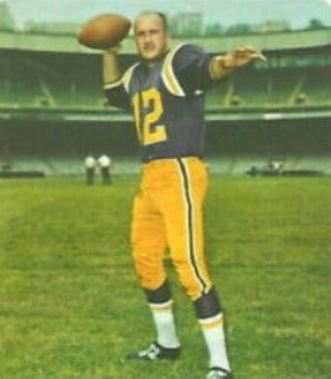
Highlighted Year: Tony Franklin, 1986

Placekicker, New England Patriots


Age: 30 (Nov. 18)
8th season in pro football, 3rd with Patriots
College: Texas A & M
Height: 5’8”   Weight: 182

Prelude:
The barefoot-kicking Franklin booted 44 field goals out of 73 attempts (60.3 %) in college and had two of over 60 yards in a game against Baylor in 1976. The Philadelphia Eagles, having endured significant problems with placekicking in 1978, selected him in the third round of the ’79 NFL draft. He had an outstanding rookie season, hitting on 23 of his 31 field goal attempts, including a team-record 59-yard kick at Dallas, and all 36 of his PATs. However, he clashed with Head Coach Dick Vermeil and, following a lesser year in 1980, withstood a challenge in ’81. He bounced back with 20 field goals out of 31 attempts. After two more seasons in Philadelphia, Franklin was traded to the Patriots in 1984. He had his two best years from a field goal percentage standpoint, hitting on 22 of 28 attempts in ’84 (78.6 %) and 24 of 30 in 1985 (80.0 %) when the club won the AFC Championship.

1986 Season Summary
Appeared in all 16 games
[Bracketed numbers indicate league rank in Top 20]

Kicking
Field goals – 32 [1]
Most field goals, game – 4 vs. Indianapolis 9/7, vs. Atlanta 11/2
Field goal attempts – 41 [1, tied with Kevin Butler]
Most field goal attempts, game – 4 vs. Indianapolis 9/7, at Buffalo 10/26, vs. Atlanta 11/2
Field goal percentage – 78.0 [5]
PATs – 44 [3, tied with Pat Leahy, Chuck Nelson & Rich Karlis]
PAT attempts – 45 [4, tied with Rich Karlis]
Longest field goal – 49 yards vs. Indianapolis 9/7

Scoring
Field Goals – 32
PATs – 44
Points – 140 [1]

Postseason: 1 G (AFC Divisional playoff at Denver)
Field goals – 1
Field goal attempts – 1
PATs – 2
PAT attempts – 2
Longest field goal – 38 yards

Awards & Honors:
2nd team All-NFL: AP
1st team All-AFC: UPI, Pro Football Weekly
Pro Bowl

Patriots went 11-5 to finish first in the AFC East while ranking second in the NFL in scoring (412 points). Lost AFC Divisional playoff to Denver Broncos (22-17).  

Aftermath:
Franklin’s performance dropped off significantly in 1987, as he made good on just 15 of 26 field goal attempts (57.7 %), and his career ended with Miami in ’88. Overall, Franklin kicked 177 field goals out of 264 attempts (67.0%) and added 341 PATs with 14 misses for a total of 872 points. Of those totals, 93 of 125 field goal tries (74.4 %), 163 extra points, and 442 points came with the Patriots, where he had his best seasons. In the postseason, he was 16 of 22 on field goals and made all 27 of his extra point attempts. Franklin received first-team all-conference honors once, second-team recognition after one other season, and was selected to one Pro Bowl.

--

Highlighted Years features players who were consensus first-team All-League* selections or league* or conference** leaders in the following statistical categories:

Rushing: Yards, TDs (min. 10)
Passing: Yards, Completion Pct., Yards per Attempt, TDs, Rating
Receiving: Catches, Yards, TDs (min. 10)
Scoring: TDs, Points, Field Goals (min. 5)
All-Purpose: Total Yards
Defense: Interceptions, Sacks
Kickoff Returns: Average
Punt Returns: Average
Punting: Average

*Leagues include NFL (1920 to date), AFL (1926), AFL (1936-37), AAFC (1946-49), AFL (1960-69), WFL (1974-75), USFL (1983-85)

**NFC/AFC since 1970