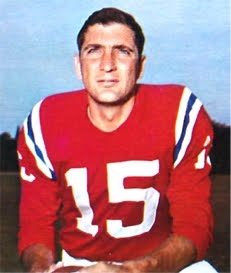
Showing posts with label 1961 AFL season. Show all posts

November 14, 2016

Highlighted Year: Billy Cannon, 1961

Halfback, Houston Oilers


Age: 24
2nd season in pro football & with Oilers
College: LSU
Height: 6’1”   Weight: 212

Prelude:
Cannon was a star all-purpose halfback in college who rushed for 1867 yards while averaging 5.2 yards-per-carry, caught 31 passes for 522 yards, and scored 21 touchdowns. He was a two-time consensus first-team All-American and winner of the 1959 Heisman Trophy, following a season in which he also returned a punt 89 yards to key a LSU win against Mississippi. Cannon was chosen by the Los Angeles Rams as the first overall pick of the 1960 NFL draft, but signed with both the Rams and Oilers of the new AFL. A judge’s decision awarded him to the Oilers and he had a fair rookie season, rushing for a team-leading 644 yards and scoring a touchdown in the AFL Championship game on an 88-yard pass play. He was a second-team All-AFL selection by the league and UPI.

1961 Season Summary
Appeared in all 14 games
[Bracketed numbers indicate league rank in Top 20]

Rushing
Attempts – 200 [2]
Most attempts, game – 25 (for 216 yds.) at NY Titans 12/10
Yards – 948 [1]
Most yards, game – 216 yards (on 25 carries) at NY Titans 12/10
Average gain – 4.7 [1]
TDs – 6 [4, tied with Jack Kemp]
200-yard rushing games – 1
100-yard rushing games – 3

Pass Receiving
Receptions – 43 [11, tied with Don Maynard]
Most receptions, game – 7 (for 122 yds.) vs. NY Titans 11/19
Yards – 586 [15]
Most yards, game – 122 (on 7 catches) vs. NY Titans 11/19
Average gain – 13.6 [16]
TDs – 9 [3, tied with Jim Colclough]
100-yard receiving games – 2

Passing
Attempts – 5
Completions – 0
Yards – 0
TD passes – 0
Interceptions – 1 [20, tied with seven others]

Kickoff Returns
Returns – 18 [3, tied with Al Frazier]
Yards – 439 [5]
Most yards, game – 84 (on 3 ret.) vs. Boston 11/12
Average per return – 24.4 [6]
TDs – 0
Longest return – 47 yards

Punt Returns
Returns – 9 [6]
Yards – 70 [9]
Most yards, game – 20 (on 1 ret.) vs. Buffalo 10/8
Average per return – 7.8
TDs – 0
Longest return – 20 yards

All-Purpose yards – 2043 [1]

Scoring
TDs – 15 [2]
Points – 90 [4]

Postseason: 1 G (AFL Championship at San Diego)
Rushing attempts – 15
Rushing yards – 48
Average gain rushing – 3.2
Rushing TDs – 0

Pass receptions – 5
Pass receiving yards – 53
Average yards per reception – 10.6
Pass receiving TDs – 1

Awards & Honors:
1st team All-AFL: League, AP, UPI, NY Daily News, Sporting News
AFL All-Star Game

Oilers went 10-3-1 to finish first in the AFL Eastern Division while leading the league in total yards (6288), passing yards (4392), touchdowns (66), and scoring (513 points). Won AFL Championship over San Diego Chargers (10-3).

Aftermath:
Cannon suffered a back injury that limited his effectiveness in 1962, holding him to 474 rushing yards although he still caught 32 passes for 451 yards and scored a total of 13 touchdowns. He saw little action in an injury-plagued 1963 season and was traded to the Oakland Raiders, where he was tried at fullback with some success before being shifted to tight end in 1965. While Cannon caught only 21 passes combined in his first two seasons at the new position, his production increased significantly in 1967, when he had 32 catches for 629 yards and 10 TDs and received first-team All-AFL honors from UPI and the Associated Press. He spent two more years with the Raiders and was an AFL All-Star in 1969. Cannon spent one last year with Kansas City as a backup in 1970. Altogether, he rushed for 2455 yards on 602 carries (4.1 avg.) with 17 TDs and caught 236 passes for 3656 yards (15.5 avg.) and 47 touchdowns. Cannon was a consensus first-team All-AFL selection after one season, received some first- or second-team recognition after three other seasons, and was chosen to two AFL All-Star Games. His son Billy Jr. played linebacker for the Cowboys for one year.

--

Highlighted Years features players who were consensus first-team All-League* selections or league* or conference** leaders in the following statistical categories:

Rushing: Yards, TDs (min. 10)
Passing: Yards, Completion Percentage, Yards per Attempt, TDs, Rating
Receiving: Catches, Yards, TDs (min. 10)
Scoring: TDs, Points, Field Goals (min. 5)
All-Purpose: Total Yards
Defense: Interceptions, Sacks
Kickoff Returns: Average
Punt Returns: Average
Punting: Average

*Leagues include NFL (1920 to date), AFL (1926), AFL (1936-37), AAFC (1946-49), AFL (1960-69), WFL (1974-75), USFL (1983-85)

**NFC/AFC since 1970

January 16, 2016

Highlighted Year: Dick Christy, 1961

Halfback, New York Titans


Age: 26 (Nov. 24)
3rd season in pro football, 2nd in AFL & 1st with Titans
College: North Carolina State
Height: 5’10” Weight: 195

Prelude:
Christy excelled on both offense and defense as well as returning kicks in college, and his dramatic 46-yard field goal against South Carolina gave NC State the 1957 Atlantic Coast Conference title. Named ACC player of the year while also receiving All-America honors from the Associated Press, Christy was chosen in the third round of the 1958 NFL draft by the Green Bay Packers but was dealt to Pittsburgh prior to the season. He primarily returned kicks as a rookie, averaging 9.0 yards on 17 punt returns and 24.0 returning 16 kickoffs and was released by the Steelers prior to the ’59 season. Christy joined the Boston Patriots of the new AFL in 1960 and gained 1321 all-purpose yards that included 363 rushing and 268 on 26 pass receptions. He was traded to Oakland in the deal that brought QB Babe Parilli to the Patriots, and was then dealt to the Titans during the preseason.

1961 Season Summary
Appeared in all 14 games
[Bracketed numbers indicate league rank in Top 20]

Rushing
Attempts – 81 [13]
Most attempts, game – 13 (for 21 yds.) at Oakland 10/29
Yards – 180
Most yards, game – 32 yards (on 7 carries) at Buffalo 9/17
Average gain – 2.2 [14]
TDs – 2

Pass Receiving
Receptions – 29      
Most receptions, game – 7 (for 103 yds.) at Houston 11/19
Yards – 521 [17]
Most yards, game – 145 (on 6 catches) vs. Dallas 12/3
Average gain – 18.0 [5]
TDs – 1
100-yard receiving games – 2

Kickoff Returns
Returns – 15 [9, tied with Ron Burton]
Yards – 360 [8]
Most yards, game – 131 (on 6 ret.) at Houston 11/19
Average per return – 24.0 [7]
TDs – 0
Longest return – 60 yards

Punt Returns
Returns – 18 [3, tied with Al Frazier]
Yards – 383 [1]
Most yards, game – 137 (on 3 ret.) vs. Denver 9/24
Average per return – 21.3 [1]
TDs – 2 [1]
Longest return – 70 yards

All-Purpose yards – 1444 [5]

Passing
Pass attempts – 1
Pass completions – 0
Interceptions – 0

Scoring
TDs – 5 [19, tied with eight others]
Points – 30

Titans went 7-7 to finish third in the AFL Eastern Division.

Aftermath:
Christy followed up with his best season in 1962, leading the AFL with 2147 all-purpose yards that broke down into 535 on 114 rushing attempts, 538 on 62 pass receptions, a league-leading 824 on 38 kickoff returns for a 21.7-yard average, and he again topped the AFL with a 16.7 average on 15 punt returns for 250 yards. However, he had a lesser season with the re-named Jets in ’63 and was cut during the 1964 preseason. Christy played in the minor league Atlantic Coast Football League and North American Football League in 1964 and ’65, leading the ACFL in kickoff returning (30.4 avg.) in ‘64. He died in a car crash in 1966 at age 30. Overall in the AFL, he rushed for 1166 yards, caught 125 passes for 1400 more yards (11.2 avg.), returned 50 punts for a 15.0-yard average and four TDs and averaged 23.6 yards on 101 kickoff returns, scoring a total of 19 touchdowns. Christy was chosen to one AFL All-Star Game. North Carolina State created the Dick Christy Award, which is given to the most valuable player of the annual game against South Carolina.

--

Highlighted Years features players who were consensus first-team All-League* selections or league* or conference** leaders in the following statistical categories:

Rushing: Yards, TDs (min. 10)
Passing: Yards, Completion Pct., Yards per Attempt, TDs, Rating
Receiving: Catches, Yards, TDs (min. 10)
Scoring: TDs, Points, Field Goals (min. 5)
All-Purpose: Total Yards
Defense: Interceptions, Sacks
Kickoff Returns: Average
Punt Returns: Average
Punting: Average

*Leagues include NFL (1920 to date), AFL (1926), AFL (1936-37), AAFC (1946-49), AFL (1960-69), WFL (1974-75), USFL (1983-85)

**NFC/AFC since 1970

July 9, 2015

Highlighted Year: Gino Cappelletti, 1961

Split End/Placekicker, Boston Patriots


Age: 27
2nd season in pro football & with Patriots
College: Minnesota
Height: 6’0”   Weight: 190

Prelude:
A quarterback in college, Cappelletti was undrafted by the NFL and played semi-pro football in Canada before failing in a preseason tryout with the Detroit Lions. After sitting out all of 1959, he made the Patriots of the new AFL as a defensive back and placekicker. He intercepted four passes but was successful on just 8 of 21 field goal attempts. Cappelletti was shifted to split end on offense for 1961.

1961 Season Summary
Appeared in all 14 games
[Bracketed numbers indicate league rank in Top 20]

Pass Receiving
Receptions – 45 [10]          
Most receptions, game – 6 (for 131 yds.) vs. Houston 10/13
Yards – 768 [9]
Most yards, game – 131 (on 6 catches) vs. Houston 10/13
Average gain – 17.1 [8]
TDs – 8 [5, tied with Don Maynard]
100-yard receiving games – 1

Passing
Attempts – 1
Completions – 1
Yards – 27
TD passes – 1
Interceptions – 0

Kicking
Field goals – 17 [1]
Most field goals, game – 3 at Buffalo 9/23, at NY Titans 10/1
Field goal attempts – 32 [1]
Most field goal attempts, game – 5 at NY Titans 10/1
Field goal percentage – 53.1 [2]
PATs – 48 [2]
PAT attempts – 50 [2]
Longest field goal – 46 yards at Buffalo 9/23

Scoring
TDs – 8 [8, tied with five others]
Field Goals – 17
PATs – 48
Points – 147 [1]

Awards & Honors:
2nd team All-AFL: League, UPI, NY Daily News
AFL All-Star Game

Patriots went 9-4-1 to finish second in the AFL Eastern Division while ranking second in the league in touchdowns (52, tied with San Diego) and scoring (411 points).

Aftermath:
Cappelletti scored 128 points in 1962 and again led the league with 113 in ’63 (and also again in field goals with 22). He was named an AFL All-Star for the second time. Slow but sure-handed, he caught a career-high 49 passes for 865 yards and 7 TDs in 1964 while again topping the circuit with 25 field goals and in scoring with 155 points. He received AFL Player of the Year honors from the Associated Press and UPI. Cappelletti led the AFL in scoring over the next two seasons as well (132 points in 1965, 119 in ’66), for a total of five times in all, and had the league’s best field goal percentage in ‘65 (63.0). He was named to the league All-Star game after the ’65 and ’66 seasons. Cappelletti played a total of 11 seasons, all with the Patriots, and scored a total of 1130 points (his 1100 points in the AFL were the most in league history), with a total of 42 TDs, 176 field goals, and 342 extra points. One of 20 players who were in the AFL for all ten seasons, he also finished with 292 pass receptions for 4589 yards.

--

Highlighted Years features players who were consensus first-team All-League* selections or league* or conference** leaders in the following statistical categories:

Rushing: Yards, TDs (min. 10)
Passing: Yards, Completion Pct., Yards per Attempt, TDs, Rating
Receiving: Catches, Yards, TDs (min. 10)
Scoring: TDs, Points, Field Goals (min. 5)
All-Purpose: Total Yards
Defense: Interceptions, Sacks
Kickoff Returns: Average
Punt Returns: Average
Punting: Average

*Leagues include NFL (1920 to date), AFL (1926), AFL (1936-37), AAFC (1946-49), AFL (1960-69), WFL (1974-75), USFL (1983-85)

**NFC/AFC since 1970
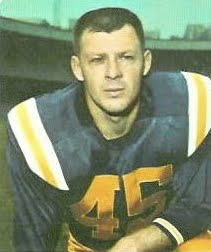
April 30, 2015

Highlighted Year: Tony Banfield, 1961

Cornerback, Houston Oilers


Age: 24 (Dec. 18)
2nd season in pro football & with Oilers
College: Oklahoma State
Height: 6’1”   Weight: 185

Prelude:
Banfield was a running back as well as defensive back in college and gained 1183 yards from scrimmage over three seasons and scored 15 touchdowns. Undrafted in 1960, he signed with the Oilers of the new AFL, who originally tried him in the offensive backfield before shifting him to cornerback. He showed promise as a rookie, intercepting three passes although hindered by ankle and leg injuries. While lacking ideal speed, he proved to be adept as a ball hawk and at breaking up passes.

1961 Season Summary
Appeared in all 14 games
[Bracketed numbers indicate league rank in Top 20]

Interceptions – 8 [4, tied with Bob Zeman]
Most interceptions, game – 2 vs. Oakland 9/9, vs. San Diego 12/3
Int. return yards – 136 [7]
Most int. return yards, game – 58 (on 1 int.) vs. NY Titans 11/19
Int. TDs – 0

Postseason: 1 G (AFL Championship at San Diego)
Interceptions – 1
Int. return yards – 0
TDs – 0

Awards & Honors:
1st team All-AFL: League, AP, UPI, Sporting News
2nd team All-AFL: NY Daily News

Oilers went 10-3-1 to finish first in the AFL Eastern Division. Won AFL Championship over San Diego Chargers (10-3).  

Aftermath:
Banfield followed up by being a consensus first-team All-AFL selection in each of the next two seasons, although a knee injury limited his use during the second half of the 1963 season and he split time with Mark Johnston. He missed the entire ’64 season while rehabbing from the injury and, while he returned, he was a lesser performer in 1965, his last season. In an outstanding, if injury-shortened, career with the Oilers, Banfield intercepted 27 passes and received first-team All-AFL honors three times.

--

Highlighted Years features players who were consensus first-team All-League* selections or league* or conference** leaders in the following statistical categories:

Rushing: Yards, TDs (min. 10)
Passing: Yards, Completion Pct., Yards per Attempt, TDs, Rating
Receiving: Catches, Yards, TDs (min. 10)
Scoring: TDs, Points, Field Goals (min. 5)
All-Purpose: Total Yards
Defense: Interceptions, Sacks
Kickoff Returns: Average
Punt Returns: Average
Punting: Average

*Leagues include NFL (1920 to date), AFL (1926), AFL (1936-37), AAFC (1946-49), AFL (1960-69), WFL (1974-75), USFL (1983-85)

**NFC/AFC since 1970

August 5, 2014

Highlighted Year: Billy Atkins, 1961

Safety/Punter, Buffalo Bills


Age: 27 (Nov. 19)
4th season in pro football, 2nd in AFL & with Bills
College: Auburn
Height: 6’1”   Weight: 195

Prelude:
A star on Auburn’s 1957 national championship team, Atkins was chosen by the San Francisco 49ers in the fifth round of the ’58 NFL draft. He saw some action as a punter and in the defensive backfield in two seasons with the 49ers before moving to Buffalo of the new AFL in 1960, where he averaged 39.0 yards on a league-leading 89 punts and intercepted five passes while starting at cornerback. He was also used as a placekicker and was successful on 6 of 13 field goal attempts. Atkins was shifted to safety in 1961 as personnel was juggled in the defensive backfield.

1961 Season Summary
Appeared in all 14 games
[Bracketed numbers indicate league rank in Top 20]

Interceptions – 10 [1]
Most interceptions, game – 2 vs. NY Titans 9/17, vs. Dallas 10/15, at Dallas 11/12, at Denver 11/19
Int. return yards – 158 [2]
Most int. return yards, game – 52 (on 2 int.) at Dallas 11/12
Int. TDs – 0

Punting
Punts – 85 [1]
Most punts, game – 9 vs. Boston 9/23, at Denver 11/19
Yards – 3783 [1]
Average – 44.5 [1]
Best average, game – 54.6 (on 5 punts) at Boston 10/22
Punts blocked – 1
Longest punt – 70 yards

Kicking
Field goals – 2 [11]
Most field goals, game - 1 at Dallas 11/12, at Denver 11/19
Field goal attempts – 6 [11]
Most field goal attempts, game – 4 at Denver 11/19
Field goal percentage – 33.3
PATs – 29 [4]
PAT attempts – 31 [4]
Longest field goal – 39 yards at Denver 11/19

Rushing
Attempts – 2
Yards – 87
Average gain – 43.5
TDs – 1

Punt Returns
Returns – 2
Yards – 30
Average per return – 15.0
TDs – 0
Longest return – 15 yards

Scoring
TDs – 1
Field Goals – 2
PATs – 29
Points – 41 [20]

Awards & Honors:
1st team All-AFL: UPI, Sporting News, NY Daily News
2nd team All-AFL: League
AFL All-Star Game

Bills went 6-8 to finish fourth in the AFL Eastern Division.  

Aftermath:
Seeking an upgrade at quarterback, the Bills traded Atkins to the New York Titans for veteran QB Al Dorow prior to the 1962 season. He intercepted four passes and was leading the league with a 44.0 punting average when he went down with a knee injury at midseason. Atkins saw little action with the Jets and Buffalo in ’63 and, after a three-game stint with Denver in 1964 his career came to an end. Overall, he intercepted 20 passes (19 of them in the AFL) and averaged 41.6 yards on 221 punts. Atkins went on to become head coach at Troy State and guided the school to the NAIA national championship in 1968. He was a 2005 inductee into the Alabama Sports Hall of Fame.

--

Highlighted Years features players who were consensus first-team All-League* selections or league* or conference** leaders in the following statistical categories:

Rushing: Yards, TDs (min. 10)
Passing: Yards, Completion Pct., Yards per Attempt, TDs, Rating
Receiving: Catches, Yards, TDs (min. 10)
Scoring: TDs, Points, Field Goals (min. 5)
All-Purpose: Total Yards
Defense: Interceptions, Sacks
Kickoff Returns: Average
Punt Returns: Average
Punting: Average

*Leagues include NFL (1920 to date), AFL (1926), AFL (1936-37), AAFC (1946-49), AFL (1960-69), WFL (1974-75), USFL (1983-85)

**NFC/AFC since 1970

April 4, 2014

1961: Patriots Obtain Babe Parilli in Five-Player Deal


On April 4, 1961 the Oakland Raiders traded QB Vito “Babe” Parilli and FB Billy Lott to the Boston Patriots for FB Alan Miller, HB Dick Christy, and DT Hal Smith. It was the biggest deal thus far in the year-old American Football League’s short history.

The Raiders were coming off a 6-8 first season and had problems at the organizational level with too many owners, which resulted in front office disarray. Thanks to the intervention of AFL Commissioner Joe Foss, the ownership situation had been sorted out just prior to swinging the trade with the Patriots.

Boston was 5-9 in 1960 and had finished at the bottom of the league in points scored. There was a particular need for depth at quarterback behind 36-year-old Butch Songin, and Parilli, a month short of his 31st birthday, looked to be a good fit. While Alan Miller had led the team in rushing, it was expected that the addition of Lott, a fine blocker who led the Raiders in receiving, along with returning FB Jim Crawford, hindered by a bout with pneumonia in ‘60, would be an overall improvement in the backfield.

As for the players obtained by the Raiders, Miller was expected to start at fullback, Christy was fast and versatile and could return kicks, and Smith filled a need for quality interior linemen on defense.

Babe Parilli, the key player in the trade, had been a star at Kentucky, where he was coached by Paul “Bear” Bryant and led the Wildcats to two bowl victories. A first-round draft choice by the Packers in 1952, he split time with Tobin Rote for two years with uneven results (a promising rookie year was followed by a season in which he tossed 19 interceptions and only four TDs) and moved on to the Cleveland Browns. He first went into the military, missing two years before seeing some action in 1956 and finding it difficult to endure criticism from Head Coach Paul Brown. Traded back to Green Bay in ’57, he was cut during training camp in 1959. Parilli played a year with Ottawa in the CFL before joining the Raiders of the new AFL for 1960. There he split time with talented young Tom Flores, completing 46.5 percent of his passes for 1003 yards and five touchdowns while giving up 11 interceptions.

Parilli started off the ‘61 season backing up Songin, but after Lou Saban was replaced as head coach by Mike Holovak, the two quarterbacks were platooned as the team went 7-1-1 on the way to a 9-4-1 overall record. Parilli led the AFL with a completion percentage of 52.5 and tossed 13 TD passes against 9 interceptions. While not always the most consistent passer, he had an excellent arm and was a good ball handler who was adept at play action, which fit well with Holovak’s offense. By 1962 Songin was gone and Parilli the unquestioned starting quarterback.

The Patriots got off to a 6-2-1 start in 1962 with Parilli having an even better year until, in a key Eastern Division loss to the Houston Oilers, he went down for the remainder of the season with a broken collar bone. With backup Tom Yewcic behind center, Boston ended up once again at 9-4-1 and in second place. Parilli had a career-high completion percentage of 55.3 as he threw for 1988 yards and 18 TDs, giving up just 8 interceptions.

The Patriots dipped to 7-6-1 in 1963, but paradoxically they won the division thanks to a tiebreaking playoff win over Buffalo. Parilli’s performance was more uneven as his completion percentage fell to 45.4 and his interception total rose to 24. And while he had a 300-yard passing day in the Eastern Division playoff win, the Patriots were routed by the Chargers in the AFL Championship game. Still, he was named to the AFL All-Star Game for the first time.

Parilli had his finest pro season in 1964 as he led the AFL with 3465 passing yards and 31 TD passes, although his 27 interceptions also led the circuit. The Patriots improved to 10-3-1 but failed to catch the Bills and once again settled into second place. Parilli was a consensus first-team All-AFL choice and an AFL All-Star once again, but he talked of retirement before being lured back for another year.

As it turned out, the “Sweet Kentucky Babe” lasted two more seasons with Boston. Over the course of seven years, Parilli threw for 16,747 yards and 132 touchdowns while being picked off 138 times. The team had a winning record in his starts and he was an AFL All-Star for a third time in 1966, when the Patriots went 8-4-2. He then spent two years backing up Joe Namath with the New York Jets and earned a Super Bowl ring following the 1968 season as a result, retiring in ’69.

As to the other player obtained by the Patriots, Billy Lott led the team in rushing in 1961, gaining 461 yards on an even 100 carries while catching 32 passes for 333 more yards and scoring a total of 11 touchdowns, but he ran the ball only 43 times over his two remaining seasons for 112 yards and caught four passes.

Things did not go so well for the Raiders in ‘61, who were blown out in their first two games of the season by a combined score of 99-0 on the way to a dismal 2-12 record. Alan Miller started at fullback, proved to be a good blocker, but was more productive as a pass receiver (36 catches, 315 yards) than a ground gainer (85 carries, 255 yards). He played a total of four seasons with Oakland, rushing for 979 yards, catching 111 passes for 1186 yards, and scoring 17 TDs.

Dick Christy appeared in one preseason game for the Raiders before being dealt again, this time to the New York Titans. A productive all-purpose back, his best year was 1962 when he accumulated 2147 total yards and was an AFL All-Star. Hal Smith appeared in eight games in 1961, his only season with the Raiders.

All in all, the trade worked out well for the Patriots, where Babe Parilli was a solid performer for a team that often contended during his time there, topping the division once. He was so well regarded for his knowledge and leadership that Mike Holovak held a spot open on his coaching staff that was reserved for Parilli to fill once he retired. While he never became an assistant under Holovak, he did become a pro assistant, serving as quarterback coach for the Steelers and Broncos before holding the same position with the Patriots in 1981. He was also a head coach in the World Football League and with several Arena Football League teams.

December 24, 2013

1961: Oilers Repeat as AFL Champs with Win Over Chargers


The participating teams for the second American Football League Championship game on December 24, 1961 were the same that met in the inaugural contest the year before, although both had undergone notable changes. The San Diego Chargers, top team in the Western Division with a 12-2 record, had been based in Los Angeles in 1960. But after a year of low attendance and heavy financial loss, owner Barron Hilton shifted the club to San Diego. Coached by the innovative Sid Gillman, they still boasted a fine passing attack directed by QB Jack Kemp, who was also very mobile, and the running game was led by talented HB Paul Lowe. The defense was outstanding with the “Fearsome Foursome” of ends Earl Faison and Ron Nery and tackles Ernie Ladd and Bill Hudson manning the front line plus an excellent backfield that set a record with 49 interceptions during the season.

The defending champions, the Houston Oilers, had made a change at head coach. After getting off to a sluggish 1-3-1 start, Lou Rymkus was fired and replaced by Wally Lemm. The result was nine straight wins to finish out the regular season at 10-3-1 and again top the Eastern Division. 33-year-old QB George Blanda, who was briefly benched by Rymkus in the early going, set a record for touchdown passes with 36 during the regular season (which also exceeded the existing NFL standard). Flanker Charley Hennigan gained 1746 yards on his 82 pass receptions and split end Bill Groman caught 17 TD passes. HB Billy Cannon (pictured at top) led the AFL in rushing (948 yards) and all-purpose yards (2043). Houston also had a fine defensive line, led by DT Ed Husman and DE Don Floyd. The Oilers, who had beaten the Chargers by 20 points three weeks earlier, were favored by more than a touchdown in what was expected to be an offensive show.

There was a disappointing turnout of 29,556 fans in attendance at Balboa Stadium in San Diego. In the first quarter, the Oilers benefited from a turnover when Jack Kemp fumbled and Houston recovered at the San Diego 37. However, after reaching the 14 yard line, a Blanda pass was intercepted by CB Bud Whitehead, who returned it to the San Diego 48.

Now it was the Chargers with the momentum, and Kemp threw a screen pass to FB Keith Lincoln that picked up 13 yards. But on the next play, a long toss to the end zone was picked off by safety Fred Glick to end the threat. Later in the period, the Oilers again recovered a Kemp fumble, this time at the San Diego 24. After advancing five yards, Blanda lined up to attempt a field goal, but a bad snap was recovered by the Chargers. The first quarter, while eventful, remained scoreless.


The Oilers red-dogged with regularity on defense to disrupt San Diego’s passing attack. Ed Husman (pictured at left) was the most notable of the linemen who did so well at containing Kemp’s running as well as forcing him to rush his passes.

In the second quarter, San Diego’s Paul Maguire had trouble handling a bad snap from center in punt formation and kicked the ball a wobbly nine yards. Houston took over at the San Diego 39 and, while not able to move on offense, finally came up with points when Blanda kicked a 46-yard field goal four plays later.

The Oilers missed a scoring opportunity when, after driving 39 yards to the San Diego 22, Blanda again was picked off on a pass into the end zone, this time by safety Charlie McNeil. That was it for scoring chances in the second quarter until George Blair attempted a 44-yard field goal for the Chargers at the end of the half that was unsuccessful and the tally remained 3-0.

In the third quarter, Houston put together a sustained drive of 80 yards in nine plays. It concluded when Blanda, under pressure from San Diego’s pass rush, connected with Billy Cannon, who caught the ball at the 20 and went the distance for a 35-yard touchdown. Blanda added the extra point and the Oilers led by 10-0.

The Chargers finally got on the board early in the fourth quarter with a 12-yard Blair field goal. That series was set up by another McNeil interception, this time in Houston territory, and Kemp’s passing plus the running of HB Bo Roberson advanced the ball to the five yard line before having to kick.

With time running out, a 56-yard Jim Norton punt had the Chargers starting at their 37 in a final desperation drive. Kemp threw to FB Charlie Flowers for eight yards and Roberson for five more to reach midfield. A pass interference call on the Oilers moved San Diego to the Houston 38 with the clock down to one minute to play. But it all ended when DB Julian Spence intercepted a Kemp pass at the Houston 30, pulling the ball away from the intended target, TE Dave Kocurek. The Oilers repeated as AFL Champions by a surprisingly low final score of 10-3.

There were several altercations between players during the game, and afterward safety Bob Zeman appeared to go after one of the officials, while San Diego’s Coach Gillman launched a furious verbal assault at them as the participants left the field.

The teams were even with 256 total yards apiece while the Oilers had the edge in first downs with 18 to San Diego’s 15. Most notably, there were a total of 13 turnovers, with Houston giving up seven to six for the Chargers. Also (and likely adding to the fury of the Chargers toward the officials after the game), San Diego was penalized 10 times at a cost of 106 yards, to five flags thrown on the Oilers for 68 yards.

Billy Cannon was the game’s MVP as he rushed for 48 yards on 15 carries and caught 5 passes for 53 yards that included the only touchdown. George Blanda went to the air 40 times and completed 18 for 160 yards and a TD, but tossed 5 interceptions. FB Charley Tolar gained 52 yards on 16 rushing attempts and Charley Hennigan had 5 catches for 43 yards.


For the Chargers, Jack Kemp was successful on 17 of 32 throws for 226 yards while being intercepted four times. He also was well-contained, running for just five yards on four carries, and was sacked six times. Dave Kocurek caught 7 passes for 123 yards. Bo Roberson ran for 37 yards on 8 attempts and Paul Lowe gained 30 yards on five carries. Charlie McNeil (pictured at right), Bud Whitehead, and Bob Zeman each intercepted two passes apiece.

“Our pre-game strategy was to rush him (Kemp) early so he’d have to keep two backs to block,” explained Houston’s Coach Lemm. “We planned to go into deep coverage afterwards, but our rushes worked so well we stuck to it.”

“We made too many mistakes to beat a good football club,” summed up Sid Gillman from the losing side.

Wally Lemm left the Oilers for the NFL Cardinals in the offseason and was replaced by Frank “Pop” Ivy. Houston topped the Eastern Division for a third straight year, but lost an overtime thriller to the Dallas Texans in the AFL Championship game. San Diego dropped to 4-10 as injuries decimated the club, but bounced back to win the league title in 1963.

March 22, 2013

Rookie of the Year: Earl Faison, 1961

Defensive End, San Diego Chargers


Age: 22
College: Indiana
Height: 6’5”   Weight: 256

Prelude:
Following an outstanding college career in which he was All-American and All-Big 10, Faison was chosen by the Chargers in the first round of the 1961 AFL draft (seventh overall – he was also drafted by Detroit of the NFL in the fifth round of that league’s draft). He quickly moved into the starting lineup across from DE Ron Nery in a defensive line that also included tackles Ernie Ladd and Bill Hudson and was named “The Fearsome Foursome”.

1961 Season Summary
Appeared in all 14 games
[Bracketed numbers indicate league rank in Top 20]

Sacks – N/A
Interceptions – 2
Most interceptions, game – 1 at Dallas 9/10, vs. Houston 9/24
Int. return yards – 14
Most int. return yards, game – 8 (on 1 int.) vs. Houston 9/24
Int. TDs – 0

Scoring
2-pt PAT – 1
Points – 2

Postseason – 1G (AFL Championship vs. Houston)
Sacks – N/A
Interceptions – 0

Awards & Honors:
AFL Rookie of the Year: UPI
1st team All-AFL: League, AP, UPI, NY Daily News, Sporting News
AFL All-Star Game

Chargers went 12-2 to finish first in the AFL Western Division while leading the league in total defense (3720 yards), passing defense (2363 yards), and interceptions (49), while ranking second in sacks (42). Lost AFL Championship to Houston Oilers (10-3).

Aftermath:
Faison missed half of the 1962 season due to a knee injury, although his performance was still strong enough to gain him second-team All-AFL recognition (UPI) and a spot in the AFL All-Star Game. An outstanding pass rusher who was widely considered the best at his position in the league at a time before sacks were compiled, he was a consensus All-AFL first-team pick in each of the next three seasons, including the 1963 Championship year for the Chargers. Contract problems caused the Chargers to attempt to trade Faison and Ernie Ladd to Houston in 1966, but the deal was voided by Commissioner Joe Foss and he was dealt to the expansion Miami Dolphins during the season, after which he retired. In just six seasons, Faison was a consensus first-team All-AFL selection four times and was selected to five AFL All-Star Games. He went on to become a long-time educator and high school football coach.

--

Rookie of the Year Profiles feature players who were named Rookie of the Year in the NFL (including NFC/AFC), AFL (1960-69), or USFL (1983-85) by a recognized organization (Associated Press – Offense or Defense, Newspaper Enterprise Association, United Press International, The Sporting News, or the league itself – Pepsi NFL Rookie of the Year). 

[Updated 2/4/14]

October 1, 2011

1961: NY Titans Overcome Early Miscues & Cappelletti to Beat Patriots


The Week 4 American Football League matchup at New York’s Polo Grounds on October 1, 1961 featured two division rivals, both with 2-1 records, that had already met in the first week of the season.

The host New York Titans, coached by former all-time great quarterback Sammy Baugh, featured an offense that could score points and a defense that gave up points just as readily. QB Al Dorow (pictured above) was mobile and had outstanding receivers to throw to in split end Art Powell and flanker Don Maynard. Much attention was drawn to the club off the field by colorful and controversial owner Harry Wismer.

The visiting Boston Patriots, under Head Coach Lou Saban, scored the fewest points in the AFL’s first season in 1960 and had taken steps to rectify the situation. QB Babe Parilli and FB Billy Lott were obtained in a trade with the Raiders, although Butch Songin, the starting quarterback in the inaugural year, continued to split time with the newcomer and was the starter against New York.

The Patriots had lost a close 21-20 decision to the Titans in the first week and considered the rematch to be a must-win game.

There were 15,189 in attendance at the decrepit venue. In the first ten minutes of the game, the New York offense played poorly and gave up the ball in its own territory on each of its first four possessions. The Patriots recovered three fumbles and gained possession after a poor snap on a punt made it impossible to get the kick away.

However, Boston was only able to get three field goals, of 34, 30, and 16 yards by Gino Cappelletti, and another attempt from 26 yards hit the goal post and was unsuccessful. Songin was 0-for-7 passing in the first quarter as the Patriots squandered the chance to bury the Titans early and the score was 9-0 after one period of play

The second quarter belonged to New York. FB Bill Mathis started the scoring with a two-yard touchdown carry. Dorow threw a five-yard TD pass to TE Thurlow Cooper, after which an attempted two-point conversion failed. Still, the Titans were ahead by 13-9.

Dorow had to leave the game temporarily later in the period due to a neck injury and backup QB Bob Scrabis threw a touchdown pass of four yards to Powell in his absence. New York took a 20-9 lead into halftime.

In the third quarter, and down by 11 points, the multi-talented Cappelletti threw a touchdown pass to HB Larry Garron on a fake field goal attempt to cut the Titans’ margin to 20-16. Bill Shockley responded with a 26-yard field goal for New York, but Songin threw to flanker Jim Colclough for a 33-yard TD, and with Cappelletti’s successful PAT, the score was tied at 23-23 going into the final period.

Mathis put the Titans back in front with another two-yard scoring run, but Cappelletti tied the game once more with a spectacular catch of a 32-yard Songin pass in the end zone, followed by his kick for the extra point.

With the tally now at 30-30, the Titans moved the ball down the field and were helped by an interference penalty that put them on the Boston 13. From there, Dorow tossed a touchdown pass to Maynard, who wrestled the ball away from FS Fred Bruney with six minutes remaining to play. The Patriots still had a chance, but a fourth-down pass was intercepted by FS Lee Riley, thus nailing down the 37-30 win for New York.

The Titans outgained Boston (353 yards to 239) and had more first downs (26 to 11). However, they also turned the ball over three times (all in the first quarter), to two suffered by the Patriots.


Al Dorow completed 14 of 29 passes for 195 yards with two touchdowns and none intercepted; he also ran the ball six times for 26 yards. Bill Mathis gained 109 yards on 19 carries with two TDs. Don Maynard (pictured at left) caught 6 passes for 87 yards and a score, while Art Powell contributed 5 receptions for 37 yards and a TD.

For the Patriots, Butch Songin went most of the way at quarterback but was successful on just 10 of 23 throws for 131 yards and two touchdowns, although he was not picked off. Babe Parilli added four completions in eight attempts for 25 yards while Gino Cappelletti tossed the one 27-yard TD pass (the third quarterback, Tom Yewcic, gave up the clinching interception). Altogether, Cappelletti scored 18 points (one TD, three field goals, and three extra points) and passed for six more. Larry Garron was the team’s leading rusher with 38 yards on 6 attempts while Billy Lott added 33 yards on three carries.

“Our defense kept us in the ball game in the first quarter,” said Sammy Baugh. “We never could have won if it hadn’t.”

As Boston’s Coach Saban saw it, “We blew our opportunity right there. We had four shots and didn’t score a touchdown. We never hit a pass. We should have been at least three touchdowns ahead right from the opening period.”

It was the third win in four games for the Titans and put them on top of the Eastern Division. They lost their next two contests, however, and ended up in third place with a 7-7 record.

Despite losing twice to New York, the Patriots managed to finish ahead of the Titans in the end. After falling to 2-3, Coach Saban was fired and replaced by Mike Holovak. The team responded by going 7-1-1 the rest of the way for a 9-4-1 overall tally.

Al Dorow ranked at the top of the league in pass attempts (438), completions (197), and more unfortunately, interceptions (30). His 19 touchdown passes ranked second and 2651 passing yards third. For the second year, he also led all AFL quarterbacks in rushing (317 yards). The 32-year-old veteran was chosen for the league All-Star Game.

Art Powell and Don Maynard weren’t as productive as they were in ’60, but still were among the young league’s best receivers. Powell caught 71 passes for 881 yards and five touchdowns while Maynard had 43 receptions for 629 yards and 8 TDs.

Gino Cappelletti (pictured below) continued to be productive as both a receiver and placekicker and led the AFL in scoring with 147 points. He also led in field goals (17) as well as three-point attempts (32) and caught 45 passes for 768 yards and 8 touchdowns.

April 12, 2011

MVP Profile: George Blanda, 1961

Quarterback/Placekicker, Houston Oilers


Age: 34 (Sept. 17)
12th season in pro football, 2nd in AFL & with Oilers
College: Kentucky
Height: 6’2” Weight: 210

Prelude:
Blanda was chosen by the Chicago Bears in the 12th round of the 1949 NFL draft and, with a very brief hiatus in Baltimore, played for them for ten years. He led the league in passing attempts (362) and completions (169) in 1953, but otherwise was forced to share the quarterback job while handling the placekicking. After two seasons (1957 & ’58) in which he saw scant action at quarterback, he retired. The creation of the new AFL in 1960 pulled Blanda out of retirement, and he led the Oilers to the first league title while throwing for 2413 yards and 24 touchdowns.

1961 Season Summary
Appeared in all 14 games & started 12
[Bracketed numbers indicate league rank in Top 20]

Passing
Attempts – 362 [4]
Most attempts, game – 36 at Dallas Texans 10/1
Completions – 187 [3]
Most completions, game – 20 vs. NY Titans 11/19, vs. San Diego 12/3
Yards – 3330 [1]
Most yards, game – 464 at Buffalo 10/29
Completion percentage – 51.7 [3]
Yards per attempt – 9.2 [1]
TD passes – 36 [1]
Most TD passes, game – 7 vs. NY Titans 11/19
Interceptions – 22 [3, tied with Jack Kemp & George Herring]
Most interceptions, game – 4 at San Diego 9/24, at Buffalo 10/29
Passer rating – 91.3 [1]
400-yard passing games – 2
300-yard passing games – 4
200-yard passing games – 10

Rushing
Attempts – 7
Most attempts, game - 3 (for -4 yds.) at Dallas Texans 10/1
Yards – 12
Most yards, game – 7 yards (on 1 carry) vs. San Diego 12/3
Yards per attempt – 1.7
TDs – 0

Kicking
Field goals – 16 [2]
Most field goals, game - 2 on 5 occasions
Field goal attempts – 26 [3, tied with George Fleming]
Most field goal attempts, game – 5 vs. Buffalo 10/8
Field goal percentage – 61.5 [1]
PATs – 64 [1]
PAT attempts – 65 [1]
Longest field goal – 55 yards vs. San Diego 12/3

Points
Field goals – 16
PATs - 64
Points – 112 [2]

Postseason: 1 G (AFL Championship at San Diego)
Pass attempts – 40
Pass completions – 18
Passing yards – 160
TD passes – 1
Interceptions – 5

Rushing attempts – 2
Rushing yards – -4
Average gain rushing – -2.0
Rushing TDs – 0

Field goals – 1
Field goal attempts – 1
PATs – 1
PAT attempts – 1
Longest field goal – 46 yards

Awards & Honors:
AFL Player of the Year: AP, UPI, Sporting News
1st team All-AFL: League, AP, UPI, NY Daily News, Sporting News
AFL All-Star Game

Oilers went 10-3-1 to win the AFL Eastern Division. After starting off slowly at 1-3-1 (during which time Blanda was briefly benched in favor of backup Jacky Lee), Head Coach Lou Rymkus was replaced by Wally Lemm and the team won nine straight to close out the regular season. Set records for points scored (513) and touchdowns (66). Defeated San Diego Chargers for AFL Championship (10-3).

Aftermath:
Blanda was an AFL All-Star after each of the next two seasons and led the Oilers back to the AFL Championship game in ’62 despite being intercepted a record 42 times. He led the league in interceptions thrown for four straight years (1962-65), but also in passing yards in 1963 (3003) and both passes and completions from 1963-65. The team’s record had tailed off badly after ’62, however, and young QB Don Trull was drafted to be Blanda’s replacement. At age 39, Blanda was let go by Houston following the 1966 season and signed with the Oakland Raiders. He proved to be a capable backup quarterback – especially in a remarkable 1970 season when he again received MVP consideration – and placekicker for the Raiders through 1975, at age 48. Blanda retired as the all-time NFL leader in scoring (2002 points) and field goals (335), as well as seasons played (26 – the one that still stands), and was inducted into the Pro Football Hall of Fame, Class of 1981.

--

MVP Profiles feature players who were named MVP or Player of the Year in the NFL, AAFC (1946-49), AFL (1960-69), WFL (1974), or USFL (1983-85) by a recognized organization (Associated Press, Pro Football Writers Association, Newspaper Enterprise Association, United Press International, The Sporting News, Maxwell Club – Bert Bell Award, or the league itself).

[Updated 2/15/14]