April 7, 2010

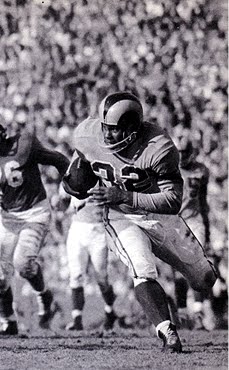
1985: Herschel Walker Runs for USFL-Record 233 Yards vs. Houston


Since signing with the United States Football League’s New Jersey Generals as an underclassman in 1983 after a legendary college football career at Georgia, RB Herschel Walker had gained a lot of yards and received his share of plaudits, but had taken criticism along the way as well. The problem was one of immense expectations for a player who had been a dominating force at both the high school and college levels.

While Walker had led the league with 1812 yards in ’83, the Generals had compiled a weak 6-12 record. And while the club went 14-4 and made it to the postseason in 1984, Walker ranked “only” third among the USFL’s rushers with 1339 yards. Moreover, he was criticized for running tentatively and being too quick to head out of bounds rather than challenging defending players for extra yards; in reality, a sore shoulder was hampering him and thus altering his style.

In 1985, the Generals added another Heisman Trophy winner, QB Doug Flutie, who took some of the media attention off of Walker. During the preceding offseason, the star running back had surgery to correct the shoulder problems. He started off slowly, gaining just six yards in the season opening game and averaging 83.3 yards over the first six contests.

But on April 7, 1985 against the Houston Gamblers at Giants Stadium, Walker broke loose for 233 yards, breaking the existing league single-game record of 208. Included were two touchdown runs, one an 88-yard sprint that also was a league high and another with a one-yard plunge on fourth down. Flutie contributed a seven-yard touchdown run as the Generals set a team rushing record of 343 yards and defeated the Gamblers, 31-25.

Houston, having won its first five games, dropped to 5-2 on the way to a 10-8 final record and third place in the Western Conference; the Gamblers lost to Birmingham in the quarterfinal playoff round. New Jersey improved to 4-3 and went on to finish in second place in the Eastern Conference at 11-7, also losing in the quarterfinal round to the eventual champions, the Baltimore Stars.

The record-setting performance spurred Herschel Walker to a record-setting season. Over the course of the 18 games, he accumulated 2411 yards on 438 carries for a 5.5-yard average with 21 touchdowns. He also led the club in pass receiving with 37 catches for 467 yards and a TD. His 22 total touchdowns made him the USFL’s scoring leader with 132 points and he was named MVP by both the league and The Sporting News.

At 6’1” and 222 pounds, Walker ran with both power and speed. While he was criticized for being strictly a straight-ahead runner without great instincts, he still gained 5562 rushing yards in three USFL seasons, and went on to add another 8225 yards in twelve years in the NFL (and that doesn’t count another 11,496 yards when adding pass receptions and kickoff returns). As Generals president Jason Seltzer once said, “No matter what Herschel does, it’s never enough.” But in the game against Houston, and over the course of his career, he did plenty.

April 5, 2010

List of the Day: Best Rushing Seasons, 1960s NFL


Jim Brown

TOP 10
1- Jim Brown, 1963 Cleveland Browns
1863 yards, 291 att., 6.4 avg., 12 TD

2- Jim Brown, 1965 Cleveland Browns
1544 yards, 289 att., 5.3 avg., 17 TD

3- Jim Taylor, 1962 Green Bay Packers
1474 yards, 272 att., 5.4 avg., 19 TD

4- Jim Brown, 1964 Cleveland Browns
1446 yards, 280 att., 5.2 avg., 7 TD

5- Jim Brown, 1961 Cleveland Browns
1408 yards, 305 att., 4.6 avg., 8 TD

6- Jim Taylor, 1961 Green Bay Packers
1307 yards, 243 att., 5.4 avg., 15 TD

7- Jim Brown, 1960 Cleveland Browns
1257 yards, 215 att., 5.8 avg., 9 TD

8- Leroy Kelly, 1968 Cleveland Browns
1239 yards, 248 att., 5.0 avg., 16 TD

9- Gale Sayers, 1966 Chicago Bears
1231 yards, 229 att., 5.4 avg., 8 TD

10-Leroy Kelly, 1967 Cleveland Browns
1205 yards, 235 att., 5.1 avg., 11 TD


Jim Taylor


Leroy Kelly


Gale Sayers

BEST BY FRANCHISES NOT IN TOP 10
Pittsburgh Steelers: John Henry Johnson, 1962
1141 yards, 251 att., 4.5 avg., 7 TD

Los Angeles Rams: Dick Bass, 1966
1090 yards, 248 att., 4.4 avg., 8 TD

St. Louis Cardinals: John David Crow, 1960
1071 yards, 183 att., 5.9 avg., 6 TD

Minnesota Vikings: Dave Osborn, 1967
972 yards, 215 att., 4.5 avg., 2 TD

San Francisco 49ers: Ken Willard, 1968
967 yards, 227 att., 4.3 avg., 7 TD

Philadelphia Eagles: Tom Woodeshick, 1968
947 yards, 217 att., 4.4 avg., 3 TD

Dallas Cowboys: Don Perkins, 1962
945 yards, 222 att., 4.3 avg., 7 TD

New York Giants: Alex Webster, 1961
928 yards, 196 att., 4.7 avg., 2 TD

Baltimore Colts: Tom Matte, 1969
909 yards, 235 att., 3.9 avg., 11 TD

Washington Redskins: Larry Brown, 1969
888 yards, 202 att., 4.4 avg., 4 TD

Detroit Lions: Nick Pietrosante, 1960
872 yards, 161 att., 5.4 avg., 8 TD

New Orleans Saints: Andy Livingston, 1969*
761 yards, 181 att., 4.2 avg., 5 TD

Atlanta Falcons: Junior Coffey, 1966 & 1967**
722 yards, 199 att., 3.6 avg., 4 TD (1966)
722 yards, 180 att., 4.0 avg., 4 TD (1967)

*Saints joined NFL in 1967
**Falcons joined NFL in 1966


John Henry Johnson


Dick Bass


Don Perkins


Alex Webster

April 3, 2010

List of the Day: Best Pass Receiving Seasons, 1950s NFL


Elroy "Crazylegs" Hirsch

TOP 10 RECEPTIONS
1- Tom Fears, 1950 Los Angeles Rams
84 rec., 1116 yds., 13.3 avg., 7 TD

2(tied)- Elroy “Crazylegs” Hirsch, 1951 Los Angeles Rams
66 rec., 1495 yds., 22.7 avg., 17 TD

2(tied)- Raymond Berry, 1959 Baltimore Colts
66 rec., 959 yds., 14.5 avg., 14 TD

4- Pete Pihos, 1953 Philadelphia Eagles
63 rec., 1049 yds., 16.7 avg., 10 TD

5(tied)- Mac Speedie, 1952 Cleveland Browns
62 rec., 911 yds., 14.7 avg., 5 TD

5(tied)- Elbie Nickel, 1953 Pittsburgh Steelers
62 rec., 743 yds., 12.0 avg., 4 TD

5(tied)- Pete Pihos, 1955 Philadelphia Eagles
62 rec., 864 yds., 13.9 avg., 7 TD

8- Elroy “Crazylegs” Hirsch, 1953 Los Angeles Rams
61 rec., 941 yds., 15.4 avg., 4 TD

9(tied)- Pete Pihos, 1954 Philadelphia Eagles
60 rec., 872 yds., 14.5 avg., 10 TD

9(tied)- Billy Wilson, 1954 San Francisco 49ers
60 rec., 830 yds., 13.8 avg., 5 TD

9(tied)- Billy Wilson, 1956 San Francisco 49ers
60 rec., 889 yds., 14.8 avg., 5 TD


Tom Fears

BEST BY FRANCHISES NOT IN TOP 10
Chicago Cardinals: Fran Polsfoot, 1951
57 rec., 796 yds., 14.0 avg., 4 TD

Green Bay Packers: Billy Howton, 1956
55 rec., 1188 yds., 21.6 avg., 12 TD

Chicago Bears: Jim Dooley, 1953
53 rec., 841 yds., 15.9 avg., 4 TD

New York Yanks: Dan Edwards, 1950*
52 rec., 775 yds., 14.9 avg., 6 TD

New York Giants: Frank Gifford, 1956
51 rec., 603 yds., 11.8 avg., 4 TD

Detroit Lions: Cloyce Box, 1950
50 rec., 1009 yds., 20.2 avg., 11 TD

Washington Redskins: Hugh Taylor, 1952
41 rec., 961 yds., 23.4 avg., 12 TD

Dallas Texans: Dick Wilkins, 1952**
32 rec., 416 yds., 13.0 avg., 3 TD

* Yanks folded following 1951 season
**Texans played in 1952 only


Raymond Berry


Pete Pihos

TOP 10 YARDS
1- Elroy “Crazylegs” Hirsch, 1951 Los Angeles Rams
1495 yds., 66 rec., 22.7 avg., 17 TD

2- Billy Howton, 1952 Green Bay Packers
1231 yds., 53 rec., 23.2 avg., 13 TD

3- Bob Boyd, 1954 Los Angeles Rams
1212 yds., 53 rec., 22.9 avg., 6 TD

4- Billy Howton, 1956 Green Bay Packers
1188 yds., 55 rec., 21.6 avg., 12 TD

5- Harlon Hill, 1956 Chicago Bears
1128 yds., 47 rec., 24.0 avg., 11 TD

6- Harlon Hill, 1954 Chicago Bears
1124 yds., 45 rec., 25.0 avg., 12 TD

7- Tom Fears, 1950 Los Angeles Rams
1116 yds., 84 rec., 13.3 avg., 7 TD

8- Del Shofner, 1958 Los Angeles Rams
1097 yds., 51 rec., 21.5 avg., 8 TD

9- Pete Pihos, 1953 Philadelphia Eagles
1049 yds., 63 rec., 16.7 avg., 10 TD

10-Cloyce Box, 1950 Detroit Lions
1009 yds., 50 rec., 20.2 avg., 11 TD


Bob Boyd


Harlon Hill


BEST BY FRANCHISES NOT IN TOP 10
Chicago Cardinals: Bob Shaw, 1950
971 yds., 48 rec., 20.2 avg., 12 TD

Washington Redskins: Hugh Taylor, 1952
961 yds., 41 rec., 23.4 avg., 12 TD

Baltimore Colts: Raymond Berry, 1959
959 yds., 66 rec., 14.5 avg., 14 TD

Cleveland Browns: Mac Speedie, 1952
911 yds., 62 rec., 14.7 avg., 5 TD

Pittsburgh Steelers: Jimmy Orr, 1958
910 yds., 33 rec., 27.6 avg., 7 TD

San Francisco 49ers: Billy Wilson, 1956
889 yds., 60 rec., 14.8 avg., 5 TD

New York Yanks: Dan Edwards, 1950*
775 yds., 52 rec., 14.9 avg., 6 TD

New York Giants: Frank Gifford, 1959
768 yds., 42 rec., 18.3 avg., 4 TD

Dallas Texans: Dick Wilkins, 1952**
416 yds., 32 rec., 13.0 avg., 3 TD

* Yanks folded following 1951 season
** Texans played in 1952 only


Elbie Nickel


Billy Wilson

April 1, 2010

1984: Steve Young Debuts with USFL’s LA Express


The April 1, 1984 matchup between the Los Angeles Express (2-3) and visiting New Jersey Generals (4-1) at the Memorial Coliseum before a small crowd of 19,853 didn’t provide any surprises; the Generals won handily, 26-10. But it did mark the first professional start for QB Steve Young, who had signed a 10-year, $40 million contract to join the USFL club after an outstanding career at Brigham Young.

The Express had failed to score more than 14 points in any of its first five contests, with Tom Ramsey and Frank Seurer splitting time at quarterback, and were ripe for an infusion of new talent. Young gave them that, completing 19 of 29 passes for 163 yards with a TD and an interception and also leading the club in rushing with 32 yards on six carries. His first pro touchdown pass was a nine yard toss to fellow rookie WR JoJo Townsell late in the second quarter, and at one point he completed nine consecutive throws.

“Steve is going to be a great quarterback,” said LA’s Head Coach John Hadl afterward. “He went up against one of the best defenses in the league and performed well. I like his leadership. He saw some things on the field that another quarterback wouldn’t see for a year.”

With his outstanding mobility to complement his passing, Young put together a solid rookie season. He completed 57.7 % of his 310 passes for 2361 yards with 10 touchdowns and 9 interceptions and ran for 515 yards on 79 attempts for a healthy 6.5-yard average and seven TDs. Moreover, he rallied the Express to a 10-8 record and the Pacific Division title. After averaging 10.7 points and 296.8 yards per game over the first five contests, the Express averaged 22.9 points and 338 yards the rest of the way.

It was a rather ordinary performance for the Generals, with star RB Herschel Walker gaining just 59 yards on 16 rushing attempts but scoring on a 50-yard pass play from QB Brian Sipe as he accumulated 66 receiving yards on three catches. The Generals outgained the Express on the ground, 111 yards to 56.

The 34-year-old veteran Sipe, a high-profile signee from the NFL’s Cleveland Browns who had started slowly in the USFL due to injury, completed 13 of 21 passes for 219 yards with two touchdowns. It was a solid outing for him as well, and afterward he commented, “This was probably my best game. I felt more comfortable than I have felt so far. And it was nice to see us do a lot of different things. My knee injury was a real setback to me, but each week, I seem to feel more and more comfortable.”

New Jersey went 14-4 for the season, finishing in second place in the Atlantic Division and qualifying for a wild card playoff spot. They lost convincingly in the first postseason round to the team that finished ahead of them in the division (and went on to win the USFL title), the Philadelphia Stars.

The greater significance of the game, however, which lasted far beyond the ’84 season and the USFL itself, was the beginning of Steve Young’s 17-season career (two in the USFL, 15 in the NFL) that ultimately earned enshrinement in the Pro Football Hall of Fame.

March 31, 2010

1974: Warfield, Csonka, and Kiick Sign with the WFL


The Miami Dolphins had barely finished celebrating a second consecutive championship when the stunning announcement was made on March 31, 1974 that three key members of the offense, FB Larry Csonka, HB Jim Kiick, and WR Paul Warfield, had been signed by the Toronto Northmen of the newly-organized World Football League. They would not play in the WFL until 1975, as each was in their final contract year with the Dolphins for ’74.

It was a major coup for the new league that would sign several significant NFL players to contracts, some that would take effect in the first season (QB Virgil Carter by the Chicago Fire, RB Charlie Harraway by the Birmingham Americans, DT John Elliott by the New York Stars), others that, like the three Miami stars, would take effect in 1975 (TE Ted Kwalick and RB Calvin Hill by The Hawaiians, QB Daryle Lamonica by the Southern California Sun), and still others that would never occur at all due to the league’s demise (QB Ken Stabler by the Birmingham Americans for 1976).

Unlike most of the new league’s franchises, Toronto, owned by media executive John Bassett, had strong and stable financial backing. A joint contract was negotiated for the trio and totaled $3 million over three years, with Csonka getting $1.4 million, Warfield $900,000, and Kiick $700,000.

The team never played in Toronto, however - the introduction of legislation by the Canadian parliament that would have banned the WFL from fielding teams in Canada forced the relocation of the franchise to Memphis. Renamed the Southmen (not a popular nickname with the locals, who preferred to refer to the team as the “Grizzlies” due to the bear logo on the helmet), the club had the best record of the chaotic 1974 season at 17-3, winning the Central Division but losing to Florida in the first round of the playoffs.

The Dolphins, who had won the Super Bowl following the 1972 and ’73 seasons, went 11-3 in again winning the AFC East but lost in a thrilling divisional playoff game to Oakland. In their last season in Miami, Csonka had his fifth consecutive Pro Bowl-year as he gained 749 yards rushing; Warfield caught 27 passes for 536 yards (a 19.9-yard average gain), also gaining Pro Bowl recognition, in his case for the seventh straight year; and Kiick, a reserve at this point, gained 274 rushing yards and caught 18 passes while splitting time at halfback with Benny Malone and Mercury Morris.

Joining the Southmen (or “Grizzlies”) in 1975, the Miami trio at least had the good fortune of joining a stable club coming off of a winning season. However, the health of the league as a whole wasn’t good – financially rickety during the ’74 season, the lack of a television contract made the situation even more untenable and the WFL folded on October 22 after thirteen weeks.

Kiick was the star of the season opening game, scoring three touchdowns that included the game-winner with 38 seconds remaining. He also gained 106 yards rushing in a win over The Hawaiians and ended up outgaining Csonka with 462 yards on 121 carries with nine touchdowns; he also caught 25 passes for 259 yards and another TD.

Csonka had a high of 114 yards rushing in the club’s second game but missed time due to injury during the season. He ended up gaining 421 yards on 99 rushes with one TD and caught five passes for 54 yards and a score (holdover RB Willie Spencer led the club with 581 yards on 100 carries).

Warfield caught 25 passes for 422 yards and three touchdowns, second on the team to WR Ed Marshall, who had 31 catches for 582 yards.

After the demise of the WFL, all three players returned to the NFL in 1976. Csonka spent three nondescript seasons with the New York Giants before returning to the Dolphins for one last, solid year in 1979 (837 yards rushing with 12 TDs). Kiick went to the Denver Broncos, where he gained just 114 yards rushing and caught 10 passes in ’76; he appeared in four games for the Broncos and Redskins in 1977, his last season, running the ball only once and catching two passes. Warfield returned to his original club, the Cleveland Browns, and played two seasons in which he caught 58 passes for 864 yards and eight touchdowns.

The Dolphins went 10-4 in 1975, but missed the postseason for the first time since 1969 (the year before Don Shula took over as head coach). They dropped to 6-8 in ’76 but rebounded to a 10-4 mark in 1977 and returned to the postseason in ’78. During that period, Don Nottingham, Norm Bulaich, and Leroy Harris took the place of Csonka at fullback. In Warfield’s absence, WR Nat Moore emerged as a productive receiver, along with Duriel Harris and, to a lesser extent, Freddie Solomon.

The abbreviated 1975 season in the WFL provided a footnote to the Hall of Fame careers of Csonka and Warfield, and was a last hurrah for Kiick. As gate attractions for the doomed WFL, they also provided something of a last hurrah for the league as well.

March 30, 2010

List of the Day: Best Passing Yardage Seasons, 1950s NFL


Johnny Unitas

TOP 10
1- Johnny Unitas, 1959 Baltimore Colts
2899 yards, 193-367, 52.6 %, 32 TD, 14 INT

2- Bill Wade, 1958 Los Angeles Rams
2875 yards, 181-341, 53.1 %, 18 TD, 22 INT

3- Otto Graham, 1952 Cleveland Browns
2816 yards, 181-364, 49.7 %, 20 TD, 24 INT

4- Otto Graham, 1953 Cleveland Browns
2722 yards, 167-258, 64.7 %, 11 TD, 9 INT

5- Norm Van Brocklin, 1954 Los Angeles Rams
2637 yards, 139-260, 53.5 %, 13 TD, 21 INT

6- Norm Van Brocklin, 1959 Philadelphia Eagles
2617 yards, 191-340, 56.2 %, 16 TD, 14 INT

7- Johnny Unitas, 1957 Baltimore Colts
2550 yards, 172-301, 57.1 %, 24 TD, 17 INT

8- Bobby Layne, 1958 Detroit Lions/Pittsburgh Steelers*
2510 yards, 145-294, 49.3 %, 14 TD, 12 INT

9- Bobby Thomason, 1953 Philadelphia Eagles
2462 yards, 162-304, 53.3 %, 21 TD, 20 INT

10-Norm Van Brocklin, 1958 Philadelphia Eagles
2409 yards, 198-374, 52.9 %, 15 TD, 20 INT


Bill Wade


Otto Graham


Norm Van Brocklin

BEST BY FRANCHISES NOT IN TOP 10
Detroit Lions: Bobby Layne, 1951
2403 yards, 152-332, 45.8 %, 26 TD, 23 INT

Green Bay Packers: Tobin Rote, 1954
2311 yards, 180-382, 47.1 %, 14 TD, 18 INT

New York Yanks: George Ratterman, 1950**
2251 yards, 140-294, 47.6 %, 22 TD, 24 INT

San Francisco 49ers: Y.A. Tittle, 1954
2205 yards, 170-295, 57.6 %, 9 TD, 9 INT

Chicago Bears: George Blanda, 1953
2164 yards, 169-362, 46.7 %, 14 TD, 23 INT

New York Giants: Charlie Conerly, 1957
1712 yards, 128-232, 55.2 %, 11 TD, 11 INT

Chicago Cardinals: Jim Hardy, 1950
1636 yards, 117-257, 45.5 %, 17 TD, 24 INT

Washington Redskins: Eddie LeBaron, 1957
1508 yards, 99-167, 59.3 %, 11 TD, 10 INT

Dallas Texans: Frank Tripucka, 1952***
769 yards, 86-174, 49.4 %, 3 TD, 17 INT

* Layne appeared in 2 games with Detroit, 10 with Pittsburgh
** Yanks folded following 1951 season
***Texans played in 1952 only


Bobby Thomason


Bobby Layne


Tobin Rote


Charlie Conerly

March 28, 2010

List of the Day: Best Rushing Seasons, 1950s NFL


Jim Brown

TOP 10
1- Jim Brown, 1958 Cleveland Browns
1527 yards, 257 att., 5.9 avg., 17 TD

2- Jim Brown, 1959 Cleveland Browns
1329 yards, 290 att., 4.6 avg., 14 TD

3- Rick Casares, 1956 Chicago Bears
1126 yards, 234 att., 4.8 avg., 12 TD

4- Joe Perry, 1954 San Francisco 49ers
1049 yards, 173 att., 6.1 avg., 8 TD

5- J.D. Smith, 1959 San Francisco 49ers
1036 yards, 207 att., 5.0 avg., 10 TD

6- Joe Perry, 1953 San Francisco 49ers
1018 yards, 192 att., 5.3 avg., 10 TD

7- Eddie Price, 1951 New York Giants
971 yards, 271 att., 3.6 avg., 7 TD

8- Alan Ameche, 1955 Baltimore Colts
961 yards, 213 att., 4.5 avg., 9 TD

9- Rob Goode, 1951 Washington Redskins
951 yards, 208 att., 4.6 avg., 9 TD

10-Jim Brown, 1957 Cleveland Browns
942 yards, 202 att., 4.7 avg., 9 TD


Rick Casares


Joe Perry


Eddie Price

BEST BY FRANCHISES NOT IN TOP 10
Chicago Cardinals: Ollie Matson, 1956
924 yards, 192 att., 4.8 avg., 5 TD

Los Angeles Rams: Dan Towler, 1952
894 yards, 156 att., 5.7 avg., 10 TD

Green Bay Packers: Howie Ferguson, 1955
859 yards, 192 att., 4.5 avg., 4 TD

Pittsburgh Steelers: Tom Tracy, 1959
794 yards, 199 att., 4.0 avg., 3 TD

Philadelphia Eagles: Frank Ziegler, 1950
733 yards, 172 att., 4.3 avg., 1 TD

Detroit Lions: Bob Hoernschemeyer, 1951
678 yards, 132 att., 5.1 avg., 2 TD

New York Yanks: Zollie Toth, 1950*
636 yards, 131 att., 4.9 avg., 5 TD

Dallas Texans: George Taliaferro, 1952**
419 yards, 100 att., 4.2 avg. 1 TD

*Yanks folded after 1951 season
**Texans played in 1952 only


Alan Ameche


Ollie Matson


"Deacon" Dan Towler