Showing posts with label Herschel Walker. Show all posts

May 19, 2016

1985: Johnson’s 3 TDs Lead Gold to Win Against Generals


Two 8-4 teams that were in the running for playoff spots in the United States Football League’s third season met in Denver on May 19, 1985. The hosts, the Denver Gold, were in contention with Oakland and Houston in the Western Conference while the visiting New Jersey Generals were trying to keep pace with the Birmingham Stallions, Tampa Bay Bandits, and Memphis Showboats in the Eastern Conference.

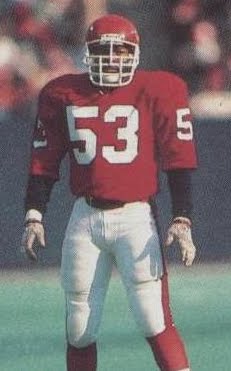
The Gold were coached by Darrell “Mouse” Davis and utilized his run-and-shoot offense. After starting slowly, Bob Gagliano replaced nine-year veteran Vince Evans at quarterback and the club had won four of five games. WR Leonard Harris was the favored target on pass plays and RB Bill Johnson (pictured above) was productive carrying the ball.

As had been the case since the Generals came into being, RB Herschel Walker was the key to the offense, and he had a string of six straight hundred-yard rushing games on the line coming into Denver. Prize rookie QB Doug Flutie was suffering growing pains but brought mobility and a strong arm to the offense.

There were 29,139 fans in attendance at Mile High Stadium. The Generals struck quickly on their first play from scrimmage as Herschel Walker looped out of the backfield and sped past the coverage to pull in a pass by Doug Flutie for a 68-yard touchdown. Roger Ruzek added the extra point for the early 7-0 lead.

Following an exchange of punts, the Gold put together a quick three-play, 63-yard drive that featured a carry by Bill Johnson and a personal foul on the Generals that set up a 30-yard scoring pass from Bob Gagliano to Leonard Harris. Jim Asmus tied the game with the point after.

Neither team threatened again until late in the opening period when the Gold, deep in their own territory, turned the ball over when Johnson fumbled while fighting for extra yardage on a running play and New Jersey recovered at the 12. A sack of Flutie moved the Generals back but they regained the lead by three points on a Ruzek field goal from 35 yards.

The score remained unchanged during the second quarter as the defenses dominated and a rain shower passed through. With 1:23 remaining in the first half, DE Calvin Turner of the Gold recovered a fumble by FB Maurice Carthon at the New Jersey 15 and, shortly thereafter, Johnson took a pitchout and ran three unmolested yards for a TD. Asmus converted and Denver took a 14-10 lead into halftime.

The Generals started the third quarter by advancing methodically on a 12-play, 80-yard drive that featured ten carries for 31 yards by Walker and a fine pass from Flutie to WR Walter Broughton. Walker crashed over for a touchdown from five yards out, Ruzek added the extra point, and the visitors were back in front by 17-14.

The Gold responded by going to the air and Gagliano connected with WR Vincent White for a 48-yard gain to the New Jersey 15. A pass to Johnson out of the backfield picked up 12 yards and Johnson powered over for a three-yard TD. Asmus kicked the point after and Denver was in the lead by 21-17.

The Generals were driving as the game headed into the fourth quarter and Walker started the final period off by hurdling for a yard to convert a fourth down at the Denver 16. Flutie bootlegged to the six and, with Walker pounding into the line play after play, the visitors again faced a fourth-and-goal situation at the one that resulted in a Walker touchdown dive. Ruzek’s kick had New Jersey ahead in the back-and-forth contest by 24-21.

Denver again responded with a 69-yard scoring drive in which Gagliano completed passes to four different receivers and concluded with Johnson blasting into the end zone for the final yard and a TD. Asmus converted to put the Gold up by four points with 6:02 remaining to play.

The offenses had taken command in the second half with every possession ending in a touchdown and it appeared that the Generals might continue the trend on the next series but, after reaching the Denver 43, Flutie was sacked for a five-yard loss on second down by LB Craig Walls and, while a throw to Walker gained seven yards, a fourth-and-four pass was tipped and fell incomplete. A clutch completion to Johnson that converted a third down allowed Denver to run the clock down to 22 seconds remaining before the Generals were able to regain possession and the Gold won by a final score of 28-24.

Denver had the edge in total yards (310 to 301) and first downs (17 to 15) although the Generals led in time of possession (32:42 to 27:18). New Jersey also accounted for four sacks, to two by the Gold, but the Generals turned the ball over twice, one of which led to a Denver touchdown, to one by the home team.

Bob Gagliano completed 17 of 31 passes for 242 yards (167 of which came in the second half) and a touchdown while giving up no interceptions. Bill Johnson rushed for 98 yards on 23 carries that included three TDs and caught four passes for another 46 yards. Leonard Harris also had a team-leading four pass receptions, for 62 yards and a score.

For the Generals, Herschel Walker was productive despite Denver’s efforts to stack the line of scrimmage, gaining 142 yards on 36 rushing attempts with two touchdowns and pulling in three passes for 106 yards that included the one long TD. Doug Flutie was successful on just 5 of 15 throws for 141 yards and a touchdown while being intercepted once.

Denver went on to place second in the Western Conference with an 11-7 record and qualified for the postseason where the club took a thrashing in the Quarterfinal playoff round at the hands of the Memphis Showboats. As for the Generals, the loss dropped them to 8-5 and they also finished at 11-7 and second in the Eastern Conference. They lost a close Quarterfinal round game to the Baltimore Stars.

Bill Johnson rushed for a total of 1261 yards on 212 carries (5.9 avg.) with 15 touchdowns. His yardage ranked third in the league and he received All-USFL recognition from College & Pro Football Newsweekly. At the top of the rushing rankings was Herschel Walker, who gained a gargantuan 2411 yards on 438 attempts (5.5 avg.) and also led the circuit in scoring with 22 touchdowns for 132 points. He received consensus Player of the Year as well as All-USFL honors.

March 13, 2016

1983: Stars Shut Down Walker & Turnover-Prone Generals


The Philadelphia Stars of the United States Football League were making their home debut as they hosted the New Jersey Generals on March 13, 1983. They had won their opening game of the league’s inaugural season in a closely-fought contest at Denver while the Generals lost theirs at Los Angeles.

Things had gotten off to a rocky start for the Stars when George Perles, originally hired to coach the team, left for Michigan State instead and Jim Mora, previously an assistant with the New England Patriots, was brought in with only weeks to prepare for the regular season. RB Kelvin Bryant (pictured above) had been signed out of North Carolina and was the club’s prize rookie and key to the conservative, ball-control offense that was directed by QB Chuck Fusina. The defense had shown its toughness in the opening win.

New Jersey was coached by Chuck Fairbanks and made the biggest splash in the run-up to the first season by signing Heisman Trophy-winning RB Herschel Walker, who left Georgia with a year of eligibility remaining to turn pro. Walker rushed for 65 yards in his debut against the Express the previous week following a short preparation period. QB Bobby Scott was a veteran NFL backup but had given up three interceptions in the opener.

It was a sunny day with a brisk wind in the 50s at Philadelphia’s Veterans Stadium with 38,205 fans in attendance. The Stars had the first possession and moved effectively down the field, mixing passes and runs by Kelvin Bryant, who also had a catch. However, the drive stalled at the New Jersey 24 and David Trout’s 41-yard field goal into the wind was unsuccessful.

The Generals moved well in response, but a fumble by Herschel Walker was recovered at the Philadelphia 46. Following a punt by the Stars, the next New Jersey possession ended with CB Antonio Gibson intercepting a pass by Bobby Scott at his own 32. The Stars had the ball as the game headed into the second quarter and, converting a fourth down along the way, they put together a drive that ended with an eight-yard pass from Chuck Fusina, rolling to his right under pressure, to WR Scott Fitzkee in the back of the end zone for a touchdown. Trout missed the try for extra point, hitting the left upright, but the home team was in front by 6-0.

The Stars got the ball back on an interception by LB George Cooper and he returned it to the New Jersey 32. With Bryant and FB Booker Russell running well, they advanced to the seven but, after being backed up five yards due to a delay of game penalty, Fusina scrambled to the two for a first down. From there, Bryant hurtled into the end zone for a TD to complete the six-play possession. The pass attempt for a two-point conversion failed, but Philadelphia held a 12-0 lead.

That remained the score at halftime. Scott threw another interception, this time picked off by FS Mike Lush, and while the Stars advanced quickly into New Jersey territory, CB Terry Daniels picked off a Fusina pass with the clock down to just over a minute remaining.

The Generals had turned the ball over to conclude all four of their first half possessions, and the trend continued on the first series of the third quarter as Walker fumbled after catching a swing pass and the Stars recovered at the New Jersey 31. Philadelphia turned that into three points and a 15-0 lead as Trout was successful on a 26-yard field goal attempt.

Yet another turnover gave the ball to Philadelphia in New Jersey territory, but this time the home team came up empty when Trout was wide to the right on a 34-yard try for a field goal. Dave Boisture was the quarterback when the Generals next had the ball and the results were no better as he quickly tossed an interception, grabbed by LB Sam Mills. The Stars moved methodically but, after getting inside the ten, it was their turn to fumble the ball away. The visitors punted for the first time from deep in their territory and Philadelphia again had good starting field position. This time, as the game headed into the final period, the Stars didn’t come up empty as Trout kicked a 31-yard field goal.

The remainder of the game brought no surprises. The Generals were unable to reach the end zone and Philadelphia, utilizing the formidable ground attack, drove to a clinching touchdown on a one-foot quarterback sneak by Fusina. Trout added the point after and that provided the final margin in the 25-0 win.

The Stars easily led in total yards (395 to 215), first downs (22 to 13), and time of possession (35:27 to 24:33). They also recorded five sacks, two of them by DE Don Fielder, to none by New Jersey. The Generals turned the ball over a debilitating seven times against three suffered by Philadelphia. There were only two punts, one by each club.

Chuck Fusina was efficient, completing 14 of 22 passes for 173 yards and a touchdown while giving up one interception. Kelvin Bryant rushed for 114 yards on 24 carries and also caught two passes for 22 yards. TE Steve Folsom topped the Philadelphia receivers with four catches for 60 yards.

For the Generals, Herschel Walker was held to 60 yards on 13 rushing attempts. Bobby Scott was successful on 12 of 20 throws for 103 yards with three interceptions and Dave Boisture was five-of-12 for 46 yards and was picked off once. FB Dwight Sullivan caught 6 passes, although for just 17 yards, while WR Larry Brodsky gained a team-leading 46 yards on his three receptions.

The Stars made it three straight wins to start the season the following week before losing to Tampa Bay, but remained consistent throughout the year in topping the Atlantic Division with a league-best 15-3 record. They advanced to the USFL Championship game before losing a close contest to the Michigan Panthers. New Jersey continued to struggle and ended up at 6-12 and third in the division.

Kelvin Bryant received All-League honors as he rushed for 1442 yards and 16 touchdowns and pulled in 53 pass receptions for 410 more yards and another score. His rushing total placed second to Herschel Walker, who finally got on track (even if his team didn’t) and gained 1812 yards on 412 attempts (4.4 avg.) with 17 TDs. He also received All-League recognition.

June 30, 2015

1984: Stars Defeat Generals in USFL Playoff Contest


Two rivals from the Atlantic Division of the United States Football League faced off in a First Round Playoff game on June 30, 1984. The Philadelphia Stars had gone 16-2 during the regular season, the league’s best record, but both losses were to the New Jersey Generals, the club that finished second in the division with a 14-4 tally. The second meeting had been just the previous week, and Philadelphia had been uncharacteristically sloppy in both contests.

The Stars, who narrowly lost the USFL Championship game the previous year, were coached by Jim Mora. QB Chuck Fusina, the league’s most efficient passer, directed the ball-control offense that featured RB Kelvin Bryant (pictured #44 above, with WR Willie Collier) operating behind a solid line. The tough and opportunistic defense that included All-League performers in NT Pete Kugler, LB Sam Mills, CB Garcia Lane, and FS Mike Lush yielded a league-low 12.5 points per game.

New Jersey was coached by Walt Michaels and was much improved over the 1983 unit thanks to the addition of significant veteran talent. QB Brian Sipe was one of those upgrades, and while he didn’t have a big season, he was far more effective than the signal callers of the previous year. RB Herschel Walker was again the key to the offense, but he suffered from a sore shoulder all season and looked more tentative, although he still rushed for 1399 yards and 16 TDs while FB Maurice Carthon also reached a thousand yards (1042). The defense benefited from the addition of linebackers Willie Harper, Bobby Leopold, and Jim LeClair, FS Gary Barbaro, and CB Kerry Justin.

The game was played before 19,038 fans at Franklin Field of the Univ. of Pennsylvania, once home of the NFL Eagles, due to a conflict with major league baseball’s Phillies for use of Veterans Stadium. The locker rooms were too small to accommodate the teams and they had to suit up at the nearby Hollenbeck Center and walk to the stadium.

It had rained during the morning, but stopped prior to kickoff. In the first quarter, a promising ten-play possession for the Generals ended with a pass by Brian Sipe being intercepted by FS Scott Woerner at the Philadelphia 16, and he returned it to his 40.  

The opening period remained scoreless as the teams traded punts. Early in the second quarter, another turnover by the Generals set up the first score of the game. Pete Kugler sacked Sipe, causing the quarterback to fumble. LB John Bunting recovered and the Stars took just three plays to travel 49 yards. Chuck Fusina connected with WR Scott Fitzkee for 17 yards and FB David Riley for 22, and Kelvin Bryant reached the end zone on a ten-yard sweep. David Trout added the extra point and Philadelphia was ahead by 7-0 three minutes into the period.


New Jersey’s next possession ended in a punt and Garcia Lane, sprung thanks to outstanding blocks by DB Bill Hardee and WR Herbert Harris, returned it 70 yards for a TD. Trout again converted to widen the home team’s lead to 14-0.

The Generals, down by two touchdowns, were forced out of their game plan, but they advanced into Philadelphia territory on the next series, helped along by a roughing-the-passer penalty on the Stars. However, the visitors came up empty when Roger Ruzek missed on a 42-yard field goal attempt. Bryant immediately took off on a 38-yard jaunt to key an eight-play, 75-yard drive that culminated in Bryant catching an 11-yard touchdown pass over his shoulder in the corner of the end zone. Trout added the point after. The first half ended with Ruzek failing on a field goal try from 49 yards and, despite New Jersey running more plays and generating the most yards, the Stars took a 21-0 lead into halftime. Adding to their problems, the Generals lost three starters to injuries in the hard-hitting first half: Gary Barbaro, Kerry Justin, and G Wayne Harris.

The Stars punted following the first possession of the third quarter and New Jersey advanced into scoring territory, but after reaching the Philadelphia 15 following Herschel Walker’s run to convert a fourth down, the Stars stiffened on defense and Ruzek missed a third field goal attempt, hooking to the left from 42 yards.  

Philadelphia proceeded to put together a 20-play drive that covered 75 yards and ran 11:48 off the clock. Bryant punched over from the one for a touchdown that, with Trout’s PAT, put the Stars up by 28-0 with 10:41 to play and effectively sealed the win. The Generals finally got on the board when Sipe threw to WR Clarence Collins for a 14-yard TD, but it was of no consequence. Philadelphia advanced to the next round by a decisive score of 28-7.

New Jersey had the edge in total yards (313 to 269) and first downs (24 to 17), but also suffered the game’s only two turnovers, both of which were turned into points by the Stars. Philadelphia held the Generals to just 70 yards on the ground and recorded three sacks, to one by New Jersey. There were a total of 16 penalties called in the hard-hitting game, with the Stars getting flagged 10 times.

Kelvin Bryant rushed for 117 yards on 23 carries that included two touchdowns and scored another on one of his two catches for 32 yards. Chuck Fusina didn’t go to the air often but was typically efficient, completing 9 of 14 passes for 121 yards and a touchdown, including six-of-six for 77 yards in the first half. David Riley and Scott Fitzkee caught three passes apiece, for 39 and 33 yards, respectively.

For the Generals, Brian Sipe was successful on 24 of 40 throws for 259 yards and a TD along with one interception. Herschel Walker was limited to 50 yards on 15 rushing attempts but led the club with 6 catches for 79 yards. Clarence Collins contributed 5 receptions for 62 yards and a score and TE Jeff Spek added 58 yards on his 5 catches.

“A loss today meant the season,” said Kelvin Bryant. “We really wanted to get them because they were the only team to beat us.”

“We were a lot more physical today, there was a lot of emotion out there,” said Coach Mora of the Stars.

The Stars went on to defeat the Birmingham Stallions the following week for the Eastern Conference title and won the USFL Championship handily over the Arizona Wranglers. New Jersey came back in 1985 to go 11-7 and again qualify for the playoffs, and once more fell to the Stars, now based in Baltimore, in the first round.

April 17, 2015

1983: Walker & Generals Hold Off Late Rally to Defeat Gilliam & Federals


The New Jersey Generals had made the biggest player signing heading into the inaugural United States Football League season, but were struggling at 1-6 as they hosted the Washington Federals on April 17, 1983. RB Herschel Walker (pictured above), who left Georgia after a Heisman-winning junior year in ’82 to sign with the new Spring league, overcame a slow start to rank among the top rushers, but Head Coach Chuck Fairbanks’ team as a whole was lacking. QB Bobby Scott, longtime NFL backup to Archie Manning in New Orleans, was mediocre and the defense was no better.

The Federals also came into the game with a 1-6 record. Coached by Ray Jauch, the club had some talent but suffered many injuries and was prone to losing close contests. Two rookies on offense, QB Mike Hohensee and RB Craig James, showed promise when healthy. The defense was woeful and the effort to find a reliable placekicker was not going well.

There were 35,381 fans in attendance at Giants Stadium in the New Jersey Meadowlands. The only score of the first quarter came as a result of a safety on New Jersey’s opening possession when punter Dave Jacobs ran out of his end zone. Washington was ahead by a 2-0 margin.

The Generals took control in the second quarter. A 40-yard pass play from Bobby Scott to TE Victor Hicks was good for a touchdown although an attempted two-point conversion was unsuccessful. Midway through the period, a 46-yard New Jersey possession was capped by a two-yard Herschel Walker touchdown carry. This time Scott threw to FB Maurice Carthon to add two points and make the score 14-2.

With the Federals down by twelve points, Joe Gilliam entered the game at quarterback. The 32-year-old Gilliam had experience as a starting quarterback with the NFL Steelers, but had fallen on hard times in the intervening years due to off-field problems. He had started in place of Hohensee the previous week and now guided the visitors to their first offensive score, tossing an 18-yard TD pass to WR Mike Holmes. The the extra point attempt was missed, however, and New Jersey later added a 32-yard Jacobs field goal to take a 17-8 lead into halftime.

The third quarter was scoreless, but on the first play of the fourth quarter, Walker breezed into the end zone from eight yards out for a touchdown. The try for extra point failed, but the home team’s 23-8 lead appeared to be secure.

At this point, Washington began to mount a comeback. On a drive highlighted by two pass interference calls on Generals SS Dana Noel, Gilliam connected with WR Joey Walters for a nine-yard touchdown. Gilliam again threw to Walters for two points and New Jersey’s lead was narrowed to 23-16.

The Federals scored once more on a spectacular play when Gilliam passed to Craig James, who caught it at the New Jersey 35, was spun around at the 28, regained his balance, and sped the rest of the way for a 52-yard touchdown. However, down by a point and trying to take the lead, Washington attempted a two-point conversion that failed when Gilliam’s pass was knocked down by FS Keith Moody.

Still, there were eight minutes remaining. In the final minute, Gilliam drove the Federals down the field, starting at their own 13 and reaching the New Jersey 16 with a 26-yard completion to WR Vince Kinney highlighting the series. The Federals lined up for a field goal attempt with eight seconds left, but Ken Olson missed from 33 yards and New Jersey came away with a 23-22 win.

The Generals had the edge in total yards (389 to 312) and first downs (24 to 18). However, New Jersey also turned the ball over three times, to one by the Federals, and Washington accumulated three sacks, to two by the Generals. The Federals punted seven times, to two by New Jersey, while also drawing eight penalties to six flags thrown on the Generals.

Herschel Walker rushed for 143 yards on 28 carries that included two touchdowns, and his longest gain was for 38 yards. Maurice Carthon contributed 57 yards on 18 rushing attempts. Bobby Scott completed 13 of 25 passes for 206 yards with one TD but also three interceptions. Victor Hicks had four catches for 72 yards and a score.

For the Federals, Joe Gilliam was successful on 10 of 22 throws for 199 yards and three touchdowns, giving up one interception, in relief of Mike Hohensee, who was three-of-seven for 21 yards. RB Billy Taylor gained 85 yards on 17 carries and added four pass receptions for 26 yards while Craig James rushed for 28 yards on 10 attempts and gained 77 yards on his three catches that included a TD.

New Jersey lost a close game in overtime the next week on the way to a 6-12 finish, which placed a distant third in the Atlantic Division. Washington ended up in the cellar at 4-14.

Herschel Walker was in a virtual dead heat with another rookie, RB Kelvin Bryant of the Philadelphia Stars, in the USFL rushing standings following the win over the Federals and ultimately came out on top with 1812 yards. He also topped the new league with 17 rushing touchdowns and 18 overall. He received consensus All-League recognition.

Joe Gilliam continued to split time with Mike Hohensee and ended up completing 40 of 102 passes (39.2 %) for 673 yards and five TDs while giving up 12 interceptions.  

The missed field goal try at the end was Ken Olson’s first official attempt for the Federals. He had not had any attempts in his debut the previous week and an earlier miss from 37 yards against the Generals was nullified by a roughing-the-kicker penalty. Olson was gone by the next week.

October 15, 2014

1989: Vikings Defeat Packers as Newly-Acquired Walker Stars


Three days after being in the middle of one of the biggest trades in NFL history, RB Herschel Walker (pictured above) took the field for the Minnesota Vikings as they hosted the Green Bay Packers on October 15, 1989. In a complex transaction that ultimately involved 18 players and draft picks, Walker was obtained from the Dallas Cowboys. From the perspective of the Cowboys, the deal provided the opportunity to rebuild a last-place team through the draft. For Minnesota, it was hoped that the talented Walker would be the key to reaching the Super Bowl.

Much had been expected of Walker since he first gained attention as a freshman on Georgia’s 1980 national championship team. After winning the Heisman Trophy as a junior, he made the stunning move of passing up his last collegiate season for the new United States Football League and, over the course of three years with the New Jersey Generals, rushed for 5562 yards. Moving on to the Cowboys after the demise of the USFL, he was selected to the Pro Bowl twice and, in 1988, gained 1514 yards on the ground and 2019 overall. To be sure, Walker had drawn his share of criticism for being a strictly straight-ahead, no-polish runner who had yet to fulfill gigantic expectations, but he was also a tremendous athlete with outstanding strength and speed. It was anticipated that, having practiced only twice with the team since the trade, he would see limited action in his first game with Minnesota.

Beyond Walker, the Vikings, coached by Jerry Burns, were a talented football team with an outstanding defense but an offense that seemed to be underachieving. QB Wade Wilson had a fractured hand and former starter Tommy Kramer was back behind center, and WR Anthony Carter and TE Steve Jordan were playing but hampered by injuries. Coming off an 11-5 record in ’88, Minnesota was 3-2 and willing to mortgage the future for near-term success.

The Packers, also at 3-2, were a rejuvenated team under Head Coach Lindy Infante. The offense had been highly productive with Don Majkowski taking over at quarterback, WR Sterling Sharpe breaking out as the feature receiver, and RB Brent Fullwood carrying the running load, and the defense featured pass-rushing LB Tim Harris.

There was a record crowd of 62,075 in attendance at the Hubert H. Humphrey Metrodome. The Packers had first possession but Minnesota got the ball on a fumble by Brent Fullwood that was recovered by DE Chris Doleman at the Green Bay 34. The Vikings were unable to capitalize, however, as they were unable to move on offense and a field goal attempt by Rich Karlis from 51 yards was wide to the right.

Green Bay responded by driving 66 yards in nine plays, the big one a pass from Don Majkowski to Sterling Sharpe that covered 51 yards to the Minnesota 10. A face mask penalty on LB Mike Merriweather helped to convert a third down and RB Herman Fontenot finally ended the series with a one-yard touchdown carry. Chris Jacke added the extra point to give the visitors the early 7-0 lead.

With the crowd cheering as he came onto the field, Herschel Walker touched the ball for the first time on the ensuing kickoff and returned it 51 yards, although it was for naught when nullified by a penalty for an illegal block. The teams exchanged punts and Walker provided some excitement when, on his first carry from scrimmage, he took off for a 47-yard gain to the Green Bay 28, losing his right shoe along the way, and this one counted. But again the Vikings came up empty when FS Ken Stills intercepted a Tommy Kramer pass on the next play.

Minnesota took charge on defense with a stuff and a sack to push the Packers back to their eight yard line to finish the opening period, and on a third-and-22 play to start the second quarter, Majkowski’s pass was intercepted by CB Reggie Rutland. The Vikings advanced 45 yards in eight plays, with Kramer completing passes to WR Hassan Jones for 19 yards and to Anthony Carter for 15, and this time Karlis got them on the board with a 28-yard field goal.


Once again the Minnesota defense pushed the Packers back, with Doleman sacking Majkowski for a seven-yard loss, and a punt was returned 17 yards by WR Leo Lewis to give the Vikings favorable starting field position at the Green Bay 49. Walker had two carries for 11 yards and, in between, Kramer connected with RB D.J. Dozier for a gain of 30 yards. FB Rick Fenney ran eight yards for a TD and, with the PAT by Karlis, Minnesota was in the lead by 10-7.

Another short series by the Packers in which they remained bottled up inside their ten yard line was followed by a punt, but while the Vikings reached the Green Bay 30, a 47-yard field goal try by Karlis was blocked by CB Ron Pitts. RB Keith Woodside provided some offense for Green Bay by breaking away for a run of 31 yards, but Majkowski threw a pass that was picked off by Rutland. With the ball at the Green Bay 28 and 2:40 remaining in the half, the Vikings chipped away and Kramer threw to WR Jim Gustafson for a six-yard touchdown. Karlis converted and Minnesota took a 17-7 lead into halftime. Don Majkowski had completed only two of 11 passes thus far and was sacked three times.

The teams traded punts to start the third quarter. The Vikings put together an eight-play, 78-yard drive on their second possession as Kramer completed five passes, the longest to Jones for 39 yards to the Green Bay 11 and the last to Fenney for an eight-yard TD. Karlis converted and Minnesota was leading comfortably by 24-7.

The Packers once again found themselves playing deep in their own territory when a penalty on the ensuing kickoff had them starting off at their 12 and, after two passes were incomplete, Majkowski was sacked in the end zone by LB Ray Berry for a safety, thus adding two more points to Minnesota’s lead.

Following the free kick, Walker ran the ball three times for 41 yards to reach the Green Bay 27, but a fumble on an errant pitchout by Kramer was recovered by LB Brian Noble on the final play of the period.

The teams exchanged punts before the Packers, gaining possession with 4:47 left to play, put together a scoring series. Majkowski completed passes to Sharpe for 31 yards and WR Carl Bland for a 46-yard touchdown, but the try for an onside kick was recovered by the Vikings, who were able to run out the clock. Minnesota won by a final score of 26-14.


The Vikings outgained Green Bay by 398 yards to 219, with 238 of that total coming on the ground. They also had the advantage in first downs by 21 to 11. Minnesota’s defense recorded eight sacks, to one by the Packers, four of them by DT Keith Millard (pictured at right). The Packers turned the ball over three times, to two by the Vikings, and hurt themselves further with 11 penalties, at a cost of 77 yards, although Minnesota was flagged nine times.

Herschel Walker rushed for 148 yards on 18 carries, becoming the first player to debut with a hundred yards rushing in franchise history. Tommy Kramer completed 14 of 24 passes for 172 yards and two touchdowns, giving up one interception. Hassan Jones caught four passes for 68 yards and D.J. Dozier was right behind with four receptions for 47 yards in addition to his 31 rushing yards on 8 attempts. In addition to Millard’s four sacks, Chris Doleman had two and Najee Mustafaa accounted for both Minnesota interceptions.

For the Packers, it was a long day for Don Majkowski, who was successful on just 9 of 24 throws for 198 yards and a TD with two interceptions, in addition to the sacks. Keith Woodside led the team with 36 rushing yards on three carries as well as three pass receptions, which added another 23 yards. Sterling Sharpe gained 82 yards on his two catches.

“We didn’t anticipate him to play to that extent,” said Coach Burns of Herschel Walker. “I’m not the smartest guy, but I’m not a complete idiot, either. When I saw what he was doing out there, I said ‘hey, keep feeding him the ball.’”

Alas, the initial excitement over Walker’s impact gave way to disappointment. He never came close to the rushing yardage total of his debut in the remaining games of the season, with 89 the next week at Detroit his next best amount. In 11 games with the Vikings, Walker ran for 669 yards in 169 carries for an even 4.0 average and five touchdowns, often looking tentative in the offense. He also was rarely used as a receiver, despite great success out of the backfield in New Jersey and Dallas, catching more passes in his five games with the Cowboys (22) than with Minnesota (18). He would play two more years for the Vikings and remained a poor fit.

Minnesota played well at home (8-0) but not on the road (2-6) and, while topping the NFC Central with a 10-6 record, the Vikings lost badly to the 49ers in the Divisional playoff round. They dropped to 6-10 the following year, and rebounded only mildly to 8-8 in 1991, with the Walker trade receiving much of the blame for the club’s decline. By contrast, the Dallas Cowboys, recipients of the load of draft choices from Minnesota, they were able to move up quickly from 1-15 in 1989 to the first of three NFL titles in four years by 1992.

As for the Packers, they lost again the next week but beat the Vikings later in the season in the rematch and also finished at 10-6, although in second place and out of the postseason due to tiebreakers.

June 10, 2014

1985: Walker Passes Dickerson as Generals Defeat Bulls


RB Herschel Walker had become one of the most notable players in the United States Football League from the moment he passed up his senior year at Georgia to sign with the New Jersey Generals of the new Spring league in 1983. Walker had been a Heisman Trophy contender from his freshman year, winning the award as a junior, and thus expectations were high – and despite his achievements, the criticism often was sharp as well. He started slowly in ’83 but went on to win the USFL’s first rushing title with 1812 yards. Playing with a sore shoulder, he had a lesser year in ’84, but in his third season he was rolling up yards at a pace that not only put him at the top of his league’s rushing standings but also in competition with the NFL record of 2105 yards that Eric Dickerson of the Rams had set just the previous Fall. That record had been set over the course of 16 games and, coming into New Jersey’s 16th game on June 10, Walker had a string of nine straight 100-yard rushing games and was just 138 yards behind.

New Jersey, coached by Walt Michaels, was without injured QB Doug Flutie, who had suffered a broken collar bone the previous week. With backup Ron Reeves starting in his place, Walker could be expected to carry more of the load, along with FB Maurice Carthon.

The opposing Jacksonville Bulls, under the direction of offensive-minded Head Coach Lindy Infante, were also without their starting quarterback as Brian Sipe had suffered a separated shoulder, although backup Ed Luther had NFL experience. RB Mike Rozier, Walker’s successor as Heisman Trophy winner in 1983, was the third-ranking rusher in the USFL (he would finish second) and the defense was benefiting from the play of rookie DE Keith Millard and second-year LB Vaughan Johnson.

The Generals, with a 10-5 record, needed a win to clinch a playoff spot while the Bulls, at 8-7, were struggling to remain in contention, although they had beaten New Jersey in their previous meeting in Jacksonville.

There were 36,465 fans on hand for the Monday night game at Giants Stadium in the New Jersey Meadowlands. The Generals scored first when Roger Ruzek capped a long initial possession with a 27-yard field goal.

Following a short series by the Bulls, another long and methodical New Jersey drive ended when Reeves threw to TE Sam Bowers for a five-yard touchdown. Ruzek added the extra point that made it 10-0. It got worse for the Bulls when they fumbled away the ensuing kickoff and early in the second quarter, Walker ran four yards for another TD.

Thus far, the home team had dominated the game, but two turnovers by the Generals allowed the Bulls to get back into the contest. First, Jacksonville had to punt following the next series but it was New Jersey’s turn to muff the kick and the Bulls recovered at the Generals’ 43. The visitors drove to the 15 before the series stalled and Brian Franco kicked a 28-yard field goal.

The next New Jersey series ended when a third down pass by Reeves was intercepted by safety Van Jakes. Luther passed the Bulls down the field and Mike Rozier ran the last five yards for a TD. Franco successfully converted to make it a seven-point game. However, the Generals had time for one more possession in the half and drove to another score, with Maurice Carthon running in for a touchdown from 15 yards out. The tally was 24-10 at the half.

Midway through the third quarter, and on the first play following a Jacksonville punt, Walker ran up the middle and broke two tackles on the way to a 55-yard touchdown that put him ahead of Dickerson. It also gave the Generals a 31-10 lead.

Behind by three touchdowns, the Bulls fought back in the fourth quarter. A blocked punt late in the third period gave Jacksonville the ball in New Jersey territory, and early in the final period it paid off when Luther threw to TE Robert Young for a seven-yard touchdown. Franco successfully added the extra point.

The Generals appeared to have the game in hand when the Bulls failed to convert a fourth down with 6:32 remaining on the clock, but a fumble by Walker’s backup, RB Rod Pegues, gave the visitors the ball again at the New Jersey 45. The Bulls made the most of the opportunity, driving to another Luther-to-Young TD connection, this time covering nine yards. Franco again added the PAT and it was a seven-point contest.

The Generals were unable to handle the ensuing pooched kickoff and Jacksonville DB Rodney McMillan recovered the ball at the New Jersey three with 3:10 left on the clock, giving the Bulls a good shot at potentially tying the score. But in dramatic fashion, the Generals kept them out of the end zone on four straight plays to hold on for the 31-24 win.

New Jersey led in total yards (313 to 267) and first downs (18 to 17). Of that yardage total, the Generals generated 230 on the ground. However, they also hurt themselves with four turnovers, to two suffered by the Bulls.

Herschel Walker rushed for 162 yards on 28 carries that included two touchdowns, bringing his season total to 2129 yards. Maurice Carthon contributed another 49 yards on 9 attempts that included a score. Ron Reeves threw just 13 passes and completed 7 for 83 yards with a TD and an interception. Walker was one of three Generals that caught two passes apiece and Sam Bowers led the club with 37 yards on his pair.

For the Bulls, Ed Luther completed 24 of 44 throws for 209 yards and the two late touchdowns as well as giving up one interception.  Mike Rozier ran for 51 yards on 16 carries and led the club with 8 catches, for 45 yards. WR Alton Alexis gained 58 yards on his four receptions.

“Records are very important, no doubt, but then again, a win is just as important,” said Herschel Walker. “If we had lost the game, I don’t think the record would have meant as much.”

The win clinched a postseason spot for New Jersey while the Bulls were eliminated from contention. The Generals finished at 11-7 and in second place in the Eastern Conference. They lost to the Baltimore Stars in the Quarterfinal playoff round. Jacksonville placed sixth in the conference with a 9-9 record.

Herschel Walker finished up with 2411 yards on 438 carries (5.5 avg.) and also led the USFL with 22 touchdowns (21 rushing). He received unanimous Player of the Year as well as All-league honors and, with the demise of the league, moved on to the Dallas Cowboys of the NFL.

March 11, 2014

1984: Turnovers Help Generals Edge Stars


The United States Football League’s Atlantic Division matchup between the New Jersey Generals and Philadelphia Stars on March 11, 1984 featured two teams that had thus far been carried by their defenses in achieving 2-0 records.

The Generals, coached by Walt Michaels, were benefiting from an influx of veteran talent on defense that included linebackers Bobby Leopold, Jim LeClair, and Willie Harper, CB Kerry Justin, and FS Gary Barbaro. The offense, which had relied most heavily on RB Herschel Walker in 1983, added ex-Browns QB Brian Sipe, but he had gone down with an injury in the first week and backup Gene Bradley was behind center.

Philadelphia, which barely lost the USFL Championship game the previous year, continued to rely on a ball control attack led by QB Chuck Fusina and featuring RB Kelvin Bryant. But the offense had scored just 17 points in each of the first two games and it was the blitz-heavy defense keeping opponents in check.

There were 46,716 fans in attendance at Giants Stadium in the New Jersey Meadowlands for the Generals’ home-opening game. The contest was played in near-freezing temperatures with wind gusts of nearly 35 miles per hour. Fans occasionally tossed snowballs onto the field despite the dire warnings coming over the public address system and, as a result, 14 were arrested and 57 ejected during the course of the afternoon.

The Generals got the first break of the game when, forced to punt after their first series, the ball bounced into CB Jonathan Sutton and New Jersey recovered at the Philadelphia 29, but they were unable to move afterward. The Stars had a drive that was helped along by a fake punt that converted a fourth down, but David Trout’s 52-yard field goal attempt hit the right upright and was unsuccessful.

In a 10-play, 65-yard series that extended into the second quarter, the Generals, who ran the ball effectively, were helped along the way when a pass by Gene Bradley was overthrown in the end zone but SS Antonio Gibson was penalized for defensive holding. FB Maurice Carthon scored a touchdown on a one-yard dive into the end zone two plays later and Roger Ruzek added the extra point.

The Stars responded by driving 74 yards in 16 plays that culminated in a scrambling Chuck Fusina firing a pass to WR Willie Collier, who made a diving catch in the end zone for a seven-yard TD on third-and-goal. Trout tied the game at 7-7 with the successful conversion.

That was the score at halftime. With 53 seconds left in the period, FS Mike Lush intercepted a Bradley pass to give the Stars the ball at the New Jersey 43. However, they came up empty when Trout again hit the right upright on a 45-yard field goal try.

The Generals forced a turnover on the first play from scrimmage of the third quarter, with Bobby Leopold causing Kelvin Bryant to fumble at his own 42. New Jersey made the most of it, driving to another Carthon one-yard scoring carry that was set up by a 20-yard run by Walker. Ruzek’s PAT gave the home team a 14-7 lead.

Once again the Stars followed a New Jersey TD with one of their own, driving methodically down the field and ending with Fusina tossing a four-yard scoring pass to TE Steve Folsom. Trout tied the score at 14-14 with the PAT.

The Generals had to punt on their next series, but on the last play of the third quarter, a fumble by Bryant at the Philadelphia 40 was recovered by New Jersey’s Jim LeClair. It set up a 38-yard field goal by Ruzek six plays later that put the home team in front once more with over ten minutes left to play.

The teams traded punts, and the Stars appeared to be on their way to a score with time running down, converting a fourth down and moving into Generals territory. However, LeClair recovered a fumble by WR Willie Collier, who lost the handle on the ball after making a catch at the New Jersey 21 with 1:23 left in the contest. Philadelphia got one last shot with the clock down to ten seconds, but Fusina’s long pass was intercepted by Leopold to seal the 17-14 win for the Generals.

The Stars won the statistical battle, leading in total yards (245 to 164) and first downs (18 to 10). However, they also turned the ball over five times, to one suffered by New Jersey, and had the two close misses on field goal attempts.

Maurice Carthon led the Generals with 71 yards on 18 carries that included the two short touchdowns and Herschel Walker, who was generally well defensed by Philadelphia, added 56 yards on 17 attempts. Gene Bradley completed just 5 of 13 passes for 37 yards and had one intercepted. WR Tom McConnaughey led the receivers with two catches for 23 yards. On defense, Bobby Leopold (pictured below) forced both of Bryant’s fumbles and made the game-clinching interception while Jim LeClair had two key fumble recoveries.


For the Stars, Kelvin Bryant ran for 87 yards on 24 attempts had four catches for 34 more yards, but also fumbled the ball away twice. Chuck Fusina was successful on 19 of 30 throws for 125 yards and two TDs along with the late interception. Steve Folsom caught 6 passes for 43 yards and a score.

“I was hit from the blind side on both fumbles,” explained Kelvin Bryant. “That’s the way it goes. We made some mistakes, that’s why we lost.”

“The frustrating thing was the fumbles and the penalties,” added Coach Jim Mora of the Stars. “The turnovers, that’s what did it.”

The Stars recovered to win all of their remaining games – with the exception of the last-week rematch with New Jersey – to finish atop the Atlantic Division once again at 16-2. The Generals lost the following week but ended up with a 14-4 record to place second in the division. In the First Round playoff game, the clubs met for a third time and it was Philadelphia winning by a decisive 28-7 score, on the way to attaining the USFL Championship.

March 1, 2014

1985: Flutie Throws 4 TD Passes as Generals Defeat Renegades


The New Jersey Generals of the United States Football League were 0-1 as they faced the Orlando Renegades, also 0-1, on March 1, 1985. The center of attention for New Jersey was rookie QB Doug Flutie, the diminutive Heisman Trophy winner out of Boston College who had struggled in his debut against the Birmingham Stallions.

Flutie signed a five-year, $7 million deal to join the Generals, and was put even more on the spot when veteran QB Brian Sipe was traded away to Jacksonville, thus propelling the rookie immediately into the starting lineup. Head Coach Walt Michaels’ team had been heavily dependent on another ex-Heisman winner, RB Herschel Walker, in its first two years and had benefited from an influx of veteran talent that owner Donald Trump signed to bolster the roster. Flutie was hoping to rebound from a rough performance against the Stallions in which he misfired on his first nine passes, two of which were intercepted.

The Renegades were the transplanted Washington Federals of 1983 and ’84 under new ownership and a new head coach in Lee Corso. The Federals had been a losing team, but RB Curtis Bledsoe and WR Joey Walters were quality players. Quarterback was a question mark with mediocre veteran Jerry Golsteyn starting, who was sacked eight times in a Week 1 loss to Tampa Bay.

There were 32,748 fans in attendance for the nationally televised Friday night game at the Florida Citrus Bowl. They had little to cheer about, as the Generals dominated the first half. Orlando had difficulty generating offense with Jerry Golsteyn. Meanwhile, Doug Flutie’s mobility and the rushing of Herschel Walker and FB Maurice Carthon allowed the visitors to score three touchdowns in the first thirty minutes of play.  

Flutie threw to WR Clarence Collins for a nine-yard touchdown in the first quarter and connected with Collins, again from nine yards, for another TD midway into the second quarter. Just before the half, Flutie tossed his third touchdown pass, this time covering 25 yards to TE Sam Bowers. Roger Ruzek added the extra point after each and the score was 21-0 at halftime.

In addition to his scoring passes, Flutie scrambled for 48 yards in the first half and continually kept the Orlando defense off balance.  Walker and Carthon combined for 139 yards on 29 carries. Meanwhile, Jerry Golsteyn was successful on only four of 15 first half passes.

Early in the third quarter, Orlando’s offense finally came alive and put together an impressive 10-play, 64-yard drive that stalled at the New Jersey 12. Jeff Brockhaus kicked a 22-yard field goal to get the Renegades on the board. However, Flutie tossed his fourth touchdown pass, once again to Collins on a 47-yard play that put the home team 25 points behind.

Orlando finally scored again midway through the fourth quarter. Golsteyn threw to TE Bob Niziolek for a two-yard touchdown. It followed a Golsteyn completion to TE Don Echols that gained 18 yards to the three, where Echols fumbled into the end zone but, although Orlando recovered, the officials ruled the ball dead at the three. It was of no consequence to the outcome as New Jersey came away with a convincing 28-10 win.

The Generals dominated in total yards (449 to 214), with 258 of that total coming on the ground, and had twice as many first downs (26 to 13) as Orlando. The Renegades also turned the ball over twice, to no turnovers suffered by New Jersey.

Doug Flutie didn’t have a high-percentage passing day as he was successful on 11 of 24 throws, but they were good for 191 yards and four touchdowns while none were intercepted. Flutie also ran the ball 6 times for 57 yards. Herschel Walker, as was typically the case, led the ground attack with 110 yards on 25 carries and Maurice Carthon contributed another 91 yards on 20 attempts. Clarence Collins (pictured below) was the receiving star with four catches for 82 yards and three TDs.


For the Renegades, Jerry Golsteyn was successful on 12 of 27 passes for 138 yards and a TD while giving up one interception. Curtis Bledsoe ran for 68 yards on 15 attempts and also caught four passes for 29 more yards. WR Ricky Simmons gained a team-leading 37 yards on his two receptions and Bob Niziolek was right behind with 36 yards on three catches that included the club’s only TD.

“It was a load off my back,” said a relieved Doug Flutie after a strong performance in a win for the Generals.

“I think what did us in was the speed and quickness of Flutie…He just did us in,” said Orlando’s Coach Corso. “He did some great things individually. I was very impressed with Flutie. I thought he played very well.”

The Generals went on to post an 11-7 record in finishing second in the Eastern Conference. They lost their Quarterfinal playoff game to the Baltimore Stars. Orlando continued to struggle and ended up at the bottom of the conference at 5-13.

Doug Flutie passed for 2109 yards with 13 touchdowns and 14 interceptions, and, as he did against the Renegades, utilized his running ability to good effect in gaining 465 yards on 65 carries. A broken collar bone sidelined him late in the season. Clarence Collins caught just one more scoring pass over the course of the season, ending up with 27 catches for 566 yards (21.0 avg.). 

May 9, 2013

1983: Norwood Kicks 5 Field Goals as Stallions Defeat Generals


The Monday night United States Football League matchup on May 9, 1983 featured the New Jersey Generals, with prize rookie RB Herschel Walker, against the visiting Birmingham Stallions. After a slow start, Walker came into the tenth week leading the new league with over a thousand yards on the ground. However, while they had won the previous week, the Generals were only 3-6 thus far under Head Coach Chuck Fairbanks. Other than Walker, the offense was ordinary and the defense mediocre.

The Stallions, under Head Coach Rollie Dotsch, were 4-5 and suffered with inexperienced Bob Lane and Reggie Collier at quarterback, but utilized an effective running back-by-committee approach. The young defense tended to keep opposing teams out of the end zone and had given up a total of just 21 points over the previous three contests.

There was a crowd of 38,734 in attendance at Giants Stadium in the New Jersey Meadowlands. After the Stallions were forced to punt on their initial possession, the Generals took the early lead thanks to a 37-yard scoring pass from QB Bobby Scott to WR Tom McConnaughey on their second play from scrimmage at 2:22 into the first quarter. Unfortunately for the home team, that would prove to be the high point of the evening.

Birmingham came back with an 84-yard drive that culminated in a one-yard touchdown run by RB Bill White. Two more time-consuming drives led to field goals by Scott Norwood in the second quarter. The second came with 18 seconds remaining and made it 13-7 in favor of the Stallions at the half. But while the score was close, Birmingham had dominated time of possession by holding onto the ball for just over 22 minutes. As a result, Herschel Walker had just five carries for 19 yards.

Norwood kicked a 31-yard field goal with just under five minutes to play in the third quarter to extend Birmingham’s lead to 16-7 and then recovered a fumbled kickoff return by RB Thomas Lott. That set up his fourth field goal, from 37 yards.

Norwood booted a league-record fifth field goal in the fourth quarter from 25 yard but just missed a sixth from 41 yards. It was more than enough for the Stallions, who won comfortably by a score of 22-7.

Birmingham dominated in total yards (414 to 154), with 242 of that total coming on the ground, as opposed to just 38 yards for the Generals. The Stallions also were dominant in first downs (24 to 8) and time of possession (43:28 to 16:32). The visitors didn’t turn the ball over, while New Jersey did so once.

Four Birmingham runners outrushed Walker – Ken Talton (64 yards on 20 carries), Earl Gant (12 attempts for 56 yards), Bill White (15 carries for 53 yards), and Cornelius Quarles (11 for 47). Bob Lane was successful on 13 of 19 passes for 182 yards. WR Jim Smith topped the receivers with 5 catches for 78 yards. Scott Norwood, the rookie placekicker out of James Madison who had failed to catch on with the NFL’s Atlanta Falcons, was the scoring star with his five field goals in six attempts.

For the Generals, Herschel Walker gained just 28 yards on 11 carries. Bobby Scott completed 7 of 16 throws for 121 yards and a TD with none intercepted while backup Gene Bradley was successful on just 2 of 6 for 11 yards. TE Sam Bowers caught 4 passes for 62 yards.

“They kept the ball the whole game and I just stood back and watched,” said Herschel Walker. “I reckon I should have brought my rabbit’s foot – we didn’t have any luck.”

The Stallions went on to finish fourth in the tough Central Division with a 9-9 record. New Jersey ended up third in the Atlantic Division at 6-12.

Scott Norwood’s five field goals remained the USFL record, although it was tied twice – by David Trout of the Stars in 1984 and Brian Franco of Jacksonville in ’85. For the 1983 season, Norwood was successful on 25 of 34 field goal attempts and added 34 extra points to total 109 points, which ranked fourth in the league.

Herschel Walker bounced back with 87 yards the next week on his way to topping the circuit with 1812 yards on 412 carries (4.4 avg.) and 17 touchdowns. He also led the Generals in pass receiving with 53 catches for 489 yards and another TD.

April 10, 2013

1983: Corker Has 6 Sacks as Panthers Defeat Generals


The Michigan Panthers were struggling in the early going of the United States Football League’s first season as they took on the New Jersey Generals at the Meadowlands on April 10, 1983. Coached by Jim Stanley, they had lost four straight games following an opening-week win. The Panthers had unheralded rookie QB Bobby Hebert behind center and were waiting for their better known first-year player, WR Anthony Carter, to break out. LB John Corker had become the star of the defense and, while he missed the previous week’s game, had accounted for nine sacks in the two contests before and was back for the game against New Jersey.

The Generals, under Head Coach Chuck Fairbanks, were also 1-4 and had just broken into the win column in the previous contest. Star rookie RB Herschel Walker was the center of attention and had exploded for 177 yards in the winning effort. But QB Bobby Scott, a veteran backup from the New Orleans Saints, was mediocre and the rest of the team was lacking as well.

There were just 17,648 fans in attendance at Giants Stadium with a steady rain falling. Defense dominated as neither team was able to score during the first half. It stayed that way until, with 5:19 remaining in the third quarter, a punt by Dave Jacobs of the Generals was blocked by CB Clarence Chapman following a high snap. NT Ira Albright fell on the blocked kick in the end zone to finally break the scoreless battle and put the visitors in front.

The Generals came right back and scored less than two minutes later on a one-yard run by FB Dwight Sullivan. However the holder, WR Mike Friede, bobbled the snap for the extra point and it was missed. Michigan, having successfully added its PAT, thus maintained a one-point lead. With a minute remaining in the period, the Panthers extended their margin. Bobby Hebert passed to WR Derek Holloway for a 25-yard touchdown and, with another successful extra point the score was 14-6.

That was it until, with just under a minute to play in the fourth quarter, RB Ken Lacy ran for a nine-yard TD. Michigan ended up with a 21-6 win.

The Generals outgained Michigan (347 yards to 232) and had more first downs (20 to 12). However, the Panthers recorded nine sacks, six of them by Corker, while New Jersey had none.

Bobby Hebert completed 12 of 26 passes for 122 yards with a touchdown and an interception. Ken Lacy rushed for 77 yards on 14 carries that included a TD and also had 4 catches for 39 yards. Derek Holloway gained 40 yards and had a touchdown among his three receptions, while Anthony Carter was held to just two catches for 22 yards.

For the Generals, Herschel Walker, who ran the ball sparingly in the second half as the offense tried to rally through the air, still had a very productive day with 133 yards on 26 carries and another 51 yards on 6 pass receptions. Bobby Scott was successful on 16 of 31 throws for 220 yards and gave up an interception. FB Maurice Carthon, who added another 23 yards on six runs, also pulled in four throws for 52 yards and WR Tom McConnaughey gained 80 yards on his three catches.

The win marked a turnaround for the Panthers, who won five straight games on their way to topping the Central Division with a 12-6 record and ultimately defeating the Philadelphia Stars for the league’s first championship. The offense, helped by the addition of some veteran linemen, came together as Bobby Hebert led the league in passing, Anthony Carter caught 60 passes for 1181 yards and nine touchdowns, and Ken Lacy rushed for 1180 yards.

John Corker’s six sacks gave him 15 in three games on the way to a league-leading total of 28. He received All-League honors from both the league and Sporting News and gaining Defensive Player of the Year recognition.

Meanwhile, New Jersey’s frustrations continued and the Generals finished third in the Atlantic Division at 6-12. Herschel Walker led the new league in rushing with 1812 yards, but the passing attack ranked 9th among the 12 USFL clubs and only one team, the Arizona Wranglers, gave up more than New Jersey’s 437 points.

March 18, 2013

1984: Kelly Passes & Runs Gamblers to Win Over Generals


The Houston Gamblers, new to the United States Football League in its second season, were off to a 2-1 start as they hosted the undefeated New Jersey Generals on March 18, 1984. Owned by Dr. Jerry Argovitz and coached by Jack Pardee, the Gamblers had a pass-oriented “run-and-shoot” offense operated by rookie QB Jim Kelly, who was proving to be remarkably well-suited to it.

The visiting Generals were coached by ex-Jets mentor Walt Michaels and, while they still were a ground-oriented team based around the presence of RB Herschel Walker, had taken steps to improve the overall roster. Newly-acquired veterans included QB Brian Sipe, G Dave Lapham, CB Kerry Justin, FS Gary Barbaro, SS Greggory Johnson, and linebackers Jim LeClair, Willie Harper, and Bob Leopold and the result was great improvement over the team that went a disappointing 6-12 in the USFL’s inaugural season.

There were 35,532 in attendance at the Astrodome for Houston’s home-opening game. The Generals opened the scoring as Sipe threw to TE Jeff Spek for a seven-yard touchdown midway through the first quarter. Houston responded with a scoring drive that featured a Kelly completion to WR Gerald McNeil for 29 yards and a 12-yard pass to WR Greg Moser. It ended in a five-yard touchdown run by RB Sam Harrell. PK Toni Fritsch completed a two-point TD pass to Harrell shot-put style after the center snap on the extra point try was bobbled by the holder, Moser, who then lateraled to the veteran placekicker. The result was that the Gamblers were ahead by 8-7 after a period of play.

That lead was extended in the second quarter after CB Will Lewis (pictured below) intercepted a Sipe pass and returned it to the New Jersey one yard line. From there, Harrell scored again and, with Fritsch kicking the extra point this time, the Gamblers were up by 15-7 at the half.


Houston made it 22-7 ten minutes into the third quarter when Kelly threw a screen pass to WR Scott McGhee for a 25-yard TD that was followed by another successful Fritsch PAT. Three minutes into the final period, Fritsch added a 20-yard field goal and the game was essentially put away shortly thereafter when Lewis again picked off a Sipe pass and returned it 34 yards for a touchdown.

The Generals fought back with Sipe throwing to WR Clarence Collins for a six-yard TD and then tossing to Walker for a successful two-point conversion. With less than three minutes remaining, Walker scored another touchdown from a yard out, but that was it for the visitors. Houston came away with a convincing 32-25 win.

The Gamblers outgained New Jersey (370 yards to 234) and had more first downs (22 to 17). In addition, the Generals turned the ball over three times, all on interceptions, to one suffered by Houston.

Jim Kelly showed off his mobility as well as his passing skill, leading the team with 65 yards on 6 carries in addition to completing 22 of 36 passes for 271 yards with a touchdown and an interception. WR Richard Johnson caught 6 passes for 46 yards while Gerald McNeil gained 73 yards on his 5 pass receptions. Sam Harrell was right behind Kelly as he rushed for 60 yards on 20 carries that included two TDs.

For the Generals, Brian Sipe was successful on 18 of 29 throws for 148 yards and two touchdowns but also the three interceptions. Herschel Walker had relatively modest output, rushing for 65 yards on 14 attempts and catching three passes for 21 yards. Clarence Collins led the club with 6 catches for 64 yards.

“I couldn’t be prouder of the way this team played,” said Houston Head Coach Jack Pardee. “We held down a good club today and came up with the turnovers when we had to have them. It was a great team effort.”

The Gamblers went on to become the most successful of the six new USFL franchises in ’84, topping the Central Division with a 13-5 record before losing to Arizona in the first round of the playoffs. New Jersey placed second in the Atlantic Division at 14-4 but also exited in the first round of the postseason, falling to the division-rival Philadelphia Stars.

Jim Kelly had a sensational year throwing the football as he led the league in most major passing categories, including yards (5219) and TD passes (44) – although also interceptions (26). However, as the game against the Generals suggested, he was also one of the USFL’s most productive quarterbacks at running the ball as he gained 493 yards on 85 carries (5.8 avg.) and scored five touchdowns. 

May 22, 2012

1983: Chicago Loses QB but Beats Walker & Generals in Overtime


The Chicago Blitz had come into the inaugural season of the United States Football League as the heavy favorites to win the title. The Blitz had the most experienced pro head coach in George Allen and a great deal of veteran talent, including 36-year-old QB Greg Landry to direct the offense and 11-year NFL veteran LB Stan White on defense. In addition, Chicago picked up two prominent rookie prizes in WR Trumaine Johnson out of Grambling and Ohio State RB Tim Spencer.

The going had been tougher than anticipated in the highly-competitive USFL Central Division, but coming into the May 22 game against the visiting New Jersey Generals the Blitz had a 7-4 record and were a game behind the Tampa Bay Bandits.

The Generals, coached by Chuck Fairbanks, had made the most publicized single signing going into the new league’s first year. RB Herschel Walker (pictured at right), winner of the 1982 Heisman Trophy as a junior at Georgia, had chosen to forego his last year of college eligibility and went with the USFL. But while the signing generated plenty of publicity – and controversy – and Walker overcame a slow start to become a formidable ground gainer, New Jersey overall was not a good team and sported a 3-8 tally coming into the contest at Chicago.

Attendance at Soldier Field numbered a season-high 33,812 fans (helped by Walker’s presence) and they saw the visitors get the first break of the game. On Chicago’s initial possession, the Generals recovered a Landry fumble at his own eight yard line and four plays later Walker plunged over the goal line from a yard out for a touchdown.

That proved to be the end of the first half scoring. Landry had a rough two quarters, completing just 8 of 23 passes for 112 yards with three interceptions as well as the fumble.

Three minutes into the third quarter, Blitz DT Karl Lorch blocked a New Jersey field goal attempt, which seemed to ignite the Chicago offense. The Blitz went 80 yards in nine plays, highlighted by Landry completions of 22 yards to RB Kevin Long and 12 yards to TE Paul Ricker and culminating in a 36-yard Landry scoring pass to WR Lenny Willis. With the successful conversion, the score was tied at 7-7.

Landry was 7-for-10, accumulating 128 yards, in the third quarter as Chicago’s offense played more effectively. Late in the period, the Blitz took over at their own 35, but five plays into the series, and just 11 seconds into the fourth quarter, Landry suffered a season-ending broken ankle when C Wally Pesuit was knocked into him. With the ball at the New Jersey 25, rookie backup QB Tim Koegel came into the game and the Blitz continued their drive to the two yard line. On fourth-and-one, Coach Allen elected to go for a field goal and Frank Corral was successful from 20 yards. The Blitz had their first lead of the game at 10-7.

New Jersey came right back with a six-play, 72-yard possession. Walker put the Generals ahead with a 25-yard touchdown run with 8:40 left in the fourth quarter, but Dave Jacobs missed the extra point and it remained a three-point contest at 13-10.

Chicago’s next drive stalled but the veteran all-purpose kicker Corral booted a clutch 63-yard punt that rolled out of bounds at the New Jersey one. Four plays later, Walker fumbled when stripped by SS Don Schwartz and CB Lance Shields recovered for the Blitz. With just under three minutes remaining in regulation, Corral (pictured below) tied the game with a 35-yard field goal and the score remained knotted at 13-13 after four quarters.

In overtime, Chicago received the kickoff and Koegel’s 38-yard pass completion to Trumaine Johnson moved the ball to the New Jersey seven. On third-and-goal, Koegel, holding for an apparent field goal attempt, instead ran around left end for a five-yard touchdown and, at 3:53 into the extra period, the Blitz were winners by a score of 19-13.  

Chicago outgained the Generals (392 yards to 314), although New Jersey rolled up 225 yards on the ground, and had more first downs (20 to 15). The Blitz were called for 10 penalties, however, at a cost of 74 yards, while the Generals were flagged five times.

Prior to suffering his injury, Greg Landry completed 15 of 33 passes for 240 yards with a touchdown and three interceptions. Tim Koegel performed well in relief, completing 6 of 9 throws for 74 yards and running for the game-winning TD. Tim Spencer led the ground game with 72 yards on 16 carries and also caught 5 passes for 70 more. WR Wamon Buggs had 5 catches for 77 yards.

For the Generals, Herschel Walker rushed for 141 yards and two touchdowns on 33 carries but also suffered the key fumble in the fourth quarter. He was also one of three New Jersey receivers to catch two passes, for 17 yards, while WR Tom McConnaughey gained 36 yards on his two receptions. QB Bobby Scott went to the air 21 times and completed 10 for 112 yards with two intercepted.

“I’m obviously disappointed that it happened,” said the 15-year veteran Landry of the injury that prematurely ended his season. “I’ve had three season-ending knee operations before, so I’ve been in this situation, and it’s not what you want to happen.”

Four days after the game, the Blitz obtained Scott from the Generals to provide a veteran backup for Koegel. Chicago finished the regular season at 12-6 to place second to the Michigan Panthers (who had the same record but won the division title on tiebreakers) and qualify as a wild card for the postseason. They lost to the Philadelphia Stars in a come-from-behind thriller in the first round.

The Generals placed a disappointing third in the Atlantic Division at 6-12. Herschel Walker was the team’s brightest star, however, leading the USFL in rushing with 1812 yards.

March 6, 2012

1983: Boddie Upstages Walker as Express Beat Generals in USFL Debut


The United States Football League commenced its inaugural season with five games on March 6, 1983 (there was also a Monday night contest the following day to round out Week 1). Of those games, the one that drew the most attention was played in Los Angeles, where the Express hosted the New Jersey Generals.

There was a national television audience and a large press contingent in addition to 34,002 fans in attendance at the Memorial Coliseum. The reason for the intense scrutiny was the presence of one player, RB Herschel Walker. A three-time All-American and winner of the Heisman Trophy as a junior, he had left the Univ. of Georgia a year early to sign a three-year, $4.2 million contract with the USFL club in a stunning move just weeks before the season commenced.

Expectations were high for Walker, although he had only practiced with the club for a short time since his signing. When the contest was all over another rookie, RB Tony Boddie of the Express (pictured above), who was an unknown 12th round draft choice out of Montana State, would be receiving accolades for his performance.

With veteran NFL backup Mike Rae at quarterback, the Express started off the scoring in the first quarter with a 23-yard field goal by Vince Abbott. New Jersey, also with a veteran pro backup at quarterback in ex-Saint Bobby Scott, scored the first touchdown, and it was Walker running in from five yards out. The extra point attempt failed, however, and the Generals held to a three-point lead. Dave Jacobs booted a 38-yard field goal with just seconds remaining in the opening period to extend New Jersey’s lead to 9-3.

On the opening drive of the second quarter, LA added three points on a 27-yard field goal by Abbott. Rookie Tom Ramsey, a local product from UCLA, replaced Rae at quarterback for the Express five minutes into the period with the Generals holding a 9-6 lead. Ramsey passed to Boddie for an 11-yard touchdown late in the half to put the Express ahead at 13-9.

Four minutes into the third quarter, Los Angeles scored again when Ramsey threw to WR Vister Hayes for a 24-yard TD. The Generals came back with a touchdown of their own in the fourth quarter with Scott hitting WR Tom McConnaughey from ten yards out. Scott’s pass for a two-point conversion fell incomplete and the Express held onto a five-point lead.

With 3:48 left and the ball at the LA 31, Coach Hugh Campbell of the Express chose to go for it on fourth-and-inches. The gamble failed when reserve FB LaRue Harrington carried the ball into the middle of the line and was stopped for no gain. (Afterward, Campbell said that the Express had two injured defensive backs and he was concerned that they wouldn’t have been able to stop New Jersey’s passing attack, thus prompting the effort to maintain possession).

It appeared that it might prove fatal to the home team when the Generals moved swiftly to the Los Angeles five, but then Scott was sacked for a nine-yard loss and, with Walker standing on the sidelines, a fourth-down pass to WR Larry Brodsky came up inches short of a first down and LA was able to run out the clock for a 20-15 win.

The Generals outgained the Express (366 yards to 296), had more first downs (22 to 16), and held onto the ball longer (34:09 to 25:51). However, they also turned the ball over five times, to just one suffered by LA, and Scott was sacked four times while Express quarterbacks were tossed twice. Both teams ran the ball 33 times apiece and Los Angeles outgained the Generals by 169 to 147.

Herschel Walker’s pro debut was pronounced a disappointment as he gained 65 yards on 16 carries that included one TD and caught just one pass for three more yards. By contrast, the unknown Tony Boddie made a splash by gaining 77 yards on 13 attempts and adding 5 pass receptions for 49 yards and a touchdown.

Tom Ramsey completed only 8 of 20 passes for 117 yards for the Express, but two of them went for touchdowns against one interception. Mike Rae was 3-for-7 and 22 yards. While Boddie had the most catches, Vister Hayes was the yardage leader with 60 on his four receptions.

For the Generals, Bobby Scott was successful on 24 of 38 throws for 251 yards and a TD, but was picked off three times. TE Victor Hicks was the top receiver with 5 catches for 69 yards while Tom McConnaughey was right behind with 61 yards on his four receptions. After Walker, the next-leading rusher was FB Dwight Sullivan with 7 carries for 35 yards.


“A lot of the guys had more speed than I expected to see,” said Walker (pictured at left) in summing up his first pro game. “And the execution was better. I guess that’s the biggest adjustment I have to make.”

“I said before the game that we’d use other backs because Herschel had been with us only a week,” said Generals Head Coach Chuck Fairbanks. “In the second half, we were in a catch-up situation early and I felt I had to take him out because of his lack of preparation.”

“We didn’t block as well as we should have for him – we can help him out a lot more than we did today,” added Fairbanks.

“This was real fun,” said Tom Ramsey, whose first pro contest proved to be more satisfying. “I think this is one of the more exciting games I’ve ever played in. The fans got their money’s worth. When the fans are with you, like these fans were, it fires me up.”

Over the course of the season, Herschel Walker asserted himself as a ball carrier and ended up leading the USFL with 1812 yards on 412 carries (4.4 avg.) and 17 touchdowns – he was also New Jersey’s leading pass receiver with 53 catches for 489 yards and another TD. As for Tony Boddie, he returned to earth, ending up 23rd in the league in rushing (and second on the Express) with 403 yards on 109 attempts (3.7 avg.) and three scores while pulling in 46 passes for 434 yards and two TDs.

Both teams ended up with losing records. The Express went 8-10, which was still good enough to contend in the weak Pacific Division (the Oakland Invaders won the division title at 9-9). Alternating quarterbacks (a preference of Coach Campbell from his years in the CFL) and with a generally weak running game, LA could not generate the offensive consistency to put sufficient points on the board and negated the efforts of the fifth-ranked defense. New Jersey was more of a disappointment, finishing 6-12 and well out of the running in the Atlantic Division. Bobby Scott didn’t last the year – he was dealt to Chicago when injuries depleted their quarterback ranks – and Jeff Knapple, Gene Bradley, and Dave Boisture were found wanting.