Showing posts with label Chicago Blitz. Show all posts

May 16, 2015

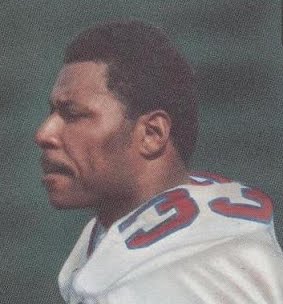
Highlighted Year: Luther Bradley, 1983

Safety, Chicago Blitz


Age: 28 (May 7)
5th season in pro football, 1st in USFL & with Blitz
College: Notre Dame
Height: 6’2”   Weight: 196

Prelude:
Bradley intercepted 17 passes in college, one of which he returned for a 99-yard touchdown, and was a consensus All-American selection in 1977. He was chosen by the Detroit Lions in the first round of the 1978 NFL draft (11th overall) and moved directly into the starting lineup at cornerback. Bradley started every game in his first two seasons and intercepted a total of seven passes for 96 yards and a TD. A knee injury limited Bradley to eight games in 1980 and he was a backup in ’81. He was traded to the Houston Oilers, who released him just prior to the 1982 season, and he signed with the Blitz of the new USFL. Head Coach George Allen shifted Bradley to free safety.

1983 Season Summary
Appeared in 17 of 18 games
[Bracketed numbers indicate league rank in Top 20]

Interceptions – 12 [1]
Most interceptions, game – 6 at Tampa Bay 4/2
Int. return yards – 167 [2]
Most int. return yards, game – 127 (on 6 int.) at Tampa Bay 4/2
Int. TDs – 1 [1, tied with eight others]
Fumble recoveries – 1

Postseason: 1 G (USFL Semifinal playoff at Philadelphia)
Interceptions – 1
Int. return yards – 10
TDs – 0

Awards & Honors:
1st team All-USFL: League, College & Pro Football Newsweekly, Pro Football Weekly

Blitz went 12-6 to finish second in the USFL Central Division and qualify for the postseason as a Wild Card entry while leading the league in interceptions (37). Lost USFL Semifinal playoff to Philadelphia Stars (44-38).

Aftermath:
Due to an exchange of franchises, Bradley became part of the Arizona Wranglers in 1984 and intercepted four passes. He was left unprotected in the merger of the Wranglers and Oklahoma Outlaws in ‘85 and joined the Houston Gamblers, where he once again intercepted 12 passes and received first-team all-league honors from College & Pro Football Newsweekly. The end of the USFL marked the end of Bradley’s pro career. In three USFL seasons, he intercepted 28 passes, the most in the league’s brief history, with the six-interception game against the Bandits the highlight.

--

Highlighted Years features players who were consensus first-team All-League* selections or league* or conference** leaders in the following statistical categories:

Rushing: Yards, TDs (min. 10)
Passing: Yards, Completion Pct., Yards per Attempt, TDs, Rating
Receiving: Catches, Yards, TDs (min. 10)
Scoring: TDs, Points, Field Goals (min. 5)
All-Purpose: Total Yards
Defense: Interceptions, Sacks
Kickoff Returns: Average
Punt Returns: Average
Punting: Average

*Leagues include NFL (1920 to date), AFL (1926), AFL (1936-37), AAFC (1946-49), AFL (1960-69), WFL (1974-75), USFL (1983-85)

**NFC/AFC since 1970

March 27, 2015

1983: Blitz Defeat Express to Even Record


The Chicago Blitz were off to a lesser start than anticipated in the inaugural United States Football League season as they hosted the Los Angeles Express on March 27, 1983. Coming into the new league with the best-known head coach, George Allen, and a veteran-laden roster that also included touted rookies in HB Tim Spencer and WR Trumaine Johnson, the Blitz were viewed as the team to beat. But after handily defeating Washington in the opening week, they dropped two straight contests and were at 1-2 as they faced Los Angeles.

The Express was coached by Hugh Campbell, who had enjoyed success in the CFL. He employed a two-quarterback rotation that utilized veteran NFL backup Mike Rae and rookie Tom Ramsey out of UCLA, and unheralded rookie RB Tony Boddie had been a pleasant surprise.  The defensive line, anchored by NT Eddie “Meat Cleaver” Weaver was an asset.

It was a chilly, rainy day at Soldier Field before a sparse crowd of 10,936 fans. Following a scoreless first quarter, John Roveto kicked a 38-yard field goal with 5:43 remaining in the first half to put the Blitz in front by 3-0. Meanwhile, Tom Ramsey came in at quarterback for an ineffective Mike Rae early in the second quarter for the Express.

Later in the period, the Blitz put together a 64-yard series that included an uncharacteristic gamble. Facing a fourth-and-three situation, FB Kevin Long ran around left end for an 11-yard gain. QB Greg Landry (pictured above) then threw to Trumaine Johnson for 22 yards and Long finished the drive off with a one-yard touchdown carry. Roveto added the extra point and Chicago took a 10-0 lead into halftime.

Early in the third quarter, a breakdown by the Blitz defense allowed Ramsey to throw to Tony Boddie for a 40-yard TD and Vince Abbott kicked the PAT. With the lead cut to three points, the Blitz drove 73 yards in 10 plays. Landry completed passes to TE Paul Ricker, Trumaine Johnson, and WR Wamon Buggs along the way and capped the possession by floating a pass to TE Doug Cozen that was caught just inside the end zone for a five-yard touchdown. A pass interference call on the visitors was declined, Roveto kicked the point after, and it was a 17-7 game.

LA got a break later in the period when a poor punt by Chicago’s Frank Garcia traveled just 18 yards. The Express capitalized, scoring on a touchdown pass from Ramsey to TE Ricky Ellis that covered 18 yards. The extra point by Abbott again narrowed the margin to three points.

For the remainder of the contest, the Chicago defense came up with key turnovers to expand and then preserve the lead. First, MLB Jim Fahnhorst recovered a fumble by Los Angeles FB LaRue Harrington, who was stripped by DT Joe Ehrmann, and that led to a 24-yard Roveto field goal that put the Blitz up by six points with 2:07 remaining.

There were still opportunities for the Express, but Chicago’s defense garnered two more takeaways in the last two minutes to seal the win. LB Ed Smith and safety Eddie Brown intercepted Ramsey passes and the Blitz won by a final score of 20-14.

Chicago had the edge in total yards (322 to 208), with an almost-equal balance between rushing (158) and passing (164), and also led in first downs (19 to 12). Los Angeles turned the ball over three times, to none by the Blitz. However, Chicago was hurt by 13 penalties, to just five called on the Express.

Greg Landry completed 20 of 36 passes for 173 yards with one touchdown and no interceptions. Tim Spencer ran for 87 yards on 21 carries and Kevin Long added 58 yards on 12 attempts that included a TD. Trumaine Johnson topped Chicago’s receivers with 6 catches for 70 yards and Wamon Buggs contributed another 53 yards on his three receptions.

For the Express, Mike Rae was a dismal four-of-12 for 29 yards before being relieved by Tom Ramsey, who was successful on 8 of 20 throws for 93 yards and two TDs, but also gave up the two late interceptions. Tony Boddie rushed for 50 yards on 10 carries and also topped the club with 46 yards on his two catches that included a score. WR Kris Haines, RB Wilbert Haslip, and LaRue Harrington all had three pass receptions, for 26, 20, and 12 yards, respectively.

“Chicago has the best personnel of all the teams we’ve played so far, no question about it,” said LA’s Coach Campbell. “They present you with a lot of problems, especially their defense.”

The Blitz went on to a 12-6 record, finishing second in the Central Division and grabbing a Wild Card playoff spot. While leading the USFL in scoring and overall defense, Chicago was not so adept at holding fourth quarter leads over the course of the season as it was against the Express, and that extended into the playoffs as they fell to the Philadelphia Stars in the Semifinal round. The inconsistent Express ended up at 8-10 and second in the weak Pacific Division.

February 27, 2015

1984: Panthers Edge Blitz on Last-Second Field Goal


On February 27, 1984 the Michigan Panthers began the defense of their United States Football League Championship in a Monday night home game against the Chicago Blitz. Head Coach Jim Stanley’s team still had the key performers that fueled the 12-6 title-winning squad of 1983. WR Anthony Carter provided big-play ability as a receiver and kick returner and RB Ken Lacy had been the league’s third-leading rusher. QB Bobby Hebert was back behind center, although he held out and had only ten days of practice coming into the opening game. On defense, LB John Corker was coming off of a year in which he topped the USFL with 28 sacks, nearly twice as many as the runner-up.

The Blitz was a very different club from the one that had also gone 12-6 under Head Coach George Allen in the inaugural season.  The franchise was effectively traded, with Allen and the bulk of his veteran-laden roster heading to Arizona while the 1983 Wranglers were transplanted to the Windy City. Many of the former Arizona players were jettisoned, however. The new coach was Marv Levy and there were several NFL veterans that were acquired, most notably QB Vince Evans of the Bears. The state of the defense was a major concern coming into the opener against the Panthers. 

The Pontiac Silverdome was covered, but a blizzard outside held attendance down to 22,428 and caused many in the crowd to be late in arriving. The Blitz had the first possession and converted a third-and-five situation as Vince Evans threw to TE Mark Keel to advance to the Michigan 44. RB Larry Canada ran effectively and Kevin Seibel kicked a 41-yard field goal to give Chicago the early lead.

The Panthers struck quickly in response. Following two strong carries by Ken Lacy, Bobby Hebert went deep to a streaking WR Derek Holloway, who got beyond the coverage and hauled the pass in for a 49-yard touchdown. Novo Bojovic added the extra point.

Chicago responded with a drive of 80 yards in 10 plays that included key passes to WR Keith MaGee and another good run by Canada. It concluded with Evans leaping into the end zone from a yard out. Seibel kicked the point after and the Blitz was back in front by 10-7.

The Panthers were driving as the opening period ended and, on the first play of the second quarter, Hebert threw to Anthony Carter for a 16-yard touchdown. Bojovic’s extra point put the home team ahead by four.

The teams traded punts, with the Blitz getting the better of the field position and driving 59 yards in eight plays that culminated in a two-yard carry for a TD by Canada. However, an errant snap on the try for extra point kept the score at 16-14 in favor of Chicago.  So it remained until the final seconds of the first half as the Panthers drove into scoring territory and Bojovic kicked a 39-yard field goal. Michigan led the back-and-forth game by 17-16 at halftime.

The Panthers took the second half kickoff and again advanced into Chicago territory, but came up empty when Bojovic was wide to the left on a 33-yard field goal attempt. They got the ball back a short time later thanks to a fumble by the Blitz at their 31 yard line, but a holding penalty wiped out a good gain on a swing pass and Hebert was sacked on third down to take Michigan out of field goal range.

The score remained unchanged as the contest moved into the fourth quarter. A punt by the Panthers that was downed inside the Chicago five yard line was negated by an illegal procedure penalty and the re-kick was blocked by RB Jim Stone. MaGee was unable to grab the bouncing ball as it skittered through the Michigan end zone, but the play still resulted in a safety that put the Blitz back in the lead by an 18-17 score.


Chicago got good field position near midfield on the resulting free kick, but an Evans pass was intercepted by CB Oliver Davis, who returned it 23 yards. The Panthers moved backward rather than forward due to a holding penalty and a sack, forcing another punt.

Two dropped passes caused the Blitz to have to punt with less than three minutes remaining to play and Carter returned Jeff Gossett’s 57-yard kick 13 yards. Hebert threw to Lacy for a 28-yard gain that nearly went the distance and Michigan then pounded straight away on the ground until a throw to RB Cleo Miller put the ball on the Chicago three with the clock down to 18 seconds. After one run into the line, Bojovic came in to kick a 20-yard field goal with no time remaining and the Panthers won by a final score of 20-18.

Michigan led in total yards (397 to 275) and first downs (22 to 17), although time of possession was almost even. Both clubs ran the ball well, with the Blitz gaining 144 yards to 124 for the Panthers, but Michigan was much more successful through the air (273 to 131). Chicago turned the ball over twice, to none suffered by the Panthers, but Michigan was hurt by 12 penalties, at a cost of 79 yards, to seven flags thrown on the visitors.

Bobby Hebert completed 20 of 34 passes for 296 yards and two touchdowns while giving up no interceptions. Ken Lacy rushed for 98 yards on 16 carries and caught four passes for another 58 yards. Anthony Carter had 7 pass receptions for 108 yards.

For the Blitz, Vince Evans was successful on 16 of 32 throws for 134 yards and was picked off once. Larry Canada gained 84 yards on 12 rushing attempts and RB Glenn Ford contributed 41 yards on 8 carries. Mark Keel and WR Marcus Anderson each had five catches, for 61 and 40 yards, respectively.


“Sometimes I didn’t feel right out there, and sometimes I felt 100 percent as good as I did last year,” said Bobby Hebert. “My lack of practice time hurt. My timing wasn’t always right and I threw some bad passes.”

“I thought we were fortunate to win,” summed up Jim Stanley of his team’s rusty performance. “I feel like we dodged a bullet tonight.”

Following the successful, if unsteady, start, the Panthers won their next five games before disaster struck when Anthony Carter was lost for the year with a broken arm, the first of several key injuries. Michigan promptly dropped four straight contests and barely made it into the postseason as a second place Wild Card with a 10-8 record, losing in the first round to the Los Angeles Express in triple overtime. Chicago never got on track, struggling to a 5-13 tally and placing last in the Central Division.

April 15, 2013

1984: Stars Score 31 Points in First Quarter to Thrash Blitz


The Philadelphia Stars were cruising along with a 6-1 record as they hosted the Chicago Blitz in a United States Football League game on April 15, 1984. While they were missing star RB Kelvin Bryant due to an injury, and had to rally to edge the Arizona Wranglers in their previous game, Head Coach Jim Mora’s team was still sound on both sides of the ball. QB Chuck Fusina was behind center to guide the ball-control offense and the tough and opportunistic defense was masterful at generating turnovers and keeping opposing teams out of the end zone. Undersized ILB Sam Mills was particularly adept at making big plays – as the Blitz would find out.

Chicago was struggling at 2-5. Coached by Marv Levy, the team had ex-Bear Vince Evans at quarterback but was a shadow of the club that played by the same name in 1983 and, through an ownership switch, had mostly been transferred to Arizona. The Blitz had little fan support and scant success on the field.

There were 17,417 fans in attendance at Veterans Stadium. It didn’t the Stars long to make the home crowd happy as they scored four touchdowns in the first nine minutes of the game.

It all started when Sam Mills recovered a fumble by RB Larry Canada to set up the first Philadelphia TD. Chuck Fusina threw to WR Willie Collier for a 19-yard touchdown less than four minutes into the contest.

Following a punt by the Blitz, the Stars again scored quickly. WR Herbert Harris gained 33 yards on a reverse to set up a 25-yard TD pass from Fusina to TE Steve Folsom. On the next series, RB Vegas Ferguson fumbled at his 35 and safety Scott Woerner grabbed the loose ball and returned it for another touchdown. Just like that, the Blitz were in a 21-0 hole.

It continued to go badly for Chicago when the next pass Evans threw was picked off by Mills, who returned it ten yards. The possession concluded with FB David Riley plowing over from a yard out to add a fourth TD for the Stars. In short order, Mills intercepted another Evans throw to give the Stars the ball at their 40. Six plays later, David Trout kicked a 30-yard field goal and, with 25 seconds remaining in the opening period, Philadelphia was up by 31-0. The point total was a USFL record for one quarter.

The Stars cruised from there. Midway through the second quarter, Trout added a 49-yard field goal. Once again a turnover had been turned into points by Philadelphia as CB Garcia Lane picked off a pass and returned it 19 yards to the Stars’ 35 to set up the score.

Three minutes into the third quarter, safety Mike Lush intercepted an Evans pass near midfield. RB Allen Harvin, the replacement for the injured Kelvin Bryant, topped off the resulting possession with an eight-yard touchdown carry. Chicago finally got on the scoreboard, long after it mattered, with a two-yard TD pass from Evans to OT Doug Hoppock, getting his only reception of the year on a tackle-eligible play. There was no further scoring as the Stars came away with a crushing 41-7 win.

The Stars gained 320 yards to Chicago’s 299 and had the edge in first downs by 16 to 15 – deceivingly close numbers since Philadelphia put the game away early and the Blitz vainly tried to play catch-up the rest of the way. More meaningfully, the Blitz turned the ball over seven times, to two given up by the Stars.


Chuck Fusina completed 11 of 17 passes for 180 yards with two touchdowns and one interception. Allen Harvin (pictured at left) rushed for 82 yards on 19 carries with one TD. Steve Folsom, Willie Collier, and David Riley each caught three passes, for 56, 52, and 43 yards, respectively. The biggest star was Sam Mills on defense with two interceptions, a fumble recovery, and 11 tackles to fuel the onslaught.

For the Blitz, Vince Evans was successful on 18 of 36 throws for 170 yards and the one TD, but also gave up five interceptions before backup Ron Reeves finished up. RB Jim Stone ran for 61 yards on 5 attempts and also led the team with four catches for 37 yards.

The Stars continued to win with regularity through the remainder of the season, compiling a 16-2 record and three more victories in the postseason that culminated in a USFL Championship. The Blitz also continued to lose, ending up at the bottom of the Central Division with a 5-13 tally.

Sam Mills went on to lead Philadelphia in tackles (92) and assists (118) while intercepting three passes and recording five sacks. He was named to the USFL All-League team for the second year.

March 20, 2013

1983: Gold Beat Blitz in Wintry Conditions


Coming into the inaugural season of the United States Football League, the Chicago Blitz were widely viewed as the team to beat. They had the league’s best-known head coach in George Allen and many players with plenty of pro football experience, most notably QB Greg Landry and LB Stan White, and had managed to sign two highly-regarded rookies in WR Trumaine Johnson and RB Tim Spencer. They easily overcame the Washington Federals in their opening contest but had been stunned the next week by a late comeback on the part of the Arizona Wranglers.

On March 20, 1983 the Blitz hosted the Denver Gold for their home debut in Chicago. The Gold had far fewer known quantities on the roster but were coached by Red Miller, who had guided the NFL Broncos to their first Super Bowl appearance and remained popular among the city’s football fans. They did have a veteran pro quarterback in Ken Johnson, who had spent the previous five seasons in the Canadian Football League. Denver was 0-2 coming into the game at Chicago.

The weather was not cooperative. There was an announced attendance of 29,178 at Soldier Field (likely closer to 22,600) in the snow and wind as temperatures were in the 20s with a wind chill that was far lower. The Blitz made the most of having a 20 mph wind at their back in the first quarter. The Gold had the first possession of the game and punted. The home team then went 51 yards in 11 plays, mostly runs by RB Kevin Long, who gained 29 yards on 6 carries, ending with John Roveto’s 27-yard field goal.

Once again Denver punted and this time it took the Blitz just four plays to go 48 yards and put more points on the board. On a third-and-16 play, Greg Landry threw to WR Lenny Willis for a 42-yard touchdown and, with the successful PAT, a 10-0 lead.

However, just before the opening period ended and following a 36-yard run by RB Harry Sydney, the Gold got on the board when Brian Speelman kicked a 39-yard field goal. A few minutes later, and now in the second quarter, Denver got a break when Chicago’s recently-signed punter, Frank Garcia, fumbled while fielding the snap and the visitors got the ball in good field position (both Garcia and Roveto were covering for the injured all-purpose kicker Frank Corral). The Gold capitalized when Sydney swept to his right for another long gain, this time a 30-yard touchdown carry.

The score remained 10-10 at the half and neither team was able to move the ball effectively on the icy field during the third quarter. A little over three minutes into the final period, the Blitz finally broke the deadlock when Roveto kicked a 38-yard field goal with the benefit of the wind to conclude a six-play, 38-yard series.

The teams traded punts, with the Blitz holding onto a 13-10 margin. The climactic drive by the Gold started at the Denver 30 and was aided on the second play when Ken Johnson rolled out and kept the ball for a 12-yard gain to near midfield. However, it seemed as though the visitors would come up short as they faced a third-and-22 situation from their own 48. Johnson overthrew WR Lonnell Phea but a pass interference call on CB Maurice Tyler gave the Gold a first down at the Chicago 37 with 3:06 left on the clock.

Four plays that included a lateral from Johnson to TE Bob Niziolek that, combined, picked up 16 yards and a pass to Niziolek for 13 more yards gave Denver a first-and-goal at the Chicago three. Sydney ran for two yards on first down, but an incomplete pass followed by a carry by RB Larry Canada that gained nothing set up a fourth down play. Going for the win rather than a potentially game-tying field goal attempt, Johnson rolled out to his left and ran for a touchdown, sliding into the end zone with 18 seconds left on the clock. The extra point attempt was missed but the Gold came away with a 16-13 win.

Chicago easily outgained the Gold (263 yards to 160), had more first downs (16 to 7), and dominated the time of possession (35:06 to 23:54). Denver turned the ball over three times to one by the Blitz. But Chicago simply wasn’t able to translate time with the ball into points on the board and, for the second straight week, failed to nail down a win in the final seconds.

Ken Johnson threw only six passes and completed three of them for 25 yards with no touchdowns and two interceptions, although he ran for the winning score. Harry Sydney, who had the two big carries in the first half, gained 79 yards on 9 rushing attempts that included a TD. He also caught one of the three completed passes, for three yards, but tossed an interception in one throwing attempt. TE Bob Niziolek had the longest catch of the day for the Gold, of 13 yards, and had another six yards on a lateral.

For the Blitz, Greg Landry completed 7 of 17 throws for 114 yards and a touchdown while also tossing his first interception of the young season. Tim Spencer ran for 82 yards on 20 carries and was closely followed by Kevin Long (pictured below), who had 80 yards on his 23 attempts. Trumaine Johnson caught 4 passes for 58 yards.


 “I feel like the doctor who did everything right only to have the patient die,” said a disappointed George Allen. “I guess you could say it was a tough loss.”

Holding on to late leads would become a chronic problem for the Blitz, although they finished with a healthy 12-6 record and secured a Wild Card berth in the playoffs. They lost to the Philadelphia Stars in the first round – appropriately enough, due to the failure to maintain a late lead. Denver struggled to a 7-11 record, placing third in the Pacific Division, and Coach Miller was dismissed along the way. But the Gold had the best fan support of any of the USFL teams that first year, averaging 41,736 fans per home game in comparison to Chicago’s disappointing 18,133. 

May 22, 2012

1983: Chicago Loses QB but Beats Walker & Generals in Overtime


The Chicago Blitz had come into the inaugural season of the United States Football League as the heavy favorites to win the title. The Blitz had the most experienced pro head coach in George Allen and a great deal of veteran talent, including 36-year-old QB Greg Landry to direct the offense and 11-year NFL veteran LB Stan White on defense. In addition, Chicago picked up two prominent rookie prizes in WR Trumaine Johnson out of Grambling and Ohio State RB Tim Spencer.

The going had been tougher than anticipated in the highly-competitive USFL Central Division, but coming into the May 22 game against the visiting New Jersey Generals the Blitz had a 7-4 record and were a game behind the Tampa Bay Bandits.

The Generals, coached by Chuck Fairbanks, had made the most publicized single signing going into the new league’s first year. RB Herschel Walker (pictured at right), winner of the 1982 Heisman Trophy as a junior at Georgia, had chosen to forego his last year of college eligibility and went with the USFL. But while the signing generated plenty of publicity – and controversy – and Walker overcame a slow start to become a formidable ground gainer, New Jersey overall was not a good team and sported a 3-8 tally coming into the contest at Chicago.

Attendance at Soldier Field numbered a season-high 33,812 fans (helped by Walker’s presence) and they saw the visitors get the first break of the game. On Chicago’s initial possession, the Generals recovered a Landry fumble at his own eight yard line and four plays later Walker plunged over the goal line from a yard out for a touchdown.

That proved to be the end of the first half scoring. Landry had a rough two quarters, completing just 8 of 23 passes for 112 yards with three interceptions as well as the fumble.

Three minutes into the third quarter, Blitz DT Karl Lorch blocked a New Jersey field goal attempt, which seemed to ignite the Chicago offense. The Blitz went 80 yards in nine plays, highlighted by Landry completions of 22 yards to RB Kevin Long and 12 yards to TE Paul Ricker and culminating in a 36-yard Landry scoring pass to WR Lenny Willis. With the successful conversion, the score was tied at 7-7.

Landry was 7-for-10, accumulating 128 yards, in the third quarter as Chicago’s offense played more effectively. Late in the period, the Blitz took over at their own 35, but five plays into the series, and just 11 seconds into the fourth quarter, Landry suffered a season-ending broken ankle when C Wally Pesuit was knocked into him. With the ball at the New Jersey 25, rookie backup QB Tim Koegel came into the game and the Blitz continued their drive to the two yard line. On fourth-and-one, Coach Allen elected to go for a field goal and Frank Corral was successful from 20 yards. The Blitz had their first lead of the game at 10-7.

New Jersey came right back with a six-play, 72-yard possession. Walker put the Generals ahead with a 25-yard touchdown run with 8:40 left in the fourth quarter, but Dave Jacobs missed the extra point and it remained a three-point contest at 13-10.

Chicago’s next drive stalled but the veteran all-purpose kicker Corral booted a clutch 63-yard punt that rolled out of bounds at the New Jersey one. Four plays later, Walker fumbled when stripped by SS Don Schwartz and CB Lance Shields recovered for the Blitz. With just under three minutes remaining in regulation, Corral (pictured below) tied the game with a 35-yard field goal and the score remained knotted at 13-13 after four quarters.

In overtime, Chicago received the kickoff and Koegel’s 38-yard pass completion to Trumaine Johnson moved the ball to the New Jersey seven. On third-and-goal, Koegel, holding for an apparent field goal attempt, instead ran around left end for a five-yard touchdown and, at 3:53 into the extra period, the Blitz were winners by a score of 19-13.  

Chicago outgained the Generals (392 yards to 314), although New Jersey rolled up 225 yards on the ground, and had more first downs (20 to 15). The Blitz were called for 10 penalties, however, at a cost of 74 yards, while the Generals were flagged five times.

Prior to suffering his injury, Greg Landry completed 15 of 33 passes for 240 yards with a touchdown and three interceptions. Tim Koegel performed well in relief, completing 6 of 9 throws for 74 yards and running for the game-winning TD. Tim Spencer led the ground game with 72 yards on 16 carries and also caught 5 passes for 70 more. WR Wamon Buggs had 5 catches for 77 yards.

For the Generals, Herschel Walker rushed for 141 yards and two touchdowns on 33 carries but also suffered the key fumble in the fourth quarter. He was also one of three New Jersey receivers to catch two passes, for 17 yards, while WR Tom McConnaughey gained 36 yards on his two receptions. QB Bobby Scott went to the air 21 times and completed 10 for 112 yards with two intercepted.

“I’m obviously disappointed that it happened,” said the 15-year veteran Landry of the injury that prematurely ended his season. “I’ve had three season-ending knee operations before, so I’ve been in this situation, and it’s not what you want to happen.”

Four days after the game, the Blitz obtained Scott from the Generals to provide a veteran backup for Koegel. Chicago finished the regular season at 12-6 to place second to the Michigan Panthers (who had the same record but won the division title on tiebreakers) and qualify as a wild card for the postseason. They lost to the Philadelphia Stars in a come-from-behind thriller in the first round.

The Generals placed a disappointing third in the Atlantic Division at 6-12. Herschel Walker was the team’s brightest star, however, leading the USFL in rushing with 1812 yards.

July 9, 2011

1983: Stars Stage 4th Quarter Rally, Beat Blitz in Overtime


The inaugural season of the United States Football League having yielded four playoff teams, the first of the Semifinal playoff games was held on Saturday, July 9, 1983 at Philadelphia’s Veterans Stadium.

The Philadelphia Stars had won the Atlantic Division with a league-best 15-3 record. Head Coach Jim Mora’s team featured an efficient, ground-oriented offense that ranked second in the league in rushing and a tough, opportunistic defense. Their turnover ratio was a USFL-best +35 as they suffered the fewest turnovers (27) and had the most takeaways (62). QB Chuck Fusina was an efficient game manager and rookie RB Kelvin Bryant the league’s second-leading rusher (1442 yards) and MVP. Defensive stars included Sam Mills, an undersized inside linebacker (5’9”, 225 pounds) out of a small college (Montclair State) who rose to All-League status, DE Don Fielder, and safeties Scott Woerner and Mike Lush. Even the specialists, PK David Trout and punter Sean Landeta, were among the USFL’s best.

The visiting Chicago Blitz finished second in the Central Division (due to tiebreakers) at 12-6, which was a disappointing result for the team that was the most highly-touted coming into the season. Head Coach George Allen was easily the best-known and most experienced of the USFL coaches. As was typical of Allen’s NFL teams, the Blitz was loaded with veteran talent, from QB Greg Landry to RB Kevin Long, defensive ends Karl Lorch and Junior Ah You, DT Joe Ehrmann, and LB Stan White. There were also talented rookies in WR Trumaine Johnson and RB Tim Spencer. However, the offense was very conservative and the team sometimes had trouble holding leads – as when they blew a 14-point margin in the fourth quarter against the Stars a few weeks earlier.

Landry went down for the year with a broken leg in the 12th game and the Blitz obtained another, lesser veteran quarterback, Bobby Scott from the New Jersey Generals. With backup Tim Koegel also injured, Scott had taken over the starting role.

There was a small but enthusiastic crowd of 15,684 in attendance at Veterans Stadium. For the first three quarters, they had little cause for enthusiasm as the home team played uncharacteristically sloppy football and struggled with turnovers. The Blitz scored first after CB Virgil Livers intercepted a Fusina pass at the Chicago 19 yard line six minutes into the game. They drove 81 yards in 15 plays that ended in a one-yard touchdown carry by Long. The 7-0 lead held up through the first quarter.

On the first play of the second quarter safety Luther Bradley, the USFL’s interception leader who had suffered a shoulder separation and was only playing in nickel situations, picked off a Fusina pass deep in Philadelphia territory. It took just three plays for Chicago to go 19 yards and score on a three-yard touchdown with Scott running it in himself.

The Stars responded by going 54 yards in nine plays to finally get on the board, with Bryant running for a 10-yard TD to cut the Blitz lead to 14-7. Philadelphia then got a break on the ensuing kickoff when WR Lenny Willis fumbled the return, but Fusina promptly fumbled the ball back on the next play as LB Jim Fahnhorst recovered at the Philadelphia 41. Eight plays later, Scott threw to the rookie Johnson for a 12-yard touchdown and the Blitz were once again 14 points ahead.

With just under two minutes remaining in the half, the Stars took over and played more like the team that had dominated in the regular season. Bryant ran for 40 yards, Fusina passed for six and ran for 18, and Philadelphia got to the Chicago 12 yard line with 48 seconds still on the clock. Operating out of the shotgun formation, they used a trick play as Fusina handed off to RB Allen Harvin and then, in turn, caught Harvin’s option pass at the four and ran over DE John Lee for a TD that made the halftime score 21-14.

Early in the third quarter, Harvin fumbled and LB Ed Smith recovered for the Blitz, who went on to score on a 12-yard pass from Scott to RB Mack Boatner. Frank Corral kicked a 32-yard field goal to extend Chicago’s lead to 31-14 before the period was over.

On the second play of the fourth quarter, David Trout booted a 49-yard field goal to make it 31-17. However, a fourth Blitz interception set up a seven-yard touchdown pass down the middle from Scott to Tim Spencer, and now with a 38-17 lead, it appeared that Chicago had the game well in hand.

The Blitz had capitalized on Philadelphia turnovers in the first three quarters, intercepting four passes and recovering three fumbles. But the momentum was now about to shift decisively. On their next possession, the Stars took over at their own 20 and it took them just six plays to travel 80 yards. Fusina threw to WR Scott Fitzkee, who made a sensational catch for a 37-yard gain, and the two combined again for an 18-yard touchdown with 9:29 to go.

On Chicago’s next possession, the Blitz ran twice and then Scott, intending a pass for Johnson, was intercepted by CB Jonathan Sutton at the Philadelphia 32. Fusina completed passes for 31 yards and ran for 21 in a seven-play drive that culminated in his tossing a two-yard TD pass to FB Jeff Rodenberger. With the successful conversion, the Stars were now just a touchdown away with a tick under five minutes remaining in regulation.

The Blitz went three-and-out, all running plays by Long, and punted. With 2:46 left and the small but boisterous crowd rooting them on, the Stars took over on their 29. Fusina moved the team down the field, completing five of eight passes for 51 yards and again contributing with his feet, scrambling for 17 more. The tenth play of the possession was a short pass to WR Tom Donovan, who caught it at the five and broke two tackles on his way to the end zone. Trout’s extra point attempt was good and the score was tied at 38-38.

Chicago got the ball back with 50 seconds remaining, but an incomplete pass and two running plays ran out the clock and sent the game into overtime.


With the momentum all in their favor, the Stars won the toss for the OT period and never relinquished the ball, methodically driving 73 yards in 14 plays. Harvin’s ten-yard run gave Philadelphia first-and-goal at the Chicago two. Bryant bulled to the one and then, on the next play, dove into the end zone for the winning score (pictured at top). Having scored 27 unanswered points, the Stars came away as 44-38 winners and advanced to the USFL Championship game.

Philadelphia dominated the statistics, outgaining the Blitz (556 yards to 218) and compiling the most first downs by far (33 to 13). Only the seven turnovers, which led to six Chicago scores, allowed the Blitz to nearly put the game away.


Chuck Fusina (pictured at right) completed 22 of 33 passes for 254 yards and three touchdowns. While he was intercepted four times, he rose to the occasion during the fourth quarter comeback and at one time was successful on 10 straight throws. He also ran for 66 yards on 7 carries, placing him third on the team behind Kelvin Bryant (142 yards on 24 attempts with two TDs, including the game-winner) and Allen Harvin (87 yards on 20 carries) and had the one scoring reception. Scott Fitzkee caught 6 passes for 102 yards and a touchdown.

For Chicago, Bobby Scott went to the air just 14 times, completing 8 for 96 yards with two TDs and an interception. Kevin Long ran for 76 yards on 21 attempts that included one score. TE Paul Ricker led the receivers with 5 catches for 57 yards.

“We didn't forget the way the Blitz folded in that game here in May,” Coach Jim Mora said. “Even when we were down 21 points in the fourth quarter, we knew we still had a shot.”

“It would have been easy to get down on myself,” added Chuck Fusina. “But nobody on the team got down on me and we all just kept saying that we had come from behind against Chicago before and we could do it again.”

“This was one of the greatest games in the history of football,” commented the losing coach, George Allen. “It's the first time in my coaching career that we took the ball away seven times and lost.”

The Stars came up short in the USFL Championship game against the Michigan Panthers, losing by a close score of 24-22. The Blitz, meanwhile, shifted to Arizona for 1984 and exchanged places with the ’83 Arizona Wranglers, with mostly the same personnel and Allen still coaching.

June 8, 2011

Past Venue: Soldier Field

Chicago, IL
(original structure)


Year opened: 1924
Capacity: 74,000 at opening, could be increased to 100,000 with additional seating. Reduced to 57,000 as result of renovation to accommodate the Bears, but capacity increased to 66,944 by 1994.

Names:
Municipal Grant Park Stadium, 1924-25
Soldier Field, 1925-2002

Pro football tenants:
Chicago Rockets/Hornets (AAFC), 1946-49
Chicago Cardinals (NFL), 1959
Chicago Owls (ContFL), 1968-69
Chicago Bears (NFL), 1971-2001
Chicago Fire/Winds (WFL), 1974-75
Chicago Blitz (USFL), 1983-84
Chicago Enforcers (XFL), 2001

Postseason games hosted:
NFC Divisional playoff, Bears 21 Giants 0, Jan. 5, 1986
NFC Championship, Bears 24 Rams 0, Jan. 12, 1986
NFC Divisional playoff, Redskins 27 Bears 13, Jan. 3, 1987
NFC Divisional playoff, Redskins 21 Bears 17, Jan. 10, 1988
NFC Divisional playoff, Bears 20 Eagles 12, Dec. 31, 1988
NFC Championship, 49ers 28 Bears 3, Jan. 8, 1989
NFC Wild Card playoff, Bears 16 Saints 6, Jan. 6, 1991
NFC Wild Card playoff, Cowboys 17 Bears 13, Dec. 29, 1991
NFC Divisional playoff, Eagles 33 Bears 19, Jan. 19, 2002

Other tenants of note:
Chicago Spurs (NPSL), 1967
Chicago Sting (NASL), 1975-76
Chicago Fire (MLS), 1998-2001

Notes: Hosted annual College All-Star game, 1934-42, 1945-73, 1975-76. In addition to years indicated above, hosted two home games of NFL Chicago Bears in 1926 and one in 1933. In addition to 1959 season, hosted one home game of NFL Chicago Cardinals in 1926 and two in 1927. Name changed on Nov. 11, 1925. First football game at stadium was between Louisville Male High School vs. Austin High School, Oct. 4, 1924. Hosted Army vs. Navy football game, 1926. Used as venue for FIFA World Cup, including the opening ceremony, 1994. Hosted boxing Heavyweight title fight between Jack Dempsey and Gene Tunney, famous as “Long Count” fight, Sept. 22, 1927. Hosted stock car racing between 1935 and ’68. AstroTurf replaced grass field in 1971 but was in turn replaced by grass in 1988.

Fate: Demolished in 2002 and rebuilt into modernized facility bearing same name. Only the distinctive outer colonnade remains from the original structure.


[Updated 2/3/14]

April 2, 2011

1983: Luther Bradley Intercepts 6 Passes as Chicago Routs Bandits


Luther Bradley had been a first round draft choice of the Detroit Lions out of Notre Dame in 1978 and played cornerback for the Lions without much distinction. Getting a new chance in the United States Football League, the 27-year-old joined the Chicago Blitz and was moved to free safety by Head Coach George Allen. The change of position paid off, and on April 2, 1983 Bradley had a record-breaking performance.

The Blitz had gotten off to a slower-than-expected start in the USFL’s inaugural 1983 season and the veteran-laden club was 2-2 coming into the game against the Tampa Bay Bandits. By contrast, the Bandits, coached by Steve Spurrier, were undefeated at 4-0 and were especially adept at the passing game with veteran QB John Reaves.

There were 46,585 fans at Tampa Stadium for the Saturday night contest, even though there had been heavy rain up until kickoff. Chicago got off to a quick start. In the first possession of the game, the Blitz went 69 yards in six plays, capped by a 45-yard TD pass from veteran QB Greg Landry to WR Trumaine Johnson. Bradley intercepted a pass in the first quarter and the score remained 7-0 after one period.

Early in the second quarter, Chicago’s John Roveto had a 37-yard field goal attempt blocked. The Bandits turned that into a score as Zenon Andrusyshyn kicked a 32-yard field goal that cut the Blitz’s lead to 7-3. It was the high point of the game for the Bandits.

Bradley’s second interception gave Chicago the ball at the Tampa Bay 27 with 4:17 remaining in the half and set up a touchdown. It took four plays to score, including a swing pass from Landry to rookie RB Tim Spencer that covered 23 yards. FB Kevin Long leaped into the end zone from a yard out to make it 14-3 in favor of the Blitz at halftime.

Landry suffered a bruised shoulder when sacked on the final play of the first half but was back for the second half. Chicago proceeded to put the game away with a 21-point third quarter, moving quickly downfield on the first possession of the half. WR Lenny Willis returned the second-half kickoff 32 yards to the Chicago 43. Landry threw to Johnson for a 52-yard gain and then a five-yard touchdown for a 21-3 lead at just over a minute into the period.

The Bandits appeared on the verge of getting back into the game six minutes later as they drove to the Chicago 11, where they faced a second-and-nine situation. However, in the pivotal play of the game, Reaves overthrew his receiver across the middle and Bradley intercepted, returning it 93 yards for a touchdown and 28-3 margin.

Landry ran for a four-yard touchdown to finish off the third quarter scoring, and left the game midway through the final period staked to a safe 35-3 lead. Bradley intercepted a fourth pass, which tied the still-existing NFL record, but was not done. John Reaves was, however, as Spurrier pulled him late in the third quarter and replaced him with rookie Jimmy Jordan.

Bradley, who had intercepted Reaves four times, picked off Jordan twice in the last period to finish up with an incredible six interceptions – all the more amazing when considering that, with the outcome long decided, he sat out the last eight minutes of the game.

Chicago’s rookie QB Tim Koegel led the team on a final 31-yard scoring drive in the fourth quarter. HB Jim Stone ran eight yards for the TD that provided the final margin of 42-3.

In addition to Bradley, DE Junior Ah-You, previously a star in the CFL, had an outstanding performance, as did the defense as a whole. The Bandits were held to 35 rushing yards on 22 attempts and 265 yards overall while Chicago gained a total of 383. The Blitz also had the advantage in first downs (21 to 14) and time of possession (32:06 to 27:54).

Greg Landry completed 19 of 26 passes for Chicago, gaining 277 yards with two touchdowns and no interceptions. Star rookie Trumaine Johnson caught 7 passes for 146 yards and both TDs. The other key rookie on offense, Tim Spencer, led the ground attack with 42 yards on 14 carries while former Cowboy Doug Dennison added 29 yards on 8 attempts and Kevin Long also ran the ball 8 times, for 26 yards. Luther Bradley accumulated 127 return yards on his 6 interceptions, with the one long TD and one that set up another score.

For the Bandits, John Reaves had an uncharacteristically bad day, going to the air 29 times with just 12 completions for 180 yards, and of course four of his passes were picked off by Bradley while none resulted in touchdowns. In relief, Jimmy Jordan was successful on 6 of 12 throws for 72 yards and two more Bradley interceptions. RB Sam Platt caught 5 passes for 35 yards and WR Danny Buggs had the most receiving yards with 64 on his two receptions.

Naturally, most of the talk afterward was about Luther Bradley’s stunning performance. “Luther is a natural centerfielder and should have been playing free safety all along,” said George Allen. Bradley went on to lead the USFL with 12 interceptions in ’83 and was selected to the All-League team.

The win pulled the Blitz (3-2) to a game behind Tampa Bay (4-1). Ultimately, Chicago came out ahead with a 12-6 record and a wild card spot in the playoffs (they lost in the Semifinal round to the Philadelphia Stars). The Bandits were third in the Central Division at 11-7 and just missed the postseason.

March 25, 2011

1984: Walton Throws for 440 Yards as Breakers Beat Blitz in Overtime


The New Orleans Breakers of the United States Football League were riding a four-game winning streak to start the season as they hosted the winless Chicago Blitz on March 25, 1984 at the Louisiana Superdome. The Breakers, who had represented Boston in ’83 and played at little (capacity 20,535) Nickerson Field, had a much larger (capacity 69,658) and more luxurious venue in their second season, and were playing well. Unchanged were the head coach (Dick Coury) and starting quarterback (36-year-old John Walton, pictured above with WR Frank Lockett).

The Blitz were a transformed club, bearing little resemblance to the team of the same name that had been coached by George Allen in 1983. That team had moved to Arizona and was, for the most part, replaced by the former Arizona Wranglers franchise. Chicago had a new head coach, however, in Marv Levy and a veteran quarterback, Vince Evans, formerly of the NFL Bears.

There were 43,692 enthusiastic fans in attendance at the Superdome, and they saw the home team take a 14-0 lead in the first quarter. First, RB Marcus Dupree, a rookie from Oklahoma who joined the club two weeks into the season after signing a $6 million contract, scored on a one-yard run. Dupree reinjured his hamstring, however, and sat out the rest of the game after gaining three yards on two carries. His replacement, RB Buford Jordan (pictured below left), scored the next touchdown on a 14-yard pass from Walton.


The Blitz started off the second quarter with Evans completing a six-yard touchdown pass to WR Marcus Anderson to cut the Breakers’ lead to 14-7. Jordan scored again for New Orleans, on a one-yard carry, three minutes later, but Chicago came back as Evans connected with TE Mark Keel for a 14-yard touchdown and Kevin Seibel kicked a 30-yard field goal in the last minute of the half. The Breakers led by 21-17 at halftime.

Late in the third quarter, Walton threw to veteran TE Dan Ross for a four-yard touchdown to make it 28-17. It seemed as though New Orleans would put the game away early in the fourth quarter, but Jordan fumbled at the Chicago eight yard line after being hit hard by DT Dennis Puha and LB Tom Kilkenny, and safety Mike Fox grabbed the loose ball and ran 92 yards for a TD. Evans followed up with a successful pass to Keel for the two-point conversion, and instead of the Breakers extending their lead, it was cut to 28-25 with 12:46 left in regulation.

Six minutes later, the Blitz went in front when Evans connected with Anderson for a 50-yard touchdown. With the score now 32-25, the New Orleans offense started the ensuing possession from its own four yard line after the kickoff bounced past the kick return team. The Breakers couldn’t get a first down and had to punt after, on a third-and-two play at the nine, Blitz CB Virgil Livers broke into the backfield and tackled Jordan for a loss. It appeared that an upset was in the making.

Chicago wasn’t able to take advantage, however, and had to punt the ball back. The Breakers proceeded to drive 80 yards in seven plays to regain the lead on a nine-yard TD pass from Walton to WR Charlie Smith (a former teammate with the NFL Eagles) with 1:52 left on the clock.

The Blitz got the ball back with one timeout remaining. Evans used sideline routes to move down the field and manage the clock. A 21-yard completion to TE Gary Lewis got the ball to the New Orleans 23, and a pass interference penalty advanced it to the 12 with 40 seconds to go. Breakers LB Ben Needham nearly intercepted a pass that Evans threw on the run with the clock down to 11 seconds, and Chicago tied score at 35-35 with no time remaining as Seibel kicked a 23-yard field goal.

The Breakers won the toss for the overtime period and held onto the ball the entire time. After advancing across midfield, and helped by a 10-yard completion to WR Marion Brown on a third-and-seven play that barely stayed inbounds, Walton faked a short pass and then fired long to WR Frank Lockett, who caught the ball in full stride along the left sideline and proceeded into the end zone for a 44-yard touchdown at 2:59 into OT. New Orleans remained undefeated by a score of 41-35.

The Breakers significantly outgained Chicago (591 yards to 414) and led in first downs (30 to 20). There was only one turnover in the game – the fumble by Buford Jordan that was returned for a touchdown. Neither defense recorded a sack.

John Walton was outstanding, completing 29 of 43 passes for 440 yards and four touchdowns with, of course, none intercepted. Frank Lockett’s game-winning touchdown capped a performance in which he gained 155 yards on 5 catches. Dan Ross had 7 receptions for 92 yards, including a TD, and Buford Jordan also caught 7 passes, for 71 yards and a score. Jordan, a rookie from McNeese State, set a then-team record with 135 yards on 19 carries, making the most of the opportunity to fill in for Dupree.


For the Blitz, Vince Evans was successful on 22 of 32 passes for 292 yards and three touchdowns. RB Larry Canada, formerly of the NFL Broncos, led the club with 68 yards rushing on 13 attempts as well as 7 pass receptions for 48 yards. Marcus Anderson gained 81 yards on four catches that included two TDs.

Frank Lockett said of the game-winning TD pass that it was “a hell of a throw. I just turned and the ball was there.” Coach Levy of the Blitz stated simply that “their guy threw a pass, our guy missed it, their guy caught it.”

“I'm frustrated we don't play tough on defense,” Levy added. “We have some guys who played real well, but we just did not play well as a team.”

New Orleans failed to maintain the early momentum, losing the next week at Birmingham and going just 3-10 the rest of the way to finish up at 8-10 and in third place in the Southern Division. The Blitz ended up at the bottom of the Central Division with a 5-13 record.

In the final season of a pro career that included play in five different leagues, John Walton passed for 3554 yards and 17 touchdowns. Frank Lockett caught 56 passes for 1199 yards, for a very respectable 21.4-yard average, and scored eight TDs. Dan Ross led the club with 65 catches for 833 yards. Buford Jordan outgained Marcus Dupree, 1276 yards (averaging 6.0 yards per carry) to 684.

March 12, 2011

1983: Wranglers Mount Late Rally to Stun Blitz


Entering the United States Football League’s first season, the Chicago Blitz were identified as the team most likely to dominate the new league. They had the best-known head coach in George Allen and, following the pattern Allen had established with the teams he coached in the NFL, the club also had much veteran talent on the roster. An easy win over the Washington Federals in the season-opening game only seemed to confirm that Chicago was the team to beat.

The Blitz entered their second game, a Saturday night contest on March 12, 1983, as 13-point favorites against the Arizona Wranglers, a team that had been shut out in Week One. Coached by Doug Shively, the Wranglers seemed to be as bereft of talent as Chicago was loaded with it. As much as could be discerned at such an early point in the USFL’s development, the game appeared to be a classic mismatch. Arizona did make one significant move, however - Todd Krueger started at quarterback in the opening game, and was replaced by Alan Risher (pictured above), a rookie out of LSU, who was given the start against the Blitz.

There were 28,434 in attendance at Sun Devil Stadium in Tempe – far less than the 45,167 present for the opener. For the first three quarters, it seemed as though the Blitz would breeze to another win. While Jim Asmus, who had missed two short field goal attempts the week before and was nearly replaced, booted a 22-yard field goal in the first quarter to start the scoring, Chicago responded with a 15-yard touchdown pass from 15th-year veteran QB Greg Landry to WR Lenny Willis to make the score 7-3.

Frank Corral kicked a 30-yard field goal for the Blitz in the second quarter, and the score was 10-6 at halftime after Asmus kicked another field goal for Arizona, from 35 yards. In the third quarter, it seemed as though Chicago had the game under control. Landry threw another TD pass, of 12 yards to TE Paul Ricker (the extra point attempt failed), and while the Wranglers scored on a six-yard Risher touchdown pass to WR Mike Smith (the PAT attempt was blocked), the Blitz scored again on a one-yard TD run by RB Kevin Long.

It was 23-12 after three quarters, and when Landry threw a third touchdown pass, of 15 yards to Ricker (and despite yet another failed try for an extra point), Chicago held a seemingly insurmountable lead of 29-12 with 11:23 remaining to play.

However, Risher and the Arizona offense dominated the rest of the final period. The Wranglers put together an 85-yard drive that was capped by a 10-yard touchdown pass to WR Jackie Flowers. They went for a two-point conversion, and in a thrilling (and key) play, Risher dropped back some 30 yards while eluding Chicago pass rushers and finally threw to TE Mark Keel, who caught the ball just inside the end zone. The Blitz lead was narrowed to 29-20.

Following a short punt by Corral, the Wranglers regained possession with good field position at the Chicago 45. They took full advantage, with Risher again using his mobility to excellent advantage to frustrate the rush and make plays, and drove to a nine-yard scoring pass from the rookie quarterback to WR Neil Balholm that made it a two-point game.

There were now under three minutes remaining, and in a key defensive series, Arizona prevented the Blitz from controlling the ball. After Landry was sacked for ten yards on a third down play, Corral again got off a short punt and the Wranglers had one last chance.

On the ensuing drive, Risher showed great poise, running 12 yards for a first down at one point and completing passes to Keel of nine and eight yards to set up a last field goal attempt by Asmus. Asmus connected from 33 yards with one second remaining, and Arizona came away with the biggest upset of the new league’s brief history by a score of 30-29.

The game was very sloppy, with a total of 30 penalties called (a whopping 20 on the Wranglers to 10 on Chicago), and between the flags and a total of 77 passes thrown by the teams, it took some four hours to play. Arizona outgained the Blitz both on the ground (151 yards to 90) and through the air (289 to 256), although Chicago had more first downs (26 to 25). Each team turned the ball over one time apiece. But while Jim Asmus made up for his poor kicking performance the week prior, Chicago’s veteran punter/placekicker Frank Corral, who had suffered an injury in practice the day before, missed two extra points and punted poorly, averaging just 32.3 yards on his three kicks.

Alan Risher completed 28 of 40 passes for 269 yards with three touchdowns and no interceptions and ran for 40 yards on six carries. Neil Balholm caught 9 passes for 91 yards and a TD while Mark Keel contributed 6 receptions for 69 yards. RB Steve Howell led the Wranglers in rushing with 49 yards on 11 attempts.

For Chicago, Greg Landry was successful on 24 of 36 passes for 268 yards with three touchdowns and no interceptions. WR Wamon Buggs caught 7 passes for 96 yards. Kevin Long ran for 45 yards on 11 carries while rookie RB Tim Spencer contributed 40 yards on 14 attempts.

“I've been around football 25 years and I've never seen one quite like this,” said Arizona’s Coach Shively. “I actually gave up two or three times.”

“They (the Blitz) kind of classified this as their exhibition game,” Jim Asmus added. “We had to show them.”

“We took off our blitzing because Risher rolled out and hit consistently,” explained George Allen. “If he practiced that two-point play, he couldn't have pulled it off any better.”

Arizona got off to a 4-4 start to contend early in the Pacific Division, but collapsed thereafter, losing 10 straight to close out the schedule. The final result was 4-14 and a last place finish.

Chicago showed a tendency to lose late leads throughout the season, but ended with a 12-6 record to place second in the Central Division and qualify for a wild card spot in the playoffs. The Blitz lost to the Philadelphia Stars in the Semifinal round – in a game in which the Stars came from behind to force a tie and then won in overtime.

Alan Risher ranked sixth among USFL passers for the year, completing 55.7 percent of his 424 passes for 2672 yards and more touchdowns (20) than interceptions (16). While he was bothered by a sore shoulder and showed signs of wear as the season wore on, he proved to be a good addition on offense.

June 26, 2010

1983: Bobby Hebert Tosses 5 TD Passes as Panthers Beat Blitz


After a slow start in the United States Football League’s first season, the Michigan Panthers caught fire. They were 1-4 by the fifth week, but proceeded to win six straight games and 9 of 11 prior to their June 26, 1983 showdown against the Chicago Blitz at Soldier Field.

The Panthers offense had prospered behind the play of two rookies, QB Bobby Hebert and WR Anthony Carter, and this game would be no different. Meanwhile the Blitz, coached by George Allen and heavy preseason favorites to dominate the USFL, were 11-5 and just a game ahead of Michigan in the Central Division. They had obtained veteran QB Bobby Scott from the New Jersey Generals after Greg Landry, the club’s original starter, went down with a broken ankle; after Landry’s replacement, Tim Koegel, also suffered an injury, Scott moved into the starting lineup the previous week in a 29-14 win over Birmingham.

On a 99-degree day before 25,041 fans, the Panthers took a 7-0 lead in the first quarter on a pass from Hebert to RB Ken Lacy that covered 39 yards. It was 14-0 in the second quarter after Hebert threw his second TD pass of the day, for 35 yards to Carter. The Blitz got on the board with a 34-yard field goal by Frank Corral, but Hebert threw a 42-yard TD pass to WR Derek Holloway and Michigan took a 21-3 lead into halftime.

Hebert hit Holloway for another touchdown, of 15 yards, in the third quarter. While the extra point failed, the lead of 27-3 seemed secure. Still, Chicago rallied for 16 straight points in the fourth quarter. RB Kevin Long ran for a four-yard TD, although the attempted two-point conversion afterward failed. But Corral kicked a 40-yard field goal and Scott threw a nine-yard scoring pass to WR Trumaine Johnson to pull within reach of the Panthers at 27-19. However, Hebert’s fifth touchdown pass of the day, covering 32 yards to Carter, sealed the 34-19 win for Michigan.

Bobby Hebert completed 13 of 20 passes for 265 yards and an interception. His five touchdown passes set a USFL record that was tied six times over the next two seasons but never exceeded. Anthony Carter had his best game as a pro to date, catching 8 passes for 143 yards including the two TDs. Ken Lacy led the club in rushing with 77 yards on 21 carries in addition to his lone pass reception, the 39-yard TD.

Bobby Scott did not do badly for the Blitz, completing 22 of 39 passes for 345 yards with a touchdown and an interception. Trumaine Johnson, the eventual league-leader in pass receiving, had 8 receptions for 138 yards and the one TD. However, the normally proficient running game was held to 98 yards, with Kevin Long accumulating 33 yards on 10 carries and Tim Spencer adding 29 yards, also on 10 attempts.


The Panthers sacked Scott six times (suffering just one of their own), with LB John Corker accounting for two on his way to a USFL-leading 28. Corker also had an interception.

The win put the Panthers in a three-way tie atop the Central Division with the Blitz and Tampa Bay Bandits. Ultimately, after the final week action, Michigan and Chicago ended up with 12-6 records; the Panthers won the division title on tiebreakers while the Blitz made it to the postseason as the wild card entry. Tampa Bay placed third with an 11-7 mark. Chicago lost to the Philadelphia Stars in the first round of the postseason. Michigan ultimately won the league championship, defeating the Stars, 24-22.

Bobby Hebert led the league in overall passing rank as well as touchdowns (27) and yards per attempt (7.9). His 3568 yards through the air ranked third. Anthony Carter placed well behind Trumaine Johnson in pass receptions, but had an outstanding first year with 60 catches for 1181 yards and 9 touchdowns. John Corker not only was an All-League selection, but the Defensive Player of the Year.

June 10, 2010

1984: Kelly & Johnson Achieve Milestones as Gamblers Defeat Blitz


The Houston Gamblers were the best of the six expansion teams in the United States Football League’s second season. Under the direction of Head Coach Jack Pardee and operating the “run-and-shoot” offense developed by offensive coordinator Darrel “Mouse” Davis, the Gamblers got off to a 6-5 start. By the time they hosted the Chicago Blitz before 24,243 fans at the Astrodome on June 10, 1984 they had won four straight games and stood atop of the Central Division with a 10-5 tally.

Houston wasted little time in taking command of the game against the Blitz, who were struggling at 4-10 entering the contest. RB Sam Harrell, returning to action from a midseason injury, scored on a one-yard run in the first quarter, and before the period was over star rookie QB Jim Kelly threw a 10-yard TD pass to WR Richard Johnson.

Chicago got on the board early in the second quarter with a 38-yard field goal by Kevin Seibel, but the Gamblers came right back with another Kelly to Johnson TD pass, this one covering 30 yards. The score was 21-10 at halftime as Blitz QB Ron Reeves tossed a 15-yard touchdown pass to WR Kris Haines just before the end of the period.

The Gamblers put the game away in the second half thanks to two more touchdown throws by Kelly, of 62 yards to WR Ricky Sanders in the third quarter and 11 yards to WR Mark Barousse in the final period. Toni Fritsch capped the scoring with a 46-yard field goal midway through the fourth quarter, while Chicago managed only one more Seibel field goal in the third quarter. Houston won for the fifth consecutive game by a convincing 38-13 margin.

Jim Kelly completed 21 of 36 passes for 335 yards with the four touchdowns against two interceptions before being spelled by backup QB Todd Dillon. As a result, not only did his passing totals of 4825 yards and 40 TD passes after 16 games extend USFL records but they exceeded the then-existing NFL totals of 4802 passing yards by San Diego’s Dan Fouts and 36 touchdown passes by George Blanda of the Oilers (actually an AFL record) and Y.A. Tittle of the Giants. Interestingly, both of those records were broken by Miami’s Dan Marino when the NFL took the field in ’84.


Richard Johnson, who had emerged as Kelly’s favorite target, caught 5 passes for 58 yards and the two touchdowns. The five receptions gave him 103 for the year, also exceeding the existing NFL/AFL record of 101 held by Charley Hennigan of the Houston Oilers (another record that would fall in the NFL in ’84). However, Ricky Sanders, another accomplished member of the outstanding group of receivers, had the most catches and yards for the Gamblers in this contest, grabbing 7 passes for 130 yards and the one long TD.

While Houston’s aerial attack accounted for 394 net yards, the typically-solid running game accounted for another 149 yards on 25 attempts. RB Todd Fowler led with 105 yards on 14 carries.

By contrast, RB Larry Canada led the Blitz with 26 yards rushing on seven carries, Ron Reeves completed just 16 of 36 passes for 168 yards with a TD and an interception, and Kris Haines was the team’s best receiver with 5 catches for 45 yards and the lone TD.

The Gamblers ended up winning seven straight games to end the season with a 13-5 record and the division title. They were upset in the first postseason round, 17-16, by the Arizona Wranglers (the George Allen-coached club that had played in the Windy City in ’83 before swapping locations for 1984). Chicago remained at the bottom of the Central Division, finishing out at 5-13. The franchise folded in the ensuing offseason.

With two more games left in the USFL’s 18-game schedule, Kelly added to his totals and ended up with 5219 passing yards and 44 touchdown passes - an astounding performance for a rookie quarterback in any pro league. Richard Johnson led the league with 115 pass receptions, closely followed by Ricky Sanders with 101; they thus became the first teammates in pro football history to catch over 100 passes in a season.

May 30, 2010

1983: Long & Spencer Run Blitz to Win Over Wranglers


George Allen was a defensive-minded coach who preferred a conservative, run-based offense. With the Chicago Blitz of the United States Football League, the formula was unchanged from what it had been in the NFL. On May 30, 1983 the ground game lifted the Blitz to a win over the Arizona Wranglers before a sparse crowd of 13,952 at Soldier Field.

The running tandem of Kevin Long, an NFL veteran with five years of experience with the New York Jets, and rookie Tim Spencer (pictured above) keyed an attack that ran up 253 yards on the ground. It was especially welcome in that an inexperienced first-year quarterback, Tim Koegel, was getting his first start in place of 36-year-old veteran Greg Landry, who had suffered a broken ankle the week before.

Arizona, with a 4-8 record coming into the game, scored first when QB Alan Risher connected with WR Neil Balholm for a 21-yard touchdown pass play. The Wranglers went for two points and successfully converted for an 8-0 lead. Frank Corral put Chicago, 8-4 entering the contest, on the board later in the first quarter with a 40-yard field goal.

The Blitz took control in the second quarter, scoring 21 points on two more field goals by Corral, a 36-yard TD pass from Koegel to WR Trumaine Johnson that was followed by a successful two-point conversion, and a 40-yard punt return by WR Lenny Willis.

The Wranglers never got back into the game, with a 36-yard field goal by Phil Denfeld in the third quarter accounting for their remaining points. Chicago added two more field goals by Corral, a one-yard touchdown run by Spencer, and a safety to win the contest handily, 36-11. The margin could have been wider – while the veteran kicker Corral connected on four field goal attempts, he also missed three.

Long was the top rusher for the Blitz, gaining 102 yards on 19 carries. Spencer added another 90 yards on 16 attempts, including the short TD. Reserve RB Mack Boatner accounted for 47 yards on 8 runs. In all, Chicago ran the ball 50 times and averaged 5.1 yards-per-carry. Meanwhile, Koegel completed 12 of 29 passes for 202 yards with an interception and a touchdown. Trumaine Johnson had a typically solid outing, leading the receivers with 4 catches for 117 yards and a score.

The Blitz defense throttled Arizona’s offense. The Wranglers accumulated only 62 net yards of passing offense and gained 46 yards on 21 running plays. Chicago ran up five sacks, with DE Junior Ah You leading the way with two (Koegel wasn’t sacked at all). Arizona had just seven first downs (as opposed to Chicago’s 25) and was forced to punt 9 times. They also suffered 9 fumbles, losing 4 of them (the Blitz turned the ball over three times).

RB Calvin Murray led the Wranglers in rushing with 34 yards on 9 carries. Alan Risher threw 24 passes and completed 15 of them for 104 yards and the lone touchdown while having none picked off. Both Murray and RB Steve Howell caught 6 passes, with Murray’s 36 yards topping the receivers.

The Blitz, preseason favorites to dominate the USFL, failed to live up to expectations, but nevertheless concluded the regular season with a 12-6 record; that put them in second place in the Central Division behind eventual-champion Michigan due to tiebreakers. It was good enough for the lone wild card spot, but they lost to the Philadelphia Stars in the Semifinal round of the playoffs. Arizona fell to the bottom of the Pacific Division, continuing to lose the rest of the way and ending up with a 4-14 tally. Oddly enough, these franchises ended up switching locations for the 1984 season.

Both Tim Spencer and Kevin Long (pictured below) rushed for a thousand yards in ’83, with Spencer, despite nagging injuries, placing fourth in the league with 1157 yards on 300 carries (3.9 average) and six touchdowns and Long ranking sixth with 1022 yards on 262 attempts, also for a 3.9-yard average but with 12 TDs.