Showing posts with label Denver Gold. Show all posts

June 27, 2016

1983: Bandits Rally to Defeat Gold in Storm-Interrupted Game


The Tampa Bay Bandits were trying to keep their flickering playoff hopes alive in the United States Football League’s first season as they faced the Denver Gold on June 27, 1983.

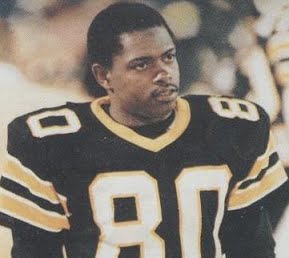
Coached by the offense-minded Steve Spurrier, the Bandits had broken out to a 4-0 start with 33-year-old veteran QB John Reaves throwing to a fine corps of receivers led by WR Eric Truvillion (pictured above). However, Reaves suffered a broken wrist and, while rookie Jimmy Jordan performed capably in his place, he encountered injury problems as well. The addition of another talented first-year player, RB Gary Anderson, midway through the season helped, but Tampa Bay had trouble winning consistently down the stretch and was 10-6 and fighting the Chicago Blitz and surging Michigan Panthers for dominance in the tough USFL Central Division.

Denver had a 7-9 record in the mediocre Pacific Division. Craig Morton had taken over the coaching reins five weeks before and while the defense was able to keep games close, the offense was unstable at quarterback and prone to turning the ball over.

There were 46,128 fans in attendance for the Monday night game at Tampa Stadium. Less than four minutes into the first quarter, Tampa Bay NT Fred Nordgren intercepted a screen pass by QB Craig Penrose and returned it 23 yards for a touchdown. LB Mike Goedecker ran for a two-point conversion to stake the Bandits to an early 8-0 lead.

Following a three-and-out series by the Gold, the home team moved methodically to a score on offense. John Reaves, making his first appearance since his injury, completed passes to Eric Truvillion down the middle for 23 yards and to TE Lewis Gilbert along the sideline for 22. Following a defensive pass interference penalty, the possession concluded with Gary Anderson running two yards for a TD and Zenon Andrusyshyn kicking the extra point that made it 15-0.

Early in the second quarter, the Gold finally got on the board as the result of a 13-play, 65-yard series kept alive when LB Putt Choate took off for 31 yards on a fake punt. After five consecutive running plays, Penrose, facing fourth down, tossed a two-yard touchdown pass to TE Bob Niziolek. Brian Speelman added the point after.

On Denver’s next possession, the visitors again put together a long drive as they advanced 69 yards in 13 plays. While they lost Penrose to a hip pointer, backup QB Fred Mortensen’s first pass was good for a 24-yard gain that set up a touchdown on RB Harry Sydney’s one-yard plunge for a TD. The try for a two-point conversion failed but the Gold was only two points down at 15-13 with 7:18 remaining in the first half.

That was it until, after CB David Martin of the Gold intercepted a pass at the Tampa Bay 45 with just under a minute remaining, Speelman kicked a 41-yard field goal with 17 seconds left on the clock and Denver took a 16-15 lead into halftime.

Jimmy Jordan replaced Reaves at quarterback for the Bandits in the third quarter, but his first pass was picked off and the Gold took advantage, moving 44 yards to another scoring carry by Sydney, this time covering two yards. With Speelman’s conversion, the visitors were up by 23-15.

At just under two minutes into the fourth quarter, the Bandits put points on the board, this time on a 47-yard Andrusyshyn field goal that made it a 23-18 contest. Tampa Bay had the ball again when a storm erupted with heavy rain and lightning, forcing a 50-minute delay in the action with 8:31 left in regulation. On the second play after the game resumed, Jordan threw to Truvillion for a 44-yard touchdown. Up by a point, the home team got two more when RB Greg Boone ran for the conversion.

There was still plenty of time, but Denver turned the ball over on its next series when RB Larry Canada fumbled and CB Jeff George recovered for the Bandits. It was also George who finally put the game away with an interception of a Mortensen pass , to the joy of the remaining Tampa Bay faithful in the stands. The Bandits came away with a 26-23 win.

Tampa Bay had the edge in total yards (283 to 263) while the Gold led in time of possession (35:37 to 24:23) and first downs were even at 16 apiece. Denver was hurt by five turnovers, with the two late ones preventing a fourth quarter comeback, and was penalized 9 times at a cost of 79 yards. The Bandits turned the ball over three times and drew five flags for 55 yards.

In his return to action, John Reaves completed 7 of 13 passes for 72 yards and gave up two interceptions. Jimmy Jordan was 9 of 12 for 131 yards in relief, with a touchdown as well as an interception. Gary Anderson led the Bandits in rushing with 48 yards on 15 carries that included a TD and also caught 5 passes for 36 yards. Eric Truvillion gained 94 yards on his three pass receptions that included the game-winning touchdown.

For the Gold, Craig Penrose was successful on 7 of 11 throws for just 28 yards and a TD while being picked off once and Fred Mortensen made good on 8 of 14 passes for 81 yards and gave up two interceptions. RB Vincent White led the club with 72 yards on 13 rushing attempts while Larry Canada, who ran 8 times for 24 yards, topped the receivers with 6 receptions for 56 yards. On defense, David Martin intercepted three passes but was also beaten for the game-winning touchdown.

“I knew we would win when it started to rain,” said Tampa Bay’s Coach Spurrier. “That was Banditball weather.”

The Bandits needed help to reach the playoffs but it was not forthcoming as they lost their season finale and Michigan and Chicago won to claim the division title and wild card spots, respectively. Tampa Bay finished third at 11-7. The Gold also lost in the last week to place third in the Pacific Division with a 7-11 tally.

May 19, 2016

1985: Johnson’s 3 TDs Lead Gold to Win Against Generals


Two 8-4 teams that were in the running for playoff spots in the United States Football League’s third season met in Denver on May 19, 1985. The hosts, the Denver Gold, were in contention with Oakland and Houston in the Western Conference while the visiting New Jersey Generals were trying to keep pace with the Birmingham Stallions, Tampa Bay Bandits, and Memphis Showboats in the Eastern Conference.

The Gold were coached by Darrell “Mouse” Davis and utilized his run-and-shoot offense. After starting slowly, Bob Gagliano replaced nine-year veteran Vince Evans at quarterback and the club had won four of five games. WR Leonard Harris was the favored target on pass plays and RB Bill Johnson (pictured above) was productive carrying the ball.

As had been the case since the Generals came into being, RB Herschel Walker was the key to the offense, and he had a string of six straight hundred-yard rushing games on the line coming into Denver. Prize rookie QB Doug Flutie was suffering growing pains but brought mobility and a strong arm to the offense.

There were 29,139 fans in attendance at Mile High Stadium. The Generals struck quickly on their first play from scrimmage as Herschel Walker looped out of the backfield and sped past the coverage to pull in a pass by Doug Flutie for a 68-yard touchdown. Roger Ruzek added the extra point for the early 7-0 lead.

Following an exchange of punts, the Gold put together a quick three-play, 63-yard drive that featured a carry by Bill Johnson and a personal foul on the Generals that set up a 30-yard scoring pass from Bob Gagliano to Leonard Harris. Jim Asmus tied the game with the point after.

Neither team threatened again until late in the opening period when the Gold, deep in their own territory, turned the ball over when Johnson fumbled while fighting for extra yardage on a running play and New Jersey recovered at the 12. A sack of Flutie moved the Generals back but they regained the lead by three points on a Ruzek field goal from 35 yards.

The score remained unchanged during the second quarter as the defenses dominated and a rain shower passed through. With 1:23 remaining in the first half, DE Calvin Turner of the Gold recovered a fumble by FB Maurice Carthon at the New Jersey 15 and, shortly thereafter, Johnson took a pitchout and ran three unmolested yards for a TD. Asmus converted and Denver took a 14-10 lead into halftime.

The Generals started the third quarter by advancing methodically on a 12-play, 80-yard drive that featured ten carries for 31 yards by Walker and a fine pass from Flutie to WR Walter Broughton. Walker crashed over for a touchdown from five yards out, Ruzek added the extra point, and the visitors were back in front by 17-14.

The Gold responded by going to the air and Gagliano connected with WR Vincent White for a 48-yard gain to the New Jersey 15. A pass to Johnson out of the backfield picked up 12 yards and Johnson powered over for a three-yard TD. Asmus kicked the point after and Denver was in the lead by 21-17.

The Generals were driving as the game headed into the fourth quarter and Walker started the final period off by hurdling for a yard to convert a fourth down at the Denver 16. Flutie bootlegged to the six and, with Walker pounding into the line play after play, the visitors again faced a fourth-and-goal situation at the one that resulted in a Walker touchdown dive. Ruzek’s kick had New Jersey ahead in the back-and-forth contest by 24-21.

Denver again responded with a 69-yard scoring drive in which Gagliano completed passes to four different receivers and concluded with Johnson blasting into the end zone for the final yard and a TD. Asmus converted to put the Gold up by four points with 6:02 remaining to play.

The offenses had taken command in the second half with every possession ending in a touchdown and it appeared that the Generals might continue the trend on the next series but, after reaching the Denver 43, Flutie was sacked for a five-yard loss on second down by LB Craig Walls and, while a throw to Walker gained seven yards, a fourth-and-four pass was tipped and fell incomplete. A clutch completion to Johnson that converted a third down allowed Denver to run the clock down to 22 seconds remaining before the Generals were able to regain possession and the Gold won by a final score of 28-24.

Denver had the edge in total yards (310 to 301) and first downs (17 to 15) although the Generals led in time of possession (32:42 to 27:18). New Jersey also accounted for four sacks, to two by the Gold, but the Generals turned the ball over twice, one of which led to a Denver touchdown, to one by the home team.

Bob Gagliano completed 17 of 31 passes for 242 yards (167 of which came in the second half) and a touchdown while giving up no interceptions. Bill Johnson rushed for 98 yards on 23 carries that included three TDs and caught four passes for another 46 yards. Leonard Harris also had a team-leading four pass receptions, for 62 yards and a score.

For the Generals, Herschel Walker was productive despite Denver’s efforts to stack the line of scrimmage, gaining 142 yards on 36 rushing attempts with two touchdowns and pulling in three passes for 106 yards that included the one long TD. Doug Flutie was successful on just 5 of 15 throws for 141 yards and a touchdown while being intercepted once.

Denver went on to place second in the Western Conference with an 11-7 record and qualified for the postseason where the club took a thrashing in the Quarterfinal playoff round at the hands of the Memphis Showboats. As for the Generals, the loss dropped them to 8-5 and they also finished at 11-7 and second in the Eastern Conference. They lost a close Quarterfinal round game to the Baltimore Stars.

Bill Johnson rushed for a total of 1261 yards on 212 carries (5.9 avg.) with 15 touchdowns. His yardage ranked third in the league and he received All-USFL recognition from College & Pro Football Newsweekly. At the top of the rushing rankings was Herschel Walker, who gained a gargantuan 2411 yards on 438 attempts (5.5 avg.) and also led the circuit in scoring with 22 touchdowns for 132 points. He received consensus Player of the Year as well as All-USFL honors.

March 6, 2015

1983: Stars Hold Off Gold in USFL Debut


Two of the new United States Football League’s teams, the Philadelphia Stars and Denver Gold, made their debut at Denver’s Mile High Stadium on March 6, 1983. The Gold had remained true to the USFL’s original plan of keeping player costs low and lacked high-priced talent on the roster, but Head Coach Red Miller was a popular figure among Denver football fans, having led the NFL Broncos to a Super Bowl appearance. QB Jeff Knapple was out of Northern Colorado and played briefly for the Broncos and RB Bo Matthews had spent eight seasons in the NFL, primarily with San Diego. Moreover, the Gold sold more season tickets than any other USFL team coming into the inaugural season, some 33,000, and there were 45,102 enthusiastic fans in attendance for the opening contest.

The visiting Stars faced many questions entering their first season. Head Coach Jim Mora, a former assistant coach with New England in the NFL, had only been hired in January after George Perles, originally signed to coach the team, quit to take the head coaching job at Michigan State. The defense had come in for considerable criticism in the media following a disastrous preseason scrimmage against the Tampa Bay Bandits. The biggest name on offense was rookie RB Kelvin Bryant out of North Carolina, while the quarterback was Chuck Fusina (pictured calling signals above), formerly of Penn State and a little-used backup in the NFL. 

The field at Mile High Stadium had been covered by a tarp and was in good condition while piles of snow ringed the sidelines from a major storm the previous day, but the weather was pleasant for the game. The Gold had the first possession and Jeff Knapple completed two passes to TE Bob Niziolek, but after reaching their own 45, another throw was intercepted by SS Scott Woerner.

The teams exchanged punts, with the Stars pinning the Gold inside their 20 and starting their second possession of the game in Denver territory at the 42. The visitors moved methodically down the field and scored on a two-yard bootleg by Chuck Fusina. David Trout added the extra point.

Neither team was able to move effectively for the remainder of the opening period, again trading punts. Philadelphia’s maligned defense was particularly effective, utilizing stunts and blitzes to keep Denver’s offense in check (and that hadn’t been utilized in the preseason).

In the second quarter, Philadelphia advanced into Denver territory but a 36-yard field goal attempt by Trout was blocked. The Gold were still unable to generate offense and a third-down sack had them punting from their own end zone. The Stars again moved well but a fumble by Kelvin Bryant was recovered by FS Tom Sullivan at the Denver 18.

Shortly thereafter, a long pass by Knapple was intercepted by CB Roger Jackson and the Stars advanced effectively, but a botched field goal attempt kept them from potentially adding to their lead with 21 seconds left in the first half. However, on the next play RB Harry Sydney fumbled the ball away after catching a short pass, giving the Stars one last shot in the dwindling seconds. Trout finished off the half with a 50-yard field goal and the score was 10-0 at halftime.

The Stars were forced to punt following the first series of the third quarter and the Gold had good field position just inside Philadelphia territory. However, a sack on third down by LB Glenn Howard cost 13 yards and forced Denver to kick the ball away. Another punt was followed by a diving Howard intercepting a Knapple pass at his own 43, but the visitors were again stifled by the tough Denver defense and punted.

The next possession for the Gold ended with Knapple fumbling the ball away on a bootleg, giving the Stars the ball at the Denver 34. Philadelphia capitalized when Trout kicked a 29-yard field goal in the last minute of the period and the visitors took a 13-0 lead into the fourth quarter.

The home fans booed the ineffective Knapple as he returned to the field for the next Denver series, which ended with yet another turnover, this time an interception by LB Jon Brooks. Following a 47-yard field goal attempt by the Stars that had to be aborted due to a bad snap, the Gold took over with favorable field position and it was Ken Johnson, a veteran with five years of CFL experience, at quarterback. He threaded a pass to WR Vic James on a third-and-15 play to get the ball to the Philadelphia 20 and another throw rifled to Niziolek picked up another 17 yards to the three. Three running plays had the Gold facing fourth-and-inches and Johnson kept the ball himself, running wide for a touchdown to cap the nine-play, 54-yard series. Speelman added the extra point to make it a six-point contest with 6:30 to play.

The fired-up Denver defense forced the Stars to punt and the Gold took over at their 35. With the Stars blitzing on every play and the crowd roaring, the Gold advanced into Philadelphia territory on a possession highlighted by a 23-yard carry by Sydney and a Johnson pass to James to get to the nine. Sydney plowed for four yards to the five but, with their backs to the wall and time running out, the Stars stopped two running plays and a lob by Johnson into the end zone on fourth down was beyond FB Larry Canada’s grasp. Philadelphia held on for a 13-7 win.

In a game dominated by the defenses, the Stars led in total yards (232 to 215) while Denver had the edge in first downs (15 to 13). However, the Gold turned the ball over six times, to one suffered by Philadelphia. The Stars also were penalized nine times while four flags were thrown on Denver.

Chuck Fusina completed 16 of 29 passes for 137 yards and gave up no interceptions while running for Philadelphia’s lone touchdown as part of his 25 yards on 7 rushing attempts. Kelvin Bryant had a modest debut with 51 yards on 18 carries but led the Stars with 6 catches, for 34 yards. WR Scott Fitzkee gained 46 yards on his three pass receptions.

For the Gold, Jeff Knapple was successful on 11 of 23 throws for just 70 yards while giving up four interceptions. Ken Johnson was 6 of 10 in relief for 66 yards and had none intercepted. Harry Sydney ran for 50 yards on 9 carries. Larry Canada, in addition to running the ball 7 times for 20 yards, led the team with five pass receptions, for 27 yards, while Vic James gained 38 yards on his two catches and Bob Niziolek accumulated 34 yards on his three receptions.

“I can’t say enough about them,” said Coach Jim Mora of his team’s defense. “They’ve been taking a lot of – I don’t want to say crap – but they had something to prove today.”

The Philadelphia defense kept doing the job for the remainder of the season, and the offense improved with Bryant as the key performer. The Stars went 15-3 and advanced to the USFL Championship game, where they lost a close contest to the Michigan Panthers. Denver’s defense also continued to play well, but the offense remained a problem and neither Coach Miller nor QB Knapple made it to the end of the season. Miller was fired with the team’s record at 4-7, to be replaced by Craig Morton, the quarterback of the 1977 AFC Champion Broncos. Knapple was waived and picked up by the New Jersey Generals on the way to leading the league by giving up 19 interceptions (while tossing just three TD passes). Denver placed third in the Pacific Division with a 7-11 record but remained popular with the fans and led the USFL in attendance.

March 3, 2015

1985: Denver Rolls Up Yardage to Defeat Stallions


The Denver Gold were 0-1 as they took on the Birmingham Stallions in a United States Football League game on March 3, 1985. A team that drew well at home but failed to post a winning record in either of its first two USFL seasons, the Gold now was coached by Darrel “Mouse” Davis, formerly of Portland State and most recently offensive coordinator of the Houston Gamblers. Utilizing the high-powered run and shoot offense, the Gamblers had been exciting and productive. Now Davis was bringing the same scheme to Denver, but the run and shoot had misfired in the opening week 31-10 loss to Oakland.

Birmingham, coached by Rollie Dotsch, was coming off of a 14-4 record in ’84 and won its first contest of 1985 (over New Jersey). The Stallions had QB Cliff Stoudt and WR Jim Smith, both formerly of the Steelers, and ex-Buffalo RB Joe Cribbs as key players on offense, which was anchored by an outstanding line.

There were 27,400 fans in attendance at Legion Field in Birmingham and they saw Denver get off to a fast start. On the offense’s first play from scrimmage, QB Vince Evans connected with RB Bill Johnson on a screen pass that gained 55 yards to the Birmingham one yard line. Johnson carried on the next play to gain the final yard and a touchdown and Brian Speelman added the extra point.

The Stallions responded by driving 80 yards in eight plays. Cliff Stoudt finished the series off with a seven-yard TD run and Danny Miller tied the score with the point after. It seemed as though the Gold would score again on the next possession as they reached the Birmingham nine, but FS Chuck Clanton recovered a fumble to snuff out the threat. Three plays later, however, Stoudt fumbled a bad snap that went out of the end zone for a safety to put the visitors back in the lead by 9-7.

Early in the second quarter, Evans threw long to RB Vincent White for a 48-yard touchdown. Speelman’s PAT put the Gold ahead by 16-7. Shortly thereafter, a Stoudt pass was intercepted by Clanton and, two plays after that, Evans completed a pass to WR Leonard Harris for a 39-yard TD. Speelman again converted and Denver was up by 23-7 with 8:33 remaining in the first half.

Later in the period, the Gold put together a 48-yard drive in nine plays that concluded with Speelman kicking a 28-yard field goal. The Stallions got a break on defense when Clanton intercepted his second pass of the game, returning it 23 yards to the Birmingham 48. Stoudt tossed a touchdown pass to Jim Smith eight plays later that covered nine yards with 32 seconds left on the clock. Miller kicked the extra point and the score was 26-14 at halftime.

Early in the third quarter, the Stallions drew closer as Stoudt threw to WR Joey Jones for a 53-yard TD. Miller converted and the Denver margin was down to five points at 26-21. The Gold came back with a 10-play, 78-yard series that was capped by Evans gaining one yard for a touchdown on a quarterback sneak. Speelman’s kick made it a 33-21 contest.

Early in the fourth quarter, Denver scored again when Johnson ran eight yards for a TD, followed by another Speelman extra point. The Stallions had opportunities to close the gap again, but twice came up empty inside the Denver ten in the final period.  They picked up two more points when Evans was tackled in the end zone for a safety, but it was of no consequence as the Gold came away with a convincing 40-23 win.

Denver compiled a total of 564 yards, with 284 coming on the ground, to 325 yards for the Stallions. The Gold also had the edge in first downs (24 to 19) and time of possession (35:02 to 24:58). However, Denver was hindered by five turnovers, to just one suffered by Birmingham, and 12 penalties, while only five flags were thrown on the Stallions.

Vince Evans completed 14 of 28 passes for 284 yards and two touchdowns, although giving up three interceptions. RB Todd Gerhart led the impressive running game with 119 yards on 21 carries, followed by Bill Johnson’s 74 yards on 9 attempts that included two TDs, and Evans contributed 50 yards on five carries. Leonard Harris topped the Denver receivers with four catches for 74 yards.


For the Stallions, Cliff Stoudt was successful on 17 of 38 throws for 259 yards and two TDs, giving up one interception and scoring once on the ground. Joe Cribbs had just 36 yards on 9 carries. Jim Smith caught 6 passes for 83 yards and Joey Jones gained 96 yards on four receptions that included a TD. Chuck Clanton (pictured at left) starred on defense, accumulating all three interceptions, recovering a fumble, and getting credit for eight tackles.

“We still have a lot of work to do,” said Coach Davis of his team’s performance. “We had too many picks (interceptions), but we’re certainly pleased. We’re excited to get our first win and hope it’s the first of many.”

Denver won four of its next five games on the way to an 11-7 record that placed second in the Western Conference. The team ranked third in the USFL in total yards (6629) and, with Vince Evans splitting time at quarterback with Bob Gagliano, rated third in passing yards (4550). In the Gold’s only playoff game, they were thrashed in the Quarterfinal round by the Memphis Showboats. The Stallions recovered to go 13-5 and finish at the top of the Eastern Conference. They defeated Houston in the first round but lost to the Baltimore Stars at the Semifinal level. 

June 3, 2014

1984: Fowler Runs for 208 Yards as Gamblers Defeat Gold


In their first season in the United States Football League, the Houston Gamblers had developed into an exciting offensive team with their prolific passing attack led by rookie QB Jim Kelly. However, Head Coach Jack Pardee’s team could also run the ball, and on June 3, 1984 it was the ground game that achieved headlines.

Todd Fowler (pictured above) had been a tight end in college and was converted to running back by the Gamblers during the preseason, although he was viewed more as a blocking back at that time. His value as a runner rose once Sam Harrell, who had set a USFL single-game record with 200 yards earlier in the season, went on injured reserve, and he had already compiled three hundred-yard rushing performances.

Houston had won three straight games and was atop the USFL’s Central Division with a 9-5 record prior to traveling to Denver to take on the Gold. Denver, on the other hand, slumped badly after getting off to a 7-1 start and was now 8-6 after snapping a five-game losing streak the previous week. Coached by Craig Morton, the Gold suffered from instability at quarterback and was giving up too many yards on defense. Still, they remained in first place in the mediocre Pacific Division and were battling to maintain that position.

There was a typically good turnout of 50,057 at Mile High Stadium. To blunt Houston’s passing attack the Gold started no linemen, but instead five linebackers and six defensive backs. The overcompensation left them vulnerable to running plays.

Late in the first quarter, Todd Fowler ran seven yards for a touchdown for the game’s first score, with Toni Fritsch adding the extra point. Fowler set up Houston’s next score in the second quarter with a 53-yard burst up the middle, and that possession resulted in a 36-yard Toni Fritsch field goal that made the tally 10-0.

Craig Penrose came in at quarterback in the second quarter, replacing Fred Mortensen, who had failed to connect on any of his six passes. The Gold narrowed the Houston lead with a 56-yard drive that was kept alive when, forced to punt at one point, the Gamblers roughed the kicker. Penrose finished off the series by passing to RB Harry Sydney for a 28-yard TD. Brian Speelman made it a three-point game with his extra point.

That was the high water mark for Denver. The Gamblers proceeded to score 26 unanswered points to take a commanding lead. They first extended their margin when Jim Kelly threw to WR Ricky Sanders for an 18-yard touchdown to complete an 86-yard series. Houston topped off the first half scoring with a 43-yard field goal by Fritsch on the last play before halftime and the Gamblers took a 20-7 lead into the locker room.

Fritsch kicked a 49-yard field goal in an otherwise-scoreless third quarter in which the Houston defense continued to stymie the home team. On the first play of the fourth quarter, Fowler took a pitchout and broke away for a 46-yard touchdown and, while the extra point try was blocked, Houston was well in front by a score of 29-7.

The Gamblers tallied once more, on a Kelly pass to WR Scott McGhee that covered 23 yards. Denver managed to put two TDs on the board before it was over, with the Gold’s third quarterback of the day, Ken Hobart, connecting with WR Elmer Bailey from 12 yards out and then RB Bo Matthews running one yard for a touchdown. The two-point conversion after the second TD was unsuccessful, but it had no effect on the outcome as the Gamblers came away with a comfortable 36-20 win.

Houston dominated in total yards (465 to 279) and first downs (23 to 15), and the yardage total showed balance with 244 gained on the ground and 221 through the air. The Gold turned the ball over four times, to none by the Gamblers, and Houston also accounted for four sacks, to two by Denver. There were many penalties, with Houston leading in that category as well, drawing 10 flags at a cost of 70 yards to 8 penalties and 74 yards on the Gold.

Todd Fowler broke teammate Sam Harrell’s record by rushing for 208 yards on 21 carries that included two TDs. Jim Kelly (pictured below) completed 20 of 31 passes for 216 yards and two touchdowns, with none intercepted. Ricky Sanders led the receivers with 8 catches for 91 yards. Toni Fritsch kicked three field goals, tying the league record of 12 straight, but a fourth attempt late in the contest was blocked to end the streak.


For the Gold, Craig Penrose had little more luck than Fred Mortensen with his passing, succeeding on just five of 17 throws for 61 yards and a TD while giving up two interceptions. Ken Hobart went 7-of-11 for 156 yards and a touchdown as well as an interception. Three Denver players caught two passes apiece, with Elmer Bailey gaining 79 yards on his pair that included a score. RB Vincent White paced the ground game with 28 yards on 6 attempts and Ken Hobart was right behind with his 25 yards on three carries.

“My offensive line knocked out some big holes in the defense, and all the credit should go to them,” said Todd Fowler regarding his record-setting performance.

“I don’t know what the motivational factor is when we have a championship to play for, then come out and play the way we did,” said a frustrated Coach Craig Morton from the losing side. “The playoffs right now are a dream for us unless we find some kind of spark.”

The Gamblers went on to win the Central Division with a 13-5 record, although they were beaten in their First Round playoff game by the Arizona Wranglers. Denver ultimately slid to a disappointing 9-9 tally, placing third in the Pacific Division.

Todd Fowler ended up rushing for 1003 yards on 170 carries with an impressive 5.9-yard average while scoring 11 touchdowns. Jim Kelly’s two touchdown passes put him at 36 for the season (tying the then-existing NFL record) on his way to 44 as he led the USFL in most major passing categories and received league MVP honors.

March 25, 2014

1984: Gold Defeat Showboats in Back-and-Forth Contest


The Denver Gold had a 3-1 record heading into Memphis to face the Showboats in a United States Football League game on March 25, 1984. Coached by Craig Morton, the Gold had a strong fan base that was being rewarded with improved offensive play. QB Craig Penrose, a former teammate of Morton’s with the NFL Broncos, was behind center and had promising rookie WR Leonard Harris, who also returned kicks, as a target while productive RB Harry Sydney was the best of the backs.

The first-year Showboats, coached by the colorful Pepper Rodgers, were struggling at 1-3. Rookie QB Walter Lewis was more noted for his running than passing, but the defense was anchored by DE Reggie White, a first-year player out of Tennessee who was showing off the abilities that would make him an all-time great.

There was a crowd of 21,213 in attendance at the Liberty Bowl. The Gold jumped out to a 14-0 lead thanks to two Memphis turnovers. The first was a fumble, which led to a nine-yard touchdown carry by RB Vincent White, and then a pass interception that set up a Craig Penrose TD pass to TE Bob Niziolek that covered 36 yards. Brian Speelman added the extra point after each. Early in the second quarter, Alan Duncan kicked a 48-yard field goal to finally get the Showboats on the board and the score remained 14-3 at the half.

Memphis narrowed the margin in the third quarter, this time benefiting from a Denver turnover as SS Terry Love intercepted a Penrose pass and returned it 79 yards for a TD. Just before the end of the period, the Showboats took the lead when Walter Lewis scored on a one-yard touchdown carry. Duncan successfully converted after each score and the tally was 17-14.

Denver responded on the next series by scoring on a Penrose pass to WR John Arnold that covered 34 yards. The Showboats put together a 16-play, 72-yard drive that culminated in RB Alan Reid running for a one-yard touchdown and, with the successful extra point, they led by 24-21 with under three minutes to go in the contest.

There was still enough time for the Gold, and they went 66 yards on their next series. Penrose threw to Leonard Harris for a 27-yard gain to the Memphis 25 and, with 57 seconds remaining, Vincent White scored from 16 yards out. Speelman added the PAT and Denver came away with a hard-earned 28-24 win.

Memphis led in total yards (323 to 277) and first downs (19 to 11). The Showboats were hurt by the two early turnovers that put them in a hole, while Denver turned the ball over once. There were many penalties, with the Gold being flagged 9 times at a cost of 50 yards to 8 penalties for 63 yards on Memphis.


Craig Penrose completed 12 of 20 passes for 177 yards and two touchdowns while giving up one interception. Harry Sydney ran for 54 yards on 12 carries and Vincent White was right behind with 52 yards on 7 attempts that included two TDs. Bob Niziolek had three catches for 45 yards and a touchdown and John Arnold gained 49 yards on his two receptions that also included a score.

For the Showboats, Walter Lewis was successful on 17 of 25 throws for 175 yards and a TD as well as one that was picked off. He also ran the ball five times for 37 yards and a score. Alan Reid had 22 carries for 71 yards and a touchdown and added another 34 yards on four catches. WR Derrick Crawford led the club with 5 pass receptions, for 31 yards, while WR Cormac Carney gained 52 yards on his three catches. On defense, Reggie White accounted for both of his team’s sacks.

Denver’s promising start failed to hold up over the long haul. The Gold won their next three games to reach 7-1 before the bottom fell out and they lost eight of their last ten contests to finish at a disappointing 9-9 and third in the USFL's Pacific Division. Memphis won the next week but continued to struggle and ended up fourth in the Southern Division at 7-11.

Craig Penrose ended up being one of five quarterbacks utilized by the Gold, but was the most productive as he completed 60.3 percent of his passes for 1984 yards and 12 touchdowns along with 14 interceptions. 

June 17, 2013

1983: Denver Explodes on Offense to Defeat Wranglers


In the inaugural United States Football League season, the Denver Gold were hardly known for explosive offense. They turned the ball over with great frequency and were at the bottom of the USFL in offensive production. Denver had also experienced the first head coaching change of any team in the new league when Red Miller, formerly of the NFL Broncos, gave way to Craig Morton, an ex-Broncos quarterback. But on June 17, 1983 the Gold exploded against the Arizona Wranglers to not only post their highest point total of the year but also the most yards of total offense by any USFL club in the first season.

To be sure, the Wranglers had their own problems. After getting off to a 4-4 start, Head Coach Doug Shively’s team had lost seven straight. Arizona also had difficulty putting points on the board. While rookie QB Alan Risher showed promise, the club simply couldn’t remain competitive - even in the weak Pacific Division, where the 6-9 Gold were still mathematically in the hunt for the division title.

The one thing the Gold could do better than any other USFL team was draw fans, and there were 42,621 on hand for the Friday night game at Mile High Stadium, which was also the last home game of the year. The Gold wasted no time, getting on the board less than four minutes into the first quarter by driving 91 yards in six plays that culminated in a 75-yard touchdown pass from QB Craig Penrose (pictured above) to WR John Dirden.

The Wranglers responded with a 76-yard drive into scoring territory, but on a fourth-and-two play TE Phil Denfield fumbled the pitchout from Alan Risher and CB David Dumars recovered at the Denver 17. It was Arizona’s only threat of the first half.

Meanwhile, Denver put together an 82-yard drive in less than two minutes as RB Vincent White had runs of 29, 25, and 11 yards and backup QB Fred Mortensen threw to TE Bob Niziolek for a 12-yard TD. On the extra point attempt, the Gold lined up for a kick but instead the snap went to RB Bo Matthews, who powered into the end zone for two points. The score remained 15-0 at the half.

The Gold took the second half kickoff and drove 80 yards with Penrose completing a five-yard scoring pass to TE Darryl Goosby. Denver, pulling out all of its tricks, added to the lead later in the third quarter with the benefit of a flea-flicker pass from Penrose to WR Richard Matheney that gained 26 yards. It set up a 33-yard Brian Speelman field goal to make the score 25-0.

The Wranglers finally got on the board in the fourth quarter when SS Aaron Mitchell intercepted a Penrose pass and returned it 66 yards to the Denver 11. QB Dan Manucci threw a nine-yard touchdown pass to TE Mark Keel but the try for two points was unsuccessful. The Gold came back to score one more TD, on a Penrose pass to WR Victor James that covered seven yards, and with the successful Speelman point after finished up with a 32-6 win.

Denver rolled up an impressive 509 yards, to just 167 for the Wranglers. The attack was well balanced as the Gold gained 256 yards on the ground and 253 through the air. They also accumulated 22 first downs to Arizona’s 9 and dominated time of possession (35:22 to 24:38). However, Denver was also penalized 15 times, to 9 flags thrown on the visitors. There were remarkably few turnovers, with each club suffering one apiece.

Craig Penrose, a former teammate of Morton’s with the Broncos who joined the club after he became head coach, completed 12 of 21 passes for 271 yards and three touchdowns with one interception. Vincent White  (pictured below) had a big day as he rushed for 159 yards on 20 carries. Victor James caught four passes for 60 yards while Bob Niziolek gained 93 yards on three receptions. John Dirden’s 75-yard scoring catch was his only one of the game.


For the Wranglers, Alan Risher was successful on just 10 of 25 throws for 105 yards and replacement Dan Manucci went 5-for-14 and 52 yards with one TD. Mark Keel caught 4 passes for 57 yards and a TD to pace the club. The running game that produced just 25 yards overall on 18 attempts was led by RB Darryl Clark’s 10 yards on 6 carries.

The Gold returned to their losing ways, finished the season at 7-11 and third in the Pacific Division. Arizona did likewise, ending up at the bottom of the division with a 4-14 record. 

Vincent White, like Penrose a late addition to the team, had by far his most productive game against the Wranglers. For the year, he ended up rushing for 291 yards on 52 carries for an impressive 5.6-yard average gain. He would see far more action in 1984.

May 25, 2013

1984: Late TD Pass Propels Gold Over Gunslingers


The Denver Gold of the United States Football League had gotten off to a 7-1 start during the 1984 season, but were in the midst of a five-game losing streak as they faced the San Antonio Gunslingers on May 25. At 7-6 Denver was still on top of the mediocre Pacific Division, but Head Coach Craig Morton’s club desperately needed a win and was without injured starting QB Craig Penrose.

The Gunslingers, in their first season in the USFL, were 5-8 despite coming off a win at Washington the previous week and had their own difficulties. Poorly managed, the Gunslingers, who were coached by Gil Steinke, were respectable on the field and had overcome a 0-4 start. Rookie QB Rick Neuheisel showed considerable promise, but it was the young-but-tough defense that fueled the improvement.

There were 20,077 in attendance for the Friday night game at Alamo Stadium. The Gunslingers took a 3-0 lead late in the first quarter on a 32-yard field goal by Nick Mike-Mayer. Brian Speelman tied the score less than five minutes into the second quarter with a 23-yard field goal and then backup QB Fred Mortensen (pictured above) threw to RB Bill Johnson for a 23-yard touchdown with 4:20 remaining in the first half. It was 10-3 in favor of the visitors at the intermission.

In the third quarter, San Antonio took advantage of a fumble recovery at the Denver 7. RB George Works ran for a TD from two yards out and, with the successful extra point, the game was tied at 10-10. Speelman added another field goal later in the period to make it 13-10 and, before the quarter was over, Denver got a break when the Gunslingers failed to convert a fourth down, allowing the Gold to take over at the San Antonio 29. Four plays later, and now in the final quarter, RB Harry Sydney ran for a three-yard touchdown and Denver was ahead by 20-10.

The Gunslingers got within seven points as the 34-year-old veteran Mike-Mayer kicked his ninth straight field goal, from 33 yards out four minutes later. A blocked punt by LB Reggie Oliver then set up another score for San Antonio. Works scored his second touchdown from a yard out and Mike-Mayer booted the tying extra point. But the decisive play of the game came with 1:52 left on the clock as Mortensen tossed a pass to RB Dave Preston that was good for a 32-yard touchdown. It was enough to give the Gold a 27-20 win.

Denver outgained the Gunslingers (394 yards to 252) and had more first downs (16 to 10). However, they also turned the ball over twice, to one by San Antonio.

In his relief role, Fred Mortensen completed 19 of 27 passes for 308 yards and two touchdowns with none intercepted. WR Elmer Bailey led the Denver receivers with 4 catches for 82 yards while WR Leonard Harris was right behind with three receptions and 81 yards. Harry Sydney rushed for 42 yards on 9 carries.


For the Gunslingers, Rick Neuheisel was successful on 11 of 20 throws for 148 yards and no TDs or interceptions. RB Marcus Bonner had 43 rushing yards on 6 attempts and also caught 4 passes for 29 yards. WR Danny Buggs gained the most receiving yards with 50 that all came on a single reception. George Works (pictured at left), who scored two touchdowns, gained 37 yards on 10 carries.

Ending the losing streak did not mark a turnaround for Denver. The Gold lost the following week and won just once more the rest of the way, finishing at 9-9 and in third place in the Pacific Division – although, in a week division, they remained in contention until the season finale. San Antonio also finished third in the Central Division with a 7-11 record.

Fred Mortensen appeared in seven games and completed 64 of 100 passes for 994 yards and four touchdowns with two interceptions. Released by the Gold following the season, he was picked up by San Antonio for 1985.

March 20, 2013

1983: Gold Beat Blitz in Wintry Conditions


Coming into the inaugural season of the United States Football League, the Chicago Blitz were widely viewed as the team to beat. They had the league’s best-known head coach in George Allen and many players with plenty of pro football experience, most notably QB Greg Landry and LB Stan White, and had managed to sign two highly-regarded rookies in WR Trumaine Johnson and RB Tim Spencer. They easily overcame the Washington Federals in their opening contest but had been stunned the next week by a late comeback on the part of the Arizona Wranglers.

On March 20, 1983 the Blitz hosted the Denver Gold for their home debut in Chicago. The Gold had far fewer known quantities on the roster but were coached by Red Miller, who had guided the NFL Broncos to their first Super Bowl appearance and remained popular among the city’s football fans. They did have a veteran pro quarterback in Ken Johnson, who had spent the previous five seasons in the Canadian Football League. Denver was 0-2 coming into the game at Chicago.

The weather was not cooperative. There was an announced attendance of 29,178 at Soldier Field (likely closer to 22,600) in the snow and wind as temperatures were in the 20s with a wind chill that was far lower. The Blitz made the most of having a 20 mph wind at their back in the first quarter. The Gold had the first possession of the game and punted. The home team then went 51 yards in 11 plays, mostly runs by RB Kevin Long, who gained 29 yards on 6 carries, ending with John Roveto’s 27-yard field goal.

Once again Denver punted and this time it took the Blitz just four plays to go 48 yards and put more points on the board. On a third-and-16 play, Greg Landry threw to WR Lenny Willis for a 42-yard touchdown and, with the successful PAT, a 10-0 lead.

However, just before the opening period ended and following a 36-yard run by RB Harry Sydney, the Gold got on the board when Brian Speelman kicked a 39-yard field goal. A few minutes later, and now in the second quarter, Denver got a break when Chicago’s recently-signed punter, Frank Garcia, fumbled while fielding the snap and the visitors got the ball in good field position (both Garcia and Roveto were covering for the injured all-purpose kicker Frank Corral). The Gold capitalized when Sydney swept to his right for another long gain, this time a 30-yard touchdown carry.

The score remained 10-10 at the half and neither team was able to move the ball effectively on the icy field during the third quarter. A little over three minutes into the final period, the Blitz finally broke the deadlock when Roveto kicked a 38-yard field goal with the benefit of the wind to conclude a six-play, 38-yard series.

The teams traded punts, with the Blitz holding onto a 13-10 margin. The climactic drive by the Gold started at the Denver 30 and was aided on the second play when Ken Johnson rolled out and kept the ball for a 12-yard gain to near midfield. However, it seemed as though the visitors would come up short as they faced a third-and-22 situation from their own 48. Johnson overthrew WR Lonnell Phea but a pass interference call on CB Maurice Tyler gave the Gold a first down at the Chicago 37 with 3:06 left on the clock.

Four plays that included a lateral from Johnson to TE Bob Niziolek that, combined, picked up 16 yards and a pass to Niziolek for 13 more yards gave Denver a first-and-goal at the Chicago three. Sydney ran for two yards on first down, but an incomplete pass followed by a carry by RB Larry Canada that gained nothing set up a fourth down play. Going for the win rather than a potentially game-tying field goal attempt, Johnson rolled out to his left and ran for a touchdown, sliding into the end zone with 18 seconds left on the clock. The extra point attempt was missed but the Gold came away with a 16-13 win.

Chicago easily outgained the Gold (263 yards to 160), had more first downs (16 to 7), and dominated the time of possession (35:06 to 23:54). Denver turned the ball over three times to one by the Blitz. But Chicago simply wasn’t able to translate time with the ball into points on the board and, for the second straight week, failed to nail down a win in the final seconds.

Ken Johnson threw only six passes and completed three of them for 25 yards with no touchdowns and two interceptions, although he ran for the winning score. Harry Sydney, who had the two big carries in the first half, gained 79 yards on 9 rushing attempts that included a TD. He also caught one of the three completed passes, for three yards, but tossed an interception in one throwing attempt. TE Bob Niziolek had the longest catch of the day for the Gold, of 13 yards, and had another six yards on a lateral.

For the Blitz, Greg Landry completed 7 of 17 throws for 114 yards and a touchdown while also tossing his first interception of the young season. Tim Spencer ran for 82 yards on 20 carries and was closely followed by Kevin Long (pictured below), who had 80 yards on his 23 attempts. Trumaine Johnson caught 4 passes for 58 yards.


 “I feel like the doctor who did everything right only to have the patient die,” said a disappointed George Allen. “I guess you could say it was a tough loss.”

Holding on to late leads would become a chronic problem for the Blitz, although they finished with a healthy 12-6 record and secured a Wild Card berth in the playoffs. They lost to the Philadelphia Stars in the first round – appropriately enough, due to the failure to maintain a late lead. Denver struggled to a 7-11 record, placing third in the Pacific Division, and Coach Miller was dismissed along the way. But the Gold had the best fan support of any of the USFL teams that first year, averaging 41,736 fans per home game in comparison to Chicago’s disappointing 18,133. 

May 8, 2012

1983: Stars Defeat Gold in Lowest-Scoring USFL Game


The Philadelphia Stars had the United States Football League’s best record at 8-1 and were sporting a five-game winning streak as they hosted the Denver Gold on May 8, 1983. Head Coach Jim Mora’s team utilized a conservative, ball-control offense that featured rookie RB Kelvin Bryant and had QB Chuck Fusina behind center. The “Doghouse Defense” was the new league’s best against the run and had also given up the fewest points thus far (83).

The Gold had hosted the Stars in the first week of the regular season, a low-scoring 13-7 win by Philadelphia. It had been a tough road since for Denver, coached by former Broncos Head Coach Red Miller. While the defense kept the club competitive, the offense had difficulty putting points on the board. But while the team’s record was a mediocre 4-5, it matched the other three clubs in the Pacific Division and thus placed the Gold very much in the thick of the race in the USFL’s weakest grouping.

There were 14,306 fans in attendance at Veterans Stadium, and they sat through a scoreless first quarter. It didn’t look like it would be when the Stars went 72 yards in 10 plays on their opening possession, but after reaching the six yard line they were backed up by two penalties and David Trout’s 32-yard field goal attempt hit the right upright.

Brian Speelman finally kicked a 23-yard field goal for Denver to cap a 53-yard drive with 9:39 remaining in the first half. Philadelphia, unable to move the ball effectively after the opening series, responded with a 53-yard field goal by Trout and the game was tied 3-3 at the half.

The Stars, in a third quarter possession that stretched into the first minute of the final period, drove to the Denver one. However, Fusina threw an incomplete pass intended for RB Jeff Rodenberger on third down and Trout kicked another field goal, this time from 18 yards.

Mistakes by the Gold prevented a possible tie or win during the remainder of the fourth quarter. A fumble at the Philadelphia 46 was recovered by safety Mike Lush with 7:31 remaining, snuffing out a potential threat. Denver had another chance to tie late. A drive stalled at the Philadelphia six yard line when Lush and LB Sam Mills stopped a running play on third down, but with 2:07 left a bad snap on the resulting field goal attempt flew to the right of QB Ken Johnson, also the holder on placekicks, and was recovered by the Stars to clinch the 6-3 win.

Philadelphia outgained the Gold (227 yards to 174), had more first downs (16 to 12), and held onto the ball longer (32:53 to 27:07). Both clubs suffered two turnovers and four sacks apiece. The Stars had eight penalties, at a cost of 65 yards, to just three flags thrown on Denver.


Kelvin Bryant, as usual, was the key to the Philadelphia offense, rushing for 94 yards on 23 carries and catching 6 passes for another 50 yards. Chuck Fusina completed just 15 of 29 throws for 135 yards with no TDs and one intercepted. Only four passes were completed to wide receivers, for 43 yards, while TE Steve Folsom had three receptions for 31 yards. In a game dominated by defense, Mike Lush was the standout with an interception that set up the team’s first field goal, a fumble recovery, and a hand in the big third-down stop that set up the Gold’s ill-fated three-point try.

For Denver, 32-year-old CFL veteran Ken Johnson went to the air 24 times and had 11 completions for 107 yards and was intercepted once. Tellingly, Johnson was also the team’s leading rusher with 35 yards on three carries. Harry Sydney had the most yards among the stable of running backs, with 21 on 8 attempts. Running backs Terry Miller and Larry Canada each caught four passes, for 37 and 29 yards, respectively, and two completions went to wide receivers.

The nine total points scored proved to be the lowest over the three years that the USFL existed. There were three ten-point games (two in 1984, one in ’85), with the last one also involving the Stars.

The low offensive output did not presage trouble for the Stars, who bounced back with 24 points in a convincing win at Arizona the following week on the way to topping the Atlantic Division with a 15-3 record. They advanced to the USFL Championship game, losing a close 24-22 decision to the Michigan Panthers.

Offensive problems continued to plague Denver, however, and after scoring just nine points in a loss to Boston in the next contest, Red Miller became the new league’s first coaching casualty. Owner Ron Blanding replaced him with ex-Broncos QB Craig Morton and the Gold ultimately finished third in the Pacific Division at 7-11.

June 9, 2011

1985: Gold Beat Gamblers to Clinch Playoff Spot


The teams that met on June 9, 1985 at Denver’s Mile High Stadium were battling for postseason berths in the United States Football League’s third season. The host Gold had missed out in the USFL’s first two years and came into this contest at 10-5 while the visiting Houston Gamblers, who had joined the league in 1984, were 9-6. Both clubs were in the Western Conference of the restructured league.

The announced move from spring to fall for 1986 had a devastating impact on the Gold, despite the success on the field. After averaging a league-high 41,736 fans per home game in 1983 and 33,953 in ’84, Denver averaged just 14,446 in 1985 and, for the finale at Mile High Stadium with a playoff spot on the line, there was a paltry crowd of 12,553.

Former Gamblers’ offensive coordinator Darrel “Mouse” Davis (pictured above) was now the head coach in Denver, and had brought his exciting run-and-shoot offense with him. Houston, coached by Jack Pardee, also continued to utilize the quick-striking scheme. However, star QB Jim Kelly was injured and backup Todd Dillon started against the Gold.

The Gold opened the scoring in spectacular fashion in the first quarter as QB Bob Gagliano connected on a bomb to WR Leonard Harris that resulted in a 63-yard touchdown. Houston responded with two Toni Fritsch field goals, of 46 yards later in the first quarter and 31 yards less than five minutes into the second quarter, to cut Denver’s lead to 7-6.

The nationally-televised game was delayed in the second quarter for 19 minutes due to lightning and torrential rain. The stadium lights briefly went out and parts of the field were flooded with over an inch of rain while the officials sent the teams back to the locker room until the storm passed.

Play resumed, but Denver’s offense, while moving the ball effectively, squandered four second quarter scoring opportunities and one in the third period as well. Gagliano was intercepted in the end zone three times and PK Jim Asmus missed field goal attempts of 19 and 30 yards. The Gold clung to a one-point lead at halftime.

Asmus was finally successful on a 40-yard field goal attempt midway through the third quarter and also connected from 47 yards early in the final period, putting the Gold ahead by a 13-6 score. However, Houston came back with a five-play, 73-yard drive that culminated in RB Todd Fowler running for a six-yard touchdown with just over eight minutes remaining in regulation. Fritsch was successful on the extra point conversion, and the score was tied at 13-13.

The teams traded punts, and then the Gold, taking over at their own 27 yard line, drove to the Houston one. Along the way, Gagliano completed passes of 27 yards to WR Marc Lewis and 20 yards to WR Lonnie Turner. Asmus booted the game-winning kick from 18 yards with one second left on the clock, atoning for the two earlier misses, and Denver clinched a playoff spot by a score of 16-13.

Considering that both teams had explosive offenses, the game was remarkably low-scoring (the 13 points were the fewest ever scored by the Gamblers). Denver significantly outgained the Gamblers (462 yards to 291) and also led in first downs (20 to 16), but had difficulty putting points on the board. The Gold gained just 47 yards on 21 rushing attempts and the Gamblers sacked Bob Gagliano five times (to three by Denver).

Gagliano nevertheless piled up plenty of passing yards as he set a Denver club record with 445 while completing 24 of 45 throws, including the one long TD but also the three costly interceptions. Marc Lewis caught 9 passes for 130 yards while Leonard Harris (pictured below), with the long scoring reception, had 177 yards on his four catches. RB Bill Johnson led the ground game with 38 yards on 15 carries.


For Houston, QB Todd Dillon was successful on 21 of 36 passes for 233 yards with no touchdowns and one picked off. Wide receivers Ricky Sanders and Scott McGhee and RB Sam Harrell all caught four passes apiece, with Sanders gaining the most yards (56). Harrell and Todd Fowler had identical rushing statistics - 25 yards on six carries.

“I could hear Coach Davis swearing at me as I walked off the field after the first half,” Jim Asmus said afterward. “But then he told me to go out in the second half and kick it through the uprights. I was glad I was able to come back and score points when we need them. I owed it to the guys.”

“Yes, it's true we had a difficult time getting into the end zone,” added Mouse Davis, “and yes, it's true we had a tough time making those field goals. But we won and it gets us in the playoffs.”

In the other locker room, Houston’s Pardee could only shake his head and mutter, “Two run-and-shoot teams in a defensive battle.”

While the loss put Houston’s playoff hopes in jeopardy, in the end both clubs made it to the postseason. Denver was second in the conference at 11-7 but was crushed by the Memphis Showboats in the first round (48-7). The Gamblers, who came in third at 10-8, also lost in the Quarterfinal playoff round, but to the Birmingham Stallions by the much closer score of 22-20.

With fan support dwindling, Denver owner Doug Spedding was considering moving the franchise for the ’86 fall season, but the USFL folded before the shift ever happened. Meanwhile, the Gamblers (who also suffered at the gate as a result of the announced move to the fall) merged with the New Jersey Generals, and while it created what could have been a dominating club, the end of the league rendered such speculation moot.

May 1, 2011

1983: Walker Crosses 1000-Yard Threshold as Generals Defeat Gold


RB Herschel Walker, whose signing by the New Jersey Generals had been the most celebrated event in the lead-up to the inaugural United States Football League season, entered the pro football world with extremely high expectations, having contended for the Heisman Trophy since his freshman year at Georgia and finally winning it as a junior. A slow start stoked the critics, but after eight games of the 1983 spring season, Walker had 852 yards rushing, including a streak of four straight 100-yard games.

The Generals, despite Walker’s efforts, had been a disappointment as they faced the Denver Gold at Mile High Stadium on May 1. Their record was 2-6, putting them in third place in the Atlantic Division, well behind the leaders, the Philadelphia Stars and Boston Breakers. While New Jersey had an experienced head coach in Chuck Fairbanks, injuries decimated the offensive line and QB Bobby Scott, who had backed up Archie Manning for several years with the NFL Saints, led a largely ineffectual passing game.

The Gold, coached by former Broncos mentor Red Miller, had a 4-4 record coming into the game, but in the mediocre Pacific Division, that was good enough to be in a three-way tie for first.

There was a season-high crowd of 47,940 on hand, no doubt bolstered by the presence of Walker, the USFL’s leading gate attraction. The home team dominated early. After the Generals were forced to punt on their first possession, Denver then went 60 yards in 16 plays capped by RB Harry Sydney scoring on a one-yard run. Sydney was the workhorse during the drive, carrying the ball 11 times.

New Jersey tied the game with 5:26 remaining in the second quarter as FB Maurice Carthon blasted over for a touchdown from a yard out to finish off a 76-yard drive. Denver came right back, however, as punter Steve Gortz faked a punt and passed to RB Glenn Ford, who made a spectacular run for a 75-yard touchdown. The Gold then again resorted to trickery as they faked the extra point attempt as well, with the holder, backup QB Jeff Knapple, throwing into the end zone to RB Larry Canada (an ex-Bronco).

On the final play of the first half, and with no time remaining, Scott passed to WR Tom McConnaughey for a two-yard New Jersey touchdown. An attempted two-point conversion failed, however, and the score was 15-13 in favor of Denver at the intermission.

In the third quarter, a pass completion from Scott to TE Sam Bowers that covered 49 yards set up a one-yard plunge by Carthon, who then added two points on a pass from Scott to put the Generals in front by a score of 21-15. Again Denver drove into Generals territory, but Canada fumbled after losing eight yards, and DB Eric Johnson recovered for New Jersey and ran 43 yards for a touchdown, making it 27-15.

The Gold fought back to narrow the margin in the fourth quarter. In a crucial third-and-eight situation, the Generals were called for pass interference and two plays later, Canada ran around right end for an 11-yard touchdown.

The Generals were ahead by just 27-22 as they got the ball back. However, Walker broke a tackle at the line of scrimmage and burst through the secondary on the way to an 80-yard touchdown that essentially clinched the game with 6:41 left to play.

Denver responded with a 65-yard scoring drive that ended with the quarterback, Johnson, plunging over for a touchdown, but it was too-little, too-late as New Jersey controlled the ball for the remaining four minutes of play. The Generals won by a final score of 34-29.

New Jersey outgained the Gold on the ground (209 yards to 117) and through the air (272 to 213) and had more first downs (25 to 20). There was only one turnover in the game (the fumble by Denver’s Canada) although the Generals were penalized 11 times, at a cost of 82 yards, and Denver was flagged eight times (87 yards).

Herschel Walker, thanks to his long touchdown run, gained 172 yards on 29 carries. Bobby Scott had a particularly good day as he completed 13 straight passes at one point and ended up being successful on 20 of 28 throws for 283 yards with a TD and no interceptions. Sam Bowers caught 7 passes for 138 yards.

For Denver, Ken Johnson went to the air 26 times with 13 completions for 138 yards and a touchdown. Harry Sydney led the club with 55 rushing yards on 14 attempts while Larry Canada contributed 31 yards on 8 carries that included a touchdown. Six receivers caught two passes apiece for the Gold, but Glenn Ford had the most receiving yards on his one 75-yard TD reception on the fake punt.

Walker’s performance made him the USFL’s first thousand-yard rusher, giving him 1023 yards thus far on the season (221 carries). He ended up leading the league with 1812 yards for the year. The Generals remained in third place with a 6-12 final tally.

Having lost the week prior to the game against the Generals, the Gold proceeded to lose a total of four straight contests, costing the popular Miller his job. Owner Ron Blanding sought to mollify the Denver faithful by hiring another ex-Broncos star, Craig Morton, as Miller’s successor. The Gold also finished as a third-place team with a record of 7-11.

February 23, 2011

Past Venue: Mile High Stadium

Denver, CO
aka Bears Stadium


Year opened: 1948
Capacity: 76,273, up from 17,000 at opening and 34,000 for the first AFL season.

Names:
Bears Stadium, 1948-68
Mile High Stadium, 1968-2002

Pro football tenants:
Denver Broncos (AFL/NFL), 1960-2000
Denver Gold (USFL), 1983-85

Postseason games hosted:
AFC Divisional playoff, Broncos 34 Steelers 21, Dec. 24, 1977
AFC Championship, Broncos 20 Raiders 17, Jan. 1, 1978
USFL Championship, Panthers 24 Stars 22, July 17, 1983
AFC Divisional playoff, Steelers 24 Broncos 17, Dec. 30, 1984
AFC Divisional playoff, Broncos 22 Patriots 17, Jan. 4, 1987
AFC Divisional playoff, Broncos 34 Oilers 10, Jan. 10, 1988
AFC Championship, Broncos 38 Browns 33, Jan. 17, 1988
AFC Divisional playoff, Broncos 24 Steelers 23, Jan. 7, 1990
AFC Championship, Broncos 37 Browns 21, Jan. 14, 1990
AFC Divisional playoff, Broncos 26 Oilers 24, Jan. 4, 1992
AFC Divisional playoff, Jaguars 30 Broncos 27, Jan. 4, 1997
AFC Wild Card playoff, Broncos 42 Jaguars 17, Dec. 27, 1997
AFC Divisional playoff, Broncos 38 Dolphins 3, Jan. 9, 1999
AFC Championship, Broncos 23 Jets 10, Jan. 17, 1999

Other tenants of note:
Denver Bears/Zephyrs (minor league baseball), 1948-92
Denver Dynamos (NASL), 1974-75
Colorado Caribous (NASL), 1978
Colorado Rockies (MLB – NL), 1993-94
Colorado Rapids (MLS), 1996-2001

Notes: The east stands could be moved in their entirety in order to accommodate baseball. First stadium expansion in late 1950s was in hopes of landing a baseball franchise in the proposed Continental League, which never got off the ground. Stadium was originally privately owned by the Howsam family, owner of the minor league baseball Bears (and later the founding owners of the AFL Broncos), but was sold to the City of Denver in 1968, when it was renamed. Major expansions followed in ’68 and between 1975 and ’77.

Fate: Demolished in 2002, the site is now part of the parking lot for INVESCO Field at Mile High.


(Above is earlier view of then-Bears Stadium, as it looked in early days of AFL. Below view shows the stadium several expansions later)

May 22, 2010

1983: Gold Loses to Express After Firing of Head Coach


As the Denver Gold hosted the Los Angeles Express on May 22, 1983, they not only were in the midst of a four-game losing streak but were under the direction of an interim head coach, Charley Armey. Owner Ron Blanding, concerned that the team was on the verge of falling out of the running in the Pacific Division, had dismissed Head Coach Red Miller (pictured) following the previous week’s 17-9 loss to the Boston Breakers. Miller thus became the first USFL head coach to be fired.

However, the move was not a popular one with Denver football fans. Miller had coached the NFL’s Broncos to their first Super Bowl appearance in 1977 and was thus held in great esteem. He had compiled a 42-25 record in four seasons with the Broncos, easily the best up to that time in the club’s history. For Blanding to hire him to coach the Denver USFL franchise was great for public relations – firing him was not. Moreover, even though the Gold was a mediocre 4-7, they were only a game out of first place in a weak division.

The Express, 5-6 and tied for first with Oakland, had lost three of their last four contests. The teams may have been far from the cream of the crop in the league, but were in the running for the postseason, thus making this a key division matchup.

At halftime Denver held a 7-0 lead thanks to a 31-yard touchdown pass play from QB Alvin White to RB Harry Sydney. LA tied the score in the third quarter as QB Mike Rae connected with RB John Barnett for a 19-yard TD. Brian Speelman moved the Gold back in front later in the period with a 50-yard field goal, but the Express won in the fourth quarter as Barnett dove into the end zone from a yard out with 3:32 left to play. Los Angeles went home the winner by a 14-10 margin.

The lackluster effort by the Gold was reflected in the statistics. The Express led in time of possession (34:28 to 24:32), first downs (22 to 10), and yards from scrimmage (373 to 185). There was no dominant runner for LA - RB Wilbert Haslip led the club with 36 yards on 8 carries while John Barnett, with the two TDs, contributed 33 yards on 9 attempts and RB LaRue Harrington added 30 yards on 12 rushes. Mike Rae, formerly of Toronto in the CFL and a backup with Oakland and Tampa Bay in the NFL, completed 21 of 43 passes for 275 yards with the one TD and two interceptions. WR Anthony Allen led the receivers with 5 catches for 68 yards.


As he did all season, RB Harry Sydney (pictured at left) led Denver in rushing with 46 yards on 13 carries and added another 44 yards on three pass receptions, including the team’s lone touchdown. Alvin White saw his only action of the year at quarterback, completing 2 of 7 passes for 38 yards with two interceptions and the one TD. QB Ken Mortensen completed 9 of 15 throws for 109 yards with no touchdowns and none picked off. Along with Sydney, two other receivers had three catches apiece (TE Bob Niziolek and WR Johnnie Dirden), with Dirden accumulating the most yards with 54.

Owner Blanding sought to mollify the loyal Denver fans (the team led the USFL in attendance in 1983, averaging 41,736 per game). He hired Craig Morton, quarterback of the 1977 AFC Championship team, as head coach in the week following the loss to the Express. The Gold won their first two contests with Morton at the helm, but ultimately ended up in third place with a 7-11 record. Los Angeles also missed out on winning the league’s weakest division, finishing second at 8-10.

Denver had sought to remain competitive while adhering closely to the original USFL philosophy of eschewing high-priced players in order to control costs. The defensive unit was respectable, but the offense lacked firepower – the Gold had the lowest-rated passing offense. Harry Sydney was one of the few notable offensive performers, rushing for 801 yards on 176 carries (4.6 average) with 9 touchdowns and catching 31 passes for 306 yards and another two scores. Bob Niziolek also performed well, catching 37 passes for 373 yards and three TDs. But the quarterbacks combined for just 4.6 yards per pass attempt with 36 interceptions against 19 touchdowns.

April 14, 2010

1984: Gold Overcomes 3-TD Deficit to Defeat Maulers


The Pittsburgh Maulers were one of six new teams in the United States Football League’s second season, and were experiencing plenty of difficulties as they got off to a 2-5 start. Coached by Joe Pendry, the offense was directed by former Cowboys backup QB Glenn Carano and featured rookie Heisman Trophy-winning RB Mike Rozier. However, the defense was mediocre, Rozier got off to a slow start, and Carano struggled (at least, prior to a 388-yard passing performance the week before in a losing effort at New Orleans).

Pittsburgh’s opponent at Three Rivers Stadium on April 14, 1984 was the Denver Gold. Under Head Coach Craig Morton, the Gold had gotten off to a 6-1 start and sat atop the Pacific Division. It hardly seemed likely that the Maulers would mount a strong challenge.

However, at halftime the score was 21-0 in favor of Pittsburgh. Carano had thrown touchdown passes of 21 and 24 yards to WR Greg Anderson and, in between, connected for a 65-yard TD to WR Jackie Flowers.

Denver finally got on the board in the third quarter as QB Craig Penrose threw a 34-yard touchdown pass to WR Kevin Williams. Shortly thereafter, Penrose went down with torn knee ligaments, but reserve QB Bob Gagliano stepped in and narrowed the margin to 21-13 with a 25-yard TD throw to WR Leonard Harris (the extra point attempt failed).

In the fourth quarter, Gagliano connected with Harris for another score, this one from five yards out, and the quarterback ran for a successful two-point conversion to tie the contest. The Gold pulled ahead thanks to an 18-yard touchdown run by Williams on an end-around, and Brian Speelman’s 20-yard field goal with under two minutes to play sealed the 31-21 Denver victory.


The game had been all Pittsburgh in the first half, all Denver in the second. The Maulers outrushed the Gold, 176 yards to 97, and controlled the ball for almost 34 minutes to Denver’s 26. However, Carano (pictured at left) threw three interceptions and was sacked six times (three times apiece by defensive ends Dave Stalls and Bruce Thornton), as opposed to Denver suffering one sack and neither quarterback having a pass picked off. Pittsburgh also committed 12 penalties, adding up to 100 yards, to Denver’s four for 26 yards.

A bright spot for the Maulers was the performance of Rozier, who had his first pro hundred-yard game with 137 yards on 24 carries. Carano’s numbers reflected his inconsistency as he threw three touchdowns, three interceptions, and completed just 14 of 34 passes. Greg Anderson caught 6 passes (for 96 yards) while Jackie Flowers led the team in receiving yards with 125 on three catches.

For Denver, Bob Gagliano’s solid relief performance was summed up by his completing 8 of 9 passes for 90 yards and the two TDs. Prior to that, Craig Penrose was successful on 7 of 16 passes for 106 yards and a score. Leonard Harris was the top receiver with 5 catches for 76 yards and two touchdowns. RB Harry Sydney led the runners with 60 yards on 15 carries.

The win marked the high point of the season for the Gold – they lost their next five contests and won only two more games the rest of the way to finish at 9-9 and in third place in the Pacific Division. Pittsburgh never got on track, ending up at the bottom of the Atlantic Division (along with the Washington Federals) with a 3-15 record. The Maulers folded following the season while the Gold changed ownership and Morton was replaced as coach by Darrell “Mouse” Davis, who had popularized the “run-and-shoot” offense.