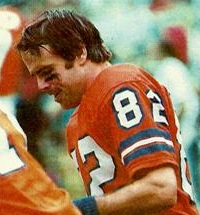
Showing posts with label Craig Morton. Show all posts

July 28, 2016

1972: Cowboys Handily Defeat College All-Stars


The 39th College All-Star Game on July 28, 1972 featured the Dallas Cowboys, NFL Champions of the previous season, against an All-Star squad coached by Nebraska’s Bob Devaney.

The Cowboys, under Head Coach Tom Landry, were a formidable team on both sides of the ball. QB Roger Staubach had emerged from competition with Craig Morton (pictured at right) to lead the league in passing in ’71 and the offense also featured a good group of running backs playing behind an excellent line. The defense was strong across the board and contained such stalwarts as DT Bob Lilly, linebackers Lee Roy Jordan and Chuck Howley, cornerbacks Mel Renfro and Herb Adderley, and SS Cornell Green.

The All-Stars had a roster containing future pro stars such as Penn State FB Franco Harris, WR Glenn Doughty of Michigan, and TE Riley Odoms from Houston on offense while the defense featured DT John Mendenhall from Grambling, LSU safety Tommy Casanova, CB Willie Buchanon of San Diego State and safety Thom Darden from Michigan. It was anticipated that Coach Devaney would use QB Jerry Tagge, who led Nebraska to two national titles, on options to take advantage of his mobility and would try to power the ball down the middle.

There were 54,162 fans in attendance on a Friday night at Soldier Field in Chicago. The All-Stars caused some excitement on their first series as Jerry Tagge took off on a 17-yard run and they were at midfield after three plays. However, Nebraska FB Jeff Kinney’s carry for an apparent first down on a third-and-one play was nullified by a holding penalty to blunt the advance. The collegians got a break on the resulting Dallas possession when Willie Buchanon tipped a pass by Roger Staubach and Thom Darden intercepted to once more put the All-Stars in possession at midfield. But two plays later, Tagge fumbled under a heavy rush and DE Larry Cole recovered for the Cowboys.

The Cowboys began the scoring late in the opening period following an interception of a Tagge pass by Mel Renfro at the All-Star 30. Dallas cashed in with a 31-yard Mike Clark field goal.

Midway through the second quarter, Staubach was shaken up after running six yards for a first down. Craig Morton came in to replace him and, two plays later, he threw to WR Ron Sellers, recently acquired from the Patriots, for an 18-yard touchdown that concluded an 11-play, 66-yard possession.  Clark booted the extra point to make the score 10-0.

The All-Stars were unable to generate meaningful offense as Tagge came under constant pressure and the running game was kept in check as well. On the last play of the first half, Chester Marcol of Hillsdale tried for a 68-yard field goal on a free kick that fell far short of the mark. The NFL champs took their ten-point lead into halftime.

Six minutes into the third quarter, the Cowboys extended their margin to 17-0 when Morton connected with WR Bob Hayes for a 24-yard TD. It came five plays after DT Bob Lilly recovered a fumble by Tagge, who lost his grip on the ball as he was rolling out, at the All-Star 41. Toni Fritsch added the point after.

The All-Stars fought back on their next series, moving from their 20 to the Dallas 30 primarily thanks to short Tagge passes. But on a third-and-two play, Oregon HB Bobby Moore lost 12 yards when fumbling out of bounds on an option play and the resulting 49-yard field goal attempt by Marcol was blocked by DE Pat Toomay. Dallas responded with a scoring drive that featured a Morton completion to Sellers for 26 yards to the All-Star 34. Fritsch kicked a 33-yard field goal on the first play of the fourth quarter.

QB Pat Sullivan, the Heisman Trophy winner from Auburn, entered the game on the next possession and the All-Stars advanced 80 yards in 16 plays. Sullivan connected on five of eight passes, including one of 13 yards to Villanova WR Mike Siani in a fourth down situation that put the ball at the Dallas one. FB Robert Newhouse of Houston, who had a 30-yard run during the drive, dove into the end zone from there for a touchdown with 7:25 remaining on the clock and Marcol converted.

That was the high point for the All-Stars, who didn’t threaten again, and the Cowboys, who were sluggish but effective when they needed to be, won comfortably by a final score of 20-7.

Dallas outgained the All-Stars (262 to 233) while first downs were even at 16 to 16. The All-Stars suffered three turnovers, to one by the Cowboys. Craig Morton hit on 6 of 14 passes for 97 yards with two touchdowns and no interceptions. FB Walt Garrison led the Cowboys with 72 yards on 13 rushing attempts.


Jerry Tagge had a rough performance, turning the ball over three times on two fumbles and an interception. He completed 9 of 20 passes for 92 yards with an interception. Pat Sullivan (pictured at left), who was named All-Star MVP, was successful on 8 of 15 throws for 64 yards. Robert Newhouse topped the runners with 48 yards on seven carries that included the only All-Star touchdown.  

The Dallas win put the pro champs ahead in the series by 28 to 9, with two ties. The Cowboys went on to compile a 10-4 record during the regular season, finishing second in the NFC East and making it to the postseason as a Wild Card. They reached the NFC Championship game before falling to Washington.

Neither Jerry Tagge nor Pat Sullivan enjoyed success in the NFL. Tagge, the first round pick of the Green Bay Packers, lasted three seasons and started a total of 12 games. He passed for 1583 yards and three touchdowns while giving up 17 interceptions before moving on to the WFL and CFL, where he was more productive (he was a CFL All-Star in 1977). Sullivan spent four years with the Atlanta Falcons and had similar results, throwing for 1155 yards and five TDs against 16 interceptions. Robert Newhouse, however, joined the Cowboys, who picked him in the second round, and developed into an effective back over the course of 12 years who ran for 4784 yards and 31 touchdowns, with another 651 rushing yards and three TDs in the postseason.

June 27, 2016

1983: Bandits Rally to Defeat Gold in Storm-Interrupted Game


The Tampa Bay Bandits were trying to keep their flickering playoff hopes alive in the United States Football League’s first season as they faced the Denver Gold on June 27, 1983.

Coached by the offense-minded Steve Spurrier, the Bandits had broken out to a 4-0 start with 33-year-old veteran QB John Reaves throwing to a fine corps of receivers led by WR Eric Truvillion (pictured above). However, Reaves suffered a broken wrist and, while rookie Jimmy Jordan performed capably in his place, he encountered injury problems as well. The addition of another talented first-year player, RB Gary Anderson, midway through the season helped, but Tampa Bay had trouble winning consistently down the stretch and was 10-6 and fighting the Chicago Blitz and surging Michigan Panthers for dominance in the tough USFL Central Division.

Denver had a 7-9 record in the mediocre Pacific Division. Craig Morton had taken over the coaching reins five weeks before and while the defense was able to keep games close, the offense was unstable at quarterback and prone to turning the ball over.

There were 46,128 fans in attendance for the Monday night game at Tampa Stadium. Less than four minutes into the first quarter, Tampa Bay NT Fred Nordgren intercepted a screen pass by QB Craig Penrose and returned it 23 yards for a touchdown. LB Mike Goedecker ran for a two-point conversion to stake the Bandits to an early 8-0 lead.

Following a three-and-out series by the Gold, the home team moved methodically to a score on offense. John Reaves, making his first appearance since his injury, completed passes to Eric Truvillion down the middle for 23 yards and to TE Lewis Gilbert along the sideline for 22. Following a defensive pass interference penalty, the possession concluded with Gary Anderson running two yards for a TD and Zenon Andrusyshyn kicking the extra point that made it 15-0.

Early in the second quarter, the Gold finally got on the board as the result of a 13-play, 65-yard series kept alive when LB Putt Choate took off for 31 yards on a fake punt. After five consecutive running plays, Penrose, facing fourth down, tossed a two-yard touchdown pass to TE Bob Niziolek. Brian Speelman added the point after.

On Denver’s next possession, the visitors again put together a long drive as they advanced 69 yards in 13 plays. While they lost Penrose to a hip pointer, backup QB Fred Mortensen’s first pass was good for a 24-yard gain that set up a touchdown on RB Harry Sydney’s one-yard plunge for a TD. The try for a two-point conversion failed but the Gold was only two points down at 15-13 with 7:18 remaining in the first half.

That was it until, after CB David Martin of the Gold intercepted a pass at the Tampa Bay 45 with just under a minute remaining, Speelman kicked a 41-yard field goal with 17 seconds left on the clock and Denver took a 16-15 lead into halftime.

Jimmy Jordan replaced Reaves at quarterback for the Bandits in the third quarter, but his first pass was picked off and the Gold took advantage, moving 44 yards to another scoring carry by Sydney, this time covering two yards. With Speelman’s conversion, the visitors were up by 23-15.

At just under two minutes into the fourth quarter, the Bandits put points on the board, this time on a 47-yard Andrusyshyn field goal that made it a 23-18 contest. Tampa Bay had the ball again when a storm erupted with heavy rain and lightning, forcing a 50-minute delay in the action with 8:31 left in regulation. On the second play after the game resumed, Jordan threw to Truvillion for a 44-yard touchdown. Up by a point, the home team got two more when RB Greg Boone ran for the conversion.

There was still plenty of time, but Denver turned the ball over on its next series when RB Larry Canada fumbled and CB Jeff George recovered for the Bandits. It was also George who finally put the game away with an interception of a Mortensen pass , to the joy of the remaining Tampa Bay faithful in the stands. The Bandits came away with a 26-23 win.

Tampa Bay had the edge in total yards (283 to 263) while the Gold led in time of possession (35:37 to 24:23) and first downs were even at 16 apiece. Denver was hurt by five turnovers, with the two late ones preventing a fourth quarter comeback, and was penalized 9 times at a cost of 79 yards. The Bandits turned the ball over three times and drew five flags for 55 yards.

In his return to action, John Reaves completed 7 of 13 passes for 72 yards and gave up two interceptions. Jimmy Jordan was 9 of 12 for 131 yards in relief, with a touchdown as well as an interception. Gary Anderson led the Bandits in rushing with 48 yards on 15 carries that included a TD and also caught 5 passes for 36 yards. Eric Truvillion gained 94 yards on his three pass receptions that included the game-winning touchdown.

For the Gold, Craig Penrose was successful on 7 of 11 throws for just 28 yards and a TD while being picked off once and Fred Mortensen made good on 8 of 14 passes for 81 yards and gave up two interceptions. RB Vincent White led the club with 72 yards on 13 rushing attempts while Larry Canada, who ran 8 times for 24 yards, topped the receivers with 6 receptions for 56 yards. On defense, David Martin intercepted three passes but was also beaten for the game-winning touchdown.

“I knew we would win when it started to rain,” said Tampa Bay’s Coach Spurrier. “That was Banditball weather.”

The Bandits needed help to reach the playoffs but it was not forthcoming as they lost their season finale and Michigan and Chicago won to claim the division title and wild card spots, respectively. Tampa Bay finished third at 11-7. The Gold also lost in the last week to place third in the Pacific Division with a 7-11 tally.

December 24, 2015

1977: Broncos Defeat Steelers in AFC Divisional Playoff


The AFC Divisional playoff game on December 24, 1977 featured the Denver Broncos, champions of the AFC West at 12-2 and newcomers to the postseason, hosting the Pittsburgh Steelers, AFC Central champs for the fourth straight year with a 9-5 record.

The Broncos, coached by Red Miller, were appearing in the postseason for the first time in a franchise history dating back to 1960 in the American Football League. They had made it with a conservative offense directed by QB Craig Morton (pictured above), who was new to Denver but a 35-year-old veteran previously with Dallas and the Giants. The key to success was the rugged “Orange Crush” defense that included DE Lyle Alzado, linebackers Randy Gradishar and Tom Jackson, CB Louis Wright, and SS Bill Thompson.

Pittsburgh had enjoyed great success under Head Coach Chuck Noll, winning back-to-back Super Bowls following the 1974 and ’75 seasons and reaching the AFC title game in 1976. However, there had been off-field turmoil heading into the 1977 season and the team was uncharacteristically turnover-prone on offense and less dominating on defense, and they lost to Denver during the regular season. Still, the nucleus of QB Terry Bradshaw, FB Franco Harris, and wide receivers Lynn Swann on offense and DT “Mean Joe” Greene, linebackers Jack Lambert and Jack Ham, and CB Mel Blount on defense was intact.

It was a sunny day at Mile High Stadium with over 75,000 fans in attendance and they saw the teams exchange punts to start the game. The Steelers had to punt again following their second possession but the kick by Rick Engles was blocked by WR John Schultz and Denver had the ball at the Pittsburgh 17. HB Rob Lytle carried four straight times, the last for a seven-yard touchdown, and Jim Turner added the extra point for a 7-0 lead.

The clubs resumed trading punts as the game moved into the second quarter. The Steelers finally mounted a scoring drive that covered 56 yards in 11 plays. Terry Bradshaw converted a third-and-nine situation with a pass to TE Bennie Cunningham that covered 19 yards and Franco Harris (pictured below) ran effectively, including a 14-yard run on a fourth-and-one play at the Denver 27. Two carries by HB Rocky Bleier and a Bradshaw throw to Lynn Swann had the visitors facing first-and-goal at the two, and while it took three plays, the Steelers got a TD when Bradshaw leaped into the end zone from just inches away. Roy Gerela converted to tie the score.


The Broncos had to punt again and the Steelers advanced to their 45 before Harris fumbled after being hit by DE Lyle Alzado and LB Tom Jackson recovered and returned it 30 yards. On the next play, HB Otis Armstrong ran 10 yards for a touchdown and, with Turner’s point after, the home team was back on top by 14-7.

The Steelers started their next series with 4:04 remaining in the first half and drove 65 yards in nine plays. Bradshaw completed four passes, the longest to John Stallworth for 21 yards, and just after the two-minute warning Harris took a handoff, started to his right, and then reversed field for a 20-yard gain to the Denver two. Two plays later, Harris ran to the right for a one-yard TD and, with Gerela’s kick, the score was once more knotted at 14-14, and that was the tally at the half. The Steelers had outgained Denver by 183 yards to 44, but the ability of the Broncos to capitalize on the blocked punt and fumble to stay even on the scoreboard.

The teams again exchanged punts to start the third quarter. Denver advanced deep into Pittsburgh territory on its second series, with the big plays passes by Craig Morton to WR Haven Moses for 27 yards and TE Jim Jensen for 29. That gave the Broncos a first-and-goal at the two, but the Steelers kept them out of the end zone as Armstrong ran for a yard, Morton had a pass batted down, and Lytle was stopped three inches short of the goal. Jensen gained nothing on a fourth down run and the Broncos turned the ball over on downs.

The Steelers were pinned back at their one and the resulting short possession led to a punt that gave the ball back to Denver at the Pittsburgh 41. Four plays later, Morton passed to TE Riley Odoms, who gathered the ball in at the six and ran the remaining distance for a 30-yard touchdown. Turner converted and the Broncos again had a seven-point lead at 21-14.

Pittsburgh had to punt on the last play of the period and Denver’s first series of the fourth quarter resulted in a punt as well. WR Jim Smith returned the kick 17 yards to the Pittsburgh 39 and, following a short run by Bleier, Bradshaw fired passes to Cunningham for 11 yards and Stallworth for 48 yards to the Denver one. From there on the next play, Bradshaw threw to Larry Brown, a tackle lined up at end, for a TD. Gerela kicked the extra point and the score again was tied.

The Broncos responded with a 39-yard drive in seven plays. Morton threw to Armstrong for a nine-yard gain and followed with a pass to Moses for 18 yards to the Pittsburgh 36. Lytle ran for three yards and a Morton bootleg picked up six. While a third-and-one pass was tipped and fell incomplete, Turner kicked a 44-yard field goal that staked Denver to a 24-21 lead.

Smith returned the ensuing kickoff 34 yards to give the Steelers good starting field position at their 40, but on their second play a Bradshaw pass was intercepted by Jackson, who returned it 32 yards to the nine yard line. The Broncos couldn’t reach the end zone from there but came away with another Turner field goal, this time from 25 yards, to extend the lead to 27-21.


Pittsburgh took over again on offense with just over five minutes to play and Bradshaw came out throwing. He had four completions, one to Cunningham for 12 yards to convert a third down and another to Bleier for seven yards in a third-and-six situation. But his next pass was picked off at midfield by Jackson, making yet another big play on defense, and the linebacker ran it back 17 yards. Two plays later, with the defense anticipating that the Broncos would keep the ball on the ground, Morton fired long to WR Jack Dolbin (pictured at right) in the end zone for a 34-yard touchdown. While the Steelers had one more possession, the game was effectively over. Denver won by a final score of 34-21.

The Steelers had more total yards (304 to 258) and first downs (18 to 15), but also turned the ball over four times, to one by Denver. Pittsburgh also was hurt by 10 penalties, at a cost of 67 yards, to three flags for 20 yards thrown on the Broncos.

Craig Morton completed 11 of 23 passes for 164 yards and two touchdowns with no interceptions. Otis Armstrong topped the Broncos with 44 rushing yards on 11 carries that included a TD and Rob Lytle contributed 26 yards and a score on his 12 attempts. Riley Odoms had 5 catches for 43 yards and a touchdown and Haven Moses gained 45 yards on his two pass receptions. Tom Jackson (pictured below) was the defensive star with the two big interceptions plus a fumble recovery.


For the Steelers, Terry Bradshaw was successful on 19 of 37 throws for 177 yards and a TD, but gave up three interceptions. Franco Harris gained 92 yards on 28 carries that included a touchdown and also caught four passes for another 20 yards. John Stallworth also had four receptions, for a team-leading 80 yards.

Denver, having achieved its first playoff victory, went on to defeat the division-rival Oakland Raiders for the AFC Championship but was dominated in the Super Bowl by the Dallas Cowboys. The Steelers, with many commentators suggesting that they were a fading club following the disappointing 1977 season, bounced back to win the next two Super Bowls and defeated the Broncos at the Divisional level in ’78.

January 15, 2015

1978: Dallas Defense Dominates Broncos in Super Bowl XII


Super Bowl XII on January 15, 1978 featured two 12-2 teams, the Dallas Cowboys and Denver Broncos, appearing in the first Super Bowl to be held in an indoor venue, the Louisiana Superdome in New Orleans. There was a crowd of 75,583 fans on hand in addition to a huge television audience.

The Cowboys, coached by Tom Landry, were used to contending, having made it to the postseason for the 11th time in 12 years in 1977, and were just two years removed from their most recent of three Super Bowl appearances (a loss to the Steelers). 35-year-old QB Roger Staubach led the NFC in passing and All-Pro WR Drew Pearson led a solid group of receivers. Rookie HB Tony Dorsett didn’t move into the starting lineup until halfway through the season yet still rushed for 1007 yards and 12 TDs. The retooled defense was outstanding, particularly on the line that contained pass-rushing ends Harvey Martin, a consensus first-team All-Pro, and Ed “Too Tall” Jones and DT Randy White, successor to the great Bob Lilly and a Pro Bowl selectee in his first year starting. After handily topping the NFC East, the Cowboys defeated the Bears in the Divisional playoff round and Minnesota for the conference championship, outscoring their opponents by a combined 60-13.

Denver, on the other hand, had never been to the playoffs previously. Under first-year Head Coach Red Miller, the Broncos benefited from the strong “Orange Crush” defense that featured DE Lyle Alzado, linebackers Randy Gradishar and Tom Jackson, CB Louis Wright, and SS Bill Thompson. The offense was conservative. QB Craig Morton, a 13th-year veteran who spent his first nine full seasons with Dallas, had joined the team in ’77 and provided steady guidance, if not statistical brilliance. The group of running backs was unspectacular while TE Riley Odoms led the club with 37 receptions and WR Haven Moses was the leading deep threat. After beating out the Raiders in the AFC West, the Broncos defeated Pittsburgh in their Divisional game and narrowly defeated Oakland for the AFC title.   


Dallas had the game’s first possession and punted, narrowly averting disaster on the first play from scrimmage when Tony Dorsett and WR Butch Johnson muffed an exchange on an attempted reverse, but Denver was unable to recover the loose ball. On their first series, the Broncos converted a third-and-12 play when Craig Morton completed a pass to Haven Moses for 21 yards to the Dallas 34. But following a short carry by HB Otis Armstrong, Morton’s next pass was batted down and he was then sacked for a loss of 11 yards by Randy White (pictured at right) to force a punt.

The Cowboys, who were pinned back at their one after WR Tony Hill muffed Denver’s punt and fell on the ball, were no more proficient on offense and again had to punt, but three plays later a poorly-thrown pass by Morton, who was trying to avoid being sacked, was intercepted by safety Randy Hughes to give Dallas the ball at the Denver 25. Staubach threw a swing pass to TE Billy Joe Dupree for 13 yards and, following a two-yard carry by FB Robert Newhouse, Dorsett ran the ball three straight times, the last for a three-yard touchdown. Efren Herrera added the extra point and the Cowboys held a 7-0 lead.

On the second play of Denver’s next possession, Morton threw another interception. The pass was tipped by LB Bob Breunig and CB Aaron Kyle grabbed the ball and returned 19 yards to the Broncos’ 35. A nine-yard run by Newhouse was followed by Dorsett picking up 18 yards around end. The series bogged down at that point and Lyle Alzado’s sack of Staubach on third down forced the Cowboys to settle for a 35-yard Herrera field goal. Dallas took a 10-0 lead into the second quarter.

Denver again had to punt after a short series capped by DE “Too Tall” Jones tossing FB Lonnie Perrin for a seven-yard loss after catching a screen pass. Starting from their 43, the Cowboys advanced 32 yards in seven plays. Staubach threw to HB Preston Pearson on a screen pass for 11 yards and to DuPree for 19. Herrera kicked a 43-yard field goal to make it a 13-0 game.

Dallas again got the ball back in short order when Morton’s underthrown pass intended for Moses was picked off by CB Benny Barnes. A penalty and a sack moved the Cowboys back and they punted, but WR John Schultz muffed the kick and LB Bruce Huther recovered for Dallas at the Denver 40. Dorsett gained 19 yards on a sweep, but the Broncos stiffened on defense and Staubach’s throw into the end zone was batted away by Louis Wright. The Cowboys came up empty when Herrera tried for a 43-yard field goal and was wide to the left.

Once again the Broncos turned the ball over when Morton completed a pass to WR Jack Dolbin for 15 yards, but the receiver fumbled and Hughes recovered, returning it 19 yards to the Denver 27. Dorsett ran for eight yards and Newhouse for 10 to the nine yard line, but a swing pass to Newhouse lost seven yards at the two-minute warning and two more throws netted a gain of a yard. Herrera missed another try for a field goal, this time from 32 yards.

The teams exchanged back-to-back turnovers on first-play fumbles by the tight ends and, with time running out in the first half, Morton threw another interception that CB Mark Washington returned 27 yards to the Denver 35. A short pass from Staubach to Preston Pearson set up a 44-yard field goal attempt by Herrera, but it was wide to the left and the score remained unchanged heading into halftime. Dallas failed to generate further points on turnovers by the Broncos while controlling the ball nearly twice as long in the first thirty minutes.

The Broncos had the ball first in the third quarter and, while Armstrong gained 18 yards on a sweep, the drive stalled at the Denver 41. A fake punt failed when Bucky Dilts was sacked for a four-yard loss, but the Cowboys were penalized for having twelve players on the field to nevertheless keep the series alive. After reaching the Dallas 30, Jim Turner kicked a 47-yard field goal and the Dallas lead was narrowed to 13-3.

The teams exchanged punts before the Cowboys advanced 58 yards in five plays. Staubach completed a pass to Drew Pearson for 13 yards on a second-and-ten play and, following a run for no gain and an incomplete pass, Staubach threw long for Butch Johnson, who made a diving catch for a 45-yard touchdown (pictured below). Herrera added the point after and Dallas was up by 20-3.


The Broncos got a break when WR Rick Upchurch returned the ensuing kickoff 67 yards to the Dallas 26. Morton nearly threw another interception on first down and backup QB Norris Weese, who was more mobile, came into the game. HB Rob Lytle ran for four yards, Weese threw to FB Jim Jensen for five, and on fourth-and-one, Jensen ran for 16 yards. Lytle ran for the last yard and a TD and Turner converted to again make it a ten-point contest.

The Cowboys finished out the period with a time-consuming drive. Staubach completed all five of his passes, the longest to DuPree for 18 yards, but on the second play of the fourth quarter he fumbled when sacked by LB Tom Jackson and NT Rubin Carter recovered at the Denver 45.

A facemask penalty on the Cowboys negated a loss and gave the Broncos another first down, Weese threw to Upchurch for nine yards, and Armstrong ran for three to reach the Dallas 46. But that was as far as Denver could get. Weese’s next three passes were incomplete and the Broncos punted.

Staubach was sidelined with a broken finger on his throwing hand and Danny White came in at quarterback for Dallas. The backup completed a pass and gained 13 yards on a draw play. While Staubach returned before the series was over, the Cowboys had to punt. Three plays later, a sack by Harvey Martin (pictured at top) forced Weese to fumble and Kyle recovered at the Denver 29. On the next play, Newhouse threw an option pass that WR Golden Richards caught in the end zone for a 29-yard touchdown. Herrera added the point after and, with seven minutes to play, the Cowboys had an insurmountable 17-point lead.

Denver had the ball once more and reached the Dallas 24 before Weese’s incomplete pass on a fourth-and-23 play effectively ended the season for the Broncos. Dallas won by a final score of 27-10.    

The Cowboys easily outgained Denver (325 yards to 156) and had more first downs (17 to 11). The Broncos managed just 35 net passing yards and turned the ball over eight times, four apiece by interceptions and fumbles. While the Cowboys stifled Denver on defense, the offense wasn’t as dominating, fumbling six times but losing just two of them, their only turnovers of the game. Dallas also missed three field goals and set a Super Bowl record by being penalized 12 times (tied by Carolina in Super Bowl XXXVIII), to eight flags thrown on the Broncos.

Roger Staubach completed 17 of 25 passes for 183 yards and a touchdown while giving up no interceptions. Tony Dorsett (pictured below), who left the game in the third quarter with a twisted knee, ran for 66 yards on 15 carries that included a TD and Robert Newhouse added 55 yards on 14 attempts in addition to throwing a 29-yard touchdown pass. Preston Pearson had five catches for 37 yards while Billy Joe DuPree gained 66 yards on his four pass receptions. On defense, Harvey Martin was unofficially credited with two sacks and shared MVP honors with Randy White, who had one in addition to helping to apply tremendous pressure on the Broncos.


For the Broncos, Craig Morton was successful on just four of 15 throws, giving up four interceptions, and Norris Weese was four-of-10 for 22 yards but was not picked off. Weese also ran for 26 yards on three carries. Rob Lytle led the club with 35 yards on 10 rushing attempts that included the only Denver touchdown. Jack Dolbin and Riley Odoms caught two passes apiece, for 24 and 9 yards, respectively. Haven Moses gained 21 yards on his only reception, which came early in the contest.

“The number one plan was to pressure Craig Morton,” said Coach Tom Landry. “The front four played great. We just rushed the heck out of him.”

“They took away everything we had,” said Morton in defeat. “We tried to get something started, but…We’ve come a long way. Nobody expected us to be here.”

“I thought we were still in the game when it was 20-10,” said Coach Red Miller. “Then Norris (Weese) fumbled and they scored on that halfback pass, and that was it.”

“We played well defensively, but we had too many turnovers,” added Lyle Alzado. “I’m giving Dallas credit. When we make mistakes, the other team should capitalize. I’m a bit embarrassed.”

The Cowboys returned to the Super Bowl in 1978, losing a close contest to the Pittsburgh Steelers. They would not win another until the 1992 season. Denver again topped the AFC West in ’78 but lost in the Divisional playoff round. The Broncos next appeared in the Super Bowl following the 1986 season.

October 29, 2014

1978: Broncos Pull Out Win Over Seahawks in Overtime


The Denver Broncos, defending champions of the American Football Conference, were 5-3 as they traveled to Seattle to take on the up-and-coming Seahawks on October 29, 1978, a team they had beaten handily four weeks earlier at home. A season after reaching the playoffs for the first time in franchise history, Head Coach Red Miller’s team was still heavily dependent on the “Orange Crush” defense. The conservative offense was again directed by QB Craig Morton and he had fine receivers available in WR Haven Moses and TE Riley Odoms. The ground game operated with a six-member running-back-by-committee arrangement.

Seattle, in its third year of existence and coached by the stoical Jack Patera, was at 4-4 and coming off a big win over the Raiders the previous week. The offense was led by the mobile lefthanded QB Jim Zorn and included WR Steve Largent and RB Sherman Smith as other key components. The defense included talented newcomers in LB Keith Butler and FS John Harris.

There were 62,948 fans on hand at the Kingdome. The Broncos took the opening kickoff and drove 70 yards. Craig Morton completed a pass to Riley Odoms for 26 yards to the Seattle 38 and fullbacks Lonnie Perrin (pictured above) and Jon Keyworth and HB Otis Armstrong all ran effectively. Jim Turner kicked a 34-yard field goal to give Denver the early lead.

Seattle responded with a five-play, 66-yard drive of its own, culminating in a pass from Jim Zorn to WR Sam McCullum that resulted in a 44-yard touchdown. Efren Herrera added the extra point and the home team was in front by 7-3.

Denver put together another methodical series, utilizing more members of the running back corps, with FB Larry Canada carrying three times for 22 yards and HB Rob Lytle contributing 15 yards on two attempts. The drive stalled at the Seattle 17 and Turner missed on another 34-yard field goal attempt.

The Seahawks punted following their next possession but got the ball back two plays later when WR Jack Dolbin fumbled after catching a short pass and DE Ernie Price recovered at the Denver 16. In a series that extended into the second quarter, Seattle scored in seven plays, the last a four-yard run by Zorn on a quarterback draw for a TD. Herrera kicked the point after and the Seattle lead grew to 14-3.

The teams traded punts until the Broncos again drove into Seattle territory, but a fake field goal attempt failed. Shortly thereafter, LB Randy Gradishar intercepted a pass to give Denver the ball at the Seattle 34. It took just two plays to score, with Morton rolling out and throwing to WR Rick Upchurch for a 29-yard touchdown. Turner added the PAT and the Broncos had closed to 14-10, which remained the score at halftime.

Heading into the third quarter, both offenses were having difficulty mounting drives, and passing was especially problematic. Midway through the period the Broncos got the ball at the Seattle nine following a fumbled snap by Zorn and Perrin ran for a one-yard touchdown. Turner converted and the visitors were in front by 17-14.

In the fourth quarter, a tipped pass intended for Steve Largent was intercepted by LB Bob Swenson to give the Broncos the ball at the Seattle 45. They picked up 12 yards before having to punt. The teams exchanged punts once more before the Seahawks, with Steve Myer now at quarterback, put together a series that involved an interception that, thanks to a fumbled lateral by Gradishar on the return, ended up giving the ball back to Seattle. Myer completed three passes and ran twice for ten yards and Herrera kicked a 37-yard field goal with 56 seconds remaining to tie the score and send the game into overtime.


The Broncos had first possession in the extra period and punted. A short series by the Seahawks also resulted in a punt, but after HB Dave Preston ran for 16 yards, Perrin fumbled and SS Autry Beamon recovered for Seattle at his 41. Zorn was back behind center, but his first down pass was deflected and picked off by CB Steve Foley (pictured at left), who returned it 30 yards to the Seattle 36. Keeping the ball on the ground, the Broncos reached the Seattle one and Turner came in to kick an 18-yard field goal. The first try was wide to the left after Morton, the holder, barely fielded a bad snap, but the 15-year veteran placekicker got a reprieve when the Seahawks were penalized for having twelve men on the field, and given another shot he was successful. Denver came away with a 20-17 win at 12:59 into overtime.

The Broncos significantly outgained Seattle (423 yards to 258), with the six Denver running backs totaling 278 rushing yards, and had the edge in first downs (25 to 19). The Seahawks turned the ball over five times to three suffered by Denver, while the Broncos committed 12 penalties, at a cost of 103 yards, to 9 flags thrown on Seattle, for 61 yards, although the last penalty on the Seahawks was ultimately the most costly.

Jon Keyworth led the strong Denver running attack with 70 yards on eight carries, followed by Larry Canada’s 68 yards on 15 attempts and Lonnie Perrin gaining 57 yards on 15 tries that included a touchdown. Craig Morton completed just 11 of 28 passes for 155 yards and a TD, although he had none intercepted. Haven Moses caught three of those passes for 60 yards while Rick Upchurch added 42 yards and a score on two receptions and also returned three punts for 61 yards.


For the Seahawks, Jim Zorn also had a rough passing performance as he was successful on only 9 of 29 throws for 110 yards and a touchdown while giving up three interceptions. In his relief stint, Steve Myer was 6 of 11 for 38 yards and was picked off once. Sherman Smith ran for 73 yards on 17 carries and caught four passes for another 21 yards. Sam McCullum (pictured at right) gained 57 yards on his three pass receptions that included a TD.

“On the first attempt, the snap was high,” explained Jim Turner of the miss on the first try for the winning field goal in overtime. “I don’t know how Craig (Morton) caught the ball.”

The overtime win for the Broncos marked the third (and last) time they went into OT during the season, and was the second time they came out on top. They lost to the Jets the following week but then won four of five on the way to finishing with a 10-6 record and topping the AFC West for the second straight year. They did not get deep into the playoffs this time, however, losing to Pittsburgh in the Divisional round. Seattle recovered to win five of its last seven contests and post the first winning record in the young franchise’s history at 9-7, which ranked third in the highly-competitive division.

June 3, 2014

1984: Fowler Runs for 208 Yards as Gamblers Defeat Gold


In their first season in the United States Football League, the Houston Gamblers had developed into an exciting offensive team with their prolific passing attack led by rookie QB Jim Kelly. However, Head Coach Jack Pardee’s team could also run the ball, and on June 3, 1984 it was the ground game that achieved headlines.

Todd Fowler (pictured above) had been a tight end in college and was converted to running back by the Gamblers during the preseason, although he was viewed more as a blocking back at that time. His value as a runner rose once Sam Harrell, who had set a USFL single-game record with 200 yards earlier in the season, went on injured reserve, and he had already compiled three hundred-yard rushing performances.

Houston had won three straight games and was atop the USFL’s Central Division with a 9-5 record prior to traveling to Denver to take on the Gold. Denver, on the other hand, slumped badly after getting off to a 7-1 start and was now 8-6 after snapping a five-game losing streak the previous week. Coached by Craig Morton, the Gold suffered from instability at quarterback and was giving up too many yards on defense. Still, they remained in first place in the mediocre Pacific Division and were battling to maintain that position.

There was a typically good turnout of 50,057 at Mile High Stadium. To blunt Houston’s passing attack the Gold started no linemen, but instead five linebackers and six defensive backs. The overcompensation left them vulnerable to running plays.

Late in the first quarter, Todd Fowler ran seven yards for a touchdown for the game’s first score, with Toni Fritsch adding the extra point. Fowler set up Houston’s next score in the second quarter with a 53-yard burst up the middle, and that possession resulted in a 36-yard Toni Fritsch field goal that made the tally 10-0.

Craig Penrose came in at quarterback in the second quarter, replacing Fred Mortensen, who had failed to connect on any of his six passes. The Gold narrowed the Houston lead with a 56-yard drive that was kept alive when, forced to punt at one point, the Gamblers roughed the kicker. Penrose finished off the series by passing to RB Harry Sydney for a 28-yard TD. Brian Speelman made it a three-point game with his extra point.

That was the high water mark for Denver. The Gamblers proceeded to score 26 unanswered points to take a commanding lead. They first extended their margin when Jim Kelly threw to WR Ricky Sanders for an 18-yard touchdown to complete an 86-yard series. Houston topped off the first half scoring with a 43-yard field goal by Fritsch on the last play before halftime and the Gamblers took a 20-7 lead into the locker room.

Fritsch kicked a 49-yard field goal in an otherwise-scoreless third quarter in which the Houston defense continued to stymie the home team. On the first play of the fourth quarter, Fowler took a pitchout and broke away for a 46-yard touchdown and, while the extra point try was blocked, Houston was well in front by a score of 29-7.

The Gamblers tallied once more, on a Kelly pass to WR Scott McGhee that covered 23 yards. Denver managed to put two TDs on the board before it was over, with the Gold’s third quarterback of the day, Ken Hobart, connecting with WR Elmer Bailey from 12 yards out and then RB Bo Matthews running one yard for a touchdown. The two-point conversion after the second TD was unsuccessful, but it had no effect on the outcome as the Gamblers came away with a comfortable 36-20 win.

Houston dominated in total yards (465 to 279) and first downs (23 to 15), and the yardage total showed balance with 244 gained on the ground and 221 through the air. The Gold turned the ball over four times, to none by the Gamblers, and Houston also accounted for four sacks, to two by Denver. There were many penalties, with Houston leading in that category as well, drawing 10 flags at a cost of 70 yards to 8 penalties and 74 yards on the Gold.

Todd Fowler broke teammate Sam Harrell’s record by rushing for 208 yards on 21 carries that included two TDs. Jim Kelly (pictured below) completed 20 of 31 passes for 216 yards and two touchdowns, with none intercepted. Ricky Sanders led the receivers with 8 catches for 91 yards. Toni Fritsch kicked three field goals, tying the league record of 12 straight, but a fourth attempt late in the contest was blocked to end the streak.


For the Gold, Craig Penrose had little more luck than Fred Mortensen with his passing, succeeding on just five of 17 throws for 61 yards and a TD while giving up two interceptions. Ken Hobart went 7-of-11 for 156 yards and a touchdown as well as an interception. Three Denver players caught two passes apiece, with Elmer Bailey gaining 79 yards on his pair that included a score. RB Vincent White paced the ground game with 28 yards on 6 attempts and Ken Hobart was right behind with his 25 yards on three carries.

“My offensive line knocked out some big holes in the defense, and all the credit should go to them,” said Todd Fowler regarding his record-setting performance.

“I don’t know what the motivational factor is when we have a championship to play for, then come out and play the way we did,” said a frustrated Coach Craig Morton from the losing side. “The playoffs right now are a dream for us unless we find some kind of spark.”

The Gamblers went on to win the Central Division with a 13-5 record, although they were beaten in their First Round playoff game by the Arizona Wranglers. Denver ultimately slid to a disappointing 9-9 tally, placing third in the Pacific Division.

Todd Fowler ended up rushing for 1003 yards on 170 carries with an impressive 5.9-yard average while scoring 11 touchdowns. Jim Kelly’s two touchdown passes put him at 36 for the season (tying the then-existing NFL record) on his way to 44 as he led the USFL in most major passing categories and received league MVP honors.

April 16, 2014

MVP Profile: Craig Morton, 1977

Quarterback, Denver Broncos


Age:  34
13th season in pro football, 1st with Broncos
College: California
Height: 6’4”   Weight: 214

Prelude:
Chosen by the Dallas Cowboys in the first round of the 1965 NFL draft (he was chosen by the Raiders in the AFL), Morton saw limited action as backup to Don Meredith for four seasons before taking over as the starting quarterback in 1969. A classic dropback passer with a good arm and limited mobility, he threw for 2619 yards and 21 TDs while averaging a healthy 8.7 yards per attempt in ’69 and in 1970 the Cowboys won the NFC Championship as Morton led the league with 8.8 yards per attempt. However, he had a rough outing in the Super Bowl loss to the Colts and then lost the starting job to Roger Staubach during the ’71 season. He stepped in when Staubach went down with an injury in 1972 but went back to the bench until he was traded to the New York Giants during the ’74 season. While expectations were high, the Giants were mediocre and Morton took a beating, tossing far more interceptions (49) than touchdowns (29) over the course of 34 games, only 8 of which were wins. Following the 1976 season, he was traded to the up-and-coming Broncos.

1977 Season Summary
Appeared and started in all 14 games
[Bracketed numbers indicate league rank in Top 20]

Passing
Attempts – 254 [16]
Most attempts, game – 32 vs. Oakland 10/30, at San Diego 11/13
Completions – 131 [17]
Most completions, game – 19 vs. Oakland 10/30
Yards – 1929 [13]
Most yards, game – 242 vs. Oakland 10/30
Completion percentage – 51.6 [16]
Yards per attempt – 7.6 [2]
TD passes – 14 [9]
Most TD passes, game – 2 at San Diego 11/13, vs. Baltimore 11/27, at Houston 12/4
Interceptions – 8
Most interceptions, game – 2 at Kansas City 11/20
Passer rating – 82.0 [4]
200-yard passing games – 1

Rushing
Attempts – 31
Most attempts, game – 6 (for 15 yds.) vs. St. Louis 9/18
Yards – 125
Most yards, game – 35 yards (on 5 carries) at Seattle 10/2
Yards per attempt – 4.0
TDs – 4

Scoring
TDs – 4
Points - 24

Postseason: 3 G
Pass attempts – 58
Most attempts, game - 23 vs. Pittsburgh, AFC Divisional playoff
Pass completions – 25
Most completions, game - 11 vs. Pittsburgh, AFC Divisional playoff
Passing yardage – 427
Most yards, game - 224 vs. Oakland, AFC Championship
TD passes – 4
Most TD passes, game - 2 vs. Pittsburgh, AFC Divisional playoff; vs. Oakland, AFC Championship
Interceptions – 5
Most interceptions, game – 4 vs. Dallas, Super Bowl

Rushing attempts – 7
Most rushing attempts, game – 5 (for 0 yds.) vs. Pittsburgh, AFC Divisional playoff
Rushing yards – -4
Most rushing yards, game – 0 vs. Pittsburgh, AFC Divisional playoff
Average gain rushing – -0.6
Rushing TDs – 0

Awards & Honors:
AFC Player of the Year: Sporting News
NFL Comeback Player of the Year: AP
1st team All-AFC: Sporting News

Broncos went 12-2 to finish first in the AFC West with the conference’s best record, achieving the first postseason appearance in franchise history. Won AFC Divisional playoff over Pittsburgh Steelers (34-21) and AFC Championship over Oakland Raiders (20-17). Lost Super Bowl to Dallas Cowboys (27-10).

Aftermath:
The Broncos topped the AFC West again in 1978, but Morton had a lesser season and split time with backups Norris Weese and Craig Penrose. The team had trouble putting points on the board in ’79, with Morton again seeing most of the action behind center, and while his passing yards (2626) and touchdowns (16) went up, so did his interceptions (19). Matt Robinson was obtained from the Jets to challenge him in 1980, but Morton regained the starting job and, with the arrival of ex-Dallas teammate Dan Reeves as head coach in ’81, he enjoyed a revival as he achieved a career-high 3195 passing yards and tied his previous best with 21 TD passes while averaging 8.5 yards per attempt. But it was a last hurrah as he finished out his career in the strike-shortened 1982 season. Overall, Morton passed for 27,908 yards and 183 TDs, with 187 interceptions, over the course of 18 years in the NFL. 11,895 of the yards and 74 TDs came with the Broncos, where he enjoyed his greatest success and became part of that team’s Ring of Fame in 1988.

--


MVP Profiles feature players who were named MVP or Player of the Year in the NFL, AAFC (1946-49), AFL (1960-69), WFL (1974), or USFL (1983-85) by a recognized organization (Associated Press, Pro Football Writers Association, Newspaper Enterprise Association, United Press International, The Sporting News, Maxwell Club – Bert Bell Award, or the league itself). 

March 25, 2014

1984: Gold Defeat Showboats in Back-and-Forth Contest


The Denver Gold had a 3-1 record heading into Memphis to face the Showboats in a United States Football League game on March 25, 1984. Coached by Craig Morton, the Gold had a strong fan base that was being rewarded with improved offensive play. QB Craig Penrose, a former teammate of Morton’s with the NFL Broncos, was behind center and had promising rookie WR Leonard Harris, who also returned kicks, as a target while productive RB Harry Sydney was the best of the backs.

The first-year Showboats, coached by the colorful Pepper Rodgers, were struggling at 1-3. Rookie QB Walter Lewis was more noted for his running than passing, but the defense was anchored by DE Reggie White, a first-year player out of Tennessee who was showing off the abilities that would make him an all-time great.

There was a crowd of 21,213 in attendance at the Liberty Bowl. The Gold jumped out to a 14-0 lead thanks to two Memphis turnovers. The first was a fumble, which led to a nine-yard touchdown carry by RB Vincent White, and then a pass interception that set up a Craig Penrose TD pass to TE Bob Niziolek that covered 36 yards. Brian Speelman added the extra point after each. Early in the second quarter, Alan Duncan kicked a 48-yard field goal to finally get the Showboats on the board and the score remained 14-3 at the half.

Memphis narrowed the margin in the third quarter, this time benefiting from a Denver turnover as SS Terry Love intercepted a Penrose pass and returned it 79 yards for a TD. Just before the end of the period, the Showboats took the lead when Walter Lewis scored on a one-yard touchdown carry. Duncan successfully converted after each score and the tally was 17-14.

Denver responded on the next series by scoring on a Penrose pass to WR John Arnold that covered 34 yards. The Showboats put together a 16-play, 72-yard drive that culminated in RB Alan Reid running for a one-yard touchdown and, with the successful extra point, they led by 24-21 with under three minutes to go in the contest.

There was still enough time for the Gold, and they went 66 yards on their next series. Penrose threw to Leonard Harris for a 27-yard gain to the Memphis 25 and, with 57 seconds remaining, Vincent White scored from 16 yards out. Speelman added the PAT and Denver came away with a hard-earned 28-24 win.

Memphis led in total yards (323 to 277) and first downs (19 to 11). The Showboats were hurt by the two early turnovers that put them in a hole, while Denver turned the ball over once. There were many penalties, with the Gold being flagged 9 times at a cost of 50 yards to 8 penalties for 63 yards on Memphis.


Craig Penrose completed 12 of 20 passes for 177 yards and two touchdowns while giving up one interception. Harry Sydney ran for 54 yards on 12 carries and Vincent White was right behind with 52 yards on 7 attempts that included two TDs. Bob Niziolek had three catches for 45 yards and a touchdown and John Arnold gained 49 yards on his two receptions that also included a score.

For the Showboats, Walter Lewis was successful on 17 of 25 throws for 175 yards and a TD as well as one that was picked off. He also ran the ball five times for 37 yards and a score. Alan Reid had 22 carries for 71 yards and a touchdown and added another 34 yards on four catches. WR Derrick Crawford led the club with 5 pass receptions, for 31 yards, while WR Cormac Carney gained 52 yards on his three catches. On defense, Reggie White accounted for both of his team’s sacks.

Denver’s promising start failed to hold up over the long haul. The Gold won their next three games to reach 7-1 before the bottom fell out and they lost eight of their last ten contests to finish at a disappointing 9-9 and third in the USFL's Pacific Division. Memphis won the next week but continued to struggle and ended up fourth in the Southern Division at 7-11.

Craig Penrose ended up being one of five quarterbacks utilized by the Gold, but was the most productive as he completed 60.3 percent of his passes for 1984 yards and 12 touchdowns along with 14 interceptions. 

September 11, 2013

1978: Danmeier Kicks 4th FG & Vikings Beat Broncos in Overtime


The Minnesota Vikings were 0-1 after losing in a sloppy performance at New Orleans as they hosted the Denver Broncos on September 11, 1978. Head Coach Bud Grant’s team had dominated the NFC Central with 9 division titles over the previous 10 years, but had not won a Super Bowl and star QB Fran Tarkenton was giving indications that this would be his last season.

The Broncos were AFC Champions in 1977, although they lost badly to Dallas in the Super Bowl. Coached by Red Miller, they were carried by their tough “Orange Crush” defense while veteran QB Craig Morton guided the conservative offense. Denver started off in Week 1 with a win over the division-rival Raiders.

There were 45,508 fans in attendance for the nationally-televised Monday night game at Metropolitan Stadium. What they saw was dominance by both defenses. An early series by the Broncos ended with the Vikings recovering a lateral that went awry at the Denver 23. The Vikings converted a fourth down at the 13 but three plays later WR Sammy White dropped a pass in the end zone and Minnesota settled for a 24-yard field goal by Rick Danmeier, a nondescript placekicker who had spent the ’77 season on injured reserve. He was filling the shoes of Fred Cox, who retired following 15 productive years in Minnesota.

The defenses dominated the rest of the half. The closest scoring opportunity came when Denver drove into Minnesota territory and, as the game headed into the second quarter, reached the 10 yard line. However, a third-down pass was picked off in the end zone to end the threat. The turnover-prone Broncos could not move the ball effectively and the Vikings were plagued by dropped passes. The score remained 3-0 at halftime.

Minnesota took the second half kickoff and drove to another Danmeier field goal, this time from 46 yards. CB Nate Wright intercepted a Morton pass on the next series and the Vikings drove inside the Denver five but the Broncos stiffened and Danmeier booted a 21-yard field goal.

Down 9-0, backup QB Norris Weese (pictured below) relieved Morton for the Broncos. Early in the fourth quarter, DE Lyle Alzado blocked a Minnesota punt to give Denver the ball at midfield. The big special teams play brought the Broncos to life on offense and they drove to a one-yard touchdown carry by FB Jon Keyworth, although DT Alan Page blocked the extra point attempt to keep it a three-point game.


A short series by the Vikings resulted in a punt, but a good return by WR Rick Upchurch was nullified by a penalty and Weese threw a long interception. Minnesota ran time off the clock and punted, with the Broncos regaining possession with a little less than two minutes remaining in regulation.

Weese directed Denver on a 37-yard drive to the Minnesota five, but the clock was down to 11 seconds left and the Broncos were out of timeouts. Weese rolled out to his right, was unable to find a receiver, and was tackled for the loss of a yard. The officials stopped the clock with three seconds remaining, ruling that it was a sack and not a running play.

An infuriated Coach Bud Grant, showing uncharacteristic emotion, ran onto the field to argue the stopping of the clock with the referee and was restrained by Page. Both he and Tarkenton insisted that Weese had left the pocket and was thus a runner. The Broncos were able to get the kicking team onto the field before the last seconds ticked off and Jim Turner booted a 25-yard field goal to tie the score at 9-9 and send the game into overtime.

With Tarkenton nursing a hand injury, Grant put second-year backup QB Tommy Kramer into the game for the overtime period. The Vikings won the toss to gain first possession, and that was all they would need. The winning drive in overtime went 56 yards in 10 plays. Key events along the way were Kramer running for a first down, completing a pass to HB Robert Miller that gained 14 yards, and a 15-yard personal foul penalty called on Denver nose tackle Don Latimer.

At just under three minutes into the extra period, Danmeier kicked a 44-yard field goal – his fourth with no misses – to win the game for the Vikings by a score of 12-9.

In a contest that featured two tough defenses, the Broncos had the edge in total yards (231 to 206) and first downs (18 to 13). However, they also turned the ball over six times, to three by the Vikings, and Denver quarterbacks were sacked six times.

Fran Tarkenton completed 13 of 27 passes for just 98 yards with no TDs and three interceptions. In the overtime period, Tommy Kramer went two-of-seven for 22 yards. RB Chuck Foreman rushed for 59 yards on 22 carries and caught four passes for 28 more yards. Robert Miller had the most receiving yards for the Vikings with 31 on his three receptions. Rick Danmeier was the scoring star with his first four NFL field goals.

For the Broncos, Craig Morton was successful on 9 of 21 throws for 90 yards with two intercepted before giving way to Norris Weese, who completed 6 of 11 for 81 yards and had one picked off. HB Otis Armstrong had 64 rushing yards on 14 attempts. Jon Keyworth gained just 13 yards on 6 carries, but one was for a TD and he led the team with four pass receptions, for 27 yards. WR Haven Moses had 53 yards on three catches. 

“With three seconds to go, how can you put a ball in play and get the kicking team on the field?” asked Bud Grant of the key official timeout that allowed the Broncos to kick a field goal at the end of regulation. “There is no explanation, to my way of thinking.”

“It was the famous quarterback rollout and if I can’t pass to someone I throw it away,” explained Norris Weese. “I couldn’t find anyone open and was lucky enough to be ruled as being sacked after trying to pass the ball. If the officials ruled I was stopped on a running play, time would have run out and we wouldn’t have got the field goal.”

The Vikings went on to once again win the NFC Central, but with a mediocre 8-7-1 record. They lost handily to the Rams in the Divisional playoff round. Denver recovered to win its next three games and topped the AFC West at 10-6. The Broncos also lost in the Divisional round, to Pittsburgh.

Rick Danmeier had a respectable season as he was successful on 12 of his 19 field goal attempts and 36 of 37 extra point conversions. One of the last straight-ahead placekickers, he played for six years with the Vikings, through 1982. Overall, he kicked 70 field goals and scored 364 points.

June 17, 2013

1983: Denver Explodes on Offense to Defeat Wranglers


In the inaugural United States Football League season, the Denver Gold were hardly known for explosive offense. They turned the ball over with great frequency and were at the bottom of the USFL in offensive production. Denver had also experienced the first head coaching change of any team in the new league when Red Miller, formerly of the NFL Broncos, gave way to Craig Morton, an ex-Broncos quarterback. But on June 17, 1983 the Gold exploded against the Arizona Wranglers to not only post their highest point total of the year but also the most yards of total offense by any USFL club in the first season.

To be sure, the Wranglers had their own problems. After getting off to a 4-4 start, Head Coach Doug Shively’s team had lost seven straight. Arizona also had difficulty putting points on the board. While rookie QB Alan Risher showed promise, the club simply couldn’t remain competitive - even in the weak Pacific Division, where the 6-9 Gold were still mathematically in the hunt for the division title.

The one thing the Gold could do better than any other USFL team was draw fans, and there were 42,621 on hand for the Friday night game at Mile High Stadium, which was also the last home game of the year. The Gold wasted no time, getting on the board less than four minutes into the first quarter by driving 91 yards in six plays that culminated in a 75-yard touchdown pass from QB Craig Penrose (pictured above) to WR John Dirden.

The Wranglers responded with a 76-yard drive into scoring territory, but on a fourth-and-two play TE Phil Denfield fumbled the pitchout from Alan Risher and CB David Dumars recovered at the Denver 17. It was Arizona’s only threat of the first half.

Meanwhile, Denver put together an 82-yard drive in less than two minutes as RB Vincent White had runs of 29, 25, and 11 yards and backup QB Fred Mortensen threw to TE Bob Niziolek for a 12-yard TD. On the extra point attempt, the Gold lined up for a kick but instead the snap went to RB Bo Matthews, who powered into the end zone for two points. The score remained 15-0 at the half.

The Gold took the second half kickoff and drove 80 yards with Penrose completing a five-yard scoring pass to TE Darryl Goosby. Denver, pulling out all of its tricks, added to the lead later in the third quarter with the benefit of a flea-flicker pass from Penrose to WR Richard Matheney that gained 26 yards. It set up a 33-yard Brian Speelman field goal to make the score 25-0.

The Wranglers finally got on the board in the fourth quarter when SS Aaron Mitchell intercepted a Penrose pass and returned it 66 yards to the Denver 11. QB Dan Manucci threw a nine-yard touchdown pass to TE Mark Keel but the try for two points was unsuccessful. The Gold came back to score one more TD, on a Penrose pass to WR Victor James that covered seven yards, and with the successful Speelman point after finished up with a 32-6 win.

Denver rolled up an impressive 509 yards, to just 167 for the Wranglers. The attack was well balanced as the Gold gained 256 yards on the ground and 253 through the air. They also accumulated 22 first downs to Arizona’s 9 and dominated time of possession (35:22 to 24:38). However, Denver was also penalized 15 times, to 9 flags thrown on the visitors. There were remarkably few turnovers, with each club suffering one apiece.

Craig Penrose, a former teammate of Morton’s with the Broncos who joined the club after he became head coach, completed 12 of 21 passes for 271 yards and three touchdowns with one interception. Vincent White  (pictured below) had a big day as he rushed for 159 yards on 20 carries. Victor James caught four passes for 60 yards while Bob Niziolek gained 93 yards on three receptions. John Dirden’s 75-yard scoring catch was his only one of the game.


For the Wranglers, Alan Risher was successful on just 10 of 25 throws for 105 yards and replacement Dan Manucci went 5-for-14 and 52 yards with one TD. Mark Keel caught 4 passes for 57 yards and a TD to pace the club. The running game that produced just 25 yards overall on 18 attempts was led by RB Darryl Clark’s 10 yards on 6 carries.

The Gold returned to their losing ways, finished the season at 7-11 and third in the Pacific Division. Arizona did likewise, ending up at the bottom of the division with a 4-14 record. 

Vincent White, like Penrose a late addition to the team, had by far his most productive game against the Wranglers. For the year, he ended up rushing for 291 yards on 52 carries for an impressive 5.6-yard average gain. He would see far more action in 1984.

May 25, 2013

1984: Late TD Pass Propels Gold Over Gunslingers


The Denver Gold of the United States Football League had gotten off to a 7-1 start during the 1984 season, but were in the midst of a five-game losing streak as they faced the San Antonio Gunslingers on May 25. At 7-6 Denver was still on top of the mediocre Pacific Division, but Head Coach Craig Morton’s club desperately needed a win and was without injured starting QB Craig Penrose.

The Gunslingers, in their first season in the USFL, were 5-8 despite coming off a win at Washington the previous week and had their own difficulties. Poorly managed, the Gunslingers, who were coached by Gil Steinke, were respectable on the field and had overcome a 0-4 start. Rookie QB Rick Neuheisel showed considerable promise, but it was the young-but-tough defense that fueled the improvement.

There were 20,077 in attendance for the Friday night game at Alamo Stadium. The Gunslingers took a 3-0 lead late in the first quarter on a 32-yard field goal by Nick Mike-Mayer. Brian Speelman tied the score less than five minutes into the second quarter with a 23-yard field goal and then backup QB Fred Mortensen (pictured above) threw to RB Bill Johnson for a 23-yard touchdown with 4:20 remaining in the first half. It was 10-3 in favor of the visitors at the intermission.

In the third quarter, San Antonio took advantage of a fumble recovery at the Denver 7. RB George Works ran for a TD from two yards out and, with the successful extra point, the game was tied at 10-10. Speelman added another field goal later in the period to make it 13-10 and, before the quarter was over, Denver got a break when the Gunslingers failed to convert a fourth down, allowing the Gold to take over at the San Antonio 29. Four plays later, and now in the final quarter, RB Harry Sydney ran for a three-yard touchdown and Denver was ahead by 20-10.

The Gunslingers got within seven points as the 34-year-old veteran Mike-Mayer kicked his ninth straight field goal, from 33 yards out four minutes later. A blocked punt by LB Reggie Oliver then set up another score for San Antonio. Works scored his second touchdown from a yard out and Mike-Mayer booted the tying extra point. But the decisive play of the game came with 1:52 left on the clock as Mortensen tossed a pass to RB Dave Preston that was good for a 32-yard touchdown. It was enough to give the Gold a 27-20 win.

Denver outgained the Gunslingers (394 yards to 252) and had more first downs (16 to 10). However, they also turned the ball over twice, to one by San Antonio.

In his relief role, Fred Mortensen completed 19 of 27 passes for 308 yards and two touchdowns with none intercepted. WR Elmer Bailey led the Denver receivers with 4 catches for 82 yards while WR Leonard Harris was right behind with three receptions and 81 yards. Harry Sydney rushed for 42 yards on 9 carries.


For the Gunslingers, Rick Neuheisel was successful on 11 of 20 throws for 148 yards and no TDs or interceptions. RB Marcus Bonner had 43 rushing yards on 6 attempts and also caught 4 passes for 29 yards. WR Danny Buggs gained the most receiving yards with 50 that all came on a single reception. George Works (pictured at left), who scored two touchdowns, gained 37 yards on 10 carries.

Ending the losing streak did not mark a turnaround for Denver. The Gold lost the following week and won just once more the rest of the way, finishing at 9-9 and in third place in the Pacific Division – although, in a week division, they remained in contention until the season finale. San Antonio also finished third in the Central Division with a 7-11 record.

Fred Mortensen appeared in seven games and completed 64 of 100 passes for 994 yards and four touchdowns with two interceptions. Released by the Gold following the season, he was picked up by San Antonio for 1985.