Showing posts with label College All-Star Game. Show all posts

August 13, 2016

1954: Lions Dominate College All-Stars


The 21st College All-Star Game on August 13, 1954 featured a return appearance by the Detroit Lions, NFL Champions for the second consecutive year, who had won the previous installment in the annual series by a score of 24-10.

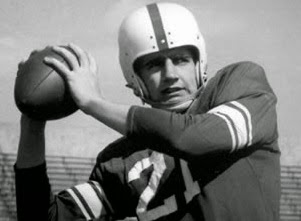
There was one twist in that, for the first time in ten years, the game utilized the single-platoon college rule with limited substitution, which was expected to benefit the collegians. With players going both ways, Head Coach Buddy Parker chose to sit QB Bobby Layne in favor of backup QB Tom Dublinski  (pictured above) and, for the most part, used second stringers at most positions, primarily utilizing a split-T offense.

The All-Stars were coached by Maryland’s Jim Tatum and the roster contained future pro stars that included QB Zeke Bratkowski from Georgia, HB Jerry Norton of SMU, Florida FB Rick Casares, and, from Maryland, tackle Stan Jones and HB Dick Nolan.

There were 93,470 fans in attendance on a pleasant Friday night at Soldier Field. The tone for the game was set on the first play from scrimmage following the opening kickoff when HB Johnny Lattner, the Heisman Trophy winner out of Notre Dame, fumbled and DT Thurman McGraw recovered for Detroit at the All-Star 27. The Lions came away with the game’s first points when Jim Martin kicked a 46-yard field goal.

Once again the Lions took advantage of a turnover when safety Jack Christiansen intercepted a Lattner pass to give the pro champs the ball at midfield. FB Lew Carpenter took off on a 20-yard run and this time Detroit reached the end zone on a four-yard carry by HB Doak Walker. Walker also booted the extra point to make it 10-0.

Before the opening period was completed the Lions drove 73 yards in 10 plays that included another big carry by Carpenter, this time of 21 yards down the sideline, and it was Carpenter running for a two-yard touchdown to finish the series off. Jug Girard kicked the point after.

Detroit took a 17-0 lead into the second quarter and the onslaught calmed down for a time. Late in the period, the All-Stars finally threatened when Carpenter fumbled and Texas DE Carleton Massey recovered, but after reaching the Detroit 10 they came up empty and the halftime score remained unchanged.

On the first play of the third quarter, the All-Stars got a break when Tom Dublinski fumbled as he was hit fading back to pass and MG Jerry Hilgenberg of Iowa recovered at the Detroit four. Two plays later, Lattner ran around right end for a touchdown. The try for extra point by Notre Dame’s Menil Mavraides was blocked, but the collegians were finally on the board.


The Lions put together a 68-yard possession later in the period. Dublinski completed passes to end Dorne Dibble of 20 and 17 yards and Carpenter (pictured at right) plowed over from the one for a TD and, with Martin’s kick, the pro champs were ahead by 24-6.

Detroit had the contest well in hand as it headed into the fourth quarter and scored once more when DE Jim Doran grabbed the ball on an attempted handoff by QB Jim Ninowski of Michigan State to Notre Dame FB Neil Worden and rumbled 34 yards for a touchdown. The Lions came away with an easy 31-6 win.

Detroit dominated in total yards (361 to 144) and first downs (20 to 11) and the All-Stars turned the ball over five times, to three suffered by the Lions. Both teams completed 11 passes, but Detroit went to the air ten fewer times (16 to 26) than the All-Stars, who utilized a total of five quarterbacks. Tom Dublinski was an efficient 10 of 15 for 103 yards in passing for Detroit.

Detroit’s win put the pro champions ahead by 13 to 6 in the series, with two ties, and was the fourth straight for the professionals. The Lions went on to reach the NFL Championship game for the third straight year in 1954, compiling a 9-2-1 record in topping the Western Conference, but this time lost badly to the Cleveland Browns.

Tom Dublinski returned to his backup role but did start four games during the season and passed for 1073 yards and eight touchdowns, while giving up seven interceptions, in his most productive year with the Lions. He jumped to Canada in 1955 and had a big statistical year with Toronto, throwing for 3561 yards and 30 TDs, although with 34 interceptions. Dublinski shifted back and forth between the US and Canada in a career that concluded in 1962.

August 9, 2016

1957: Conerly TD Passes Lead Giants Past College All-Stars


The 24th annual College All-Star Game on August 9, 1957 matched up the New York Giants, reigning champions of the NFL, with an All-Star team coached by Curly Lambeau for the third straight year.

Head Coach Jim Lee Howell of the Giants placed great authority in Vince Lombardi, his offensive assistant, and Tom Landry, who operated the defense. Behind center was QB Charlie Conerly, who platooned with Don Heinrich, and the offense also featured star all-purpose HB Frank Gifford as well as capable runners in HB Alex Webster and FB Mel Triplett. The tough defense contained All-Pros in DE Andy Robustelli and safety Emlen Tunnell plus a rising second-year talent in MLB Sam Huff.

Coach Lambeau, the head coach of the Green Bay Packers for many years who finished up with the Cardinals and Redskins, had the All-Stars well prepared to face the Giants. The roster contained several offensive players who would become pro stars such as quarterbacks John Brodie from Stanford and Notre Dame’s Paul Hornung, Syracuse FB Jim Brown, halfbacks Jon Arnett of USC and Billy Barnes from Wake Forest, and Michigan end Ron Kramer.

It was a wet Friday night with over 75,000 fans in attendance at Soldier Field and the start of the game was delayed due to a major deluge of rain combined with a gusty wind that caused the elimination of pregame introductions and other festivities. The Giants had the ball first but Alex Webster fumbled it away on the third play and the All-Stars capitalized. With John Brodie behind center, they advanced 55 yards, the key play being a 22-yard gain on a triple reverse, and Billy Barnes capped the series by running wide for a two-yard touchdown in a fourth down situation. Paul Hornung missed to the left on the extra point attempt but the collegians held the early 6-0 lead.

The Giants had to punt following their next series but regained possession on the All-Star 20 when Barnes fumbled. A running play lost a yard and two throws by Charlie Conerly were broken up, but the pro champs got on the board when Ben Agajanian, just short of his 38th birthday, kicked a 33-yard field goal with a minute remaining in the opening period to narrow the score to 6-3.

Early in the second quarter, New York put together a drive that covered 88 yards in five plays. It featured Conerly passes to Webster for 33 yards and then to end Ken MacAfee, who took advantage of a good block by end Kyle Rote after hauling in the throw at the All-Star 25 and going the distance for a 38-yard touchdown. Agajanian’s conversion put the Giants ahead by 10-6.

Late in the period, Barnes created some excitement for the All-Stars by breaking away on a carry from his 35 that nearly went the distance before a diving DHB Ed Hughes tripped him up at the New York 37, a distance of 28 yards. Three plays later, Brodie suffered an injury but Hornung came in at quarterback and ran for a first down at the nine. New York’s defense held and the collegians settled for a 12-yard field goal by Paige Cothren of Mississippi. The Giants maintained a 10-9 edge at the half.

In the third quarter, the Giants put together a long drive of 77 yards in 10 plays, helped along by a questionable pass interference penalty on Michigan State DHB Clarence Peaks, who had nearly pulled the ball away from Frank Gifford. That moved New York to the All-Star 15, and two plays later Conerly threw once again to MacAfee, who was open in the end zone for a 10-yard TD. Agajanian booted the point after.


Later in the third quarter, and with Hornung still at quarterback, the All-Stars drove into New York territory but came up empty when Cothren missed on a 33-yard field goal try. However, early in the fourth quarter the collegians got a break when Sam Huff flagrantly interfered with Ron Kramer and Cothren this time came through for a 24-yard field goal that made it a five-point contest.

That would be it for the All-Stars as the Giants responded by advancing to a 45-yard Agajanian field goal. Then, with three minutes left to play, New York DHB Dick Nolan capped the scoring by foiling a double-reverse and tackling Illinois HB Abe Woodson in the end zone for a safety. The Giants came away winners by a final score of 22-12.

New York had the edge in total yards (281 to 220) while the All-Stars led in first downs (16 to 14)
Each team turned the ball over once.

Charlie Conerly completed 8 of 17 passes for 124 yards and two touchdowns and Mel Triplett led New York’s ground game with 74 yards on 17 attempts. For the All-Stars, Paul Hornung, utilized on option plays, was successful on 5 of 7 throws for 39 yards and John Brodie was 8 of 20 for 94 yards. Billy Barnes rushed for 60 yards on 11 carries, scoring the lone All-Star TD.  

“They stopped us as well as anybody in the league stopped us,” said New York’s Coach Howell of the All-Star defense. “Their defensive line and linebackers were excellent.”

The win for the Giants marked the 15th in the series for the pro champs, against seven for the All-Stars and two ties. New York followed up by going 7-5 during the season to place second in the Eastern Conference.

The game marked the finale for Curly Lambeau as coach of the All-Stars. As a former pro coach, his selection in 1955 had marked a departure from the practice of using college coaches for the contest. Lambeau had coached the Packers in the game three times, going 2-1, and his record with the All-Stars was 1-2.     

August 3, 2016

1962: Starr’s 5 TD Passes Lead Packers to Win Over College All-Stars


The 29th College All-Star Game on August 3, 1962 featured the Green Bay Packers, NFL Champions of the previous season, facing a group of All-Stars under the direction of Otto Graham, who was back at the helm for the fifth consecutive year.

Coached by Vince Lombardi, the Packers had the league’s most prolific scorer, HB Paul Hornung, plus FB Jim Taylor to fuel the running attack and QB Bart Starr (pictured at right) was an accurate passer, all operating behind an outstanding line. The defense was also strong from front to back and contained players coming off of All-Pro performances such as DT Henry Jordan, OLB Bill Forester, and CB Jesse Whittenton.

The All-Stars had future pro standouts on the roster that included QB John Hadl and HB Curtis McClinton of Kansas, QB Roman Gabriel from North Carolina State, HB Lance Alworth of Arkansas, and Utah State DT Merlin Olsen. However, they were missing two running backs due to illness: Baylor HB Ronnie Bull and, far more seriously, HB Ernie Davis, the Heisman Trophy winner from Syracuse, who was in the early stages of the leukemia that, tragically, would end his life the following year.

There were 65,000 fans in attendance on a 79-degree Friday night at Chicago’s Soldier Field. The All-Stars took the opening kickoff and drove 80 yards in 13 plays with John Hadl behind center. Hadl, typically rolling out to take advantage of his mobility, completed all four of his passes along the way, including one that was partially deflected by DE Willie Davis but was still hauled in by Lance Alworth for a 22-yard gain. FB Earl Gros from LSU (who was also Green Bay’s first-round draft pick) dove into the end zone from a yard out on a third down play for a touchdown. Greg Mather of Navy added the extra point.

CB Herb Adderley returned the ensuing kickoff 33 yards and the Packers responded with a 67-yard scoring series in seven plays, although hindered by two holding penalties. Bart Starr completed three passes to flanker Boyd Dowler, for 49, 26, and 22 yards, the last of which was good for a TD. Paul Hornung converted to tie the score at 7-7.

That was it until midway through the second quarter when the All-Stars got a break on a turnover. HB Lew Carpenter of the Packers fumbled a punt and Kentucky center Irv Goode recovered at the Green Bay 27. The turnover resulted in three running plays and a 26-yard Mather field goal that put that collegians back in front by 10-7.

Once again it appeared that the Packers would respond with a score until Notre Dame CB Angelo Dabiero intercepted a Starr pass intended for split end Max McGee at the goal line and returned it 37 yards. However, any hopes the All-Stars had of adding to their lead were extinguished when LB Dan Currie picked off a sideline pass by Roman Gabriel and ran it back 31 yards to the All-Star 27. With less than a minute remaining in the first half, Starr connected with Dowler for 23 yards down the middle and then, rolling out to his right, fired a pass to TE Ron Kramer for a four-yard touchdown. Hornung added the PAT and the Packers were ahead by 14-10 at the half. Neither team had distinguished itself on the ground in the first thirty minutes of play, with Green Bay, known for its outstanding running game, gaining just 17 yards and the All-Stars, who had 104 yards through the air, being held to a net total of minus one yard.

Once again the pro champs turned the ball over on a kick when Adderley fumbled the second half kickoff and Oregon State HB Hank Rivera recovered and returned it to the Green Bay 25. Following a run by Gros for three yards, Hadl threw to Ohio State end Charlie Bryant, who outmaneuvered SS John Symank for a 22-yard TD. With the successful Mather conversion, the All-Stars were once again in the lead by a 17-14 margin.


The Packers came back with a 10-play, 67-yard drive. Starr hit Dowler (pictured at left) for a 22-yard touchdown and, with Hornung’s kick, Green Bay was back in front by 21-17. A personal foul helped the All-Stars along on their next possession that reached the Green Bay three before the defense held and Mather kicked a 14-yard field goal to make it a one-point contest. 

Up by just 21-20 heading into the fourth quarter, the Packers finally pulled away in the final period. It started on the second play of the quarter when Starr completed a five-play, 64-yard series with a touchdown pass to McGee from 20 yards out and Hornung booted the point after.

Shortly thereafter, a 28-yard punt return by FS Willie Wood gave Green Bay the ball in All-Star territory and it took just two plays to score again. Starr passed to McGee along the sideline for a play that covered 35 yards for a TD. Hornung converted once again.

The All-Stars had to turn the ball over on downs and, with their reserves in the game, the Packers advanced to one more score, going 44 yards in 10 plays. The drive was helped along by a roughing-the-kicker call on a McGee punt. HB Elijah Pitts, just returned from Army duty, capped the scoring with a three-yard carry around end with less than two minutes remaining in the contest. Hornung kicked his game-record sixth extra point and what had been a close game for three quarters resulted in a 42-20 win for the Packers.

Green Bay led in total yards (380 to 237) and first downs (16 to 11). The Packers turned the ball over three times, to two suffered by the collegians.


Bart Starr completed 13 of 22 passes for 255 years and his five touchdown passes set an All-Star Game record. John Hadl (pictured at right), who was named MVP for the All-Stars, completed 6 of 10 passes and averaged 48.8 yards on five punts.

The win by the Packers gave the pro champs a lead of 19 to 8 in the series, with two ties, and it was the third for Green Bay. They went on to repeat as NFL Champions in 1962, going 13-1 to top the Western Conference and then defeating the Giants for the second straight year in the league title contest.

John Hadl joined the San Diego Chargers of the American Football League and went on to a 16-year pro career, also spending time with the Rams, Packers, and Oilers and throwing for 33,503 yards and 244 touchdowns. He was selected to four AFL All-Star Games and two Pro Bowls.

July 28, 2016

1972: Cowboys Handily Defeat College All-Stars


The 39th College All-Star Game on July 28, 1972 featured the Dallas Cowboys, NFL Champions of the previous season, against an All-Star squad coached by Nebraska’s Bob Devaney.

The Cowboys, under Head Coach Tom Landry, were a formidable team on both sides of the ball. QB Roger Staubach had emerged from competition with Craig Morton (pictured at right) to lead the league in passing in ’71 and the offense also featured a good group of running backs playing behind an excellent line. The defense was strong across the board and contained such stalwarts as DT Bob Lilly, linebackers Lee Roy Jordan and Chuck Howley, cornerbacks Mel Renfro and Herb Adderley, and SS Cornell Green.

The All-Stars had a roster containing future pro stars such as Penn State FB Franco Harris, WR Glenn Doughty of Michigan, and TE Riley Odoms from Houston on offense while the defense featured DT John Mendenhall from Grambling, LSU safety Tommy Casanova, CB Willie Buchanon of San Diego State and safety Thom Darden from Michigan. It was anticipated that Coach Devaney would use QB Jerry Tagge, who led Nebraska to two national titles, on options to take advantage of his mobility and would try to power the ball down the middle.

There were 54,162 fans in attendance on a Friday night at Soldier Field in Chicago. The All-Stars caused some excitement on their first series as Jerry Tagge took off on a 17-yard run and they were at midfield after three plays. However, Nebraska FB Jeff Kinney’s carry for an apparent first down on a third-and-one play was nullified by a holding penalty to blunt the advance. The collegians got a break on the resulting Dallas possession when Willie Buchanon tipped a pass by Roger Staubach and Thom Darden intercepted to once more put the All-Stars in possession at midfield. But two plays later, Tagge fumbled under a heavy rush and DE Larry Cole recovered for the Cowboys.

The Cowboys began the scoring late in the opening period following an interception of a Tagge pass by Mel Renfro at the All-Star 30. Dallas cashed in with a 31-yard Mike Clark field goal.

Midway through the second quarter, Staubach was shaken up after running six yards for a first down. Craig Morton came in to replace him and, two plays later, he threw to WR Ron Sellers, recently acquired from the Patriots, for an 18-yard touchdown that concluded an 11-play, 66-yard possession.  Clark booted the extra point to make the score 10-0.

The All-Stars were unable to generate meaningful offense as Tagge came under constant pressure and the running game was kept in check as well. On the last play of the first half, Chester Marcol of Hillsdale tried for a 68-yard field goal on a free kick that fell far short of the mark. The NFL champs took their ten-point lead into halftime.

Six minutes into the third quarter, the Cowboys extended their margin to 17-0 when Morton connected with WR Bob Hayes for a 24-yard TD. It came five plays after DT Bob Lilly recovered a fumble by Tagge, who lost his grip on the ball as he was rolling out, at the All-Star 41. Toni Fritsch added the point after.

The All-Stars fought back on their next series, moving from their 20 to the Dallas 30 primarily thanks to short Tagge passes. But on a third-and-two play, Oregon HB Bobby Moore lost 12 yards when fumbling out of bounds on an option play and the resulting 49-yard field goal attempt by Marcol was blocked by DE Pat Toomay. Dallas responded with a scoring drive that featured a Morton completion to Sellers for 26 yards to the All-Star 34. Fritsch kicked a 33-yard field goal on the first play of the fourth quarter.

QB Pat Sullivan, the Heisman Trophy winner from Auburn, entered the game on the next possession and the All-Stars advanced 80 yards in 16 plays. Sullivan connected on five of eight passes, including one of 13 yards to Villanova WR Mike Siani in a fourth down situation that put the ball at the Dallas one. FB Robert Newhouse of Houston, who had a 30-yard run during the drive, dove into the end zone from there for a touchdown with 7:25 remaining on the clock and Marcol converted.

That was the high point for the All-Stars, who didn’t threaten again, and the Cowboys, who were sluggish but effective when they needed to be, won comfortably by a final score of 20-7.

Dallas outgained the All-Stars (262 to 233) while first downs were even at 16 to 16. The All-Stars suffered three turnovers, to one by the Cowboys. Craig Morton hit on 6 of 14 passes for 97 yards with two touchdowns and no interceptions. FB Walt Garrison led the Cowboys with 72 yards on 13 rushing attempts.


Jerry Tagge had a rough performance, turning the ball over three times on two fumbles and an interception. He completed 9 of 20 passes for 92 yards with an interception. Pat Sullivan (pictured at left), who was named All-Star MVP, was successful on 8 of 15 throws for 64 yards. Robert Newhouse topped the runners with 48 yards on seven carries that included the only All-Star touchdown.  

The Dallas win put the pro champs ahead in the series by 28 to 9, with two ties. The Cowboys went on to compile a 10-4 record during the regular season, finishing second in the NFC East and making it to the postseason as a Wild Card. They reached the NFC Championship game before falling to Washington.

Neither Jerry Tagge nor Pat Sullivan enjoyed success in the NFL. Tagge, the first round pick of the Green Bay Packers, lasted three seasons and started a total of 12 games. He passed for 1583 yards and three touchdowns while giving up 17 interceptions before moving on to the WFL and CFL, where he was more productive (he was a CFL All-Star in 1977). Sullivan spent four years with the Atlanta Falcons and had similar results, throwing for 1155 yards and five TDs against 16 interceptions. Robert Newhouse, however, joined the Cowboys, who picked him in the second round, and developed into an effective back over the course of 12 years who ran for 4784 yards and 31 touchdowns, with another 651 rushing yards and three TDs in the postseason.

August 30, 2015

1939: Giants Use 3 Field Goals to Defeat College All-Stars


The New York Giants represented the NFL in the sixth installment of the College All-Star Game in Chicago on August 30, 1939. They faced an All-Star squad coached by Elmer Layden, head coach of Notre Dame and a former member of that school’s famed “Four Horsemen” backfield.

The Giants were coached by Steve Owen, who had guided the club to two NFL Championships in eight years, including the 1938 season. New York had an able passer in tailback Ed Danowski and could run the ball effectively, most notably with FB Tuffy Leemans carrying. C/LB Mel Hein was coming off of a season in which he had been named MVP by the league and the team allowed few points on defense. Returning to the club was Ken Strong (pictured above), a former star fullback and placekicker who had jumped leagues after the 1935 season but was back at age 33.

The All-Stars had won the previous two contests and this year’s roster included future pro stars in center Charley Brock from Nebraska, Pitt HB Marshall Goldberg, FB Bill Osmanski of Holy Cross, and the diminutive Heisman-winning QB Davey O’Brien from TCU.  

There were 81,456 fans in attendance for the Wednesday night game at Soldier Field. The All-Stars were in trouble early when Davey O’Brien fumbled the game’s first punt and end Jim Poole recovered for New York. However, the Giants were unable to capitalize when Ward Cuff missed a field goal from 41 yards by inches.

Following an exchange of punts, the Giants again moved into scoring territory thanks to good runs by FB John “Bull” Karcis and Cuff. Cuff kicked a 34-yard field goal late in the first quarter to put the Giants in front.

In the second quarter, New York put together a 56-yard series that led to another field goal, this time by Ken Strong from 22 yards, to take a 6-0 advantage. The All-Stars responded by driving from their 28 to the New York 39, with the big play a 15-yard run by Bill Osmanski. However, a second-down pass by Michigan State back Johnny Pingel was intercepted by LB Kayo Lunday to end the threat.

The Giants attempted to add to their advantage in the third quarter with a drive to the All-Star 13, but came up empty when O’Brien intercepted a pass. The pro champs mounted another strong possession to the All-Star two, but Cuff’s try for a field goal hit the upright and bounced away.

Following more punts which included a quick-kick by the Giants that pinned the All-Stars back at their 20, New York got another field goal, again by Strong, who connected from 41 yards.

The All-Stars finally mounted a threat in the fourth quarter with Baylor QB Bill Patterson in the game, who threw the ball effectively. But drives to the New York 11 and 17 were blunted by interceptions by DB Len Barnum and LB Doug Oldershaw, respectively. The Giants came away with a 9-0 win in which they were more dominant than the score indicated.


The Giants, who controlled the line of scrimmage and kept the collegians bottled up on their side of the field for most of the game, had the edge in total yards (199 to 166) although the All-Stars had more first downs (10 to 9). However, New York intercepted five passes. Bill Osmanski (pictured at left) and QB George Faust from Minnesota drew praise as the best of the All-Star rushers.

The win for the Giants tied the series, which was far more competitive at that point than it would be in the ensuing years of its existence, at two wins apiece, with two ties.  New York again topped the Eastern Division with a 9-1-1 record during the regular season but lost in a title rematch with the Green Bay Packers.

Bill Osmanski played seven years in the NFL with the Chicago Bears and led the league in rushing as a rookie in 1939. Davey O’Brien also had a fine first year with the Philadelphia Eagles, passing for a NFL-high 1324 yards in his first of two pro seasons before leaving to join the FBI.

August 25, 2015

1943: College All-Stars Thrash Redskins in Game at Northwestern


The tenth College All-Star Game was held on August 25, 1943 and was the first to be played at a venue other than Soldier Field in Chicago. The Wednesday night contest was held instead in nearby Evanston at Dyche Stadium of Northwestern University with 48,471 fans in attendance.

The NFL Champions, the Washington Redskins, were heavy favorites coming into the game. They had a new head coach in Dutch Bergman but capable returning veterans in tailback Sammy Baugh, HB Wilbur Moore, FB Bob Seymour, end Bob Masterson, and tackle Willie Wilkin.

Harry Stuhldreher, former member of Notre Dame’s “Four Horsemen” backfield and now head coach at Wisconsin, coached the All-Stars and prepared them well, running a simple but effective offense. The team was chosen by coaches rather than a nationwide newspaper poll, as in past years, and included future pro stars in Indiana end Pete Pihos, tackle Al Wistert of Michigan, Stanford center Vic Lindskog, Northwestern tailback Otto Graham, HB Charley Trippi of Georgia, and FB Pat Harder from Wisconsin (pictured above).

There was a heavy rain as the game started and it was hot and muggy for the remainder of the contest, which seemed to wear the Redskins down more than the collegians. The Redskins had first possession and drove from their 35 to the All-Star 38 in seven plays before being stopped and coming up empty.

The next Washington series ended with a punt by Sammy Baugh from his own 21 and HB Bob Steuber from Missouri picked up the bouncing ball and returned it 50 yards behind outstanding blocking for the first touchdown of the game. Pat Harder added the extra point.

The All-Stars got another break when Bob Seymour fumbled and Al Wistert recovered at the Washington 48. But after advancing 20 yards in four plays, highlighted by an Otto Graham pass to Pete Pihos for 12 yards, Harder fumbled and end Bob Masterson recovered for the Redskins to end the threat.

Washington then put together a 70-yard drive that stretched into the second quarter. Baugh completed two passes for first downs along the way and ended the series with a touchdown pass to end Joe Aguirre that covered six yards. Masterson kicked the extra point to tie the score. It would prove to be the high point for the pro champs.

Late in the second quarter, the All-Stars scored again. A penalty on a Washington punt gave the collegians good starting field position at their 42 and, with Tulsa’s passing tailback Glenn Dobbs now in the game, they went to the air. Dobbs was sacked on first down but completed five passes, including one to Washington State back Bob Kennedy for 19 yards and another to Harder for 14. The last was also to Harder, a short toss that ended up covering 36 yards for a TD. Harder again added the point after and the All-Stars took a 14-7 lead into halftime.


In the third quarter, the Redskins advanced to the All-Star 17, but a second down pass intended for Bob Seymour in the end zone was instead intercepted by Otto Graham (pictured at left), who made a spectacular play with a 97-yard interception return for another touchdown. Harder failed to add the PAT, but the rejuvenated All-Stars were ahead by 20-7.

Washington would never seriously threaten again.  In the fourth quarter, Harder scored a second TD on a 30-yard run to put the game away. Graham kicked the extra point and the All-Stars won in convincing fashion by a final score of 27-7.

Washington had the edge in total yards (325 to 212), with 273 of that total coming through the air, and first downs (16 to 9). However, the Redskins turned the ball over five times, three of them by interception, to two suffered by the collegians.

Pat Harder led the All-Stars in rushing with 53 yards on 12 carries and scored two touchdowns, and also played well at linebacker on defense. Sammy Baugh completed 21 of 41 passes for Washington.

It was the first win for the All-Stars since 1938, also over the Redskins, and the third since the series began in 1934 (there had been two ties). Washington went on to top the Eastern Division for the third time in four years but lost the NFL Championship game to the Bears.

Pat Harder and Otto Graham both appeared in the 1946 College All-Star Game (during World War II restrictions on participation were lifted, which allowed underclassmen to appear, and several players played in multiple games). They moved on to successful pro careers, and both would return to the College All-Star Game as members of NFL Championship clubs (Harder with the Cardinals and Lions, Graham with the Browns). Graham would later coach the All-Stars for ten games of the series that lasted until 1976, two of which they won.

August 7, 2015

1964: Bears Rally to Defeat College All-Stars


The 31st annual College All-Star Game in Chicago on August 7, 1964 featured the home-town Bears, NFL Champions of 1963, against the usual crop of outstanding players coming out of college.

Chicago, which was coached by “the Papa Bear” George Halas, had combined dominating defense and a conservative offense to reach the top the previous year. QB Bill Wade (pictured at right) was a competent field general and had skilled receivers in TE Mike Ditka and flanker Johnny Morris. However, there was also a shadow of tragedy due to the deaths of HB Willie Galimore and end John “Bo” Farrington in an auto accident during training camp. The players wore black arm bands in their honor.

Otto Graham was coaching the All-Stars for the seventh consecutive year and had led the collegians to two wins during that time, including the previous year against Green Bay. All-Star standouts included quarterbacks Pete Beathard from USC and George Mira of Miami, Ohio State flanker Paul Warfield, and two Arizona State backfield mates, HB Charley Taylor and FB Tony Lorick, on offense. The defense included Minnesota DE Carl Eller, linebackers Dave Wilcox of Oregon and Wally Hilgenberg from Iowa, and Oregon safety Mel Renfro. There was some controversy when Coach Graham commented that Taylor appeared to “lack desire” during the practices leading up to the game, and there was concern about the condition of the highly-touted Mira’s sore arm.

There were 65,000 fans in attendance on a 79-degree Friday night at Soldier Field. With Pete Beathard behind center, the All-Stars advanced 27 yards in four plays following the opening kickoff, but Beathard fumbled and MLB Bill George recovered for the Bears at the All-Star 46. The pro champs were unable to take advantage of the break as they gained six yards in three plays and Roger LeClerc was short on a 47-yard field goal attempt.

The All-Stars were unable to get beyond their 16 on the next possession and the resulting punt gave Chicago good field position at the All-Star 43. Bill Wade completed passes to split end Gary Barnes and Mike Ditka but, with first-and-goal at the three yard line, HB Ronnie Bull gained a yard and Wade’s pass into the end zone was intercepted by CB Jerry Richardson from West Texas State.

The collegians moved effectively in response as Beathard completed passes to Paul Warfield and split end Chuck Logan of Northwestern. Tony Lorick contributed a 20-yard run as well. Beathard threw to Charley Taylor for a 29-yard gain to the Chicago 15 and, while the All-Stars were unable to reach the end zone, Ohio State’s Dick Van Raaphorst booted a 14-yard field goal for the game’s first points.

The Bears came alive on offense and nearly scored when Wade connected with flanker Johnny Morris for an apparent 31-yard touchdown, but Morris was called for offensive pass interference. However, on the seventh play of the series, they did get a TD on a pass from Wade to Ditka that covered 13 yards. Bob Jencks added the extra point and Chicago was ahead by 7-3.

The All-Stars again had to punt following their next possession but HB Billy Martin muffed the kick and Taylor recovered for the collegians at the Chicago 17. Two plays later, George Mira picked up a fumbled snap and pitched the ball back to Taylor, who then unleashed an option pass to Georgia Tech TE Ted Davis for a 14-yard touchdown. Van Raaphorst converted and the All-Stars took a 10-7 lead into halftime.

The Bears went 80 yards in 11 plays to start the third quarter and effectively take control of the game. The big play was a pass from Wade to Morris that covered 39 yards to the All-Star one. Two plays later, Wade scored from there on a quarterback sneak and, with Jencks adding the PAT, Chicago was in front by 14-10.

On the next series, QB Jack Concannon of Boston College fumbled and DE Doug Atkins recovered for the Bears and Wade immediately capitalized by connecting with Barnes for a 20-yard TD. Jencks added the point after and in less than two minutes the pro champs had gone from a three-point deficit to a 21-10 lead.


The teams traded interceptions before the All-Stars, with Mira (pictured at left) back in at quarterback, advanced to the Chicago four. However, the Bears held and the collegians came up empty.

In the fourth quarter, a Beathard pass was picked off by CB Bennie McCrae at the All-Star 39, and the Bears effectively put the game away when backup QB Rudy Bukich threw to HB Charlie Bivins for a 30-yard touchdown.

Down by 28-10, the All-Stars attempted trickery with both Beathard and Mira lining up together in the backfield. Advancing 80 yards, and with Beathard taking the snap and lateraling to Mira, the collegians managed to get one last TD on a five-yard toss to Taylor. Van Raaphorst converted but there were only 25 seconds remaining in the contest. The Bears ended up winning comfortably by a final score of 28-17.

Chicago had the edge in total yards (371 to 289) although the All-Stars managed to gain 142 yards on the ground. Both teams turned the ball over four times apiece.

Bill Wade completed 15 of 23 passes for 217 yards and two touchdowns. Ronnie Bull led the Bears in rushing with 35 yards on 9 carries.

George Mira completed 8 of 18 passes for 70 yards and a TD and rushed for 56 yards on four carries. Pete Beathard was five of seven for 75 yards but gave up two interceptions. Tony Lorick ran for 38 yards on six attempts and Charley Taylor (pictured below) contributed seven rushes for 36 yards, caught two passes for 34 yards and a TD, threw a touchdown pass, and recovered a fumble. The player who had been subject to Otto Graham’s barbed comment prior to the game was named All-Star MVP.


The win by Chicago gave the pro champs a 20 to 9 edge in the series, with two ties. It was the fifth victory for the Bears, against one defeat and a tie, in what was their final appearance in the game. They dropped to sixth place in the Western Conference with a 5-9 record in ’64 and did not return to the postseason until 1977.

Charley Taylor went on to a Rookie of the Year season for Washington and, shifted to wide receiver two years later, put together a career that made him the NFL’s all-time pass receiving leader at the time of his retirement (649 catches) and gained him enshrinement in the Pro Football Hall of Fame. George Mira had far less success, spending most of his career as a backup for the 49ers (and later the Eagles and Dolphins) although he was the starting quarterback for the Birmingham Americans, who won the only World Football League championship in 1974. 

August 2, 2015

1968: Starr-to-Dale TDs Lead Packers to Win Over College All-Stars


The Green Bay Packers, defending champions of the NFL, were under a new head coach as they faced the College All-Stars on August 2, 1968 for the benefit of Chicago charities. Vince Lombardi, having led the club to five league titles, including the last three in a row (and wins in the first two Super Bowls), handed over the reins to defensive assistant Phil Bengtson, although he remained Green Bay’s general manager and was watching from the press box. After having been upset by an All-Star squad in 1963, the Packers had thrashed the collegians by a combined score of 65-0 in 1966 and ’67.

Green Bay still had an effective, if aging, veteran core, with the offense directed by QB Bart Starr (pictured above) behind a solid line and the defense containing stalwarts such as DE Willie Davis, DT Henry Jordan, MLB Ray Nitschke, CB Herb Adderley, and FS Willie Wood. If there was a major question at this early stage, it was who would handle the placekicking following the retirement of Don Chandler.

Norm Van Brocklin, former star quarterback in the NFL and first head coach of the Minnesota Vikings, coached the College All-Stars. The roster contained the usual assortment of future pro stars that included C Bob Johnson from Tennessee, USC tackle Ron Yary, TE Charlie Sanders of Minnesota, and running backs Larry Csonka from Syracuse and MacArthur Lane of Utah State on offense, while the defense had Tennessee State DE Claude Humphrey, DT Curly Culp of Arizona State, and Texas-El Paso LB Fred Carr.

There were 69,917 fans in attendance for the Friday night game at Soldier Field. Getting the ball for their second series of the game, the Packers were pinned deep at their three yard line after a 55-yard punt by Jerry DePoyster of Wyoming. However, Bart Starr faked a handoff and then threw to HB Elijah Pitts down the middle. Pitts broke away for a 72-yard gain to the All-Star 26, finally being hauled down by Fred Carr (Green Bay’s first-round draft pick). Six plays later, HB Donny Anderson scored the first touchdown of the game from a yard out and Jerry Kramer kicked the extra point.


Twenty seconds into the second quarter, Starr threw to flanker Carroll Dale (pictured at left) for a 20-yard TD to conclude a 12-play, 89-yard drive. Kramer again added the point after. Later in the period, the Packers went 73 yards in four plays, with Starr connecting with Dale for another touchdown, this time covering 36 yards. Kramer’s third PAT made it a 21-0 score.

The All-Stars, who relied heavily on the running of Syracuse FB Larry Csonka in the first half, responded by driving to a 22-yard field goal by DePoyster. It wasn’t much, but it was the first time a group of All-Stars had put points on the board in three years. Green Bay scored once more at the end of the half as newly-acquired PK Wade Traynham kicked a 30-yard field goal.

In the third quarter, the All-Stars got a break when Green Bay FB Jim Grabowski fumbled the ball away at his own 37. After Csonka pounded away for a total of 30 yards, QB Gary Beban, a scrambler out of UCLA, threw a fourth down pass to WR Earl McCullouch from USC for a seven-yard touchdown. DePoyster kicked the extra point and Green Bay’s lead was narrowed to 24-10.

The Packers came back with another score, however, with Starr once again connecting with Dale on the first play of the fourth quarter for a 13-yard TD. Kramer converted. Later Kramer, who missed on a 45-yard field goal attempt, was good from 47 yards out, setting a new record for the All-Star Game and giving Green Bay a commanding lead.

Down 34-10, the All-Stars fought back, advancing 76 yards with Massachusetts QB Greg Landry throwing to McCullouch (pictured below) for a 24-yard touchdown. DePoyster kicked the point after, and while it brought cheers from the crowd, it proved to be the game’s last score. The Packers won handily by a final tally of 34-17.


The Packers led in total yards (381 to 312), although the All-Stars outgained Green Bay on the ground by 206 yards to 88. The pro champs also had the edge in first downs (20 to 17). The All-Stars turned the ball over four times, to one suffered by Green Bay.

Bart Starr completed 17 of 23 passes, including ten in a row at one point, for 288 yards and three touchdowns with none intercepted. Carroll Dale had 6 catches for 103 yards and three touchdowns. Donny Anderson led the Packers with 64 rushing yards on 11 attempts, one of which was good for a TD.

Greg Landry was successful on 7 of 14 throws for 79 yards and a TD with one picked off and Gary Beban went three of six for 27 yards and a touchdown but also gave up two interceptions. Larry Csonka rushed for 95 yards on 18 carries.

“He had a terrific night,” said Coach Van Brocklin of the All-Stars regarding Bart Starr’s performance. “He picked us apart.”

Green Bay’s win put the pro champs ahead in the series by 24 to 9 with two ties. It was the sixth win in eight appearances for the Packers, and would turn out to be their last. High expectations for the team to remain at the top were dashed as the Packers slipped to 6-7-1 with age and injuries, including one to Starr’s arm, ultimately taking a toll.

Larry Csonka joined the Miami Dolphins of the AFL and, after a slow start, went on to rush for 8081 yards in the AFL and NFL, gain selection to five Pro Bowls, and ultimately earn enshrinement into the Pro Football Hall of Fame. Earl McCullouch had the more immediate pro success with the Detroit Lions, earning consensus Rookie of the Year honors after catching 40 passes for 680 yards and five touchdowns (two of which came against the Packer). His career took a downward course thereafter and he ended up with just 124 pass receptions in seven NFL seasons.

July 30, 2015

1971: Morrall Tosses 3 TD Passes as Colts Sink College All-Stars


The 38th annual College All-Star Game in Chicago on July 30, 1971 featured the Baltimore Colts, defending champions of the NFL, against an All-Star squad coached by Blanton Collier, who had retired from the Cleveland Browns following eight years as head coach.

The Colts, under Head Coach Don McCafferty, started 37-year-old Earl Morrall (pictured at right) at quarterback due to the unavailability of long-time star QB Johnny Unitas, who suffered an Achilles tendon injury during the offseason. The offense was typically more effective through the air than on the ground while the tough defense featured DE Bubba Smith, linebackers Ted Hendricks and Mike Curtis, and safeties Rick Volk and Jerry Logan.

The All-Stars included quarterbacks Jim Plunkett, the Heisman Trophy winner out of Stanford, and Dan Pastorini of Santa Clara, FB John Brockington from Ohio State, Northwestern HB Mike Adamle, and WR J.D. Hill of Arizona State. The defense had hard hitters in DB Jack Tatum from Ohio State and DE Jack Youngblood of Florida, plus DT Julius Adams from Texas Southern, Grambling DE Richard Harris, and linebackers Jack Ham of Penn State and Isiah Robertson from Southern.

There were 52,289 fans in attendance for the Friday night game at Soldier Field, which had undergone renovation that included a new artificial surface. The contest’s initial score was set up thanks to a poor punt by Dan Pastorini in the first quarter. It gave the Colts good starting field position at the All-Star 45 to start their second possession of the game, and they made the most of it. Earl Morrall threw to FB Norm Bulaich on a swing pass that picked up 17 yards and to WR Ray Perkins, who outmaneuvered Kansas State CB Clarence Scott for a 24-yard touchdown. Jim O’Brien kicked the extra point.

On their next series, a holding penalty backed the Colts into their own territory and they were forced to punt. It looked as though the All-Stars would get nothing out of the ensuing possession when John Brockington was stopped for no gain on a third-and-one play at the Baltimore 40, but the Colts refused an offside penalty on the collegians, preferring to bring up fourth down. The All-Stars converted when Brockington ran for three yards to keep the series alive. Jim Plunkett connected with Mike Adamle for a 22-yard gain to the 15 and the collegians got another break when Plunkett threw for J.D. Hill and interference was called on CB Jim Duncan to move the ball to the one yard line. From there, on the third play of the second quarter, Brockington ran around right end for a touchdown. Pastorini added the point after to make it a 7-7 game.

The Colts responded on their ensuing possession with Morrall throwing to HB Tom Matte for a 15-yard TD. O’Brien again successfully converted. With Pastorini at quarterback, the All-Stars advanced from their own 30 into Baltimore territory and Bob Jacobs of Wyoming kicked a 40-yard field goal with just over two minutes remaining in the half. The Colts moved well in the remaining time as Morrall completed six of seven passes for 102 yards, but they came up empty when O’Brien missed a 26-yard field goal try. The score remained 14-10 at the intermission.

Baltimore’s lead was extended in the quiet third quarter when O’Brien was successful on a field goal attempt, this time from 22 yards. Early in the fourth quarter, the Colts appeared to take command when Morrall threw to TE Tom Mitchell for a 44-yard TD and O’Brien’s extra point put the pro champs ahead by 14.

Sam Havrilak, normally a halfback but being tried at quarterback, relieved Morrall and on his second play, he botched a handoff to FB Tom Nowatzke and Jack Ham recovered for the All-Stars and ran 47 yards for a touchdown. It narrowed the margin to seven points, but proved to be the last gasp for the collegians, who were kept in check offensively as Baltimore held on to win by a final score of 24-17.

The Colts had far more total yards than the All-Stars (403 to 150) and also had the edge in first downs (18 to 11). The collegians turned the ball over twice, to one suffered by the NFL champs.

Earl Morrall, who played for a full three quarters, completed 20 of 30 passes for 329 yards and three touchdowns while giving up no interceptions. Norm Bulaich led Baltimore’s runners with 46 yards on 9 attempts. Tom Matte, who carried the ball 10 times for 18 yards, caught 5 passes for 63 yards and a TD, having great success on swing passes out of the backfield. WR Eddie Hinton also had 5 pass receptions, for 75 yards, and Tom Mitchell gained 95 yards on his four catches.

Jim Plunkett was successful on 6 of 15 throws for 65 yards and an interception and Dan Pastorini went two of nine for 13 yards and gave up an interception, although Pastorini led the All-Stars in rushing with 40 yards on two carries (Plunkett #16 and Pastorini #7 pictured below). John Brockington gained 27 yards on 12 rushing attempts that included a touchdown. Houston WR Elmo Wright, Mike Adamle, and J.D. Hill each had two receptions, for 25, 24, and 23 yards, respectively.


“They put a lot of pressure on me,” said Earl Morrall regarding the All-Star defense. “They were coming from a lot of directions. I couldn’t quite get a bead on what to do about it.”

The win for the Colts gave the pro champs a winning streak of eight games and a 27-9-2 edge in the series. It was the last of three College All-Star Game appearances for the club that reached the postseason again in 1971 as a 10-4 Wild Card but lost the AFC Championship to Miami.

July 27, 2015

1973: Csonka’s 2 TDs Propel Dolphins to Win Over College All-Stars


The 40th annual College All-Star Game on July 27, 1973 featured the Miami Dolphins, undefeated NFL Champions of the 1972 season, against a group of All-Stars coached by John McKay of USC.

The Dolphins, under Head Coach Don Shula, featured a ball control offense led by power-running FB Larry Csonka (pictured at right), and QB Bob Griese was capable of throwing passes to good effect when necessary. The “No Name” defense was often overlooked but allowed few points. However, injuries were a problem coming into the All-Star Game. MLB Nick Buoniconti had just undergone surgery on his wrist a week earlier, but was forced to play the whole game because of injuries to linebackers Bob Matheson, Mike Kolen, and Doug Swift.

The All-Stars contained future NFL standouts in QB Bert Jones from LSU; running backs Chuck Foreman of Miami, Terry Metcalf from Long Beach State, and Oklahoma’s Greg Pruitt; TE Charle Young of USC, and Alabama G John Hannah on offense. The defense included ends Wally Chambers of Eastern Kentucky and John Matuszak from Tampa, Miami CB Burgess Owens, and LB Jim Youngblood of Tennessee Tech. Coach McKay took a relaxed approach to preparing for the game with one practice per day, instead of the usual two, and had few rules. The collegians alternated front lines and used many players on both platoons.

There were 54,103 fans in attendance at Chicago’s Soldier Field on a Friday night. Miami took the opening kickoff and drove 60 yards in ten plays. Bob Griese threw just one pass along the way and Larry Csonka ran around right end for a three-yard touchdown to finish the series off. Garo Yepremian added the extra point.

The All-Stars had opportunities to score but failed to capitalize. They had a first down at the Miami 13 but Greg Pruitt fumbled and DT Manny Fernandez recovered for the Dolphins to snuff out the threat. In the second quarter, LB John Skorupan of Penn State intercepted a Griese pass and returned it 30 yards to the Miami 30. However, a 16-yard sack of Bert Jones moved the collegians out of scoring range and Ray Guy from Southern Mississippi was forced to punt.

Near the end of the first half, the All-Stars, starting from their 38 with Jones behind center, reached the Miami one yard line, but the Dolphins kept them out of the end zone and they settled for a 10-yard field goal by Guy. A key play occurred when injured FB Sam Cunningham of USC was sent in to attempt a leap into the end zone, but a five-yard penalty nullified the effort. The Dolphins maintained a 7-3 lead at the end of the half.

A heavy rain doused the stadium at halftime and the artificial surface was slick in the second half. The All-Stars had another break in the third quarter when Florida State DB James Thomas recovered a fumbled snap at the Miami eight. But the collegians again couldn’t punch the ball in and Guy’s 16-yard field goal try was missed.


On the first play of the fourth quarter, Jones fired a pass that traveled 60 yards and was intended for WR Barry Smith of Florida State, who had a step on his defender as he sprinted down the left sideline, but the ball went through his hands at the Miami 20. On the next Baltimore series, 39-year-old backup QB Earl Morrall (pictured at left) came into the game and directed a 55-yard scoring drive in seven plays. Morrall connected with TE Jim Mandich for two key completions and Csonka again finished off the possession with a seven-yard TD carry. Yepremian added the point after and, for all intents, the win was clinched for the Dolphins. Despite Miami’s sluggishness, the All-Stars failed to threaten again and the final score was 14-3.

“It wasn’t an emotional game for me or some of the other guys,” said Miami DT Manny Fernandez. “Actually, it was like a scrimmage.”

The Dolphins outgained the All-Stars (251 yards to 133) and had more first downs (16 to 9). Of the total for the All-Stars, only 13 yards and one first down came in the second half. Miami turned the ball over twice, to one suffered by the collegians.

Larry Csonka was the offensive star for the Dolphins, rushing for 76 yards on 17 carries and scoring both touchdowns. Bob Griese completed 6 of 9 passes for 75 yards and had one intercepted while Earl Morrall was three of four for 38 yards. HB Jim Kiick had four catches for 24 yards and Jim Mandich led the club with 35 yards on two receptions.

Bert Jones played most of the game at quarterback for the All-Stars and completed 9 of 17 throws for 79 yards. Purdue HB Otis Armstrong led the runners with 39 yards on 11 attempts. Ray Guy punted nine times for a 44.1-yard average and helped keep the Dolphins from getting good starting field position, in addition to scoring the only points for the collegians.

Miami’s win marked the tenth straight for the pro teams and put them ahead in the series by 29 to 9. The Dolphins repeated as NFL Champions in 1973, but failed to return to the College All-Star Game when it was cancelled due to a players’ strike during the ’74 preseason.

While Ray Guy both placekicked and punted for the All-Stars, he had been chosen by the Oakland Raiders in the first round of the NFL draft strictly for his ability as a punter. He would go on to a 14-year career, all with Oakland, and was named to the Pro Bowl in each of his first six seasons (seven overall). In 2014, Guy was inducted into the Pro Football Hall of Fame.

August 30, 2014

1945: Hutson TD on Interception Caps Win for Packers Over College All-Stars


The 12th College All-Star Game on August 30, 1945 featured the Green Bay Packers, NFL Champions of the previous year, against an All-Star team coached by Bernie Bierman of Minnesota. The Packers, appearing in the annual contest for the third time, were coached by Curly Lambeau and featured end Don Hutson (pictured above), the NFL’s top receiver and scorer, who would also prove his value as a defensive back.

Bernie Bierman was head coach of the All-Stars for the second time, having been coach when the collegians tied the Detroit Lions in 1936. The roster featured future pro stars such as halfbacks Charlie Trippi of Georgia (pictured below) and Tom Harmon of Michigan, tackles Bill Willis from Ohio State and Purdue’s Dick Barwegan, who had all appeared in prior All-Star Games due to the liberalized wartime eligibility rules that allowed underclassmen to play.


There were 92,753 fans in attendance at Soldier Field on a very hot night, most of them rooting for the collegians, but the All-Stars were rarely able to dent the Packers, and were hurt by turnovers when they did. Green Bay took the opening kickoff and, with tailback Irv Comp passing effectively, the Packers drove to the All-Star 12 yard line and Don Hutson kicked a 20-yard field goal.

A quick kick by Charlie Trippi pinned the pro champs back and gave the All-Stars good field position on the ensuing punt, but C/LB Charley Brock intercepted a pass on his eight yard line and returned it 25 yards.

The Packers reached the All-Star 20 on the first play of the second quarter thanks to a run by FB Don Perkins, but a pass into the end zone was intercepted by Washington State FB/DB Bob Kennedy. However, after crossing the goal line, he retreated back into the end zone and was tackled for a safety. Instead of giving the ball up on a turnover, Green Bay was ahead by an extended margin of 5-0.

Following a fumble by Texas Tech FB Walter Schlinkman that was recovered by tackle Buford “Baby” Ray, the Packers struck quickly on a 20-yard touchdown pass from tailback Tex McKay to HB Herman Rohrig. Hutson added the point after to lengthen Green Bay’s lead to 12-0.

The All-Stars responded by moving well on offense and scoring on a pass from Kennedy to St. Joseph end Nick Scollard that covered 63 yards, with the receiver evading one defender and going the last 20 yards unmolested. Tom Harmon kicked the extra point and the tally remained 12-7 at the half.

The All-Stars got a break in the third quarter when Comp fumbled when hit by Bill Willis and G Damon Tassos of Texas A & M recovered at the Green Bay 34. The All-Stars, however, once again came up empty.

The Packers passed their way to midfield but a long throw by HB Lou Brock was picked off by Trippi at the eight, and he returned it to the 34. Any momentum shift ended when Harmon, caught from behind by Hutson and end Clyde Goodnight after breaking away for a 46-yard gain, fumbled and Brock recovered for the defending champs. However, the All-Stars got the ball back on the last play of the period when Indiana tackle Ed Bell recovered a fumble by HB Joe Laws at the Green Bay 31.

It looked like trouble for the Packers until Hutson intercepted a pass by HB Perry Moss from Tulsa on his own 15 and returned it 85 yards for a game-breaking touchdown. For good measure, Hutson also kicked the extra point.

The All-Stars threatened once more when Trippi intercepted a pass, returning it to the Green Bay two before being knocked out of bounds, and out of the game, by Laws. After the collegians were flagged for being offside, Ohio State QB Les Horvath fumbled and end Harry Jacunski recovered for the Packers at the 17 to end the threat. The final score was 19-7 for the Packers.

The All-Stars had more yards through the air (162 to 95) while the Packers outgained the collegians on the ground (132 yards to 68). Green Bay had the edge in first downs (15 to 12). Don Hutson accounted for 11 points on a touchdown, field goal, and two extra points.

The win for Green Bay put the NFL ahead of the collegians in the series by seven to three, with two ties. The Packers went on to post a 6-4 record in the regular season, finishing third in the Western Division. Don Hutson, in his final year, led the NFL in pass receptions for the eighth time with 47 catches and scored 97 points, which ranked second in the league.

Charlie Trippi, the MVP for the All-Stars, went on to a nine-year career with the Chicago Cardinals that resulted in his being inducted into the Pro Football Hall of Fame. He would go on to appear in one more College All-Star Game, this time as a member of the Cards in 1948.

August 29, 2014

1935: Bears Shut Out College All-Stars


The second edition of the College All-Star Game, played on August 29, 1935 for the benefit of Chicago charities, was the first (and only) in the series in which the team representing the professionals was not the defending NFL (or, later, Super Bowl) champion. The Chicago Bears, back for a second straight year after playing to a scoreless tie in the inaugural event, had gone undefeated in topping the Western Division in 1934 but lost the title game to the Giants.

The Bears, coached by George Halas, were hindered by injuries to FB Bronko Nagurski and HB Gene Ronzani , both of whom played only briefly, and were also without their regular quarterbacks, Carl Brumbaugh and Keith Molesworth.

The All-Stars, who were picked by the votes of over 737,000 fans, were coached by Alabama’s Frank Thomas and contained future Hall of Fame end Don Hutson out of Alabama, future Green Bay coach Phil Bengtson, a tackle from Minnesota, and future President of the United States Gerald Ford, a center who starred at Michigan.

There was a big crowd of 77,450 in attendance at Soldier Field for the Thursday night game with heavy rain falling throughout much of the contest. The Bears got on the board in the first quarter of what quickly turned into a defensive struggle. Carries of 18 and 12 yards by HB Beattie Feathers (pictured above) put the ball on the All-Star three yard line, but Chicago was unable to cross the goal line in the next three plays and settled for a 27-yard field goal by Jack Manders.

That was it until the final period. The collegians got a break at one point when Chicago drew a 15-yard penalty after reaching the All-Star two and came up empty, but by and large the teams punted often while maneuvering for field position.

In the fourth quarter, HB Bill Shepherd of Western Maryland, attempting to punt from his own end zone, dropped the ball as he fielded a bad snap and was smothered for a safety by the Bears. Still, the All-Stars nearly managed to pull the game out. They got their best field position of the game at the Chicago 42 thanks to a short punt. Following a one-yard run, Shepherd took off around end for 14 yards and then Don Hutson ran the ball on a reverse and reached the eight yard line. However, at that point the Bears held on defense and the All-Stars were forced to give up the ball on downs. Chicago came away the winner by a final score of 5-0.

The Bears had the advantage in total yards (166 to 127) and first downs (10 to 6). Each team punted 14 times and both had just two pass completions apiece due to the weather conditions, on nine attempts by the All-Stars and 11 by Chicago. The Bears were hurt by 112 yards in penalties.

Bill Shepherd and tackle Tony Blazine of Illinois Wesleyan had the most noteworthy performances for the All-Stars. Beattie Feathers, who had been a participant the previous year as a member of the All-Stars, played well for the Bears, with some effective line-drive punts as well as his running.

“It was that damned rain,” said Coach Thomas of the All-Stars, explaining his squad’s defeat. “It turned what started out to be a great wide-open game into a battle where the style was cramped.”

The Bears went 6-4-2 during the regular season, which, with all of the Western Division teams finishing with winning records, placed them third behind the Lions and Packers. They would go on to play in a total of seven College All-Star Games, compiling a record of 5-1-1.

Bill Shepherd started off the 1935 season with the Boston Redskins, but was traded to Detroit and was a component of the Lions’ outstanding ground attack on the way to winning the NFL Championship. He received second-team All-NFL honors from UPI and the Green Bay Press-Gazette. Shepherd stayed with the Lions for five more years and continued to be a key player in the backfield.

August 12, 2014

1960: Unitas to Moore TD Passes Propel Colts to Rout of College All-Stars


The 27th annual College All-Star Game on August 12, 1960 featured the Baltimore Colts, back for a second straight year after repeating as NFL champions, against an All-Star team coached by Otto Graham, former star pro quarterback and now head coach at the Coast Guard Academy.

The Colts, under Head Coach Weeb Ewbank, had a productive passing attack that featured QB Johnny Unitas, HB Lenny Moore, and end Raymond Berry. The defense was strong and had shut the All-Stars down in a 29-0 win in ’59.

Graham, who was coaching the All-Stars for the third consecutive year, had a roster that included future pro stars in Southern Methodist QB Don Meredith, fullbacks Dick Bass of the College of the Pacific and Don Perkins from New Mexico, Vanderbilt HB Tom Moore, ends Carroll Dale from Virginia Tech and Gail Cogdill of Washington State, and Georgia Tech C/LB Maxie Baughan.

There were 70,000 fans in attendance on a warm, moonlit Friday night. On their second possession of the game, the Colts rolled 69 yards in seven plays that culminated in Johnny Unitas tossing a four-yard touchdown pass to Lenny Moore. Steve Myhra added the extra point.

Down by 7-0, the All-Stars responded with an impressive series. Don Meredith connected with Dick Bass on a screen pass for 30 yards and, after Bass carried for nine more yards, a pass interference penalty put the ball on the Baltimore five yard line. However, Meredith fumbled and DE Gino Marchetti recovered for the Colts to end the threat. The Colts then proceeded to drive 95 yards to another Unitas-to-Moore TD, this time covering three yards, and Myhra’s PAT made it 14-0.

Before the half was over, Baltimore took complete control. Myhra booted a 38-yard field goal and then Unitas connected with Moore for a third touchdown of 14 yards. The pro champs had a comfortable 24-0 lead at halftime.


With the game well in hand, Unitas was relieved early in the third quarter by backup QB Ray Brown. The defense put more points on the board when Notre Dame QB George Izo was tossed for a safety by DE Don Joyce and DT Gene “Big Daddy” Lipscomb.

While Gail Cogdill made some good catches for the All-Stars, the running game was kept in check by the savvy Baltimore defense and quarterbacks Meredith, Izo, and Pete Hall of Marquette faced heavy pressure throughout the contest.

Myhra kicked a 27-yard field goal that padded the Baltimore lead to 29-0 after three quarters. Early in the fourth quarter, the All-Stars finally avoided a shutout when Meredith threw a short pass to HB Prentice Gautt of Oklahoma who took off for a 60-yard touchdown. Mississippi’s Bob Khayat added the extra point.

That was all the excitement the collegians would muster, however. Myhra kicked one more field goal, of 26 yards, and once again the Colts were comfortable winners by a final score of 32-7.

Baltimore outgained the All-Stars by 416 yards to 128. The All-Stars managed just 13 yards on the ground and turned the ball over four times, to one turnover by the Colts. Johnny Unitas completed 17 of 29 passes for 237 yards while ends Raymond Berry and Jim Mutscheller combined for nine catches and 153 yards.


Don Meredith (pictured at right) was the most productive of the All-Star quarterbacks, completing 8 of 20 throws for 156 yards and the lone TD. Gail Cogdill made five catches for 64 yards to make him the offensive star for the collegians.

The only downside for the Colts was a broken hand suffered by the All-Pro OT Jim Parker, but he was back in action by the time the regular season came around. Baltimore got off to a 6-2 start but, with a deficient running attack, faded down the stretch to end up at 6-6.

Don Meredith joined the expansion Dallas Cowboys, where he played for nine years and was chosen to the Pro Bowl three times. Gail Cogdill had a stellar rookie season for the Detroit Lions and also went to the Pro Bowl three times over the course of eleven years as a pro.

The win for the Colts put the pro champs ahead in the series by 17 to 8 with two ties, with lopsided results such as that in 1960 becoming more of the norm. 

August 10, 2014

1956: Groza Kicks 4 FGs as Browns Dominate College All-Stars


The 23rd annual College All-Star Game on August 10, 1956 featured the Cleveland Browns, defending NFL Champions for the second straight year, against a squad coached by Curly Lambeau, who had guided the All-Stars to a 30-27 upset win in the previous contest.

The Browns, coached by Paul Brown, were again without QB Otto Graham, who retired for good after the 1955 NFL title game. George Ratterman, who started at quarterback in the previous year’s defeat, was again behind center. Cleveland was better prepared than when facing the All-Stars in ’55, however, and it would show.

The All-Stars featured a lineup that included the reigning Heisman Trophy winner, HB Howard “Hopalong” Cassady from Ohio State, as well as future pro stars such as Michigan State QB Earl Morrall, halfbacks Lenny Moore of Penn State and Preston Carpenter from Arkansas (who had been drafted by the Browns), West Virginia guard Sam Huff, and SMU tackle Forrest Gregg.  

There were 75,000 fans in attendance at Soldier Field for the Friday night game. The All-Stars looked strong on offense as they took the opening kickoff and, with Earl Morrall behind center, got two first downs on an 11-yard pass completion to Navy end Ron Beagle and a ten-yard carry by the quarterback. Cassady ran for nine yards to put the All-Stars at the Cleveland 34. However, Morrall suffered an injury to his throwing hand and, on the next play, DHB Warren Lahr intercepted a pass by QB Jerry Reichow of Iowa in the end zone to snuff out the threat. It would be all downhill for the collegians, as they never again penetrated Cleveland territory for the remainder of the contest.

Cleveland methodically moved 80 yards in 12 plays that concluded with George Ratterman passing to HB Fred “Curly” Morrison for a 13-yard touchdown. Lou Groza (pictured at top) added the extra point and the pro champs were up by 7-0.

Early in the second quarter, the Browns reached the All-Star 25 but, after being backed up by a holding penalty, settled for a 47-yard Groza field goal (some sources show shorter distances on the field goals because, under the college rules that the game was played under, field goals were measured from the line of scrimmage rather than the spot of the kick). On the next Cleveland series, the Browns lined up for another field goal try but pulled a fake instead, with DB Tommy James carrying the ball. However, he came up two yards short of the necessary distance for a first down. James made up for it a short time later when he intercepted a pass that set up another Groza field goal, from 37 yards, just before the end of the first half. Cleveland led by 13-0 at the intermission.

Dominating on defense, Cleveland kept it very conservative on offense, making for a dull display for the crowd. Even with Morrall’s return to action for the second half, the All-Stars could not mount a threat. Midway through the third quarter, the Browns had good starting field position due to a shanked punt. A successful Groza field goal try from short range was wiped out by a holding penalty, but he then connected from 31 yards.

Shortly thereafter the collegians, trying to convert a fourth down, lost the ball when FB Don Schaefer fumbled and the Browns recovered at the All-Star 45. That led to a 34-yard field goal that made the score 19-0 heading into the final period.

Early in the fourth quarter, Lenny Moore created some excitement with a 24-yard run for the All-Stars, but the Browns once again stifled the collegians on offense. One final touchdown came at the end of a 38-yard, seven-play series, with HB Gene Filipski running the last two yards to paydirt. It was set up when Preston Carpenter fumbled a punt and DE Jim Ray Smith recovered for the Browns. Groza’s successful PAT put the cap on a convincing 26-0 win.

The Browns led in first downs (18 to 5) and ground out 191 yards on the ground. The All-Stars, who rushed for 121 yards, managed to complete only two of 10 pass attempts for 12 yards and two were intercepted. The All-Stars also fumbled the ball away three times while the Browns suffered no turnovers at all.

Lou Groza’s 14 points, thanks to his four field goals and two extra points, represented the largest individual total since Don Hutson accumulated 19 in 1940. George Ratterman was successful on 7 of 14 passes for 84 yards and a touchdown and his understudy, Babe Parilli, completed one of four throws for four yards but rushed for 39 yards on seven carries. FB Ed Modzelewski led the ground attack, rushing for 76 yards on 21 carries.


For the All-Stars, Earl Morrall (pictured above) completed one of four throws for 11 yards and Jerry Reichow managed one completion for one yard. Don Schaefer topped the collegians with 42 rushing yards on 11 carries while “Hopalong” Cassady, who was playing with an injured heel, was held to 21 yards on six attempts.

Cleveland’s win put the pro champs ahead in the series by 14 to 7, with two ties. However, it didn’t herald another big year for the Browns. They lost four of their first five games on the way to a 5-7 finish, the first losing record in franchise history.

Earl Morrall spent his rookie season with the 49ers and would play for five other teams in a pro career that lasted 21 years. He would return to the College All-Star Game as a member of the Baltimore Colts in 1971.