April 24, 2010

1983: Eric Truvillion’s 3 TD Receptions Help Bandits Defeat Federals


The Tampa Bay Bandits had won their first four games in the United States Football League’s inaugural season, but had stumbled in losing two of the next three contests. The loss of veteran QB John Reaves with a broken wrist didn’t help matters.

On April 24, 1983 the Bandits traveled to Washington to take on the lowly (1-6) Federals at RFK Stadium before a sparse crowd of 9070. Jimmy Jordan, a former star at Florida State, had taken over at quarterback. Like Reaves, Jordan wasn’t very mobile and also suffered from a sore shoulder, but he proved to be effective in this, his first start.

It looked like it would be an easy win for the Bandits as they broke out to a 20-6 halftime lead. Jordan hit WR Eric Truvillion with three touchdown passes, of 28, 15, and six yards (the extra point attempt was blocked after the first one). Washington only got on the board thanks to a 94-yard kickoff return by RB Eric Robinson after the first Tampa Bay score (the Bandits blocked the ensuing PAT attempt in turn).

However, sloppy play by the Bandits - they turned the ball over seven times in all - allowed the Federals to nearly pull the game out. First, RB Craig James ran for a 19-yard touchdown to cut the margin to 20-13 in the third quarter. Then in the fourth quarter, QB Mike Hohensee passed to WR Mike Holmes for a 10-yard TD that tied the score. The Federals gained the lead at 23-20 with a 23-yard Dale Castro field goal, but it didn’t last long.

Jordan took the Bandits to the Washington 15 yard line on the next possession, which culminated in Zenon Andrusyshyn re-tying the game at 23-23 with a 31-yard field goal. CB Leon Williams intercepted a pass to regain possession for Tampa Bay, and with under three minutes remaining RB Carl Franks dashed 18 yards through the middle for the winning touchdown. The final score was 30-23 in favor of the Bandits.

Jimmy Jordan completed 30 of 45 passes for 345 yards with the three touchdowns, but tossed three interceptions as well. Eric Truvillion caught 9 passes for 113 yards with the three scores, while WR Danny Buggs also exceeded a hundred receiving yards with 103 on 7 catches. RB Sam Platt led the club in rushing with 71 yards on 22 carries; he also contributed a further 49 yards on 7 pass receptions.


The two Washington quarterbacks, rookie Mike Hohensee and veteran Joe Gilliam, combined to complete 16 of 37 passes for 213 yards with a TD and four interceptions (Hohensee tossed the TD while Gilliam had three of his passes picked off). Craig James rushed for 60 yards on 15 attempts. WR Joey Walters was the Federals’ top receiver with 7 catches for 85 yards.

Tampa Bay gave up more turnovers than Washington thanks to four fumbles and the three passes picked off, but also won the total yardage battle (452 to 267) and dominated in first downs (31 to 16) and time of possession (35:28 to 24:32). The Federals recorded the only sacks of the contest, however, with three; 1.5 were credited to 15-year veteran DE Coy Bacon.

The Bandits encountered rough going the rest of the way, finishing with an 11-7 record that put them in third place in the Central Division and out of the playoffs. Washington went 4-14 to end up at the bottom of the Atlantic Division, tied with Arizona for the worst record in the league.

Jordan performed well overall, placing fourth among the USFL’s passers (Reaves was 12th) as he completed 60.9 % of his 238 throws for 1831 yards with 14 TDs and 14 interceptions. Eric Truvillion was an All-League selection both by the USFL and The Sporting News as he caught 66 passes for 1080 yards and 15 touchdowns (Danny Buggs grabbed 76 passes for 1146 yards, but with just 5 TDs). Prize rookie Craig James was one of the few bright spots for the Federals as he rushed for 823 yards on 202 carries.

April 23, 2010

1986: Lee Roy Selmon Announces Retirement


It was not a surprise on April 23, 1986 when star DE Lee Roy Selmon announced his retirement. He had not appeared in a game since the Pro Bowl following the ’84 season where he suffered a herniated disk in his back. Selmon was forced to sit out all of 1985, hoping that surgery would not be necessary and that he would be able to return to action. But once he received word that even with surgery there was no certainty of playing again, he made the decision to retire. At the press conference, he said “I’m just thankful I was able to play ten years.”

It had actually been just nine years encompassing 121 regular season games, but a great nine years. Selmon’s retirement marked a significant milestone in Buccaneers history. He was the first player ever drafted by Tampa Bay with the initial overall pick as an expansion team in 1976 (the other new team that year, the Seattle Seahawks, lost a coin toss to the Bucs and chose second). His college credentials at Oklahoma were outstanding, where he had won both the Outland and Lombardi trophies for his play on the line. Head Coach John McKay was looking to emphasize defense in the new team’s first draft, and going with the best defensive player available made sense. In the second round, Tampa Bay picked Selmon’s older brother (by 11 months), Dewey, a defensive tackle (he was moved to linebacker in his second pro season); the two had played together in high school and college, and would now have the opportunity to do so again in the NFL.

The Buccaneers got off to a rough start, even for an expansion team, losing all 14 games in ’76 and the first 26 altogether before finally winning the last two contests of the 1977 season. The defense was the league’s worst in ’76, not helped by Selmon missing half of the campaign due to a knee injury.

The team began to improve in 1977, and Selmon was a key contributor. When they won their first game, at New Orleans, Selmon had three sacks (not yet an official statistic) and 12 tackles. The big breakthrough came in 1979, however, as Tampa Bay went 10-6 and advanced all the way to the NFC Championship game.

The overall performance of the defense was significant to the club’s success in ’79, and not surprisingly, Selmon led the way. Playing at right defensive end in a 3-4 alignment, he recorded 11 sacks (unofficially). He also had 117 tackles and forced three fumbles (with two recoveries, one for a touchdown). For his efforts, Selmon was a consensus first team All-Pro selection, went to the Pro Bowl for the first of six consecutive years, and was named NFL Defensive Player of the Year by the Associated Press.

Brother Dewey was part of an outstanding group of linebackers that included Richard Wood at the other inside spot and David Lewis and Cecil Johnson on the outside. The secondary was the most effective in the league and consisted of cornerbacks Jeris White and Mike Washington and safeties Mark Cotney and Cedric Brown. The other two starting defensive linemen, nose tackle Randy Crowder and left end Wally Chambers, rounded out the solid unit that ranked first overall in the NFL – they gave up the fewest points (237), total yards (3949), and passing yards (2076).

The Buccaneers failed to sustain the success of 1979 – they sank back to 5-10-1 in ’80 and made it to the postseason just twice more during Selmon’s career.

The 6’3”, 250-pounder was often double- and triple-teamed by opposing offenses, yet his speed, strength, and agility made him an impact player in any event. In 1980, with offenses concentrated on stopping him, Selmon was credited with 72 quarterback “hurries” to go along with nine sacks. In all, he was credited with 78.5 sacks and 380 “hurries” over the course of his career.

Selmon received first or second team All-Pro recognition in five of his nine seasons, and was an All-NFC choice (first or second team) after seven of them. It was hardly surprising that the Buccaneers retired his number 63; he also became the first inductee into the team’s Ring of Honor at Raymond James Stadium in 2009. Selmon was selected to the Pro Football Hall of Fame in 1995.

Brother Dewey also played well for Tampa Bay (he was named team MVP in 1978) until a thigh injury suffered in training camp knocked him out for the 1981 season; he was traded to San Diego, where he played one year in ’82 prior to retiring.

Pleasant and soft-spoken off the field, Selmon was a terror on it. As Coach McKay put it at the time of Selmon’s selection to the Hall of Fame, “He was almost unblockable. I can’t imagine anyone being better. He was the heart of our team. At a time when we were pretty fair, he was what made us pretty fair.” Doug Williams, the club’s quarterback during much of Selmon’s career, added, “If he had been in a four-man front, they would have banned Lee Roy from the game.”

Maybe the most telling tribute came from an opposing offensive tackle, Ted Albrecht of the Bears, who once told an assistant coach at halftime of a game against the Bucs, “There are four things in the world I don’t want to do under any circumstance. Number one, I don’t want to milk a cobra. Number two, I don’t want to be buried at sea. Number three, I don’t want to get hit in the head with a hockey puck. And number four, I don’t want to play the second half against Lee Roy Selmon.”

April 21, 2010

2001: LA Routs Demons for XFL Title


The 10-game XFL season culminated in a two-round postseason capped by the championship game. On April 21, 2001 the Los Angeles Xtreme hosted the San Francisco Demons at the Memorial Coliseum in the contest dubbed the “Million Dollar Game”.

The Xtreme, coached by Al Luginbill, had won the Western Division with a 7-3 record. They were the league’s highest-scoring team (235 points) while QB Tommy Maddox was the individual leader in passing yards (2186) and touchdown passes (18). Maddox (pictured above) had underachieved in the NFL with the Broncos, Rams, and Giants, but after time away from the game and a stint playing arena football, showed improvement as a pocket passer. His primary target was WR Jeremaine Copeland, who led the XFL with 67 receptions (16 more than the runner-up, Birmingham’s Stepfret Williams). At the other wide receiver spot, Darnell McDonald led the league with eight touchdowns.

San Francisco, under Head Coach Jim Skipper, had come in second to Los Angeles in the Western Division with a mediocre 5-5 record (they gained a playoff spot over Memphis thanks to tiebreakers). QB Mike Pawlawski was the league leader in completion percentage (62.6) while finishing second to Maddox in passing yards (1659) and third in TD passes (12). WR Jimmy Cunningham was the top receiver with a third-ranked 50 catches for 408 yards.

The Xtreme defeated the Chicago Enforcers in the first round of the playoffs, 33-16, while the Demons upset the club with the XFL’s best record, the Orlando Rage (8-2), by a 26-25 score.

The teams had split their two meetings during the regular season, but before a spirited crowd of 24,153, the Xtreme dominated. After jumping out to a 3-0 first quarter lead thanks to a 37-yard field goal by the league’s top placekicker, Jose Cortez, Los Angeles took control with 18 second quarter points. Maddox hit TE Josh Wilcox with a one-yard scoring pass early in the period, and DB Reggie Durden returned a punt 71 yards for the next touchdown; in both instances, the extra point attempt (which, as mandated by league rules, couldn’t be kicked) failed. Cortez kicked field goals of 34 and 50 yards just before the half.

LA extended the lead to 31-0 in the third quarter thanks to a 19-yard TD pass from Maddox to Copeland (the run for an extra point was successful) and the fourth field goal of the day for Cortez, from 22 yards. RB Rashaan Shehee capped the scoring for the Xtreme in the fourth quarter with a 10-yard touchdown pass to WR Latario Rachal (Shehee then proceeded to run for the successful PAT). San Francisco avoided being shut out late in the game as QB Oteman Sampson ran for a 21-yard touchdown. The final score was 38-6.


The statistics reflected the Xtreme’s domination. Maddox was the game’s MVP as he completed 16 of 28 passes for 210 yards with two TDs and an interception. Darnell McDonald was the leading receiver with 7 catches for 82 yards (Jeremaine Copeland had 4 receptions for 67 yards, which included the one TD). RB Saladin McCullough (pictured) rushed for 109 yards on 20 carries.

Three San Francisco quarterbacks combined for just 11 completions in 27 attempts for 115 yards with three intercepted (two by safety Ron Carpenter); Pawlawski accounted for 8 of 20 of that total, for 74 yards with two of the interceptions. Jimmy Cunningham was by far the receiving leader for the Demons, with 6 catches for 71 yards. San Francisco was not a very successful running team during the season, and it was evident in this contest as well as the third-string QB, Sampson, was the leading rusher – even without the touchdown run at the end - with 36 yards on two carries.

The game not only decided the league championship but was the last in the XFL’s brief history. While Vince McMahon, the World Wrestling Federation promoter who founded the new football league, spoke gamely of returning for another year, it was not to be. After the first week of telecasts on NBC, viewership had dropped off badly and the network was not interested in televising another season. Football fans were disappointed in the subpar quality of play and WWF-style trappings that further damaged the league’s credibility. The XFL officially folded a few weeks after the “Million Dollar Game”.

Tommy Maddox made the most of his XFL success, returning to the NFL in the fall of 2001 with the Pittsburgh Steelers; he took over as starting quarterback in ’02 and was named NFL Comeback Player of the Year by the Associated Press. He ended up as a member of Pittsburgh’s Super Bowl-winning squad in 2005, although by then he was backing up Ben Roethlisberger.

Jeremaine Copeland went to the Canadian Football League, playing for the Montreal Alouettes and Calgary Stampeders, where he was a member of Grey Cup championship teams in 2002 (Montreal) and ’08 (Calgary). Jose Cortez became a journeyman placekicker in the NFL, appearing with seven teams from 2001 to ’05.

April 19, 2010

List of the Day: Best Pass Receiving Seasons, 1960s NFL


Johnny Morris

TOP 10 RECEPTIONS
1- Johnny Morris, 1964 Chicago Bears
93 rec., 1200 yards, 12.9 avg., 10 TD

2- Dave Parks, 1965 San Francisco 49ers
80 rec., 1344 yards, 16.8 avg., 12 TD

3- Jim Phillips, 1961 Los Angeles Rams
78 rec., 1092 yards, 14.0 avg., 5 TD

4(tied)-Raymond Berry, 1961 Baltimore Colts
75 rec., 873 yards, 11.6 avg., 0 TD

4(tied)-Mike Ditka, 1964 Chicago Bears
75 rec., 897 yards, 12.0 avg., 5 TD

6- Raymond Berry, 1960 Baltimore Colts
74 rec., 1298 yards, 17.5 avg., 10 TD

7(tied)-Bobby Joe Conrad, 1963 St. Louis Cardinals
73 rec., 967 yards, 13.2 avg., 10 TD

7(tied)-Dan Abramowicz, 1969 New Orleans Saints
73 rec., 1015 yards, 13.9 avg., 7 TD

9(tied)-Bobby Mitchell, 1962 Washington Redskins
72 rec., 1384 yards, 19.2 avg., 11 TD

9(tied)-Charley Taylor, 1966 Washington Redskins
72 rec., 1119 yards, 15.5 avg., 12 TD


Dave Parks


Jim Phillips

BEST BY FRANCHISES NOT IN TOP 10
New York Giants: Del Shofner, 1961
68 rec., 1125 yards, 16.5 avg., 11 TD

Detroit Lions: Pat Studstill, 1966
67 rec., 1266 yards, 18.9 avg., 5 TD

Pittsburgh Steelers: Roy Jefferson, 1969
67 rec., 1079 yards, 16.1 avg., 9 TD

Philadelphia Eagles: Pete Retzlaff, 1965
66 rec., 1190 yards, 18.0 avg., 10 TD

Dallas Cowboys: Frank Clarke, 1964
65 rec., 973 yards, 15.0 avg., 5 TD

Cleveland Browns: Gary Collins, 1966
56 rec., 946 yards, 16.9 avg., 12 TD

Green Bay Packers: Boyd Dowler, 1967
54 rec., 836 yards, 15.5 avg., 4 TD

Minnesota Vikings: Paul Flatley, 1963
51 rec., 867 yards, 17.0 avg., 4 TD

Atlanta Falcons: Paul Flatley, 1969*
45 rec., 834 yards, 18.5 avg., 6 TD

* Falcons joined NFL in 1966


Mike Ditka


Bobby Joe Conrad

TOP 10 YARDS
1- Bobby Mitchell, 1963 Washington Redskins
1436 yards, 69 rec., 20.8 avg., 7 TD

2- Bobby Mitchell, 1962 Washington Redskins
1384 yards, 72 rec., 19.2 avg., 11 TD

3- Dave Parks, 1965 San Francisco 49ers
1344 yards, 80 rec., 16.8 avg., 12 TD

4- Raymond Berry, 1960 Baltimore Colts
1298 yards, 74 rec., 17.5 avg., 10 TD

5- Buddy Dial, 1963 Pittsburgh Steelers
1295 yards, 60 rec., 21.6 avg., 9 TD

6- Pat Studstill, 1966 Detroit Lions
1266 yards, 67 rec., 18.9 avg., 5 TD

7- Ben Hawkins, 1967 Philadelphia Eagles
1265 yards, 59 rec., 21.4 avg., 10 TD

8- Bob Hayes, 1966 Dallas Cowboys
1232 yards, 64 rec., 19.3 avg., 13 TD

9- Homer Jones, 1967 New York Giants
1209 yards, 49 rec., 24.7 avg., 13 TD

10-Jackie Smith, 1967 St. Louis Cardinals
1205 yards, 56 rec., 21.5 avg., 9 TD


Raymond Berry


Bobby Mitchell

BEST BY FRANCHISES NOT IN TOP 10
Chicago Bears: Johnny Morris, 1964
1200 yards, 93 rec., 12.9 avg., 10 TD

Los Angeles Rams: Jim Phillips, 1961
1092 yards, 78 rec., 14.0 avg., 5 TD

Cleveland Browns: Paul Warfield, 1968
1067 yards, 50 rec., 21.3 avg., 12 TD

New Orleans Saints: Dan Abramowicz, 1969*
1015 yards, 73 rec., 13.9 avg., 7 TD

Green Bay Packers: Boyd Dowler, 1963
901 yards, 53 rec., 17.0 avg. 6 TD

Minnesota Vikings: Paul Flatley, 1965
896 yards, 50 rec., 17.9 avg., 7 TD

Atlanta Falcons: Paul Flatley, 1969**
834 yards, 45 rec., 18.5 avg., 6 TD

* Saints joined NFL in 1967
** Falcons joined NFL in 1966


Bob Hayes


Homer Jones

April 17, 2010

1999: Saints Trade All Picks to Draft Ricky Williams


The first round of the 1999 NFL draft was held on April 17, and it was eventful. Early speculation had been that RB Ricky Williams, who had won the Heisman Trophy at Texas while accumulating an NCAA Division I-A-record 6279 yards, would be the hottest commodity. But doubts began to arise as draft weekend approached - there were questions about the 6’0”, 225-pound power runner’s conditioning, attitude, dreadlocked appearance, and introverted nature.

In addition, the quarterback class was considered to be a strong one and the first three teams all went for that position. The newly-reconstituted Cleveland Browns, as an expansion team for the ’99 season, had the first pick and took Tim Couch, a 6’5”, 225-pound signal caller from Kentucky. The Philadelphia Eagles, coming off of a 3-13 season and with a new offense-minded head coach in Andy Reid, chose Donovan McNabb from Syracuse. Cincinnati completed the quarterback trifecta by taking Oregon’s Akili Smith.

Choosing fourth in the first round were the Indianapolis Colts, and having just drafted Peyton Manning the year before, their interest was in a running back (they had also just traded veteran Marshall Faulk to the Rams). However, they passed Williams over for Edgerrin James of Miami, who they felt was a better fit for their offense.

The fifth choice belonged to the Washington Redskins (picked up from Carolina thanks to a trade for DE Sean Gilbert the previous year). In a stunning move, the New Orleans Saints traded their entire draft allotment of six picks in 1999 plus their first and third round choices in 2000 to the Redskins in order to draft Williams. It was a controversial deal from the moment it was announced, and spurred debate for years afterward.

The Saints had gone 6-10 in ’98 and, moreover, had the league’s worst running attack. Mike Ditka, going into the third year of his head coaching comeback in New Orleans, viewed Williams as the centerpiece of his conservative offense and had made clear well in advance of the draft that he considered the Texas back worth the price of the club’s entire draft slate. GM Bill Kuharich went ahead with the deal, despite the misgivings of some in the organization.

Ditka was ecstatic. The day after the draft, he appeared before a group of Saints fans in a Hawaiian shirt and dreadlock wig and shouted, “We are going to win the Super Bowl…We got Ricky, and he’s the final piece of the puzzle. I really believe that.” Ditka and Williams later appeared on the cover of ESPN magazine as a bride and groom, emphasizing the degree to which the coach had gambled his future on the prize running back.

Meanwhile, the Redskins turned around and dealt some of their draft bounty to the Chicago Bears in order to move up to the seventh spot in the first round and select CB Champ Bailey from Georgia. The Bears, trading down in the first round to stockpile picks, took QB Cade McNown of UCLA in the 12th slot (the original draft position of the Saints), just after another quarterback, Daunte Culpepper from Central Florida, was taken by Minnesota in the 11th spot.

Williams signed a comparatively cheap and insentive-laden contract (he made $3.8 million as a rookie, compared with James’ $14.8 million in Indianapolis) and proceeded to have a miserable season. He gained just 884 yards on 253 carries for a paltry 3.5-yard average with two touchdowns as a result of ankle, elbow, and toe injuries. He also alienated teammates and fans alike with his behavior and critical media quotes.

The Saints finished in last place in the NFC West with a 3-13 record, and owner Tom Benson fired Ditka and the rest of the coaching staff, as well as GM Kuharich.

The other teams involved in the deal didn’t fare all that well either. The Redskins ended up trading all but three of the draft picks away, and those three turned out to be LB Nate Stimson in the fourth round of the ’99 draft, LB LaVar Arrington in the first round in 2000, and DB Lloyd Harrison in the third round in 2000. Arrington had a solid career, but Stimson failed to catch on and Harrison bounced from Washington to the Chargers and Dolphins without distinguishing himself over a three-year career.

The deal with the Bears brought the opportunity to draft an outstanding performer in Bailey, but he and Arrington proved to be the only players of value from the dealmaking. The Redskins made the playoffs in 1999 with a 10-6 record, but were mediocre over the course of the ensuing five seasons. GM Charley Casserly was fired following the ’99 campaign, and Head Coach Norv Turner didn’t complete the 2000 season.

McNown was a huge disappointment for the Bears (as was the case with most of the highly-touted 1999 quarterback class), lasting just two mediocre seasons. The other players that Chicago drafted in ‘99 with the Saints picks that had come by way of Washington were WR D’Wayne Bates (third round) and LB Khari Samuel (fifth round). Bates caught a total of 15 passes over three years in Chicago before moving on to Minnesota (he caught 50 passes for 689 yards in 2002, but lasted just one more season). Samuel started one game for the Bears in 1999.

Mark Hatley, the director of player personnel, was fired in 2001 after Chicago, last place finishers in the NFC Central in 1997 and ’98, continued to land at the bottom of the standings in ’99 and 2000.

Washington traded two of the ’99 draft choices to Denver, and the Broncos used them on TE Desmond Clark (sixth round) and WR Billy Miller (seventh round). Ironically, Miller ended up being a reserve with the Saints.

Things did improve for Ricky Williams in New Orleans, where he had back-to-back thousand-yard seasons in 2000 and ’01. However, he never came close to meeting expectations and was dealt to Miami. He led the NFL with 1853 rushing yards in ’02, but drug and behavioral issues hampered his career thereafter.

The all-for-one deal of 1999 proved poisonous to the three teams most significantly involved. Almost all of the general managers and coaches who had been part of the trade and its related transactions were fired within two seasons. The Saints suffered most of all, in particular Ditka (pictured below), although he steadfastly defended the trade long afterward.

April 15, 2010

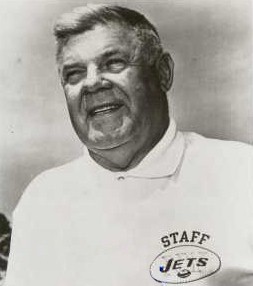
1963: Renamed Jets Hire Weeb Ewbank as Head Coach/GM


On April 15, 1963 the newly-renamed New York Jets took a major step in changing the franchise’s fortunes by hiring Weeb Ewbank as head coach and general manager. That the team had survived to play in a fourth American Football League season was an accomplishment in itself.

The club had started out in 1960 as the New York Titans, owned by the volatile Harry Wismer and playing at the decrepit Polo Grounds. Attendance was sparse (and the numbers often inflated) and money tight, but the club managed to finish at a respectable 7-7 under Head Coach Sammy Baugh’s direction in each of the first two seasons. But by 1962, the team was struggling both on the field and financially. In November, the league took over the team’s finances, Wismer declared bankruptcy, and Commissioner Joe Foss began searching for new ownership.

The new ownership turned out to be a five-man syndicate fronted by entertainment executive David A. “Sonny” Werblin. Werblin took steps to transform the club, changing the name from Titans to Jets and the colors from navy blue and gold to kelly green and white. And he brought in Weeb Ewbank to transform the team on the field.

Ewbank had already proven that he could build a winning team from modest beginnings. A former assistant to Paul Brown at Cleveland, he had taken over as head coach of the Baltimore Colts in 1954, steadily building a team that had been 3-9 in ’53 into a back-to-back NFL champion by 1958 and ’59. However, injuries and aging brought the Colts back to earth over the ensuing three seasons, and Ewbank was let go after a 7-7 finish in 1962.

The refurbished Jets sought to build upon talent already on hand while adding some new arrivals in 1963. Ewbank went with Dick Wood at quarterback, who was lanky (6’5”, 200 pounds) and immobile, but also strong-armed and intelligent. Star split end Art Powell had played out his option and signed with Oakland, but that still left flanker Don Maynard, who had a typically solid season although injuries kept his numbers down (38 receptions for 780 yards with 9 TDs). Split end Bake Turner, a converted halfback who had played for Ewbank with the Colts, was a pleasant surprise in replacing Powell as he caught 71 passes for 1009 yards and six scores. FB Bill Mathis had injury problems, and was supplemented by Mark Smolinski, another former Colt. HB Dick Christy had been a productive all-purpose back, but his numbers dropped off significantly in ’63; the running game was a problem for Ewbank all season. Center Mike Hudock anchored the spotty offensive line which gained the services of rookie OT Winston Hill.

The best of the defensive linemen were ends Bob Watters and LaVerne Torczon, although talented DT Paul Rochester joined the club late in the year. Larry Grantham was considered one of the best outside linebackers in the AFL, but the remainder of linebacking corps was subpar. Clyde Washington was the best of the cornerbacks, while the safeties played well as up-and-coming veteran Dainard Paulson and rookie Bill Baird both intercepted six passes. Punter Curley Johnson was consistently good, although placekicker Dick Guesman was not.

The team went 5-8-1, only marginally better than 1962’s 5-9 tally, finishing third in the Eastern Division. They were still playing at the Polo Grounds, but a highlight of the 1964 season was the move to a fresh venue as the Jets took up residence at brand new Shea Stadium.

FB Matt Snell, a key rookie signee out of Ohio State, was a major addition in ’64, and the arrival of QB Joe Namath in 1965 was a further significant step in building toward a championship (not to mention also bringing publicity to the team). Also joining the team in those years were PK Jim Turner, LB Ralph Baker, G Dave Herman, DE Gerry Philbin, DE Verlon Biggs, C John Schmitt, LB Al Atkinson, DB Jim Hudson, and split end George Sauer - there was also MLB Wahoo McDaniel, who was more a colorful character and fan favorite than cog in an evolving championship team. HB Emerson Boozer and TE Pete Lammons arrived in 1966, DT John Elliott and G Randy Rasmussen in ’67.

It had taken Ewbank five seasons to win a championship in Baltimore, and it would take six years to do the same in New York. But in both instances, he proved his ability as a builder of football teams and delivered titles. From the humble beginnings as the Titans, the Jets became a winning and financially viable franchise over the course of the decade.

April 14, 2010

1984: Gold Overcomes 3-TD Deficit to Defeat Maulers


The Pittsburgh Maulers were one of six new teams in the United States Football League’s second season, and were experiencing plenty of difficulties as they got off to a 2-5 start. Coached by Joe Pendry, the offense was directed by former Cowboys backup QB Glenn Carano and featured rookie Heisman Trophy-winning RB Mike Rozier. However, the defense was mediocre, Rozier got off to a slow start, and Carano struggled (at least, prior to a 388-yard passing performance the week before in a losing effort at New Orleans).

Pittsburgh’s opponent at Three Rivers Stadium on April 14, 1984 was the Denver Gold. Under Head Coach Craig Morton, the Gold had gotten off to a 6-1 start and sat atop the Pacific Division. It hardly seemed likely that the Maulers would mount a strong challenge.

However, at halftime the score was 21-0 in favor of Pittsburgh. Carano had thrown touchdown passes of 21 and 24 yards to WR Greg Anderson and, in between, connected for a 65-yard TD to WR Jackie Flowers.

Denver finally got on the board in the third quarter as QB Craig Penrose threw a 34-yard touchdown pass to WR Kevin Williams. Shortly thereafter, Penrose went down with torn knee ligaments, but reserve QB Bob Gagliano stepped in and narrowed the margin to 21-13 with a 25-yard TD throw to WR Leonard Harris (the extra point attempt failed).

In the fourth quarter, Gagliano connected with Harris for another score, this one from five yards out, and the quarterback ran for a successful two-point conversion to tie the contest. The Gold pulled ahead thanks to an 18-yard touchdown run by Williams on an end-around, and Brian Speelman’s 20-yard field goal with under two minutes to play sealed the 31-21 Denver victory.


The game had been all Pittsburgh in the first half, all Denver in the second. The Maulers outrushed the Gold, 176 yards to 97, and controlled the ball for almost 34 minutes to Denver’s 26. However, Carano (pictured at left) threw three interceptions and was sacked six times (three times apiece by defensive ends Dave Stalls and Bruce Thornton), as opposed to Denver suffering one sack and neither quarterback having a pass picked off. Pittsburgh also committed 12 penalties, adding up to 100 yards, to Denver’s four for 26 yards.

A bright spot for the Maulers was the performance of Rozier, who had his first pro hundred-yard game with 137 yards on 24 carries. Carano’s numbers reflected his inconsistency as he threw three touchdowns, three interceptions, and completed just 14 of 34 passes. Greg Anderson caught 6 passes (for 96 yards) while Jackie Flowers led the team in receiving yards with 125 on three catches.

For Denver, Bob Gagliano’s solid relief performance was summed up by his completing 8 of 9 passes for 90 yards and the two TDs. Prior to that, Craig Penrose was successful on 7 of 16 passes for 106 yards and a score. Leonard Harris was the top receiver with 5 catches for 76 yards and two touchdowns. RB Harry Sydney led the runners with 60 yards on 15 carries.

The win marked the high point of the season for the Gold – they lost their next five contests and won only two more games the rest of the way to finish at 9-9 and in third place in the Pacific Division. Pittsburgh never got on track, ending up at the bottom of the Atlantic Division (along with the Washington Federals) with a 3-15 record. The Maulers folded following the season while the Gold changed ownership and Morton was replaced as coach by Darrell “Mouse” Davis, who had popularized the “run-and-shoot” offense.