September 14, 2014

1980: Hofer Stars as 49ers Defeat Cards in Overtime


The San Francisco 49ers, fresh off an opening week victory to start the 1980 NFL season, hosted the St. Louis Cardinals on September 14 in Week 2. The 49ers were coming off consecutive 2-14 records in 1978 and ’79 and were in their second season under Head Coach Bill Walsh. QB Steve DeBerg had set league records for pass attempts and completions in Walsh’s innovative system and had a fine, if injury-prone, HB Paul Hofer (pictured above) to hand off and pass to as well as rookie FB Earl Cooper. DeBerg’s passing statistics were heavily skewed by his tendency to dump off short passes to his backs rather than throw downfield and, in the Week 1 win over the Saints, 17 of DeBerg’s 21 completions were to Hofer and Cooper.

The Cardinals had been 5-11 in 1979 and surrendered 41 points in losing to the Giants in their opener. Jim Hanifan was the new head coach but 36-year-old QB Jim Hart had been a familiar face in St. Louis since first taking over the starting job in 1967. RB Ottis Anderson was outstanding as a rookie in ’79, rushing for 1605 yards, and WR Pat Tilley a quality possession receiver. The defense was a work in progress and had most notably added rookie DE Curtis Greer, the team’s first draft choice.

There were 49,999 fans in attendance at Candlestick Park. Starting off at their 45 after a 37-yard return of the opening kickoff by DB Roy Green, the Cardinals drove to the San Francisco 17. Jim Hart completed three passes, including one to WR Mark Bell for 15 yards in a third-and-14 situation, but they came up empty when Steve Little’s 35-yard field goal attempt was wide to the right.

St. Louis got the ball back a few plays later when CB Tim Collier intercepted a bomb by Steve DeBerg at the goal line. Hart completed consecutive passes to TE Doug Marsh that totaled 42 yards, but after again advancing into San Francisco territory, the Cards were forced to punt.

Neither team could reach scoring territory until the 49ers put together a six-play, 56-yard series in the second quarter. DeBerg, who was suffering from laryngitis and using an electronic voice amplifier so his teammates could hear him, completed two passes to Earl Cooper, the longest covering 19 yards, and the drive was capped by a throw to Paul Hofer for a 19-yard touchdown. Ray Wersching added the extra point to make the score 7-0.

On the Cards’ next play from scrimmage, Marsh fumbled after catching a pass and LB Bobby Leopold recovered for the 49ers, who returned it to the St. Louis 22. But the home team was unable to capitalize, having to settle for a Wersching field goal try from 34 yards that was partially blocked and missed the mark. The teams traded punts thereafter for the remainder of the half.

St. Louis got a break on the second half kickoff when WR Terry Anderson fumbled and FS Ken Stone recovered for the Cards at the San Francisco 22. Seven plays later, Hart threw to FB Theotis Brown for a 13-yard touchdown and, adding on Little’s extra point, the score was tied at 7-7.

The 49ers punted following a short series and the Cards drove to another score, this time taking 13 plays to cover 67 yards. Hart passed to Anderson for 17 yards on a third-and-five play, one of six completions along the way, with the last to Marsh for a five-yard touchdown. Little added the PAT and the visitors were ahead by 14-7.

San Francisco was on the move as the period came to a close. DeBerg tossed a pass to Hofer for a 23-yard gain and HB Lenvil Elliott ran around end for 19 yards to the St. Louis 22. On the second play of the fourth quarter, DeBerg connected with Cooper for a nine-yard TD and Wersching’s extra point again tied the score.

Now it was the Cards suffering a turnover on a kickoff, as HB Randy Love coughed up the ball when hit by LB Dan Bunz and DB Charles Cornelius recovered at the St. Louis 26. But the opportunity was missed when DeBerg threw for the goal line four plays later and was picked off by CB Roger Wehrli, who returned it 25 yards. The visitors made the most of the reprieve, advancing 75 yards in eight plays as Hart completed passes to WR Mel Gray for 29 yards and to Pat Tilley for 18. HB Willard Harrell ran for a five-yard touchdown that, adding Little’s conversion, put the Cards back in front at 21-14.

The 49ers fought back, with Cofer catching two straight passes from DeBerg, the second for 27 yards to the San Francisco 48. However, penalties set them back and then DeBerg again tossed an interception, this time by SS Ken Greene, who ran it back 26 yards to give St. Louis excellent field position at the San Francisco 25.

Faced with the prospect of falling behind even farther, the 49ers toughened on defense. Harrell was thrown for a two-yard loss and then lost another seven yards after catching a pass and being hit by LB Willie Harper. The teams exchanged punts until San Francisco, getting the ball back with 1:51 remaining in regulation, put together an 80-yard drive in eight plays. DeBerg completed five passes, the longest to WR Dwight Clark for 16 yards in a do-or-die, fourth-and-eight situation, and Hofer ran for a 26-yard touchdown. Wersching added the all-important extra point, and the game went into overtime tied at 21-21.

The Cardinals had the first possession in the extra period but went three-and-out and punted. Starting at their 32, the 49ers gained 15 yards on a DeBerg completion to Hofer and, following a short gain by Cooper, DeBerg threw to TE Eason Ransom for nine yards to advance into St. Louis territory at the 43. Hofer took off for an 18-yard run to get into scoring range and, four plays later and at 2:25 into overtime, Wersching kicked a 33-yard field goal to win the game for the 49ers by a score of 24-21.

San Francisco had the edge in total yards (392 to 342) although the Cardinals generated more first downs (21 to 19). St. Louis was held to 86 yards on 36 running plays, while gaining 256 net passing yards, while the 49ers had 132 yards on the ground and 260 through the air. Both teams turned the ball over four times apiece.

Paul Hofer had an outstanding all-purpose day, rushing for 89 yards and a touchdown on 14 carries and catching 9 passes for 135 yards and another TD, a total of 224 yards from scrimmage. Steve DeBerg completed 25 of 42 throws for 266 yards and two touchdowns, but also gave up three interceptions, and as usual only five completions were to wide receivers. Earl Cooper also had 9 pass receptions, for 51 yards and a score, while running for 13 yards in 8 attempts.


For the Cardinals, Jim Hart completed 28 of 38 passes for 265 yards and two TDs while being picked off once. Doug Marsh (pictured at right) topped the receivers with 7 catches for 90 yards and a touchdown. Ottis Anderson, who was knocked out of the game in the fourth quarter, was held to 59 yards on 20 carries.

With two wins in the first two games, the 49ers equaled their total of the previous season, and they reached 3-0 before losing eight straight games. They rallied to finish at 6-10 for third place in the NFC West, and by that point Steve DeBerg had been supplanted by second-year QB Joe Montana. The stage was nearly set for Bill Walsh’s rebuilding project to yield a NFL title in 1981. The Cardinals reached 0-3 before winning their next two games, but, with the defense beset by injuries, they ended up at 5-11 and fourth in the NFC East.

“Paul Hofer to me is one of the great players in the league today,” said Coach Bill Walsh following Hofer’s outstanding effort against the Cardinals. “I don’t understand why people don’t recognize him as such.”

Hofer continued to be productive until a knee injury ended his season in the sixth week. He rushed for 293 yards, averaging 4.9 yards per carry, and had 41 catches for 467 yards (11.3 avg.) and totaled three touchdowns. Hofer returned for 1981, but would be placed on injured reserve long before the postseason run in what was the final year of his promising but injury-filled career. Earl Cooper led the 49ers in both rushing and pass receiving as a rookie, gaining 720 yards on the ground and catching 83 passes for 567 yards (6.8 avg.).

September 13, 2014

1964: Walker Kicks 4 Field Goals as Lions Defeat 49ers


Two NFL teams coming off of disappointing seasons met in San Francisco on September 13, 1964 to open another year amid expectations for improvement. The Detroit Lions, a perennially tough defensive team, suffered through an injury-plagued ’63 campaign in which they went 5-8-1, their first losing record after three consecutive second place finishes in the NFL Western Conference. Coached by George Wilson, they were anticipating the return of DE Darris McCord and DB Gary Lowe, who all underwent offseason surgery, plus DT Alex Karras, who was reinstated by the league following a gambling suspension. QB Milt Plum had regained the starting job in the preseason that he lost to Earl Morrall the previous year and there were outstanding receivers in flanker Terry Barr and split end Gail Cogdill.  

The 49ers were a dismal 2-12 in 1963, putting them in last place for the first time in franchise history. Red Hickey was replaced by Jack Christiansen as head coach during the season, and Christiansen was starting off his first full year at the helm. He had QB John Brodie back and recovered from a broken arm that had sidelined him for most of ‘63. The offense had suffered to the point that CB Abe Woodson, the NFL’s top kickoff returner, was looked upon as the most effective ground-gaining weapon. Injuries had also hampered the defense, and improvement was anticipated on that side of the ball as well.  

It was a cool, overcast day at Kezar Stadium with 33,204 in attendance. The 49ers went three-and-out on the game’s opening series and punted. Detroit put together a 10-play, 58-yard possession, with the biggest gain on a pass from Milt Plum to Gail Cogdill for 34 yards to the San Francisco 34 in a third-and-14 situation. Plum connected with Cogdill twice more for 16 yards and the series finally ended with Wayne Walker (pictured above) kicking a 23-yard field goal.

The home team responded by going 80 yards in six plays. On second-and-19 from their own 37, the 49ers made a big play when John Brodie threw to flanker Bernie Casey, who made an outstanding catch at the Detroit 30 and went the distance for a 63-yard touchdown. Tommy Davis added his NFL-record 157th consecutive extra point and the Niners were ahead by 7-3.

The teams traded punts to finish out the first quarter. Starting off the second quarter, Plum threw to Terry Barr for a gain of 47 yards to the San Francisco 11, but after a short run by HB Tom Watkins, two passes fell incomplete and Walker came in to kick another field goal, this time from 16 yards.

A short series by the 49ers was followed by another scoring drive by the Lions, this time covering 47 yards in eight plays. Plum had a nine-yard pass to Cogdill and FB Nick Pietrosante and HB Dan Lewis ran effectively, with Pietrosante diving into the end zone from three yards out for a TD. Walker added the PAT and the visitors were ahead by 13-7.

Detroit had good starting field position at the San Francisco 43 following a punt but Plum threw an interception. However, after another punt by the Niners that had the Lions starting at their 15, the visitors drove to another score. Plum had another big completion to Cogdill (pictured below) on a third down play, this time for 43 yards to the San Francisco 38, and three carries by Lewis gave the Lions another first down. The drive stalled at the 23 and Walker booted his third field goal of the game, this time from 31 yards with less than a minute remaining in the half. The 49ers made a bid for points in the final seconds as Brodie threw to TE Monte Stickles for 19 yards and then to Casey for 24, but Davis missed a 39-yard field goal attempt. The Lions carried a 16-7 lead into halftime.


Detroit started off the third quarter with a 74-yard, 11-play series. Watkins ran for 15 yards on a reverse, Plum connected with Barr for 39 yards, and Pietrosante capped the drive by plunging for the last yard and a TD. Walker again added the extra point to make the score 23-7.

Now behind by 16 points, the 49ers got a boost when DB Kermit Alexander returned the ensuing kickoff 44 yards to give them good starting field position at the Detroit 40. The Niners picked up just six yards, but Davis kicked a 41-yard field goal to narrow the margin to 23-10.

The Lions had to punt on their next series and Yale Lary’s short kick had the 49ers taking over at the Detroit 38. FB J.D. Smith ran for 16 yards and, three plays later, Brodie threw to Stickles for 10 yards in a third-and-eight situation. Casey caught a Brodie pass for a seven-yard touchdown and, with Davis converting, it was suddenly just a six-point game.

The Lions again had to kick the ball away following a short possession and the 49ers were driving as the game moved into the fourth quarter. However, they came up empty when Davis missed a 38-yard field goal try.

Plum threw to Barr for 23 yards but, following a run by Lewis that lost yardage and a 15-yard penalty that moved the visitors back, Detroit again had to punt, although a clip nullified a good return by Alexander. Mired deep in their own territory, the 49ers turned the ball over when Brodie fumbled and DE Darris McCord recovered at the five yard line. A penalty moved the Lions back and they again had to settle for a field goal, but Walker was successful once more, hitting from 26 yards out. Detroit was up by nine points.

That was it for the scoring. Alexander had a 38-yard kickoff return, but the 49ers went three-and-out and had to punt and the Lions managed to control the ball until the closing seconds. They came away the winners by a score of 26-17.

Detroit led in total yards (372 to 219) and first downs (17 to 13). The Lions also recorded two sacks, to none by San Francisco, although they also were penalized 10 times, at a cost of 80 yards, to four flags thrown on the 49ers. Each team turned the ball over once.

Milt Plum completed 15 of 34 passes for 234 yards and no touchdowns while giving up one interception. Two Lions had over a hundred receiving yards, with Gail Cogdill catching 6 passes for 116 yards and Terry Barr adding 108 yards on his three receptions. Dan Lewis ran for 83 yards on 17 carries and while Nick Pietrosante picked up just 36 yards on 12 attempts, two were good for short TDs. Wayne Walker was the scoring star with 14 points on his four field goals in as many attempts (which set a club record) and two extra points.


For the 49ers, John Brodie was successful on 15 of his 33 throws for 177 yards and two TDs with no interceptions. Bernie Casey (pictured at right) had 6 catches for 119 yards and two scores. J.D. Smith ran for 42 yards on 11 carries. Kermit Alexander had 107 yards on kick returns (82 on two kickoffs and 25 on two punts), overshadowing Abe Woodson, at least for one week.

Detroit got off to a 4-1-1 start before injuries set in and the team finished up at 7-5-2 and in at fourth place in the Western Conference. It was improvement, but not enough to save Coach Wilson’s job. The 49ers won the next week at Philadelphia but went on to another losing year and a final record of 4-10, which resulted in a second straight last place finish in the conference. While the passing game was better, injuries decimated the ground attack.

Wayne Walker, an outstanding linebacker as well as placekicker, ended up booting a career-high 14 field goals out of 25 attempts and, adding 32 extra points, achieved another career best with 74 points. Terry Barr and Gail Cogdill remained productive, with Barr catching 57 passes for 1070 yards (18.1 avg.) and nine touchdowns and gaining selection to the Pro Bowl for the second consecutive year, and Cogdill accumulating 45 receptions for 665 yards (14.8 avg.) and two TDs before a shoulder injury sidelined him late in the year.

Bernie Casey continued to be a key performer for the 49ers, catching 58 passes for 808 yards (13.9 avg.) and four touchdowns. Kermit Alexander had a fine year returning kicks, averaging 24.2 yards on 20 kickoff returns (Abe Woodson had a 27.5 average on 32 returns) and 9.0 yards on 21 punt returns that included a TD. 

September 12, 2014

Rookie of the Year: Bill Maas, 1984

Nose Tackle, Kansas City Chiefs


Age: 22
College: Pittsburgh
Height: 6’4”   Weight: 265

Prelude:
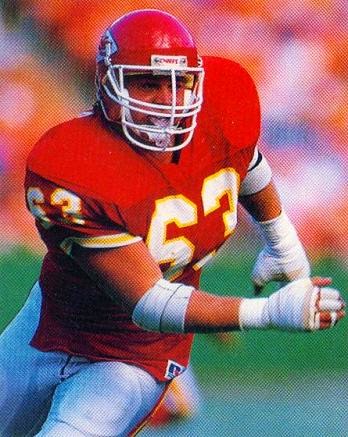
Maas started for three seasons at defensive tackle in college and was a first-team All-American choice by The Sporting News in 1982. He was chosen by the Chiefs in the first round of the ’84 NFL draft (fifth overall) and moved into the starting lineup, although he was hobbled by a leg injury late in the season.

1984 Season Summary
Appeared in 14 of 16 games
[Bracketed numbers indicate league rank in Top 20]

Sacks – 5
Most sacks, game – 3 vs. Cleveland 9/30
Interceptions – 0
Fumble recoveries – 0

Awards & Honors:
NFL Defensive Rookie of the Year: AP

Chiefs went 8-8 to finish fourth in the AFC West.

Aftermath:
Maas continued to play very well in the middle of the defensive line. He had a seven-sack season in 1985 and again in ’86, when he was selected to the Pro Bowl for the first of two consecutive years and also received some All-NFL and All-AFC recognition. A knee injury limited Maas to eight games in 1988 and he broke his arm 10 games into the ’89 season, at which point Dan Saleaumua stepped in and excelled. Maas was thus moved to right defensive end in 1990 and adjusted well, garnering 5.5 sacks and four forced fumbles, although he lacked the speed to be a truly effective pass rusher. Following an injury-riddled ’92 season, Maas departed the Chiefs for the Packers as a free agent and moved back to nose tackle in what was his last season. Overall, Maas played in 130 games, recorded 40 sacks, returned two of his eight fumble recoveries for touchdowns, and was credited with two safeties.

--


Rookie of the Year Profiles feature players who were named Rookie of the Year in the NFL (including NFC/AFC), AFL (1960-69), or USFL (1983-85) by a recognized organization (Associated Press – Offense or Defense, Newspaper Enterprise Association, United Press International, The Sporting News, or the league itself – Pepsi NFL Rookie of the Year). 

September 11, 2014

1974: Wheels Defeat Blazers for Only Win


The Detroit Wheels of the World Football League were limping along at 0-11 as they traveled to Orlando to meet the Florida Blazers on September 11, 1974. With the Blazers on top of the Eastern Division at 7-3, it did not seem likely that the Wheels might finally break into the win column.

The Wheels, coached by Dan Boisture, were typically competitive in their games, but unlucky in close contests as well as largely ignored by the Detroit area fans. They were not helped by playing home games in Ypsilanti, some 30 miles away from the city, and were in bad financial condition from the start. The Wheels drew heavily from ex-CFL players, including QB Bubba Wyche (pictured above), who performed ably.

Florida had more wins, if not a better financial situation. The Blazers were coached by former NFL linebacker Jack Pardee and featured ex-Jet QB Bob Davis, rookie RB Tommy Reamon, and TE Greg Latta on offense and DT Mike McBath and CB Miller Farr on defense. They had beaten the Wheels earlier in the season in Ypsilanti.

There were 9003 fans in attendance at the Tangerine Bowl. In the second quarter, the Blazers drove 61 yards in 13 plays, culminating in Bob Davis throwing a swing pass to RB Jim Strong for a 16-yard touchdown. The pass attempt for the action point failed but the home team carried a 7-0 lead into halftime (in the WFL, touchdowns counted for seven points and were followed by an “action point”, that could not be kicked).

That was it until the Wheels started their third series of the third quarter with good field position at midfield and Bubba Wyche threw to WR Jon Henderson at the sideline, who went the distance for a 49-yard TD. Detroit also failed to complete a pass for the action point and the score remained tied at 7-7.

The Blazers weren’t able to get beyond their 25 on the next series and Detroit again had good starting field position at its 45 following the punt. This time the Wheels needed ten plays to score, although they lined up to punt at one point but Eric Guthrie, a backup quarterback as well as punter, passed instead of kicking and safety Terry Hoeppner caught it for a 22-yard gain. RB Billy Sadler ran six yards for a touchdown and then caught the pass for the action point that made it a 15-7 game with less than two minutes to play in the period.

With 8:07 remaining in the fourth quarter, the Blazers began to move on offense, going 80 yards in six plays. Davis threw to Tommy Reamon for 16 yards and WR Eddie Richardson for 25 on a throw down the middle of the field. A pass to WR Matt Maslowski picked up another 25 yards and another toss to Maslowski for 17 yards moved the ball to the Detroit two. Reamon ran the final yard for a TD but Detroit LB Dick Blanchard broke up a pass intended for Greg Latta on the attempt for the action point. The Wheels remained in front by one, and it was enough as Detroit held on to win by a final score of 15-14, setting off a wild celebration by the players.

The Blazers outgained Detroit (381 yards to 248) and had more first downs (20 to 12). However, Florida also turned the ball over three times, to none by the Wheels. There were a total of 15 punts (8 by Detroit, 7 by the Blazers).


Bubba Wyche completed 7 of 14 passes for 91 yards and a touchdown, but he was also sacked seven times. Billy Sadler had 55 rushing yards on 10 carries that included a TD. Thanks to the long scoring catch, Jon Henderson (pictured at left) gained 61 yards on three pass receptions.

For the Blazers, Bob Davis was successful on 16 of 33 throws for 245 yards and was intercepted twice. Tommy Reamon ran for 65 yards on 17 carries and Greg Latta caught three passes for 84 yards.

“We just took the night off,” said a frustrated Coach Jack Pardee. “It was a team loss.”

The loss dropped the Blazers into a tie for first in the Eastern Division with the New York Stars at 7-4. They managed to win their next four games and ultimately topped the division with a 14-6 record, advancing to the WFL Championship game (or “World Bowl”) before falling to the Birmingham Americans and barely staying ahead of their creditors. Detroit was 1-10 and would not win again – nor would the Wheels finish out the schedule as the franchise folded three weeks later.

Bubba Wyche was one of sixteen players that were picked by the remaining WFL franchises after the Wheels folded. He joined the Chicago Fire for the remaining four games. Overall, he completed 50.9 percent of his passes for 2342 yards and 11 touchdowns with 21 interceptions. He also rushed for 287 yards and scored 11 TDs on his own.

September 10, 2014

1989: Kelly Runs for TD on Final Play as Bills Edge Dolphins


The Miami Dolphins had a string of 13 straight home-opening wins on the line as they hosted the Buffalo Bills on September 10, 1989. However, the Dolphins were coming off a 6-10 record in ’88 and had not been to the playoffs in four years. Head Coach Don Shula’s team was always productive through the air with QB Dan Marino, but the running game was not up to par and the defense ranked 26th in the league.

The Bills, coached by Marv Levy, appeared to be heading in a better direction. Following four consecutive losing years, they won the AFC East with a 12-4 tally in 1988. Tough and talented QB Jim Kelly (pictured above) led an offense that featured RB Thurman Thomas, coming off an outstanding rookie season, and WR Andre Reed, who set a club record with 71 receptions. The defense was anchored by DE Bruce Smith and included solid linebackers Cornelius Bennett and Shane Conlan plus overachieving FS Mark Kelso.

There were 54,541 fans in attendance at Joe Robbie Stadium. The Dolphins drove into Buffalo territory on their first series but were forced to punt, pinning the Bills back at their one yard line. However, the visitors proceeded to put together a long 16-play, 82-yard drive. Thurman Thomas ran seven times for 39 yards and Jim Kelly completed three passes. The possession finally stalled at the Miami 17 and Scott Norwood kicked a 34-yard field goal.

The score remained 3-0 as the game entered the second quarter. The teams exchanged punts before the Dolphins went 71 yards in 10 plays. Dan Marino tossed six completions, the longest of which were 20 yards to TE Ferrell Edmunds and 21 yards to WR Mark Duper, and RB Troy Stadford ran for the final yard and a touchdown. Pete Stoyanovich’s extra point put Miami ahead by 7-3.

The teams again traded punts until the Bills, starting off at the Miami 45 after a 14-yard return by DB Erroll Tucker, put together a promising drive. Kelly completed four passes, but on the last, Andre Reed fumbled inside the ten and CB Rodney Thomas recovered and ran 39 yards. With 32 seconds left in the half, Marino threw to WR Jim Jensen for 10 yards and a pass interference penalty moved the ball to the Buffalo 11. Stoyanovich kicked a 29-yard field goal and the home team took a 10-3 lead into halftime.

The Bills had the first series of the third quarter, punted, but soon regained possession when CB Nate Odomes forced Stradford to fumble and Cornelius Bennett recovered at the Miami two. From there, FB Larry Kinnebrew ran for a TD on the next play and Norwood’s extra point tied the score at 10-10.

The Dolphins drove to midfield on their next series but had to punt. Starting from their own 11, the Bills reached the 27 before Kelly was sacked by LB Barry Krauss on third down for a 17-yard loss, and John Kidd’s punt was blocked by Jensen, with RB Marc Logan running it in for a touchdown. Stoyanovich added the PAT and Miami was back in front at 17-10.

The Bills put together a 10-play, 52-yard series in response. Kelly completed an eight-yard pass to Reed to convert a third-and-five situation and also threw to RB Ronnie Harmon for 20 yards along the way. Norwood booted a 37-yard field goal to narrow the score to 17-13.


The Dolphins were driving as the period ended, with Marino completing three passes, the first to RB Tom Brown for 23 yards. But after reaching the Buffalo 27 early in the fourth quarter, Odomes intercepted a pass to end the threat. The teams exchanged fumbles deep in Buffalo territory and the Bills were then able to punt the ball away. However, the Dolphins put together a long drive of 73 yards in 12 plays, with seven of them pass completions by Marino. The last was to WR Andre Brown for a touchdown and, with Stoyanovich adding the extra point, the home team was in front by 24-13 with 4:17 remaining on the clock.

The Bills came out throwing following the ensuing kickoff and, after an incompletion on first down, Kelly connected on five straight passes, the last to WR Flip Johnson for a 26-yard TD. Norwood added the extra point, but the Bills were behind by four points and still needed a touchdown to win.

It looked good for the Dolphins on the next series when Marino completed a pass to Edmunds for the necessary yards on a second-and-14 play, but Odomes picked off another pass and the visitors had possession at their 49 with the time remaining now down to 1:44.

Kelly completed three straight passes, two of them to WR Chris Burkett, to gain 21 yards. Following an incompletion, he hit Thomas for 11 yards, Reed for 15 and, with an offside penalty moving the ball half the distance to the goal, Kelly ran the ball himself out of shotgun formation for a two-yard touchdown – his first ever rushing touchdown in the NFL (he had six in the USFL). In dramatic fashion, the Bills came away the winners by a score of 27-24.

Buffalo had the edge in total yards (367 to 323) and first downs (27 to 20). The Dolphins turned the ball over four times while the Bills suffered two turnovers. However, Miami sacked Kelly four times while Buffalo failed to get to Marino at all.

Jim Kelly completed 25 of 40 passes for 265 yards and a touchdown with no interceptions in addition to running for a TD. Thurman Thomas (pictured below) gained 94 yards on 13 rushing attempts and caught 8 passes for 65 more yards. Andre Reed had 6 catches for 58 yards and Flip Johnson gained 60 yards and scored a touchdown on his three receptions. Nate Odomes had a hand in three of the four Buffalo takeaways with two interceptions and a forced fumble.


For the Dolphins, Dan Marino was successful on 25 of 38 throws for 255 yards and a TD but gave up two interceptions. Ferrell Edmunds caught 5 passes for 58 yards and Tom Brown was right behind with 5 for 57 yards. Andre Brown gained 58 yards on his four receptions that included a score.

“The play was a pass to the fullback coming out of the backfield,” explained Jim Kelly of the winning touchdown. “I saw the linebacker go with him. I just took off…I was hoping I’d make it because I knew if I didn’t, I’d never hear the end of it for the rest of my career.”

“We felt good about ourselves. We felt real confident. Then it was like this huge building fell on us,” said Miami G Roy Foster in summing up the defeat.

Buffalo continued on to an 8-4 start but tailed off amid much off-field griping to finish at 9-7. It was still enough to again top the AFC East, but the Bills lost to Cleveland in the Divisional playoff round. For the Dolphins, the loss to Buffalo was their tenth straight to AFC East teams and set the tone for a 1-3 start, although they then won six of seven before losing four of their last five games to end up at 8-8 and end up third in the division.

Jim Kelly missed three games with an injured shoulder and was in the midst of some of the locker room bickering, but passed for 3130 yards and 25 touchdowns. He also had a second rushing TD during the season. Thurman Thomas was selected to the Pro Bowl after gaining a NFL-leading 1913 yards from scrimmage, which included 1244 on the ground. Andre Reed led the AFC in pass receptions, breaking his own club record with 88 catches that were good for 1312 yards and nine touchdowns.

September 9, 2014

1962: Grosscup’s 3 TD Passes Spur NY Titans to Win Over Raiders


In the opening week of the American Football League’s third season, two of the new circuit’s more problematic franchises faced each other on September 9, 1962. The New York Titans and Oakland Raiders had both suffered from difficulties in the front office, on the field, and at the gate.

The Titans had broken even at 7-7 in each of their first two seasons. Mercurial owner Harry Wismer replaced Head Coach Sammy Baugh, once an all-time great quarterback in Washington, with another ex-NFL great in Clyde “Bulldog” Turner, formerly of the Bears. The team had outstanding receivers in flanker Don Maynard and split end Art Powell, but veteran QB Al Dorow was dealt away and replaced by 38-year-old Butch Songin, obtained from the Patriots. Just a few days prior to the opener, Lee Grosscup (pictured above) was picked up after being waived by the Minnesota Vikings. Grosscup was a highly-touted passer out of Utah who failed to make the grade with the Giants and, cut by them at the end of July, had only been with Minnesota for a short time before his release.

Oakland had the AFL’s worst record the previous year at 2-12. Marty Feldman replaced Eddie Erdelatz as head coach during the season and was still at the helm. One positive change was that, after playing in San Francisco the first two years (Kezar Stadium in 1960, Candlestick Park in ’61), the Raiders finally had a home field in Oakland. A temporary stadium called Frank Youell Field had been erected until a projected new facility was ready. However, promising QB Tom Flores was out for the year with tuberculosis and Don Heinrich, formerly of the Giants and Cowboys, had been signed to take his place. Like the Titans, the Raiders had difficulty in signing rookie draft choices, thus making it all the harder to become more competitive.

There were 12,893 fans in attendance for the first Raiders home game actually played in Oakland. The teams traded punts to start the contest before the Raiders, starting at their own 38, drove deep into New York territory. HB Clem Daniels had a 12-yard run and a 12-yard reception on a swing pass from Don Heinrich, but after reaching the 18 yard line, Jackie Simpson’s 25-yard field goal attempt was wide to the right.

On the next play, Butch Songin threw long and was picked off by safety Tom Morrow, who returned it 29 yards to the New York 16. However, the Raiders again came up empty when they once more had to try for a field goal and Simpson missed from 16 yards.

The game remained scoreless heading into the second quarter. A fumble on a lateral gave the Raiders possession at the New York 41 and, spurred by a six-yard carry by HB Bo Roberson and an eight-yard run by FB Alan Miller, they drove 20 yards. This time Simpson successfully kicked a 28-yard field goal to stake the home team to a 3-0 advantage.

Following the kickoff, it was Lee Grosscup replacing Songin at quarterback for the Titans. With the ball at his own 20, he made a quick impression by going long for Art Powell (pictured below), who pulled the ball in at the Oakland 35, and the fleet receiver continued on for an 80-yard touchdown. Bill Shockley added the extra point for a 7-3 lead.


It didn’t take long for the Titans to regain possession and strike again. On the first play after the kickoff, LB Larry Grantham sacked Heinrich for a nine-yard loss and then a bad pass was intercepted by safety Billy Atkins to give the Titans the ball at the Oakland 19. Grosscup threw to HB Dick Christy, who was wide open on the left, and it was good for another TD. Shockley added the PAT and, in just two plays, Grosscup had accounted for two scores and New York was ahead by 14-3.

The Raiders moved methodically down the field on their next series, with M.C. Reynolds now in at quarterback. He completed two passes and had a nine-yard scramble, but again it came down to a field goal attempt by Simpson, and he missed badly from 36 yards. The score remained unchanged at the half.

Butch Songin was back behind center when the Titans started off the third quarter and, taking a cue from Grosscup, he threw to Powell for seven yards before connecting with Maynard, who broke an attempted tackle by CB Fred Williamson for a 64-yard touchdown. Shockley added the extra point and the tally stood at 21-3.

Miller fumbled the ensuing kickoff and DB Wayne Fontes recovered for the Titans at the Oakland 34, but the Raiders got the ball back on the next play when Songin’s throw was intercepted by Simpson, a linebacker as well as placekicker. Oakland had to punt, and Grosscup was back in at quarterback for the Titans, but this time the visitors were also forced to kick it away.

Taking over at their 17, the Raiders came alive on offense after Miller ran for four yards up the middle. Heinrich, returning at quarterback, fired a pass to end Max Boydston that picked up 58 yards and, on the following play, he threw to HB Gene White for a 21-yard touchdown. Simpson kicked the extra point and New York’s lead was cut to 21-10.

The Titans again had to punt following their next possession and Oakland moved into New York territory, helped by a pass interference penalty. Heinrich threw to HB Charley Fuller for 25 yards, but a throw into the end zone was dropped by Roberson. Three more passes fell incomplete and it was New York’s ball on downs. Four plays later, Grosscup once again went long for Powell, and it was complete for a 64-yard TD. Shockley added another extra point.

Oakland wasn’t finished yet, however, and in a series that ended early in the fourth quarter, Miller blasted into the end zone from a yard out. Simpson converted to narrow the margin to eleven points. On their next series after a punt by the Titans, Daniels took off for a 50-yard gain to the New York 14. But from there, the Titans took control on defense. Roberson was trapped for a six-yard loss, Heinrich was sacked for the loss of another 14 yards, a pass was incomplete, and on fourth-and-30, Heinrich’s pass intended for White was knocked down by safety Lee Riley.

The Raiders got the ball back on an interception at their own 26, but Heinrich was picked off by Fontes and the Titans were able to run out the clock, winning by a final score of 28-17.

New York had the edge in total yards (424 to 313) although the Raiders accumulated more first downs (20 to 13). The Titans hurt themselves with five turnovers, to three suffered by the Raiders, and they also drew 11 penalties, at a cost of 111 yards, while Oakland was flagged only twice. However, New York also registered six sacks on defense while giving up three. The Raiders were further hurt by their inability to reach the end zone when they had opportunities, and those failures were compounded by Jackie Simpson’s three missed field goals in four attempts.

In limited action, Lee Grosscup completed 5 of 8 passes, but they were good for 186 yards and three touchdowns, while he gave up one interception. Butch Songin was 7 of 16 for 114 yards and a TD as well as two interceptions. Art Powell had 5 catches for 175 yards that included the two long touchdowns and Don Maynard gained 85 yards on his three receptions that also included one for a score. Dick Christy ran for 106 yards on 10 carries and added another 40 yards on four catches that included a TD.


For the Raiders, Don Heinrich was successful on just 10 of 29 throws for 156 yards and a touchdown while being picked off twice. Clem Daniels (pictured at right) had 101 yards on 10 rushing attempts and caught three passes for 21 more yards. Alan Miller ran the ball 16 times for 56 yards and a TD and Max Boydston gained 82 yards on three pass receptions.

The Titans won only one of their next six games, finishing at 5-9 and at the bottom of the Eastern Division. Harry Wismer was forced to give up the team, which was operated by the league to complete the season, and that set the stage for new and more stable ownership. Oakland suffered through a dreadful 1-13 campaign and Coach Feldman was replaced by Red Conkright, although that also set the stage for the hiring of a dynamic new head coach and general manager in ‘63, Al Davis.

Lee Grosscup played well until sidelined by injury, passing for 855 yards and eight touchdowns against eight interceptions. Butch Songin saw less action, and it was ex-Bills QB Johnny Green behind center for most of the way. Art Powell went on to catch 64 passes for 1130 yards (17.7 avg.) and eight touchdowns and Don Maynard had 56 receptions for 1041 yards (18.6 avg.) and another eight TDs. Dick Christy was the AFL’s all-purpose yardage leader, gaining 535 yards on 114 rushing attempts, 538 on 62 catches and, with kick returns added in, totaled 2147 yards.

The Raiders also sought another answer at quarterback. Don Heinrich was done after the opening loss and a trade was made with the Dallas Texans for Cotton Davidson. Clem Daniels broke out to rush for 766 yards on 161 carries (4.8 avg.) and caught 24 passes for 318 yards (13.3 avg.), and would be part of the team’s dramatic improvement the next year. 

September 8, 2014

Highlighted Year: Troy Aikman, 1991

Quarterback, Dallas Cowboys


Age:  25 (Nov. 21)
3rd season in pro football & with Cowboys
College: UCLA
Height: 6’4”   Weight: 218

Prelude:
Aikman started off in college at Oklahoma and was starting quarterback as a sophomore until breaking his ankle four games into the season. He transferred to UCLA where, after sitting out a year, he passed for 5298 yards and 41 touchdowns and led the Bruins to a 20-4 record with two bowl victories and received consensus first-team All-American honors as a senior in 1988. The Cowboys chose Aikman with the first overall pick in the ’89 NFL draft and he took over the starting job, showing great toughness with a rebuilding 1-13 team and missing time with a broken finger. A drop-back quarterback with a strong arm, Aikman continued to develop in 1990 and passed for 2579 yards until suffering a late-season shoulder separation that required surgery.

1991 Season Summary
Appeared in 12 of 16 games
[Bracketed numbers indicate league rank in Top 20]

Passing
Attempts – 363 [16]
Most attempts, game – 42 vs. Washington 9/9, at Detroit 10/27
Completions – 237 [14]
Most completions, game – 31 at Green Bay 10/6
Yards – 2754 [16]
Most yards, game – 331 at Detroit 10/27
Completion percentage – 65.3 [2, 1st in NFC]
Yards per attempt – 7.6 [4]
TD passes – 11 [16, tied with seven others]
Most TD passes, game – 3 vs. Washington 9/9
Interceptions – 10
Most interceptions, game – 3 vs. Philadelphia 9/15
Passer rating – 86.7 [6]
300-yard passing games – 1
200-yard passing games – 8

Rushing
Attempts – 16
Most attempts, game - 3 (for 9 yds.) vs. Washington 9/9, (for -5 yds.) vs. NY Giants 9/29
Yards – 5
Most yards, game – 9 yards (on 3 carries) vs. Washington 9/9
Yards per attempt – 0.3
TDs – 1

Pass Receiving
Receptions – 1
Yards – -6
Yards per catch – -6.0
TDs - 0

Scoring
TDs – 1
Points – 6

Postseason: 1 G (NFC Divisional playoff at Detroit)
Pass attempts – 16
Pass completions – 11
Passing yardage – 114
TD passes – 0
Interceptions – 1

Rushing attempts – 2
Rushing yards – 0
Average gain rushing – 0.0
Rushing TDs – 0

Missed one postseason game due to injury

Awards & Honors:
Pro Bowl

Cowboys went 11-5 to finish second in the NFC East and qualifying for the postseason as a Wild Card. Won NFC Wild Card playoff over Chicago Bears (17-13). Lost NFC Divisional playoff to Detroit Lions (38-6).

Aftermath:
The best was yet to come for Aikman and the Cowboys as the team won three of the next four NFL Championships. Aikman passed for 3445 yards and a career-high 23 touchdowns in 1992 and capped the year by being selected as the Super Bowl MVP. He was chosen to six consecutive Pro Bowls and was a steady, solid leader as well as consistent performer in an offense where he was often overshadowed by RB Emmitt Smith and WR Michael Irvin. But he had five 3000-yard passing seasons and averaged over seven yards per pass attempt six times. The team went into decline and concussions became an issue, forcing Aikman’s retirement in 2000. Overall, he completed 61.5 percent of his passes for 32,942 yards and 165 touchdowns and, in the postseason, threw for another 3849 yards and 23 TDs while the Cowboys won 11 of his 16 starts. Aikman was inducted into the Pro Football Hall of Fame, Class of 2006.    

--

Highlighted Years features players who were consensus first-team All-League* selections or league* or conference** leaders in the following statistical categories:

Rushing: Yards, TDs (min. 10)
Passing: Yards, Completion Pct., Yards per Attempt, TDs, Rating
Receiving: Catches, Yards, TDs (min. 10)
Scoring: TDs, Points, Field Goals (min. 5)
All-Purpose: Total Yards
Defense: Interceptions, Sacks
Kickoff Returns: Average
Punt Returns: Average
Punting: Average

*Leagues include NFL (1920 to date), AFL (1926), AFL (1936-37), AAFC (1946-49), AFL (1960-69), WFL (1974-75), USFL (1983-85)

**NFC/AFC since 1970