Showing posts with label 1962 AFL season. Show all posts

October 7, 2015

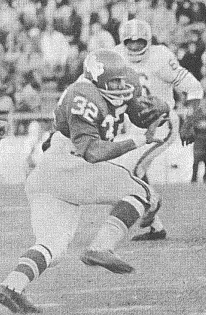
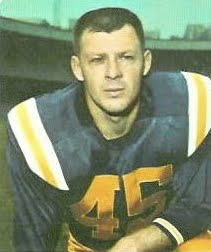
Highlighted Year: Chris Burford, 1962

Split End, Dallas Texans


Age: 24
3rd season in pro football & with Texans
College: Stanford
Height: 6’3”   Weight: 215

Prelude:
Burford caught a NCAA-leading 61 passes for 757 yards in 1959 and received first-team All-America honors from the American Football Coaches Association and Time magazine. He was chosen by the Cleveland Browns in the ninth round of the 1960 NFL draft but signed with the Texans of the new AFL and had 46 catches for 789 yards (17.2 avg.) and five touchdowns as a rookie. Burford followed up with 51 receptions for 850 yards (16.7 avg.) and another five TDs in ’61, when he was also named to the AFL All-Star Game. What he lacked in speed he made up for in moves, technique, and reliability.

1962 Season Summary
Appeared in 11 of 14 games
[Bracketed numbers indicate league rank in Top 20]

Pass Receiving
Receptions – 45 [8]
Most receptions, game – 10 (for 171 yds.) at Boston 10/12
Yards – 645 [9]
Most yards, game – 171 (on 10 catches) at Boston 10/12
Average gain – 14.3 [18]
TDs – 12 [1]
100-yard receiving games – 1

Rushing
Attempts – 1
Yards – 13
TDs – 0

Scoring
TDs – 12 [4]
Points – 72 [9]

Missed postseason game due to injury

Awards & Honors:
1st team All-AFL: League, AP, UPI

Texans went 11-3 to finish first in the AFL Western Division while leading the league in touchdowns (50, tied with Houston Oilers). Won AFL Championship over Houston Oilers (20-17).

Aftermath:
The team moved to Kansas City in 1963 and Burford, recovered from the knee injury that cost him the last few games of the ’62 season, caught a career-high 68 passes, for 824 yards (12.1 avg.) and nine touchdowns. He went on to play with the Chiefs until 1967, and started for the ’66 AFL Championship squad that appeared in the first Super Bowl. Overall, Burford caught 391 passes for 5505 yards (14.1 avg.) and scored 55 TDs. He received All-AFL honors once and was named to one AFL All-Star Game.

--

Highlighted Years features players who were consensus first-team All-League* selections or league* or conference** leaders in the following statistical categories:

Rushing: Yards, TDs (min. 10)
Passing: Yards, Completion Pct., Yards per Attempt, TDs, Rating
Receiving: Catches, Yards, TDs (min. 10)
Scoring: TDs, Points, Field Goals (min. 5)
All-Purpose: Total Yards
Defense: Interceptions, Sacks
Kickoff Returns: Average
Punt Returns: Average
Punting: Average

*Leagues include NFL (1920 to date), AFL (1926), AFL (1936-37), AAFC (1946-49), AFL (1960-69), WFL (1974-75), USFL (1983-85)

**NFC/AFC since 1970

September 8, 2015

1962: Haynes Scores 4 TDs as Texans Defeat Patriots


The Dallas Texans opened the 1962 American Football League season on September 8, hosting the Boston Patriots. Owned by league founder Lamar Hunt and coached by Hank Stram, the Texans finished second in the Western Division in each of the AFL’s first two campaigns, most recently posting a disappointing 6-8 record in ’61. Dynamic all-purpose HB Abner Haynes (pictured above) was the star on offense, with FB Jack Spikes providing solid power running when healthy, and the defense was effective, especially at linebacker. The big change for ’62 was at quarterback, where veteran Cotton Davidson had been found wanting and was being replaced by Len Dawson, an ex-Purdue star who had been a disappointment in the NFL. Under the tutelage of Stram, who had been Dawson’s backfield coach in college, it was hoped that he would provide the necessary upgrade.

Boston was coming off of a 9-4-1 record the previous year. The Patriots played their best after Mike Holovak was promoted to head coach during the season and he remained at the helm.  32-year-old QB Babe Parilli, who had split time with Butch Songin in 1961, now had the starting job to himself and there was talent around him on offense, including flanker Gino Cappelletti, a reliable, if not speedy, receiver who was also a productive placekicker.

There were 32,000 fans in attendance for the Saturday night game at the Cotton Bowl. The teams traded punts until late in the opening period, when the Texans put together a long drive of 86 yards in 15 plays that stretched into the second quarter. Len Dawson converted a third-and-six situation with a pass to TE Fred Arbanas for 25 yards and Abner Haynes and Jack Spikes ran effectively. Haynes finished the series off with a dive into the end zone from two yards out for a touchdown and Tom Pennington added the extra point.

The Patriots responded with a seven-play, 70-yard possession. Babe Parilli threw to split end Jim Colclough for 13 yards on a third-and-ten play and connected with FB Larry Garron for 22 yards to the Dallas 35. A 19-yard run by Garron had ten more yards tacked on due to a roughness penalty called on the Texans and two plays later Parilli passed to TE Tony Romeo (pictured at right) for an 11-yard TD. Gino Cappelletti kicked the point after to tie the score at 7-7.

DB Dave Grayson returned the ensuing kickoff 41 yards to the Boston 49. Haynes gained 11 yards on two carries to start the series and a pass interference penalty picked up ten more yards. A running play was followed by a Dawson pass to split end Chris Burford for 21 yards and two plays later Dawson found Burford again in the corner of the end zone for a five-yard touchdown. Pennington converted and the Texans were back in front by 14-7.


Following a punt by the Patriots, Dallas put together an 82-yard scoring drive in just five plays. Dawson, forced to scramble, ran for 14 yards and HB Frank Jackson (pictured at right) gained 35 yards, showing off good moves in the open field. After an incomplete pass and delay of game penalty, Jackson rushed for another 13 yards around end and Haynes gained the final 25 yards for a TD in spectacular fashion. Pennington again added the PAT and the home team extended its lead to 21-7.

The Patriots got the ball back with two minutes remaining and Parilli immediately threw to Romeo for 17 yards. A defensive holding penalty advanced the ball to the Dallas 25 and, four plays later, Parilli threw to HB Ron Burton for a pickup of 12 yards to the two yard line. From there Parilli ran the rest of the way, going around end for a TD with 34 seconds left in the first half. Cappelletti added the extra point and the Dallas lead was 21-14 at halftime.

Boston put together a promising drive to start the third quarter but, after reaching the Dallas 38, LB Sherrill Headrick intercepted a Parilli pass. The Texans advanced to their 28 and had to punt and the Patriots again moved the ball well, most notably on a Parilli pass to Cappelletti that gained 21 yards. However the visitors again came up empty when Garron, having grabbed a toss from Parilli in the backfield, was stuffed by Headrick for a 12-yard loss and Cappelletti’s field goal attempt from 46 yards was blocked by CB Duane Wood and recovered by the Texans at the Boston 39. Three plays later, Haynes carried 30 yards for a touchdown, Pennington converted, and instead of the Patriots possibly closing the gap, Dallas was up by 28-14.

A short Boston series resulted in a punt and the Texans were driving as the game headed into the fourth quarter. A sack of Dawson put Dallas in a second-and-22 hole but a completion to Jackson for 32 yards advanced the ball to the Boston 18. The 10-play, 58-yard drive concluded with Dawson throwing to Haynes in the end zone for a nine-yard TD, his fourth of the day. Once more Pennington booted the point after and the Texans were seemingly in control by a score of 35-14.

The Patriots responded with a quick tally, going 66 yards in three plays. Parilli completed passes to Colclough for 22 yards and Burton for 29, and Garron ran the last 15 yards for a touchdown. Cappelletti added the PAT to narrow the Dallas margin to 35-21.

A penalty and a sack forced the Texans to have to punt from their own seven on the next series, and Boston started off with excellent field position at the Dallas 35. Parilli threw to Romeo for 32 yards and Burton ran for a three-yard TD.  Cappelletti’s extra point made the game close at 35-28 with 5:25 remaining on the clock.

Starting from their 19 after the ensuing kickoff, the Texans went 81 yards in nine plays to settle the issue. A 15-yard personal foul on the Patriots on a second-and-eight play helped move Dallas along, Haynes had four carries for 21 yards, and Dawson completed a pass to split end Bill Miller for 30 yards. Jackson ran for an eight-yard touchdown with 33 seconds left, Pennington kicked the point after, and Dallas won by a final score of 42-28.

The Texans led in total yards (421 to 322), with 265 of that total coming on the ground, and first downs (27 to 22). Boston recorded five sacks to one by the home team, but also suffered the game’s only turnover. Both teams were penalized seven times apiece.

Abner Haynes was the headliner for the Texans with 122 yards on 19 carries that included three touchdowns and three catches for 14 yards and a fourth TD. Not to be overlooked, Len Dawson had a solid performance as he completed 16 of 23 passes for 202 yards and two touchdowns with no interceptions, and also ran for 32 yards on four carries. Additionally, Frank Jackson ran for 72 yards on 9 attempts that included a TD and gained another 32 yards on his one pass reception. Bill Miller caught 6 passes for 72 yards and Chris Burford contributed 5 receptions for 59 yards and a score.


For the Patriots, Babe Parilli was successful on 16 of 31 throws for 214 yards and a TD while giving up one interception. Larry Garron ran for 48 yards and a touchdown on five carries, had three catches for 18 yards, and averaged 28.0 yards on three kickoff returns. Tony Romeo (pictured at left) caught 5 passes for 84 yards and a TD.
   
Len Dawson’s performance emboldened owner Lamar Hunt to trade former starting QB Cotton Davidson to Oakland. The vote of confidence proved to be justified as the Texans went 11-3 to top the Western Division and defeat Houston for the AFL Championship. Boston won its next three contests before dropping the rematch to Dallas. The Patriots contended in the Eastern Division, finally ending up second to the Oilers at 9-4-1.

The opening-game performance by Abner Haynes launched a season in which he led the league with 19 touchdowns and finished second in rushing (1049 yards) and all-purpose yards (1768). He was a consensus All-AFL selection. Len Dawson received AFL Player of the Year honors from The Sporting News, leading the circuit in touchdown passes (29), completion percentage (61.0), yards per attempt (8.9), and overall passing (98.3 rating). 

September 9, 2014

1962: Grosscup’s 3 TD Passes Spur NY Titans to Win Over Raiders


In the opening week of the American Football League’s third season, two of the new circuit’s more problematic franchises faced each other on September 9, 1962. The New York Titans and Oakland Raiders had both suffered from difficulties in the front office, on the field, and at the gate.

The Titans had broken even at 7-7 in each of their first two seasons. Mercurial owner Harry Wismer replaced Head Coach Sammy Baugh, once an all-time great quarterback in Washington, with another ex-NFL great in Clyde “Bulldog” Turner, formerly of the Bears. The team had outstanding receivers in flanker Don Maynard and split end Art Powell, but veteran QB Al Dorow was dealt away and replaced by 38-year-old Butch Songin, obtained from the Patriots. Just a few days prior to the opener, Lee Grosscup (pictured above) was picked up after being waived by the Minnesota Vikings. Grosscup was a highly-touted passer out of Utah who failed to make the grade with the Giants and, cut by them at the end of July, had only been with Minnesota for a short time before his release.

Oakland had the AFL’s worst record the previous year at 2-12. Marty Feldman replaced Eddie Erdelatz as head coach during the season and was still at the helm. One positive change was that, after playing in San Francisco the first two years (Kezar Stadium in 1960, Candlestick Park in ’61), the Raiders finally had a home field in Oakland. A temporary stadium called Frank Youell Field had been erected until a projected new facility was ready. However, promising QB Tom Flores was out for the year with tuberculosis and Don Heinrich, formerly of the Giants and Cowboys, had been signed to take his place. Like the Titans, the Raiders had difficulty in signing rookie draft choices, thus making it all the harder to become more competitive.

There were 12,893 fans in attendance for the first Raiders home game actually played in Oakland. The teams traded punts to start the contest before the Raiders, starting at their own 38, drove deep into New York territory. HB Clem Daniels had a 12-yard run and a 12-yard reception on a swing pass from Don Heinrich, but after reaching the 18 yard line, Jackie Simpson’s 25-yard field goal attempt was wide to the right.

On the next play, Butch Songin threw long and was picked off by safety Tom Morrow, who returned it 29 yards to the New York 16. However, the Raiders again came up empty when they once more had to try for a field goal and Simpson missed from 16 yards.

The game remained scoreless heading into the second quarter. A fumble on a lateral gave the Raiders possession at the New York 41 and, spurred by a six-yard carry by HB Bo Roberson and an eight-yard run by FB Alan Miller, they drove 20 yards. This time Simpson successfully kicked a 28-yard field goal to stake the home team to a 3-0 advantage.

Following the kickoff, it was Lee Grosscup replacing Songin at quarterback for the Titans. With the ball at his own 20, he made a quick impression by going long for Art Powell (pictured below), who pulled the ball in at the Oakland 35, and the fleet receiver continued on for an 80-yard touchdown. Bill Shockley added the extra point for a 7-3 lead.


It didn’t take long for the Titans to regain possession and strike again. On the first play after the kickoff, LB Larry Grantham sacked Heinrich for a nine-yard loss and then a bad pass was intercepted by safety Billy Atkins to give the Titans the ball at the Oakland 19. Grosscup threw to HB Dick Christy, who was wide open on the left, and it was good for another TD. Shockley added the PAT and, in just two plays, Grosscup had accounted for two scores and New York was ahead by 14-3.

The Raiders moved methodically down the field on their next series, with M.C. Reynolds now in at quarterback. He completed two passes and had a nine-yard scramble, but again it came down to a field goal attempt by Simpson, and he missed badly from 36 yards. The score remained unchanged at the half.

Butch Songin was back behind center when the Titans started off the third quarter and, taking a cue from Grosscup, he threw to Powell for seven yards before connecting with Maynard, who broke an attempted tackle by CB Fred Williamson for a 64-yard touchdown. Shockley added the extra point and the tally stood at 21-3.

Miller fumbled the ensuing kickoff and DB Wayne Fontes recovered for the Titans at the Oakland 34, but the Raiders got the ball back on the next play when Songin’s throw was intercepted by Simpson, a linebacker as well as placekicker. Oakland had to punt, and Grosscup was back in at quarterback for the Titans, but this time the visitors were also forced to kick it away.

Taking over at their 17, the Raiders came alive on offense after Miller ran for four yards up the middle. Heinrich, returning at quarterback, fired a pass to end Max Boydston that picked up 58 yards and, on the following play, he threw to HB Gene White for a 21-yard touchdown. Simpson kicked the extra point and New York’s lead was cut to 21-10.

The Titans again had to punt following their next possession and Oakland moved into New York territory, helped by a pass interference penalty. Heinrich threw to HB Charley Fuller for 25 yards, but a throw into the end zone was dropped by Roberson. Three more passes fell incomplete and it was New York’s ball on downs. Four plays later, Grosscup once again went long for Powell, and it was complete for a 64-yard TD. Shockley added another extra point.

Oakland wasn’t finished yet, however, and in a series that ended early in the fourth quarter, Miller blasted into the end zone from a yard out. Simpson converted to narrow the margin to eleven points. On their next series after a punt by the Titans, Daniels took off for a 50-yard gain to the New York 14. But from there, the Titans took control on defense. Roberson was trapped for a six-yard loss, Heinrich was sacked for the loss of another 14 yards, a pass was incomplete, and on fourth-and-30, Heinrich’s pass intended for White was knocked down by safety Lee Riley.

The Raiders got the ball back on an interception at their own 26, but Heinrich was picked off by Fontes and the Titans were able to run out the clock, winning by a final score of 28-17.

New York had the edge in total yards (424 to 313) although the Raiders accumulated more first downs (20 to 13). The Titans hurt themselves with five turnovers, to three suffered by the Raiders, and they also drew 11 penalties, at a cost of 111 yards, while Oakland was flagged only twice. However, New York also registered six sacks on defense while giving up three. The Raiders were further hurt by their inability to reach the end zone when they had opportunities, and those failures were compounded by Jackie Simpson’s three missed field goals in four attempts.

In limited action, Lee Grosscup completed 5 of 8 passes, but they were good for 186 yards and three touchdowns, while he gave up one interception. Butch Songin was 7 of 16 for 114 yards and a TD as well as two interceptions. Art Powell had 5 catches for 175 yards that included the two long touchdowns and Don Maynard gained 85 yards on his three receptions that also included one for a score. Dick Christy ran for 106 yards on 10 carries and added another 40 yards on four catches that included a TD.


For the Raiders, Don Heinrich was successful on just 10 of 29 throws for 156 yards and a touchdown while being picked off twice. Clem Daniels (pictured at right) had 101 yards on 10 rushing attempts and caught three passes for 21 more yards. Alan Miller ran the ball 16 times for 56 yards and a TD and Max Boydston gained 82 yards on three pass receptions.

The Titans won only one of their next six games, finishing at 5-9 and at the bottom of the Eastern Division. Harry Wismer was forced to give up the team, which was operated by the league to complete the season, and that set the stage for new and more stable ownership. Oakland suffered through a dreadful 1-13 campaign and Coach Feldman was replaced by Red Conkright, although that also set the stage for the hiring of a dynamic new head coach and general manager in ‘63, Al Davis.

Lee Grosscup played well until sidelined by injury, passing for 855 yards and eight touchdowns against eight interceptions. Butch Songin saw less action, and it was ex-Bills QB Johnny Green behind center for most of the way. Art Powell went on to catch 64 passes for 1130 yards (17.7 avg.) and eight touchdowns and Don Maynard had 56 receptions for 1041 yards (18.6 avg.) and another eight TDs. Dick Christy was the AFL’s all-purpose yardage leader, gaining 535 yards on 114 rushing attempts, 538 on 62 catches and, with kick returns added in, totaled 2147 yards.

The Raiders also sought another answer at quarterback. Don Heinrich was done after the opening loss and a trade was made with the Dallas Texans for Cotton Davidson. Clem Daniels broke out to rush for 766 yards on 161 carries (4.8 avg.) and caught 24 passes for 318 yards (13.3 avg.), and would be part of the team’s dramatic improvement the next year. 

October 25, 2013

Rookie of the Year: Curtis McClinton, 1962

Fullback, Dallas Texans


Age: 23
College: Kansas
Height: 6’3”   Weight: 232

Prelude:
A three-time All-Big 8 selection who rushed for 1377 yards in college, McClinton was taken by the Texans in the 14th round of the 1961 AFL draft (he was drafted in the 10th round by the NFL Rams) and moved into the starting lineup when veteran FB Jack Spikes was injured. He proved to not only be a good runner, but a fine receiver out of the backfield and blocker.

1962 Season Summary
Appeared in all 14 games
[Bracketed numbers indicate league rank in Top 20]

Rushing
Attempts – 111 [10]
Most attempts, game - 19 (for 102 yds.) at NY Titans 11/11
Yards – 604 [5]
Most yards, game – 109 yards (on 12 carries) vs. Oakland 11/25
Average gain – 5.4 [2]
TDs – 2 [18, tied with nine others]
100-yard rushing games – 3

Pass Receiving
Receptions – 29      
Most receptions, game – 6 (for 68 yds.) vs. San Diego 12/16
Yards – 333
Most yards, game - 68 (on 6 catches) vs. San Diego 12/16
Average gain – 11.5
TDs – 0

Kickoff Returns
Returns – 2
Yards – 32
Average per return – 16.0
TDs – 0
Longest return – 18 yards

Scoring
TDs – 2
Points – 12

Postseason: 1 G (AFL Championship at Houston)
Rushing attempts – 24
Rushing yards – 70
Average gain rushing – 2.9
Rushing TDs – 0

Pass receptions – 1
Pass receiving yards - 4
Average yards per reception – 4.0
Pass Receiving TDs - 0

Awards & Honors:
AFL Rookie of the Year: UPI
2nd team All-AFL: UPI
AFL All-Star Game

Texans went 11-3 to finish first in the AFL Western Division while leading league in scoring (389 points) and touchdowns (50, tied with Houston Oilers). Won AFL Championship over Houston Oilers (20-17).

Aftermath:
The franchise shifted to Kansas City in 1963, and while the team had a down year on the field, “The Count” had another solid season as he led the club in rushing with 568 yards. He struggled with injuries in ’64, however, and lost his starting job to rookie Mack Lee Hill, but bounced back in 1965 with a career-high 661 yards rushing and another 590 yards on 37 pass receptions. He received second-team All-AFL honors from the Associated Press. McClinton was an AFL All-Star in 1966 and ’67, even as his rushing yards dropped to 540 and 392, respectively, but as he also became more acclaimed for his blocking ability. Following an injury-plagued 1968 season, he was shifted to tight end, where he saw little action as a reserve in his last year. Overall, McClinton rushed for 3124 yards on 762 carries (4.1 avg.) and caught 154 passes for 1945 yards with a total of 32 TDs. He played in three AFL All-Star Games.

--


Rookie of the Year Profiles feature players who were named Rookie of the Year in the NFL, AFL (1960-69), or USFL (1983-85) by a recognized organization (Associated Press – Offense or Defense, Newspaper Enterprise Association, United Press International, The Sporting News, or the league itself – Pepsi NFL Rookie of the Year). 

October 19, 2013

1962: Patriots Overcome 17-Point Deficit to Defeat Chargers


The Boston Patriots were 3-2 and trying to keep pace with the Oilers in the American Football League’s Eastern Division as they hosted the San Diego Chargers on October 19, 1962. Coached by Mike Holovak, the Patriots were a well-balanced offensive club with 32-year-old QB Babe Parilli directing an attack that featured HB Ron Burton, flanker Jim Colclough, and split end Gino Cappelletti, a slow-but-dependable receiver who was an equally dependable placekicker. The defense had some stars in DE Bob Dee, DT Houston Antwine, OLB Tom Addison, and up-and-coming rookie MLB Nick Buoniconti. However, the one problem area was that they were weak against the pass.

The Chargers, under the direction of Head Coach Sid Gillman, had won the Western Division in each of the AFL’s first two seasons, but they were 3-3 and experiencing problems. Those problems had started with the loss of star HB Paul Lowe for the year with a broken arm during the preseason and got worse when QB Jack Kemp suffered a hand injury that caused the team to place him on waivers, with the intent of bringing him back, but ended up with his being awarded to Buffalo. Rookie QB John Hadl was not yet ready to start and Dick Wood, older at age 26 but hardly more experienced, was behind center for the game at Boston.

The Patriots were favored coming into the Friday night contest at Nickerson Field and attendance was 20,888 at the small facility. Following a three-and-out possession by the Chargers, Boston went 57 yards in eight plays highlighted by Babe Parilli connecting with FB Jim Crawford on a 42-yard pass play to the San Diego seven yard line. The drive bogged down, but Gino Cappelletti kicked a 13-yard field goal to give the home team an early 3-0 lead.

The Chargers came right back as Dick Wood completed passes to end Don Norton for 18 and 16 yards. The series ended with Wood throwing to TE Dave Kocurek for a 36-yard touchdown and George Blair added the extra point to make it 7-3 in favor of San Diego.

A short Boston series ended with a punt and the Chargers moved well as Wood threw to HB Keith Lincoln for 23 yards. However, on a third-and-six play Wood was sacked for a 15-yard loss by DT Jess Richardson, although they put three more points on the board thanks to a 43-yard field goal by Blair.

The opening period ended with Parilli being intercepted by CB Claude Gibson, but the Chargers, after reaching the Boston 13, came up empty when Wood was picked off by Tom Addison. The Patriots again had to punt and the visitors struck quickly when Wood threw to Norton for a 49-yard gain to the Boston three. Two plays later, the Chargers scored a touchdown on a two-yard carry by FB Bobby Jackson and, with Blair’s successful conversion, San Diego was up by 17-3.

The Patriots still were struggling on offense and had to punt following the next possession. Lincoln reeled off 14 yards on two carries, but after reaching Boston territory Addison intercepted a pass. The teams traded punts until San Diego CB Dick Harris intercepted a Parilli throw to give the Chargers possession at the Boston 23. It led to Blair kicking a 27-yard field goal.

With time running out in the first half, Parilli completed three passes as the Patriots advanced to the San Diego 24, but a 31-yard field goal try by Cappelletti sailed wide. The Chargers took a comfortable 20-3 lead into halftime and the disgruntled home fans jeered their team’s disappointing performance as the players headed for the locker room.


The momentum shifted decisively in the second half. On their second series of the third quarter, the Patriots put together a nine-play, 56-yard series. Parilli threw to Ron Burton (pictured at left) for 20 yards and gained 16 yards on two carries himself before finishing the drive on a third-and-four play with a nine-yard touchdown pass to Jim Colclough. Cappelletti’s extra point try sailed under the crossbar, but the San Diego margin was narrowed to 20-9.

After a short series by the Chargers, Boston took over at its 30 and again moved the ball effectively. Parilli threw to Colclough for another TD, this time from 25 yards out, and then tossed a pass to Crawford for a two-point conversion that made it a three-point game.

End Jerry Robinson returned the ensuing kickoff 57 yards for the Chargers to give them outstanding field position at the Boston 33, but it was all for naught two plays later when Nick Buoniconti intercepted a pass by Wood. As the period wound down, the Patriots once again moved well on offense with Burton and Crawford running effectively and Parilli throwing for 10 yards. Three plays into the fourth quarter, Crawford, on his third straight carry, ran three yards for a touchdown to cap the 10-play, 68-yard series. Cappelletti added the extra point and the Patriots were now on top by four points.

With Wood shaken up, John Hadl entered the game at quarterback for the Chargers and they moved 26 yards before having to punt from their own 46. Boston went three-and-out and punted the ball back, but after Hadl threw to Kocurek for 18 yards, he was sacked on consecutive plays for losses totaling 21 yards. The visitors again had to kick the ball away.

While the Patriots had short possessions, the Chargers had the ball twice more, the first a three-and-out series and the second ending with Wood, now back behind center, being intercepted by safety Ross O’Hanley to effectively end the contest. Boston came away with a 24-20 win.

The Patriots outgained the Chargers (312 yards to 260) and had more first downs (20 to 11). They were especially productive on the ground, with 175 rushing yards to San Diego’s 90. San Diego turned the ball over four times, to two turnovers suffered by Boston, and was penalized 7 times at a cost of 55 yards, to three flags thrown on the Patriots.

Babe Parilli completed 14 of 26 passes for 166 yards and two touchdowns with two intercepted. Jim Crawford ran for 61 yards and a TD on 11 carries and also had 5 catches for 53 yards. Ron Burton ran for 32 yards on 11 attempts and was also productive as a receiver out of the backfield with 5 receptions for a team-leading 54 yards. Jim Colclough had two pass receptions for 34 yards, both of which were touchdowns.


For the Chargers, Dick Wood was successful on just 8 of 23 throws for 162 yards and a TD while also tossing three interceptions. John Hadl went four-of-eight for 44 yards and was picked off once. Don Norton (pictured at right) had four catches for 107 yards and Dave Kocurek also pulled in four passes, for 65 yards and a score. Keith Lincoln topped the running game with 48 yards on 12 carries.

The Patriots continued to play well, even after losing Parilli to a broken collarbone for the last month of the season. They still remained in contention until the final week and finished second in the Eastern Division with a 9-4-1 record. Meanwhile, the injury-riddled Chargers lost their next four games and won only once more the rest of the way, primarily with Hadl at quarterback, to end up third in the Western Division at 4-10.

Playing in ten games, Babe Parilli was the league’s second-ranked passer as he threw for 1988 yards with 18 touchdowns as opposed to 8 interceptions. Ron Burton ran the ball 134 times for 548 yards and caught 40 passes for 461 more yards while scoring seven touchdowns. Jim Colclough led the team with 10 TDs on his 40 pass receptions for 868 yards (21.7 avg.). He was named to the AFL All-Star Game. Gino Cappelletti scored 128 points, putting him in a tie for second with Buffalo’s Cookie Gilchrist behind Gene Mingo of the Broncos.

November 22, 2012

1962: NY Titans Pull Out Wild Win Over Broncos


As the 1962 American Football League season progressed, the state of the third-year league’s New York City franchise, the Titans, was precarious, at best. Flamboyant and controversial owner Harry Wismer was in serious financial straits and the club was a poor draw at the decrepit Polo Grounds. By early November the league had taken over the running of the Titans.

The team’s original head coach, all-time great quarterback Sammy Baugh, had been demoted to assistant coach following the ’61 season and replaced by ex-Bears star Bulldog Turner. Still, despite all of the chaos, the Titans were competitive and showing signs of life on the field. Starting out at 2-1, they lost four straight before running off consecutive wins against the Chargers and Raiders prior to succumbing to the Dallas Texans. Coming into their Thanksgiving Day matchup at Denver on November 22, New York’s record stood at 4-6.

The Broncos, under first year Head Coach Jack Faulkner, had gotten off to a 7-2 start but were losers their two most recent games. The passing attack, with QB Frank Tripucka primarily throwing to split end Lionel Taylor and flanker Bob Scarpitto, made Denver exciting and capable of putting points on the board, but the running game and defense were suspect. They very much needed a win against the Titans to remain in contention in the Western Division.

There were 15,776 fans in attendance at Bears Stadium for the nationally televised game. It was all Titans in the early going. FB Bill Mathis ran for a one-yard touchdown and HB Dick Christy caught a pass from QB Johnny Green (pictured above) for a six-yard score that put New York ahead by 14-0 in the first quarter.

It was 17-0 in the second quarter following a 28-yard field goal by Bill Shockley (pictured below) before the home team finally got on the board. Tripucka threw to Scarpitto for a 35-yard touchdown and Gene Mingo added the extra point. The Titans responded with another score, however, as Green threw to split end Art Powell for a four-yard TD. But Denver managed to whittle away at New York’s lead with two field goals by Mingo, of 45 and 8 yards, to make it 24-13 at the half. It still seemed to be a comfortable margin for the Titans.


In the third quarter, the tables turned in favor of the Broncos. First, star DT Bud McFadin picked up a fumble and ran 69 yards for a touchdown. Then QB George Shaw, in for the injured Tripucka, tossed a six-yard TD pass to Scarpitto. Denver was in front by a score of 27-24.

The Titans narrowed the margin to 27-26 when Shaw recovered a loose ball in his own end zone for a safety. New York regained the lead thanks to a Green pass to flanker Don Maynard for a 35-yard touchdown. While the attempt to run for a two-point conversion failed, New York was on top by 32-27 heading into the fourth quarter.

Once again the Broncos rallied. Shaw connected with Taylor for a three-yard TD, followed it up with a two-point conversion, and then CB Jim McMillin intercepted a pass and returned it 59 yards for another touchdown, followed by Mingo’s kick. When Mingo kicked a 49-yard field goal with the wind at his back, Denver held a 45-32 lead with six minutes remaining to play.

The Titans proceeded to drive for another touchdown, this time on a five-yard pass from Green to Christy. Shockley’s extra point narrowed the score to 45-39, but the six points still seemed formidable as time was running down. Denver took over at its own 20 following a long kickoff by Shockley and New York proceeded to get a huge break when HB Al Frazier fumbled a handoff and FS Lee Riley recovered for the Titans.

With the time now down to three minutes, New York capitalized when Green tossed his fifth touchdown pass, of three yards, to Powell. Shockley’s extra point was successful and the Titans were staked to a one-point lead.

The Broncos still had a chance, and managed to get into New York territory, but with time running out Mingo attempted a 52-yard field goal that was straight but too short. The Titans came away with a thrilling 46-45 win.

The Titans led in total yards (381 to 294) and first downs (25 to 19). Each club turned the ball over four times. Denver was especially hurt by penalties, drawing 11 flags at a cost of 130 yards to four for 27 yards on New York.

Johnny Green had a noteworthy performance, completing 22 of 46 passes for 292 yards with five touchdowns and three interceptions. Bill Mathis rushed for 49 yards and a TD on 13 carries. Dick Christy (pictured below) caught 9 passes for 82 yards and two scores, ran the ball 9 times for another 30 yards, and returned a kickoff 28 yards. Don Maynard had 105 yards on four pass receptions that included a TD and Art Powell had three catches for 57 yards and two touchdowns.


For the Broncos, Frank Tripucka was successful on 9 of 15 throws for 113 yards with a TD and two interceptions before leaving the game and George Shaw added 12 completions in 26 attempts for 117 yards with two TDs and an interception. FB Bo Dickinson was the leading rusher with 48 yards on 6 carries and also contributed 5 catches for 57 yards. Lionel Taylor had 6 pass receptions for 60 yards and a TD and Bob Scarpitto gained 89 yards and scored twice on his 5 catches.

The exciting win at Denver was the last for the Titans – they lost their remaining three games to finish at the bottom of the Eastern Division with a 5-9 record. The franchise was sold during the offseason to an ownership group headed by Sonny Werblin and was revamped and rechristened the Jets for 1963.

The loss wiped out any lingering hopes for the Broncos of winning the Western Division title. They, too, lost their remaining games and closed out at 7-7 for second place. It would prove to be their best record until 1973.

Johnny Green, formerly of the Buffalo Bills, saw the most action at quarterback for the Titans in ’62 and completed 49.6 percent of his passes for 1741 yards with 10 touchdowns and 18 interceptions. While he had a strong arm, he lacked accuracy and consistency and saw little action in his last year with the Jets in 1963.

As the numbers from the Denver game indicated, Dick Christy was a productive all-purpose halfback who led the AFL in total yards with 2147 (535 rushing on 114 carries, 538 on 62 pass receptions, 824 on 38 kickoff returns, and 250 on 15 punt returns). He was selected to the AFL All-Star Game.

Don Maynard caught 56 passes for 1041 yards (18.6 avg.) and eight touchdowns and went on to star with the Jets. Art Powell had 64 receptions for 1130 yards (17.7 avg.) and eight TDs as well. Disgruntled after three years in New York, he moved on to the Raiders in ’63 and also continued to excel. 

January 3, 2012

MVP Profile: Cookie Gilchrist, 1962

Fullback, Buffalo Bills


Age: 27
7th season in pro football, 1st in AFL & with Bills
College: None
Height: 6’3” Weight: 246

Prelude:
Ever inclined to follow his own path, Gilchrist showed up at the Browns’ training camp directly out of high school. He failed to make the team and, foregoing college, went to Canada instead where he played for six years with three teams in the CFL. Big, fast, and multitalented, Gilchrist excelled on both offense and defense, but also wore out his welcome with each team. He came to Buffalo for the ’62 season and moved directly into the starting lineup at fullback as well as handling the team’s placekicking.

1962 Season Summary
Appeared in all 14 games
[Bracketed numbers indicate league rank in Top 20]

Rushing
Attempts – 214 [3]
Most attempts, game - 25 (for 124 yds.) vs. San Diego 10/13
Yards – 1096 [1]
Most yards, game – 143 yards (on 19 carries) vs. Oakland 10/20, (on 17 carries) at NY Titans 12/8
Average gain – 5.1 [4]
TDs – 13 [1, tied with Abner Haynes]
100-yard rushing games – 6

Pass Receiving
Receptions – 24
Most receptions, game – 4 (for 48 yds.) vs. Denver 9/14, (for 42 yds.) at Boston 11/23, (for 69 yds.) vs. Dallas Texans 12/2
Yards – 319
Most yards, game – 76 (on 2 catches) at Denver 10/28
Average gain – 13.3
TDs – 2

Kickoff Returns
Returns – 7 [20, tied with Art Baker & Elbert Dubenion]
Yards – 150
Average per return – 21.4
TDs – 0
Longest return – 34 yards

All-Purpose Yards – 1565 [5]

Kicking
Field goals – 8 [7]
Most field goals, game - 2 at San Diego 11/11, at NY Titans 12/8
Field goal attempts – 20 [6, tied with George Blair]
Most field goal attempts, game – 4 at Oakland 11/18
Field goal percentage – 40.0 [7]
PATs – 14 [8]
PAT attempts – 17 [8]
Longest field goal – 42 yards at NY Titans 12/8

Scoring
TDs – 15 [2]
Field Goals – 8
PATs – 14
Points – 128 [2, tied with Gino Cappelletti]

Awards & Honors:
AFL Player of the Year: AP, UPI
1st team All-AFL: League, AP, UPI
AFL All-Star Game

Bills went 7-6-1 to finish third in the AFL Eastern Division and led the league in rushing (2480 yards). It was the franchise’s first winning record.

Aftermath:
Gilchrist was slowed by injuries in 1963, but still set a single-game rushing record with 243 yards against the Jets, led the AFL in rushing attempts (232) and rushing TDs (12) and gained 979 yards. He led the AFL in rushing for a second time in ’64 (981 yards) in a title-winning year for the Bills, but became embroiled in conflict with Coach Lou Saban, was briefly suspended from the team, and in the offseason was dealt to the Denver Broncos. He again led the AFL in rushing attempts (252) as he ran for 954 yards in 1965. However, there was more turmoil and Gilchrist was traded to the expansion Miami Dolphins during the ’66 season where, playing on bad knees, he gained 262 yards in eight games. He returned to Denver in 1967 but saw scant action and retired. Altogether, he rushed for 9204 yards (4911 in the CFL, 4293 in the AFL), caught 196 passes for 2203 more yards (86 for 1068 yards in the CFL, 110 for 1135 yards in the AFL), and scored 78 TDs (35 in the CFL, 43 in the AFL). He was also an outstanding blocker as well as runner from scrimmage.

--

MVP Profiles feature players who were named MVP or Player of the Year in the NFL, AAFC (1946-49), AFL (1960-69), WFL (1974), or USFL (1983-85) by a recognized organization (Associated Press, Pro Football Writers Association, Newspaper Enterprise Association, United Press International, The Sporting News, Maxwell Club – Bert Bell Award, or the league itself).

[Updated 4/12/12]
[Updated 2/10/14]

September 7, 2011

1962: New-Look Broncos Upset Chargers


Coming into the 1962 American Football League season, the Denver Broncos had undergone a transformation – at least in terms of leadership and appearance. In 1960 and ’61, the club had a decidedly austere air about it. Coached by Frank Filchock, a former NFL quarterback and CFL coach, the team had little money to work with (especially during the inaugural season, when owned by the Howsam family), epitomized by the uniforms of gold (more accurately mustard yellow) jerseys and brown pants with vertically-striped brown-and-yellow socks that had been purchased cheaply from the organizers of a defunct college all-star game (the Copper Bowl).

Frank Tripucka, who last played in the NFL with the ill-fated Dallas Texans in 1952 before heading north to Canada, originally came to the Broncos in ’60 to be a coach but ended up becoming the starting quarterback for Filchock’s pass-oriented attack. There was talent on the club in split end Lionel Taylor, the AFL’s leading receiver in each of its first two seasons (including an even 100 catches in ’61); HB/PK Gene Mingo, the league’s leading scorer in 1960; All-League DT Bud McFadin; and safety Austin “Goose” Gonsoulin, who intercepted 17 passes in two years. Still, the team lost far more than it won, going a combined 7-20-1.

For 1962, there was a new head coach/GM in Jack Faulkner (pictured above), who had been an assistant with the Chargers under Sid Gillman. The team’s offices were revamped, and so were the uniforms. The new outfits were orange, blue, and white with a cartoon bucking bronco on the helmet, and the hated vertically-striped socks were publicly burned amid great ceremony prior to an intrasquad scrimmage before a cheering crowd (at least one pair survived to eventually reach the Pro Football Hall of Fame).


The team that took the field on September 7 for the season-opening game at Bears Stadium against San Diego still contained most of the same key personnel, including Tripucka, Taylor, Mingo, McFadin, and Gonsoulin. But there was a new enthusiasm present as a crowd of 28,000 turned out for the Friday night contest, a new high for the franchise.

The team the Broncos were hosting, the Chargers, had won the Western Division in each of the previous two seasons and was expected to provide an ample test for the refurbished club. However, San Diego’s potent offense had already been crippled by the loss of star HB Paul Lowe, who was gone for the year due to a fractured wrist suffered in training camp.

The Broncos started off the scoring with a first quarter drive that covered 56 yards, capped by Mingo’s five-yard touchdown carry. Mingo added the extra point and then, later in the opening period, kicked a 12-yard field goal to put Denver ahead by 10-0 after a quarter of play.

San Diego responded with a seven-yard TD pass from QB Jack Kemp to split end Don Norton to narrow the score to 10-7 in the second quarter. But the Broncos came back with another drive that concluded with a long pass play of 49 yards (17 in the air) from Tripucka to flanker Bob Scarpitto, a newcomer to the club.

On Denver’s next possession, Tripucka completed eight passes, the last for a two-yard TD to FB Bo Dickinson. The 34-year-old quarterback completed 20 of 33 passes for 252 yards in the first half as the Broncos raced out to a 24-7 lead. His protection was excellent, as well as his accuracy.

Mingo padded the lead to 30-7 in the third quarter with field goals of 41 and 53 yards. The Chargers, who made it into Denver territory just twice more after scoring their first touchdown, finally got on the board again on the last play of the third quarter when CB Claude Gibson returned a pass interception 35 yards for a touchdown.

San Diego’s rookie QB John Hadl led the Chargers on a 55-yard drive in the fourth quarter that ended with a 15-yard scoring pass to FB Bobby Jackson, but the result was not in doubt. The Broncos came away with a convincing 30-21 win.

Denver’s offensive output of 505 yards was impressive and easily outdistanced the Chargers, who gained 208. The Broncos not only dominated through the air (384 yards to 123), but on the ground also (121 to 96) and had twice as many first downs (28 to 14). It was Denver’s first-ever win over the Chargers following four defeats.


Frank Tripucka had an outstanding day as he completed 28 of 47 passes for 376 yards with two touchdowns and two interceptions. Lionel Taylor and TE Gene Prebola each caught 7 passes, with Taylor gaining 79 yards to Prebola’s 69. Thanks to the long scoring reception, Bob Scarpitto was right behind with 68 yards on just two receptions. HB Al Frazier was the team’s leading rusher with 72 yards on 14 carries. Through both rushing and placekicking, Gene Mingo accounted for 18 points.

For the Chargers, the usually capable Jack Kemp went to the air 27 times and had only 8 completions for 108 yards, including one TD and one interception. TE Dave Kocurek caught 4 passes for 66 yards. Bobby Jackson ran for 51 yards on 9 carries.

The Broncos continued to play well under Faulkner as they won six of their first seven games to move into contention in the Western Division. They were 7-2 after beating the Chargers again in San Diego, but the roof fell in on the overachieving club after that – the Broncos didn’t win another game the rest of the way and finished in second place with a 7-7 record. Still, it was progress and Faulkner received AFL Coach of the Year honors.

San Diego recovered to win handily the next week, but lost Jack Kemp to a hand injury and when the club waived him in an administrative move, he was lost to the Buffalo Bills. The loss of Lowe and Kemp was just the beginning as many starters fell to injury along the way. The Chargers advanced as far as 3-2 with rookie John Hadl at quarterback, but proceeded to lose eight of the last nine games to finish far out of the running in third place with a 4-10 record.

August 26, 2011

MVP Profile: Len Dawson, 1962

Quarterback, Dallas Texans


Age: 27
6th season in pro football, 1st in AFL & with Texans
College: Purdue
Height: 6’0” Weight: 190

Prelude:
Highly regarded coming out of college, Dawson was taken in the first round of the 1957 NFL draft by the Pittsburgh Steelers. After sitting on the bench and throwing just 17 passes in three years, he was dealt to Cleveland, where he backed up Milt Plum for two seasons. He requested his release from the Browns and joined his former backfield coach at Purdue, Hank Stram, who had gone on to become the head coach of the AFL’s Dallas Texans. Stram worked intensively with Dawson, rusty from his years as a reserve, and he took over as the team’s starting quarterback.

1962 Season Summary
Appeared and started in all 14 games
[Bracketed numbers indicate league rank in Top 20]

Passing
Attempts – 310 [4]
Most attempts, game – 33 at Buffalo 12/2
Completions – 189 [3]
Most completions, game – 19 vs. NY Titans 10/21, vs. Houston 11/4
Yards – 2759 [3]
Most yards, game – 306 at Boston 10/12
Completion percentage – 61.0 [1]
Yards per attempt – 8.9 [1]
TD passes – 29 [1]
Most TD passes, game – 3 on six occasions
Interceptions – 17 [6]
Most interceptions, game – 3 vs. Denver 12/9
Passer rating – 98.3 [1]
300-yard passing games – 1
200-yard passing games – 7

Rushing
Attempts – 38
Most attempts, game - 5 (for 59 yds.) vs. Buffalo 9/30, (for 18 yds.) vs. San Diego 12/16
Yards – 252 [18]
Most yards, game – 59 yards (on 5 carries) vs. Buffalo 9/30
Yards per attempt – 6.6
TDs – 3

Points
TDs – 3
Points – 18

Postseason: 1 G (AFL Championship at Houston)
Pass attempts – 14
Pass completions – 9
Passing yards – 88
TD passes – 1
Interceptions – 0

Rushing attempts – 5
Rushing yards – 26
Average gain rushing – 5.2
Rushing TDs – 0

Awards & Honors:
AFL Player of the Year: Sporting News
1st team All-AFL: League, AP, UPI
AFL All-Star Game

Texans went 11-3 to finish first in the AFL Western Division while leading the league in points scored (389) and touchdowns (50, tied with Houston). Won AFL Championship over Houston Oilers (20-17).

Aftermath:
The resurrection of Dawson’s career in 1962 paid off significantly for his team. The Texans became the Kansas City Chiefs in ’63 and, while they failed to retain their AFL title, Dawson again led the league in TD passes (26). By the rating system then in use, he led the league in passing three times over the next five years (by the modern system, he led it in all five). He also led in completion percentage five straight times, TD passes twice (although not when he had his career high of 30 in 1964), yards per attempt twice, and, further testimony to Dawson’s efficiency as a passer, four times in percentage of TD passes. The team won AFL championships in 1966 and ’69, losing in the inaugural Super Bowl following the first and winning Super Bowl IV (the last prior to the merger of the two leagues). Dawson missed time to injury in that 1969 season but was behind center in the postseason. He remained with the Chiefs through 1975, at age 40, and retired with 28,711 passing yards, 239 TD passes, and an 82.6 passer rating. The Chiefs retired his #16 and Dawson was inducted into the Pro Football Hall of Fame, Class of 1987.

--

MVP Profiles feature players who were named MVP or Player of the Year in the NFL, AAFC (1946-49), AFL (1960-69), WFL (1974), or USFL (1983-85) by a recognized organization (Associated Press, Pro Football Writers Association, Newspaper Enterprise Association, United Press International, The Sporting News, Maxwell Club – Bert Bell Award, or the league itself).

[Updated 2/14/14]

January 18, 2011

1962: Bills Hire Lou Saban as Head Coach


On January 18, 1962 the Buffalo Bills of the AFL hired Lou Saban to be the team’s second head coach. The Bills had gone a combined 11-16-1 in their first two seasons under Buster Ramsey, and owner Ralph Wilson decided that a change was in order.

The 40-year-old Saban had been the original head coach of the Boston Patriots and was dismissed in favor of assistant coach Mike Holovak during the ’61 season. Immediately hired by the Bills as director of player personnel, he was Wilson’s choice to replace Ramsey. General Manager Dick Gallagher, who had been an assistant coach with Cleveland under Paul Brown when Saban was a player, also strongly supported the decision. Harvey Johnson took over Saban’s player personnel position.

Saban had played professionally with the Browns in the AAFC for four seasons until a shoulder injury forced his retirement in 1949. Prior to entering the pro coaching ranks, he was head football coach at Case Institute, Northwestern, and Western Illinois.

“I don't feel I have to prove myself as a coach,” Saban said upon being introduced. “What happened in Boston is behind. It was the best I could do under the circumstances and I make no apology for our record (7-12) or anything else.”

“There are no big mysteries to coaching pro football,” he added. “It's basically a game of blocking and tackling and working towards the goal of securing the best available talent together to get the job done.”

With regard to securing the best available talent, the Bills had a major void at quarterback. Veteran Al Dorow was obtained from the New York Titans and started the first four games of the season before yielding to young holdover Warren Rabb. The issue was decisively resolved during the 1962 season when Jack Kemp, who had twice led the Chargers to the AFL title game, was put on waivers due to an injured hand in order to make room on the roster (injured players had to be carried on the active roster in the AFL at that time). While it was reported that there was a so-called gentlemen’s agreement in place with regard to injury-waiver situations, several teams claimed Kemp, including the Bills. Commissioner Joe Foss awarded the quarterback to Buffalo for the $100 waiver price, and once the injury healed late in the season, Kemp became the starting quarterback.

Another key pickup on offense was FB Cookie Gilchrist, an eight-year veteran of Canadian pro football. The 250-pound power runner had a reputation for wearing out his welcome with several Canadian clubs (something that Saban would find to be true in Buffalo as well), but in ’62 he led the AFL in rushing with 1096 yards and scored 15 touchdowns. He also handled the team’s placekicking.

Beyond adding Kemp and Gilchrist, Saban revamped much of the lineup. Stew Barber was moved from linebacker to offensive tackle and Tom Day from defensive end to guard to supplement the group of young starters that featured G Billy Shaw, C Al Bemiller, OT Harold Olson, flanker Elbert “Golden Wheels” Dubenion, and split end Glenn Bass. Ernie Warlick became the tight end and led the club in receptions.

On defense, which was already a decent unit, several rookies immediately moved into the starting lineup with good results, including DT Tom Sestak, LB Mike Stratton, CB Booker Edgerson, and safety Carl Charon.

The Bills got off to a sluggish start in ’62, losing their first five games, but went 7-1-1 the rest of the way to finish with the first winning record in franchise history (7-6-1). It set the stage for high expectations in 1963, but instead came another 7-6-1 season, although that was enough for the Bills to tie for first in the mediocre Eastern Division - they lost the resulting playoff to the Patriots. However, in 1964 and ’65 it came together when Buffalo won consecutive AFL Championships.

Saban displayed coaching acumen in building the club into a contender. He went from inheriting a weak situation at quarterback to having impressive depth when Daryle Lamonica joined the team in ’63 as a rookie out of Notre Dame – in backing up the capable Kemp, Saban frequently used him in relief with good results. The defense was superb, perhaps most significantly evidenced by the two title game wins over the quick-striking Chargers, and in particular the second, a shutout in San Diego. There was also the added innovation of Pete Gogolak, the first soccer style placekicker who joined the team in 1964 and became a reliable producer of points. Even when the running game sagged in ’65 following the trade of Gilchrist to Denver, the Bills had enough to keep winning.

Saban’s coaching career was marked by frequent departures, and after four years in Buffalo and having twice reached the pinnacle in the American Football League, he quit to become head coach at the University of Maryland. He didn’t stay away from pro coaching for long, however, as he returned to the AFL in 1967 amid much fanfare to run the Denver Broncos. Saban failed to lift the Broncos out of the doldrums, however, and he resigned in 1971, barely half way through his ten-year contract as head coach/general manager.

The veteran coach returned to Buffalo in 1972. The Bills had fallen on hard times, and under Saban’s guidance put together three straight winning seasons, albeit with just one playoff appearance. He departed in ’76, ending his last stint as an AFL/NFL head coach.

Saban’s career took off on an eclectic course thereafter. He was at the University of Miami for two years and moved on to West Point to coach Army for a season, and then switched gears and became a major league baseball executive. Years before, New York Yankees owner George Steinbrenner had been an assistant coach under Saban at Northwestern, and he returned the favor by making Saban the president of the Yankees, a post he held in 1981 and ’82.

After that, it was a whirlwind of short football coaching stints at various levels, from college (University of Central Florida, Peru State in Nebraska, SUNY Canton), to high school (Georgetown High in South Carolina), semi-pro (the Middle Georgia Heat Wave), and arena football (Milwaukee Mustangs). His last stop was Chowan University, where he coached in 2001 and ’02 in his early eighties.

Being that he typically took on either rebuilding projects or new programs, his overall record was not impressive. Saban was 41-52-3 as a college coach and 94-99-7 in the AFL and NFL combined. By far his most successful stop was Buffalo, especially the first stint from 1962 to ’65 where he compiled a 36-17-3 tally, won two of three postseason games and two league championships.

December 23, 2009

1962: Dallas Texans Defeat Oilers in Overtime for AFL Championship


It was a gray, blustery day on December 23, 1962 as the Houston Oilers hosted the Dallas Texans in the AFL Championship game at Jeppesen Stadium. The Oilers, champions of the Eastern Division with an 11-3 record, had won the first two league championships and were looking to make it three straight. Under Head Coach Frank “Pop” Ivy, the team’s third coach in spite of their success, Houston had started slowly and was 4-3 at midseason, but won seven consecutive games to complete the regular season and get past the Boston Patriots. 34-year-old veteran QB George Blanda passed for 27 touchdowns, but also threw an astounding 42 interceptions. Stubby FB Charley Tolar (5’7”, 198 pounds) ran for 1012 yards and flanker Charley Hennigan led the receivers with 54 receptions for 867 yards and 8 TDs.

The Dallas Texans, owned by AFL founder Lamar Hunt, easily won the Western Division for the first time, also with an 11-3 tally (the second place Denver Broncos were a distant 7-7). Head Coach Hank Stram benefited from the arrival of QB Len Dawson, who led the league in passing after having ridden the bench in five NFL seasons. The Texans also had a thousand-yard rusher in flashy HB Abner Haynes (1049 yards and 13 TDs) and a well-balanced squad on both sides of the ball.


There were 37,981 fans filling the small stadium as Dallas dominated the first half. After Tommy Brooker booted a 16-yard field goal to give the Texans a 3-0 lead in the first quarter, Haynes (pictured at left) scored twice in the second quarter, first on a 28-yard pass from Dawson and then on a two-yard run. The Texans used two fullbacks in the backfield, Jack Spikes and rookie Curtis McClinton, with Haynes often moving out to the flank, and the combination provided excellent ball control. The half ended with the Texans holding a 17-0 lead.

However, in the second half it was all Houston. Blanda threw a 15-yard TD pass to TE Willard Dewveall in the third quarter and kicked a 31-yard field goal in the fourth period. When Tolar scored from a yard out with six minutes left, the score was tied at 17-17, and after a last-ditch Blanda field goal attempt was blocked by Texans LB Sherrill Headrick, that was how it stood after 60 minutes of play.

When it came time for the coin toss to start off the overtime period, Haynes made an error that could have cost Dallas the game. Due to concerns regarding the kicking game, Coach Stram had decided to kick off to start overtime, and instructed Haynes, the offensive captain, to take the wind advantage if he won the toss. The Texans did indeed win the toss, but when asked by referee Harold “Red” Bourne what his choice was, Haynes responded “We’ll kick to the clock”. Only the “we’ll kick” part mattered, and Houston was now able to get both the ball and the wind to start the “sudden death” overtime.

Blanda came out throwing, but on the first possession was intercepted by Dallas safety Johnny Robinson. The Texans were unable to capitalize and punted the ball back to the Oilers, and Blanda used short passes to methodically move the Oilers downfield. With time winding down in the fifth period, the veteran quarterback had the team in field goal range at the Dallas 35 yard line – Blanda was also one of the better kickers in the league, and with the wind at his back victory appeared to be in reach. But a second-down pass intended for Hennigan was intercepted by DE Bill Hull, who returned it 23 yards to midfield.

The first overtime period ended after the Texans ran their first play, and as the game continued into another extra period, they began to move down the field and now had the wind at their backs. On a crucial third and eight play, Dawson passed to Spikes for 10 yards to the Houston 38 yard line. Dawson then handed off to Spikes, who ran 19 yards for a first down at the 19, easily in field goal range. After a couple of short, safe runs to help line up the field goal, Brooker successfully booted it from 25 yards at 2:54 into the sixth period of play (pictured at top), and the Dallas Texans were the AFL champions with a 20-17 win.

Going 17:54 into overtime, the game was longer than the first postseason contest to go into “sudden death” (the 1958 NFL Championship game). That record fell in 1971, and was ultimately bested in turn by a 1984 USFL playoff game that went 33:33 into overtime.

Houston outgained Dallas by 359 to 237 yards. Dawson played conservatively, completing 9 of 14 passes for 88 yards and a TD – and most importantly, with no interceptions. The Texans, however, ran the ball effectively, accumulating 199 yards on 54 attempts; Spikes (pictured at bottom) led the team with 77 yards on 11 carries, with McClinton doing more of the heavy work at 24 rushes for 70 yards. Haynes led the receivers with three catches for 45 yards and a TD (and dodged a place in sports infamy when the Texans pulled out the win).

Blanda went to the air 46 times, completing 23 for 261 yards and a score, but also threw five interceptions. TE Dewveall and HB Billy Cannon both caught six passes, with Dewveall leading all receivers with 95 yards and scoring once. The Oilers gained just 98 yards on 30 rushes, with Tolar being limited to 58 yards on 17 attempts and a TD.

The AFL championship victory was the end of the road for the Texans; after battling the NFL’s Cowboys for attention in Dallas for three seasons, Lamar Hunt chose to move the franchise and they became the Kansas City Chiefs in 1963. The loss for Houston also signaled a change; the team had losing records over the next four seasons before returning to a league championship game in 1967.

December 16, 2009

1962: Raiders Defeat Patriots in Season Finale to End 19-Game Losing Streak


The 1962 AFL season was the nadir for the Oakland Raiders franchise. Entering the final game on December 16 at Frank Youell Field against the visiting Boston Patriots, they had lost 19 consecutive games going back to the ninth contest of 1961.

At least the franchise was finally playing home games in Oakland. A late addition to the American Football League, after the Minneapolis group dropped out to join the NFL, the Raiders had played in San Francisco the first two seasons (Kezar Stadium in ’60, Candlestick Park in ’61). Amid rumors that the team would relocate to another city, Oakland officials assured the owners that a new stadium was in the works (what would eventually be the Oakland-Alameda County Coliseum) and a temporary home would be made available in the meantime (Frank Youell Field, capacity 22,000).

On the field, the team had struggled. Marty Feldman had succeeded original Head Coach Eddie Erdelatz after the Raiders were blown out in the first two games of the ’61 season, but he was let go five games into the 1962 campaign after compiling a 2-15 record. Assistant Red Conkright was promoted into the top job, which was a thankless proposition. Starting QB Tom Flores was forced to sit out the year with a lung infection. While the team made an early season deal with the Dallas Texans for QB Cotton Davidson (pictured below), who had lost his starting job to Len Dawson, he had problems with chronic injuries and a weak receiving corps.


To be sure, there was talent on the team. C Jim Otto was a first team All-AFL selection in 1960 and ’61, and would be once again in ’62 (and beyond). Guard Wayne Hawkins was considered one of the best in the league as well. Clem Daniels (pictured above) emerged as a talented halfback and chief running threat. On defense, CB Fred “the Hammer” Williamson and DT Chuck McMurtry were standouts.

In the finale against Boston, the Raiders received a couple of breaks in that starting QB Babe Parilli (an original Raider in ’60) was injured and wouldn’t be facing them, and the team had been eliminated from postseason contention the day before. Boston had been in a close race with the Oilers in the Eastern Division all year, but Houston defeated the New York Titans in a Saturday game that clinched the division title with an 11-3 record. The Patriots had no incentive to win, and it was apparent – as backup QB Tom Yewcic, who started on that day, put it later, “nobody wanted to play”.

It was a rainy, miserable day with 8000 fans in attendance. Oakland won resoundingly, 20-0. Daniels was the standout, scoring both touchdowns, one on a 74-yard pass play from Davidson in the second quarter, and the other on a seven-yard run in the third quarter. 43-year-old placekicker Ben Agajanian (whose career spanned stints in the AAFC and NFL as well as AFL) booted field goals of 19 and 21 yards to round out the scoring.

The Raiders accumulated 288 yards of offense, with Daniels gaining just 54 yards on 26 rushing attempts but, thanks to the long TD pass, catching three passes for 95 yards. Davidson completed 9 of 23 passes for 230 yards with a touchdown and an interception. Boston’s Yewcic had 13 pass completions in 35 attempts for just 108 yards and two pickoffs. The Patriots gained 82 yards on the ground in 18 carries, with HB Jim Crawford leading the way at 6 rushes for 35 yards. Split end Gino Cappelletti led all receivers with 5 catches, for 53 yards.

The win not only ended the long losing streak, but was the first shutout of an opponent in franchise history. Happy fans blared their car horns to celebrate in the parking lot afterward.

The Raiders ended up with a 1-13 record and, naturally, in last place in the Western Division. Boston finished at 9-4-1 and second place in the East. Clem Daniels ranked fourth in the AFL with 766 yards rushing.

Things got better for the Raiders in the offseason. The owners finally coaxed Al Davis away from Sid Gillman’s coaching staff at San Diego, and the 33-year-old head coach and general manager made personnel changes and brought a whole new attitude to the team. The immediate turnaround was impressive – Oakland astounded the pro football world in 1963 by going 10-4. They were still a few years away from being a true contender, but it would not be long before the sad state of affairs that culminated in the 1-13 season in 1962 would become a distant memory.