Showing posts with label Boston Patriots. Show all posts

October 17, 2016

Highlighted Year: Larry Garron, 1963

Fullback, Boston Patriots


Age: 26
4th season in pro football & with Patriots
College: Western Illinois
Height: 6’0”   Weight: 215

Prelude:
Garron played at Western Illinois and followed his college coach, Lou Saban, to the Patriots of the new AFL in 1960. He appeared in only four games as a rookie and, suffering from tonsillitis, was cut. Garron returned in ’61 with added weight and split time at fullback with Billy Lott, rushing for 389 yards. His 5.6 yards-per-attempt included a team-record 85-yard run and he also caught 24 passes for 341 yards (14.2 avg.), averaged 27.4 yards on 16 kickoff returns, and scored a total of six touchdowns. Garron was a second-team All-AFL choice by the league and was selected for the AFL All-Star Game. Slowed by injuries in 1962, Garron still gained 1314 all-purpose yards, averaging 5.9 yards while rushing for 392 yards and 28.6 yards on 24 kickoff returns that included a TD.

1963 Season Summary
Appeared in all 14 games
[Bracketed numbers indicate league rank in Top 20]

Rushing
Attempts – 175 [5]
Most attempts, game – 23 (for 91 yds.) vs. San Diego 11/10
Yards – 750 [5]
Most yards, game – 107 yards (on 17 carries) at Houston 12/8
Average gain – 4.3 [4]
TDs – 2 [19, tied with five others]
100-yard rushing games – 1

Pass Receiving
Receptions – 26      
Most receptions, game – 5 (for 45 yds.) at San Diego 9/14
Yards – 418
Most yards, game – 92 (on 2 catches) vs. Houston 11/1
Average gain – 16.1 [10]
TDs – 2

Passing
Attempts – 1
Completions – 0
Interceptions – 0

Kickoff Returns
Returns – 28 [4]
Yards – 693 [4]
Most yards, game – 131 (on 3 ret.) vs. Denver 10/18
Average per return – 24.8 [5]
TDs – 0
Longest return – 58 yards

Punt Returns
Returns – 1
Yards – 23
TDs – 0

All-Purpose yards – 1884 [1]

Scoring
TDs – 4
Points – 24

Postseason: 2 G
Rushing attempts – 22
Most rushing attempts, game – 19 at Buffalo, Eastern Division playoff
Rushing yards – 59
Most rushing yards, game – 44 at Buffalo, Eastern Division playoff
Average gain rushing – 2.7
Rushing TDs – 1

Pass receptions – 6
Most pass receptions, game – 4 at Buffalo, Eastern Division playoff
Pass receiving yards – 126
Most pass receiving yards, game – 120 at Buffalo, Eastern Division playoff
Average yards per reception – 21.0
Pass Receiving TDs – 2

Kickoff returns – 2  
Kickoff return yards – 32
Average per return – 16.0
TDs – 0
Longest return – 17 yards

Awards & Honors:
AFL All-Star Game

Patriots went 7-6-1 to tie for first in the AFL Eastern Division. Won Divisional playoff over Buffalo Bills (26-8). Lost AFL Championship to San Diego Chargers (51-10).

Aftermath:
Garron was an AFL All-Star again in 1964, although showing signs of wear. He rushed for 585 yards but averaged only 3.2 yards on a career-high 183 carries with two TDs; he also caught 40 passes for another 350 yards and seven touchdowns. Garron was shifted to halfback and became more productive as a pass receiver, especially with FB Jim Nance emerging as the primary runner. He played until 1968, a total of nine seasons (all with the Patriots), and rushed for 2981 yards on 759 carries (3.9 avg.) with 14 touchdowns and caught 185 passes for 2502 yards (13.5 avg.) and 26 TDs. He averaged 25.8 yards on 89 kickoff returns that included two more touchdowns, giving him 42 TDs in all. Garron was selected to four AFL All-Star Games.

--

Highlighted Years features players who were consensus first-team All-League* selections or league* or conference** leaders (NFC/AFC since 1970) in the following statistical categories:

Rushing: Yards, TDs (min. 10)
Passing: Yards, Completion Pct., Yards per Attempt, TDs, Rating
Receiving: Catches, Yards, TDs (min. 10)
Scoring: TDs, Points, Field Goals (min. 5)
All-Purpose: Total Yards
Defense: Interceptions, Sacks
Kickoff Returns: Average
Punt Returns: Average
Punting: Average

*Leagues include NFL (1920 to date), AFL (1926), AFL (1936-37), AAFC (1946-49), AFL (1960-69), WFL (1974-75), USFL (1983-85)

**NFC/AFC since 1970

September 8, 2015

1962: Haynes Scores 4 TDs as Texans Defeat Patriots


The Dallas Texans opened the 1962 American Football League season on September 8, hosting the Boston Patriots. Owned by league founder Lamar Hunt and coached by Hank Stram, the Texans finished second in the Western Division in each of the AFL’s first two campaigns, most recently posting a disappointing 6-8 record in ’61. Dynamic all-purpose HB Abner Haynes (pictured above) was the star on offense, with FB Jack Spikes providing solid power running when healthy, and the defense was effective, especially at linebacker. The big change for ’62 was at quarterback, where veteran Cotton Davidson had been found wanting and was being replaced by Len Dawson, an ex-Purdue star who had been a disappointment in the NFL. Under the tutelage of Stram, who had been Dawson’s backfield coach in college, it was hoped that he would provide the necessary upgrade.

Boston was coming off of a 9-4-1 record the previous year. The Patriots played their best after Mike Holovak was promoted to head coach during the season and he remained at the helm.  32-year-old QB Babe Parilli, who had split time with Butch Songin in 1961, now had the starting job to himself and there was talent around him on offense, including flanker Gino Cappelletti, a reliable, if not speedy, receiver who was also a productive placekicker.

There were 32,000 fans in attendance for the Saturday night game at the Cotton Bowl. The teams traded punts until late in the opening period, when the Texans put together a long drive of 86 yards in 15 plays that stretched into the second quarter. Len Dawson converted a third-and-six situation with a pass to TE Fred Arbanas for 25 yards and Abner Haynes and Jack Spikes ran effectively. Haynes finished the series off with a dive into the end zone from two yards out for a touchdown and Tom Pennington added the extra point.

The Patriots responded with a seven-play, 70-yard possession. Babe Parilli threw to split end Jim Colclough for 13 yards on a third-and-ten play and connected with FB Larry Garron for 22 yards to the Dallas 35. A 19-yard run by Garron had ten more yards tacked on due to a roughness penalty called on the Texans and two plays later Parilli passed to TE Tony Romeo (pictured at right) for an 11-yard TD. Gino Cappelletti kicked the point after to tie the score at 7-7.

DB Dave Grayson returned the ensuing kickoff 41 yards to the Boston 49. Haynes gained 11 yards on two carries to start the series and a pass interference penalty picked up ten more yards. A running play was followed by a Dawson pass to split end Chris Burford for 21 yards and two plays later Dawson found Burford again in the corner of the end zone for a five-yard touchdown. Pennington converted and the Texans were back in front by 14-7.


Following a punt by the Patriots, Dallas put together an 82-yard scoring drive in just five plays. Dawson, forced to scramble, ran for 14 yards and HB Frank Jackson (pictured at right) gained 35 yards, showing off good moves in the open field. After an incomplete pass and delay of game penalty, Jackson rushed for another 13 yards around end and Haynes gained the final 25 yards for a TD in spectacular fashion. Pennington again added the PAT and the home team extended its lead to 21-7.

The Patriots got the ball back with two minutes remaining and Parilli immediately threw to Romeo for 17 yards. A defensive holding penalty advanced the ball to the Dallas 25 and, four plays later, Parilli threw to HB Ron Burton for a pickup of 12 yards to the two yard line. From there Parilli ran the rest of the way, going around end for a TD with 34 seconds left in the first half. Cappelletti added the extra point and the Dallas lead was 21-14 at halftime.

Boston put together a promising drive to start the third quarter but, after reaching the Dallas 38, LB Sherrill Headrick intercepted a Parilli pass. The Texans advanced to their 28 and had to punt and the Patriots again moved the ball well, most notably on a Parilli pass to Cappelletti that gained 21 yards. However the visitors again came up empty when Garron, having grabbed a toss from Parilli in the backfield, was stuffed by Headrick for a 12-yard loss and Cappelletti’s field goal attempt from 46 yards was blocked by CB Duane Wood and recovered by the Texans at the Boston 39. Three plays later, Haynes carried 30 yards for a touchdown, Pennington converted, and instead of the Patriots possibly closing the gap, Dallas was up by 28-14.

A short Boston series resulted in a punt and the Texans were driving as the game headed into the fourth quarter. A sack of Dawson put Dallas in a second-and-22 hole but a completion to Jackson for 32 yards advanced the ball to the Boston 18. The 10-play, 58-yard drive concluded with Dawson throwing to Haynes in the end zone for a nine-yard TD, his fourth of the day. Once more Pennington booted the point after and the Texans were seemingly in control by a score of 35-14.

The Patriots responded with a quick tally, going 66 yards in three plays. Parilli completed passes to Colclough for 22 yards and Burton for 29, and Garron ran the last 15 yards for a touchdown. Cappelletti added the PAT to narrow the Dallas margin to 35-21.

A penalty and a sack forced the Texans to have to punt from their own seven on the next series, and Boston started off with excellent field position at the Dallas 35. Parilli threw to Romeo for 32 yards and Burton ran for a three-yard TD.  Cappelletti’s extra point made the game close at 35-28 with 5:25 remaining on the clock.

Starting from their 19 after the ensuing kickoff, the Texans went 81 yards in nine plays to settle the issue. A 15-yard personal foul on the Patriots on a second-and-eight play helped move Dallas along, Haynes had four carries for 21 yards, and Dawson completed a pass to split end Bill Miller for 30 yards. Jackson ran for an eight-yard touchdown with 33 seconds left, Pennington kicked the point after, and Dallas won by a final score of 42-28.

The Texans led in total yards (421 to 322), with 265 of that total coming on the ground, and first downs (27 to 22). Boston recorded five sacks to one by the home team, but also suffered the game’s only turnover. Both teams were penalized seven times apiece.

Abner Haynes was the headliner for the Texans with 122 yards on 19 carries that included three touchdowns and three catches for 14 yards and a fourth TD. Not to be overlooked, Len Dawson had a solid performance as he completed 16 of 23 passes for 202 yards and two touchdowns with no interceptions, and also ran for 32 yards on four carries. Additionally, Frank Jackson ran for 72 yards on 9 attempts that included a TD and gained another 32 yards on his one pass reception. Bill Miller caught 6 passes for 72 yards and Chris Burford contributed 5 receptions for 59 yards and a score.


For the Patriots, Babe Parilli was successful on 16 of 31 throws for 214 yards and a TD while giving up one interception. Larry Garron ran for 48 yards and a touchdown on five carries, had three catches for 18 yards, and averaged 28.0 yards on three kickoff returns. Tony Romeo (pictured at left) caught 5 passes for 84 yards and a TD.
   
Len Dawson’s performance emboldened owner Lamar Hunt to trade former starting QB Cotton Davidson to Oakland. The vote of confidence proved to be justified as the Texans went 11-3 to top the Western Division and defeat Houston for the AFL Championship. Boston won its next three contests before dropping the rematch to Dallas. The Patriots contended in the Eastern Division, finally ending up second to the Oilers at 9-4-1.

The opening-game performance by Abner Haynes launched a season in which he led the league with 19 touchdowns and finished second in rushing (1049 yards) and all-purpose yards (1768). He was a consensus All-AFL selection. Len Dawson received AFL Player of the Year honors from The Sporting News, leading the circuit in touchdown passes (29), completion percentage (61.0), yards per attempt (8.9), and overall passing (98.3 rating). 

July 9, 2015

Highlighted Year: Gino Cappelletti, 1961

Split End/Placekicker, Boston Patriots


Age: 27
2nd season in pro football & with Patriots
College: Minnesota
Height: 6’0”   Weight: 190

Prelude:
A quarterback in college, Cappelletti was undrafted by the NFL and played semi-pro football in Canada before failing in a preseason tryout with the Detroit Lions. After sitting out all of 1959, he made the Patriots of the new AFL as a defensive back and placekicker. He intercepted four passes but was successful on just 8 of 21 field goal attempts. Cappelletti was shifted to split end on offense for 1961.

1961 Season Summary
Appeared in all 14 games
[Bracketed numbers indicate league rank in Top 20]

Pass Receiving
Receptions – 45 [10]          
Most receptions, game – 6 (for 131 yds.) vs. Houston 10/13
Yards – 768 [9]
Most yards, game – 131 (on 6 catches) vs. Houston 10/13
Average gain – 17.1 [8]
TDs – 8 [5, tied with Don Maynard]
100-yard receiving games – 1

Passing
Attempts – 1
Completions – 1
Yards – 27
TD passes – 1
Interceptions – 0

Kicking
Field goals – 17 [1]
Most field goals, game – 3 at Buffalo 9/23, at NY Titans 10/1
Field goal attempts – 32 [1]
Most field goal attempts, game – 5 at NY Titans 10/1
Field goal percentage – 53.1 [2]
PATs – 48 [2]
PAT attempts – 50 [2]
Longest field goal – 46 yards at Buffalo 9/23

Scoring
TDs – 8 [8, tied with five others]
Field Goals – 17
PATs – 48
Points – 147 [1]

Awards & Honors:
2nd team All-AFL: League, UPI, NY Daily News
AFL All-Star Game

Patriots went 9-4-1 to finish second in the AFL Eastern Division while ranking second in the league in touchdowns (52, tied with San Diego) and scoring (411 points).

Aftermath:
Cappelletti scored 128 points in 1962 and again led the league with 113 in ’63 (and also again in field goals with 22). He was named an AFL All-Star for the second time. Slow but sure-handed, he caught a career-high 49 passes for 865 yards and 7 TDs in 1964 while again topping the circuit with 25 field goals and in scoring with 155 points. He received AFL Player of the Year honors from the Associated Press and UPI. Cappelletti led the AFL in scoring over the next two seasons as well (132 points in 1965, 119 in ’66), for a total of five times in all, and had the league’s best field goal percentage in ‘65 (63.0). He was named to the league All-Star game after the ’65 and ’66 seasons. Cappelletti played a total of 11 seasons, all with the Patriots, and scored a total of 1130 points (his 1100 points in the AFL were the most in league history), with a total of 42 TDs, 176 field goals, and 342 extra points. One of 20 players who were in the AFL for all ten seasons, he also finished with 292 pass receptions for 4589 yards.

--

Highlighted Years features players who were consensus first-team All-League* selections or league* or conference** leaders in the following statistical categories:

Rushing: Yards, TDs (min. 10)
Passing: Yards, Completion Pct., Yards per Attempt, TDs, Rating
Receiving: Catches, Yards, TDs (min. 10)
Scoring: TDs, Points, Field Goals (min. 5)
All-Purpose: Total Yards
Defense: Interceptions, Sacks
Kickoff Returns: Average
Punt Returns: Average
Punting: Average

*Leagues include NFL (1920 to date), AFL (1926), AFL (1936-37), AAFC (1946-49), AFL (1960-69), WFL (1974-75), USFL (1983-85)

**NFC/AFC since 1970

December 20, 2014

1964: Bills Defeat Patriots in Showdown for AFL Eastern Division Title


The American Football League’s Eastern Division title was on the line as the Buffalo Bills met the Boston Patriots on December 20, 1964. The Patriots had won the previous meeting of the teams, blemishing Buffalo’s undefeated record in doing so, and had also beaten Buffalo in a divisional playoff the previous year after the teams tied for first place. Now the Bills were 11-2, after getting off to a 9-0 start, and Boston was right behind at 10-2-1, so once again the winner of the season-ending showdown would advance to the AFL Championship game.

Buffalo’s head coach for the third year was Lou Saban, and the Bills ranked at the top of the league in both offense and defense. Starting QB Jack Kemp (pictured above) was benched the previous week in favor of Daryle Lamonica, who often relieved if the offense needed a spark, but the 29-year-old veteran was back behind center at Boston. FB Cookie Gilchrist was the key to the strong running attack and there were good receivers in flanker Elbert Dubenion, split end Glenn Bass, and TE Ernie Warlick. The tough defense was especially strong on the line and in the backfield. Rookie PK Pete Gogolak, a pioneering soccer-style kicker, added additional scoring ability.

Boston was coached by Mike Holovak and was the hotter team down the stretch, having won five straight contests. 34-year-old QB Babe Parilli was a savvy veteran and flanker Gino Cappelletti the AFL’s most prolific scorer, between catching passes for touchdowns and his reliable placekicking. The defense was a good one and, like the Bills, featured a strong defensive line as well as excellent MLB Nick Buoniconti, who led a linebacker corps known for its blitzing.

There was a crowd of 38,021 fans in attendance on a snowy day at Fenway Park. The field was slippery, making the footing treacherous. The teams traded punts to start the game before Jack Kemp threw to Elbert Dubenion for a 57-yard touchdown and Pete Gogolak added the extra point. The Patriots responded with a seven-play, 72-yard drive. In a third-and-ten situation, Babe Parilli completed a pass to split end Art Graham for 22 yards and, three plays later, connected with TE Tony Romeo for a 37-yard TD. However, Boston tried for a two-point conversion and Parilli’s pass intended for Gino Cappelletti was incomplete, leaving the Bills in the lead by 7-6.


On the first play after the ensuing kickoff, Kemp again went long for Dubenion (pictured at left), and it resulted in a gain of 52 yards to the Boston 20. Runs by Kemp and Cookie Gilchrist and a pass to Glenn Bass advanced the ball to the three, but after Gilchrist lost a yard on two carries, Kemp’s third down throw into the end zone was intercepted by FS Ron Hall.

The Patriots couldn’t move on offense and punted. Once again the Bills came through with a big pass play, with Kemp this time throwing to Ernie Warlick for 44 yards to the Boston 10. This time the visitors didn’t come up empty, with Kemp gaining the last yard for a touchdown. Gogolak’s point after made the score 14-6.

Parilli connected on passes for 15 yards to flanker Jim Colclough and 14 to Gino Cappelletti, but the drive stalled thereafter and the Patriots punted. Kemp threw a pass that was picked off by CB Don Webb, giving the Patriots the ball at the Buffalo 35, but two plays later the Bills returned the favor when FS George Saimes intercepted a Parilli throw.

Buffalo put together a long series that covered 65 yards in 14 plays. Kemp completed three passes, including one to Bass for 33 yards, and HB Wray Carlton carried six times. The advance halted at the Boston five and Gogolak kicked a 12-yard field goal with 24 seconds left on the clock. The Bills took a 17-6 lead into halftime.

The Patriots went three-and-out and punted to start the third quarter, regained possession on another interception by Hall, but had to punt again. Kemp connected on passes to Bass (pictured below) that covered 38 and 13 yards, but after reaching the Boston 21, a holding penalty backed the Bills up and they had to punt.


Boston reached the Buffalo 39 on the next series, with the big play a pass from Parilli to Cappelletti for 22 yards, but Cappelletti’s try for a 46-yard field goal hit the crossbar and was no good. As the game headed into the fourth quarter, the Bills had to punt again but regained possession four plays later when Parilli’s pass was intercepted by CB Charley Warner, who ran it back 38 yards to the Boston 17. Five plays later, Kemp scored another TD from a yard out and, with Gogolak’s kick, the Bills were ahead by 24-6.

With their backs to the wall, the Patriots struck back as Parilli threw to Colclough for a 43-yard gain and to Cappelletti for 17 yards to reach the Buffalo 11. But the next three passes fell incomplete and FB Larry Garron fumbled after making a catch on fourth down. Saimes recovered for the Bills, who were able to run vital time off the clock before punting it back. Boston scored a touchdown on its next series, with Parilli tossing a pass to Romeo that covered 15 yards, and also threw to Colclough for a two-point conversion. But with less than three minutes remaining to play, it was a case of too-little, too-late. The Bills won by a final score of 24-14.

Buffalo had the edge in total yards (380 to 319) and first downs (17 to 15). The Patriots, playing from behind for most of the game, ran the ball only 11 times for 33 yards. Each team turned the ball over three times.

Jack Kemp completed 12 of 24 passes for 286 yards and a touchdown, giving up three interceptions, and scored the two short rushing TDs. Glenn Bass had 6 catches for 103 yards and Elbert Dubenion gained 127 yards on his three receptions that included a long touchdown. Cookie Gilchrist rushed for 52 yards on 20 carries and Wray Carlton contributed 31 yards on 15 attempts.


For the Patriots, Babe Parilli was successful on 19 of 39 throws for 294 yards and two TDs, and was picked off twice. Jim Colclough (pictured at right) caught 6 passes for 134 yards and Tony Romeo gained 60 yards and scored twice on his three receptions. Larry Garron led the club with 26 yards on 8 rushing attempts.

“My everlasting thanks to you for beating Boston,” exclaimed Lou Saban to his players, who awarded him the game ball. Saban had been the original head coach of the Patriots, who fired him during the 1961 season, which added not only an additional element to the rivalry between the teams, but a personal note for the coach.

The Bills went on to defeat the San Diego Chargers for the AFL Championship, and did so again the next year. Boston dropped to 4-8-2 before rebounding to contend once more in 1966.

As was the case against the Patriots, Jack Kemp wasn’t a high-percentage passer, completing 44.2 percent over the course of the season, but when he connected, the yardage could be sizable. He led the AFL in yards per attempt (8.5) and yards per completion (19.2, which was a full three yards more than the runner-up). He was named to the AFL All-Star Game, as was Elbert Dubenion, who gained 1139 yards on his 42 catches for a league-leading 27.1 average gain. Glenn Bass averaged 20.9 yards on his 43 receptions for 897 yards. Between them, they scored a total of 17 touchdowns (Dubenion with 10, Bass 7).

Babe Parilli led the AFL in passing yards (3465) and TD passes (31). Gino Cappelletti, who received Player of the Year recognition, scored 155 points, which were 53 more than Pete Gogolak in second place. He scored seven touchdowns among his 49 catches for 865 yards (17.7 avg.) and also led the league with 25 field goals.

October 26, 2014

1969: Jets Run for 210 Yards to Defeat Patriots


The New York Jets had won the 1968 AFL Championship and stunned the Baltimore Colts in Super Bowl III and were 4-2 as they hosted the Boston Patriots on October 26, 1969. Coached for the seventh year by Weeb Ewbank, the Jets were known primarily for their passing offense, and that centered around star QB Joe Namath and the outstanding wide receivers Don Maynard and George Sauer. With HB Emerson Boozer and FB Matt Snell (pictured above), they could run the ball, too. On defense they were sound on the line and at linebacker, but there were concerns about the defensive backfield.

Boston was 0-6 and had already lost to the Jets at home. Their first-year head coach was Clive Rush, a former New York assistant, and another ex-Jet was the starting quarterback, Mike Taliaferro. There were promising young players such as HB Carl Garrett and G Mike Montler, but the defense was missing star MLB Nick Buoniconti, dealt away to Miami. However, the strong suit was the defensive backfield, and the Patriots hoped to disrupt New York’s passing attack.

It was a sunny and pleasant day at Shea Stadium with 62,298 fans in attendance. The Patriots had the first possession and drove 82 yards in seven plays. QB Mike Taliaferro had completions of 16 yards to WR Charley Frazier and 19 yards to Carl Garrett and connected with WR Bill Rademacher, yet another ex-Jet, in the end zone for a 22-yard touchdown. Gino Cappelletti added the extra point.

New York put together a scoring drive in response. Joe Namath had a completion to George Sauer, but it was Matt Snell and Emerson Boozer carrying the load and Snell ran 12 yards for a TD. Jim Turner’s extra point tied the score at 7-7.

Boston came right back with a 74-yard series. FB Jim Nance had a 16-yard run up the middle and, on a third-and-nine play, Taliaferro threw to Rademacher for 17 yards to the New York 40. The series finally ended with a Cappelletti field goal from 39 yards and the visitors took a 10-7 lead into the second quarter.

The Jets continued to keep the ball on the ground, although Namath did find Don Maynard open for a 20-yard gain at one point. The drive stalled at the Boston 30 and Turner once again knotted the score with a 38-yard field goal.

The Patriots had to punt following their next series, but made a big play on defense when safety John Charles intercepted a Namath pass and returned it 25 yards for a touchdown. Cappelletti converted and the visitors were again in the lead by 17-10.

A short series by the Jets that ended in a punt led to Taliaferro being intercepted by CB Randy Beverly, who returned it to the Boston 33. However, Snell fumbled the ball back two plays later. The Patriots were forced to punt and New York advanced into Boston territory, but with time running out in the first half, Turner missed a 37-yard field goal attempt and the score remained unchanged at halftime.

On the third play following the second half kickoff, the visitors got a break when Boozer fumbled and DT Ray Jacobs recovered for the Patriots. The turnover led to a field goal try by Cappelletti, but he was unsuccessful from 49 yards. The Jets reached midfield on their next possession, helped along by a Namath pass to Sauer that picked up 25 yards, but had to punt. However, they pinned the Patriots deep in their territory and, when forced to punt in turn, Janik’s kick traveled only 29 yards to give the Jets good field position at the Boston 41.

In a series in which Snell ran four times for 16 yards, the Jets put points on the board with a 32-yard Turner field goal that narrowed Boston’s lead to 17-13. The Patriots again had to punt and, in a possession that extended into the fourth quarter, the Jets drove to another score. On a third-and-ten play, Namath, finding his receivers covered, uncharacteristically scrambled for 16 yards and New York picked up another 15 yards on a personal foul by the Patriots. Now at the Boston 47, the Jets pounded down the field and Boozer scored a touchdown from two yards out. Turner added the extra point and New York was ahead by 20-17.

On the next series, Taliaferro fumbled when hit attempting to pass and DT John Elliott recovered at the Boston 31. The Jets kept the ball on the ground with Snell and Boozer carrying and added to the lead when Turner kicked a 13-yard field goal. With time winding down, the Patriots went three-and-out on their next series and punted. New York was able to run out the last two minutes and won by a final score of 23-17.

The Jets had more total yards (318 to 211), with only 108 through the air but 210 on the ground, and also had the lead in first downs (21 to 10). New York was hurt by three turnovers, to two by the Patriots, but of the seven penalties called during the game, six were on Boston.

Matt Snell rushed for 109 yards on 23 carries and Emerson Boozer contributed 67 yards on 15 attempts, with each scoring a touchdown. Joe Namath completed 10 of 21 passes for 115 yards and no touchdowns while giving up one interception. George Sauer had four catches for 58 yards to top the Jets.

For the Patriots, Mike Taliaferro (pictured below) was successful on 12 of 24 throws for 139 yards and a TD with one interception. Jim Nance rushed for 58 yards on 11 carries and Carl Garrett added 20 on 8 attempts and also had four pass receptions for 40 yards. Bill Rademacher was the top receiver with 6 catches for 78 yards and a TD.


The Jets cruised to first place in the Eastern Division with a 10-4 record but, in the expanded playoff format used in the AFL’s last year before merging with the NFL, they lost in the Divisional round to the Chiefs, second-place finishers in the Western Division. Boston won for the first time the following week against the Oilers, the first of four wins in five games, and ended up tied for third in the division with Buffalo at 4-10.

The combination of Matt Snell and Emerson Boozer continued to be productive over the course of the season. Snell rushed for 695 yards on 191 carries (3.6 avg.) and was a consensus first-team All-AFL selection as well as AFL All-Star. Boozer had 604 yards on 130 attempts (4.6 avg.) and gained more yardage as a receiver (222 on 20 receptions to 187 on 22 catches for Snell).

Mike Taliaferro had his most productive pro season, throwing for 2160 yards and 19 touchdowns, which tied Namath for second in the league. He was also named to the AFL All-Star game. Bill Rademacher’s performance against the Jets was the best of his career. A backup who caught just three passes during five years with New York, he had 17 receptions for 217 yards (12.8 avg.) and three TDs in ’69.

April 4, 2014

1961: Patriots Obtain Babe Parilli in Five-Player Deal


On April 4, 1961 the Oakland Raiders traded QB Vito “Babe” Parilli and FB Billy Lott to the Boston Patriots for FB Alan Miller, HB Dick Christy, and DT Hal Smith. It was the biggest deal thus far in the year-old American Football League’s short history.

The Raiders were coming off a 6-8 first season and had problems at the organizational level with too many owners, which resulted in front office disarray. Thanks to the intervention of AFL Commissioner Joe Foss, the ownership situation had been sorted out just prior to swinging the trade with the Patriots.

Boston was 5-9 in 1960 and had finished at the bottom of the league in points scored. There was a particular need for depth at quarterback behind 36-year-old Butch Songin, and Parilli, a month short of his 31st birthday, looked to be a good fit. While Alan Miller had led the team in rushing, it was expected that the addition of Lott, a fine blocker who led the Raiders in receiving, along with returning FB Jim Crawford, hindered by a bout with pneumonia in ‘60, would be an overall improvement in the backfield.

As for the players obtained by the Raiders, Miller was expected to start at fullback, Christy was fast and versatile and could return kicks, and Smith filled a need for quality interior linemen on defense.

Babe Parilli, the key player in the trade, had been a star at Kentucky, where he was coached by Paul “Bear” Bryant and led the Wildcats to two bowl victories. A first-round draft choice by the Packers in 1952, he split time with Tobin Rote for two years with uneven results (a promising rookie year was followed by a season in which he tossed 19 interceptions and only four TDs) and moved on to the Cleveland Browns. He first went into the military, missing two years before seeing some action in 1956 and finding it difficult to endure criticism from Head Coach Paul Brown. Traded back to Green Bay in ’57, he was cut during training camp in 1959. Parilli played a year with Ottawa in the CFL before joining the Raiders of the new AFL for 1960. There he split time with talented young Tom Flores, completing 46.5 percent of his passes for 1003 yards and five touchdowns while giving up 11 interceptions.

Parilli started off the ‘61 season backing up Songin, but after Lou Saban was replaced as head coach by Mike Holovak, the two quarterbacks were platooned as the team went 7-1-1 on the way to a 9-4-1 overall record. Parilli led the AFL with a completion percentage of 52.5 and tossed 13 TD passes against 9 interceptions. While not always the most consistent passer, he had an excellent arm and was a good ball handler who was adept at play action, which fit well with Holovak’s offense. By 1962 Songin was gone and Parilli the unquestioned starting quarterback.

The Patriots got off to a 6-2-1 start in 1962 with Parilli having an even better year until, in a key Eastern Division loss to the Houston Oilers, he went down for the remainder of the season with a broken collar bone. With backup Tom Yewcic behind center, Boston ended up once again at 9-4-1 and in second place. Parilli had a career-high completion percentage of 55.3 as he threw for 1988 yards and 18 TDs, giving up just 8 interceptions.

The Patriots dipped to 7-6-1 in 1963, but paradoxically they won the division thanks to a tiebreaking playoff win over Buffalo. Parilli’s performance was more uneven as his completion percentage fell to 45.4 and his interception total rose to 24. And while he had a 300-yard passing day in the Eastern Division playoff win, the Patriots were routed by the Chargers in the AFL Championship game. Still, he was named to the AFL All-Star Game for the first time.

Parilli had his finest pro season in 1964 as he led the AFL with 3465 passing yards and 31 TD passes, although his 27 interceptions also led the circuit. The Patriots improved to 10-3-1 but failed to catch the Bills and once again settled into second place. Parilli was a consensus first-team All-AFL choice and an AFL All-Star once again, but he talked of retirement before being lured back for another year.

As it turned out, the “Sweet Kentucky Babe” lasted two more seasons with Boston. Over the course of seven years, Parilli threw for 16,747 yards and 132 touchdowns while being picked off 138 times. The team had a winning record in his starts and he was an AFL All-Star for a third time in 1966, when the Patriots went 8-4-2. He then spent two years backing up Joe Namath with the New York Jets and earned a Super Bowl ring following the 1968 season as a result, retiring in ’69.

As to the other player obtained by the Patriots, Billy Lott led the team in rushing in 1961, gaining 461 yards on an even 100 carries while catching 32 passes for 333 more yards and scoring a total of 11 touchdowns, but he ran the ball only 43 times over his two remaining seasons for 112 yards and caught four passes.

Things did not go so well for the Raiders in ‘61, who were blown out in their first two games of the season by a combined score of 99-0 on the way to a dismal 2-12 record. Alan Miller started at fullback, proved to be a good blocker, but was more productive as a pass receiver (36 catches, 315 yards) than a ground gainer (85 carries, 255 yards). He played a total of four seasons with Oakland, rushing for 979 yards, catching 111 passes for 1186 yards, and scoring 17 TDs.

Dick Christy appeared in one preseason game for the Raiders before being dealt again, this time to the New York Titans. A productive all-purpose back, his best year was 1962 when he accumulated 2147 total yards and was an AFL All-Star. Hal Smith appeared in eight games in 1961, his only season with the Raiders.

All in all, the trade worked out well for the Patriots, where Babe Parilli was a solid performer for a team that often contended during his time there, topping the division once. He was so well regarded for his knowledge and leadership that Mike Holovak held a spot open on his coaching staff that was reserved for Parilli to fill once he retired. While he never became an assistant under Holovak, he did become a pro assistant, serving as quarterback coach for the Steelers and Broncos before holding the same position with the Patriots in 1981. He was also a head coach in the World Football League and with several Arena Football League teams.

October 19, 2013

1962: Patriots Overcome 17-Point Deficit to Defeat Chargers


The Boston Patriots were 3-2 and trying to keep pace with the Oilers in the American Football League’s Eastern Division as they hosted the San Diego Chargers on October 19, 1962. Coached by Mike Holovak, the Patriots were a well-balanced offensive club with 32-year-old QB Babe Parilli directing an attack that featured HB Ron Burton, flanker Jim Colclough, and split end Gino Cappelletti, a slow-but-dependable receiver who was an equally dependable placekicker. The defense had some stars in DE Bob Dee, DT Houston Antwine, OLB Tom Addison, and up-and-coming rookie MLB Nick Buoniconti. However, the one problem area was that they were weak against the pass.

The Chargers, under the direction of Head Coach Sid Gillman, had won the Western Division in each of the AFL’s first two seasons, but they were 3-3 and experiencing problems. Those problems had started with the loss of star HB Paul Lowe for the year with a broken arm during the preseason and got worse when QB Jack Kemp suffered a hand injury that caused the team to place him on waivers, with the intent of bringing him back, but ended up with his being awarded to Buffalo. Rookie QB John Hadl was not yet ready to start and Dick Wood, older at age 26 but hardly more experienced, was behind center for the game at Boston.

The Patriots were favored coming into the Friday night contest at Nickerson Field and attendance was 20,888 at the small facility. Following a three-and-out possession by the Chargers, Boston went 57 yards in eight plays highlighted by Babe Parilli connecting with FB Jim Crawford on a 42-yard pass play to the San Diego seven yard line. The drive bogged down, but Gino Cappelletti kicked a 13-yard field goal to give the home team an early 3-0 lead.

The Chargers came right back as Dick Wood completed passes to end Don Norton for 18 and 16 yards. The series ended with Wood throwing to TE Dave Kocurek for a 36-yard touchdown and George Blair added the extra point to make it 7-3 in favor of San Diego.

A short Boston series ended with a punt and the Chargers moved well as Wood threw to HB Keith Lincoln for 23 yards. However, on a third-and-six play Wood was sacked for a 15-yard loss by DT Jess Richardson, although they put three more points on the board thanks to a 43-yard field goal by Blair.

The opening period ended with Parilli being intercepted by CB Claude Gibson, but the Chargers, after reaching the Boston 13, came up empty when Wood was picked off by Tom Addison. The Patriots again had to punt and the visitors struck quickly when Wood threw to Norton for a 49-yard gain to the Boston three. Two plays later, the Chargers scored a touchdown on a two-yard carry by FB Bobby Jackson and, with Blair’s successful conversion, San Diego was up by 17-3.

The Patriots still were struggling on offense and had to punt following the next possession. Lincoln reeled off 14 yards on two carries, but after reaching Boston territory Addison intercepted a pass. The teams traded punts until San Diego CB Dick Harris intercepted a Parilli throw to give the Chargers possession at the Boston 23. It led to Blair kicking a 27-yard field goal.

With time running out in the first half, Parilli completed three passes as the Patriots advanced to the San Diego 24, but a 31-yard field goal try by Cappelletti sailed wide. The Chargers took a comfortable 20-3 lead into halftime and the disgruntled home fans jeered their team’s disappointing performance as the players headed for the locker room.


The momentum shifted decisively in the second half. On their second series of the third quarter, the Patriots put together a nine-play, 56-yard series. Parilli threw to Ron Burton (pictured at left) for 20 yards and gained 16 yards on two carries himself before finishing the drive on a third-and-four play with a nine-yard touchdown pass to Jim Colclough. Cappelletti’s extra point try sailed under the crossbar, but the San Diego margin was narrowed to 20-9.

After a short series by the Chargers, Boston took over at its 30 and again moved the ball effectively. Parilli threw to Colclough for another TD, this time from 25 yards out, and then tossed a pass to Crawford for a two-point conversion that made it a three-point game.

End Jerry Robinson returned the ensuing kickoff 57 yards for the Chargers to give them outstanding field position at the Boston 33, but it was all for naught two plays later when Nick Buoniconti intercepted a pass by Wood. As the period wound down, the Patriots once again moved well on offense with Burton and Crawford running effectively and Parilli throwing for 10 yards. Three plays into the fourth quarter, Crawford, on his third straight carry, ran three yards for a touchdown to cap the 10-play, 68-yard series. Cappelletti added the extra point and the Patriots were now on top by four points.

With Wood shaken up, John Hadl entered the game at quarterback for the Chargers and they moved 26 yards before having to punt from their own 46. Boston went three-and-out and punted the ball back, but after Hadl threw to Kocurek for 18 yards, he was sacked on consecutive plays for losses totaling 21 yards. The visitors again had to kick the ball away.

While the Patriots had short possessions, the Chargers had the ball twice more, the first a three-and-out series and the second ending with Wood, now back behind center, being intercepted by safety Ross O’Hanley to effectively end the contest. Boston came away with a 24-20 win.

The Patriots outgained the Chargers (312 yards to 260) and had more first downs (20 to 11). They were especially productive on the ground, with 175 rushing yards to San Diego’s 90. San Diego turned the ball over four times, to two turnovers suffered by Boston, and was penalized 7 times at a cost of 55 yards, to three flags thrown on the Patriots.

Babe Parilli completed 14 of 26 passes for 166 yards and two touchdowns with two intercepted. Jim Crawford ran for 61 yards and a TD on 11 carries and also had 5 catches for 53 yards. Ron Burton ran for 32 yards on 11 attempts and was also productive as a receiver out of the backfield with 5 receptions for a team-leading 54 yards. Jim Colclough had two pass receptions for 34 yards, both of which were touchdowns.


For the Chargers, Dick Wood was successful on just 8 of 23 throws for 162 yards and a TD while also tossing three interceptions. John Hadl went four-of-eight for 44 yards and was picked off once. Don Norton (pictured at right) had four catches for 107 yards and Dave Kocurek also pulled in four passes, for 65 yards and a score. Keith Lincoln topped the running game with 48 yards on 12 carries.

The Patriots continued to play well, even after losing Parilli to a broken collarbone for the last month of the season. They still remained in contention until the final week and finished second in the Eastern Division with a 9-4-1 record. Meanwhile, the injury-riddled Chargers lost their next four games and won only once more the rest of the way, primarily with Hadl at quarterback, to end up third in the Western Division at 4-10.

Playing in ten games, Babe Parilli was the league’s second-ranked passer as he threw for 1988 yards with 18 touchdowns as opposed to 8 interceptions. Ron Burton ran the ball 134 times for 548 yards and caught 40 passes for 461 more yards while scoring seven touchdowns. Jim Colclough led the team with 10 TDs on his 40 pass receptions for 868 yards (21.7 avg.). He was named to the AFL All-Star Game. Gino Cappelletti scored 128 points, putting him in a tie for second with Buffalo’s Cookie Gilchrist behind Gene Mingo of the Broncos.

September 3, 2013

1967: Denson & Defense Star as Revamped Broncos Beat Patriots


The Denver Broncos had made several notable changes as they opened their AFL season against the Boston Patriots on September 3, 1967. The perennially losing franchise was coming off a second straight 4-10 record in ’66 and had hired a new head coach/GM, Lou Saban, who had won back-to-back AFL titles in Buffalo. HB Floyd Little was drafted in the first round out of Syracuse and became the first top draft pick in the team’s short history to sign with the club (no doubt helped by 1967 being the first year that the AFL wasn’t competing with the NFL for draft picks). Quarterback had been a major issue for the Broncos in recent seasons, and a trade was swung with San Diego to obtain the strong-armed Steve Tensi to take over the position for ’67.

The visiting Patriots were coached by Mike Holovak (who had replaced Saban when he was fired from that job during the 1961 season) and were coming off an 8-4-2 year in ’66. FB Jim Nance had blossomed into a star, setting an AFL record with 1458 rushing yards. 37-year-old QB Babe Parilli was coming off of a good season and OE/PK Gino Cappelletti was the league’s top scorer.

There was a record crowd of 35,488 in attendance at Bears Stadium ready to get a look at the refurbished club that had won its last three preseason games. The Broncos got the first break of the game when a deflected pass by Parilli was intercepted by DB Gene Sykes and returned 29 yards to the Boston 13. Two plays later Steve Tensi completed a 12-yard touchdown pass to flanker Al Denson and Gary Kroner added the extra point.

The teams traded punts until the Patriots came through with a big play. Parilli threw to split end Art Graham on a play that covered 79 yards for a TD. Gino Cappelletti’s PAT evened the score at 7-7.

Neither team was able to move the ball effectively for the remainder of the opening quarter. On the last play of the period Jim Nance fumbled and DT Dave Costa recovered for the Broncos at the Patriots’ 28. However, after advancing to the seven yard line Denver came up empty when FB Cookie Gilchrist, returning to the team after a sojourn with the expansion Dolphins in 1966, was stopped for no gain on a fourth-and-one play.

The teams again traded punts until Sykes again picked off a Parilli pass to give Denver the ball at the Boston 29. Floyd Little ran four straight times to pick up a total of 16 yards and the series ended with Kroner kicking a 20-yard field goal. The Broncos were back in front by 10-7, which remained the score at the half.

The Broncos extended their lead on the first series of the third quarter that was helped along when, initially forced to punt, the Patriots were penalized for roughing the kicker. Two plays later Tensi connected with Denson for a 55-yard touchdown. Kroner’s extra point try was blocked, however, and the score remained 16-7.

The Patriots wasted no time in coming back, driving 64 yards in five plays. After Boston ran the ball twice, Parilli threw to TE Jim Whalen for a 27-yard gain to the Denver 24. A pass interference call gained another 14 yards before Parilli threw to Nance for a 10-yard touchdown. Cappelletti added the extra point to make it a two-point game.

The Patriots got the ball back on the next series when DT Jim Hunt stripped Tensi at the Denver 37. Five plays later, Parilli passed to HB Larry Garron for a 20-yard touchdown and, with the successful conversion, Boston was in front by 21-16.

Heading into the fourth quarter, the Broncos got a big play on offense when Tensi connected with Denson for a 58-yard gain to the Boston 9. Little and Gilchrist were unable to pound the ball into the end zone but Denver came away with a 9-yard Kroner field goal to narrow the tally to 21-19.


Now midway through the fourth quarter the Patriots had the ball back after the ensuing kickoff but, on the second play, CB Goldie Sellers (pictured at left) intercepted a Parilli throw and returned it 24 yards for a touchdown. Kroner’s extra point gave the Broncos a five-point lead, but there were still over eight minutes to play.

Parilli immediately went to the air and connected with Cappelletti for a 30-yard gain to midfield, but his next pass was intercepted, this time by CB Nemiah Wilson. The Broncos couldn’t move the ball and, on a third-and-14 play, Tensi was sacked by LB Doug Satcher for an 11-yard loss to his own 10 yard line. HB Joe Bellino returned Bob Scarpitto’s punt 17 yards to the Denver 37 to give the Patriots excellent starting field position.

Garron took off for 15 yards on the first play of the series but Parilli was picked off for the sixth time, once again by Sellers. The Broncos had possession at their five yard line, went three-and-out, and Scarpitto boomed a punt that gave the Patriots the ball at their own 20 with less than two minutes remaining on the clock. They managed to reach the Denver 43 before Costa sacked Parilli for a 13-yard loss and a long desperation pass fell incomplete. The Broncos were winners by a score of 26-21.

Boston had more total yards (302 to 209) and first downs (14 to 11) than the Broncos, but the Patriots also turned the ball over seven times, to one suffered by Denver.

Al Denson was the offensive star for the Broncos as he caught four passes for 131 yards and two touchdowns. Steve Tensi completed 8 of 19 passes for 145 yards and the two TDs with none intercepted. Floyd Little, playing in his first regular season game, rushed for 66 yards on 25 carries, while Cookie Gilchrist, appearing in his last, gained 21 yards on 10 attempts (the talented and mercurial Gilchrist underwent knee surgery the next week and ultimately retired). Gene Sykes, Goldie Sellers, and Nemiah Wilson each intercepted two passes apiece.

For the Patriots, Babe Parilli was successful on 16 of 30 throws for 234 yards and three TDs but also gave up the six costly interceptions. Gino Cappelletti had 6 catches for 54 yards and, thanks to the long scoring reception, Art Graham gained 84 yards on his two receptions. Jim Nance ran the ball 15 times for 53 yards and Larry Garron contributed 37 yards on 6 carries while also gaining 53 yards on four catches that included a touchdown.

Tragedy dimmed Al Denson’s fine performance. He left immediately after the game for his home in Jacksonville, Florida due to the untimely death of his three-year-old son.

The exciting win did not herald a winning season in Denver. The Broncos lost their next nine games and finished at the bottom of the Western Division with a 3-11 record. The Patriots ended up at the bottom of the Eastern Division at 3-10-1.

Al Denson, a converted tight end, went on to catch 46 passes for 899 yards (19.5 avg.) and 11 touchdowns, received consensus second-team All-AFL honors (and was a first-team choice of the NEA), and was chosen to the AFL All-Star Game.

Steve Tensi had a decidedly uneven year, completing just 40.3 percent of his passes for 1915 yards and 16 touchdowns as well as 17 interceptions. Floyd Little led the club in rushing as a rookie, but with only 381 yards and averaging 2.9 yards per carry as opposing defenses focused on stopping him. However, he did lead the AFL in punt returning with a 16.9-yard average. While Tensi would ultimately not pan out as a starting quarterback, Little went on to an outstanding career worthy of his high draft status.

November 6, 2012

1964: Patriots Down Oilers on Game-Ending Cappelletti Field Goal


The Boston Patriots were in a battle for first place in the AFL Eastern Division as they hosted the Houston Oilers on November 6, 1964. Head Coach Mike Holovak’s team won its first four games and was 5-2-1 and competing with the Bills – the club they had defeated in a playoff for the division title in ’63. Key players on offense were 34-year-old QB Babe Parilli and Gino Cappelletti, a slow but dependable end who also was a dependable placekicker. The defense was outstanding, particularly the line and MLB Nick Buoniconti.

The Oilers, coached by Sammy Baugh, were a disappointing 2-6, having won two of their first three contests before dropping five straight. The team that had dominated the division for the first three years of the AFL’s existence slumped badly in 1963 and was clearly in trouble. There were promising younger players on the squad, but the nucleus on offense was still 37-year-old QB George Blanda, 29-year-old flanker Charley Hennigan, and fading fifth-year FB Charley Tolar.

The Friday night game at Fenway Park was billed as “do-or-die” for both teams. Houston got a break on the opening kickoff when HB J.D. Garrett fumbled at his 29. The ensuing series ended with Tolar powering two yards for a touchdown.

The Patriots came back with a 75-yard drive. FB Larry Garron ran effectively and Babe Parilli finished the series off with a one-yard run around end for a TD. Early in the second quarter, Gino Cappelletti put the Patriots ahead by 10-7 with a 25-yard field goal. Cappelletti added another field goal from 33 yards with six seconds remaining in the half and it was 13-7 at the intermission.

Boston’s lead disappeared quickly when, on the first play from scrimmage of the second half, the Oilers pulled off a spectacular play as Blanda threw to TE Willie Frazier for an 80-yard touchdown. With Blanda’s extra point, Houston was back in front at 14-13.

Late in the period Boston regained the lead when a five-play, 75-yard drive that was highlighted by a Parilli pass to split end Art Graham for 64 yards and ended with Cappelletti kicking his third field goal from 22 yards out for a 16-14 score.

At 6:46 into the fourth quarter the Oilers went ahead once again when Blanda threw to split end Charley Frazier for a 38-yard TD. A few minutes later it was Parilli once more rolling out and running for a touchdown, this time from five yards out. However, the try for a two-point conversion failed as Parilli’s pass intended for Graham fell incomplete.

With a minute to go in the game, the Patriots were up by a point and the Oilers had the ball at midfield. Blanda threw to Willie Frazier twice to get the ball down to the Boston four. Tolar wasn’t able to penetrate the end zone from there and Blanda kicked a 10-yard field goal. With 32 seconds remaining, it appeared that Boston’s fate was sealed.

There was still time, however, and Parilli completed two passes to TE Tony Romeo and Cappelletti to advance the Patriots into Houston territory. With the clock running down, Parilli rolled out, couldn’t find a receiver, and, keeping the ball, took off down the sideline. Knowing he couldn’t reach the end zone, he stepped out of bounds at the Houston 34 with one second remaining to play. Cappelletti was successful on his field goal attempt from 42 yards and the Patriots came away with a stunning 25-24 win.

Boston had more total yards than the Oilers (440 to 413) but Houston had the edge in first downs (22 to 21). The Patriots turned the ball over twice while the Oilers suffered one turnover. Houston was also very effective at returning kickoffs, with DB Benny Nelson gaining 66 yards on his two returns and HB Ode Burrell averaging 27.7 yards on three returns.


Babe Parilli completed 14 of 29 passes for 256 yards with no touchdowns and one intercepted, but also ran the ball 8 times for 96 yards and two TDs. Art Graham (pictured at left) had a big day with 8 catches for 167 yards. Larry Garron rushed for 91 yards on 23 carries.

For the Oilers, George Blanda went to the air 44 times and had 20 completions for 328 yards and two TDs with one intercepted. Charley Frazier had 9 pass receptions for 143 yards and a touchdown and Willie Frazier, thanks to the long scoring play, gained 102 yards on his two catches. Charley Tolar was the team’s top rusher as he gained 57 yards on 14 attempts and scored a TD.

“We’ve had many a tight ball game, but this was the best,” said Mike Holovak in reviewing his team’s performance. “(Art) Graham was a big factor in grabbing those passes and setting up scores, but a thing that hurt us was the way they were returning those kickoffs. That’s one thing we’ll be working on next week.”

The win over Houston was the first of five straight for the Patriots, who stayed in contention for the Eastern Division title until the final week of the season. As it was, they put together a 10-3-1 record in placing second to the Bills. Houston continued to fade and, with wins in the last two contests, ended up at 4-10 and at the bottom of the division.


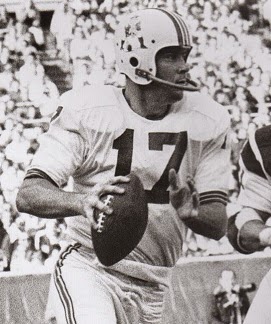
Babe Parilli (pictured above) led the AFL in passing yards (3465) and TD passes (31) – and, more unfortunately, in interceptions (27, tied with George Blanda) – while ranking second in pass attempts (473) and completions (228). He was a consensus first-team All-AFL selection and was named to the league All-Star Game.

Gino Cappelletti led the league in scoring (155 points) and field goals (25, in an AFL-leading 39 attempts), each for the third time. He caught a career-high 49 passes for 865 yards and seven touchdowns and was named AFL Player of the Year by the Associated Press and United Press International. Cappelletti, too, was selected for the AFL All-Star Game.

January 23, 2012

Past Venue: Nickerson Field

Boston, MA


Year opened: 1955
Capacity: 10,412, down from 21,000 when it was still being used for football

Names:
Nickerson Field, 1955 to date

Pro football tenants:
Boston Patriots (AFL), 1960-62
Boston Breakers (USFL), 1983

Postseason games hosted:
None

Other tenants of note:
Boston University, 1955 to date
Boston Minutemen (NASL), 1975
New England Tea Men (NASL), 1979
Boston Bolts (ASL/APSL), 1988-90
Boston Breakers (WUSA), 2001-03
Boston Cannons (MLL), 2004-06

Notes: Built on site of Braves Field using some segments of that stadium, including the right field pavilion and portions of the outer wall and entry gate, but the main grandstand, left field pavilion, and a smaller section of bleachers known as the Jury Box were demolished. Venue was given the name of the university’s previous athletic field, which pertained to William E. Nickerson, a member of the school’s board of trustees who donated that original facility in Weston, MA. The stadium was renovated to accommodate the arrival of the AFL Patriots in 1960. In a further renovation in 1968, the Braves Field light towers were taken down and the field was converted to AstroTurf. It has since been replaced with FieldTurf. Boston University officially dropped its football team in 1997, although a club team has since been formed, and the facility is mostly used for soccer and lacrosse.

Fate: Still in use


(top view shows original football configuration with grandstand still intact, lower view is more recent)