Showing posts with label Matt Snell. Show all posts

December 6, 2015

1969: Jets Intercept 6 Passes, Defeat Oilers to Clinch AFL Eastern Division Title


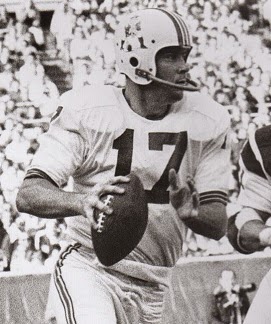
The New York Jets were looking to lock up a second straight AFL Eastern Division title as they faced the Houston Oilers on December 6, 1969. A year after Head Coach Weeb Ewbank’s team had not only won the AFL Championship but stunned the Baltimore Colts, champions of the NFL, in Super Bowl III, the Jets still boasted a formidable offense that featured the passing of QB Joe Namath (pictured above) to wide receivers Don Maynard and George Sauer and the running of FB Matt Snell and HB Emerson Boozer. While there were concerns about the defensive backfield, the line and linebackers were solid. The Jets had an 8-4 record, having lost to the Raiders the previous week.

Houston, coached by Wally Lemm, was 5-5-2 and in second place in the mediocre Eastern Division. The Oilers were known for a tough defense that featured DE Elvin Bethea, OLB George Webster, MLB Garland Boyette, cornerbacks Miller Farr and Zeke Moore, and FS Ken Houston.  The offense was not so formidable and was without starting FB Hoyle Granger and QB Pete Beathard, who suffered a foot injury in the previous game and was a late scratch, to be replaced by backup Don Trull.

There were 51,923 fans in attendance for the Saturday game at the Astrodome. The tone was set on the first play from scrimmage when Don Trull of the Oilers threw a pass that was intercepted by CB Cornell Gordon, who returned it 20 yards to the Houston seven. Three plays later, Emerson Boozer ran two yards up the middle for a touchdown. Jim Turner added the extra point and the visitors had a quick 7-0 advantage.

Things got worse for the Oilers when, facing third-and-11 from their own 26, Trull fumbled and DE Verlon Biggs recovered for the Jets. Joe Namath went to the air on first down and connected with George Sauer for a 21-yard TD. Turner again converted and, with only 3:32 elapsed, New York held a 14-0 lead.


In response, the Oilers moved effectively on their ensuing possession. FB Roy Hopkins and HB Woody Campbell handled the ball carrying effectively although the first time Trull faded back to pass he was sacked by DT John Elliott. But facing third-and-12, Trull threw to WR Jerry LeVias for 18 yards and, after two runs by Campbell gained seven yards, he connected with TE Alvin Reed (pictured at left) for 15 yards on a third-and-three play. Another third down was converted when the Jets were flagged for pass interference but the drive finally stalled at the New York 17 and Houston turned the ball over on downs.

The teams traded punts as the game moved into the second quarter. Midway through the period, another Trull pass was picked off, this time by DE Gerry Philbin who returned it 15 yards to the Houston three. Matt Snell lost three yards on first down, but Namath then threw to HB Bill Mathis for a six-yard touchdown. Turner added the point after and the Jets were up by a comfortable 21-0.

Bob Davis, who had only recently been activated from the taxi squad, was at quarterback when the Oilers returned on offense, but after completing two passes, the second to LeVias for 22 yards, he gave up an interception to LB Paul Crane. This time the visitors were unable to take advantage of the turnover and had to punt. Houston put together a 58-yard scoring drive as Davis completed five passes, three to Reed and two to LeVias, the second of which resulted in a 20-yard TD. Roy Gerela added the extra point.

The Oilers got a break when, on the second play of New York’s next series, WR Bake Turner fumbled while running on an end-around and DT Carel Stith recovered at the New York 22. Davis completed a pass to LeVias for 10 yards, but an illegal motion penalty backed Houston up and the home team ended up settling for a 24-yard Gerela field goal that made the halftime score 21-10.

The Jets had the first possession of the third quarter, punted, and got the ball back a few plays later when CB John Dockery intercepted a Davis pass and returned it 35 yards to the Houston five. The Oilers were able to keep the Jets out of the end zone, but the visitors came away with a 10-yard field goal by Turner that extended their lead to 14 points.

LeVias returned the ensuing kickoff 42 yards and the Jets were penalized 15 yards for a personal foul on top of it, but on the next play Davis fumbled when sacked by Biggs and New York had the ball back at the Houston 47. Runs by Boozer and Mathis picked up 18 yards before Jim Turner came on to kick a 38-yard field goal that put the Jets ahead by 27-10.


Davis was sacked twice by Biggs on the next possession and the Oilers had to punt from deep in their own territory. As the game moved into the fourth quarter, the Jets advanced to the Houston three, but this time they came up empty when Turner missed a short field goal attempt. It didn’t matter as, two plays later, Davis gave up another interception, this time with LB Ralph Baker (pictured at right) doing the honors. Veteran QB Babe Parilli was now spelling Namath and threw to Boozer for a gain of 29 yards. Snell scored from three yards out shortly thereafter and, with Turner again converting, the Jets had a commanding 34-10 lead.

The next two Houston possessions resulted in turnovers, by a fumble and yet another interception, the second by Dockery. But now New York turned the ball over on a fumble by FB Lee White and safety Johnny Peacock recovered and ran 27 yards for a touchdown. HB Mike Richardson scored for a two-point conversion that made it a 34-18 contest with a little over five minutes to play.

The Jets recovered the ensuing onside kick but went three-and-out and punted. Houston drove 80 yards in 10 plays. Davis completed eight passes along the way and ran once for four yards. His last pass was to HB Rich Johnson for a one-yard TD and another toss to WR Jim Beirne added another two-point conversion. It was now an eight-point game and this time the Oilers succeeded on recovering the onside kick, but there were only 32 seconds remaining on the clock. Davis missed on four passes and New York came away with a 34-26 win.  

As a side note, the attention of the crowd was split between the game before them, during which they often booed the Oilers, and the major collegiate game between Texas and Arkansas that many of them were listening to via radio, causing cheers at odd moments.

Houston led in total yards (220 to 213) and in first downs (18 to 12), which was deceptive since the Oilers were playing from behind virtually the entire game. More significantly, they turned the ball over a crippling nine times, six of them by interceptions, which set a club record for the Jets. New York also recorded nine sacks, to none by Houston. The Jets suffered four turnovers.

Joe Namath had a relatively run-of-the-mill performance, completing 6 of 16 passes for 52 yards and two touchdowns with none intercepted. Emerson Boozer rushed for 57 yards on 11 carries that included a TD and caught a pass for another 29 yards. Matt Snell contributed 38 yards on his 14 rushing attempts that also included a score. George Sauer topped New York’s receivers with just three catches for 33 yards and a touchdown.


For the Oilers, Don Trull was three-of-nine for 37 yards with two interceptions before being relieved by Bob Davis, who was successful on 20 of 35 throws for 192 yards and two TDs, but with four interceptions. Jerry LeVias (pictured at left) and Alvin Reed caught 9 passes apiece, for 110 and 86 yards, respectively, and LeVias scored a touchdown. Roy Hopkins led the club in rushing with 30 yards on 9 carries.

The Jets defeated Miami in the season finale to finish with a 10-4 record and, in the revamped playoff format that the AFL used in its last season prior to the merger with the NFL, they faced the second-place team in the Western Division, the Kansas City Chiefs, in the first round. The Chiefs won to end New York’s hopes of repeating as AFL Champions. The Oilers won their last game to finish second in the division at 6-6-2 and were swamped by the Oakland Raiders, the Western Division’s top finisher, in their first round playoff game.

The relief performance against New York was the most significant action for third-year QB Bob Davis in 1969. Used sparingly in his first three seasons with Houston, he moved on to the Jets the following year and saw his most significant NFL action with them before moving on to New Orleans and then the World Football League.

October 26, 2014

1969: Jets Run for 210 Yards to Defeat Patriots


The New York Jets had won the 1968 AFL Championship and stunned the Baltimore Colts in Super Bowl III and were 4-2 as they hosted the Boston Patriots on October 26, 1969. Coached for the seventh year by Weeb Ewbank, the Jets were known primarily for their passing offense, and that centered around star QB Joe Namath and the outstanding wide receivers Don Maynard and George Sauer. With HB Emerson Boozer and FB Matt Snell (pictured above), they could run the ball, too. On defense they were sound on the line and at linebacker, but there were concerns about the defensive backfield.

Boston was 0-6 and had already lost to the Jets at home. Their first-year head coach was Clive Rush, a former New York assistant, and another ex-Jet was the starting quarterback, Mike Taliaferro. There were promising young players such as HB Carl Garrett and G Mike Montler, but the defense was missing star MLB Nick Buoniconti, dealt away to Miami. However, the strong suit was the defensive backfield, and the Patriots hoped to disrupt New York’s passing attack.

It was a sunny and pleasant day at Shea Stadium with 62,298 fans in attendance. The Patriots had the first possession and drove 82 yards in seven plays. QB Mike Taliaferro had completions of 16 yards to WR Charley Frazier and 19 yards to Carl Garrett and connected with WR Bill Rademacher, yet another ex-Jet, in the end zone for a 22-yard touchdown. Gino Cappelletti added the extra point.

New York put together a scoring drive in response. Joe Namath had a completion to George Sauer, but it was Matt Snell and Emerson Boozer carrying the load and Snell ran 12 yards for a TD. Jim Turner’s extra point tied the score at 7-7.

Boston came right back with a 74-yard series. FB Jim Nance had a 16-yard run up the middle and, on a third-and-nine play, Taliaferro threw to Rademacher for 17 yards to the New York 40. The series finally ended with a Cappelletti field goal from 39 yards and the visitors took a 10-7 lead into the second quarter.

The Jets continued to keep the ball on the ground, although Namath did find Don Maynard open for a 20-yard gain at one point. The drive stalled at the Boston 30 and Turner once again knotted the score with a 38-yard field goal.

The Patriots had to punt following their next series, but made a big play on defense when safety John Charles intercepted a Namath pass and returned it 25 yards for a touchdown. Cappelletti converted and the visitors were again in the lead by 17-10.

A short series by the Jets that ended in a punt led to Taliaferro being intercepted by CB Randy Beverly, who returned it to the Boston 33. However, Snell fumbled the ball back two plays later. The Patriots were forced to punt and New York advanced into Boston territory, but with time running out in the first half, Turner missed a 37-yard field goal attempt and the score remained unchanged at halftime.

On the third play following the second half kickoff, the visitors got a break when Boozer fumbled and DT Ray Jacobs recovered for the Patriots. The turnover led to a field goal try by Cappelletti, but he was unsuccessful from 49 yards. The Jets reached midfield on their next possession, helped along by a Namath pass to Sauer that picked up 25 yards, but had to punt. However, they pinned the Patriots deep in their territory and, when forced to punt in turn, Janik’s kick traveled only 29 yards to give the Jets good field position at the Boston 41.

In a series in which Snell ran four times for 16 yards, the Jets put points on the board with a 32-yard Turner field goal that narrowed Boston’s lead to 17-13. The Patriots again had to punt and, in a possession that extended into the fourth quarter, the Jets drove to another score. On a third-and-ten play, Namath, finding his receivers covered, uncharacteristically scrambled for 16 yards and New York picked up another 15 yards on a personal foul by the Patriots. Now at the Boston 47, the Jets pounded down the field and Boozer scored a touchdown from two yards out. Turner added the extra point and New York was ahead by 20-17.

On the next series, Taliaferro fumbled when hit attempting to pass and DT John Elliott recovered at the Boston 31. The Jets kept the ball on the ground with Snell and Boozer carrying and added to the lead when Turner kicked a 13-yard field goal. With time winding down, the Patriots went three-and-out on their next series and punted. New York was able to run out the last two minutes and won by a final score of 23-17.

The Jets had more total yards (318 to 211), with only 108 through the air but 210 on the ground, and also had the lead in first downs (21 to 10). New York was hurt by three turnovers, to two by the Patriots, but of the seven penalties called during the game, six were on Boston.

Matt Snell rushed for 109 yards on 23 carries and Emerson Boozer contributed 67 yards on 15 attempts, with each scoring a touchdown. Joe Namath completed 10 of 21 passes for 115 yards and no touchdowns while giving up one interception. George Sauer had four catches for 58 yards to top the Jets.

For the Patriots, Mike Taliaferro (pictured below) was successful on 12 of 24 throws for 139 yards and a TD with one interception. Jim Nance rushed for 58 yards on 11 carries and Carl Garrett added 20 on 8 attempts and also had four pass receptions for 40 yards. Bill Rademacher was the top receiver with 6 catches for 78 yards and a TD.


The Jets cruised to first place in the Eastern Division with a 10-4 record but, in the expanded playoff format used in the AFL’s last year before merging with the NFL, they lost in the Divisional round to the Chiefs, second-place finishers in the Western Division. Boston won for the first time the following week against the Oilers, the first of four wins in five games, and ended up tied for third in the division with Buffalo at 4-10.

The combination of Matt Snell and Emerson Boozer continued to be productive over the course of the season. Snell rushed for 695 yards on 191 carries (3.6 avg.) and was a consensus first-team All-AFL selection as well as AFL All-Star. Boozer had 604 yards on 130 attempts (4.6 avg.) and gained more yardage as a receiver (222 on 20 receptions to 187 on 22 catches for Snell).

Mike Taliaferro had his most productive pro season, throwing for 2160 yards and 19 touchdowns, which tied Namath for second in the league. He was also named to the AFL All-Star game. Bill Rademacher’s performance against the Jets was the best of his career. A backup who caught just three passes during five years with New York, he had 17 receptions for 217 yards (12.8 avg.) and three TDs in ’69.

September 21, 2014

1970: Browns Defeat Jets in Monday Night Debut


Pro football on Monday nights was not unprecedented, but as a regularly-scheduled weekly television series, which it became in 1970, it was an innovation. The American Broadcasting Company promoted the concept vigorously and provided resources for covering the games that the other networks typically used only for playoff contests. An entertaining trio of announcers Howard Cosell, Keith Jackson, and ex-Cowboys QB Don Meredith added to the showcase.

The first week’s contest on September 21, 1970 pitted the Cleveland Browns, an established NFL team that had been shifted to the American Football Conference as part of the merger (thus being aligned with former American Football League teams), against the New York Jets, champions of the AFL two years earlier.

The Browns were coached by Blanton Collier for the eighth season and had advanced to the last two NFL Championship games. It was anticipated that, with recent success and grouped with three mediocre teams in the new Central Division of the AFC, that the Browns would contend. They had traded away star WR Paul Warfield to Miami in order to draft QB Mike Phipps out of Purdue, but veteran Bill Nelsen was still the starting quarterback. HB Leroy Kelly remained a major cog in the offense and they also had WR Gary Collins and TE Milt Morin. The team’s biggest questions pertained to the reshuffled defense.

New York, coached by Weeb Ewbank, had followed up the 1968 Super Bowl season with a division-topping 10-4 record in ’69. Now in the AFC East, they continued to rely on QB Joe Namath passing to a good group of receivers led by Don Maynard and George Sauer and the running game featured FB Matt Snell and HB Emerson Boozer. The defense was good up front but questionable in the secondary.

It was a clear night at Municipal Stadium in Cleveland with a stadium-record 85,703 fans in attendance and an estimated 35 million watching the telecast. The Jets punted following the first series of the game and Cleveland drove 55 yards in nine plays. Bill Nelsen had completions to Milt Morin for 13 yards and to FB Bo Scott for 21 and a third-down pass to Gary Collins was good for an eight-yard touchdown. Don Cockroft added the extra point.

The Jets reached midfield on their next possession but again had to punt. Starting at their 16, the Browns drove to another score, going 84 yards in 11 plays. Leroy Kelly ran effectively and a pass interference call on a third-and-eight play kept the drive alive. In New York territory, Nelsen threw to Morin for 18 yards and to Scott for 15 and it was Scott running around end for the last two yards and a TD. Cockroft added the extra point and Cleveland carried a 14-0 lead into the second quarter.

The Jets, relying primarily on runs by Emerson Boozer and Matt Snell, put together an eight-play, 61-yard series that resulted in Boozer plowing into the center of the line for a two-yard touchdown. Jim Turner converted and Cleveland’s lead was cut to 14-7.


Nelsen completed a pass to Morin for 25 yards on the next series but the Browns ended up having to punt. The Jets also moved well, with Namath completing back-to-back passes to George Sauer (pictured at left) for 17 and 40 yards, but after reaching the Cleveland 17 Namath again looked to Sauer but was picked off by CB Walt Sumner, who returned it 34 yards. Following another Cleveland punt, another New York drive into Browns territory ended with Namath being intercepted once more, and the score remained unchanged at the half.

The Browns started off the third quarter with WR Homer Jones taking the second half kickoff and returning it 94 yards for a touchdown and, with Cockroft’s PAT, a 21-7 lead. In response, Namath came out throwing and immediately connected with Don Maynard for 20 yards and Sauer for 16 to reach the Cleveland 44. Another pass to Sauer picked up 13 yards and then Snell and Boozer accumulated another 13 yards between them on the ground. Namath found Sauer once again for an additional 13 yards and, two plays later, Boozer raced 10 yards through the middle for a TD to complete the 10-play, 80-yard drive. Turner converted and it was once more a seven-point contest.

The Browns started their next series with favorable field position at their own 47 after a good kickoff return with a penalty tacked on. They advanced 47 yards in six plays and Cockroft kicked a 27-yard field goal. In their next series, the running of Snell and Boozer moved the Jets back into Cleveland territory, and Namath also completed two short passes. However, the drive stalled at the 42 and Turner’s 50-yard field goal attempt fell short.

The Browns punted on the final play of the third quarter and New York again threatened to score. Snell ran for 19 yards on the first play of the series and, after five more running plays, a pass interference call on CB Erich Barnes put the ball on the Cleveland seven. But on the next play, Snell fumbled and DE Jack Gregory recovered to end the threat. The Browns responded with a long six-minute drive. Nelsen completed three passes, the longest to Morin for 22 yards, and Scott had a 17-yard run. But Cockroft missed to the right on an 18-yard field goal try.

The Jets took over from their 20 with 5:40 remaining on the clock and, with Namath throwing on every down, they quickly moved 80 yards in four plays. Completions to Boozer, WR Rich Caster, and Sauer picked up 14, 19, and 14 yards, respectively, and a throw to Sauer was good for a 33-yard touchdown. Turner’s conversion put the visitors just three points behind at 24-21.

The time was running down to two minutes as the Browns went three-and-out on their next possession, but Cockroft’s 65-yard punt had to be chased by DB Mike Battle, who failed to catch the ball at the 30 and downed it at the New York four. Four plays later, Namath’s pass was intercepted by LB Bill Andrews, who returned it 25 yards for a clinching touchdown. Cockroft again converted and Cleveland came away the winner by a final score of 31-21.

The Jets dominated in total yards (454 to 221) and first downs (31 to 20). However, they also turned the ball over four times, to none suffered by Cleveland, and were penalized 13 times at a cost of 161 yards, to 8 flags thrown on the Browns.


Bill Nelsen completed 12 of 27 passes for 145 yards and a touchdown with none intercepted. Milt Morin (pictured at right) had 5 catches for 90 yards and Leroy Kelly rushed for 62 yards on 20 carries.

For the Jets, Joe Namath was successful on 18 of 31 throws for 298 yards and a TD, but gave up three interceptions, including the last one that led directly to the game-clinching score. George Sauer caught 10 of those passes for 172 yards and a touchdown and Don Maynard gained 69 yards on his four receptions. Matt Snell topped the ground game as he rushed for 108 yards on 16 attempts and Emerson Boozer contributed 58 yards on 15 carries that included two TDs.

Following the exciting opening contest, neither team ended up meeting expectations over the course of the season. The Browns reached 4-2 before losing five of their last eight contests and ending up at 7-7 and in second place behind the third-year Cincinnati Bengals. Leroy Kelly’s performance dropped off due to an ankle injury and Homer Jones failed to fill the shoes of the departed Warfield (his kickoff return TD against the Jets was the highlight of his season). The Jets won their second game but proceeded to lose six straight on the way to a 4-10 record. Injuries were the key to New York’s collapse, with Joe Namath suffering a broken wrist and Matt Snell a torn Achilles tendon that sidelined them for most of the season.

Pro football on Monday nights did not disappoint, however, and the program maintained consistently strong ratings in its first year and well beyond. 

December 20, 2013

Rookie of the Year: Matt Snell, 1964

Fullback, New York Jets


Age: 23
College: Ohio State
Height: 6’2”   Weight: 220

Prelude:
Snell started out primarily as a blocking back in his sophomore year at Ohio State, with All-American FB Bob Ferguson and HB Paul Warfield getting most of the carries. He moved to defensive end as a junior, where he was effective, before starting at fullback in his senior season. Both New York teams drafted him for 1964 – the Jets of the AFL in the first round (third overall) and the NFL Giants in the fourth round. In a major coup for the new ownership group led by Sonny Werblin, the Jets won the bidding war for Snell’s services. There was speculation as to whether he would play on offense or defense as a pro, but he moved directly into the lineup at fullback.

1964 Season Summary
Appeared in all 14 games
[Bracketed numbers indicate league rank in Top 20]

Rushing
Attempts – 215 [2]
Most attempts, game - 31 (for 180 yds.) vs. Houston 10/17
Yards – 948 [2]
Most yards, game – 180 yards (on 31 carries) vs. Houston 10/17
Average gain – 4.4 [5]
TDs – 5 [4, tied with Jack Kemp & Charley Mitchell]
100-yard rushing games – 3

Pass Receiving
Receptions – 56 [7, tied with Sid Blanks]           
Most receptions, game – 8 (for 79 yds.) vs. San Diego 10/3
Yards – 393
Most yards, game - 79 (on 8 catches) vs. San Diego 10/3
Average gain – 7.0
TDs – 1

Kickoff Returns
Returns – 7
Yards – 158
Average per return – 22.6
TDs – 0
Longest return – 31 yards

All-Purpose yards – 1499 [5]

Passing
Attempts – 1
Completions – 0
Yards – 0
TDs – 0
INT – 1

Scoring
TDs – 6 [18, tied with seven others]
Points – 36

Awards & Honors:
AFL Rookie of the Year: UPI
2nd-team All-AFL: AP, UPI, NEA, NY Daily News
AFL All-Star Game

Jets went 5-8-1 to finish third in the AFL Eastern Division.

Aftermath:
Although bothered by a leg injury, Snell rushed for 763 yards and caught 38 passes in 1965. He was a second-team All-AFL selection of the AP and New York Daily News. A fine blocker as well as ball carrier, Snell was an AFL All-Star in ’66, rushing for 644 yards and catching 48 passes for another 346 yards. A knee injury suffered in the opening game limited him to seven games and 207 yards in 1967, but he bounced back in ’68 to rush for 747 yards as the Jets won the AFL Championship, and he had a 121-yard rushing performance in the Super Bowl upset of the Colts. Snell ran for 695 yards in 1969 and was a consensus first-team All-AFL selection, but a torn Achilles tendon suffered in the third game of the ’70 season effectively marked the end of his career. While he held on for another two seasons, through 1972, further injuries kept him off the field. Overall, Snell rushed for 4285 yards on 1057 carries (4.1 avg.) and caught 193 passes for 1375 yards, scoring a total of 31 touchdowns. He was a first-team All-AFL selection once, received at least some second-team honors after three other seasons, and was named to three AFL All-Star Games.

--


Rookie of the Year Profiles feature players who were named Rookie of the Year in the NFL, AFL (1960-69), or USFL (1983-85) by a recognized organization (Associated Press – Offense or Defense, Newspaper Enterprise Association, United Press International, The Sporting News, or the league itself – Pepsi NFL Rookie of the Year). 

September 18, 2013

1965: Namath Sees First Pro Action, But Chiefs Hold Off Jets


The American Football League’s New York Jets were coming off a 5-8-1 record in 1964 and slowly but steadily improving under the guidance of Head Coach Weeb Ewbank. Rookie FB Matt Snell made a big impact on the offense and, in the offseason, the Jets made a big splash by drafting and signing QB Joe Namath out of Alabama. His then-huge $400,000 contract, used to lure him away from the St. Louis Cardinals, the team holding his NFL draft rights, was enough to bring notoriety. While the Jets invested in other rookies, including Heisman-winning QB John Huarte of Notre Dame, it was Namath who got the big publicity and buildup. The only concern was that, while he had tremendous potential, he already had a bad knee that had required surgery.

Ewbank was determined to not rush his star rookie into the lineup and announced that QB Mike Taliaferro, a backup in ’64, would start the 1965 season behind center. Taliaferro went the distance in a Week 1 loss to the Oilers at Houston.

On September 18, 1965 the Jets played their home-opening game against the Kansas City Chiefs. The Chiefs, coached by Hank Stram, were 7-7 in ’64 and coming off a bad loss to the Raiders in their first game. The Chiefs had talent but had underachieved since moving from Dallas to Kansas City following a title-winning campaign in 1962. QB Len Dawson was a precision passer who led the AFL in that category for the second time in ’64. Curtis McClinton and Mack Lee Hill were productive running backs. The offensive line was solid and the defense, if all hands stayed healthy, was sound as well.

There was a crowd of 53,658 on hand at Shea Stadium for the Saturday contest. The Chiefs went three-and-out on their first possession and the Jets, getting into scoring territory on a series highlighted by FB Matt Snell’s 15-yard run, came up empty when Jim Turner was short on a field goal attempt.

Neither offense was moving effectively but a pass interference penalty gave the Jets a first down at the Kansas City 15 on their next possession. Mike Taliaferro overthrew flanker Don Maynard twice and was loudly booed by the home fans. This time they got points, however, as Turner booted a 19-yard field goal.

Early in the second quarter, the Jets again failed to move well on offense as Taliaferro missed receivers and Turner suffered a blocked field goal try. But following a punt by the Chiefs, Joe Namath entered the game to an ovation from the crowd.

The first series was quiet as the rookie quarterback handed off three times and the Jets had to punt. Kansas City CB Willie Mitchell returned the kick 54 yards to the New York 30. The Chiefs made the most of the great starting field position five plays later as Len Dawson connected with split end Chris Burford in the back of the end zone for a 19-yard touchdown. Tommy Brooker’s extra point was good and the Chiefs were in front by 7-3.


On the next series for the Jets, Namath immediately went to the air and hit Maynard for 18 yards, but the play was nullified by a holding penalty. Namath’s first official completion was to Snell and actually lost four yards as New York again failed to move effectively and had to punt.

The Chiefs moved the ball well on offense but, with a third down at the New York 47, Dawson was sacked for a 15-yard loss by DT Paul Rochester and they had to punt. The score remained 7-3 at the half.

The Jets started off the third quarter by driving into Kansas City territory, primarily thanks to Snell’s three carries for 21 yards, but dropped passes caused the series to stall and Jim Turner’s field goal try was partially blocked.

Following a trade of punts, the Chiefs had another short series and had to kick the ball away. However, Jerrel Wilson’s punt was deflected back to him by Rochester and his second kick went only 11 yards to give New York the ball at the KC 28. Snell ran for 9 yards on first down but the Jets could get no further. On fourth-and-one, they went for it and Snell was stopped for no gain by DE Jerry Mays and LB Sherrill Headrick.

The Chiefs moved well offensively until the drive finally stalled at the New York 48 early in the fourth quarter and they punted. Namath threw to Maynard for 14 yards but was again victimized by dropped passes. Following a penalty on the Chiefs, the rookie quarterback faded back and had the ball knocked out of his hand by LB Bobby Bell, who recovered and carried to the New York 24. Kansas City wasted no time in capitalizing as on the next play Dawson threw to Burford for a touchdown.

The teams once again traded punts before the Jets put together a scoring drive. Namath threw a pass to split end Bake Turner that gained 10 yards and then, looking deep for Turner again, the Chiefs were called for interference. Namath went long for Maynard and it was complete for a 37-yard touchdown. Jim Turner’s successful conversion made it a four-point game.

The Chiefs managed to eat up valuable time on the following series and the Jets got the ball back with just over two minutes remaining. Namath completed two passes but a long throw on fourth-and-three fell incomplete to effectively end the game. Kansas City held on to win by a score of 14-10.

The statistics reflected the closeness of the score – and the difficulty both offenses had in moving the ball. The Jets led in total yards (231 to 224) and first downs (14 to 9). They also sacked Dawson four times, while allowing just one sack themselves. However, New York gave up the game’s only turnover, and it led to a touchdown for the Chiefs. KC was penalized 7 times, at a cost of 117 yards, while New York was flagged only once. Kansas City also punted the ball 11 times, to just five by the Jets, but Jim Turner was unsuccessful on three of his four field goal attempts.

Len Dawson had a rather ordinary day by his standards as he completed 10 of 20 passes for 118 yards, but two of them were good for touchdowns and none were intercepted. Chris Burford had four catches for 58 yards and both TDs. Mack Lee Hill gained 65 yards on 13 carries and Curtis McClinton added 58 yards on 15 attempts.

For the Jets, Joe Namath was successful on 11 of his 23 passes for 121 yards and a TD, also without an interception. Several of his misses were on target but dropped. Mike Taliaferro was a woeful 4-of-12 for 24 yards. Bake Turner had 5 catches for 41 yards while Don Maynard gained 83 yards on four receptions that included a score. Matt Snell ran the ball 19 times for 82 yards.

Kansas City ended up at 7-5-2 to place third in the AFL Western Division. The Jets continued to struggle, losing two games, tying one, and then losing again before reeling off four straight wins (including one over the Chiefs in their second meeting at Kansas City). They went on to finish second in the Eastern Division, although they cooled off down the stretch and again produced a 5-8-1 record.

Joe Namath took over the starting job at quarterback for all intents, although Mike Taliaferro continued to see action. While Namath completed only 48.2 percent of his passes (he would never have high completion percentages throughout his career), they were good for 2220 yards and 18 touchdowns with 15 interceptions. He received Rookie of the Year recognition and was chosen for the AFL All-Star Game.  The big investment the Jets had made in the quarterback known as “Broadway Joe” would pay off in big years to come.

August 1, 2013

1969: Jets Withstand Second Half Rally to Beat College All-Stars


The 36th annual College All-Star Game on August 1, 1969 featured the New York Jets as the pro representative. Last seen upsetting the Baltimore Colts in Super Bowl III, the Jets became the first American Football League Champion to appear in the annual contest sponsored by the Chicago Tribune for Chicago Charities.

There had been turmoil for the Jets in June when star QB Joe Namath (pictured above) announced he would retire rather than sell his interest in the Bachelors III nightclub, as demanded by Commissioner Pete Rozelle, but “Broadway Joe” finally relented and reported to training camp just two weeks prior to the All-Star contest.

On the All-Star side, a shadow was cast by the absence of star running backs O.J. Simpson, the Heisman Trophy winner out of USC, Leroy Keyes from Purdue, and Michigan’s Ron Johnson, who had chosen to skip the game to avoid the risk of injury prior to signing pro contracts. Still, there were plenty of future pro stars playing, including Notre Dame OT George Kunz, TE Bob Klein from USC, and WR Jerry LeVias of Southern Methodist on offense and, defensively, ends Bill Stanfill from Georgia and Fred Dryer of San Diego State, Arkansas State MLB Bill Bergey, cornerbacks Jim Marsalis of Tennessee State and Bill Thompson from Maryland – Eastern Shore, and Missouri safety Roger Wehrli. The team was coached by Otto Graham for the ninth time, returning after a three-year hiatus while he was head coach of the Redskins.

There was a crowd of 74,206 in attendance on a Friday night at Soldier Field and many of them loudly booed Namath when he was introduced. The All-Stars looked tight throughout the first half and were especially hampered by their lack of a running attack. The Jets scored first on a 43-yard Jim Turner field goal. Less than four minutes later, New York struck again on another Turner field goal, this time from 16 yards, and the pro champs led by 6-0 after a quarter of play.

In the second quarter, the Jets added to their lead as they put together a 10-play, 75-yard drive that ended with FB Matt Snell running the final three yards for a TD. They failed to add to their margin when the All-Stars put together an impressive goal-line stand after the Jets got a first down inside the five yard line, stopping four straight running plays (two each by HB Emerson Boozer and FB Bill Mathis).

The All-Star defense foiled another possible score by the Jets when Snell attempted an option pass intended for TE Pete Lammons from the three yard line that was picked off by DB Bill Bradley. But the All-Stars were unable to mount a threat as they managed just one first down (which was due to a penalty) and scored no points in the first half with Notre Dame’s Terry Hanratty and Bobby Douglass of Kansas appearing at quarterback.

Down 13-0 at the half, the All-Stars fell further behind in the third quarter thanks to Turner’s 42-yard field goal for the Jets. But fortunes changed when QB Greg Cook from Cincinnati (pictured below) entered the contest. The collegians took advantage of a 78-yard kickoff return by RB Altie Taylor to the New York 19 to get on the board. Cook fired a 17-yard touchdown pass to WR Gene Washington from Stanford for a touchdown and Roy Gerela from New Mexico State added the extra point.


Following an interception by CB Rudy Redmond, Gerela kicked a 28-yard field goal that made the Jets’ margin just 16-10. New York responded with a 63-yard drive in four plays that ended with a touchdown on a 35-yard sweep by Snell.

The All-Stars struck back quickly, however, as Cook tossed a bomb to Taylor in a third-and-one situation for a 44-yard gain to the New York 12. On the next play Cook floated a pass into the corner of the end zone that was pulled in by the 242-pound Bob Klein for a TD and Gerela’s successful PAT made it 23-17, which was the tally at the end of the eventful third quarter.

The All-Stars regained possession when Roger Wehrli intercepted a Namath pass at the All-Star 36. Cook completed a 27-yard pass and the All-Stars reached the New York 29 before the drive stalled and Gerela missed on a 37-yard field goal attempt that sailed wide. The Jets, making the most of their reprieve, responded with a 69-yard series that concluded with Jim Turner kicking his fourth field goal of the game, from 18 yards, with just under six minutes remaining to play.

It was still 26-17 when the All-Stars got the ball back at their 20 with slightly less than two minutes to go. Cook threw to Jerry LeVias for 11 yards and connected with him again on a big play that covered 59 yards to the New York 8. A penalty on the Jets edged the collegians closer, but controversy ensued on the next play when a throw intended for Gene Washington that was defended by CB Johnny Sample was incomplete. Otto Graham, believing that Sample interfered with Washington, loudly complained to the officials and was in turn confronted by Sample. Graham came away with a bloody scrape on his nose from Sample’s helmet and a 15-yard penalty for being outside his assigned sideline area.

Still, the collegians managed to capitalize when Cook handed off to Taylor who tossed the ball back to him and the quarterback then threw to LeVias for a 19-yard touchdown with 16 seconds left on the clock. Gerela’s PAT was successful, but any last chance for the All-Stars ended when the ensuing onside kick failed to go the required ten yards, and the Jets were able to run out the remaining time for the 26-24 win.

As close as the score was, the Jets dominated statistically, outgaining the All-Stars by 463 yards to 260 and holding a substantial edge in first downs of 28 to 8.


Joe Namath, who was wearing a three-bar linemen’s face mask for the first time in his career, had to remain in the game far longer than Head Coach Weeb Ewbank would have liked due to the All-Star rally. While not fully up to par, he completed 17 of 32 passes for 292 yards with no touchdowns and two interceptions. Matt Snell (pictured above) rushed for 114 yards and two TDs on 19 carries as the Jets piled up 201 yards on the ground. WR Bake Turner, in for the injured George Sauer, caught 8 passes for 145 yards.

With a lack of strong runners, the All-Stars gained just 16 rushing yards, on 13 attempts, and the individual leader was Kansas QB Bobby Douglass with 7 yards on one carry. Greg Cook’s passing was nevertheless nearly enough to pull out the contest as he was successful on 12 of 23 throws for 241 yards and three touchdowns. Jerry LeVias was the leading receiver with three catches for 89 yards.

In the ensuing season, the Jets went 10-4 to again top the Eastern Division in the AFL’s last campaign prior to merging with the NFL, but they lost to Kansas City in the Divisional playoff round. Joe Namath had another outstanding year, receiving AFL Player of the Year recognition from the Associated Press.

Greg Cook had a remarkable rookie season with the Cincinnati Bengals, leading the AFL in passing and garnering Rookie of the Year honors, but unfortunately his career went no further due to his sustaining a serious arm injury along the way. 

October 24, 2011

1964: Bills Surge from Behind in Fourth Quarter to Beat Jets


The Buffalo Bills were undefeated at 6-0 as they hosted the New York Jets in an American Football League game on October 24, 1964. In their third season under Head Coach Lou Saban, Buffalo had a ball-control offense featuring the running of FB Cookie Gilchrist and the passing of QB Jack Kemp, who was frequently relieved by second-year backup Daryle Lamonica (pictured above) if the offense was bogging down or needed a change of pace. Another weapon, rookie Pete Gogolak, added to the team’s scoring potential with his then-unique soccer-style placekicking. The defense was the league’s best across the board.

The Jets were in their second season under the guidance of Head Coach Weeb Ewbank. The refurbished club was benefiting at the gate, having moved into the new Shea Stadium at Flushing Meadows. Rookie FB Matt Snell was Gilchrist’s rival for the AFL rushing title and there were outstanding receivers for strong-armed but immobile QB Dick Wood to throw to in flanker Don Maynard and split end Bake Turner. New York had played one less game than the Bills thus far and brought a 3-1-1 record into the game.

There were 39,621 fans present at War Memorial Stadium for the Saturday night contest. They saw the visitors score first as Wood threw to Turner for a seven-yard touchdown. Gogolak cut that to 7-3 in the second quarter with a 12-yard field goal, but New York responded with another TD, again on a pass by Wood - this time to Maynard from 12 yards out. The Bills cut New York’s lead with less than two minutes remaining in the half as Kemp connected with fleet flanker Elbert “Golden Wheels” Dubenion on a 44-yard touchdown play. The score was 14-10 in favor of the Jets at halftime.

Less than two minutes into the third quarter, the Jets extended their margin when Wood threw to Maynard for a 15-yard TD. Six minutes later, Jim Turner added another three points with a nine-yard field goal, and it seemed as though an upset was in the making with New York ahead by a 24-10 score.

Lamonica came on in relief of Kemp and led the Bills on an 80-yard drive in six plays. On the final play of the third quarter, rookie HB Bobby Smith finished off the possession when he ran off tackle for a 13-yard touchdown. With the successful extra point, the tally stood at 24-17 entering the fourth quarter.

It was all Buffalo in the final period. The Bills defense completely shut down New York’s attack. Lamonica threw to Dubenion for a 44-yard TD that, with Gogolak’s successful conversion, evened the score at 24-24 with 7:44 to go. The Bills went ahead to stay less than four minutes later as Lamonica dove into the end zone to finish off a three-yard run. Gogolak concluded the scoring with a 31-yard field goal and the Bills came away with a 34-24 win to keep their record perfect for another week.

Buffalo outgained the Jets (527 yards to 245) and had more first downs (20 to 15). However, the Bills also turned the ball over three times, to none by New York. The Jets averaged just 2.3 yards per carry on the ground (66 yards on 29 attempts) while Buffalo gained 180 on 37 rushes (4.9 avg.). In the anticipated showdown between the AFL’s top two rushers, neither Cookie Gilchrist (15 carries for 27 yards) nor Matt Snell (28 yards on 12 attempts) was a factor.

Bobby Smith was the rushing star for Buffalo, gaining 98 yards on 12 carries with a TD, and was especially effective during the second-half comeback. Elbert Dubenion (pictured below) had a huge performance with 5 catches for 218 yards and two touchdowns. Jack Kemp completed 8 of 16 passes for 220 yards with a touchdown and an interception while Daryle Lamonica was successful on 4 of 11 throws for 127 yards, also with a TD and one picked off, in his fourth successful relief effort of the year.


For the Jets, Dick Wood went to the air 40 times and completed 16 for 183 yards with three touchdowns and none intercepted. While Matt Snell didn’t accomplish much running the ball, he caught a team-leading 6 passes, for 48 yards. Bake Turner gained 74 yards on his 5 pass receptions and Don Maynard added four for 53 yards and two scores. HB Bill Mathis topped the running game, such as it was, with 34 yards on 12 attempts.

The Bills ran their record to 9-0 before being beaten by the Patriots; as it was, they finished first in the Eastern Division with a 12-2 tally and defeated San Diego for the AFL Championship. The Jets, after the promising start, won the next week against the Patriots but then lost six of their last seven games (including the rematch with Buffalo at Shea Stadium) as injuries accrued (especially in the defensive backfield) to end up at 5-8-1 and third in the division.

The quarterback combination continued to be productive for the Bills. Jack Kemp led the AFL in yards per attempt (8.5) and yards per completion (19.2 – a full three yards better than runner-up Cotton Davidson of the Raiders). The savvy 29-year-old veteran threw for 2285 yards and 13 touchdowns, as well as 26 interceptions, and was named to the league’s All-Star Game. Daryle Lamonica completed 55 of 128 throws (43.0 %) for 1137 yards with six TDs against eight interceptions. He also ran for 289 yards and six touchdowns (Kemp, also mobile, gained 124 yards and scored five times).

Elbert Dubenion caught 42 passes for 1139 yards (a gaudy 27.1 average) and 10 touchdowns. Like Kemp, he was named an AFL All-Star. While Cookie Gilchrist was the league’s leading rusher (981 yards), Bobby Smith, as he showed against the Jets, was an able change-of-pace runner and averaged 4.9 yards-per-carry (306 yards on 62 attempts). Pete Gogolak paved the way for more soccer-style kickers as he booted 19 field goals in 29 attempts and placed second in scoring with 102 points.

--

(NOTE TO READERS: Today's post marks the second anniversary of the launch of Today in Pro Football History. For regular readers, thank you, as always I hope you have enjoyed it and will continue to do so. For newcomers, I encourage you to take a look at the archived material. Feedback and suggestions are always welcome - there is an email link on my profile page.)

September 12, 2010

1964: Jets Debut at Shea Stadium Before Record Crowd


The New York Jets franchise took a significant step forward on September 12, 1964 when they played their first game at the new Shea Stadium. For four seasons (three as the Titans, one as the Jets) the club had played at the badly decaying Polo Grounds and had difficulty drawing fans. The move to the new stadium solved that problem immediately, as there was a crowd of 45,497 on hand, the largest to attend an American Football League game to date.

Since the new ownership group, led by David A. “Sonny” Werblin, had taken over the former Titans franchise from the bankrupt original owner, Harry Wismer, following the 1962 season, the club had gone through a revitalization process. There was a new name, new uniforms, and highly-respected new head coach in Weeb Ewbank. Now they were moving into a new stadium and the only remaining question to address was the quality of the players.


To that end, another significant change for 1964 was that the team was able to sign some high draft picks – something that had not happened during the Wismer era. The biggest prize had been FB Matt Snell (pictured at left), the first draft choice out of Ohio State who had also been selected in the NFL draft by the rival Giants (third round). Other signees from the draft who would have an impact were Gerry Philbin out of Buffalo in the third round, selected as a linebacker but who would play defensive end as a pro, and LB Ralph Baker from Penn State, chosen in the sixth round.

The Jets, coming off of a 5-8-1 season in ’63, faced the Denver Broncos in the season-opening game, a club that had been the worst in the AFL with a 2-11-1 tally. Head Coach Jack Faulkner came to the team amid great expectations in 1962, but after breaking even at 7-7 that year, the Broncos had regressed. In an odd arrangement, QB Jacky Lee was obtained from Houston, where he had backed up veteran George Blanda for four years, as part of a two-year lease agreement (the Broncos gave up DT Bud McFadin and a first round draft choice as part of the deal). He was to be returned to the Oilers after the lease was up, where no doubt it was anticipated that the 37-year-old Blanda would be ready to retire and Lee, having gained experience as a starting quarterback, could step in.

Lee’s first regular season performance was a poor one. He completed 18 of 32 passes for 127 yards and three interceptions. Star end Lionel Taylor contributed a fourth interception on an option pass, and in all the Broncos couldn’t move the ball and turned it over five times.

The Jets, with the lanky and immobile Dick Wood at quarterback, took advantage of the turnovers and gave up none of their own. Wood threw a 16-yard touchdown pass to TE Gene Heeter in the first quarter and in the fourth quarter connected with star flanker Don Maynard, who made an outstanding catch that resulted in a 39-yard TD. In between, rookie placekicker Jim Turner connected on field goals of 11 and 27 yards in the second quarter and 21 yards in the final period.

Two Gene Mingo field goals provided the only scoring for the Broncos, who were as close as 13-6 in the fourth quarter, but following that the Jets scored two touchdowns and a field goal to win easily, 30-6.

While Wood completed just 9 of 18 passes for 144 yards, two of them were touchdowns and none were picked off. Maynard was the top receiver with four catches for 101 yards and the TD. But the star on offense was the rookie fullback Snell, who gained 82 yards on 22 carries and scored the final touchdown. It was a good start to a season in which he would rank second among the AFL’s rushers with 948 yards.

The Jets outgained the Broncos with 247 yards to 192. They also sacked Lee five times, while Denver’s defense never got to Wood, and were flagged three times while the Broncos drew 9 penalties. FB Billy Joe led Denver in rushing with 41 yards on 9 attempts, and Lionel Taylor and HB Charley Mitchell both caught five passes, with Taylor gaining 61 yards.


Aside from Snell’s performance, the other player for the Jets who drew attention was Ed “Wahoo” McDaniel (pictured at right), a middle linebacker who had been obtained from Denver. A 6’1”, 235-pound Native American (Choctaw and Chickasaw) who was a professional wrestler on the side, McDaniel had played college football at Oklahoma under legendary Head Coach Bud Wilkinson. He was drafted by the NFL’s Dallas Cowboys and AFL’s Los Angeles Chargers in 1960 but failed to make either club. After catching on with the Houston Oilers as a guard, he was dealt to Denver and returned to his regular position of linebacker. As Coach Faulkner put it, “he was a tough guy, but he wasn’t very big…he didn’t have great speed, but he gave you effort.”

McDaniel’s acquisition hadn’t been considered a major one by the Jets, but he made it into the starting lineup and became an instant fan favorite. From the first time he made a tackle and his name was announced over the public address system to each occasion that his face appeared on the big Jetorama screen, the crowd cheered wildly. After awhile the PA announcer simply asked “Who made the tackle?” and the fans shouted back “Wahoo!”

There were times when that likely wasn’t the correct answer to the question, for the announcer began asking it on most every gang tackle and, it was said, on occasions when McDaniel was nowhere near the play. But it became a popular part of Jets home games for the remainder of the season. Owner Werblin, an entertainment executive who knew how to market talent, had McDaniel’s last name removed from the back of his jersey and replaced with “WAHOO” thereafter.

New York ended up with another 5-8-1 record in ’64, placing third in the Eastern Division. However, Coach Ewbank was assembling the pieces that would bring greater excitement and success, and overall home attendance jumped from 91,000 in 1963 to 298,000. Denver also repeated its 2-11-1 tally of the previous year; Faulkner was let go after a 0-4 start and replaced by former Cleveland Browns star Mac Speedie.

As a footnote, Jacky Lee lost his starting job to the equally-ineffective Mickey Slaughter. Rather than preparing him to be a starting quarterback, the leasing deal only made Lee less appealing to his original club, the Oilers, who sat him back on the bench when he returned in 1966.

January 12, 2010

1969: Jets Upset Colts in Super Bowl III


Certainly one of the most famous games in pro football history, the shocking upset in Super Bowl III by the AFL champion New York Jets over the Baltimore Colts, who had rolled over the competition in winning the NFL title, served as a coming-of-age for the younger league.

The first two Super Bowls, following the 1966 and ’67 seasons, had been fairly routine wins for the NFL champion Green Bay Packers, and there was some feeling that the AFL teams simply weren’t ready to compete with the established league at the highest level of play. The matchup between the 1968 league champions looked to be even more of a mismatch.

The Colts, under Head Coach Don Shula, had gone 13-1 in winning the Coastal Division and proceeded to win both the Western Conference title game over the Vikings and league championship over Cleveland with relative ease. They had lost their all-time great quarterback, Johnny Unitas, to a sore elbow early in the going, but veteran backup Earl Morrall had stepped in and delivered an MVP performance. The team was sound on both sides of the ball.


The Jets were under the direction of the same head coach who had built Baltimore into a champion in 1958 and ’59, Weeb Ewbank. QB Joe Namath (pictured at right) was flashy and a celebrity off of the field, but while his numbers were down from his 4000-yard passing performance of 1967, he had shown greater maturity in directing the offense in ’68. The running back tandem of FB Matt Snell and HB Emerson Boozer kept defenses honest, while Namath had excellent receivers in flanker Don Maynard and split end George Sauer. They defeated the Raiders in the AFL Championship game for the opportunity to play against the Colts.

While much has been made of Namath’s brash remarks prior to the game, in which he publicly degraded Morrall’s skills and guaranteed a win, it was Ewbank’s game planning that set the stage for the upset by the 17-point underdogs. The Colts had blitzed very effectively during the season in support of their zone defense, and the Jets planned to counter by running the ball straight ahead and utilizing simple hook and flare passes.

It was overcast with temperatures in the seventies at Miami’s Orange Bowl on January 12, 1969 as the two teams faced off. The Jets established the run in the first two plays from scrimmage, with Snell gaining 12 yards and knocking safety Rick Volk out of the game. Playing cautiously, they didn’t score in the first quarter, but set the stage for eventual success. Meanwhile, the Colts drove to the New York 19 yard line on their first possession, but Lou Michaels missed a 27-yard field goal attempt.

It was the first of many missed opportunities for Baltimore. A fumble by Sauer was recovered by LB Ron Porter at the Jets 12, but Morrall’s ensuing pass to TE Tom Mitchell hit the receiver in the shoulder and it resulted in an interception by CB Randy Beverly to end the threat. TE John Mackey dropped a potential TD pass at the New York 10, and Michaels followed up with another missed field goal attempt. A 58-yard run by HB Tom Matte (pictured below) that took the Colts inside the Jets 20 was shortly followed by an interception by CB Johnny Sample. Most notably, a flea flicker play (Matte faking a run and pitching back to the quarterback) in which split end Jimmy Orr was wide open in the end zone and waving frantically ended up being an interception when Morrall failed to see him, threw for FB Jerry Hill instead, and was picked off by safety Jim Hudson.


Meanwhile, the Jets put together the only scoring drive of the first half in the second quarter. They went 80 yards in 12 plays, with Snell carrying the ball six times and accounting for 35 yards, including the touchdown run of four yards. Namath completed four of five passes during the drive as well, for 43 yards. The score stood at 7-0 in favor of the Jets at halftime.

New York scored on two Jim Turner field goals in the third quarter, from 32 and 30 yards, and was up by 16-0 in the fourth quarter when he booted a nine-yarder. The Colts offense had turned the ball over on its first possession of the second half, leading to the first of the three-pointers by the Jets. Morrall was pressing and missing on his passes; Coach Shula finally decided that it was time to send the rusty, 35-year-old Johnny Unitas into the game (pictured directing the Colts offense below).


Now down by more than two touchdowns, it seemed as though the Unitas magic was working when he engineered an 80-yard drive in 15 plays that resulted in a one-yard TD run by Hill. There was only 3:19 on the clock at this point, but the Colts recovered an onside kick and Unitas completed three passes, leading the offense to the Jets 19. Any thought of a remarkable comeback ended there, however, as three straight passes went incomplete, including a last one on fourth-and-five that effectively ended the game. The final score was 16-7.

Statistically, the overall numbers were very close with the Jets barely edging the Colts in total yards (337-324) and net passing yards (195-181); Baltimore had a one-yard edge in rushing yardage (143 on 23 carries to 142 on 43), although 58 of their rushing yards came on the one run by Matte and the far greater number of carries by the Jets gives evidence to their ability to control the ball for extended periods. Perhaps most important of all, the Colts turned the ball over five times, the Jets just once.

While Joe Namath didn’t throw any touchdown passes, he also didn’t toss any interceptions and shrewdly ran the offense, completing 17 of 28 passes for 206 yards; he was named the game’s MVP. WR Don Maynard was playing injured and caught no passes while providing an effective decoy; George Sauer profited, catching 8 passes for 133 yards. Matt Snell (pictured at top) had an outstanding day running the ball, accumulating 121 yards on 30 carries that included the lone TD for the Jets.

Earl Morrall’s difficulties were reflected in his passing statistics: 6 completions in 17 attempts for 71 yards and three interceptions. In his quarter of action, Johnny Unitas completed 11 of 24 passes for 110 yards with one picked off. Tom Matte was the top rusher for the Colts, gaining 116 yards on 11 attempts. Flanker Willie Richardson was the team’s leading receiver with 6 catches for 58 yards.

Afterward, Don Shula summed up by saying, “We didn’t make the big plays we have all season. We just didn’t do it…They deserved the victory”.

For the Jets, it was the high point in the franchise’s history. Joe Namath had lived up to the hype and performed admirably in the biggest game of his career. Weeb Ewbank had prepared his team well to take on the Colts, capping his second successful building project as a pro football head coach. New York’s win was especially a triumph for those who had founded and built the American Football League; with full merger on the horizon, they had proved they could compete head-to-head with the NFL’s best teams.