Showing posts with label Dick Vermeil. Show all posts

November 12, 2016

1979: Eagles Defeat Cowboys in Monday Night Showdown


The Philadelphia Eagles faced an uphill battle as they took on the Dallas Cowboys in a Monday night game on November 12, 1979. Head Coach Dick Vermeil’s team had gotten off to a 6-1 start but, following three straight losses, was at 6-4 and in danger of falling out of contention in the NFC East. QB Ron Jaworski provided gritty leadership, HB Wilbert Montgomery was highly productive both running and receiving, and WR Harold Carmichael (pictured at right) had set a new NFL record by catching a pass in his 106th consecutive game the previous week. The defense lost its leader, MLB Bill Bergey, to a knee injury in the third week but was proving to be formidable and the kicking game, which had been a sore spot the previous year, was also much improved with the arrival of the barefoot-kicking rookie Tony Franklin.

The Cowboys were the defending NFC Champions and atop the division with an 8-2 record. In their twentieth season under Head Coach Tom Landry, they remained strong on offense with QB Roger Staubach throwing the ball and HB Tony Dorsett carrying, while the defense had weathered some key losses to retirement and injury to keep the club on track. Moreover, they had not lost to the Eagles at home since 1965 and were nine-point favorites.

There were 62,417 fans in attendance at Texas Stadium as well as a national television audience. The Cowboys had the first possession and, after Tony Dorsett ran for 24 yards on a sweep and FB Scott Laidlaw gained another eight, they came through with a big play when Roger Staubach went long to WR Tony Hill for a 48-yard touchdown. Rafael Septien added the extra point for the early 7-0 advantage.

Following a short series by the Eagles that resulted in a punt, Dallas was again on the move thanks to the running of Dorsett as well as Staubach but, after catching a second down pass, Dorsett was stripped of the ball by LB Jerry Robinson at the Philadelphia 41. It looked as though the reprieve would be a short one, but helped by a defensive holding call that nullified a third down sack, the Eagles maintained possession and Ron Jaworski passed to Harold Carmichael for 16 yards. A few plays later the drive stalled and, facing fourth-and-six, Tony Franklin was short on a 53-yard field goal attempt, but once again a Dallas penalty intervened and moved the visitors up five yards. Now facing fourth-and-one, the offense returned to the field and took the Cowboys by surprise as Jaworski passed to Carmichael for a 32-yard TD. Franklin added the game-tying point after.

Midway through the second quarter, the Eagles were back in scoring position after DB John Sciarra returned a Dallas punt 32 yards. Jaworski threw to Wilbert Montgomery for 15 yards but the series ultimately came up empty when Franklin was wide to the left on a 45-yard field goal try. With Staubach out due to a thigh injury, QB Danny White entered the game and the Cowboys were forced to punt following a short possession.

The Eagles lost their quarterback as well when Jaworski also had to leave the game due to a wrist injury suffered when he was hit by DE Harvey Martin and they turned to their backup, John Walton. The series ended with a punt but WR Steve Wilson of the Cowboys muffed the kick and LB Frank LeMaster recovered at the Dallas 29 with a minute remaining in the first half. The visitors immediately capitalized when Walton threw to WR Charlie Smith for a 29-yard touchdown and, with Franklin’s conversion, Philadelphia was ahead by 14-7.

However, the Eagles weren’t done as SS Randy Logan intercepted a White pass on the ensuing series at the Dallas 42 that set up a club-record 59-yard field goal by Franklin, giving the Eagles not only a 17-7 halftime lead but a psychological lift.

Both starting quarterbacks were back in the game in the third quarter. In a drive that featured the running of Montgomery and FB Leroy Harris, the Eagles advanced into Dallas territory and scored on a Jaworski pass to Carmichael in the right corner of the end zone for a 13-yard touchdown. Franklin added the extra point to make it a 24-7 contest.

The Cowboys, now in a deeper hole, responded with a five-play possession that started with Staubach passing to Hill for 36 yards to the Philadelphia 31, but they came up empty when Septien’s field goal attempt from 47 yards was short. Later in the period, the Eagles failed to extend their lead when Franklin missed from 52 yards.


With six minutes left to play, Dallas finally got on the board again in electrifying fashion when Staubach threw long again to Hill (pictured at left) for a 75-yard touchdown. Getting the ball back with 2:48 remaining on the clock, the Cowboys advanced 72 yards in nine plays that concluded with another Staubach scoring pass, this time to TE Billy Joe DuPree from five yards out. Septien successfully converted after each TD and the margin was thus narrowed further to 24-21 with 1:19 to play. But any hopes of a stunning comeback were dashed when, on the following series and facing a crucial third down, the Eagles sealed the win as Montgomery broke away for a 37-yard TD. Franklin’s point after capped the 31-21 victory.

The Cowboys had the edge in total yards (408 to 328) while the teams were even with 17 first downs apiece. However, Dallas turned the ball over five times, to none by the Eagles, and Philadelphia recorded five sacks, to three by the home team.

Ron Jaworski completed just 12 of 29 passes for 145 yards, but two were for touchdowns and there were no interceptions. John Walton was two-of-six for 41 yards and a TD in his relief appearance. Wilbert Montgomery rushed for 127 yards on 25 carries that included a touchdown. Harold Carmichael had four catches for 69 yards and two TDs and Charlie Smith contributed four receptions for 54 yards and a score. John Sciarra had an outstanding night averaging 13.8 yards on six punt returns. Tony Franklin made good on only one of his four field goal attempts, but it was a big one.

For the Cowboys, Roger Staubach was successful on 17 of 28 throws for 308 yards and three TDs with none intercepted. Tony Hill (pictured at left) had a big night in defeat, catching 7 passes for 213 yards and two touchdowns. Tony Dorsett gained 53 yards on 13 rushing attempts and had 7 catches for 64 more yards.

The Eagles climbed to a game behind Dallas with the win. It was the first of four straight and five in the last six games, but Philadelphia lost the rematch with the Cowboys and, while both clubs finished at 11-5, it was Dallas winning the division and the Eagles placing second, although reaching the postseason as a Wild Card. They defeated the Bears in the first round but lost to Tampa Bay at the Divisional level. Dallas also fell in the Divisional round, losing to the Rams.

Both Harold Carmichael and Wilbert Montgomery had Pro Bowl seasons, with Carmichael catching 52 passes for 872 yards (16.8 avg.) and 11 touchdowns and Montgomery gaining 2006 yards from scrimmage (1512 on 338 rushing attempts, 494 on 41 pass receptions) and compiling 14 TDs.


Tony Franklin (pictured at right) ended up kicking 23 field goals out of 31 attempts, with three of them coming from over 50 yards. Prone to inconsistency, his 74.2 percentage was the best of his five years in Philadelphia, although he would go on to better years in New England. The 59-yard field goal against the Cowboys remained his career high by far.

Tony Hill ended up with 60 catches for 1062 yards (17.7 avg.) and 10 touchdowns, and received Pro Bowl honors for the second year. His 213-yard pass receiving total against the Eagles remained his career best.

November 28, 2015

2004: Chargers Rally to Defeat Chiefs in Back-and-Forth Game


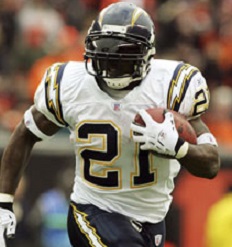
The fortunes of the San Diego Chargers had changed dramatically since the 4-12 finish of 2003 as they met the Kansas City Chiefs on November 28, 2004. Head Coach Marty Schottenheimer’s team had won four straight games and was at 7-3 and even with Denver atop the AFC West. QB Drew Brees (pictured at right), considered a disappointment following his first three seasons, was breaking out in a big way, as was second-year TE Antonio Gates, while RB LaDainian Tomlinson continued to be a top rusher and receiver out of the backfield. The coaching of first-year defensive coordinator Wade Phillips brought about a significant improvement with the defense.  

The Chiefs were on an opposite trajectory. Having been a 13-3 playoff team in 2003, Kansas City had lost its last three games and was struggling with a 3-7 record. Under Head Coach Dick Vermeil, the offense was still productive, led by QB Trent Green and TE Tony Gonzalez, although star RB Priest Holmes was out with a knee injury. The defense was at the root of the club’s problems and ranked among the league’s least effective units.

There were 77,447 fans in attendance at Arrowhead Stadium on a 35-degree day. The Chargers had the first possession and put together a promising drive as WR Eric Parker gained 20 yards on a first-play end-around and Drew Brees completed three passes and had a 14-yard run. However, the drive stalled at the Kansas City 11 and Nate Kaeding’s 29-yard field goal attempt was unsuccessful.

The Chiefs punted following a short series and San Diego struck quickly. Brees threw to Parker for a 55-yard gain to the KC two and, two plays later, LaDainian Tomlinson scored a touchdown from a yard out. Kaeding added the extra point and the visitors were in front by 7-0.

The ensuing kickoff went out of bounds, giving the Chiefs starting field position at their 40, and they went 60 yards in six plays. Trent Green had passes to Tony Gonzalez (pictured below) for 12 and 27 yards and RB Derrick Blaylock, the stand-in for Priest Holmes, ran for a five-yard TD. Lawrence Tynes converted to tie the score at 7-7.


The Chargers punted following their next possession and a penalty on the return had the Chiefs starting from their own six yard line. As the game moved into the second quarter, consecutive carries by RB Larry Johnson picked up 18 yards and, with Green passing effectively and Johnson runs mixed in, Kansas City advanced methodically down the field. Green completed five of his passes, two of them to Gonzalez for 22 yards and the longest covering 16 yards to TE Jason Dunn. The 13-play, 94-yard drive culminated in Johnson’s six-yard touchdown run up the middle. Tynes added the point after and the home team had a 14-7 lead.

The Chargers responded with a long drive of their own that covered 70 yards in 12 plays. They converted three first downs, all on passes by Brees, including a 17-yard toss to Parker on third-and-seven that set up Tomlinson’s three-yard carry for a TD. Kaeding’s kick tied the score at 14-14.

Green passed Kansas City down the field on the next series and Tynes kicked a 28-yard field goal that put the Chiefs back in front by three. With time running out in the first half, Brees threw to WR Kassim Osgood for a 27-yard gain to the KC 43 and two short completions to Tomlinson picked up another nine yards, but Kaeding missed on a 52-yard field goal attempt and the home team took a 17-14 lead into halftime.

Kansas City WR Dante Hall started the third quarter off with a 77-yard kickoff return, but he fumbled at the end without being hit and the Chargers gained possession at their five yard line. They managed to reach their 45 before having to punt and the Chiefs punted it back following a three-and-out series. On San Diego’s first play from midfield, Parker took off for a 38-yard run to the KC 12 and, while the Chargers couldn’t reach the end zone, Kaeding tied the score with a 25-yard field goal.

The teams exchanged punts before the Chiefs began to move effectively in the closing minutes of the period. Green completed three straight passes, the first to WR Johnnie Morton for 18 yards, and a throw to Gonzalez in a third-and-nine situation gained 23 yards to the San Diego 31. On the second play of the fourth quarter, Blaylock broke away for a 22-yard touchdown. Tynes missed the extra point, but Kansas City was back in front at 23-17.

Brees passed the Chargers back down the field, completing six throws along the way. The longest was to WR Keenan McCardell for 23 yards and the last to Antonio Gates for an 18-yard TD. Kaeding added the extra point and San Diego was in the lead by a point at 24-23. It didn’t last long, however, as Hall returned the ensuing kickoff 96 yards for a touchdown, this time maintaining his grip on the football for the full distance. Green threw to WR Eddie Kennison for a two-point conversion and KC was back on top by 31-24.

The Chargers ran into problems with penalties on their next series, one of which wiped out a 51-yard pass play to Gates. However, backed up to their 19 and facing second-and-22, Brees threw to Osgood for a 65-yard pickup to the KC 16 and, three plays later, he connected with Gates for an 11-yard TD. Kaeding added the PAT and, with less than seven minutes remaining in regulation, the score was again tied at 31-31.

San Diego got the ball back when a third-and-11 pass by Green was intercepted by LB Donnie Edwards, who returned it 13 yards to the Kansas City 32. The Chargers reached the 17 before Brees was sacked by CB William Bartee and LB Scott Fujita for a loss of seven yards on third down, but Kaeding kicked a 43-yard field goal and the visitors had a three-point lead.

The Chiefs regained possession with 2:15 left on the clock, but after Green threw to Blaylock for six yards on first down, the next three passes fell incomplete. San Diego held on for a 34-31 win.

“Everybody got their money’s worth today,” summed up San Diego’s Coach Schottenheimer. “It was quite an exciting game.”

The Chargers, in ending a seven-game losing streak at Kansas City, led in total yards (498 to 310), first downs (25 to 20), and time of possession (36:46 to 23:14). The Chiefs turned the ball over twice, to none suffered by San Diego, and while the Chargers were penalized more times (9 to 5), Kansas City’s infractions came at more inopportune times.


Drew Brees completed 28 of 37 passes for 378 yards and two touchdowns while giving up no interceptions. With his two long carries, Eric Parker led the Chargers with 58 rushing yards and also caught three passes for another 78 yards. LaDainian Tomlinson (pictured at left) gained just 46 yards on 21 attempts that included two TDs but also had 10 pass receptions for 57 yards. Antonio Gates gained 92 yards on his 7 catches that included two for scores and, thanks to the one long gain, Kassim Osgood matched the yardage total on his two receptions.

For the Chiefs, Trent Green was successful on 21 of 34 throws for 208 yards with no TDs and one interception. Tony Gonzalez caught 8 passes for 105 yards. Derrick Blaylock rushed for 75 yards on 8 carries that included two touchdowns and Larry Johnson ran the ball 10 times for 43 yards and a TD. Dante Hall averaged 38.8 yards on six kickoff returns, one of which resulted in a touchdown and another that came close.

The Chargers went on to win their next three games, and four of their last five, to finish first in the AFC West with a 12-4 record. They lost their Wild Card playoff contest to the New York Jets in overtime. Kansas City reeled off four wins following the loss to the Chargers but lost the season finale in the rematch at San Diego to place third in the division at 7-9.

Drew Brees ranked second in the AFC with a 104.8 passer rating, gaining 3159 yards with 27 TD passes against just seven interceptions. He was selected to the Pro Bowl, as were both LaDainian Tomlinson, who ran for 1335 yards and a league-leading 17 rushing touchdowns, and Antonio Gates, who caught 81 passes for 964 yards (11.9 avg.) and 13 TDs, and both of them also were consensus first-team All-NFL selections.

Tony Gonzalez topped the NFL with 102 pass receptions, which accounted for 1258 yards and 13 touchdowns. He was chosen to the Pro Bowl. Trent Green topped the league in pass attempts (556) and the conference in completions (369) and passing yards (4591). His 27 TD passes were a career high.

September 3, 2015

1978: Corral Field Goals Propel Rams to Win Over Eagles


The Los Angeles Rams traveled to Philadelphia to face the Eagles in a NFL season-opening game on September 3, 1978. LA, which went 10-4 in ’77, had a new head coach in Ray Malavasi, elevated to replace George Allen, who returned to the team for 1978 after seven years in Washington only to be fired during a tumultuous preseason, and who was in turn successor to Chuck Knox, who led the Rams to five straight division titles but no Super Bowl appearances. The offense, directed by QB Pat Haden, was deep and talented while the defense was outstanding. One newcomer was Frank Corral (pictured above), a placekicker out of UCLA who was drafted in the third round.

Philadelphia had long been a losing club, including a 5-9 record in 1977, but was looking to improve in Head Coach Dick Vermeil’s third season. The seeds were there in an emerging defense that featured a good line anchored by DE Carl Hairston and a solid corps of linebackers led by Bill Bergey. QB Ron Jaworski was still a work in progress and near the end of the ’77 season rookie HB Wilbert Montgomery, the league’s top kickoff returner, showed promise as a runner from scrimmage and claimed the starting job.

It was a sunny afternoon at Veterans Stadium with 64,721 fans in attendance. The Eagles had the game’s first possession, punted, and LA went 42 yards in 12 plays. Pat Haden completed three passes, two of them to convert third downs, and after the drive finally stalled at the Philadelphia 12, Frank Corral kicked a 29-yard field goal.

The Eagles responded with a promising series spurred by Wilbert Montgomery’s 15-yard carry on first down. Ron Jaworski completed two passes, and was fortunate when an apparent interception was wiped out by a penalty on the Rams. But the home team came up empty when Nick Mike-Mayer’s 37-yard field goal try was blocked.

The teams traded punts as the game moved into the second quarter. A poor kick by Rick Engles that traveled only 29 yards gave the Rams good field position at their own 44 and, keeping the ball primarily on the ground, they went 26 yards in eight plays that concluded with another Corral field goal, this time from 47 yards, to extend their lead to 6-0.

The clubs again exchanged punts and the Eagles squandered good field position at the LA 38 when Jaworski threw a pass that was intercepted by SS Dave Elmendorf. Neither team was able to get out of its end of the field until, in the closing seconds of the first half, Haden connected with WR Dwight Scales for a gain of 21 yards to the Philadelphia 31. However, Corral’s field goal attempt from 48 yards hit the left upright and was unsuccessful.

Both offenses remained stymied during the third quarter, although the Rams were winning the field position battle. A promising LA series that featured a Haden throw to Tyler for 16 yards reached the Philadelphia 24, but Tyler fumbled on a first down carry and Bill Bergey recovered for the Eagles.

Philadelphia kept the ball on the ground and moved effectively, although a fumble by FB Cleveland Franklin turned the ball back over to the Rams. Los Angeles had to punt once again with less than a minute remaining in the period, and as the game moved into the fourth quarter, the Eagles were forced to do the same from their own 21. This time Engles’ punt was blocked by CB Pat Thomas and the bouncing ball was recovered by safety Nolan Cromwell in the end zone for a touchdown.  Corral added the extra point and the Rams were ahead by a seemingly-comfortable 13-0.


Once more the teams traded punts, but Philadelphia finally came alive on offense with nine minutes remaining in regulation. Jaworski (pictured at left), who was the target of booing by frustrated home fans thus far, completed a third-and-six pass to WR Harold Carmichael for 32 yards, another throw drew a pass interference penalty on the defenders, and the five-play, 80-yard series concluded with Jaworski connecting with WR Ken Payne for a 24-yard TD. Mike-Mayer converted and the LA lead was cut to six points at 13-7.

The Rams couldn’t move past their own 20 on the ensuing possession and a punt was pulled in by WR Wally Henry at the Philadelphia 43, who returned it 57 yards for a touchdown. Mike-Mayer added the point after and, in sudden fashion, the Eagles were in front by 14-13 with 5:27 left on the clock.

Once more the teams traded punts following short possessions, and the Rams found themselves with the ball at their own 12 with less than two minutes remaining. Haden completed six of his next seven passes, starting off with one to WR Ron Jessie that gained 29 yards and two to WR Willie Miller that picked up ten yards apiece. The 60-yard drive concluded with Corral kicking a 46-yard field goal with seven seconds remaining, and the Rams won by a final score of 16-14.

In a contest in which neither offense excelled, Los Angeles had more total yards (220 to 208) and first downs (15 to 10). The Eagles recorded five sacks, to three by LA. They also turned the ball over twice, to one by the Rams, while the visitors were penalized 10 times at a cost of 82 yards, to three flags thrown on Philadelphia. The teams combined for 17 punts (nine by the Rams, eight by the Eagles) and the special teams for each club each accounted for a touchdown.


Pat Haden (pictured at right) completed just 14 of 33 passes for 154 yards and no touchdowns, but also gave up no interceptions and performed well in the clutch. Wendell Tyler led the Rams in rushing with 36 yards on 10 carries while Willie Miller was the top receiver with three catches for 44 yards. Frank Corral was good on three of four field goal attempts, two of them from over 40 yards that included the game-winner.

For the Eagles, Ron Jaworski was successful on 7 of 17 throws for 102 yards and a TD while being picked off once. Wilbert Montgomery ran for 46 yards on 12 attempts and caught a pass for 23 yards. Harold Carmichael’s one reception for 32 yards made him the leader in receiving yards while Mike Hogan, who ran for 37 yards on 8 carries, and TE Keith Krepfle each had two pass receptions, for 12 and 11 yards, respectively.

“I’m not going to let the fans substitute my quarterback,” said a Coach Vermeil of the booing directed toward Ron Jaworski. “I got one who can win for us; they can boo all they want. I’m not going to take him out. The only ways he matures is if he throws nine innings. They can boo for six months; he will get better.”

Vermeil did indeed stick with Jaworski, with favorable results, and Wilbert Montgomery rushed for 1220 yards. Following another defeat, the Eagles won four of their next five games on the way to a 9-7 record and Wild Card spot in the playoffs. They lost to Atlanta in the first round. The Rams reeled off seven straight wins as they topped the NFC West once again with a 12-4 tally. They made it to the NFC Championship game before falling to the Dallas Cowboys.

Frank Corral’s opening week heroics launched a season in which he led the NFL in field goals (29) and scoring (118 points). He was named to the Pro Bowl in what would prove to be the best of his four years with Los Angeles which also included doing double duty as punter in the last two.

January 11, 2015

2004: Neither Team Punts as Colts Defeat Chiefs in Divisional Playoff Game


The Kansas City Chiefs were back in the playoffs and hosting a postseason game for the first time in six years as they faced the Indianapolis Colts on January 11, 2004 in an AFC Divisional Playoff game. In their third season under Head Coach Dick Vermeil, the Chiefs won their first nine games on the way to a 13-3 record and first place in the AFC West. QB Trent Green passed for 4039 yards and 24 TDs and RB Priest Holmes scored a then-record 27 touchdowns while rushing for 1420 yards and gaining 2110 yards from scrimmage. TE Tony Gonzalez was, like Holmes, a consensus first-team All-Pro who caught 71 passes for 916 yards and 10 TDs, although the wide receivers were capable but unexceptional. WR Dante Hall received All-NFL recognition for his outstanding kick returning, in one stretch returning kicks for touchdowns in four straight games. The defense was an area of concern, however, ranking just 29th overall in the league and twice yielding 45 points in late-season losses.

The Colts were in the playoffs for the second straight year with Head Coach Tony Dungy at the helm and the fourth time in five seasons. The key to success was sixth-year QB Peyton Manning (pictured above), a consensus MVP and first-team All-Pro after passing for 4267 yards and 29 TDs with only 10 interceptions. WR Marvin Harrison gained a Pro Bowl selection and both Reggie Wayne and Brandon Stokley were productive. RB Edgerrin James missed three games with a back injury but still rushed for 1259 yards and caught 51 passes. The defense was less impressive but respectable. Indianapolis topped the AFC South with a 12-4 tally and handily won their Wild Card playoff game the week before by a 41-10 score over Denver without punting once.

There were 79,159 fans in attendance at Arrowhead Stadium. The Colts took the opening kickoff and advanced 70 yards in 10 plays. Peyton Manning completed a pass to Marvin Harrison for 13 yards in a third-and-nine situation and Edgerrin James (pictured below) had a 15-yard run along the way. A Manning throw to WR Brandon Stokley was completed for a 29-yard touchdown and Mike Vanderjagt added the extra point.


Kansas City responded with a drive that included seven carries by Priest Holmes for 52 yards and Trent Green threw to Tony Gonzalez for 16 yards. But after getting first-and-goal at the Indianapolis six, the Chiefs were unable to reach the end zone and Morten Andersen kicked a 22-yard field goal to make it a 7-3 score.

The Colts came back with a six-play, 76-yard series. Manning passed twice to Harrison for gains of 13 and 38 yards and James ran around end for 13 yards in between, as well as 11 yards for a TD. Vanderjagt’s point after put the visitors in front by 14-3.

A 46-yard kickoff return by Dante Hall was nullified by a holding penalty, but in a series that extended into the second quarter, the Chiefs advanced 77 yards in 12 plays. Green completed five passes, including tosses to WR Eddie Kennison for 25 yards and WR Marc Boerigter for 21 to reach Indianapolis territory. Green ran for nine yards on a third-and-five play and a throw to WR Johnnie Morton picked up 14 yards to the seven. Hall caught a pass from Green for a nine-yard touchdown and, with Andersen’s extra point, the score was narrowed to 14-10.

Still, the Chiefs couldn’t stop the Colts, who drove 71 yards in nine plays. James had an 18-yard run and Manning completed four passes, including to WR Reggie Wayne for 17 yards, TE Marcus Pollard for 21, and RB Tom Lopienski for a two-yard TD. It was the only time that the rookie Lopienski touched the ball in his two-year NFL career and Vanderjagt’s PAT put the Colts up by 11 points at 21-10 with 4:34 remaining in the first half.

Starting from their 31 following the kickoff, the Chiefs gained 22 yards right away on a pass from Green to Gonzalez and two more throws to the tight end picked up eight and nine yards, although a longer completion was nullified by offensive pass interference. The possession stalled at the Indianapolis 13 and Kansas City came up empty when the normally-reliable Andersen missed on a 31-yard field goal attempt. The score remained unchanged at halftime.

The Chiefs had the ball first in the third quarter, but Holmes fumbled at the end of a 48-yard run and CB David Macklin recovered for the Colts at the Indianapolis 22. With James and RB Dominic Rhodes running effectively and Manning completing passes of 11 yards to Stokley and nine to Wayne, the visitors moved into KC territory and, after LB Shawn Barber stopped James for a loss of five yards on third down, Vanderjagt kicked a 45-yard field goal to increase the Indianapolis margin to 24-10.


The Chiefs, benefiting from a 27-yard kickoff return by Hall that had them starting from their 45, drove 55 yards in eight plays, six of them runs by Holmes (pictured at right), the first of which picked up 24 yards and the last reached the end zone from a yard out for a touchdown. Andersen’s conversion made it a seven-point game.

The Colts went largely to the air on their next series as Manning completed five passes, three of them to Wayne, including the last that was for a 19-yard TD. Vanderjagt kicked the extra point, but it was a seven-point game once more shortly thereafter when Hall returned the ensuing kickoff 92 yards for a touchdown. Andersen added the PAT and the score was 31-24.

The game entered the fourth quarter and the Colts remained unstoppable on offense. Manning converted a third-and-three situation with a pass to Wayne for 17 yards and followed up with a throw to Harrison for a gain of 27 to the KC 30. Manning completed three more passes to get the ball inside the ten, and James finished the drive off with a one-yard carry for a TD. Vanderjagt again converted to put the visitors up by 38-24.

A long series by the Chiefs followed. Starting from their 24, Kansas City picked up a first down thanks to defensive holding on a third-and-six play and converted a fourth-and-six situation with a pass from Green to Kennison for 19 yards. Green had four more completions as the Chiefs chipped away. Facing fourth-and-five at the Indianapolis seven, Green again connected with Kennison for six yards to get a first-and-goal at the one, and from there Holmes went up the middle for a touchdown. Andersen’s extra point once more made it a one-touchdown contest.

The clock was down to 4:16 remaining in regulation as the Colts again took over on offense. Manning threw to James for 16 yards and a first down, and James ran for another first down to keep the ball away from the Chiefs as the time ticked away. Rhodes was stopped for one yard on a fourth-and-three play, but the ball was at the Kansas City 27 and there were just eight seconds left to play. Green completed one last inconsequential pass and Indianapolis came away the winner by a final score of 38-31.

For the first time in NFL playoff history neither team punted and, equally unprecedented, the Colts managed to play two consecutive postseason games without punting. The teams combined for 842 total yards, with the Colts gaining 434 to Kansas City’s 408 and also leading in first downs (27 to 24) and time of possession (32:13 to 27:47). The Chiefs gained 196 yards of their total on the ground, while Indianapolis had 292 net passing yards. There was only one sack, which was by the Chiefs, and one turnover, also by Kansas City. 

Peyton Manning completed 22 of 30 passes for 304 yards and three touchdowns, with none intercepted. Edgerrin James ran for 125 yards and two TDs on 26 carries. Marvin Harrison and Reggie Wayne each had 6 catches, for 98 and 83 yards, respectively, and Wayne scored once.


For the Chiefs, Trent Green was successful on 18 of 30 throws for 212 yards and a TD with no interceptions. Priest Holmes had 176 rushing yards on 24 attempts that included two touchdowns and also pulled in five passes for 32 more yards. Tony Gonzalez gained 55 yards on his four pass receptions and Eddie Kennison contributed 50 yards on three catches. Dante Hall (pictured at right), in addition to two receptions for 19 yards and a TD, had 208 yards on seven kickoff returns that also included a touchdown.

“I am hot right now, we’re hot as an offense,” said Peyton Manning.

The Indianapolis offense was cooled off in the AFC Championship game the following week in a 24-14 loss to New England. The Chiefs fell back to 7-9 in 2004 and, while they rebounded to 10-6 in Dick Vermeil’s last year before retiring, did not reach the postseason again until 2006.

October 2, 2014

2005: Eagles Rally to Beat Chiefs


The Philadelphia Eagles, defending NFC Champions, were 2-1 as they faced the Kansas City Chiefs on October 2, 2005. Under Head Coach Andy Reid, the pass-heavy Eagles featured QB Donovan McNabb (pictured at right), who had put together back-to-back 300-yard passing games the previous two weeks, and had other formidable offensive weapons in WR Terrell Owens and RB Brian Westbrook. However, McNabb was suffering from a sports hernia, among other ailments, and the Eagles were also without dependable PK David Akers due to a groin pull and would be going with untested Todd France in his place.

Kansas City was coached by Dick Vermeil, a former NFC-winning coach with Philadelphia, and was also coming into the game at 2-1. 35-year-old QB Trent Green directed the attack and WR Eddie Kennison was the best of the wide receivers while TE Tony Gonzalez was a premier tight end. RB Priest Holmes still led the ground game, although Larry Johnson, in his third year, was waiting in the wings. The defense was vulnerable against the pass.

The Chiefs took the opening kickoff and drove 63 yards in nine plays. Trent Green completed three passes, two of them to Eddie Kennison for 15 and seven yards, and Priest Holmes rushed six times for 31 yards, the last three for a touchdown. Lawrence Tynes added the extra point.

The Eagles drove just past midfield before having to punt and Kansas City again put points on the board thanks to a series highlighted by Green throwing to Kennison (pictured below) for a 49-yard gain. Tynes kicked a 38-yard field goal and the Chiefs were ahead by 10-0.


Kansas City got the ball right back on the ensuing kickoff when CB Roderick Hood fumbled and LB Kris Griffin recovered for the Chiefs at the Philadelphia 27. Three plays into the second quarter, Green once again connected with Kennison, this time for an eight yard TD. Tynes converted to stretch the home team’s margin to 17-0.

The teams traded punts before the Eagles, starting at their 24, put together an effective drive. Donovan McNabb completed four straight passes, two of them to Terrell Owens, to reach the KC 23 before the advance stalled and the 40-yard field goal attempt by Todd France, his first in the NFL, was blocked by DE Eric Hicks. On the ensuing series, the Eagles got a break on defense when CB Sheldon Brown intercepted a pass by Green that was intended for Kennison and returned it 40 yards for a touchdown. The try for a two-point conversion failed, and the Chiefs quickly turned the tables when WR Dante Hall returned the kickoff 96 yards for a touchdown. Tynes added the extra point and the Kansas City lead was 24-6.

The Eagles punted following their next series but took advantage of another KC turnover when RB Larry Johnson fumbled and DT Sam Rayburn recovered at midfield. The visitors went 50 yards in five plays, the last two of which were McNabb completions to Owens for 28 yards and then a seven-yard touchdown. France added the extra point to narrow Kansas City’s lead to 24-13, and that was the score at the half.

Philadelphia had first possession in the third quarter and drove into Kansas City territory, with McNabb completing three passes, but the series stalled at the 26 and France kicked a 44-yard field goal. Neither team threatened again until, with fewer than four minutes remaining in the period, McNabb connected with Owens for a 30-yard gain to the KC 30 and, two plays later after a sack, followed up with another pass to Owens for 28 yards to the three. From there, TE Mike Bartrum had a catch for a three-yard touchdown and the Eagles added a two-point conversion when McNabb completed a throw to Westbrook, tying the score at 24-24.

The Chiefs had a short series and punted, and as the game headed into the fourth quarter, Philadelphia drove to another score. McNabb had four completions, including one for an 18-yard gain to RB Lamar Gordon and another to WR Greg Lewis for 34 yards to the Kansas City 25. The Eagles again had to go for a field goal, and France was successful from 37 yards to put the visitors in front by 27-24.

It quickly got worse for the Chiefs when Hall fumbled the kickoff return and RB Reno Mahe recovered for Philadelphia at the KC 25. McNabb threw to Owens for 14 yards and to TE L.J. Smith, who made an outstanding catch for seven, and two plays later he hit Smith again for a one-yard TD. France added the extra point that put the Eagles ahead by ten.

The next possession by the Chiefs ended with Green being picked off by Brown once again, who returned it 20 yards to the KC 41. McNabb picked away at the Chiefs once more, completing four consecutive passes, and while the drive stalled at the eight, the Eagles again came away with points on a 26-yard field goal by France with 3:31 to play.

In the waning minutes, Green passed the Chiefs down the field and they came away with a 15-yard completion to Hall for a touchdown. Tynes added the extra point to make it a six-point game, but the onside kick was recovered by Mahe to seal the 37-31 win for the Eagles.

Philadelphia had the edge in total yards (396 to 353) and first downs (25 to 19). The Eagles managed only 28 rushing yards but gained 368 net passing yards. McNabb was sacked once while Philadelphia recorded three sacks. The Chiefs also turned the ball over four times, to two suffered by the Eagles.

Donovan McNabb completed 33 of 48 passes for 369 yards and three touchdowns, giving up one interception. Terrell Owens (pictured below) had 11 catches for 171 yards and a TD and L.J. Smith contributed 9 receptions for 67 yards and a score. Brian Westbrook ran for only 15 yards on 9 attempts but had 6 catches for 33 yards. On defense, Sheldon Brown accounted for two interceptions that he returned for 60 yards and a touchdown. The fill-in placekicker Todd France was successful on three of four field goal attempts and both of his extra points.


For the Chiefs, Trent Green was successful on 19 of 30 throws for 221 yards and two TDs, but with two interceptions. Eddie Kennison caught 7 of those passes for 109 yards and a touchdown and also had a 23-yard run. Priest Holmes ran for 84 yards on 18 carries that included a score and had five receptions for 24 yards. Dante Hall contributed four catches for 45 yards and a TD (which tied the then-NFL career record of six) and averaged 29.3 yards on eight kickoff returns that included a touchdown.

“He’s unbelieveable, man,” said Kansas City CB Patrick Surtain of McNabb. “The second half, they got on a roll and it was like they were doing anything they wanted.”

Things did not go so well for McNabb and the Eagles the rest of the way. Feuding broke out between the quarterback and Terrell Owens, who was ultimately suspended from the team. McNabb finally succumbed to the sports hernia, which required surgery, and missed the last five games. Philadelphia plummeted to a 6-10 record and last-place finish in the NFC East after having won the division four straight times. The Chiefs rebounded to win their next two games on the way to a 10-6 record and second place ranking in the AFC West, although they failed to qualify for the playoffs in Dick Vermeil’s last season.

Donovan McNabb, who became the first quarterback in franchise history to pass for over 300 yards in three successive games with his performance in Kansas City, ended up throwing for 2507 yards and 16 touchdowns in his injury-shortened season. Terrell Owens caught 47 passes for 763 yards (16.2 avg.) and six TDs before he was banished. L.J. Smith had a career-high 61 catches for 682 yards (11.2 avg.) and three scores.

Todd France lasted three games with the Eagles and was successful on six of seven field goals as well as all five of his extra point attempts. He later played for Tampa Bay in what was his only NFL season. Already having seen action with NFL Europe, he went on to kick in the Arena Football League.

September 27, 2014

1998: Cards Defeat Rams in Return to St. Louis


The Cardinals moved from St. Louis to Phoenix following the 1987 season after 28 years and, now called the Arizona Cardinals, they returned on September 27, 1998 to play the Rams, who had relocated from Los Angeles to St. Louis in 1995.

The Cards had yet to post a winning record in Arizona and, thus far in 1998, were 1-2 after winning for the first time the previous week. Head Coach Vince Tobin was in his third season at the helm and had a promising second-year quarterback in Jake Plummer (pictured above). There were good wide receivers in Frank Sanders and Rob Moore and RB Adrian Murrell was dependable. CB Aeneas Williams was the top player in a fair defense.

St. Louis was in its second season under Head Coach Dick Vermeil and had not been a winning team since 1989, well before the move from LA. The Rams were also 1-2 and were coming off of a win the week before. QB Tony Banks had all the physical tools but had not produced consistently, and star WR Isaac Bruce was hampered by an injury. Much was expected from rookie RB Robert Holcombe, the team’s second round draft pick out of Illinois.

There were 55,832 fans in attendance at the Trans World Dome and many of them booed the visiting Cardinals, who were playing their first regular season game in St. Louis since moving. The Rams went three-and-out in their first series and, starting at their 44 yard line following the punt, Jake Plummer threw to TE Johnny McWilliams for 17 yards. Two carries by Adrian Murrell and another short pass advanced the ball to the St. Louis 31, but Joe Nedney’s 48-yard field goal attempt was unsuccessful.

The teams traded punts before St.Louis put together a scoring drive. With Robert Holcombe carrying six times for 30 yards and Tony Banks running for 19 and completing two passes, the Rams went 68 yards in nine plays capped by Holcombe running five yards for a touchdown. Jeff Wilkins added the extra point to make it 7-0.


The Cardinals responded with a series that extended into the second quarter. Plummer connected on four passes, two of them to Frank Sanders (pictured at left) for 11 and 19 yards and the longest to Rob Moore for 25 yards to the St. Louis 11. The 72-yard drive ended with Nedney booting a 22-yard field goal.

The Rams again moved well on their next possession, with Holcombe running effectively and Banks successful on three passes, including one to WR Ricky Proehl that picked up 16 yards to the Arizona 41. However, the drive stalled at the 27 and Wilkins missed a 45-yard try for a field goal.

Arizona responded by going 65 yards in 11 plays. Plummer completed four passes, converting a third-and-eight situation with a toss to Moore for 12 yards and scoring a touchdown with a throw to Sanders from 13 yards out. Nedney converted and the visitors were ahead for the first time by 10-7.

On their next series, the Cards got a big gain right away when Plummer threw to WR Eric Metcalf for 29 yards. Two penalties on the Rams helped the drive along and Murrell ran for a four-yard TD, with Nedney adding the extra point to give Arizona a ten-point lead.

St. Louis got the ball back with a minute remaining in the period and moved down the field, the biggest plays being Banks passes to RB Amp Lee for 23 yards and to Proehl for 13. On the final play of the first half, Wilkins kicked a 57-yard field goal and the score stood at 17-10 in favor of the Cardinals at the intermission.

The teams exchanged punts through a scoreless third quarter. The Cardinals reached the St. Louis 33 early in the final period but FS Keith Lyle intercepted a Plummer pass to end the threat. While the Rams weren’t able to move the ball and punted, they got a break on the Cards’ ensuing punt when they were penalized for interfering with the fair catch and St. Louis started in Arizona territory at the 46. The Rams struck quickly as Banks threw to WR J.T. Thomas for 42 yards and Holcombe ran around right end for a four-yard touchdown. Wilkins converted to tie the score at 17-17 with 9:52 to play in regulation.

The Cardinals, starting the next series at their 14, drove to their 37 before facing a third-and-14 situation, but a pass interference penalty on CB Dexter McCleon picked up 43 yards to the St. Louis 20 and, four plays later, Nedney kicked a 29-yard field goal to put the visitors back in front by three. The Rams had one last chance but went three-and-out, punted, and the Cardinals were able to control the ball and run out the clock. They came away winners by a final score of 20-17.  

Arizona had the edge in total yards (281 to 264) and first downs (22 to 17). The Cardinals also recorded four sacks (two by DE Andre Wadsworth) to one by St. Louis, but also suffered the only turnover of the game. The Rams hurt themselves with 10 penalties at a cost of 138 yards, with the big pass interference calls the most damaging of all, while five flags were thrown on the Cards.

Jake Plummer completed 21 of 31 passes for 211 yards and a touchdown while giving up one interception. Frank Sanders had 9 catches for 86 yards and a TD and Adrian Murrell rushed for 68 yards on 29 carries, one of which was for a score.


For the Rams, Robert Holcombe (pictured at right) was the star on offense as he gained 84 yards on 21 rushing attempts that included two touchdowns. Tony Banks was successful on 15 of 26 throws for 171 yards with no TDs or interceptions. Amp Lee topped the receivers with 5 catches for 53 yards.

“It’s great to be 2-2 after an 0-2 start,” said Coach Tobin of the Cardinals, who gave owner Bill Bidwill the game ball. “We haven’t been 2-2 since I’ve been here.”

Arizona lost to the Raiders the next week and hung around .500 until winning the last three games of the season, placing second in the NFC East and qualifying for a Wild Card playoff spot. The Cardinals defeated the Cowboys in the first round, the franchise’s first postseason win since they were the Chicago Cardinals in 1947, but lost to the Vikings in the Divisional game.

For the Rams, the loss to the Cardinals was the eighth consecutive at home on the way to a 4-12 last place finish in the NFC West, although a stunning turnaround was in the offing for 1999.

Jake Plummer was a big part of the late-season surge for the Cardinals as he passed for 3737 yards and 17 touchdowns. Frank Sanders caught 89 passes for 1145 yards (12.9 avg.) and three TDs.

Robert Holcombe’s early promise did not pan out as he ran for just 230 yards on 98 carries (2.3 avg.). The two touchdowns against the Cards were his total output for the year. With the arrival of Marshall Faulk, he was shifted to fullback in 1999 and lasted a total of four years in St. Louis before moving on to Tennessee, never gaining more than 294 rushing yards in a season.

December 29, 2013

1979: Bucs Beat Eagles for First Postseason Win


The Tampa Bay Buccaneers had been a source of derision when they debuted at 0-14 in 1976, but three years later the laughter subsided as the Bucs rode a 6-0 start to an overall record of 10-6, placing them atop the NFC Central. On December 29, 1979 they faced the Philadelphia Eagles in the first postseason game in franchise history.

Coached by John McKay, the Buccaneers featured the league’s best defense, both overall and against the pass. Utilizing a 3-4 alignment, the solid unit was anchored by formidable DE Lee Roy Selmon. The ball-control offense operated behind a good line, which was a big help to second-year QB Doug Williams as well as FB Ricky Bell (pictured above), who rushed for 1263 yards. Still, there was a perception that Tampa Bay had taken advantage of a relatively easy schedule and not much was expected in the postseason.

The Eagles were in the playoffs for the second straight year under Head Coach Dick Vermeil, having placed second in the NFC East with an 11-5 tally and securing a Wild Card spot. Ever-improving QB Ron Jaworski directed the attack that featured HB Wilbert Montgomery and WR Harold Carmichael. The defense had lost star ILB Bill Bergey to a knee injury but benefited from the arrival of rookie OLB Jerry Robinson. Philadelphia had rallied past the Bears in the first playoff round to earn the trip to Tampa for a NFC Divisional playoff game.

It was a sunny and pleasant day at Tampa Stadium with a sellout crowd of 72,126 in attendance. The Buccaneers set the tone with their first possession, driving 80 yards in 18 plays. Doug Williams completed passes to TE Jim Giles for 18 and 16 yards and Ricky Bell ran the ball effectively. It was Bell sweeping around end from four yards out for a touchdown that finished the series and, with Neil O’Donoghue’s extra point, the home team was ahead by 7-0.

The teams traded punts before the Eagles mounted a threat during a possession that extended into the second quarter. While facing a heavy pass rush, Ron Jaworski still managed to complete a throw to TE Keith Krepfle for 12 yards on a third-and-11 play, but when the series stalled and the Eagles lined up for a field goal attempt while facing fourth-and-four at the Tampa Bay 30, holder John Sciarra took off on a fake for a seven-yard gain, only to have it called back due to a delay-of-game penalty. With the ball set back five yards, Tony Franklin tried to kick a field goal for real from 52 yards and it fell short.

The Bucs followed up with a 10-play, 43-yard drive. On second-and-12, Williams threw to WR Larry Mucker for 34 yards to the Philadelphia 33. After Bell and HB Jerry Eckwood carried the ball for a total of nine yards, Bell converted a fourth-and-one with a five-yard run. Two plays later, Williams connected with WR Isaac Hagins for 26 yards. A holding penalty backed Tampa Bay up and a pass to Giles in the end zone was controversially ruled incomplete due to the receiver not having control of the ball before stepping out of bounds. O’Donoghue kicked a 40-yard field goal and the Buccaneers still increased their lead to 10-0.

The Bucs got a break when Wilbert Montgomery fumbled at his own five yard line and MG Randy Crowder recovered. It took four plays, but Bell blasted into the end zone from a yard out on fourth-and-goal and, with O’Donoghue’s kick, the score was 17-0. Philadelphia appeared in danger of being routed.

Following a short series and punt, the Eagles got a big defensive play when Jerry Robinson intercepted a Williams pass and returned it 37 yards to the Tampa Bay 11 with 1:37 left in the half. Two plays later, Jaworski threw to WR Charlie Smith for an 11-yard TD and, with Franklin adding the PAT, the score was 17-7 at halftime.

Philadelphia further narrowed the Bucs’ lead with the first possession of the third quarter. A long completion to Harold Carmichael was nullified by a clipping penalty, but with Montgomery running for 20 yards on three carries, the Eagles reached the Tampa Bay 25 and Franklin booted a 42-yard field goal that made it a seven-point game.

After an exchange of punts, the Eagles again advanced into Tampa Bay territory thanks to a Jaworski-to-Montgomery pass completion that gained 30 yards. But after reaching the 38, Lee Roy Selmon sacked Jaworski on back-to-back plays for a total loss of 20 yards and Philadelphia had to punt.


Heading into the fourth quarter, both teams went three-and-out and punted before the Bucs put together a critical scoring drive of 57 yards in nine plays. Bell had a 26-yard run on a third-and-two play and Williams converted a third-and-four situation by rolling out and keeping the ball himself for an eight-yard gain to the Philadelphia nine. From there, Williams rifled a throw to Giles (pictured above) for a touchdown and, adding on the extra point, the Buccaneers had a formidable a 14-point lead.

With seven minutes left to play, Jaworski filled the air with passes on the next series. A pass interference penalty picked up 20 yards and a fourth-and-five throw to Krepfle was good for six yards. The Eagles converted another fourth down when Jaworski connected with Smith for 13 yards and then a pass to Carmichael resulted in a 37-yard touchdown. Franklin’s conversion made it a seven-point game once more.

The Eagles attempted an onside kick that went out of bounds, but the rookie placekicker Franklin chose to try again and the second kick was recovered by the Buccaneers and gave them possession at their own 48 – much to the fury of Coach Vermeil, who had instructed Franklin to kick deep. The Bucs punted, but the Eagles had to start deep in their territory for one last opportunity with the clock down to 2:11. Jaworski threw to Carmichael for 16 yards and, on fourth-and-15, to Smith for 25 yards to the Tampa Bay 45. But that was as far as the visitors could get. Heavily pressured by the inspired defense on each play, Jaworski threw four straight incomplete passes and the Buccaneers were winners by a final score of 24-17.

Tampa Bay had the edge in total yards (318 to 227) and first downs (17 to 15). The Bucs ground out 186 yards of their total on 55 running plays, while the Eagles managed just 48 yards on 18 attempts. Each team turned the ball over once. The Tampa Bay defense was fired up and displayed uncharacteristic emotion throughout the game.


Ricky Bell rushed for 142 yards and two touchdowns, setting a NFL playoff record with 38 carries (broken by Lamar Smith of the Dolphins in 2000). Doug Williams went to the air just 15 times and, while he had only 7 completions, they were good for 132 yards and a TD, with one interception. He also ran the ball 6 times for 19 yards. Jim Giles was Tampa Bay’s top receiver with three catches for 43 yards and a touchdown. Lee Roy Selmon (pictured above, closing in on Ron Jaworski) had the two key sacks on defense and, along with DE Wally Chambers, was consistently disruptive.

For the Eagles, Ron Jaworski was successful on a mere 15 of 39 throws for 199 yards and two touchdowns with none intercepted. Wilbert Montgomery had 35 yards on 13 carries and gained another 35 yards on his team-leading four pass receptions. Harold Carmichael contributed 92 yards on his three catches that included a TD.

The Bucs hosted the NFC Championship game against the Rams, where the run ended in a 9-0 defeat. They dropped to 5-10-1 in 1980, but returned to the postseason in ’81. Philadelphia recovered to go 12-4 in 1980 and reach the Super Bowl, falling to the Raiders.

October 15, 2013

1978: Eagles Defeat Redskins in NFC East Showdown


The Philadelphia Eagles were at 3-3 and facing a key test as they hosted the Washington Redskins on October 15, 1978. In their third season under intense Head Coach Dick Vermeil, the perennially-losing Eagles were showing signs of improvement. In particular, second-year HB Wilbert Montgomery (pictured above) had broken out and already produced three hundred-yard rushing games. QB Ron Jaworski was now in his second season with the club and developing steadily. The defense, anchored by ILB Bill Bergey, contained several rising young stars. After losing their first two games – the second at Washington – Philadelphia won three straight before falling to the Patriots.

The Redskins, coached for the first year by Jack Pardee, were undefeated at 6-0. QB Joe Theismann was performing well and FB John Riggins was steady in leading the ground game. However, there were cracks in the façade – the wide receivers were nothing special and the defense was aging, which would become more of an issue as the season wore on.   

There were 65,722 fans in attendance at Veterans Stadium on a pleasant Fall afternoon. Following HB Tony Green’s 30-yard kickoff return, the Redskins moved quickly into Eagles territory when Theismann passed to Riggins for a 33-yard gain. But the drive stalled at the Philadelphia 24 and Mark Moseley’s 41-yard field goal attempt into the wind was wide to the left.

The Eagles kept the ball on the ground, with Wilbert Montgomery carrying most of the load and FB Mike Hogan contributing a 13-yard carry on a third-and-four draw play. They eventually had to punt but, on Washington’s next play from scrimmage, FS John “Deac” Sanders intercepted Theismann’s pass and returned it 19 yards for a touchdown. Nick Mike-Mayer added the extra point for a 7-0 lead.

The Redskins again advanced into Philadelphia territory and once more Moseley missed a field goal try, this time from 49 yards. The Eagles responded by driving from their 32 to the Washington 34, but Mike-Mayer was short on a 51-yard field goal attempt. The first quarter ended with the home team continuing to hold a one-touchdown advantage.

The Redskins started off the second quarter by getting a 34-yard gain on a pass from Theismann to Green on their second play. This time they didn’t come up empty when Moseley, now kicking with the wind at his back, put them on the board with a 49-yard field goal.

Washington got a break when, following a short series by the Eagles, punter Mike Michel, who was playing in his first game for the Eagles, fumbled the snap and, while he got off the kick, it was for only nine yards. The Redskins had excellent field position at the Philadelphia 28 but backed themselves up with holding penalties and they ultimately had to punt the ball back.

The Eagles, pinned back at their nine, went three-and-out and Michel’s ensuing punt went only 26 yards to again give the Redskins a big field position advantage as they started at the Philadelphia 37. Riggins converted a fourth-and-one play with a three-yard carry but the Eagles continued to stymie Washington’s passing game. Once again having to settle for a field goal try, the Redskins went with a fake but Theismann’s pass fell incomplete.

Philadelphia again failed to generate offense and had to punt. This time the unfortunate Michel fumbled as he tried to get the punt away and LB Don Hover recovered for the Redskins at the Philadelphia 21. However, three plays later Theismann lost the ball when hit by DE Dennis Harrison while back to pass and Bill Bergey recovered for the Eagles.

With just under two minutes remaining in the half, the Eagles got a first down on two running plays and a defensive personal foul penalty moved them to the Washington 45. Ron Jaworski threw to WR Ken Payne for 17 yards and, after being flagged on the next play for intentional grounding, he hit TE Keith Krepfle for 26 yards to the 12 yard line. The half ended with Mike-Mayer kicking a 29-yard field goal and, despite the Redskins spending most of the first two quarters on Philadelphia’s side of the field, the Eagles were in front by 10-3.


On the second play from scrimmage of the third quarter, Jaworski was picked off by CB Lemar Parrish near midfield. With Riggins running the ball effectively, and even Theismann running for 11 yards on a third-and-two play, the Redskins drove to the Philadelphia two. But passing up a short field goal to try and score on fourth-and-goal, Theismann rolled out, was sacked by Harrison, and fumbled. LB Reggie Wilkes recovered at the nine.

Now the Eagles put together a solid drive of their own as Montgomery ran well and Jaworski connected on back-to-back passes to Krepfle for 15 yards and WR Harold Carmichael for 28. But facing third-and-12 at the Washington 25, Jaworski was hit by DE Coy Bacon while trying to pass and fumbled, DT Diron Talbert recovering for the visitors.

This time the Redskins struck fast and didn’t come away empty, going 65 yards in three plays. Theismann threw to WR Ricky Thompson for 49 yards and Riggins followed up with runs of 13 and then three yards for a touchdown. Moseley’s extra point tied the score at 10-10.

Now it was Philadelphia’s turn to strike quickly. FB James Betterson returned the ensuing kickoff 44 yards to the Washington 47 and, on the last play of the third quarter, Montgomery took off on a 24-yard run. Montgomery and Hogan added 11 more yards before Montgomery, going to the outside, ran 12 yards for a TD. Mike-Mayer added the point after and the Eagles were back in front by seven.

There was still plenty of time for the Redskins. On their first play following the kickoff, Theismann connected with WR John McDaniel for 21 yards, but three plays later CB Herman Edwards intercepted a pass at his own 13 and returned it 25 yards.

Montgomery fumbled the ball back to the Redskins at midfield and Riggins ran four straight times, gaining 23 yards, and Theismann threw to TE Jean Fugett for eight yards. But after reaching the Philadelphia 11, in a pivotal play Green fumbled after gaining five yards and Wilkes recovered at the three to end the threat.

There were just over five minutes left on the clock and the Eagles kept the ball on the ground, with Montgomery and Hogan again running the ball with some success. Once more they had to punt, something that had often gone badly earlier in the game, but this time it was the Redskins who suffered misfortune. Michel’s 32-yard kick was fielded by Green, who fumbled when hit by WR Vince Papale. HB Billy Campfield recovered for the Eagles and that effectively sealed the win for Philadelphia. The Eagles were able to run out the clock and won by a final score of 17-10.

The Redskins had more total yards than Philadelphia (273 to 262) but the Eagles led in first downs (17 to 14). While they only gained 99 passing yards, the Eagles were effective on the ground as they gained 180 yards to Washington’s 135. The Redskins turned the ball over six times, to four suffered by the home team.  The Redskins only punted once, while the punting game was a headache for the Eagles as Mike Michel averaged just 25 yards on his four kicks and suffered various miscues. Ultimately, Washington’s inability to capitalize on opportunities – especially in the first half – proved fatal.

Wilbert Montgomery was the star on offense for the Eagles as he rushed for 125 yards on 25 carries and scored a touchdown. Mike Hogan added 39 yards on 11 attempts. Ron Jaworski completed just 7 of 14 passes for 99 yards with no touchdowns and one interception. Keith Krepfle topped the receivers with two catches for 41 yards. On defense, Dennis Harrison (pictured below) accounted for two sacks (as yet an unofficial statistic), knocked away a pass, and forced a fumble.


For the Redskins, John Riggins gained 97 yards on 21 rushing attempts that included a TD and had another 43 yards on three pass receptions. Joe Theismann was successful on only 8 of 21 throws for 163 yards with no TDs and two intercepted. Ricky Thompson, with 49 yards on his lone catch, topped the club in receiving yards.

The win by the Eagles foreshadowed a change of fortunes for both teams. While the Eagles lost their next two games, they then reeled off four straight victories on their way to a 9-7 finish that put them second in the NFC East and in the postseason for the first time since 1960 as a Wild Card. They lost to the Atlanta Falcons in the first round of the playoffs. Meanwhile, Washington faded badly, winning only twice more the rest of the way to end up third in the division at 8-8.

Wilbert Montgomery continued to perform well for the Eagles, setting a then-franchise record with 1220 rushing yards on 259 carries (4.7 avg.) and nine touchdowns. He was selected to the Pro Bowl.

Mike Michel, who had such difficulties punting against the Redskins in his Philadelphia debut, did not find the going any easier. When Nick Mike-Mayer was injured, he took over the placekicking in addition to punting and missed three of his 12 extra point attempts. In the playoff loss to the Falcons, he failed on another extra point and attempted a 34-yard field goal in the final seconds with the game on the line that missed badly. It marked the end of his two-season NFL career.

September 8, 2013

2002: Odd Penalty Caps Wild 4th Quarter as Chiefs Edge Browns


The Kansas City Chiefs were coming off a disappointing 6-10 record in their first year under Head Coach Dick Vermeil as they opened the 2002 NFL season at Cleveland on September 8. QB Trent Green had been a disappointment in his first year with the club in ‘01, but RB Priest Holmes (pictured above), signed away from the Ravens, was outstanding and the team finished strong (5-4 after a 1-6 start).

The Browns were also led by a second-year coach in Butch Davis, formerly of the Univ. of Miami. After two lackluster seasons following the return of the reformed Browns as an expansion team in 1999, they had improved to 7-9 in 2001. QB Tim Couch had shown flashes of the form that was anticipated when he was taken as the first overall pick of the ’99 NFL draft, but due to injury would be sitting out the opening game against the Chiefs – backup QB Kelly Holcomb was filling in. 

There was a crowd of 72,938 on hand at Cleveland Browns Stadium. The Browns got a break on the third play from scrimmage when a pass from Trent Green was intercepted by DB Daylon McCutcheon and returned 24 yards to the Kansas City six yard line. Cleveland couldn’t get into the end zone in three plays but Phil Dawson kicked a 20-yard field goal for the early lead.

The Chiefs came right back and went 73 yards in eight plays. Green immediately threw to FB Tony Richardson for 23 yards and, on a second-and-18 play, he connected with WR Eddie Kennison for 19 yards. Green threw to star TE Tony Gonzalez for a 17-yard touchdown and, with Morten Andersen’s successful extra point, a 7-3 advantage.

Cleveland responded with a 10-play, 55-yard scoring drive that featured the running game and three short passes. Dawson booted another field goal, this time from 32 yards, and the score stood at 7-6 at the end of the first quarter.

Early in the second quarter, the Browns took just two plays to go 80 yards. Kelly Holcomb threw to WR Kevin Johnson for 22 yards and then to WR Dennis Northcutt for a 43-yard TD. But the Chiefs put together another scoring series that featured Green completing a pass to Kennison for 64 yards to the Cleveland seven. Two plays later Priest Holmes ran five yards for a touchdown and Andersen’s extra point put KC back in front by 14-13.

In what was becoming a back-and-forth struggle, the Browns again drove to a score, going 71 yards in five plays. Holcomb connected on passes to TE Mark Campbell for 18 yards and Johnson for 12. A completion on an option pass from Johnson, a former college quarterback, to WR Quincy Morgan was good for a 33-yard TD and 20-14 halftime lead.

Cleveland started off the third quarter with a long drive of 14 plays covering 80 yards. The Browns converted two third downs along the way as Holcomb completed seven passes, the last to WR Andre’ Davis for a touchdown from four yards out. Dawson’s PAT made it a 13-point advantage for the home team.

The Chiefs narrowed the margin in their next possession. Green converted a third-and-seven situation with a completion to WR Johnnie Morton for 15 yards and, two plays later, found Gonzalez for a 30-yard gain to the Cleveland 11. Penalties backed the visitors back from there but they came away with a 33-yard Andersen field goal.

With the score at 27-17, the teams traded punts heading into the fourth quarter. The Browns put together another scoring drive early in the period as they went 50 yards in eight plays. Holcomb completed passes to Morgan for 23 yards, Johnson for 10, and three yards to WR Andre King. Dawson kicked a 34-yard field goal that made it 30-17.

Kansas City struck back quickly, spurred by a 46-yard kickoff return by WR Dante Hall. Green threw to Kennison for 15 yards and Gonzalez for 14 before Holmes ran 26 yards for a touchdown. Andersen’s extra point made it a six-point game, and on the next series the Chiefs recovered a fumble at the Cleveland 15. Holmes immediately ran for a TD from that distance and Andersen put Kansas City in front by 31-30.

With just over eight minutes left in the game, the Browns, whose lead had so quickly evaporated, got the ball back and took five plays to move 66 yards and go back on top. Four of those plays were Holcomb pass completions, the last to Morgan for a 44-yard touchdown.

The Chiefs came right back with another scoring drive of their own. Green threw to Kennison for 22 yards and Gonzalez for 10 and Holmes had a 23-yard run. It was Holmes running the last seven yards for his fourth touchdown (which tied the franchise record). With a one-point lead, Kansas City decided to go for two points but Green’s run came up short. Still, the Chiefs were again ahead by a point at 37-36 and the clock was down to 3:05.


Following the kickoff, the Browns took over at their 32 and Holcomb (pictured above) connected on three straight passes, the last to Johnson for 25 yards to the KC 31. Keeping the ball on the ground, and burning their timeouts, the Browns reached the 23 from where Dawson booted a 41-yard field goal. It was Dawson’s 19th consecutive successful field goal and Cleveland was yet again in front at 39-37 with only 29 seconds left to play. The Browns were penalized for taunting, which had them kicking off from their own 15.

After Hall’s 19-yard kickoff return, the Chiefs started at their 35. Green ran up the middle for 12 yards and then tossed an incomplete pass. On the next play, Kansas City’s receivers all headed for the end zone for a final “Hail Mary” desperation pass, but Green was flushed from the pocket. It seemed as though Green had been sacked with no time remaining – or so LB Dwayne Rudd thought. With his back to the play, he removed his helmet and tossed it some 15 yards down the field in celebration. However, Green had not been sacked and instead quickly lateraled to OT John Tait, who thundered 28 yards to the Cleveland 25 before being forced out of bounds.

An unsportsmanlike conduct penalty was assessed on the Browns and the ball was moved half the distance to the goal. With no time left on the clock, Andersen kicked a 30-yard field goal and, in bizarre fashion, the Chiefs came away with a 40-39 win.

Kansas City outgained the Browns (470 yards to 411) and the teams were even in first downs at 24 apiece. The Chiefs were much more effective running the ball (194 yards to 59) while Cleveland had the edge in net passing yards (352 to 276). There was only one sack (of Holcomb by Kansas City LB Duane Clemons) and each team suffered a single turnover. However, the Chiefs were penalized 9 times, at a cost of 87 yards, to four flags thrown on Cleveland for 38 yards – although it was the one penalty by the Browns at the end that made the difference.

Trent Green had a solid outing, completing 20 of 29 passes for 276 yards and a touchdown with one interception. Priest Holmes rushed for 122 yards and four TDs on 22 carries and also led the club with 6 catches, for 19 yards. Eddie Kennison gained 120 yards on his four pass receptions and Tony Gonzalez added 87 yards on 5 catches that included a TD.

For the Browns, Kelly Holcomb was successful on 27 of 39 throws for 326 yards and three touchdowns with none intercepted. Quincy Morgan was the top receiver with 9 catches for 151 yards and two scores while Kevin Johnson, in addition to throwing a TD pass, contributed 8 receptions for 96 yards. RB Jamel White was the leading ground gainer with just 42 yards on 12 attempts.


“I shouldn’t have taken it (his helmet) off,” said a dejected Dwayne Rudd (pictured at right) regarding the climactic penalty. “It’s against the rules. I thought we had won.“

“I’m sick,” added Coach Butch Davis. “To have something like that happen at the end is inexcusable.”

“This was just luck,” exulted Tony Gonzalez. “The coaches might call it preparation or whatever, but to me it’s luck and I’ll take it every time.”

The Chiefs lost their next two games but finished up at 8-8, although that still put them at the bottom of the AFC West. Cleveland recovered to finish the season strong, end up second in the AFC North, and reach the playoffs as a Wild Card team at 9-7. The lost a close game to division-rival Pittsburgh in the first round.

Trent Green had a solid season, completing 61.1 percent of his passes for 3690 yards with 26 touchdown and was intercepted only 13 times. He also led the NFL in yards per attempt (7.9) and percentage of TDs (5.5) as his passer rating improved from 71.1 in 2001 to 92.6.

Priest Holmes continued to excel until he was knocked out of the last two games of the year with a hip injury. As it was, he ran for 1615 yards on 313 carries (5.2 avg.), caught 70 passes for 672 more yards, and scored league-leading totals of 24 touchdowns and 144 points.  He was named NFL Offensive Player of the Year by the Associated Press as well as receiving consensus first-team All-NFL and Pro Bowl honors.

While Tim Couch returned as starting quarterback for the Browns, he was looking over his shoulder at Kelly Holcomb for the remainder of the season. Couch continued to battle with inconsistency while Holcomb, in four games, passed for 790 yards and 8 touchdowns with four interceptions. Starting in the playoff game against the Steelers as the result of another injury to Couch, Holcomb passed for 429 yards in defeat. The career backup would ultimately prove to be a solid understudy who was not a viable long-term option as a starting quarterback.