Showing posts with label Fred Besana. Show all posts

March 24, 2016

1984: Gunslingers Edge Invaders for First Win


The United States Football League game in San Antonio on March 24, 1984 featured two teams seeking their first win of the season. The Oakland Invaders and San Antonio Gunslingers were both at 0-4 and struggling to put points on the board.

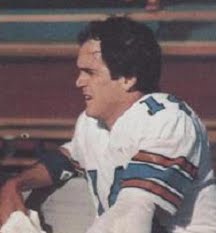
The Gunslingers were one of six expansion teams for the USFL’s second year, and all of the others had recorded at least one win in the early going (two of them were off to 3-1 starts). The club was underfinanced but well coached by Gil Steinke and featured a scrappy defense, although the offense, directed by promising rookie QB Rick Neuheisel (pictured at right), was less impressive.  

Oakland topped the weak Pacific Division in 1983 but was off to a dreadful start in ’84, having scored a mere 14 points thus far. Head Coach John Ralston was dismissed after three games and Chuck Hutchison, the Director of Player Personnel, was now in command. QB Fred Besana, who performed ably the previous year, was ineffective thus far although he had a standout in WR Gordon Banks for his passes. Like the Gunslingers, the defense was the better unit, but the failure of the offense to generate points was too damaging.

There was a small but enthusiastic crowd of 11,012 fans at Alamo Stadium. In the first quarter, the Invaders methodically advanced 65 yards in seven plays that concluded with a pass from Fred Besana to Gordon Banks down the middle for a 19-yard touchdown. Kevin Shea added the extra point for the 7-0 advantage.

Good gains on passes by Rick Neuheisel to TE Joey Hackett and WR Danny Buggs moved San Antonio into Oakland territory at the end of the opening period. But the drive finally stalled at the 20 and Nick Mike-Mayer’s 37-yard field goal attempt was blocked.

A short punt by the Invaders gave the Gunslingers the ball in good field position. The offense couldn’t move but LB Putt Choate ran 25 yards on a fake punt for a first down at the Oakland 22. Shortly thereafter, Neuheisel threw to Hackett for a nine-yard TD and Mike-Mayer converted to tie the score.

There was no further scoring in the first half as Shea was far off the mark on a 51-yard try for a field goal on the final play before halftime.

Oakland moved back into the lead midway through the third quarter on a 36-yard Shea field goal, his first of the season. The Gunslingers had a drive that featured a 32-yard gain thanks to a pass from Neuheisel to Buggs that had 15 yards tacked on to the end due to a roughing-the-passer penalty. RB Scott Stamper ran for 10 yards and San Antonio reached the Oakland 11, but a pass attempt on a fourth-and-one play was batted down.

The teams exchanged punts as the game headed into the fourth quarter. With time running down to less than two minutes, the Gunslingers put together an eight-play, 42-yard drive that concluded with RB Al Penn-White punching in for a touchdown from a yard out. Mike-Mayer added the point after to make it a four-point game. The fired-up San Antonio defense then stopped the Invaders in four downs to win by a final score of 14-10.

The Gunslingers led in total yards (270 to 201), first downs (17 to 12), and time of possession (34:23 to 25:37). However, Oakland recorded four sacks, to two by the Gunslingers, and San Antonio was penalized eight times, at a cost of 55 yards, to five penalties for 35 yards on the Invaders. There were no turnovers by either club.


Rick Neuheisel completed 13 of 26 passes for 156 yards with one touchdown. Scott Stamper led San Antonio’s rushers with 46 yards on 17 carries and RB Marcus Bonner and Joey Hackett (pictured at left) were the top receivers with 45 yards on four and three catches, respectively, and Hackett scored a TD.

For the Invaders, Fred Besana was successful on 19 of 34 throws for 154 yards and a TD. Gordon Banks caught 6 of those passes for 81 yards and a touchdown. RB Arthur Whittington gained 43 yards on 13 rushing attempts. On defense, LB Randy McClanahan accounted for two sacks.

The Gunslingers didn’t immediately build upon their initial victory as they lost twice more before winning three of four games on the way to a 7-11 record that placed third in the Central Division. Oakland’s losing streak reached nine games, and a third head coach, Charlie Sumner, was in charge before the Invaders abruptly turned around and reeled off seven straight wins to move into contention in the still-mediocre Pacific Division. They ultimately fell short and also finished at 7-11.

May 8, 2015

1983: Bandits Withstand Late Rally to Defeat Invaders


Two teams involved in tough division races in the United States Football League’s inaugural season met in Week 10 on May 8, 1983. The visiting Tampa Bay Bandits were 6-3 and even with the Chicago Blitz in the Central Division while the hosts, the Oakland Invaders, had the same 4-5 record as the other three clubs in the Pacific Division.

Tampa Bay had gotten off to a 4-0 start under the guidance of offensive-minded Head Coach Steve Spurrier. The passing game was the key to success, and while 33-year-old veteran QB John Reaves went down with a broken wrist three weeks earlier, Jimmy Jordan (pictured above), a former Florida State standout, had taken over the starting quarterback duties and performed capably.

The Invaders also had a capable quarterback in Fred Besana, a former minor leaguer, and experienced stars on offense in TE Raymond Chester and RB Arthur Whittington, who were ex-NFL Raiders. Coached by John Ralston, Oakland had problems with consistency and had won for the first time in three weeks in the previous game, but in the league’s weakest division, it was enough to keep pace.

About 10,000 of the 26,989 ticketholders were no-shows at the Oakland-Alameda Coliseum for the nationally telecast Mother’s Day game. Many of those present spent much of the contest loudly booing the home team.

On their first series, the Bandits reached the Oakland 46, but they came up empty when a completion to WR Martin Cox was fumbled by the receiver and CB Kenny Daniel recovered at the Oakland 19. On Tampa Bay’s next possession, Jimmy Jordan completed a 19-yard pass to WR Danny Buggs that moved the ball to the Oakland 11 and, while a penalty nullified a potential touchdown play, Zenon Andrusyshyn kicked a field goal from 22 yards to give the visitors a 3-0 lead with 2:09 remaining in the opening period. 

The Invaders responded with a promising series that included runs of 15 and 22 yards by Arthur Whittington, but WR Gordon Banks coughed up the ball at the Tampa Bay 10 when hit by FS Glen Edwards after catching a pass and SS Doug Beaudoin recovered to extinguish the threat.

Jordan was sacked during the ensuing series in which the Bandits were forced to punt, but Tampa Bay got the ball back when LB Kelly Kirchbaum recovered a fumble at the Oakland 46. Once again Jordan was sacked, for a loss of 11 yards, and the visitors punted once more, but a Whittington fumble on the ensuing series gave the Bandits the ball at their own 44. This time they capitalized as RB Greg Boone ran effectively and Jordan completed three passes as Tampa Bay used nine plays to go 56 yards. With 3:35 remaining in the first half, Jordan threw to Buggs for a nine-yard touchdown. Andrusyshyn added the extra point.

It seemed as though the Invaders would get on the board before the intermission as Besana threw to WR Wyatt Henderson for a 21-yard gain to the Tampa Bay seven, but a third down pass hit Henderson in the shoulder and was intercepted by CB Jeff George. While Oakland did get one last shot with 27 seconds still on the clock, Kevin Shea’s 55-yard field goal attempt fell short. The Bandits took a 10-0 lead into halftime.

Jordan was efficient in the first half, completing 12 of 14 passes for 145 yards. Oakland moved the ball well on offense, compiling 227 yards, but gave up three fumbles and an interception.

The Bandits drove 68 yards to open the third quarter, with Jordan throwing to WR Eric Truvillion for an 18-yard TD. Andrusyshyn again converted to put Tampa Bay up by 17 points. However, Jordan was lost with a shoulder separation midway through the period as he threw long for Truvillion and was struck by NT Dupre Marshall on a borderline late hit.

Nathaniel “Billy” Koonce came in for Jordan and Tampa Bay was unable to generate any offense for the remainder of the game. Koonce threw only two passes and one was intercepted, setting up Oakland’s only TD. His first toss hit Truvillion but bounced away and was picked off by SS Marcus Quinn of the Invaders at the Tampa Bay 20. Shortly thereafter, and just four seconds into the fourth quarter, Besana ran three yards for a touchdown. Shea’s extra point made it a ten-point contest.

The Invaders again drove into Tampa Bay territory, but with just over four minutes to go, an apparent scoring pass from Besana to WR Gordon Banks in the end zone from four yards out was nullified by an offensive pass interference penalty. Oakland was forced to settle for a 30-yard Shea field goal. The Invaders still had comeback hopes, but they were finally dashed in the final seconds when Besana’s desperation pass was intercepted by George, his second of the contest, to seal the 17-10 win for Tampa Bay.

The Invaders outgained Tampa Bay (402 yards to 251) and had more first downs (24 to 17). They also recorded four sacks, to three by the Bandits. However, Oakland was undone by six turnovers, losing four of six fumbles in addition to two interceptions.  The Invaders were penalized seven times, at a cost of 60 yards, to four flags thrown on Tampa Bay.

Before being knocked out of the game, Jimmy Jordan completed 15 of 22 passes for 200 yards and two touchdowns while giving up one interception. Greg Boone led the team with 46 rushing yards on 14 carries. RB Sam Platt contributed 28 yards on 12 attempts and had five catches, for 54 yards, while Danny Buggs accumulated 64 yards on his four pass receptions.


For the Invaders, Fred Besana (pictured at right) completed a then-USFL record 15 straight passes during the fourth quarter comeback on the way to compiling 25 completions in 38 attempts for 254 yards, but with two picked off (he would exceed his consecutive completion streak the following year). Arthur Whittington rushed for 128 yards on 26 attempts but also fumbled the ball away twice. HB Louis Jackson had 7 catches for 70 yards to top the club.

“We were fortunate to win this game,” said Coach Spurrier of the Bandits. “It was due mostly to Oakland turnovers.”

The win improved Tampa Bay’s record to 7-3, and the Bandits maintained their share of the Central Division lead along with Chicago. Billy Koonce was quickly supplanted by Mike Kelley at quarterback in place of the injured Reaves and Jordan, who both eventually returned, and talented rookie RB Gary Anderson joined the club. Nevertheless, the team faded down the stretch and finished in third place and out of the running at 11-7. The Invaders ended up with a 9-9 record, but that was enough to top the Pacific Division, although they lost badly to Michigan in the first playoff round.

February 1, 2015

Highlighted Year: Fred Besana, 1983

Quarterback, Oakland Invaders


Age: 29 (Mar. 9)
6th season in pro football, 1st in USFL & with Invaders
College: California
Height: 6’4”   Weight: 210

Prelude:
Son of a former minor league pitcher and baseball scout, Besana backed up Steve Bartkowski and Joe Roth as a college quarterback. He was chosen by the Buffalo Bills in the fifth round of the 1977 NFL draft. While active for two games during his rookie season, Besana saw no action and was released at the end of the preseason in ’78. He was signed by the New York Giants late in the year and again was active for two games but didn’t play. Released by the Giants during the ’79 preseason, Besana played three years with the Twin Cities Cougars of the minor league California Football League while running a beer distributorship. The Cougars were champions all three seasons and Besana was twice named to the league All-Star team. He threw for 1433 yards and 15 TDs in 1980 and led the circuit in passing in ’82 by throwing for 1767 yards and 19 touchdowns with only four interceptions. Besana was signed by the Invaders of the new USFL just before training camp for their inaugural Spring season.

1983 Season Summary
Appeared in all 18 games
[Bracketed numbers indicate league rank in Top 20]

Passing
Attempts – 550 [2]
Most attempts, game – 47 at Tampa Bay 5/21
Completions – 345 [1]
Most completions, game – 27 at Tampa Bay 5/21
Yards – 3980 [1]
Most yards, game – 341 at Michigan 3/19
Completion percentage – 62.7 [1]
Yards per attempt – 7.2 [4]
TD passes – 21 [2]
Most TD passes, game – 4 vs. Washington 5/16
Interceptions – 16 [6, tied with Alan Risher & John Reaves]
Most interceptions, game – 2 on five occasions
Passer rating – 96.7
300-yard passing games – 2
200-yard passing games – 13

Rushing
Attempts – 41
Most attempts, game – 6 (for 12 yds.) vs. Birmingham 3/13, (for 31 yds.) vs. Tampa Bay 5/8
Yards – 139
Most yards, game – 31 yards (on 6 carries) vs. Tampa Bay 5/8
Yards per attempt – 3.4
TDs – 3

Scoring
TDs – 3
Points – 18

Postseason: 1 G (Semifinal playoff at Michigan)
Pass attempts – 35
Pass completions – 23
Passing yardage – 258
TD passes – 1
Interceptions – 2

Rushing attempts – 1
Rushing yards – 1
Average gain rushing – 1.0
Rushing TDs – 1

Invaders went 9-9 to finish first in the USFL Pacific Division. Lost USFL Semifinal playoff to Michigan Panthers (37-21).

Aftermath:
Following his impressive 1983 season, Besana and the Oakland offense got off to a rough start in ’84. The team was 0-9 before catching fire with a seven-game winning streak. Besana ended up throwing for 2792 yards and 14 touchdowns with 12 interceptions. The Invaders were merged with the Michigan Panthers for 1985 and Besana lost his starting job to Bobby Hebert. He threw just 58 passes, completing 34 for 494 yards and six TDs along with four interceptions. The demise of the USFL brought an end to Besana’s career. For his three USFL seasons, Besana completed 60.3 percent of his passes for 7266 yards and 41 touchdowns while giving up 32 interceptions and being sacked 140 times.

--

Highlighted Years features players who were consensus first-team All-League* selections or league* or conference** leaders in the following statistical categories:

Rushing: Yards, TDs (min. 10)
Passing: Yards, Completion Pct., Yards per Attempt, TDs, Rating
Receiving: Catches, Yards, TDs (min. 10)
Scoring: TDs, Points, Field Goals (min. 5)
All-Purpose: Total Yards
Defense: Interceptions, Sacks
Kickoff Returns: Average
Punt Returns: Average
Punting: Average

*Leagues include NFL (1920 to date), AFL (1926), AFL (1936-37), AAFC (1946-49), AFL (1960-69), WFL (1974-75), USFL (1983-85)

**NFC/AFC since 1970

June 25, 2013

1983: Invaders Edge Breakers to Win Pacific Division Title


The Oakland Invaders had a mediocre 8-8 record with two contests to go in the inaugural United States Football League season, but that was enough to put them in control of their own destiny in the weak Pacific Division. On June 25, 1983 they hosted the Boston Breakers, who were 10-6 and trying to secure the lone Wild Card playoff spot.

The Invaders, coached by John Ralston, had uncovered a hidden talent in 29-year-old QB Fred Besana, a former semi-pro player who was proving to be one of the USFL’s most productive passers. Two former members of the NFL Raiders, TE Raymond Chester and RB Arthur Whittington, were better known to Bay Area football fans and key players on the offense, although Whittington was out with an injury for the Breakers game. The inconsistent defense had a good group of linebackers, most notably Frank Manumaleuga and Gary Plummer on the inside as they utilized a 3-4 alignment.

Head Coach Dick Coury’s Breakers boasted a well-balanced offense directed by QB John Walton, a veteran of the Continental and World Football Leagues as well as the NFL who had come out of retirement to play in the USFL. With a fine group of receivers plus ex-Canadian Football League RB Richard Crump, Boston could typically move the ball. Like the Invaders, the best part of the defense was the linebacking corps that was led by rookie Marcus Marek, but stopping the pass was a chronic problem.

There was a crowd of 30,396 on hand at the Oakland-Alameda County Coliseum for the Saturday contest. They saw the home team take the early lead when Besana, rolling to his right, just got off a pass before going out of bounds that was caught in the end zone by HB Louis Jackson for a touchdown. Kevin Shea’s successful extra point made it 7-0, and that was the score after a period of play.

Boston got on the board in the second quarter thanks to a 35-yard Tim Mazzetti field goal. Oakland again moved into scoring position but a field goal attempt was blocked and returned 75 yards for a touchdown by LB Ben Needham. Instead of extending their lead, the Invaders were behind by 10-7. Before the half was over, Shea got another shot at a field goal and was successful from 22 yards out to tie the game at 10-10 at the half.

Mistakes by the Breakers in the third quarter put Oakland back in front. A fumble was recovered at the Oakland 48 and, with the help of three penalties, the Invaders moved to the Boston three. On the first play of the fourth quarter, FB Ted Torosian powered into the end zone for a touchdown and, with the successful extra point, Oakland took a 17-13 lead.

The Breakers again hurt themselves when an apparent touchdown was called back due to a penalty. Mazzetti was able to add a 24-yard field goal but the Oakland defense held the rest of the way and the Invaders won the game, and the division title, by the slender margin of 17-16.

Oakland outgained the Breakers (322 yards to 282), had more first downs (18 to 9), and significantly dominated time of possession (39:21 to 20:39). The Invaders also recorded five sacks, for a total loss of 31 yards, while Boston got to Besana twice. The Breakers turned the ball over three times, to one suffered by Oakland, and while the Invaders were penalized 11 times, Boston was flagged on 12 occasions, often in key situations, at a total cost of 115 yards.

Fred Besana had a solid, if unspectacular, performance as he completed 25 of 36 passes for 227 yards and a touchdown with no interceptions. In place of Arthur Whittington, Louis Jackson rushed for 90 yards on 23 carries and caught 8 passes for 110 yards and a TD. Ted Torosian pulled in 10 receptions for 63 yards in addition to his 8 rushes for 16 yards and a score as most of Besana’s completions went to backs. Raymond Chester added 4 catches for 45 yards and only two completions were made to a wide receiver.

For the Breakers, John Walton was successful on only 7 of 20 throws for 109 yards with no TDs and one picked off while Doug Woodward went two-for-six and 28 yards with another interception. Richard Crump gained 122 yards on just 13 rushing attempts. WR Nolan Franz caught three passes for 36 yards while WR Charlie Smith gained 55 yards on his two receptions.

The Invaders lost their season finale and ended up at 9-9. They were defeated decisively by the Michigan Panthers in the Semifinal playoff game. Boston finished second in the Atlantic Division at 11-7 and out of the postseason. 

Fred Besana led the USFL in passing yards (3980) and completion percentage (62.7) while ranking second in passing overall. He tossed 21 TD passes as opposed to 16 interceptions.  In a backup role, Louis Jackson rushed for 273 yards on 82 carries (3.3 avg.) and caught 29 passes for 294 yards – his touchdown against Boston was his only one of the year.

July 10, 2012

1983: Surging Panthers Overwhelm Invaders in USFL Semifinal Playoff Game


The inaugural season of the United States Football League ended with four teams qualifying for the postseason (three division winners plus a wild card). On July 10, 1983 two of those teams, the Oakland Invaders and Michigan Panthers, met for a Semifinal Playoff game in Pontiac, Michigan.

The Panthers, coached by Jim Stanley, had hardly started out looking like a playoff contender as they lost four straight contests after narrowly defeating the Birmingham Stallions in Week 1. However, veteran talent was brought in to solidify the offensive line and rookie QB Bobby Hebert (pictured above), along with the more-heralded first-year player, WR Anthony Carter out of Michigan, overcame the slow start and began to hit their stride. The defense included the new league’s Defensive Player of the Year, LB John Corker with his 28 sacks, and another star rookie, SS David Greenwood. Michigan caught fire in the second half, winning six consecutive games and 11 of the last 13 to win the Central Division with a 12-6 record and take a great deal of momentum into the postseason.

Oakland was the top team in the Pacific Division, but it was the USFL’s weakest grouping and the Invaders had prevailed with a mediocre 9-9 record. Head Coach John Ralston, formerly of Stanford and the Denver Broncos, had gotten good mileage out of two ex-NFL Raiders on offense, TE Raymond Chester and RB Arthur Whittington. He had also uncovered a surprising star in QB Fred Besana, who had been working in a beer distributorship and playing minor league football before signing with the Invaders and leading the league in passing yards (3980), completions (345), and completion percentage (62.7). However, the Invaders had a leaky offensive line and the immobile Besana thus also led the USFL by being sacked 71 times. Inconsistency on defense was also a problem – definitely a concern in facing an explosive team like the Panthers. Furthermore, Whittington would not be starting due to a disciplinary action after missing a practice – the team officially said he was out with a rib injury, and while he came into the game late in the second quarter, his contribution was negligible.

A USFL-record crowd of 60,237 was present at the Pontiac Silverdome, helped along by free parking and reduced ticket prices, and it was loud and enthusiastic. Nevertheless, Oakland scored first, driving 78 yards in 14 plays that ate up over seven minutes of the first quarter. But after getting a first down at the Michigan two yard line, it took four plays for the Invaders to get into the end zone, with Besana finally sneaking for the last yard on fourth down.

Behind 7-0, the Panthers responded impressively on the next series that stretched into the second quarter as Hebert threw to WR Derek Holloway for a 40-yard gain and RB John Williams ran for a five-yard touchdown. The defense then set up another score when LB Kyle Borland intercepted a Besana pass and the resulting Michigan possession led to a 38-yard field goal by Novo Bojovic.

With the Invaders unable to move the ball effectively against the inspired Michigan defense, the Panthers decided to press their advantage in extending the lead late in the second quarter. In a key gamble, they passed up an easy field goal attempt on fourth down with 11 seconds left in the half and Hebert passed to Carter for a three-yard touchdown that made it a 17-7 contest at the midway point.

Oakland wasn’t out of it yet and on the third play of the second half, LB David Shaw picked off a swing pass by Hebert and ran 19 yards for a touchdown that, with the successful extra point, narrowed Michigan’s lead to 17-14. The Panthers once again responded by scoring, putting together an 11-play, 80-yard drive that culminated in Hebert keeping the ball himself for a one-yard TD. It was 24-14 with just under ten minutes remaining in the third quarter.

Late in the period, Michigan LB Ray Bentley forced Oakland RB Ted Torosian to fumble and DE Allen Hughes recovered for the Panthers at the Michigan 17. On the ensuing series, the biggest play was a Hebert-to-Carter pass that covered 56 yards. Shortly thereafter, RB Ken Lacy scored on an 18-yard run and the home team was up by 31-14 and firmly in control.

That was it for the scoring until RB Cleo Miller ran for a touchdown from three yards out for the Panthers with a little under two minutes remaining (the extra point attempt failed). Oakland responded with a consolation five-yard scoring pass from Besana to WR Marc Lewis.

Following Oakland’s final touchdown, fans overflowed the field with 25 seconds on the clock and tore down the goal posts. The teams and officials headed to the locker rooms and the game was officially declared complete at 14:35 of the final period. The Panthers came away with a decisive 37-21 win.

Michigan showed a great deal of flair, using laterals and reverses and twice passing up field goal attempts on fourth down to successfully go for touchdowns. While the Invaders held only a narrow edge in first downs (22 to 20), they rolled up significantly more yardage (463 to 321) and held the ball over six minutes longer (32:58 to 26:37). Oakland was further handicapped by turning the ball over four times, against two suffered by the Panthers.


Bobby Hebert completed 18 of 27 passes for 295 yards with one touchdown and interception apiece. Anthony Carter (pictured at right) caught three passes for 78 yards and a TD and Derek Holloway also had three receptions, for 78 yards. TE Mike Cobb contributed three more for 25 yards. However, the team’s leading receiver was RB Ken Lacy, who had 4 catches for 30 yards to go along with his 73 yards on 14 rushing attempts. John Williams compiled 59 yards on his 17 carries. Ray Bentley had a notable game on defense for the Panthers, forcing two fumbles and recovering one.

Fred Besana, playing catch-up for most of the game, went to the air 35 times and completed 23 for 258 yards with the one late touchdown and had two picked off. WR Gordon Banks caught 7 of those throws for 96 yards. Ted Torosian gained just 18 yards on 10 carries that included a fumble and pulled in 7 pass receptions for 46 yards. Of Oakland’s total of 64 yards on the ground, 43 came on two carries by Marc Lewis.

“We could have settled for three there,” said Jim Stanley regarding the decision to pass up the field goal attempt for the pass on fourth down late in the first half. “But this team has worked awfully hard. If I don’t have faith in them, I lose something.”

“We misfired on a couple of turnovers,” said Coach Ralston in defeat. “Against a team like Michigan, you have to play error-free. Our offense moved the ball pretty much like we wanted, but the turnovers killed us.”

The Panthers kept up the momentum, defeating the Philadelphia Stars in the USFL Championship game. Their 1984 season was the mirror opposite of ‘83 as Michigan ran out to a 6-0 start but, thanks to key injuries to Anthony Carter and David Greenwood, slumped in the second half and nosed into the postseason as a wild card team with a 10-8 record. Oakland lost its first nine contests of ’84, turned around and won seven straight, and finished at 7-11. 

June 15, 2012

1984: Big Plays Propel the Express Past the Invaders


The Los Angeles Express were atop the United States Football League’s Pacific Division with a 9-7 record coming into their June 15, 1984 contest against the Oakland Invaders. Head Coach John Hadl’s team had started off slowly but benefited from the arrival of heralded rookie QB Steve Young (pictured above). The mobile lefthander out of Brigham Young brought a jolt to an offense that averaged just 10.7 points per game in the first five outings. He was further helped by the offensive line play of G Gary Zimmerman and C Mike Ruether. While not well supported by the LA fans and with unstable ownership, the Express was playing well and had won four straight games coming into Week 17.

Oakland, however, had a seven-game winning streak on the line, which was all the more remarkable because the Invaders had started off the season with nine straight losses. Head Coach John Ralston was let go after three weeks and Chuck Hutchison lasted five before owner Tad Taube hired Charlie Sumner to take over. The offense scored just 82 points during those first nine losing games, but the emergence of RB Eric Jordan, combined with a defense that didn’t give up a lot of points, turned things around. Injury-plagued QB Fred Besana benefited from the improved running attack. The Invaders were 7-9 but just two games behind Los Angeles with two to play.

Attendance was typically sparse at 14,794 for the Friday night showdown at the Memorial Coliseum. Oakland started off impressively, going 71 yards in 16 plays in its opening possession. Besana completed five of six passes and the result was a 26-yard field goal by Kevin Shea, who was coming off a poor performance the previous week against Michigan in which he missed all three of his field goal attempts.

It was still 3-0 at the end of the opening period, but on the first play of the second quarter, Young tossed a short pass to RB Mel Gray, who ran 76 yards untouched down the left sideline for a touchdown that gave LA the lead.

The Invaders responded by going from their 23 to the LA 14 in six plays. However, a holding penalty followed by a sack of Besana by DT Lee Williams that cost an additional 12 yards forced them to settle for a field goal, with Shea connecting from 47 yards to make it a one-point game.

While Oakland was leading in time of possession, the Express again struck quickly on their next series. On the fourth play, Young kept the ball and dashed 47 yards up the middle for a TD that resulted in a 14-6 score. That remained the tally at the half.

Oakland scored in the third quarter thanks to a 15-yard, 70-play drive that ended with Jordan running in for a TD on a one-yard sweep. However, the Express retained the lead when the Invaders went for a two-point conversion and Besana’s pass was broken up by DB Darrell Pattillo.

LA failed in an opportunity to increase its margin on an ensuing series when RB Kevin Mack was stopped for no gain on a fourth-and-one play. But the Express got the ball back and came through with yet another big play, this time when Young passed to WR Malcolm Moore for a 44-yard gain to the Oakland 32. A few plays later, Young was stopped three yards short of a first down at the Oakland 14 but LB Gary Plummer was penalized for unnecessary roughness. With the ball moved to the 7, Gray ran in for a touchdown on the next play and the score was 21-12 with 9:37 remaining in the game.

The Invaders were far from done and came back with a five-play, 74-yard drive that resulted in a 30-yard TD pass from Besana to TE Brian Williams. They were again just two points down, but the Express put together a drive that was extended twice by fourth down conversions on runs by Mack. With less than two minutes to play, Tony Zendejas kicked a 37-yard field goal for the Express that extended the lead to what would prove to be a vital five points.

Now down to 1:35 in the contest, Oakland regained possession and nearly pulled the game out. The Invaders, starting from their own ten yard line, reached the LA nine with the clock down to seven seconds, but two passes by Besana were batted down to preserve the 24-19 win for the Express.

Oakland outgained the Express (370 yards to 334), had more first downs (25 to 14), ran off 18 more plays, and dominated time of possession (33:18 to 26:42), but LA won with big plays in a game in which there were no turnovers.

Steve Young was highly efficient throwing the ball, completing 14 of 16 passes for 195 yards and a touchdown - he also ran the ball 8 times for 82 yards and the long TD. Mel Gray rushed for 44 yards on five carries and led the receivers with 82 yards on four catches, scoring a total of two TDs. Malcolm Moore also caught four passes, for 70 yards.


For Oakland, Fred Besana was successful on 23 of 35 throws for 256 yards and a touchdown. Eric Jordan (pictured at left) gained 88 yards on 13 carries and scored once. Brian Williams had 8 pass receptions for 91 yards and a TD.

Los Angeles clinched a playoff spot with the win and, with Young sitting out the finale, lost to Arizona but finished atop the Pacific Division with a 10-8 record. In their first playoff game, the Express defeated Michigan in an epic contest that lasted into the third overtime period, but they fell to the Wranglers in the Western Conference Championship game. For Oakland, the loss ended the improbable winning streak and, losing again in the last game, the Invaders ended up at 7-11 and at the bottom of the division.

Appearing in 12 games, Steve Young completed a healthy 57.7 percent of his passes for 2361 yards with 10 touchdowns against 9 interceptions. He also ran the ball 79 times for 515 yards (6.5 avg.) and seven TDs.

Eric Jordan, who was such a key performer during Oakland’s winning streak, ended up rushing for 744 yards on 135 carries (5.5 avg.) and scored six touchdowns. He also caught 19 passes for 140 yards. 

March 19, 2012

1983: Besana and Ex-Raiders Lead Invaders to Win Over Panthers


On March 19, 1983 the Michigan Panthers of the United States Football League made their home debut against the Oakland Invaders. Both teams came into the contest at 1-1. Coached by Jim Stanley, the Panthers had scored just one touchdown in the first two contests (they won their opening game over the Birmingham Stallions by a 9-7 score thanks to three Novo Bojovic field goals). Rookie QB Bobby Hebert, a largely unknown quantity from out of Northwest Louisiana State, had won the starting job but was off to a slow start, as was the far-more-heralded rookie WR Anthony Carter from the Univ. of Michigan, who had been the team’s biggest preseason signing.

Oakland was coached by John Ralston, formerly of Stanford and the Denver Broncos, and had its own unheralded starting quarterback in Fred Besana, a 29-year-old who had last been behind center for the Twin Cities Cougars of the semi-pro California Football League. Backup to Steve Bartkowski and the ill-fated Joe Roth at California, he had failed to make the cut with the NFL Giants and Bills, but was making the most of his opportunity in the new USFL. He had already found a favorite target in WR Wyatt Henderson. The Invaders, who had skimped on talent coming out of college, also featured TE Raymond Chester and HB Arthur Whittington (pictured above), veteran ex-Raiders, on offense.

There were 28,952 in attendance at the Pontiac Silverdome for the Saturday night game. Hebert started poorly, completing only one of his first seven passes, and was relieved by backup Whit Taylor. Still, the Panthers led by 3-0 after one quarter of play thanks to a 44-yard field goal by Bojovic.

Oakland took the lead in the second quarter as Besana connected with Henderson on a fly pattern for a 45-yard touchdown. Bojovic kicked another 44-yard field goal but Kevin Shea was successful from 32 yards and the Invaders were up by 10-6 at the half.

Oakland scored two more touchdowns in the third quarter, with Besana tossing another TD pass to Henderson, this time of 22 yards, and Whittington running for a 14-yard score. The extra point was missed after the latter TD, but it hardly seemed to matter as the Invaders held a commanding 23-6 lead.

The Panthers were down but not out, however, and Hebert returned to the game to spark a furious rally. It began with a touchdown pass to WR Derek Holloway that covered 48 yards and, with the successful extra point, made it 23-13 heading into the fourth quarter.

Besana extended Oakland’s lead by finding the 13-year veteran Chester along the sideline for a 32-yard touchdown, and this time the PAT was successful. But Hebert brought Michigan back once more as he threw long to Carter for a 58-yard gain that set up another scoring pass to Holloway, this time covering 22 yards.

Nursing a ten-point lead, the Invaders drove to another score. Kevin Shea’s 24-yard field goal extended their margin to 33-20 with 4:25 to go. The Panthers came back one more time, as Hebert connected for a third time with Holloway, who made a leaping grab in the end zone for a 38-yard touchdown, but time finally ran out on Michigan. Oakland came away the winner by a score of 33-27.

The Invaders outgained the home team (460 to 375) and had more first downs (23 to 20) as well as a big lead in time of possession (38:06 to 21:54). Oakland rolled up 169 rushing yards to just 55 on 14 carries by the Panthers, who were playing catch-up during the second half. Besana was sacked seven times (four of them by LB John Corker, the eventual USFL leader in that category) while Oakland’s defense dumped Michigan quarterbacks on four occasions. However, the Invaders suffered no turnovers while the Panthers gave up the ball twice (both on fumbles).

Fred Besana completed 24 of 30 passes for 341 yards with three touchdowns and none intercepted. While Wyatt Henderson scored two of those TDs among his three catches for 93 yards, Raymond Chester was Oakland’s top receiver as he pulled in 7 passes for 101 yards and a touchdown. Arthur Whittington also had a big day, rushing for 109 yards and a TD on 26 carries and adding 4 catches for 46 more yards.

For the Panthers, following the shaky start Bobby Hebert ended up completing 13 of 23 throws for 289 yards with three TDs and no interceptions. Derek Holloway caught three passes – all for touchdowns – and gained 108 yards. RB Ken Lacy was the team’s leading ground gainer with 23 yards on 8 attempts. Anthony Carter had a mixed performance, pulling in two passes for 85 yards that included the one long bomb that set up Holloway’s second TD. However, he also fumbled two punts, one of which led to an Oakland score.


The loss dropped the Panthers to 1-2 and they would fall to 1-4 before turning the season around. In the end, they finished first in the Central Division with a 12-6 record and narrowly won the USFL Championship over the Philadelphia Stars. In the first round of the playoffs they defeated the Invaders, who had a mediocre 9-9 record but were still able to top the weak Pacific Division.

Things got much better for Bobby Hebert and Anthony Carter. Hebert led the league in passing, yards per attempt (7.9), and TD passes (27). Carter caught 60 passes for 1181 yards (19.7 avg.) and 9 touchdowns.

Raymond Chester concluded his accomplished pro football career by catching 68 passes for 951 yards (14.0 avg.) and five TDs and garnering All-League honors. Arthur Whittington was dogged by injuries but nevertheless rushed for 1043 yards on 282 carries (3.7 avg.) and had 66 receptions for 584 more yards. Fred Besana led the USFL in passing yards with 3980 and Wyatt Henderson, who got off to the fast start on the scoring end of Besana’s passes, finished with 54 receptions for 801 yards and 9 TDs.

April 16, 2011

1983: Invaders Roll Up Yards, But Bryant & Stars Prevail


The Philadelphia Stars were off to a 5-1 start in the inaugural United States Football League season as they faced the Oakland Invaders at Veterans Stadium on April 16, 1983. Under the direction of Head Coach Jim Mora, the Stars boasted a stingy defense and a ground-oriented offense that featured rookie RB Kelvin Bryant (pictured above). The Invaders, coached by John Ralston, were 3-3, but that made them contenders in the Pacific Division as, entering Week 7, all of the teams had identical records. Two ex-Raiders, RB Arthur Whittington and TE Raymond Chester, were key players on the offense, as was QB Fred Besana, a former minor league star.

There were 34,901 fans in attendance for the Saturday game at the Vet. For much of the first half, they saw Oakland outplay the Stars, but fail to score points. Bryant, who had been held to under a hundred yards in the previous two games as he played with a bruised sternum, was held to three yards in the first quarter.

Meanwhile, Oakland ran up 215 yards of offense in the first half, yet came up empty. Within inches of a touchdown on one first quarter possession, FB Jairo Penaranda fumbled into the end zone and CB Antonio Gibson recovered for the Stars. In addition, PK Kevin Shea missed two field goal attempts, of 46 and 42 yards, to stifle scoring opportunities.

Deep into the second quarter, Philadelphia’s offense had generated just one first down and was being kept in check. However, that all changed when Bryant took a handoff in his own territory, appeared to be stopped behind the line of scrimmage near the sideline, but then broke a tackle and reversed field. 45 yards later he was pulled down at the Oakland 25, setting up a 39-yard field goal by David Trout for the first score of the game.

Following the Trout field goal, the Stars got the ball back quickly when safety Mike Lush intercepted a Besana pass and returned it 33 yards. Bryant again made a big play with less than two minutes remaining in the half, running for a 37-yard touchdown, and Philadelphia went into halftime with a 10-0 lead. Bryant, thanks to the two long runs, gained 99 yards rushing in the second quarter alone.

Near the end of the third quarter, Besana threw to WR Wyatt Henderson for an eight-yard TD, the first touchdown the Stars defense had allowed in three weeks (they had surrendered just six points in their previous two games combined). However, Philadelphia put the game away in the fourth quarter when QB Chuck Fusina connected with WR Tom Donovan for an 18-yard touchdown. The defense kept Oakland in check the rest of the way and the final score was 17-7.

The Invaders outgained Philadelphia (339 yards to 270) and generated far more first downs (23 to 12). But they failed to score points when they had the opportunity and turned the ball over three times (the Stars suffered no turnovers at all).

Kelvin Bryant gained 118 yards on 14 carries that included one touchdown. Chuck Fusina completed 9 of 16 passes for 146 yards with a TD and no interceptions. Bryant, WR Willie Collier, and FB Booker Russell each caught two passes, with Collier’s 57 yards leading the club.

For Oakland, Fred Besana was successful on 26 of 42 throws for 271 yards and included a touchdown, but two were picked off. Arthur Whittington gained 89 yards rushing on 27 attempts. Raymond Chester caught 6 passes for 51 yards while Wyatt Henderson accumulated 78 yards on five receptions and scored the team’s lone TD.

“I’ve never been around a defense that comes through like these guys, week after week after week,” said Coach Mora. “They bend, but they don’t break.”

A disappointed Fred Besana said afterward, “It’s the same old story, we drive up and down the field, then we have breakdown after breakdown.”

The Stars continued on to a 15-3 record, winning the Atlantic Division, and advanced to the USFL Championship game, which they lost in a close 24-22 contest against the Michigan Panthers. The Invaders finished first in the Pacific Division with a mediocre 9-9 tally and lost to the Panthers in the Semifinal playoff round.

Kelvin Bryant was leading the league in rushing after the win over Oakland with 713 yards. He ultimately ended up as the runner-up to New Jersey’s Herschel Walker with 1442 yards on 318 carries (4.5 avg.) and was named MVP by the league.

June 2, 2010

1984: Fred Besana Sets Mark as Invaders Defeat Bulls


QB Fred Besana had been a major find by the Oakland Invaders in the inaugural United States Football League season. After failing to catch on in the NFL and playing in the semi-pro California Football League with the Twin City Cougars from 1980-82, the University of California product joined the USFL at age 29. Besana had an outstanding year in ’83 as he placed second in the league passing standings and led in completions (345), completion percentage (62.7), and yards (3980). The Invaders won the Pacific Division, albeit with a 9-9 record.

1984 had proven to be a more difficult year for Besana and the Invaders. The club lost its first nine games and had problems putting points on the board – the Invaders were shut out three times during the streak, and scored fewer than 10 points in five contests. Besana suffered from nagging injuries – not helped by a lack of mobility and an offensive line that allowed a league-leading 69 sacks during the year. He also was missing two favorite receivers from 1983 in TE Raymond Chester, who retired, and WR Wyatt Henderson, who was lost in the expansion draft.

However, after finally breaking into the win column, Oakland proceeded to win five straight games to creep back into the postseason picture in a weak division. Besana was part of the turnaround, as he demonstrated to good effect on June 2 as the Invaders hosted the expansion Jacksonville Bulls at the Oakland-Alameda County Coliseum (the Bulls, one of six expansion teams in ’84, were the club that had claimed Henderson).

Besana, who had completed his last two passes in the previous week’s win over Oklahoma, proceeded to complete his first 17 passes against the Bulls for a USFL-record 19 straight. However, it didn’t translate into many points as Oakland scored just one TD on a five-yard pass from Besana to TE Brian Williams. Sandwiched between field goals of 21 and 32 yards by Jacksonville’s Brian Franco, it was good enough for a 7-6 halftime lead.

The Invaders finally pulled out the win with a 10-point fourth quarter that included a 37-yard field goal by Kevin Shea and three-yard touchdown run by FB Tom Newton. The Bulls scored a late TD on a two-yard pass by QB Robbie Mahfouz to WR Alton Alexis (followed by a failed two-point conversion attempt). It was too little, too late as Oakland eked out a sixth straight win by a 17-12 margin.

Thanks to the passing streak to start the game, Besana ended up with an 82.8 completion percentage (24 of 29 passes) for 214 yards with a TD and no interceptions. Brian Williams was the club’s top receiver with 8 catches for 88 yards and the one score. The Invaders outrushed the Bulls, 119 yards to 75, with Tom Newton the leading ground gainer at 72 yards on 10 carries.

As was usual during the year, the Bulls split the quarterback duties between veteran Matt Robinson (14 of 24 for 112 yards with two interceptions and no TDs) and Mahfouz (9 of 14 for 89 yards with a TD and none picked off). RB Larry Mason was the leading rusher with 45 yards on 8 attempts. Both WR Aubrey Matthews and TE Robert Young caught 6 passes, with Matthews gaining the most yards (65). In his Oakland homecoming, Wyatt Henderson had two catches for 22 yards.

While the Invaders outgained the Bulls and benefited from Besana’s accuracy, they also handicapped themselves by committing 11 penalties (for a total of 85 yards) as opposed to just two by the visitors. However, while Besana was sacked three times, the Oakland defense managed to sack the Jacksonville quarterbacks a total of seven times (DE Monte Bennett led with two).

The Invaders ultimately won seven straight games before losing the final two contests and finishing at the bottom of the Pacific Division with a 7-11 record. Jacksonville ended up last in the Southern Division with a 6-12 tally.

Fred Besana ranked far lower in the USFL’s passing standings for the ’84 season, coming in at 11th. His yards-per-attempt (6.3) were nearly a yard below his ’83 figure (7.2), but he still completed a healthy 57.6 percent of his passes and threw for more touchdowns (14) than interceptions (12).

March 18, 2010

1984: Kelvin Bryant Leads Stars Past Invaders in 28-Point Second Half


At halftime of the March 18, 1984 USFL game between the host Philadelphia Stars and visiting Oakland Invaders at Veterans Stadium, it appeared that a significant upset was in the making. The Invaders, 0-3 coming into the contest and having failed to score in the previous 12 consecutive quarters, held a 7-0 lead on the 2-1 Stars, who had come within two points of the league championship in ’83.

The second half proved to be a different story as Philadelphia’s offense pulled out of its funk and scored touchdowns the first three times they had the ball. Star RB Kelvin Bryant, who had been held to 40 yards on 10 carries in the first half, scored touchdowns of four and two yards on his way to a 133-yard second half rushing total. QB Chuck Fusina threw for the last two scores, on passes of 25 yards to WR Scott Fitzkee and 35 yards to WR Tom Donovan. In the end, it was a comfortable 28-7 win for Head Coach Jim Mora’s team.

Philadelphia rolled up 234 rushing yards, 173 of that total accounted for by Bryant. Fusina completed 19 of 31 passes for 260 yards with the two touchdowns and an interception. WR Willie Collier led the Stars in receiving, with 6 catches for 95 yards. The defense held the Invaders to nine first downs, with 76 rushing and 140 net passing yards. LB George Cooper recorded a sack, while CB Garcia Lane picked off a pass.


For Oakland, QB Fred Besana completed 13 of 28 passes for 153 yards and an interception. RB Arthur Whittington was the top runner with 62 yards on 16 carries. WR Gordon Banks was the standout among the receivers with 5 catches for 99 yards.

The Stars had quickly emerged in the USFL’s first season as one of the best-balanced clubs, and after barely losing in the title game to the Michigan Panthers it was anticipated that they would again be strong contenders. They more than fulfilled expectations in 1984, going 16-2 over the course of the season to win the Atlantic Division and cruising through the postseason to win the league championship.

Kelvin Bryant, achieving All-League honors for the second season, ranked second in the USFL with 1406 rushing yards. Chuck Fusina might not have been the most highly regarded quarterback in the league, but he nevertheless led the circuit in passing in ’84 with a 104.7 rating that included a 64.9 completion percentage, 3837 yards, 31 TD passes, and just 9 interceptions. They operated behind a solid offensive line that featured OT Irv Eatman and the Oates brothers – center Bart and tackle Brad. Defensively, they had All-League performers in DT Pete Kugler, LB Sam Mills, safety Mike Lush, and Lane at cornerback.

In a roller coaster ride of a year, Oakland endured nine straight losses to open the season, turned around and won seven consecutive games to pull into playoff contention in the mediocre Pacific Divison, but dropped the final two contests to drop back into last place at 7-11. Fred Besana suffered through an injury-riddled year, and couldn’t duplicate his solid 1983 performance. Gordon Banks was a standout at wide receiver (61 catches, 937 yards), but the offensive line play was inconsistent, allowing the immobile Besana to be sacked too many times, and the defense was especially poor against the run.

March 13, 2010

1983: Stallions Defeat Invaders in 1st USFL Overtime Game


On March 13, 1983 the Oakland Invaders hosted the Birmingham Stallions at the Oakland-Alameda County Coliseum in the second week of the young USFL’s season. It was the home opener for the Invaders, who had won at Arizona the previous week, while Birmingham lost a close contest at home to the Michigan Panthers.

With a crowd of 47,344 in attendance, the Invaders recorded the only score of the first half on a one-yard run by FB Ted Torosian. However, the Stallions took a 14-7 lead with two third quarter touchdowns, a 46-yard pass play from QB Reggie Collier to WR Ron Frederick and a one-yard run by RB Ken Talton.

Oakland QB Fred Besana (pictured above) threw a 26-yard TD pass to WR Wyatt Henderson to tie the score. Invader PK Kevin Shea missed a field goal that could have won the game in regulation, and for the first time in the USFL’s young history, the game went into overtime.

Birmingham QB Bob Lane, who relieved Collier, led a 48-yard scoring drive in the “sudden death” period, plunging over from a yard out for the winning touchdown and a final score of 20-14. The key play had been a pass from Lane to RB Earl Gant that surprised the Invaders defense on third-and-one at the Oakland 28 yard line and covered 25 yards for a first-and-goal at the three.

The placekicker, Shea, was the goat for Oakland as he missed all four of his field goal attempts, including the one that would have won the game in the fourth quarter plus another in overtime. Wasted was a 19-of-30, 270-yard passing performance by Besana, the surprising star who had played behind Steve Bartkowski in college at California but, after failing to latch on in the NFL, had lately been playing semi-pro football for the Twin Cities Cougars of the California Football League.

Oakland won the statistical battle, with 127 rushing and 222 net passing yards to 92 and 188 yards, respectively, for the Stallions. Torosian was the leading rusher for the Invaders, with 48 yards on 12 carries, with HB Arthur Whittington, an ex-Raider, right behind at 41 yards on 13 attempts. Wyatt Henderson had the most receptions, with 5 (for 73 yards), while 34-year-old TE Raymond Chester, another ex-Raider, accumulated the most receiving yards with 78 on four catches.


Between them, quarterbacks Collier and Lane completed 11 of 24 passes for 197 yards with Collier’s TD pass and two interceptions tossed by Lane. Ken Talton led the Stallions in rushing with 44 yards on 18 carries. Ron Frederick, Earl Gant (pictured at left), and WR Greg Anderson all caught three passes apiece, with Frederick’s 80 yards leading the club.

Both teams went on to compile 9-9 records, which was good enough to win the weak Pacific Division title for the Invaders while the Stallions finished at the bottom of the Central Division.

Fred Besana was one of the league’s top passers, leading the USFL in completions (345), completion percentage (62.7), and yards (3980). Not a mobile quarterback, he was also sacked the most times (71) – in the game against Birmingham, he was hauled down six times, with a resulting loss of 46 yards. He wasn’t helped by the generally poor play by the offensive line.

The two ex-Oakland Raiders, Arthur Whittington and Raymond Chester, had solid years. Whittington led the club with 1043 rushing yards and caught 66 passes. Chester was the top receiver with 68 catches in his final pro season.

Despite the dreadful placekicking performance against the Stallions, Kevin Shea completed the season and put up respectable numbers with 19 field goals out of 32 attempts that included 12 of 17 from inside the 40.

Birmingham’s two rookie quarterbacks went through their share of growing pains. Reggie Collier, the more heralded of the two coming out of Southern Mississippi, suffered through an injury-plagued season. Lane, from Northeast Louisiana, saw the most action. As he did in this game, Ken Talton led the Stallions in rushing with 907 yards; Earl Gant was second with 530.

For the Stallions, the overtime win was the first of two during the ’83 season – they would not play in any more during the remaining two years of the franchise’s existence. Oakland would appear in two more – one of which, in 1985, ended up being the only tie game in USFL history.