Showing posts with label Punt Return Leaders. Show all posts

April 26, 2017

Highlighted Year: Mel Gray, 1987

Running Back/Kick Returner, New Orleans Saints


Age: 26
4th season in pro football, 2nd in NFL & with Saints
College: Purdue
Height: 5’9”   Weight: 166

Prelude:
As a Purdue running back Gray rushed for 1765 yards and 15 touchdowns and caught 53 passes for another 437 yards and a TD. Chosen by the Chicago Blitz in the seventh round of the 1984 USFL draft, Gray alternated with Kevin Nelson and Kevin Mack and ran for 625 yards on 133 attempts as a rookie (4.7 avg.),added 27 pass receptions for another 288 yards (10.7 avg.), and returned 20 kickoffs for a 16.6-yard average.   Gray scored the winning TD in the third overtime period in a playoff game against the Michigan Panthers and sufferered a broken arm on the play. He followed up with 526 rushing yards in 1985 along with 20 catches for 101 yards and an 18.5 average on 11 kickoff returns. With the demise of the USFL, where he compiled1151 yards on 258 carries (4.5 avg.), 389 yards on 47 pass receptions, and a 17.3-yard average on 31 kickoff returns, he moved on to the Saints, who chose him in the second round of the 1984 NFL supplemental draft.   Used almost exclusively as a kick returner, Gray averaged 27.9 yards on 31 kickoff returns in 1986 that included a touchdown.


1987 Season Summary
Appeared in 12 of 15 games
[Bracketed numbers indicate league rank in Top 20]

Kickoff Returns
Returns – 30 [6]
Yards – 636 [6]
Most yards, game – 108 (on 5 ret.) vs. Cleveland 9/13
Average per return – 21.2 [16]
TDs – 0
Longest return – 43 yards

Punt Returns
Returns – 24 [11, tied with Scott Schwedes, Bobby Futrell & Kenny Johnson]
Yards – 352 [7]
Most yards, game – 130 (on 2 ret.) vs. Tampa Bay 12/6
Average per return – 14.7 [1]
TDs – 0
Longest return – 80 yards

Pass Receiving
Receptions – 6        
Yards – 30
Average gain – 5.0
TDs – 0

Rushing
Attempts – 8
Yards – 37
Average gain – 4.6
TDs – 1

Scoring
TDs – 1
Points – 6

Postseason: 1 G (NFC Wild Card playoff vs. Minnesota)
Kickoff returns – 1
Kickoff return yds. – 16
Kickoff return TDs – 0

Punt returns – 1
Punt return yds. – 0
Punt return TDs – 0

Awards & Honors:
1st team All-NFL: PFWA, Pro Football Weekly, Sporting News
1st team All-NFC: Pro Football Weekly

Saints went 12-3 to finish second in the NFC West in thestrike-shortened season (three games were played with replacement players) to finish second in the NFC West and qualified for the postseason as a wild card. Lost AFC Wild Card playoff to Minnesota Vikings (44-10).

Aftermath:
Gray spent one more season with New Orleans before signing with the Detroit Lions in 1989. He continued to excel as a kick returner leading the NFL with a 15.4-yard punt return average and 25.8-yard kickoff return average in1991 and a 28.4-yard kickoff return average in 1994. He moved on to the Houston Oilers in 1995 and split his last season in 1997 between the Oilers and Philadelphia Eagles.Overall in the NFL, Gray returned 421 kickoffs for an average of 24.3 yards with six touchdowns and 252 punts for a 10.9-yard average and another three TDs. He received consensus first-team All-NFL recognition three times, at least some All-NFL honors following five other seasons and was named to four Pro Bowls.

--

Highlighted Years features players who were consensus first-team All-League* selections or league* or conference** leaders in the following statistical categories:

Rushing: Yards, TDs (min. 10)
Passing: Yards, Completion Pct., Yards per Attempt, TDs, Rating
Receiving: Catches, Yards, TDs (min. 10)
Scoring: TDs, Points, Field Goals (min. 5)
All-Purpose: Total Yards
Defense: Interceptions, Sacks
Kickoff Returns: Average
Punt Returns: Average
Punting: Average

*Leagues include NFL (1920 to date), AFL (1926), AFL (1936-37), AAFC (1946-49), AFL (1960-69), WFL (1974-75), USFL (1983-85)

**NFC/AFC since 1970

March 22, 2016

Highlighted Year: Jack Christiansen, 1952

Safety/Halfback, Detroit Lions


Age: 24 (Dec. 20)
2nd season in pro football & with Lions
College: Colorado A & M (now Colorado State)
Height: 6’1”   Weight: 180

Prelude:
Christiansen initially concentrated on track but became an all-conference football selection at Colorado A & M in 1949 and ’50 and was chosen by the Lions in the sixth round of the 1951 NFL draft. While he starred on both offense and defense in college, Head Coach Buddy Parker put Christiansen on defense as a free safety where he intercepted two passes. He also was an explosive punt returner who averaged 19.1 yards on 18 returns that included four touchdowns. Opposing teams altered their punt return coverage in an effort to contain him.

1952 Season Summary
Appeared in 11 of 12 games
[Bracketed numbers indicate league rank in Top 20]

Interceptions – 2
Return yards – 47
Fumbles recovered – 1
TDs – 0

Kickoff Returns
Returns – 16 [10, tied with Woodley Lewis & Don Stevens]
Yards – 409 [10]
Average per return – 25.6 [6]
TDs – 0
Longest return – 46 yards

Punt Returns
Returns – 15 [14]
Yards – 322 [5]
Average per return – 21.5 [1]
TDs – 2 [1, tied with Woodley Lewis, Ray Mathews & Johnny Williams]
Longest return – 79 yards

Rushing
Attempts – 19
Yards – 148
Yards per attempt – 7.8
TDs – 2

Pass Receiving
Receptions – 3
Yards – 32
Yards per catch – 10.7
TDs – 0

Scoring
TDs – 4         
Points – 24

Postseason: 2 G
Rushing attempts – 4
Rushing yards – 9
Average gain rushing – 2.3
Rushing TDs – 0

Pass receptions – 1
Pass receiving yards – 5
Pass receiving TDs – 0

Kickoff returns – 3
Kickoff return yards – 71
Kickoff return average – 23.7
Kickoff return TDs – 0

Punt returns – 1
Punt return yards – 18
Punt return TDs – 0

Awards & Honors:
1st team All-NFL: AP
2nd team All-NFL: UPI

Lions went 9-3 to finish first in the NFL National Conference, tied with the Los Angeles Rams, while leading the league in fewest rushing yards allowed (1145) and fewest points allowed (192). Won National Conference playoff over Los Angeles Rams (31-21) & NFL Championship over Cleveland Browns (17-7).

Aftermath:
Christiansen was a consensus first-team All-NFL selection in each of the next five seasons, when he was also chosen to the Pro Bowl. Leader of the outstanding defensive backfield that became known as “Chris’ Crew”, he twice led the league in interceptions and ended up with 46 in all, three of which were returned for TDs. The Lions won four Western Conference titles and three NFL Championships during his tenure with the club, which ended in 1958. His first two years were his best for returning punts, and he ended up with a 12.8-yard average on 85 returns that included eight touchdowns. Christiansen later went into coaching and was head coach of the San Francisco 49ers from 1963 to ’67 and collegiately at Stanford from 1972 to ’76. He was inducted into the Pro Football Hall of Fame, Class of 1970.

--

Highlighted Years features players who were consensus first-team All-League* selections or league* or conference** leaders in the following statistical categories:

Rushing: Yards, TDs (min. 10)
Passing: Yards, Completion Pct., Yards per Attempt, TDs, Rating
Receiving: Catches, Yards, TDs (min. 10)
Scoring: TDs, Points, Field Goals (min. 5)
All-Purpose: Total Yards
Defense: Interceptions, Sacks
Kickoff Returns: Average
Punt Returns: Average
Punting: Average

*Leagues include NFL (1920 to date), AFL (1926), AFL (1936-37), AAFC (1946-49), AFL (1960-69), WFL (1974-75), USFL (1983-85)

**NFC/AFC since 1970

January 16, 2016

Highlighted Year: Dick Christy, 1961

Halfback, New York Titans


Age: 26 (Nov. 24)
3rd season in pro football, 2nd in AFL & 1st with Titans
College: North Carolina State
Height: 5’10” Weight: 195

Prelude:
Christy excelled on both offense and defense as well as returning kicks in college, and his dramatic 46-yard field goal against South Carolina gave NC State the 1957 Atlantic Coast Conference title. Named ACC player of the year while also receiving All-America honors from the Associated Press, Christy was chosen in the third round of the 1958 NFL draft by the Green Bay Packers but was dealt to Pittsburgh prior to the season. He primarily returned kicks as a rookie, averaging 9.0 yards on 17 punt returns and 24.0 returning 16 kickoffs and was released by the Steelers prior to the ’59 season. Christy joined the Boston Patriots of the new AFL in 1960 and gained 1321 all-purpose yards that included 363 rushing and 268 on 26 pass receptions. He was traded to Oakland in the deal that brought QB Babe Parilli to the Patriots, and was then dealt to the Titans during the preseason.

1961 Season Summary
Appeared in all 14 games
[Bracketed numbers indicate league rank in Top 20]

Rushing
Attempts – 81 [13]
Most attempts, game – 13 (for 21 yds.) at Oakland 10/29
Yards – 180
Most yards, game – 32 yards (on 7 carries) at Buffalo 9/17
Average gain – 2.2 [14]
TDs – 2

Pass Receiving
Receptions – 29      
Most receptions, game – 7 (for 103 yds.) at Houston 11/19
Yards – 521 [17]
Most yards, game – 145 (on 6 catches) vs. Dallas 12/3
Average gain – 18.0 [5]
TDs – 1
100-yard receiving games – 2

Kickoff Returns
Returns – 15 [9, tied with Ron Burton]
Yards – 360 [8]
Most yards, game – 131 (on 6 ret.) at Houston 11/19
Average per return – 24.0 [7]
TDs – 0
Longest return – 60 yards

Punt Returns
Returns – 18 [3, tied with Al Frazier]
Yards – 383 [1]
Most yards, game – 137 (on 3 ret.) vs. Denver 9/24
Average per return – 21.3 [1]
TDs – 2 [1]
Longest return – 70 yards

All-Purpose yards – 1444 [5]

Passing
Pass attempts – 1
Pass completions – 0
Interceptions – 0

Scoring
TDs – 5 [19, tied with eight others]
Points – 30

Titans went 7-7 to finish third in the AFL Eastern Division.

Aftermath:
Christy followed up with his best season in 1962, leading the AFL with 2147 all-purpose yards that broke down into 535 on 114 rushing attempts, 538 on 62 pass receptions, a league-leading 824 on 38 kickoff returns for a 21.7-yard average, and he again topped the AFL with a 16.7 average on 15 punt returns for 250 yards. However, he had a lesser season with the re-named Jets in ’63 and was cut during the 1964 preseason. Christy played in the minor league Atlantic Coast Football League and North American Football League in 1964 and ’65, leading the ACFL in kickoff returning (30.4 avg.) in ‘64. He died in a car crash in 1966 at age 30. Overall in the AFL, he rushed for 1166 yards, caught 125 passes for 1400 more yards (11.2 avg.), returned 50 punts for a 15.0-yard average and four TDs and averaged 23.6 yards on 101 kickoff returns, scoring a total of 19 touchdowns. Christy was chosen to one AFL All-Star Game. North Carolina State created the Dick Christy Award, which is given to the most valuable player of the annual game against South Carolina.

--

Highlighted Years features players who were consensus first-team All-League* selections or league* or conference** leaders in the following statistical categories:

Rushing: Yards, TDs (min. 10)
Passing: Yards, Completion Pct., Yards per Attempt, TDs, Rating
Receiving: Catches, Yards, TDs (min. 10)
Scoring: TDs, Points, Field Goals (min. 5)
All-Purpose: Total Yards
Defense: Interceptions, Sacks
Kickoff Returns: Average
Punt Returns: Average
Punting: Average

*Leagues include NFL (1920 to date), AFL (1926), AFL (1936-37), AAFC (1946-49), AFL (1960-69), WFL (1974-75), USFL (1983-85)

**NFC/AFC since 1970

November 2, 2015

Highlighted Year: James Brooks, 1981

Running Back, San Diego Chargers


Age: 23 (Dec. 28)
1st season in pro football
College: Auburn
Height: 5’9”   Weight: 180

Prelude:
Brooks was an all-purpose star in college, rushing for 3523 yards while averaging 5.7 yards per carry and returning 68 kickoffs for an average of 25.4 yards. Those numbers included a SEC-leading 1208 rushing yards in 1979 and 1314 yards as a senior in ’80. Brooks was an All-SEC selection, along with his teammate RB Joe Cribbs, in 1979 and received second-team All-American honors from the Associated Press and NEA in addition to All-SEC recognition again in ’80. He was chosen by the Chargers in the first round of the 1981 NFL draft (24th overall).

1981 Season Summary
Appeared in 14 of 16 games
[Bracketed numbers indicate league rank in Top 20]

Rushing
Attempts – 109
Most attempts, game – 17 (for 97 yds.) at Oakland 11/22, (for 50 yds.) at Tampa Bay 12/13
Yards – 525
Most yards, game – 97 yards (on 17 carries) at Oakland 11/22
Average gain – 4.8 [6]
TDs – 3

Pass Receiving
Receptions – 46
Most receptions, game – 9 (for 90 yds.) at Seattle 11/16
Yards – 329
Most yards, game – 90 (on 9 catches) at Seattle 11/16
Average gain – 7.2
TDs – 3

Kickoff Returns
Returns – 40 [4]
Yards – 949 [5]
Most yards, game – 123 (on 5 ret.) at Seattle 11/16
Average per return – 23.7 [8]
TDs – 0
Longest return – 47 yards

Punt Returns
Returns – 22
Yards – 290 [14]
Most yards, game – 79 (on 2 ret.) at Oakland 11/22
Average per return – 13.2 [2, 1st in AFC]
TDs – 0
Longest return – 42 yards

All-Purpose yards – 2093 [1]

Scoring
TDs – 6
Points – 36

Postseason: 2 G
Rushing attempts – 9
Most rushing attempts, game – 6 at Cincinnati, AFC Championship
Rushing yards – 42
Most rushing yards, game – 23 at Cincinnati, AFC Championship
Average gain rushing – 4.7
Rushing TDs – 0

Pass receptions – 6
Most pass receptions, game – 4 at Miami, AFC Divisional playoff
Pass receiving yards – 36
Most pass receiving yards, game – 31 at Miami, AFC Divisional playoff
Average yards per reception – 6.0
Pass Receiving TDs – 2

Kickoff returns – 9
Kickoff return yds. – 172
Most yards, game – 87 (on 4 ret.) at Cincinnati, AFC Championship
Kickoff return avg. – 19.1
Kickoff return TDs – 0

Punt returns – 1
Punt return yds. – 8
Punt return TDs – 0

Chargers went 10-6 to finish first in the AFC West while leading the NFL in total yards (6744), passing yards (4739), touchdowns (61), and scoring (478 points). Won AFC Divisional playoff over Miami Dolphins (41-38). Lost AFC Championship to Cincinnati Bengals (27-7).

Aftermath:
Brooks followed up his outstanding rookie season by again leading the NFL in all-purpose yards with 1383 in the strike-shortened 1982 season. He gained another 1475 total yards in ’83 but became disgruntled and was traded to the Cincinnati Bengals for FB Pete Johnson in 1984. Brooks continued in a limited role for a year before being used more extensively at running back in ’85 and rushed for 929 yards and gained another 576 yards on 55 pass receptions. In 1986 he ran for 1087 yards and had 54 catches for 686 yards and was selected to the Pro Bowl. Following a lesser year in ’87 when he suffered an ankle injury, Brooks went to the Pro Bowl after each of the next three seasons. He rushed for a career-high 1239 yards in 1988 as the Bengals won the AFC title. Despite being undersized, Brooks proved to be a tough and dependable runner and productive as a receiver out of the backfield. He finished his career with Cleveland and Tampa Bay in 1992. Overall, Brooks ran for 7962 yards on 1685 carries (4.7 avg.), caught 383 passes for 3621 yards (9.5 avg.), returned 52 punts for a 10.9-yard average, 132 kickoffs for a 20.9 avg., and scored a total of 79 touchdowns. Of those totals, 1471 rushing yards and 84 catches for 610 yards came with the Chargers, along with all of the punt returns and the majority of the kickoff returns. He received first-team All-AFC recognition once, second-team honors after three other seasons, and was selected to the Pro Bowl four times.  

--

Highlighted Years features players who were consensus first-team All-League* selections or league* or conference** leaders in the following statistical categories:

Rushing: Yards, TDs (min. 10)
Passing: Yards, Completion Pct., Yards per Attempt, TDs, Rating
Receiving: Catches, Yards, TDs (min. 10)
Scoring: TDs, Points, Field Goals (min. 5)
All-Purpose: Total Yards
Defense: Interceptions, Sacks
Kickoff Returns: Average
Punt Returns: Average
Punting: Average

*Leagues include NFL (1920 to date), AFL (1926), AFL (1936-37), AAFC (1946-49), AFL (1960-69), WFL (1974-75), USFL (1983-85)

**NFC/AFC since 1970
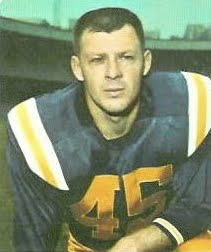
August 11, 2015

Highlighted Year: Bobby Joe Edmonds, 1986

Running Back/Kick Returner, Seattle Seahawks


Age: 22 (Sept. 26)
1st season in pro football
College: Arkansas
Height: 5’11” Weight: 175

Prelude:
Edmonds, who also played baseball, was used as a wide receiver and running back in college, gaining 1481 yards from scrimmage (755 rushing, 726 pass receiving) and averaging 10.3 yards on 93 punt returns. He was chosen by the Seahawks in the fifth round of the 1986 NFL draft with the hope that, with his speed and sure-handedness, he would provide an upgrade to the team’s kick return game.

1986 Season Summary
Appeared in 15 of 16 games
[Bracketed numbers indicate league rank in Top 20]

Kickoff Returns
Returns – 34 [8]
Yards – 764 [8]
Most yards, game – 107 (on 6 ret.) at New England 9/21
Average per return – 22.5 [10]
TDs – 0
Longest return – 46 yards

Punt Returns
Returns – 34 [10, tied with Willie Drewrey]
Yards – 419 [6]
Most yards, game – 103 (on 4 ret.) vs. Philadelphia 11/23
Average per return – 12.3 [1]
TDs – 1 [2, tied with eleven others]
Longest return – 75 yards

Rushing
Attempts – 1
Yards – -11
TDs – 0

Scoring
TDs – 1
Points – 6

Awards & Honors:
1st team All-NFL: AP, PFWA, Pro Football Weekly, Sporting News
1st team All-AFC: Pro Football Weekly
Pro Bowl

Seahawks went 10-6 to finish third in the AFC West while leading the conference in punt return average (11.7).

Aftermath:
Edmonds was near the top with a 12.6-yard average on 20 punt returns during the strike-interrupted 1987 season and followed up with a punt return average of 9.7 yards in ’88 along with 22.5 yards on 40 kickoff returns. He signed as a free agent with the Detroit Lions in 1989 and also tried his hand at baseball during the Spring with the Class AA Reading Phillies. Shifted to wide receiver and a poor fit in Detroit’s new run-and-shoot offense, he was cut in the preseason, signed with the Raiders, and appeared in seven games, averaging 10.5 yards on 16 punt returns and 19.4 yards returning 14 kickoffs, but a broken ankle finished his season and he was released afterward. It brought an end initially to his NFL career due to off-field problems and concerns about his injury, but he returned with the Tampa Bay Buccaneers in 1995 at age 31 and averaged 10.1 yards on 29 punt returns and 19.8 yards running back 58 kickoffs. Overall, Edmonds averaged 11.0 yards on 134 punt returns and 21.1 yards on 173 kickoff returns, with 89 punt returns for an 11.3-yard average and 101 kickoff returns for a 22.1-yard average coming with the Seahawks.

--

Highlighted Years features players who were consensus first-team All-League* selections or league* or conference** leaders in the following statistical categories:

Rushing: Yards, TDs (min. 10)
Passing: Yards, Completion Pct., Yards per Attempt, TDs, Rating
Receiving: Catches, Yards, TDs (min. 10)
Scoring: TDs, Points, Field Goals (min. 5)
All-Purpose: Total Yards
Defense: Interceptions, Sacks
Kickoff Returns: Average
Punt Returns: Average
Punting: Average

*Leagues include NFL (1920 to date), AFL (1926), AFL (1936-37), AAFC (1946-49), AFL (1960-69), WFL (1974-75), USFL (1983-85)

**NFC/AFC since 1970

May 23, 2015

Highlighted Year: Jermaine Lewis, 1997

Wide Receiver, Baltimore Ravens


Age: 23 (Oct. 16)
2nd season in pro football & with Ravens
College: Maryland
Height: 5’7”   Weight: 172

Prelude:
Lewis starred in track as well as football in college, where he caught 193 passes, returned 24 punts for a 12.0-yard average and two touchdowns and averaged 24.0 yards on 22 kickoff returns. He was chosen by the Ravens in the fifth round of the 1996 NFL draft and was used almost exclusively as a kick returner during his rookie year. Small but very fast, he averaged 21.5 yards on 41 kickoff returns and 9.4 yards on 36 punt returns.

1997 Season Summary
Appeared in 14 of 16 games
[Bracketed numbers indicate league rank in Top 20]

Pass Receiving
Receptions – 42      
Most receptions, game – 8 (for 124 yds.) at Tennessee 9/21
Yards – 648
Most yards, game – 124 (on 8 catches) at Tennessee 9/21
Average gain – 15.4 [17]
TDs – 6 [20, tied with twelve others]
100-yard receiving games – 2

Rushing
Attempts – 3
Yards – 35
Average gain – 11.7
TDs – 0

Kickoff Returns
Returns – 41 [16]
Yards – 905 [17]
Most yards, game – 140 (on 6 ret.) vs. Pittsburgh 10/5
Average per return – 22.1
TDs – 0
Longest return – 51 yards

Punt Returns
Returns – 28 [20]
Yards – 437 [12]
Most yards, game – 184 (on 5 ret., 2 TDs) vs. Seattle 12/7
Average per return – 15.6 [1]
TDs – 2 [3]
Longest return – 89 yards

All-Purpose yards – 2025 [5]

Scoring
TDs – 8
Points – 48

Ravens went 6-9-1 to finish fifth in the AFC Central.  

Aftermath:
Lewis followed up in 1998 by receiving consensus first-team All-NFL and Pro Bowl honors. Used less on kickoffs, he returned 32 punts for a 12.7-yard average and two TDs and also caught 41 passes for 784 yards (19.1 avg.) and six touchdowns. His numbers dropped in ’99, with 25 pass receptions and a 7.9-yard punt return average, but he bounced back in 2000 to average 16.1 yards and score two TDs on 36 punt returns and added an 84-yard kickoff return for a touchdown in the Super Bowl win over the Giants. Lewis topped the NFL in punt returns (42) and punt return yards (519) while averaging 12.4 yards in 2001 and was chosen for the Pro Bowl. Left unprotected in the expansion draft, he was taken by the Houston Texans in ’02 and had a lesser performance, dropping to 7.8 yards on punt returns and 20.9 yards on kickoffs. Lewis moved on to the Jacksonville Jaguars and went down with a major knee injury two games into the 2003 season. He came back in ’04 to average 9.9 yards on 23 punt returns and 18.4 yards on 21 kickoffs in what was his final season. Overall, Lewis ran back 295 punts for an 11.1-yard average and six touchdowns, 212 kickoffs for a 21.8-yard average, and caught 143 passes for 2129 yards (14.9 avg.) and 17 TDs. He received first-team All-NFL honors following two seasons and was selected to as many Pro Bowls.

--

Highlighted Years features players who were consensus first-team All-League* selections or league* or conference** leaders in the following statistical categories:

Rushing: Yards, TDs (min. 10)
Passing: Yards, Completion Pct., Yards per Attempt, TDs, Rating
Receiving: Catches, Yards, TDs (min. 10)
Scoring: TDs, Points, Field Goals (min. 5)
All-Purpose: Total Yards
Defense: Interceptions, Sacks
Kickoff Returns: Average
Punt Returns: Average
Punting: Average

*Leagues include NFL (1920 to date), AFL (1926), AFL (1936-37), AAFC (1946-49), AFL (1960-69), WFL (1974-75), USFL (1983-85)

**NFC/AFC since 1970

June 2, 2014

Rookie of the Year: Bruce Taylor, 1970

Cornerback, San Francisco 49ers


Age: 22
College: Boston Univ.
Height: 6’0”   Weight: 180

Prelude:
Taylor led the nation in punt return average (20.3 on 26 returns) and touchdowns (4) in 1969 and, combined with outstanding play in the defensive backfield, was selected as the team’s MVP after Boston University went 9-1. He was the first defensive back taken in the ’70 NFL draft when chosen by the 49ers in the first round (17th overall) and moved into the starting lineup at cornerback, across from All-Pro Jimmy Johnson. Taylor improved as the season progressed and made a notable impression as a punt returner, which had been an area of weakness for the 49ers in 1969.

1970 Season Summary
Appeared in all 14 games
[Bracketed numbers indicate league rank in Top 20]

Interceptions – 3
Most interceptions, game – 1 vs. Green Bay 11/1, at New Orleans 12/13, at Oakland 12/20
Int. return yards – 70
Most int. return yards, game – 70 (on 1 int.) vs. Green Bay 11/1
Int. TDs – 0
Fumble recoveries – 2
Forced fumbles – 0

Kickoff Returns
Returns – 12
Yards – 190
Most yards, game – 65 (on 5 ret.) vs. LA Rams 11/29
Average per return – 15.8
TDs – 0
Longest return – 25

Punt Returns
Returns – 43 [2]
Yards – 516 [1]
Most yards, game – 133 (on 6 ret.) at Houston 11/15
Average per return – 12.0 [2, 1st in NFC]
TDs – 0
Longest return – 76 yards

Scoring
TDs – 1
Points – 6

Postseason: 2 G
Interceptions – 1
Int. return yards – 0
TDs – 0

Punt returns – 7
Punt return yds. – 74
Most punt return yards, game – 69 at Minnesota, NFC Divisional playoff
Punt return avg. – 10.6
Punt return TDs – 0

Awards & Honors:
NFL Defensive Rookie of the Year: AP, PFWA
NFC Rookie of the Year: UPI, Sporting News
2nd team All-NFC: UPI

49ers went 10-3-1 to finish first in the NFC West. Won NFC Divisional playoff over Minnesota Vikings (17-14). Lost NFC Championship to Dallas Cowboys (17-10).

Aftermath:
Taylor was nagged by a shoulder injury during 1971, but was named to the Pro Bowl as he intercepted another three passes and continued to improve although his average dipped to 6.9 on a league-leading 34 punt returns. He remained in the starting lineup until 1977, a total of eight years, and intercepted a career-high 6 passes in ’73, when he also led the NFL with a 13.8 average on 15 punt returns. Released during the 1978 preseason, an attempt to catch on with the Oakland Raiders failed and Taylor retired. Overall, he intercepted 18 passes, recovered 10 fumbles, and averaged 9.3 yards on 142 punt returns, and was selected to the Pro Bowl once.

--


Rookie of the Year Profiles feature players who were named Rookie of the Year in the NFL (including NFC/AFC), AFL (1960-69), or USFL (1983-85) by a recognized organization (Associated Press – Offense or Defense, Newspaper Enterprise Association, United Press International, The Sporting News, or the league itself – Pepsi NFL Rookie of the Year). 

June 3, 2013

Rookie of the Year: Johnny Roland, 1966

Running Back, St. Louis Cardinals


Age: 23
College: Missouri
Height: 6’2”   Weight: 207

Prelude:
A star on both offense and defense in college, Roland was chosen by the Cardinals in the fourth round of the 1966 NFL draft. While there was talk of putting him at safety, he was utilized at halfback on offense where his outside speed and pass receiving ability could be put to best use.

1966 Season Summary
Appeared in all 14 games
[Bracketed numbers indicate league rank in Top 20]

Rushing
Attempts – 192 [7]
Most attempts, game - 23 (for 76 yds.) at NY Giants 11/6
Yards – 695 [11]
Most yards, game – 109 yards (on 20 carries) at Washington 10/23
Average gain – 3.6 [15, tied with Junior Coffey]
TDs – 5 [11, tied with Ken Willard & Don Meredith]
100-yard rushing games – 1

Pass Receiving
Receptions – 21      
Most receptions, game – 4 (for 34 yds.) at Pittsburgh 11/13
Yards – 213
Most yards, game - 40 (on 2 catches) vs. Philadelphia 9/11
Average gain – 10.1
TDs – 0

Kickoff Returns
Returns – 15
Yards – 347
Most yards, game – 116 (on 4 ret.) vs. NY Giants 10/9
Average per return – 23.1 [16]
TDs – 0
Longest return – 33 yards

Punt Returns
Returns – 20 [6]
Yards – 221 [3]
Most yards, game – 142 (on 3 ret.) at Philadelphia 10/2
Average per return – 11.1 [1]
TDs – 1 [1, tied with five others]
Longest return – 86 yards

Passing
Attempts – 8
Completions – 5
Yards – 130
TDs – 1
INT – 0

All-Purpose Yards – 1476 [5]

Scoring
TDs – 6
Points – 36

Awards & Honors:
NFL Rookie of the Year: UPI
Pro Bowl

Cardinals went 8-5-1 to finish fourth in the NFL Eastern Conference.

Aftermath:
Roland followed up his outstanding rookie season with another Pro Bowl year in 1967. He rushed for 876 yards and 10 TDs and caught 20 passes for another 269 yards and a score. However, in the next to last game he suffered a knee injury that required surgery and, while he played for another six years, never again approached his early level of performance. His highs for rushing attempts and yards during the remainder of his career were 138 and 498, respectively, in 1969. In 1972, his last year with the Cards, he reached career highs with 38 pass receptions for 321 yards. Altogether with St. Louis he rushed 962 times for 3608 yards (3.8 avg.) and 27 touchdowns and caught 131 passes for 1240 yards and five TDs. He spent one last year with the New York Giants in ’73, gaining 142 yards on the ground and 190 yards on 22 receptions. With two punt returns for scores, he had a total of 36 TDs.

--

Rookie of the Year Profiles feature players who were named Rookie of the Year in the NFL, AFL (1960-69), or USFL (1983-85) by a recognized organization (Associated Press – Offense or Defense, Newspaper Enterprise Association, United Press International, The Sporting News, or the league itself – Pepsi NFL Rookie of the Year).


August 26, 2012

Rookie of the Year: Carl Pickens, 1992

Wide Receiver, Cincinnati Bengals


Age: 22
College: Tennessee
Height: 6’2”    Weight: 206

Prelude:
With two choices in the first round of the 1992 NFL draft, the Bengals took QB David Klingler and DB Darryl Williams, and three picks later, in the second round, Pickens, who was coming out of college following his junior year. Considered to be a receiver of great potential, there were also concerns about his attitude. It was anticipated that he would be used as a third wide receiver as a rookie, but he ended up starting 10 games.

1992 Season Summary
Appeared in all 16 games
[Bracketed numbers indicate league rank in Top 20]

Pass Receiving
Receptions – 26       
Most receptions, game – 4 (for 34 yds.) vs. Pittsburgh 11/29
Yards – 326
Most yards, game - 47 (on 2 catches) at Houston 10/25
Average gain – 12.5
TDs – 1

Punt Returns
Returns – 18
Yards – 229 [16, tied with Eric Bieniemy]
Most yards, game – 100 (on 2 ret.) at Green Bay 9/20
Average per return – 12.7 [2, tied with Kelvin Martin, 1st in AFC]
TDs – 1 [5, tied with eight others]
Longest return – 95 yards

Scoring
TDs – 2
Points – 12

Awards & Honors:
NFL Offensive Rookie of the Year: AP

Bengals went 5-11 to finish fourth in the AFC Central.

Aftermath:
Pickens improved to 43 catches for 565 yards (13.1 avg.) and 6 TDs in 1993, continuing to show great leaping ability and athleticism if not blazing speed. With Jeff Blake replacing David Klingler at QB during the ’94 season, Pickens’ numbers improved and he had six plays of 50 yards or more among his 71 receptions for 1127 yards (15.9 avg.) and 11 TDs. He reached his peak in 1995 and ’96, seasons in which he led the AFC in pass receptions and was selected to the Pro Bowl, catching 99 passes for a career-high 1234 yards and league-leading 17 TDs in ’95 and 100 for 1180 yards and 12 TDs in ’96. Pickens was limited to 12 games by injury in 1997, but returned to catch 82 passes for 1023 yards and 5 TDs in ’98. However, attitude problems combined with declining play and the arrival of younger receivers caused a decline in production to 57 receptions and 737 yards in 1999 and Pickens finished his career with Tennessee in 2000, where he signed as a free agent and caught 10 passes. Overall, he ended up with 540 receptions for 7129 yards (13.2 avg.) and 63 TDs (64 touchdowns overall with his one punt return TD).

--

Rookie of the Year Profiles feature players who were named Rookie of the Year in the NFL, AFL (1960-69), or USFL (1983-85) by a recognized organization (Associated Press – Offense or Defense, Newspaper Enterprise Association, United Press International, The Sporting News, or the league itself – Pepsi NFL Rookie of the Year). 

[Updated 2/7/14]
[Updated 11/28/14]