Showing posts with label Sack Leaders. Show all posts

August 22, 2017

Highlighted Year: Patrick Kerney, 2007

Defensive End, Seattle Seahawks


Age: 31 (Dec. 30)
9th season in pro football, 1st with Seahawks
College: Virginia
Height: 6’5”    Weight: 273

Prelude:
Kerney accounted for 24 sacks and 127 tackles in college and was selected by the Atlanta Falcons in the first round of the 1999 NFL draft (30th overall). He had a quiet rookie season with 2.5 sacks. Kerney moved into the starting lineup in 2000, compiling just another 2.5 sacks in 16 games. He broke out with a team-leading 12 sacks in 2001 and followed up with 10.5 in ’02. Kerney spent five more seasons with Atlanta, achieving Pro Bowl recognition in 2004, before departing to Seattle as a free agent in 2007.


2007 Season Summary
Appeared in all 16 games
[Bracketed numbers indicate league rank in Top 20]

Sacks – 14.5 [2, 1st in NFC]
Most sacks, game – 3 vs. Chicago 11/18, at St. Louis 11/25, vs. Arizona 12/9
Multi-sack games – 3
Interceptions – 1
Int. return yards – 0
Int. TDs – 0
Fumble recoveries – 0
Forced fumbles – 5
Tackles – 49
Assists – 11

Postseason: 2 G
Sacks – 0
Interceptions – 0
TDs – 0

Awards & Honors:
1st team All-NFL: AP
Pro Bowl

Seahawks went 10-6 to finish first in the NFC West. Won NFC Wild Card playoff over Washington Redskins (35-14). Lost NFC Divisional playoff to Green Bay Packers (42-20).

Aftermath:
Kerney was limited to seven games, and five sacks, in 2008 due to shoulder problems that required surgery. He retired following the 2009 season due to further shoulder issues. Over the course of 11 seasons, Kerney registered 82.5 sacks, 24.5 while with the Seahawks. He received first-team All-NFL recognition once from the Associated Press, and second-team honors once, and was a two-time Pro Bowl choice.


--

Highlighted Years features players who were consensus first-team All-League* selections or league* or conference** leaders in the following statistical categories:

Rushing: Yards, TDs (min. 10)
Passing: Yards, Completion Pct., Yards per Attempt, TDs, Rating
Receiving: Catches, Yards, TDs (min. 10)
Scoring: TDs, Points, Field Goals (min. 5)
All-Purpose: Total Yards
Defense: Interceptions, Sacks
Kickoff Returns: Average
Punt Returns: Average
Punting: Average

*Leagues include NFL (1920 to date), AFL (1926), AFL (1936-37), AAFC (1946-49), AFL (1960-69), WFL (1974-75), USFL (1983-85)


**NFC/AFC since 1970

April 17, 2017

Highlighted Year: Chris Doleman, 1989

Defensive End, Minnesota Vikings


Age: 28 (Oct. 16)
5th season in pro football & with Vikings
College: Pittsburgh
Height: 6’5”   Weight: 250

Prelude:
Doleman played as a linebacker and DE in college and was chosen by the Vikings in the first round of the 1985 NFL draft. Initially utilized as an outside linebacker, he was shifted to defensive end in a 3-4 alignment, making the most of his strength and speed as a pass rusher. He registered 11 sacks in 1987, earning his first Pro Bowl berth. Foleman followed up with 8 sacks in ’88 and another Pro Bowl selection.


1989 Season Summary
Appeared in all 16 games
[Bracketed numbers indicate league rank in Top 20]

Sacks – 21 [1]
Most sacks, game – 4 vs. Cincinnati 12/25
Multi-sack games – 7
Interceptions – 0
Fumble recoveries – 5
Forced fumbles – 5
Tackles – 94

Postseason: 1 G (NFC Divisional playoff at San Francisco)
Sacks – 0
Interceptions – 0
TDs – 0

Awards & Honors:
1st team All-NFL: AP, PFWA, NEA, Pro Football Weekly, Sporting News
1st team All-NFC: UPI, Pro Football Weekly
Pro Bowl

Vikings went 10-6 to finish first in the NFC Central while leading the NFL in sacks (71) and fewest passing yards allowed (2501). Lost NFC Divisional playoff to San Francisco 49ers (41-13).

Aftermath:
Doleman dropped to 11 sacks in 1990 and 7 in 1991. He bounced back to 14.5 sacks in 1992. Following a 12.5-sack year in ’93 he was traded to the Atlanta Falcons. Unhappy in Atlanta, Doleman recorded 16 sacks in two seasons before moving on to the San Francisco 49ers as a free agent in 1996. He improved to 11 sacks and four forced fumbles in ’96 and followed up with 12 sacks in 1997 and 15 in 1998. Doleman returned to the Vikings in 1999, recording 8 sacks in his last season at age 38.Overall he was credited with 150.5 sacks, 96.5 which occurred while with Minnesota. Doleman was a consensus first-team All-NFL choice twice and was chosen to eight Pro Bowls. Doleman was inducted into the Pro Football Hall of Fame, Class of 2012.


--

Highlighted Years features players who were consensus first-team All-League* selections or league* or conference** leaders in the following statistical categories:

Rushing: Yards, TDs (min. 10)
Passing: Yards, Completion Pct., Yards per Attempt, TDs, Rating
Receiving: Catches, Yards, TDs (min. 10)
Scoring: TDs, Points, Field Goals (min. 5)
All-Purpose: Total Yards
Defense: Interceptions, Sacks
Kickoff Returns: Average
Punt Returns: Average
Punting: Average

*Leagues include NFL (1920 to date), AFL (1926), AFL (1936-37), AAFC (1946-49), AFL (1960-69), WFL (1974-75), USFL (1983-85)

**NFC/AFC since 1970

March 20, 2017

Highlighted Year: Elvis Dumervil, 2009

Linebacker, Denver Broncos


Age: 25
4th season in pro football & with Broncos
College: Louisville
Height: 5’11” Weight: 260

Prelude:
Dumervil was credited with 151 tackles in 44 college games as well as 32 sacks and was selected as Big East Defensive Player of the Year in 2005 when he recorded 20 sacks. He was chosen by the Broncos in the fourth round of the 2006 NFL draft with the anticipation that while lacking ideal height that  his speed would make him an effective situational pass rusher. Dumervil had 8.5 sacks in that role as a rookie. He moved into the starting lineup  in 2007  and accumulated 12.5 sacks and had four takeaways while encountering problems against the run. His sack total dropped to five in 2008 with 49 tackles.Dumervil was shifted to right outside linebacker with outstanding results in 2009.


2009 Season Summary
Appeared in all 16 games
[Bracketed numbers indicate league rank in Top 20]

Sacks – 17 [1]
Most sacks, game – 4 vs. Cleveland 9/20
Multi-sack games – 6
Interceptions – 0
Fumble recoveries – 1
Forced fumbles – 4
Tackles – 42
Assists – 7

Awards & Honors:
1st team All-NFL: AP, PFWA, Sporting News
Pro Bowl

Broncos went 8-8 to finish second in the AFC West.

Aftermath:
Dumervil missed the entire 2010 season due to a torn pectoral muscle. He returned to defensive end in 2011 and regained Pro Bowl recognition with 9.5 sacks.He spent two more Pro Bowl years with Denver before signing with the Baltimore Ravens in 2013 and returning to outside linebacker. He recorded 9.5 sacks in ’13 and 17 in 2014, when he was a consensus first-team All-NFL as well as Pro Bowl choice.Following lesser seasons in 2015 and ’16 Dumervil was released by the Ravens. Overall through 2016 he has been credited with 99 sacks and some 225 tackles with 63.5 sacks coming while with the Broncos. He has received first-team All-NFL honors twice and been selected to five Pro Bowls.


--

Highlighted Years features players who were consensus first-team All-League* selections or league* or conference** leaders in the following statistical categories:

Rushing: Yards, TDs (min. 10)
Passing: Yards, Completion Pct., Yards per Attempt, TDs, Rating
Receiving: Catches, Yards, TDs (min. 10)
Scoring: TDs, Points, Field Goals (min. 5)
All-Purpose: Total Yards
Defense: Interceptions, Sacks
Kickoff Returns: Average
Punt Returns: Average
Punting: Average

*Leagues include NFL (1920 to date), AFL (1926), AFL (1936-37), AAFC (1946-49), AFL (1960-69), WFL (1974-75), USFL (1983-85)

**NFC/AFC since 1970

October 19, 2016

Highlighted Year: La’Roi Glover, 2000

Defensive Tackle, New Orleans Saints


Age: 26
5th season in pro football, 4th with Saints
College: San Diego State
Height: 6’2”   Weight: 285

Prelude:
Glover was credited with 18.5 sacks in college and was selected by the Oakland Raiders in the fifth round of the 1996 NFL draft. He saw action in only two games as a rookie and played with the Barcelona Dragons of the WLAF in the Spring of 1997. Waived by the Raiders during the preseason in ’97, the Saints picked Glover up and he recorded 6.5 sacks as a backup before moving into the starting lineup and compiling 10 sacks in 1998 and 8.5 in ’99. The arrival of DT Norman Hand allowed the Saints to take better advantage of Glover’s speed and strength as a pass rusher.

2000 Season Summary
Appeared in all 16 games
[Bracketed numbers indicate league rank in Top 20]

Sacks – 17 [1]
Most sacks, game – 3 at Chicago 10/8, vs. Carolina 10/15, at St. Louis 11/26
Multi-sack games – 5
Interceptions – 0
Fumble recoveries – 1
Forced fumbles – 3
Tackles – 54
Assists – 13

Postseason: 2 G
Sacks – 0
Interceptions – 0
Fumble recoveries – 1
TDs – 0

Awards & Honors:
1st team All-NFL: AP, PFWA, Sporting News
1st team All-NFC: Pro Football Weekly
Pro Bowl

Saints went 10-6 to finish first in the NFC West while leading the NFL in sacks (66). Won NFC Wild Card playoff over St. Louis Rams (31-28). Lost NFC Divisional playoff to Minnesota Vikings (34-16).

Aftermath:
Glover followed up with 8 sacks and another Pro Bowl selection in 2001 before departing for Dallas as a free agent. A disruptive player with surprising speed who was also good against the run, he received first-team All-NFL honors from the Pro Football Writers and Sporting News in 2002 and was a second-team choice of the Associated Press in both 2002 and ’03. Glover was a Pro Bowl pick in each of his four seasons with the Cowboys, although he was less effective as a nose tackle with the shift to a 3-4 defense in 2005. Released by Dallas, he spent the last three years of his career with the St. Louis Rams, through 2008, before retiring. In all, Glover compiled 83.5 sacks, 50 while he was with New Orleans. He was a consensus first-team All-NFL selection twice and was selected to six Pro Bowls.

--

Highlighted Years features players who were consensus first-team All-League* selections or league* or conference** leaders in the following statistical categories:

Rushing: Yards, TDs (min. 10)
Passing: Yards, Completion Pct., Yards per Attempt, TDs, Rating
Receiving: Catches, Yards, TDs (min. 10)
Scoring: TDs, Points, Field Goals (min. 5)
All-Purpose: Total Yards
Defense: Interceptions, Sacks
Kickoff Returns: Average
Punt Returns: Average
Punting: Average

*Leagues include NFL (1920 to date), AFL (1926), AFL (1936-37), AAFC (1946-49), AFL (1960-69), WFL (1974-75), USFL (1983-85)

**NFC/AFC since 1970

September 5, 2016

Highlighted Year: John Corker, 1983

Linebacker, Michigan Panthers


Age: 24
4th season in pro football, 1st in USFL & with Panthers
College: Oklahoma State
Height: 6’5”   Weight: 240

Prelude:
Corker was the Big-8 Defensive Player of the Year in 1978, impressing with his combination of speed and size, although he suffered torn ligaments in his knee during the season. He came back to receive second-team all-conference recognition in ’79 and was chosen by the Houston Oilers in the fifth round of the 1980 NFL draft but, after three undistinguished and injury-plagued years, was let go following the 1982 season. Corker was signed by the Panthers of the new USFL, who obtained his rights from the Washington Federals.

1983 Season Summary
Appeared in 17 of 18 games
[Bracketed numbers indicate league rank in Top 20]

Sacks – 28 [1]
Most sacks, game – 6 at New Jersey 4/10
Multi-sack games – 6
Interceptions – 2
Int. return yards – 22
Int. TDs – 0
Fumble recoveries – 5
Fumble recovery TDs – 1
Tackles – 116.5

Scoring
TDs – 1
Points – 6

Postseason: 2 G
Sacks – N/A
Interceptions – 0
TDs – 0

Awards & Honors:
USFL Defensive Player of the Year: League, Pro Football Weekly
1st team All-USFL: Official, Sporting News, College & Pro Football Newsweekly, Pro Football Weekly

Panthers went 12-6 to finish first in the USFL Central Division while leading the league in sacks (74). Won Semifinal playoff over Oakland Invaders (37-21) & USFL Championship over Philadelphia Stars (24-22).

Aftermath:
Corker followed up his sensational 1983 season with a lesser, if still effective, performance, registering 8 sacks and 76 tackles over the course of 14 games in ’84 and receiving All-USFL honors from The Sporting News. He was left unprotected when the Panthers merged with the Oakland Invaders in 1985 and joined the Memphis Showboats. Adding another 5.5 sacks, he finished his USFL career with 41.5. With the demise of the USFL, Corker attempted a return to the NFL but failed to catch on, at least partly due to off-field drug use. He joined the Detroit Drive of the Arena Football League in 1988, performed well on offense as well as defense, and returned to the NFL with Green Bay, appearing in two games. Corker returned to the arena league in 1990 and spent another six seasons with the Detroit Drive and Miami Hooters. He was named to the Arena Football League’s 10th Anniversary All-Time team as an offensive and defensive lineman and was inducted into the league’s Hall of Fame in 2002.

--

Highlighted Years features players who were consensus first-team All-League* selections or league* or conference** leaders in the following statistical categories:

Rushing: Yards, TDs (min. 10)
Passing: Yards, Completion Pct., Yards per Attempt, TDs, Rating
Receiving: Catches, Yards, TDs (min. 10)
Scoring: TDs, Points, Field Goals (min. 5)
All-Purpose: Total Yards
Defense: Interceptions, Sacks
Kickoff Returns: Average
Punt Returns: Average
Punting: Average

*Leagues include NFL (1920 to date), AFL (1926), AFL (1936-37), AAFC (1946-49), AFL (1960-69), WFL (1974-75), USFL (1983-85)

**NFC/AFC since 1970

July 30, 2016

Highlighted Year: Derrick Burgess, 2005

Defensive End, Oakland Raiders


Age: 27
5th season in pro football (4th active), 1st with Raiders
College: Mississippi
Height: 6’2”   Weight: 260

Prelude:
Burgess was credited with 17.5 sacks and 166 tackles in college and was a first-team All-SEC selection as a senior in 2000. He was chosen by the Philadelphia Eagles in the third round of the 2001 NFL draft and started four games as a rookie, accumulating 6 sacks. However, injuries hit hard as he suffered a foot injury in the opening game of the ’02 season that cost him the remainder of the year and then was on injured reserve for all of 2003 due to an Achilles tendon injury suffered during a preseason practice. Having appeared in just one game in two years, Burgess appeared in 12 in ’04 and had just 2.5 sacks although he was credited with three in the postseason, including two in the NFC Championship win over Atlanta. He signed with Oakland as a free agent for 2005, with the anticipation that he would provide depth on the defensive line. Undersized against the run, he was a tenacious pass rusher.

2005 Season Summary
Appeared in all 16 games
[Bracketed numbers indicate league rank in Top 20]

Sacks – 16 [1]
Most sacks, game – 2 on six occasions
Interceptions – 0
Fumble recoveries – 2
Forced fumbles – 3
Tackles – 51
Assists – 6

Awards & Honors:
2nd team All-NFL: AP
1st team All-AFC: Pro Football Weekly
Pro Bowl

Raiders went 4-12 to finish fourth in the AFC West.

Aftermath:
Burgess followed up with 11 sacks in 2006 and was again chosen to the Pro Bowl. He spent two more seasons with the Raiders with lesser returns as injuries again became a factor. Burgess was traded to New England during the 2009 preseason, had five sacks, and was released in 2010. He returned to the Eagles briefly late in the season and appeared in one game, the last of his career. Overall, Burgess accumulated 52 sacks in 102 games, with 38.5 coming with the Raiders. He was selected to two Pro Bowls.

--

Highlighted Years features players who were consensus first-team All-League* selections or league* or conference** leaders in the following statistical categories:

Rushing: Yards, TDs (min. 10)
Passing: Yards, Completion Pct., Yards per Attempt, TDs, Rating
Receiving: Catches, Yards, TDs (min. 10)
Scoring: TDs, Points, Field Goals (min. 5)
All-Purpose: Total Yards
Defense: Interceptions, Sacks
Kickoff Returns: Average
Punt Returns: Average
Punting: Average

*Leagues include NFL (1920 to date), AFL (1926), AFL (1936-37), AAFC (1946-49), AFL (1960-69), WFL (1974-75), USFL (1983-85)

**NFC/AFC since 1970

March 8, 2016

Highlighted Year: Richard Dent, 1984

Defensive End, Chicago Bears


Age: 24 (Dec. 13)
2nd season in pro football & with Bears
College: Tennessee State
Height: 6’5”   Weight: 240

Prelude:
Dent accumulated 39 sacks in college and was chosen by the Bears in the eighth round of the 1983 NFL draft. He had an undistinguished rookie season, starting three games at right defensive end and recording three sacks.

1984 Season Summary
Appeared in all 16 games
[Bracketed numbers indicate league rank in Top 20]

Sacks – 17.5 [3, 1st in NFC]
Most sacks, game – 4.5 vs. LA Raiders 11/4
Multi-sack games – 5
Interceptions – 0
Fumble recoveries – 1
Forced fumbles – 4
Tackles – 39

Postseason: 2 G
Sacks – 3
Most sacks, game – 3 at Washington, NFC Divisional playoff
Interceptions – 0
TDs – 0

Awards & Honors:
1st team All-NFL: Pro Football Weekly
2nd team All-NFL: AP
1st team All-NFC: UPI, Pro Football Weekly
Pro Bowl

Bears went 10-6 to finish first in the NFC Central while leading the NFL in sacks (a league-record 72), fewest yards allowed (3863), and fewest rushing yards allowed (1377). Won NFC Divisional playoff over Washington Redskins (23-19). Lost NFC Championship to San Francisco 49ers (23-0).

Aftermath:
Dent followed his breakout year with a 1985 season in which he led the NFL with 17 sacks. The Bears, fueled by their outstanding defense, went 15-1 and won the Super Bowl, a game in which Dent was named MVP, capping a postseason in which he recorded six sacks. An explosive pass rusher with great speed, he compensated for lack of size against the run with great agility and quickness. Dent went on to play a total of 12 seasons with the Bears and remained a potent pass rusher, even as injuries began to hinder his performance. He received second-team All-NFL honors from the Associated Press in 1988 and ’90 and first-team All-NFC recognition in those seasons from UPI and Pro Football Weekly, with Pro Football Weekly naming him again in 1993. Dent was also chosen to a total of four Pro Bowls. He moved on to the San Francisco 49ers as a free agent in 1994 but was limited to two games due to a knee injury. He returned to the Bears in ’95 and then played a year apiece for the Colts and Eagles before retiring after the 1997 season. Overall, he finished with 137.5 sacks, which ranked third in NFL history at the time, as well as eight interceptions and 13 fumble recoveries, one of which he returned for a TD. He added another 10.5 sacks in 12 postseason games. Dent was inducted into the Pro Football Hall of Fame, Class of 2011.

--

Highlighted Years features players who were consensus first-team All-League* selections or league* or conference** leaders in the following statistical categories:

Rushing: Yards, TDs (min. 10)
Passing: Yards, Completion Pct., Yards per Attempt, TDs, Rating
Receiving: Catches, Yards, TDs (min. 10)
Scoring: TDs, Points, Field Goals (min. 5)
All-Purpose: Total Yards
Defense: Interceptions, Sacks
Kickoff Returns: Average
Punt Returns: Average
Punting: Average

*Leagues include NFL (1920 to date), AFL (1926), AFL (1936-37), AAFC (1946-49), AFL (1960-69), WFL (1974-75), USFL (1983-85)

**NFC/AFC since 1970

December 4, 2015

Highlighted Year: Kevin Greene, 1996

Linebacker, Carolina Panthers


Age: 34
12th season in pro football, 1st with Panthers
College: Auburn
Height: 6’3”   Weight: 247

Prelude:
A walk-on in college who was the SEC Defensive Player of the Year in 1984, Greene was chosen by the Los Angeles Rams in the fifth round of the ‘85 NFL draft. He was utilized on special teams and as a pass rushing specialist for his first three seasons, accumulating a total of 13.5 sacks, before moving into the starting lineup at left OLB in 1988 and registering 16.5 sacks. He received first-team All-NFL recognition from NEA and The Sporting News and was also a Pro Bowl selection for the first time in ’89 following another 16.5-sack season. Strong and fast, Greene had good range and instincts, and while a holdout led to a slow start in 1990, he still ended up with 13 sacks. With a shift to a 4-3 defense in ’91, Greene was moved to defensive end and his sack total dropped to three. He moved back to outside linebacker in 1992, recorded 10 sacks, and signed as a free agent with the Pittsburgh Steelers in ’93, where he was again able to play in a 3-4 alignment. The result over the course of three years in Pittsburgh was 35.5 sacks, including a league-leading 14 in 1994, a year in which he also received consensus first-team All-NFL honors, and two Pro Bowl selections. He joined the Panthers as a free agent in ’96.

1996 Season Summary
Appeared in all 16 games
[Bracketed numbers indicate league rank in Top 20]

Sacks – 14.5 [1]
Most sacks, game – 2.5 at St. Louis 11/17
Multi-sack games – 4
Interceptions – 0
Fumble recoveries – 3
Fumble recovery TDs – 1
Forced fumbles – 2
Tackles – 37
Assists – 14

Scoring
TDs – 1
Points – 6

Postseason: 2 G
Sacks – 0
Interceptions – 0
TD – 0

Awards & Honors:
1st team All-NFL: AP, PFWA
1st team All-NFC: UPI, Pro Football Weekly
Pro Bowl

Panthers went 12-4 to finish first in the NFC West, reaching the postseason in just their second season of existence, while leading the NFL in sacks (60) and ranking second in fewest points allowed (210). Won NFC Divisional playoff over Dallas Cowboys (26-17). Lost NFC Championship to Green Bay Packers (30-13).  

Aftermath:
Greene held out in 1997 due to a contract dispute and was released by the Panthers during the preseason. He signed with San Francisco and was used primarily as a pass rushing specialist, accumulating 10.5 sacks. Greene returned to Carolina in ’98, moved back into the starting lineup, and recorded 15 sacks and was chosen to the Pro Bowl at age 36. He played for one more year with the Panthers in 1999 and finished up with 12 sacks, his tenth double-digit total in 15 NFL seasons. Overall, Greene compiled 160 sacks, which ranked third all-time, in addition to 26 fumble recoveries, two of which he returned for touchdowns, and five interceptions, one of which resulted in a TD. 41.5 of his sacks came during his three seasons with Carolina. Greene received at least some first-team All-NFL honors after three seasons and was selected to the Pro Bowl five times, four of them after age 30.

--

Highlighted Years features players who were consensus first-team All-League* selections or league* or conference** leaders in the following statistical categories:

Rushing: Yards, TDs (min. 10)
Passing: Yards, Completion Pct., Yards per Attempt, TDs, Rating
Receiving: Catches, Yards, TDs (min. 10)
Scoring: TDs, Points, Field Goals (min. 5)
All-Purpose: Total Yards
Defense: Interceptions, Sacks
Kickoff Returns: Average
Punt Returns: Average
Punting: Average

*Leagues include NFL (1920 to date), AFL (1926), AFL (1936-37), AAFC (1946-49), AFL (1960-69), WFL (1974-75), USFL (1983-85)

**NFC/AFC since 1970

May 18, 2015

Highlighted Year: Bertrand Berry, 2004

Defensive End, Arizona Cardinals


Age: 29
8th season in pro football, 7th in NFL & 1st with Cardinals
College: Notre Dame
Height: 6’3”   Weight: 250

Prelude:
Primarily known for his pass rushing ability in college, Berry was chosen by the Indianapolis Colts in the third round of the 1997 NFL draft. He had an undistinguished first three seasons with the Colts, starting 13 games at defensive end and also playing linebacker while recording five sacks. Berry moved on to the Rams in 2000 but was cut during training camp and saw action in the CFL with the Edmonton Eskimos. He joined the Denver Broncos in 2001 and was a reserve for two seasons before breaking into the starting lineup in ’03 and recording 11.5 sacks. A fine pass rusher who was less adept against the run, Berry signed with the Cardinals as a free agent for the 2004 season.

2004 Season Summary
Appeared in all 16 games
[Bracketed numbers indicate league rank in Top 20]

Sacks – 14.5 [2, 1st in NFC]
Most sacks, game – 4 vs. NY Giants 11/14
Multi-sack games – 3
Interceptions – 0
Fumble recoveries – 2
Fumble recovery TDs – 0
Forced fumbles – 4
Tackles – 39
Assists – 10

Awards & Honors:
2nd team All-NFL: AP
1st team All-NFC: Pro Football Weekly
Pro Bowl

Cardinals went 6-10 to finish third in the NFC West.

Aftermath:
A torn pectoral muscle limited Berry to eight games in 2005 and injuries remained an issue in ’06 and ’07 as he appeared in a combined 19 games. Still effective as a rusher from the edge who lined up more often as an outside linebacker, Berry played with the Cards until 2009, staying healthier in his last two years in which the team made it to the playoffs, after which he retired. Overall, Berry accumulated 65 sacks in the NFL, with 40 of them coming during his six years with Arizona. He had four more during the postseason.

--

Highlighted Years features players who were consensus first-team All-League* selections or league* or conference** leaders in the following statistical categories:

Rushing: Yards, TDs (min. 10)
Passing: Yards, Completion Pct., Yards per Attempt, TDs, Rating
Receiving: Catches, Yards, TDs (min. 10)
Scoring: TDs, Points, Field Goals (min. 5)
All-Purpose: Total Yards
Defense: Interceptions, Sacks
Kickoff Returns: Average
Punt Returns: Average
Punting: Average

*Leagues include NFL (1920 to date), AFL (1926), AFL (1936-37), AAFC (1946-49), AFL (1960-69), WFL (1974-75), USFL (1983-85)

**NFC/AFC since 1970
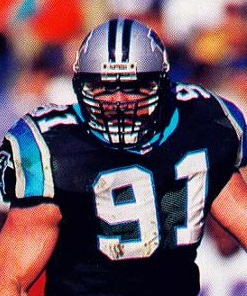
March 24, 2015

Highlighted Year: Trace Armstrong, 2000

Defensive End, Miami Dolphins


Age:  35 (Oct. 5)
12th season in pro football, 6th with Dolphins
College: Florida
Height: 6’4”   Weight: 270

Prelude:
Originally a college star at Arizona State, Armstrong was forced to transfer to Florida for his senior year due to a ruling by the NCAA regarding his academic eligibility. He received All-America recognition from the Sporting News at defensive end as well as All-SEC honors and was chosen by the Chicago Bears in the first round of the 1989 NFL draft (12th overall). He moved into the starting lineup as a rookie, with unspectacular results, but possessing a good work ethic as well as speed and tenacity, Armstrong improved significantly by his second year, garnering 10 sacks. He was slowed by knee and ankle injuries in 1991 but settled into being a solid starting player over the course of six seasons in Chicago, accounting for 42 sacks with a high of 11.5 in 1993. Armstrong moved on to the Dolphins in 1995 where he continued to struggle with injuries but had a 12-sack season in ’96. He performed in more of a reserve role as a pass rushing specialist while also providing veteran leadership.

2000 Season Summary
Appeared in all 16 games
[Bracketed numbers indicate league rank in Top 20]

Sacks – 16.5 [2, tied with Warren Sapp, 1st in AFC]
Most sacks, game – 3.5 vs. Buffalo 10/8
Multi-sack games – 4
Interceptions – 0
Fumble recoveries – 0
Forced fumbles – 7
Tackles – 24
Assists – 10

Postseason: 2 G
Sacks – 1
Interceptions – 0
Fumble recoveries – 1
TD – 0

Awards & Honors:
2nd team All-NFL: AP
1st team All-AFC: Pro Football Weekly
Pro Bowl

Dolphins went 11-5 to finish first in the AFC East while leading the NFL in interceptions (28). Won AFC Wild Card playoff over Indianapolis Colts (23-17). Lost AFC Divisional playoff to Oakland Raiders (27-0).

Aftermath:
Armstrong signed with the Oakland Raiders as a free agent for 2001. His season was cut short due to an Achilles injury and he lasted two more years as a part-time performer. Overall, he played in 211 regular season games over 15 years and finished with 106 sacks, reaching double figures five times. His Pro Bowl selection in 2000 was the only one of his career.

--

Highlighted Years features players who were consensus first-team All-League* selections or league* or conference** leaders in the following statistical categories:

Rushing: Yards, TDs (min. 10)
Passing: Yards, Completion Pct., Yards per Attempt, TDs, Rating
Receiving: Catches, Yards, TDs (min. 10)
Scoring: TDs, Points, Field Goals (min. 5)
All-Purpose: Total Yards
Defense: Interceptions, Sacks
Kickoff Returns: Average
Punt Returns: Average
Punting: Average

*Leagues include NFL (1920 to date), AFL (1926), AFL (1936-37), AAFC (1946-49), AFL (1960-69), WFL (1974-75), USFL (1983-85)

**NFC/AFC since 1970

January 16, 2015

Highlighted Year: Jesse Baker, 1982

Defensive End, Houston Oilers


Age:  25
4th season in pro football & with Oilers
College: Jacksonville State
Height: 6’5”   Weight: 272

Prelude:
Baker was twice named a Little All-American by the Associated Press and starred on the 1977 Jacksonville State team that contended for the Division II national championship. He was chosen by the Oilers in the second round of the 1979 NFL draft and was used in passing situations in place of Pro Bowl DE Elvin Bethea, accumulating an unofficial total of 15.5 sacks. Baker continued in that role for the next two years, and was credited with 10 (unofficial) sacks in 1981. He moved into the starting lineup for the ’82 season, the first in which sacks were officially compiled for individual players.

1982 Season Summary
Appeared in all 9 games
[Bracketed numbers indicate league rank in Top 20]

Sacks – 7.5 [6, tied with Curtis Greer & Lawrence Taylor, 1st in AFC]
Most sacks, game – 3 at Cincinnati 9/12
Multi-sack games – 1
Interceptions – 0
Fumble recoveries – 1
Fumble recovery TDs – 0

Oilers went 1-8 to finish 13th in the AFC, divisions having been eliminated due to the strike-shortened nature of the season.

Aftermath:
Baker had a down season in 1983, still leading the 2-14 Oilers in sacks, but with only 5.5. He bounced back with 11 in ’84. After another lesser year in 1985 he was waived by the Oilers and picked up by Dallas, but was released by the Cowboys after three games and returned to Houston for the remainder of the season. Baker played in nine games in 1987, his last year. Better as a pass rusher than a run defender, Baker recorded an official total of 35 sacks (all but one of them with the Oilers), but when adding in unofficial totals prior to 1982, his actual total was at least 25 more than that.

--

Highlighted Years features players who were consensus first-team All-League* selections or league* or conference** leaders in the following statistical categories:

Rushing: Yards, TDs (min. 10)
Passing: Yards, Completion Pct., Yards per Attempt, TDs, Rating
Receiving: Catches, Yards, TDs (min. 10)
Scoring: TDs, Points, Field Goals (min. 5)
All-Purpose: Total Yards
Defense: Interceptions, Sacks
Kickoff Returns: Average
Punt Returns: Average
Punting: Average

*Leagues include NFL (1920 to date), AFL (1926), AFL (1936-37), AAFC (1946-49), AFL (1960-69), WFL (1974-75), USFL (1983-85)

**NFC/AFC since 1970

October 27, 2014

Highlighted Year: Jared Allen, 2007

Defensive End, Kansas City Chiefs


Age:  25
4th season in pro football & with Chiefs
College: Idaho State
Height: 6’6”   Weight: 270

Prelude:
Chosen by the Kansas City Chiefs in the fourth round of the 2004 NFL draft, Allen was initially viewed as strictly a situational player who would add depth on the defensive line, but surprised by leading the team in sacks as a rookie with 9. Intense, tenacious, and with good instincts, he followed up with 11 sacks in ’05 and improved his play against the run. Allen led the league in fumble recoveries in 2006 with 6, although his sacks fell to 7.5, and there was friction with the front office as well as a suspension from the league for a second DUI offense heading into 2007.

2007 Season Summary
Appeared in 14 of 16 games
[Bracketed numbers indicate league rank in Top 20]

Sacks – 15.5 [1]
Most sacks, game – 2.5 vs. Cincinnati 10/14
Multi-sack games – 6
Interceptions – 0
Fumble recoveries – 0
Forced fumbles – 3
Tackles – 55
Assists – 9

Pass Receiving
Receptions – 2        
Yards – 3
Average gain – 1.5
TDs – 2

Scoring
TDs – 2
Points – 12

Awards & Honors:
1st team All-NFL: AP, PFWA, Sporting News
Pro Bowl

Chiefs went 4-12 to finish third in the AFC West.

Aftermath:
The Chiefs traded Allen to Minnesota in the offseason where he continued to excel as a member of a stronger overall defensive line. He received All-NFL and Pro Bowl honors in 2008 and ’09 while recording 14.5 sacks each year. 2010 was a down year for the franchise as a whole, and Allen had a comparative off-year, although he still led the team with 11 sacks, his fourth consecutive season in double figures. He bounced back strongly with a 22-sack season in 2011 and was named NFL Defensive Player of the Year by The Sporting News as well as receiving consensus first-team All-NFL and Pro Bowl recognition. He followed up with 12 sacks in ‘12 and was selected to the Pro Bowl for the fifth time. He registered 11.5 sacks in 2013 and signed with the Chicago Bears as a free agent for 2014. In ten seasons and 157 games through 2013, Allen was credited with 128.5 sacks, as well as five interceptions and 17 fumble recoveries. He has been a consensus first-team All-NFL honoree four times in addition to the five Pro Bowl selections.

--

Highlighted Years features players who were consensus first-team All-League* selections or league* or conference** leaders in the following statistical categories:

Rushing: Yards, TDs (min. 10)
Passing: Yards, Completion Pct., Yards per Attempt, TDs, Rating
Receiving: Catches, Yards, TDs (min. 10)
Scoring: TDs, Points, Field Goals (min. 5)
All-Purpose: Total Yards
Defense: Interceptions, Sacks
Kickoff Returns: Average
Punt Returns: Average
Punting: Average

*Leagues include NFL (1920 to date), AFL (1926), AFL (1936-37), AAFC (1946-49), AFL (1960-69), WFL (1974-75), USFL (1983-85)

**NFC/AFC since 1970