November 24, 2010

1974: James Harris Rallies Rams to Win Over Vikings


The Los Angeles Rams were coming off of a division title-winning season in 1973, their first under Head Coach Chuck Knox, and were leading the NFC West again with a 7-3 record as they faced the Minnesota Vikings on November 24, 1974 at the Memorial Coliseum. The team featured a conservative offense with an effective ground game that was led by RB Lawrence McCutcheon and a solid defense.

What was surprising was the change at quarterback six games into the season. 34-year-old veteran John Hadl, who had been obtained from the Chargers prior to the ’73 season and proceeded to put together a Pro Bowl performance, started the year but, in an astonishing move, was traded to Green Bay for five draft picks in October. His replacement was James Harris (pictured above), a castoff from the Buffalo Bills.

The 6’4”, 210-pound Harris had started a total of three games in three years with the Bills before being waived in 1972. Signed by the Rams for ’73, he sat on the bench backing up Hadl, but now he was being handed the starting job for a contending team in midseason. If the inexperience factor was not enough, the fact that the Grambling product was at that point the only African-American starting quarterback in the NFL added to the pressure. Thus far, he had risen to the challenge, as the club had gone 4-1 with him leading the offense.

The Vikings, under eighth-year Head Coach Bud Grant, were the defending NFC champions. They were still known for their defense, although age was beginning to creep into the picture. The offense featured QB Fran Tarkenton, a 14th-year veteran, and versatile RB Chuck Foreman. Minnesota was also 7-3 and leading the NFC Central division. Moreover, the Rams had lost to the Vikings in each of their last five meetings.

There was a huge crowd of 90,266 fans at the cavernous Memorial Coliseum, the most to watch a Rams game since 1959. It was an unseasonably hot day in which the temperature rose to 90 degrees at field level.

There was no scoring in the first quarter, but Fred Cox put the Vikings on the board in the second quarter with a 36-yard field goal. Minnesota followed with a 96-yard drive in five plays that was highlighted by Tarkenton passes of 48 yards to WR Jim Lash and 45 yards to WR John Gilliam. Foreman ran for a one-yard touchdown that made the score 10-0.

The Rams came back as Harris led them on a 63-yard, 10-play drive for their first score. Harris capped the drive himself as he dove for a TD from a yard out, but David Ray’s extra point attempt hit the right upright and was unsuccessful – even though the Vikings had only 10 players on the field – and Minnesota maintained a four-point advantage at 10-6.

The Vikings came back on their next possession that started with just 48 seconds left in the half, moving 65 yards in seven plays, five of which were passes. Foreman’s second TD occurred on the last of those throws from Tarkenton, from 12 yards out. Minnesota held a 17-6 lead at the half.

LA had been dogged by mistakes and penalties in the first half. In particular, a 60-yard punt return for an apparent TD by RB Cullen Bryant was called back due to a clip. The large and restless crowd had been doing its share of booing.

In the first possession of the third quarter, Harris injured his ankle on a 10-yard scramble and was forced to miss a series. In relief, rookie Ron Jaworski completed his first regular season NFL pass, of 19 yards to WR Lance Rentzel, although a second, to TE Bob Klein down to the Minnesota one yard line, was called back due to clipping. 15 more yards were tacked on when Coach Knox was penalized for arguing the call.

With his ankle re-taped, Harris came back into the game. Another scoring opportunity was missed when rookie RB John Cappelletti fumbled after catching a Harris pass at the Vikings’ 20, with Minnesota recovering. In the meantime, the Vikings offense had turned conservative and no points were scored in the period.

However, the Rams offense came alive in the fourth quarter. The Vikings had been pinned down deep in their own territory following an excellent punt by LA’s Mike Burke that went out at the Minnesota six (Burke had a great day, and greatly helped in the battle for field position, as he dropped five punts inside the 20 and four of those inside the 10). Following a sack of Tarkenton by DT Larry Brooks, the Rams were able to get good field position on the ensuing punt (and despite a penalty on the return) at the Vikings’ 43.

Harris threw to WR Jack Snow for a 24-yard gain, and followed up with passes to Cappelletti for five yards and McCutcheon for 13 down to the one yard line. From there, Harris again gained the last yard, diving into the end zone for a touchdown. Getting the PAT this time, the Rams were now behind by 17-13.

The Vikings got the ball back with eight minutes remaining and again faced inspired play by the Los Angeles defense. The defensive line of ends Fred Dryer and Jack Youngblood and tackles Merlin Olsen and Larry Brooks was especially effective in throttling the Vikings. They were forced to punt again, with the Rams taking over at their 31 yard line with just under four minutes on the clock.

Harris was once again able to find holes in Minnesota’s five-deep coverage. He first threw to WR Harold Jackson, who made a diving catch at the sideline for a 15-yard gain. Then he hit Cappelletti for eight yards and Klein for 17 down to the Vikings’ 23. Following the two-minute warning, Harris tossed to Cappelletti once again for six yards and then to McCutcheon, who gained nine yards to the eight yard line. With 1:14 remaining to play, Harris lobbed a pass into the end zone over substitute CB Jackie Wallace that Snow pulled in for the go-ahead touchdown.

Minnesota had time for one last shot, but Tarkenton was intercepted by LB Ken Geddes to nail down the 20-17 win for the Rams.

Los Angeles outgained the Vikings, with 380 yards to 301, and had the edge in first downs with 25 to 18. Each team turned the ball over once, although the six LA penalties had been costly.


James Harris completed his last ten passes and was successful on 24 of 37 overall for 249 yards with a touchdown and no interceptions. Lawrence McCutcheon gained 64 yards rushing on 15 carries and added 7 pass receptions for 58 yards. Jack Snow (pictured at left) also caught 7 passes, including the game-winning TD, and gained 91 receiving yards.

For the Vikings, Fran Tarkenton connected on 19 of 35 passes for 217 yards with a touchdown and an interception. Chuck Foreman was the leading receiver, with 9 catches for 88 yards and a TD, as well as leading ground gainer with 49 yards on 12 attempts, including a score.

Chuck Knox called the second half comeback “the best half of our season. We made it hard on ourselves, but I'm real proud of the way our guys hung in there.”

“I give more of the credit to the offensive line,” said Harris. “Minnesota had us pretty well covered and I had to look for secondary receivers. They gave me time to do that.”

“The play was a quick go,” said Snow of the winning TD. “Wallace came up to bump me at the start. I made a little quick move and got past him. James laid it right out there. No man could drop a pass so perfectly placed. There was no way I was going to flub it. This moment has been a long time coming.”

The Rams were able to clinch the NFC West following the next night’s win by the Steelers over New Orleans. They ended up at 10-4 and beat the Redskins in the Divisional round of the playoffs before meeting up once again with Minnesota in the NFC Championship game and losing this time, 14-10. The Vikings had gone on to win the NFC Central for the sixth time in seven years, also with a 10-4 tally, and handily defeated the Cardinals to get to the conference championship game. They lost to Pittsburgh in the Super Bowl.

James Harris surprised the skeptics, ranking second in the NFC in passing (85.1 rating). His overall numbers were modest, due to the nature of the offense and his not starting for the whole season, as he passed for 1544 yards with 11 touchdowns and 6 interceptions. But he topped NFC passers in yards per attempt (7.8) and yards per completion (14.6) and the club went 7-2 in his starts. Harris was selected to the Pro Bowl and was named MVP of the game.

November 23, 2010

2003: Ravens Overcome 17-Point Deficit to Force OT & Beat Seahawks


The Baltimore Ravens were 5-5 and had lost their previous two games as they prepared to host the Seattle Seahawks at M & T Bank Stadium on November 23, 2003. Moreover, while Head Coach Brian Billick’s rebuilding team still had an outstanding defense, the offense was being directed for just the second time by QB Anthony Wright (pictured at right), in place of the injured Kyle Boller. Wright had been with the Cowboys for two seasons and had already gained a reputation as a career backup, at best, with limited skills. While RB Jamal Lewis was a capable runner, the passing game was suspect.

Seattle was leading the NFC West with a 7-3 record under Head Coach Mike Holmgren, who was steadily improving the club. The offense, with Matt Hasselbeck in his first full season as the starting quarterback and star RB Shaun Alexander, was becoming more explosive. But while they were a perfect 6-0 at home, the Seahawks were a disconcerting 1-3 on the road.

It appeared that the game would be a low-scoring affair after a scoreless first quarter. Josh Brown put Seattle on the board first with a 45-yard field goal three minutes into the second quarter, and the Ravens matched it late in the period with a 21-yard Matt Stover kick. But in the final minute of the half, the Seahawks scored twice. First, they capped a 13-play, 80-yard drive with Hasselbeck tossing a two-yard touchdown pass to WR Darrell Jackson. Then, as the Ravens were attempting to run out the clock, the Seahawks recovered a fumble by RB Chester Taylor at the Baltimore 10 yard line and Hasselbeck threw a quick 10-yard TD pass to WR Bobby Engram with a second left on the clock. In short order, Seattle had built a 17-3 halftime lead.

The Ravens came right back in their first possession of the third quarter, with a six-play drive highlighted by pass from Wright to WR Travis Taylor that covered 43 yards. Wright then tossed a 13-yard touchdown pass to WR Marcus Robinson that cut Seattle’s margin to 17-10.

The reduced margin didn’t last long as, on the third play of the next possession, Hasselbeck connected with WR Koren Robinson for a 38-yard touchdown. Seattle added to its lead following a 24-yard punt by Baltimore’s Dave Zastudil that provided good field position and set up a 46-yard field goal by Brown to make the tally 27-10.

Once again the Ravens narrowed the margin as Wright completed a five-play drive with a 50-yard TD pass to Marcus Robinson. And once again the Seahawks came right back with a score as Hasselbeck immediately completed an 80-yard touchdown pass to Jackson. There was still time left in the eventful third quarter, and Wright found Marcus Robinson for a third touchdown pass that covered 25 yards. The period ended with Seattle up by 10 at 34-24.

Early in the fourth quarter, it seemed as though the Seahawks had finally put the game away when Hasselbeck tossed his fifth touchdown pass, of five yards to Engram, for a renewed 17-point lead of 41-24. But with 6:41 remaining on the clock, Baltimore safety Ed Reed blocked a Jeff Feagles punt and returned it 16 yards for a touchdown. The Ravens got the ball back when LB Ray Lewis recovered a fumble at his own 29 and Wright led the team on a 71-yard drive through a soft Seattle defense that ended with a nine-yard scoring pass to Marcus Robinson.

The Seahawks still led by 41-38 with 1:12 remaining, and it appeared that they would prevail when they recovered an attempted onside kickoff by the Ravens. But in a pivotal play at the Baltimore 33 with 39 seconds left, Hasselbeck’s quarterback sneak was stopped for no gain on fourth-and-one, and the Ravens got the ball back. A 44-yard pass interference penalty on Seattle CB Marcus Trufant set up the game-tying 40-yard field goal by Stover, and the teams headed into overtime.

The Seahawks had the initial possession in the extra period but were forced to punt. The Ravens responded with a 55-yard drive, with the key play being a 19-yard pass from Wright to Marcus Robinson in a third-and-15 situation. Stover booted a 42-yard field goal, and Baltimore came away with an improbable 44-41 win.

Reflecting the closeness of the final score, each team gained 426 yards of total offense. The Ravens had the edge in rushing yards (150 to 133) while Seattle had the most net passing yards (293 to 276). Both teams sacked the opposing quarterback six times apiece. The Seahawks gave up three turnovers, as opposed to two by Baltimore, while the Ravens were penalized 14 times for 112 yards, compared to Seattle being flagged six times for 89 yards.

Anthony Wright had a career game, completing 20 of 37 passes for 319 yards with four touchdowns – all to Marcus Robinson – and none intercepted. Robinson, for his part, caught 7 passes for 131 yards and the four TDs. Jamal Lewis gained 117 rushing yards on 26 carries.


In defeat, Matt Hasselbeck (pictured at left) was successful on 23 of 41 passes for 333 yards and five touchdowns with no interceptions. Darrell Jackson was the top receiver with 7 catches for 146 yards and two of the TDs. Shaun Alexander ran for 72 yards on 22 attempts.

Said Wright afterward, “It was looking very, very dim. But we just let it all hang out. Everything came together. It's unbelievable, for us to be down as much as were and to come back.” He was then off to the hospital where his wife was expecting delivery of a baby girl.

“We let them back in the football game,” said a disappointed Mike Holmgren. “It was just a bizarre, bizarre ending.”

Referring to the failed quarterback sneak that could have sealed the game in regulation, Matt Hasselbeck said, “We just needed one more play. One more play and we could have won the game. We should have won the game, and we just didn't make it.”

The Ravens built upon the stunning comeback victory to win five of their last six games and finish first in the AFC North with a 10-6 record. They lost to Tennessee in the Wild Card playoff game. The loss to Baltimore knocked Seattle out of first place, but the Seahawks also completed the regular season at 10-6 to end up second in the NFC West. Qualifying for the postseason as a wild card, they too lost in the first round, in overtime to the Green Bay Packers, Holmgren’s previous coaching stop.

Anthony Wright’s performance was easily the greatest of his career. He ended up throwing for 1199 yards with 9 touchdowns and 8 interceptions in ’03, and was 5-2 as the starting quarterback. He never again came close to passing for 300 yards in a game, or tossing more than two TD passes in a contest, and missed the 2004 season altogether due to injury.

Jamal Lewis topped the NFL with 2066 yards rushing on 387 carries (5.3 avg.) with 14 touchdowns and remained the key player on offense.

Marcus Robinson’s four touchdown receptions represented two thirds of his total output of six for the year. He caught 31 passes for 451 yards (14.5 avg.) all told.

Matt Hasselbeck, who had a big passing day in defeat, ranked fourth in the NFL in passing yards (3841) and tied for third in TD passes (26). His 7.5 yards per attempt ranked fourth (tied with Peyton Manning of the Colts) and 12.3 yards per completion placed second. He was selected for the Pro Bowl.

November 22, 2010

1962: Lions Hand Packers Only Defeat of Season in “Thanksgiving Day Massacre”


After ten weeks of the 1962 NFL season, the Green Bay Packers were undefeated at 10-0 and apparently cruising toward a second consecutive league title. The Detroit Lions were 8-2 with four games left to play and had lost a hard-fought 9-7 game at Green Bay in Week 4. The clubs were scheduled to meet at Tiger Stadium on Thanksgiving Day, November 22, and the Lions were determined to exact their revenge.

Head Coach Vince Lombardi’s Packers were the highest-scoring team in the league, as well as the best all-around. The offensive line, which contained two future Hall of Famers in center Jim Ringo and tackle Forrest Gregg and an outstanding tandem of guards in All-Pro Jerry Kramer and Fred “Fuzzy” Thurston, allowed the team to roll up yardage on the ground. FB Jim Taylor already had 1121 yards rushing. QB Bart Starr could pass effectively (he came into the game ranked second in the NFL) and had outstanding receivers in flanker Boyd Dowler, split end Max McGee, and TE Ron Kramer (also an outstanding blocker).

Detroit, coached by George Wilson, had long been established as a premier defensive club. Tackles Alex Karras and Roger Brown, MLB Joe Schmidt, CB Dick “Night Train” Lane, and safety Yale Lary were all among the best at their positions (Lary was also an outstanding punter). The Packers had been fortunate to beat them in the first meeting, and therein lay the seeds of discontent among Detroit’s offensive and defensive units.

Pro Bowl QB Milt Plum had been obtained by the Lions from the Browns in the previous offseason, and there was speculation that the upgrade at quarterback might boost Detroit past the Packers in the Western Conference. However, the offense continued to lag, and it was an interception thrown by Plum that had set up Green Bay’s winning field goal in the first meeting.

It didn’t take long for the attacking Detroit defense to stop the Packers in their tracks. Before an enthusiastic sellout home crowd of 57,598, they dumped Starr for a 15-yard loss the first time he dropped back to pass on Green Bay’s third play. Later in the first quarter, Dowler shanked a punt that traveled only 15 yards and gave the Lions the ball on the Green Bay 41. On a third-and-two play, Plum froze the defense by faking a handoff to FB Nick Pietrosante and then fired a pass to split end Gail Cogdill who ran past two defenders for a 33-yard touchdown.

Detroit put the Packers away in the second quarter. Green Bay HB Tom Moore, substituting for the injured Paul Hornung, fumbled and LB Carl Brettschneider recovered at his own 47 yard line. Shortly thereafter, Plum hit Cogdill again for a 27-yard TD and 14-0 lead.


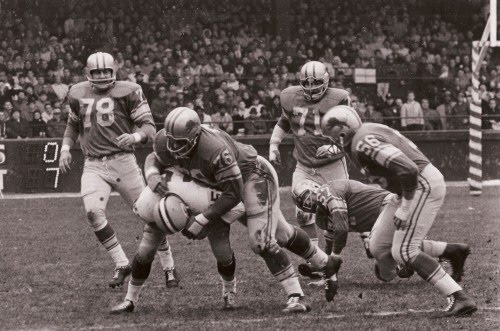
On Green Bay’s next possession, Roger Brown (pictured at left) hit Starr while setting up to pass and forced a fumble that DE Sam Williams picked up and ran into the end zone for a six-yard touchdown. When the Packers got the ball back, again pinned deep in their own territory, Starr faded back into his end zone and was sacked for a safety by Brown, who had run over both Thurston and Taylor in his pursuit of the quarterback. The Lions had scored 16 points in under three minutes of action.

Green Bay got a break late in the second quarter when McGee was roughed while punting from his end zone and the offense put together a sustained drive of 56 yards that included five completed passes by Starr. But Jerry Kramer’s field goal attempt missed after being partially blocked and the Lions carried the 23-0 lead into halftime.

Detroit didn’t let up in the third quarter, as Lane intercepted Starr’s first pass of the second half to set up a 47-yard field goal by Plum. That was the end of the scoring for the Lions. The Packers managed two late touchdowns in the fourth quarter – one by the defense – and the final score was 26-14.

Detroit’s domination of the game that came to be referred to as “The Thanksgiving Day Massacre” was more complete than the score indicated. While both teams turned the ball over five times, the Lions outgained the Packers, 304 yards to 122. The usually unstoppable Green Bay running attack was held to just 73 yards on 27 attempts. Bart Starr was sacked 10 times for a net loss of 93 yards, giving Green Bay just 49 net passing yards (Plum was not sacked at all).

While the defense dominated, Detroit’s offense played just well enough. Milt Plum completed 8 of 16 passes for 137 yards with two touchdowns and two interceptions. FB Ken Webb, who took over for the injured Nick Pietrosante, gained 62 yards on 11 carries while HB Tom Watkins ran the ball 17 times for 55 yards. Gail Cogdill (pictured below) caught three passes for 79 yards and the two big TDs.


As for the Packers, when Bart Starr was able to throw, he completed 11 of 19 for 142 yards with no TDs and two interceptions. Jim Taylor gained just 47 yards on 13 carries with a touchdown – most of it came later in the game, as he was held to -3 yards in the first half. Ron Kramer caught four passes for 62 yards, and Boyd Dowler also had four receptions, for 41 yards.

“It's a known fact that the Detroit defense is good,” summed up Vince Lombardi. “They
completely overpowered us in the first half…My club wasn't flat. We were ready. They just overwhelmed us.”

Green Bay didn’t lose another game (they came back the next week to thrash the hapless Rams by a score of 41-10) and finished the season at 13-1 atop the Western Conference. They defeated the Giants once again to repeat as NFL champions. The Lions lost the season finale to end up at 11-3 and in second place; their reward was a trip to Miami for the meaningless Playoff Bowl for the third straight year.

The Detroit defense was ranked number one overall in the NFL, giving up a total of 3217 yards (30 yards less than the Packers), and were also best against the run (1231 yards). The 177 points allowed was second best to Green Bay’s 148. Roger Brown, Joe Schmidt, “Night Train” Lane, and Yale Lary were all consensus first team All-Pro selections and were selected to the Pro Bowl along with Alex Karras.

November 21, 2010

1982: Joe Montana Passes Mistake-Prone 49ers Past Cardinals


It had been over two months since NFL teams had last taken the field as the St. Louis Cardinals hosted the San Francisco 49ers at Busch Stadium on November 21, 1982. The players had gone on strike – the first to occur during the season – following the second week of action. The work-stoppage was over, 57 days later, and now Week 3 was occurring late in November.

Head Coach Bill Walsh’s 49ers were coming off a championship season in 1981, but had lost their first two games in ’82 prior to the strike. The Cardinals were 1-1 under Head Coach Jim Hanifan and coming off of a 7-9 year in ’81. The teams had just four days of practice prior to the contest.

There were 38,064 fans in attendance – and, as was the case in many NFL venues on this day, many no-shows (13,328). The 49ers took the early lead as Ray Wersching booted a 36-yard field goal in the first quarter and RB Jeff Moore scored on a one-yard touchdown run in the second quarter for a 10-0 lead.

With 30 seconds remaining in the first half, the Cardinals got on the board as WR Roy Green made a diving catch of a 17-yard pass from QB Neil Lomax for a touchdown. The 49ers got the ball back but fumbled, and LB Charlie Baker recovered for St. Louis. But an opportunity to tie the score at the half was lost when Neil O’Donoghue missed a 44-yard field goal attempt on the last play (he also missed from 47 yards in the first quarter). San Francisco remained in the lead at 10-7.

The Cardinals took advantage of two turnovers in the third quarter to go in front. First, DE Curtis Greer recovered a fumble that set up O’Donoghue’s tying field goal from 30 yards out. Then CB Jeff Griffin intercepted a Joe Montana pass and O’Donoghue kicked a 32-yard field goal to make the score 13-10 in favor of St. Louis. Unfortunately for the Cardinals, the failure to get a touchdown on one or both possessions allowed the 49ers ample room to recover.

The turning point in the game came when San Francisco got the ball back, still in the third quarter. Facing a third-and-18 situation in his own territory, Montana connected with WR Renaldo Nehemiah on a 55-yard pass play. Two plays later, Montana threw a six-yard TD pass to TE Russ Francis that put the Niners back in the lead at 17-13.

The Cardinals had a chance to make a big play of their own, but Lomax overthrew Green on what could have been a 45-yard TD pass. Now in the fourth quarter, the 49ers regained possession and went 91 yards in 10 plays with Montana hitting WR Dwight Clark for a 33-yard touchdown.

San Francisco had another big play that set up a third passing touchdown. Montana passed to rookie RB Vince Williams, who proceeded to gain 55 yards to set up a 17-yard TD pass to RB Earl Cooper. In a stretch of 13 minutes, the Niners had scored three touchdowns to take control, at 31-13, of what had been a close game.

38-year-old veteran QB Jim Hart replaced the second-year Lomax with nine minutes remaining and led the Cardinals to a score on a three-yard carry by RB Ottis Anderson. But it was too-little, too-late as the 49ers won by a final score of 31-20.

San Francisco outgained the Cardinals by 448 yards to 254 and had 22 first downs to 15 for St. Louis. The 49ers were damaged by their three turnovers, as opposed to none by the Cardinals, but the failure of the home team to better capitalize on their opportunities set the stage for the Niners to take control.

Joe Montana completed 26 of 39 passes for a then-team record 408 yards with three touchdowns against one interception. The fourth-year veteran out of Notre Dame spread the ball around well as eight different receivers caught at least two passes apiece. In the second half alone, he completed 15 of 20 for 238 yards and all of the TDs.


Dwight Clark (pictured at left) led the club with 6 catches for 103 yards and a touchdown while Renaldo Nehemiah gained 93 yards on three receptions and Jeff Moore contributed four catches for 87 yards to go along with his 9 rushing attempts for 19 yards. Indeed, the 49ers gained just 77 yards on 26 running plays, and Earl Cooper led the way with 30 yards on 7 carries.

For the Cardinals, Neil Lomax was successful on just 9 of 23 passes for 82 yards and a TD. Jim Hart was more proficient, completing 8 of 11 throws for 72 yards. Ottis Anderson led the club with 65 yards on 15 rushes, including a TD, and also caught 6 passes for 51 yards. WR Pat Tilley slightly led in pass receiving yards with 53 on four receptions.

“It's a good way to come back,” Montana said afterward. “My timing wasn't there early and I made a lot of mistakes. But I thought we played well. I wasn't surprised; we looked like we were in good shape in practice.”

There was concern that the players might go back on strike if they voted to reject the preliminary settlement that had allowed play to resume. The Cardinals’ player representative, guard Terry Stieve, said, “Here in St. Louis, we'll ratify it and I have a gut feeling it will be ratified by the players throughout the league. The fans are the forgotten group in this thing, so it's time both sides realize the importance of the fans. I don't blame them for feeling cheated in this deal.”

The games did continue through what became a nine-game regular season. Division play was done away with and the top eight teams in each conference qualified for a playoff tournament. The 49ers didn’t make it that far - plagued by injuries and (according to Coach Walsh) diminished intensity, they ended up with a 3-6 record and a woeful eleventh place in the 14-team NFC. St. Louis made out better, going 5-4 and making it to the postseason as the sixth seeded team in the conference. They were handily beaten by Green Bay in the first round.

Joe Montana topped NFL quarterbacks with 346 attempts and 17 touchdown passes (tied with Pittsburgh’s Terry Bradshaw and Dan Fouts of the Chargers) and ranked second in completions (213) and yards (2613). While he was at it, he set a record by stringing together five straight 300-yard passing performances (since exceeded).

Dwight Clark led the league with 60 pass receptions and was second with 913 receiving yards. He was a consensus first-team All-Pro and was named to the Pro Bowl.

The losing record by the 49ers would be their last until 1999 – a string of 16 consecutive seasons in which they would never finish with fewer than 10 wins. The club won four NFL championships during that run.

November 20, 2010

2005: Bucs Score 10 Points in Last Two Minutes to Beat Falcons


The game between the Tampa Bay Buccaneers and Atlanta Falcons at the Georgia Dome on November 20, 2005 featured two teams with 6-3 records that were jockeying for position in the hot NFC South race.

The visiting Buccaneers, under the guidance of Head Coach Jon Gruden, had gone undefeated in their first four games and then endured a 1-3 slump before narrowly defeating the Redskins the week before. Rookie RB Carnell “Cadillac” Williams (pictured above) had been a big part of the fast start, rushing for 434 yards in his first three games, but he had run into injury problems, and QB Brian Griese was lost for the season in Week 6.

Atlanta, coached by Jim Mora, Jr., featured run-oriented QB Michael Vick; 30-year-old RB Warrick Dunn, still highly effective running the ball; and TE Alge Crumpler on offense. The defense was vulnerable, particularly against the run.

Tampa Bay took the early lead as Matt Bryant kicked a 31-yard field goal to cap the first possession of the game (Williams burst up the middle for 30 yards on the initial play from scrimmage). Shortly thereafter, with Vick on the sideline after being hit hard on a sack at his own one-yard line, DT Anthony McFarland fell on a fumble by backup QB Matt Schaub in the end zone for a touchdown and the Buccaneers led by 10-0 after one quarter.

Bryant kicked another field goal, of 45 yards, to extend the lead to 13-0 in the second quarter, but the Falcons came back with a 10-play drive, highlighted by a 35-yard pass completion from Vick to WR Roddy White, that concluded with a 31-yard field goal by Todd Peterson.

Atlanta’s next possession, following a 49-yard Josh Bidwell punt, covered 83 yards in 10 plays. Vick hit White for a 54-yard gain just prior to the two-minute warning and, on a third-and-seven play at the Tampa Bay 15, Vick connected with Crumpler for 14 yards to the one. From there, RB T.J. Duckett ran for a touchdown and the Bucs’ lead was cut to 13-10 at the half.

On the first possession of the third quarter, the Falcons put together another sustained 10-play drive with Vick throwing for back-to-back 20 yard gains to WR Brian Finneran and Crumpler. With third-and-goal at the Tampa Bay four yard line, Vick tossed a touchdown pass to Crumpler and Atlanta took the lead at 17-13.

The Bucs came right back, however, with a drive highlighted by a 27-yard pass completion from QB Chris Simms to WR Michael Clayton and a 16-yard run by Williams. FB Mike Alstott put Tampa Bay back in front with a one-yard run for a TD.

Atlanta’s Peterson kicked a 20-yard field goal early in the fourth quarter to tie the score at 20-20. On Tampa Bay’s second play following the field goal, Simms was intercepted by Falcons LB Keith Brooking near midfield. Atlanta capitalized, converting two third-and-nine plays and scoring on a 10-yard touchdown pass from Vick to WR Michael Jenkins to re-take the lead at 27-20.

With time winding down, the Buccaneers drove from their own 29 yard line following the kickoff. Simms was successful on three of four passes, including an eight-yard pass to Williams on third-and-six to the Atlanta nine, and Williams ran five times for 32 yards, including the nine-yard touchdown run that, combined with Bryant’s extra point, tied the score at 27-27 with just under two minutes left to play.

Atlanta had another shot, but the biggest defensive play of the game occurred when blitzing LB Derrick Brooks forced Vick to fumble and LB Shelton Quarles recovered for the Bucs at the Atlanta 34. Four plays later Bryant kicked a 45-yard field goal. While the Falcons made a last-ditch effort in the final seconds, Michael Koenen’s 55-yard field goal attempt on the final play was wide to the right and Tampa Bay came away with the hard-fought 30-27 win.

Atlanta led in total yards (443 to 258) and first downs (26 to 15). The Falcons converted 11 of 17 third downs along the way. However, their two turnovers resulted in 10 points for Tampa Bay, while the lone turnover by the Bucs led to seven.

Cadillac Williams ran for 116 yards on 19 carries with a TD, and also had the key eight-yard reception as one of his three catches for 13 yards. Chris Simms, improving as Griese’s replacement, completed 11 of 19 passes for 118 yards with no touchdowns and one interception. Michael Clayton was the most productive receiver for the Bucs with 48 yards on his three catches.

Michael Vick (pictured at bottom) completed 21 of 38 passes for 306 yards with two TDs and none intercepted. It was the second 300-yard passing performance of his career, and a change from his usual pattern as his rushing total was light, with 17 yards on four carries. Roddy White caught four passes for 108 yards while Michael Jenkins had 5 receptions for 69 yards and a TD and Alge Crumpler contributed 5 catches for 49 yards and a score. Warrick Dunn led the club with 82 yards on 18 carries.

The win put Tampa Bay in a tie for first in the division with Carolina, while the Falcons fell a game back. The Buccaneers, with the league’s best defense to complement the conservative offense, won four of their last six games for an 11-5 record that still matched the Panthers, but they won the NFC South title thanks to a better division record than Carolina’s. The Bucs lost to Washington in the Wild Card playoff round. Atlanta lost its last three games to drop out of the running and ended up third in the division at 8-8.

Cadillac Williams ended up with 1178 yards on 290 carries (4.1 avg.) and six touchdowns. He was named NFL Offensive Rookie of the Year by the Associated Press.

Michael Vick’s passing statistics were fairly average, as he threw for 2412 yards with 15 touchdowns and 13 interceptions, but he led the NFL in average gain-per-carry rushing (5.9) for the second straight season with 597 yards on 102 attempts and was named to the Pro Bowl for the third time. However, his frustration with the offensive system and overall failure to progress as a passer (despite the performance against Tampa Bay) were considered significant factors in the team’s letdown at the end of the season.

November 19, 2010

1961: George Blanda Throws 7 TD Passes Against NY Titans


The Houston Oilers, defending champions of the American Football League, had gotten off to a rough start in 1961. They were 1-3-1 after five games, and George Blanda (pictured above), the 33-year-old quarterback who had revived his pro football career in ’60 while leading the club to the title, was benched for two games.

However, owner Bud Adams fired Head Coach Lou Rymkus at that point and replaced him with Wally Lemm. There was an immediate turnaround, and by the time the Oilers hosted the New York Titans at Jeppesen Stadium on November 19, they had reeled off four straight wins. Blanda was back at the helm. In the preceding four contests, he had passed for 1076 yards (including 464 in a game at Buffalo alone) with 11 touchdowns and 7 interceptions.

The Titans, coached by legendary QB Sammy Baugh, were 5-4 coming into the game. While the offense was capable of providing some excitement, in particular due to the presence of split end Art Powell and flanker Don Maynard, the defense was porous, especially the defensive backfield. Having started off 3-1, New York was in danger of falling out of contention in the Eastern Division.

There were 33,428 fans in attendance at the small venue as Houston took command quickly and decisively. Blanda tossed his first touchdown pass, of 28 yards to flanker Charley Hennigan, at the conclusion of an 80-yard drive early in the first quarter. With 4:40 remaining in the opening period, Blanda tossed a six-yard TD pass to HB Billy Cannon to conclude a six-play possession that covered 31 yards. Before the first quarter was over, the Oilers scored again as Blanda threw another pass to Cannon that covered 78 yards for a third touchdown.

The Titans offense didn’t threaten until midway through the second quarter. Flanker Don Maynard put New York on the board, making an outstanding catch on a four-yard pass from QB Al Dorow, but DE Don Floyd blocked the extra point attempt.


Blanda poured it on as he connected with split end Bill Groman for a 66-yard TD and with Cannon once more for a six-yard score. The tally at the end of the first half was 35-6 and the veteran quarterback had set a new AFL record with five touchdown passes.

Three minutes into the third quarter, Blanda threw for his sixth touchdown, connecting with Groman on a 46-yard play. He tossed his seventh, tying the NFL record held at that point by Sid Luckman of the Bears and Philadelphia’s Adrian Burk, in the fourth quarter on a play that covered 11 yards to Groman.

Dorow, who was constantly harassed by the aggressive Houston defense, tossed a second TD pass, of 11 yards to TE Thurlow Cooper, to salvage a slight bit of pride for the Titans. Houston won by a final score of 49-13.

The Oilers rolled up 555 yards, to 347 for New York, and the Titans further hurt their cause by turning the ball over four times, as opposed to just once by Houston. There was plenty of aggressive play on both sides, and several fights broke out, including one that cleared both benches. Altogether, 18 penalties were called, resulting in 193 yards (11 for 128 yards on Houston, 7 for 65 yards on the Titans). Three players were ejected.

In throwing for seven touchdowns, George Blanda completed 20 of 32 passes for 418 yards and was picked off once. Three Houston receivers gained over 100 yards – Bill Groman led the group with 5 catches for 152 yards and three TDs, followed by Charley Hennigan, who caught 8 passes for 123 yards and a touchdown, and Billy Cannon added 122 yards on 7 receptions with three scores. Cannon added another 41 yards on 14 rushes, behind FB Charley Tolar, who gained 58 yards on 11 carries, and FB Dave Smith with 49 yards on six attempts.

For the visitors, Al Dorow went to the air 47 times and had 21 completions for 278 yards with two TDs and three interceptions. HB Dick Christy led the club with 7 catches for 103 yards out of the backfield. FB Bill Mathis ran for 68 yards on 14 carries.

It was another big performance by the defending champions as they surged back into the Eastern Division race. Ultimately, the Oilers went undefeated the rest of the way, winning the division with a 10-3-1 record and again beating the Chargers for the AFL title. The Titans ended up in third place at 7-7.

The offense in particular achieved many superlatives. George Blanda threw 36 touchdown passes, exceeding the existing NFL record of 32, and also led the AFL in passing yards (3330), yards per attempt (9.2, almost two yards per pass better than the runners-up), yards per completion (17.8), and percentage of TD passes (9.9). Considering he had actually missed two full games due to being benched, it was an amazing overall performance. Blanda was selected as AFL Player of the Year by the Associated Press and UPI.


Bill Groman, with his three touchdown catches against New York, caught a TD pass in his 8th consecutive game. While he was shut out the next week, he ended up with 17 touchdown receptions to not only lead the league but tie the existing NFL record. Groman caught 50 passes for 1175 yards.

Charley Hennigan set a single-season record with 1746 receiving yards that not only was never beaten in the AFL, but wasn’t exceeded in the NFL until 1995. He ranked second in both receptions (82) and receiving touchdowns (12).

Billy Cannon led the AFL in rushing with 948 yards on 200 carries and was also the league’s all-purpose yardage leader with 2043. The 1959 Heisman Trophy-winner out of LSU scored a total of 15 touchdowns (6 rushing, 9 receiving). As his performance against the Titans demonstrated, Cannon was a potent pass receiving threat out of the backfield and caught 43 passes for 586 yards.

November 18, 2010

1979: Chargers Defense Keys Romp Over Champion Steelers


The Pittsburgh Steelers had won the Super Bowl following the 1978 season and looked to be well on their way to repeating as they took on the Chargers at San Diego Stadium on November 18, 1979. Under the guidance of Head Coach Chuck Noll, who had built the club into a winner with three championships since arriving ten years before, they were 9-2. Moreover, they had won their last four games, the previous two by a combined score of 68-10.

The Chargers had been far less successful during the past decade – after regularly contending in the 1960s in the AFL, they had not been in the postseason in 14 years. However, they were in their first full season under Head Coach Don Coryell and, featuring a high-powered passing offense, were 8-3. Eighth-year QB Dan Fouts was flourishing and had an outstanding group of receivers to throw to – most notably, wide receivers John Jefferson and Charlie Joiner. However, they also had an aggressive and solid defense, as the Steelers would find out.

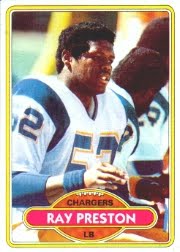
There were 51,910 loud and enthusiastic fans in attendance as the defense set up San Diego’s first touchdown of the game. LB Ray Preston intercepted a pass by Steelers QB Terry Bradshaw that gave the Chargers possession at the Pittsburgh 37 yard line. Two plays later, Fouts completed a 16-yard touchdown pass to Jefferson. The score stood at 7-0 after one quarter.


In the second quarter, the Chargers put together a 72-yard drive with Fouts completing a six-yard TD pass to TE Bob Klein to cap it and extend the lead to 14-0. Later in the period, Preston picked off another Bradshaw pass and returned it 35 yards to the three yard line. RB Bo Matthews plunged into the end zone from two yards out and San Diego took a 21-0 lead into halftime.

As for the Steelers, Bradshaw had failed to complete a pass to a wide receiver in the first half. San Diego’s linebackers left the pass-rushing to the linemen and played back, thus forcing Bradshaw to throw short passes to his running backs. Standout wide receivers Lynn Swann and John Stallworth were both double-covered throughout the game.

Pittsburgh’s only score came at 6:30 in the third quarter on a two-yard carry by RB Rocky Bleier. But Chargers LB Woodrow Lowe  intercepted a deflected Bradshaw pass later in the period that he returned 77 yards for a touchdown and 28-7 score.

CB Mike Williams intercepted another pass by Bradshaw that set up the last San Diego touchdown in the fourth quarter. RB Hank Bauer, the team’s short-yardage specialist (he carried just 22 times for 28 yards all season, but scored eight touchdowns), plowed over from two yards out, and that provided the final tally of 35-7. It was the worst loss for the Steelers in nine years.

San Diego’s offense had a relatively ordinary day, but the defense was superb. The Chargers outgained the Steelers, 218 yards to 191, but the clubs were even in first downs with 14 apiece. Pittsburgh turned the ball over eight times, to four by San Diego, and Bradshaw was sacked four times. Every Charger received a game ball, and Woodrow Lowe and Ray Preston each got two.


Dan Fouts completed just 11 of 24 passes for 137 yards with two touchdowns and two interceptions. John Jefferson (pictured at right) was the leading receiver with 5 catches for 106 yards and a TD. The Chargers running attack was ordinary (at best) throughout the year and RB Mike Thomas was the leading rusher in this game with 53 yards on 13 carries (the team ended up ranking 27th in the league in rushing).

Terry Bradshaw, who was relieved by backup QB Mike Kruczek in the fourth quarter, was successful on 18 of 36 pass attempts for 153 yards with no TDs and five interceptions (two each by Preston and Lowe). RB Franco Harris, who led the club with just 44 yards on 20 attempts, was also the leading receiver with 7 catches, for 50 yards. John Stallworth gained 55 yards on four receptions while Lynn Swann was held to two catches for 28 yards.

“We have to credit San Diego with beating us,” said Chuck Noll, a former Chargers assistant coach in the 1960s. “They had a lot to say about what went on. They made it happen. Bradshaw was 100 percent, but the only receivers that were open were linebackers.”

“I got real acquainted with the defense today,” Bradshaw added. “They played awesome. They put on the best rush I've ever seen all year, by far. We ran into a team ready to play a lot more than we were. We were bad, and when we're bad, we're really bad.”

San Diego lost just once more to finish the regular season on top of the AFC West with a 12-4 record. However, they were upset by the Houston Oilers in the Divisional playoff. The Steelers also ended up with a 12-4 tally but were far more successful in the postseason, beating the Rams to win a second straight Super Bowl (their fourth in six years).

While the Chargers were best known for their league-leading passing offense that ended up tied with New England for second in the NFL with 411 points scored (the Steelers were first with 416), they also surrendered the fewest points of any AFC club (246) and were second in the conference in passes intercepted (28).

Dan Fouts didn’t have a strong performance against Pittsburgh, but he went on to set a new passing yardage record with 4082. Terry Bradshaw wasn’t far behind with a career-high 3724 yards (the Hall of Fame quarterback also had another career-high figure by throwing 25 interceptions).