June 10, 2013

Rookie of the Year: Al Baker, 1978

Defensive End, Detroit Lions


Age: 22 (Dec. 9)
College: Colorado State
Height: 6’6”   Weight: 260

Prelude:
Al “Bubba” Baker was moved from the offensive line to defensive end in college, and quickly displayed his pass rushing prowess. He was taken in the second round of the 1978 NFL draft by the Lions and moved into the starting lineup.

1978 Season Summary
Appeared in all 16 games
[Bracketed numbers indicate league rank in Top 20]

Sacks – 23 (unofficial)
Most sacks, game – 5 vs. Tampa Bay 11/12 (unofficial)
Interceptions – 0
Fumble recoveries – 1
Forced fumbles – 0

Awards & Honors:
NFL Defensive Rookie of the Year: AP, PFWA
NFC Rookie of the Year: UPI, Sporting News
1st team All-NFL: AP, PFWA, NEA, Pro Football Weekly
1st team All-NFC: Pro Football Weekly
2nd team All-NFC: UPI
Pro Bowl

Lions went 7-9 to finish third in the NFC Central while placing second in the NFL in sacks (55).

Aftermath:
Following up his outstanding rookie year, he solidified his reputation as possibly the best pure pass rusher in the NFL and leader of Detroit’s “Silver Rush” by unofficially accumulating 16 sacks in 1979, 18 in ’80, and 10 in 1981, a year in which he missed five games due to injury (sacks became an official statistic in 1982). He was selected to the Pro Bowl following the 1979 and ’80 seasons. Following a strike-shortened 1982 season in which Baker was credited with 8.5 sacks in 9 games – thus giving him an unofficial total of 75.5 in 67 games for his Detroit career – he was dealt to the Cardinals just prior to the 1983 season, where he was reunited with defensive line coach Floyd Peters, who had molded the “Silver Rush”. He had an official career high of 13 sacks in ’83 and a total of 37.5 in four years with the Cards. Baker moved on to the Browns in 1987 and the Vikings in ’88, returning to Cleveland for his final two years. Officially, Baker retired with 65.5 sacks, but adding in the unofficial totals from his first and most productive years, the total was 132.5.

--

Rookie of the Year Profiles feature players who were named Rookie of the Year in the NFL (including NFC/AFC), AFL (1960-69), or USFL (1983-85) by a recognized organization (Associated Press – Offense or Defense, Newspaper Enterprise Association, United Press International, The Sporting News, or the league itself – Pepsi NFL Rookie of the Year).


June 8, 2013

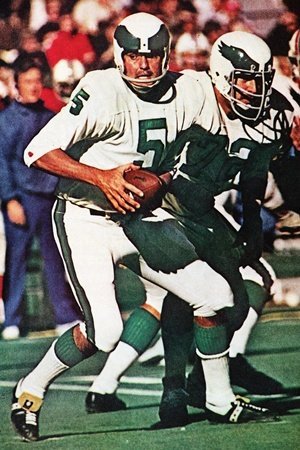
1973: Eagles Pay Heavy Price in Trade with Rams for Roman Gabriel


On June 8, 1973 the Philadelphia Eagles took a major step in revamping their offense by acquiring QB Roman Gabriel from the Los Angeles Rams. The acquisition of the 32-year-old quarterback came at great cost, however – they gave up All-Pro WR Harold Jackson, FB Tony Baker, and their first round draft choices for 1974 and ’75 plus a third round choice for 1975.

Gabriel had been taken by the Rams in the first round of the 1962 NFL draft out of North Carolina State (second overall). Big, especially for his time at 6’5” and 220 pounds, and with an accurate throwing arm, he showed potential during his first four seasons but shared time with Zeke Bratkowski, Terry Baker, and Bill Munson. The arrival of George Allen as head coach in 1966 brought improvement to the team in general and Gabriel in particular, who no longer faced challenges for the starting job. Operating in a ball control offense that complemented a ferocious defense, Gabriel took few risks and threw few interceptions. Over the course of the five seasons through 1970, the Rams went 49-17-4 during the regular season, although they lost both of their postseason games. The big quarterback was selected to the Pro Bowl three times (1967, ’68, and ’69) and was a consensus NFL MVP selection in 1969.

Things began to unravel after Allen’s departure following the 1970 season, and Gabriel suffered with tendonitis in his throwing elbow in ’72. His numbers dropped appreciably as he passed for 2027 yards (his lowest total since 1965) and he tossed more interceptions (15) than touchdowns (12).

Earlier in the offseason, the Rams acquired QB John Hadl from San Diego and Gabriel sought a trade. Because he had a no-trade, as well as no-cut, clause in his contract, he filed suit against the Rams, saying that his no-trade clause had been invalidated when Carroll Rosenbloom became owner of the Rams through a franchise swap for the Baltimore Colts with Robert Irsay.

Since Gabriel’s approval was necessary for any trade to occur, he was allowed to negotiate with other teams and agreed to terms with the Eagles the week before the deal, with the condition that a trade could be worked out. The suit was withdrawn in order to clear the way for the transaction with Philadelphia, but Rosenbloom, reacting to negative local press, nearly called off the trade at the last minute.

With regard to the players the Rams received in the trade, WR Harold Jackson was returning to the organization he had been with originally. A 12th round draft pick by LA in 1968, he appeared in just two games on special teams and was traded to the Eagles. His star rose quickly in Philadelphia as he led the NFL in pass receiving yards in ’69 with 1116 while catching 65 passes and scoring nine touchdowns. In four years with Philadelphia he caught a total of 215 passes for 3493 yards (16.2 avg.) and 21 TDs and was twice selected to the Pro Bowl, including after a 1972 season in which he led the league in both pass receiving (62 catches) and yards (1048).

FB Tony Baker played for the Saints before coming to Philadelphia, gaining selection to the Pro Bowl in 1969 when he led the NFL in average gain per carry (4.8) while rushing for 642 yards on 134 attempts and catching 34 passes for 352 more yards and another TD. Dealt to the Eagles during the ’71 season, he was coming off a year in which he ran the ball 90 times for 322 yards (3.6 avg.). He had nearly been traded to Atlanta during the ’72 season for RB Jim “Cannonball” Butler, but Butler flunked the team physical. The acquisition of FB Norm Bulaich from the Colts made Baker expendable.

The Eagles were coming off a 2-11-1 record in 1972 and were especially dreadful on offense, despite the presence of Jackson. They ranked at the bottom of the league in points scored (145) and touchdowns (12). Veteran QB Pete Liske gave way to John Reaves, the team’s first round draft choice out of Florida, and while Reaves had his moments, he also lost all of his starts. Head Coach Ed Khayat was fired and successor Mike McCormack sought to bolster the attack.

Gabriel did indeed make a difference in 1973. Dubbed “The Messiah” by the media and hopeful fans, his offseason regimen of martial arts training helped in overcoming his arm problems. 6’8” WR Harold Carmichael took over Harold Jackson’s place in the starting lineup with admirable results as he led the NFL in catches (67) and receiving yards (1116). Together with 6’4” rookie TE Charle Young and 6’3” WR Don Zimmerman, the receiving corps became known as “The Fire High Gang”. Gabriel led the NFL in pass attempts (460), completions (270), yards (3219), and TD passes (23) and he was selected to the Pro Bowl as well as receiving Comeback Player of the Year recognition. The team scored 310 points and 34 touchdowns, and while the record was still under .500 at 5-8-1, it was a notable improvement.

Gabriel played another four years with the Eagles, but with far less success. When a strike by the NFL Players Association delayed the start of training camps in 1974, Gabriel chose to report after three weeks and prior to a settlement, which damaged his relationship with his teammates. The club started out at 4-1 but then lost six straight games and Coach McCormack benched Gabriel in favor of rookie QB Mike Boryla for the final three contests of the season. His numbers declined to 1867 passing yards with 9 TD passes and 12 interceptions.

Gabriel regained the starting job in 1975 but lost it again to Boryla during a poor season that proved to be the last for McCormack. With the arrival of Dick Vermeil as head coach in ’76, he remained in a backup role for the last two years of his career, first to Boryla and then Ron Jaworski. Overall with the Eagles, Gabriel completed 661 of 1185 passes (55.8 %) for 7221 yards and 47 touchdowns with 37 interceptions. The team went 12-25-1 during his starts.

Meanwhile in Los Angeles, the Rams improved to 12-2 and won the NFC West in 1973 under new Head Coach Chuck Knox. Harold Jackson (pictured below) maintained his All-Pro form, catching fewer passes in a ball control offense (40) but averaging 21.9 yards per reception as he gained 874 yards and scored 13 TDs, including four in one game in which he accumulated 238 yards on 7 catches against the Cowboys. In five years with the Rams, he was selected to the Pro Bowl on three occasions. Tony Baker, utilized as a short-yardage specialist, ran the ball 85 times for 344 yards and 7 TDs. He lasted just one more year before moving on to San Diego.


The first round draft choices that the Rams obtained in the Gabriel deal were used to take RB John Cappelletti, the Heisman Trophy winner out of Penn State, in 1974 and G Dennis Harrah from the Univ. of Miami in ’75. The third round pick in 1975 went for Auburn TE Dan Nugent. Cappelletti was a serviceable back in LA for five years before moving on to the Chargers, rushing for a total of 2246 yards. Harrah became a mainstay on the offensive line for 13 seasons and was selected to the Pro Bowl six times. Nugent saw no action with the Rams and, converted to guard, was traded to the Redskins in 1976 for two draft choices.

The Gabriel trade was typical of deals made by the Rams that allowed them to stockpile high draft picks. They remained contenders throughout the decade, going to the playoffs in eight straight seasons and reaching the Super Bowl once. Meanwhile, the Eagles traded away more high draft choices in 1974 for LB Bill Bergey, who helped solidify the defense. They remained a mediocre team, breaking even at 7-7 that year and dropping to 4-10 in 1975. The situation would not improve until 1978, Dick Vermeil’s third year with the franchise. Ultimately, Roman Gabriel would not be a part of the team’s rise, and despite his fine first year with the club, the trade ultimately proved to be more of a hindrance to the club’s progress than a benefit.

June 7, 2013

MVP Profile: John Hadl, 1973

Quarterback, Los Angeles Rams


Age:  33
12th season in pro football, 1st with Rams
College: Kansas
Height: 6’1”   Weight: 214

Prelude:
Hadl was taken by the San Diego Chargers in the third round of the 1962 AFL draft (and first round by Detroit in the NFL, who had visions of converting him into an option halfback) and, with the injury and subsequent waiver departure of QB Jack Kemp, saw considerable action as a rookie. With the signing of veteran Tobin Rote for 1963, Hadl learned from the bench for a year but gradually saw more action in ’64 and took over as the starting quarterback in 1965 – a season in which he led the AFL in passing yards (2798) and yards per attempt (8.0). With a strong arm, he fit well in Head Coach Sid Gillman’s passing offense, although he was prone to throwing interceptions. In 1968, Hadl led the league in pass attempts (440), completions (208), yards (3473), TD passes (27), but also interceptions (32). Following the 1970 AFL/NFL merger, he led the NFL in pass attempts (431), completions (233), yards (3075), and TD passes (21) in 1971, a year when he also was picked off 25 times, and in 1972 he led the league in interceptions thrown with 26. Still, he was selected to four AFL All-Star games and one Pro Bowl with the Chargers through ’72, passing for a total of 26,938 yards and 201 TDs in 11 seasons. Dissatisfied with changes to the post-Gillman offense, Hadl was traded to the Rams for 1973 and, with the dispatch of veteran QB Roman Gabriel to Philadelphia, he took over as the starting quarterback in LA.

1973 Season Summary
Appeared and started in all 14 games
[Bracketed numbers indicate league rank in Top 20]

Passing
Attempts – 258 [12]
Most attempts, game – 26 at New Orleans 11/25
Completions – 135 [12]
Most completions, game – 13 vs. New Orleans 11/11
Yards – 2008 [8]
Most yards, game – 279 vs. Dallas 10/14
Completion percentage – 52.3 [16]
Yards per attempt – 7.8 [2, tied with Bob Lee]
TD passes – 22 [3]
Most TD passes, game – 4 vs. Dallas 10/14
Interceptions – 11 [15]
Most interceptions, game – 2 Dallas 10/14, at Minnesota 10/28, at New Orleans 11/25, vs. NY Giants 12/10
Passer rating – 88.8 [3]
200-yard passing games – 3

Rushing
Attempts – 14
Most attempts, game – 2 on 5 occasions
Yards – 5
Most yards, game – 6 yards (on 1 carry) vs. New Orleans 11/11
Yards per attempt – 0.4
TDs – 0

Postseason: 1 G (NFC Divisional playoff at Dallas)
Pass attempts – 23
Pass completions – 7
Passing yardage – 133
TD passes – 0
Interceptions – 1

Rushing attempts – 2
Rushing yards – 10
Average gain rushing – 5.0
Rushing TDs – 0

Awards & Honors:
NFC Player of the Year: Sporting News
1st team All-NFL: AP, PFWA, Pro Football Weekly
2nd team All-NFL: NEA
1st team All-NFC: AP, UPI, Pro Football Weekly, Sporting News
Pro Bowl

Rams went 12-2 to finish first in NFC West while leading NFL in total offense (4906 yards) and scoring (388 points) and the conference in rushing (2925 yards). Lost NFC Divisional playoff to Dallas Cowboys (27-16).

Aftermath:
With his performance declining in 1974, the Rams traded Hadl to Green Bay at midseason. He took over as starting quarterback for the Packers and stayed through ’75, but passed for just 9 TDs with 29 interceptions for a losing team. Hadl was traded again, to the Houston Oilers for QB Lynn Dickey, and finished out the last two seasons of his 16-year career as a backup. Overall, he threw for 33,503 yards (which ranked third all-time in AFL/NFL history at the time) and 244 touchdowns with 268 interceptions (second all-time) and had an 82-76-9 record as a starting quarterback in the AFL and NFL.

--


MVP Profiles feature players who were named MVP or Player of the Year in the NFL, AAFC (1946-49), AFL (1960-69), WFL (1974), or USFL (1983-85) by a recognized organization (Associated Press, Pro Football Writers Association, Newspaper Enterprise Association, United Press International, The Sporting News, Maxwell Club – Bert Bell Award, or the league itself). 

June 5, 2013

1983: Stars Rally Past Panthers


On June 5, 1983 the Philadelphia Stars, the team with the best record in the United States Football League at 11-2, hosted the Michigan Panthers, winners of 7 of their past 8 contests to make them 8-5 after a slow start.

The Stars, coached by Jim Mora, had an efficient, ball-control offense spurred by rookie RB Kelvin Bryant and a stingy, opportunistic defense. But as effective as Philadelphia’s offense had been, QB Chuck Fusina (pictured above) was sacked 45 times in 13 games. In addition, the Stars were coming off a tough loss to the Boston Breakers the previous week that had cost them an opportunity to wrap up the Atlantic Division title.

Meanwhile, Head Coach Jim Stanley’s Panthers had unheralded rookie QB Bobby Hebert and the better-known first-year WR Anthony Carter featured in an exciting offense while the defense, led by LB John Corker, was the best at sacking opposing passers.

There were 19,088 fans in attendance at Veterans Stadium. The Stars were up by 9-0 after a quarter of play following a 38-yard field goal by David Trout and a 15-yard touchdown run by Bryant, although the extra point attempt failed.

However, the Panthers took control in the second quarter, holding the ball for all but two minutes. Bobby Hebert passed to TE Mike Cobb for a five-yard touchdown six minutes into the period, followed by Novo Bojovic’s successful PAT. Hebert then put the Panthers ahead with a one-yard run around end just before the end of the half. With the extra point, it was 14-9 at the halfway point.

The Stars came back to take the lead two minutes into the third quarter when Fusina connected with FB Booker Russell for a 39-yard touchdown and the successful extra point made it 15-14. Later in the same period, Fusina struck again with a five-yard TD pass to WR Scott Fitzkee.

The Panthers responded with a big play as Hebert completed a bomb to RB John Williams, who charged past LB Jon Brooks for a 53-yard touchdown, but the try for two points that would have tied the score was unsuccessful.

Philadelphia put the game away with just under two minutes remaining to play on a five-yard scoring pass from Fusina to RB David Riley. The Stars held on to win by a final score of 29-20.

The Panthers had the edge in total yards (398 to 328) and first downs (25 to 18). Each team turned the ball over once. Michigan was only able to sack Fusina twice, thanks to his utilizing a quick drop to thwart the blitz. Novo Bojovic also missed both of his field goal attempts, with one of them a close call.

Chuck Fusina completed 24 of 32 passes for 227 yards and three touchdowns with none intercepted. Kelvin Bryant ran the ball 15 times for 74 yards and a TD and caught 5 passes for another 62 yards. WR Willie Collier had 6 pass receptions for 47 yards.

For the Panthers, Bobby Hebert was successful on 25 of 45 throws for 314 yards and two TDs and had one picked off. Anthony Carter caught 6 of those passes for 74 yards while RB Cleo Miller also had 6 receptions, for 49 yards. Mike Cobb contributed 5 catches for 56 yards and a touchdown and, thanks to the long scoring reception, John Williams gained 65 yards on his two receptions. RB Ken Lacy led the ground attack with 71 yards on 13 attempts.

“They have a great pass rush, and they lead the league in sacks. So we felt we’d get them with a quick five-step drop,” explained Chuck Fusina. “We had a pretty good time of it.”

“I have to give them (the Stars) credit because they made the big plays at the right time,” said Coach Jim Stanley in defeat.

The Stars went on to finish up with a 15-3 record and won a dramatic come-from-behind overtime victory over the Chicago Blitz in their Semifinal playoff game. However, it was the Panthers who triumphed in the end, topping the Central Division at 12-6, handily defeating the Oakland Invaders in the Semifinal round and then edging Philadelphia in the rematch for the USFL Championship by a 24-22 score.

June 3, 2013

Rookie of the Year: Johnny Roland, 1966

Running Back, St. Louis Cardinals


Age: 23
College: Missouri
Height: 6’2”   Weight: 207

Prelude:
A star on both offense and defense in college, Roland was chosen by the Cardinals in the fourth round of the 1966 NFL draft. While there was talk of putting him at safety, he was utilized at halfback on offense where his outside speed and pass receiving ability could be put to best use.

1966 Season Summary
Appeared in all 14 games
[Bracketed numbers indicate league rank in Top 20]

Rushing
Attempts – 192 [7]
Most attempts, game - 23 (for 76 yds.) at NY Giants 11/6
Yards – 695 [11]
Most yards, game – 109 yards (on 20 carries) at Washington 10/23
Average gain – 3.6 [15, tied with Junior Coffey]
TDs – 5 [11, tied with Ken Willard & Don Meredith]
100-yard rushing games – 1

Pass Receiving
Receptions – 21      
Most receptions, game – 4 (for 34 yds.) at Pittsburgh 11/13
Yards – 213
Most yards, game - 40 (on 2 catches) vs. Philadelphia 9/11
Average gain – 10.1
TDs – 0

Kickoff Returns
Returns – 15
Yards – 347
Most yards, game – 116 (on 4 ret.) vs. NY Giants 10/9
Average per return – 23.1 [16]
TDs – 0
Longest return – 33 yards

Punt Returns
Returns – 20 [6]
Yards – 221 [3]
Most yards, game – 142 (on 3 ret.) at Philadelphia 10/2
Average per return – 11.1 [1]
TDs – 1 [1, tied with five others]
Longest return – 86 yards

Passing
Attempts – 8
Completions – 5
Yards – 130
TDs – 1
INT – 0

All-Purpose Yards – 1476 [5]

Scoring
TDs – 6
Points – 36

Awards & Honors:
NFL Rookie of the Year: UPI
Pro Bowl

Cardinals went 8-5-1 to finish fourth in the NFL Eastern Conference.

Aftermath:
Roland followed up his outstanding rookie season with another Pro Bowl year in 1967. He rushed for 876 yards and 10 TDs and caught 20 passes for another 269 yards and a score. However, in the next to last game he suffered a knee injury that required surgery and, while he played for another six years, never again approached his early level of performance. His highs for rushing attempts and yards during the remainder of his career were 138 and 498, respectively, in 1969. In 1972, his last year with the Cards, he reached career highs with 38 pass receptions for 321 yards. Altogether with St. Louis he rushed 962 times for 3608 yards (3.8 avg.) and 27 touchdowns and caught 131 passes for 1240 yards and five TDs. He spent one last year with the New York Giants in ’73, gaining 142 yards on the ground and 190 yards on 22 receptions. With two punt returns for scores, he had a total of 36 TDs.

--

Rookie of the Year Profiles feature players who were named Rookie of the Year in the NFL, AFL (1960-69), or USFL (1983-85) by a recognized organization (Associated Press – Offense or Defense, Newspaper Enterprise Association, United Press International, The Sporting News, or the league itself – Pepsi NFL Rookie of the Year).


June 1, 2013

1984: Late Field Goals Propel Showboats Past Breakers


The United States Football League matchup in Memphis on June 1, 1984 featured the New Orleans Breakers, at 8-6 struggling to stay in the playoff hunt, against the Memphis Showboats, 6-8 and in an even more precarious situation, although much improved after a 2-7 start.

The Showboats, coached by colorful Pepper Rodgers in their first USFL season, had an exciting offense but had backup QB Mike Kelley (pictured at right) behind center in place of injured rookie QB Walter Lewis. And while the defense had a star in rookie DE Reggie White, the unit as a whole gave up too many yards.

New Orleans was coached by Dick Coury and was moving in the opposite direction of the Showboats, having stumbled after winning seven of the first nine games. Veteran QB John Walton led a talented offense, but the defense, while also containing talent, had trouble against the pass.

There were 31,191 in attendance at the Liberty Bowl for the Friday night game. They saw the visitors score first on a 42-yard Tim Mazzetti field goal. The Showboats scored the initial touchdown of the game on their second possession that ended with Kelley throwing to TE Gary Shirk from three yards out.

A blocked punt set up the second Memphis TD late in the second quarter. RB Cornelius Quarles ran in for the score from a yard out with less than a minute left on the clock and the Showboats led by 14-3 at the half.

The Breakers narrowed the margin in the third quarter thanks to a three-play, 69-yard drive that ended with John Walton throwing to WR Frank Lockett for a 42-yard TD. Walton struck again in the fourth quarter with a 10-yard scoring throw to RB Buford Jordan and it was 17-14 in favor of New Orleans with just over five minutes remaining in regulation.

The Showboats fought back and with 1:10 left on the clock Alan Duncan booted a 45-yard field goal to tie the score. Overtime appeared likely until DB Mike Thomas made the biggest defensive play of the game, intercepting a Walton pass and returning it 28 yards to the New Orleans 35. Duncan came through with another long field goal, from 52 yards, with two seconds to spare and Memphis came away with a stunning 20-17 win.

New Orleans outgained the Showboats (341 yards to 266) and had the edge in first downs (15 to 14). Memphis even turned the ball over five times, to four by the Breakers, but the last New Orleans turnover proved to be fatal.

Mike Kelley completed 17 of 25 passes for 178 yards and a touchdown, but also tossed three interceptions. RB Glenn Ford gained 80 yards on 18 carries and caught 5 passes for 36 yards. WR Cormac Carney gained 49 yards on his three pass receptions.

For the Breakers, John Walton was successful on just 14 of 29 throws for two touchdowns but also the one big interception. Buford Jordan rushed for 104 yards on 14 carries and scored a TD on one of his three pass receptions for 16 more yards. RB Marcus Dupree led the team with four pass receptions, for 37 yards, to go along with his 12 carries for 29 yards while Frank Lockett had 59 yards and a score on his two catches.

Despite the win, Memphis was eliminated from postseason contention two days later. The Showboats ended up fourth in the Southern Division with a 7-11 record. The Breakers were right ahead of them at 8-10, having lost all of their remaining games.
 
Alan Duncan, who had been drafted by the NFL’s Eagles in 1981 but never made it to the regular season and was an assistant coach at Carson Newman College in 1983, was successful on 21 of his 28 field goal attempts and all but one of his 36 extra point tries to end up with 98 points in what was his most successful pro season. 

May 31, 2013

MVP Profile: Walter Payton, 1985

Running Back, Chicago Bears


Age: 31
11th season in pro football & with Bears
College: Jackson State
Height: 5’10” Weight: 202

Prelude:
Chosen by the Bears in the first round of the 1975 NFL draft, Payton played hurt during his rookie season (and missed the only game of his career) as he accumulated 679 rushing yards. He broke out in ’76, running for 1390 yards on a league-leading 311 carries and scoring 13 touchdowns, and followed that up with a MVP season in 1977 in which he rushed for 1852 yards, including a then-record 275 in a single game. Over the course of the next seven seasons, Payton rushed for over a thousand years in all but strike-shortened 1982 and led the NFC in rushing for five straight years, despite being part of a lackluster offense that had opposing teams keying on him. In 1984 he surpassed Jim Brown’s NFL career record of 12,312 rushing yards. Payton was named to the Pro Bowl seven times and was a consensus first-team All-Pro on four occasions prior to ‘85.  

1985 Season Summary
Appeared and started in all 16 games
[Bracketed numbers indicate league rank in Top 20]

Rushing
Attempts – 324 [4]
Most attempts, game - 28 (for 192 yds.) at Green Bay 11/3, (for 53 yds.) at NY Jets 12/14
Yards – 1551 [3]
Most yards, game – 192 yards (on 28 carries) at Green Bay 11/3
Average gain – 4.8 [8, tied with James Brooks & Eddie Lee Ivery]
TDs – 9 [8, tied with Roger Craig & Larry Kinnebrew]
100-yard rushing games - 10

Pass Receiving
Receptions – 49      
Most receptions, game – 6 (for 37 yds.) vs. Tampa Bay 9/8
Yards – 483
Most yards, game - 69 (on 4 catches) vs. Detroit 11/10
Average gain – 9.9
TDs – 2

Passing
Attempts – 5
Completions – 3
Yards – 96
TDs – 1
Interceptions – 0

All-Purpose Yards – 2034 [4]

Scoring
TDs – 11 [9, tied with Mike Quick]
Points – 66

Postseason: 3 G
Rushing attempts – 67
Most rushing attempts, game - 27 vs. NY Giants, NFC Divisional playoff
Rushing yards – 186
Most rushing yards, game - 93 vs. NY Giants, NFC Divisional playoff
Average gain rushing – 2.8
Rushing TDs – 0

Pass receptions – 8
Most pass receptions, game - 7 vs. LA Rams, NFC Championship
Pass receiving yards - 52
Most pass receiving yards, game – 48 vs. LA Rams, NFC Championship
Average yards per reception – 6.5
Pass Receiving TDs - 0

Awards & Honors:
NFL MVP: NEA, Bert Bell Award
1st team All-NFL: AP, PFWA, NEA, Sporting News
1st team All-NFC: UPI
Pro Bowl

Bears went 15-1 to finish first in the NFC Central with the conference’s best record while leading the NFL in rushing (2761 yards) and NFC in scoring (456 points). Won NFC Divisional playoff over New York Giants (21-0), NFC Championship over Los Angeles Rams (24-0), and Super Bowl over New England Patriots (46-10).

Aftermath:
Payton played two more seasons, and was selected to the Pro Bowl once more in 1986. Not only a productive ground gainer, he was an outstanding blocker and receiver out of the backfield, as well as an accomplished passer on option plays (he was even the club’s emergency quarterback). Payton ultimately totaled 10 thousand-yard rushing seasons. He was a consensus first-team All-Pro five times and was chosen to nine Pro Bowls. The even-tempered player known as “Sweetness” was also an unselfish team leader and hard worker, and was popular not only with Bears fans, but throughout the league. He retired as the NFL’s all-time leading rusher with 16,726 yards and also topped the list in carries (3838) and rushing TDs (110); his total of 125 touchdowns ranked second. Payton also caught 492 passes for 4538 yards and exceeded 2000 yards from scrimmage in four seasons. The Bears retired his #34 and he was inducted into the Pro Football Hall of Fame, Class of 1993. 

--


MVP Profiles feature players who were named MVP or Player of the Year in the NFL, AAFC (1946-49), AFL (1960-69), WFL (1974), or USFL (1983-85) by a recognized organization (Associated Press, Pro Football Writers Association, Newspaper Enterprise Association, United Press International, The Sporting News, Maxwell Club – Bert Bell Award, or the league itself).