Showing posts with label Roman Gabriel. Show all posts

December 17, 2014

1967: Rams Defeat Colts in Climactic Battle for Coastal Division Title


The NFL game in Los Angeles on December 17, 1967 featured a final-week showdown for the Coastal Division crown between the host Los Angeles Rams and visiting Baltimore Colts. Baltimore came into the contest undefeated at 11-0-2 and would win the division outright with a victory. The Rams were a game behind at 10-1-2 and would have the same record as the Colts if they came out winners, which would give them the division title due to a new tiebreaking procedure. With the league having split into four four-team divisions (two per conference), adding a new playoff level as a result, ties for first would no longer result in an extra game being played – the team scoring the most points in the two regular season meetings of the clubs would be awarded first place. Since the Colts and Rams had tied when they met earlier in Baltimore, a win for the Rams would deliver the division title and a spot in the Western Conference Championship game.

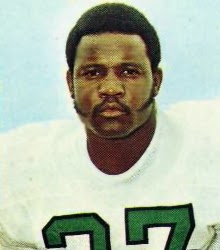
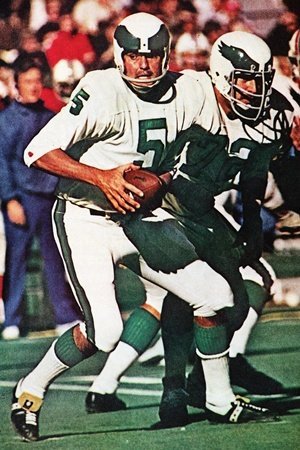
Los Angeles had not been to the postseason since 1955 and endured a great deal of mediocrity since then until the arrival of Head Coach George Allen in ’66. Allen’s specialty was defense, and the Rams had a good one, particularly on the line. DT Roosevelt Grier had been lost to a knee injury in the preseason, but Roger Brown was swiftly obtained from Detroit to take his spot and, together with ends Deacon Jones and Lamar Lundy and DT Merlin Olsen, became part of what was called “the Fearsome Foursome”. OLB Maxie Baughan was the leader of an outstanding group of linebackers and, while the backfield was less impressive, it included excellent FS Ed Meador. The offense was conservative but competently directed by QB Roman Gabriel (pictured above), who had good deep receivers in split end Jack Snow and flanker Bernie Casey while FB Dick Bass and HB Les Josephson handled the bulk of the running game.

The Colts were coached by Don Shula and were typically among the league’s better teams. QB Johnny Unitas was the key to the pass-oriented offense, as he had been for the past decade, and he had outstanding receivers in flanker Willie Richardson and TE John Mackey. The running game was less effective, but not bad, and the defense was solid, especially at linebacker and in the backfield.

There were 77,277 fans in attendance at the Memorial Coliseum for the showdown. The Rams opened the scoring with a 47-yard field goal by Bruce Gossett, while the Colts put together a 65-yard drive that ended with Johnny Unitas throwing to Willie Richardson for a 12-yard touchdown and Lou Michaels adding the extra point.

Baltimore again reached LA territory, but Michaels missed a 37-yard try for a field goal (his first failure after ten straight successes). On the next play, the Rams came through with a big play to start the second quarter as Roman Gabriel, firing the ball 50 yards in the air, connected with Jack Snow, who got beyond two defenders for an 80-yard TD. Bruce Gossett converted to give the home team a 10-7 lead.


Late in the period, Baltimore advanced deep into LA territory. However, as Unitas dropped back to pass, he was hit by Deacon Jones and his poor throw was intercepted by Ed Meador at the 12, who returned it seven yards. With time running down, Gabriel directed the Rams on an 81-yard drive that concluded with a throw to Bernie Casey for a 23-yard touchdown. Gossett converted and, rather than potentially being behind or tied, Los Angeles took a 17-7 lead into halftime.

Midway through the third quarter, the Rams increased their margin when Gossett booted a 23-yard field goal. The Colts fought back, advancing 61 yards in 15 plays as Unitas converted two third downs with pass completions to Richardson of 19 and 11 yards. But a quarterback draw came up short on another third down deep in LA territory, and the Colts opted for a 14-yard Michaels field goal as the fourth quarter commenced.

The Rams responded with a 67-yard series that essentially clinched the win. Gabriel was successful on all four of his passes including, under a heavy rush, a toss to Casey that then set up a nine-yard touchdown throw to TE Billy Truax. Gossett tacked on the PAT and Los Angeles was ahead by 27-10.

The LA defense took control for the remainder of the contest, harassing Unitas and effectively shutting down the Baltimore offense.  FB Dick Bass punctuated the decisive win with a two-yard TD after Unitas was sacked for an eight-yard loss to his four yard line on a fourth down play. The Rams were Coastal Division champions by a final score of 34-10.

LA had the edge in total yards (328 to 262) although the Colts led in first downs (18 to 16). The Rams sacked Unitas seven times, while Baltimore recorded none of Gabriel, and the Colts turned the ball over twice, to one suffered by Los Angeles.

Roman Gabriel was outstanding as he completed 18 of 22 passes for 257 yards and three touchdowns while giving up no interceptions. Billy Truax had 5 catches for 51 yards and a TD and Jack Snow, with the 80-yard touchdown on his lone reception, led the Rams in receiving yards. Bernie Casey contributed 78 yards on his four catches that included a score. Dick Bass topped the LA rushers with 36 yards on 12 carries with one TD and also caught four passes for 27 more yards.

For the Colts, Johnny Unitas was successful on 19 of 31 throws for 206 yards and a TD while being intercepted twice and taking a major battering from the LA front four. TE John Mackey caught 5 passes for 72 yards and Willie Richardson also pulled in 5 for 57 yards and a score. FB Tony Lorick rushed for 39 yards on 13 attempts.

“The crux of our defensive plan for this game was not to allow Unitas enough time to throw the ball, because he can thread the needle in a crowd,” explained Coach George Allen.

“The offense put some points on the board early,” added Deacon Jones. “And so we were able to dictate to Mr. Unitas what we wanted him to do, and that was pass.”

The Rams fell to Green Bay in the Western Conference Championship game by a 28-7 score the following week, a disappointing finish to an outstanding season. They finished second in 1968 before winning another division title in ’69, but would never reach the NFL Championship under George Allen. Baltimore came back with a 13-1 season in ’68, despite the loss of Johnny Unitas for virtually the entire season, and won the NFL Championship before being monumentally upset by the New York Jets, champions of the AFL, in Super Bowl III. Don Shula, who moved on to Miami in 1970, would get another shot at guiding a team to an undefeated season, and would succeed in '72.

Roman Gabriel ranked third in passing as he threw for 2779 yards and a career-high 25 touchdowns. He was named to the Pro Bowl for the first of three consecutive years. Bernie Casey caught 53 passes for 871 yards (16.4 avg.) and eight touchdowns and was selected to the Pro Bowl for the only time in his career.

It was the Los Angeles defense, in particular “the Fearsome Foursome”, that would leave the most enduring memory. The Rams allowed the fewest points in the NFL (196, two less than the Colts) and Deacon Jones and Merlin Olsen were consensus first-team All-NFL selections as well as being named to the Pro Bowl along with Roger Brown, Maxie Baughan, and Ed Meador.

(pictured below L to R, #74 Merlin Olsen, partially hidden Lamar Lundy, #75 Deacon Jones, #78 Roger Brown)


October 21, 2014

1973: Vikings Sink Feisty Eagles as Gilliam Stars


The Minnesota Vikings were undefeated at 5-0 as they hosted the Philadelphia Eagles on October 21, 1973. Head Coach Bud Grant’s team had not allowed more than 16 points in any game thus far, but while best known for strong defense, the Vikings were a formidable team on offense as well. 33-year-old QB Fran Tarkenton was an outstanding and mobile passer, rookie FB Chuck Foreman was potent as both a runner and receiver out of the backfield, and WR John Gilliam (pictured at right) provided speed on the outside. The line was solid.

Philadelphia, under first-year Head Coach Mike McCormack, was 1-4-1 and a seventeen-point underdog. Coming off of a dreadful last-place finish the year before, the Eagles were rebuilding with an offense led by QB Roman Gabriel, a 12th-year veteran who had been obtained at heavy price from the Rams during the offseason. 6’8” WR Harold Carmichael was having a breakout season and rookie TE Charle Young further bolstered the passing game. The problem was with a thin defense in need of fortification on the line and at linebacker.

It was a clear day at Metropolitan Stadium with 47,478 fans in attendance. The Eagles got the first break when Chuck Foreman fumbled at the end of a 16-yard run and DE Will Wynn recovered at the Minnesota 41. However, they weren’t able to gain much ground and Tom Dempsey’s field goal attempt from 44 yards was wide to the right.

The Vikings responded with an 80-yard drive in six plays. Fran Tarkenton ran twice for 19 yards and John Gilliam ran for 44 yards and a touchdown on a well-executed double-reverse. Fred Cox added the extra point for the early 7-0 lead.

The teams traded punts, each stopping just short of midfield. A Philadelphia series was then blunted when Harold Carmichael’s gain on a pass into the flat was nullified by a hurdling penalty as the rangy wide receiver leaped over CB Nate Wright. Following a punt, Minnesota moved methodically into Eagles territory on a series that extended into the second quarter. Tarkenton completed four short passes, with a 10-yard completion to WR Carroll Dale gaining the necessary yardage to convert a third down, and also scrambled for a 12-yard gain in a second-and-nine situation. But after reaching the Philadelphia 24, Cox’s field goal try from 31 yards was blocked by CB Joe Lavender.

Another short series led to a punt by the Eagles, and the Vikings didn’t come up empty this time, advancing 65 yards in seven plays. In a third-and-seven situation, Tarkenton threw twice to Gilliam for 14 and 42 yards to the Philadelphia six. Three plays later, HB Oscar Reed leaped into the end zone from a yard out and, with Cox’s conversion, Minnesota was up by 14-0.

Regaining possession with four minutes remaining in the first half, the Eagles put together a 10-play, 80-yard drive. HB Po James (pictured below) started off with a 17-yard carry up the middle and Gabriel completed five passes along the way. In a fourth-and-one situation at the Philadelphia 46, HB Tom Sullivan ran for four yards. A holding penalty nullified an apparent long scoring toss to Carmichael, but following a nine-yard gain by James on a draw play, Gabriel threw to Charle Young for 20 yards, to James for 12, and to Carmichael for 11. James ran the last 12 yards for a TD and, and with Dempsey adding the PAT, the home team’s lead was halved to 14-7. There was still 1:03 left in the period as the Vikings regained possession, but Cox was short on a field goal attempt from 53 yards and time ran out on the Eagles at their 31.


Philadelphia had first possession in the third quarter but had to punt, and the short kick by Tom McNeill gave the Vikings the ball at their own 43. They went 57 yards in eight plays, the last a Tarkenton pass to a wide-open Gilliam for a 24-yard touchdown. Cox kicked the extra point to make it a 21-7 game.

The Eagles responded with a 14-play, 76-yard scoring drive of their own. Gabriel, with his first of six completions during the series, threw to Young for a 24-yard gain.  Four of his passes, in fact, were to the rookie tight end, the last for 12 yards to the Minnesota three, and two plays later FB Lee Bouggess ran for a two-yard TD. Dempsey’s conversion again made it a seven-point margin.


In a series that moved into the fourth quarter, the Vikings came back with a 69-yard drive that took 13 plays. Tarkenton (pictured at left) had completions to TE Stu Voigt for 15 and 13 yards and Foreman outraced Lavender and FS Bill Bradley to the goal line for a five-yard touchdown. Cox again made it a 14-point game with the extra point.

The teams exchanged punts before the Eagles put together a nine-play, 78-yard series. Gabriel threw to WR Don Zimmerman for 14 yards and to Carmichael for 19 in a third-and-10 situation and James had runs of 22 and seven yards. From the Minnesota 17, Young took a handoff on an end-around play and plowed over three defenders on the way to a TD. Dempsey initially failed to convert, but an offside penalty on the Vikings gave him a second chance that he made good on.

The determined Eagles had again closed to seven points and there were four minutes remaining to play, but they never got the ball again as Minnesota was able to run out the clock, helped by Tarkenton’s 16-yard scramble that converted a third-and-nine situation. The final score was 28-21.

The Vikings led in total yards (409 to 315) and first downs (25 to 19), with Minnesota’s total showing offensive balance – 217 on the ground and 192 net yards through the air. The Vikings suffered the game’s only turnover and managed to record two sacks, to one by Philadelphia.

John Gilliam caught 6 passes for 116 yards and a touchdown and added another TD on his 44-yard run. Fran Tarkenton completed 16 of 21 passes for 202 yards and a touchdown with no interceptions and also ran for 49 yards on 9 carries. Chuck Foreman topped the Vikings with 68 rushing yards on 21 attempts that included a TD.


For the Eagles, Roman Gabriel was successful on 23 of 32 throws for 201 yards and no TDs but also no interceptions. Po James ran for 78 yards on 11 carries that included a score and also had 6 catches for 25 yards. Charle Young (pictured at right) caught 6 passes also, for 86 yards, and had the 17-yard touchdown carry and Harold Carmichael contributed 6 receptions for 52 yards.

The Vikings reached 9-0 before finally dropping a game and ended up on top of the NFC Central with a 12-2 record. They won the NFC Championship but were handily beaten by Miami in the Super Bowl. Philadelphia won its next two games and continued to provide exciting offense and mediocre defense on the way to a 5-8-1 tally and third place finish in the NFC East.

John Gilliam went on to a Pro Bowl season as he caught 42 passes for 907 yards (21.6 avg.) and scored eight touchdowns. Fran Tarkenton remained efficient throwing the ball, completing 61.7 percent of his passes and compiling a career-high 93.2 rating while giving up only seven interceptions.

Roman Gabriel led the league in pass attempts (460), completions (270), yards (3219), and TD passes (23, tied with Roger Staubach of the Cowboys) and was selected to the Pro Bowl. Harold Carmichael topped the NFL in both pass receptions (67) and yards (1116) and Charle Young received Rookie of the Year recognition for his 55 catches and 854 yards. Both receivers were Pro Bowl choices and received All-NFL recognition, with Young a consensus first-team honoree.

June 8, 2013

1973: Eagles Pay Heavy Price in Trade with Rams for Roman Gabriel


On June 8, 1973 the Philadelphia Eagles took a major step in revamping their offense by acquiring QB Roman Gabriel from the Los Angeles Rams. The acquisition of the 32-year-old quarterback came at great cost, however – they gave up All-Pro WR Harold Jackson, FB Tony Baker, and their first round draft choices for 1974 and ’75 plus a third round choice for 1975.

Gabriel had been taken by the Rams in the first round of the 1962 NFL draft out of North Carolina State (second overall). Big, especially for his time at 6’5” and 220 pounds, and with an accurate throwing arm, he showed potential during his first four seasons but shared time with Zeke Bratkowski, Terry Baker, and Bill Munson. The arrival of George Allen as head coach in 1966 brought improvement to the team in general and Gabriel in particular, who no longer faced challenges for the starting job. Operating in a ball control offense that complemented a ferocious defense, Gabriel took few risks and threw few interceptions. Over the course of the five seasons through 1970, the Rams went 49-17-4 during the regular season, although they lost both of their postseason games. The big quarterback was selected to the Pro Bowl three times (1967, ’68, and ’69) and was a consensus NFL MVP selection in 1969.

Things began to unravel after Allen’s departure following the 1970 season, and Gabriel suffered with tendonitis in his throwing elbow in ’72. His numbers dropped appreciably as he passed for 2027 yards (his lowest total since 1965) and he tossed more interceptions (15) than touchdowns (12).

Earlier in the offseason, the Rams acquired QB John Hadl from San Diego and Gabriel sought a trade. Because he had a no-trade, as well as no-cut, clause in his contract, he filed suit against the Rams, saying that his no-trade clause had been invalidated when Carroll Rosenbloom became owner of the Rams through a franchise swap for the Baltimore Colts with Robert Irsay.

Since Gabriel’s approval was necessary for any trade to occur, he was allowed to negotiate with other teams and agreed to terms with the Eagles the week before the deal, with the condition that a trade could be worked out. The suit was withdrawn in order to clear the way for the transaction with Philadelphia, but Rosenbloom, reacting to negative local press, nearly called off the trade at the last minute.

With regard to the players the Rams received in the trade, WR Harold Jackson was returning to the organization he had been with originally. A 12th round draft pick by LA in 1968, he appeared in just two games on special teams and was traded to the Eagles. His star rose quickly in Philadelphia as he led the NFL in pass receiving yards in ’69 with 1116 while catching 65 passes and scoring nine touchdowns. In four years with Philadelphia he caught a total of 215 passes for 3493 yards (16.2 avg.) and 21 TDs and was twice selected to the Pro Bowl, including after a 1972 season in which he led the league in both pass receiving (62 catches) and yards (1048).

FB Tony Baker played for the Saints before coming to Philadelphia, gaining selection to the Pro Bowl in 1969 when he led the NFL in average gain per carry (4.8) while rushing for 642 yards on 134 attempts and catching 34 passes for 352 more yards and another TD. Dealt to the Eagles during the ’71 season, he was coming off a year in which he ran the ball 90 times for 322 yards (3.6 avg.). He had nearly been traded to Atlanta during the ’72 season for RB Jim “Cannonball” Butler, but Butler flunked the team physical. The acquisition of FB Norm Bulaich from the Colts made Baker expendable.

The Eagles were coming off a 2-11-1 record in 1972 and were especially dreadful on offense, despite the presence of Jackson. They ranked at the bottom of the league in points scored (145) and touchdowns (12). Veteran QB Pete Liske gave way to John Reaves, the team’s first round draft choice out of Florida, and while Reaves had his moments, he also lost all of his starts. Head Coach Ed Khayat was fired and successor Mike McCormack sought to bolster the attack.

Gabriel did indeed make a difference in 1973. Dubbed “The Messiah” by the media and hopeful fans, his offseason regimen of martial arts training helped in overcoming his arm problems. 6’8” WR Harold Carmichael took over Harold Jackson’s place in the starting lineup with admirable results as he led the NFL in catches (67) and receiving yards (1116). Together with 6’4” rookie TE Charle Young and 6’3” WR Don Zimmerman, the receiving corps became known as “The Fire High Gang”. Gabriel led the NFL in pass attempts (460), completions (270), yards (3219), and TD passes (23) and he was selected to the Pro Bowl as well as receiving Comeback Player of the Year recognition. The team scored 310 points and 34 touchdowns, and while the record was still under .500 at 5-8-1, it was a notable improvement.

Gabriel played another four years with the Eagles, but with far less success. When a strike by the NFL Players Association delayed the start of training camps in 1974, Gabriel chose to report after three weeks and prior to a settlement, which damaged his relationship with his teammates. The club started out at 4-1 but then lost six straight games and Coach McCormack benched Gabriel in favor of rookie QB Mike Boryla for the final three contests of the season. His numbers declined to 1867 passing yards with 9 TD passes and 12 interceptions.

Gabriel regained the starting job in 1975 but lost it again to Boryla during a poor season that proved to be the last for McCormack. With the arrival of Dick Vermeil as head coach in ’76, he remained in a backup role for the last two years of his career, first to Boryla and then Ron Jaworski. Overall with the Eagles, Gabriel completed 661 of 1185 passes (55.8 %) for 7221 yards and 47 touchdowns with 37 interceptions. The team went 12-25-1 during his starts.

Meanwhile in Los Angeles, the Rams improved to 12-2 and won the NFC West in 1973 under new Head Coach Chuck Knox. Harold Jackson (pictured below) maintained his All-Pro form, catching fewer passes in a ball control offense (40) but averaging 21.9 yards per reception as he gained 874 yards and scored 13 TDs, including four in one game in which he accumulated 238 yards on 7 catches against the Cowboys. In five years with the Rams, he was selected to the Pro Bowl on three occasions. Tony Baker, utilized as a short-yardage specialist, ran the ball 85 times for 344 yards and 7 TDs. He lasted just one more year before moving on to San Diego.


The first round draft choices that the Rams obtained in the Gabriel deal were used to take RB John Cappelletti, the Heisman Trophy winner out of Penn State, in 1974 and G Dennis Harrah from the Univ. of Miami in ’75. The third round pick in 1975 went for Auburn TE Dan Nugent. Cappelletti was a serviceable back in LA for five years before moving on to the Chargers, rushing for a total of 2246 yards. Harrah became a mainstay on the offensive line for 13 seasons and was selected to the Pro Bowl six times. Nugent saw no action with the Rams and, converted to guard, was traded to the Redskins in 1976 for two draft choices.

The Gabriel trade was typical of deals made by the Rams that allowed them to stockpile high draft picks. They remained contenders throughout the decade, going to the playoffs in eight straight seasons and reaching the Super Bowl once. Meanwhile, the Eagles traded away more high draft choices in 1974 for LB Bill Bergey, who helped solidify the defense. They remained a mediocre team, breaking even at 7-7 that year and dropping to 4-10 in 1975. The situation would not improve until 1978, Dick Vermeil’s third year with the franchise. Ultimately, Roman Gabriel would not be a part of the team’s rise, and despite his fine first year with the club, the trade ultimately proved to be more of a hindrance to the club’s progress than a benefit.

December 1, 2011

MVP Profile: Roman Gabriel, 1969

Quarterback, Los Angeles Rams


Age: 29
8th season in pro football & with Rams
College: North Carolina State
Height: 6’4” Weight: 220

Prelude:
Taken in the first round of the 1962 NFL draft, Gabriel was one of the biggest quarterbacks of his era and proved to be tough with an accurate throwing arm. However, he had to vie for playing time against, first, veteran Zeke Bratkowski and, later, a young challenger in Bill Munson. The arrival of George Allen as head coach in 1966 brought stability and success. Operating in a conservative offense, Gabriel passed for a career-high 25 TDs in 1967 as the team went 11-1-2 and made it to the postseason for the first time since 1955. He was selected to the Pro Bowl following both the 1967 and ’68 seasons.

1969 Season Summary
Appeared and started in all 14 games
[Bracketed numbers indicate league rank in Top 20]

Passing
Attempts – 399 [3]
Most attempts, game – 40 at San Francisco 10/12
Completions – 217 [3]
Most completions, game – 21 vs. Minnesota 12/7
Yards – 2549 [6]
Most yards, game – 319 vs. San Francisco 11/9
Completion percentage – 54.4 [5]
Yards per attempt – 6.4 [14]
TD passes – 24 [1]
Most TD passes, game – 4 vs. New Orleans 10/5
Interceptions – 7 [20, tied with Earl Morrall]
Most interceptions, game – 2 vs. Dallas 11/23, at Detroit 12/14
Passer rating – 86.8 [3]
300-yard passing games – 1
200-yard passing games – 5

Rushing
Attempts – 35
Most attempts, game – 6 (for 20 yds.) vs. Dallas 11/23
Yards – 156
Most yards, game – 36 yards (on 4 carries) at Philadelphia 11/16
Yards per attempt – 4.5
TDs – 5

Scoring
TDs – 5
Points – 30

Postseason: 1 G (Western Conf. Championship at Minnesota)
Pass attempts – 32
Pass completions – 22
Passing yardage – 150
TD passes – 2
Interceptions – 1

Rushing attempts – 4
Rushing yards – 26
Average gain rushing – 6.5
Rushing TDs – 0

Awards & Honors:
NFL MVP: AP, UPI, NEA, Bert Bell Award, Sporting News
1st team All-NFL: Hall of Fame, AP, NEA, NY Daily News, Pro Football Weekly, Sporting News
2nd team All-NFL: PFWA, UPI
Pro Bowl

Rams went 11-3 to finish first in the Coastal Division of the Western Conference. Lost Western Conference Championship to Minnesota Vikings (23-20).

Aftermath:
Gabriel led the NFL with 407 pass attempts in 1970 as the Rams went 9-4-1, although they failed to make the playoffs. With the departure of Allen, the team stumbled further in 1971 and ’72 and Gabriel showed signs of being on the downside of his career. Traded to the Philadelphia Eagles, he staged a comeback in 1973 as he led the NFL in pass attempts (460), completions (270), yards (3219), and TD passes (23) and was selected to the Pro Bowl for the fourth time. But injuries and ineffectiveness hindered his performance in his final four seasons, the last two of which were largely spent as a backup. Gabriel passed for 29,444 yards with 201 TDs and 149 interceptions – at the time, his percentage of INTs thrown (3.3) ranked lowest all-time in the NFL for a passer with at least 1500 attempts.

--

MVP Profiles feature players who were named MVP or Player of the Year in the NFL, AAFC (1946-49), AFL (1960-69), WFL (1974), or USFL (1983-85) by a recognized organization (Associated Press, Pro Football Writers Association, Newspaper Enterprise Association, United Press International, The Sporting News, Maxwell Club – Bert Bell Award, or the league itself).

[Updated 2/11/14]

September 23, 2011

1974: Defense & Dempsey Key Eagles Upset of Cowboys


The Monday Night Football game on September 23, 1974 featured two NFC East rivals, the Dallas Cowboys against the Philadelphia Eagles. The Cowboys, under Head Coach Tom Landry, had been the far more successful of the two clubs, having been to the postseason in each of the preceding eight seasons. They were coming off of a 10-4 record in ’73 and had won their season-opening game over the Falcons handily by a score of 24-0. Moreover, they had won 12 of the last 13 matchups with the Eagles dating back to 1967.

Philadelphia, meanwhile, was once again in rebuilding mode under second-year Head Coach Mike McCormack. The Eagles had been over .500 just twice since last winning a league championship in 1960 and were on their fifth head coach since that time. McCormack replaced Ed Khayat after a dreadful 2-11-1 season in 1972 in which the team produced a total of just 145 points and 12 touchdowns. A major deal was swung to bring veteran QB Roman Gabriel from the Rams, and the offense improved significantly in ’73, although the overall record was still only 5-8-1. For 1974, another major trade was made to upgrade the defense as Philadelphia obtained star MLB Bill Bergey from Cincinnati. In the Week 1 game at St. Louis against the Cardinals, the Eagles gave up just seven points – but scored only three.

There were 64,088 fans at Philadelphia’s Veterans Stadium, and for most of the game they saw both offenses struggle. The Eagles couldn’t move the ball, but star QB Roger Staubach of the Cowboys missed on his first six pass attempts.

However, in the second quarter, Dallas put together a 90-yard drive with three Staubach completions along the way and RB Doug Dennison scored from three yards out. That was it for the first half scoring as the Cowboys led by 7-0 at halftime.

In the third quarter, Dallas was driving deep into Eagles territory again after a Gabriel pass was intercepted by CB Charlie Waters. Once more at the three yard line Dennison took the handoff, but this time he fumbled when hit by Bergey just short of the goal line. CB Joe “Big Bird” Lavender picked the loose ball up on the bounce and ran 96 yards up the sideline for a touchdown. Instead of the Cowboys being ahead by two touchdowns, in stunning fashion the score was tied at 7-7.


Such was the situation as the game entered the fourth quarter. A poor 26-yard punt by the Cowboys gave Philadelphia good field position, and with just under 12 minutes to play, Tom Dempsey gave the Eagles the lead with a 34-yard field goal.

On the ensuing kickoff, Dallas RB Dennis Morgan returned the kick 36 yards and might have broken free but was tackled by the 265-pound Dempsey, who had played defensive end in junior college. As it was, with 8:34 left, Mac Percival kicked a 26-yard field goal to again tie the score at 10-10.

Coach McCormack considered replacing the ineffective Roman Gabriel with backup John Reaves, as the 34-year-old veteran had completed only four passes and the offense had just one first down. Leaving the ex-Ram in, Gabriel proceeded to throw to RB Po James for a 34-yard gain and WR Harold Carmichael for 13. He gained six yards on a quarterback draw, giving Philadelphia three first downs in the series. However, with the clock down to 3:13, RB Tom Sullivan fumbled and Dallas LB Dave Edwards recovered at his own 11.

Three plays later, the Eagles got the ball back when SS Randy Logan intercepted a Staubach pass intended for WR Drew Pearson at the sideline with 1:49 left. Typical of how most of the game had gone for the Eagles offense, they ran the ball twice for negligible yardage and Gabriel threw an incompletion, necessitating a 45-yard field goal attempt.

Dempsey was again successful and his kick put Philadelphia in front with 25 seconds to play. However, the Cowboys still had a shot and drove from their 18 to the Philadelphia 31 thanks to two Staubach passes to Pearson. But with two seconds left on the clock, Percival missed a 48-yard field goal attempt into the wind that fell short and to the left. The Eagles came away with a hard-fought 13-10 upset win.

Dallas dominated statistically, outgaining Philadelphia (385 yards to 165) and accumulating far more first downs (20 to 5). The Cowboys both outran the Eagles (168 yards to 98) and outpassed them (217 yards to 67) while both teams turned the ball over three times.

Roman Gabriel completed only 6 of 14 passes for 92 yards with one intercepted. Tom Sullivan was the leading rusher with 57 yards on 16 carries and Harold Carmichael the top receiver with two catches for 45 yards. Tom Dempsey, with the two clutch field goals, and Bill Bergey, who was credited with 18 tackles, were the stars of the game, along with Joe Lavender and his team-record fumble return (a record that lasted until 2006).

For the Cowboys, Roger Staubach was successful on 19 of 33 passes for 217 yards, but none were good for scores while two were intercepted. Drew Pearson was the primary offensive weapon as he caught 10 passes for 161 yards. RB Robert Newhouse rushed for 97 yards on 22 attempts.

“The defense and Tom Dempsey won the game,” said Coach McCormack afterward. Each member of the defense and Dempsey received game balls.

The big concern for the Eagles was that, for the second straight week, the offense had not gotten the ball into the end zone. Still, they got off to a 4-1 start before losing six straight games (starting with a 31-24 defeat at the hands of the Cowboys in Dallas). They won their last three (with rookie Mike Boryla starting at quarterback for the benched Gabriel) to salvage a 7-7 record that put them in fourth place in the NFC East.

Dallas went on to have an off-year, losing their next three games before recovering to win 7 of the last 9. The Cowboys finished third in the division with an 8-6 tally and missed the postseason for the first time since 1965.

With his job reportedly on the line coming into the Monday night game against Dallas, Tom Dempsey’s two field goals earned him a reprieve and he finished out the season (the first since 1932 in which the goal posts were at the back of the end zone rather than the goal line) with 10 field goals in 16 attempts. The hefty placekicker born without toes on his right foot, and who had booted a record 63-yard field goal for the Saints in 1970 before coming over to the Eagles in ’71, had been the team’s player representative during the ’74 preseason strike and acrimony had risen between him and owner Leonard Tose. He was traded to the Rams after the season.

Bill Bergey’s dominating performance against the Cowboys was the first of many and he had an outstanding year, garnering consensus first-team All-Pro honors for the first of two consecutive seasons. He was also selected to the Pro Bowl, an honor he would achieve four times while with the Eagles. The leader of the defense (as well as its best player) inspired chants of “Ber-gey, Ber-gey” from the Philadelphia fans that would become a regular feature of games at the Vet during his heyday. (Bergey pictured below)

December 27, 2010

1969: Kapp Brings Vikings From Behind to Beat Rams in Western Playoff


The Minnesota Vikings had made it to the postseason for the first time in 1968 and were stronger in ’69. On December 27, 1969 they hosted the Los Angeles Rams at Metropolitan Stadium for the NFL Western Conference title.

The Vikings had topped the Central Division with a league-best 12-2 record. Under Head Coach Bud Grant, they featured a strong defense, in particular the line of ends Jim Marshall and Carl Eller and tackles Alan Page and Gary Larsen. The offense was conservative and directed by QB Joe Kapp (pictured above) - like Grant, a product of the Canadian Football League. Kapp had his critics, for his technique (especially when passing the ball) was unpolished, but he was a tough and fiery leader who found ways to win, which included running the ball himself (and not shying from contact when doing so).

As was typical of teams coached by George Allen, Los Angeles relied heavily on veteran players, was conservative and run-oriented offensively, and defensively solid. QB Roman Gabriel was the consensus league MVP and kept the turnovers low (he tossed 24 TD passes and only 7 interceptions). The excellent offensive line allowed just 17 sacks. The Rams had won their first 11 games, but lost the last three to finish atop the Coastal Division with an 11-3 record.

There were 47,900 fans present on a 25 degree day in Minnesota. The Rams got the first couple of breaks. After Kapp passed to WR John Henderson for a 12-yard gain, FB Bill Brown fumbled and safety Richie Petitbon recovered for the Rams at the Minnesota 45. On LA’s first play, Gabriel was hit by LB Roy Winston while passing and Eller grabbed the pass for an apparent interception and return for a touchdown, but an offside penalty nullified the play. The Rams, benefiting from the reprieve, drove to a score. RB Larry Smith ran three times up the middle for 19 yards, Gabriel passed to WR Wendell Tucker for eight yards, and FB Les Josephson added five yards on three runs. On a third-and-three play, Gabriel rolled out and passed to TE Bob Klein for a touchdown.

The Vikings came back with a 10-play, 75-yard scoring drive of their own. Kapp completed four straight passes, including three to WR Gene Washington that totaled 49 yards; the last was for 27 yards to the LA four yard line. HB Dave Osborn leaped over Petitbon and into the end zone for a TD with 3:29 remaining in the first quarter.

The Rams put together another drive, but failed to score when Bruce Gossett was wide on a 38-yard field goal attempt. However, they were more successful on their next possession that consumed 12 minutes of the second quarter. The drive featured screen passes as well as good ground-gaining by the backs, and Gabriel kept it going with a 13-yard run to the Minnesota 47 on a third-down play. This time Gossett was successful on a 20-yard field goal to break the tie with 4:30 left in the half.


Following another punt by the Vikings, Gabriel completed passes of 16 and 18 yards to TE Billy Truax (pictured at left), the second putting the Rams at the Minnesota 22 yard line. Smith and Josephson then ran the ball down to the two. The 13-play, 65-yard possession ended with a Gabriel pass to Truax for a two-yard touchdown. Los Angeles had scored on three of four first half possessions and led at halftime by 17-7.

Minnesota came out fired up for the second half. Still, the Rams looked strong as they took the second half kickoff and Smith ran 12 yards to near midfield, but the drive stalled and they had to punt for the first time.

Kapp completed a 41-yard pass to Washington that put the ball on the LA 12, and a piling-on penalty moved the ball to the six. Kapp scrambled to the one and Osborn dove in for a touchdown that cut the Rams’ lead to 17-14.

The Minnesota defense was playing more aggressively and was stopping the LA attack that had been so effective in the first half. However, the Rams then got a couple of breaks on defense.

First, on a drive deep into Los Angeles territory, FS Ed Meador intercepted a Kapp pass at the four yard line. He returned it to the 19 and fumbled, but the Rams maintained possession. However, LA couldn’t move and had to punt again. But Kapp was intercepted a second time, by Petitbon, to give the Rams excellent field position at the Minnesota 36.

It seemed as though Los Angeles might be able to add another touchdown, but a pass to Truax at the five fell incomplete, thus forcing the Rams to go for three rather than adding a crucial seven points. Gossett was good from 27 yards to make the score 20-14 in the fourth quarter.

The Vikings put together a 65-yard drive as Kapp completed three straight passes for 40 yards to the LA 19, two of them to Brown out of the backfield, and eventually scoring a touchdown himself on a two-yard bootleg with 8:24 left to play.


Now with a one-point lead at 21-20, the fired-up Vikings stopped CB Ron Smith on the 12 yard line on the ensuing kickoff return. On the next play, Eller (pictured at right) went around All-Pro OT Bob Brown to hit Gabriel, fading back from his 12 yard line. Catching him at the two, Eller drove him into the end zone and tackled him for a safety. Minnesota’s lead was now three points.

The Rams got one more possession after the safety and, starting at their 15, advanced to the Minnesota 44 before Page intercepted a Gabriel pass to nail down the 23-20 win with 31 seconds remaining.

The statistics indicated the closeness of the contest as the Vikings outgained the Rams by just 275 yards to 255 while LA had the edge in first downs by just 19 to 18.

Joe Kapp completed 12 of 19 passes for 196 yards with no touchdowns and two interceptions, and ran for 42 yards (all in the second half). He had set up all three Minnesota touchdowns with outstanding passing and, beyond the statistics, displayed outstanding leadership in bringing the Vikings from behind. Gene Washington caught four passes for 90 yards and John Henderson also caught four, adding another 68 yards. While Kapp was the team’s leading rusher, Dave Osborn had 30 yards on 13 attempts to top the running backs.


In defeat, Roman Gabriel (pictured at left) completed 22 of 32 passes for 150 yards with two TDs and one interception. Larry Smith, playing with a broken nose for much of the game, led the running attack with 60 yards on 11 carries and caught 6 passes for an additional 36 yards. Les Josephson had 7 receptions for 41 yards while Billy Truax gained a team-leading 47 yards on 5 catches that included a touchdown.

“We lost because the Vikings were better than we were in the second half,” a disappointed Coach George Allen said. “I have never seen a team come so ready to play as we were and lose. It's hard to believe.”

The Vikings went on to easily beat the Browns for the NFL Championship, but they were upset in the last pre-merger Super Bowl by the AFL-champion Kansas City Chiefs. In the next 13 seasons under Bud Grant, Minnesota made it to the postseason 10 times. By the time the Rams next appeared in the playoffs, in 1973, both Allen and Gabriel had moved on.

December 9, 2010

1967: Blocked Punt Sets Up Winning TD as Rams Defeat Packers


The December 9, 1967 contest at the Los Angeles Memorial Coliseum featured the Green Bay Packers, two-time defending NFL champions, against the Rams, a team on the rise and in a tough battle for a division title. In this first season in which the Eastern and Western conferences were split into two four-team divisions apiece, Green Bay was 9-2-1 and had already clinched the Central Division, while Los Angeles had a 9-1-2 record, putting the Rams just behind the 10-0-2 Baltimore Colts in the Coastal Division.

While Head Coach Vince Lombardi’s Packers had won four titles in six seasons, the team was beginning to show its age and injuries had added to the challenge of keeping the run going. 33-year-old QB Bart Starr had been playing hurt at the beginning of the year, and running backs Elijah Pitts and Jim Grabowski were lost to injury, forcing the club to bring in journeymen replacements in Ben Wilson and Chuck Mercein. Still, after a slow start, Green Bay was rolling and rode a four-game winning streak into LA.

The Rams had strung together seven consecutive losing seasons prior to the arrival of George Allen as head coach in 1966. His impact had been immediate, as the team went 8-6 in his first year, and now it had become a title contender. The offense played conservatively, with QB Roman Gabriel (pictured above) and a solid group of running backs led by HB Les Josephson and FB Dick Bass. The defense was outstanding, starting with the line that was known as “The Fearsome Foursome” and included ends Deacon Jones and Lamar Lundy and tackles Merlin Olsen and Roger Brown (acquired from Detroit in the preseason after Roosevelt Grier was lost for the year with a knee injury).

There were 76,837 fans on hand under sunny skies for the Saturday contest. Both teams failed on field goal attempts before Green Bay scored first, late in the first quarter, on a 30-yard touchdown pass from Starr to flanker Carroll Dale. The Rams came back to tie the game early in the second quarter with a 73-yard drive that concluded with Gabriel throwing to split end Jack Snow for a 16-yard TD. Following an interception by Green Bay safety Willie Wood, the Packers scored on a 32-yard Don Chandler field goal just before the half to take a 10-7 lead into the intermission.


In the third quarter, LA regained the lead when Gabriel again tossed a scoring pass to Snow, this one covering 11 yards. It was 17-10 later in the period when Bruce Gossett kicked a 23-yard field goal. But instead of squib-kicking the ensuing kickoff, as they had been doing to keep the ball away from Green Bay’s sensational kick returner, rookie HB Travis Williams (pictured at left), Gossett kicked away. Williams fielded the kick four yards deep in his end zone and proceeded to sprint 104 yards for a touchdown – his record fourth such return of the year. From a seven-point Rams lead, the game was now tied at 17-17.

Early in the fourth quarter, CB Clancy Williams intercepted a pass for LA and the Rams capitalized with a 16-yard Gossett field goal to retake the lead. But the Packers took advantage of a turnover when Bass fumbled and they drove 43 yards to a four-yard touchdown run by Mercein. With 2:19 left on the clock, Green Bay led by 24-20.

It looked good for the Packers when the defense stifled the Rams, who had to punt after three plays. But Green Bay was unable to penetrate the LA defense for a game-clinching first down and was forced to kick the ball back.

With the ball at the Packers’ 27 yard line, Donny Anderson, the team’s punter as well as the heir apparent to the departed Paul Hornung at halfback, prepared to punt with 54 seconds now remaining to play. But before Anderson could get off the kick, Rams reserve LB Tony Guillory ran untouched through the line and blocked it. DB Claude Crabb picked up the loose football and ran 20 yards before being pulled down at the five by Anderson.

Gabriel had to throw the ball away on the first play, but on the second, after a play-action fake to HB Tommy Mason, he threw the ball into the end zone where it was caught by flanker Bernie Casey for a touchdown. Gossett’s conversion was good, and the Rams came away with a big 27-24 win.


Los Angeles outgained the Packers (324 yards to 218) and had more first downs (20 to 12), although they also gave up three turnovers to Green Bay’s two. Roman Gabriel completed 20 of 36 passes for 227 yards with three touchdowns and two interceptions. Les Josephson led the ground game with 73 yards on 19 carries and also caught 5 passes for 51 yards. Bernie Casey caught 6 passes for 97 yards, including the winning TD. Jack Snow (pictured at right) had two touchdowns among his four receptions for 48 yards.

For the Packers, Bart Starr was successful on 10 of 20 passes for 138 yards with a touchdown and two picked off. Boyd Dowler led the club by catching four of those passes for 71 yards. The Rams managed to hold the normally potent Green Bay running game to 98 yards on 32 attempts, with Travis Williams the leading rusher with 26 yards on 12 attempts.

The Rams thrashed the Colts 34-10 the next week in the climactic battle for the division crown, and finished 11-1-2. For the first time in NFL history, a division title was determined by tiebreaker (as opposed to playing an extra game), and due to LA’s better point differential in head-to-head contests, they finished ahead of Baltimore. Green Bay lost its season finale to complete the regular season at 9-4-1, but in the Western Conference Championship game, won the rematch with the Rams by a convincing 28-7. The Packers went on to win a third straight NFL title by beating Dallas and capped it all with a Super Bowl triumph over the AFL champion Oakland Raiders.

Roman Gabriel threw a career-high 25 touchdown passes and his 2779 passing yards were his most with the Rams (his career high was 3219 with the Eagles in 1973). By the passer rating system in use at the time, he placed fourth in the league, although by the current rating system he was third (85.2). Gabriel was named to the Pro Bowl for the first of three straight years.

Bart Starr’s numbers dropped off significantly from 1966, when he was the NFL’s top passer (105.0 rating by current system). He threw a career-high 17 interceptions and only nine TD passes. Yet his 8.7 yards per attempt and 15.9 yards per completion were both league-leading figures and, along with the Packers finishing on top once again, attested to his continued effectiveness.

In addition to scoring four touchdowns on kickoff returns, Travis Williams set a record for kick return average of 41.1 on 18 returns. While Cecil Turner of the Bears also returned four kickoffs for TDs in 1970, the average per return still remains the best to date.