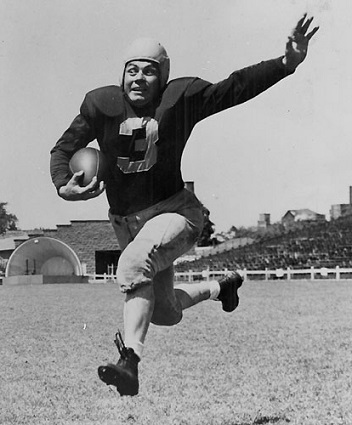
April 7, 2016

Highlighted Year: Cris Carter, 1994

Wide Receiver, Minnesota Vikings


Age: 29 (Nov. 25)
8th season in pro football, 5th with Vikings
College: Ohio State
Height: 6’3”   Weight: 197

Prelude:
Carter caught 168 passes for 2725 yards (16.2 avg.) and 27 touchdowns in college, including 69 receptions for 1127 yards and 11 TDs in 1986, when he was a consensus first-team All-American. Declared ineligible for the 1987 season due to having signed a contract with an agent, he was chosen by the Philadelphia Eagles in the fourth round of the ’87 NFL supplemental draft. He saw little action as a rookie but caught 39 passes for 761 yards (19.5 avg.) and six TDs in 1988 and scored 11 touchdowns among his 45 receptions for 605 yards in ’89. However, he had off-field substance abuse issues, clashed with Head Coach Buddy Ryan, and was waived in 1990. Picked up by the Vikings, Carter backed up wide receivers Anthony Carter (no relation) and Hassan Jones that year but had a 72-catch, 962-yard season in 1991. While missing four games due to a broken collar bone in ’92, Carter still led the club with 53 catches and in 1993 he caught 86 passes for 1071 yards and 9 TDs, earning his first Pro Bowl selection. Lacking speed, Carter provided height, excellent jumping ability, and reliable hands.

1994 Season Summary
Appeared in all 16 games
[Bracketed numbers indicate league rank in Top 20]

Pass Receiving
Receptions – 122 [1]          
Most receptions, game – 14 (for 167 yds.) at Arizona 10/2
Yards – 1256 [7]
Most yards, game – 167 (on 14 catches) at Arizona 10/2
Average gain – 10.3
TDs – 7 [11, tied with four others]
100-yard receiving games – 5

Scoring
TDs – 7
2-pt conversions – 2 [4, tied with six others]
Points – 46

Postseason: 1 G (NFC Wild Card playoff vs. Chicago)
Pass receptions – 8
Pass receiving yards – 61
Average yards per reception – 7.6
Pass Receiving TDs – 1

Awards & Honors:
1st team All-NFL: AP, PFWA, Sporting News
1st team All-NFC: UPI, Pro Football Weekly
Pro Bowl

Vikings went 10-6 to finish first in the NFC Central while leading the conference in passing yards (4324). Lost NFC Wild Card playoff to Chicago Bears (35-18).

Aftermath:
Carter’s record-breaking 1994 season was the second of eight in which he both exceeded a thousand pass receiving yards and was selected to the Pro Bowl. He matched his total of 122 catches in ’95, when he achieved career highs with 1371 yards and a league-leading 17 touchdowns – his first of five consecutive seasons reaching double figures in receiving TDs. Carter had 90 or more catches three more times and departed the Vikings after the 2001 season, having caught 1004 passes for 12,383 yards (12.3 avg.) and 110 TDs with Minnesota, all franchise highs. He finished up with the Miami Dolphins in 2002. Overall, Carter had 1101 pass receptions for 13,899 yards (12.6 avg.) and 130 TDs; the receptions and receiving TDs ranked second in NFL history at the time, and the yards placed fourth. He received first-team All-NFL honors twice, second-team All-NFL or All-NFC recognition after two other seasons, and was chosen to eight Pro Bowls. His #80 was retired by the Vikings and he was inducted into the Pro Football Hall of Fame, Class of 2013.

--

Highlighted Years features players who were consensus first-team All-League* selections or league* or conference** leaders in the following statistical categories:

Rushing: Yards, TDs (min. 10)
Passing: Yards, Completion Pct., Yards per Attempt, TDs, Rating
Receiving: Catches, Yards, TDs (min. 10)
Scoring: TDs, Points, Field Goals (min. 5)
All-Purpose: Total Yards
Defense: Interceptions, Sacks
Kickoff Returns: Average
Punt Returns: Average
Punting: Average

*Leagues include NFL (1920 to date), AFL (1926), AFL (1936-37), AAFC (1946-49), AFL (1960-69), WFL (1974-75), USFL (1983-85)

**NFC/AFC since 1970

April 5, 2016

Highlighted Year: Larry Csonka, 1970

Fullback, Miami Dolphins


Age: 24 (Dec. 25)
3rd season in pro football & with Dolphins
College: Syracuse
Height: 6’3”   Weight: 235

Prelude:
Csonka rushed for 2934 yards in college and was a consensus first-team All-American in 1967. He was chosen by the Dolphins in the first round of the 1968 AFL/NFL draft (eighth overall) but, with a poor team, was undistinguished in his first two seasons. Csonka suffered a severe concussion as a rookie, when he rushed for 540 yards, and missed further time to injury in 1969, ending up with 566 yards on the ground. The arrival of new Head Coach Don Shula for 1970 brought about a significant turnaround for both the team and Csonka.

1970 Season Summary
Appeared in all 14 games
[Bracketed numbers indicate league rank in Top 20]

Rushing
Attempts – 193 [11]
Most attempts, game – 22 (for 84 yds.) at Houston 9/27
Yards – 874 [5]
Most yards, game – 115 yards (on 21 carries) vs. Boston 12/6
Average gain – 4.5 [5]
TDs – 6 [9, tied with Paul Robinson, Jim Kiick & Leroy Kelly]
100-yard rushing games – 2

Pass Receiving
Receptions – 11      
Most receptions, game – 2 (for 16 yds.) at Boston 9/20, (for 8 yds.) at Philadelphia 11/8
Yards – 94
Most yards, game – 54 (on 1 catch) vs. Buffalo 12/20
Average gain – 8.5
TDs – 0

Scoring
TDs – 6
Points – 36

Postseason: 1 G (AFC Divisional playoff at Oakland)
Rushing attempts – 10
Rushing yards – 23
Average gain rushing – 2.3
Rushing TDs – 0

Awards & Honors:
1st team All-AFC: Pro Football Weekly
2nd team All-AFC: UPI
Pro Bowl

Dolphins went 10-4 to finish second in the AFC East and qualified for the postseason as a Wild Card while leading the conference in rushing yards (2082). Lost AFC Divisional playoff to Oakland Raiders (21-14).

Aftermath:
Csonka, a classic power-running fullback with speed and a punishing style, continued to excel for the Dolphins. He gained over a thousand yards rushing in each of the next three seasons, twice averaging over five yards per carry, and Miami won AFC titles in each of those years as well as two Super Bowls, going undefeated in ’72. His crowning achievement was a 145-yard rushing performance in the Super Bowl VIII win over the Vikings that earned him game MVP honors. While Csonka ran for 749 yards and 9 TDs in 1974 and was selected to a fifth straight Pro Bowl, he, along with teammates HB Jim Kiick and WR Paul Warfield, had already committed to jumping to the World Football League in 1975. Csonka gained 421 yards in seven games with the Memphis Southmen before the league folded and he returned to the NFL in ’76 with the New York Giants. He had three lackluster years with New York, never gaining more than 569 rushing yards in a season or averaging better than 3.6 yards-per-carry. He returned to the Dolphins for one last year in 1979 and returned to form, gaining 837 yards and scoring a career-high 12 touchdowns. Overall in the NFL, Csonka rushed 1891 times for 8081 yards, which ranked sixth all-time at the time of his retirement, for a 4.3-yard average with 64 touchdowns and caught 106 passes for 820 yards with another four TDs. 6737 of those rushing yards came with Miami, making him the franchise’s all-time leader. In 12 postseason games he added another 891 yards and 9 TDs on the ground and also had a scoring catch among his four pass receptions. Csonka received consensus first-team All-NFL recognition three times, garnered All-AFC honors after one other season, and was selected to five Pro Bowls. The Dolphins retired his #39 and he was inducted into the Pro Football Hall of Fame, Class of 1987.

--

Highlighted Years features players who were consensus first-team All-League* selections or league* or conference** leaders in the following statistical categories:

Rushing: Yards, TDs (min. 10)
Passing: Yards, Completion Pct., Yards per Attempt, TDs, Rating
Receiving: Catches, Yards, TDs (min. 10)
Scoring: TDs, Points, Field Goals (min. 5)
All-Purpose: Total Yards
Defense: Interceptions, Sacks
Kickoff Returns: Average
Punt Returns: Average
Punting: Average

*Leagues include NFL (1920 to date), AFL (1926), AFL (1936-37), AAFC (1946-49), AFL (1960-69), WFL (1974-75), USFL (1983-85)

**NFC/AFC since 1970

April 3, 2016

Highlighted Year: Deron Cherry, 1984

Safety, Kansas City Chiefs


Age: 25 (Sept. 12)
4th season in pro football & with Chiefs
College: Rutgers
Height: 5’11” Weight: 190

Prelude:
Cherry intercepted nine passes in college and also handled the punting, averaging 39.6 yards on 104 punts. Undrafted by the NFL, he signed with the Chiefs as a punter in 1981 but, after briefly being let go, spent his first two seasons as a backup in the defensive backfield before the departure of FS Gary Barbaro to the USFL opened a spot for him in 1983. He had an outstanding season, intercepting seven passes and receiving first-team All-AFC honors from UPI and Pro Football Weekly as well as earning selection to the Pro Bowl.

1984 Season Summary
Appeared in all 16 games
[Bracketed numbers indicate league rank in Top 20]

Interceptions – 7 [4, tied with six others]
Most interceptions, game – 2 vs. LA Raiders 9/16
Int. return yards – 140 [7]
Most int. return yards, game – 67 (on 1 int.) vs. Cleveland 9/30
Int. TDs – 0
Sacks – 0
Fumble recoveries – 0
Tackles – 78
Assists – 50

Kickoff Returns
Returns – 1
Yards – 0
TDs – 0

Awards & Honors:
1st team All-NFL: AP, UPI
1st team All-AFC: UPI
Pro Bowl

Chiefs went 8-8 to finish fourth in the AFC West.

Aftermath:
An outstanding playmaker with intelligence and sound instincts to make up for lack of ideal speed, Cherry continued to excel for the Chiefs, gaining selection to the next four Pro Bowls and receiving first-team All-NFL recognition again in 1986 and ’88. After intercepting a career-high 9 passes in 1986, he missed time due to injury in ’87 but bounced back to play in every game and picked off another 7 passes in 1988, when he also was credited with a career-high 151 tackles. A knee injury that required surgery cost him time in 1990 and his career came to an end in ’91. Overall, in 11 pro seasons, all with the Chiefs, Cherry intercepted 50 passes, one of which he returned for a TD. He received first-team All-NFL honors three times and first- or second-team All-AFC honors after four other seasons, and was selected to a total of six Pro Bowls.

--

Highlighted Years features players who were consensus first-team All-League* selections or league* or conference** leaders in the following statistical categories:

Rushing: Yards, TDs (min. 10)
Passing: Yards, Completion Pct., Yards per Attempt, TDs, Rating
Receiving: Catches, Yards, TDs (min. 10)
Scoring: TDs, Points, Field Goals (min. 5)
All-Purpose: Total Yards
Defense: Interceptions, Sacks
Kickoff Returns: Average
Punt Returns: Average
Punting: Average

*Leagues include NFL (1920 to date), AFL (1926), AFL (1936-37), AAFC (1946-49), AFL (1960-69), WFL (1974-75), USFL (1983-85)

**NFC/AFC since 1970

April 2, 2016

1984: Cribbs & Clanton Star as Stallions Defeat Breakers


The Birmingham Stallions had won four straight games and were trying to catch the undefeated New Orleans Breakers in the United States Football League’s Southern Division as they went head to head in a Monday night game on April 2, 1984.

Coached by Rollie Dotsch, the Stallions were much improved on offense from the previous year thanks largely to the addition of RB Joe Cribbs (pictured at right), formerly of the Buffalo Bills, and ex-Steelers QB Cliff Stoudt. Another former Steeler, WR Jim Smith, was back for a second year and provided Stoudt with an outstanding target. The defense was the USFL’s best thus far against the run, although less adept at covering passes.

New Orleans was coached by the offense-minded Dick Coury and it was the explosive attack that had the Breakers at 5-0. QB John Walton, who had been sacked only once thus far, had a strong arm and rarely threw interceptions. WR Frank Lockett was the top receiver for the Breakers and had able partners in WR Charlie Smith and TE Dan Ross, both veterans with significant NFL experience. Rookie RB Buford Jordan powered the ground game.

It was a rainy Monday night at Legion Field with attendance held to 28,100 as a result. On the game’s third play, a pass by John Walton, throwing under pressure, was intercepted by FS Chuck Clanton, who raced 29 yards for a touchdown. Danny Miller added the extra point for the quick 7-0 advantage.

New Orleans missed out on a scoring opportunity when Tim Mazzetti was wide on a 47-yard field goal attempt, his first failure of the season. Following a punt by the Stallions, the Breakers were driving as the opening period ended, having advanced from their 20 to the Birmingham 14. On the first play of the second quarter, RB Marcus DuPree fumbled and the Stallions recovered but Joe Cribbs immediately fumbled the ball back and the Breakers came away with a 31-yard Mazzetti field goal that narrowed the score to 7-3.

Cliff Stoudt quickly passed the Stallions into New Orleans territory and Cribbs ran effectively. Two bootlegs by Stoudt got the ball inside the one from where FB Leon Perry crashed into the end zone for a TD to complete the eight-play, 69-yard series. Miller added the point after to extend the home team’s lead to 14-3.

On the ensuing series, Walton threw to Charlie Smith for a long gain in a third-and-12 situation to get the ball into Birmingham’s end of the field and the 72-yard possession that took nine plays ended with Buford Jordan running seven yards for a touchdown. Mazzetti’s PAT made it a four-point contest with 2:46 remaining in the first half. The score remained 14-10 at halftime as a drive by the Stallions ended with Miller missing on a 45-yard field goal try.

Birmingham had the ball first in the third quarter and advanced methodically in a 17-play drive that covered 89 yards and used up 7:22 of playing time. Cribbs had two key carries along the way and the Stallions converted two fourth downs. Stoudt passed to Cribbs for a six-yard touchdown and Miller converted to make the score 21-10.

The Breakers stormed back, advancing 70 yards in eight plays helped by a pass interference penalty, and Jordan ran around end for an 11-yard TD. Mazzetti added the extra point to again narrow the Birmingham lead at 21-17.

Birmingham put together another time-consuming drive that featured a dropped near-interception and a fake field goal that backup QB Bob Lane, the holder, converted into a first down at the New Orleans 12. It led to a 29-yard Miller field goal and seven-point lead for the Stallions.

A turnover by the Breakers on the first play following the ensuing kickoff, when a pitchout went awry deep in their own territory, was recovered by LB Mike Murphy for the Stallions at the one and quickly led to another short Perry touchdown carry. Miller booted the point after and Birmingham was ahead by 14 points and in control with 9:30 remaining to play.

It was more than enough for the Stallions. Clanton interceptions ended the next two New Orleans possessions, with a Birmingham drive in between that ended with a missed field goal but, most importantly, once again ran significant time off the clock. The Stallions won convincingly by a final score of 31-17.

Birmingham had the edge in total yards (354 to 199), first downs (23 to 17), and time of possession (34:11 to 25:49), including 22:49 to 7:11 in the second half. Of the yardage total for the Stallions, 231 came on the ground. The Breakers also turned the ball over five times, to two by Birmingham. There were only two punts during the game, one by each team.


Joe Cribbs was the star for the Stallions on offense, rushing for 162 yards on 26 carries and catching 5 passes for 32 yards and a touchdown. Cliff Stoudt completed 12 of 25 throws for 123 yards and a TD while giving up no interceptions. Leon Perry contributed 48 yards on 15 rushing attempts that included the two short touchdowns. WR Jim Smith gained 63 yards on his four pass receptions. On defense, Chuck Clanton (pictured at left) had three interceptions that he returned for 57 yards and a TD.

For the Breakers, John Walton, who was heavily pressured throughout the contest, completed 12 of 31 passes for 116 yards and no touchdowns while being picked off three times. Buford Jordan ran the ball 7 times for a team-leading 44 yards and two TDs. TE Dan Ross had four catches for 43 yards.

“We played our kind of game in the second half,” said Birmingham’s Coach Dotsch. “We took the ball, ground it out, and scored. It was nothing fancy – just football.”

Birmingham’s winning streak reached nine games on the way to a 14-4 record that topped the Southern Division. The Stallions defeated Tampa Bay in the first playoff round before losing to Philadelphia for the Eastern Conference Championship. The Breakers regained their winning touch the following week but collapsed during the second half of the season and ended up at a disappointing 8-10 tally that placed a distant third in the division.

Joe Cribbs took over the USFL rushing lead with his big performance against New Orleans and that is where he ended up, gaining 1467 yards on 297 carries (4.9 avg.) with eight touchdowns. He also caught 39 passes for 500 yards and another five TDs, and received consensus All-League honors. Chuck Clanton intercepted 10 passes, which he returned for a league-leading 249 yards and three TDs.

March 31, 2016

Highlighted Year: Rashean Mathis, 2006

Cornerback, Jacksonville Jaguars


Age: 26
4th season in pro football & with Jaguars
College: Bethune-Cookman
Height: 6’1”   Weight: 195

Prelude:
Mathis intercepted 31 passes in college, playing both cornerback and free safety, and was a three-time Division I-AA All-American. He was chosen by the Jaguars in the second round of the 2003 NFL draft and moved directly into the starting lineup at cornerback, where, while still something of a raw talent, he impressed with his speed and size. Mathis improved in 2004 and intercepted five passes and followed up with another five in ’05, one of which he returned for a touchdown. He showed good playmaking ability and also was effective against the run.

2006 Season Summary
Appeared in all 16 games
[Bracketed numbers indicate league rank in Top 20]

Interceptions – 8 [3, tied with Nnamdi Asomugha, Walt Harris & Charles Woodson]
Most interceptions, game – 2 vs. Pittsburgh 9/18, vs. Tennessee 11/5
Int. return yards – 146 [3, tied with Adrian Wilson]
Most int. return yards, game – 55 (on 2 int.) vs. Tennessee 11/5
Int. TDs – 0
Sacks – 0
Fumble recoveries – 0
Tackles – 56
Assists – 7

Punt Returns
Returns – 2
Yards – 9
Average per return – 4.5
TDs – 0
Longest return – 9 yards

Awards & Honors:
1st team All-NFL: AP, PFWA, Sporting News
Pro Bowl

Jaguars went 8-8 to finish third in the AFC South.

Aftermath:
With opposing quarterbacks throwing away from him, Mathis had just one interception in 2007 and his performance slipped in ’08 even though he ran two of his four interceptions back for scores. He missed six games due to groin and finger injuries in 2009 and, while back for all 16 games in 2010, Mathis was limited to nine games in 2011 with a torn ACL. He moved on to the Detroit Lions as a free agent in 2013 and exceeded expectations while providing veteran savvy and leadership until retiring following the 2015 season. Overall, he played in 175 regular season games and intercepted 32 passes, a franchise-record 30 coming with Jacksonville, with four returned for TDs.

--

Highlighted Years features players who were consensus first-team All-League* selections or league* or conference** leaders in the following statistical categories:

Rushing: Yards, TDs (min. 10)
Passing: Yards, Completion Pct., Yards per Attempt, TDs, Rating
Receiving: Catches, Yards, TDs (min. 10)
Scoring: TDs, Points, Field Goals (min. 5)
All-Purpose: Total Yards
Defense: Interceptions, Sacks
Kickoff Returns: Average
Punt Returns: Average
Punting: Average

*Leagues include NFL (1920 to date), AFL (1926), AFL (1936-37), AAFC (1946-49), AFL (1960-69), WFL (1974-75), USFL (1983-85)

**NFC/AFC since 1970

March 29, 2016

Highlighted Year: Cary Blanchard, 1996

Placekicker, Indianapolis Colts


Age:  28 (Nov. 5)
4th season in pro football, 2nd with Colts
College: Oklahoma State
Height: 6’1”   Weight: 227

Prelude:
Blanchard scored 312 points in college, where he handled both placekicking and punting, and set a NCAA season record with 67 consecutive extra points in 1988. Undrafted in 1991, he was signed by the Dallas Cowboys but was cut prior to the season. Blanchard spent the spring of ’92 with the Sacramento Surge of the WLAF, connecting on 5 of 8 field goal attempts and all 17 of his PATs, and then caught on with New Orleans in the NFL, when he was on the practice squad for two games and activated for one due to concerns over an injury to star PK Morten Andersen, but the Saints waived him and he was picked up by the New York Jets. In two years with the Jets, he kicked 33 field goals out of 48 attempts (68.8 %) and made good on all 48 of his tries for extra points. However, the arrival of veteran Nick Lowery led to his being let go by the Jets in 1994 and, while he signed with Minnesota, was waived by the Vikings during the preseason. Blanchard joined the Colts six games into the 1995 season, replacing Mike Cofer, and made 19 of 24 field goal attempts plus 25 PATs, and displayed improved leg strength.

1996 Season Summary
Appeared in all 16 games
[Bracketed numbers indicate league rank in Top 20]

Kicking
Field goals – 36 [2, 1st in AFC]
Most field goals, game – 4 at Dallas 9/15, vs. San Diego 11/3, vs. NY Jets 11/17
Field goal attempts – 40 [2]
Most field goal attempts, game – 4 on five occasions
Field goal percentage – 90.0 [1]
PATs – 27
PAT attempts – 27
Longest field goal – 52 yards at Dallas 9/15

Scoring
Field Goals – 36
PATs – 27
Points – 135 [2, 1st in AFC]

Postseason: 1 G (AFC Wild Card playoff at Pittsburgh)
Field goals – 0
Field goal attempts – 0
PATs – 2
PAT attempts – 2

Awards & Honors:
1st team All-NFL: AP, PFWA, Sporting News
1st team All-AFC: UPI, Pro Football Weekly
Pro Bowl

Colts went 9-7 to finish third in the AFC East but qualified for a Wild Card spot in the postseason. Lost Wild Card playoff to Pittsburgh Steelers (42-14).  

Aftermath:
Blanchard spent one more season with the Colts in 1997, but faltered as he connected on 32 of a league-high 41 field goal attempts that included some critical misses. He lost out to Mike Vanderjagt in the ’98 preseason and saw action that year with Washington, moving on to stints with the Giants and Cardinals before his career ended in 2000. Overall, Blanchard was successful on 165 of 214 field goal attempts (77.1 %) and added 188 extra points with just two misses to score a total of 683 points. His best seasons were with the Colts, where he was 87-of-105 on field goals (82.9 %) and made all 73 of his PATs.

--

Highlighted Years features players who were consensus first-team All-League* selections or league* or conference** leaders in the following statistical categories:

Rushing: Yards, TDs (min. 10)
Passing: Yards, Completion Pct., Yards per Attempt, TDs, Rating
Receiving: Catches, Yards, TDs (min. 10)
Scoring: TDs, Points, Field Goals (min. 5)
All-Purpose: Total Yards
Defense: Interceptions, Sacks
Kickoff Returns: Average
Punt Returns: Average
Punting: Average

*Leagues include NFL (1920 to date), AFL (1926), AFL (1936-37), AAFC (1946-49), AFL (1960-69), WFL (1974-75), USFL (1983-85)

**NFC/AFC since 1970

March 27, 2016

Highlighted Year: Tony Canadeo, 1943

Tailback/Defensive Back, Green Bay Packers


Age: 24
3rd season in pro football & with Packers
College: Gonzaga
Height: 5’11” Weight: 195

Prelude:
“The Gray Ghost of Gonzaga” was an All-West Coast and Little All-American selection in college for his play at halfback. He was chosen by the Packers in the seventh round of the 1941 NFL draft and backed up Cecil Isbell at tailback. His statistical totals were thus modest during his first two seasons as he rushed for a total of 409 yards, caught 10 passes for 66 yards, passed for 364 yards and five touchdowns, and returned 10 kickoffs for a 24.7-yard average and 11 punts for an average of 9.3 yards, and scored six TDs. Canadeo made up for lack of ideal size and speed with determination, savvy, and versatility. With the departure of Isbell, he saw more action in 1943 in combination with rookie Irv Comp.  

1943 Season Summary
Appeared in all 10 games
[Bracketed numbers indicate league rank in Top 20]

Rushing
Attempts – 94 [6]
Yards – 489 [5]
Yards per attempt – 5.2 [3]
TDs – 3 [6, tied with seven others]

Pass Receiving
Receptions – 3
Yards – 31
Yards per catch – 10.3
TDs – 2

Passing
Attempts – 129 [3]
Completions – 56 [3]
Yards – 875 [3]
Completion percentage – 43.4 [4]
Yards per attempt – 6.8 [3]
TD passes – 9 [3, tied with Roy Zimmerman]
Most TD passes, game – 3 vs. Detroit 10/10
Interceptions – 12 [5, tied with Sid Luckman]
Passer rating – 51.0 [3]

Kickoff Returns
Returns – 10 [6]
Yards – 242 [5]
Average per return – 24.2 [3]
TDs – 0
Longest return – 43 yards

Punt Returns
Returns – 8 [12, tied with Lou Brock]
Yards – 93 [12]
Average per return – 11.6
TDs – 0
Longest return – 22 yards

Interceptions
Interceptions – 2 [20, tied with eighteen others]
Return yards – 15
TDs – 0

Punting
Punts – 3
Yards – 102
Average – 34.0
Punts blocked – 0
Longest punt – 39 yards

Scoring
TDs – 5 [10, tied with Tony Bova, Hamp Pool & George Wilson]       
Points – 30 [14, tied with Tony Bova, Hamp Pool & George Wilson]

Awards & Honors:
1st team All-NFL: AP, INS, NY Daily News
2nd team All-NFL: UPI, Pro Football Illustrated, Chicago Herald-American

Packers went 7-2-1 to finish second in the NFL Western Division.

Aftermath:
Canadeo was with the Packers for three games in 1944 before leaving for World War II military duty. Upon his return to the team in ’46, he was utilized more as a halfback. He led Green Bay in rushing for four straight seasons, receiving second-team All-NFL honors from UPI and Pro Football Illustrated in 1948 and first-team recognition from UPI and INS in ’49, a year in which he ran for 1052 yards, becoming the third player in NFL history to cross the thousand-yard rushing threshold and the first to do so without leading the league. Canadeo’s ground-gaining totals dropped off thereafter as HB Billy Grimes took over more of the rushing duties, but he averaged 25.7 yards on a career-high 16 kickoff returns in 1950 and set another high in ’51 with 22 pass receptions for 226 yards. His career, spent entirely with the Packers, finally ended after the 1952 season. Overall, he rushed for a then-team record 4197 yards on 1025 carries (4.1 avg.) with 26 TDs, caught 69 passes for 579 yards and five scores, passed for 1642 yards and 16 touchdowns, returned 46 punts for an 11.2-yard average and averaged 23.1 yards on 75 kickoff returns, and intercepted 9 passes on defense. He scored a total of 31 touchdowns. Canadeo remained active with the Packers following his retirement, as a broadcaster and also a member of the team’s board of directors. The club retired his #3 and he was inducted into the Pro Football Hall of Fame, Class of 1974.

--

Highlighted Years features players who were consensus first-team All-League* selections or league* or conference** leaders in the following statistical categories:

Rushing: Yards, TDs (min. 10)
Passing: Yards, Completion Pct., Yards per Attempt, TDs, Rating
Receiving: Catches, Yards, TDs (min. 10)
Scoring: TDs, Points, Field Goals (min. 5)
All-Purpose: Total Yards
Defense: Interceptions, Sacks
Kickoff Returns: Average
Punt Returns: Average
Punting: Average

*Leagues include NFL (1920 to date), AFL (1926), AFL (1936-37), AAFC (1946-49), AFL (1960-69), WFL (1974-75), USFL (1983-85)

**NFC/AFC since 1970