Showing posts with label Jacksonville Jaguars. Show all posts

October 27, 2016

1996: Bengals Rally to Defeat Jaguars in Bruce Coslet’s Coaching Debut


The Cincinnati Bengals had a new head coach as they hosted the Jacksonville Jaguars on October 27, 1996. Off to a 1-6 start, David Shula had been let go and replaced by Bruce Coslet (pictured above), the offensive coordinator who had once coached the New York Jets. The son of the highly-successful Don Shula had been a major disappointment, failing to turn around a team that had not posted a winning record in six years, and the Bengals had recently been prone to blowing leads in the second half. It was hoped that Coslet, known as a motivator in New York, could provide a needed spark.

The opposing Jaguars, a second-year expansion team, came into the game with a 3-5 record. While Head Coach Tom Coughlin’s club had the league’s top passing offense, Jacksonville was still a work in progress. QB Mark Brunell was mobile and a talented passer, but thus far also lacked consistency and was prone to throwing interceptions, and the running game was not providing much help.

There were 45,890 fans in attendance at Cinergy Field on a pleasant day, well under the stadium’s capacity. The Bengals had the ball first and drove from their 18 to the Jacksonville 30 as QB Jeff Blake completed passes to RB Eric Bieniemy for 13 yards and WR David Dunn for 26, but came up empty when they failed to convert a fourth-and-one play. The teams traded punts for the remainder of the opening period.


As the game headed into the second quarter, the Jaguars put together a 75-yard drive in seven plays. Mark Brunell threw to WR Andre Rison for 32 yards, RB James Stewart (pictured at left) had carries of 13 and 12 yards, and Brunell finished the series off with a 14-yard run for a touchdown. Mike Hollis added the extra point.

A short series by the Bengals again ended with a punt, but Cincinnati got the ball back three plays later when Brunell was hit by DE Jevon Langford as he was passing and LB James Francis intercepted the errant throw at the Jacksonville 31. It took the home team five plays to capitalize as Blake connected with TE Tony McGee for 18 yards and WR Carl Pickens for an 11-yard TD. Doug Pelfrey added the game-tying point after. That was it for the scoring as the teams exchanged punts for the remainder of the half, much to the displeasure of the home fans.

Following another exchange of punts to start the third quarter, the Jaguars advanced 73 yards in eight plays. Stewart broke away for a 34-yard run on first down and, keeping the ball on the ground with Stewart and RB Natrone Means, the visitors reached the Cincinnati 11, from where Brunell threw to Means for a touchdown. Hollis converted and the Jaguars were back in front by 14-7 with 2:41 remaining in the period.

The Bengals had the ball as the third quarter concluded, with Blake throwing to Bieniemy for 13 yards in a third-and-seven situation and then connecting with WR Darnay Scott for 46 yards to the Jacksonville 10. On the first play of the final period, Blake tossed a scoring pass to Pickens from there and Pelfrey’s kick made it 14-14.

The Jaguars had to punt from deep in their own territory on the next possession as Brunell was sacked twice for losses totaling 19 yards. The Bengals started their series from their 40 and went 60 yards in 11 plays. Blake completed four straight passes at one point, two of them to Pickens, and ran for 10 yards to convert a third down. The payoff came when Blake ran an option play and flipped the ball to RB Ki-Jana Carter, who scored a one-yard touchdown. Pelfrey again converted to put Cincinnati up by seven, although Blake was shaken up and had to sit out the remainder of the game.

On Jacksonville’s next play, Brunell’s tipped pass was picked off by FS Bo Orlando, giving the Bengals possession at the Jaguars’ 22. Backup QB Erik Wilhelm threw to Pickens for five yards and Carter ran four straight times, the last for a four-yard TD. Pelfrey added the extra point to make it a 28-14 game with 3:32 left to play. The Jaguars managed to drive to one more touchdown, with Brunell throwing to WR Jimmy Smith from 11 yards out, but they couldn’t recover the resulting onside kick and the Bengals were able to run out the clock and win by a final score of 28-21.  

Jacksonville led in total yards (338 to 267) and also had the edge in first downs (19 to 18) although the Bengals had the ball longer (31:36 to 28:24). The Jaguars also recorded five sacks, to four for Cincinnati, but they also turned the ball over twice, to none suffered by the Bengals.

Jeff Blake completed 19 of 30 passes for 244 yards and two touchdowns while giving up no interceptions. Carl Pickens had 6 catches for 51 yards and two TDs and David Dunn gained 66 yards on his three receptions. Eric Bieniemy pulled in 6 passes for 47 yards in addition to running the ball five times for eight yards. Ki-Jana Carter (pictured below) filled in for Garrison Hearst, who sprained his ankle in the second quarter, and topped the Cincinnati runners with a modest 27 yards on 8 carries, although two were for touchdowns.


For the Jaguars, Mark Brunell was successful on 18 of 31 throws for 215 yards and two TDs, but also with two costly interceptions. He also ran the ball 7 times for 45 yards and a touchdown. James Stewart gained 80 yards on 14 rushing attempts and Natrone Means contributed 24 yards on seven rushes as well as a TD on his lone catch. WR Keenan McCardell had five pass receptions for 52 yards and Andre Rison gained a team-leading 74 yards on his three catches. On defense, DE Clyde Simmons accounted for 2.5 of the team’s sacks.

The win signaled a turnaround for the Bengals as they won their next two games on the way to a 7-2 finish. They ended up breaking even at 8-8 and placing third in the AFC Central. The Jaguars also caught fire, winning six of their last seven games to go 9-7 and secure a Wild Card playoff slot. They advanced all the way to the AFC Championship game before falling to the Patriots.

Unfortunately for Bruce Coslet, the initial success did not last. The Bengals followed up with a 7-9 record in 1997 and dropped to 3-13 in 1998 and 4-12 ’99. He was dismissed three winless games into the 2000 season, having compiled a 21-39 record in Cincinnati.

October 7, 2016

Highlighted Year: James Stewart, 1999

Running Back, Jacksonville Jaguars


Age: 28 (Dec. 27)
5th season in pro football & with Jaguars
College: Tennessee
Height: 6’1”   Weight: 224

Prelude:
Stewart rushed for 2890 yards in college, with 1028 as a senior in 1994, and also gained another 463 yards on 54 pass receptions while scoring a total of 39 touchdowns. He was chosen by the expansion Jaguars in the first round of the 1995 NFL draft (19th overall), who were attracted by his ability to catch out of the backfield as well as his size and speed. Struggling early, he led the club with 525 rushing yards as a rookie. Stewart performed well in 1996 before a toe injury sidelined him late in the season, after gaining 723 yards on the ground, catching 30 passes, and scoring 10 touchdowns. He was primarily a backup to veteran RB Natrone Means in ’97, although he accumulated 555 rushing yards and 336 more on 41 catches, and had a five-touchdown performance against the Eagles. A knee injury cost him all but the first three games of the 1998 season and hastened the emergence of rookie RB Fred Taylor, which again put Stewart in a backup role heading into ’99, but an injury to Taylor put him back in the lineup.

1999 Season Summary
Appeared in 14 of 16 games
[Bracketed numbers indicate league rank in Top 20]

Rushing
Attempts – 249 [16]
Most attempts, game – 30 (for 145 yds.) vs. Pittsburgh 12/2
Yards – 931 [17]
Most yards, game – 145 yards (on 30 carries) vs. Pittsburgh 12/2
Average gain – 3.7
TDs – 13 [2, tied with Edgerrin James, 1st in AFC]
100-yard rushing games – 2

Pass Receiving
Receptions – 21      
Most receptions, game – 5 (for 53 yds.) vs. New Orleans 11/21
Yards – 108
Most yards, game – 53 (on 5 catches) vs. New Orleans 11/21
Average gain – 5.1
TDs – 0

Scoring
TDs – 13 [3, tied with Cris Carter, Eddie George & Emmitt Smith]
Points – 78

Postseason: 2 G
Rushing attempts – 14
Most rushing attempts, game – 11 vs. Miami, AFC Divisional playoff
Rushing yards – 97
Most rushing yards, game – 62 vs. Miami, AFC Divisional playoff
Average gain rushing – 6.9
Rushing TDs – 2

Jaguars went 14-2 to finish first in the AFC Central while leading the conference in rushing yards (2091). Won AFC Divisional playoff over Miami Dolphins (62-7). Lost AFC Championship to Tennessee Titans (33-14).

Aftermath:
With Fred Taylor expected to regain the starting job, Stewart signed with the Detroit Lions as a free agent in 2000. He rushed for 1184 yards and 10 touchdowns, although averaging only 3.5 yards-per-carry. While the average improved to 4.8 yards in 2001, Stewart appeared in only 11 games due to ankle problems. In 2002, he gained 1021 yards and caught a career-high 46 passes for 333 yards, but a shoulder injury suffered during the ’03 preseason finished his career. Overall, Stewart rushed for 5841 yards on 1478 carries (4.0 avg.) and caught 220 passes for 1715 yards, scoring a total of 57 touchdowns. Of that, 2951 rushing yards and 853 receiving yards on 119 receptions came with the Jaguars, as well as 38 of the TDs.

--

Highlighted Years features players who were consensus first-team All-League* selections or league* or conference** leaders in the following statistical categories:

Rushing: Yards, TDs (min. 10)
Passing: Yards, Completion Pct., Yards per Attempt, TDs, Rating
Receiving: Catches, Yards, TDs (min. 10)
Scoring: TDs, Points, Field Goals (min. 5)
All-Purpose: Total Yards
Defense: Interceptions, Sacks
Kickoff Returns: Average
Punt Returns: Average
Punting: Average

*Leagues include NFL (1920 to date), AFL (1926), AFL (1936-37), AAFC (1946-49), AFL (1960-69), WFL (1974-75), USFL (1983-85)

**NFC/AFC since 1970

September 22, 2016

1997: Jaguars Avoid Defeat with Blocked FG Return Against Steelers


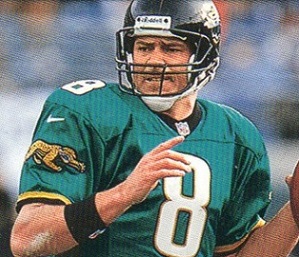
The Jacksonville Jaguars were 2-0 and coming off of their bye week as they hosted the Pittsburgh Steelers on September 22, 1997. Moreover, Head Coach Tom Coughlin’s team had won those games with two different backup quarterbacks at the helm due to a knee injury suffered by QB Mark Brunell (pictured above), who led the NFL with 4367 passing yards in 1996, and he was now returning to action. Overachievers who went all the way to the AFC title game the previous year, the third-year expansion team had won six straight regular season games dating back to the previous November.

Pittsburgh, coached by Bill Cowher, was accustomed to contending. Third-year QB Kordell Stewart was new to the starting lineup but the ground game was led by dependable RB Jerome Bettis and the defense was typically tough. The Steelers split their first two games.

There were 73,016 fans in attendance at Alltel Stadium for the Monday night game. The Jaguars had the game’s first possession and drove 68 yards in ten plays. Mark Brunell converted a third-and-10 situation with a pass to WR Keenan McCardell for 15 yards and RB Natrone Means ran for five yards on a third-and-three play. Consecutive throws by Brunell were complete to McCardell for 15 yards and to WR Jimmy Smith for 23 to reach the Pittsburgh three yard line and two plays later Means gained the final yard for a touchdown. Mike Hollis added the extra point.

Pittsburgh WR Will Blackwell returned the ensuing kickoff 99 yards, but the play was nullified by a holding penalty. However, the Steelers proceeded with an 80-yard scoring series that took six plays. The biggest was a third down throw by Kordell Stewart to WR Charles Johnson that picked up 49 yards to the Jacksonville 12 and, following a six-yard run by RB Jerome Bettis, Stewart scrambled for a six-yard TD. Norm Johnson’s kick tied the score at 7-7.

A short Jacksonville series ended with a punt but the Jaguars got the ball back three plays later when Stewart fumbled when sacked by DE Tony Brackens and LB Eddie Robinson recovered at the Pittsburgh 38. In a possession that stretched into the second quarter, Means ran for nine yards on first down and Brunell completed three passes, the last to Smith for an 11-yard TD. Hollis converted to give the home team a 14-7 lead.

The Steelers started off with the ball at their 42 following a 40-yard kickoff return by Blackwell, but after reaching the Jacksonville 39 they were forced to punt. A long series by the Jaguars started off with Brunell being sacked by LB Levon Kirkland for a loss of 11 yards but Brunell threw to Smith for 29 yards and, a few plays later and facing third-and-20, connected with RB James Stewart for 29 yards to the Pittsburgh 43. It appeared that the drive was finally thwarted when Brunell was sacked for a seven-yard loss by DT Oliver Gibson and then threw an incomplete pass when facing third-and-15 at the Pittsbugh 38. But punter Bryan Barker passed instead of kicking and it was complete to DB Dana Hall for a 22-yard gain. However, after getting to the 11, the home team came up empty when Hollis missed a 29-yard field goal attempt.

Jacksonville got the ball back two plays later when Stewart’s pass was intercepted by CB Aaron Beasley, who returned it five yards to the Pittsburgh 35 with 1:21 remaining in the first half. Brunell completed four passes and Hollis was successful on a 20-yard field goal to give the Jaguars a 17-7 halftime lead. Jacksonville had thus far dominated time of possession, holding onto the ball for 21 of the game’s first 30 minutes.


Down by ten, the Steelers started off the third quarter with a 13-play, 80-yard drive. Bettis (pictured at right) ran for 44 yards on 7 carries, with a long of 16, RB George Jones contributed an 18-yard run, and Stewart completed three passes, the last to WR Yancey Thigpen for a four-yard touchdown. Norm Johnson’s point after narrowed the score to 17-14.

The Jaguars, helped along by a pass interference penalty on the Steelers, came back with a series that resulted in Hollis kicking a 45-yard field goal. Another long Blackwell kickoff return that covered 52 yards put the Steelers at the Jacksonville 48 and, on a seven- play drive that featured a 19-yard run by Bettis and a Stewart toss to Charles Johnson for 26 yards, they scored on the first play of the fourth quarter as Stewart connected with TE Mark Bruener for a one-yard TD. Norm Johnson’s extra point put the visitors in front by 21-20.

The Jaguars again reached Pittsburgh territory as Brunell passed to Smith for a 41-yard pickup but, after the drive was stopped at the 19, Hollis failed on a 38-yard try for a go-ahead field goal. The Steelers had to punt on their next series and Jacksonville again had a long possession that ran over six minutes off the clock and was helped along by a critical unnecessary roughness penalty on DE Nolan Harrison to nullify a third down sack. Brunell completed six passes, three of them to Smith and the longest to WR Reggie Barlow for 18 yards, and this time Hollis came through with a 27-yard field goal that put the Jaguars back on top by 23-21 with 4:14 remaining to play.

Starting from their 40 following Blackwell’s 30-yard kickoff return, the Steelers kept the ball on the ground and also received help with a five-yard penalty on the Jaguars on a fourth-and-one play. Stewart threw to Thigpen for a 21-yard gain to the Jacksonville 25 and Pittsburgh was at the 22 when Norm Johnson came on to attempt a final-play field goal from 40 yards to win the game. However, the snap was low and the holder, QB Mike Tomczak, had difficulty in getting the ball set, placing it at a bad angle. Johnson’s kick was blocked by DE Clyde Simmons and safety Chris Hudson recovered and ran 58 yards for a touchdown. Hollis added the superfluous extra point and the Jaguars not only avoided a last-second defeat but won in stunning fashion by a final score of 30-21.

Jacksonville led in total yards (343 to 306), first downs (23 to 19), and time of possession (33:55 to 26:05), although Pittsburgh was much better at controlling the ball in the second half. The Jaguars were stifled on the ground as Pittsburgh outgained them, 153 to 40, but had a big lead in net passing yards (303 to 153). The Steelers turned the ball over twice, to none by Jacksonville. Pittsburgh led in sacks (three to two) but also in penalties (6 for 82 yards, against four for 35 yards against Jacksonville). The teams combined for just three punts (two by Pittsburgh, one for the Jaguars) although both clubs had trouble on field goals, with Mike Hollis missing two from under 40 yards and Norm Johnson’s lone attempt being botched at the end.

Mark Brunell completed 24 of 42 passes for 306 yards and a touchdown with none intercepted. Jimmy Smith had a big performance with 10 catches for 164 yards and a TD and Keenan McCardell contributed 6 receptions for 51 yards. Natrone Means rushed for 40 yards on 24 carries that included a score.

For the Steelers, Kordell Stewart was successful on 11 of 16 throws for 155 yards and two TDs while giving up an interception, and also ran the ball 7 times for 19 yards and a touchdown. Jerome Bettis, who came on strong in the second half, gained 114 yards on 21 rushing attempts. Yancey Thigpen caught 5 passes for 53 yards and a TD and Charles Johnson gained 88 yards on his four receptions. Will Blackwell averaged 37.8 yards on four kickoff returns. 

“This was a big win for us because it was on Monday night, it was against the Steelers, and because of the way we won,” said Mark Brunell.

“We just found a way to win,” said Coach Coughlin. “I told the team on Sunday night to never take anything for granted because a lot of teams had trouble this season with field goals.”

Jacksonville lost the following week but was at 5-1 before losing two more, including the rematch with the Steelers. The pattern of a flashy passing game and mediocre ground attack held throughout the season. The Jaguars ended up with an 11-5 record, as did Pittsburgh, and the Steelers won the AFC Central title due to the net division points tiebreaker. Jacksonville was demolished by Denver in the Wild Card playoff round while Pittsburgh reached the AFC Championship before also losing to the Broncos in a closer contest.

Mark Brunell went on to lead the AFC in passing with a 91.2 rating as he completed 60.7 percent of his passes for 3281 yards and 18 touchdowns while giving up just seven interceptions. He was selected to a second straight Pro Bowl where he was joined by Jimmy Smith, who accumulated 82 catches for 1324 yards (16.1 avg.) and four TDs.

July 5, 2016

Highlighted Year: Jimmy Smith, 1996

Wide Receiver, Jacksonville Jaguars


Age: 27
4th season in pro football (3rd active), 2nd with Jaguars
College: Jackson State
Height: 6’1”   Weight: 207

Prelude:
Smith caught a total of 85 passes for 1695 yards and 12 touchdowns in his last two college seasons and was chosen by the Dallas Cowboys in the second round of the 1992 NFL draft. He broke his leg in training camp but saw action on special teams during his rookie season, catching no passes, and complications from appendicitis caused him to be de-activated for ’93. Smith was waived in 1994, signed with the Philadelphia Eagles, but was cut during the preseason. He joined the expansion Jaguars in 1995 and returned kickoffs, averaging 22.5 yards and scoring a touchdown, while backing up at wide receiver, where he impressed with his speed and caught 22 passes for 288 yards (13.1 avg.) and scored three TDs. Smith became more of a factor in ‘96 and moved into the starting lineup across from WR Keenan McCardell, creating an effective tandem.

1996 Season Summary
Appeared in all 16 games
[Bracketed numbers indicate league rank in Top 20]

Pass Receiving
Receptions – 83 [14]          
Most receptions, game – 8 (for 131 yds.) at Baltimore 11/24, (for 124 yds.) vs. Seattle 12/15
Yards – 1244 [5, 1st in AFC]
Most yards, game – 162 (on 7 catches) vs. Cincinnati 12/1
Average gain – 15.0 [20]
TDs – 7 [19, tied with seven others]
100-yard receiving games – 4

Kickoff Returns
Returns – 2
Yards – 49
Average per return – 24.5
TDs – 0
Longest return – 29 yards

Scoring
TDs – 7
Points – 42

Postseason: 3 G
Pass receptions – 11
Most pass receptions, game – 5 at Buffalo, AFC Wild Card playoff
Pass receiving yards – 174
Most pass receiving yards, game – 71 at Denver, AFC Divisional playoff
Average yards per reception – 15.8
Pass Receiving TDs – 2

Jaguars went 9-7 to finish second in the AFC Central and qualified for the postseason as a Wild Card entry while leading the NFL in passing yards (4110). Won AFC Wild Card playoff over Buffalo Bills (30-27) and AFC Divisional playoff over Denver Broncos (30-27). Lost AFC Championship to New England Patriots (20-6).

Aftermath:
The breakout 1996 season was the first of seven consecutive in which Smith reached the thousand-yard pass receiving threshold (and nine overall) and six of seven in which his receptions totaled 80 or more. He had 82 catches for 1324 yards (16.1 avg.) in 1997, his first of five consecutive Pro Bowl seasons, and led the NFL with 116 receptions in 1999. McCardell departed after 2001 and a drug suspension decreased his production in 2003 but he bounced back in ’04 with 74 catches for 1172 yards (15.8 avg.) and six TDs while being heavily double-teamed. He retired following a 70-catch, 1023-yard year in 2005. Overall, he caught 862 passes for 12,287 yards (14.3 avg.) and 67 touchdowns, all with Jacksonville, making him the franchise leader in all three categories. In addition to being named to five Pro Bowls, he was a first-team All-AFC selection once and received second-team All-NFL recognition after two seasons.

--

Highlighted Years features players who were consensus first-team All-League* selections or league* or conference** leaders in the following statistical categories:

Rushing: Yards, TDs (min. 10)
Passing: Yards, Completion Pct., Yards per Attempt, TDs, Rating
Receiving: Catches, Yards, TDs (min. 10)
Scoring: TDs, Points, Field Goals (min. 5)
All-Purpose: Total Yards
Defense: Interceptions, Sacks
Kickoff Returns: Average
Punt Returns: Average
Punting: Average

*Leagues include NFL (1920 to date), AFL (1926), AFL (1936-37), AAFC (1946-49), AFL (1960-69), WFL (1974-75), USFL (1983-85)

**NFC/AFC since 1970

March 31, 2016

Highlighted Year: Rashean Mathis, 2006

Cornerback, Jacksonville Jaguars


Age: 26
4th season in pro football & with Jaguars
College: Bethune-Cookman
Height: 6’1”   Weight: 195

Prelude:
Mathis intercepted 31 passes in college, playing both cornerback and free safety, and was a three-time Division I-AA All-American. He was chosen by the Jaguars in the second round of the 2003 NFL draft and moved directly into the starting lineup at cornerback, where, while still something of a raw talent, he impressed with his speed and size. Mathis improved in 2004 and intercepted five passes and followed up with another five in ’05, one of which he returned for a touchdown. He showed good playmaking ability and also was effective against the run.

2006 Season Summary
Appeared in all 16 games
[Bracketed numbers indicate league rank in Top 20]

Interceptions – 8 [3, tied with Nnamdi Asomugha, Walt Harris & Charles Woodson]
Most interceptions, game – 2 vs. Pittsburgh 9/18, vs. Tennessee 11/5
Int. return yards – 146 [3, tied with Adrian Wilson]
Most int. return yards, game – 55 (on 2 int.) vs. Tennessee 11/5
Int. TDs – 0
Sacks – 0
Fumble recoveries – 0
Tackles – 56
Assists – 7

Punt Returns
Returns – 2
Yards – 9
Average per return – 4.5
TDs – 0
Longest return – 9 yards

Awards & Honors:
1st team All-NFL: AP, PFWA, Sporting News
Pro Bowl

Jaguars went 8-8 to finish third in the AFC South.

Aftermath:
With opposing quarterbacks throwing away from him, Mathis had just one interception in 2007 and his performance slipped in ’08 even though he ran two of his four interceptions back for scores. He missed six games due to groin and finger injuries in 2009 and, while back for all 16 games in 2010, Mathis was limited to nine games in 2011 with a torn ACL. He moved on to the Detroit Lions as a free agent in 2013 and exceeded expectations while providing veteran savvy and leadership until retiring following the 2015 season. Overall, he played in 175 regular season games and intercepted 32 passes, a franchise-record 30 coming with Jacksonville, with four returned for TDs.

--

Highlighted Years features players who were consensus first-team All-League* selections or league* or conference** leaders in the following statistical categories:

Rushing: Yards, TDs (min. 10)
Passing: Yards, Completion Pct., Yards per Attempt, TDs, Rating
Receiving: Catches, Yards, TDs (min. 10)
Scoring: TDs, Points, Field Goals (min. 5)
All-Purpose: Total Yards
Defense: Interceptions, Sacks
Kickoff Returns: Average
Punt Returns: Average
Punting: Average

*Leagues include NFL (1920 to date), AFL (1926), AFL (1936-37), AAFC (1946-49), AFL (1960-69), WFL (1974-75), USFL (1983-85)

**NFC/AFC since 1970

December 25, 2015

Highlighted Year: Maurice Jones-Drew, 2009

Running Back, Jacksonville Jaguars


Age: 24
4th season in pro football & with Jaguars
College: UCLA
Height: 5’7”   Weight: 208

Prelude:
The undersized Jones-Drew displayed outstanding all-purpose skill in college, receiving consensus All-American honors for his kick returning and earning second-team Pac-10 recognition as a running back. He was chosen by the Jaguars in the second round of the 2006 NFL draft and, splitting time with veteran RB Fred Taylor, rushed for 941 yards and 13 TDs as a rookie. Jones-Drew also caught 46 passes for 436 yards and two more scores and returned 31 kickoffs for a 27.7-yard average and another touchdown, to give him a total of 16 TDs in addition to 2250 total yards. Expected to be more of a third-down back, he proved tough enough to run between the tackles and had the speed to be a breakaway threat. Jones-Drew gained another 2014 yards in much the same fashion in ’07. He saw his kick returns decrease but rushing attempts increase in 2008 and he gained 824 yards on the ground and caught a career-high 62 passes for 565 yards to total 1389 yards from scrimmage and score 14 TDs. Taylor was released and Jones-Drew, who was signed to a contract extension, became the starting running back, although there were concerns about his ability to withstand injury in an increased role.

2009 Season Summary
Appeared in all 16 games
[Bracketed numbers indicate league rank in Top 20]

Rushing
Attempts – 312 [5]
Most attempts, game – 33 (for 133 yds.) vs. St. Louis 10/18
Yards – 1391 [4]
Most yards, game – 177 yards (on 8 carries) at Tennessee 11/1
Average gain – 4.5 [18]
TDs – 15 [2, 1st in AFC]
100-yard rushing games – 5

Pass Receiving
Receptions – 53      
Most receptions, game – 5 on five occasions
Yards – 374
Most yards, game – 45 (on 5 catches) vs. St. Louis 10/18
Average gain – 7.1
TDs – 1

Kickoff Returns
Returns – 4  
Yards – 102
Average per return – 25.5
TDs – 0
Longest return – 30 yards

Punt Returns
Returns – 2
Yards – 19
Average per return – 9.5
TDs – 0
Longest return – 12 yards

All-Purpose yards – 1886 [9]

Scoring
TDs – 16 [2, tied with Chris Johnson, 1st in AFC]
Points – 96

Awards & Honors:
2nd team All-NFL: Pro Football Focus, Sporting News
Pro Bowl

Jaguars went 7-9 to finish fourth in the AFC South.

Aftermath:
“MJD” went to the Pro Bowl following each of the next two seasons. He gained 1641 yards from scrimmage in 2010 and led the NFL in rushing with 1606 yards in 2011, when he was also a consensus first-team All-NFL selection. But after three years of impressive durability in which he missed just two games due to injury, Jones-Drew was sidelined by a foot injury that cost him most of the 2012 season. He came back in 2013 to play in 15 games but averaged only 3.4 yards per carry in rushing for 803 yards and was allowed to depart to Oakland as a free agent in ’14, where he saw scant action after breaking his hand in the first week and retired in the offseason. Overall, Jones-Drew rushed for 8167 yards on 1847 attempts (4.4 avg.) and 68 touchdowns, caught 346 passes for 2944 yards (8.5 avg.) and 11 TDs, returned 79 kickoffs for a 26.0 avg. and another two TDs and averaged 8.9 on 15 punt returns. All but 167 of his yards from scrimmage came with Jacksonville, and he gained 13,277 total yards and scored 81 touchdowns, all with the Jaguars, making him the franchise’s career leader. Jones-Drew was a consensus first-team All-NFL selection once, received other first- or second-team honors after two other seasons, and was selected to the Pro Bowl three times.

--

Highlighted Years features players who were consensus first-team All-League* selections or league* or conference** leaders in the following statistical categories:

Rushing: Yards, TDs (min. 10)
Passing: Yards, Completion Pct., Yards per Attempt, TDs, Rating
Receiving: Catches, Yards, TDs (min. 10)
Scoring: TDs, Points, Field Goals (min. 5)
All-Purpose: Total Yards
Defense: Interceptions, Sacks
Kickoff Returns: Average
Punt Returns: Average
Punting: Average

*Leagues include NFL (1920 to date), AFL (1926), AFL (1936-37), AAFC (1946-49), AFL (1960-69), WFL (1974-75), USFL (1983-85)

**NFC/AFC since 1970

November 19, 2015

2000: Taylor Rushes for 234 Yards & Scores 4 TDs as Jaguars Defeat Steelers


Following four consecutive playoff seasons, including a 14-2 record in 1999, the Jacksonville Jaguars were struggling at 3-7 as they faced the Steelers in Pittsburgh on November 19, 2000. Head Coach Tom Coughlin’s team had run into injury problems, particularly along the offensive line. Third-year RB Fred Taylor (pictured at right) missed the first three games with a torn ligament in his knee, but was coming off of four straight 100-yard rushing performances and the offense also still contained strong performers in QB Mark Brunell and wide receivers Jimmy Smith and Keenan McCardell.

The Steelers were a streaky 5-5, having lost their first three games, won five straight, and then been beaten in their last two contests. QB Kordell Stewart regained the starting job after starting out behind journeyman QB Kent Graham. RB Jerome Bettis was a potent power runner and overachieving WR Hines Ward the most reliable receiver. As was typically the case under Head Coach Bill Cowher, the defense was stingy.  Pittsburgh had already beaten Jacksonville on the road.

There were 50,925 fans in attendance for the Sunday night contest at Three Rivers Stadium. The teams traded punts for most of the opening period until the Jaguars turned the ball over when Mark Brunell fumbled while being sacked by SS Lee Flowers. LB Jason Gildon recovered at the Jacksonville 37. Two plays later, Kordell Stewart threw to Hines Ward for a 32-yard touchdown. Kris Brown added the extra point and the Steelers took a 7-0 lead into the second quarter.

The Jaguars, who had been losing the battle for field position as the teams continued to exchange punts, finally got a break when LB Kevin Hardy intercepted a Stewart pass at his own 44. Facing second-and-19 after a penalty backed the visitors up, Brunell completed a pass to Jimmy Smith for 20 yards and, two plays later, he connected with Keenan McCardell for 17 yards to the Pittsburgh 28. Fred Taylor finished the six-play possession off with a 25-yard run for a TD. Mike Hollis converted to tie the score.

The Steelers moved well on their next series. Stewart passed to Ward for 22 yards and Jerome Bettis had runs of 16 and 17 yards. The drive stalled at the Jacksonville 22 and Brown kicked a 40-yard field goal to move Pittsburgh back in front by 10-7. Jacksonville responded with an eight-play, 65-yard series. Taylor had a 31-yard carry along the way and, in a third-and-12 situation, caught a pass from Brunell for a 16-yard touchdown. Hollis added the point after and the visitors were in the lead by 14-10.

Pittsburgh appeared to be on the move when a Stewart pass to RB Richard Huntley gained 18 yards to the Jacksonville 42, but on the next play the quarterback was sacked by DT Gary Walker and fumbled, giving the ball to the Jaguars at the Pittsburgh 39 with 39 seconds remaining in the first half. Jacksonville extended its lead to 17-10 on a 36-yard Hollis field goal.

The Steelers had the first possession of the third quarter and punted. Brunell completed four passes, three of them to Smith, with the longest covering 21 yards to the Pittsburgh 15. However, another pass to Smith for an apparent touchdown was overturned upon replay review and the Jaguars had to settle for a 33-yard Hollis field goal that put them 10 points ahead.

Jacksonville got another opportunity in short order when WR Troy Edwards fumbled while returning the ensuing kickoff and FB Daimon Shelton recovered for the Jaguars at the Pittsburgh 36. Taylor immediately took off for a gain of 34 yards and, on the next play, carried again for a two-yard touchdown. Hollis kicked the extra point to give the visitors a commanding 27-10 lead.

The Steelers were on the move on the next series before WR Bobby Shaw fumbled after gaining 15 yards on a pass from Stewart. FS Rayna Stewart recovered at the Jacksonville 42. It took just four plays for the Jaguars to advance 58 yards as Brunell converted a third-and-eight situation with a completion to TE Kyle Brady for 30 yards and Taylor ran 26 yards up the middle for another TD. Hollis again converted and the Jaguars, taking good advantage of opportunities presented by turnovers, were ahead by 34-10.

Pittsburgh drove to a score on the next series, with Stewart running for a two-yard touchdown on the first play of the fourth quarter. The try for a two-point conversion failed. The Jaguars came back with a solid drive into Pittsburgh territory that included a 19-yard run by Taylor, but CB Chad Scott picked off a Brunell pass and the Steelers drove 56 yards in seven plays. The biggest was a 45-yard touchdown run by Stewart and this time the try for two points succeeded. Pittsburgh had narrowed the margin to ten points with 7:56 remaining in regulation.

The Jaguars were forced to punt following a short possession and the Steelers, helped by a 15-yard penalty tacked on to the punt return, started from the Jacksonville 49. Stewart completed a pass to Shaw for 18 yards, but the drive stalled at the 24 as Ward, wide open at the goal line, dropped a pass after slipping and Brown’s 42-yard field goal attempt was unsuccessful.

With 4:39 left to play, the Jaguars kept the ball on the ground and Taylor had runs of 15 and 25 yards to advance into Pittsburgh territory and run the clock down. They finally turned the ball over on downs at the 24 with the time remaining now down to 1:02. SS Donovin Darius intercepted a Stewart pass to clinch the 34-24 win for Jacksonville.

The Jaguars had the edge in total yards (417 to 302), first downs (20 to 15), and time of possession (34:20 to 25:40). They also recorded five sacks, to three for the Steelers, and Pittsburgh turned the ball over five times, four of which led to Jacksonville scores, against two suffered by the visitors. The Jaguars were penalized eight times, at a cost of 55 yards, to four flags thrown on the Steelers. The 34 points surrendered marked the highest point total that Pittsburgh gave up during the season, by far (and it would not be exceeded in the remaining contests).

Fred Taylor had a huge performance as he rushed for 234 yards on 30 carries that included three touchdowns, and he added a fourth TD on one of his three pass receptions for 14 yards. Mark Brunell completed 17 of 31 passes for 190 yards and a touchdown while giving up one interception. Jimmy Smith had 6 catches for 85 yards and Kyle Brady contributed 62 yards on his five receptions.


For the Steelers, Kordell Stewart (pictured above) was successful on 13 of 27 throws for 188 yards and a TD while being intercepted twice. He also rushed for a team-leading 59 yards on 6 attempts that included two scores. Jerome Bettis was right behind with 57 yards on 12 carries. Bobby Shaw topped the receivers with 5 catches for 81 yards, although he also had a costly fumble.

The big win over Pittsburgh was the first of four straight for the rejuvenated Jaguars, but they finished the season with two narrow losses to end up at 7-9 and fourth in the AFC Central. It was their first losing record since their inaugural season in 1995. The Steelers won four of their last five games for a 9-7 tally that put them in third place in the division.

Fred Taylor’s yardage total set a still-standing franchise record (to date) and also was a new high for an individual performer against the Steelers. He went on to rush for 1399 yards in 13 games, averaging 4.8 yards-per-carry and scoring 12 touchdowns.       

October 5, 2015

Highlighted Year: Mike Hollis, 1997

Placekicker, Jacksonville Jaguars


Age: 25
3rd season in pro football & with Jaguars
College: Idaho
Height: 5’7”   Weight: 176

Prelude:
Hollis made all 68 of his college extra point attempts and kicked a 56-yard field goal against Arizona in 1993. Undrafted by the NFL, he was with the San Diego Chargers during the 1994 preseason and then caught on with the expansion Jaguars in ’95. Hollis was successful on 20 of 27 field goal attempts and 27 of 28 extra point tries and improved in 1996 to 30 of 36 in field goals and made all 27 PAT attempts as the team reached the postseason, where he was successful on 8 of 9 field goal attempts in the three-game run through the AFC title contest.

1997 Season Summary
Appeared in all 16 games
[Bracketed numbers indicate league rank in Top 20]

Kicking
Field goals – 31 [3]
Most field goals, game – 5 vs. Baltimore 11/30
Field goal attempts – 36 [5, tied with Gary Anderson, Olindo Mare & Jason Elam]
Most field goal attempts, game – 5 vs. Pittsburgh 9/22, vs. Baltimore 11/30
Field goal percentage – 86.1 [7]
PATs – 41 [3, tied with Doug Pelfrey]
PAT attempts – 41 [4]
Longest field goal – 52 yards vs. NY Giants 9/7, vs. Kansas City 11/9

Scoring
Field Goals – 31
PATs – 41
Points – 134 [1]

Postseason: 1 G (AFC Wild Card playoff at Denver)
Field goals – 1
Field goal attempts – 1
PATs – 2
PAT attempts – 2
Longest field goal – 38 yards

Awards & Honors:
Pro Bowl

Jaguars went 11-5 to finish second in the AFC Central while ranking third in the NFL in scoring (394 points) and qualified for the postseason as a Wild Card. Lost AFC Wild Card playoff to Denver Broncos (42-17).

Aftermath:
Hollis spent four more seasons with the Jaguars and had his best field goal percentage (92.3) in 2000 when he was successful on 24 of 26 attempts. While he sometimes had difficulty on kickoffs, he was generally accurate on field goals. After faltering in 2001, when he missed ten field goals and his accuracy dropped to 64.3 percent after never being below 80 percent since his first year with the team, Hollis departed for the Buffalo Bills in 2002. He made good on 25 of 33 field goal attempts (75.8 %) and all 40 tries for extra point. Hollis moved on to the New York Giants in ’03 but was placed on injured reserve with a back injury in the preseason and retired the following year. Overall, Hollis kicked 200 field goals out of 250 attempts (80.0 %), with 175 of 217 (80.6) coming with the Jaguars, and added 279 PATs for a total of 879 points scored (764 with Jacksonville). He added another 16 field goals, out of 18 attempts, and 22 extra points in eight postseason games, all with the Jaguars.

--

Highlighted Years features players who were consensus first-team All-League* selections or league* or conference** leaders in the following statistical categories:

Rushing: Yards, TDs (min. 10)
Passing: Yards, Completion Pct., Yards per Attempt, TDs, Rating
Receiving: Catches, Yards, TDs (min. 10)
Scoring: TDs, Points, Field Goals (min. 5)
All-Purpose: Total Yards
Defense: Interceptions, Sacks
Kickoff Returns: Average
Punt Returns: Average
Punting: Average

*Leagues include NFL (1920 to date), AFL (1926), AFL (1936-37), AAFC (1946-49), AFL (1960-69), WFL (1974-75), USFL (1983-85)

**NFC/AFC since 1970

September 6, 2015

1998: Jaguars Edge Bears Thanks to Long Fourth Quarter Drive


The Jacksonville Jaguars opened the 1998 NFL season in Chicago against the Bears on September 6. Much was expected of the Jaguars, who were coming off of an injury-plagued year in 1997 but had nevertheless compiled an 11-5 record to place second in the AFC Central and reach the playoffs for the second straight season. Rigorous Tom Coughlin had been the head coach since Jacksonville entered the NFL as a 1995 expansion franchise, quickly turning the team into a contender. QB Mark Brunell (pictured above) was less mobile in ’97 due to a knee injury but remained a formidable left-handed passer, and he had an excellent pass receiving tandem in wide receivers Jimmy Smith and Keenan McCardell. RB Fred Taylor had been chosen in the first round of the ’98 NFL draft although RB James Stewart, an original member of the team, was starting in the opening week.

Chicago, coached by Dave Wannstedt for the sixth year, was coming off of a 4-12 record the previous year. Erik Kramer was again the starting quarterback and RB Curtis Enis was taken with the fifth overall pick in the first round in an effort to bolster the running game, although he missed nearly all of training camp due to a contract holdout. Veteran RB Edgar Bennett, who had spent the previous five years with Green Bay, was also added to the roster. It was hoped that deep-threat WR Curtis Conway was healthy and would have an impact after missing nine games due to a broken collarbone. Moreover, there was much fan discontent with a club that had not reached the playoffs in four years.

There were 55,614 of those fans in attendance at Soldier Field on an 80-degree day. The teams traded punts before RB Tavian Banks of the Jaguars fumbled after catching a pass and the Bears recovered at the Jacksonville 37. The turnover led to the game’s first points as Jeff Jaeger kicked a 45-yard field goal.

In response, the Jaguars put together a long drive that included five completions by Mark Brunell. The first was to Jimmy Smith for 13 yards and Keenan McCardell had a 21-yard reception to the Chicago 46. Brunell converted a third-and-six situation with an eight-yard run and when he connected with McCardell again for nine yards, the visitors had a first-and-goal at the nine. But on the first play of the second quarter, Brunell threw a pass intended for Smith that was intercepted by CB Tom Carter to extinguish the threat.


On their next possession following a punt by the Bears, the Jaguars again moved effectively and this time didn’t fail to score. Brunell completed two passes to Smith and James Stewart (pictured at right) had a 30-yard carry around left end. The eight-play, 66-yard drive concluded with Stewart catching a toss from Brunell for a three-yard touchdown. Mike Hollis added the extra point and Jacksonville was in front by 7-3. The lead didn’t last long, however, when RB Glyn Milburn returned the ensuing kickoff 88 yards for a TD. Jaeger’s point after had the Bears back on top by three points.

Short possessions by both offenses had the clubs trading punts until, with less than three minutes remaining in the first half, the Bears got the ball back at the Jacksonville 41 following another interception, this time by LB Barry Minter. Largely keeping the ball on the ground, Chicago advanced to the 16 in eight plays before Jaeger booted a 35-yard field goal with seven seconds left on the clock. The Bears took a 13-7 lead into halftime.

The home team had the first possession in the third quarter and, in a series that was highlighted by a pass from Erik Kramer to TE Ryan Wetnight for 30 yards, reached the Jacksonville 23, but Jaeger missed a 42-yard field goal attempt.

The teams traded punts until RB Ty Hallock of the Bears fumbled and LB Bryan Schwartz recovered at the Chicago 27. Following a three-yard run by Stewart, Brunell gained 17 yards on two carries and Stewart went seven yards for a TD. Hollis converted and Jacksonville was again in front by 14-13.

Once again the Bears turned the ball over on a fumble, this time by WR Bobby Engram after a pass reception, and the Jaguars had possession at the Chicago 32. Brunell passed to Smith for 20 yards and Stewart had a 16-yard run to set up a Hollis field goal from 23 yards early in the fourth quarter.

The Bears fought back with their next possession, advancing 72 yards. Kramer completed two passes and Curtis Enis had a 29-yard run among his three carries. Edgar Bennett gained the final yard for a TD and Jaeger’s PAT once again had Chicago on top by three points at 20-17.

A three-and-out series by the Jaguars led to a punt and the home team again moved effectively, featuring Enis runs of 14 and 13 yards and a Kramer pass to Engram for 21 yards on a third-and-three play to give the Bears first-and-goal at the Jacksonville four. However, two runs were followed by an incomplete pass and Chicago was forced to settle for a 19-yard Jaeger field goal.

Down by six points with 4:08 to play, the Jaguars started off their next possession after the kickoff at their own 13. Brunell threw to RB Daimon Shelton for eight yards and Jimmy Smith for seven. After a running play gained nothing, Brunell completed a total of six more passes, three of them to McCardell for 28 yards and the last to Smith for a four-yard touchdown. Having gone 87 yards in 13 plays to tie the score, Hollis added the all-important extra point and the Jaguars were up by one with 29 seconds left to play. Time ran out on the Bears at the Jacksonville 43 and the Jaguars came away with a 24-23 win.

Jacksonville led in total yards (367 to 321) and first downs (21 to 16). The Jaguars also converted half of their third downs (7 of 14) while Chicago was successful on five of 13. However, the visitors also turned the ball over three times to two suffered by the Bears.

Mark Brunell completed 22 of 35 passes for 207 yards and two touchdowns, giving up two interceptions, and was 8 of 9 for 73 yards during the climactic scoring drive. He also ran for 43 yards on six carries. James Stewart rushed for 115 yards on 26 attempts that included a TD. Jimmy Smith had 9 pass receptions for 90 yards and a touchdown and Keenan McCardell contributed 7 catches for 72 yards.


For the Bears, Erik Kramer was successful on 16 of 27 throws for 189 yards and no TDs, although also had none intercepted. Curtis Enis (pictured at left) performed well in his regular season NFL debut with 77 yards on 12 rushing attempts. Edgar Bennett added 30 yards and a touchdown on 13 carries. Curtis Conway topped the receivers with 6 receptions for 91 yards.

“We made a lot of errors,” said Jacksonville’s Coach Coughlin in evaluating his team’s performance. “I am pleased to win the game, but we have a lot of things to be corrected before we can expect to win consistently.”

The Jaguars won consistently enough, winning their first five games and going on to another 11-5 record that placed them first in the AFC Central. They won in the Wild Card playoff round before falling to the Jets at the Divisional level. After nearly pulling off an opening-week upset, Chicago lost its next three contests and ended up once again at 4-12 and last in the NFC Central.

As a footnote, neither running back that topped the Jaguars and Bears in rushing in Week 1 went on to have a big season. James Stewart was quickly supplanted by Fred Taylor and ended up with 217 yards on 53 carries (4.1 avg.). Curtis Enis suffered a knee injury and gained 497 yards on 133 attempts (3.7 avg.).

June 28, 2015

Highlighted Year: Chris Hanson, 2002

Punter, Jacksonville Jaguars


Age: 26 (Oct. 25)
4th season in pro football, 3rd active in NFL & 2nd with Jaguars
College: Marshall
Height: 6’1”   Weight: 211

Prelude:
The left-footed Hanson was an undrafted free agent signed by the Cleveland Browns in 1999 but was waived following training camp. He was picked up by the Packers, appeared in the season opener, and moved to the practice squad until he was let go in midseason. Hanson’s next stop was Miami, who allocated him to the Barcelona Dragons of NFL Europe for the 2000 spring season. He punted 50 times for a 42.8-yard average but an injury suffered in the season finale caused him to be placed on injured reserve for the NFL season. Released during the 2001 preseason, Hanson was picked up by the Jaguars and averaged 43.6 yards on 82 punts.

2002 Season Summary
Appeared in all 16 games
[Bracketed numbers indicate league rank in Top 20]

Punting
Punts – 81 [8, tied with Chris Gardocki & Dave Zastudil]
Most punts, game – 8 vs. Houston 10/27
Yards – 3583
Average – 44.2 [2, 1st in AFC]
Best average, game – 53.2 (on 5 punts) vs. NY Jets 9/29
Punts blocked – 0
Longest punt – 64 yards

Awards & Honors:
2nd team All-NFL: AP
1st team All-NFC: Pro Football Weekly
Pro Bowl

Jaguars went 6-10 to finish third in the AFC South.

Aftermath:
Hanson’s 2003 season ended in bizarre fashion after suffering a serious injury to his right leg when gashed by swinging an axe that had been placed along with an oak stump in the locker room by Head Coach Jack Del Rio as a motivational tool. He returned in good form in ’04 and stayed with Jacksonville for another two years. A drop in performance in 2006 caused the Jaguars to cut him in favor of rookie draftee Adam Podlesh and, after being dropped in the 2007 preseason by the Saints, Hanson moved on to New England for three years, finishing up in 2009. Overall, he averaged 42.5 yards on 577 punts, with 424 for a 42.9-yard average coming with Jacksonville.

--

Highlighted Years features players who were first-team All-League* selections or league* or conference** leaders in the following statistical categories:

Rushing: Yards, TDs (min. 10)
Passing: Yards, Completion Pct., Yards per Attempt, TDs, Rating
Receiving: Catches, Yards, TDs (min. 10)
Scoring: TDs, Points, Field Goals (min. 5)
All-Purpose: Total Yards
Defense: Interceptions, Sacks
Kickoff Returns: Average
Punt Returns: Average
Punting: Average

*Leagues include NFL (1920 to date), AFL (1926), AFL (1936-37), AAFC (1946-49), AFL (1960-69), WFL (1974-75), USFL (1983-85)

**NFC/AFC since 1970