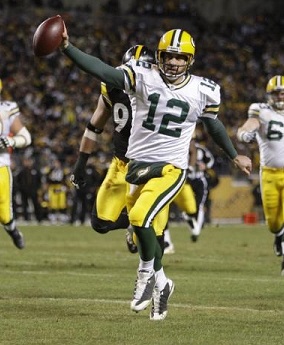
December 21, 2015

Highlighted Year: LeRoy Butler, 1993

Safety, Green Bay Packers


Age: 25
4th season in pro football & with Packers
College: Florida State
Height: 6’0”   Weight: 200

Prelude:
Butler overcame a childhood foot condition that had him in a wheelchair and wearing leg braces until he was eight. He first gained notoriety in college for his role in the 1988 “puntrooskie” trick play against Clemson in which he ran 76 yards out of punt formation to set up a game-winning field goal. As a senior, he moved from free safety to cornerback upon the departure of Deion Sanders and intercepted seven passes. Butler was a multiple first-team All-American and was chosen by the Packers in the second round of the 1990 NFL draft. After a rookie year as a nickel back who displayed aggressiveness if not always successful in coverage, Butler moved into the starting lineup at cornerback in ’91 and was shifted to strong safety in 1992, accounting for 74 tackles and an interception.

1993 Season Summary
Appeared in all 16 games
[Bracketed numbers indicate league rank in Top 20]

Interceptions – 6 [7, tied with six others]
Most interceptions, game – 1 on six occasions
Int. return yards – 131 [4]
Most int. return yards, game – 39 (on 1 int.) at San Diego 12/12
Int. TDs – 0
Sacks – 1
Fumble recoveries – 1
Fumble recovery TDs – 1
Forced fumbles – 2
Tackles – 90

Scoring
TDs – 1
Points – 6

Postseason: 2 G
Interceptions – 1
Sacks – 1
Fumble recoveries – 1
TDs – 0

Awards & Honors:
1st team All-NFL:  AP, PFWA, Sporting News
1st team All-NFC: UPI, Pro Football Weekly
Pro Bowl

Packers went 9-7 to finish third in the NFC Central and qualified for the postseason as a Wild Card while ranking second in the NFL in fewest yards allowed (4482). Won NFC Wild Card playoff over Detroit Lions (28-24). Lost NFC Divisional playoff to Dallas Cowboys (27-17).  

Aftermath:
Butler was weakened by a bout with pneumonia in 1994 but remained a solid performer and leader in the defensive backfield. He returned to being a consensus first-team All-NFL selection for three straight years from 1996 to ’98, as well as gaining Pro Bowl recognition. He had a 90-yard interception return and accumulated a career-high 6.5 sacks in ’96 and the Packers won NFC titles in 1996 and ’97, winning the Super Bowl following the ’96 season. Butler played until 2001 and, in a twelve-year career played entirely with Green Bay, intercepted 38 passes, registered 20.5 sacks, and accounted for over 700 tackles. He was a consensus first-team All-NFL and Pro Bowl choice four times. Butler also originated the “Lambeau Leap” touchdown celebration.

--

Highlighted Years features players who were consensus first-team All-League* selections or league* or conference** leaders in the following statistical categories:

Rushing: Yards, TDs (min. 10)
Passing: Yards, Completion Pct., Yards per Attempt, TDs, Rating
Receiving: Catches, Yards, TDs (min. 10)
Scoring: TDs, Points, Field Goals (min. 5)
All-Purpose: Total Yards
Defense: Interceptions, Sacks
Kickoff Returns: Average
Punt Returns: Average
Punting: Average

*Leagues include NFL (1920 to date), AFL (1926), AFL (1936-37), AAFC (1946-49), AFL (1960-69), WFL (1974-75), USFL (1983-85)

**NFC/AFC since 1970

December 20, 2015

2009: Roethlisberger Throws for 503 Yards as Steelers Edge Packers


The Pittsburgh Steelers were defending NFL Champions but in danger of missing the postseason as they hosted the Green Bay Packers on December 20, 2009. Head Coach Mike Tomlin’s team got off to a 6-2 start but had lost its last five contests, including a miserable 13-6 game at Cleveland the previous week, and was now at 6-7 and nearly out of playoff contention.  With QB Ben Roethlisberger (pictured above) and wide receivers Hines Ward and Santonio Holmes, the passing game was productive but the defense was severely weakened by the loss of SS Troy Polamalu and DE Aaron Smith to injuries.

Green Bay was coached by Mike McCarthy and in contention for the NFC North crown with a 9-4 record. The offense was potent thanks to the passing of QB Aaron Rodgers and the running of RB Ryan Grant. The defense was especially strong at linebacker, where talented rookie Clay Matthews joined a unit that already included Nick Barnett and A.J. Hawk, while CB Charles Woodson was the key player in the backfield.   

There were 57,452 fans in attendance on a cold late afternoon at Heinz Field. The Packers had the ball first and punted. Pittsburgh set the tone for the game on the next play when Ben Roethlisberger threw deep to WR Mike Wallace for a 60-yard touchdown. Jeff Reed added the extra point to give the Steelers the early 7-0 advantage.

The teams exchanged punts before the Packers came through with a big play. Facing third-and-five at their own 17, Aaron Rodgers went long for WR Greg Jennings and the result was an 83-yard TD. Mason Crosby tied the score with the point after.

The Steelers responded with a nine-play series that covered 72 yards. Roethlisberger completed a pass to Hines Ward for nine yards in a third-and-six situation and a toss to TE Heath Miller for 14 yards was followed by a pass interference penalty on the defense that gained another 17 to the Green Bay 25. Five plays later, RB Rashard Mendenhall ran for a two-yard touchdown, Reed converted, and the home team was back in front by 14-7.

Following two short possessions that resulted in punts, the Packers were on the move as Rodgers threw to WR Donald Driver for a 49-yard gain to the Pittsburgh 24 on the last play of the opening period. However, after reaching the 16, Green Bay had to try for a field goal and Crosby missed from 34 yards.

The teams returned to trading punts before the Packers advanced 52 yards in eight plays. Rodgers completed five of six passes, two of them to Jennings, and then kept the ball himself on a 14-yard run for a TD (pictured below). Crosby knotted the score once more with the extra point.


The Steelers came back with a six-play, 80-yard drive. Roethlisberger completed passes to Miller for 27 yards and Santonio Holmes for 33 and finished the series off with a 10-yard touchdown throw to RB Mewelde Moore. Reed converted and Pittsburgh was ahead by 21-14, which remained the score at the half.

The Steelers had the ball first in the third quarter and Roethlisberger connected with Mendenhall for a 25-yard gain, but the drive stalled at the Green Bay 46 and they punted. The Packers had to punt in turn and Pittsburgh put together another scoring drive. Roethlisberger completed passes to Mendenhall, again for 25 yards, and to Ward for 17 while RB Willie Parker reeled off a pair of nine-yard runs. After getting to the Green Bay 21, Rodgers was sacked for an eight-yard loss by LB Brad Jones and, while a throw to Moore gained 10 yards the Steelers had to settle for a 37-yard Reed field goal that gave them a ten-point lead.

The Packers responded with a long drive of 69 yards in 13 plays that stretched into the fourth quarter. Rodgers completed a pass to Driver for 19 yards in a third-and-16 situation, one of seven completions along the way. The last was to TE Jermichael Finley for 11 yards and a TD. Crosby added the point after and the Pittsburgh lead was cut to 24-21.

Following a 36-yard kickoff return by WR Stefan Logan, Roethlisberger threw to Ward for 29 yards to the Green Bay 34. Another Roethlisberger completion, this time to Miller, gained 12 yards to convert third-and-six but a two-yard run by Parker was followed by two incomplete passes and Reed booted a 34-yard field goal to make it a 27-21 game.

The Packers needed just four plays to advance 62 yards in response. Two throws by Rodgers to Finley totaled 11 yards before a completion to Nelson gained 27. Ryan Grant ran 24 yards for a touchdown and, with Crosby kicking the extra point, the visitors were ahead at 28-27.

On the next series, and facing second-and-18, Roethlisberger passed deep to Ward for a 54-yard gain to the Green Bay 23. The drive stalled but Reed kicked a 43-yard field goal that put the Steelers back in front by 30-28.

Pittsburgh gambled by attempting an onside kick that failed and the Packers took advantage as Rodgers threw to Nelson for nine yards and Finley for 10. Rodgers connected with WR James Jones for a 24-yard TD and then completed a pass to RB Brandon Jackson for a two-point conversion. With 2:12 left on the clock, Green Bay held a 36-30 lead.

The Steelers took possession following the ensuing kickoff at their 14. A defensive holding penalty added five yards, but Roethlisberger was sacked by LB Brady Poppinga for a four-yard loss. A throw to Miller gained seven yards but the next pass was incomplete and Pittsburgh was facing fourth-and-seven at its own 22 with the time remaining down to 1:14. Roethlisberger went deep for Holmes to pick up 32 yards and keep the drive alive. Holding on the offense backed the Steelers up 10 yards but then an interception was negated by an illegal contact call on the Packers. Two more incomplete passes and a false start had the Steelers facing third-and-15 but Roethlisberger connected with Miller for 20 yards to the Green Bay 36. A sack was nullified by defensive holding and Roethlisberger threw to Miller again, this time for 15 yards. Pittsburgh called its last timeout and Roethlisberger had two passes fall incomplete before, on the game’s last play, he found Mike Wallace in the corner of the end zone, who just managed to keep his feet inbounds for a 19-yard touchdown (pictured below). Reed added the all-important extra point and the Steelers won in dramatic fashion by a final score of 37-36.


The teams combined for 973 yards, with Pittsburgh gaining the most (537 to 436) and also leading in first downs (28 to 18) and time of possession (35:22 to 24:38). Neither team gained much on the ground, with the Steelers holding an edge of 65 yards to 60. The Packers recorded five sacks, to one by Pittsburgh, and the Steelers were also penalized 10 times, at a cost of 84 yards, to seven flags for 53 yards thrown on Green Bay. There were no turnovers by either club.

Ben Roethlisberger completed 29 of 46 passes for 503 yards, a new franchise record, with three touchdowns. Hines Ward and Heath Miller had seven catches apiece, for 126 and 118 yards, respectively. Mike Wallace had just two pass receptions, for 79 yards, but both scored TDs, including the game-decider. Rashard Mendenhall contributed 6 catches for 73 yards to go along with a team-leading 38 rushing yards on 11 attempts that included a score.

For the Packers, Aaron Rodgers was successful on 26 of 48 throws for 383 yards and three TDs and also added a scoring carry among his three runs for 22 yards. Jermichael Finley caught 9 passes for 74 yards and a touchdown and Greg Jennings gained 118 yards on his five receptions that included a long TD. Ryan Grant ran for 37 yards and a score on 8 carries.

“The guys were coming back to the huddle worn out, linemen, receivers, everybody,” said Ben Roethlisberger regarding the intensity of the winning drive. “We didn’t quit. Everybody believed we could do it.”

“You lose on a last-second play, with a spectacular throw and catch, it’s tough,” said Green Bay LB Clay Matthews. “Hindsight’s always 20-20 but we knew what we were getting ourselves into. It was a dogfight.”

The win was the first of three straight for the Steelers to close out the season, but the resulting 9-7 record placed third in the AFC North and they just missed the playoffs. The loss cost the Packers the NFC North title, clinched by the Vikings as a result, but they also won their remaining two games and their second-place 11-5 tally got them into the postseason as a Wild Card. Green Bay lost a wild 51-45 contest to Arizona in the first playoff round.

Ben Roethlisberger threw for 4328 yards and 26 touchdowns, ranking second in the AFC with a 100.5 passer rating. He exceeded the 503 yards against the Packers in a 2014 contest in which he passed for 522 yards vs. Indianapolis, becoming the first quarterback in NFL history to twice throw for over 500 yards in a game.

December 19, 2015

1998: Jets Defeat Bills to Clinch AFC East


The New York Jets had a 10-4 record and were looking to wrap up the AFC East title as they faced the Buffalo Bills on December 19, 1998. In their second season under Head Coach Bill Parcells, the Jets were a far cry from the 1-15 club of two years earlier. Newcomers to the offense, most notably QB Vinny Testaverde (pictured at right) and RB Curtis Martin, were having a major impact, as were wide receivers Keyshawn Johnson, a flashy third-year player, and Wayne Chrebet, a classic overachiever in his fourth season. The defense was strongest at linebacker, where Mo Lewis was joined by Bryan Cox, let go by the Bears but revitalized with the Jets.

Buffalo was coached by Wade Phillips and came into the contest at 9-5. Diminutive 36-year-old QB Doug Flutie had turned the club around in his return to the NFL from the CFL, taking over for QB Rob Johnson after a slow start. Retooling from the squad that had started the decade with four straight AFC Championships, the offense now also featured RB Antowain Smith and WR Eric Moulds while RB Thurman Thomas and WR Andre Reed had reduced roles. The tough defense was still anchored by DE Bruce Smith, who was beginning to slow down at age 36, as well as NT Ted Washington.

There were 79,056 fans in attendance at Rich Stadium on a windy Saturday. The Bills had the first possession and advanced into New York territory thanks to a pass from Doug Flutie to Eric Moulds that picked up 28 yards. Another throw to WR Quinn Early gained eight more yards to the 23, but on the next play the usually sure-handed Antowain Smith fumbled and LB Pepper Johnson recovered for the Jets.

New York drove 79 yards in eight plays. Vinny Testaverde threw to Keyshawn Johnson (pictured below) for 16 yards on first down and, after the series appeared to be stymied at the Jets’ 37, Testaverde ran for 14 yards on a third-and-10 play. Two plays later, RB Dave Meggett, who had only recently joined the team, gained 18 yards on a carry up the middle, Johnson picked up another 25 yards on an end-around, and it was Testaverde to Wayne Chrebet for a seven-yard touchdown. John Hall added the extra point and the visitors had the early 7-0 lead.


On the next possession, the Bills converted a third-and-nine situation with a Flutie pass to Moulds for 27 yards, but a 15-yard taunting penalty on the receiver at the end of the play erased most of the gain and Buffalo was ultimately forced to punt. Chris Mohr’s kick traveled 47 yards and pinned the Jets back at their one yard line, and a short series resulted in a punt in return. A 30-yard kick by John Kidd went just 30 yards and gave the Bills good starting field position at the New York 40. But after a short Flutie pass to Smith gained five yards, two more throws were incomplete and, facing fourth-and-five, another pass intended for Moulds also was unsuccessful.

The teams continued to exchange punts as the game entered the second quarter. Finally, Buffalo put together an 11-play drive that covered 79 yards. Flutie completed passes to FB Sam Gash for nine yards and WR Kevin Williams for 22 yards in a third-and-six situation. Smith ran effectively and Flutie himself had a nine-yard run. Flutie connected with Thurman Thomas for a 25-yard TD to complete the series and Steve Christie added the point after to tie the score.

Following a punt by the Jets, the Bills drove from their one to the New York 10 as Flutie completed three passes, the longest to Moulds (pictured below) for 35 yards, but they ultimately came up empty when Christie was wide to the left on a 28-yard field goal attempt in the final seconds of the half. The score remained unchanged at 7-7 although Buffalo had already accumulated 266 yards.


The Jets started off the third quarter by advancing into Buffalo territory. Testaverde completed consecutive passes to Keyshawn Johnson for 16 and six yards and Curtis Martin had a nine-yard run. Hall kicked a 48-yard field goal to put the visitors back in the lead by 10-7.

Buffalo responded with a long scoring drive. Smith carried most of the load, picking up 35 yards on eight attempts and Flutie converted two third downs, one on a pass to Williams for seven yards and another on a three-yard run. The advance finally faltered at the New York 26 and Christie tied the score once more with a 44-yard field goal into the wind. But two plays after the ensuing kickoff, Testaverde threw to WR Dedric Ward, who beat CB Donovan Greer, an injury replacement, for a 71-yard touchdown. Hall’s kick gave the visitors a seven-point lead.

The Bills had to punt following the next series and the Jets moved into Buffalo territory, helped by a defensive holding penalty in a third-and-nine situation. But they were again forced to try for a field goal and Hall’s attempt from 46 yards was no good.

Following another exchange of punts, the Bills had good starting field position at the New York 49. Keeping the ball on the ground, they reached the 21, but a Flutie pass was bobbled by Williams and barely picked off by diving CB Victor Green (television replays were inconclusive as to whether he maintained possession) with just under four minutes remaining in regulation.

The Jets went three-and-out, with Kidd’s punt sailing 57 yards. Starting from their 20, the Bills had one last chance and Flutie immediately threw to Moulds for 17 yards. But following a short run by Thomas, the next three passes fell incomplete to turn the ball over to New York on downs. There was still 1:32 left on the clock, but a Testaverde throw to Johnson for seven yards on a third-and-six play nailed down the 17-10 win for the Jets.

Buffalo had the edge in total yards (366 to 269), although the Bills gained only 100 yards in the second half. They also had more first downs (21 to 14) and ran far more plays (74 to 51). However, the home team also turned the ball over twice, to none suffered by the Jets.

Vinny Testaverde completed 14 of 23 passes for 184 yards and a touchdown while giving up no interceptions. Keyshawn Johnson had 7 catches for 66 yards while Dedric Ward gained a team-leading 71 yards on his one long scoring reception. Curtis Martin was held to 38 rushing yards on 20 attempts.

For the Bills, Doug Flutie had a rough outing, completing just 14 of 38 throws for 220 yards and a TD as well as an interception. While he was only sacked once, he faced heavy pressure and was knocked down often. Antowain Smith (pictured below) gained 82 yards while running the ball 20 times. Eric Moulds topped the receivers with four catches for 107 yards.


The Jets won the season finale to finish at 12-4 with their first division title since they were an AFL team in 1969. They reached the AFC Championship game before losing to Denver. Buffalo ended up in third place in the AFC East with a 10-6 record and qualified for the playoffs as a Wild Card. The Bills lost to Miami, the club that finished second in the division, in the first round.

Vinny Testaverde ended up with an AFC-leading 101.6 passer rating, throwing for 3256 yards and 29 TDs with just seven interceptions. He was selected to the Pro Bowl along with Keyshawn Johnson, who caught 83 passes for 1131 yards and 10 touchdowns, and Curtis Martin, who had many more productive games on his way to 1287 rushing yards.

Doug Flutie also was chosen for the Pro Bowl as he started ten games, seven of them wins, and threw for 2711 yards and 20 touchdowns against 11 interceptions. Eric Moulds led the AFC with 1368 pass receiving yards on his 67 catches with 9 TDs and was another Pro Bowl selection. Antowain Smith, in his second season, rushed for 1124 yards while averaging 3.7 yards per attempt and scored eight TDs. 

December 18, 2015

Highlighted Year: Ernie Caddel, 1935

Wingback, Detroit Lions


Age: 24
3rd season in pro football & with Spartans/Lions
College: Stanford
Height: 6’2”   Weight: 198

Prelude:
Caddel went to Stanford on a baseball scholarship but was recruited to the football team by legendary Head Coach Glenn “Pop” Warner. Noted for his spectacular running ability, he pioneered in the use of playing while wearing a flak jacket after suffering two broken ribs. Caddel signed with the Portsmouth Spartans in 1933 and “The Blond Antelope” gained 393 yards from scrimmage (282 rushing, 107 receiving) and followed up with 655 total yards in 1934, the franchise’s first season as the Detroit Lions. His 528 rushing yards ranked fifth in the NFL.

1935 Season Summary
Appeared in all 12 games
[Bracketed numbers indicate league rank in Top 20]

Rushing
Attempts – 87 [12]
Yards – 450 [2]
Yards per attempt – 5.2 [1]
TDs – 6 [1]

Pass Receiving
Receptions – 10 [11, tied with Wayland Becker & Flavio Tosi]
Yards – 171 [12]
Yards per catch – 17.1 [5]
TDs – 0

Passing
Attempts – 6
Completions – 4
Yards – 169 [16, tied with Doug Nott]
TD passes – 2 [6, tied with eleven others]
Interceptions – 1

All-Purpose yards – 621 [1]

Scoring
TDs – 6 [2, tied with Dutch Clark, Dale Burnett & Bill Karr]     
Points – 36 [3, tied with Dale Burnett & Bill Karr]

Postseason: 1 G (NFL Championship vs. NY Giants)
Rushing attempts – 16
Rushing yards – 62
Average gain rushing – 3.9
Rushing TDs – 1

Kickoff returns – 2
Kickoff return yards – 25
Average yards per reception – 12.5
Kickoff return TDs – 0
Longest return – 25 yards

Awards & Honors:
1st team All-NFL: League, Chicago Daily News
2nd team All-NFL: UPI

Lions went 7-3-2 to finish first in the NFL Western Division while ranking second in the league in rushing yards (1773), touchdowns (25), and scoring (191 points). Won NFL Championship over New York Giants (26-7).

Aftermath:
Caddel achieved career highs for rushing (580 yards), pass receptions (19), and total yards (730) in 1936. He also led the league in yards per carry (6.4) for the second straight season. Caddel received second-team All-NFL recognition from the league and the Chicago Daily News in both 1936 and ’37, a year in which he again had the NFL’s best yards per carry average (5.6) while rushing for 429 yards. He retired following an injury-plagued season in 1938. Overall, Caddel rushed for 2311 yards on 443 carries (5.2 avg.) and caught 54 passes for 641 yards (11.9 avg.), totaling 2952 combined yards and scoring 26 touchdowns.

--

Highlighted Years features players who were consensus first-team All-League* selections or league* or conference** leaders in the following statistical categories:

Rushing: Yards, TDs (min. 10)
Passing: Yards, Completion Pct., Yards per Attempt, TDs, Rating
Receiving: Catches, Yards, TDs (min. 10)
Scoring: TDs, Points, Field Goals (min. 5)
All-Purpose: Total Yards
Defense: Interceptions, Sacks
Kickoff Returns: Average
Punt Returns: Average
Punting: Average

*Leagues include NFL (1920 to date), AFL (1926), AFL (1936-37), AAFC (1946-49), AFL (1960-69), WFL (1974-75), USFL (1983-85)

**NFC/AFC since 1970

December 17, 2015

1950: Rams Defeat Bears in National Conference Playoff


The Los Angeles Rams hosted the Chicago Bears on December 17, 1950 in a playoff game to decide the champion of the NFL National Conference (the renamed Western Division). Both teams had finished the regular season with 9-3 records, but the Bears had beaten the Rams both times they faced off, including three weeks earlier at Chicago. 

Los Angeles topped the Western Division in 1949, losing the league title to the Eagles, and Clark Shaughnessy was replaced as head coach by Joe Stydahar, formerly an outstanding player for the Bears. The Rams had an explosive offense that scored as many as 70 points in a game and set league records with 64 touchdowns and 466 points. The quarterback tandem of Bob Waterfield (pictured above) and Norm Van Brocklin was superb and there were excellent receivers in ends Tom Fears and Elroy “Crazy Legs” Hirsch as well as HB Glenn Davis, once a Heisman Trophy winner at Army, who also topped the club in rushing. The defense, however, was not nearly as impressive. Furthermore, Waterfield was unable to practice during the week before the game due to the flu and was still showing the effects during the pregame warmup.

The Bears were owned and coached by “the Papa Bear”, George Halas, and depended on a solid running attack, led by HB George Gulyanics, behind a good line along with a tough defense. QB Johnny Lujack was suffering from a shoulder injury that affected his passing ability but he could still run well and had scored 11 touchdowns on the ground.  

There were 83,501 fans in attendance on a sweltering 92-degree day at the LA Memorial Coliseum. Norm Van Brocklin started the game at quarterback for the Rams and in the first quarter Bob Waterfield kicked a 43-yard field goal to give Los Angeles the early lead. The Bears, establishing their strong ground game, responded by driving 65 yards in eight plays, the last of which was a 22-yard touchdown carry by HB Al Campagna.

LA’s high-powered offense was having difficulty getting on track and an apparent 63-yard run by Glenn Davis was nullified by a holding penalty. Van Brocklin completed just two of 10 passes during the opening period and Waterfield relieved him in the second quarter, bringing results from the first series that he was behind center. The Rams went 76 yards, most of it occurring when Waterfield fired a pass to Tom Fears that covered 67 yards for a TD. Waterfield then kicked the extra point to put the home team up by 10-7.


On their next possession, the Rams drove to another score. Again it was Waterfield to Fears (pictured at left) for a 32-yard touchdown and Waterfield booted the point after. The Rams took a 17-7 lead into halftime.

The Bears still couldn’t add points and Waterfield’s ability as a punter came into play as his booming kicks kept Chicago pinned on its side of the field. Late in the third quarter, Waterfield threw to HB Verda “Vitamin T.” Smith for a 35-yard gain and followed up with a short toss to Fears that the end turned into a 23-yard TD as he broke five tackles along the way. Los Angeles held a formidable 24-7 lead.

On the first play of the fourth quarter, the Bears finally got on the board again at the conclusion of a 12-play, 76-yard drive that featured the running of George Gulyanics and HB Julius “Julie” Rykovich. FB Fred “Curly” Morrison powered the last four yards for a touchdown and Lujack kicked the extra point to make it a ten-point contest.

Chicago again advanced deep into LA territory, but was stopped at the two yard line with six minutes remaining as the Rams’ defense rose to the occasion. Twice the Bears came up empty on drives into Los Angeles territory. Tensions between the teams eventually boiled over as in the final seconds a free-for-all broke out and it took several minutes for the officials to restore order. In the end, the Rams came away with an impressive 24-14 win.

The Bears actually outgained LA (422 yards to 371), with 229 yards of their total coming on the ground. Chicago also had more first downs (23 to 11). But LA gained 297 yards through the air and the defense accounted for six sacks, totaling 52 yards in losses, to none for the Bears. Chicago also turned the ball over three times, to two by the Rams.

Bob Waterfield had a fine overall performance as he completed 14 of 21 passes for 280 yards and three touchdowns while giving up one interception. He also was successful on all of his placekicks and averaged 42.4 yards on seven punts, including a long kick of 67 yards. Tom Fears was equally outstanding with 7 catches for 198 yard and all three TDs. The running game was an afterthought and FB Dick Hoerner led with just 18 yards on 7 carries.


For the Bears, Johnny Lujack was successful on 15 of 29 throws for 193 yards but was intercepted three times in addition to the six sacks. George Gulyanics (pictured above) led the team with 94 yards on 15 carries and also with 6 pass receptions for 67 yards. Julie Rykovich contributed 67 yards on 14 rushing attempts.

The Rams advanced to the NFL Championship game and lost a close contest against the Cleveland Browns, newcomers from the AAFC that topped the Giants in the American Conference. Los Angeles returned to the title game for a third straight year in 1951 and this time came away winners over the Browns. Chicago dropped to fourth place in ’51 with a 7-5 record. The Bears next returned to the postseason in 1956.

December 16, 2015

Highlighted Year: Willie Brown, 1964

Cornerback, Denver Broncos


Age: 24 (Dec. 2)
2nd season in pro football & with Broncos
College: Grambling
Height: 6’1”   Weight: 190

Prelude:
An offensive end in college, Brown went undrafted and was initially signed by the Houston Oilers in 1963, who converted him to cornerback. He was cut in the preseason and the Broncos signed him. Brown was a reserve in the defensive backfield before getting an opportunity to start later in the year. While his performance was initially shaky due to inexperience, he intercepted one pass and showed improvement as the season progressed.

1964 Season Summary
Appeared in all 14 games
[Bracketed numbers indicate league rank in Top 20]

Interceptions – 9 [3]
Most interceptions, game – 4 vs. NY Jets 11/15
Int. return yards – 140 [6]
Most int. return yards, game – 91 (on 4 int.) vs. NY Jets 11/15
Int. TDs – 0

Scoring
Safeties – 1
Points – 2

Awards & Honors:
1st team All-AFL: League, AP, NEA, UPI, NY Daily News
AFL All-Star Game

Broncos went 2-11-1 to finish fourth in the AFL Western Division while leading the league in most points surrendered (438).

Aftermath:
Following his breakout season, Brown’s interceptions dropped to two in 1965 while dealing with injuries but he repeated as an AFL All-Star. After four years in Denver, he was traded to Oakland in 1967 and was a key defensive component as the Raiders won the AFL Championship and continued to contend well beyond that. Brown intercepted seven passes, one of which he returned for a TD, in ’67, which was the first of seven straight years in which he was chosen to either the AFL All-Star Game or, following the 1970 merger, the Pro Bowl. He was also a consensus first-team All-AFL choice in 1968 and ’69. Fast and with excellent instincts, Brown was also highly adept at bump-and-run coverage.  He had an off-year in 1970 due to a shoulder separation but still made the Pro Bowl and bounced back to be a consensus first-team All-NFL selection in ’71. Brown lasted a total of 16 seasons and intercepted 54 passes, with 15 of those coming with Denver. His 9 in ’64 remained his career-high. In 17 postseason games he picked off another seven passes, three of which he returned for TDs, including one for 75 yards against the Vikings in Super Bowl XI following the 1976 season. Brown was a consensus first-team All-AFL or All-NFL choice five times, received some first- or second-team recognition after another six seasons, and was selected to nine Pro Bowls. He was inducted into the Pro Football Hall of Fame, Class of 1984.

--

Highlighted Years features players who were consensus first-team All-League* selections or league* or conference** leaders in the following statistical categories:

Rushing: Yards, TDs (min. 10)
Passing: Yards, Completion Pct., Yards per Attempt, TDs, Rating
Receiving: Catches, Yards, TDs (min. 10)
Scoring: TDs, Points, Field Goals (min. 5)
All-Purpose: Total Yards
Defense: Interceptions, Sacks
Kickoff Returns: Average
Punt Returns: Average
Punting: Average

*Leagues include NFL (1920 to date), AFL (1926), AFL (1936-37), AAFC (1946-49), AFL (1960-69), WFL (1974-75), USFL (1983-85)

**NFC/AFC since 1970

December 15, 2015

1956: Giants Defeat Eagles to Clinch Eastern Conference Crown


The New York Giants were looking to lock up the NFL Eastern Conference title as they faced the Philadelphia Eagles on December 15, 1956. Under the guidance of Head Coach Jim Lee Howell, the Giants had roared out to a 6-1 record and, following a 1-2-1 stretch, were now coming into the season finale at 7-3-1 and could gain a slot in the NFL Championship game with a win. New York operated a power-T offense that was the responsibility of assistant coach Vince Lombardi and emphasized a strong running game that utilized halfbacks Frank Gifford and Alex Webster (pictured above) and FB Mel Triplett. A platoon system was used at quarterback where Don Heinrich started games and the more-talented Charlie Conerly relieved when needed. Assistant coach Tom Landry handled the tough and talented defense.

The Eagles were going nowhere at 3-7-1 in their first year under Head Coach Hugh Devore.  They also used a two-quarterback platoon with Adrian Burk and Bobby Thomason and there was an able receiver in end Bobby Walston, but the ground attack was average at best. The defense was particularly sound at linebacker with All-Pro Chuck Bednarik and Wayne Robinson, but the backfield was a problem, particularly after the loss of safety Jerry Norton to injury.  

There were 15,562 fans in attendance on a foggy afternoon at Connie Mack Stadium and the contest was also nationally televised. It had rained the previous three days and the field was soft. The Giants had the first possession with Don Heinrich at quarterback and punted and, while the Eagles started off with runs by HB Ted Wegert for six yards and FB Dick Bielski for 12, they were forced to punt in turn. New York advanced into Philadelphia territory thanks primarily to the running of Mel Triplett and Frank Gifford, but the drive stalled at the 43 and Don Chandler punted into the end zone.

Following another punt by the Eagles, the Giants were driving as the game headed into the second quarter. Alex Webster started the series with a 14-yard carry and Heinrich threw to end Kyle Rote for a gain of 15 yards to the Philadelphia 30. An eight-yard run by Webster and 11-yard carry by Gifford (pictured below) got the ball inside the ten and Gifford then threw an option pass to Rote for a six-yard touchdown to complete the eight-play, 65-yard series. Ben Agajanian added the extra point.


Bobby Thomason was at quarterback for the Eagles on their next possession but a clipping penalty nullified a pass completion and Thomason was sacked for a loss of ten yards on third down to force another punt. Once again the running of Triplett and Webster advanced the ball into Philadelphia territory and Heinrich completed a pass to Gifford for nine yards to convert a third down. Following a five-yard carry by Triplett, Webster ran wide to the left for 10 yards that set up a 10-yard run by Gifford for a TD. Agajanian again converted to give the visitors a 14-0 lead.

The Eagles turned the ball over on the next series when DE Walt Yowarsky recovered an errant pitchout at the Philadelphia 35. But while the productive ground game got the Giants to the 14, Heinrich’s pass was intercepted by safety Lee Riley. The score remained unchanged at the half.

The Eagles had the ball first in the third quarter but a Thomason pass was picked off by safety Emlen Tunnell, who returned it 14 yards to the Philadelphia 27. Six plays later the Giants capitalized as Webster ran seven yards for a touchdown. Agajanian again booted the point after and New York held a comfortable 21-0 lead.

The teams exchanged punts and Riley briefly provided some excitement for the home team with a 35-yard return to midfield. But with Thomason giving way to Burk, the Eagles lost yardage from there and punted once again. Chuck Bednarik recovered a Triplett fumble on the next series at the Philadelphia 45 and the Eagles advanced into New York territory. Burk completed four passes, three of them to end Bobby Walston for gains totaling 36 yards, in the closing minutes of the period. But a run for negative yardage followed by a penalty on the offense to start the third quarter and an incomplete pass set up a fourth-and-30 situation, and Burk’s throw to Walston gained just 18 yards to turn the ball over on downs at the New York 12.

The Giants were able to put together a long series that was extended by a roughing-the-kicker call on a punt by Chandler. New York failed to extend its lead when Agajanian was wide on a 46-yard field goal attempt, but time was running out on the Eagles, who again had to punt.

Philadelphia finally put together a scoring drive of 64 yards in 14 plays that was helped along by a 26-yard pass interference penalty on the Giants. Burk completed two passes, one of which converted a fourth down, and had an 11-yard scramble in a third-and-10 situation. After an incomplete pass and 13-yard sack, the Eagles faced third-and-23 and Burk threw to end Hank Burnine for 13 yards and, on fourth down, to Walston for a 15-yard touchdown. Walston kicked the extra point, but while it averted a shutout, it was of no consequence with only 1:08 remaining in the contest. New York won by a final score of 21-7.

The Giants led significantly in total yards (332 to 174), with 291 of that total coming on the ground, and in first downs (22 to 13). Both teams turned the ball over twice. New York recorded four sacks, to none by the Eagles.

Alex Webster led the New York rushers with 132 yards on 23 carries that included a TD. Frank Gifford accumulated 81 yards and a touchdown on 16 attempts and Mel Triplett contributed 72 yards on 14 carries. With the Giants in control, Don Heinrich remained in for the full game and completed three of 10 passes for 35 yards. Gifford and Kyle Rote each caught two passes, for 20 and 21 yards, respectively, and Rote scored a touchdown on a Gifford pass.


For the Eagles, Adrian Burk was successful on 12 of 26 throws for 124 yards and a TD while Bobby Thomason was two of four for 17 yards. Bobby Walston (pictured at right) led the receivers with 5 catches for 69 yards and a touchdown. Ted Wegert rushed for 31 yards on 11 attempts.

The win allowed the Giants to finish atop the Eastern Conference with an 8-3-1 record. In their first NFL Championship game appearance in ten years, they thrashed the Chicago Bears 47-7. For Philadelphia, the loss closed out the club’s worst season since 1942, finishing at the bottom of the conference with a 3-8-1 tally.

Frank Gifford received MVP honors as he led the league in yards from scrimmage (1422, with 819 rushing and 603 receiving). Alex Webster also ranked among the Top 10 rushers with 694 yards and seven TDs and Mel Triplett added 515 yards on the ground.