November 15, 2012

1970: Paul Brown’s Bengals Defeat Browns


Paul Brown (pictured above) had returned to pro football as a head coach (and GM and part owner) with the expansion Cincinnati Bengals of the AFL in 1968. He had been away from the game after being summarily fired by Cleveland Browns owner Art Modell following the ’62 season, ending a brilliant head coaching stint with the Browns going back to 1946 in the All-America Football Conference that included four AAFC titles and three NFL Championships. The parting had been a bitter one for Brown.

The AFL/NFL merger that culminated in 1970 made possible regular season meetings between the Bengals and Browns, particularly since both teams were now members of the new AFC Central Division. Cincinnati won a preseason contest between the clubs, but in their first meeting that counted in the standings the Browns had prevailed at Cleveland in Week 4. Now, on November 15, the clubs faced off once again in Cincinnati.

It had been a tough season thus far for the third-year Bengals. They were at 2-6 coming into the rematch with the Browns, having won their opening game before losing six straight contests and then thrashing the Bills the previous week. With the loss of their 1969 phenom, QB Greg Cook, to what would prove to be a career-ending shoulder injury, the Bengals were using the weak-armed but intelligent Virgil Carter under center. With the help of offensive assistant Bill Walsh’s redesigned offense that emphasized short passes, and with good mobility, Carter was improving and there was plenty of other promising young talent on the roster.

Cleveland, still coached by Brown’s successor Blanton Collier, had gotten off to a 4-2 start but lost its last two games to drop to an even 4-4. First-round rookie QB Mike Phipps out of Purdue was starting his first pro game against Cincinnati, in place of gimpy-kneed veteran Bill Nelsen, and Collier would be calling the plays from the sideline – a practice pioneered by Paul Brown.

There was a big crowd of 60,007 in attendance at Riverfront Stadium. The Browns went 77 yards in six plays following the opening kickoff, with the big play a 33-yard Phipps completion to TE Milt Morin. HB Leroy Kelly swept around left end for a nine-yard touchdown.

Near the end of the first quarter, an attempted screen pass by Carter to FB Jess Phillips bounced off of the running back’s hand and was ruled a lateral by the officials. Cleveland DT Jerry Sherk picked up the live ball and carried it 15 yards to the Cincinnati 20. A furious Paul Brown complained about the call, but to no avail. Seven plays later, Don Cockroft kicked a 15-yard field goal and the Browns held a 10-0 lead.

The turnover on the questionable call seemed to fire up the Bengals, however, and they went 80 yards in eight plays on the ensuing possession. Carter passed to Phillips for a 13-yard touchdown of which there was no doubt. Late in the second quarter Carter took off after rolling out for a 73-yard gain but fumbled at the Cleveland 10 when hit by CB Erich Barnes, who recovered to end the scoring opportunity. The tally remained 10-7 at halftime.

In the third quarter, the Bengals put together an eight-play, 85-yard drive. HB Paul Robinson finished it off with a one-yard touchdown carry. Meanwhile, the Bengals defense rose to the occasion and thoroughly bottled up the Cleveland offense during the second half.

The Browns were hurt in the fourth quarter when a Phipps pass was intercepted. However, they got a break in the closing minutes when CB Lemar Parrish, while calling for a fair catch, muffed a punt and WR Dave Jones recovered for Cleveland. Four plays later, rather than keeping the ball on the ground and relying on the strong running game, Phipps passed in a fourth-and-three situation at the Cincinnati 30 with less then four minutes remaining in the game. The throw was intended for Morin, but safety Al Coleman batted the ball away at the last second. As an unfortunate side note, Coleman suffered a major knee injury on the play when he fell while tangled with Morin and Parrish.

That was the last shot for the Browns as Cincinnati’s offense controlled the ball for the rest of the game. The Bengals came away with a 14-10 win. When the final gun went off, the usually calm Paul Brown leaped up and tossed his hat into the air, running across the field ahead of his players.

Cincinnati outgained the Browns (333 yards to 296) although Cleveland had the edge in first downs (15 to 14). In particular, the Bengals outrushed the Browns by 210 yards to 153. However, Cincinnati turned the ball over three times, to one by Cleveland, although the Browns hurt themselves with eight penalties, as opposed to three flags thrown on the home team.


QB Virgil Carter (pictured at left) completed 10 of 17 passes for 123 yards and a touchdown with no interceptions and was also the game’s leading rusher with 110 yards on nine carries - the running plays were part of the game plan and came in some typical passing situations. Paul Robinson added 63 yards and a TD on 14 rushing attempts. WR Chip Myers was the team’s top receiver with three catches for 67 yards. MLB Bill Bergey had a noteworthy performance for the Bengals, accounting for 11 tackles, five assists, and a deflected pass.

As for the Browns, Mike Phipps was successful on 11 of 25 throws for 170 yards with no TDs and one interception. Leroy Kelly led the running attack with 60 yards on 21 carries that included a touchdown. Milt Morin caught three passes for 78 yards.

“This is my best victory. This one made it all worthwhile,” said Paul Brown, who shed tears while congratulating his players afterward.

“I like a November football team – one that stays in there,” added Brown. “They (the Bengals) may not be 100 percent in a lot of ways, but they sure battle, and that’s for me.”

“Errors and penalties hurt us,” summed up Coach Collier for the Browns.

Despite their losing record, the Bengals were in the thick of the race in the new AFC Central and would make the most of it the rest of the way. They didn’t lose again during the remainder of the regular season, a total of seven straight wins, and topped the division with an 8-6 record – a big achievement for a third-year expansion team in the pre-free agency era.

For the Browns, it was the third straight loss – the first time they had lost that many in a row in 11 years. They ended up placing second to Cincinnati at 7-7 and Blanton Collier retired afterward.

Virgil Carter was solid if not spectacular, passing for 1647 yards with nine touchdowns and nine interceptions. He rushed for 246 yards on 34 carries for an average gain of 7.2 yards.

The new Ohio rivalry was sealed by the fans. Between the preseason encounter (57,112) and two regular season games (83,520 in Cleveland plus 60,007 for the contest at Riverfront Stadium), attendance totaled 200,639.

November 14, 2012

1993: Salisbury’s Passing, Irwin’s Blocked Kicks Propel Vikings Over Broncos


The Minnesota Vikings were 4-4 and coming off of two straight losses as they faced the Denver Broncos on November 14, 1993. Head Coach Dennis Green’s team had difficulty scoring and offensive coordinator Jack Burns was already a casualty. Brittle veteran QB Jim McMahon was injured and Sean Salisbury (pictured above) had taken over. A star for two years in the CFL, leading Winnipeg to a Grey Cup title, Salisbury had been strictly a backup in the NFL. The loss of RB Terry Allen for the year with a knee injury further hampered the offense.

Denver was 5-3 and had just won two consecutive games. Under a new head coach in Wade Phillips, following twelve seasons with Dan Reeves at the helm, the key to the offense was still veteran QB John Elway, and he was thriving in offensive coordinator Jim Fassel’s West Coast offense.

A morning snowstorm had dropped six inches of snow on Denver. While the field at Mile High Stadium was clear, footing was slippery and the temperature was around 30 degrees at kickoff.

Minnesota had the first possession and punted, but Elway fumbled away his first snap, thus giving the Vikings an early break as they took possession at the Denver 34. Three plays later, Sean Salisbury threw to WR Anthony Carter but Carter, having broken a tackle, tripped and fell at the one yard line after gaining 27 yards. It proved to be significant on the next play when Salisbury fumbled while being sacked and LB Karl Mecklenburg recovered for the Broncos.

Denver went three-and-out, but three plays after punting CB Frank Robinson intercepted a Salisbury pass and returned it 13 yards to give the Broncos possession at the Minnesota 31. Elway completed four passes as the home team scored in six plays that included a four-yard throw to WR Derek Russell for a touchdown. However, tackle Tim Irwin blocked the extra point attempt and the score remained 6-0.

The Vikings responded by going 71 yards in seven plays. Following a nine-yard carry by eleventh-year RB Roger Craig to start off the series, Salisbury threw to Anthony Carter for 30 yards to get into Broncos territory. Two plays later he hit Carter again for 39 yards but the drive stalled at the Denver seven yard line and Minnesota settled for a 25-yard field goal by Fuad Reveiz. The Broncos led by a 6-3 score.

Russell returned the ensuing kickoff 49 yards to give Denver good starting field position at the Minnesota 49. In a series that extended into the second quarter, the Broncos scored in seven plays as RB Robert Delpino ran for a three-yard TD. This time the extra point was successful and Denver’s lead was extended to ten points.

Minnesota’s next possession ended with a fumble by RB Barry Word, forced by Mecklenburg, and once again the Broncos had the ball in good field position at the Vikings’ 37. Again they capitalized, driving methodically down the field in six plays that ended with Elway tossing a 13-yard scoring pass to WR Vance Johnson.

Now down by 17 points midway through the second quarter, the Vikings came back on a series that was highlighted by Salisbury throwing to TE Steve Jordan for a 53-yard gain to the Denver 11. Two plays later Salisbury completed a nine-yard touchdown pass to WR Cris Carter.

Following a Denver punt, the Vikings took possession at their 45 yard line with 1:39 left in the half. It took four plays to cover 55 yards as Salisbury threw to Cris Carter for 23 yards, Anthony Carter for 15, and Craig for a 17-yard touchdown. Going into halftime, Minnesota had narrowed Denver’s lead to 20-17.

After a punt by the Broncos, Minnesota tied the game in its first series of the third quarter. However, it had seemed as though the Vikings would do more than that when Salisbury threw to Cris Carter for 26 yards and, following a pass interference penalty, they had first-and-goal on the Denver three. But two runs by Craig failed to reach the end zone and Salisbury tossed an incomplete pass. Minnesota ended up with a 19-yard Reveiz field goal.

Elway came out throwing on Denver’s next series, but an apparent long completion to TE Shannon Sharpe was nullified by an illegal formation penalty and the Broncos ultimately had to punt. The Vikings had to kick it back and once more Elway passed the Broncos down the field, hitting Johnson for 17 yards and Russell for 30. However, after getting to the Minnesota nine, a 26-yard field goal try by Jason Elam was blocked by Irwin.

As the game entered the fourth quarter, neither team was able to mount another threat until the Vikings took possession at the Denver 40 following a punt. They were able to drive into scoring position and Reveiz kicked a 35-yard field goal. But Denver responded in kind, going 45 yards in six plays that ended with Elam booting a field goal from 53 yards.

The trading of three-pointers continued when the Vikings advanced to the Denver 25 on a series highlighted by a Salisbury pass to Cris Carter for 55 yards. Reveiz added a 43-yard field goal to put Minnesota back in front.

With a little under three minutes left on the clock, Elway and the Broncos mounted another promising drive that was helped along by two defensive penalties. But RB Glyn Milburn’s fumble after catching a pass from Elway at the Minnesota 21 with 54 seconds left stopped the potential comeback in its tracks and sealed the 26-23 win for the Vikings.

Minnesota led in total yards (427 to 342), with all but 70 of that total coming through the air. However, the Broncos had more first downs (25 to 18) and recorded four sacks to one of Elway by the Vikings. Denver also turned the ball over four times, to three suffered by Minnesota. There were 23 penalties in all, with 13 of those called on the Vikings.

Sean Salisbury had an outstanding performance, completing 19 of 37 passes for 366 yards with two touchdowns and an interception. Cris Carter caught 6 of those throws for 134 yards and a TD while Anthony Carter contributed 111 yards on four receptions. Steve Jordan pulled in 6 passes for 85 yards. Roger Craig was the leading rusher with 41 yards on 14 carries. Tim Irwin (pictured below) blocked a short field goal and extra point, giving him eight blocked kicks thus far in his career.


For the Broncos, John Elway was successful on 30 of 40 throws for 290 yards with two TDs and one interception. Shannon Sharpe caught 7 passes for 104 yards. Rod Bernstine gained 37 yards on 8 rushes and added 6 catches for another 37 yards. Glyn Milburn gained 30 yards on four attempts, caught 5 passes for 27 yards, and had another 116 yards returning kicks, but also had the critical fumble at the end.

Salisbury is throwing the ball well, hitting the open receiver and using good judgment,” summed up Dennis Green. “Our defense did a good job, holding them to three points in the second half.”

The Vikings lost their next two games but won four of their last five to finish second in the NFC Central with a 9-7 record and qualify for the playoffs as a Wild Card. They lost to the Giants in the first round. Denver also made it to the postseason with an identical 9-7 tally. The Broncos were a Wild Card entry as well, placing third in the AFC West, and lost to the division-rival Raiders in the initial round.

Sean Salisbury started a total of four games for the Vikings in 1993. Overall, he completed 115 of 195 passes (59 %) for 1413 yards with 9 touchdowns and 6 interceptions. The 366-yard passing performance against Denver was his NFL career high and the second of back-to-back 300-yard games.

The ‘93 season proved to be the finale for Tim Irwin’s 13 years with the Vikings. He ended up with a total of 10 blocked kicks. 

November 13, 2012

1966: Yepremian Kicks 6 Field Goals as Lions Defeat Vikings


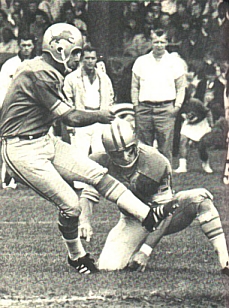
Soccer-style placekickers were still a novelty in 1966 when Garo Yepremian joined the Detroit Lions. At 5’7” and 160 pounds, he was significantly undersized and had no background in the sport. The left-footed former semipro soccer player from Cyprus had, in fact, signed with the Lions just six weeks after arriving from London to visit his brother in Indianapolis, and had never seen an American football game prior to that. But on November 13, 1966 against the Minnesota Vikings he had a record-setting day in his new profession.

The Lions, coached by Harry Gilmer, started off the season with two wins in their first three games but had gone winless since (including a tie the week prior to the Minnesota game) and were a dismal 2-6-1. Adding to their problems, QB Karl Sweetan, who had taken over the starting job after veteran Milt Plum went down with an injury, was himself playing with broken ribs suffered the week before against the Bears.

Minnesota was 3-4-1 coming into the game, having won three of their previous four contests following a slow start. Head Coach Norm Van Brocklin’s team was suffering from inconsistency, not helped by conflict between the coach and starting QB Fran Tarkenton.

There were 43,939 in attendance at Metropolitan Stadium in Bloomington, Minnesota. In their first possession, the Vikings went 73 yards in 14 plays but the drive stalled at the Detroit 7 and they settled for a 15-yard Fred Cox field goal. Shortly thereafter, SS Dale Hackbart intercepted a pass by Sweetan and returned it for a touchdown that, with the successful extra point, made it 10-0.

Yepremian, who had connected on just one of his six field goal attempts since joining the team, missed his first attempt from 48 yards. However, he found the range in the second quarter. The Lions had drives of 50, 52, and 51 yards, respectively, to set up each of Yepremian’s first three field goals, from 33, 26, and 15 yards.

Just before the end of the first half, LB Mike Lucci intercepted a Tarkenton pass and returned it 16 yards to the Minnesota 13. Yepremian kicked his record fourth field goal of the quarter, from 20 yards, and the Lions went into halftime with a 12-10 lead.

The Vikings turned things around in a two minute span of the third quarter with help from the defense. First, FS Ed Sharockman intercepted a pass by QB Tommy Myers (who had come in for one play in place of Sweetan) and returned it 38 yards to set up a two-yard scoring carry by HB Dave Osborn. On the next series, DE Jim Marshall forced a fumble by Sweetan that was recovered by LB Roy Winston at the Detroit 12. FB Bill Brown scored from that distance and the Vikings were up by 24-12.

Yepremian missed a 39-yard field goal attempt in the third quarter, but shortly thereafter got another chance after Lucci again came up with an interception. This time he was successful from 28 yards to tie the existing NFL record for field goals in a game as well as narrow Minnesota’s lead to 24-15.

Following another interception of Tarkenton, this time by safety Tom Vaughn, Yepremian added his record-breaking sixth field goal from 32 yards. The diminutive Cypriot had thus far accounted for all 18 points scored by the Lions and it was now a six-point game.

In the fourth quarter, Lucci struck again, intercepting Tarkenton for the third time and on this occasion returning it 53 yards for a touchdown. With Yepremian’s successful extra point, the Lions were back in front at 25-24.

Soon afterward, DB John Robinson returned a punt 64 yards for the Lions to set up another touchdown. HB Bobby Felts, replacing the injured Amos Marsh, powered in for the three-yard TD and Yepremian added another extra point to improve Detroit’s margin to eight points.

With 2:42 left, the Vikings finally got on the board again. They drove 71 yards in 10 plays that ended with HB Billy Barnes running for a three-yard touchdown. Minnesota had one last shot, taking over with 1:01 on the clock, but couldn’t reach field goal range and ended up turning the ball over on downs to effectively end the game. Detroit won by a final score of 32-31.

The Lions had the edge in total yards (268 to 232) and first downs (16 to 15). Detroit failed to run the ball effectively, gaining just 50 yards on 22 carries, while the Vikings managed only 83 net passing yards. There were nine turnovers in all, with Minnesota accounting for five to four by Detroit.

Garo Yepremian had the biggest day, setting a then-league record with six field goals in eight attempts, including four in one quarter. The six field goals broke the previous NFL record of five that had been held by four players (Ernie Nevers, Bob Waterfield, Roger LeClerc, and Jim Bakken, who would in turn exceed Yepremian’s mark).


Karl Sweetan completed 24 of 41 passes for 226 yards with no touchdowns and one intercepted. Flanker Pat Studstill had 9 catches for 116 yards. FB Tom Nowatzke led Detroit’s anemic running attack with 18 yards on 10 carries, although he caught 5 passes for 35 yards. Mike Lucci (pictured at left) was the star on defense with his three interceptions, including one returned for a touchdown.

Fran Tarkenton had a rough outing for the Vikings as he was successful on just 11 of 24 throws for 106 yards with no scores and five interceptions. Bill Brown led the rushers with 45 yards on 13 carries that included a TD and Dave Osborn added 39 yards and a score on 16 attempts. Brown also was the top receiver with three catches for 17 yards. TE Preston Carpenter gained 40 yards on his two receptions.

Detroit won again the next week with an upset of the Colts but lost the remaining games, including the rematch with the Vikings. Both clubs finished at 4-9-1 and at the bottom of the Western Conference.

Garo Yepremian ended up kicking 13 field goals in 22 attempts (59.1 %) and was successful on all 11 of his extra points.  He returned for the 1967 season but entered the US Army and was let go by the Lions. After a stint in the Continental Football League, Yepremian caught on with the Miami Dolphins in 1970 and went on to have an outstanding career that finally came to an end with Tampa Bay in 1981. Overall, the unlikely-looking football player who had been ridiculed when he first joined the Lions for his lack of knowledge of the game ended up kicking 210 field goals out of 313 attempts (67.1 %) and 444 extra points for a total of 1074 points. He also was twice selected to the Pro Bowl and received All-NFL honors on two occasions. While his single-game field goal record didn’t last long – it was broken by Jim Bakken of the Cardinals in 1967 - the four field goals in a quarter remain a record, tied several times.

November 11, 2012

1951: Layne Throws 4 TD Passes as Lions Win Showdown with Bears


The Detroit Lions, under first-year Head Coach Buddy Parker, had won the first two games of the 1951 NFL season before slumping to 0-2-1. Bouncing back to win at Green Bay, they faced the Chicago Bears, a team they had lost to two weeks earlier at home, on November 11 with a 3-2-1 record in an important National Conference showdown.

Fourth-year QB Bobby Layne (pictured at right), originally drafted by the Bears out of Texas before moving on to Detroit by way of the New York Bulldogs, directed an offense that included halfbacks Bob Hoernschemeyer and Doak Walker and big (6’5”, 265) end Leon Hart. With a tough defense, the Lions had the look of a team on the rise.

Chicago was leading the conference at 5-1. Guided by owner and head coach George Halas, the Bears utilized a solid running game behind an outstanding line while sore-shouldered Johnny Lujack and Steve Romanik split time at quarterback.

There was a crowd of 46,210 in attendance at Wrigley Field. On the opening series, Layne threw twice to end Dorne Dibble, first for a 47-yard gain and then for a 26-yard touchdown just two minutes into the contest.

Chicago battled back with Steve Romanik completing a 54-yard touchdown pass to end John Hoffman early in the second quarter. Doak Walker returned the ensuing kickoff 51 yards to set up his 10-yard field goal that gave the Lions a three-point lead. A fumble by Romanik was recovered by DE Ed Berrang for the Lions at the Detroit 27. Layne connected on three passes to Leon Hart of 11, 25, and a TD-scoring 17 yards.

Berrang, who had a big day defensively, intercepted a deflected pass by Romanik shortly thereafter and returned it to the Chicago nine. From there, Layne threw to Hart (pictured below) for a nine-yard TD. The Lions went into halftime with a 24-7 lead.


The Bears proved to be mistake-prone and repeatedly hurt themselves. Meanwhile, Layne had outstanding pass protection which proved especially significant during Detroit’s 17-point second quarter.

Chicago FB Fred “Curley” Morrison returned the second half kickoff 86 yards to the Detroit 10. Johnny Lujack tossed a touchdown pass from there to end Gene Schroeder in a bid to get the Bears back into the game. However, another drive by the Bears into scoring territory came up empty when rookie safety Jack Christiansen intercepted a Lujack pass in the end zone. The Lions then proceeded to go 80 yards to score again on a three-yard run by FB Pat Harder.

Down 31-14 in the fourth quarter, Chicago scored as Lujack threw to end Jim Keane for a seven-yard touchdown. But once more the Lions responded in kind, with Harder catching a pass from Layne for a 15-yard TD and then adding a 43-yard field goal. HB George Gulyanics ran four yards for a touchdown for the Bears, but the outcome had long been decided. Detroit won by a convincing score of 41-28.

The Lions led in total yards (436 to 377) and first downs (24 to 21). They also benefited from six Chicago turnovers while turning the ball over just twice themselves. Bobby Layne had a big day as he completed 16 of 30 passes for 259 yards and four touchdowns. Johnny Lujack was successful on 14 of 20 throws for 187 yards for the Bears.

The defeat of the Bears put them in a tie with the Rams at 5-2 atop the National Conference while Detroit pulled to within a half-game of first with a 4-2-1 record. The battle for the conference title went down to the last week, with San Francisco also in the mix. In the end, it was the Rams on top at 8-4 and Detroit and the 49ers tied for second with 7-4-1 records. Chicago, upset by their cross-town rivals, the Cardinals, in the season finale, ended up fourth at 7-5.

Bobby Layne ranked first in the NFL in pass attempts (332), completions (152), yards (2403), and touchdown passes (26) – although he also ranked first with 23 interceptions, tied with Adrian Burk of the Eagles. He was named to the Pro Bowl for the first of five times in his Hall of Fame career.

Leon Hart caught 35 passes for 544 yards and 12 touchdowns, receiving consensus first-team All-Pro honors as well as Pro Bowl recognition. Rookie Dorne Dibble ranked second in yards per catch (20.4) on 30 receptions for 613 yards, six of which went for TDs. 

November 10, 2012

2002: Maddox & Burress Set Records as Steelers and Falcons Tie


The Pittsburgh Steelers and Atlanta Falcons both had 5-3 records and were riding four-game winning streaks as they faced each other on November 10, 2002. For the Steelers, Head Coach Bill Cowher had made a significant move in replacing starting QB Kordell Stewart with Tommy Maddox (pictured above) and it was paying off in a big way. Maddox, a first round draft choice for the Broncos in 1992, had been a major disappointment, lasting just two years in Denver before bouncing to the Rams, Giants, Falcons, Arena Football League, and XFL. He led the Los Angeles Xtreme to the XFL title in 2001 and parlayed that success into a return to the NFL.

Atlanta, coached by Dan Reeves, had second-year QB Michael Vick in his first full season in the starting job. His running ability and strong left arm were assets, but he had plenty of rough edges and was very much a work in progress. RB Warrick Dunn provided versatility out of the backfield.

There was a crowd of 62,779 in attendance at Heinz Field. The Steelers had the first possession of the game and punted. Starting at their 20, the Falcons drove into Pittsburgh territory with Dunn running effectively and Vick completing four straight passes. But Vick fumbled and LB Joey Porter recovered and returned the ball to midfield.

Three plays later, Maddox threw to WR Antwaan Randle-El for a 36-yard gain in a third-and-sixteen situation and a 20-yard completion to WR Hines Ward (pictured below) got the ball to the Atlanta four yard line. But now it was Maddox fumbling and LB Keith Brooking recovered to end the threat. Following a punt by the Falcons, Todd Peterson kicked a 34-yard field goal with nine seconds remaining in the opening period to give the Steelers the lead.


Atlanta started off the second quarter by driving 77 yards in four plays to get on the board. Vick threw to WR Shawn Jefferson for a 43-yard TD and, with the successful PAT, it was 7-3. Pittsburgh responded with a scoring drive of its own, with Maddox successful on four passes and RB Amos Zereoue gaining 23 yards on the ground. WR Plaxico Burress caught a pass from Maddox for a 33-yard touchdown.

The Steelers drove to another TD following a short series for the Falcons. Maddox went to Burress for 32 yards on first down, Ward went 29 yards on an end-around play, and after an incomplete pass Maddox passed to Ward for a five-yard touchdown and 17-7 lead.

The teams traded punts until Pittsburgh mounted an eight-yard series but Peterson’s 40-yard field goal attempt was unsuccessful to end the first half.

Down by ten points, Atlanta started off the third quarter with an 80-yard scoring drive that culminated in Dunn running up the middle for a 59-yard touchdown. The Steelers came right back, however, with Maddox throwing to Burress for a 62-yard TD. The extra point attempt was no good and the score remained at 23-14 in Pittsburgh’s favor.

Atlanta’s next series was highlighted by two long third down conversions. In a third-and-22 situation, Vick completed a pass to WR Brian Finneran for 23 yards and shortly thereafter, backed up by a penalty that made for a third-and-23 play, he completed a pass to WR Trevor Gaylor for 27 yards to the Pittsburgh 21. The 11-play, 48-yard possession ended with Jay Feely kicking a 36-yard field goal to narrow the Steelers’ lead to six points.

Once again Pittsburgh responded by putting points on the board. Maddox completed a seven-play, 67-yard drive by throwing to Ward for 10 yards, Burress for 20, and then 18 yards for a touchdown to TE Jerame Tuman. It was 31-17 heading into the fourth quarter.

A fumble late in the third quarter had given the Steelers good field position at the Atlanta 37 and they drove to a Peterson field goal, this time from 34 yards early in the final period.

The Falcons had to punt following their next possession but a fumble on the return by Randle El was recovered by LB Mark Simoneau and gave Atlanta the ball back at the Pittsburgh 37. Atlanta made the most of it, with FB Bob Christian scoring a touchdown from a yard out five plays later. It was now a ten-point game, with Pittsburgh’s lead cut to 34-24.

The Steelers went three-and-out on their next series and a punt by Josh Miller was returned 18 yards by CB Allen Rossum to the Atlanta 35. Backing themselves up with penalties, the Falcons got a first down on a Vick pass to Dunn that picked up 16 yards. Later, in a third-and-nine situation, Vick threw to TE Alge Crumpler for 21 yards. The biggest play of all came when, on third-and-24 at their own 43, Vick went to Jefferson for a 35-yard gain. The Falcons could get no further and Feely booted a 40-yard field goal.

Once again the Steelers had to punt and, thanks to another fine return by Rossum of 34 yards, Atlanta took over at midfield with just under two minutes remaining in regulation. Vick threw back-to-back passes to Jefferson that picked up a total of 27 yards. Two plays later and facing third-and-three, the quick-footed quarterback ran for seven yards. Finally, on the sixth play of the series and with less than a minute remaining, Vick took off on a broken play for an 11-yard touchdown. Feely’s all-important extra point attempt was successful and the game was tied.

There was still time for the Steelers to respond but the clock ran out for them at the Atlanta 37 and the contest went into overtime. Pittsburgh had the first possession and drove to the Atlanta 30, with the key play being a 30-yard pass completion from Maddox to Ward. But Peterson’s 48-yard field goal attempt was blocked when Finneran, who had never played on special teams before, got a hand on it.

After a short possession by the Falcons, the Steelers again advanced into Atlanta territory. They kept the ball on the ground with Zeroue carrying, except for a 24-yard pickup on a pass from Maddox to Burress. But after the drive stalled at the 33 yard line, the Steelers punted.

The Falcons again punted in turn and, three plays later, Maddox was intercepted by CB Kevin Mathis to give Atlanta good field position at the Pittsburgh 44. The Falcons were only able to pick up six yards and, with time running out in the extra period, Feely attempted a 56-yard field goal that was blocked. From the Pittsburgh 49 the Steelers had just one second to work with. Maddox threw a long “Hail Mary” pass to Burress who gathered it in at the one for a 50-yard gain but couldn’t manage to fall into the end zone. For the first time in five years, a NFL game ended in a tie by the score of 34-34.

The Steelers gained a whopping 645 total yards, to 447 for Atlanta. Pittsburgh also had more first downs (30 to 21). The Steelers also turned the ball over three times, to two turnovers by the Falcons, although Atlanta was penalized 11 times, against four flags thrown on the home team.


Tommy Maddox completed 28 of 41 passes for a then-team-record 473 yards and four touchdowns with one intercepted. Plaxico Burress (pictured at right) also set a franchise high with his 253 yards on 9 catches that included two TDs. Hines Ward added 11 pass receptions for 139 yards and a score. Amos Zereoue rushed for 123 yards on 37 carries.

For the Falcons, Michael Vick was successful on 24 of 46 throws for 294 yards and a TD with none intercepted, although he was sacked four times and twice was called for intentional grounding. He gained 38 yards on 10 carries with one touchdown. Warrick Dunn gained 129 yards on 20 rushing attempts and scored a TD. Shawn Jefferson topped the receivers with 9 catches for 131 yards and a score.

“I can’t believe it,” said Hines Ward. “For us to do the things we did – I mean, Tommy almost threw for 500 yards – and to fall short, it’s unbelievable.”

“We didn’t win, but we didn’t lose,” added Plaxico Burress. “It’s so disappointing. You have this uneasy feeling that you lost, but you know you really didn’t.”

The Steelers lost the next week but recovered to win five of six games to close out the regular season atop the AFC North at 10-5-1. They defeated the division-rival Browns in the Wild Card round before losing to Tennessee in overtime at the Divisional level. Atlanta won three straight following the tie before slumping, but finished second in the NFC South and qualified for the postseason as a Wild Card. They stunned the Packers in the Wild Card round before losing their Divisional playoff game at Philadelphia.

Tommy Maddox suffered a spinal chord injury the next week at Tennessee that, amazingly considering the apparent severity at the time, cost him only two games. Overall he completed 62.1 percent of his passes for 2836 yards and 20 touchdowns with 16 interceptions. Maddox received Comeback Player of the Year honors from the Associated Press and Pro Football Writers.

Plaxico Burress caught 78 passes for 1325 yards (17.0 avg.) and seven TDs. Hines Ward earned selection to the Pro Bowl by pulling in 112 passes for 1329 yards (11.9 avg.) and 12 touchdowns.

Michael Vick (pictured below) also was selected to the Pro Bowl for the first time, passing for 2936 yards with 16 TDs and 8 interceptions and rushing for 777 yards and eight scores. Warrick Dunn topped the Falcons in rushing with 927 yards and caught 50 passes for 377 more. Brian Finneran ended up as the team’s top receiver with 56 catches for 838 yards (15.0 avg.). 


November 8, 2012

1953: Thomason Passes for 437 Yards as Eagles Defeat Giants


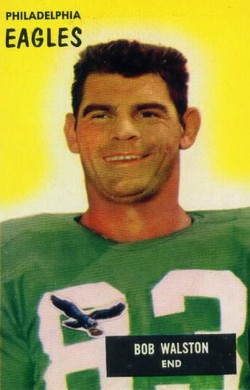
Following a slow 0-2-1 start, the Philadelphia Eagles had put together a three-game winning streak as they faced the New York Giants on November 8, 1953. Head Coach Jim Trimble’s team had an outstanding pass receiving tandem of ends Pete Pihos and Bobby Walston (who also handled the placekicking) and QB Bobby Thomason (pictured at right) had emerged over Adrian Burk as the starting quarterback. Thomason, originally drafted by the Rams and then discarded by Green Bay, started his second season with the Eagles on the bench.

The Giants, under long-time Head Coach Steve Owen, were clearly a team in trouble and had a 2-4 record. Injuries were a problem, most notably to FB Eddie Price and members of the defense, and the addition of promising younger players such as HB Frank Gifford was not yet paying off.

There was a crowd of 24,331 in attendance at Philadelphia’s Connie Mack Stadium. Two minutes into the first quarter the Eagles scored when Bobby Walston kicked a 15-yard field goal after Philadelphia’s first drive came to a halt at the New York eight yard line.

The game moved slowly from that point until the last few minutes of the half. Eleven minutes into the second quarter, Thomason threw a pass that Walston caught behind three New York defenders at the Giants’ 45 and covered a total of 62 yards for a touchdown. Two minutes later the Eagles struck again as Thomason passed to Pihos for a 26-yard TD. Philadelphia took a 17-0 lead into halftime.

The Eagles added to their margin in the third quarter, moving 80 yards with Thomason completing five passes along the way including a seven-yard toss to Pihos for a touchdown. The extra point attempt failed, but Philadelphia was now ahead by a commanding 23-0.

It became 30-0 in the fourth quarter when Thomason threw a fourth touchdown pass, this time of 13 yards to Walston. Several fights broke out in the final period and three players were ejected in all. The Giants finally scored with six minutes remaining in the game as QB Charlie Conerly tossed a 32-yard TD pass to Frank Gifford to finish off a 74-yard drive. It salvaged pride but nothing else as the Eagles coasted to a 30-7 win.

Philadelphia thoroughly dominated the Giants in total yards (514 to 92), although it was the aerial game that made the difference as neither club did particularly well on the ground (64 yards to 54 in favor of New York). The Eagles also had far more first downs (21 to 10), but were also penalized 13 times, at a cost of 123 yards, to three flags thrown on the Giants. New York turned the ball over three times, Philadelphia twice.

Bobby Thomason completed 22 of 44 passes for 437 yards and four touchdowns. Pete Pihos caught 7 passes for 145 yards and two TDs and Bobby Walston had 8 receptions for 176 yards in addition to scoring 18 points (two touchdowns, a field goal, and three extra points).


Thomason’s passing yardage total was the fourth-best in NFL history at the time as well as an Eagles club record that stood until 1989.

The Eagles won twice more before losing to the Giants at New York. They ended up second in the Eastern Conference with a 7-4-1 record. The loss was the fifth in seven games for the Giants who ended up fifth in the conference at 3-9. It marked the end of Steve Owen’s 23-year coaching tenure with the club.

Bobby Thomason had a 329-yard passing game the following week against the Colts (although he also tossed five interceptions) in what was his finest season. He led the NFL with 21 touchdown passes while ranking second in attempts (304) and yards (2462). Thomason was selected to the Pro Bowl for the first of an eventual three times, but his career was marked by inconsistency and he continued to split time with Burk during most of his six years in Philadelphia.

November 6, 2012

1964: Patriots Down Oilers on Game-Ending Cappelletti Field Goal


The Boston Patriots were in a battle for first place in the AFL Eastern Division as they hosted the Houston Oilers on November 6, 1964. Head Coach Mike Holovak’s team won its first four games and was 5-2-1 and competing with the Bills – the club they had defeated in a playoff for the division title in ’63. Key players on offense were 34-year-old QB Babe Parilli and Gino Cappelletti, a slow but dependable end who also was a dependable placekicker. The defense was outstanding, particularly the line and MLB Nick Buoniconti.

The Oilers, coached by Sammy Baugh, were a disappointing 2-6, having won two of their first three contests before dropping five straight. The team that had dominated the division for the first three years of the AFL’s existence slumped badly in 1963 and was clearly in trouble. There were promising younger players on the squad, but the nucleus on offense was still 37-year-old QB George Blanda, 29-year-old flanker Charley Hennigan, and fading fifth-year FB Charley Tolar.

The Friday night game at Fenway Park was billed as “do-or-die” for both teams. Houston got a break on the opening kickoff when HB J.D. Garrett fumbled at his 29. The ensuing series ended with Tolar powering two yards for a touchdown.

The Patriots came back with a 75-yard drive. FB Larry Garron ran effectively and Babe Parilli finished the series off with a one-yard run around end for a TD. Early in the second quarter, Gino Cappelletti put the Patriots ahead by 10-7 with a 25-yard field goal. Cappelletti added another field goal from 33 yards with six seconds remaining in the half and it was 13-7 at the intermission.

Boston’s lead disappeared quickly when, on the first play from scrimmage of the second half, the Oilers pulled off a spectacular play as Blanda threw to TE Willie Frazier for an 80-yard touchdown. With Blanda’s extra point, Houston was back in front at 14-13.

Late in the period Boston regained the lead when a five-play, 75-yard drive that was highlighted by a Parilli pass to split end Art Graham for 64 yards and ended with Cappelletti kicking his third field goal from 22 yards out for a 16-14 score.

At 6:46 into the fourth quarter the Oilers went ahead once again when Blanda threw to split end Charley Frazier for a 38-yard TD. A few minutes later it was Parilli once more rolling out and running for a touchdown, this time from five yards out. However, the try for a two-point conversion failed as Parilli’s pass intended for Graham fell incomplete.

With a minute to go in the game, the Patriots were up by a point and the Oilers had the ball at midfield. Blanda threw to Willie Frazier twice to get the ball down to the Boston four. Tolar wasn’t able to penetrate the end zone from there and Blanda kicked a 10-yard field goal. With 32 seconds remaining, it appeared that Boston’s fate was sealed.

There was still time, however, and Parilli completed two passes to TE Tony Romeo and Cappelletti to advance the Patriots into Houston territory. With the clock running down, Parilli rolled out, couldn’t find a receiver, and, keeping the ball, took off down the sideline. Knowing he couldn’t reach the end zone, he stepped out of bounds at the Houston 34 with one second remaining to play. Cappelletti was successful on his field goal attempt from 42 yards and the Patriots came away with a stunning 25-24 win.

Boston had more total yards than the Oilers (440 to 413) but Houston had the edge in first downs (22 to 21). The Patriots turned the ball over twice while the Oilers suffered one turnover. Houston was also very effective at returning kickoffs, with DB Benny Nelson gaining 66 yards on his two returns and HB Ode Burrell averaging 27.7 yards on three returns.


Babe Parilli completed 14 of 29 passes for 256 yards with no touchdowns and one intercepted, but also ran the ball 8 times for 96 yards and two TDs. Art Graham (pictured at left) had a big day with 8 catches for 167 yards. Larry Garron rushed for 91 yards on 23 carries.

For the Oilers, George Blanda went to the air 44 times and had 20 completions for 328 yards and two TDs with one intercepted. Charley Frazier had 9 pass receptions for 143 yards and a touchdown and Willie Frazier, thanks to the long scoring play, gained 102 yards on his two catches. Charley Tolar was the team’s top rusher as he gained 57 yards on 14 attempts and scored a TD.

“We’ve had many a tight ball game, but this was the best,” said Mike Holovak in reviewing his team’s performance. “(Art) Graham was a big factor in grabbing those passes and setting up scores, but a thing that hurt us was the way they were returning those kickoffs. That’s one thing we’ll be working on next week.”

The win over Houston was the first of five straight for the Patriots, who stayed in contention for the Eastern Division title until the final week of the season. As it was, they put together a 10-3-1 record in placing second to the Bills. Houston continued to fade and, with wins in the last two contests, ended up at 4-10 and at the bottom of the division.


Babe Parilli (pictured above) led the AFL in passing yards (3465) and TD passes (31) – and, more unfortunately, in interceptions (27, tied with George Blanda) – while ranking second in pass attempts (473) and completions (228). He was a consensus first-team All-AFL selection and was named to the league All-Star Game.

Gino Cappelletti led the league in scoring (155 points) and field goals (25, in an AFL-leading 39 attempts), each for the third time. He caught a career-high 49 passes for 865 yards and seven touchdowns and was named AFL Player of the Year by the Associated Press and United Press International. Cappelletti, too, was selected for the AFL All-Star Game.