August 8, 2010

List of the Day: Best Rushing Seasons, 2000s NFC


Ahman Green

TOP 10
1- Ahman Green, 2003 Green Bay Packers
1883 yards, 355 att., 5.3 avg., 15 TD

2- Shaun Alexander, 2005 Seattle Seahawks
1880 yards, 370 att., 5.1 avg., 27 TD

3- Tiki Barber, 2005 New York Giants
1860 yards, 357 att., 5.2 avg., 9 TD

4- Adrian Peterson, 2008 Minnesota Vikings
1760 yards, 363 att., 4.8 avg., 10 TD

5- Michael Turner, 2008 Atlanta Falcons
1699 yards, 376 att., 4.5 avg., 17 TD

6- Shaun Alexander, 2004 Seattle Seahawks
1696 yards, 353 att., 4.8 avg., 16 TD

7- Frank Gore, 2006 San Francisco 49ers
1695 yards, 312 att., 5.4 avg., 8 TD

8- Tiki Barber, 2006 New York Giants
1662 yards, 327 att., 5.1 avg., 5 TD

9- Deuce McAllister, 2003 New Orleans Saints
1641 yards, 351 att., 4.7 avg., 8 TD

10-Steven Jackson, 2006 St. Louis Rams
1528 yards, 346 att., 4.4 avg., 13 TD


Shaun Alexander


Tiki Barber


Adrian Peterson

BEST BY FRANCHISES NOT IN TOP 10
Washington Redskins: Clinton Portis, 2005
1516 yards, 352 att., 4.3 avg., 11 TD

Carolina Panthers: DeAngelo Williams, 2008
1515 yards, 273 att., 5.5 avg., 18 TD

Chicago Bears: Thomas Jones, 2005
1335 yards, 314 att., 4.3 avg., 9 TD

Philadelphia Eagles: Brian Westbrook, 2007
1333 yards, 278 att., 4.8 avg., 7 TD

Arizona Cardinals: Edgerrin James, 2007
1222 yards; 324 att., 3.8 avg., 7 TD

Dallas Cowboys: Emmitt Smith, 2000
1203 yards, 294 att., 4.1 avg., 9 TD

Detroit Lions: James Stewart, 2000
1184 yards, 339 att., 3.5 avg., 10 TD

Tampa Bay Buccaneers: Cadillac Williams, 2005
1178 yards, 290 att., 4.1 avg., 6 TD


Michael Turner


Frank Gore


Deuce McAllister


Steven Jackson

August 5, 2010

1967: Broncos Stun Lions in First Preseason Game Between AFL-NFL Teams


The merger between the NFL and AFL that was agreed to in 1966 was implemented in phases. In the first, following the ’66 season, a game was played between the champions of the two leagues (now known as Super Bowl I). For 1967, there was a common draft of college talent between the two leagues, and while they would still play separate schedules until 1970, interleague preseason games could be scheduled. While at one level the contests were mere exhibition games that counted for nothing in the standings, to the participants they meant a great deal. In particular, the AFL players were determined to prove their mettle against the clubs from the older NFL.

Such was the case as the AFL’s Denver Broncos hosted the NFL’s Detroit Lions at University of Denver Stadium on August 5, 1967. The Broncos, a club that had never produced a record above .500 in any season and had gone 4-10 in ’66, hardly seemed likely to fare well against any NFL team. Under new Head Coach Lou Saban, who had led Buffalo to back-to-back championships in 1964 and ’65 before coaching for a year at the University of Maryland, the team was in the process of being revamped. Gone were key veterans that Saban deemed unfit for taking part in a rebuilding effort like split end Lionel Taylor, safety Goose Gonsoulin, and guard Jerry Sturm. Most notable among the newcomers was the rookie first draft choice out of Syracuse, halfback Floyd Little. Denver had lost its first preseason game, against the second-year Miami Dolphins by a score of 19-2.

The Lions also had a new head coach in Joe Schmidt, at age 35 only two years removed from his Hall of Famer career as a linebacker. Detroit had gone 4-9-1 in 1966 and was also in transition. Defense had long been the team’s strong suit, and they still had a strong veteran core of defensive tackles Roger Brown and Alex Karras, linebackers Mike Lucci and Wayne Walker, and safety Dick LeBeau. Veteran QB Milt Plum was recovered after missing half of the season due to injury and was being challenged by Karl Sweetan, who had performed creditably as a rookie in his absence. The top three picks in the draft had added HB Mel Farr from UCLA, CB Lem Barney of Jackson State, and Tennessee LB Paul Naumoff.

There were 21,288 fans in attendance for the Saturday evening contest. Neither team was able to mount much offense in the first half. Playing inspired football, the Broncos defense kept the Lions offense out of the end zone; the closest Detroit penetrated was to the Denver 36 yard line. Safety Lonnie Wright made two big plays, intercepting a Sweetan pass at his own 20 and then batting down a long Detroit pass in the end zone to stop another drive.

Following a 56-yard pass play from QB Scotty Glacken to flanker Al Denson, Errol Mann kicked a 35-yard field goal that staked the Broncos to a 3-0 lead (while Mann failed to make it to the regular season with Denver, ironically, he eventually ended up kicking for the Lions for 7 ½ years).

The key play of the game occurred on a 4th and 11 situation at the Detroit 44 in the third quarter. Denver punter Bob Scarpitto (pictured at top) ran instead of kicking and picked up 28 yards and a first down at the Lions 16 yard line. Six plays later, FB Cookie Gilchrist bulled into the end zone from a yard out and the Broncos led by 10-0.

Detroit finally scored in the fourth quarter as Plum threw a 15-yard touchdown pass to WR Bill Malinchak. That was it for the Lions, and Mann’s second field goal of the game from 32 yards out capped the scoring at 13-7 in favor of Denver.

On the bus after the game, Roger Brown of the Lions moaned “The Denver Broncos…it didn’t happen!” But Coach Schmidt summed up by saying, “I want to pay tribute to the Denver team. And, if the other AFL teams show as much desire, there will be many other surprises in the preseason inter-league competition.”

While the Broncos went on to defeat the Vikings, 14-9, and the defending champion Kansas City Chiefs thrashed the Chicago Bears by an astounding score of 66-24, the NFL teams won the remaining contests and had an overall record of 13-3 in the 1967 interleague preseason games.

For all of the excitement and heightened expectations, the Broncos still ended up at the bottom of the AFL’s Western Division with a 3-11 record. Detroit finished the ’67 regular season with a 5-7-2 tally that ranked third in the Central Division of the NFL’s Western Conference.

August 3, 2010

List of the Day: Best Pass Receiving Seasons, 1990s AFC


Jimmy Smith

TOP 10 RECEPTIONS
1- Jimmy Smith, 1999 Jacksonville Jaguars
116 rec., 1636 yards, 14.1 avg., 6 TD

2- Marvin Harrison, 1999 Indianapolis Colts
115 rec., 1663 yards, 14.5 avg., 12 TD

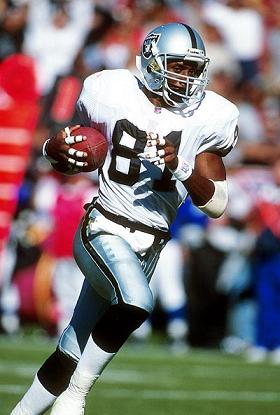
3- Tim Brown, 1997 Oakland Raiders
104 rec., 1408 yards, 13.5 avg., 5 TD

4(tied)- Haywood Jeffires, 1991 Houston Oilers
100 rec., 1181 yards, 11.8 avg., 7 TD

4(tied)- Carl Pickens, 1996 Cincinnati Bengals
100 rec., 1180 yards, 11.8 avg., 12 TD

6- Carl Pickens, 1995 Cincinnati Bengals
99 rec., 1234 yards, 12.5 avg., 17 TD

7- Ben Coates, 1994 New England Patriots
96 rec., 1174 yards, 12.2 avg., 7 TD

8(tied)- Drew Hill, 1991 Houston Oilers
90 rec., 1109 yards, 12.3 avg., 4 TD

8(tied)- Haywood Jeffires, 1992 Houston Oilers
90 rec., 913 yards, 10.1 avg., 9 TD

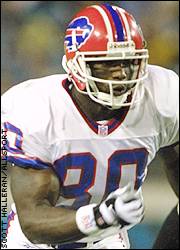
8(tied)- Andre Reed, 1994 Buffalo Bills
90 rec., 1303 yards, 14.5 avg., 8 TD

8(tied)- Tony Martin, 1995 San Diego Chargers
90 rec., 1224 yards, 13.6 avg., 6 TD

8(tied)- Terry Glenn, 1996 New England Patriots
90 rec., 1132 yards, 12.6 avg., 6 TD

8(tied)- Tim Brown, 1996 Oakland Raiders
90 rec., 1104 yards, 12.3 avg., 9 TD

8(tied)- O.J. McDuffie, 1998 Miami Dolphins
90 rec., 1050 yards, 11.7 avg., 7 TD

8(tied)- Tim Brown, 1999 Oakland Raiders
90 rec., 1344 yards, 14.9 avg., 6 TD


Haywood Jeffires


Carl Pickens

BEST BY FRANCHISES NOT IN TOP 10
New York Jets: Keyshawn Johnson, 1999
89 rec., 1170 yards, 13.1 avg., 8 TD

Denver Broncos: Shannon Sharpe, 1994
87 rec., 1010 yards, 11.6 avg., 4 TD

Pittsburgh Steelers: Yancey Thigpen, 1995
85 rec., 1307 yards, 15.4 avg., 5 TD

Seattle Seahawks: Brian Blades, 1994
81 rec., 1086 yards, 13.4 avg., 4 TD

Baltimore Ravens: Michael Jackson, 1996*
76 rec., 1201 yards, 15.8 avg., 14 TD

Kansas City Chiefs: Tony Gonzalez, 1999
76 rec., 849 yards, 11.2 avg., 11 TD

Cleveland Browns: Kevin Johnson, 1999**
66 rec., 986 yards, 14.9 avg., 8 TD

* Ravens joined NFL in 1996 from relocated Browns franchise
** Includes original Browns franchise, 1990-95, plus new Browns franchise that joined NFL in 1999


Marvin Harrison


Tim Brown

TOP 10 YARDS
1- Marvin Harrison, 1999 Indianapolis Colts
1663 yards, 115 rec., 14.5 avg., 12 TD

2- Jimmy Smith, 1999 Jacksonville Jaguars
1636 yards, 116 rec., 14.1 avg., 6 TD

3- Tim Brown, 1997 Oakland Raiders
1408 yards, 104 rec., 13.5 avg., 5 TD

4- Yancey Thigpen, 1997 Pittsburgh Steelers
1398 yards, 79 rec., 17.7 avg., 7 TD

5- Eric Moulds, 1998 Buffalo Bills
1368 yards, 67 rec., 20.4 avg., 9 TD

6- Tim Brown, 1999 Oakland Raiders
1344 yards, 90 rec., 14.9 avg., 6 TD

7- Tim Brown, 1995 Oakland Raiders
1342 yards, 89 rec., 15.1 avg., 10 TD

8- Jimmy Smith, 1997 Jacksonville Jaguars
1324 yards, 82 rec., 16.1 avg., 4 TD

9- Tim Brown, 1994 Los Angeles Raiders
1309 yards, 89 rec., 14.7 avg., 9 TD

10-Yancey Thigpen, 1995 Pittsburgh Steelers
1307 yards, 85 rec., 15.4 avg., 5 TD


Yancey Thigpen


Eric Moulds

BEST BY FRANCHISES NOT IN TOP 10
Miami Dolphins: Irving Fryar, 1994
1270 yards, 73 rec., 17.4 avg., 7 TD

Cincinnati Bengals: Carl Pickens, 1995
1234 yards, 99 rec., 12.5 avg., 17 TD

San Diego Chargers: Tony Martin, 1995
1224 yards, 90 rec., 13.6 avg., 6 TD

Denver Broncos: Rod Smith, 1998
1222 yards, 86 rec., 14.2 avg., 6 TD

Baltimore Ravens: Michael Jackson, 1996*
1201 yards, 76 rec., 15.8 avg., 14 TD

Houston/Tennessee: Haywood Jeffires, 1991
1181 yards, 100 rec., 11.8 avg., 7 TD

New England Patriots: Ben Coates, 1994
1174 yards, 96 rec., 12.2 avg., 7 TD

New York Jets: Keyshawn Johnson, 1999
1170 yards, 89 rec., 13.1 avg., 8 TD

Kansas City Chiefs: Andre Rison, 1997
1092 yards, 72 rec., 15.2 avg., 7 TD

Seattle Seahawks: Brian Blades, 1994
1086 yards, 81 rec., 13.4 avg., 4 TD

Cleveland Browns: Kevin Johnson, 1999**
986 yards, 66 rec., 14.9 avg., 8 TD

* Ravens joined NFL in 1996 from relocated Browns franchise
** Includes original Browns franchise, 1990-95, plus new Browns franchise that joined NFL in 1999


Ben Coates


Tony Martin

August 1, 2010

1925: Tim Mara Founds the New York Giants


Timothy J. Mara was a bookmaker in New York City – which was legal at the time – when he arrived at the office of Billy Gibson, manager of heavyweight boxer Gene Tunney. He had hopes of buying part of Tunney’s contract, but instead paid the $500 fee to gain a franchise for New York in the NFL.

NFL President Joe Carr was wooing Gibson as a potential franchise owner, but found a more willing taker in Mara. Mara, for his part, knew nothing about pro football but believed that a franchise for anything in New York City was surely worth $500. On August 1, 1925 he officially became owner of what would be named the New York Giants.

Dr. Harry March was hired to recruit talent for the new team and Bob Folwell to coach it. The club played at the Polo Grounds, which they shared with major league baseball’s Giants (hence the choosing of the same name). The assembled talent included FB Jack McBride, tailback Hinkey Haines, end Lynn Bomar, and G Art Carney, who were All-Pro selections after a season in which the Giants finished a respectable fourth in the 20-team NFL with an 8-4 record.

On-field success had not yielded off-field profits, however, and Mara found himself $40,000 in the red at the conclusion of the 1925 schedule. However, the Chicago Bears came to New York as part of the off-season barnstorming tour to exploit the talents of star halfback Red Grange. A crowd of some 65,000 fans showed up to see the player known as “the Galloping Ghost” in action against the Giants, enough to wipe out Mara’s debt.

Ironically, it was the same Red Grange who nearly destroyed the Giants in 1926 when he and his agent, C.C. “Cash & Carry” Pyle, started a rival pro football league (the first to be known as the American Football League) and placed a franchise in Yankee Stadium that featured Grange himself. To add insult to injury, the new league’s Philadelphia Quakers hired Coach Folwell away as well as highly-regarded tackle Century Milstead.

The Giants survived, however, while the AFL folded after a single season (they also gained some satisfaction in defeating Folwell’s league-champion Quakers in an interleague challenge game, 31-0). In 1927, they won their first NFL title with an 11-1-1 record. Setting the pattern for future successful Giants squads, this club succeeded with a solid but unspectacular offense and outstanding defense (they gave up a total of just 20 points over the course of the 13 games – 10 of the contests were shutouts).

Mara turned over co-ownership of the franchise in 1930 to his sons, Wellington and Jack, although he continued to control the team (the sons were only 14 and 22, respectively, in 1930). In 1946, actual control of the club went to the sons, with Wellington handling the football side of the operation and Jack the business side. The Giants were typically successful on the field - from 1933, when divisional play leading to a championship game was introduced, through 1958, the last season prior to Tim Mara’s death, the team participated in 10 of those title contests and won three of them (four championships overall counting 1927).

Tim Mara died in 1959 and was selected as a charter member of the Pro Football Hall of Fame in 1963. Jack Mara passed on in 1965 and his son, Tim, inherited his role in the organization and settled into a long-running feud with his uncle until he sold his half of the club to Robert Tisch in 1991. Wellington Mara remained the public face of the Giants until his own passing in 2005, and after he, like his father, was enshrined in Canton.

The Mara family continues to hold a co-ownership in the club that Tim Mara founded (his grandson, John, is the current team president). The franchise that he paid $500 for in 1925 is now valued at well over $500 million.

July 30, 2010

List of the Day: Best Pass Receiving Seasons, 1990s NFC


Jerry Rice

TOP 10 RECEPTIONS
1- Herman Moore, 1995 Detroit Lions
123 rec., 1686 yards, 13.7 avg., 14 TD

2(tied)- Cris Carter, 1994 Minnesota Vikings
122 rec., 1256 yards, 10.3 avg., 7 TD

2(tied)- Jerry Rice, 1995 San Francisco 49ers
122 rec., 1848 yards, 15.1 avg., 15 TD

2(tied)- Cris Carter, 1995 Minnesota Vikings
122 rec., 1371 yards, 11.2 avg., 17 TD

5- Isaac Bruce, 1995 St. Louis Rams
119 rec., 1781 yards, 15.0 avg., 13 TD

6(tied)- Sterling Sharpe, 1993 Green Bay Packers
112 rec., 1274 yards, 11.4 avg., 11 TD

6(tied)- Jerry Rice, 1994 San Francisco 49ers
112 rec., 1499 yards, 13.4 avg., 13 TD

8(tied)- Terance Mathis, 1994 Atlanta Falcons
111 rec., 1342 yards, 12.1 avg., 11 TD

8(tied)- Michael Irvin, 1995 Dallas Cowboys
111 rec., 1603 yards, 14.4 avg., 10 TD

10(tied)-Sterling Sharpe, 1992 Green Bay Packers
108 rec., 1461 yards, 13.5 avg., 13 TD

10(tied)-Brett Perriman, 1995 Detroit Lions
108 rec., 1488 yards, 13.8 avg., 9 TD

10(tied)-Jerry Rice, 1996 San Francisco 49ers
108 rec., 1254 yards, 11.6 avg., 8 TD


Herman Moore


Cris Carter

BEST BY FRANCHISES NOT IN TOP 10
Phoenix/Arizona Cardinals: Larry Centers, 1995*
101 rec., 962 yards, 9.5 avg., 2 TD

Carolina Panthers: Muhsin Muhammad, 1999**
96 rec., 1253 yards, 13.1 avg., 8 TD

Philadelphia Eagles: Irving Fryar, 1996
88 rec., 1195 yards, 13.6 avg., 11 TD

Chicago Bears: Bobby Engram, 1999
88 rec., 947 yards, 10.8 avg., 4 TD

New Orleans Saints: Quinn Early, 1994
82 rec., 894 yards, 10.9 avg., 4 TD

New York Giants: Amani Toomer, 1999
79 rec., 1183 yards, 15.0 avg., 6 TD

Washington Redskins: Gary Clark, 1990
75 rec., 1112 yards, 14.8 avg., 8 TD

Tampa Bay Buccaneers: Mike Alstott, 1996*
65 rec., 557 yards, 8.6 avg., 3 TD

*Running Back
**Panthers joined NFL in 1995


Isaac Bruce


Sterling Sharpe

TOP 10 YARDS
1- Jerry Rice, 1995 San Francisco 49ers
1848 yards, 122 rec., 15.1 avg., 15 TD

2- Isaac Bruce, 1995 St. Louis Rams
1781 yards, 119 rec., 15.0 avg., 13 TD

3- Herman Moore, 1995 Detroit Lions
1686 yards, 123 rec., 13.7 avg., 14 TD

4- Michael Irvin, 1995 Dallas Cowboys
1603 yards, 111 rec., 14.4 avg., 10 TD

5- Rob Moore, 1997 Arizona Cardinals
1584 yards, 97 rec., 16.3 avg., 8 TD

6- Michael Irvin, 1991 Dallas Cowboys
1523 yards, 93 rec., 16.4 avg., 8 TD

7- Jerry Rice, 1993 San Francisco 49ers
1503 yards, 98 rec., 15.3 avg., 15 TD

8- Jerry Rice, 1990 San Francisco 49ers
1502 yards, 100 rec., 15.0 avg., 13 TD

9- Jerry Rice, 1994 San Francisco 49ers
1499 yards, 112 rec., 13.4 avg., 13 TD

10-Robert Brooks, 1995 Green Bay Packers
1497 yards, 102 rec., 14.7 avg., 13 TD


Michael Irvin


Rob Moore

BEST BY FRANCHISES NOT IN TOP 10
Minnesota Vikings: Randy Moss, 1999
1413 yards, 80 rec., 17.7 avg., 11 TD

Chicago Bears: Marcus Robinson, 1999
1400 yards, 84 rec., 16.7 avg., 9 TD

Washington Redskins: Henry Ellard, 1994
1397 yards, 74 rec., 18.9 avg., 6 TD

Atlanta Falcons: Terance Mathis, 1994
1342 yards, 111 rec., 12.1 avg., 11 TD

Philadelphia Eagles: Irving Fryar, 1997
1316 yards, 86 rec., 15.3 avg., 6 TD

Carolina Panthers: Muhsin Muhammad, 1999*
1253 yards, 96 rec., 13.1 avg., 8 TD

New York Giants: Amani Toomer, 1999
1183 yards, 79 rec., 15.0 avg., 6 TD

New Orleans Saints: Quinn Early, 1995
1087 yards, 81 rec., 13.4 avg., 8 TD

Tampa Bay Buccaneers: Courtney Hawkins, 1993
933 yards, 62 rec., 15.0 avg., 5 TD

*Panthers joined NFL in 1995


Terance Mathis


Robert Brooks

July 28, 2010

1974: Mark Kellar Scores 36 Points as Chicago Defeats Hawaiians


The World Football League’s Chicago Fire traveled to Honolulu to take on The Hawaiians before a sparse crowd of 12,608 at Halwala Stadium on July 28, 1974. While the league played its games on Wednesday nights in its first season, with a nationally-televised Thursday night contest, The Hawaiians insisted on playing their home games on Sunday afternoons.

The Hawaiians were coming off of a win over the Detroit Wheels in their home opener the week before and thus sported a 1-2 record. Coached by Mike Giddings, the offense was directed by rookie QB Norris Weese throwing primarily to first year wide receivers Tim Boyer, Grady Richardson, and Tim Delaney and TE John Kelsey. Running backs included Ernie O’Leary, Dave Buchanan, and Pete Taggares. The defense contained more experienced talent, most notably defensive linemen Ron East, Greg Wojcik, and Karl Lorch.

Chicago had won its first three games under Head Coach Jim Spavital and had a pro veteran at quarterback in Virgil Carter as well as TE Jim Seymour, plus speed at wide receiver with James Scott and Jack Dolbin. RB Cyril Pinder had played in the NFL with the Eagles, Bears, and Cowboys, but rookie Mark Kellar from Northern Illinois had emerged as the primary running back.

Kellar, nicknamed “the Baby Bull” for his straight-ahead power-running style, had been drafted by the NFL’s Minnesota Vikings in the 6th round after leading all Division 1-A rushers in ’73, but saw the WFL as a better opportunity. A classic fullback who was effective between the tackles but not particularly fast, he once told a Chicago Tribune reporter “I don’t have much speed. When I run the forty they have to use a calendar to time me.”

The tone of the contest in Honolulu was set on Chicago’s first possession as the offense rolled 69 yards down the field on four plays, capped by Kellar scoring a touchdown on a two-yard run. By halftime, the score was 30-7 and the Fire went on to win by a 53-29 margin. Kellar scored a WFL-record 36 points with five touchdowns and an action point.

Kellar led the club with 51 yards on 14 carries and three of the TDs while he also caught 3 passes for 35 yards and the other two touchdowns. RB Bob Wyatt added 47 yards on 19 runs and Cyril Pinder added 43 more on just four carries as Chicago rolled up 157 rushing yards. Virgil Carter completed 15 of 25 passes for 205 yards with three TDs against no interceptions. James Scott led the receivers with 6 catches for 68 yards and Jack Dolbin gained the most receiving yards with 78 on three receptions.

The Hawaiians, forced to go to the air early and often, gained just 21 yards rushing. Norris Weese passed for 338 yards as he completed 24 of 52 throws and tossed three TDs as well as three interceptions. Tim Delaney caught 9 passes for 124 yards and a touchdown and John Kelsey grabbed four for 67 yards, but the contest was long decided by the time the passing statistics began to add up.

The Fire failed to maintain the early momentum - after starting out at 7-2, the club lost its last 11 contests (the last by forfeit) and ended up at 7-13 and in third place in the Central Division. Injuries were a major factor as both Kellar and James Scott were lost for the season in a loss to Southern California in Week 11 and Virgil Carter went down two weeks later.

The Hawaiians recovered to go 9-11 and finish in second place in the Western Division, making it into the postseason (they also gained revenge in the rematch with the Fire in Chicago, winning 60-17). The Honolulu club won its first round playoff game against a demoralized Southern California Sun squad (the players had considered striking over missed pay and two key offensive performers refused to play and were cut from the team) before losing to the eventual WFL champions, the Birmingham Americans, in the semifinal round.

In his injury-shortened season, Mark Kellar ended up with 778 yards on 189 carries for a 4.1-yard average gain and nine touchdowns; he caught 28 passes for 342 yards and another six TDs. The Baby Bull went on to play for the Chicago Winds in the WFL’s abbreviated second season in ’75 and moved on to the NFL, where he was a backup with the Vikings for three years.

July 26, 2010

List of the Day: Best Passing Yardage Seasons, 1990s AFC


Warren Moon

TOP 10
1- Warren Moon, 1991 Houston Oilers
4690 yards, 404-655, 61.7 %, 23 TD, 21 INT

2- Warren Moon, 1990 Houston Oilers
4689 yards, 362-584, 62.0 %, 33 TD, 13 INT

3- Drew Bledsoe, 1994 New England Patriots
4555 yards, 400-691, 57.9 %, 25 TD, 27 INT

4- Dan Marino, 1994 Miami Dolphins
4453 yards, 385-615, 62.6 %, 30 TD, 17 INT

5- Mark Brunell, 1996 Jacksonville Jaguars
4367 yards, 353-557, 63.4 %, 19 TD, 20 INT

6- Vinny Testaverde, 1996 Baltimore Ravens
4177 yards, 325-549, 59.2 %, 33 TD, 19 INT

7- Peyton Manning, 1999 Indianapolis Colts
4135 yards, 331-533, 62.1 %, 26 TD, 15 INT

8- Dan Marino, 1992 Miami Dolphins
4116 yards, 330-554, 59.6 %, 24 TD, 16 INT

9- Drew Bledsoe, 1996 New England Patriots
4086 yards, 373-623, 59.9 %, 27 TD, 15 INT

10-John Elway, 1993 Denver Broncos
4030 yards, 348-551, 63.2 %, 25 TD, 10 INT


Drew Bledsoe


Dan Marino


Mark Brunell

BEST BY FRANCHISES NOT IN TOP 10
LA/Oakland Raiders: Jeff George, 1997
3917 yards, 290-521, 55.7 %, 29 TD, 9 INT

Buffalo Bills: Jim Kelly, 1991
3844 yards, 304-474, 64.1 %, 33 TD, 17 INT

Cincinnati Bengals: Jeff Blake, 1995
3822 yards, 326-567, 57.5 %, 28 TD, 17 INT

Seattle Seahawks: Warren Moon, 1997
3678 yards, 313-528, 59.3 %, 25 TD, 16 INT

Cleveland Browns: Bernie Kosar, 1991*
3487 yards, 307-494, 62.1 %, 18 TD, 9 INT

Kansas City Chiefs: Steve DeBerg, 1990
3444 yards, 258-444, 58.1 %, 23 TD, 4 INT

New York Jets: Boomer Esiason, 1993
3421 yards, 288-473, 60.9 %, 16 TD, 11 INT

San Diego Chargers: Stan Humphries, 1995
3381 yards, 282-478, 59.0 %, 17 TD, 14 INT

Pittsburgh Steelers: Neil O’Donnell, 1993
3208 yards, 270-486, 55.6 %, 14 TD, 7 INT

* Includes original Browns franchise, 1990-95, plus new Browns franchise that joined NFL in 1999


John Elway


Vinny Testaverde


Peyton Manning


Jim Kelly