January 27, 2011

List of the Day: Just for Fun - Favorite Nicknames

Part 2


"Crazylegs" Hirsch

The second installment of favorite pro football player nicknames.

Elroy “Crazylegs” Hirsch
Hall of Fame end for the Rams who started out as a HB with the AAFC’s Rockets.

“The Mad Bomber”, Daryle Lamonica
Well-suited to Oakland’s downfield passing game after backing up at QB in Buffalo. His career ended in the WFL.

Joe “Turkey” Jones
DE with the Browns, Eagles, and Redskins from 1970-80.

Willie “Flipper” Anderson
WR with four teams from 1988-97, but had his best years early on with the Rams and gained a record 336 receiving yards in a 1989 game.

“Slingshot Davey” O’Brien
The first Heisman Trophy winner to play in the NFL, the 5’7”, 150-pound QB filled the air with passes for two seasons with the dreadful Eagles in 1939-40.

Dave “Deacon” Jones
Hall of Fame DE who had his best seasons with the Rams. The player who coined the term “sack” was one of the best at rushing the passer.

Tom “The Bomb” Tracy
5’9”, 205-pound HB for the Lions, Steelers, and Redskins from 1956-64.

Carnell “Cadillac” Williams
Broke in with a bang with the Bucs in 2005, and has suffered through an injury-plagued career since.

Alan “The Horse” Ameche
Colts FB from 1955-60 after Heisman-winning college career, he led the NFL in rushing as a rookie 1955, scored the sudden-death TD for the Colts in the 1958 title game.

“Automatic Jack” Manders
All-purpose back and premier placekicker of his era with the Bears from 1933-40.


Tom "The Bomb" Tracy


"Turkey" Jones


"Wild Man" Willey

“Bullet Bill” Dudley
Hall of Fame HB with the Steelers, Lions, and Redskins in 1942 and then ’45-53.

Carl “Spider” Lockhart
Spindly 6’2”, 175-pound FS for the Giants from 1965-75.

Bill “Earthquake” Enyart
Otherwise-unmemorable RB/LB with the Bills and Raiders, 1969-71.

Ed “Too Tall” Jones
6’9”, 271-pound DE for the Cowboys, 1974-89, with a year off in ’79 to try his hand at boxing.

“Pitchin’ Paul” Governali
QB with the Boston Yanks and NY Giants, 1946-48.

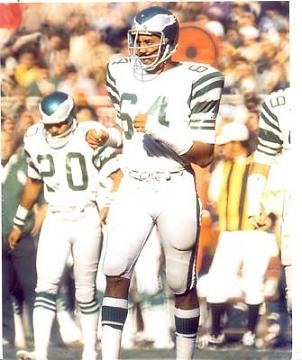
Norm “Wild Man” Willey
Star DE for the Eagles from 1950-57. The nickname says it all.

“Touchdown Tommy” Wilson
RB with the Rams, Browns, and Vikings from 1956-63 who once held the single-game rushing record.

“Deacon Dan” Towler
The first “Deacon” with the Rams, a FB from 1950-55 who led the NFL in rushing in ’52 and retired to church ministry.

Bob “The Boomer” Brown
6’4”, 280-pound Hall of Fame OT with the Eagles, Rams, and Raiders known as a punishing blocker.

“Mean Joe” Greene
Hall of Fame DT who earned four Super Bowl rings with the Steelers from 1969-81 and made a memorable soft drink commercial.


"Mean Joe" Greene


Bob "The Boomer" Brown


"Too Tall" Jones

January 26, 2011

1997: Packers Defeat Patriots with Big Plays in Super Bowl XXXI


The Green Bay Packers had won a record 11 NFL championships and the first two Super Bowls, when it was a contest between the champions of rival leagues and not yet the NFL Championship game. But three decades had gone by since the last title was achieved as the Packers met the New England Patriots in Super Bowl XXXI on January 26, 1997 at the Louisiana Superdome in New Orleans.

Under Head Coach Mike Holmgren, the Packers were in the postseason for the fourth straight year in 1996. They had gone 13-3 to win the NFC Central and blasted past the 49ers and upstart Panthers in the playoffs to win the conference title. QB Brett Favre (pictured above) was the consensus league MVP as he led the NFL in touchdown passes (39) and ranked second in passing (95.8 rating). He had Pro Bowl TE Keith Jackson to throw to, as well as wide receivers Antonio Freeman and Robert Brooks, and when injuries struck them veteran WR Andre Rison was obtained with good results. Running backs Edgar Bennett and Dorsey Levens combined for 1465 rushing yards and caught 31 passes apiece. The defense featured 35-year old Pro Bowl DE Reggie White, on the downside of his great career but still effective, tackles Gilbert Brown and Santana Dotson, cornerbacks Craig Newsome and Doug Evans, and All-Pro SS LeRoy Butler.

The Patriots were coached by Bill Parcells, who had twice led the New York Giants to championships. They had won the AFC East with an 11-5 record and gave up a total of nine points in postseason wins over Pittsburgh and Jacksonville. The offense had Pro Bowl QB Drew Bledsoe, who in his fourth season led the league in pass attempts (623) and completions (373) while accumulating 4086 yards and 27 TD passes. It also had WR Terry Glenn, who set a then-rookie record with 90 catches, and Pro Bowl TE Ben Coates, with 9 touchdowns among his 62 receptions. Second-year RB Curtis Martin rushed for 1152 yards and 14 TDs. The defensive line, anchored by DE Willie McGinest, solidified over the course of the season, and other key performers on defense included LB Chris Slade, CB Ty Law, and SS Lawyer Milloy.

Before a crowd of 72,301 inside the domed stadium, New England got the ball first and had to punt. WR Desmond Howard, another contributor to the team’s success throughout the year with his kick returns, brought this one back 32 yards to the Green Bay 45. Two plays later, Favre threw to Rison for a 54-yard touchdown and the Packers were ahead, 7-0.

On the second play of the Patriots’ next possession, Bledsoe was intercepted by Evans, giving the Packers the ball at the New England 28 yard line. Green Bay advanced to the 19, from where Chris Jacke kicked a 37-yard field goal.

Now down 10-0, the Patriots responded with a six-play, 79-yard drive that included pass completions by Bledsoe of 32 yards to RB Keith Byars and 20 to Martin, a 26-yard gain on a pass interference call on the Packers, and concluded with a one-yard TD pass to Byars.

Green Bay went three-and-out, with Favre nearly intercepted on a third down pass, and punted. New England moved 57 yards down the field in four plays, one of them a 44-yard pass from Bledsoe to Glenn. Bledsoe threw to Coates for a four-yard touchdown and the Patriots took the lead at 14-10.

Both teams punted on each of their next two possessions, but in the first minute of the second quarter, with Green Bay at its own 19, Favre connected with Freeman, who caught the ball at the 45 and continued on for an 81-yard touchdown. The big play put the Packers back in front at 17-14.

Following another New England punt that Howard returned 34 yards to near midfield, Favre threw to Rison for 23 yards into Patriots territory. Levens ran 12 yards on a draw play and, four plays later, Jacke kicked another field goal, this time from 31 yards.

Bledsoe was intercepted again on the next series and the Packers once more capitalized on the turnover. Favre completed two passes and Levens ran for 31 yards on four carries as Green Bay went 74 yards in 9 plays, with Favre running the ball in from two yards out for a TD. The score was 27-14 at halftime.


The Packers, with the first possession of the second half, drove to the New England 37, but on fourth-and-one, Levens was stopped for a seven-yard loss. The teams traded punts and the Patriots scored another TD with an 18-yard run by Martin on a draw play to pull to six points behind. However, the situation changed quickly as Howard returned the ensuing kickoff 99 yards for a touchdown (pictured at left). Favre passed to TE Mark Chmura for a two-point conversion and Green Bay was back ahead by two touchdowns. It proved to be more than enough.

The kickoff return seemed to take all the air out of the Patriots, who went three-and-out upon getting the ball again, with Bledsoe sacked twice consecutively by Reggie White. The teams continued to trade punts as the game moved into the fourth quarter until Bledsoe was intercepted by Craig Newsome. The Packers held onto the ball for 11 plays, and while they came up empty when Jacke was wide on a 47-yard field goal attempt, there were now just under four minutes left to play. The Patriots went quietly, never getting out of their own territory the last two times they had the ball, and Green Bay came away the winner by a final score of 35-21.

Both teams had 14 first downs while the Packers outgained New England by 323 yards to 257. Both quarterbacks were sacked five times. However, while Green Bay suffered no turnovers, the Patriots turned the ball over four times.


Brett Favre completed just 14 of 27 passes, but for 246 yards with two long touchdowns and no interceptions. Dorsey Levens (pictured at right) led the Packers in rushing with 61 yards on 14 carries and also caught three passes for 23 yards. Antonio Freeman gained 105 yards and scored the longer TD on his three receptions. Desmond Howard, the game’s MVP, returned four kickoffs for 154 yards, including the TD that put the game away, plus 6 punts for 90 more yards (a 15.0 avg.).

For the Patriots, Drew Bledsoe went to the air 48 times and had 25 completions for 253 yards and two touchdowns, but was intercepted four times. Ben Coates caught 6 passes for 67 yards and a TD. The club ran the ball just 13 times for 43 yards (and only six times after the first quarter), with Curtis Martin accounting for 42 yards on 11 carries and a TD.

“I thought we might have them rocking a little bit,” said Bill Parcells regarding the third quarter score that briefly pulled New England to just six points behind. “It's 27-21, we
had a lot of momentum. But (Howard) made the big play and I credit him for it.”

“Big plays did kill us,” said Ty Law of the Patriots, speaking more to the two long touchdown passes than the kickoff return. “You never want to go into a game and give up plays like that. If a team beats you, you want to make it hard for them.”

In the victorious Green Bay locker room, Mike Holmgren said, “This trophy, men, it was named after Vince Lombardi. As important as it is to every player in the league, it's more important to us. This is where it belongs.”

Desmond Howard departed the Packers via free agency in the offseason, but Green Bay repeated as NFC Champions, losing the Super Bowl to Denver. In New England, Parcells quit as head coach as a result of ongoing disputes on personnel matters with owner Robert Kraft. The Patriots reached the playoffs in the next two seasons under Pete Carroll, but didn’t get past the Divisional round – they would next reach the Super Bowl in 2001, under Carroll’s successor, Bill Belichick.

January 25, 2011

1987: Simms Leads Giants to Win Over Broncos in Super Bowl XXI


The New York Giants had not won a NFL Championship since 1956, and lost five title games in the seven seasons that followed. After that came a long dry spell, but on January 25, 1987 the club’s title game absence came to an end as they took on the Denver Broncos in Super Bowl XXI at the Rose Bowl in Pasadena, California.

Under Head Coach Bill Parcells, the Giants plowed through the 1986 regular season with a 14-2 record, winning their last eight contests to finish atop the NFC East. The offense was conservative and led by 32-year-old QB Phil Simms (pictured above), who passed for 3487 yards and 21 touchdowns, but also 22 interceptions. All-Pro RB Joe Morris ran for 1516 yards and 14 touchdowns, and TE Mark Bavaro blocked well and caught 66 passes for 1001 yards to also receive first-team All-Pro recognition. However, the wide receivers were average at best. The defense was outstanding and featured OLB Lawrence Taylor, with his 20.5 sacks. NT Jim Burt and DE Leonard Marshall were Pro Bowlers on the defensive line, and OLB Carl Banks and ILB Harry Carson were outstanding performers as well. New York thrashed the 49ers in the Divisional round of the playoffs and shut out Washington for the NFC title.

The Denver Broncos, coached by Dan Reeves, won the AFC West with an 11-5 tally. They had beaten the Patriots in their Divisional playoff game and then got past the Browns in a dramatic overtime win for the AFC Championship. QB John Elway (pictured below left) had keyed the victory over Cleveland by leading a remarkable 98-yard game-tying drive to force the sudden death period, and the fourth-year pro was the very embodiment of a franchise quarterback. Veteran WR Steve Watson was joined by rising stars Mark Jackson and Vance Johnson, while TE Orson Mobley was a pleasant surprise. The running game, however, was ordinary. The defense featured DE Rulon Jones, versatile All-Pro LB Karl Mecklenburg, and SS Dennis Smith.


There was a crowd of 101,063 at the huge stadium on a pleasant, 76-degree day in Southern California. The Broncos drove to a score on their first possession, with Elway setting the tone on the first play by scrambling away from the rush and running 10 yards. He also threw down the middle to Jackson for a 24-yard gain into New York territory at the 39. Rich Karlis capped the seven-play drive with a 48-yard field goal.

The Giants responded with a scoring drive of their own. Simms completed all six of his passes on the nine-play, 78-yard possession, including a six-yard touchdown pass to TE Zeke Mowatt. New York was ahead by 7-3.

Denver came back with a 58-yard drive in six plays to score another touchdown. Elway had four completions, including a screen pass to RB Sammy Winder that gained nine yards to the Giants’ 24 and, with two penalties tacked on (a late hit called on Carson and unsportsmanlike conduct on Taylor), the ball was moved to the six. Three plays later, Elway took off on a four-yard quarterback draw and dove into the end zone. With the extra point, the Broncos were back in front at 10-7 after a quarter of action.

New York’s next possession, which stretched into the second quarter, resulted in the first punt of the day. Denver again moved into Giants territory on an Elway pass to Vance Johnson that covered 54 yards to the 28 yard line. With Elway completing short passes, the Broncos moved inside the ten, and a seven-yard completion to RB Steve Sewell on third-and-two gave Denver a first-and-goal at the one.

On first down, Elway swept to the right and was dropped for a one-yard loss by Taylor. RB Gerald Willhite carried up the middle for no gain. Now facing third down, Elway pitched out to Winder, who attempted to run a sweep to the left but was dropped by Banks for a four-yard loss. Backed up to the six on fourth down, Karlis attempted a 23-yard field goal that he shanked to the right. Instead of opening up a six-to-ten point lead on the Giants, the Broncos came up empty.

New York punted following its next possession, and Denver took over at its own 15. Elway was sacked, threw an incomplete pass, and then was sacked again, this time by DE George Martin for a safety that cut the Broncos lead to one point. The Giants went three-and-out after receiving the free kick, and Denver regained possession with just over a minute remaining in the half. Elway completed a 31-yard pass to Watson to the New York 32. A shovel pass to Willhite gained 11 yards, but the drive was stopped there. Karlis again missed on a field goal attempt, this time from 34 yards, and the score remained at 10-9 in favor of Denver at halftime.

The Broncos had missed scoring opportunities in the first half, and the Giants made them pay in the third quarter. On the first possession of the second half, New York rolled 63 yards in nine plays that featured five more completions by Simms, including one of 13-yards to Bavaro for a touchdown. With the PAT, the Giants were back in front at 16-10. Along the way, the Giants had converted a fourth-and-one play when they went into punt formation and the up-man, reserve QB Jeff Rutledge, moved up under center, took the snap, and plowed ahead for two yards and the first down.

Following a three-and-out series by the Broncos, the Giants, primarily keeping the ball on the ground, drove 32 yards in eight plays that concluded with a 21-yard Raul Allegre field goal. Denver again couldn’t move the ball on its next possession, and four plays after the Giants got the ball back, Simms completed a pass on a flea-flicker play to WR Phil McConkey for a 44-yard gain to the Broncos’ one yard line. On the next play, Morris ran the final yard for a TD and the Giants had a commanding 26-10 lead in the final seconds of the period.

Elway was intercepted by CB Elvis Patterson early in the fourth quarter, which led to yet another Giants score. Simms threw for a 36-yard gain to WR Stacy Robinson and on the sixth play of the drive, a pass into the end zone that was deflected off of Bavaro’s shoulder was caught by McConkey for a six-yard touchdown.

Karlis finally connected on a field goal, from 28 yards, with six minutes left to play, and the Giants promptly drove 46 yards in five plays that featured a Simms bootleg of 22 yards and ended with RB Ottis Anderson running for a two-yard TD up the middle (Allegre missed the extra point attempt). The Broncos scored one last, long, and meaningless touchdown on a 47-yard pass play from Elway to Johnson, but the outcome had long been decided. The Giants won by a final score of 39-20.

New York outgained the Broncos (399 yards to 372) while both teams had 24 first downs. The Giants outrushed Denver (136 yards to 52) and sacked Elway four times, while Simms was dumped just once. There was only one turnover in the game, by Denver on Elway’s one interception.


Phil Simms, the game’s MVP, set a Super Bowl record for passing efficiency as he completed 22 of 25 passes for 268 yards and three touchdowns. Joe Morris (pictured at right) ran for 67 yards and a TD on 20 carries. Three Giants caught four passes apiece (Morris, Mark Bavaro, and FB Maurice Carthon) while Stacy Robinson had the most receiving yards with 62 on his three receptions.

John Elway was successful on 22 of 37 throws for 304 yards with a touchdown and the interception and, tellingly, was Denver’s leading rusher with 27 yards and a TD on six carries. Gerald Willhite gained 19 yards on four attempts and was one of two receivers on the Broncos with 5 catches, for 39 yards. The other was Vance Johnson, who gained 121 yards and scored a touchdown.

As to the key series of the game, in the second quarter when Denver failed to score after having a first down on the New York one yard line, Dan Reeves said afterward, “It hurt us. How much I don’t know. But being down there, first-and-goal on the one, and not getting any points, that hurts.”

Of the outstanding performance by Phil Simms, Bill Parcells said, “Phil Simms was just unbelievable. He quarterbacked as good a game as ever has been played.”

“If it weren't for him, we couldn't have done it,” said Lawrence Taylor of Simms. Taylor added, “We've been the best all season. We expected to win. We deserved to win.”

The Giants dropped off to 6-9 in 1987, but were back up to 10-6 in ’88 and a division-winning 12-4 in 1989. They won a second Super Bowl under Coach Parcells (pictured below) in 1990. Denver returned to the Super Bowl the following year, and lost even more convincingly to the Redskins. John Elway and the Broncos would eventually become champions, after three misses in the 80s, but it would not happen until the Super Bowl following the 1997 season.

January 24, 2011

List of the Day: Just for Fun - Favorite Nicknames

Part 1


Ernie "Big Cat" Ladd & Noland "Super Gnat" Smith

Just for something fun and a bit different, here is a list of twenty of my favorite pro football player nicknames – some have been favorites for many years, others I’ve discovered in the course of my researching. These are by-and-large not ranked, and another installment will follow later in the week.

Dick “Night Train” Lane
The Hall of Fame defensive back with the Rams, Cardinals, and Lions from 1952-65 had an all-time great nickname.

Gene “Big Daddy” Lipscomb
A memorable 6’6”, 284 pound defensive lineman for the Rams, Colts, and Steelers from 1953-62, was chosen for the Pro Bowl three times before coming to an untimely end.

Jack “Hacksaw” Reynolds
Spent a decade at LB for the Rams, then helped the 49ers win two championships.

Noland “Super Gnat” Smith
The 5’5”, 154-pound WR/KR once returned a kickoff 106 yards for the Chiefs in his brief career.

“The Catawba Claw”, Bucky Pope
A one-year wonder with the Rams in 1964 with 25 catches for a 31.4-yard average gain and 10 TDs.

“Broadway Joe” Namath
No introduction necessary. The nickname fit the quarterback and the celebrity.

“Super Bill” Bradley
A free-spirited free safety for the Eagles who led the NFL in interceptions in 1971 and ’72 and went to three Pro Bowls.

L.G. “Long Gone” Dupre
HB with the Colts in their 50s championship years and then an original member of the Cowboys.

Ken “The Snake” Stabler
Daring and exciting quarterback for the Raiders, Oilers, and Saints

Ross “Timber Beast” Carter
Lineman for the Cardinals from 1936-39.


"Night Train" Lane


"Broadway Joe"


"The Catawba Claw"

John “Shipwreck” Kelly
All-purpose back who led the NFL in pass receiving with Brooklyn in 1933.

Clyde “Smackover” Scott
HB on both offense and defense, primarily with the Eagles from 1949-52.

Paul “Tank” Younger
A 6’3”, 225-pound FB/LB who played primarily with the Rams from 1949-58.

Jim “Cannonball” Butler
RB/KR, primarily with the Steelers and Falcons from 1965-72.

Danny “Lightning” Buggs
Played with the Giants and Redskins in the NFL, Edmonton in the CFL, but had his best season with Tampa Bay in the USFL.

Joe “Big Bird” Lavender
6’4”, 190-pound CB who started out with the Eagles in 1973 but had his best years in Washington.

Len “Bear Tracks”/“Feets” Barnum
Two great nicknames for the otherwise-forgettable all-purpose back and kicker for the Giants and Eagles from 1938-42.

Ernie “Big Cat” Ladd
6’9” and listed as high as 315 pounds, he was considered the biggest player in pro football with the Chargers, Oilers, and Chiefs from 1961-68.

“The Beast”, E.J. Holub
Played both center and linebacker during his AFL career with the Dallas Texans/KC Chiefs from 1961-70.

Billy “White Shoes” Johnson
Exciting kick returner as well as wide receiver, mostly with the Oilers and Falcons from 1974-87.


"Super Bill" Bradley


"Long Gone" Dupre


"Big Daddy" Lipscomb

January 23, 2011

1983: Dolphins Defense Shuts Down Jets to Win AFC Title


It was a rainy day at the Orange Bowl in Miami on January 23, 1983 as the Dolphins hosted the New York Jets in the AFC Championship game. Due to the strike-shortened nine-game 1982 regular season, the divisions had been dispensed with and the playoffs restructured into eight-team tournaments in each conference. Miami, with a 7-2 record, was the second-seeded team in the AFC, while the 6-3 Jets were at number six.

Head Coach Don Shula’s Dolphins were a young club with players averaging four years of pro experience. The defense had been the key to Miami’s success, featuring the “Killer Bees” of Pro Bowl NT Bob Baumhower, ends Doug Betters and Kim Bokamper, and LB Bob Brudzinski, along with brothers Glenn and Lyle Blackwood as the safeties. There was also A.J. Duhe, a former defensive end who had moved to linebacker. The conservative offense featured FB Andra Franklin (701 yards) and wide receivers Jimmy Cefalo and Duriel Harris. QB David Woodley was mobile but nothing special and was occasionally spelled by veteran backup Don Strock. The Dolphins beat the Jets in two meetings during the regular season, including a closely-fought game in December, and handily defeated the Patriots and Chargers at home in the playoffs (the latter game a payback for the wild overtime loss of the year before).

New York, coached by Walt Michaels, was coming off of playoff wins at Cincinnati and against the Raiders in Los Angeles that had highlighted their strengths. RB Freeman McNeil led the league with 786 yards rushing and added 303 more in the two postseason contests. Pro Bowl WR Wesley Walker caught 15 passes for 314 yards and two TDs against the Bengals and Raiders. While the defensive line that had earned the nickname “New York Sack Exchange” the year before was not as dominating due to the loss to injury of DE Joe Klecko, the other three members (DE Mark Gastineau and tackles Marty Lyons and Abdul Salaam) did well. QB Richard Todd ranked third in the AFC in passing and rallied the Jets from behind in both playoff games.

There were 67,396 fans in attendance at the rain-soaked Orange Bowl, and they sat through a scoreless first half. While NFL rules required that a tarpaulin be placed over the field during inclement weather prior to a game, the field had been left exposed as heavy rain pelted it in the 24-hour period prior to kickoff, leaving a muddy swamp throughout with the deluge continuing during the contest.

The Jets went from their 34 yard line to midfield on their first possession, but Todd threw to a double-covered WR Johnny “Lam” Jones and Glenn Blackwood intercepted the pass. However, Miami turned the ball back over on its first play when Woodley threw a long pass intended for Cefalo that SS Ken Schroy picked off for the Jets.


Early in the second quarter, Woodley (pictured at left) evaded Gastineau’s grasp and ran 17 yards to his own 39 yard line. But RB Tony Nathan fumbled the wet ball on the next play and CB Bobby Jackson recovered at the Miami 41. New York’s offense couldn’t take advantage and had to punt.

Such was the case until near the end of the half, when Miami’s Tom Orosz booted a punt 45 yards from deep in his own territory to give the Jets possession near midfield. Bokamper sacked Todd twice, on second and third downs, and CB Don McNeal blocked Chuck Ramsey’s punt. With the ball at the New York 20, it appeared that the Dolphins might break the impasse before halftime, but Schroy again intercepted Woodley and the Jets ran out the clock.

In the third quarter, a Todd pass intended for Jones was intercepted by Lyle Blackwood, but a defensive holding penalty nullified the play. However, Todd went to the air again to RB Mike Augustyniak, and the ball hit his hands and was picked off by Duhe. On a second-and-two play at the New York 40, Franklin lost the ball and Gastineau leaped on it, but the officials ruled that the running back was already down and Miami maintained possession. Another key play came on a third-and-three situation at the Jets’ 27 as Woodley completed a pass to Harris for 13 yards. FS Derrol Ray’s vehement protest earned an unsportsmanlike conduct penalty that moved the ball to the seven yard line. From there, RB Woody Bennett ran through the middle of the line for a touchdown.

Midway through the period, Duhe intercepted another pass that gave the Dolphins possession at the New York 41, but this time they were unable to capitalize. Two minutes into the fourth quarter, Todd, intending a screen pass for RB Bruce Harper, was picked off for a third time by Duhe, and this time the linebacker returned it 35 yards for a touchdown (pictured at top). The two-touchdown lead proved to be more than enough as the Jets never threatened in the remaining time, and the final score was 14-0.

Neither team accumulated much yardage, with the Dolphins outgaining the Jets by 198 yards to 139 and holding the edge in first downs at 13 to 10. Both teams sacked the other’s quarterback four times apiece, and while the Jets had the most net passing yards (77 to 60) they gained only 62 on the ground, to 138 yards for Miami. There were nine turnovers in all, five suffered by New York (all interceptions) and four by the Dolphins (one fumble and three interceptions).

Freeman McNeil was shut down, gaining just 46 yards on 17 carries. Wesley Walker caught one inconsequential pass, for no gain. Richard Todd completed only 15 of 37 passes for 103 yards and was intercepted five times. Bruce Harper caught four passes out of the backfield for 14 yards, while Johnny “Lam” Jones gained a team-leading 35 yards on three receptions.

In winning, David Woodley was successful on 9 of 21 passes for 87 yards with no TDs and three interceptions, and also led the Dolphins in rushing with 46 yards on 8 carries. Andra Franklin was right behind with 44 yards on his 13 runs before suffering a head injury and Woody Bennett carried 13 times for 24 yards and the only offensive touchdown of the game. RB Tommy Vigorito was the leading receiver with three catches for 29 yards.

“This was the most exciting game of my career,” A.J. Duhe said. “I know I missed a
couple of assignments, and I'll hear about it tomorrow. But I know I made a couple of big plays, too.”


Indeed, Duhe was the player of the game for Miami, with the three interceptions while lining up in six different positions during the course of the contest. Kim Bokamper (pictured at right) recorded three sacks, Glenn Blackwood and Gerald Small each picked off a pass, and Don McNeal had the blocked punt.

Don Shula laid much of the credit on the preparation by defensive coordinator Bill Arnsparger and his coaches. “Bill Arnsparger and the rest of the defensive coaching staff did just a tremendous job in getting us ready, not only for this game, but for the playoffs in general,” Shula said. “We gave up 13 points to New England and 13 points to San Diego and we held the Jets to nothing today. That's tremendous defense and Bill Arnsparger is the reason.”

“We were slipping, sliding, twisting and turning out there today and we didn't get the breaks,” said a disappointed Walt Michaels. “I think we were prepared. We just didn't execute…I could make a lot of excuses about the loss, but when it's done it's done. Sometimes you just shouldn't get up in the morning.”

Miami went on to lose the Super Bowl to the Washington Redskins. As for the Jets, Coach Michaels quit the team in the offseason and was replaced by assistant coach Joe Walton, and the team suffered through two losing years before returning to the playoffs following the 1985 season; they would not advance as far as the AFC Championship game again until 1998.

January 22, 2011

2006: Steelers Beat Broncos for AFC Title with Third Straight Road Win


The AFC Championship game on January 22, 2006 at INVESCO Field at Mile High featured the host Denver Broncos, champions of the AFC West with a 13-3 record, against the Pittsburgh Steelers, an 11-5 wild card team that had finished second to the Bengals in the AFC North.

The Broncos, under Head Coach Mike Shanahan, did well in 2005 with veteran Jake Plummer at quarterback, who in his third year with the club had thrown for 3366 yards and 18 touchdowns and, most notably for the often-erratic passer, tied his career low with just seven interceptions (he had led the NFL with 20 in ’04). Denver had become best known for its ground game during the Shanahan era, and running backs Mike Anderson and Tatum Bell combined for a total of 1935 yards and 20 touchdowns. 35-year-old Pro Bowl WR Rod Smith caught 85 passes for 1105 yards. MLB Al Wilson, CB Champ Bailey, and FS John Lynch were among the best in the league at their positions.

Pittsburgh, led by Head Coach Bill Cowher for the 14th year, had dropped from 15-1 in 2004, suffering during the ’05 season when second-year QB Ben Roethlisberger (pictured above) missed time due to injury. But they won their last four games to close out the regular season and then went on the road to beat division-rival Cincinnati in the Wild Card round and the Colts at the Divisional level, thus eliminating the third and first seeds, respectively, in the AFC postseason. While 33-year-old RB Jerome Bettis was fading in his last year, RB Willie Parker ran for 1202 yards. Reliable WR Hines Ward caught 69 passes for 975 yards and 11 TDs. C Jeff Hartings and G Alan Faneca were Pro Bowlers on the offensive line, and NT Casey Hampton, LB Joey Porter, and SS Troy Polamalu were feature players on the tough defense.

The Broncos had the game’s first possession and punted. Pittsburgh put together a long, 12-play drive that included a Roethlisberger pass to WR Antwaan Randle-El for 20 yards, a pass to Ward on a third-and-three play that was nearly intercepted by Bailey but picked up seven yards instead, and a successful challenge of what was initially ruled a fumble by Parker to keep the drive going. After all that, Jeff Reed kicked a 47-yard field goal to give the Steelers the early 3-0 lead.

On the third play of Denver’s next possession, Plummer fumbled when sacked by Porter and Hampton recovered for Pittsburgh at the Broncos’ 39 yard line. On the first play of the second quarter, Roethlisberger threw to WR Cedrick Wilson in the back of the end zone for a 12-yard touchdown.

Reed kicked out of bounds on the ensuing kickoff to give the Broncos the ball on their own 40 and they moved 55 yards in 12 plays that resulted in a 23-yard field goal by Jason Elam to cut Pittsburgh’s lead to 10-3.

However, the Steelers again put together a long drive of 80 yards in 14 plays, converting three third downs along the way. Bettis finished it with a three-yard touchdown run with two minutes remaining in the half. Plummer was immediately intercepted on their next play from scrimmage by CB Ike Taylor to give Pittsburgh another possession at the Denver 38. The Steelers made the most of it with a 17-yard touchdown pass from Roethlisberger to Ward and had a formidable 24-3 lead at halftime.

Midway through the third quarter, the Broncos put together a scoring drive of 80 yards in five plays, featuring a Plummer pass to Smith for 32 yards. Plummer completed a 30-yard touchdown throw to WR Ashley Lelie and the Pittsburgh lead was cut to 24-10.

The Steelers drove to a 42-yard Reed field goal early in the fourth quarter, and once again Plummer was intercepted on Denver’s next play following a 47-yard kickoff return by WR Charlie Adams. Pittsburgh went three-and-out and this time the Broncos drove 80 yards, with Plummer completing a pass to Lelie for 38 of that total, and RB Mike Anderson ran for a three-yard touchdown. Denver was down by ten at 27-17 with under eight minutes to play.

Pittsburgh again went three-and-out, but the Broncos couldn’t move when they got the ball back and on a fourth-and-ten play, Plummer fumbled when sacked and DE Travis Kirschke recovered for the Steelers at the Denver 17. Five plays later, Roethlisberger ran the ball in himself for a four yard touchdown that provided the final score of 34-17.

The statistics seemed closer than the score as the Steelers led in total yardage (358 yards to 308) and first downs (20 to 16). However, while Pittsburgh didn’t turn the ball over, the Broncos did four times, and all directly attributable to Plummer, who fumbled twice and was intercepted twice - three of those turnovers directly led to scores by the Steelers.

Ben Roethlisberger completed 21 of 29 passes for 275 yards and two touchdowns, and of course wasn’t intercepted. Cedrick Wilson caught 5 passes for 92 yards and a TD and Hines Ward also had 5 receptions, for 59 yards and a score. Jerome Bettis gained 39 yards on 15 carries with a touchdown and Willie Parker contributed 35 yards on 14 attempts.


For Denver, Jake Plummer (pictured at left), beyond the turnovers, was successful on 18 of 30 passes for 223 yards and a TD against the two interceptions; he also ran for 30 yards on 7 attempts. Rod Smith and TE Jeb Putzier caught 4 passes apiece, for 61 and 55 yards respectively, while Ashley Lelie gained 68 yards on his two receptions. Mike Anderson was the team’s leading rusher, gaining 36 yards on 9 carries that included a TD, and Tatum Bell added 31 yards on five attempts.

“We did not complete the mission and it's frustrating,” said Denver LB Ian Gold. “But anytime you make it to the AFC championship game and you lose, you hope to lose to a team like that.”

In beating the Broncos in Denver, the Steelers became the first team to win three playoff games on the road since the New England Patriots in 1985, and defeated each of the top three seeded clubs in the conference in doing so.

“If you look at our ownership, Mr. (Dan) Rooney is a football guy and he understands how hard it is to do this,” Bill Cowher said. “Nothing would be more satisfying to me than to hand him the Vince Lombardi trophy in two weeks.”

Coach Cowher got his wish as the Steelers went on to beat Seattle in the Super Bowl, which also gave them a fifth Super Bowl victory (still well short of Green Bay’s record of 12 NFL championships, going back to 1920).

For Jake Plummer, the turnover-filled loss in the AFC title game was the beginning of the end for both his tenure in Denver and career. He was benched in favor of rookie Jay Cutler during the 2006 season and was dealt to Tampa Bay, choosing to retire instead. While he could be an exciting performer, his erratic tendencies ultimately curtailed his effectiveness.

January 21, 2011

2007: Colts Come from Behind to Defeat Patriots for AFC Championship


In the first four seasons under Head Coach Tony Dungy, the Indianapolis Colts had reached the postseason. However, they had yet to advance to the Super Bowl, and in two of those years it had been losses to the New England Patriots that had brought them up short. The Patriots, led by Head Coach Bill Belichick, had proceeded to win championships in both of those postseasons. On January 21, 2007 the two teams met in the AFC Championship game at the RCA Dome in Indianapolis, with New England looking to advance to the Super Bowl for the fourth time in six years, and the Colts seeking to finally get past them.

The key to the Colts offense was QB Peyton Manning (pictured above), as had been the case since his rookie season in 1998. He led the NFL in passing (101.0 rating) and touchdown passes (31) in 2006, and was second in passing yards (4397) and third in completion percentage (65.0). With the departure of RB Edgerrin James to the Cardinals, Joseph Addai and Dominic Rhodes combined for 1722 yards on the ground and 76 pass receptions. Pro Bowl wide receivers Marvin Harrison (95 catches, 1366 yards) and Reggie Wayne (86 receptions for 1310 yards) were outstanding, as usual. However, the defense had great difficulty against the run and the team slumped during the second half of the season as a result, losing four of the last seven games. Still, they won the AFC South for the fourth straight year with a 12-4 record and defeated the Chiefs and Ravens to get to the conference title game.

New England had a star quarterback as well, Tom Brady, who had taken over for the injured Drew Bledsoe during the 2001 season and had proceeded to lead the Patriots to ten straight postseason victories (including three Super Bowls) before finally suffering a loss in the Divisional round following the ’05 season. Despite a lack of quality receivers, Brady still threw for 3529 yards and 24 touchdowns in 2006. Veteran RB Corey Dillon and rookie Lawrence Maroney ran for a total of 1557 yards. The defense featured the outstanding line of ends Richard Seymour and Ty Warren and NT Vince Wilfork, a capable linebacking corps, and CB Asante Samuel, with his 10 interceptions.

There were 57,433 fans in attendance under the dome, and the home crowd made plenty of noise during key points in the contest. Things began quietly on the field, however, as the teams traded punts to start the game. On their second possession, the Patriots opened with Brady completing an 18-yard pass to WR Reche Caldwell and, on fourth-and-one at the Indianapolis 48, Dillon took off on a 35-yard run to the 13 yard line. Three plays later, Maroney fumbled, the ball rolled into the end zone, and G Logan Mankins fell on it for a touchdown.

The Colts responded with a long, 14-play drive in which Manning completed six passes. Ex-Patriot Adam Vinatieri kicked a 42-yard field goal to narrow New England’s lead to 7-3.


The Patriots started off the second quarter by finishing a 72-yard possession with a seven-yard run by Dillon. Two plays after the ensuing kickoff, Manning was intercepted by Samuel (pictured at left), who returned it 39 yards for a TD. The Patriots were ahead by 21-3 and it seemed as though they would once again prevail over the Colts. Indianapolis scored once again before the half, on a 26-yard Vinatieri field goal, and the tally was 21-6 at the intermission.

The Colts received the second half kickoff and proceeded to drive 76 yards in 14 plays that culminated in a one-yard touchdown run by Manning. Following a three-and-out possession by the Patriots, the Colts drove to another score as Manning completed a 25-yard pass to TE Dallas Clark and Rhodes had a 19-yard run. A pass interference call on New England CB Ellis Hobbs moved the ball to the one, and from there Manning tossed a TD pass to OT Dan Klecko on a tackle-eligible play. The Colts went for a two-point conversion and succeeded on a Manning pass to Harrison, tying the score at 21-21.

The Patriots came right back as Hobbs, making up for the big penalty, returned the ensuing kickoff 80 yards to the Indianapolis 21 yard line. Following a one-yard loss on a run by Maroney, Brady completed a 17-yard pass to WR Jabar Gaffney and three plays later threw to Gaffney again for a six-yard touchdown to put New England back in front at 28-21.

In a drive that extended into the fourth quarter, the Colts went 67 yards in seven plays, featuring a Manning-to-Clark pass play that covered 23 yards down to the New England nine. On second-and-goal from the one, Rhodes got the ball but fumbled and C Jeff Saturday recovered in the end zone for a Colts touchdown – the third lineman to score a TD in the game, with Mankins having scored in the same manner in the first quarter for the Patriots and Klecko catching the scoring pass for Indianapolis. In any event, following the successful extra point, the back-and-forth game was again tied at 28-28.

Both teams went three-and-out on their next possessions. With just over ten minutes remaining in regulation, Brady fired completions of 16 yards to Caldwell, 14 yards to Gaffney, and seven to WR Troy Brown as the Patriots reached the Indianapolis 13 yard line. The drive sputtered at the 10 and Stephen Gostkowski kicked a 28-yard field goal to give New England the lead at 31-28.

Once again the Colts responded in kind, as on the first play of their next possession Manning completed a pass to Clark that covered 52 yards to the Patriots’ 25. Four plays later, Vinatieri connected on a 36-yard field goal to once more knot the score at 31-31.

Hobbs returned the kickoff 41 yards and Brady threw to TE Daniel Graham for a 25-yard gain down to the Indianapolis 25. Gostkowski booted a 43-yard field goal, and with the clock now down to 3:49, the Patriots were back in front at 34-31.

Manning threw three incomplete passes on the next possession and the Colts punted. The Patriots reached nearly to midfield and had to punt it back. Taking over at the 20 yard line with 2:17 to play, Manning threw to Wayne for 11 yards and then, after an incomplete pass, connected with TE Bryan Fletcher for 32 yards to the New England 37. A 14-yard completion to Wayne received additional yardage due to a roughing-the-passer penalty, and following the two-minute warning, Addai ran the ball three straight times, the last for a three-yard touchdown (pictured below).


With the successful PAT, the Colts were up by four points, but the Patriots got the ball back with 54 seconds on the clock and two timeouts left. Following an incompletion, Brady was successful on passes of 19 yards to TE Ben Watson and 15 to RB Heath Evans to get the ball into Colts territory. But DB Marlin Jackson intercepted a pass intended for Brown to snuff out the threat and preserve the 38-34 win for Indianapolis.

The Colts outgained New England (455 yards to 319) and had more first downs (32 to 17). Both teams suffered just one turnover apiece. The Patriots sacked Manning three times, while Brady was dumped just once, but were penalized eight times, to four flags thrown on the Colts.

Peyton Manning completed 27 of 47 passes for 349 yards with a touchdown and an interception. Dallas Clark (pictured below) caught 6 passes for 137 yards while Reggie Wayne grabbed 5 for 68 and Marvin Harrison had a relatively quiet day at 4 receptions for 41 yards. Dominic Rhodes led the Indianapolis runners with 69 yards on 14 carries and Joseph Addai contributed 56 yards and the winning TD on his 14 attempts.


For the Patriots, Tom Brady (pictured below left) was successful on 21 of 34 passes for 232 yards, also with a TD and an interception. Ben Watson caught 5 passes for 48 yards to lead the receivers, while Reche Caldwell had 46 yards on his 4 receptions. Corey Dillon was the leading rusher with 48 yards on seven carries.


“I'm so proud of the way our guys fought,” said Tony Dungy afterward. “I'm very happy for Peyton. He was very, very calm. He had to bring us from behind three or four times. It's just fitting. Our team went the hard way the whole year.”

The Colts went on to defeat the Chicago Bears in the Super Bowl, finally reaching the NFL summit. New England would retool in the offseason and come back stronger.