Showing posts with label 1969 AFL season. Show all posts

December 6, 2015

1969: Jets Intercept 6 Passes, Defeat Oilers to Clinch AFL Eastern Division Title


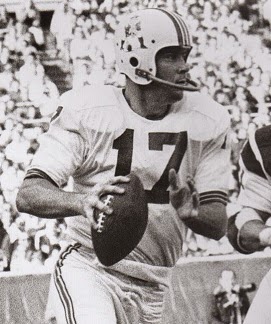
The New York Jets were looking to lock up a second straight AFL Eastern Division title as they faced the Houston Oilers on December 6, 1969. A year after Head Coach Weeb Ewbank’s team had not only won the AFL Championship but stunned the Baltimore Colts, champions of the NFL, in Super Bowl III, the Jets still boasted a formidable offense that featured the passing of QB Joe Namath (pictured above) to wide receivers Don Maynard and George Sauer and the running of FB Matt Snell and HB Emerson Boozer. While there were concerns about the defensive backfield, the line and linebackers were solid. The Jets had an 8-4 record, having lost to the Raiders the previous week.

Houston, coached by Wally Lemm, was 5-5-2 and in second place in the mediocre Eastern Division. The Oilers were known for a tough defense that featured DE Elvin Bethea, OLB George Webster, MLB Garland Boyette, cornerbacks Miller Farr and Zeke Moore, and FS Ken Houston.  The offense was not so formidable and was without starting FB Hoyle Granger and QB Pete Beathard, who suffered a foot injury in the previous game and was a late scratch, to be replaced by backup Don Trull.

There were 51,923 fans in attendance for the Saturday game at the Astrodome. The tone was set on the first play from scrimmage when Don Trull of the Oilers threw a pass that was intercepted by CB Cornell Gordon, who returned it 20 yards to the Houston seven. Three plays later, Emerson Boozer ran two yards up the middle for a touchdown. Jim Turner added the extra point and the visitors had a quick 7-0 advantage.

Things got worse for the Oilers when, facing third-and-11 from their own 26, Trull fumbled and DE Verlon Biggs recovered for the Jets. Joe Namath went to the air on first down and connected with George Sauer for a 21-yard TD. Turner again converted and, with only 3:32 elapsed, New York held a 14-0 lead.


In response, the Oilers moved effectively on their ensuing possession. FB Roy Hopkins and HB Woody Campbell handled the ball carrying effectively although the first time Trull faded back to pass he was sacked by DT John Elliott. But facing third-and-12, Trull threw to WR Jerry LeVias for 18 yards and, after two runs by Campbell gained seven yards, he connected with TE Alvin Reed (pictured at left) for 15 yards on a third-and-three play. Another third down was converted when the Jets were flagged for pass interference but the drive finally stalled at the New York 17 and Houston turned the ball over on downs.

The teams traded punts as the game moved into the second quarter. Midway through the period, another Trull pass was picked off, this time by DE Gerry Philbin who returned it 15 yards to the Houston three. Matt Snell lost three yards on first down, but Namath then threw to HB Bill Mathis for a six-yard touchdown. Turner added the point after and the Jets were up by a comfortable 21-0.

Bob Davis, who had only recently been activated from the taxi squad, was at quarterback when the Oilers returned on offense, but after completing two passes, the second to LeVias for 22 yards, he gave up an interception to LB Paul Crane. This time the visitors were unable to take advantage of the turnover and had to punt. Houston put together a 58-yard scoring drive as Davis completed five passes, three to Reed and two to LeVias, the second of which resulted in a 20-yard TD. Roy Gerela added the extra point.

The Oilers got a break when, on the second play of New York’s next series, WR Bake Turner fumbled while running on an end-around and DT Carel Stith recovered at the New York 22. Davis completed a pass to LeVias for 10 yards, but an illegal motion penalty backed Houston up and the home team ended up settling for a 24-yard Gerela field goal that made the halftime score 21-10.

The Jets had the first possession of the third quarter, punted, and got the ball back a few plays later when CB John Dockery intercepted a Davis pass and returned it 35 yards to the Houston five. The Oilers were able to keep the Jets out of the end zone, but the visitors came away with a 10-yard field goal by Turner that extended their lead to 14 points.

LeVias returned the ensuing kickoff 42 yards and the Jets were penalized 15 yards for a personal foul on top of it, but on the next play Davis fumbled when sacked by Biggs and New York had the ball back at the Houston 47. Runs by Boozer and Mathis picked up 18 yards before Jim Turner came on to kick a 38-yard field goal that put the Jets ahead by 27-10.


Davis was sacked twice by Biggs on the next possession and the Oilers had to punt from deep in their own territory. As the game moved into the fourth quarter, the Jets advanced to the Houston three, but this time they came up empty when Turner missed a short field goal attempt. It didn’t matter as, two plays later, Davis gave up another interception, this time with LB Ralph Baker (pictured at right) doing the honors. Veteran QB Babe Parilli was now spelling Namath and threw to Boozer for a gain of 29 yards. Snell scored from three yards out shortly thereafter and, with Turner again converting, the Jets had a commanding 34-10 lead.

The next two Houston possessions resulted in turnovers, by a fumble and yet another interception, the second by Dockery. But now New York turned the ball over on a fumble by FB Lee White and safety Johnny Peacock recovered and ran 27 yards for a touchdown. HB Mike Richardson scored for a two-point conversion that made it a 34-18 contest with a little over five minutes to play.

The Jets recovered the ensuing onside kick but went three-and-out and punted. Houston drove 80 yards in 10 plays. Davis completed eight passes along the way and ran once for four yards. His last pass was to HB Rich Johnson for a one-yard TD and another toss to WR Jim Beirne added another two-point conversion. It was now an eight-point game and this time the Oilers succeeded on recovering the onside kick, but there were only 32 seconds remaining on the clock. Davis missed on four passes and New York came away with a 34-26 win.  

As a side note, the attention of the crowd was split between the game before them, during which they often booed the Oilers, and the major collegiate game between Texas and Arkansas that many of them were listening to via radio, causing cheers at odd moments.

Houston led in total yards (220 to 213) and in first downs (18 to 12), which was deceptive since the Oilers were playing from behind virtually the entire game. More significantly, they turned the ball over a crippling nine times, six of them by interceptions, which set a club record for the Jets. New York also recorded nine sacks, to none by Houston. The Jets suffered four turnovers.

Joe Namath had a relatively run-of-the-mill performance, completing 6 of 16 passes for 52 yards and two touchdowns with none intercepted. Emerson Boozer rushed for 57 yards on 11 carries that included a TD and caught a pass for another 29 yards. Matt Snell contributed 38 yards on his 14 rushing attempts that also included a score. George Sauer topped New York’s receivers with just three catches for 33 yards and a touchdown.


For the Oilers, Don Trull was three-of-nine for 37 yards with two interceptions before being relieved by Bob Davis, who was successful on 20 of 35 throws for 192 yards and two TDs, but with four interceptions. Jerry LeVias (pictured at left) and Alvin Reed caught 9 passes apiece, for 110 and 86 yards, respectively, and LeVias scored a touchdown. Roy Hopkins led the club in rushing with 30 yards on 9 carries.

The Jets defeated Miami in the season finale to finish with a 10-4 record and, in the revamped playoff format that the AFL used in its last season prior to the merger with the NFL, they faced the second-place team in the Western Division, the Kansas City Chiefs, in the first round. The Chiefs won to end New York’s hopes of repeating as AFL Champions. The Oilers won their last game to finish second in the division at 6-6-2 and were swamped by the Oakland Raiders, the Western Division’s top finisher, in their first round playoff game.

The relief performance against New York was the most significant action for third-year QB Bob Davis in 1969. Used sparingly in his first three seasons with Houston, he moved on to the Jets the following year and saw his most significant NFL action with them before moving on to New Orleans and then the World Football League.

July 24, 2015

Highlighted Year: Fred Biletnikoff, 1969

Wide Receiver, Oakland Raiders


Age: 26
5th season in pro football & with Raiders
College: Florida State
Height: 6’1”   Weight: 190

Prelude:
Biletnikoff caught 57 passes for 987 yards and 11 touchdowns as a college senior and added another 13 receptions for 192 yards and four TDs in the Gator Bowl. He was chosen in the second round of the 1965 AFL draft by the Raiders (and in the third round of the NFL draft by the Detroit Lions) and moved into the starting lineup at midseason. A quiet second season was followed by a breakout year in 1967 in which Biletnikoff had 40 catches for 876 yards (21.9 avg.) and was named to the AFL All-Star Game. He followed up with 61 receptions for a career-high 1037 yards (17.0 avg.) and six TDs in ’68.

1969 Season Summary
Appeared in all 14 games
[Bracketed numbers indicate league rank in Top 20]

Pass Receiving
Receptions – 54 [2] 
Most receptions, game – 9 (for 132 yds.) vs. Miami 9/20, (for 119 yds.) at Miami 10/4
Yards – 837 [5]
Most yards, game – 132 (on 9 catches) vs. Miami 9/20
Average gain – 15.5 [15]
TDs – 12 [2]
100-yard receiving games – 3

Scoring
TDs – 12 [2]
Points – 72 [10]

Postseason: 2 G
Pass receptions – 3
Most pass receptions, game – 3 vs. Houston, AFL Divisional playoff
Pass receiving yards – 70
Most pass receiving yards, game – 70 vs. Houston, AFL Divisional playoff
Average yards per reception – 23.3
Pass Receiving TDs – 2

Awards & Honors:
1st team All-AFL: AP, PFWA, NEA, NY Daily News, Pro Football Weekly, Sporting News
2nd team All-AFL: Hall of Fame, UPI
AFL All-Star Game

Raiders went 12-1-1 to finish first in the AFL Western Division while leading the league in total yards (5036), passing yards (3271), touchdowns (45), and scoring (377 points). Won AFL Divisional playoff over Houston Oilers (56-7). Lost AFL Championship to Kansas City Chiefs (17-7).

Aftermath:
Biletnikoff spent another nine seasons with the Raiders. Lacking great speed and with a slight build, he had excellent hands (often covered with “stickum”) and a knack for getting open, and he was highly consistent, catching 40 or more passes 10 times. Biletnikoff led the NFL with 61 pass receptions in 1971 and was named to two AFL All-Star Games, four Pro Bowls, received at least some All-AFL or All-NFL honors after five seasons, and was the MVP of Super Bowl XI following the 1976 season. Overall with the Raiders, he caught 589 passes, the fourth most in league history at the time, for 8974 yards (15.2 avg.) and 76 touchdowns. He held NFL postseason records at the time of his retirement with 70 receptions for 1167 yards (16.7 avg.) and 10 TDs. Biletnikoff spent one final season (1979) in the CFL with the Montreal Alouettes and capped his pro career with 38 catches for 470 yards and four TDs. He was inducted into the Pro Football Hall of Fame, Class of 1988.

--

Highlighted Years features players who were consensus first-team All-League* selections or league* or conference** leaders in the following statistical categories:

Rushing: Yards, TDs (min. 10)
Passing: Yards, Completion Pct., Yards per Attempt, TDs, Rating
Receiving: Catches, Yards, TDs (min. 10)
Scoring: TDs, Points, Field Goals (min. 5)
All-Purpose: Total Yards
Defense: Interceptions, Sacks
Kickoff Returns: Average
Punt Returns: Average
Punting: Average

*Leagues include NFL (1920 to date), AFL (1926), AFL (1936-37), AAFC (1946-49), AFL (1960-69), WFL (1974-75), USFL (1983-85)

**NFC/AFC since 1970

January 4, 2015

1970: Chiefs Defeat Raiders in Final AFL Championship Game


With merger into the NFL on the horizon, the Kansas City Chiefs and Oakland Raiders met in the last American Football League Championship game on January 4, 1970. Both participants came from the Western Division due to the adopting of a playoff system by the AFL for the ’69 season in which the first place finishers faced the second-place teams in the opposite divisions in the first round. Thus, the Raiders, who placed first in the Western Division with a 12-1-1 record soundly defeated the Houston Oilers, the second place team in the Eastern Division, by a 56-7 score while the Chiefs, the second place team in the West at 11-3, beat the New York Jets, the defending league champs and first place team in the East, by 13-6.

Oakland had a first-year head coach in 33-year-old John Madden, but remained the same formidable team it had been in going 25-3 over the last two regular seasons, with one AFL title to show for it. QB Daryle Lamonica threw for 3302 yards and 32 TDs, receiving AFL Player of the Year honors from UPI, and wide receivers Fred Biletnikoff and Warren Wells combined for 26 touchdowns, although Wells was playing with a shoulder separation suffered in the season finale. The running game was less formidable, but HB Charlie Smith and FB Hewritt Dixon were both capable receivers out of the backfield. The defense was at its best in the backfield that included CB Willie Brown and safeties George Atkinson and Dave Grayson. Moreover, the Raiders had beaten Kansas City in both of their encounters during the regular season.

The Chiefs, coached by Hank Stram, managed to perform well even when the two key players on offense, QB Len Dawson (pictured above) and WR Otis Taylor, missed time due to injuries. The running game was sound, utilizing a committee approach that included halfbacks Mike Garrett and Warren McVea and fullbacks Robert Holmes and Wendell Hayes running by a line that contained All-AFL performers in OT Jim Tyrer and G Ed Budde. The defense was stable and solid, featuring DT Buck Buchanon, linebackers Bobby Bell and Willie Lanier, and FS Johnny Robinson. PK Jan Stenerud was the AFL’s most reliable placekicker.

It was a clear day at the Oakland-Alameda County Coliseum with 53,564 fans in attendance. The Chiefs had the game’s first possession and punted. Oakland moved the ball effectively, with Charlie Smith (pictured below) and Hewritt Dixon running well and Daryle Lamonica completing consecutive passes to Smith for seven and six yards. However, after reaching the Kansas City 44, Dixon dropped a third down pass and George Blanda’s 52-yard field goal attempt fell short.


The teams exchanged punts, with neither able to move on offense, until the Raiders put together a drive of 66 yards in ten plays. Lamonica completed five passes, two for short gains to Smith and one to Warren Wells that covered 24 yards to the KC three. From there, Smith ran for a touchdown and, with Blanda’s extra point, Oakland took a 7-0 lead into the second quarter.

Once again the teams punted back and forth, with the Chiefs still stymied on offense and the Raiders unable to generate anything further either. Taking possession at their 25 with 3:24 left in the first half, the visitors finally began to move. Len Dawson threw to Otis Taylor for 14 yards and Robert Holmes had an eight-yard run to the 50. Dawson connected with WR Frank Pitts for a gain of 41 yards to the Oakland one and on the next play Warren McVea carried for a TD. Jan Stenerud’s conversion tied the score at 7-7, and that was the tally at halftime.

SS George Atkinson returned the second half kickoff 52 yards to the Kansas City 45 and the Raiders reached the 26 before being backed up by a penalty. Lamonica threw two incomplete passes at that point, injuring his throwing hand on one, and Blanda was wide on a 39-yard field goal attempt. Oakland got the ball right back when Mike Garrett fumbled and DT Tom Keating recovered at the KC 33. But once again the home team couldn’t capitalize, gaining nothing on three plays followed by another unsuccessful Blanda field goal attempt.

The Chiefs were forced to punt following a short series and Jerrel Wilson’s 29-yard punt gave the Raiders good field position at the KC 48. 41-year-old George Blanda had taken over at quarterback at the end of the previous series and he completed a screen pass to HB Pete Banaszak for a yard and then a throw to Smith that picked up 23 yards to the 24 yard line. But two plays later, a long throw into the end zone intended for Wells was intercepted by CB Emmitt Thomas, who ran it out to his six yard line. Once again the home team had come up empty in Kansas City territory.

The Chiefs were pinned deep near their goal line and facing third-and-14 as Dawson faded back into his end zone and threw a high pass that Taylor caught in spectacular fashion for 35 yards. Dawson then connected with Holmes for 23 yards to advance into Oakland territory. A pass interference penalty on CB Nemiah Wilson moved the ball to the seven and Holmes ran for a five-yard touchdown, capping the 94-yard drive. Stenerud again kicked the point after and Kansas City was ahead by 14-7.

Lamonica, despite the hand injury that affected his ability to grip the ball, was back behind center when the Raiders regained possession, but the result was a punt. The next Oakland series started at the six yard line and advanced to the KC 39 before SS Jim Kearney picked off a Lamonica pass. However, the Raiders got the ball back when a mixup in the Kansas City backfield resulted in a fumble that DT Carleton Oates recovered. But Lamonica again tossed an interception on the next play, this time by rookie CB Jim Marsalis.


Once more the Chiefs turned the ball over in their own territory, this time on a fumble by Holmes that MLB Dan Conners recovered at the KC 31. And once more the Chiefs intercepted a Lamonica pass, with Thomas (pictured at right) picking off his second of the game at his own 20 and returning it 62 yards to the Oakland 18. The result was an insurance field goal with Stenerud connecting from 22 yards with 4:48 remaining on the clock. Kansas City held on to win by a final score of 17-7.

The Raiders had the edge in total yards (233 to 207) and first downs (18 to 13). The Kansas City defense mounted a tremendous pass rush and recorded four sacks, in addition to four interceptions. Both teams turned the ball over four times, with all of those by the Chiefs coming on fumbles.

Len Dawson completed just 7 of 17 passes for 129 yards, but the completions tended to come in clutch situations and, while he had no touchdown passes, he also gave up no interceptions. Otis Taylor had three catches for 62 yards. Wendell Hayes led Kansas City’s ground game with 35 yards on 8 attempts that included a TD. On defense, DE Aaron Brown was unofficially credited with 2.5 sacks and Emmitt Thomas had the two big interceptions that he returned for a total of 69 yards.

For the Raiders, Daryle Lamonica, hindered in the second half by his sore hand, was successful on only 15 of 39 throws for 167 yards and no TDs while giving up three interceptions. In his brief stint, George Blanda went two-for-six and 24 yards and was picked off once. Charlie Smith caught 8 passes for 86 yards while also rushing for 31 yards and a touchdown on 12 attempts. Hewritt Dixon ran for a team-leading 36 yards on 12 carries. WR Rod Sherman contributed three catches for 45 yards while the injured Warren Wells was limited to the one 24-yard reception.

Kansas City went on to upset the Minnesota Vikings, champions of the NFL, in the Super Bowl. It was the second straight year in which the younger league came out on top and provided a good sendoff to the AFL before it was absorbed into the NFL. The Chiefs and Raiders became part of the American Football Conference’s Western Division, and Oakland once again finished first in 1970 while the Chiefs placed second at 7-5-2 and out of the postseason.

October 26, 2014

1969: Jets Run for 210 Yards to Defeat Patriots


The New York Jets had won the 1968 AFL Championship and stunned the Baltimore Colts in Super Bowl III and were 4-2 as they hosted the Boston Patriots on October 26, 1969. Coached for the seventh year by Weeb Ewbank, the Jets were known primarily for their passing offense, and that centered around star QB Joe Namath and the outstanding wide receivers Don Maynard and George Sauer. With HB Emerson Boozer and FB Matt Snell (pictured above), they could run the ball, too. On defense they were sound on the line and at linebacker, but there were concerns about the defensive backfield.

Boston was 0-6 and had already lost to the Jets at home. Their first-year head coach was Clive Rush, a former New York assistant, and another ex-Jet was the starting quarterback, Mike Taliaferro. There were promising young players such as HB Carl Garrett and G Mike Montler, but the defense was missing star MLB Nick Buoniconti, dealt away to Miami. However, the strong suit was the defensive backfield, and the Patriots hoped to disrupt New York’s passing attack.

It was a sunny and pleasant day at Shea Stadium with 62,298 fans in attendance. The Patriots had the first possession and drove 82 yards in seven plays. QB Mike Taliaferro had completions of 16 yards to WR Charley Frazier and 19 yards to Carl Garrett and connected with WR Bill Rademacher, yet another ex-Jet, in the end zone for a 22-yard touchdown. Gino Cappelletti added the extra point.

New York put together a scoring drive in response. Joe Namath had a completion to George Sauer, but it was Matt Snell and Emerson Boozer carrying the load and Snell ran 12 yards for a TD. Jim Turner’s extra point tied the score at 7-7.

Boston came right back with a 74-yard series. FB Jim Nance had a 16-yard run up the middle and, on a third-and-nine play, Taliaferro threw to Rademacher for 17 yards to the New York 40. The series finally ended with a Cappelletti field goal from 39 yards and the visitors took a 10-7 lead into the second quarter.

The Jets continued to keep the ball on the ground, although Namath did find Don Maynard open for a 20-yard gain at one point. The drive stalled at the Boston 30 and Turner once again knotted the score with a 38-yard field goal.

The Patriots had to punt following their next series, but made a big play on defense when safety John Charles intercepted a Namath pass and returned it 25 yards for a touchdown. Cappelletti converted and the visitors were again in the lead by 17-10.

A short series by the Jets that ended in a punt led to Taliaferro being intercepted by CB Randy Beverly, who returned it to the Boston 33. However, Snell fumbled the ball back two plays later. The Patriots were forced to punt and New York advanced into Boston territory, but with time running out in the first half, Turner missed a 37-yard field goal attempt and the score remained unchanged at halftime.

On the third play following the second half kickoff, the visitors got a break when Boozer fumbled and DT Ray Jacobs recovered for the Patriots. The turnover led to a field goal try by Cappelletti, but he was unsuccessful from 49 yards. The Jets reached midfield on their next possession, helped along by a Namath pass to Sauer that picked up 25 yards, but had to punt. However, they pinned the Patriots deep in their territory and, when forced to punt in turn, Janik’s kick traveled only 29 yards to give the Jets good field position at the Boston 41.

In a series in which Snell ran four times for 16 yards, the Jets put points on the board with a 32-yard Turner field goal that narrowed Boston’s lead to 17-13. The Patriots again had to punt and, in a possession that extended into the fourth quarter, the Jets drove to another score. On a third-and-ten play, Namath, finding his receivers covered, uncharacteristically scrambled for 16 yards and New York picked up another 15 yards on a personal foul by the Patriots. Now at the Boston 47, the Jets pounded down the field and Boozer scored a touchdown from two yards out. Turner added the extra point and New York was ahead by 20-17.

On the next series, Taliaferro fumbled when hit attempting to pass and DT John Elliott recovered at the Boston 31. The Jets kept the ball on the ground with Snell and Boozer carrying and added to the lead when Turner kicked a 13-yard field goal. With time winding down, the Patriots went three-and-out on their next series and punted. New York was able to run out the last two minutes and won by a final score of 23-17.

The Jets had more total yards (318 to 211), with only 108 through the air but 210 on the ground, and also had the lead in first downs (21 to 10). New York was hurt by three turnovers, to two by the Patriots, but of the seven penalties called during the game, six were on Boston.

Matt Snell rushed for 109 yards on 23 carries and Emerson Boozer contributed 67 yards on 15 attempts, with each scoring a touchdown. Joe Namath completed 10 of 21 passes for 115 yards and no touchdowns while giving up one interception. George Sauer had four catches for 58 yards to top the Jets.

For the Patriots, Mike Taliaferro (pictured below) was successful on 12 of 24 throws for 139 yards and a TD with one interception. Jim Nance rushed for 58 yards on 11 carries and Carl Garrett added 20 on 8 attempts and also had four pass receptions for 40 yards. Bill Rademacher was the top receiver with 6 catches for 78 yards and a TD.


The Jets cruised to first place in the Eastern Division with a 10-4 record but, in the expanded playoff format used in the AFL’s last year before merging with the NFL, they lost in the Divisional round to the Chiefs, second-place finishers in the Western Division. Boston won for the first time the following week against the Oilers, the first of four wins in five games, and ended up tied for third in the division with Buffalo at 4-10.

The combination of Matt Snell and Emerson Boozer continued to be productive over the course of the season. Snell rushed for 695 yards on 191 carries (3.6 avg.) and was a consensus first-team All-AFL selection as well as AFL All-Star. Boozer had 604 yards on 130 attempts (4.6 avg.) and gained more yardage as a receiver (222 on 20 receptions to 187 on 22 catches for Snell).

Mike Taliaferro had his most productive pro season, throwing for 2160 yards and 19 touchdowns, which tied Namath for second in the league. He was also named to the AFL All-Star game. Bill Rademacher’s performance against the Jets was the best of his career. A backup who caught just three passes during five years with New York, he had 17 receptions for 217 yards (12.8 avg.) and three TDs in ’69.

August 1, 2013

1969: Jets Withstand Second Half Rally to Beat College All-Stars


The 36th annual College All-Star Game on August 1, 1969 featured the New York Jets as the pro representative. Last seen upsetting the Baltimore Colts in Super Bowl III, the Jets became the first American Football League Champion to appear in the annual contest sponsored by the Chicago Tribune for Chicago Charities.

There had been turmoil for the Jets in June when star QB Joe Namath (pictured above) announced he would retire rather than sell his interest in the Bachelors III nightclub, as demanded by Commissioner Pete Rozelle, but “Broadway Joe” finally relented and reported to training camp just two weeks prior to the All-Star contest.

On the All-Star side, a shadow was cast by the absence of star running backs O.J. Simpson, the Heisman Trophy winner out of USC, Leroy Keyes from Purdue, and Michigan’s Ron Johnson, who had chosen to skip the game to avoid the risk of injury prior to signing pro contracts. Still, there were plenty of future pro stars playing, including Notre Dame OT George Kunz, TE Bob Klein from USC, and WR Jerry LeVias of Southern Methodist on offense and, defensively, ends Bill Stanfill from Georgia and Fred Dryer of San Diego State, Arkansas State MLB Bill Bergey, cornerbacks Jim Marsalis of Tennessee State and Bill Thompson from Maryland – Eastern Shore, and Missouri safety Roger Wehrli. The team was coached by Otto Graham for the ninth time, returning after a three-year hiatus while he was head coach of the Redskins.

There was a crowd of 74,206 in attendance on a Friday night at Soldier Field and many of them loudly booed Namath when he was introduced. The All-Stars looked tight throughout the first half and were especially hampered by their lack of a running attack. The Jets scored first on a 43-yard Jim Turner field goal. Less than four minutes later, New York struck again on another Turner field goal, this time from 16 yards, and the pro champs led by 6-0 after a quarter of play.

In the second quarter, the Jets added to their lead as they put together a 10-play, 75-yard drive that ended with FB Matt Snell running the final three yards for a TD. They failed to add to their margin when the All-Stars put together an impressive goal-line stand after the Jets got a first down inside the five yard line, stopping four straight running plays (two each by HB Emerson Boozer and FB Bill Mathis).

The All-Star defense foiled another possible score by the Jets when Snell attempted an option pass intended for TE Pete Lammons from the three yard line that was picked off by DB Bill Bradley. But the All-Stars were unable to mount a threat as they managed just one first down (which was due to a penalty) and scored no points in the first half with Notre Dame’s Terry Hanratty and Bobby Douglass of Kansas appearing at quarterback.

Down 13-0 at the half, the All-Stars fell further behind in the third quarter thanks to Turner’s 42-yard field goal for the Jets. But fortunes changed when QB Greg Cook from Cincinnati (pictured below) entered the contest. The collegians took advantage of a 78-yard kickoff return by RB Altie Taylor to the New York 19 to get on the board. Cook fired a 17-yard touchdown pass to WR Gene Washington from Stanford for a touchdown and Roy Gerela from New Mexico State added the extra point.


Following an interception by CB Rudy Redmond, Gerela kicked a 28-yard field goal that made the Jets’ margin just 16-10. New York responded with a 63-yard drive in four plays that ended with a touchdown on a 35-yard sweep by Snell.

The All-Stars struck back quickly, however, as Cook tossed a bomb to Taylor in a third-and-one situation for a 44-yard gain to the New York 12. On the next play Cook floated a pass into the corner of the end zone that was pulled in by the 242-pound Bob Klein for a TD and Gerela’s successful PAT made it 23-17, which was the tally at the end of the eventful third quarter.

The All-Stars regained possession when Roger Wehrli intercepted a Namath pass at the All-Star 36. Cook completed a 27-yard pass and the All-Stars reached the New York 29 before the drive stalled and Gerela missed on a 37-yard field goal attempt that sailed wide. The Jets, making the most of their reprieve, responded with a 69-yard series that concluded with Jim Turner kicking his fourth field goal of the game, from 18 yards, with just under six minutes remaining to play.

It was still 26-17 when the All-Stars got the ball back at their 20 with slightly less than two minutes to go. Cook threw to Jerry LeVias for 11 yards and connected with him again on a big play that covered 59 yards to the New York 8. A penalty on the Jets edged the collegians closer, but controversy ensued on the next play when a throw intended for Gene Washington that was defended by CB Johnny Sample was incomplete. Otto Graham, believing that Sample interfered with Washington, loudly complained to the officials and was in turn confronted by Sample. Graham came away with a bloody scrape on his nose from Sample’s helmet and a 15-yard penalty for being outside his assigned sideline area.

Still, the collegians managed to capitalize when Cook handed off to Taylor who tossed the ball back to him and the quarterback then threw to LeVias for a 19-yard touchdown with 16 seconds left on the clock. Gerela’s PAT was successful, but any last chance for the All-Stars ended when the ensuing onside kick failed to go the required ten yards, and the Jets were able to run out the remaining time for the 26-24 win.

As close as the score was, the Jets dominated statistically, outgaining the All-Stars by 463 yards to 260 and holding a substantial edge in first downs of 28 to 8.


Joe Namath, who was wearing a three-bar linemen’s face mask for the first time in his career, had to remain in the game far longer than Head Coach Weeb Ewbank would have liked due to the All-Star rally. While not fully up to par, he completed 17 of 32 passes for 292 yards with no touchdowns and two interceptions. Matt Snell (pictured above) rushed for 114 yards and two TDs on 19 carries as the Jets piled up 201 yards on the ground. WR Bake Turner, in for the injured George Sauer, caught 8 passes for 145 yards.

With a lack of strong runners, the All-Stars gained just 16 rushing yards, on 13 attempts, and the individual leader was Kansas QB Bobby Douglass with 7 yards on one carry. Greg Cook’s passing was nevertheless nearly enough to pull out the contest as he was successful on 12 of 23 throws for 241 yards and three touchdowns. Jerry LeVias was the leading receiver with three catches for 89 yards.

In the ensuing season, the Jets went 10-4 to again top the Eastern Division in the AFL’s last campaign prior to merging with the NFL, but they lost to Kansas City in the Divisional playoff round. Joe Namath had another outstanding year, receiving AFL Player of the Year recognition from the Associated Press.

Greg Cook had a remarkable rookie season with the Cincinnati Bengals, leading the AFL in passing and garnering Rookie of the Year honors, but unfortunately his career went no further due to his sustaining a serious arm injury along the way. 

July 23, 2013

MVP Profile: Daryle Lamonica, 1969

Quarterback, Oakland Raiders


Age:  28
7th season in pro football, 3rd with Raiders
College: Notre Dame
Height: 6’3”   Weight: 215

Prelude:
A 24th round draft pick of the Bills (12th round by Green Bay in the NFL draft), Lamonica backed up Jack Kemp in Buffalo for his first four seasons. Often used in relief of Kemp, he was effective but became restless in the backup role and was traded to Oakland for the 1967 season. He was also mobile and led AFL quarterbacks with 289 rushing yards in 1964. Given the opportunity to start, and with a strong arm and affinity for going deep, he proved to be an excellent fit in Oakland’s vertical passing game. Lamonica passed for 3228 yards and 30 touchdowns as he received AFL Player of the Year recognition for the first time and the Raiders won the league title. “The Mad Bomber” followed up in 1968 by passing for 3245 yards and 25 TD passes, and won a memorable duel against Joe Namath and the Jets in the so-called “Heidi Game”. The team went 12-2 and advanced to the AFL title game but lost in the rematch with New York.

1967 Season Summary
Appeared and started in all 14 games
[Bracketed numbers indicate league rank in Top 20]

Passing
Attempts – 426 [1]
Most attempts, game – 44 at Cincinnati 11/2
Completions – 221 [1]
Most completions, game – 23 vs. Miami 9/20
Yards – 3302 [1]
Most yards, game – 333 at NY Jets 11/30
Completion percentage – 51.9 [2]
Yards per attempt – 7.8 [2]
TD passes – 34 [1]
Most TD passes, game – 6 vs. Buffalo 10/19
Interceptions – 25 [1]
Most interceptions, game – 5 at Cincinnati 11/2
Passer rating – 79.8 [2]
300-yard passing games – 2
200-yard passing games – 10

Rushing
Attempts – 13
Most attempts, game - 3 (for 6 yds.) at NY Jets 11/30
Yards – 36
Most yards, game – 12 yards (on 1 carry) vs. Buffalo 10/19
Yards per attempt – 2.8
TDs – 1

Scoring
TDs – 1
Points – 6

Postseason: 2 G
Pass attempts – 56
Most attempts, game - 39 vs. Kansas City, AFL Championship
Pass completions – 28
Most completions, game - 15 vs. Kansas City, AFL Championship
Passing yardage – 443
Most yards, game - 276 vs. Houston, AFL Divisional playoff
TD passes – 6
Most TD passes, game - 6 vs. Houston, AFL Divisional playoff
Interceptions – 4
Most interceptions, game - 3 vs. Kansas City, AFL Championship

Awards & Honors:
AFL Player of the Year: UPI, Sporting News
1st team All-AFL: AP, PFWA, UPI, Pro Football Weekly, Sporting News
2nd team All-AFL: Hall of Fame, NEA, NY Daily News
AFL All-Star Game

Raiders went 12-1-1 to finish first in the AFL Western Division while leading the league in total yards (5036), passing yards (3271), scoring (377 points), and touchdowns (45). Won AFL Divisional playoff over Houston Oilers (56-7). Lost AFL Championship to Kansas City Chiefs (17-7).

Aftermath:
With the AFL/NFL merger in 1970, Lamonica was selected to the Pro Bowl but his numbers were in decline and injuries were becoming a factor. Following one more Pro Bowl selection in ’72, he lost his starting job to Ken Stabler in 1973 and, after throwing just 9 passes in ’74, played out his option and signed with the Southern California Sun of the WFL. A preseason injury knocked him out of action and he backed up rookie Pat Haden, completing just 9 of 19 passes for 90 yards with a TD and three interceptions before the league folded and his career came to an end. Overall, in the AFL and NFL he passed for 19,154 yards with 164 TDs and 138 interceptions and had a 66-16-6 regular season record as a starting quarterback (4-5 in the postseason).

--

MVP Profiles feature players who were named MVP or Player of the Year in the NFL, AAFC (1946-49), AFL (1960-69), WFL (1974), or USFL (1983-85) by a recognized organization (Associated Press, Pro Football Writers Association, Newspaper Enterprise Association, United Press International, The Sporting News, Maxwell Club – Bert Bell Award, or the league itself).

June 23, 2013

MVP Profile: Joe Namath, 1969

Quarterback, New York Jets


Age: 26
5th season in pro football & with Jets
College: Alabama
Height: 6’2”   Weight: 195

Prelude:
Chosen by both the NFL Cardinals and AFL Jets in the first round of the respective 1965 drafts, Namath signed a then-huge $427,000 contract with New York. A college star under Head Coach Paul “Bear” Bryant at Alabama, he had torn ligaments in his right knee during his senior year that required surgery. Knee and mobility issues would thus be significant throughout Namath’s career, but he took over as the starting quarterback for the Jets early in his rookie season and didn’t miss a game to injury (he wouldn’t in his first five seasons) while gaining selection to the AFL All-Star game. Charismatic (he quickly became a celebrity off the field) and a good leader, he also had a quick release and strong arm. Namath led the league in pass attempts and completions, yards, and TD passes in 1966 and ’67 – in the latter season, he became the first 4000-yard passer in NFL/AFL history (4007). Prone to trying to force passes into coverage, however, he also led the AFL in passes intercepted in both years. In 1968, the Jets won the AFL Championship and an upset win in the Super Bowl – Namath was AFL Player of the Year for his season performance and MVP of the Super Bowl.

1969 Season Summary
Appeared and started in all 14 games
[Bracketed numbers indicate league rank in Top 20]

Passing
Attempts – 361 [3]
Most attempts, game – 51 at San Diego 9/28
Completions – 185 [2]
Most completions, game – 29 at San Diego 9/28
Yards – 2734 [2]
Most yards, game – 344 at San Diego 9/28
Completion percentage – 51.2 [3]
Yards per attempt – 7.6 [3]
TD passes – 19 [2, tied with Mike Taliaferro]
Most TD passes, game – 3 vs. Miami 11/2
Interceptions – 17 [5]
Most interceptions, game – 3 at Buffalo 9/14, vs. Houston 10/20, vs. Kansas City 11/16
Passer rating – 74.3 [3]
300-yard passing games – 3
200-yard passing games – 5

Rushing
Attempts – 11
Most attempts, game – 2 (for 8 yds.) at Buffalo 9/14, (for 3 yds.) vs. Houston 10/20, (for 0 yds.) vs. Miami 11/2
Yards – 33
Most yards, game – 16 yards (on 1 carry) vs. Boston 10/26
Yards per attempt – 3.0
TDs – 2

Scoring
TDs – 2
Points - 12

Postseason: 1 G (AFL Divisional playoff vs. Kansas City)
Pass attempts – 40
Pass completions – 14
Passing yardage – 164
TD passes – 0
Interceptions – 3

Rushing attempts – 1
Rushing yards – 1
Rushing TDs – 0

Awards & Honors:
AFL Player of the Year: AP
1st team All-AFL: NEA, NY Daily News
2nd team All-AFL: AP, UPI, Sporting News
AFL All-Star Game

Jets went 10-4 to win AFL Eastern Division. Lost AFL Divisional playoff to Kansas City Chiefs (13-6).

Aftermath:
A broken wrist sidelined Namath five games into the ’70 season, the first of a series of injuries that dogged the remainder of his career. After appearing in just nine games in 1970 and ’71, he came back in 1972 to lead the NFL in passing yards (2816), TD passes (19), and yards per attempt (8.7) and was named to the Pro Bowl. However, a separated shoulder limited him to six games in 1973 and, with the team deteriorating around him, he had only sporadic success while leading the league in interceptions in 1974 and ’75. Namath finished his career with the Rams in 1977 and ended up throwing for 27,663 yards with 173 TDs and 220 interceptions. His #12 was retired by the Jets and he was inducted into the Pro Football Hall of Fame, class of 1985.

--


MVP Profiles feature players who were named MVP or Player of the Year in the NFL, AAFC (1946-49), AFL (1960-69), WFL (1974), or USFL (1983-85) by a recognized organization (Associated Press, Pro Football Writers Association, Newspaper Enterprise Association, United Press International, The Sporting News, Maxwell Club – Bert Bell Award, or the league itself). 

December 20, 2012

1969: Chiefs Defeat Jets in AFL Divisional Playoff


For its final season prior to merging with the NFL, the American Football League adopted an expanded playoff structure. Rather than have the two division winners play directly for the league title, a first round pitting the second place team in each of the divisions against the first place club in the opposite division was added. On December 20, 1969 one of the Divisional playoffs pitted the Kansas City Chiefs, the second place club in the Western Division, against the top team in the Eastern Division, the defending-champion New York Jets.

The Jets, coached by Weeb Ewbank, had won a stunning victory in the previous year’s Super Bowl and easily repeated as division winners with a 10-4 record, sweeping all the other Eastern clubs along the way. They still had the ability to put points on the board with QB Joe Namath throwing to flanker Don Maynard, split end George Sauer, and TE Pete Lammons and a fine running attack headed by HB Emerson Boozer and FB Matt Snell. While the defensive backfield was suspect, the line and linebackers were not. In addition, PK Jim Turner, having kicked a then-record 34 field goals in 1968, followed up with 32 in ‘69.

Head Coach Hank Stram’s Chiefs were runners-up to Oakland in the tougher Western Division with an 11-3 tally. QB Len Dawson (pictured passing above) missed six games due to a knee injury but was healthy for the postseason. The stable of running backs provided a good blend of inside power and outside speed and the defense was solid in all areas. Kansas City also boasted an outstanding placekicker in Jan Stenerud, who set a league record with 16 consecutive field goals at one point. Moreover, in their one meeting with New York during the regular season, the Chiefs won decisively.

It was a cold and windy Saturday at Shea Stadium with 62,977 fans in attendance. The Jets were without the services of Don Maynard for most of the game due to a broken right foot, although he was inserted briefly in the second half and caught one pass. Meanwhile, a bout of the flu kept Kansas City FB Robert Holmes out of action for most of the game as well.

The strong winds played havoc on the passing game from the start and also affected the placekicking. An early 40-yard field goal attempt by Stenerud was held up by the wind and fell short. New York responded with a drive in which Namath completed all four of his passes and Jim Turner was successful on his three-point try from 27 yards.

The contest quickly settled into being a defensive struggle. Stenerud finally got Kansas City on the board early in the second quarter with a 23-yard field goal. The Jets played conservatively and chose to run out the clock with their last possession of the second quarter, much to the dissatisfaction of the home crowd.

Late in the third quarter, the Chiefs, helped by a key pass completion from Dawson to TE Fred Arbanas, went ahead by 6-3 as Stenerud booted a 25-yard field goal. It set the stage for the turning point of the game in the fourth quarter.

First, a pass interference call on CB Emmitt Thomas gave New York a first down at the KC one. With MLB Willie Lanier exhorting his teammates on, the Jets tried to run it in on successive carries by Matt Snell and HB Bill Mathis, but failed to reach the end zone. In both instances, Lanier was there to make the play. With third and inches inside the Kansas City one yard line, Namath rolled to his right. Snell was his primary receiver, but LB Bobby Bell picked him up out of the backfield and the hobbling quarterback was under pressure from onrushing LB Jim Lynch. As a result, Namath threw the ball away and the Jets had to settle for a seven-yard field goal by Jim Turner. It tied the score at 6-6, but was a big missed opportunity for New York – and a spur to the Chiefs.

On the ensuing series, Dawson threw to WR Otis Taylor for a 61-yard gain on a crossing pattern and then followed with a 19-yard TD pass to WR Gloster Richardson, who was all alone in the end zone after having eluded CB Cornell Gordon. With the extra point added, the Chiefs were up by seven points.

There was still time for the Jets to come back, but the inspired Kansas City defense was able to keep them out of the end zone and Namath was only able to complete 6 of 20 pass attempts the rest of the way. Twice New York made it into scoring territory, getting to the KC 16 and 13 respectively, but came up empty. On the second of those occasions, two Namath passes intended for George Sauer in the end zone fell incomplete and a third, to WR Bake Turner, was intercepted by CB Jim Marsalis to end the threat after New York had reached the KC four due to a personal foul penalty on SS Jim Kearney. Any last hopes ended when DB Mike Battle fumbled away a punt with 36 seconds left on the clock. The Chiefs won 13-6 to advance to the AFL Championshi p game.

Kansas City outgained the Jets (276 yards to 235) but New York had more first downs (19 to 14). The Jets turned the ball over four times while KC suffered no turnovers. The teams combined for 11 punts and Jan Stenerud struggled as he missed three of his five field goal attempts.


In the difficult weather conditions, Len Dawson completed 12 of 27 passes for 201 yards and a touchdown. Mike Garrett rushed for 67 yards on 18 carries and Wendell Hayes added 32 yards on 10 attempts while leading the team with 5 catches for 46 yards. However, Otis Taylor (pictured at left) gained 74 yards on his two receptions.

For the Jets, Joe Namath went to the air 40 times and completed 14 for 164 yards with three interceptions. George Sauer caught 5 of those passes for 61 yards. Matt Snell was the rushing leader with 61 yards on 12 attempts.

Reacting to criticism of the attempt to pass on third down rather than try another run into the line, causing the Jets to end up with three points rather than potentially seven and shifting the game’s momentum, Coach Ewbank said, “We don’t second-guess a call. Hindsight is always 20-20. Joe (Namath) called that third down pass and I thought it was a good call. We worked on that play all week for that type situation and we thought it would work.”

The Chiefs faced their division rivals, the Oakland Raiders, for the AFL title and won to advance to the Super Bowl where they defeated the Minnesota Vikings to finish off the younger league’s existence on a winning note. They missed the playoffs in 1970 with a 7-5-2 record while the Jets sank much further due to injuries – most notably to Namath – and finished at 4-10. But while Kansas City would bounce back to make it to the postseason in 1971, New York would not appear again in the playoffs until 1981.

June 7, 2012

Rookie of the Year: Greg Cook, 1969

Quarterback, Cincinnati Bengals


Age:  23 (Nov. 20)
College: Cincinnati
Height: 6’3”    Weight: 212

Prelude:
Personally scouted by Cincinnati Head Coach Paul Brown, Cook, a record-setting local collegiate talent, was chosen by the Bengals in the first round of the 1969 AFL/NFL draft (fifth overall). With ideal size and mobility combined with a strong arm, quick release, and great poise, he earned a spot in the starting lineup during the preseason and the results remained impressive at the start of the regular season. However, a shoulder injury suffered in Week 3 against the Chiefs would prove to be the beginning of the end for Cook’s career.

1969 Season Summary
Appeared and started in 11 of 14 games
[Bracketed numbers indicate league rank in Top 20]

Passing
Attempts – 197 [9]
Most attempts, game – 30 at Denver 12/14
Completions – 106 [9]
Most completions, game – 19 at Denver 12/14
Yards – 1854 [8]
Most yards, game – 327 vs. San Diego 9/21
Completion percentage – 53.8 [2]
Yards per attempt – 9.4 [1]
TD passes – 15 [4]
Most TD passes, game – 4 at Houston 11/9
Interceptions – 11 [9, tied with Pete Liske, John Hadl & Rick Norton]
Most interceptions, game – 3 vs. Boston 11/16
Passer rating – 88.3 [1]
300-yard passing games – 1
200-yard passing games – 4

Rushing
Attempts – 25
Most attempts, game - 4 (for 33 yds.) vs. Boston 11/16, (for 21 yds.) at Buffalo 11/30
Yards – 148
Most yards, game – 33 yards (on 3 carries) vs. San Diego 9/21, (on 4 carries) vs. Boston 11/16
Yards per attempt – 5.9
TDs – 1

Scoring
TDs – 1
Points – 6

Awards & Honors:
AFL Rookie of the Year: UPI, PFWA

Bengals went 4-9-1 (with all four wins coming in games started by Cook) to finish fifth in the AFL Western Division.  

Aftermath:
Playing through a torn rotator cuff and detached bicep, Cook fatally damaged his career and became one of the great “what if” stories in pro football history. Multiple surgeries cost him the next three seasons and he returned to throw just three passes in 1973 before quitting for good. His 9.4 yards per attempt in ’69 remain a record for a rookie passer.

--

Rookie of the Year Profiles feature players who were named Rookie of the Year in the NFL, AFL (1960-69), or USFL (1983-85) by a recognized organization (Associated Press – Offense or Defense, Newspaper Enterprise Association, United Press International, The Sporting News, or the league itself – Pepsi NFL Rookie of the Year). 

[Updated 2/8/14]

January 11, 2012

1970: Chiefs Beat Vikings in Last Pre-Merger Super Bowl


The 1969 season marked the last pre-merger campaign for the American Football League as it prepared to be absorbed into the NFL for 1970. The AFL’s New York Jets had stunned the NFL Colts in the Super Bowl following the ’68 season, thus giving notice that the teams from the new league were ready to compete with their longer-established brethren. On January 11, 1970 in Super Bowl IV the AFL was represented by the Kansas City Chiefs against the NFL champion Minnesota Vikings, with the AFL hoping to end its existence as a separate entity with another win over the NFL’s best – it was especially meaningful in that the Chiefs were owned by Lamar Hunt, the founder of the AFL, and the Vikings had originally been slated to join the new league before jumping ship and accepting an offer to become a NFL expansion franchise for 1961. Also, Kansas City had been the younger league’s representative in the first Super Bowl against Green Bay following the 1966 season, and there were still many players from that team that lost 35-10 who were looking forward to another shot.

The Chiefs, coached by the innovative Hank Stram, had finished second in the Western Division with an 11-3 record but benefited from a playoff system utilized for the AFL’s last year in which each second place team faced off against the opposing division’s first place club. After unseating the reigning-champion Jets in a close-fought game in New York, they beat the Raiders for the AFL Championship by a 17-7 score. QB Len Dawson (pictured above) had missed much of the year due to strained knee ligaments but was back and healthy in the playoffs, although reports that his name had come up in a federal gambling probe added a layer of distraction in the days prior to the Super Bowl (he was later cleared). The team employed a running back-by-committee approach that was highly effective and flanker Otis Taylor was one of the best receivers in the league. The defense was tough and strong and featured tackles Buck Buchanan and Curley Culp, linebackers Willie Lanier and Bobby Bell, CB Jim Marsalis, and FS Johnny Robinson. Another significant weapon was PK Jan Stenerud, a strong-legged soccer-style kicker (when they were still something of a rarity) who had kicked 27 field goals during the year.

Minnesota, in the third year under Head Coach Bud Grant, had topped the Central Division with a 12-2 record, losing only the first and last contests of the regular season. The Vikings came from behind to beat the Rams for the Western Conference title and then dominated Cleveland for the NFL Championship. Defense was Minnesota’s strong suit, giving up the fewest points in the league (a mere 133). All four of the linemen were selected for the Pro Bowl (ends Carl Eller and Jim Marshall, tackles Alan Page and Gary Larsen), along with FS Paul Krause. The offense was conservative but still led the NFL in points scored. QB Joe Kapp lacked passing finesse but was a fiery leader and a good fit in the ball-control attack while the running game featured HB Dave Osborn and FB Bill Brown. WR Gene Washington had earned a trip to the Pro Bowl with his 39 catches for 821 yards and 9 TDs. The line was excellent and contained All-Pros in OT Grady Alderman and C Mick Tingelhoff.

There were 80,562 fans in attendance at Tulane Stadium in New Orleans on an overcast day with a wet field. The highly-favored Vikings had the ball first and made it to the Kansas City 39 yard line on a series highlighted by a Kapp completion of 26 yards to TE John Beasley. However, the drive stalled and the Vikings punted. Now it was the turn of the Chiefs to move the ball effectively as Dawson completed passes to HB Mike Garrett for 17 yards and to WR Frank Pitts for 20. The drive lasted for eight plays and Stenerud capped it with a 48-yard field goal.

The Vikings got a break when they were forced to punt from their 27 yard line but retained possession thanks to a roughing-the-kicker penalty. They were unable to capitalize, though, making it to midfield before punting again. Taking over at their 20, the Chiefs got 20 yards on a Dawson pass to Pitts down the middle and then nine more on a throw to Taylor. The series extended into the second quarter and was helped along by a 17-yard pass interference penalty. Stenerud booted another field goal, from 32 yards, and Kansas City was ahead by 6-0.

The teams traded turnovers as WR John Henderson caught a pass from Kapp for 16 yards but fumbled, Johnny Robinson recovering for the Chiefs. Two plays later, Dawson went long for Taylor and was picked off by Krause at the Minnesota seven.

The Vikings were unable to move the ball (and in fact lost yards thanks to a delay-of-game penalty) and punted, with Kansas City starting off with good field position at the Minnesota 44. Pitts picked up 19 yards on a reverse and an offside penalty on the defense added another five. The drive stalled at the 17 and Stenerud was called upon for a third time, successfully kicking a 25-yard field goal that made it 9-0.

With 7:52 to go in the first half, Vikings safety Charlie West fumbled the ensuing kickoff and C Remi Prudhomme recovered for the Chiefs at the Minnesota 19. Dawson was immediately sacked by Jim Marshall for an eight-yard loss, but FB Wendell Hayes gained 13 yards up the middle on a draw play and Dawson connected with Taylor for 10 more to the four yard line. Three plays later, and after losing a yard on an end run, Garrett ran for a five-yard touchdown and Stenerud added the extra point.

Following a 27-yard kickoff return by West, Kapp threw to Henderson for another 27 yards, but the drive ended at the Kansas City 49. Fred Cox attempted a 56-yard field goal that fell short and was returned 17 yards by HB Warren McVea. There was no further scoring and the teams went into halftime with the Chiefs ahead by 16-0.

Kansas City had the ball first in the third quarter, maintained possession for six minutes, and punted. The Vikings proceeded to put together their best drive of the game, going 69 yards in 10 plays. Kapp completed four passes and had a seven yard run along the way. Dave Osborn ran four yards for a touchdown and, with the conversion, it was 16-7.

It took the Chiefs just six plays from scrimmage to respond decisively. They ran the ball five times, with a short passing play nullified by a penalty, and including a seven-yard gain for a first down by Pitts on another reverse. Dawson then threw to Taylor along the sideline. The star wide receiver made the catch, broke two tackles, and sprinted to the end zone for a 46-yard touchdown (pictured below).


As the game moved into the fourth quarter, Kansas City asserted its domination on defense. Kapp was intercepted to end each of the next two Minnesota possessions and the Chiefs kept the ball on the ground and punted to keep the Vikings in their own territory. Finally, Kapp was sacked by DE Aaron Brown and knocked out of the game. Backup QB Gary Cuozzo entered and, following a 15-yard carry by RB Oscar Reed on a second-and-23 play, threw to Henderson for 16 yards and a first down. But two plays later, Cuozzo was picked off by CB Emmitt Thomas, and that was it. Kansas City controlled the ball for the remaining four minutes and came away with a 23-7 win.

The Chiefs outgained Minnesota, 273 yards to 239, and had 18 first downs to 11 for the Vikings. While both teams recorded three sacks, Kansas City consistently put heavy pressure on Kapp and the Vikings turned the ball over five times, to just one turnover by the Chiefs.

Len Dawson completed 12 of 17 passes for 142 yards with a touchdown and an interception and was named as the game’s MVP. Otis Taylor caught 6 passes for 81 yards, including the one long TD. Mike Garrett ran for 39 yards on 11 carries that included a score and Frank Pitts was right behind with 37 yards on his three reverses. All members of the running back committee contributed with Wendell Hayes running the ball 8 times for 31 yards and Warren McVea accumulating 26 yards on 12 attempts. Jan Stenerud (pictured below) was successful on all three of his field goal attempts as well as two extra points.


For Minnesota, Joe Kapp was successful on 16 of 25 throws for 183 yards, giving up two interceptions. John Henderson had 7 catches for 111 yards, but Gene Washington was held to just one catch for nine yards. Bill Brown paced the ground game with 26 yards on 6 carries.

In the restructured NFL, the Chiefs made it to the postseason in 1971 but went into a long dry spell thereafter. But in winning Super Bowl IV, they allowed the AFL to achieve a split in the four contests that were played between champions of rival leagues. Wearing AFL ten-year commemorative patches on their jerseys, the Chiefs commemorated the American Football League’s tenure in the most meaningful way of all – by coming out on top.