Showing posts with label Ricky Watters. Show all posts

January 17, 2016

1993: Cowboys Defeat 49ers to Win NFC Championship


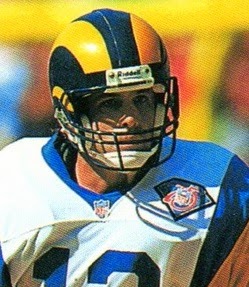
The Dallas Cowboys were appearing in the NFC Championship game for the first time in ten years as they faced the San Francisco 49ers on January 17, 1993. The Cowboys had improved steadily under Head Coach Jimmy Johnson and topped the NFC East with a 13-3 record during the ’92 season. The offense was built around QB Troy Aikman (pictured above), RB Emmitt Smith, and WR Michael Irvin and the defense was outstanding behind a solid line that included DE Charles Haley and tackles Russell Maryland and Tony Casillas. Dallas blew out the Eagles in the Divisional playoff round to advance to the conference title game.

The 49ers, coached by George Seifert, finished first in the NFC West at 14-2, having bounced back from a 1991 season in which they missed the playoffs for the first time in nine years. QB Steve Young, emerging from the shadow of his illustrious predecessor Joe Montana, was coming off a MVP season and WR Jerry Rice, despite dealing with some injuries, was chosen to his seventh straight Pro Bowl. RB Ricky Watters, in his first season after having missed his entire rookie year due to injury, gained 1418 yards from scrimmage and also was selected to the Pro Bowl. San Francisco defeated Washington in its Divisional game the previous week and had not lost since November 1 for a string of nine straight wins.

There were 64,920 fans in attendance at Candlestick Park on a rainy day, and the field was muddy. The 49ers had the game’s first possession and had to punt following a series in which an apparent 63-yard scoring play to Jerry Rice was nullified due to a holding penalty called on guard Guy McIntyre. Dallas reached the San Francisco 48 before also having to punt, but the Cowboys regained possession at the 22 when CB Alan Grant fumbled on the return and FB Daryl Johnston recovered. Troy Aikman immediately threw to Michael Irvin for 21 yards to the one, but the 49ers held as Emmitt Smith was thrown for a one-yard loss and two Aikman passes were incomplete. Lin Elliott kicked a 20-yard field goal to put the visitors ahead by 3-0.

RB Marc Logan returned the ensuing kickoff 50 yards and San Francisco advanced 48 yards in eight plays during which Steve Young completed three passes and Ricky Watters had a 16-yard run. Young gained the final yard on a quarterback sneak and, with Mike Cofer adding the extra point, the Niners were in front at 7-3.

With the rain falling again, the Cowboys were forced to punt following their next possession and Grant returned it 15 yards to give San Francisco good starting field position at the Dallas 47. As the game entered the second quarter, the 49ers advanced to the 28 but came up empty when Cofer was wide to the left on a 47-yard field goal attempt.

Once again the Cowboys had to punt, but on the 49ers’ next offensive play Watters fumbled after being hit by CB Larry Brown at the end of a 16-yard run and CB Kevin Smith recovered and returned it 11 yards to the San Francisco 39. Smith carried three straight times for a total of 23 yards and two short passes got Dallas to the eight. Three plays later it was Smith running around end for a four-yard touchdown and, with Elliott’s conversion, the Cowboys were back in the lead by a 10-7 score.

The Niners came back on offense with 5:05 to play in the first half and Young completed three passes, the longest to Rice for 26 yards. The drive was finally halted at the Dallas nine and Cofer tied the game with a 28-yard field goal.


There was still time for the Cowboys, and after Smith (pictured at left) ran for 15 yards and caught two passes for another 14, Aikman threw to Michael Irvin for 14 yards to the San Francisco 22. Aikman was sacked by LB Tim Harris, however, and the visitors were forced to try for a 43-yard field goal with eight seconds left on the clock. Elliott’s kick was wide to the right and the contest remained tied at the half.

Dallas took the second half kickoff and drove 78 yards in eight plays. Smith again ran effectively and Aikman completed three passes, the biggest to WR Alvin Harper for 38 yards to the San Francisco seven. Johnston ran for a three-yard TD and, with Elliott’s point after, the Cowboys were back in front by a 17-10 margin.

The 49ers responded with a seven-play, 66-yard series that also featured a big pass play when Young connected with Rice for 36 yards to the Dallas 32. They had to settle for a field goal, and Cofer’s 42-yard boot narrowed the score to 17-13.

The Cowboys were in the midst of a long 14-play possession that covered 78 yards as the game headed into the fourth quarter. Aikman completed seven passes along the way, four of them on third down plays. That included the last, which was to Smith for a 16-yard touchdown. Elliott’s extra point put Dallas ahead by 24-13.

The next series for the 49ers ended with a Young pass being intercepted by LB Ken Norton and returned to the San Francisco 44. Smith burst up the middle for 28 yards on first down, but the Cowboys failed to add to their lead when they chose to forgo a field goal when facing fourth-and-one at the seven and Smith was stopped for no gain.

Young passed the 49ers down the field, connecting on seven throws as the home team went 93 yards in nine plays. Four were to Watters, including the first two that covered 17 and 10 yards, and the last was to Rice for a five-yard TD. Cofer converted to narrow the margin to 24-20 with 4:22 remaining in regulation.

On the first play following the ensuing kickoff, the Cowboys, choosing not to play it safe, came through with a huge play when Aikman passed to Harper, who beat the man-to-man coverage for a 70-yard gain. Three plays later, it was Aikman to WR Kelvin Martin, who dove and barely made it into the end zone for a six-yard touchdown. Elliott’s extra point attempt was blocked, but the visitors were ahead by ten points with the clock down to 3:43.

Young again came out passing, but after three completions to the Dallas 45 he was again picked off, this time by FS James Washington. It effectively finished off the 49ers as the Cowboys were able to run the clock down to 22 seconds before punting and won by a final score of 30-20.

Statistically, the game was very evenly played. Dallas outgained the 49ers by just a yard (416 to 415) and each team accumulated 24 first downs, although the Cowboys led significantly in time of possession (35:20 to 24:40). However, the 49ers turned the ball over four times, to none by the Cowboys.


Troy Aikman completed 24 of 34 passes for 322 yards and two touchdowns while giving up no interceptions. Emmitt Smith had a big day on the muddy turf as he rushed for 114 yards on 24 carries that included a TD and had 7 catches for another 59 yards and a score. Michael Irvin contributed 6 pass receptions for 86 yards and, thanks to the one long catch, Alvin Harper (pictured at right) gained 117 yards on his three receptions.

For the 49ers, Steve Young was successful on 25 of 35 throws for 313 yards and a TD but was picked off twice. He also rushed for 33 yards and a touchdown on eight attempts. Ricky Watters gained 69 yards on 11 carries and had 6 catches for 69 yards. Jerry Rice gained 123 yards on 8 pass receptions that included a touchdown.  

“We’ve played aggressive all year long,” said Coach Johnson of the Cowboys. “But that’s our style.”

“A lot of people would have been conservative, but they took chances and it worked for them,” said San Francisco’s Coach Seifert regarding the Cowboys. “They made good calls in key situations.”

Dallas went on to rout the Buffalo Bills in the Super Bowl. It was the first of two straight NFL Championships for the Cowboys (and three in four years), who repeated as NFC East champs in 1993. The 49ers won the NFC West and the teams met again for the conference title, with the Cowboys once more coming out on top.

November 20, 2014

1994: Rice Has 16 Catches, 3 TDs as 49ers Overcome Rams


The San Francisco 49ers were cruising along at 8-2 as they hosted the rival Los Angeles Rams on November 20, 1994. Head Coach George Seifert’s team had an outstanding offense built around the nucleus of QB Steve Young, WR Jerry Rice (pictured at right), and RB Ricky Watters, and there were plenty of other fine players around them. The defense benefited from the addition of CB Deion Sanders and was anchored by young DTs Dana Stubblefield and Bryant Young.  

The Rams, coached by Chuck Knox, were struggling at 4-6 and had been beaten handily by the 49ers at home earlier in the season. QB Chris Miller was talented but injury prone and RB Jerome Bettis was having difficulty duplicating his first-year exploits, although rookie WR Isaac Bruce was showing promise.

There were 62,774 fans in attendance for the Sunday night game at Candlestick Park. The 49ers took the opening kickoff and drove 72 yards in eight plays. Steve Young completed five passes, three of them to Jerry Rice and the last to WR John Taylor for a seven-yard touchdown. Doug Brien added the extra point.

The Rams responded with a seven-play drive of their own that covered 48 yards. Chris Miller was sacked by DT Bryant Young for a loss of eight yards on first down and had to leave the game, but backup QB Tommy Maddox completed passes to RB David Lang for ten yards and WR Todd Kinchen for 39 to the San Francisco 21. Los Angeles reached the 14 before the drive stalled and Tony Zendejas kicked a 31-yard field goal.

San Francisco put together another methodical drive of 67 yards in 13 plays. Young completed five more passes, two of them to Ricky Watters and two to Rice, the second for a seven-yard TD. Brien converted and the Niners took a 14-3 lead into the second quarter.

LA benefited from a roughing-the-passer penalty on Miller, who was back in the game, and two completions to Isaac Bruce picked up 18 yards to the San Francisco 10. Once again the Rams were unable to reach the end zone, but Zendejas added another field goal from 27 yards to narrow the home team’s lead to 14-6.

The scoring parade finally ended as the teams exchanged punts. Starting from their own eight, the 49ers advanced 92 yards in 12 plays. Watters gained 22 yards on two carries to start, RB Dexter Carter ran twice more for 17 yards, and Young completed five passes and scrambled once for a first down. Rice again had two catches, and again the second was good for a touchdown, this time from six yards out. Brien added the PAT and the Niners took a 21-6 lead into halftime.

The Rams took the second half kickoff and drove 70 yards in six plays, the biggest of which was an end-around in which Kinchen raced 44 yards for a TD. The try to pass for two points failed and the score stayed at 21-12.

Once again the 49ers moved effectively down the field. Young had completions to Rice for 29 yards and Watters for 14, but this time they ended up with a field goal by Brien from 28 yards, still keeping them comfortably in the lead by 24-12.

LA faced a third-and-12 situation on its next series but Miller completed a pass to Kinchen for the needed yards and, three plays later, the Rams pulled off another big play when Miller threw long down the left sideline for WR Willie “Flipper” Anderson, who beat Deion Sanders and went the distance for a 50-yard touchdown. Zendejas added the extra point and the visitors were now just five points behind at 24-19.


On San Francisco’s second play after the ensuing kickoff, Young (pictured at left) went deep for Watters to pick up 35 yards and, adding on an unnecessary roughness penalty, the Niners advanced all the way to the LA 26. But the 49ers were able to gain only three more yards and Brien’s 41-yard field goal attempt was wide to the right.

The Rams were on the move as the game headed into the fourth quarter. Miller completed passes to Anderson for 14 yards and Jerome Bettis for 20 to reach the San Francisco 36. Two runs by Bettis, plus a facemask penalty, picked up another 14 yards before Miller fired a pass toward the goal line that WR Jessie Hester caught for a 22-yard TD. Bettis successfully ran for a two-point conversion and the upset-minded Rams were ahead by 27-24.

The 49ers again reached Los Angeles territory, but a penalty for an illegal forward pass by Young, who was a yard past the line of scrimmage on what would have been a long completion to TE Brent Jones, forced them to punt. The Rams went three-and-out and had to punt in turn and the 49ers, starting from their 43, advanced back into LA territory. But after a six-yard run by Watters gave the Niners a first down at the 25, Rice fumbled when hit by LB Shane Conlan after catching a pass and DE Gerald Robinson recovered for the Rams.

LA again couldn’t move on offense and punted following a short series, and San Francisco responded with a 10-play, 67-yard drive. Young threw to Jones for 19 yards and to Rice for 14 yards in a third-and-six situation. The drive was capped by another Young pass to Rice that resulted in an 18-yard touchdown. Brien’s extra point put the 49ers back on top by four.

The Rams regained possession with 1:56 remaining in regulation. Miller passed them to the San Francisco 38, but a holding penalty backed them up, Deion Sanders deflected a throw into the end zone that was intended for Anderson, and Lang dropped a fourth-down pass to seal the 31-27 win for the 49ers.

San Francisco had significant edges in total yards (459 to 358) and first downs (32 to 17). They also recorded the game’s only two sacks, but also the only turnover and led in penalties (7 for 60 yards to five for 50).

Jerry Rice set a then- club record with 16 catches, good for 165 yards and three TDs, and made up for his fourth quarter fumble with the game-winning reception. Steve Young completed 30 of 44 passes for 325 yards and four touchdowns with none intercepted and also ran for 23 yards on 10 carries. Ricky Watters gained 81 yards on 20 rushing attempts and added 74 more yards on five pass receptions. John Taylor also had five catches, for 49 yards and a score.


For the Rams, Chris Miller (pictured above) was successful on 16 of 33 throws for 228 yards and two touchdowns, also with no interceptions. Willie Anderson caught five passes for 99 yards and a TD while Todd Kinchen contributed 51 yards on two receptions and had the one 44-yard scoring run, which made him the team’s leading rusher. Jerome Bettis was held to 29 yards on 15 attempts.

San Francisco kept on winning, finishing atop the NFC West with a league-best 13-3 record and going on to thrash San Diego in the Super Bowl. The Rams didn’t win again the rest of the way, ending up at the bottom of the division with a 4-12 tally. It was the franchise’s last season in Los Angeles as it departed for St. Louis the following year.

Jerry Rice led the NFL with 1499 yards on 112 catches that included 13 touchdowns. It marked his ninth consecutive season with over a thousand receiving yards and he was a consensus first-team All-NFL selection for the eighth time and a Pro Bowl selectee for the ninth straight year. Steve Young led the league in passing with a 112.8 rating and in touchdown passes with 35. He received consensus league MVP honors in addition to being a first-team All-NFL choice for the third year in a row and a Pro Bowl selection.

January 15, 2014

1995: 49ers Defeat Cowboys for NFC Championship


Following the 1992 and ’93 NFL seasons, the Dallas Cowboys and San Francisco 49ers had met for the NFC Championship, with Dallas winning both times on the way to victories in the Super Bowl. On January 15, 1995 the two clubs faced off for a third time with the conference title on the line.

The 49ers, coached by George Seifert, had put together a league-best 13-3 record to top the NFC West for the eighth time in nine years. QB Steve Young (pictured at right), mobile and highly accurate with his lefthanded passing, led the league with a 112.8 passer rating plus 35 touchdowns, 8.6 yards per attempt, and a 70.3 completion percentage. Star WR Jerry Rice topped the NFL in receiving yards (1499) on his 112 catches. RB Ricky Watters was productive both running the ball and catching it out of the backfield. The defense benefited from the presence of CB Deion Sanders and had other Pro Bowl talent in DT Dana Stubblefield, FS Merton Hanks, and SS Tim McDonald.

Dallas had a new head coach for 1994 in Barry Switzer, who replaced the departed Jimmy Johnson, architect of the club’s previous success. The core of the offense was back in the persons of QB Troy Aikman, RB Emmitt Smith, and WR Michael Irvin. DE Charles Haley anchored the defensive line while SS Darren Woodson was also an All-Pro in the backfield. The Cowboys were nicked up on the offensive line, however, and while Smith had rushed for 1484 yards and 21 touchdowns, he had been hampered by hamstring problems.

Both clubs had handily won their NFC Divisional playoff games, with the 49ers defeating Chicago by a score of 44-15 and Dallas whipping the Packers 35-9.

There were 69,125 fans in attendance at Candlestick Park. The field was in poor condition after a week of heavy rain in the Bay Area leading up to game day. On the third play from scrimmage, San Francisco CB Eric Davis (pictured below) intercepted a Troy Aikman pass and returned it 44 yards for a touchdown. Doug Brien added the extra point and the 49ers were in front by 7-0 with barely over a minute of time elapsed.


The next Dallas possession again resulted in a turnover, and it was once again Davis making the play as he forced Michael Irvin to fumble after gaining 16 yards on a pass from Aikman. Tim McDonald recovered at the Dallas 39 and, five plays later, Young threw a short pass to Ricky Watters, who went the distance for a 29-yard TD. Brien’s kick put the Niners up by 14-0.

Things continued to go wrong for the Cowboys as, on the ensuing kickoff, WR Kevin Williams was stripped of the ball by RB Adam Walker after a 22-yard return and Brien recovered for the 49ers at the Dallas 35. Runs by Watters and FB William Floyd picked up nine yards and Steve Young gave the home team a first down with a two-yard sneak up the middle. Two plays later, Young threw to WR John Taylor for 14 yards and followed that up with a quarterback draw that gained nine yards to the one yard line. From there, on the seventh play of the series, Floyd bulled over for a touchdown. Brien again added the PAT and, with the opening period not quite halfway over, the 49ers held a 21-0 lead.

Now in a deep hole, the Cowboys put together an eight-play, 62-yard scoring drive. FB Daryl “Moose” Johnston converted a third-and-one with a carry for four yards, Williams gained eight yards on an end-around, and a sack of Aikman was negated by a defensive holding penalty. Finally, facing third-and-23 at the San Francisco 44, Aikman threw deep for Irvin and connected for a touchdown. Chris Boniol added the PAT and the score was 21-7 after a period of play.

The Cowboys had the ball again heading into the second quarter and reached the San Francisco 10, but Boniol was wide on a 27-yard field goal attempt. The 49ers drove 64 yards in 11 plays in response, helped along by a 33-yard pass interference penalty on CB Larry Brown. Watters had an 11-yard run, Young carried for six, and Young converted a fourth-and-three play with a completion to TE Brent Jones for ten yards to the Dallas 17. After the usually-reliable Jerry Rice dropped a pass in the end zone, Brien finished off the series with a 34-yard field goal to extend the home team’s lead.

With just under six minutes remaining in the half, the Cowboys came back with a 63-yard drive in eight plays. Aikman had two completions to TE Jay Novacek, covering 15 and 19 yards, and Emmitt Smith ran for a four-yard touchdown. Boniol’s extra point narrowed the San Francisco lead to ten points.

The teams traded punts until the 49ers, taking advantage of a 23-yard kick by John Jett, took over at the Dallas 39 with thirty seconds left on the clock. Two carries by Floyd picked up 11 yards before Young fired for Rice in the end zone for a 28-yard touchdown. It was a huge boost for the 49ers, and they took a 31-14 lead into halftime.

The Cowboys got a break on the second half kickoff when Adam Walker muffed the kick and CB Dave Thomas recovered for Dallas at the San Francisco 25. Seven plays later, and helped along by a penalty on LB Rickey Jackson for a blow to Aikman’s head on a third down play, Smith ran one yard for a TD and, with Boniol’s conversion, it was a ten-point game once again.

However, the 49ers came right back with a drive of 70 yards in ten plays. Young completed three passes, including one of 17 yards to Taylor to reach the Dallas 38 and another to Jones of 12 yards in a third-and-five situation. Young ran for the final three yards, just reaching the end zone for a touchdown that, adding the extra point, made the score 38-21.

The Cowboys came back throwing, with Aikman hitting Williams for 18 yards and Irvin for 20 before being picked off by Deion Sanders. The 49ers put together a methodical possession that carried into the fourth quarter and ended with a Klaus Wilmsmeyer punt that had the visitors starting at their own 11.

Still, Dallas battled back and drove 89 yards in 14 plays. Smith ran effectively and Aikman completed six passes, the last to Irvin for a 10-yard touchdown. But that was it for the defending champs. Dallas got the ball twice more and turned the ball over on downs both times. At one point Coach Switzer, furious that Sanders was not called for pass interference, bumped an official, which resulted in a 15-yard penalty against the Cowboys which was followed by Aikman being sacked by DE Tim Harris on fourth down. The 49ers won by a final score of 38-28.

Dallas had more total yards (451 to 294) and first downs (29 to 19) as they played catch-up throughout the contest. However, they also turned the ball over five times, three in the first quarter to put themselves in a hole, to one turnover by the 49ers. San Francisco also recorded four sacks and Aikman was knocked down on 14 other plays.

Steve Young completed 13 of 29 passes for 155 yards and two touchdowns, with none intercepted, and also ran the ball 10 times for 47 yards and a TD. Ricky Watters rushed for 72 yards on 14 carries and scored a 29-yard touchdown on his lone pass reception. William Floyd contributed 20 yards on 7 rushing attempts that included a score and had three catches for 16 yards. Brent Jones also had three receptions, for a team-leading 37 yards, while Jerry Rice was right behind with 36 yards on his two catches that included a TD. Defensively, DT Rhett Hall and Tim Harris had two sacks apiece and Eric Davis intercepted two passes, one of which was returned for a touchdown.

For the Cowboys, Troy Aikman went to the air 53 times and had 30 completions for 380 yards and two TDs, but gave up three interceptions. Michael Irvin (pictured below), with 12 catches, tied the record for pass receptions in a NFL/NFC Championship game set by Raymond Berry of the Colts in 1958 and set a new standard with 192 receiving yards while scoring twice. Kevin Williams added 6 pass receptions for 78 yards and Jay Novacek contributed 72 yards on his five catches. Emmitt Smith ran for 74 yards and two TDs on 20 carried before leaving the game with nine minutes remaining due to a pulled hamstring.


“We’re all disappointed,” said Troy Aikman. “We came out thinking we were going to run the ball, but when you get down 21-0, we were forced to put the ball in the air. It’s hard enough to pass block when you’re behind, but it makes it tougher when your players are banged up.”

The 49ers went on to win the Super Bowl with ease over the San Diego Chargers. They again topped the NFC West in 1995 but lost in the Divisional playoff round. Dallas came back strong to post a 12-4 record in winning the NFC East and, this time defeating the Packers for the conference title, returned to the Super Bowl where they defeated the Steelers. While coming up short on achieving three consecutive NFL Championships, the Cowboys still managed to win three in a four-year span.

November 26, 2013

2000: Anderson Runs for 195 Yards as Broncos Defeat Seahawks


The Denver Broncos were at 7-4, having won three straight games – the last two in dramatic fashion – as they faced the Seattle Seahawks on November 26, 2000. Head Coach Mike Shanahan’s team was without injured starting QB Brian Griese, and backup QB Gus Frerotte was taking his place. RB Mike Anderson (pictured above), a 27-year-old rookie, was proving to be a welcome surprise, especially with former star RB Terrell Davis struggling after sustaining a major knee injury the previous year.

Seattle, coached by Mike Holmgren, had a 4-7 record after having lost five straight games at one point, although they had won their last two. While 31-year-old RB Ricky Watters was still very productive, the team had problems at quarterback, where Brock Huard couldn’t stay healthy and Jon Kitna was not showing the consistency to be a successful starter.  The defense had some good individual performers but otherwise was poor against both the run and pass.

There were 68,661 fans in attendance at Husky Stadium and they saw a scoreless first quarter. Brock Huard started behind center for the Seahawks, but went down early in the second quarter after completing three of six passes for 48 yards and was replaced by Jon Kitna.

Three minutes into the second quarter, Seattle DE Michael Sinclair recovered a Frerotte fumble and returned it 63 yards for a touchdown and, with Rian Lindell adding the extra point, the home team was ahead by 7-0. The Broncos responded with a 10-play drive that covered 59 yards. Gus Frerotte converted a third-and-one with a nine-yard run and completed passes to TE Dwayne Carswell for 20 yards and WR Rod Smith for 22 yards to the Seattle 19. The series ended with Jason Elam kicking a 35-yard field goal.

The Seahawks came back with an 81-yard scoring possession in nine plays. In a third-and-10 situation deep in his own territory, Kitna connected with Ricky Watters for 13 yards. Two plays later, Watters broke away for a 55-yard run to the Denver 13. Watters remained the prime mover as, facing third-and-seven, he caught a pass from Kitna for nine yards to set up his carry for the last yard and a TD. Lindell added the PAT and Seattle was up by 14-3.

With time running down in the first half, the Broncos came back and struck quickly, going 66 yards in five plays. Frerotte passed to Smith for 25 yards and then followed up with a throw to TE Desmond Clark for a 43-yard touchdown. Elam added the extra point and the score was 14-10 at halftime.

In the third quarter, FS Eric Brown recovered a fumble by Seattle WR Darrell Jackson and the Broncos went 77 yards in nine plays. Along the way, Frerotte threw to Clark for a 25-yard gain and Mike Anderson ran the last 15 yards for a TD. Elam put the visitors up by three points at 17-14.

It seemed as though the Seahawks would move back in front as they drove into Denver territory, but a Kitna pass into the end zone was picked off by Eric Brown. However, Seattle’s defense came through with another big play, this time when Anderson fumbled and LB Chad Brown picked it up and ran 10 yards for a touchdown. Lindell converted and the Seahawks were back in front at 21-17.

Yet another fumble by the Broncos, this time by CB Deltha O’Neal on the ensuing kickoff, gave Seattle an opportunity late in the period. LB Isaiah Kacyvenski recovered at the Denver 31 and four plays later Lindell kicked a 42-yard field goal. The Seahawks took a 24-17 lead into the fourth quarter.

A Frerotte pass was intercepted by CB Shawn Springs to give Seattle the ball at the Denver 37, but the Seahawks came up empty when, attempting to convert a fourth-and-one situation at the 28, rookie RB Shaun Alexander was stopped for no gain.

The Broncos responded with a 72-yard drive in six plays. Anderson ran for 11 yards and, on a third-and-ten play, Frerotte connected with WR Ed McCaffrey for 11 yards to midfield. Smith then took off on an end-around play for a 50-yard touchdown and, adding Elam’s extra point, the score was knotted at 24-24.

A big play on defense put Denver ahead when CB Jimmy Spencer, starting in place of the injured Ray Crockett, intercepted a pass and returned it 21 yards for a touchdown with the clock showing less than six minutes remaining to play. But the Seahawks came back with an 86-yard series that took just six plays. Kitna completed a pass to Watters in a third-and-20 situation that covered 59 yards to the Denver eight, and from there WR Sean Dawkins pulled in a touchdown pass. With Lindell’s PAT, the score was again tied at 31-31.

It didn’t stay tied for long when, two plays into the next series, Anderson headed around left end and broke away for an 80-yard touchdown, slowing down to avoid two defenders at the ten before proceeding to the end zone. There was still 3:46 remaining, but the game ended with Kitna throwing four incomplete passes after reaching the Denver 40 and the Broncos held on to win by a final score of 38-31.

Denver had the edge in total yards (538 to 354), with 301 yards of that total coming on the ground. The Broncos also led in first downs (25 to 17), although they hurt themselves with five turnovers, to three suffered by the Seahawks.


Mike Anderson rushed for 195 yards on 30 carries that included two touchdowns. Gus Frerotte (pictured at left) completed 15 of 31 passes for 244 yards and a TD, but with two intercepted. Rod Smith had four catches for 82 yards and, with the big scoring run on the reverse, gained 78 yards on three rushing attempts.

For the Seahawks, Ricky Watters was highly productive with 77 yards on 16 carries that included a TD and 9 pass receptions for 126 yards. Jon Kitna was successful on 20 of 42 throws for 226 yards and a touchdown as well as two interceptions. Sean Dawkins contributed 7 catches for 54 yards and a score.

“I come out every weekend and when they give me a chance to play, I play my hardest,” said Anderson. “I know at times I’m going to make mistakes but at the same time, I need to keep playing as hard as I can.”

The Broncos won their next two games, including a rematch with the Seahawks in Denver, and finished up the regular season with an 11-5 record. That placed them second in the AFC West and qualified for a Wild Card playoff spot, where they lost to the eventual-champion Baltimore Ravens in the first round. Seattle ended up fourth in the division at 6-10.

Mike Anderson’s 195-yard rushing total was not his season high – the next week he gained 251 yards at New Orleans. He ended up with 1487 yards on 297 carries with 15 touchdowns. Anderson had spent four years in the military and didn’t play football until he entered college. Chosen by the Broncos in the sixth round of the 2000 NFL draft, he made the most of the opportunity presented to him when injuries depleted the backfield and was a key to Denver’s playoff run.


Ricky Watters (pictured at right) rushed for 1242 yards on 278 attempts (4.5 avg.) and caught 63 passes for 613 yards while scoring a team-leading total of nine touchdowns. It was his sixth straight thousand-yard rushing total and seventh overall in a career that started with the 49ers. It was his last year as a full-time starter as Shaun Alexander supplanted him in 2001, his final season.

March 25, 2013

1995: Ricky Watters Officially Joins Eagles


As a transition free agent, RB Ricky Watters had to wait a week after he signed an offer sheet with the Philadelphia Eagles to find out if the San Francisco 49ers, the club he had represented in the Pro Bowl after each of the past three seasons, would match it. On March 25, 1995 he officially switched clubs when the 49ers refused to match Philadelphia’s three-year, $6.9 million offer.

“We’re thrilled to have obtained one of the premier running backs in the NFL,” enthused new Eagles Head Coach Ray Rhodes (also a recent transplant from San Francisco, where he had been the defensive coordinator).

It was the second major off-season signing by the Eagles, who had seen a promising 7-2 start in 1994 degenerate into seven consecutive losses to end up at 7-9. FB Kevin Turner had earlier been signed away from the Patriots in an effort to upgrade the offensive backfield.

Watters was picked in the second round of the 1991 draft by the 49ers out of Notre Dame, where he set the record for longest punt return in that school’s storied history (97 yards). His pro career began inauspiciously when he broke his foot in training camp and ended up spending the season on injured reserve. But he gained over a thousand yards rushing in ’92 and became a significant contributor to the team’s success over three years, capped by a three-TD performance in the Super Bowl victory over San Diego following the ’94 season.

Watters parted the 49ers amid much acrimony – the player criticizing the front office and offensive coordinator Mike Shanahan for a lack of respect, the team accusing him of selfishness.  Thus, he came to Philadelphia amid both excitement and wariness. The Eagles were excited by his obvious ability on the field, but there were concerns as to his attitude. It didn’t help when, in his first regular season game in Philadelphia, he gained only 37 yards on 17 carries and displayed an apparent lack of effort in not catching two passes thrown toward him in a dismal loss to Tampa Bay, and when questioned later uttered the words “For who? For what?” that many fans would never forget in spite of an apology and later accomplishments.

And there were accomplishments. After the inauspicious beginning to the 1995 season, Watters went on to gain 1273 yards on the ground and catch 62 passes. He went over the thousand-yard mark all three years that he was with the Eagles, and never caught fewer than 48 passes. He gained a total of 3794 yards rushing on 975 carries for a 3.9-yard average and 31 TDs. His 353 carries in ’96 led the NFL (and set a team record), and the 1411 yards rushing that year were the second-highest total in franchise history to date. Watters had 12 hundred-yard rushing performances for the Eagles, with a high of 173 yards on 25 attempts, including a 49-yard touchdown carry, against the Miami Dolphins in 1996.

An outstanding receiver out of the backfield as well as a workhorse running back, Watters caught a total of 161 passes for 1318 yards, an 8.2 average, and one TD. He had a high of 11 receptions for 90 yards vs. Washington in ’95.

Altogether, Watters gained 5112 yards in total offense in Philadelphia, with a high of 1855 in 1996, when he also scored a career-high 13 TDs. He was a second-team UPI All-NFC selection in 1995 and ’96, and went to the Pro Bowl after both of those seasons as well (he went to the Pro Bowl five times total, including three times as a 49er).

At 6’1” and 217 pounds, Watters was a very physically punishing power runner. He played with a passion and unique style that drew much admiration around the league, and in tandem with change-of-pace back Charlie Garner made the Eagles running game tough to stop. The team finished among the top ten ground-gaining offenses in each of Watters’ seasons there.

And yet there was always the controversy. No amount of carries was enough, and Watters was continually feuding with offensive coordinator Jon Gruden. A high-strung player who was quick to speak his mind on the sidelines and away from the playing field, he drew constant criticism for lacking maturity. His complaints for not getting the ball enough seemed odd during seasons when he was leading the league, or among the leaders, in total rushing attempts, as well as catching a healthy share of passes. While durable and well-conditioned, he tended to wear down with overuse, which also undermined his complaints.

As for the Eagles overall, they reached the postseason in 1995 and ’96, going 10-6 both years to earn Wild Card berths, and after winning a high-scoring contest against the Lions in the first year, didn’t win another playoff game. They dropped to 6-9-1 in 1997 – and would drop further after Watters’ departure.

The relationship between Watters and the Eagles deteriorated both prior to and during the ’97 season, and with promising RB Duce Staley waiting in the wings the team made no attempt to sign him to a contract extension; he left as he came, signing as a free agent with the Seattle Seahawks in 1998. With the Seahawks, he became the first player in NFL history to gain a thousand yards rushing in a season with three different teams. His career came to an end in 2001.

(NOTE: This post is significantly adapted from a profile of Watters that I wrote for Concretefield.com as part of the “Greatest Eagles by the Numbers” series)