October 31, 2013

1954: Harlon Hill Stars as Bears Topple 49ers


The San Francisco 49ers were 4-0-1 and leading the Western Conference as they hosted the Chicago Bears on October 31, 1954. Coached by Buck Shaw, the 49ers had a potent offense directed by QB Y.A. Tittle throwing to end Billy Wilson or handing off to an outstanding group of running backs that included halfbacks Hugh McElhenny, who came into the game as the NFL’s rushing leader, and John Henry Johnson plus FB Joe Perry.

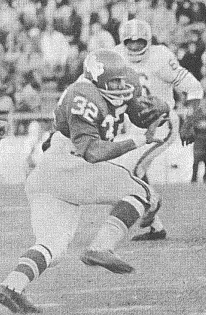
The Bears, coached by “The Papa Bear”, George Halas, were struggling at 2-3, having dropped their last two games. Rookie end Harlon Hill (pictured above), out of little Florence State College in Alabama, was proving to be a potent deep threat and there were promising rookies on the line in OT Stan Jones and C Larry Strickland. San Francisco had beaten the Bears two weeks earlier in Chicago by a 31-24 score.

There were 49,833 fans on hand at Kezar Stadium. The teams traded punts to start off the game. On Chicago’s second series, HB Billy Stone fumbled and DE Marion Campbell recovered for the 49ers. San Francisco wasted no time in cashing in on the break as Y.A. Tittle threw to Billy Wilson for a 32-yard touchdown on the next play. Gordie Soltau added the extra point.

The Bears came right back with a seven-play drive that covered 80 yards. Stone and FB Chick Jagade ran effectively and Blanda threw to Stone for a 14-yard gain. Finally, a Blanda throw to Harlon Hill went 47 yards for a TD and, following Blanda’s successful conversion, the score was tied at 7-7.

In the closing minutes of the opening period, the 49ers drove into Chicago territory. On the first play of the second quarter, John Henry Johnson sliced through the line and then cut to his left on the way to a 38-yard touchdown. Soltau was again successful on the PAT to put the Niners back in front by seven points.

On Chicago’s next play from scrimmage, Blanda again threw to Hill, this time picking up 39 yards to the San Francisco 41. Runs by Stone and Jagade picked up nine yards and, going for it on fourth down, the 49ers were penalized for defensive holding. Moved back by a penalty themselves, the Bears reached the 35 before Blanda misfired on two passes and then was short on a 42-yard field goal attempt.

Both teams were stymied on offense and traded punts until a Blanda pass was intercepted by DT Al Carapella, who returned it 27 yards to the Chicago 40. Joe Perry ran for nine yards, another 15 yards were tacked on due to a personal foul penalty on the Bears, and then Hugh McElhenny broke away for a 16-yard touchdown run. Soltau’s kick put San Francisco ahead by 21-7. The Bears were forced to punt from near midfield on their next series and Tittle passed the Niners into Chicago territory before time ran out in the first half.

The Bears punted following a short series to start the third quarter but got the ball back three plays later when safety Stan Wallace intercepted a Tittle pass. However, after Jagade ran for nine yards, Blanda was sacked for a loss of 13 and his long pass intended for end Jim Dooley fell incomplete, forcing Chicago to punt.

The 49ers had good starting field position at the Chicago 47. McElhenny immediately took off for a 20-yard gain, but facing a third-and-five situation, Tittle’s pass bounced off Wilson’s hands and was intercepted by DHB S.J. Whitman, who returned it 27 yards with another 15 added on for a personal foul. Now with the Bears having the good starting field position at the San Francisco 48, they took advantage by scoring in seven plays. Jagade and HB John Hoffman had good runs that set up Blanda’s 20-yard touchdown pass to Hill. Blanda’s extra point narrowed the margin to 21-14.

The 49ers reached midfield on their next series, but when Perry was a yard short on a third-and-three running play, they had to punt. The third quarter ended with the Bears methodically moving the ball and Blanda passed them into San Francisco territory in the early stages of the final period. He completed passes to Dooley for 15 yards, to end Bill McColl for 11 in a second-and-ten situation, and to Jagade for 15 yards to the eight yard line on a third-and-eight play. However, three passes from there were incomplete and the Bears had to settle for a Blanda field goal from 15 yards.


In response, San Francisco put together a long drive. It stalled early, but a punt was nullified when the Bears were penalized for having 12 men on the field, and Tittle (pictured above) took advantage of the break to throw long to McElhenny for 36 yards to the Chicago 24. Two plays later, and facing third-and-11, Tittle connected with Wilson for 17 yards. The Bears stiffened on defense and the 49ers also had to settle for a field goal by Soltau from 16 yards, but the home team’s lead was now 24-17.

Blanda filled the air with passes on the next series, hitting McColl for 17 yards and converting a third-and-12 play with a 22-yard completion to Hill. Dooley made an outstanding catch of a Blanda pass on the next play to pick up 30 yards to the San Francisco 15 and, after a short throw to Hoffman picked up four, Blanda threw to Hill, who grabbed the ball away from DB Bill Jessup at the goal line for an 11-yard touchdown. The 82-yard drive was capped by Blanda’s all-important extra point that tied the score at 24-24.

There were less than four minutes to play as the 49ers started the next series at their 20. Keeping the ball on the ground, they faced a fourth-and-one situation that Perry successfully converted with a two-yard gain. Tittle was sacked and then threw an incomplete pass, but on third-and-14, he connected with HB Pete Schabarum for a 42-yard gain to the Chicago 31. Two plays later, and in the face of a heavy rush, Tittle completed a pass to Johnson for 14 yards and, two plays after that, Soltau kicked a 17-yard field goal. It looked good for the 49ers, who were ahead by 27-24 with 36 seconds remaining on the clock.

DE Ed Sprinkle covered the short kickoff at the Chicago 34. Strong-armed backup QB Ed Brown, setting up wide and taking a lateral from Blanda, fired long for Hill, who gathered in the pass without breaking stride at the San Francisco 25 and raced to the end zone for an electrifying 66-yard touchdown – his fourth of the game. Blanda added the extra point, and the game ended with the 49ers at their own 36. The Bears came away with a stunning 31-27 win.


Chicago led in total yards (469 to 388) while both teams generated 21 first downs. They also each turned the ball over twice and were penalized four times. Harlon Hill was the star of the game with his 7 catches for 214 yards and the four touchdowns.

Hugh McElhenny suffered a shoulder separation in the fourth quarter and was lost for the season, which would prove to be a big blow for the 49ers. They lost three of their next four contests and ended up at 7-4-1 and third in the Western Conference. The Bears, meanwhile, found their stride and lost only once more to finish in second place at 8-4.

Harlon Hill continued to excel in his first year, ranking second in the league with 1124 yards on his 45 catches for a NFL-high 12 touchdowns and 25.0 yards per catch. He was selected to the Pro Bowl. George Blanda, in his sixth of an eventual 26 pro seasons, was limited to eight games due to injury and threw for 1929 yards and 15 TDs with 17 interceptions while connecting on 8 of 16 field goal attempts and all 23 of his extra point tries.

October 30, 2013

1949: Browns Edge 49ers in Pivotal AAFC Showdown


Throughout the four-year history of the All-America Football Conference, the Cleveland Browns were the dominant club while the San Francisco 49ers had been just as consistently second best. The teams were Western Division rivals for the first three years, but as the teams faced off on October 30, 1949, they were part of a division-less AAFC, the league having dropped to seven clubs for its fourth (and final) season.

The teams had met three weeks earlier in San Francisco, where the 49ers humiliated the Browns by a score of 56-28. The result briefly put San Francisco ahead in the standings, but the 49ers, who had thus far played one more game than Cleveland, lost to the Yankees the week prior to the rematch and were thus 6-2. They also lost two stalwarts of their running game, halfbacks Johnny Strzykalski and Ed Carr, to injuries. The Browns, having thrashed the Los Angeles Dons before their bye week, were on top at 5-1-1. While the top four teams in the league were guaranteed playoff spots – and there was no doubt that the Browns and 49ers would be two of those teams – the game was clearly a grudge battle between the league’s two premier franchises. It was also billed as a showdown between the two quarterbacks who had been co-MVPs of the AAFC in 1948, Otto Graham of the Browns (pictured above) and San Francisco’s Frankie Albert.

Games between the Browns and 49ers typically drew big crowds, and there were 72,189 in attendance at Cleveland’s Municipal Stadium. They saw a scoreless first quarter as both offenses were slow to get on track, although a one-yard scoring plunge by Cleveland’s Graham was nullified by a penalty. On the first play of the second quarter, the deadlock was broken when Frankie Albert of the 49ers threw to HB Len Eshmont, who went 48 yards for a touchdown, thus finishing off an 88-yard drive. Joe Vetrano added the extra point.

The Browns came back quickly. HB Dub Jones returned the kickoff 66 yards to the San Francisco 28. Otto Graham threw to end Mac Speedie for 16 yards and then to end Dante Lavelli for a nine-yard TD. Lou Groza’s PAT tied the score at 7-7.

The 49ers responded in kind as, taking over at their 30 following the kickoff, Albert went long for HB Sam Cathcart, who gained 62 yards. HB Verl Lillywhite ran the last eight yards for a touchdown and, with Vetrano’s extra point, San Francisco was up by 14-7. Three TDs had been scored in a space of less than three minutes.

Before the first half was over, the Browns mounted another scoring drive. Graham threw to Speedie and Lavelli to bring the team down the field and Jones ran for a six-yard touchdown. The score at halftime was 14-14.

Early in the third quarter, Graham carried directly over center for 20 yards and a TD to put the Browns in the lead for the first time. Heading into the fourth quarter, the Niners tied the game back up when Albert completed two passes to end Alyn Beals that covered 35 yards, including 22 yards for a touchdown. The extra points were successful and the score was 21-21.

Midway through the final period, Lou Groza kicked a 38-yard field goal to break the deadlock. It followed a Graham pass to Lavelli for 30 yards to the San Francisco 32. The Browns then padded their lead with a Graham-to-Speedie touchdown pass that covered 12 yards. However, the extra point attempt failed when the snap from center was high and Groza, grabbing the ball at shoulder level and unable to kick, ran and was pushed out of bounds at the one. Nevertheless, Cleveland was up by nine points.

Time finally ran out on the visitors. The 49ers scored one last touchdown on a quarterback sneak by Albert, but there were only 15 seconds left at that point and the Browns won by a final score of 30-28.

The 49ers had the edge in total yards (477 to 400) and first downs (19 to 17). The passing statistics of the two quarterbacks were similar as Otto Graham completed 14 of 25 passes for 271 yards and two touchdowns with none intercepted while Frankie Albert was successful on 14 of 27 throws for 253 yards, also including two touchdowns with no interceptions. San Francisco’s Joe Perry was held in check, but rookie Sam Cathcart (pictured below) ran effectively for the 49ers, gaining 116 yards on just 11 carries.


The win for the Browns effectively decided the race for first in the AAFC. They didn’t lose again the rest of the way (including another tie) and finished at 9-1-2. San Francisco also didn’t lose again on the way to a 9-3 record and second place. The teams met one last time for the league championship, and the Browns won.

Otto Graham led the AAFC in pass completions (161), yards (2785), and yards per attempt (9.8) while Frankie Albert topped the league in TD passes (27). Joe Perry was the top rusher (783 yards) and Mac Speedie the top pass receiver (62 catches, 1028 yards). Alyn Beals led in touchdowns (12) and scoring (73 points).

Over the course of four seasons, the Browns went 47-4-3 and won all four league titles. Two of their losses came at the hands of the 49ers, who were 38-14-2. While the league folded following the ’49 season, both franchises moved into the NFL for 1950 and have remained there, although they were never again in the same division and the intensity of the great AAFC rivalry diminished.

October 29, 2013

1989: Broncos Rally, But Eagles Pull Out Win


The Philadelphia Eagles were 5-2, including wins in their last three games, as they came to Denver to take on the 6-1 Broncos on October 29, 1989. However, even in winning the Eagles had difficulty putting points on the board. QB Randall Cunningham (pictured at right) could be an exciting performer both passing and running the ball, but the receiving corps lacked speed and in particular missed WR Mike Quick and TE Keith Jackson, who were out with injuries. The heart of brash Head Coach Buddy Ryan’s team was its aggressive defense, led by DE Reggie White.

The Broncos, coached by Dan Reeves for the ninth year, were benefiting from the presence of rookie RB Bobby Humphrey to add balance to an offense dominated by the big-play passing ability of QB John Elway. WR Vance Johnson was having an outstanding season and the defense was responding well to the coaching of first-year defensive coordinator Wade Phillips.

It was a cold afternoon at Mile High Stadium with 75,065 in attendance. Things did not start in promising fashion for the Eagles when RB Heath Sherman fumbled the opening kickoff and, while he recovered, they had to start the opening possession with the ball at their own four yard line. With running backs Keith Byars and Anthony Toney running effectively, the visitors got out of the shadow of their own end zone. Randall Cunningham helped when, flushed out while back to pass out of the shotgun in a third-and-five situation, he ran for 24 yards to the Denver 42. Philadelphia kept the ball on the ground and the methodical 13-play, 96-yard drive ended with Byars running the final 16 yards for a touchdown. Luis Zendejas added the extra point for the 7-0 lead.

The Eagles got the ball back shortly thereafter when John Elway, who had started off with a 22-yard throw to Vance Johnson, had a deflected pass intercepted by CB Izel Jenkins, which he returned 18 yards to the Denver 42. Once again the Eagles moved down the field by running the ball. Facing fourth-and-one at the seven, Cunningham leaped two yards for the first down and then threw to WR Cris Carter for a five-yard TD. With the successful PAT, Philadelphia’s lead was extended to 14-0.

A short Denver series resulted in a punt. On the first play of the second quarter, the Eagles punted the ball back, but RB Ken Bell fumbled the kick and LB Britt Hager recovered at the Denver 13. However, the visitors came up empty when QB Matt Cavanaugh, briefly in for Cunningham, threw an interception. LB Rick Dennison gave the Broncos the ball at their 10.

Denver reached the 36 before Elway was sacked by Reggie White for a loss of eight yards and then was intercepted by CB Eric Allen. But Philadelphia again failed to get points when, after the resulting series stalled at the Denver 23, Zendejas was wide to the left on a 41-yard field goal attempt.


The Broncos responded with an eight-play, 76-yard drive. Elway completed four passes, including three to Johnson (pictured at left) that gained a total of 41 yards, and, rolling out to his right, ran the last 10 yards for a touchdown. David Treadwell added the PAT and Philadelphia’s lead was cut to 14-7, which remained the score at the end of the half.

The teams traded punts to start the third quarter until, on the first play of their second series, the Eagles got a big play as Cunningham threw to TE Jimmie Giles who went the distance for a 66-yard touchdown. Zendejas’ conversion made it 21-7, but the Broncos came back with a 66-yard drive that took eight plays. Elway converted a third-and-five situation along the way when, flushed out of the pocket, he ran for 11 yards and also completed a pass to Johnson for 21 yards to the Philadelphia 25. It was Elway-to-Johnson for the last 13 yards and a TD. Treadwell added the extra point to again make it a one-touchdown game.

The teams once more traded punts until the Broncos got a break when Cunningham fumbled while being sacked deep in his own territory and NT Greg Kragen recovered at the Philadelphia three. Denver wasn’t able to penetrate the end zone, however, and settled for an 18-yard Treadwell field goal.

The Broncos regained possession following a punt by the Eagles early in the fourth quarter. Elway completed a pass to WR Mark Jackson for 11 yards in a third-and-10 situation and, two plays later, connected with Johnson for 33 yards to the Philadelphia 18. Two incompletions were followed by Elway running for 14 yards on a third-and-10 play and he followed up with a four-yard TD pass to RB Melvin Bratton that put Denver in front with just over nine minutes remaining by a 24-21 score after Treadwell added the PAT.

The Eagles were unable to move on their next series but, in a key play, a punt by John Teltschik that was ruled to have hit Denver CB Darren Carrington was recovered by DB William Frizzell at the Denver 24. DE Alphonso Carreker sacked Cunningham for an eight-yard loss and, after an incomplete pass, Philadelphia was facing third-and-18. However, Cunningham threw to WR Gregg Garrity for 21 yards and, three plays later, Byars ran for a touchdown from a yard out. Zendejas added the extra point and the Eagles were back in the lead by four.

The Broncos still had 5:15 to work with following the kickoff. Elway completed passes to Johnson for 13 yards and to RB Steve Sewell for 19, but after reaching the Philadelphia 44 he was intercepted by CB Eric Everett.

The Eagles were able to run two minutes off the clock on their next series, with Cunningham getting a first down on a 13-yard run to help the cause, before having to punt. Now with 1:32 left on the clock, the Broncos took over at their 20. Elway threw to Jackson twice for 41 yards. With the ball at the Philadelphia 39, he spiked the ball to stop the clock. Two more passes fell incomplete before, facing fourth down, Elway took off on a quarterback draw for 10 yards but fumbled.  FS Wes Hopkins recovered to seal the 28-24 win for the Eagles.

Denver held a slight edge in total yards (320 to 313) and also had more first downs (22 to 17). The Eagles ran the ball 45 times for 215 yards, which was their best rushing output of the year thus far (and would remain so until the season finale). They also sacked Elway seven times (with 3.5 accounted for by DE Clyde Simmons), as opposed to Denver recording four sacks. The Broncos turned the ball over six times, with two of them coming in the closing minutes of the fourth quarter, as opposed to two suffered by Philadelphia.


Randall Cunningham completed 11 of 20 passes for 126 yards and two touchdowns with none intercepted and also ran the ball six times for 57 yards. Keith Byars (pictured at right) rushed for 93 yards and two TDs on 23 carries and had three pass receptions for 22 yards. Jimmie Giles led the club in receiving yards with his 66 yards on the one scoring catch.

For the Broncos, John Elway was successful on 19 of 39 throws for 278 yards and two TDs, but also had three passes intercepted. Vance Johnson had 9 catches for 148 yards and a touchdown. Elway was Denver’s top rusher with 45 yards on four attempts that included a TD while Bobby Humphrey was right behind with his 44 yards on 12 attempts.

Of the critical call on the punt that hit Denver’s Darren Carrington in the fourth quarter, Dan Reeves said, “Darren says the punt did not hit him. I don’t think the referee saw it clearly.”

“I had an excellent view and I saw the ball hit the Denver player,” said Philadelphia’s Buddy Ryan. “I was just afraid the ref was going to miss it.” Both referee Jim Tunney and the replay official confirmed the call.

The Eagles lost their next two games before reeling off five wins in their last six games to place second in the NFC East at 11-5. Qualifying for a Wild Card playoff berth, they lost to the Rams in the opening round. The Broncos remained on top of the AFC West following the loss and won their next four games. They won the division title with an 11-5 record and advanced to the Super Bowl where they were crushed by the 49ers.

Randall Cunningham had a relatively ordinary season, throwing for 3400 yards and 21 touchdowns but completing only 54.5 percent of his passes and averaging 6.4 yards per attempt. He led the team in rushing with 621 yards and was selected to the Pro Bowl. Keith Byars, typically more effective as a receiver out of the backfield than as a runner, gained 452 yards on the ground while averaging just 3.4 yards per carry but caught a team-leading 68 passes for 721 yards.

Vance Johnson, in his fifth year, went on to have his best season. He caught 76 passes for 1095 yards and seven touchdowns, which were all career highs.

October 28, 2013

MVP Profile: James Harrison, 2008

Linebacker, Pittsburgh Steelers


Age:  30
6th season in pro football & with Steelers
College: Kent State
Height: 6’0”   Weight: 242

Prelude:
Joining the Steelers as an undrafted free agent in 2002, Harrison spent most of his time on the practice squad and was briefly signed by the Ravens in 2003, who sent him to the Rhein Fire of NFL Europe. Cut by Baltimore, Harrison returned to Pittsburgh and finally caught on for good in 2004 as he showed great improvement and started four games. Versatile and a good special teams performer, he got his chance to start full-time at outside linebacker in 2007 after Joey Porter was released and had a breakout year. He recorded 8.5 sacks and was named team MVP as well as to the Pro Bowl. Showing great strength and toughness, he was good against the run as well as rushing opposing quarterbacks.

2008 Season Summary
Appeared in 15 of 16 games
[Bracketed numbers indicate league rank in Top 20]

Sacks – 16 [4]
Most sacks, game – 3 vs. Houston 9/7
Multi-sack games (2 or more) – 4
Interceptions – 1
Int. yards – 33
Int. TDs – 0
Fumble recoveries – 0
Forced fumbles – 7
Tackles – 59
Assists – 34

Scoring
Safeties – 1
Points – 2

Postseason: 3 G
Sacks – 1
Interceptions – 1
Int. return yards – 100
Tackles – 10
Assists – 4
TDs – 2

Awards & Honors:
NFL Defensive Player of the Year: AP
1st team All-NFL: AP, PFWA, Sporting News
Pro Bowl

Steelers went 12-4 to finish first in the AFC North while leading the NFL in fewest yards allowed (3795), fewest passing yards allowed (2511), and fewest points (223) and the AFC in sacks (51) and fewest rushing yards allowed (1284). Won AFC Divisional playoff over San Diego Chargers (35-24), AFC Championship over Baltimore Ravens (23-14), and Super Bowl over Arizona Cardinals (27-23).

Aftermath:
Harrison’s sack total dropped to 10 in 2009 as he was also receiving more attention from opposing blockers, but he still played well in tandem with LaMarr Woodley. He was selected to a third straight Pro Bowl. Harrison made it five straight in 2010 and ’11, and was again a consensus first-team All-NFL selection in 2010 although his aggressive play often had him targeted by the league for illegal hits that led to multiple fines and a one-game suspension in 2011. Following a lesser year at age 34 in 2012, Harrison was released by the Steelers and joined the Cincinnati Bengals for 2013, converting to outside linebacker in a 4-3 defense. Through 2012, he had accumulated a total of 64 sacks, 29 forced fumbles, and five interceptions. Harrison has been chosen to the Pro Bowl a total of five times and received at least some first- or second-team All-NFL honors in four seasons.

--


MVP Profiles feature players who were named MVP or Player of the Year in the NFL, AAFC (1946-49), AFL (1960-69), WFL (1974), or USFL (1983-85) by a recognized organization (Associated Press, Pro Football Writers Association, Newspaper Enterprise Association, United Press International, The Sporting News, Maxwell Club – Bert Bell Award, or the league itself). Also includes Associated Press NFL Offensive and Defensive Players of the Year.

October 27, 2013

1963: Giants Dominate Browns in Key Eastern Showdown


The Cleveland Browns seemed poised to take control of the NFL Eastern Conference race as they hosted the New York Giants on October 27, 1963. The Browns were undefeated at 6-0 and had looked very good in defeating the Giants at Yankee Stadium two weeks earlier. Under first-year Head Coach Blanton Collier, they had the league’s top rusher in FB Jim Brown, who was leading the NFL with 931 yards on the ground and had compiled 209 yards from scrimmage in the previous meeting with the Giants. QB Frank Ryan was also leading the NFL with a completion percentage of 62.1.

The Giants, coached by Allie Sherman, had topped the Eastern Conference in each of the last two years but, at 4-2, were in danger of falling out of contention unless they could derail Cleveland. 37-year-old QB Y.A. Tittle (pictured above) had been a sensation since arriving from San Francisco in 1961 and had a fine receiving corps led by split end Del Shofner. The veteran group of running backs included FB Alex Webster and HB Hugh McElhenny. The defense also had a well-seasoned core that was anchored by MLB Sam Huff and included such stalwarts as DEs Andy Robustelli and Jim Katcavage, DT Dick Modzelewski, cornerbacks Dick Lynch and Erich Barnes, and FS Jim Patton.

There were 84,213 fans at Municipal Stadium, the second-largest crowd for a regular season game to date in the history of the huge venue. The tone was set on the second play from scrimmage when Jim Brown fumbled after picking up seven yards and Sam Huff recovered for the Giants at the Cleveland 30. Four plays later, Don Chandler kicked a 29-yard field goal to give New York the early lead.

On the next play following the kickoff, Frank Ryan threw a pass that was intercepted by Jim Patton and the Giants again took possession in Cleveland territory. They immediately capitalized when Y.A. Tittle threw to Del Shofner for a 23-yard touchdown. Chandler added the extra point and less than three minutes into the game, the visitors were ahead by 10-0. Cleveland had run only three offensive plays.

The Browns went three-and-out on their next series and were forced to punt. The Giants, taking over at their 14, put together an 86-yard drive in 15 plays. Tittle completed seven passes along the way, two of which converted third downs, including one to TE Aaron Thomas for 19 yards in a third-and-10 situation and another to TE Joe Walton for 13 yards on a third-and-six play. Hugh McElhenny and Alex Webster ran effectively and Tittle finished the series off with a six-yard scoring pass to McElhenny. New York’s lead was 17-0 after a quarter of play.

The Browns again had to punt and once more New York responded by putting points on the board. This time the Giants moved the ball 34 yards in eight plays capped by Chandler booting a 34-yard field goal. Tittle again came through with a third down completion to keep the drive going, connecting with Shofner for 16 yards to the Cleveland 31 on a third-and-seven play.

Another short series by the Browns was followed by another New York scoring drive. Tittle completed four more passes, Cleveland was flagged for pass interference on one he didn’t complete, and Chandler kicked another field goal, this time from 33 yards. The Giants had scored on every first half possession and took a commanding 23-0 lead into halftime. The statistics were as lopsided as the score - New York had outgained the Browns by 195 yards to 35 and Cleveland had run just 20 plays.

The Giants kept pouring it on as the third quarter began. McElhenny took the second half kickoff 51 yards and they ended up with a fourth Chandler field goal, of 42 yards. The Browns still remained stymied on offense and punted, and New York remained unstoppable. The offense put together another methodical scoring drive that ended with Webster running the last two yards for a TD.

The outcome was not in doubt in the fourth quarter as the Giants finally failed to score on a possession. After reaching the Cleveland 37, Tittle’s deflected pass was intercepted. Jim Ninowski was now at quarterback for the Browns, but had no better luck at moving the team until his second series, after Chandler missed on a 44-yard field goal attempt. Ninowski threw to split end Tom Hutchinson for 70 yards and two plays later finally got the Browns on the board with a 10-yard touchdown pass to end Rich Kreitling. However, Groza’s extra point attempt was blocked by Huff. The final score was a resounding 33-6 win for the Giants.

New York had a huge lead in total yards (387 to 142) and first downs (26 to 6). The Giants sacked Cleveland’s quarterbacks four times and Cleveland turned the ball over on three occasions, to just the one late and insignificant turnover suffered by New York. The Giants only punted twice, both coming in the final period.


Y.A. Tittle completed 21 of 31 passes for 214 yards and two touchdowns with one intercepted. Del Shofner (pictured at left) had 7 catches for 108 yards and a TD. Alex Webster rushed for 53 yards and a touchdown on 16 carries and Hugh McElhenny also ran for 53 yards, on 13 attempts, while contributing a TD on his lone pass reception. Don Chandler helped out with his four field goals in five attempts.

For the Browns, Frank Ryan was successful on only one of 9 throws for a startling minus six passing yards and was intercepted once. Jim Ninowski hit on 4 of 11 passes for 120 yards and a TD with one picked off. Jim Brown was held to just 40 yards on 9 carries and had the critical early fumble. He was also ejected after getting into an altercation with New York LB Tom Scott, who was also tossed, in the game’s last minute. Tom Hutchinson, thanks to the long reception in the fourth quarter, had two catches for 97 yards to lead the club.

The Giants continued on to win their next four games and lost only once more on the way to once again topping the Eastern Conference with an 11-3 record. However, they lost to the Bears in the NFL title game, falling short for the third straight time. Cleveland won the next week at Philadelphia but then lost two straight, faltering down the stretch and ending up in second place at 10-4.

Y.A. Tittle broke his own NFL record with 36 touchdown passes and also led the league in overall passing (104.8 rating in current system), completion percentage (60.2), yards per attempt (8.6), and percentage of TD passes (9.8, tied with Frank Ryan). Del Shofner ranked third in pass receiving yards (1181) and fourth in pass receptions (64). Don Chandler led the NFL in scoring (106 points) and was third in field goals (18) and first in extra points (52).

October 26, 2013

1952: Willey Has Big Sack Performance as Eagles Defeat Giants


Sacks became an officially-compiled NFL statistic in 1982, with the single-game record to date for an individual being seven by Derrick Thomas of the Chiefs in 1990. Prior to ’82, and beginning in the 1960s, team sacks were compiled (the term sack did not come into use until the ‘60s as well), and earlier, yards lost while passing were subtracted from a team’s passing yards in order to come up with a net passing yardage total, but individual records were typically a matter of conjecture (although it should be noted that some researchers are doing good work in piecing together the historical record).

On October 26, 1952, DE Norm “Wild Man” Willey of the Philadelphia Eagles (pictured above) may have set the real individual sack record, although that is by no means certain. What is known about the game on that date between the Eagles and Giants is that it was highlighted by a dominating performance by Willey and the Philadelphia defense.

The Eagles, with a 2-2 record, were 15-point underdogs coming into the contest, having lost to the Giants in Philadelphia three weeks earlier by a decisive 31-7 score. First-year Head Coach Jim Trimble had made changes heading into the season, most notably moving star offensive end Pete Pihos to defense and replacing him with Bud Grant. They lost Hall of Fame HB Steve Van Buren to a career-ending knee injury during the preseason, but had added QB Bobby Thomason, who came from Green Bay.

New York, under Head Coach Steve Owen for the 22nd year, was at 3-1 and coming off the team’s first loss the previous week. QB Charlie Conerly directed a ball control running attack led by FB Eddie Price and HB Kyle Rote, plus rookie all-purpose HB Frank Gifford, who played on defense as well. Safety Emlen Tunnell starred both on defense and as a kick returner.

There were 21,458 fans at the Polo Grounds for the rematch of the two division rivals. The Giants got the first break on the opening kickoff when it rolled free and they recovered at the Philadelphia 15. Ray Poole kicked a 30-yard field goal to start the scoring.

Late in the period, the Giants drove to the Philadelphia one yard line but the Eagles stopped them with a rugged goal line stand. The tally remained at 3-0 until, in a five-minute segment in the latter part of the second quarter, the Eagles scored twice.

First, safety Ed “Bibbles” Bawel took a Tom Landry punt and returned it 52 yards for a touchdown, regaining his footing after being hit at the New York 30. Then, getting the ball back in the closing minutes of the first half, the Eagles mounted a 72-yard scoring drive. With seven seconds left on the clock, end Bobby Walston made an impressive leaping catch in the corner of the end zone of a pass from Bobby Thomason for a 19-yard touchdown, pulling it away from defenders Harmon Rowe and Frank Gifford. Walston successfully added the extra point after each TD and the Eagles took a 14-3 lead into halftime.

The Giants started off the second half in good fashion when Gifford returned the kickoff 60 yards to the Philadelphia 32. QB Fred Benners, who took over for a battered Charlie Conerly, completed a pass to end Bob McChesney for 24 yards and a run by Kyle Rote put the ball at the two yard line. However, the Eagles defense once again pulled off a successful goal line stand and the Giants turned the ball over on downs.

The only other score of the game came a little later in the third quarter when New York LB Jon Baker blocked a punt by Adrian Burk and DE Bud Sherrod recovered in the end zone for a touchdown. Poole added the extra point to make it a four-point contest, but that was it.

The Eagles physically punished the Giants, especially on defense, with a half dozen New York players sidelined by injuries. Those injured included Charlie Conerly, Eddie Price, and Frank Gifford. While the Eagles weren’t able to mount any further offense themselves, they held on to win by a final score of 14-10.

Game accounts indicated that Willey was a one-manning wrecking crew, and sportswriter Hugh Brown of the Philadelphia Bulletin credited him with an incredible 17 sacks during the course of the contest (or “dumping Charlie Conerly…while he was attempting to pass”, although Fred Benners was clearly a victim as well), including 11 in sequence. In addition to Willey, MG Bucko Kilroy and Pete Pihos had big days. Whatever the truth of the number of sacks – Willey himself years later thought it was 15, Kilroy suggested 12, and veteran pro football writer Paul Zimmerman, who was charting the game that day, gave the Eagles credit for 14 overall and Willey a total of 8 – it is clear that the Eagles had a great day defensively.

Philadelphia outgained the Giants by 225 yards to 109, with New York managing only 54 rushing yards on 34 attempts and a net of 55 passing yards thanks to 127 yards lost due to quarterbacks Conerly and Benners being tackled while attempting to throw. Interestingly, the Eagles suffered the only turnover of the game, on a fumble. Kyle Rote carried 7 times for 12 yards and Eddie Price was held to just 7 yards on 11 rushing attempts.

“I almost felt sorry for Charlie (Conerly),” said Jim Trimble later. “I remember vividly Charlie having a heck of a time just getting up. He was just mauled by Norm (Willey).”

The Eagles lost the following week at Green Bay but then reeled off three straight wins while the Giants won their next two contests but lost three of their last five games. The clubs ended up with identical 7-5 records, tying them for second place in the American Conference, a game behind the Browns.

Norm Willey’s performance against the Giants, which has taken on something  of a legendary status, was the highlight of an eight-season NFL career, all spent with the Eagles. The 6’2”, 224-pound Willey was a 13th round draft pick out of Marshall in 1950, and with his speed off the defensive line, he regularly harassed opposing quarterbacks. He was twice named to the Pro Bowl and received at least some first-team All-NFL recognition in 1953, ‘54 and ’55. 

October 25, 2013

Rookie of the Year: Curtis McClinton, 1962

Fullback, Dallas Texans


Age: 23
College: Kansas
Height: 6’3”   Weight: 232

Prelude:
A three-time All-Big 8 selection who rushed for 1377 yards in college, McClinton was taken by the Texans in the 14th round of the 1961 AFL draft (he was drafted in the 10th round by the NFL Rams) and moved into the starting lineup when veteran FB Jack Spikes was injured. He proved to not only be a good runner, but a fine receiver out of the backfield and blocker.

1962 Season Summary
Appeared in all 14 games
[Bracketed numbers indicate league rank in Top 20]

Rushing
Attempts – 111 [10]
Most attempts, game - 19 (for 102 yds.) at NY Titans 11/11
Yards – 604 [5]
Most yards, game – 109 yards (on 12 carries) vs. Oakland 11/25
Average gain – 5.4 [2]
TDs – 2 [18, tied with nine others]
100-yard rushing games – 3

Pass Receiving
Receptions – 29      
Most receptions, game – 6 (for 68 yds.) vs. San Diego 12/16
Yards – 333
Most yards, game - 68 (on 6 catches) vs. San Diego 12/16
Average gain – 11.5
TDs – 0

Kickoff Returns
Returns – 2
Yards – 32
Average per return – 16.0
TDs – 0
Longest return – 18 yards

Scoring
TDs – 2
Points – 12

Postseason: 1 G (AFL Championship at Houston)
Rushing attempts – 24
Rushing yards – 70
Average gain rushing – 2.9
Rushing TDs – 0

Pass receptions – 1
Pass receiving yards - 4
Average yards per reception – 4.0
Pass Receiving TDs - 0

Awards & Honors:
AFL Rookie of the Year: UPI
2nd team All-AFL: UPI
AFL All-Star Game

Texans went 11-3 to finish first in the AFL Western Division while leading league in scoring (389 points) and touchdowns (50, tied with Houston Oilers). Won AFL Championship over Houston Oilers (20-17).

Aftermath:
The franchise shifted to Kansas City in 1963, and while the team had a down year on the field, “The Count” had another solid season as he led the club in rushing with 568 yards. He struggled with injuries in ’64, however, and lost his starting job to rookie Mack Lee Hill, but bounced back in 1965 with a career-high 661 yards rushing and another 590 yards on 37 pass receptions. He received second-team All-AFL honors from the Associated Press. McClinton was an AFL All-Star in 1966 and ’67, even as his rushing yards dropped to 540 and 392, respectively, but as he also became more acclaimed for his blocking ability. Following an injury-plagued 1968 season, he was shifted to tight end, where he saw little action as a reserve in his last year. Overall, McClinton rushed for 3124 yards on 762 carries (4.1 avg.) and caught 154 passes for 1945 yards with a total of 32 TDs. He played in three AFL All-Star Games.

--


Rookie of the Year Profiles feature players who were named Rookie of the Year in the NFL, AFL (1960-69), or USFL (1983-85) by a recognized organization (Associated Press – Offense or Defense, Newspaper Enterprise Association, United Press International, The Sporting News, or the league itself – Pepsi NFL Rookie of the Year).