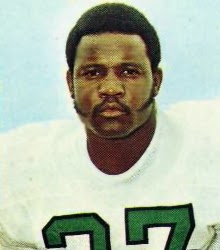
Showing posts with label Chuck Foreman. Show all posts

October 6, 2016

1974: Vikings Thwart Dallas Rally with Last-Second Field Goal


Two perennial contenders, the Minnesota Vikings and Dallas Cowboys, faced off on October 6, 1974, but the teams were in very different places as they headed into the fourth week of the NFL season. The Vikings, coached by Bud Grant for the eighth year, were the defending NFC Champions and off to a 3-0 start. Dallas had been to the playoffs in each of the previous eight years under Head Coach Tom Landry, but was 1-2 and had scored only 16 points combined in the previous two games.

There were 57,847 fans in attendance at Texas Stadium, and the Cowboys struck first four minutes into the contest with a big play when QB Roger Staubach threw to WR Golden Richards for a 58-yard touchdown. Efren Herrera added the extra point for the early 7-0 lead. Before the opening period was over, the Vikings narrowed the margin to 7-3 with a 48-yard Fred Cox field goal.

Early in the second quarter, the Cowboys reached the Minnesota 38 but a Staubach pass was intercepted by LB Amos Martin. Three plays later, QB Fran Tarkenton (pictured at top) threw down the middle to FB Chuck Foreman, who was isolated on LB D.D. Lewis, and it was complete for a 66-yard TD. Cox added the point after and the visitors were in front by 10-7.

Minnesota continued to thwart the Cowboys, and Staubach, whose slump had contributed to the club’s offensive woes, was the principal victim. He was picked off a second time, by CB Nate Wright at the Dallas 21, but while the Vikings got more points, they were forced to settle for a 30-yard Cox field goal and took a 13-7 lead into halftime.


In the third quarter, Wright intercepted Staubach again, on this occasion grabbing the ball away from WR Drew Pearson at the Minnesota 36. The Vikings advanced 64 yards in eight plays, the last a toss to Foreman (pictured at left), who made a leaping grab over Lewis in the end zone for a 13-yard touchdown. Cox’s point after gave Minnesota an extended lead of 20-7.

A fourth interception of a Staubach pass, this time by DB Terry Brown at the Dallas 31, had the restless home crowd booing. However, the defense pushed the Vikings back and the tide began to turn in the fourth quarter. The Cowboys put together a 39-yard drive featuring a Staubach completion to HB Calvin Hill for 22 yards and two runs by Hill for six yards apiece. The series culminated in Staubach throwing to FB Walt Garrison for a five yard touchdown and Herrera’s kick narrowed the score to 20-14.

With 8:26 left in regulation, a poor punt by Minnesota’s Mike Eischeid traveled only 11 yards and gave the Cowboys the ball at their 40. Dallas took advantage, driving 60 yards in eight plays. At one point, Hill fumbled on a third-and-three play at the Minnesota 22 but the Cowboys still ended up with five yards and a first down when WR Bob Hayes recovered. Three plays later, Hill ran for an eight-year touchdown and, with Herrera adding the extra point, the Cowboys were ahead by 21-20 with 2:26 remaining to play.

In response, the Vikings advanced 68 yards, with Tarkenton connecting with RB Ed Marinaro for a key first down. The breaks now began to go Minnesota’s way again. First, Tarkenton appeared to fumble when hit by CB Benny Barnes on a blitz, but the officials ruled that the play was dead before the quarterback lost the ball.  Then, passing in a third-and-12 situation, Foreman gained 17 yards but fumbled, still managing to recover amid a crowd of defenders.  Tarkenton followed up with another throw to Marinaro for 20 yards and that set up a 27-yard Fred Cox field goal attempt with one second left on the clock. While the officials were slow to signal as the kick passed near the right upright, it was successful. The Cowboys disputed the call but Minnesota was the winner by a final score of 23-21.

The Vikings led in total yards (376 to 273) and first downs (18 to 16). Dallas outrushed Minnesota (144 to 111) but the Vikings had far more net passing yards (265 to 129) and the Cowboys turned the ball over four times, all on interceptions, to none by Minnesota.

Fran Tarkenton completed 17 of 27 passes for 283 yards and two touchdowns with no interceptions. Chuck Foreman accumulated 203 yards from scrimmage, gaining 72 yards on 23 rushing attempts and 121 on five pass receptions that included two TDs.


For the Cowboys, Roger Staubach had a rough performance as he succeeded on just 9 of 20 throws for 144 yards and two TDs, giving up four interceptions. Calvin Hill (pictured at right) ran for 95 yards and a TD on 21 carries and was one of three Dallas players with a team-leading two pass receptions. Golden Richards, with his one long scoring catch at the beginning of the game, led the club with 58 receiving yards.

“Tarkenton is a gifted quarterback,” said Coach Tom Landry in defeat. “He’s been playing this game for 15 years and he has picked up a lot of knowledge.”

Minnesota reached 5-0 before losing two straight, but breezed to the NFC Central title with a 10-4 record. The Vikings again won the conference championship but lost to Pittsburgh in the Super Bowl. The Cowboys dropped to 1-4 the following week before reeling off four straight wins and seven in their last nine games, and they managed to lead the NFL in total yards (4983). The poor start doomed them, however, as they finished at 8-6 and third in the NFC East, missing the postseason for the first time since 1965.

Fran Tarkenton, in his 14th year, passed for an NFC-leading 2598 yards and was chosen to the Pro Bowl as well as being a second-team All-NFC selection by UPI. Chuck Foreman continued to be productive both running and catching the ball, with 777 yards on 199 rushing attempts, 586 yards on 53 pass receptions, and a total of 15 touchdowns. He was also a consensus second-team All-NFL and first-team All-NFC selection and was named to the Pro Bowl for the second year.

Things ultimately got better for Roger Staubach, but as it was he still had his poorest season as a starting quarterback. His completion percentage (52.8), yards per attempt (7.1), and passer rating (68.4) were all career lows and he threw more interceptions (15) than touchdown passes (11).  But it proved to be an aberration in his Hall of Fame career; he would never again miss selection to the Pro Bowl in his five remaining years with the Cowboys.

November 29, 2015

1976: Jackson & Williams Lead 49ers to Upset of Vikings


The San Francisco 49ers were trying to remain in contention in the NFC West as they faced the Minnesota Vikings on November 29, 1976. Under the guidance of Head Coach Monte Clark, the 49ers had gotten off to a 6-1 start before dropping four straight games, and were now 6-5. To make matters worse, starting QB Jim Plunkett, an offseason acquisition from the Patriots, was injured and untested rookie QB Scott Bull, a sixth-round draft choice out of Arkansas, would have to start in his place. They did have a reliable ground game with HB Delvin Williams (pictured above) and FB Wilbur Jackson, and would be even more dependent upon them.

Minnesota was coached by Bud Grant for the tenth year and was used to contending, having topped the NFC Central in each of the last three seasons. The Vikings were 9-1-1 as they came to San Francisco. 36-year-old QB Fran Tarkenton was still one of the league’s best and the receiving corps was bolstered by the addition of wide receivers Ahmad Rashad, formerly with Buffalo, and rookie Sammy White. HB Chuck Foreman was outstanding both running the ball and catching it out of the backfield. The defense had been the team’s bedrock over the years and, while age was becoming a factor, it was still a tough unit.

There were 56,775 fans in attendance at Candlestick Park on a cool, clear Monday evening. The Vikings had the game’s first possession and punted. With Wilbur Jackson and Delvin Williams running effectively, the 49ers advanced 51 yards in eight plays. Jackson finished the drive off with a two-yard touchdown carry, Steve Mike-Mayer added the extra point, and San Francisco had the early 7-0 lead.

The Vikings responded with a promising drive that was fueled by the running of Chuck Foreman, who gained 27 yards on the first three plays. However, the visitors came up empty when the series stalled at the San Francisco 34 and Fred Cox was short on a 51-yard field goal attempt. Jackson (pictured below) carried five times for 21 yards and Williams had a 30-yard run as the Niners drove to the Minnesota eight, but they failed to add to their lead when Mike-Mayer hit the right upright on a 25-yard field goal try.


As the game headed into the second quarter, the Vikings had to punt and this time the 49ers didn’t come up empty. Jackson had a 24-yard run to advance the ball into Minnesota territory and Scott Bull threw to WR Jim Lash, an ex-Viking, for 10 yards. Bull was sacked for a ten-yard loss on third down, but Mike-Mayer was successful on a field goal from 45 yards and San Francisco was ahead by 10-0.

The Vikings put together a long drive of 85 yards in 17 plays. Facing a third-and-11 situation from their own 14, Fran Tarkenton threw to Ahmad Rashad for a 33-yard gain and a third-and-six play from the San Francisco 36 resulted in a Tarkenton completion to Foreman for nine yards. A pass interference penalty allowed Minnesota to convert another third down and the final play of the series resulted in a Tarkenton toss to Sammy White in the end zone for a 17-yard TD. Cox converted to make it a three-point game at 10-7.

The 49ers had to punt from deep in their own territory and the Vikings needed just five plays this time to score again. Tarkenton threw to Rashad for a 47-yard pickup and, two plays later, it was Tarkenton-to-Rashad once more for an eight-yard touchdown. DT Cleveland Elam blocked the extra point attempt but the visitors were ahead by 13-10 with 2:24 remaining in the first half.

San Francisco responded by advancing 83 yards in seven plays. Williams started the series off with a 23-yard run and, just after the two-minute warning, Bull completed a pass to WR Gene Washington for 16 more yards. A pass interference call on CB Nate Wright placed the ball on the Minnesota one, and Bull dove into the end zone from there for a TD. Mike-Mayer converted and the 49ers were back in front by 17-13 at halftime.

The 49ers had the ball first in the third quarter but FS Paul Krause intercepted a Bull pass and that resulted in Cox kicking a 37-yard field goal that narrowed the score to 17-16. Once again it was Jackson and Williams carrying the load as the Niners kept the ball on the ground, but the drive stalled at the Minnesota 30 and Mike-Mayer was short on a 47-yard try for a field goal.

The teams exchanged punts for the remainder of the period, but the 49ers were winning the field position battle and had advanced to the Minnesota 25 as the contest entered the fourth quarter. Mike-Mayer booted a 38-yard field goal early in the final period and San Francisco was up by four points.

The Vikings punted following their next series and, on the second play of the ensuing possession, Williams took off on a 26-yard run that put him over a thousand yards for the season. However, he also had to leave the game with a sprained ankle, hobbling off the field to a loud ovation from the crowd. The teams returned to exchanging punts and now it was Minnesota benefiting from the exchanges. A 44-yard kick by Neil Clabo had the 49ers pinned back at their five yard line with 9:38 remaining to play.

The Niners went three-and-out and punted, giving the Vikings possession at the San Francisco 24 following a 14-yard return by DB Autry Beamon. Foreman ran the ball three straight times and, after LB Skip Vanderbundt stopped him short of a first down on a three-yard carry, the Vikings faced fourth-and-one at the 15. Foreman carried once more, and this time it was LB Dave Washington stopping him for no gain.

The 49ers were unable to maintain control of the ball as Bull’s six-yard run on third down came up inches short of a first down and forced a punt. Minnesota still had 1:19 to work with after taking over at the San Francisco 47. On second down, following an incomplete pass, Tarkenton was penalized for intentional grounding in order to avoid being sacked for a sizeable loss. As it was, it cost the Vikings 15 yards and a down, and a completion to Rashad for seven yards had them facing fourth-and-18. Tarkenton threw to WR Bob Grim for a gain of 27 yards to keep the series alive, but two passes into the end zone fell incomplete as time ran out. The 49ers held on to win by a final score of 20-16.  

San Francisco had the edge in total yards (331 to 282), with 317 on the ground, and first downs (17 to 16). The 49ers also were credited with three sacks, to two for Minnesota, although they also suffered the game’s only turnover and drew more penalties (9 to 8). Both teams had problems with placekicking as Minnesota’s Fred Cox missed an extra point as well as a field goal attempt and Steve Mike-Mayer failed on two of four field goal tries.

Wilbur Jackson and Delvin Williams both gained over 150 rushing yards, with Jackson accumulating 156 on 30 carries that included a touchdown and Williams compiling 153 yards on 20 attempts despite being knocked out of the game with an injury during the fourth quarter. Scott Bull went to the air only eight times and completed three for 32 yards with one interception. Three receivers had a catch apiece for the 49ers, with Gene Washington gaining a team-leading 16 yards on his reception.


For the Vikings, Fran Tarkenton (pictured at right) completed 16 of 37 passes for 200 yards and two touchdowns while giving up no interceptions. Ahmad Rashad had 6 receptions for 103 yards and a TD. Chuck Foreman rushed for 93 yards on 23 carries and gained another 23 yards on three catches.

“We wanted to run at them and that’s what we did,” explained Delvin Williams. “We ran it straight up the middle. Our plan was to run the ball and to pass as little as possible, to keep the pressure off Scott (Bull).”

The 49ers split their last two games of the season with Scott Bull at quarterback and finished with an 8-6 record that was good for second place in the AFC West but not good enough to qualify for the postseason. Minnesota recovered to win its last two games to once more top the NFC Central at 11-2-1 and advanced to the Super Bowl before losing to the Oakland Raiders.

Delvin Williams broke Joe Perry’s 22-year-old franchise rushing record with 1203 yards on 248 carries (4.9 avg.) and scored seven touchdowns. He was selected to the Pro Bowl. Wilbur Jackson gained 792 yards on 200 attempts (4.0 avg.) with one TD. Scott Bull ended up completing 21 of 48 passes for 252 yards (43.8 %) with two touchdowns and four interceptions. He also rushed for 66 yards and two TDs.

October 21, 2014

1973: Vikings Sink Feisty Eagles as Gilliam Stars


The Minnesota Vikings were undefeated at 5-0 as they hosted the Philadelphia Eagles on October 21, 1973. Head Coach Bud Grant’s team had not allowed more than 16 points in any game thus far, but while best known for strong defense, the Vikings were a formidable team on offense as well. 33-year-old QB Fran Tarkenton was an outstanding and mobile passer, rookie FB Chuck Foreman was potent as both a runner and receiver out of the backfield, and WR John Gilliam (pictured at right) provided speed on the outside. The line was solid.

Philadelphia, under first-year Head Coach Mike McCormack, was 1-4-1 and a seventeen-point underdog. Coming off of a dreadful last-place finish the year before, the Eagles were rebuilding with an offense led by QB Roman Gabriel, a 12th-year veteran who had been obtained at heavy price from the Rams during the offseason. 6’8” WR Harold Carmichael was having a breakout season and rookie TE Charle Young further bolstered the passing game. The problem was with a thin defense in need of fortification on the line and at linebacker.

It was a clear day at Metropolitan Stadium with 47,478 fans in attendance. The Eagles got the first break when Chuck Foreman fumbled at the end of a 16-yard run and DE Will Wynn recovered at the Minnesota 41. However, they weren’t able to gain much ground and Tom Dempsey’s field goal attempt from 44 yards was wide to the right.

The Vikings responded with an 80-yard drive in six plays. Fran Tarkenton ran twice for 19 yards and John Gilliam ran for 44 yards and a touchdown on a well-executed double-reverse. Fred Cox added the extra point for the early 7-0 lead.

The teams traded punts, each stopping just short of midfield. A Philadelphia series was then blunted when Harold Carmichael’s gain on a pass into the flat was nullified by a hurdling penalty as the rangy wide receiver leaped over CB Nate Wright. Following a punt, Minnesota moved methodically into Eagles territory on a series that extended into the second quarter. Tarkenton completed four short passes, with a 10-yard completion to WR Carroll Dale gaining the necessary yardage to convert a third down, and also scrambled for a 12-yard gain in a second-and-nine situation. But after reaching the Philadelphia 24, Cox’s field goal try from 31 yards was blocked by CB Joe Lavender.

Another short series led to a punt by the Eagles, and the Vikings didn’t come up empty this time, advancing 65 yards in seven plays. In a third-and-seven situation, Tarkenton threw twice to Gilliam for 14 and 42 yards to the Philadelphia six. Three plays later, HB Oscar Reed leaped into the end zone from a yard out and, with Cox’s conversion, Minnesota was up by 14-0.

Regaining possession with four minutes remaining in the first half, the Eagles put together a 10-play, 80-yard drive. HB Po James (pictured below) started off with a 17-yard carry up the middle and Gabriel completed five passes along the way. In a fourth-and-one situation at the Philadelphia 46, HB Tom Sullivan ran for four yards. A holding penalty nullified an apparent long scoring toss to Carmichael, but following a nine-yard gain by James on a draw play, Gabriel threw to Charle Young for 20 yards, to James for 12, and to Carmichael for 11. James ran the last 12 yards for a TD and, and with Dempsey adding the PAT, the home team’s lead was halved to 14-7. There was still 1:03 left in the period as the Vikings regained possession, but Cox was short on a field goal attempt from 53 yards and time ran out on the Eagles at their 31.


Philadelphia had first possession in the third quarter but had to punt, and the short kick by Tom McNeill gave the Vikings the ball at their own 43. They went 57 yards in eight plays, the last a Tarkenton pass to a wide-open Gilliam for a 24-yard touchdown. Cox kicked the extra point to make it a 21-7 game.

The Eagles responded with a 14-play, 76-yard scoring drive of their own. Gabriel, with his first of six completions during the series, threw to Young for a 24-yard gain.  Four of his passes, in fact, were to the rookie tight end, the last for 12 yards to the Minnesota three, and two plays later FB Lee Bouggess ran for a two-yard TD. Dempsey’s conversion again made it a seven-point margin.


In a series that moved into the fourth quarter, the Vikings came back with a 69-yard drive that took 13 plays. Tarkenton (pictured at left) had completions to TE Stu Voigt for 15 and 13 yards and Foreman outraced Lavender and FS Bill Bradley to the goal line for a five-yard touchdown. Cox again made it a 14-point game with the extra point.

The teams exchanged punts before the Eagles put together a nine-play, 78-yard series. Gabriel threw to WR Don Zimmerman for 14 yards and to Carmichael for 19 in a third-and-10 situation and James had runs of 22 and seven yards. From the Minnesota 17, Young took a handoff on an end-around play and plowed over three defenders on the way to a TD. Dempsey initially failed to convert, but an offside penalty on the Vikings gave him a second chance that he made good on.

The determined Eagles had again closed to seven points and there were four minutes remaining to play, but they never got the ball again as Minnesota was able to run out the clock, helped by Tarkenton’s 16-yard scramble that converted a third-and-nine situation. The final score was 28-21.

The Vikings led in total yards (409 to 315) and first downs (25 to 19), with Minnesota’s total showing offensive balance – 217 on the ground and 192 net yards through the air. The Vikings suffered the game’s only turnover and managed to record two sacks, to one by Philadelphia.

John Gilliam caught 6 passes for 116 yards and a touchdown and added another TD on his 44-yard run. Fran Tarkenton completed 16 of 21 passes for 202 yards and a touchdown with no interceptions and also ran for 49 yards on 9 carries. Chuck Foreman topped the Vikings with 68 rushing yards on 21 attempts that included a TD.


For the Eagles, Roman Gabriel was successful on 23 of 32 throws for 201 yards and no TDs but also no interceptions. Po James ran for 78 yards on 11 carries that included a score and also had 6 catches for 25 yards. Charle Young (pictured at right) caught 6 passes also, for 86 yards, and had the 17-yard touchdown carry and Harold Carmichael contributed 6 receptions for 52 yards.

The Vikings reached 9-0 before finally dropping a game and ended up on top of the NFC Central with a 12-2 record. They won the NFC Championship but were handily beaten by Miami in the Super Bowl. Philadelphia won its next two games and continued to provide exciting offense and mediocre defense on the way to a 5-8-1 tally and third place finish in the NFC East.

John Gilliam went on to a Pro Bowl season as he caught 42 passes for 907 yards (21.6 avg.) and scored eight touchdowns. Fran Tarkenton remained efficient throwing the ball, completing 61.7 percent of his passes and compiling a career-high 93.2 rating while giving up only seven interceptions.

Roman Gabriel led the league in pass attempts (460), completions (270), yards (3219), and TD passes (23, tied with Roger Staubach of the Cowboys) and was selected to the Pro Bowl. Harold Carmichael topped the NFL in both pass receptions (67) and yards (1116) and Charle Young received Rookie of the Year recognition for his 55 catches and 854 yards. Both receivers were Pro Bowl choices and received All-NFL recognition, with Young a consensus first-team honoree.

May 9, 2014

MVP Profile: Chuck Foreman, 1974

Fullback, Minnesota Vikings


Age: 24 (Oct. 26)
2nd season in pro football & with Vikings
College: Miami (FL)
Height: 6’2”   Weight: 207

Prelude:
Seeking an upgrade at running back, the Vikings took Foreman in the first round of the 1973 NFL draft (12th overall). In college, he had played in the defensive backfield and at wide receiver as well as running back and excelled, setting school records for total yards, scoring, touchdowns, and kickoff return yards. As a rookie in ’73, he rushed for 801 yards on 182 carries, caught 37 passes for 362 more yards, and received Rookie of the Year as well as Pro Bowl honors.

1974 Season Summary
Appeared in 13 of 14 games
[Bracketed numbers indicate league rank in Top 20]

Rushing
Attempts – 199 [10]
Most attempts, game – 23 (for 72 yds.) at Dallas 10/6
Yards – 777 [11]
Most yards, game – 83 yards (on 13 carries) at Detroit 9/22
Average gain – 3.9
TDs – 9 [3, tied with Sam Cunningham, Larry Csonka & Otis Armstrong]

Pass Receiving
Receptions – 53 [8] 
Most receptions, game – 9 (for 88 yds.) at LA Rams 11/24
Yards – 586 [18]
Most yards, game – 131 (on 5 catches) at Dallas 10/6
Average gain – 11.1
TDs – 6 [6, tied with five others]
100-yard receiving games – 1

Kickoff Returns
Returns – 1
Yards – 30
Average – 30.0
TDs – 0

All-Purpose yards – 1393 [9]

Scoring
TDs – 15 [1]
Points – 90 [4, tied with John Smith]

Postseason: 3 G
Rushing attempts – 57
Most rushing attempts, game - 23 vs. St. Louis, NFC Divisional playoff
Rushing yards – 212
Most rushing yards, game - 114 vs. St. Louis, NFC Divisional playoff
Average gain rushing – 3.7
Rushing TDs – 1

Pass receptions – 10
Most pass receptions, game - 5 vs. St. Louis, NFC Divisional playoff; vs. Pittsburgh, Super Bowl
Pass receiving yards - 104
Most pass receiving yards, game – 54 vs. St. Louis, NFC Divisional playoff
Average yards per reception – 10.4
Pass Receiving TDs - 0

Awards & Honors:
NFC Player of the Year: Sporting News
2nd team All-NFL: AP, PFWA, NEA
1st team All-NFC: AP, UPI, Pro Football Weekly, Sporting News
Pro Bowl

Vikings went 10-4 to finish first in the NFC Central. Won NFC Divisional playoff over St. Louis Cardinals (30-14) and NFC Championship over Los Angeles Rams (14-10). Lost Super Bowl to Pittsburgh Steelers (16-6).

Aftermath:
Foreman was selected to the Pro Bowl in each of his first five seasons and received first- or second-team All-NFL honors every year from 1974 to ’77. Outstanding as a receiver out of the backfield as well as a ball carrier, Foreman totaled over a thousand yards from scrimmage in each of his first six years and had over a thousand yards in rushing alone for three straight seasons (1975-77). He led the NFL in pass receptions (73) and NFC in touchdowns (22) in 1975, and was league leader in TDs again in ‘76. His productivity dropped significantly after 1977 and he finished his career with the New England Patriots in 1980. Overall, Foreman rushed for 5950 yards on 1556 carries (3.8 avg.), caught 350 passes for 3156 more yards, and scored a total of 76 TDs. 

--


MVP Profiles feature players who were named MVP or Player of the Year in the NFL, AAFC (1946-49), AFL (1960-69), WFL (1974), or USFL (1983-85) by a recognized organization (Associated Press, Pro Football Writers Association, Newspaper Enterprise Association, United Press International, The Sporting News, Maxwell Club – Bert Bell Award, or the league itself). Also includes Associated Press NFL Offensive and Defensive Players of the Year.

March 29, 2013

Rookie of the Year: Chuck Foreman, 1973

Running Back, Minnesota Vikings


Age: 23 (Oct. 26)
College: Miami (Florida)
Height: 6’2”   Weight: 206

Prelude:
Seeking an upgrade at running back, the Vikings took Foreman in the first round of the 1973 NFL draft (12th overall). In college, he had played in the defensive backfield and at wide receiver as well as running back and excelled, setting school records for total yards, scoring, touchdowns, and kickoff return yards.

1973 Season Summary
Appeared in 12 of 14 games
[Bracketed numbers indicate league rank in Top 20]

Rushing
Attempts – 182 [19, tied with Emerson Boozer]
Most attempts, game - 23 (for 86 yds.) vs. LA Rams 10/28
Yards – 801 [18]
Most yards, game – 116 yards (on 16 carries) at Chicago 9/23
Average gain – 4.4 [15]
TDs – 4
100-yard rushing games – 3

Pass Receiving
Receptions – 37      
Most receptions, game – 6 (for 53 yds.) vs. Oakland 9/16
Yards – 362
Most yards, game - 62 (on 5 catches) vs. Green Bay 9/30
Average gain – 9.8
TDs – 2

Scoring
TDs – 6
Points – 36

Postseason: 3 G
Rushing attempts – 37
Most rushing attempts, game - 19 at Dallas, NFC Championship
Rushing yards – 134
Most rushing yards, game - 76 at Dallas, NFC Championship
Average gain rushing – 3.6
Rushing TDs – 1

Pass receptions – 12
Most pass receptions, game - 5 vs. Miami, Super Bowl
Pass receiving yards - 78
Most pass receiving yards, game - 28 at Dallas, NFC Championship
Average yards per reception – 6.5
Pass Receiving TDs - 0

Awards & Honors:
NFL Offensive Rookie of the Year: AP, PFWA
NFC Rookie of the Year: NEA, Sporting News
Pro Bowl

Vikings went 12-2 to finish first in the NFC Central. Won NFC Divisional playoff over Washington Redskins (27-20) and NFC Championship over Dallas Cowboys (27-10). Lost Super Bowl to Miami Dolphins (24-7).

Aftermath:
Foreman was selected to the Pro Bowl in each of his first five seasons and received first- or second-team All-NFL honors every year from 1974 to ’77. Outstanding as a receiver out of the backfield as well as a ball carrier, Foreman totaled over a thousand yards from scrimmage in each of his first six years and had over a thousand yards in rushing alone for three straight seasons (1975-77). He led the NFL in pass receptions (73) and NFC in touchdowns (22) in 1975, and was league leader in TDs in 1974 and ‘76. His productivity dropped significantly after 1977 and he finished his career with the New England Patriots in 1980. Overall, Foreman rushed for 5950 yards on 1556 carries (3.8 avg.), caught 350 passes for 3156 more yards, and scored a total of 76 TDs. 

--

Rookie of the Year Profiles feature players who were named Rookie of the Year in the NFL, AFL (1960-69), or USFL (1983-85) by a recognized organization (Associated Press – Offense or Defense, Newspaper Enterprise Association, United Press International, The Sporting News, or the league itself – Pepsi NFL Rookie of the Year). 

[Updated 2/4/14]