Showing posts with label Fran Tarkenton. Show all posts

November 26, 2016

1978: Vikings Tie Packers in NFC Central Showdown


The Minnesota Vikings and Green Bay Packers were in a battle for control in the NFC Central as they faced off on November 26, 1978.

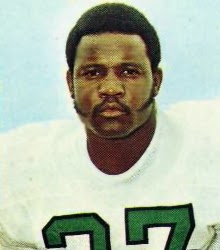
The Vikings, coached by Bud Grant, had been the dominant team in the division and had a string of five consecutive first place finishes on the line. 38-year-old QB Fran Tarkenton (pictured above) was still a formidable competitor, even if he lacked arm strength, and there were capable wide receivers in Ahmad Rashad and Sammy White. FB Chuck Foreman was showing signs of wear while HB Rickey Young was proving to be a productive receiver out of the backfield. The once-formidable defense was slipping as aging became a factor. Following a slow 3-4 start, they had reeled off four straight wins and were at 7-5 coming into Green Bay, a team they had already beaten at home.

Green Bay had gotten off to a fast start under Head Coach Bart Starr, reaching 7-2 before losing three straight contests to also be 7-5. Second-year QB David Whitehurst had taken over for the injured Lynn Dickey with promising results, HB Terdell Middleton was a surprisingly effective ground gainer, and rookie WR James Lofton added a deep threat to the attack. The defense was especially effective at rushing opposing passers.

There were 51,737 fans in attendance at Lambeau Field, where snow surrounded the playing field. The home team immediately ran into trouble on its first play from scrimmage when Terdell Middleton fumbled and Minnesota DE Jim Marshall recovered at the Green Bay 9. The Vikings didn’t reach the end zone, picking up seven yards in three plays, but took the early 3-0 lead on a 19-yard Rick Danmeier field goal.


From the beginning, defensive ends Mike Butler and Ezra Johnson consistently put pressure on Minnesota’s Fran Tarkenton, thus keeping the visitors in check, although Green Bay was also unable to move the ball effectively. Late in the second quarter, and following an interception by LB John Anderson, the Packers finally put together a long drive of 70 yards in 12 plays. David Whitehurst had key completions to FB Barty Smith for 12 yards, Middleton for 16, and James Lofton for 24 yards to the Minnesota three. Middleton (pictured at left) crashed over from a yard out for a touchdown and Marcol added the extra point to give Green Bay a 7-3 halftime lead.

The Vikings got a break in the third quarter when Middleton again fumbled in Green Bay territory, but they failed to capitalize when Danmeier missed a 32-yard field goal attempt. Late in the period, CB Mike McCoy of the Packers recovered a fumble by Rickey Young at the Green Bay 49. Whitehurst passed to TE Rich McGeorge for 20 yards and to Middleton for 11 as the Packers drove 49 yards in 10 plays. But on the first play of the fourth quarter, Middleton lost a yard in a third down situation at the Minnesota one and the Packers settled for a 19-yard Marcol field goal that nevertheless extended the lead to 10-3.

Another Packer fumble, this time by Barty Smith, gave the Vikings the ball at the Green Bay 25 with 5:27 left in regulation, but they were unable to move and Tarkenton’s fourth down pass into the end zone fell incomplete. With two minutes remaining in regulation, the Vikings had one more shot and put together a 57-yard drive in 11 plays, all passes. They converted a fourth-and-three play at the Green Bay 29 when Tarkenton connected with Young along the sideline for six yards and, facing fourth-and-six at the 19, Tarkenton found Sammy White for 14 yards. With ten seconds left on the clock, Tarkenton threw to Ahmad Rashad, who made a leaping catch for a five-yard touchdown and Danmeier’s point after tied the score.

Following the ensuing kickoff, the Packers had one last desperate shot in regulation and came through with the longest pass play of the game as Whitehurst connected with WR Aundra Thompson for 50 yards, but he was brought down at the Minnesota six and time expired.

Both teams had opportunities to win in overtime. At one point, facing third-and-short at midfield, Barty Smith was stopped and the Packers punted. The Vikings advanced from their 21 to the Green Bay four in seven plays, helped along by Tarkenton completions to Rashad for 18 yards, TE Bob Tucker for 14, and Young for 25, but Danmeier failed on a 21-yard field goal. With time running out in the extra period, Green Bay DT Dave Roller recovered a fumble at the Minnesota 43. But with 17 seconds left on the clock, Marcol came on to attempt a 40-yard field goal that missed well to the left. The final verdict was a 10-10 tie.

The Packers led in total yards (318 to 293) and also had the edge in first downs (16 to 15). The sloppy contest featured eight turnovers, with five by the Vikings and three for Green Bay. Missed field goals hurt both clubs, with Rick Danmeier missing two of three and Chester Marcol booting one and failing on another at the end. Green Bay’s David Beverly had a poor punting game, averaging just 30.5 yards on 10 kicks while Greg Coleman of the Vikings was far more effective, averaging 44.0 yards on six punts, and that affected the battle for field position.


Fran Tarkenton, who passed for only 35 yards in the first three quarters, completed 20 of 37 passes for 199 yards and a touchdown, but also gave up four interceptions. Chuck Foreman was held to 52 yards on 24 carries and caught five passes for 35 yards. Rickey Young (pictured at right) contributed a team-leading 6 pass receptions for 63 yards as well as 35 yards on 14 rushing attempts. Ahmad Rashad ended up catching four passes for 38 yards and a TD.

For the Packers, David Whitehurst was successful on 11 of 23 throws for 175 yards with no TDs or interceptions. Terdell Middleton ran the ball 39 times for 110 yards and a touchdown and also had 20 yards on two pass receptions. Barty Smith had three catches for 28 yards along with his 39 yards on 12 carries and Rich McGeorge also caught three passes, for 35 yards. With his long reception at the end of regulation, Aundra Franklin led the team’s receivers with 68 yards on two catches. James Lofton managed just one reception for 24 yards.

“This was a darn fine effort on the part of our football team,” said Coach Starr of the Packers. “I’m proud of them. They played their hearts out and it’s a shame we didn’t win.”

“I thought we should have won,” said Fran Tarkenton. “But the tie doesn’t hurt us a bit.”

The tie left the clubs with identical 7-5-1 records but gave Minnesota the advantage in tiebreakers due to the better head-to-head record (1-0-1). It proved to be decisive as the teams remained even the rest of the way, winning the next week and then losing the final two games. At 8-7-1, the Vikings were Central Division champs while Green Bay was in second and out of the playoff picture. Minnesota lost to the Rams in the Divisional playoff round.

In his last season, Fran Tarkenton achieved career highs in pass attempts (572), completions (345), yards (3468), and on the downside, interceptions (32) which all also topped the NFL.  Rickey Young led the league with 88 pass receptions, for 704 yards and five TDs, while also rushing for 417 yards and another touchdown.

October 6, 2016

1974: Vikings Thwart Dallas Rally with Last-Second Field Goal


Two perennial contenders, the Minnesota Vikings and Dallas Cowboys, faced off on October 6, 1974, but the teams were in very different places as they headed into the fourth week of the NFL season. The Vikings, coached by Bud Grant for the eighth year, were the defending NFC Champions and off to a 3-0 start. Dallas had been to the playoffs in each of the previous eight years under Head Coach Tom Landry, but was 1-2 and had scored only 16 points combined in the previous two games.

There were 57,847 fans in attendance at Texas Stadium, and the Cowboys struck first four minutes into the contest with a big play when QB Roger Staubach threw to WR Golden Richards for a 58-yard touchdown. Efren Herrera added the extra point for the early 7-0 lead. Before the opening period was over, the Vikings narrowed the margin to 7-3 with a 48-yard Fred Cox field goal.

Early in the second quarter, the Cowboys reached the Minnesota 38 but a Staubach pass was intercepted by LB Amos Martin. Three plays later, QB Fran Tarkenton (pictured at top) threw down the middle to FB Chuck Foreman, who was isolated on LB D.D. Lewis, and it was complete for a 66-yard TD. Cox added the point after and the visitors were in front by 10-7.

Minnesota continued to thwart the Cowboys, and Staubach, whose slump had contributed to the club’s offensive woes, was the principal victim. He was picked off a second time, by CB Nate Wright at the Dallas 21, but while the Vikings got more points, they were forced to settle for a 30-yard Cox field goal and took a 13-7 lead into halftime.


In the third quarter, Wright intercepted Staubach again, on this occasion grabbing the ball away from WR Drew Pearson at the Minnesota 36. The Vikings advanced 64 yards in eight plays, the last a toss to Foreman (pictured at left), who made a leaping grab over Lewis in the end zone for a 13-yard touchdown. Cox’s point after gave Minnesota an extended lead of 20-7.

A fourth interception of a Staubach pass, this time by DB Terry Brown at the Dallas 31, had the restless home crowd booing. However, the defense pushed the Vikings back and the tide began to turn in the fourth quarter. The Cowboys put together a 39-yard drive featuring a Staubach completion to HB Calvin Hill for 22 yards and two runs by Hill for six yards apiece. The series culminated in Staubach throwing to FB Walt Garrison for a five yard touchdown and Herrera’s kick narrowed the score to 20-14.

With 8:26 left in regulation, a poor punt by Minnesota’s Mike Eischeid traveled only 11 yards and gave the Cowboys the ball at their 40. Dallas took advantage, driving 60 yards in eight plays. At one point, Hill fumbled on a third-and-three play at the Minnesota 22 but the Cowboys still ended up with five yards and a first down when WR Bob Hayes recovered. Three plays later, Hill ran for an eight-year touchdown and, with Herrera adding the extra point, the Cowboys were ahead by 21-20 with 2:26 remaining to play.

In response, the Vikings advanced 68 yards, with Tarkenton connecting with RB Ed Marinaro for a key first down. The breaks now began to go Minnesota’s way again. First, Tarkenton appeared to fumble when hit by CB Benny Barnes on a blitz, but the officials ruled that the play was dead before the quarterback lost the ball.  Then, passing in a third-and-12 situation, Foreman gained 17 yards but fumbled, still managing to recover amid a crowd of defenders.  Tarkenton followed up with another throw to Marinaro for 20 yards and that set up a 27-yard Fred Cox field goal attempt with one second left on the clock. While the officials were slow to signal as the kick passed near the right upright, it was successful. The Cowboys disputed the call but Minnesota was the winner by a final score of 23-21.

The Vikings led in total yards (376 to 273) and first downs (18 to 16). Dallas outrushed Minnesota (144 to 111) but the Vikings had far more net passing yards (265 to 129) and the Cowboys turned the ball over four times, all on interceptions, to none by Minnesota.

Fran Tarkenton completed 17 of 27 passes for 283 yards and two touchdowns with no interceptions. Chuck Foreman accumulated 203 yards from scrimmage, gaining 72 yards on 23 rushing attempts and 121 on five pass receptions that included two TDs.


For the Cowboys, Roger Staubach had a rough performance as he succeeded on just 9 of 20 throws for 144 yards and two TDs, giving up four interceptions. Calvin Hill (pictured at right) ran for 95 yards and a TD on 21 carries and was one of three Dallas players with a team-leading two pass receptions. Golden Richards, with his one long scoring catch at the beginning of the game, led the club with 58 receiving yards.

“Tarkenton is a gifted quarterback,” said Coach Tom Landry in defeat. “He’s been playing this game for 15 years and he has picked up a lot of knowledge.”

Minnesota reached 5-0 before losing two straight, but breezed to the NFC Central title with a 10-4 record. The Vikings again won the conference championship but lost to Pittsburgh in the Super Bowl. The Cowboys dropped to 1-4 the following week before reeling off four straight wins and seven in their last nine games, and they managed to lead the NFL in total yards (4983). The poor start doomed them, however, as they finished at 8-6 and third in the NFC East, missing the postseason for the first time since 1965.

Fran Tarkenton, in his 14th year, passed for an NFC-leading 2598 yards and was chosen to the Pro Bowl as well as being a second-team All-NFC selection by UPI. Chuck Foreman continued to be productive both running and catching the ball, with 777 yards on 199 rushing attempts, 586 yards on 53 pass receptions, and a total of 15 touchdowns. He was also a consensus second-team All-NFL and first-team All-NFC selection and was named to the Pro Bowl for the second year.

Things ultimately got better for Roger Staubach, but as it was he still had his poorest season as a starting quarterback. His completion percentage (52.8), yards per attempt (7.1), and passer rating (68.4) were all career lows and he threw more interceptions (15) than touchdown passes (11).  But it proved to be an aberration in his Hall of Fame career; he would never again miss selection to the Pro Bowl in his five remaining years with the Cowboys.

December 22, 2015

1973: Vikings Defeat Redskins in NFC Divisional Playoff Game


The NFC Divisional Playoff game on December 22, 1973 featured the Minnesota Vikings, first place finishers in the NFC Central at 12-2, hosting the Washington Redskins, who placed second in the NFC East with a 10-4 record and qualified for the postseason as a Wild Card entry.

The Vikings were in their seventh season under Head Coach Bud Grant and back in the postseason after a one-year hiatus in 1972. Prior to that they had won four straight division titles, but lost their last two Divisional round games. QB Fran Tarkenton (pictured above), an original Viking, returned to the club in ’72 and was making his first postseason appearance in his 13th year as a pro. Tarkenton was talented and known for his scrambling style, but still had something to prove to critics who questioned his ability to come up a winner in big games. WR John Gilliam was a fine receiver and the addition of rookie FB Chuck Foreman helped both the running and passing attack. The tough defense remained the key to the team’s success, in particular the line with ends Carl Eller and Jim Marshall and tackles Alan Page and Gary Larsen.

The Redskins, coached by George Allen, were the defending NFC Champions and still a very strong, veteran-laden club. Gritty QB Bill Kilmer directed an offense that included the running of HB Larry Brown and a strong receiving corps with wide receivers Charley Taylor and Roy Jefferson and TE Jerry Smith. The defense was strong and adept at pressuring opposing quarterbacks. While Washington was also known for the quality of its special teams play, PK Curt Knight caused concern with his erratic tendencies. In addition, Kilmer had been hospitalized during the previous week due to a stomach disorder.

There were 45,475 fans in attendance at Metropolitan Stadium on a day with temperatures in the twenties and a seven mph wind. The field had been cleared of snow and dyed green to hide the wear. Minnesota came out throwing, but a Fran Tarkenton bomb to an open John Gilliam just grazed the receiver’s finger tips, which was the closest the Vikings came to pulling off a big play in the early going. The Redskins missed a scoring opportunity in the first quarter when they drove from their 14 into Minnesota territory but Curt Knight failed on a 17-yard field goal attempt.

Later in the period, Knight again missed a field goal attempt, coming up short from 49 yards. The Vikings were stymied on offense and didn’t register a first down until two minutes into the second quarter, but they finally came up with a big play when Tarkenton completed a pass to HB Oscar Reed for a gain of 50 yards and that set up a 19-yard field goal by Fred Cox.


With 3:30 remaining in the first half, the Redskins got a break when CB Bobby Bryant fumbled a punt and HB Bob Brunet recovered for Washington at the Minnesota 21. Three plays later, which included a pass from Bill Kilmer to Charley Taylor for 17 yards, Larry Brown (pictured at left) ran for a three-yard touchdown. Knight added the extra point for a 7-3 lead.

The Vikings advanced into field goal position as Tarkenton completed passes to WR Carroll Dale and Chuck Foreman, but an interception inside the ten yard line snuffed out the threat and the score remained unchanged at the half.

During halftime, Minnesota DE Carl Eller delivered an emotional speech to his teammates, who had played without apparent emotion during the first half, saying that they had come “too damn far” and were “embarrassing ourselves”. To accent the point, he proceeded to break apart the team’s blackboard. The tirade made an impression and the Vikings showed more fire in the second half.

Early in the third quarter, Reed, taking advantage of the defense’s keying on Chuck Foreman, broke six tackles on a 46-yard carry that set up a two-yard TD run by FB Bill Brown. Cox added the point after and the home team was ahead by 10-7.

Meanwhile, the Redskins were now without CB Pat Fischer, who suffered cracked ribs in the second quarter and was unable to continue. He was replaced by DB Speedy Duncan, also experienced but typically a kick returner who was more comfortable at safety.

Washington managed to tie the score before the period was over with Curt Knight’s 52-yard field goal that matched the then-league playoff record. Knight kicked another field goal, from 42 yards, on the first play of the fourth quarter, and the visitors held a 13-10 edge.

The Vikings proceeded to advance 71 yards in eight plays concluding with a Tarkenton pass to Gilliam, who beat Duncan for a 28-yard touchdown. Cox converted and Minnesota was back in the lead by 17-13. On Washington’s next offensive play, CB Nate Wright intercepted a Kilmer pass and returned it 26 yards to the Redskins’ eight. Two plays later, it was Tarkenton to Gilliam again for a TD, this time from six yards out and after the nimble quarterback scrambled out of trouble, running to his left and then right before finding the receiver open in the right corner of the end zone. Cox added the point after and, in the space of 1:05, the Vikings had scored twice to take a 24-13 lead.

The Redskins managed to get on the board again following DB Ken Stone’s block of a Mike Eischeid punt. Kilmer passed to WR Roy Jefferson for a 28-yard touchdown with 5:28 left to play and Knight converted to close the margin to four points.

The Vikings were able to use up four minutes on a series that concluded with Cox kicking a 30-yard field goal. Washington fought back in the remaining time as Kilmer completed three passes, but the drive came to an end at the Minnesota 42 on a fourth down incompletion. Minnesota won by a final score of 27-20.

The statistics were fairly even. The Vikings led in total yards (359 to 314) while Washington had the edge in first downs (18 to 17). Each team turned the ball over twice. The game was almost penalty-free, with Minnesota drawing the only two flags at a minimal cost of nine yards.

Fran Tarkenton completed 16 of 28 passes for 222 yards with two touchdowns and one interception, and was at his best as the Vikings took command in the second half, when he hit on eight of ten throws and both TDs. John Gilliam had just two catches for 36 yards, but they accounted for both touchdowns. Oscar Reed (pictured below) rushed for 95 yards on 17 carries and caught 5 passes for 76 more yards. Chuck Foreman contributed 40 yards on 11 attempts and had three pass receptions for 23 yards.


For the Redskins, Bill Kilmer was successful on 13 of 24 throws for 159 yards and a TD along with an interception. Larry Brown, who was playing with injured ribs, gained 115 yards on 29 rushing attempts and scored a touchdown. Roy Jefferson caught 6 passes for 84 yards and a TD and Charley Taylor contributed four receptions for 56 yards.

“Sometimes they’re not concentrating on me,” explained Oscar Reed, who received a game ball for his performance. “Since early in the season they’ve been keying on Chuck Foreman. I’m not the world’s greatest pass catcher or runner, but given a little room, I’ll use what I’ve got.”

The Vikings went on to defeat Dallas for the NFC Championship before losing to Miami in the Super Bowl. Washington came back in 1974 to again go 10-4 and reach the playoffs as a Wild Card. The Redskins lost in the Divisional round, this time to the Rams.

November 29, 2015

1976: Jackson & Williams Lead 49ers to Upset of Vikings


The San Francisco 49ers were trying to remain in contention in the NFC West as they faced the Minnesota Vikings on November 29, 1976. Under the guidance of Head Coach Monte Clark, the 49ers had gotten off to a 6-1 start before dropping four straight games, and were now 6-5. To make matters worse, starting QB Jim Plunkett, an offseason acquisition from the Patriots, was injured and untested rookie QB Scott Bull, a sixth-round draft choice out of Arkansas, would have to start in his place. They did have a reliable ground game with HB Delvin Williams (pictured above) and FB Wilbur Jackson, and would be even more dependent upon them.

Minnesota was coached by Bud Grant for the tenth year and was used to contending, having topped the NFC Central in each of the last three seasons. The Vikings were 9-1-1 as they came to San Francisco. 36-year-old QB Fran Tarkenton was still one of the league’s best and the receiving corps was bolstered by the addition of wide receivers Ahmad Rashad, formerly with Buffalo, and rookie Sammy White. HB Chuck Foreman was outstanding both running the ball and catching it out of the backfield. The defense had been the team’s bedrock over the years and, while age was becoming a factor, it was still a tough unit.

There were 56,775 fans in attendance at Candlestick Park on a cool, clear Monday evening. The Vikings had the game’s first possession and punted. With Wilbur Jackson and Delvin Williams running effectively, the 49ers advanced 51 yards in eight plays. Jackson finished the drive off with a two-yard touchdown carry, Steve Mike-Mayer added the extra point, and San Francisco had the early 7-0 lead.

The Vikings responded with a promising drive that was fueled by the running of Chuck Foreman, who gained 27 yards on the first three plays. However, the visitors came up empty when the series stalled at the San Francisco 34 and Fred Cox was short on a 51-yard field goal attempt. Jackson (pictured below) carried five times for 21 yards and Williams had a 30-yard run as the Niners drove to the Minnesota eight, but they failed to add to their lead when Mike-Mayer hit the right upright on a 25-yard field goal try.


As the game headed into the second quarter, the Vikings had to punt and this time the 49ers didn’t come up empty. Jackson had a 24-yard run to advance the ball into Minnesota territory and Scott Bull threw to WR Jim Lash, an ex-Viking, for 10 yards. Bull was sacked for a ten-yard loss on third down, but Mike-Mayer was successful on a field goal from 45 yards and San Francisco was ahead by 10-0.

The Vikings put together a long drive of 85 yards in 17 plays. Facing a third-and-11 situation from their own 14, Fran Tarkenton threw to Ahmad Rashad for a 33-yard gain and a third-and-six play from the San Francisco 36 resulted in a Tarkenton completion to Foreman for nine yards. A pass interference penalty allowed Minnesota to convert another third down and the final play of the series resulted in a Tarkenton toss to Sammy White in the end zone for a 17-yard TD. Cox converted to make it a three-point game at 10-7.

The 49ers had to punt from deep in their own territory and the Vikings needed just five plays this time to score again. Tarkenton threw to Rashad for a 47-yard pickup and, two plays later, it was Tarkenton-to-Rashad once more for an eight-yard touchdown. DT Cleveland Elam blocked the extra point attempt but the visitors were ahead by 13-10 with 2:24 remaining in the first half.

San Francisco responded by advancing 83 yards in seven plays. Williams started the series off with a 23-yard run and, just after the two-minute warning, Bull completed a pass to WR Gene Washington for 16 more yards. A pass interference call on CB Nate Wright placed the ball on the Minnesota one, and Bull dove into the end zone from there for a TD. Mike-Mayer converted and the 49ers were back in front by 17-13 at halftime.

The 49ers had the ball first in the third quarter but FS Paul Krause intercepted a Bull pass and that resulted in Cox kicking a 37-yard field goal that narrowed the score to 17-16. Once again it was Jackson and Williams carrying the load as the Niners kept the ball on the ground, but the drive stalled at the Minnesota 30 and Mike-Mayer was short on a 47-yard try for a field goal.

The teams exchanged punts for the remainder of the period, but the 49ers were winning the field position battle and had advanced to the Minnesota 25 as the contest entered the fourth quarter. Mike-Mayer booted a 38-yard field goal early in the final period and San Francisco was up by four points.

The Vikings punted following their next series and, on the second play of the ensuing possession, Williams took off on a 26-yard run that put him over a thousand yards for the season. However, he also had to leave the game with a sprained ankle, hobbling off the field to a loud ovation from the crowd. The teams returned to exchanging punts and now it was Minnesota benefiting from the exchanges. A 44-yard kick by Neil Clabo had the 49ers pinned back at their five yard line with 9:38 remaining to play.

The Niners went three-and-out and punted, giving the Vikings possession at the San Francisco 24 following a 14-yard return by DB Autry Beamon. Foreman ran the ball three straight times and, after LB Skip Vanderbundt stopped him short of a first down on a three-yard carry, the Vikings faced fourth-and-one at the 15. Foreman carried once more, and this time it was LB Dave Washington stopping him for no gain.

The 49ers were unable to maintain control of the ball as Bull’s six-yard run on third down came up inches short of a first down and forced a punt. Minnesota still had 1:19 to work with after taking over at the San Francisco 47. On second down, following an incomplete pass, Tarkenton was penalized for intentional grounding in order to avoid being sacked for a sizeable loss. As it was, it cost the Vikings 15 yards and a down, and a completion to Rashad for seven yards had them facing fourth-and-18. Tarkenton threw to WR Bob Grim for a gain of 27 yards to keep the series alive, but two passes into the end zone fell incomplete as time ran out. The 49ers held on to win by a final score of 20-16.  

San Francisco had the edge in total yards (331 to 282), with 317 on the ground, and first downs (17 to 16). The 49ers also were credited with three sacks, to two for Minnesota, although they also suffered the game’s only turnover and drew more penalties (9 to 8). Both teams had problems with placekicking as Minnesota’s Fred Cox missed an extra point as well as a field goal attempt and Steve Mike-Mayer failed on two of four field goal tries.

Wilbur Jackson and Delvin Williams both gained over 150 rushing yards, with Jackson accumulating 156 on 30 carries that included a touchdown and Williams compiling 153 yards on 20 attempts despite being knocked out of the game with an injury during the fourth quarter. Scott Bull went to the air only eight times and completed three for 32 yards with one interception. Three receivers had a catch apiece for the 49ers, with Gene Washington gaining a team-leading 16 yards on his reception.


For the Vikings, Fran Tarkenton (pictured at right) completed 16 of 37 passes for 200 yards and two touchdowns while giving up no interceptions. Ahmad Rashad had 6 receptions for 103 yards and a TD. Chuck Foreman rushed for 93 yards on 23 carries and gained another 23 yards on three catches.

“We wanted to run at them and that’s what we did,” explained Delvin Williams. “We ran it straight up the middle. Our plan was to run the ball and to pass as little as possible, to keep the pressure off Scott (Bull).”

The 49ers split their last two games of the season with Scott Bull at quarterback and finished with an 8-6 record that was good for second place in the AFC West but not good enough to qualify for the postseason. Minnesota recovered to win its last two games to once more top the NFC Central at 11-2-1 and advanced to the Super Bowl before losing to the Oakland Raiders.

Delvin Williams broke Joe Perry’s 22-year-old franchise rushing record with 1203 yards on 248 carries (4.9 avg.) and scored seven touchdowns. He was selected to the Pro Bowl. Wilbur Jackson gained 792 yards on 200 attempts (4.0 avg.) with one TD. Scott Bull ended up completing 21 of 48 passes for 252 yards (43.8 %) with two touchdowns and four interceptions. He also rushed for 66 yards and two TDs.

September 15, 2015

1963: Vikings Rally in Fourth Quarter to Defeat 49ers


A third-year expansion team met up with a club hoping to bounce back from a disappointing season as the Minnesota Vikings took on the 49ers in San Francisco on September 15, 1963.

Minnesota went 5-22-1 in its first two seasons in the NFL, including 2-11-1 in 1962, and was looking to advance. Head Coach Norm Van Brocklin’s team was still very much an erratic work in progress, with a promising offense and problematic defense. QB Fran Tarkenton used his scrambling ability to good effect and HB Tommy Mason (pictured above) emerged as a star in his second year. It was hoped that FB Bill Brown, obtained from the Bears the previous year, would add inside power and blocking and that rookie split end Paul Flatley would improve the receiving corps. There was talent on defense, most notably DE Jim Marshall, LB Rip Hawkins, and CB Ed Sharockman, but the loss of the club’s first two draft choices, DT Jim Dunaway and LB Bobby Bell, to the rival AFL was a huge disappointment.

The 49ers had dropped to 6-8 the previous year, down from three straight seven-win seasons, and all under innovative Head Coach Red Hickey. Injuries had been a big part of the problem, and thus improvement was anticipated. However QB John Brodie, who was erratic but talented, had been injured in an offseason auto accident and appeared to be slow in recovering, while FB J.D. Smith, a capable runner, was weakened by illness. Still, flanker Bernie Casey led a good corps of receivers and CB Abe Woodson provided an additional weapon with his excellence on kickoff returns, in addition to being a solid defensive back.


The level of discontent with the team was reflected in the attendance of 30,781 fans at Kezar Stadium, the lowest for a San Francisco home-opener since 1950. Nevertheless, things started off in electrifying fashion for the home team when Abe Woodson (pictured at left) took the opening kickoff and returned it 103 yards for a touchdown. Tommy Davis added the extra point and the 49ers were up by 7-0 at just 17 seconds into the game.

The Vikings responded by driving 76 yards in 12 plays. Fran Tarkenton converted a third-and-eight situation with a completion to Paul Flatley for 32 yards to the San Francisco 20, and while an offensive pass interference penalty and loss of seven yards on a running play by HB Bill Butler moved the visitors back, Tarkenton fired long on a third-and-31 play to Tommy Mason, who caught the ball at the 15 and, shaking off a defender, ran the rest of the way for a 41-yard TD. Cox converted to tie the score.

The 49ers came right back with a scoring drive. FB Lloyd Winston had a 26-yard run and John Brodie scrambled for 12 yards to set up a 35-yard Davis field goal. The Niners were back in front by 10-7. Butler returned the ensuing short kickoff 26 yards to the Minnesota 40. Bill Brown picked up 25 yards on five running plays and Tarkenton threw to TE Jerry Reichow for five yards, but another pass intended for Reichow at the goal line was broken up by CB Kermit Alexander at the goal line. On the first play of the second quarter, Cox kicked a 37-yard field goal to again even the score.

The teams exchanged punts before the 49ers, starting from their 23, immediately picked up 38 yards on a run by Winston. Brodie threw a screen pass to J.D. Smith that gained 40 yards to the Minnesota five, and the six-play, 77-yard possession ended with Brodie rolling out and passing to Bernie Casey in the end zone for a one-yard touchdown. Davis added the point after and the Niners were back in front by 17-10.

The Vikings again had to punt and Brodie passed the 49ers to the Minnesota 49 with time running out in the first half, but Davis was short on a 54-yard field goal try and the score remained unchanged at halftime.


Minnesota started off the third quarter with a promising drive highlighted by two plays by Bill Brown (pictured at right). First the fullback ran off tackle for a 21-yard gain and then he gained 14 yards on a screen pass. But after reaching the San Francisco 29, Tarkenton threw a pass that was intercepted by Woodson. The 49ers advanced into Minnesota territory on a series highlighted by a pass to TE Monty Stickles for 17 yards and Brodie rolling out to his right and carrying 24 yards to the Vikings’ 41. After reaching the 38, Brodie threw twice for the end zone with both passes falling incomplete and Davis kicked a 45-yard field goal to give the home team a ten-point lead of 20-10.

The Vikings responded with another promising drive featuring four completions by Tarkenton, but again they came up empty when Mason fumbled and Alexander recovered at the San Francisco 16. A short series by the Niners ended with a punt and, in a possession that extended into the fourth quarter, Minnesota advanced 67 yards in nine plays and did not fail to score. Tarkenton started off with consecutive completions to Mason, for 15 and 11 yards, and a throw to flanker Leon Clarke gained 13 yards. A second-down pass to Flatley was good for 10 yards and moved the Vikings inside the ten, and two carries by Brown picked up the remaining yardage, including the last four for a touchdown. Cox’s extra point made it a three-point game.

Once again the 49ers were held to a short series and punted and the Vikings responded by driving 71 yards in 13 plays. Brown continued to run effectively and Tarkenton completed a pass to Reichow for 19 yards and two to Flatley for seven and 16 yards. Mason ran for the last two yards and a TD and, with Cox adding the point after, the visitors were up by four points.

In the remaining four minutes, San Francisco had the ball twice more, but the home team couldn’t get out of its own territory. An interception by CB Ed Sharockman sealed Minnesota’s 24-20 win.

The Vikings easily led in total yards (418 to 246) and first downs (27 to 10). They topped San Francisco in both on the ground (156 to 126) and through the air (262 to 120). Minnesota also turned the ball over two times, to one by the 49ers.

Fran Tarkenton (pictured below) completed 20 of 29 passes for 262 yards and a touchdown, giving up one interception. Bill Brown rushed for 77 yards on 16 carries that included a TD and Tommy Mason contributed 68 rushing yards and a touchdown on 21 carries and also topped the Vikings with 6 catches for 94 yards and another score. Paul Flatley and Jerry Reichow each had five pass receptions apiece, for 72 and 61 yards, respectively.


For the 49ers, John Brodie was successful on 11 of 23 throws for 125 yards and a TD as well as an interception, and also ran for 42 yards on four carries. Lloyd Winston gained 81 yards on 10 rushing attempts. Bernie Casey caught four passes for 34 yards and a touchdown, although J.D. Smith had the most receiving yards on his one reception for 40 yards. As a runner from scrimmage, he was held to minus one yard on five carries. Thanks to his touchdown return on the opening kickoff, Abe Woodson averaged 60.0 yards on his two returns and also intercepted a pass.

The Vikings lost to the Bears the next week, thrashed the 49ers in their rematch in Minnesota, but then lost four straight games on the way to a 5-8-1 record and tie for fourth with Detroit in the Western Conference. They continued to improve on offense, with Tommy Mason again going to the Pro Bowl and garnering consensus first-team All-NFL recognition as he rushed for 763 yards on 166 carries (4.6 avg.) and caught 40 passes for another 365 yards (9.1 avg.) and scored a team-leading total of nine touchdowns. Bill Brown ran for 445 yards while Paul Flatley received caught 51 passes for 867 yards (17.0 avg.) and was named Rookie of the Year by UPI and The Sporting News. Fran Tarkenton also continued his steady development, completing 57.2 percent of his passes for 2311 yards and 15 touchdowns, but was being pressed by rookie Ron VanderKelen by season’s end.

San Francisco sank all the way to the bottom of the conference at 2-12 and Coach Hickey was gone after three games. John Brodie was lost at that point as well with a broken arm, J.D. Smith failed to play up to his usual level, and key injuries weakened the defense, particularly the midseason loss of DT Charlie Krueger. Abe Woodson remained a bright spot as he led the NFL in kickoff returning for the second straight season (and third overall) with a 32.2-yard average that included three touchdowns. He was named to a fifth consecutive Pro Bowl.

January 27, 2015

1972: Giants Trade Tarkenton Back to Vikings


On January 27, 1972 the Minnesota Vikings swung a deal with the New York Giants that brought QB Fran Tarkenton back to the team he had started his career with, at the cost of three veteran players and two high draft choices. The Vikings received Tarkenton for QB Norm Snead, WR Bob Grim, FB Vince Clements, and the first draft pick for 1972 as well as the second-round choice for ‘73.

Under Head Coach Bud Grant since 1967, the Vikings had won four straight division titles through the ’71 season, advancing to the NFL Championship in 1969 before losing to the AFL’s Kansas City Chiefs in the last pre-merger Super Bowl. The team had a consistently outstanding defense and gave up the fewest points in the league in 1971. The offense, however, was far less impressive and an upgrade at quarterback was considered to be a significant need.

Joe Kapp,a fiery leader which offset his weaknesses as a passer, enjoyed the most success but was gone due to a contract dispute after the 1969 season. Gary Cuozzo had seen the most action since then, but he could not match Kapp as a team leader and his skills were no better than adequate. Norm Snead was brought in to provide competition but it was Bob Lee, a backup who handled the punting, that started in the Divisional-round playoff loss to the Cowboys. Critics insisted that the stodginess of the offense made it difficult for any quarterback to succeed.

The 6’0”, 190-pound Tarkenton, a resident of Atlanta who starred at Georgia and was just short of his 32nd birthday, spent his first six seasons with the Vikings after they drafted him in the third round in their initial season of 1961. He quickly took over as the team’s starting quarterback and played with a distinctive, scrambling style that was exciting but became a source of conflict with Head Coach Norm Van Brocklin. Tarkenton was twice selected to the Pro Bowl during that period, but after a promising 8-5-1 finish in 1964, the club as a whole moved backward. Both Van Brocklin and Tarkenton were gone after the ’66 season, and the scrambling quarterback was chosen to four consecutive Pro Bowls with the Giants from 1967 through ’70, when the club posted a 9-5 record and nearly won the NFC East title.  

Things soured between Tarkenton and the Giants in 1971. First, he upset team president Wellington Mara when he briefly walked out prior to the first preseason game due to a contract dispute. As the team dropped in the standings in 1971, finishing at 4-10, Tarkenton expressed the desire to play for a contending team. The Giants were 33-37 in five years with Tarkenton starting at quarterback, and his last season with the team was easily his worst as he threw just 11 TD passes against 21 interceptions.

New York’s Head Coach Alex Webster expressed the hope that the trade would help the team in 1972 and beyond, thanks to the package of veterans and draft picks received.

Norm Snead had played eleven seasons in the NFL, coming into the league at the same time as Tarkenton. A 1961 first-round draft pick by the Washington Redskins, he started every game as a rookie. Big  at 6’4” and 215 pounds and a classic drop-back passer with a strong arm and slow release, Snead showed early promise but was traded to the Eagles in a celebrated 1964 deal for QB Sonny Jurgensen. Following seven up-and-down years in Philadelphia, he moved on to the Vikings in ’71 and was used sparingly. 

Bob Grim was coming off of his fifth, and easily best, year with the Vikings. He more than doubled his production of the first four seasons with 45 catches and 691 yards in ’71, and earned selection to the Pro Bowl.

Vince Clements was Minnesota’s fourth-round draft choice in 1971. He missed most of his senior year at Connecticut due to a knee injury and left the Vikings after reinjuring the knee during the preseason. However, he had expressed an interest in returning for ’72.

“We are very happy about going to Minnesota…back home, almost, to where we started,” said Tarkenton in reaction to the trade, adding that he enjoyed the time in New York “very much because it’s a great sports city.”

The expectation that adding Tarkenton would bring a championship to Minnesota was dashed in 1972 when the team finished third in the NFC Central with a 7-7 record. While Tarkenton provided the needed upgrade at quarterback, and had an excellent target in Pro Bowl WR John Gilliam, the running game lacked a back with breakaway ability, and the vaunted defense became vulnerable against the run.

The situation improved greatly in 1973. Rookie FB Chuck Foreman was productive both running and catching the ball and the defense, with key players healthy, was strong again. The team won the NFC Championship before falling to the Dolphins in the Super Bowl. It was the first of three trips to the Super Bowl in four years, although they all ended in defeat. Tarkenton was a consensus MVP selection in 1975 and was chosen to the Pro Bowl three times in his second stint with the Vikings. He led the league in completions on three occasions, completion percentage twice, and passing yards and touchdown passes once. In 1978, his last season, he achieved career highs in pass attempts (572), completions (345), and yards (3468), although also in interceptions (32). Upon his retirement, he was the NFL career leader in rushing yards by a quarterback (3674) as well as pass attempts (6467), completions (3686), passing yards (47,003), and touchdowns (342).


The Giants were 8-6 in 1972 and Norm Snead (pictured at left) had an outstanding year as he led the NFL in completion percentage (60.3) while throwing for 2307 yards and 17 touchdowns against 12 interceptions. He was named to the Pro Bowl. But both Snead and the Giants collapsed in ’73, with the team dropping to 2-11-1 and the quarterback leading the league with 22 interceptions. Snead was traded to the 49ers during the 1974 season and returned to New York as a backup in his final season of 1976.

Bob Grim caught just five passes in 1972 but had a total of 65 for 1059 yards and four touchdowns in 1973 and ’74 before moving on to the Bears and returning to the Vikings in 1976. Vince Clements played for two years with the Giants and rushed for 435 yards and added 24 pass receptions for another 247 yards, but appeared in just 16 games due to nagging injuries that ultimately curtailed his career.

The two draft choices obtained for Tarkenton were used to take DE Larry Jacobson from Nebraska with the 24th pick in the first round in 1972 and Michigan State LB Brad Van Pelt in the second round of the ’73 draft. Jacobson started nine games as a rookie but lasted just three seasons and had little impact. Van Pelt was far more successful – and was the player obtained through the Tarkenton deal that was most useful to the Giants for the longest amount of time – playing 11 seasons with the club and gaining selection to the Pro Bowl five straight times, from 1976 to ’80.

For the Vikings, the acquisition of Tarkenton did help the team and played a significant role in advancing to three NFC Championships. For the Giants, the deal brought only short-term relief in a slump for the franchise that started in 1964 and lasted until 1981.

October 21, 2014

1973: Vikings Sink Feisty Eagles as Gilliam Stars


The Minnesota Vikings were undefeated at 5-0 as they hosted the Philadelphia Eagles on October 21, 1973. Head Coach Bud Grant’s team had not allowed more than 16 points in any game thus far, but while best known for strong defense, the Vikings were a formidable team on offense as well. 33-year-old QB Fran Tarkenton was an outstanding and mobile passer, rookie FB Chuck Foreman was potent as both a runner and receiver out of the backfield, and WR John Gilliam (pictured at right) provided speed on the outside. The line was solid.

Philadelphia, under first-year Head Coach Mike McCormack, was 1-4-1 and a seventeen-point underdog. Coming off of a dreadful last-place finish the year before, the Eagles were rebuilding with an offense led by QB Roman Gabriel, a 12th-year veteran who had been obtained at heavy price from the Rams during the offseason. 6’8” WR Harold Carmichael was having a breakout season and rookie TE Charle Young further bolstered the passing game. The problem was with a thin defense in need of fortification on the line and at linebacker.

It was a clear day at Metropolitan Stadium with 47,478 fans in attendance. The Eagles got the first break when Chuck Foreman fumbled at the end of a 16-yard run and DE Will Wynn recovered at the Minnesota 41. However, they weren’t able to gain much ground and Tom Dempsey’s field goal attempt from 44 yards was wide to the right.

The Vikings responded with an 80-yard drive in six plays. Fran Tarkenton ran twice for 19 yards and John Gilliam ran for 44 yards and a touchdown on a well-executed double-reverse. Fred Cox added the extra point for the early 7-0 lead.

The teams traded punts, each stopping just short of midfield. A Philadelphia series was then blunted when Harold Carmichael’s gain on a pass into the flat was nullified by a hurdling penalty as the rangy wide receiver leaped over CB Nate Wright. Following a punt, Minnesota moved methodically into Eagles territory on a series that extended into the second quarter. Tarkenton completed four short passes, with a 10-yard completion to WR Carroll Dale gaining the necessary yardage to convert a third down, and also scrambled for a 12-yard gain in a second-and-nine situation. But after reaching the Philadelphia 24, Cox’s field goal try from 31 yards was blocked by CB Joe Lavender.

Another short series led to a punt by the Eagles, and the Vikings didn’t come up empty this time, advancing 65 yards in seven plays. In a third-and-seven situation, Tarkenton threw twice to Gilliam for 14 and 42 yards to the Philadelphia six. Three plays later, HB Oscar Reed leaped into the end zone from a yard out and, with Cox’s conversion, Minnesota was up by 14-0.

Regaining possession with four minutes remaining in the first half, the Eagles put together a 10-play, 80-yard drive. HB Po James (pictured below) started off with a 17-yard carry up the middle and Gabriel completed five passes along the way. In a fourth-and-one situation at the Philadelphia 46, HB Tom Sullivan ran for four yards. A holding penalty nullified an apparent long scoring toss to Carmichael, but following a nine-yard gain by James on a draw play, Gabriel threw to Charle Young for 20 yards, to James for 12, and to Carmichael for 11. James ran the last 12 yards for a TD and, and with Dempsey adding the PAT, the home team’s lead was halved to 14-7. There was still 1:03 left in the period as the Vikings regained possession, but Cox was short on a field goal attempt from 53 yards and time ran out on the Eagles at their 31.


Philadelphia had first possession in the third quarter but had to punt, and the short kick by Tom McNeill gave the Vikings the ball at their own 43. They went 57 yards in eight plays, the last a Tarkenton pass to a wide-open Gilliam for a 24-yard touchdown. Cox kicked the extra point to make it a 21-7 game.

The Eagles responded with a 14-play, 76-yard scoring drive of their own. Gabriel, with his first of six completions during the series, threw to Young for a 24-yard gain.  Four of his passes, in fact, were to the rookie tight end, the last for 12 yards to the Minnesota three, and two plays later FB Lee Bouggess ran for a two-yard TD. Dempsey’s conversion again made it a seven-point margin.


In a series that moved into the fourth quarter, the Vikings came back with a 69-yard drive that took 13 plays. Tarkenton (pictured at left) had completions to TE Stu Voigt for 15 and 13 yards and Foreman outraced Lavender and FS Bill Bradley to the goal line for a five-yard touchdown. Cox again made it a 14-point game with the extra point.

The teams exchanged punts before the Eagles put together a nine-play, 78-yard series. Gabriel threw to WR Don Zimmerman for 14 yards and to Carmichael for 19 in a third-and-10 situation and James had runs of 22 and seven yards. From the Minnesota 17, Young took a handoff on an end-around play and plowed over three defenders on the way to a TD. Dempsey initially failed to convert, but an offside penalty on the Vikings gave him a second chance that he made good on.

The determined Eagles had again closed to seven points and there were four minutes remaining to play, but they never got the ball again as Minnesota was able to run out the clock, helped by Tarkenton’s 16-yard scramble that converted a third-and-nine situation. The final score was 28-21.

The Vikings led in total yards (409 to 315) and first downs (25 to 19), with Minnesota’s total showing offensive balance – 217 on the ground and 192 net yards through the air. The Vikings suffered the game’s only turnover and managed to record two sacks, to one by Philadelphia.

John Gilliam caught 6 passes for 116 yards and a touchdown and added another TD on his 44-yard run. Fran Tarkenton completed 16 of 21 passes for 202 yards and a touchdown with no interceptions and also ran for 49 yards on 9 carries. Chuck Foreman topped the Vikings with 68 rushing yards on 21 attempts that included a TD.


For the Eagles, Roman Gabriel was successful on 23 of 32 throws for 201 yards and no TDs but also no interceptions. Po James ran for 78 yards on 11 carries that included a score and also had 6 catches for 25 yards. Charle Young (pictured at right) caught 6 passes also, for 86 yards, and had the 17-yard touchdown carry and Harold Carmichael contributed 6 receptions for 52 yards.

The Vikings reached 9-0 before finally dropping a game and ended up on top of the NFC Central with a 12-2 record. They won the NFC Championship but were handily beaten by Miami in the Super Bowl. Philadelphia won its next two games and continued to provide exciting offense and mediocre defense on the way to a 5-8-1 tally and third place finish in the NFC East.

John Gilliam went on to a Pro Bowl season as he caught 42 passes for 907 yards (21.6 avg.) and scored eight touchdowns. Fran Tarkenton remained efficient throwing the ball, completing 61.7 percent of his passes and compiling a career-high 93.2 rating while giving up only seven interceptions.

Roman Gabriel led the league in pass attempts (460), completions (270), yards (3219), and TD passes (23, tied with Roger Staubach of the Cowboys) and was selected to the Pro Bowl. Harold Carmichael topped the NFL in both pass receptions (67) and yards (1116) and Charle Young received Rookie of the Year recognition for his 55 catches and 854 yards. Both receivers were Pro Bowl choices and received All-NFL recognition, with Young a consensus first-team honoree.

November 23, 2013

1970: Eagles Upset Giants in Monday Night Game


The New York Giants were riding a six-game winning streak as they came to Philadelphia for a Monday night contest on November 23, 1970. Head Coach Alex Webster’s team was 6-3, having lost its first three games before catching fire. While QB Fran Tarkenton remained the key to the offense in his fourth year with the club, the addition of HB Ron Johnson, who played his rookie season with the Browns in ’69, added a versatile ground-gaining element. Veteran WR Clifton McNeil and rookie TE Bob Tucker were good receivers who were also newcomers to the club. While the defense had talent in DE Fred Dryer and FS Carl “Spider” Lockhart, there were concerns about the remainder of the line and linebacking corps. The Giants had not been to the postseason since 1963 and were looking to keep pace in the newly-formed NFC East.

Philadelphia was coached by Jerry Williams for the second year and was already well out of the running at 1-7-1. However, the Eagles were showing signs of life, having upset Miami two weeks earlier and then tying Atlanta. QB Norm Snead (pictured above) had a strong arm but was prone to tossing interceptions. The running game had lost FB Tom Woodeshick to injury, although rookie FB Lee Bouggess was a good receiver out of the backfield and HB Cyril Pinder was picking up yards. The defense had a rising star in Tim Rossovich, a colorful character who had been shifted to middle linebacker from defensive end.

It was a cold night at Franklin Field with 59,117 fans in attendance for Philadelphia’s first-ever Monday Night Football contest. The Eagles moved methodically down the field with the game’s first possession. Cyril Pinder ran for 14 yards on a third-and-six play and Norm Snead converted a third-and-ten situation with a pass to TE Gary Ballman for 19 yards. The drive finally stalled and Philadelphia came up empty when Mark Moseley missed a 39-yard field goal attempt.

The teams traded punts before the Giants put points on the board. The kick by Philadelphia’s Bill Bradley sailed only 28 yards, giving the visitors excellent starting field position at the Eagles’ 46. It resulted in a 29-yard field goal by Pete Gogolak.

Heading into the second quarter, the Eagles took advantage of a bad pass from center by the Giants on fourth down that gave them the ball at the New York one. Snead scored from there on a quarterback sneak but Moseley missed the extra point and the Philadelphia lead remained 6-3.

The Giants got a break when they recovered a fumble at the Philadelphia 13 that set up a two-yard touchdown carry by Ron Johnson. Gogolak added the PAT and New York was up by four.

As the first half wound down, New York added to its lead, getting a 29-yard Gogolak field goal with 36 seconds left on the clock. However, Eagles WR Billy Walik (pictured below) returned the ensuing kickoff 57 yards and it set up a 29-yard Moseley field goal on the last play of the half. New York’s lead was cut to 13-9 at the intermission.


New York punted following the first series of the third quarter and the Eagles moved well as Snead completed passes to WR Ben Hawkins for 25 yards and to WR Harold Jackson for 27 yards to the New York 13. Six plays later, after Pinder and Lee Bougess carried the load, Snead threw to TE Fred Hill for the last yard and a touchdown. Moseley added the extra point and Philadelphia was ahead by 16-13.

The Giants came right back with an 11-play, 60-yard scoring drive of their own. Tarkenton completed three passes, including one to Bob Tucker for 18 yards, and Philadelphia was hurt by two 15-yard penalties. Tarkenton kept the ball himself for the last yard and a TD and Gogolak added the point to again put the visitors in front by four.

Walik struck again as he returned the kickoff 45 yards to give the Eagles good starting field position at the New York 46, and a Snead pass to Hawkins picked up 31 yards. While the receiver fumbled at the end, G Jim Skaggs fell on the ball to not only save the possession but gain another three yards. The home team was inside the ten yard line as the action moved into the fourth quarter and Snead scored on a one-yard plunge less than a minute into the final period.

An exchange of fumbles followed and the Giants again had to punt. The Eagles took over from their 14 with over ten minutes remaining and put together a key series that allowed them to control the ball for the next 9:26. While they came up empty when Moseley missed a 36-yard field goal attempt, there were only 50 seconds remaining for the Giants to work with.

Tarkenton desperately tried to pass the Giants into field goal position. He got them as far as the Philadelphia 42, but a penalty for an illegal receiver downfield moved the Giants back and time ran out on them. The Eagles pulled off the upset by a score of 23-20.

Statistically, the game was very even. New York had the edge in total yards (287 to 281) while the Eagles were slightly ahead in first downs (18 to 17). The Giants turned the ball over three times, to two suffered by Philadelphia, all on fumbles. Missed kicks were a problem for the Eagles as Moseley failed on two of three field goal attempts as well as an extra point, but Billy Walik returned four kickoffs for 147 yards and a 36.8 average, with the two longest setting up scores.

Norm Snead completed 12 of 17 passes for 173 yards and a touchdown with none intercepted, and had the two short rushing TDs. Cyril Pinder ran for 89 yards on 19 carries and caught three passes for 25 more yards. Ben Hawkins pulled in four passes for 99 yards. Tim Rossovich (pictured below) was a standout performer with his inspired play on defense.


For the Giants, Fran Tarkenton was successful on 15 of 30 throws for 178 yards and ran the ball five times for 33 yards and a TD. FB Tucker Frederickson, who was effective on screen passes throughout the game, had 6 catches for 81 yards along with 32 yards on 8 rushing attempts. Clifton McNeil contributed four pass receptions for 62 yards. But the Eagles held Ron Johnson to just 35 yards on 16 carries that included a short touchdown.

“What hurt us most was Walik’s kickoff returns which gave them great field position,” summed up Coach Webster for the Giants.

The win was a high point of an otherwise-bleak season for the Eagles, who lost their next three games before winning the finale against Pittsburgh – their last regular season game at Franklin Field. They ended up at the bottom of the NFC East with a 3-10-1 record. New York remained in the hunt for a Wild Card playoff spot, recovering to win three straight before losing the season finale against the Rams. While their 9-5 record was the franchise’s best in seven years and put them second in the division, the Giants were a game behind the 10-4 Lions in the race for the Wild Card.

In his seventh (and last) year with the Eagles, Norm Snead passed for 2323 yards and 15 touchdowns, but also 20 interceptions. Billy Walik, a rookie out of Villanova, ranked fifth in the NFC with a 25.2 average on 32 kickoff returns. As his performance against the Giants demonstrated, Mark Moseley, also a rookie, struggled with inconsistency throughout the year, connecting on 14 of 25 field goal attempts and 25 of 28 extra point tries, with several of his missed kicks coming at particularly inopportune times. He was cut during the 1971 preseason but would eventually put together a long and successful career that lasted until 1986, primarily with the Redskins.

Ron Johnson became the first thousand-yard rusher in Giants history, gaining 1027 yards on 263 carries (3.9 avg.) while also catching 48 passes for 487 more yards. He scored a total of 12 touchdowns and was a consensus first-team All-NFL and Pro Bowl selection.

As a side note, the game became notorious for what occurred in the broadcast booth during the national telecast. The Monday night games were in their first year and already becoming noteworthy for the acerbic commentary of Howard Cosell, the playful responses of ex-quarterback Don Meredith, in addition to the play-by-play offered by Keith Jackson. Eagles owner Leonard Tose had sent copious amounts of food and alcohol to the press box, which was unheated on the brutally cold night. During the first half, Cosell was noticeably slurring his words and departed at halftime after reportedly vomiting on Meredith’s cowboy boots. Cosell was accused of being drunk during the telecast, which he vehemently denied, insisting that he was suffering from an inner ear infection. Whatever the truth, the incident became an often-referenced part of Monday Night Football lore.

September 24, 2013

1961: Cowboys Defeat Vikings to Start Second Year at 2-0


The Dallas Cowboys had gone a winless 0-11-1 as a NFL expansion team in 1960 but stunned the Steelers in their opening game in ’61 and were hosting the latest expansion franchise, the Minnesota Vikings, on September 24, 1961.

Head Coach Tom Landry’s team had hope for improvement coming into the second season. The Cowboys drafted DE Bob Lilly out of Texas Christian (later a DT) and also would have HB Don Perkins (pictured above), a 1960 draft choice out of New Mexico who missed the entire season due to a foot injury, available to bolster the running game. QB Don Meredith had spent his rookie year behind diminutive veteran Eddie LeBaron and was ready to put in more time behind center.

The Vikings, coached by former star quarterback Norm Van Brocklin, were a typical first-year amalgam of old, unwanted, and upcoming players. Nevertheless, they stunned the Chicago Bears in their first game and had uncovered an exciting rookie quarterback in Fran Tarkenton out of Georgia, who had quickly displaced veteran George Shaw.

There were 20,500 in attendance at the Cotton Bowl and they saw the home team score in the first quarter. Don Perkins took off on a 47-yard run to set up a six-yard touchdown carry by FB Amos Marsh.

The Cowboys drove 80 yards to their next score in the second quarter. Don Meredith passed for 39 yards and ran for 29, including a 20-yard touchdown carry with Marsh throwing a key block along the way. Allen Green added his second extra point and it was 14-0 in favor of Dallas.


The Vikings finally got into the end zone in the second quarter when Tarkenton completed a pass to end A.D. Williams for 49 yards to the Dallas 27 and two carries by ex-Giants FB Mel Triplett (pictured at left) advanced the ball another 21 yards. HB Tommy Mason finished the series with a four-yard touchdown run, losing the ball at one point but recovering in the air to score. Mike Mercer’s extra point made the score 14-7 at the half.

The Vikings threatened several times but key defensive plays stopped them from scoring and Mercer failed on three field goal attempts, one of which was blocked by LB Gene Babb. Safeties Dick Moegle and Bob Bercich made big plays for the Cowboys, with Bercich intercepting a pass.

In the third quarter, the Vikings drove 76 yards to the Dallas one in a drive largely propelled by Triplett’s running, but came up empty at a point where a TD and extra point would have tied the score.  This was soon followed by the interception of a Tarkenton pass by CB Don Bishop. Meredith tossed a screen pass to Marsh for a 19-yard touchdown and that was more than enough to put the game away. The Cowboys won by a decisive 21-7 score.

Dallas dominated the Vikings in total yards (437 to 251) with 208 of that total coming on the ground. The Cowboys also had the edge in first downs (22 to 16). Each team turned the ball over three times. The Dallas defense recorded three sacks while the Vikings had one.


Don Perkins was the key performer on offense for the Cowboys, rushing for 108 yards on 17 carries and catching 5 passes for 61 more yards. Amos Marsh (pictured at right) ran for 64 yards and a TD on 11 attempts and contributed another 37 yards and a score on three pass receptions. Don Meredith completed 12 of 22 passes for 163 yards with a touchdown and an interception and ran the ball 6 times for 36 yards and a TD. Eddie LeBaron saw action and was 5 of 8 for 75 yards with one pass intercepted.

For the Vikings, Fran Tarkenton came down to earth after an outstanding opening game performance as he was successful on only 8 of 24 throws for 117 yards and had two intercepted. George Shaw came into the contest and was five of eight for 33 yards with one picked off. Mel Triplett ran for 57 yards on 9 carries while another old pro, 32-year-old HB Hugh McElhenny, contributed 42 yards on 9 attempts. A.D. Williams led the receivers with four catches for 78 yards.

The promising start did not herald a winning season for the young Cowboys – they lost the next week, improved to 3-1 in a rematch with the Vikings in Minnesota, and then won only one more game the rest of the way to finish at 4-9-1 and sixth in the seven-team Eastern Conference. Minnesota didn’t win again until Week 9 and ended up at the bottom of the Western Conference with a 3-11 record.

Don Perkins continued to play well and rushed for 815 yards on 200 carries (4.1 avg.) while catching 32 passes for 298 yards. He was selected to the Pro Bowl. Eddie LeBaron still saw most of the action at quarterback for the Cowboys but Don Meredith showed progress as he passed for 1161 yards and 9 TDs as well as 11 interceptions.

Fran Tarkenton recovered to pass for 1997 yards and 18 touchdowns while showing off his flashy scrambling skills in what was the first of 18 seasons in his Hall of Fame career. Mel Triplett rushed for 407 yards on 80 carries (5.1 avg.) in his seventh year.

September 11, 2013

1978: Danmeier Kicks 4th FG & Vikings Beat Broncos in Overtime


The Minnesota Vikings were 0-1 after losing in a sloppy performance at New Orleans as they hosted the Denver Broncos on September 11, 1978. Head Coach Bud Grant’s team had dominated the NFC Central with 9 division titles over the previous 10 years, but had not won a Super Bowl and star QB Fran Tarkenton was giving indications that this would be his last season.

The Broncos were AFC Champions in 1977, although they lost badly to Dallas in the Super Bowl. Coached by Red Miller, they were carried by their tough “Orange Crush” defense while veteran QB Craig Morton guided the conservative offense. Denver started off in Week 1 with a win over the division-rival Raiders.

There were 45,508 fans in attendance for the nationally-televised Monday night game at Metropolitan Stadium. What they saw was dominance by both defenses. An early series by the Broncos ended with the Vikings recovering a lateral that went awry at the Denver 23. The Vikings converted a fourth down at the 13 but three plays later WR Sammy White dropped a pass in the end zone and Minnesota settled for a 24-yard field goal by Rick Danmeier, a nondescript placekicker who had spent the ’77 season on injured reserve. He was filling the shoes of Fred Cox, who retired following 15 productive years in Minnesota.

The defenses dominated the rest of the half. The closest scoring opportunity came when Denver drove into Minnesota territory and, as the game headed into the second quarter, reached the 10 yard line. However, a third-down pass was picked off in the end zone to end the threat. The turnover-prone Broncos could not move the ball effectively and the Vikings were plagued by dropped passes. The score remained 3-0 at halftime.

Minnesota took the second half kickoff and drove to another Danmeier field goal, this time from 46 yards. CB Nate Wright intercepted a Morton pass on the next series and the Vikings drove inside the Denver five but the Broncos stiffened and Danmeier booted a 21-yard field goal.

Down 9-0, backup QB Norris Weese (pictured below) relieved Morton for the Broncos. Early in the fourth quarter, DE Lyle Alzado blocked a Minnesota punt to give Denver the ball at midfield. The big special teams play brought the Broncos to life on offense and they drove to a one-yard touchdown carry by FB Jon Keyworth, although DT Alan Page blocked the extra point attempt to keep it a three-point game.


A short series by the Vikings resulted in a punt, but a good return by WR Rick Upchurch was nullified by a penalty and Weese threw a long interception. Minnesota ran time off the clock and punted, with the Broncos regaining possession with a little less than two minutes remaining in regulation.

Weese directed Denver on a 37-yard drive to the Minnesota five, but the clock was down to 11 seconds left and the Broncos were out of timeouts. Weese rolled out to his right, was unable to find a receiver, and was tackled for the loss of a yard. The officials stopped the clock with three seconds remaining, ruling that it was a sack and not a running play.

An infuriated Coach Bud Grant, showing uncharacteristic emotion, ran onto the field to argue the stopping of the clock with the referee and was restrained by Page. Both he and Tarkenton insisted that Weese had left the pocket and was thus a runner. The Broncos were able to get the kicking team onto the field before the last seconds ticked off and Jim Turner booted a 25-yard field goal to tie the score at 9-9 and send the game into overtime.

With Tarkenton nursing a hand injury, Grant put second-year backup QB Tommy Kramer into the game for the overtime period. The Vikings won the toss to gain first possession, and that was all they would need. The winning drive in overtime went 56 yards in 10 plays. Key events along the way were Kramer running for a first down, completing a pass to HB Robert Miller that gained 14 yards, and a 15-yard personal foul penalty called on Denver nose tackle Don Latimer.

At just under three minutes into the extra period, Danmeier kicked a 44-yard field goal – his fourth with no misses – to win the game for the Vikings by a score of 12-9.

In a contest that featured two tough defenses, the Broncos had the edge in total yards (231 to 206) and first downs (18 to 13). However, they also turned the ball over six times, to three by the Vikings, and Denver quarterbacks were sacked six times.

Fran Tarkenton completed 13 of 27 passes for just 98 yards with no TDs and three interceptions. In the overtime period, Tommy Kramer went two-of-seven for 22 yards. RB Chuck Foreman rushed for 59 yards on 22 carries and caught four passes for 28 more yards. Robert Miller had the most receiving yards for the Vikings with 31 on his three receptions. Rick Danmeier was the scoring star with his first four NFL field goals.

For the Broncos, Craig Morton was successful on 9 of 21 throws for 90 yards with two intercepted before giving way to Norris Weese, who completed 6 of 11 for 81 yards and had one picked off. HB Otis Armstrong had 64 rushing yards on 14 attempts. Jon Keyworth gained just 13 yards on 6 carries, but one was for a TD and he led the team with four pass receptions, for 27 yards. WR Haven Moses had 53 yards on three catches. 

“With three seconds to go, how can you put a ball in play and get the kicking team on the field?” asked Bud Grant of the key official timeout that allowed the Broncos to kick a field goal at the end of regulation. “There is no explanation, to my way of thinking.”

“It was the famous quarterback rollout and if I can’t pass to someone I throw it away,” explained Norris Weese. “I couldn’t find anyone open and was lucky enough to be ruled as being sacked after trying to pass the ball. If the officials ruled I was stopped on a running play, time would have run out and we wouldn’t have got the field goal.”

The Vikings went on to once again win the NFC Central, but with a mediocre 8-7-1 record. They lost handily to the Rams in the Divisional playoff round. Denver recovered to win its next three games and topped the AFC West at 10-6. The Broncos also lost in the Divisional round, to Pittsburgh.

Rick Danmeier had a respectable season as he was successful on 12 of his 19 field goal attempts and 36 of 37 extra point conversions. One of the last straight-ahead placekickers, he played for six years with the Vikings, through 1982. Overall, he kicked 70 field goals and scored 364 points.