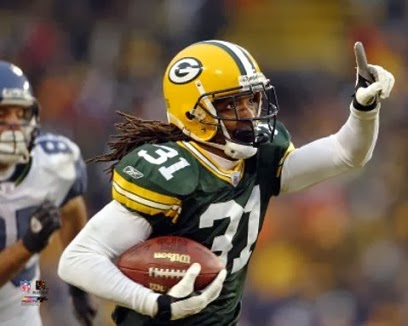
Showing posts with label Matt Hasselbeck. Show all posts

August 18, 2016

Highlighted Year: Matt Hasselbeck, 2005

Quarterback, Seattle Seahawks


Age: 30 (Sept. 25)
8th season in pro football (7th active), 5th with Seahawks
College: Boston College
Height: 6’4”   Weight: 223

Prelude:
The son of Don Hasselbeck, who played tight end in the NFL, Hasselbeck passed for 4548 yards and 22 touchdowns in college and was chosen by the Green Bay Packers in the sixth round of the 1998 NFL draft. He spent that year on the practice squad and then saw scant action behind QB Brett Favre in 1999 and 2000. Hasselbeck was traded to the Seahawks in 2001 and was mentored by veteran QB Trent Dilfer while also training under Head Coach Mike Holmgren, formerly of the Packers. With good size and arm strength, if not mobility, he developed into a Pro Bowl quarterback in 2003 when he threw for 3841 yards and 26 TDs and the team improved to 10-6 and reached the postseason. Hasselbeck followed up with a somewhat lesser year in 2004, passing for 3382 yards and 22 touchdowns while playing through injuries, but performed well down the stretch after an inconsistent start and earned a contract extension.

2005 Season Summary
Appeared in all 16 games
[Bracketed numbers indicate league rank in Top 20]

Passing
Attempts – 449 [14]
Most attempts, game – 42 vs. Dallas 10/23
Completions – 294 [9, tied with Eli Manning]
Most completions, game – 27 at St. Louis 10/9
Yards – 3459 [10]
Most yards, game – 316 at St. Louis 10/9
Completion percentage – 65.5 [6]
Yards per attempt – 7.7 [4]
TD passes – 24 [4, tied with Jake Delhomme, Drew Brees & Eli Manning, 1st in NFC]
Most TD passes, game – 4 vs. San Francisco 12/11
Interceptions – 9
Most interceptions, game – 2 at Jacksonville 9/11, vs. Dallas 10/23, vs. St. Louis 11/13
Passer rating – 98.2 [4, 1st in NFC]
300-yard passing games – 1
200-yard passing games – 11

Rushing
Attempts – 36
Most attempts, game – 6 (for 7 yds.) at San Francisco 11/20
Yards – 124
Most yards, game – 40 yards (on 4 carries) vs. Houston 10/16
Average gain – 3.4
TDs – 1

Scoring
TDs – 1
Points – 6

Postseason: 3 G
Pass attempts – 103
Most pass attempts, game – 49 vs. Pittsburgh, Super Bowl
Pass completions – 62
Most pass completions, game – 26 vs. Pittsburgh, Super Bowl
Passing yardage – 707
Most passing yards, game – 273 vs. Pittsburgh, Super Bowl
TD passes – 4
Most TD passes, game – 2 vs. Carolina, NFC Championship
Interceptions – 1

Rushing attempts – 15
Most rushing attempts, game – 6 vs. Washington, NFC Divisional playoff
Rushing yards – 83
Most rushing yards, game – 35 vs. Pittsburgh, Super Bowl
Average gain rushing – 5.5
Rushing TDs – 1

Awards & Honors:
1st team All-NFC: Pro Football Weekly
Pro Bowl

Seahawks went 13-3 to finish first in the NFC West while leading the NFL in touchdowns (57) and scoring (452 points) and the conference in total yards (5915). Won NFC Divisional playoff over Washington Redskins (20-10) & NFC Championship over Carolina Panthers (34-14). Lost Super Bowl to Pittsburgh Steelers (21-10).

Aftermath:
Hasselbeck suffered through a rough year in 2006, missing four games due to a knee injury. He bounced back in ’07 in achieving career highs with 562 pass attempts, 352 completions, 3966 yards, and 28 touchdowns and returned to the Pro Bowl. However, he appeared in only seven games in 2008 due to injury and endured lesser years in 2009 and ’10 before moving on to the Tennessee Titans and briefly resurrecting his career as he passed for 3571 yards and 18 touchdowns in 2011. Hasselbeck moved into a backup role in 2012 but started five games when second-year QB Jake Locker was injured. Released following the season, he signed with the Indianapolis Colts to provide a veteran backup to QB Andrew Luck and saw little action during the next two years until 2015, when Luck was injured and Hasselbeck started eight games, throwing for 1690 yards and 9 TDs in what proved to be his last season at age 40. Overall, Hasselbeck completed 60.5 percent of his passes for 36,638 yards and 212 touchdowns while giving up 153 interceptions. Of those totals, a team-record 29,434 yards along with 174 TDs and 128 interceptions came with the Seahawks. He added another 2741 yards and 18 touchdowns, with 9 interceptions, in 11 playoff games, all with Seattle. Hasselbeck was a first-team All-NFC selection once and was chosen to three Pro Bowls. His brother Tim also played quarterback in the NFL.

--

Highlighted Years features players who were consensus first-team All-League* selections or league* or conference** leaders in the following statistical categories:

Rushing: Yards, TDs (min. 10)
Passing: Yards, Completion Pct., Yards per Attempt, TDs, Rating
Receiving: Catches, Yards, TDs (min. 10)
Scoring: TDs, Points, Field Goals (min. 5)
All-Purpose: Total Yards
Defense: Interceptions, Sacks
Kickoff Returns: Average
Punt Returns: Average
Punting: Average

*Leagues include NFL (1920 to date), AFL (1926), AFL (1936-37), AAFC (1946-49), AFL (1960-69), WFL (1974-75), USFL (1983-85)

**NFC/AFC since 1970

January 22, 2016

2006: Seahawks Overwhelm Panthers for NFC Championship


The NFC Championship game on January 22, 2006 featured the Seattle Seahawks, winners of the NFC West and top-seeded team in the conference, hosting the Carolina Panthers, a Wild Card team that finished second in the NFC South.

The Seahawks were coached by Mike Holmgren, who had previously guided the Packers to a NFL Championship, and posted a 13-3 record during the 2005 regular season. RB Shaun Alexander (pictured above) topped the league in rushing (1880 yards) and scoring (168 points) while setting a new NFL record for touchdowns (28, which was broken the next year) and QB Matt Hasselbeck achieved career highs in completion percentage (65.5), yards per attempt (7.7), and passer rating (98.2). The defense was unspectacular but effective and benefited from the addition of rookie MLB Lofa Tatupu. Seattle, which was in the playoffs for the third consecutive year, defeated the Redskins in the Divisional round to advance to its first conference title game since 1983, when the Seahawks were in the AFC (they moved to the NFC as part of the 2002 reorganization). If there was a major concern coming into the game, it was that Alexander had suffered a concussion the previous week.

Carolina, coached by John Fox, was two years removed from a losing Super Bowl appearance and, after dipping to 7-9 in 2004, had bounced back to 11-5 in ’05. Key players on offense were Pro Bowl QB Jake Delhomme and WR Steve Smith, who was a consensus first-team All-NFL selection after catching 103 passes for 1563 yards (15.2 avg.) and 12 TDs. However, the running game struggled due to injuries and RBs Stephen Davis and DeShaun Foster were both out for the NFC title contest. The defense had trouble against the run, having lost DT Kris Jenkins to injury for virtually the entire season, although there were capable pass rushers in ends Julius Peppers and Mike Rucker. The Panthers shut out the Giants in the Wild Card playoff round and then defeated the Bears at the Divisional level.

There were 67,837 fans in attendance at Qwest Field. The teams traded punts until the Seahawks, gaining the advantage in field position, put together a 57-yard drive in five plays. The last two were the biggest as Matt Hasselbeck threw to QB/WR Seneca Wallace for 28 yards and then connected with a wide-open TE Jerramy Stevens for a 17-yard touchdown. Josh Brown added the extra point.

Seattle got the ball back on the next series when Lofa Tatupu intercepted a Jake Delhomme pass that was thrown into coverage and returned it 21 yards to the Carolina 20. The Seahawks weren’t able to reach the end zone again, but Brown kicked a 24-yard field goal to extend the lead to 10-0.

With time running down in the opening period, the Seahawks again took advantage of a turnover as FS Marquand Manuel picked off a throw by Delhomme and ran it back 32 yards to the Carolina 17. Shaun Alexander had a 15-yard run on the last play of the first quarter and, two plays later it was Alexander running for a one-yard TD. Brown’s conversion put the home team up by 17-0.

The Panthers, who had lost yet another running back in Nick Goings during the first quarter, fought back as Delhomme completed a pass to WR Drew Carter for 41 yards to the Seattle 26, but a holding penalty backed the visitors up and a sack by DT Rocky Bernard took them out of field goal range, forcing a punt. A short Seattle possession also resulted in a punt and Steve Smith returned it 59 yards for a touchdown. While a penalty flag was thrown during the return, a conference by the officials led to no infraction being called and, when John Kasay kicked the point after, the Seahawks’ lead was narrowed to 17-7.

Seattle responded by advancing to another score. Hasselbeck (pictured below) completed three passes, all to WR Darrell Jackson, and Alexander had back-to-back carries of 11 and 18 yards. A 15-yard penalty for an illegal crackback block blunted the drive, but Brown booted a 39-yard field goal to make it a 20-7 game. Following a punt by the Panthers, the Seahawks had an opportunity to add to their margin with 33 seconds remaining in the first half, but Brown missed a field goal try from 49 yards. Thus far the Seahawks had been dominant on defense, holding Carolina to three first downs and 62 total yards in the first thirty minutes.


Seattle took the second half kickoff and drove 65 yards in eight plays, essentially putting the game out of reach for Carolina. Alexander again ran effectively, with a 16-yard gain along the way, and Hasselbeck had three completions, the last to Jackson for a 20-yard TD. Brown’s extra point had the Seahawks up by an imposing 27-7.

Seattle’s defense kept the Panthers in check as their next two possessions went three-and-out, resulting in punts, and the third ended with a Delhomme pass being intercepted by SS Michael Boulware. An exchange of punts led to the last score for the Seahawks on a one-yard carry by Alexander. Carolina responded with one last hurrah, a Delhomme throw to WR Drew Carter for a 47-yard touchdown, but with six minutes remaining in the contest, the outcome was not in doubt. The Seahawks won convincingly by a final score of 34-14.

The statistics reflected Seattle’s dominance. The Seahawks had big leads in total yards (393 to 212), first downs (27 to 11), and time of possession (41:51 to 18:09). In addition, Carolina turned the ball over four times, to none suffered by Seattle.

Matt Hasselbeck completed 20 of 28 passes for 219 yards and two touchdowns with none intercepted. Shaun Alexander, showing no ill effects from his concussion the week before, rushed for 132 yards on 34 carries that included the two short TDs. Darrell Jackson and Jerramy Stevens each accounted for a team-leading six pass receptions, for 75 and 66 yards, respectively, and scored a touchdown apiece. On defense, Rocky Bernard was credited with both of Seattle’s sacks.

For the Panthers, Jake Delhomme was successful on only 15 of 35 throws for 196 yards and a TD while giving up three interceptions. RB Jamal Robertson, forced into action due to the attrition at running back, led the club in pass receiving with 37 yards on five catches and in rushing with only 19 yards on four attempts. Steve Smith, who was well bottled up by the defense, also had five pass receptions, gaining 33 yards, but he provided one of Carolina’s few highlights with his lone punt return for a 59-yard TD.

“I don’t know if we ran out of gas,” said Carolina’s Coach Fox from the losing team’s perspective. “I’m not too sure what the problem was. Their defense played tremendous. We know we’d have our hands full with their offense.”

The Seahawks lost to the Pittsburgh Steelers in the Super Bowl. They topped the NFC West with a lesser record in 2006 but lost in overtime to the Bears at the Divisional level in the postseason. Carolina dropped to 8-8 and missed the playoffs in ’06, next appearing in the postseason in 2008.

February 12, 2015

2006: NFC Wins Turnover-Filled Pro Bowl


The AFC-NFC Pro Bowl on February 12, 2006 marked the 27th consecutive game in the series to be played at Aloha Stadium in Honolulu. Coaches were John Fox of Carolina for the NFC and Denver’s Mike Shanahan for the AFC.

There were 50,190 fans in attendance and they sat in a steady rain that began to fall as the game commenced and didn’t let up until the second quarter. The tone for a sloppy first half was set in the opening series when the AFC was twice penalized for false starts. Indianapolis QB Peyton Manning threw to WR Marvin Harrison, a teammate with the Colts, for a 33-yard gain but the AFC ultimately had to punt.

Following a punt by the NFC from its end zone, the AFC had good field position for its next possession but Manning, again intending a pass for Harrison, was intercepted by Chicago CB Nathan Vasher, who returned it 30 yards. Five plays later, the NFC returned the favor when QB Matt Hasselbeck of the Seahawks was picked off by Denver FS John Lynch. The AFC then drove 45 yards in seven plays that featured three runs by RB Edgerrin James of the Colts that covered 22 yards and three completions by Manning, the last to Miami WR Chris Chambers for a 16-yard touchdown. The score was not without controversy as Chambers came down with only one foot in bounds, but it was ruled a catch due to the defender, CB DeAngelo Hall of the Falcons (pictured below), pushing the receiver out of bounds even though it appeared on the replay that Chambers was not touched. Cincinnati’s Shayne Graham added the extra point.


As the game entered the second quarter, the teams exchanged punts. The NFC put together a 10-play, 73-yard series as Atlanta QB Michael Vick completed three passes, the longest to WR Larry Fitzgerald of the Cardinals for 32 yards, although Vick fumbled a third down snap to force a field goal attempt. Arizona’s Neil Rackers was successful from 32 yards to narrow the score to 7-3.

The AFC responded with a 62-yard drive in 11 plays and resulted in a 31-yard Graham field goal. Vick tossed an interception and Manning threw two more as the first half wound down. The third Manning interception of the game was by Dallas SS Roy Williams, who returned it 11 yards and then lateraled to Hall who picked up 57 yards to give the NFC the ball at the AFC 20. The NFC used up 18 of the last 20 seconds of the half to run three plays, the last of which was a Vick throw to Atlanta teammate TE Alge Crumpler for a 14-yard TD. Rackers added the point after and the score was tied at 10-10 at halftime.

Following a trade of punts to start the third quarter, Carolina QB Jake Delhomme passed the NFC into AFC territory, but he fumbled when sacked by DT Casey Hampton of the Steelers and DT Marcus Stroud of the Jaguars recovered at the AFC 49. However, three plays later a pass by Kansas City QB Trent Green was intercepted by LB Derrick Brooks of the Buccaneers (pictured at top), and he returned it 59 yards for a touchdown. Rackers added the PAT and the NFC held a 17-10 lead.

The AFC had to punt following its next possession but got the ball right back thanks to a fumble by WR Santana Moss of the Redskins at the end of a 20-yard run that was recovered by Denver CB Champ Bailey. In a series that extended into the fourth quarter, the AFC went 68 yards in 10 plays as Green completed three passes and RB Larry Johnson, also of the Chiefs, had a 20-yard carry. Green ran for the last yard and a TD and, with Graham kicking the point after, the score was again tied at 17-17.

The NFC drove 59 yards in 13 plays before facing a fourth-and-two situation after a Hasselbeck pass to Atlanta RB Warrick Dunn picked up 14 yards to the AFC four on a third-and-16 play. While the crowd booed the decision to settle for a field goal, Rackers connected from 22 yards to put the NFC back in front by 20-17 with 6:29 remaining to play.

The next two AFC possessions ended with QB Steve McNair of the Titans fumbling the ball away, with Philadelphia LB Jeremiah Trotter recovering the second at the AFC 18. A Vick bootleg on a third-and-17 play picked up the necessary yardage for a first down at the eight, and the series ended with Rackers kicking a 20-yard field goal to make it a six-point game with 1:13 remaining on the clock.

McNair came out passing for the AFC and two completions got the ball to the NFC 49. But the next three throws fell incomplete and McNair was sacked on the last play of the game. The NFC won by a final score of 23-17.

There were 10 turnovers in all, with six by the AFC. The AFC’s turnovers came on four interceptions and two fumbles, and while the NFC fumbled six times, only two led to turnovers in addition to two interceptions. The NFC gained the most total yards (279 to 260) while the AFC had the edge in first downs (19 to 18).

Matt Hasselbeck completed 10 of 17 passes for 85 yards and no touchdowns while giving up one interception. Michael Vick was four of 12 for 69 yards and a TD while also being picked off once and ran for 17 yards on two carries. Carolina WR Steve Smith had 8 catches for 46 yards. RB Tiki Barber of the Giants led the NFC with 33 yards on 11 rushing attempts. Derrick Brooks, playing in his ninth consecutive Pro Bowl, was named MVP of the game due to his key interception for a touchdown.

For the AFC, Peyton Manning was successful on 13 of 26 throws for 139 yards and a touchdown, but gave up three interceptions while Trent Green went to the air 11 times and had five complete for 39 yards and one interception. Kansas City TE Tony Gonzalez had 5 pass receptions for 36 yards and Marvin Harrison gained 74 yards on his four catches. Larry Johnson rushed for 33 yards on 8 carries.

 “It all goes to the players because there isn’t a lot of scheming,” said Coach Fox of the NFC. “They went out and made plays.”

The win for the NFC, which had lost four of the previous five contests, tied the series at 18-18 since it had gone to the AFC vs. NFC format following the 1970 season.

January 4, 2014

2004: Harris INT Return in Overtime Gives Packers Win Over Seahawks


The NFC Wild Card playoff game on January 4, 2004 featured the Green Bay Packers, winners of the NFC North with a 10-6 record, against the visiting Seattle Seahawks, also a 10-6 team that had placed second in the NFC West.

The Packers, coached by Mike Sherman for the fourth year, had struggled through much of the season and were at 6-6 after a Thanksgiving loss at Detroit, but won their remaining games to win the division. The key to the offense was 34-year-old QB Brett Favre (pictured above), as had been the case for over a decade. Seemingly indestructible, Favre had been playing with a broken thumb on his throwing hand for the previous eleven weeks. RB Ahman Green rushed for a NFC-leading 1883 yards during the season. Second-year WR Javon Walker emerged as a fine deep threat while WR Donald Driver remained the top receiver. The midseason addition of NT Grady Jackson boosted the defense and rookie MLB Nick Barnett led the club in tackles.

Seattle was coached by Mike Holmgren, who had led the Packers to two NFC Championships and a Super Bowl win in 1996-97. Now he had the Seahawks in the playoffs for the first time in four years, but while they had been undefeated at home, they were only 2-6 on the road. QB Matt Hasselbeck, who had originally been drafted by Green Bay, directed the offense with skill and RB Shaun Alexander was productive. The pass defense was suspect, ranking 27th in the NFL during the regular season.

It was a 20-degree day with a wind chill that was far lower and there were 71,457 fans in attendance at Lambeau Field. The Packers punted following their first possession and Seattle drove 57 yards in ten plays. Matt Hasselbeck completed consecutive passes to WR Koren Robinson for 11 and 15 yards to get the series underway and with Shaun Alexander contributing runs of 8 and 17 yards along the way, the Seahawks reached the Green Bay nine. However, from there Alexander lost yardage on two carries and, after Hasselbeck’s third down pass fell incomplete, Josh Brown kicked a 30-yard field goal.

The teams traded punts for the remainder of the opening period. Early in the second quarter, the Packers took possession at midfield following a punt and moved quickly to the Seattle 21 when Brett Favre threw to FB William Henderson for a 29-yard gain. Two carries by Ahman Green (pictured below) picked up eight yards and, after an incomplete pass on third down, Ryan Longwell tied the score with a 31-yard field goal.


The Seahawks came back with an eight-play, 51-yard drive. Hasselbeck had a 28-yard completion to WR Bobby Engram to get the ball to the Green Bay 28, but after getting a first down at the 17, Hasselbeck was held to three incomplete passes and Seattle settled for a 35-yard field goal by Brown that put the visitors back in front.

Green Bay came back quickly, taking five plays to advance 80 yards. Favre immediately connected with Javon Walker for a 44-yard gain to the Seattle 36. Another pass, this time to Green, picked up another 13 yards and Favre finished the series with a throw to TE Bubba Franks for a 23-yard touchdown. Longwell kicked the extra point and the Packers had a 10-6 lead.

The Seahawks lost yardage and had to punt following their next series and the Packers got the ball back in Seattle territory with 2:18 remaining in the half. In a possession featuring a Favre pass to Donald Driver that gained 23 yards, the Packers managed to add to their lead when Longwell booted a 27-yard field goal. The score was 13-6 at halftime.

The Seahawks had the first possession in the third quarter and drove 74 yards in ten plays. Hasselbeck completed five passes along the way, starting with a throw to WR Darrell Jackson that picked up 25 yards to start things off. TE Itula Mili had two receptions that totaled 29 yards and, on fourth-and-goal at the Green Bay one, Alexander scored a touchdown. Adding Brown’s extra point, the game was tied at 13-13.

Following a punt by the Packers, Seattle again mounted a scoring drive, this time advancing 77 yards in 11 plays. Six of the plays were Hasselbeck pass completions, including one to Engram for 15 yards on third-and-four and another to Robinson that picked up 33 yards to the Green Bay 19. Once again, Alexander ran for a one-yard TD and, adding on Brown’s PAT, the visitors were up by 20-13.

Green Bay came back with a 12-play, 60-yard series that extended into the fourth quarter. Favre completed all five of his passes and Green ran for two yards on a fourth-and-one play at the Seattle three. Green followed up by gaining the last yard for a touchdown and, with Longwell adding the extra point, the game was once again tied at 20-20 with ten minutes remaining in regulation.

The Seahawks went three-and-out on their next possession and Tom Rouen’s punt was returned 21 yards by WR Antonio Chatman for good field position at the Seattle 49. Favre completed three passes and Green again converted a fourth down with a two-yard carry (although he lost the ball at the end, it was ruled that his forward progress had been stopped before the fumble, much to the consternation of Mike Holmgren), one of his six during the 12-play, 51-yard drive. He picked up a total of 21 yards, including one yard for a TD. Longwell’s extra point again made it a seven-point contest with the clock now down to less than three minutes.

The Seahawks took over at their 33 following the kickoff and Hasselbeck immediately passed to Robinson for nine yards and Jackson for another 16. Now at the Green Bay 42, on the second play after the two-minute warning Hasselbeck connected with Engram for 34 yards to the eight. Alexander ran for two yards, a five-yard penalty moved the ball to the one, and it was Alexander going the final yard for a TD. Brown’s extra point again knotted the score at 27-27.

The Packers still had 51 seconds to work with and reached the Seattle 30 after Favre threw to Walker for 27 yards. But after letting the clock run down, Longwell’s 47-yard field goal attempt was unsuccessful and the game headed into overtime.

Seattle won the toss, with Hasselbeck shouting “We want the ball, we’re going to score”. The Seahawks didn’t, however, and the teams traded punts in OT. On Seattle’s second series, and facing third-and-11 at its own 45, Hasselbeck threw a pass that was intercepted by CB Al Harris (pictured below), who cut in front of WR Alex Bannister at the last moment. With clear sailing in front of him, Harris returned it 52 yards down the sideline for a touchdown and Green Bay came away with a stunning 33-27 win. It was the first time a defensive play ended a NFL overtime playoff game.


The Packers had the edge in total yards (397 to 340) while the teams were even with 22 first downs apiece. Neither club ran the ball consistently, with Green Bay compiling 78 yards on 32 carries and the Seahawks gaining 49 yards on 21 attempts. There was only one turnover in the game, and it was the game-winning play.

Brett Favre completed 26 of 38 passes for 319 yards and a touchdown with no interceptions. Donald Driver caught 6 passes for 66 yards while Javon Walker gained 111 yards on his 5 receptions. Ahman Green ran for 66 yards on 23 carries, including two TDs and the two big fourth down conversions, and contributed 5 catches for 44 more yards.


For the Seahawks, Matt Hasselbeck (pictured at right) was successful on 25 of 45 throws for 305 yards and no TDs with the one big interception. Shaun Alexander gained just 45 yards on 20 rushing attempts, but had the three short scoring carries. Koren Robinson led the club with 7 catches for 88 yards and Itula Mili had 6 receptions for 62 yards while Bobby Engram gained 83 yards on his four catches.

“This game came down to us making a play at the end,” said Coach Mike Sherman. “It could have gone either way.”

“I’m dying inside,” said Mike Holmgren from the losing side. “It hurts bad to lose this game today.”

The Packers went on to lose a close contest in overtime at Philadelphia in the Divisional round. They repeated as North Division champs in 2004 but lost in the Wild Card playoff game. Seattle had a lesser record at 9-7 but won the NFC West, also falling in the first round.

January 6, 2013

2007: Seahawks Edge Cowboys Thanks to Botched FG Attempt


The Dallas Cowboys had lost four straight playoff games – their last win coming a decade earlier in 1996 - as they faced the Seattle Seahawks in a Wild Card Playoff game on January 6, 2007. In their fourth season under Head Coach Bill Parcells, the Cowboys were off to a 3-3 start when they replaced veteran QB Drew Bledsoe with unheralded backup Tony Romo. They went 6-4 the rest of the way to finish second in the NFC East at 9-7 and claim a Wild Card spot. Romo tailed off late in the season but still earned selection to the Pro Bowl. Both wide receivers Terrell Owens, in his first year with the Cowboys, and Terry Glenn gained over a thousand yards, Pro Bowl TE Jason Witten was solid, and the running back tandem of Julius Jones and Marion Barber was productive.

The Seahawks, coached by Mike Holmgren, had won the NFC title in 2005 and, while they struggled at times in ’06, they also went 9-7 to top the NFC West for the third consecutive year. Injuries were an issue as QB Matt Hasselbeck missed four games and RB Shaun Alexander, who set a record for touchdowns scored in ’05, also missed time with a foot injury. Both had subpar years. The defensive secondary was prone to giving up big plays and the pass rush tailed off as the season progressed.

There was a crowd of 68,058 at Seattle’s Qwest Field. The Seahawks had the game’s first possession and drove 55 yards in nine plays. Hasselbeck completed four passes, including one to WR Bobby Engram that gained 36 yards. Josh Brown kicked a 23-yard field goal to give the home team the early lead.

Following a Dallas punt, Hasselbeck was intercepted by CB Anthony Henry to give the Cowboys good field position at the Seattle 43. They made the most of the opportunity as Martin Gramatica booted a 50-yard field goal to tie the score five plays later.

That was the tally heading into the second quarter until the Seahawks put together a 13-play series that covered 54 yards. With Hasselbeck completing short passes and Shaun Alexander running the ball, Seattle reached the Dallas 12 from where Brown kicked his second field goal, from 30 yards.

Both teams had three-and-out possessions before the Cowboys went 76 yards in ten plays. A third-and-six pass by Tony Romo to WR Patrick Crayton for 18 yards kept the drive alive, as did a throw to Jason Witten for 32 yards to the Seattle three in a fourth-and-two situation. An offensive holding penalty moved the ball back ten yards, but Romo connected with Crayton from there for a touchdown and Dallas took a 10-6 lead into halftime.

In the third quarter, and following a short Dallas possession that ended with a punt, the Seahawks briefly regained the lead with a 12-play, 62-yard drive. Five runs by Alexander gained 32 yards, including one for three yards that converted a fourth-and-one situation, and Hasselbeck completed three passes, the last to TE Jerramy Stevens for a 15-yard touchdown. With the successful extra point, it was 13-10 in favor of Seattle – but the lead didn’t last long. The ensuing kickoff was returned 93 yards for a TD by WR Miles Austin and the Cowboys were back in front at 17-13. It was the first touchdown on a kickoff return in Dallas postseason history.


That was the score early in the fourth quarter when Hasselbeck went long for WR D.J. Hackett but was picked off by SS Roy Williams after the ball was tipped by CB Terence Newman. Taking over at their own 43, the Cowboys made the most of the turnover by advancing 46 yards in eight plays. Along the way, Romo completed a pass to Terry Glenn for 16 yards and Julius Jones (pictured at right) had an 18-yard run. Gramatica kicked a 29-yard field goal and Dallas extended its lead to 20-13.

In the ensuing possession, the Seahawks drove from their 27 yard line to the Dallas two, but an incomplete pass on fourth down forced them to give the ball up. However, on the next play Glenn fumbled after catching a short pass from Romo and, initially, the play was ruled a touchdown on a recovery in the end zone by SS Michael Boulware. Upon review, the call was reversed and ruled a safety with the ball having rolled out of bounds in the end zone.

Now down by five points, the Seahawks started off following the free kick with good field position at midfield. Four plays later, Hasselbeck connected with Stevens for a 37-yard touchdown. The try for a two-point conversion failed, but Seattle was now in front by a point.

There were still over four minutes remaining on the clock, however – plenty of time for the Cowboys to respond. After Romo completed two passes, with a short run in between, Jones took off for a 35-yard gain to the Seattle 11. They got it down to the two (narrowly missing another first down) and lined up for a potentially game-winning field goal attempt by Gramatica. However, Romo, who had been the holder for placekicks far longer than he had been the starting quarterback, fumbled the snap (pictured at top) and had to pick up the loose ball and run with it. He came up short of either a score or a first down as he was tackled by CB Jordan Babineaux at the line of scrimmage.  With the stunning reprieve, the Seahawks held on for a 21-20 win.

Seattle led in total yards (332 to 284) and first downs (19 to 14). The Seahawks also turned the ball over twice, to one by Dallas. The Cowboys hurt themselves with 8 penalties, at a cost of 74 yards, while Seattle was flagged just three times.

Matt Hasselbeck completed 18 of 36 passes for 240 yards and two touchdowns with two intercepted. Shaun Alexander ran for 69 yards on 24 carries. Jerramy Stevens caught 5 passes for 77 yards and two TDs while Bobby Engram (pictured below) gained 88 yards on his four receptions.


For the Cowboys, Tony Romo was successful on 17 of 29 throws for 189 yards and a touchdown without giving up an interception. Julius Jones had a fine performance running the ball as he gained 112 yards on 22 attempts. Terry Glenn paced the receivers with four pass receptions for 41 yards while Jason Witten contributed 57 yards on three catches.

Of the failed field goal attempt by the Cowboys, Mike Holmgren said, “You coach long enough, you end up seeing just about everything. One more thing for the journal.”

“It’s just one of those things,” said Bill Parcells. “It looked like a good snap. I can’t tell you what happened after that.”

The Seahawks lost another close game, this time in overtime, to the Bears at the Divisional Playoff level. They again topped the NFC West in 2007 while the Cowboys finished first in the NFC East, but both clubs fell in the Divisional round of the postseason.

Bill Parcells was not at the helm for Dallas in ’07 – he stepped down as head coach and the loss to Seattle thus marked his finale. His four-year record with the Cowboys was 34-30 with two playoff losses as well. It was the final stop in a head coaching career with four teams that yielded a 172-130-1 regular season record and 11-8 playoff tally that included three conference titles and two Super Bowl victories.

January 2, 2012

2005: Seahawks Stop 2-Point Conversion, Defeat Falcons to Win NFC West


The 2004 season-ending game on January 2, 2005 between the Atlanta Falcons and Seattle Seahawks at Qwest Field featured two teams assured of spots in the postseason, but it still held significance for the home team. The Seahawks, in their sixth year under Head Coach Mike Holmgren, were 8-7 and had clinched a playoff spot the week before. However, if they lost and the Rams won, they would end up as a wild card team rather than a division champion with a home playoff game to open the postseason.

Seattle’s offense featured star RB Shaun Alexander and included QB Matt Hasselbeck, still a work in progress at age 29 and in his fourth year as a starter, and WR Darrell Jackson. Anchoring the offensive line were OT Walter Jones and G Steve Hutchinson on the left side. The defense was a problem area, having been diluted by injuries.

Atlanta, under first-year Head Coach Jim Mora Jr., had far less riding on the game. The Falcons were 11-4 and had the AFC South title wrapped up. They also had injured players, such as athletic QB Michael Vick, who needed a rest prior to the postseason. Despite being a West Coast offense, Atlanta featured its ground game, led by running backs Warrick Dunn and T.J. Duckett – not to mention Vick, who could be quick to run with the ball. TE Alge Crumpler was his best receiver.

Following a short possession by the Seahawks to start the game, the Falcons showed that they took the contest seriously by blocking the ensuing punt. With Vick completing three passes and Dunn running for 12 yards, Atlanta went 48 yards in 12 plays and WR Peerless Price caught a two-yard touchdown pass to take an early 7-0 lead.

Seattle came right back as Alexander rushed for 24 yards in a six-play, 48-yard drive that ended with the star running back scoring from a yard out. Josh Brown’s conversion tied the contest at 7-7.

The teams traded punts as the game proceeded into the second quarter. The Falcons drove to the Seattle 10 yard line thanks to the running of Dunn (back-to-back carries of 14 and 26 yards to get the ball into Seahawks territory) and Vick’s throwing. Jay Feely kicked a 33-yard field goal to finish off the 10-play series and put the Falcons back in front at 10-7. The lead grew larger five plays later as Hasselbeck was intercepted by CB DeAngelo Hall, who returned it 48 yards for a TD.

Seattle bounced back as Hasselbeck immediately connected with WR Bobby Engram on the next play from scrimmage to get to midfield and capped a 66-yard drive with a three-yard scoring pass to Jackson.

When the Falcons returned on offense, Vick had been replaced by rookie backup QB Matt Schaub. While Coach Mora had vowed to treat the contest like a playoff game, Vick was nursing a hand injury and it made no sense to expose him any further. Still, Schaub gave notice of his ability by throwing for a 26-yard gain to WR Brian Finneran on his first pass. Atlanta came up empty on the series and there was no further scoring in the first half as the tally stood at 17-14 at the intermission.

The Falcons drove into Seattle territory to start the third quarter, but Schaub was intercepted by CB Marcus Trufant, who returned the pickoff 31 yards to the Atlanta 41 yard line. Hasselbeck completed six passes for 35 yards, including a scoring throw to TE Jerramy Stevens from three yards out. With the successful conversion, the Seahawks were back in front at 21-17.

It seemed as though Atlanta would narrow the score when T.J. Duckett dashed 35 yards up the middle to fuel an advance to the Seattle 21, but Feely missed a 39-yard field goal attempt. The Seahawks went three-and-out and the Falcons proceeded to put together a long, 15-play drive that stretched into the fourth quarter and covered 56 yards. Highlights included a six-yard Schaub completion to Price in a third-and-five situation and a 17-yard throw to the same receiver that moved the ball into Seattle territory. Feely ended the possession with another field goal attempt, and this time he was successful from 40 yards to make it a one-point game.

The Seahawks responded with a long drive of their own, going 60 yards in 10 plays. Hasselbeck had pass completions of eight yards to TE Ryan Hannam, 23 yards to Engram, and 11 to Stevens to get to the Atlanta 16, and Alexander ran for 15 yards on three carries to set up Hasselbeck’s one-yard scoring carry. It was 28-20 with 4:28 remaining on the clock.

That was enough time for the Falcons to put together a closing 15-play drive following CB Allen Rossum’s 23-yard kickoff return. Atlanta moved methodically down the field, converting two third downs, the first with Schaub carrying for eight yards on a third-and-one play. In a third-and-17 situation from the Seattle 28, Schaub completed a pass to Finneran for 16 yards and, following a timeout with 18 seconds left, the rookie quarterback out of Virginia completed a swing pass to FB Fred McCrary for a nine-yard gain on fourth-and-one. After a near-interception by CB Ken Lucas, Schaub was successful on a three-yard scoring toss to Finneran on a crossing pattern at the back of the end zone with no time remaining in regulation. That set up a two-point conversion attempt to try and tie the game and send it into overtime. However, the Seahawks held on for the 28-26 win when Schaub rolled to his left and gave the ball to Dunn on a counter play that barely came up short under a pile of Seattle defenders.

The Falcons had more total yards (354 to 253) and first downs (22 to 21), and of that yardage figure, 204 came on the ground (to 83 for the Seahawks). Atlanta drew far more penalties (8 for 53 yards to just one for five yards on Seattle). Each team turned the ball over once.

Matt Hasselbeck completed 21 of 27 passes for 191 yards with two touchdowns and one interception. Shaun Alexander ran for 80 yards on 19 carries that included a TD. Bobby Engram (pictured below) was the team’s top receiver with 6 catches for 79 yards.


For Atlanta, Michael Vick was successful on 6 of 7 throws for 35 yards and a touchdown before leaving the game. Matt Schaub went to the air 22 times and completed 14 for 133 yards with a TD and one picked off. Warrick Dunn was outstanding with 132 yards on 25 carries and three receptions for 20 more. Peerless Price pulled in 7 passes for 46 yards and a TD and Brian Finneran gained 45 yards on his 3 catches that included a score. Of the seven sacks the teams combined for (four by the Falcons, three by Seattle), DT Roderick Coleman accounted for two.

“I knew I wasn't in,” Dunn said of his run on the two-point conversion attempt at the end. “It was just one of those plays that we thought was going to be there and it wasn't. They played it well. I was trying to squeeze myself into a small crack and get in.”

“To come up short like we did is not acceptable,” Coach Mora said in summing up. “But to run for 204 yards, to have drives with a rookie quarterback to win, and to stop the run? That was outstanding.”

The Seahawks faced their division rivals, the Rams, in the Wild Card playoff round. St. Louis had swept the season series and made it three-for-three with a 27-20 win at Seattle. The Falcons, who had a first-round bye, went deeper into the postseason as they then thrashed the Rams, 47-17, but lost the NFC Championship game at Philadelphia.

Thanks to the Falcons holding onto the ball so long at the end of the game, Shaun Alexander ended up losing the NFL rushing title by one yard to Curtis Martin of the Jets. Alexander ended up with 1696 yards on 353 carries (4.8 avg.) and scored 16 touchdowns. He led the league by scoring a total of 20 TDs and was selected for the Pro Bowl.

Warrick Dunn (pictured below) finished five spots behind Alexander among NFC rushers with 1106 yards on 265 attempts (4.2 avg.) and 9 touchdowns. Matt Schaub made a favorable impression in his rookie season and stayed for another two years as Vick’s backup before being dealt to the Houston Texans.

October 10, 2011

2004: Rams Score 17 Points in Last 6 Minutes, Beat Seahawks in OT


The St. Louis Rams were at 2-2 as they faced the Seattle Seahawks on October 10, 2004 at Qwest Field. Seattle, coming off a bye week, was undefeated at 3-0 and looking to build upon a 10-6 Wild Card season in ’03. In their sixth season under Head Coach Mike Holmgren, the Seahawks featured star RB Shaun Alexander and a good quarterback in Matt Hasselbeck, although the receivers were prone to dropping passes.

The Rams won the Super Bowl following the 1999 season, and with the exception of a down year in 2002, had continued to regularly contend in the seasons since. Mike Martz, the offensive coordinator in ’99, became head coach in 2000 and the Rams continued to feature a high-octane passing attack along with the running of RB Marshall Faulk. Originally, the quarterback directing that attack had been Kurt Warner, but injuries dramatically reduced his effectiveness and playing time in 2002 and ’03, and it was Marc Bulger (pictured above) who had emerged as the starter. While not as talented as Warner at his best, he was an accurate passer capable of staying calm in clutch situations, and still had great receivers in Torry Holt and Isaac Bruce to throw to, as well as Faulk in the backfield.

There was a record crowd of 66,940 at Qwest Field, and they had reason to cheer early as the Seahawks drove to a touchdown on their first possession. Hasselbeck completed four passes and Alexander carried the ball five times, once for a 33-yard gain to the St. Louis four yard line and the last time for one yard into the end zone. Seattle added to its lead early in the second quarter following another long possession of 13 plays that went 50 yards and ended with a 48-yard field goal by Josh Brown.

On the next possession by the Rams, they went 78 yards on six plays to get on the board. The big play was a 48-yard carry by rookie RB Steven Jackson to the Seattle nine yard line, and from there Bulger ran the rest of the way for a TD that made the score 10-7.

The Seahawks came right back as Hasselbeck immediately connected with WR Koren Robinson for a 20-yard gain. Later in the six-play drive he found Robinson again for 15 yards to the St. Louis 29 and two plays later he passed to TE Jerramy Stevens for a 24-yard touchdown. Seattle was again up by ten points at 17-7.

Bulger was intercepted by CB Ken Lucas shortly thereafter, but the turnover came to naught when Brown missed a 43-yard field goal attempt. Following a punt by the Rams, the Seahawks did score again as they went 90 yards in just five plays, the last a Hasselbeck pass to WR Darrell Jackson for a 56-yard TD. Seattle led by a tally of 24-7 at halftime.

The teams traded punts to start the third quarter before the Rams put together a 13-play drive that featured four straight completed passes by Bulger to gain 58 yards and ended with Jeff Wilkins kicking a 39-yard field goal.

Following a three-and-out possession by Seattle that led to a punt to start the final period, Bulger was intercepted by CB Marcus Trufant. The Seahawks capitalized when Brown kicked a 34-yard field goal that gave them a seemingly secure lead of 27-10 with less than nine minutes remaining.

The Rams weren’t done, however, and drove 66 yards in eight plays that included Bulger passes to WR Isaac Bruce for 20 yards and to WR Shaun McDonald for 24. An eight-yard scoring throw to TE Brandon Manumaleuna made it a ten-point game with the clock at 5:34. Seattle went three-and-out and, following a 39-yard return of Tom Rouen’s punt by McDonald, Bulger immediately connected with WR Kevin Curtis, who had gotten clear of two defenders, for a 41-yard touchdown.

Suddenly, with the successful extra point, it was a three-point game with 3:30 to go in the fourth quarter. Hasselbeck threw for a 10-yard gain to Robinson when the Seahawks got the ball back, but they failed to move thereafter and were forced to punt once more after the quarterback was sacked for a 12-yard loss by DE Leonard Little on the first play following the two-minute warning. The Rams took over at their 36 with no timeouts remaining and, after throwing an incompletion, Bulger went to Bruce for a 27-yard gain. Three plays later, he connected with WR Dane Looker for 16 yards to the Seattle 18 and from there Wilkins booted a 36-yard field goal with eight seconds on the clock to tie the contest at 27-27 and send it into overtime.

The Rams gained possession to start the extra period and went 71 yards on six plays. They converted a third-and-six situation with Bulger throwing to Holt for 13 yards while being blitzed, and with third-and-eight on their own 48, Bulger threw to McDonald for a 52-yard touchdown (pictured below) to win the game in stunning fashion, 33-27.


St. Louis outgained the Seahawks (441 yards to 391) and had a slight edge in first downs (21 to 20). However, while Seattle suffered no turnovers, the Rams turned the ball over three times.

Marc Bulger completed 24 of 42 passes for 325 yards with three touchdowns and three interceptions, and was at his best during the fourth quarter comeback. Isaac Bruce caught 6 passes for 78 yards while Shaun McDonald gained 76 yards on his two receptions, including the game-winning score. Steven Jackson led the Rams in rushing with 64 yards on five carries and Marshall Faulk ran the ball 15 times for 51 yards (Jackson would spell the aging Faulk increasingly during the season).

For Seattle, Shaun Alexander ran for 150 yards on 23 carries with a TD in a losing cause. Matt Hasselbeck went to the air 35 times and had 20 completions for 216 yards and two TDs. Darrell Jackson caught 5 passes for 91 yards and a touchdown and Koren Robinson also caught 5, for 59 yards.

“That's a tough way to lose,” said Seattle’s Coach Holmgren. “As good as we were in the first half, we were average to below average in the second half. Give the Rams credit. They hung in there.”

While the Rams won the next week, they remained inconsistent and finished at 8-8 and second in the NFC West, just a game behind the division-winning Seahawks, who were 9-7. It was good enough to qualify for the second wild card playoff spot, and while they beat Seattle for a third time in the first round (they also defeated them at home in Week 10), they lost badly to Atlanta at the Divisional level. The paths of the two teams would diverge over the next few seasons, as the Rams sank into mediocrity while the Seahawks continued to dominate the division and won the NFC Championship in 2005.

For Marc Bulger, the comeback win over the Seahawks was one of four he engineered during the season. He passed for 3964 yards, completing 66.2 percent of his throws. However, he also was sacked 41 times for a league-leading loss of 302 yards.

November 23, 2010

2003: Ravens Overcome 17-Point Deficit to Force OT & Beat Seahawks


The Baltimore Ravens were 5-5 and had lost their previous two games as they prepared to host the Seattle Seahawks at M & T Bank Stadium on November 23, 2003. Moreover, while Head Coach Brian Billick’s rebuilding team still had an outstanding defense, the offense was being directed for just the second time by QB Anthony Wright (pictured at right), in place of the injured Kyle Boller. Wright had been with the Cowboys for two seasons and had already gained a reputation as a career backup, at best, with limited skills. While RB Jamal Lewis was a capable runner, the passing game was suspect.

Seattle was leading the NFC West with a 7-3 record under Head Coach Mike Holmgren, who was steadily improving the club. The offense, with Matt Hasselbeck in his first full season as the starting quarterback and star RB Shaun Alexander, was becoming more explosive. But while they were a perfect 6-0 at home, the Seahawks were a disconcerting 1-3 on the road.

It appeared that the game would be a low-scoring affair after a scoreless first quarter. Josh Brown put Seattle on the board first with a 45-yard field goal three minutes into the second quarter, and the Ravens matched it late in the period with a 21-yard Matt Stover kick. But in the final minute of the half, the Seahawks scored twice. First, they capped a 13-play, 80-yard drive with Hasselbeck tossing a two-yard touchdown pass to WR Darrell Jackson. Then, as the Ravens were attempting to run out the clock, the Seahawks recovered a fumble by RB Chester Taylor at the Baltimore 10 yard line and Hasselbeck threw a quick 10-yard TD pass to WR Bobby Engram with a second left on the clock. In short order, Seattle had built a 17-3 halftime lead.

The Ravens came right back in their first possession of the third quarter, with a six-play drive highlighted by pass from Wright to WR Travis Taylor that covered 43 yards. Wright then tossed a 13-yard touchdown pass to WR Marcus Robinson that cut Seattle’s margin to 17-10.

The reduced margin didn’t last long as, on the third play of the next possession, Hasselbeck connected with WR Koren Robinson for a 38-yard touchdown. Seattle added to its lead following a 24-yard punt by Baltimore’s Dave Zastudil that provided good field position and set up a 46-yard field goal by Brown to make the tally 27-10.

Once again the Ravens narrowed the margin as Wright completed a five-play drive with a 50-yard TD pass to Marcus Robinson. And once again the Seahawks came right back with a score as Hasselbeck immediately completed an 80-yard touchdown pass to Jackson. There was still time left in the eventful third quarter, and Wright found Marcus Robinson for a third touchdown pass that covered 25 yards. The period ended with Seattle up by 10 at 34-24.

Early in the fourth quarter, it seemed as though the Seahawks had finally put the game away when Hasselbeck tossed his fifth touchdown pass, of five yards to Engram, for a renewed 17-point lead of 41-24. But with 6:41 remaining on the clock, Baltimore safety Ed Reed blocked a Jeff Feagles punt and returned it 16 yards for a touchdown. The Ravens got the ball back when LB Ray Lewis recovered a fumble at his own 29 and Wright led the team on a 71-yard drive through a soft Seattle defense that ended with a nine-yard scoring pass to Marcus Robinson.

The Seahawks still led by 41-38 with 1:12 remaining, and it appeared that they would prevail when they recovered an attempted onside kickoff by the Ravens. But in a pivotal play at the Baltimore 33 with 39 seconds left, Hasselbeck’s quarterback sneak was stopped for no gain on fourth-and-one, and the Ravens got the ball back. A 44-yard pass interference penalty on Seattle CB Marcus Trufant set up the game-tying 40-yard field goal by Stover, and the teams headed into overtime.

The Seahawks had the initial possession in the extra period but were forced to punt. The Ravens responded with a 55-yard drive, with the key play being a 19-yard pass from Wright to Marcus Robinson in a third-and-15 situation. Stover booted a 42-yard field goal, and Baltimore came away with an improbable 44-41 win.

Reflecting the closeness of the final score, each team gained 426 yards of total offense. The Ravens had the edge in rushing yards (150 to 133) while Seattle had the most net passing yards (293 to 276). Both teams sacked the opposing quarterback six times apiece. The Seahawks gave up three turnovers, as opposed to two by Baltimore, while the Ravens were penalized 14 times for 112 yards, compared to Seattle being flagged six times for 89 yards.

Anthony Wright had a career game, completing 20 of 37 passes for 319 yards with four touchdowns – all to Marcus Robinson – and none intercepted. Robinson, for his part, caught 7 passes for 131 yards and the four TDs. Jamal Lewis gained 117 rushing yards on 26 carries.


In defeat, Matt Hasselbeck (pictured at left) was successful on 23 of 41 passes for 333 yards and five touchdowns with no interceptions. Darrell Jackson was the top receiver with 7 catches for 146 yards and two of the TDs. Shaun Alexander ran for 72 yards on 22 attempts.

Said Wright afterward, “It was looking very, very dim. But we just let it all hang out. Everything came together. It's unbelievable, for us to be down as much as were and to come back.” He was then off to the hospital where his wife was expecting delivery of a baby girl.

“We let them back in the football game,” said a disappointed Mike Holmgren. “It was just a bizarre, bizarre ending.”

Referring to the failed quarterback sneak that could have sealed the game in regulation, Matt Hasselbeck said, “We just needed one more play. One more play and we could have won the game. We should have won the game, and we just didn't make it.”

The Ravens built upon the stunning comeback victory to win five of their last six games and finish first in the AFC North with a 10-6 record. They lost to Tennessee in the Wild Card playoff game. The loss to Baltimore knocked Seattle out of first place, but the Seahawks also completed the regular season at 10-6 to end up second in the NFC West. Qualifying for the postseason as a wild card, they too lost in the first round, in overtime to the Green Bay Packers, Holmgren’s previous coaching stop.

Anthony Wright’s performance was easily the greatest of his career. He ended up throwing for 1199 yards with 9 touchdowns and 8 interceptions in ’03, and was 5-2 as the starting quarterback. He never again came close to passing for 300 yards in a game, or tossing more than two TD passes in a contest, and missed the 2004 season altogether due to injury.

Jamal Lewis topped the NFL with 2066 yards rushing on 387 carries (5.3 avg.) with 14 touchdowns and remained the key player on offense.

Marcus Robinson’s four touchdown receptions represented two thirds of his total output of six for the year. He caught 31 passes for 451 yards (14.5 avg.) all told.

Matt Hasselbeck, who had a big passing day in defeat, ranked fourth in the NFL in passing yards (3841) and tied for third in TD passes (26). His 7.5 yards per attempt ranked fourth (tied with Peyton Manning of the Colts) and 12.3 yards per completion placed second. He was selected for the Pro Bowl.

December 6, 2009

2004: Cowboys Overcome Seattle and Hasselbeck’s 414 Passing Yards


The Monday night matchup on December 6, 2004 at Seattle’s Qwest Field featured the hometown Seahawks (6-5) hosting the Dallas Cowboys (4-7). The Cowboys had gotten off to a dreadful 1-6 start before defeating the Bears the week before, while Seattle had fallen to Buffalo the previous week after winning three of the previous four games and sat atop the weak NFC West.

42-year-old WR Jerry Rice, a midseason pickup from Oakland, scored the first touchdown for Seattle on a 27-yard pass from QB Matt Hasselbeck in the first quarter. After a Billy Cundiff field goal for the Cowboys, Hasselbeck struck again for the Seahawks with a two-yard scoring pass to WR Darrell Jackson. However, the second quarter belonged to the Cowboys who added 16 points on a pass from QB Vinny Testaverde to WR Terrance Copper and an 8-yard run by RB Julius Jones. An attempted two-point conversion after the first TD failed, so with another Cundiff field goal, Dallas led at halftime, 19-14.

Jones scored his second touchdown of the game on a 10-yard run in the third quarter and, after Cundiff connected on a field goal for the third time, it appeared the Cowboys had the game in hand with a 29-14 lead. They had scored on five consecutive possessions, aided by two Seattle fumbles.

But it was the turn of the Seahawks to retake the momentum, as they proceeded to score on their next four possessions, first on three drives of over 70 yards apiece and then a 41-yard drive set up by FS Ken Hamlin’s interception at midfield. RB Shaun Alexander scored twice during this rally, on runs of one and 32 yards, and in between, Hasselbeck fired a 19-yard TD pass to WR Jerheme Urban that was capped by a successful Hasselbeck-to-Jackson play for a two-point conversion.

With 2:46 to play in the game, it was the Seahawks with a commanding 39-29 margin. On the next Dallas possession, Testaverde completed four consecutive passes that included a 34-yard touchdown pass to WR Keyshawn Johnson deep in the end zone to cut Seattle’s lead to 39-36. With 1:45 now remaining, the Cowboys successfully recovered an onside kick. Jones ran 16 yards for a key first down on third and nine with under a minute remaining, and then scored the winning touchdown on a 17-yard run two plays later (pictured).


Seattle had a last chance with 32 seconds to play, and Hasselbeck passed to Rice for 28 yards. But on the final play, Hasselbeck’s heave into the end zone was knocked away and the Cowboys had a 43-39 win.

Hasselbeck had an outstanding performance in defeat, completing 28 of 40 passes for 414 yards and three TDs, with no interceptions. Two Seattle receivers totaled over a hundred yards – Rice, with 145 yards on 8 catches, and Jackson, with 113 yards on a team-leading 9 receptions. RB Alexander, who became the first player in NFL history to reach 15 touchdowns in four consecutive seasons with his two scores, gained 83 yards on 21 carries.

Rookie Julius Jones was the running star for Dallas, gaining 198 yards on 30 carries, including the three TDs. Testaverde passed for 225 yards as he completed 18 of 34 passes, with two TDs and two interceptions. Keyshawn Johnson led the Cowboys receivers with 6 catches for 116 yards and the one score.

Overall, both teams combined for 912 yards of offense – 507 by Seattle and 405 for Dallas. The Cowboys became the first team ever on Monday Night Football to overcome a 10-point deficit in the last two minutes of a game.

The setback put the Seahawks at .500, but they won three of the last four games to win the NFC West with a 9-7 record. They lost to their chief competitor in the division, the St. Louis Rams, in the Wild Card round. Dallas lost three of four to end up at 6-10 along with the Giants and Redskins in the NFC East.

Matt Hasselbeck saw his numbers droop slightly from 2003, a season that had seen him go to the Pro Bowl for the first time, but he still passed for over 3000 yards (3382) for the third of an eventual four consecutive seasons. Jerry Rice, in the final season of his brilliant career, hauled in 25 passes for 362 yards and three TDs with Seattle (he caught another five passes for 67 yards and no scores for Oakland prior to being traded). Darrell Jackson had his most productive season, achieving career highs with 87 receptions for 1199 yards. Shaun Alexander led the NFC in rushing with 1696 yards (and missed leading the NFL by a yard) and scored 20 touchdowns.

Julius Jones was limited to eight games due to injury, but gained 819 yards rushing on 197 carries. Vinny Testaverde, at age 41, passed for 3532 yards in ’04, but also led the NFL by throwing 20 interceptions. Keyshawn Johnson, in his first season in Dallas, caught 70 passes for 981 yards and six touchdowns.