October 17, 2013

1983: Packers Defeat Redskins in 48-47 Monday Night Thriller


The Green Bay Packers were facing a major challenge as they hosted the Washington Redskins on October 17, 1983. At 3-3, Head Coach Bart Starr’s Packers were a team that could put points on the board, especially with QB Lynn Dickey (pictured above) passing to wide receivers James Lofton and John Jefferson and TE Paul Coffman. But they also gave up points and came into the game with the 28th-ranked defense in the NFL. They also had to make adjustments on the offensive line, with G Tim Huffman out with an ankle injury that necessitated moving Greg Koch over from his OT position and starting Charlie Getty at tackle.

Having a poor defense was not a good situation to be in when facing the Redskins. Coached by Joe Gibbs, they were coming off a Super Bowl-winning season and, if anything, were even stronger in ‘83. Behind the best offensive line in the league, QB Joe Theismann was a proficient passer and RB John Riggins a powerful force running the ball. If there was a weak point, it was the defensive backfield, but Washington was cruising at 5-1, with a close opening-game loss to the Cowboys the only blemish.

There were 55,255 fans in attendance for the Monday night game at Lambeau Field. Just over a minute into the first quarter, they had reason to get excited when Green Bay LB Mike Douglass forced RB Joe Washington to fumble and returned it 22 yards for a touchdown and, with Jan Stenerud’s extra point added, the early 7-0 lead.

DB Mike Nelms returned the kickoff 41 yards and the Redskins drove 55 yards in six plays, highlighted by Theismann’s pass to WR Art Monk for a 34-yard gain. The series ended with John Riggins fumbling into the end zone and TE Clint Didier recovering for a TD. Mark Moseley tied the score with his PAT.
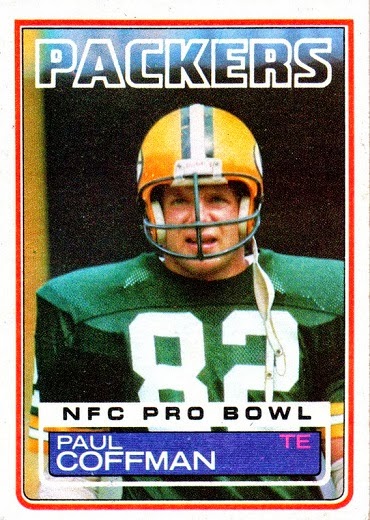


Green Bay responded with a 10-play, 40-yard drive. Lynn Dickey threw to Paul Coffman for 17 yards and John Jefferson for 13 along the way and Stenerud kicked a 47-yard field goal that put the Packers back in front by three.

Washington moved the ball quickly downfield with Theismann connecting with Monk for a 22-yard gain and with RB Nick Giaquinto for 31 more yards. But the Green Bay defense came through with back-to-back sacks of Theismann and the Redskins had to settle for a 42-yard Moseley field goal. The eventful first quarter ended with the score tied at 10-10.

Things did not slow down as the game approached the second quarter. Dickey threw to James Lofton for 21 yards and the Packers picked up 15 more on a penalty when CB Darrell Green hit the receiver out of bounds. Dickey then tossed a 36-yard touchdown pass to Coffman. Stenerud added the extra point and the home team was back in front by 17-10.

Back came the Redskins, moving 67 yards in seven plays and highlighted by a 36-yard carry by Riggins. Riggins scored from a yard out and Moseley again knotted the score with the successful PAT.

The Packers reached the Washington 33 on the next series before a Dickey pass was intercepted by CB Anthony Washington. After getting a first down, the Redskins were finally forced to punt and Green Bay came back with a 73-yard, seven-play possession. RB Eddie Lee Ivery tossed an option pass to Coffman for 15 yards and a first down at the Washington 9 from where Coffman caught a scoring pass, this time from Dickey. Stenerud added the extra point and once again the Packers were in front by a touchdown.

With less than two minutes remaining in the half, the Redskins came out throwing. Theismann completed five passes to reach the Green Bay 11 and Moseley booted a 28-yard field goal as the clock reached five seconds. The Packers carried a 24-20 lead into the intermission.

Starting off the third quarter, the Packers struck quickly as they advanced 80 yards in just 42 seconds. Dickey threw to Coffman for 40 yards and then RB Gerry Ellis, taking advantage of a big hole, ran 24 yards for a touchdown. The home team had its biggest lead of the day at 31-20.

Washington seemed on the verge of responding with a touchdown, reaching the Green Bay four, but an offensive pass interference penalty nullified an apparent scoring catch and once again the Redskins settled for a Moseley field goal, this time from 31 yards.

Up by eight points, the Packers were forced to punt on their next series and Bucky Scribner’s kick was blocked to give the Redskins the ball at the Green Bay 19. Five plays later, Theismann threw to Joe Washington for a six-yard TD and, with Moseley’s PAT, the Green Bay lead was down to 31-30.

Washington’s defense again asserted itself as Dickey was sacked twice by DT Dave Butz. Nelms made a good return of the ensuing punt by Scribner to give the visitors possession at their 46. From there, the Redskins again moved deep into Green Bay territory, but after reaching the nine yard line, Douglass tackled Joe Washington for a loss and once again Washington was held to a field goal. Still, Moseley connected from 28 yards and put the visitors ahead by 33-31 with ten seconds left in the period.

RB Harlan Huckleby returned the ensuing kickoff for 54 yards to the Washington 39 and the fourth quarter started with Dickey throwing to Ellis for 32 yards. Shortly thereafter, TE Gary Lewis scored a touchdown from two yards out on an end-around that put the Packers back in front.

The Redskins came right back again as Theismann threw to Monk for 25 yards and WR Charlie Brown for another 15. Riggins blasted into the end zone from a yard out and the Washington was again in the lead of the wildly back-and-forth contest.

The Packers responded with another score of their own, with Dickey completing passes covering 19 yards to Jefferson and 17 yards to Lofton. An 11-yard touchdown pass to FB Mike Meade, followed by Stenerud’s extra point, again put Green Bay in front at 45-40.


Now it was Washington’s turn again. Theismann (pictured at right) threw to Monk for 21 yards and Joe Washington ran for two first downs. A sack of Theismann by DE Byron Braggs momentarily derailed the Redskins, but a pass to Giaquinto picked up 35 yards and set up a five-yard scoring toss to Washington. Moseley added the point and, with 2:50 left on the clock, the visitors were back on top at 47-45.

It looked bleak for the Packers when, following the kickoff, Dickey tossed two incomplete passes. But then he found Ellis on a short pass over the middle that turned into a 56-yard gain to the Washington eight and, after conservatively running the ball into the line three times, the dependable Stenerud came on to kick a 20-yard field goal. It was the fifth lead change of the final period and put the Packers ahead by a point.

There were still 54 seconds remaining in the contest, however, and while the Redskins had no timeouts remaining, they quickly moved the ball down the field. Theismann completed three passes to Joe Washington, gaining a total of 33 yards, and the running back made it out of bounds after each. Theismann then threw to Brown for 22 yards, but the clock was still running and the quarterback had to hurriedly toss a pass out of bounds with three seconds to go. On the last play of the game, Moseley missed a 39-yard field goal attempt, the fans erupted, and the Packers came away with the 48-47 win.

The combined 95 points was a new high for Monday Night Football. The teams also combined for 1025 yards of offense, with the Redskins topping Green Bay by 552 to 473. They had more first downs (33 to 23). Each team turned the ball over once, and there were just three punts in all (one by Washington, two for Green Bay, one of which was blocked by the Redskins).


Lynn Dickey completed 22 of 31 passes for 387 yards and three touchdowns with one intercepted. Paul Coffman had 6 catches for 124 yards and two TDs while Gerry Ellis (pictured at left) contributed 105 yards on four receptions to go along with his three carries for 41 yards that included a score. James Lofton caught 5 passes for 96 yards and John Jefferson added 50 yards on his four catches.

For the Redskins, Joe Theismann was successful on 27 of 39 throws for 398 yards and two TDs and no interceptions. Joe Washington caught 9 passes for 57 yards and two touchdowns to go along with his 80 rushing yards on 16 carries. John Riggins, who had to sit out much of the second half with a hip injury, nevertheless led the club on the ground with 98 yards on 25 attempts that included two TDs. Art Monk gained 105 yards on five catches and Charlie Brown had 6 receptions for 91 yards.

“It was about the wildest thing I’ve ever been in,” said Lynn Dickey. “I wish I had been in the stands or at home watching on tv, it was that good.”

“It was a tremendously inspirational win because you could see the sort of enthusiasm and intensity that was on display tonight,” said Bart Starr. “You have to salute both teams because Washington, for the reasons demonstrated on the field, is a world-championship team. They are magnificent.”

The Packers lost their next two games on the way to an 8-8 finish that put them second in the NFC Central (and cost Coach Starr his job). Tellingly, while they ranked fifth in the league with 429 points, they also gave up a NFL-high 439 points. Washington didn’t lose again during the regular season, compiling a 14-2 record that was best in the league as well as the NFC East. Along the way, the Redskins set 18 NFL records that included points scored with 541. However, after repeating as NFC Champions, they came up short in the Super Bowl, losing decisively to the Raiders.

Lynn Dickey led the NFL in passing yards (4458) and touchdown passes (32), although also in interceptions (29). James Lofton (58 catches, 1300 yards, 8 TDs) and Paul Coffman (54 catches, 814 yards, 11 TDs) were both selected to the Pro Bowl.

Joe Theismann had a MVP year as he ranked second in passing (97.0 rating) while compiling 3714 yards and 29 touchdowns. John Riggins was a consensus first-team All-NFL selection as he rushed for 1347 yards and set a new league standard with 24 touchdowns. Joe Washington added 772 rushing yards and 454 yards on 47 pass receptions.

October 16, 2013

1966: Dolphins Defeat Broncos for Franchise’s First Win


As an American Football League expansion team, the Miami Dolphins were going through the typical growing pains in their inaugural season. They were 0-5 as they hosted the Denver Broncos on October 16, 1966. Head Coach George Wilson’s team was the usual first-year grouping of unwanted veterans and inexperienced young players. Quarterback was a problem area as veteran Dick Wood was found wanting and the coach’s son, George Wilson Jr., was getting a shot. Fullback was another problem area, as Billy Joe (pictured above), formerly of the Broncos and Bills, did not appear to be the answer. Coach Wilson had considered starting ex-Bears FB Rick Casares, but he missed the team’s Saturday practice and lost his starting chance. The defense had been the more impressive unit thus far, but even then the new team had suffered some bad defeats.

The Broncos were 7.5-point favorites coming into the game, although they were hardly any better. They were 1-4 and had already undergone a coaching change with Mac Speedie resigning after the second game and assistant coach Ray Malavasi taking his place. They also had problems at quarterback, where injury-prone John McCormick was starting. HB Abner Haynes’ best years were behind him, as were split end Lionel Taylor’s, and they were missing FB Cookie Gilchrist, highly productive in 1965 but who was holding out (and, as rumored at the time of the game in Miami, was about to be dealt to the Dolphins). The team that seemed constantly to be in rebuilding mode had 17 rookies on the roster.

There were 23,393 fans in attendance at the Orange Bowl. The teams traded punts to start the first quarter. On their second series, a well-executed screen pass from George Wilson Jr. to Billy Joe resulted in a 67-yard touchdown. Gene Mingo added the extra point to give the Dolphins the early 7-0 lead.

It immediately got worse for the Broncos when Abner Haynes fumbled the ensuing kickoff and TE Bill Cronin recovered for the Dolphins at the Denver 20. Three plays later, Mingo added more points with a 25-yard field goal.

Neither team was able to move effectively until the Broncos got a break when Miami HB Joe Auer fumbled the ball away at his own 22. John McCormick completed a pass to TE Al Denson and Haynes finished off the ensuing series with a five-yard touchdown carry. Gary Kroner added the extra point to narrow Miami’s lead to 10-7.

Heading into the second quarter, neither team was able to get out of its own end of the field. The Dolphins nearly scored again on a long carry by Joe in the second quarter, but a 62-yard run down the sideline was nullified by an illegal use of hands penalty. However, three plays later Miami got another big play when Wilson threw to flanker John Roderick for a 64-yard gain to the Denver six, but another Auer fumble that LB Archie Matsos recovered for the Broncos ended their chance to score again.

Neither team moved the ball to start the third quarter and Denver’s second series concluded with McCormick being intercepted by LB Tom Erlandson, giving the Dolphins possession at the Broncos’ 37. On the second play, Wilson took off for a 19-yard run and six plays later Auer scored a touchdown from a yard out. Mingo’s PAT extended the home team’s lead to 17-7.

The Broncos again fumbled the ball away on the ensuing kickoff, but the Dolphins fumbled it back to them two plays later. 38-year-old QB Tobin Rote relieved McCormick. Rote had played for Miami’s Coach Wilson in Detroit, made successful stops in the CFL and San Diego in the intervening years, and was lured out of retirement by the Broncos.  With the old pro at the helm, the Broncos reached the Miami 49 before Rote was sacked on consecutive plays for losses totaling 18 yards. Denver once again had to punt the ball away as the game entered the fourth quarter.

Both teams remained stymied on offense and McCormick re-entered the game, only to be intercepted on consecutive possessions by CB Dick Westmoreland. The second gave the Dolphins the ball at the Denver 16 and, four plays later, Auer ran for another TD from three yards out. With less than two minutes remaining on the clock, it only served to further bury the visitors as Miami came away with a 24-7 win.

In a game in which both teams had difficulty sustaining drives, the Dolphins outgained Denver (217 yards to 118) although the Broncos had the edge in first downs (11 to 10). Denver turned the ball over six times, to four suffered by Miami, and the Dolphins, who had recorded only two sacks in their previous games, had five, as opposed to three by the Broncos.

George Wilson Jr. (pictured below, handing off to Joe Auer) completed 9 of 18 passes for 176 yards and a touchdown with one intercepted; he also rushed for 21 yards on three carries. Billy Joe had only 15 rushing yards on 11 attempts, but caught three passes for 60 yards and the big first quarter touchdown. TE Dave Kocurek had four catches for 46 yards while John Roderick led the Dolphins in receiving yards with 64 on his lone reception. Joe Auer rushed for 32 yards on 17 carries that included two touchdowns, but he also had problems with fumbling. Defensively, DE Ed Cook unofficially was in on three of the sacks, DT Al Dotson, recently reactivated, was in on two along with his eight tackles and three assists, and Dick Westmoreland had the two fourth quarter interceptions.


For the Broncos, John McCormick had a dismal passing performance as he was successful on just 9 of 25 throws for 90 yards and gave up four interceptions. Tobin Rote was one-of-two for 12 yards and was sacked four times. Abner Haynes gained 38 rushing yards on 14 carries that included a TD and also caught three passes for 28 yards. Lionel Taylor also had three pass receptions, for 45 yards.

“We felt we could win this one before the game and they went out and did a fine job,” said Coach George Wilson of his team in the jubilant locker room. “The defense was great. Billy Joe’s was the big play (the 67-yard touchdown in the first quarter). It was a hell of a call.”

“When you get a taste of honey, you’re like a snowball going downhill,” said an elated Billy Joe. “You can throw all those mistakes of the past out the window. We got the momentum now.”

The Dolphins won again the next week at Houston but lost the remainder of their games until the season finale to finish at 3-11 and tied with the Oilers at the bottom of the Eastern Division. Denver continued to struggle and ended up last in the Western Division with a 4-10 record.

George Wilson Jr. was the starting quarterback for two of Miami’s wins but went down with an injury. As it was, he completed only 41.1 percent of his passes for 764 yards with five touchdowns and 10 interceptions. Billy Joe, who fell by the wayside following Cookie Gilchrist’s arrival, rushed for 232 yards on 71 carries (3.3 avg.) and caught 13 passes for 116 yards and the long touchdown against the Broncos – his only one of the season. Joe Auer led the team in rushing with 416 yards, caught 22 passes for 263 more yards, and led the club with nine touchdowns.

October 15, 2013

1978: Eagles Defeat Redskins in NFC East Showdown


The Philadelphia Eagles were at 3-3 and facing a key test as they hosted the Washington Redskins on October 15, 1978. In their third season under intense Head Coach Dick Vermeil, the perennially-losing Eagles were showing signs of improvement. In particular, second-year HB Wilbert Montgomery (pictured above) had broken out and already produced three hundred-yard rushing games. QB Ron Jaworski was now in his second season with the club and developing steadily. The defense, anchored by ILB Bill Bergey, contained several rising young stars. After losing their first two games – the second at Washington – Philadelphia won three straight before falling to the Patriots.

The Redskins, coached for the first year by Jack Pardee, were undefeated at 6-0. QB Joe Theismann was performing well and FB John Riggins was steady in leading the ground game. However, there were cracks in the façade – the wide receivers were nothing special and the defense was aging, which would become more of an issue as the season wore on.   

There were 65,722 fans in attendance at Veterans Stadium on a pleasant Fall afternoon. Following HB Tony Green’s 30-yard kickoff return, the Redskins moved quickly into Eagles territory when Theismann passed to Riggins for a 33-yard gain. But the drive stalled at the Philadelphia 24 and Mark Moseley’s 41-yard field goal attempt into the wind was wide to the left.

The Eagles kept the ball on the ground, with Wilbert Montgomery carrying most of the load and FB Mike Hogan contributing a 13-yard carry on a third-and-four draw play. They eventually had to punt but, on Washington’s next play from scrimmage, FS John “Deac” Sanders intercepted Theismann’s pass and returned it 19 yards for a touchdown. Nick Mike-Mayer added the extra point for a 7-0 lead.

The Redskins again advanced into Philadelphia territory and once more Moseley missed a field goal try, this time from 49 yards. The Eagles responded by driving from their 32 to the Washington 34, but Mike-Mayer was short on a 51-yard field goal attempt. The first quarter ended with the home team continuing to hold a one-touchdown advantage.

The Redskins started off the second quarter by getting a 34-yard gain on a pass from Theismann to Green on their second play. This time they didn’t come up empty when Moseley, now kicking with the wind at his back, put them on the board with a 49-yard field goal.

Washington got a break when, following a short series by the Eagles, punter Mike Michel, who was playing in his first game for the Eagles, fumbled the snap and, while he got off the kick, it was for only nine yards. The Redskins had excellent field position at the Philadelphia 28 but backed themselves up with holding penalties and they ultimately had to punt the ball back.

The Eagles, pinned back at their nine, went three-and-out and Michel’s ensuing punt went only 26 yards to again give the Redskins a big field position advantage as they started at the Philadelphia 37. Riggins converted a fourth-and-one play with a three-yard carry but the Eagles continued to stymie Washington’s passing game. Once again having to settle for a field goal try, the Redskins went with a fake but Theismann’s pass fell incomplete.

Philadelphia again failed to generate offense and had to punt. This time the unfortunate Michel fumbled as he tried to get the punt away and LB Don Hover recovered for the Redskins at the Philadelphia 21. However, three plays later Theismann lost the ball when hit by DE Dennis Harrison while back to pass and Bill Bergey recovered for the Eagles.

With just under two minutes remaining in the half, the Eagles got a first down on two running plays and a defensive personal foul penalty moved them to the Washington 45. Ron Jaworski threw to WR Ken Payne for 17 yards and, after being flagged on the next play for intentional grounding, he hit TE Keith Krepfle for 26 yards to the 12 yard line. The half ended with Mike-Mayer kicking a 29-yard field goal and, despite the Redskins spending most of the first two quarters on Philadelphia’s side of the field, the Eagles were in front by 10-3.


On the second play from scrimmage of the third quarter, Jaworski was picked off by CB Lemar Parrish near midfield. With Riggins running the ball effectively, and even Theismann running for 11 yards on a third-and-two play, the Redskins drove to the Philadelphia two. But passing up a short field goal to try and score on fourth-and-goal, Theismann rolled out, was sacked by Harrison, and fumbled. LB Reggie Wilkes recovered at the nine.

Now the Eagles put together a solid drive of their own as Montgomery ran well and Jaworski connected on back-to-back passes to Krepfle for 15 yards and WR Harold Carmichael for 28. But facing third-and-12 at the Washington 25, Jaworski was hit by DE Coy Bacon while trying to pass and fumbled, DT Diron Talbert recovering for the visitors.

This time the Redskins struck fast and didn’t come away empty, going 65 yards in three plays. Theismann threw to WR Ricky Thompson for 49 yards and Riggins followed up with runs of 13 and then three yards for a touchdown. Moseley’s extra point tied the score at 10-10.

Now it was Philadelphia’s turn to strike quickly. FB James Betterson returned the ensuing kickoff 44 yards to the Washington 47 and, on the last play of the third quarter, Montgomery took off on a 24-yard run. Montgomery and Hogan added 11 more yards before Montgomery, going to the outside, ran 12 yards for a TD. Mike-Mayer added the point after and the Eagles were back in front by seven.

There was still plenty of time for the Redskins. On their first play following the kickoff, Theismann connected with WR John McDaniel for 21 yards, but three plays later CB Herman Edwards intercepted a pass at his own 13 and returned it 25 yards.

Montgomery fumbled the ball back to the Redskins at midfield and Riggins ran four straight times, gaining 23 yards, and Theismann threw to TE Jean Fugett for eight yards. But after reaching the Philadelphia 11, in a pivotal play Green fumbled after gaining five yards and Wilkes recovered at the three to end the threat.

There were just over five minutes left on the clock and the Eagles kept the ball on the ground, with Montgomery and Hogan again running the ball with some success. Once more they had to punt, something that had often gone badly earlier in the game, but this time it was the Redskins who suffered misfortune. Michel’s 32-yard kick was fielded by Green, who fumbled when hit by WR Vince Papale. HB Billy Campfield recovered for the Eagles and that effectively sealed the win for Philadelphia. The Eagles were able to run out the clock and won by a final score of 17-10.

The Redskins had more total yards than Philadelphia (273 to 262) but the Eagles led in first downs (17 to 14). While they only gained 99 passing yards, the Eagles were effective on the ground as they gained 180 yards to Washington’s 135. The Redskins turned the ball over six times, to four suffered by the home team.  The Redskins only punted once, while the punting game was a headache for the Eagles as Mike Michel averaged just 25 yards on his four kicks and suffered various miscues. Ultimately, Washington’s inability to capitalize on opportunities – especially in the first half – proved fatal.

Wilbert Montgomery was the star on offense for the Eagles as he rushed for 125 yards on 25 carries and scored a touchdown. Mike Hogan added 39 yards on 11 attempts. Ron Jaworski completed just 7 of 14 passes for 99 yards with no touchdowns and one interception. Keith Krepfle topped the receivers with two catches for 41 yards. On defense, Dennis Harrison (pictured below) accounted for two sacks (as yet an unofficial statistic), knocked away a pass, and forced a fumble.


For the Redskins, John Riggins gained 97 yards on 21 rushing attempts that included a TD and had another 43 yards on three pass receptions. Joe Theismann was successful on only 8 of 21 throws for 163 yards with no TDs and two intercepted. Ricky Thompson, with 49 yards on his lone catch, topped the club in receiving yards.

The win by the Eagles foreshadowed a change of fortunes for both teams. While the Eagles lost their next two games, they then reeled off four straight victories on their way to a 9-7 finish that put them second in the NFC East and in the postseason for the first time since 1960 as a Wild Card. They lost to the Atlanta Falcons in the first round of the playoffs. Meanwhile, Washington faded badly, winning only twice more the rest of the way to end up third in the division at 8-8.

Wilbert Montgomery continued to perform well for the Eagles, setting a then-franchise record with 1220 rushing yards on 259 carries (4.7 avg.) and nine touchdowns. He was selected to the Pro Bowl.

Mike Michel, who had such difficulties punting against the Redskins in his Philadelphia debut, did not find the going any easier. When Nick Mike-Mayer was injured, he took over the placekicking in addition to punting and missed three of his 12 extra point attempts. In the playoff loss to the Falcons, he failed on another extra point and attempted a 34-yard field goal in the final seconds with the game on the line that missed badly. It marked the end of his two-season NFL career.

October 14, 2013

MVP Profile: Deion Sanders, 1994

Cornerback, San Francisco 49ers


Age: 27
6th season in pro football, 1st with 49ers
College: Florida State
Height: 6’1”   Weight: 185

Prelude:
The brash and flamboyant Sanders was a two-time All-American in college, where he also excelled in baseball and track. He was drafted in the first round (fifth overall) by the Atlanta Falcons in 1989 and was with them for five seasons. “Neon Deion” made an immediate impression both at cornerback, where he intercepted five passes, and as a kick returner, scoring a touchdown on his first pro punt return. He was selected to the Pro Bowl for the first of four straight seasons in 1991 and was a consensus first-team All-NFL selection in ’92 for the first of three consecutive years. He also split his time playing major league baseball with the New York Yankees and Atlanta Braves and led the NL in triples with 14 in 97 games in 1992. In the NFL, he was tremendous at coverage if not tackling and a fine kick returner who led the league in kickoff return yards (1067) in ’92. Through the 1993 season, he had intercepted 24 passes, with a high of 7 in ’93, and scored three TDs on INT returns and had also scored touchdowns on two punt returns and three kickoff returns. Sanders was occasionally used as a wide receiver on offense, with 11 catches for 160 yards and two TDs. Sanders left the Falcons as a free agent following the 1993 season and signed a one-year contract with the 49ers for ’94.

1994 Season Summary
Appeared in 14 of 16 games
[Bracketed numbers indicate league rank in Top 20]

Interceptions – 6 [8, tied with Greg Jackson]
Most interceptions, game – 1 on six occasions
Int. return yards – 303 [1]
Most int. return yards, game – 93 (on 1 int.) at Atlanta 10/16
Int. TDs – 3 [1, tied with Ray Buchanan]
Sacks – 0
Fumble recoveries – 1
Forced fumbles – 0
Tackles – 34
Assists – 2

Scoring
TDs – 3
Points – 18

Postseason: 3 G
Interceptions – 2
Int. return yards – 15
TDs – 0

Kickoff Returns – 1
Kickoff Return Yards – 25
TDs – 0

Awards & Honors:
NFL Defensive Player of the Year: AP
1st team All-NFL: AP, PFWA, Sporting News
1st team All-NFC: UPI, Pro Football Weekly
Pro Bowl

49ers went 13-3 to finish first in the NFC West with the top seed in the conference while tying for the NFL lead in interceptions (23). Won NFC Divisional playoff over Chicago Bears (44-15), NFC Championship over Dallas Cowboys (38-28), and Super Bowl over San Diego Chargers (49-26).

Aftermath:
Sanders moved on to the Dallas Cowboys in 1995, where he debuted late due to arthroscopic surgery, but contributed to a NFL title. He played with Dallas for another four seasons and was a consensus first-team All-NFL selection three more times and a Pro Bowl choice in all four. After playing baseball for the Cincinnati Reds and San Francisco Giants in 1994 and ’95, he took the 1996 major league season off (he would return to baseball sporadically) and concentrated on doubling as a wide receiver for the Cowboys on offense, resulting in 36 catches for 475 yards and a TD. But it was at cornerback and kick returning where Sanders continued to excel – he picked off a total of 14 passes with Dallas, two of which were returned for TDs, and he also led the NFL with a 15.6 punt return average in 1998. Sanders played one year with Washington in 2000 before retiring, although he returned for two years with the Ravens in 2004 and ’05. Overall, Sanders intercepted 53 passes that were returned for 1331 yards and 9 touchdowns, and he averaged 10.4 yards on 212 punt returns with 6 TDs and 22.7 yards on 155 kickoff returns with three scores. He was a consensus All-NFL choice six times, received at least some consideration in three other seasons, and was a Pro Bowl selection 8 times. The player known as “Prime Time” could be a polarizing figure with fans and other players, but his talent was undeniable. Sanders was inducted into the Pro Football Hall of Fame, Class of 2011.

--


MVP Profiles feature players who were named MVP or Player of the Year in the NFL, AAFC (1946-49), AFL (1960-69), WFL (1974), or USFL (1983-85) by a recognized organization (Associated Press, Pro Football Writers Association, Newspaper Enterprise Association, United Press International, The Sporting News, Maxwell Club – Bert Bell Award, or the league itself). Also includes Associated Press NFL Offensive and Defensive Players of the Year.

October 13, 2013

1968: Alworth Stars as Chargers Defeat Error-Prone Raiders


The Oakland Raiders were riding a 14-game regular season winning streak, one short of the American Football League record, as they hosted the San Diego Chargers on October 13, 1968. Head Coach John Rauch’s team had won the AFL Championship in ’67 (and lost the second Super Bowl to Green Bay) and was 4-0 thus far in 1968. The offense was guided by “The Mad Bomber”, QB Daryle Lamonica, and deep-threat split end Warren Wells had moved into the starting lineup to pair with steady flanker Fred Biletnikoff. The defense was missing some injured veterans, most notably DT Tom Keating, but had picked up talented rookies in LB Chip Oliver and George Atkinson, a prospective cornerback who could return kicks well.

The Chargers, coached for the ninth year by Sid Gillman, were also off to a good start at 3-1, having lost to the Jets the previous week. They had a potent offense guided by QB John Hadl that moved well both in the air – especially when throwing to star flanker Lance Alworth (pictured above) – and on the ground behind an excellent line. The defense was young and less impressive, but had performed well thus far.

There were 53,257 fans in attendance at the Oakland-Alameda County Coliseum with a light rain falling. The Chargers got the first break when FB Hewritt Dixon fumbled after catching a pass from Daryle Lamonica and DT Scott Appleton recovered at the Oakland 35. John Hadl completed a pass to TE Jacque MacKinnon for 15 yards but, after reaching the 17 yard line, two passes were incomplete including a throw into the end zone that was broken up by FS Dave Grayson and San Diego came away with a 24-yard Dennis Partee field goal.

On the ensuing kickoff, George Atkinson fumbled on the return and the Chargers again recovered, this time taking possession at the Oakland 34. After picking up ten yards, Hadl was intercepted by SS Rodger Bird, but San Diego got the ball back four plays later – and after Lamonica had connected with WR Bill Miller for 36 yards – when FS Joe Beauchamp picked off a pass at his three yard line and returned it 22 yards.

The Chargers went three-and-out on the ensuing series but once again Atkinson fumbled the ball away, this time on the punt return, and San Diego had new life at the Oakland 31. Hadl immediately threw down the center of the field to Lance Alworth for 20 yards and FB Gene Foster followed up with a nine-yard run to the two yard line. Three plays later, Foster dove into the end zone from a yard out and, with Partee’s successful conversion, the visitors were ahead by 10-0.


The Raiders moved the ball effectively on their next series – and more importantly, didn’t turn it over. But the drive stalled at the San Diego 46 and they were forced to punt. As the game moved into the second quarter, the Chargers had to punt the ball back and Atkinson (pictured at left), who had twice fumbled the ball away, gathered in Partee’s 60-yard kick and returned it 82 yards for a touchdown to gain some level of redemption. George Blanda added the PAT and, in sudden fashion, the Raiders were again only three points down.

The teams traded punts until the Chargers, getting the ball in good field position, scored in two plays as Hadl connected with Alworth for a 38-yard touchdown. Partee’s extra point made it a ten-point contest once more.

With just over two minutes remaining in the half, the Raiders came back with a big play of their own as Lamonica threw to Fred Biletnikoff, who made a one-handed catch on the way to a 58-yard gain to the San Diego 22. But two plays later, SS Ken Graham intercepted a Lamonica pass at his five and ran it back 42 yards. The Chargers were unable to capitalize when Partee’s 39-yard field goal attempt missed to the left.

Now with a minute to work with, “The Mad Bomber” again passed the Raiders down the field. Lamonica hit on four straight passes, the longest to Dixon for 17 yards, to get to the San Diego 28 and then, after another throw was broken up, he connected with HB Pete Banaszak for 21 yards and a first down at the seven. Two plays later, Lamonica tossed a scoring pass to Warren Wells from that distance and, with Blanda’s extra point, the score was 17-14 going into halftime.

The Chargers started off the third quarter by driving to the Oakland 40 with Foster taking off on carries of 16 and 10 yards, but Partee was short on a 47-yard field goal try. The Raiders went three-and-out and this time, following the punt, San Diego put together a 9-play, 65-yard series. Hadl was nearly picked off on his first pass but then hit Alworth for 25 yards. The drive stalled at the Oakland 20 and this time Partee was successful with a 27-yard field goal that made it a six-point game.

Following another punt by the Raiders, the Chargers were driving as the period ended, with the big play a Hadl pass to Alworth for 33 yards. They kept the ball on the ground and ended up with another Partee field goal, once more from 27 yards. San Diego’s lead was up to nine points.

Once again the Raiders had to punt and the Chargers moved the ball well on the ground, with Foster and HB Russ Smith leading the charge. They ultimately had to punt, but from the Oakland 45 and Partee pinned the Raiders down at their 10. Lamonica threw two incomplete passes and was sacked once, and the ensuing punt gave San Diego the ball at midfield as the Chargers were winning the battle for field position and utterly shutting down Oakland’s offense in the second half. The Raiders were never able to get out of their side of the field again and San Diego held on for a 23-14 upset victory.

The Chargers outgained Oakland (384 to 260), with 170 yards of that total coming on the ground, and also lead in first downs (20 to 11). The Raiders turned the ball over five times, to one suffered by San Diego.


John Hadl completed 14 of 32 passes for 220 yards and a touchdown with one interception. Lance Alworth had a big performance as he accounted for 9 of those completions for 182 yards and a score. Gene Foster (pictured at right) led the productive ground game by rushing for 104 yards on 27 carries that included a TD.

For the Raiders, Daryle Lamonica was successful on 13 of 32 throws (with only three of those completions coming in the second half) for 229 yards with a TD and two interceptions. Hewritt Dixon led the club with just 21 rushing yards on 10 carries and also caught 5 passes for 44 yards. Fred Biletnikoff topped the club in pass receiving yards with 58 on his lone reception. Bill Miller contributed 44 yards on two catches.

The Raiders lost again the next week at Kansas City, but recovered to win all of their remaining games to finish at 12-2. That wasn’t enough to win the Western Division outright as the Chiefs matched that record, but Oakland convincingly defeated them in the playoff before losing the AFL Championship game to the Jets. San Diego, meanwhile, was in the hunt until losing three of four games (the last was to the Raiders at home) to finish out the season at 9-5, placing third in the division.

Lance Alworth had another big year, leading the AFL in pass receptions (68) and yards (1312) to garner consensus first-team All-league honors for the sixth straight season. John Hadl was an AFL All-Star as he passed for a league-leading 3473 yards and 27 touchdowns, but also led the circuit with 32 interceptions.

While Daryle Lamonica was criticized for not matching his MVP success of the previous year, he still threw for 3245 yards and 25 TDs, ranking second only to Hadl in those categories, with 15 interceptions. George Atkinson had an overall fine season returning kicks, topping the AFL in combined returns (68) and yards (1292) as well as kickoff return average (25.1) while ranking second in punt return average (13.6). He also saw more play in the defensive backfield as the season progressed and would become a stalwart at strong safety over the course of ten years.

October 12, 2013

1980: Bengals Upset Steelers to Snap Home Winning Streak


The Pittsburgh Steelers, winners of the previous two Super Bowls, were sporting a 4-1 record as they hosted the Cincinnati Bengals on October 12, 1980. But while the Bengals were 1-4, that win had come against the Steelers three weeks earlier. Still, Pittsburgh had won 18 straight home games and ten in a row over the Bengals at Three Rivers Stadium.

Head Coach Chuck Noll’s Steelers were winning games, but both of their regular wide receivers, Lynn Swann and John Stallworth, were sidelined by injuries. Cincinnati, under new Head Coach Forrest Gregg, was showing improvement on defense, where they had shifted to a 3-4 alignment, but were having difficulty putting points on the board. Moreover, the Bengals were 13.5-point underdogs even though they had beaten the Steelers in the prior meeting.

There were 53,668 fans in attendance at Three Rivers Stadium on an overcast afternoon. The tone was set early for the Steelers when QB Terry Bradshaw fumbled the first two snaps from center in a three-and-out possession. Pittsburgh was going with two tight ends and one wide receiver in an effort to better run the ball against Cincinnati with the injury-depleted receiver corps.

The Bengals also punted after a short series. Pittsburgh still couldn’t move the ball (they abandoned the two tight end alignment) but, forced to abort a punt, Craig Colquitt ran 17 yards for a first down although he injured his left foot in doing so and was done for the afternoon. Four plays later, the Steelers again had to punt and Bradshaw, who took over that chore for the remainder of the game, booted it 33 yards. As Colquitt also was the holder on placekicks, backup QB Cliff Stoudt took over that responsibility for the remainder of the contest as well.

On Cincinnati’s second play of the ensuing series, RB Charles Alexander took off for a 37-yard gain to the Pittsburgh 29. Facing a third-and-13 situation a few plays later, QB Ken Anderson (pictured at top) connected with TE Dan Ross for 15 yards. Another Anderson completion, this time to TE M.L. Harris, gained 15 yards and set up Alexander’s one-yard scoring carry. The nine-play series covered 66 yards and Ian Sunter added the extra point for the 7-0 lead.

On the third play of Pittsburgh’s next series, Bradshaw was intercepted by LB Glenn Cameron and that set up another score for the visitors. Sunter booted a 24-yard field goal that caromed off an upright, but the ball still managed to go over the crossbar. The Bengals took a 10-0 lead into the second quarter.

The Steelers moved into Cincinnati territory on a possession that was highlighted by a Bradshaw pass to WR Jim Smith that covered 22 yards. The series bogged down at the 27 but the Steelers had less luck in the placekicking department when Bahr tried for a field goal from 47 yards that hit the left upright and fell back onto the field.


The teams traded punts until the Bengals mounted a five-play, 36-yard scoring drive following a short 24-yard Bradshaw punt. Anderson threw to FB Pete Johnson (pictured at left), who left LB Jack Ham sprawling as he caught the ball in the middle of the field and went the distance for a 28-yard touchdown. The visitors took a 17-0 lead into halftime.

The Steelers finally came alive in the third quarter on both sides of the ball. On the opening series, CB Mel Blount intercepted an Anderson pass. With the help of a Bradshaw throw to WR Calvin Sweeney, it led to a one-yard touchdown carry by FB Russell Davis. However, Bahr’s try for the extra point was blocked by backup NT Mike White to keep the score at 17-6.

On their next possession, following a short series by the Bengals, the Steelers went 55 yards in six plays for another score. Bradshaw threw to Sweeney for 19 yards on a third-and-six play and then to Jim Smith for a 13-yard TD. This time Bahr successfully added the PAT and Cincinnati’s lead was narrowed to 17-13.

Once again the visitors couldn’t move on offense and punted. Again the Steelers came away with points as Bahr kicked a 35-yard field goal. The Steelers had scored 16 points in less than ten minutes to make it a one-point contest.

The Bengals finally put together a sustained drive to finish out the period, methodically moving into Pittsburgh territory, but on the second play of the fourth quarter Sunter missed a 52-yard field goal try.

The Steelers finally cooled off on offense and had to punt, and Cincinnati once more drove into Pittsburgh territory. Jack Thompson came in at quarterback in place of the injured Anderson. However, Sunter again failed on a field goal attempt, this time from 38 yards.

The teams traded punts and, with less than two minutes remaining, the Steelers were down to their last chance and pinned back at their two yard line. Bradshaw threw to TE Randy Grossman for 26 yards and, after two incomplete passes, ran for 13 yards in a third-and-ten situation. RB Sidney Thornton carried for 13 yards and, three plays later, Bradshaw again connected with Grossman in a third down situation, gaining 22 yards to the Cincinnati 24.

The clock was down to 17 seconds and the Steelers were at the Cincinnati 24. Following an incomplete pass, and rather than going to the air again, they gave the ball to Thornton, who picked up two yards before fumbling, although OT Larry Brown recovered to save a potential turnover. With four seconds remaining, Bahr attempted a 39-yard field goal that hooked badly to the left and was unsuccessful. By a margin of 17-16, the Bengals had hung on to sweep the season series with their division rival.

The Steelers had more total yards (331 to 304) but Cincinnati led in first downs (17 to 15). Pittsburgh also turned the ball over twice, to one suffered by the Bengals, and Bradshaw was sacked four times, as opposed to one sack registered by the Steelers. In addition, the first quarter injury to Craig Colquitt caused problems with both the punting game (Bradshaw averaged 34.6 yards per kick) and placekicking as Matt Bahr missed two field goals and an extra point with an unfamiliar holder (although Cincinnati’s Sunter nearly derailed his team’s chances with two misses in three field goal tries).

Ken Anderson completed 17 of 32 passes for 179 yards and a touchdown with one interception. Charles Alexander ran for 72 yards on 12 carries that included a TD. WR Don Bass caught 5 passes for 58 yards.


For the Steelers, Terry Bradshaw was successful on just 14 of 35 throws for 237 yards with a TD and an interception. Jim Smith pulled in 5 passes for 98 yards and a score. RB Franco Harris topped the rushers with 47 yards on 13 carries and Sidney Thornton was right behind with his 41 yards on 8 attempts.

“We’re not a good football team,” stated a frustrated Terry Bradshaw. “We won’t be until we start eliminating mistakes. If somebody tells you we’re a great football team, I’d like to know who said it. A 4-2 record isn’t great football.”

The Steelers remained tied atop the AFC Central with that 4-2 record since Houston also lost. However, they dropped their next two games and ended up at 9-7, which placed them third in the AFC Central and out of the postseason for the first time in nine years. Complacency and injuries were viewed as the keys to Pittsburgh’s fall from the top.

Cincinnati, meanwhile, won again the next week but then dropped five straight on the way to a 6-10 record and last place finish in the division. However, the groundwork was laid for significant improvement in 1981.

October 11, 2013

Rookie of the Year: Jack Lambert, 1974

Linebacker, Pittsburgh Steelers


Age: 22
College: Kent State
Height: 6’4”   Weight: 215

Prelude:
Lambert was a two-time All-Mid-American Conference linebacker in college and the Steelers chose him in the second round of the 1974 NFL draft. Injuries to MLB Henry Davis opened an opportunity for Lambert to start right away, and his addition was to make an already sound defense more complete.

1974 Season Summary
Appeared and started in all 14 games
[Bracketed numbers indicate league rank in Top 20]

Interceptions – 2
Most interceptions, game – 2 at Kansas City 10/13
Int. return yards – 19
Most int. return yards, game – 19 (on 2 int.) at Kansas City 10/13
Int. TDs – 0
Fumble recoveries – 1

Postseason: 3 G
Sacks – N/A
Interceptions – 0
TD – 0

Awards & Honors:
NFL Defensive Rookie of the Year: AP, PFWA

Steelers went 10-3-1 to finish first in the AFC Central while leading the NFL in fewest yards allowed (3074) and fewest passing yards allowed (1466) and the conference in fewest points allowed (189). Won AFC Divisional playoff over Buffalo Bills (32-14), AFC Championship over Oakland Raiders (24-13), and Super Bowl over Minnesota Vikings (16-6).

Aftermath:
Lambert followed up his outstanding rookie season by gaining Pro Bowl recognition for the first of nine straight seasons in 1975. A terrific run-stuffer with outstanding range and the ability to drop back effectively into pass coverage, he became a key contributor to the “Steel Curtain” defense that helped make the Steelers a contender for the rest of the decade and included four Super Bowl victories. In addition to his Pro Bowl selections, Lambert was the Associated Press NFL Defensive Player of the Year in 1976, received consensus first-team All-NFL honors six times – including five consecutive from 1979 to ’83 – and received at least some first- or second-team recognition in two other years. He missed only six games due to injury in his first ten seasons (three of them in 1977), but a severe toe injury forced Lambert’s retirement following the 1984 season. Overall, he intercepted 28 passes and recovered 17 fumbles, including a league-leading 8 in 1976. Lambert was inducted into the Pro Football Hall of Fame, Class of 1990. Three other players drafted by the Steelers in 1974 – Lynn Swann, John Stallworth, and Mike Webster – would also be enshrined in Canton.

--

Rookie of the Year Profiles feature players who were named Rookie of the Year in the NFL (including NFC/AFC), AFL (1960-69), or USFL (1983-85) by a recognized organization (Associated Press – Offense or Defense, Newspaper Enterprise Association, United Press International, The Sporting News, or the league itself – Pepsi NFL Rookie of the Year).