Showing posts with label Joe Gibbs. Show all posts

September 17, 2016

1989: Cunningham Throws for 447 Yards & 5 TDs as Eagles Stun Redskins


The Philadelphia Eagles were 1-0 as they faced the Washington Redskins, rivals in the NFC East, on September 17, 1989. Entering their fourth season under brash Head Coach Buddy Ryan, the Eagles had surged in the second half of the ’88 season to a 10-6 record and the NFC East title for their first postseason appearance in seven years. Central to the offense was QB Randall Cunningham (pictured above), who passed for 3808 yards and ran for 624. Beyond the fleet-footed quarterback, the running game was ordinary, with RB Keith Byars proving to be more effective as a receiver out of the backfield than a runner from scrimmage. The attacking defense was led by DE Reggie White and, while prone to giving up big plays on passes, improvement was anticipated. The Eagles defeated Seattle with ease in the first week.

Washington was coached by Joe Gibbs, who had enjoyed much success since taking over the team in 1981 but was coming off of a disappointing 7-9 record in 1988. QB Mark Rypien was taking over for the hobbled Doug Williams and it was hoped that the running game would improve with the addition of RB Gerald Riggs from the Falcons. It was also anticipated that the defense would recover from an injury-riddled year. The Redskins suffered a tough opening loss against the Giants the previous Monday night.

There were 53,493 fans in attendance at RFK Stadium. The Redskins struck quickly when, on their first play from scrimmage, Mark Rypien threw to WR Gary Clark for an 80-yard touchdown. The extra point attempt was aborted due to a bad snap but Washington held the early 6-0 advantage.

That lead got larger when DE Charles Mann recovered a fumble by FB Anthony Toney at the Philadelphia 41 and, on the next play, Gerald Riggs broke away for another TD. This time Chip Lohmiller added the point after and, having run just two offensive plays, the Redskins were up by 13-0.

It got worse for the Eagles when a Randall Cunningham pass was intercepted by CB Brian Davis, who returned it 13 yards to the Philadelphia 12. Two plays later, Rypien tossed a scoring throw to RB Earnest Byner from 11 yards out and, following another Lohmiller conversion, the home team was ahead by 20-0.

The Eagles responded with a nine-play, 80-yard series that included an unsportsmanlike conduct penalty on the defense and a pass from Cunningham to Keith Byars that picked up 28 yards. Cunningham connected with TE Keith Jackson for a 17-yard touchdown and, following the extra point by Luis Zendejas, the score stood at 20-7 after an eventful first quarter of play.

As the game headed into the second quarter, the Redskins came back with an 80-yard possession in eight plays. Riggs (pictured below) carried for a 46-yard gain and Rypien threw to Clark for 21 yards before the series ended with another Rypien-to-Clark TD, this time covering five yards. Lohmiller’s conversion put Washington ahead by a formidable 27-7.


The Eagles got a break on defense when DB William Frizzell picked off a Rypien pass and returned it 23 yards to the Washington three. From there, Toney ran for a touchdown and, with Zendejas adding the PAT, Philadelphia was down by 13 points at 27-14. However, before the first half was over, the Redskins put together a long drive of 63 yards in 12 plays. Rypien completed a pass to WR Art Monk for 17 yards and two to WR Ricky Sanders for 13 and 14 yards to set up a 25-yard Lohmiller field goal. Washington took a 30-14 lead into halftime.

The third quarter was relatively quiet, with the Eagles mounting a 92-yard drive in 12 plays for the only score. Cunningham connected with Byars for 31 yards, WR Mike Quick for 21, and Byars again for 12 along the way before tossing a touchdown pass to Jackson that covered five yards. Zendejas converted and it was a 30-21 game heading into the final period.

Philadelphia narrowed the margin even further in the early minutes of the fourth quarter after SS Andre Waters recovered a Rypien fumble and returned it 16 yards. In a drive that covered 42 yards in seven plays, Cunningham passed to Byars for 20 yards and connected with WR Cris Carter for a five-yard TD. Zendejas booted the extra point and suddenly the Eagles were only two points down at 30-28.

The visitors regained possession on a fumble and appeared primed to take the lead, but Zendejas missed on a 33-yard field goal attempt. Having gained a reprieve, and following an exchange of punts, the Redskins finally got on the board again following a six-play, 71-yard series that concluded with Rypien going long to Monk for a 43-yard touchdown. Lohmiller added the point after that put Washington ahead by a seemingly comfortable 37-28 with 3:06 remaining on the clock.

Philadelphia responded with a drive that covered 69 yards in eight plays. Cunningham completed five straight passes that included one to Jackson for 17 yards and two to WR Gregg Garrity that covered 29 and 12 yards. Finally, it was Cunningham to Quick, who made a leaping grab for a two-yard TD and, with Zendejas adding the extra point, the Eagles were down by just 37-35.

It looked as though the two-point margin would hold for the Redskins, however, as Riggs took off for a 58-yard gain on first down to the Philadelphia 22. But two plays later, and with 1:16 left on the clock, LB Al Harris recovered a Riggs fumble and, before he could be pulled down by OT Jim Lachey, he handed off to FS Wes Hopkins who proceeded to charge 77 yards down the sideline to the Washington four (While Coach Gibbs complained that the Hopkins runback was due to a forward lateral, the replay official indicated that it was inconclusive).

On the next play, Cunningham threw to Jackson (pictured below), who was open in the end zone for a touchdown and Zendejas tacked on the point after. Any remaining chance for the Redskins ended when Rypien fumbled while being sacked by DT Jerome Brown and Reggie White recovered at the Washington 15 with 43 seconds to go. The Eagles, trailing for almost the entire game and twice by as many as 20 points, came away winners by a final score of 42-37.


The Redskins had the edge in total yards (492 to 474) although Philadelphia had far more first downs (32 to 16). Washington turned the ball over a critical six times, to three by the Eagles. The Redskins recorded four sacks to two by Philadelphia.

Randall Cunningham, who just received a five-year contract extension, had a huge performance as he completed 34 of 46 passes for 447 yards (breaking a team record that had been set in 1953) with five touchdowns while giving up one interception. Keith Jackson had 12 catches for 126 yards and three TDs and Keith Byars gained 130 yards on his 8 pass receptions. Anthony Toney rushed for 24 yards on 9 attempts that included a score. On defense, Jerome Brown had a notable performance with nine tackles and two sacks.

For the Redskins, Gerald Riggs gained a club-record 221 yards on 29 rushing attempts with one touchdown, but the outstanding performance was tarnished by the late fumble. Mark Rypien was successful on 12 of 23 throws for 288 yards and four TDs while being picked off twice. Gary Clark caught four passes for 153 yards and two touchdowns and Art Monk also had four receptions, for 87 yards and a TD.

“I told them I’ve been to Super Bowls and all that, but I’ve never been associated with a game like that,” said Buddy Ryan. “It was a knock-down, drag-out.”

“It is probably one of the low points since I’ve been here,” said Joe Gibbs in defeat. “It was one of the toughest losses I’ve ever been part of.”

The Eagles, who were 2-0 for the first time since 1981, lost their next two games but reeled off four straight wins before briefly slumping. They lost the rematch with the Redskins at home in a far more low-scoring contest (10-3) and went on to place second in the NFC East with an 11-5 record, securing a playoff spot and losing to the Rams in the Wild Card round. Washington recovered to win three of its next four games and, after slumping to 5-6, finished the season with five consecutive victories to end up third in the division at 10-6, although out of the playoffs.

The fortunes of the game’s major statistical performers varied over the course of the season. Randall Cunningham passed for 3400 yards and 21 touchdowns, with 15 interceptions, and again led the club in rushing with 621 yards. While he was chosen to the Pro Bowl for a second straight year, his performance was uneven as injuries to receivers, in particular Mike Quick and Keith Jackson, took their toll. Jackson still managed to gain selection to the Pro Bowl as well, although his numbers were reduced to 63 catches for 648 yards (10.3 avg.) and the three touchdowns scored against Washington were his total for the year.

Gerald Riggs also failed to sustain a strong start, not reaching the hundred-yard mark in the remainder of an injury-plagued season (although he did gain 99 yards in Week 7 against Tampa Bay). He finished with 834 yards on 201 carries (4.1 avg.) with four TDs.

December 13, 2015

1992: Fumble Recovery Propels Redskins to Defeat of Cowboys


Two bitter NFC East rivals, the Dallas Cowboys and Washington Redskins, faced off at RFK Stadium on December 13, 1992. The Redskins, coached by Joe Gibbs for the twelfth season, were the defending NFL Champions but finding the going more difficult the year after winning the Super Bowl. Following a 5-2 start, they lost three of four games and were at 8-5. QB Mark Rypien was not performing up to his level of the season before and the vaunted offensive line was injury-riddled. However, 30-year-old RB Earnest Byner was still dependable, the receiving corps led by WR Gary Clark was a good one, and the defense remained tough.

Dallas was the up-and-coming team under Head Coach Jimmy Johnson and came into Washington with an 11-2 record, including a win in the season-opening contest with the Redskins. The offense had a solid nucleus with QB Troy Aikman, RB Emmitt Smith, and WR Michael Irvin and the defense was outstanding. The Cowboys had been a Wild Card team in 1991 and were looking to top the NFC East for the first time since 1985.   

There were 56,437 enthusiastic fans in attendance on a cloudy and breezy day. The teams traded punts to start the game before SS Kenneth Gant intercepted a Mark Rypien pass that was bobbled by TE Terry Orr at midfield and returned it to the Washington 42. The Cowboys advanced 37 yards in 10 plays, the biggest a throw from Troy Aikman to WR Alvin Harper for 21 yards. Emmitt Smith gained the necessary yardage to convert a fourth-and-one situation at the 10 yard line, but the Cowboys couldn’t reach the end zone and Lin Elliott kicked a 23-yard field goal.

The teams returned to exchanging punts for the remainder of the opening period and into the second quarter. Taking possession at their own 47 after a Kelly Woodburn shanked punt traveled 30 yards and went out of bounds, the Cowboys drove 53 yards in six plays. Facing third-and-nine, Aikman connected with Michael Irvin for 40 yards to the Washington 12 and then completed two passes to TE Jay Novacek, the second for five yards and a touchdown. Elliott added the extra point and the visitors were up by 10-0.


The Redskins again had to punt following their next series, which saw the home crowd boo Rypien for twice missing makeable throws intended for Gary Clark, but got a break when WR Kelvin Martin slipped and muffed the kick and center Guy Bingham recovered for Washington at the Dallas 41. On the next play, RB Earnest Byner (pictured at left), faking a sweep to the right that successfully fooled the defense, threw an option pass to Orr for a 41-yard TD and, with Chip Lohmiller’s conversion, the Dallas lead was narrowed to 10-7.

The Cowboys advanced into Washington territory on the next possession, helped along by Smith’s 17-yard run to the Redskins’ 41. However, following a short carry by Smith, Aikman threw three incomplete passes, the second of which was broken up in the end zone and the third nearly intercepted by LB Wilber Marshall. Dallas was forced to punt and pinned the Redskins inside their 20, which ultimately resulted in a 50-yard line-drive punt by Goodburn that Martin returned for 18 yards to the Washington 42.

Taking over on offense with 2:06 remaining in the first half, it took seven plays for the Cowboys to score again. Aikman completed passes to Harper for 12 yards and Martin for nine, but a holding penalty backed Dallas up. However, a pass interference call on the Redskins gave the visitors a first down at the Washington 11 and, three plays later, it was Aikman to Novacek once again for a five-yard touchdown. Elliott added the point after and Dallas took a 17-7 lead into halftime.

The Cowboys had the first possession in the third quarter and punted from midfield. Washington put together a 12-play, 68-yard series in response. Byner ran effectively and Rypien completed four passes, the longest to WR Ricky Sanders for 29 yards. But after finding themselves with first-and-goal at the one, the Redskins lost yardage and had to settle for a 32-yard Lohmiller field goal.

Dallas was on the move as the game headed into the fourth quarter, helped along by a fake punt in which FB Daryl Johnston ran for 13 yards in a fourth-and-six situation to the Washington 38. Smith ran for 18 and 14 yards on the next two plays and the Cowboys had first-and-goal at the six. But following two more carries by Smith, Aikman passed on third down and LB Andre Collins intercepted and returned it 59 yards to the Dallas 42. Rypien had completions to Clark for 16 yards and Sanders for 13 as the Redskins drove to a 22-yard Lohmiller field goal. Instead of Dallas potentially scoring a game-clinching touchdown, Washington had now made it a four-point contest at 17-13.

On the third play of the next Dallas series, Irvin fumbled when hit by CB Darrell Green after gaining 20 yards on a pass from Aikman. SS Danny Copeland recovered and returned it 15 yards to give the Redskins the ball at the Dallas 24. Rypien passed to Clark for 13 yards and Byner had a four-yard run, but the home team found itself facing fourth-and-one at the Dallas two and Rypien’s pass intended for Clark was overthrown.

The clock was down to 3:33 to play as the Cowboys took possession. Johnston ran up the middle for two yards, but on second down Aikman fumbled while being sacked in the end zone by DE Jason Buck, who overwhelmed center Mark Stepnoski and got a hand on the ball just as the quarterback was about to go into his throwing motion (television replays were inconclusive as to whether Aikman had already begun to move his arm forward before losing the ball). Smith picked the loose ball up for Dallas, but he was hit by Collins and Copeland and tried to toss the ball out of the end zone. Copeland managed to recover for Washington for a touchdown, but the resolution of the play added to the bizarre situation as the safety had already left the pileup with ball in hand and run to midfield to celebrate while the officials were still sorting out who had possession, and he had to return to the end zone. Lohmiller converted and the Redskins were ahead by three points.

There was still time for Dallas, and with the crowd in a frenzy, Aikman threw back-to-back 14-yard completions to Martin and Irvin. Another throw to Martin was good for 10 yards to the Washington 38, but Aikman was then sacked by Collins for a loss of seven yards. A toss to Smith regained the yardage, but on third-and-10, Aikman was sacked once again, this time by LB Monte Coleman. Aikman threw for Harper on fourth-and-17, the pass was incomplete, and Washington came away with a 20-17 win.

The Cowboys had the edge in total yards (342 to 246) and first downs (22 to 14). However, the Redskins recorded four sacks, to two by Dallas, and the Cowboys turned the ball over four times, one leading directly to the winning touchdown, to one suffered by Washington.

Mark Rypien had a mediocre performance as he completed 12 of 29 passes for 144 yards and gave up an interception. Earnest Byner rushed for 69 yards on 19 carries and also tossed a touchdown pass. Gary Clark caught four passes for 50 yards and Ricky Sanders gained 53 yards on his three receptions.


For the Cowboys, Troy Aikman was successful on 23 of 35 throws for 245 yards and two TDs with one picked off. Emmitt Smith (pictured at right) gained 99 yards on 25 rushing attempts and caught five passes for 16 yards. Michael Irvin also had five pass receptions, for 105 yards, while Jay Novacek scored two TDs among his five catches for 25 yards.

“It was one of the hardest-fought games I’ve ever been in,” summed up Coach Gibbs of the Redskins. “Everyone laid it on the line out there. This was one of the most emotional games I’ve been in, and it’s one I’ll always remember. There were a lot of great plays back and forth. This was two great teams and had everything wrapped into it.”

“The Redskins gave a great effort and we gave a great effort,” said Jimmy Johnson of the Cowboys. “They are to be commended.  Our guys will be all right. We came up short against a good football team on the road.”

The loss proved to be the last of the season for Dallas. The Cowboys won their remaining two games to place first in the NFC East at 13-3 and continued on in the postseason to a Super Bowl triumph over Buffalo. The Redskins lost two close contests to finish out the schedule with a 9-7 record that placed third in the division but still qualified for the playoffs as a Wild Card. They defeated Minnesota in the Wild Card round but lost to the 49ers at the Divisional level.

The decisive fumble recovery by Danny Copeland was one of three for the year and resulted in his only career touchdown. Earnest Byners touchdown pass was his only completion of the season, out of three attempts, and his third career scoring toss. He rushed for 998 yards on 262 carries (3.8 avg.) and caught 39 passes for another 338 yards (8.7 avg.), compiling a total of seven TDs.

January 22, 2015

1983: Redskins Defeat Cowboys for NFC Championship


Two fierce NFC East rivals, the Washington Redskins and Dallas Cowboys, met for the conference championship on January 22, 1983. With divisions set aside due to a 57-day strike by the players that limited the schedule to nine games, Washington topped the NFC with an 8-1 record and the Cowboys ranked second at 6-3. The usual playoff format was set aside for a tournament of the top eight teams in each conference. Washington easily defeated Detroit and Minnesota in the first two rounds to advance to the NFC title game, and the Cowboys got past the Buccaneers and Packers.

Washington had last been in the postseason in 1976 and was appearing for the first time under second-year Head Coach Joe Gibbs. Little had been expected of the Redskins coming into the ’82 season, but things fell into place on both sides of the ball. On offense, the line, known as “the Hogs”, coalesced into the league’s best unit. QB Joe Theismann had a Pro Bowl year and, while WR Art Monk was missing in the postseason with a broken foot, WR Charlie Brown was coming off of a fine year in which he was also selected to the Pro Bowl. Workhorse 33-year-old RB John Riggins (pictured above) was stepping up in the playoffs with hundred-yard performances in the two wins. The defense had improved dramatically since the preceding year and led the league in fewest points allowed in the short season. Mark Moseley received rare MVP plaudits for a placekicker with his 20 field goals in just 21 attempts.

The Cowboys, coached for the 23rd season by Tom Landry, were back in the NFC Championship game for the third consecutive year, and had lost the last two. QB Danny White was capable but had taken criticism for failing to win big games. Still, he was a Pro Bowl performer, as was star RB Tony Dorsett, who led the NFC in the abbreviated season with 745 rushing yards. The receiving corps was a good one that featured WRs Drew Pearson and Tony Hill. The aging defensive line was still formidable, as was the defensive backfield.    

There were 55,045 enthusiastic fans in attendance for the Saturday game at RFK Stadium. The Cowboys had the first possession and drove 75 yards in 10 plays, with Tony Dorsett running effectively and Danny White completing three passes. But after reaching the Washington 15 yard line, the Redskins stiffened on defense. On third down, CB Jeris White knocked a pass out of Drew Pearson’s hands that would have been a touchdown and Dallas settled for a 27-yard Rafael Septien field goal.

The Redskins responded by driving 84 yards, starting off with two carries by John Riggins for 12 yards. Theismann had completions to TE Rick Walker for nine yards, 15 yards to TE Don Warren, and 11 yards to WR Alvin Garrett, and Riggins contributed a 17-yard run. The possession was capped by a pass from Theismann to Charlie Brown for a 19-yard touchdown. Mark Moseley added the extra point and Washington was in front by 7-3.

On their next series, the Redskins converted a fourth-and-one play at the Dallas 40 with a carry by Riggins, but they ultimately came up empty when the drive stalled and Moseley’s 27-yard field goal attempt hit the left upright and was unsuccessful.

The Cowboys were having difficulty on offense, with three straight possessions in which they were unable to get a first down. As the first half wound down, a punt by the Redskins was muffed by Dallas DB Rod Hill and, while LB Monte Coleman recovered in the end zone for Washington, the ball had to come back to the 11. It was a formality as Riggins carried twice for eight yards and, after RB Joe Washington gave the Redskins a first down at the one, Riggins carried again for a touchdown with 3:41 remaining in the first half. Moseley again added the PAT and Washington took a 14-3 lead into halftime.


In the last minute of the half, White was hit hard by DE Dexter Manley and suffered a concussion, knocking him out of the game. He was replaced by third-year backup QB Gary Hogeboom (pictured at left), who had thrown only eight passes all season.

A fumble by Washington DB Mike Nelms returning the second half kickoff gave Dallas the first possession in the third quarter, and Hogeboom directed the Cowboys to a score, finishing the series off with a six-yard touchdown pass to Pearson. Septien’s point after narrowed the Washington lead to 14-10, but Nelms returned the ensuing kickoff 76 yards to the Dallas 20. Five plays later, Riggins ran for a four-yard TD, Moseley converted, and the home team was up by eleven points at 21-10.

The Cowboys blitzed linebackers and defensive backs on first down in an effort to shut down Riggins and the relentless Washington running attack. Later in the period, Hogeboom threw to WR Butch Johnson for a 23-yard TD and, with Septien adding the extra point, Dallas was behind by only 21-17.


The tide turned in the fourth quarter. First, LB Mel Kaufman intercepted a low pass by Hogeboom that was intended for WR Tony Hill. That set up a Moseley field goal from 29 yards to make the score 24-17. Then, on the next play from scrimmage, DT Darryl Grant (pictured at right) grabbed a pass tipped by Manley and ran 10 yards for a touchdown. Moseley converted and, with two scores in a span of 17 seconds, Washington was ahead by two touchdowns with 6:55 remaining in the contest. The Redskins got the ball back with 4:26 to play and Riggins ran nine straight times for 43 yards to finish off the Cowboys by a final score of 31-17.

The game had an odd ending when Theismann took a knee on fourth down with 12 seconds left, forgetting that the clock would stop for the change of possession. The Cowboys left the field and had to be called back, returning after five minutes to run the last play with Pearson taking the snap and not attempting to advance. In the meantime, happy Washington fans had already flooded the field and torn down the goal posts.

Dallas led in total yards (340 to 260) and first downs (21 to 18). Only 65 of those yards came on the ground, as opposed to 137 for the Redskins, and the Cowboys also turned the ball over three times, to none by Washington.

John Riggins set a NFL postseason record with his third straight hundred-yard rushing performance (he made it four straight in the Super Bowl) as he gained 140 yards on 36 carries that included two touchdowns. Joe Theismann completed 12 of 20 passes for 150 yards and a TD with no interceptions. Alvin Garrett, performing well in the playoffs as the replacement for Art Monk, had four catches for 46 yards and Charlie Brown gained 54 yards on his three receptions that included a TD.

For the Cowboys, Gary Hogeboom was successful on 14 of 29 throws for 162 yards in relief, but after tossing two TDs he gave up the two interceptions. Prior to leaving the contest, Danny White was 9-of-15 for 113 yards and no TDs, although also with none picked off. Tony Dorsett was held to 57 yards on 15 rushing attempts and he gained 29 yards on two catches. Three Dallas receivers caught five passes apiece, with Butch Johnson gaining the most yards with 73 that included a touchdown, Tony Hill contributing 59 yards, and Drew Pearson accounting for 55 yards and a TD.

“If we are a fluke, you can just put NFC Champion behind it,” exclaimed Joe Theismann. “They say we are lucky, they say we don’t have enough talent, but we did it.”

“It was just a pleasure to be in a game like this,” said John Riggins. “This is the first championship game I’ve been in. To tell you the truth, after the strike, I wasn’t sure I wanted to continue the season. I was ready to pack my bags and head for Kansas. Boy, what a mistake that would have been.”

The pleasure continued for the Redskins, who defeated Miami in the Super Bowl. Riggins was again the star as he rushed for 166 yards. They repeated as NFC Champions in 1983. Dallas returned to the playoffs in ‘83, finishing second to Washington in the NFC East, but lost in the Wild Card round. The Cowboys would not appear in another NFC Championship game until the 1992 season.

Gary Hogeboom came up short in his relief performance against the Redskins, but it set the stage for a quarterback controversy that culminated with his getting the starting job ahead of Danny White in 1984. His performance was lackluster, White took back the reigns, and Hogeboom was traded to the Colts in ‘86. 

December 30, 2014

1984: Bears Upset Redskins in NFC Divisional Playoff Game


The NFC Divisional playoff game on December 30, 1984 featured the Washington Redskins, a team known for offensive prowess that had won the NFC Championship the previous two years, and the NFL’s top-rated defensive team, the Chicago Bears.

The Bears had not won a playoff game since 1963 and had only two appearances in the interim, the last in 1979. Mike Ditka, who had been a player on that title-winning ‘63 team, was the third-year head coach and defensive coordinator Buddy Ryan the architect of an aggressive unit that set a record with 72 sacks in ’84. The defense was especially strong on the line that was anchored by DT Dan Hampton and DE Richard Dent, the conference leader in sacks with 17.5, and at linebacker, where MLB Mike Singletary was a consensus first-team All-Pro.  

The key to the offense, as he had been for virtually all of his ten years with the Bears, was RB Walter Payton (pictured above), who surpassed Jim Brown as the career rushing leader during the season but, at age 31, was still formidable (1684 rushing yards, 2052 yards from scrimmage). QB Jim McMahon had been sidelined by a variety of injuries and a lacerated kidney finished him for the year ten weeks into the season. Bob Avellini, Rusty Lisch, and Greg Landry, in addition to Steve Fuller, who was starting against Washington despite a shoulder separation, had all seen action behind center for the Bears. Chicago won the NFC Central with a 10-6 record.

Washington, coached by Joe Gibbs, topped the NFC East at 11-5 and, while not as potent as the record-setting 1983 team that was upset by the Raiders in the Super Bowl, was still strong. The Redskins had an outstanding offensive line, dubbed “the Hogs”, and 35-year-old RB John Riggins rushed for 1239 yards and 14 TDs behind it. QB Joe Theismann passed for 3391 yards and 24 touchdowns while WR Art Monk set a NFL record with 106 catches. The Redskins could play defense effectively, too, and had ranked second to the Bears with 66 sacks.

There were 55,431 fans in attendance at RFK Stadium, where the Redskins were 7-0 in the postseason, and they started the contest with a 56-yard drive that resulted in Mark Moseley kicking a 25-yard field goal. In the second quarter, the Bears benefited from a turnover when a hard-charging SS Todd Bell caused RB Joe Washington to fumble. That led to a 34-yard field goal by Bob Thomas to tie the score.

Later in the period, the Bears finally put together a sustained drive, moving from their 30 to the Washington 19 and helped along by a roughing-the-passer penalty on DE Charles Mann after Steve Fuller completed a pass to FB Calvin Thomas for 13 yards. At that point, the Bears pulled a trick play as Walter Payton took a pitchout and faked a handoff on an apparent reverse to WR Dennis McKinnon coming around toward him. But Payton kept the ball and, taking advantage of the opposing safeties playing up close to defend against the run, threw an option pass to a wide-open TE Pat Dunsmore in the end zone for a touchdown. Bob Thomas added the extra point and the Bears were ahead by 10-3 at halftime.


On the second play of the third quarter, Fuller (pictured at left) threw a short pass to WR Willie Gault that the fleet-footed receiver turned into a 75-yard TD. Thomas missed the extra point, but the Bears now were up by 16-3.

The Redskins scored a touchdown on a one-yard carry by RB John Riggins to narrow the margin to 16-10. Chicago responded with a series that was kept alive by a roughing-the-kicker penalty on a punt, called on Washington DB Ken Coffey. Fuller completed back-to-back passes to McKinnon, the second for a 16-yard TD, and Thomas added the PAT to again make it a 13-point game. Just before the end of the period, Riggins scored another touchdown and, with Moseley again adding the extra point, the Bears entered the fourth quarter with a six-point lead of 23-17.

The defensive nature of the contest intensified in the final period. Three times the Redskins took possession in Chicago territory and came up empty, starting at the 36, 40, and 45 yard lines. Twice they were pushed back by the Bears and forced to punt and the last series ended with Moseley missing a 41-yard field goal attempt. The Bears took an intentional safety when punter Dave Finzer ran out of the end zone because Coach Ditka didn’t want to take a chance on kicking out of his own end zone with just over eight minutes remaining, which provided the only points of the final period. Chicago thus prevailed by a score of 23-19.

The Redskins held the edge in total yards (336 to 310) and first downs (22 to 13) while Chicago was slightly in front in time of possession (30:24 to 29:36). Each team turned the ball over one time, but both teams blitzed heavily on defense and the Bears recorded seven sacks, to five by Washington, with most coming in the fourth quarter.


Walter Payton rushed for 104 yards on 24 carries and threw a touchdown pass. Steve Fuller only went to the air 15 times, with 9 completions, but they were good for 211 yards and two TDs, with no interceptions. Dennis McKinnon had four catches for 72 yards and a touchdown and Willie Gault gained 75 yards and scored on his lone reception. On defense, DE Richard Dent (pictured at right) had three sacks and DT Dan Hampton was right behind with two.

For the Redskins, Joe Theismann was successful on 22 of 42 throws while facing relentless pressure, for 292 yards and no touchdowns and was picked off once. He also ran the ball five times for 38 yards due to being flushed out of the pocket. Art Monk caught 10 passes for 122 yards, TE Clint Didier added 85 yards on his four receptions, and WR Calvin Muhammad contributed 5 catches for 62 yards. John Riggins was held to 50 yards on 21 rushing attempts that included the two short TDs. On defense, LB Rich Milot was credited with 3.5 sacks.

“This is one heck of a football team we shut down today,” said Coach Ditka of the Bears. “We played relentless football and when you play that relentless some good things have to happen to you.”

“It was kind of like being on the freeway at rush hour…without a car,” summed up Joe Theismann.

The Bears were shut down 23-0 by the 49ers in the NFC Championship game, but the stage was set to achieve greater things in 1985, a season that would culminate in a Super Bowl triumph. Washington dipped to 10-6 in ’85, missing the playoffs, but returned to the postseason in 1986.

October 17, 2013

1983: Packers Defeat Redskins in 48-47 Monday Night Thriller


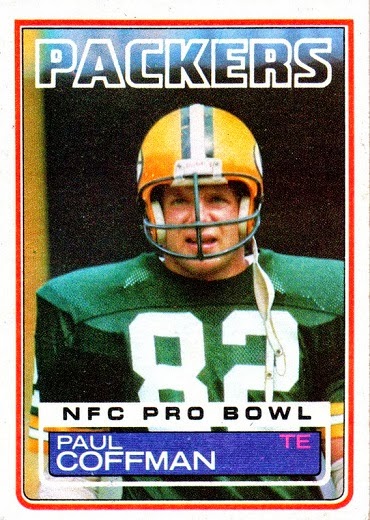
The Green Bay Packers were facing a major challenge as they hosted the Washington Redskins on October 17, 1983. At 3-3, Head Coach Bart Starr’s Packers were a team that could put points on the board, especially with QB Lynn Dickey (pictured above) passing to wide receivers James Lofton and John Jefferson and TE Paul Coffman. But they also gave up points and came into the game with the 28th-ranked defense in the NFL. They also had to make adjustments on the offensive line, with G Tim Huffman out with an ankle injury that necessitated moving Greg Koch over from his OT position and starting Charlie Getty at tackle.

Having a poor defense was not a good situation to be in when facing the Redskins. Coached by Joe Gibbs, they were coming off a Super Bowl-winning season and, if anything, were even stronger in ‘83. Behind the best offensive line in the league, QB Joe Theismann was a proficient passer and RB John Riggins a powerful force running the ball. If there was a weak point, it was the defensive backfield, but Washington was cruising at 5-1, with a close opening-game loss to the Cowboys the only blemish.

There were 55,255 fans in attendance for the Monday night game at Lambeau Field. Just over a minute into the first quarter, they had reason to get excited when Green Bay LB Mike Douglass forced RB Joe Washington to fumble and returned it 22 yards for a touchdown and, with Jan Stenerud’s extra point added, the early 7-0 lead.

DB Mike Nelms returned the kickoff 41 yards and the Redskins drove 55 yards in six plays, highlighted by Theismann’s pass to WR Art Monk for a 34-yard gain. The series ended with John Riggins fumbling into the end zone and TE Clint Didier recovering for a TD. Mark Moseley tied the score with his PAT.


Green Bay responded with a 10-play, 40-yard drive. Lynn Dickey threw to Paul Coffman for 17 yards and John Jefferson for 13 along the way and Stenerud kicked a 47-yard field goal that put the Packers back in front by three.

Washington moved the ball quickly downfield with Theismann connecting with Monk for a 22-yard gain and with RB Nick Giaquinto for 31 more yards. But the Green Bay defense came through with back-to-back sacks of Theismann and the Redskins had to settle for a 42-yard Moseley field goal. The eventful first quarter ended with the score tied at 10-10.

Things did not slow down as the game approached the second quarter. Dickey threw to James Lofton for 21 yards and the Packers picked up 15 more on a penalty when CB Darrell Green hit the receiver out of bounds. Dickey then tossed a 36-yard touchdown pass to Coffman. Stenerud added the extra point and the home team was back in front by 17-10.

Back came the Redskins, moving 67 yards in seven plays and highlighted by a 36-yard carry by Riggins. Riggins scored from a yard out and Moseley again knotted the score with the successful PAT.

The Packers reached the Washington 33 on the next series before a Dickey pass was intercepted by CB Anthony Washington. After getting a first down, the Redskins were finally forced to punt and Green Bay came back with a 73-yard, seven-play possession. RB Eddie Lee Ivery tossed an option pass to Coffman for 15 yards and a first down at the Washington 9 from where Coffman caught a scoring pass, this time from Dickey. Stenerud added the extra point and once again the Packers were in front by a touchdown.

With less than two minutes remaining in the half, the Redskins came out throwing. Theismann completed five passes to reach the Green Bay 11 and Moseley booted a 28-yard field goal as the clock reached five seconds. The Packers carried a 24-20 lead into the intermission.

Starting off the third quarter, the Packers struck quickly as they advanced 80 yards in just 42 seconds. Dickey threw to Coffman for 40 yards and then RB Gerry Ellis, taking advantage of a big hole, ran 24 yards for a touchdown. The home team had its biggest lead of the day at 31-20.

Washington seemed on the verge of responding with a touchdown, reaching the Green Bay four, but an offensive pass interference penalty nullified an apparent scoring catch and once again the Redskins settled for a Moseley field goal, this time from 31 yards.

Up by eight points, the Packers were forced to punt on their next series and Bucky Scribner’s kick was blocked to give the Redskins the ball at the Green Bay 19. Five plays later, Theismann threw to Joe Washington for a six-yard TD and, with Moseley’s PAT, the Green Bay lead was down to 31-30.

Washington’s defense again asserted itself as Dickey was sacked twice by DT Dave Butz. Nelms made a good return of the ensuing punt by Scribner to give the visitors possession at their 46. From there, the Redskins again moved deep into Green Bay territory, but after reaching the nine yard line, Douglass tackled Joe Washington for a loss and once again Washington was held to a field goal. Still, Moseley connected from 28 yards and put the visitors ahead by 33-31 with ten seconds left in the period.

RB Harlan Huckleby returned the ensuing kickoff for 54 yards to the Washington 39 and the fourth quarter started with Dickey throwing to Ellis for 32 yards. Shortly thereafter, TE Gary Lewis scored a touchdown from two yards out on an end-around that put the Packers back in front.

The Redskins came right back again as Theismann threw to Monk for 25 yards and WR Charlie Brown for another 15. Riggins blasted into the end zone from a yard out and the Washington was again in the lead of the wildly back-and-forth contest.

The Packers responded with another score of their own, with Dickey completing passes covering 19 yards to Jefferson and 17 yards to Lofton. An 11-yard touchdown pass to FB Mike Meade, followed by Stenerud’s extra point, again put Green Bay in front at 45-40.


Now it was Washington’s turn again. Theismann (pictured at right) threw to Monk for 21 yards and Joe Washington ran for two first downs. A sack of Theismann by DE Byron Braggs momentarily derailed the Redskins, but a pass to Giaquinto picked up 35 yards and set up a five-yard scoring toss to Washington. Moseley added the point and, with 2:50 left on the clock, the visitors were back on top at 47-45.

It looked bleak for the Packers when, following the kickoff, Dickey tossed two incomplete passes. But then he found Ellis on a short pass over the middle that turned into a 56-yard gain to the Washington eight and, after conservatively running the ball into the line three times, the dependable Stenerud came on to kick a 20-yard field goal. It was the fifth lead change of the final period and put the Packers ahead by a point.

There were still 54 seconds remaining in the contest, however, and while the Redskins had no timeouts remaining, they quickly moved the ball down the field. Theismann completed three passes to Joe Washington, gaining a total of 33 yards, and the running back made it out of bounds after each. Theismann then threw to Brown for 22 yards, but the clock was still running and the quarterback had to hurriedly toss a pass out of bounds with three seconds to go. On the last play of the game, Moseley missed a 39-yard field goal attempt, the fans erupted, and the Packers came away with the 48-47 win.

The combined 95 points was a new high for Monday Night Football. The teams also combined for 1025 yards of offense, with the Redskins topping Green Bay by 552 to 473. They had more first downs (33 to 23). Each team turned the ball over once, and there were just three punts in all (one by Washington, two for Green Bay, one of which was blocked by the Redskins).


Lynn Dickey completed 22 of 31 passes for 387 yards and three touchdowns with one intercepted. Paul Coffman had 6 catches for 124 yards and two TDs while Gerry Ellis (pictured at left) contributed 105 yards on four receptions to go along with his three carries for 41 yards that included a score. James Lofton caught 5 passes for 96 yards and John Jefferson added 50 yards on his four catches.

For the Redskins, Joe Theismann was successful on 27 of 39 throws for 398 yards and two TDs and no interceptions. Joe Washington caught 9 passes for 57 yards and two touchdowns to go along with his 80 rushing yards on 16 carries. John Riggins, who had to sit out much of the second half with a hip injury, nevertheless led the club on the ground with 98 yards on 25 attempts that included two TDs. Art Monk gained 105 yards on five catches and Charlie Brown had 6 receptions for 91 yards.

“It was about the wildest thing I’ve ever been in,” said Lynn Dickey. “I wish I had been in the stands or at home watching on tv, it was that good.”

“It was a tremendously inspirational win because you could see the sort of enthusiasm and intensity that was on display tonight,” said Bart Starr. “You have to salute both teams because Washington, for the reasons demonstrated on the field, is a world-championship team. They are magnificent.”

The Packers lost their next two games on the way to an 8-8 finish that put them second in the NFC Central (and cost Coach Starr his job). Tellingly, while they ranked fifth in the league with 429 points, they also gave up a NFL-high 439 points. Washington didn’t lose again during the regular season, compiling a 14-2 record that was best in the league as well as the NFC East. Along the way, the Redskins set 18 NFL records that included points scored with 541. However, after repeating as NFC Champions, they came up short in the Super Bowl, losing decisively to the Raiders.

Lynn Dickey led the NFL in passing yards (4458) and touchdown passes (32), although also in interceptions (29). James Lofton (58 catches, 1300 yards, 8 TDs) and Paul Coffman (54 catches, 814 yards, 11 TDs) were both selected to the Pro Bowl.

Joe Theismann had a MVP year as he ranked second in passing (97.0 rating) while compiling 3714 yards and 29 touchdowns. John Riggins was a consensus first-team All-NFL selection as he rushed for 1347 yards and set a new league standard with 24 touchdowns. Joe Washington added 772 rushing yards and 454 yards on 47 pass receptions.

January 22, 2013

1984: Raiders Overwhelm Redskins in Super Bowl XVIII


Super Bowl XVIII on January 22, 1984 featured the defending NFL Champions, the Washington Redskins, against the Los Angeles Raiders. If anything, the Redskins, coached by Joe Gibbs, appeared to be even better in ’83, at least on offense. After losing their opening game, they breezed through the rest of the schedule to again top the NFC East at 14-2. Along the way, they set a new league record for points (541) thanks to a high-powered offense directed by QB Joe Theismann and including RB John Riggins and wide receivers Charlie Brown, Art Monk, and Alvin Garrett along with an outstanding offensive line, known as “the Hogs”. If there were major concerns, they were in regard to the pass defense. 

The Raiders, coached by Tom Flores, topped the AFC West with a 12-4 record. While QB Jim Plunkett had lost his job to Marc Wilson for a time during the season, he played well down the stretch. Second-year RB Marcus Allen (pictured above) was outstanding both as a runner from scrimmage and receiver out of the backfield, TE Todd Christensen caught 92 passes, and veteran WR Cliff Branch was still productive when healthy. The veteran-laden defense was tough and aggressive.

The two teams had met during the regular season and the Redskins won an exciting back-and-forth contest in Washington. The defending champs, having thrashed the Rams and then just gotten past the 49ers in the postseason to win the NFC title, were three-point favorites coming into the game. Meanwhile, LA had soundly beaten the Steelers and Seahawks in the playoffs.

There were 72,920 fans in attendance at Tampa Stadium. Following their first possession, the Redskins were forced to punt from their 30 yard line. The kick by Jeff Hayes was blocked by TE Derrick Jensen (pictured below), who then recovered it in the end zone for a touchdown to give Los Angeles the early lead.


On Washington’s next series, it was the turn of the Raiders to suffer a miscue on a punt as the kick by Hayes hit Los Angeles CB Ted Watts in the back and was recovered by the Redskins. However, they failed to capitalize, gaining just 15 yards before Mark Moseley missed a field goal try from 44 yards out.

Both teams had difficulty generating offense in the early going. On the third play of the second quarter, it seemed as though the Redskins might benefit from a botched punt when Ray Guy had to jump for a high snap, but he one-handed it and was able to get the kick away. LA held the Redskins on the next series and, upon regaining possession, came out throwing. Jim Plunkett connected with Cliff Branch down the middle for a 50-yard gain. Two plays later, it was Plunkett to Branch again for a 12-yard touchdown and, with the successful extra point, a 14-0 lead.

Down by two touchdowns, the Redskins put together a 13-play, 73-yard series, highlighted by Theismann completing a pass to Alvin Garrett for 17 yards in a third-and-17 situation and throwing to TE Clint Didier twice, for 18 yards and then 20 yards to get inside the LA 20. However, they were unable to reach the end zone as the drive stalled at the seven. Moseley kicked a 24-yard field goal to get Washington on the board.


The Redskins got the ball back following a punt by the Raiders at their 12 yard line with 12 seconds left in the half. Theismann, with three receivers set wide to his right, tossed a swing pass to the left intended for RB Joe Washington – a play that had been a big-gainer when the clubs met in the regular season – but LB Jack Squirek stepped in front of the receiver, picked off the pass at the five, and had clear sailing for a touchdown (pictured at left) that made it 21-3 in favor of the Raiders at the half.

Washington started the second half strong with a 70-yard scoring drive. Theismann completed three passes and John Riggins ran the ball six times, the last on a one-yard plunge into the end zone for a TD. However, TE Don Hasselbeck blocked Moseley’s extra point attempt to keep the score at 21-9.

The Raiders responded with a 70-yard drive in eight plays that was helped along by a 38-yard pass interference penalty on CB Darrell Green. Los Angeles converted a third-and-four play at the Washington 11 as Plunkett threw to FB Frank Hawkins for six yards and Marcus Allen capped the series with a five-yard touchdown carry.

Trying to keep up, the Redskins were unable to convert on fourth-and-one at the LA 26 and, on the last play of the third quarter, Allen made a big play that, for all intents, finished off the defending champs. With a first down at the LA 26, Allen took a pitchout from Plunkett and began to sweep to his left. However, with SS Ken Coffey fast approaching, he reversed field and had clear sailing to a 74-yard TD. It set a new Super Bowl record for longest run, eclipsing the 58-yard carry by Tom Matte of the Colts in Super Bowl III. More importantly for the Raiders, it put Washington in a very deep hole at 35-9.

The fourth quarter was anticlimactic. The Raiders added a 21-yard field goal by Chris Bahr following an interception by CB Mike Haynes and came away with a stunning 38-9 win. It was the most points scored in a Super Bowl up to that time, as well as a record victory margin.

LA had more total yards (385 to 283) although the Redskins generated more first downs (19 to 18). But, critically, Washington was only able to gain 90 yards on the ground, averaging 2.5 yards per carry as the Raiders typically dominated the line of scrimmage.  In addition, the Los Angeles defense sacked Theismann six times and the Redskins turned the ball over three times – once directly for a score – as opposed to two turnovers by LA.

NT Reggie Kinlaw was a big part of the successful effort against the ground game while cornerbacks Mike Haynes and Lester Hayes blanketed wide receivers Charlie Brown and Art Monk.


Marcus Allen was the game’s MVP as he rushed for 191 yards on 20 carries that included two touchdowns;  the rushing total set a new Super Bowl record, breaking that of John Riggins set a year earlier. Jim Plunkett completed 16 of 25 passes for 172 yards and a TD with none intercepted. Cliff Branch (pictured at right) caught 6 passes for 94 yards and a score.

For the Redskins, the continually-harassed Joe Theismann was successful on 16 of 35 throws for 243 yards with no touchdowns and two picked off. John Riggins was held to 64 rushing yards on 26 carries and scored a TD. Clint Didier led the club with 5 pass receptions, for 65 yards, while Charlie Brown gained 93 yards on his three catches.

 “The turning point was when they scored at the start of the second half and we came right back and scored,” said Tom Flores. “That was big for us.”

“What hurt the most was the Raiders coming back right after we scored at the start of the third quarter,” echoed Charlie Brown in summing up the defeat.

“This is the first time since Joe Gibbs has been here that any team has controlled our offense the way the Raiders did,” Joe Theismann noted.

“They pressed us with tight man-to-man coverages,” explained Coach Gibbs. “When they play you like that you either get the big plays or you have problems.”

In speaking to the Raiders afterward, managing general partner Al Davis enthused, “Of all the great teams we’ve had, this team dominated so much that, in my opinion, you are the greatest Raider team of all time and you rank with the greatest teams that ever played in any sport.”

The Raiders were 11-5 in the highly-competitive AFC West in 1984, reaching the postseason as a Wild Card team and losing to the division-rival Seahawks in the first playoff round. Washington topped the NFC East again in ’84, but also fell short of a return to the Super Bowl with a loss to the Bears in the Divisional round of the playoffs. The Redskins would win another NFC title in 1987, by which time such stalwarts as Joe Theismann and John Riggins were long gone. 

January 17, 2013

1988: Redskins Defeat Vikings in Defensive Struggle for NFC Championship


Both of the teams facing each other for the NFC Championship on January 17, 1988 had concerns coming into the postseason. While the Washington Redskins won the NFC East with an 11-4 record in the strike-affected season, Head Coach Joe Gibbs’ team had to overcome problems along the way. QB Jay Schroeder was erratic and split time with 32-year-old veteran QB Doug Williams, who took over the job in the playoffs. RB George Rogers was hampered by a toe injury, necessitating the use of unproven rookie RB Timmy Smith, who joined with veteran Kelvin Bryant, an outstanding third-down receiver out of the backfield. The receiving corps was strong, as well as the offensive line. DE Charles Mann emerged as a star across from the talented but erratic Dexter Manley and veteran CB Darrell Green was joined by talented newcomers in the defensive backfield. The Redskins got past the Bears in their Divisional Playoff game.

The Minnesota Vikings, coached by Jerry Burns, lost all three of the games that included replacement players and then barely made it into the playoffs with an 8-7 record after losing three of their last four regular season games, including one to the Redskins. However, they thrashed New Orleans in the Wild Card Playoff and then won a stunning upset over the top-ranked 49ers in the Divisional round to advance to the conference title game. QB Wade Wilson played well in place of injured starting QB Tommy Kramer and WR Anthony Carter averaged 24.3 yards per catch during the season and lit up San Francisco for 227 yards. The defensive line was outstanding and included ends Chris Doleman, a converted linebacker, and Doug Martin and tackles Keith Millard and Henry Thomas. SS Joey Browner was a solid Pro Bowl-level contributor.

It was a mostly cloudy day in the thirties with 55,212 in attendance at RFK Stadium. The Vikings drove to the Washington 35 in the first series of the game before having to punt. Bucky Scribner’s kick was downed at the two. George Rogers ran twice for 12 yards to give the Redskins some room. A Doug Williams pass to WR Gary Clark and another carry by Rogers got Washington out to the 30 before WR Ricky Sanders took off for 28 yards on a reverse. Williams tossed two incomplete passes before, on third-and-ten, he hit Kelvin Bryant for a 42-yard touchdown to complete the 98-yard drive. Ali Haji-Sheikh added the extra point to give the home team a 7-0 lead.

Minnesota went three-and-out on its next possession and, to make matters worse, Scribner’s punt traveled only 19 yards, thus giving the Redskins good field position at their 45. However, after advancing to the Minnesota 21, Haji-Sheikh missed on a 38-yard field goal attempt that hit the right upright. The score remained unchanged heading into the second quarter.

The game settled into a defensive struggle with neither club able to sustain a drive. On a first down play with just over five minutes remaining in the half, the Redskins got something going when Timmy Smith took off on a 34-yard carry to the Minnesota 31. However, they gained just two more yards before Haji-Sheikh attempted another field goal, this time from 47 yards, and failed again.

The Vikings struck back quickly as Wade Wilson threw to TE Steve Jordan for 36 yards. Three plays later, Wilson connected with WR Leo Lewis for a 23-yard TD and, with Chuck Nelson adding the point after, the score was tied at 7-7, which was the score at halftime.

The teams again traded punts during the third quarter, battling for field position, until a pass by Wilson that was tipped by DT Dave Butz was picked off by LB Mel Kaufman to give the Redskins the ball at the Minnesota 17. Four plays later, Haji-Sheikh kicked a 28-yard field goal to put Washington ahead by 10-7.


Early in the fourth quarter, the Vikings put together a 10-play drive that went 52 yards. Wilson hit Anthony Carter (pictured at right) for a 23-yard gain to the Washington 30 and throws to RB Allen Rice for 15 yards and Jordan for 9 got the ball inside the ten. But with first-and-goal at the three, Minnesota was unable to cross the goal line on three running plays and settled for Nelson’s game-tying field goal from 18 yards.

The Redskins responded by going 70 yards in eight plays, the first four of which were runs by Smith. Williams then went long for Clark to pick up 43 yards to the Minnesota 11. Another Williams pass to Clark was good for a seven-yard touchdown that put Washington ahead to stay.

There were still over five minutes left on the clock as the Vikings regained possession following a 28-yard kickoff return by RB Darrin Nelson. With Wilson completing five passes along the way, Minnesota advanced to the Washington six. However, three throws fell incomplete, including the last one on fourth down that bounced off Nelson’s hands. The Redskins became NFC Champions by a score of 17-10.

Washington led in total yards (280 to 259) although the Vikings had more first downs (16 to 11). The Redskins were stronger on the ground (161 yards to 76). They also accumulated eight sacks, with two apiece by Dave Butz and Dexter Manley, while the Vikings had none (pictured at top #72 Manley and Butz at right). Minnesota also suffered the game’s only turnover.


Doug Williams completed only 9 of 26 passes for 119 yards, but two were for touchdowns while none were picked off. Timmy Smith (pictured at left taking handoff from Williams), who ran the ball a mere 29 times during the regular season, rushed for 72 yards on 13 carries while George Rogers added 46 yards on 12 attempts. Kelvin Bryant, who had just four rushing yards on four carries, led the Redskins with four catches, for 47 yards and a TD, while Gary Clark had 57 yards and the winning score on his three receptions.

For the Vikings, Wade Wilson was successful on 19 of 39 throws for 243 yards and a touchdown as well as an interception and was also the club’s leading rusher with 28 yards on four carries. Anthony Carter caught 7 passes  for 85 yards. RB Alfred Anderson had the most rushing yards of any of the team’s running backs with 25 yards on four attempts.

 “The defense was absolutely fantastic,” said an ecstatic Joe Gibbs. “They held Minnesota at bay, and they’re a great offensive team.”

“They shut us down,” said Washington’s Gary Clark of the Vikings defense, “but the defense kept holding for us and holding for us.”

“We’ve been sort of plagued by that all year – not getting the ball in the end zone,” said a disappointed Coach Jerry Burns. “We gave it everything we had. You’ve got to give some credit to the Redskins defense.”

The Redskins, in the Super Bowl for the third time in six years, exploded in the second quarter on the way to a big win over the Denver Broncos. They sagged to 7-9 in 1988. Minnesota again reached the postseason as a Wild Card team with an 11-5 record but fell to San Francisco in the Divisional playoff round. 

November 24, 2012

1991: Beuerlein Comes Off Bench as Cowboys Upset Redskins


The Washington Redskins were rolling along at 11-0 as they hosted their rivals, the Dallas Cowboys, on November 24, 1991. In their eleventh year under Head Coach Joe Gibbs, they had been as dominating as the record indicated, putting plenty of points on the board (including a total of 97 in the previous two games) while the defense had recorded three shutouts and not allowed an opponent to score more than 17 points in the last seven contests.

The visiting Cowboys were a team on the rise under Head Coach Jimmy Johnson. But while they had gotten off to a 5-2 start, they had lost three of their previous four games and were at 6-5 coming into Washington. Furthermore, the defense was ranked 25th. Still, QB Troy Aikman was improving in offensive coordinator Norv Turner’s system and RB Emmitt Smith and WR Michael Irvin were also emerging as stars.

There were 55,561 fans in attendance at RFK Stadium. They saw the Redskins take a 7-0 lead in the first quarter when, with just under five minutes remaining in the period, CB Martin Mayhew intercepted an Aikman pass and returned it 31 yards for a touchdown.

The Cowboys evened the score in the second quarter when, facing a third-and-15 situation, Emmitt Smith scored on a draw play from 32 yards out. At the end of the first half, Aikman threw a “Hail Mary” bomb that WR Alvin Harper pulled away from CB A.J. Johnson for a 34-yard touchdown. Coach Jimmy Johnson had gone for the fourth down conversion for the third time rather than use PK Ken Willis, who tended to be more dependable kicking on an artificial surface than grass. In any case, it had worked out with Dallas holding a 14-7 halftime lead. The Cowboys had done a fine job of keeping the ball away from Washington’s offense in the first half and limited the Redskins to just 16 rushing yards.

It looked like trouble for Dallas, however, when Aikman left the game early in the third quarter with a sprained right knee. In to replace him was QB Steve Beuerlein (pictured at top). The 26-year-old Beuerlein had played three years with the Raiders after coming out of Notre Dame before moving on to Dallas just before the ’91 season to back up Aikman. A classic dropback passer with limited mobility, he also had strong leadership skills.

The Cowboys came up empty following Beuerlein’s entry into the game when Willis missed a field goal attempt. On their next drive, Beuerlein completed two throws to WR Michael Irvin but Dallas didn’t hit paydirt until the following possession as Irvin caught two more passes, including a one-handed grab for a 24-yard TD on the third play of the fourth quarter.

In response, the Redskins shifted to a no-huddle offense and drove 92 yards in 13 plays. RB Gerald Riggs ran the final yard for a touchdown and the Dallas lead was cut to 21-14 with 8:21 remaining to play. Dallas then ran some seven minutes off the clock in a 15-play series that ended with Willis kicking a 42-yard field goal for a 24-14 lead with 1:14 left in the game.

In the closing seconds, Rypien passed to Sanders for a 29-yard touchdown to narrow the margin. But the Cowboys recovered the ensuing onside kick and that was it. Dallas came away with a 24-21 win.

The Cowboys led in total yards (399 to 262) and first downs (23 to 15) and also held onto the ball for almost 39 minutes. The Redskins, for their part, recorded five sacks. Each team turned the ball over one time.

Troy Aikman was successful on 13 of his 20 passes for 204 yards with a touchdown and an interception before giving way to Steve Beuerlein, who completed 7 of 12 throws for 109 yards and a TD. Michael Irvin (pictured below) had an outstanding performance and consistently outmaneuvered CB Darrell Green, catching 9 passes for 130 yards and a touchdown. Alvin Harper added 101 yards on his four receptions that also included a score. Emmitt Smith rushed for 132 yards and a TD on 32 carries.


For the Redskins, Mark Rypien went to the air 33 times and completed 17 for 212 yards with a touchdown and one intercepted. WR Gary Clark caught 7 passes for 82 yards. The miniscule running attack was led by RB Ricky Ervins and his 29 yards on five attempts while RB Earnest Byner carried 8 times for 22 yards.

“From the very start, we were going to be aggressive,” said Jimmy Johnson. “We were going to be aggressive in all three phases and we would be aggressive in the play-calling.”

“It was one of those things – we just didn’t play well on any level,” summarized Joe Gibbs for the Redskins. “I thought they played very well.”

While the injury to Troy Aikman knocked him out for the remainder of the regular season, the Cowboys won their remaining games with Beuerlein at quarterback to finish with an 11-5 record for second place in the NFC East and a Wild Card spot in the playoffs. Dallas defeated the Bears in the first round before losing to Detroit at the Divisional level.

The Redskins came back to win three straight before losing the season finale and ending up with a 14-2 record atop the NFC East. They went on to win Super Bowl XXVI over the Buffalo Bills.

Steve Beuerlein completed 68 of 137 passes (49.6 %) for 909 yards with five touchdowns and two interceptions and despite his lack of mobility was sacked just six times. He also led the Cowboys to their Wild Card playoff win. Beuerlein backed up Aikman again in 1992 before moving on to the Cardinals.

Michael Irvin caught 93 passes for a league-leading 1523 yards (16.4 avg.) and eight touchdowns. He was a consensus first-team All-NFL selection and was named to the Pro Bowl for the first of five consecutive years. Emmitt Smith led the NFL in rushing with 1563 yards on 365 carries (4.3 avg.) and 12 touchdowns (he added another TD as a receiver). He also was named to the Pro Bowl, for the second of six straight seasons and eight overall.

November 4, 2012

1990: Rutledge Rallies Redskins to Overtime Win Over Lions


The Washington Redskins had a 4-3 record as they took on the Detroit Lions on November 4, 1990. In their tenth season under Head Coach Joe Gibbs, the Redskins were looking to return to the playoffs after missing out in 1988 and ’89 following their last trip to the Super Bowl. The running game was sound, led by veterans Earnest Byner and Gerald Riggs, and the defense was much improved. But QB Stan Humphries was proving to be too inconsistent.

The Lions, under Head Coach Wayne Fontes, were 3-4 and featured an explosive run-and-shoot passing attack directed by assistants Darrel “Mouse” Davis and June Jones. Detroit could run the ball effectively, to be sure, with All-Pro RB Barry Sanders in the backfield. But the defense could give up points as readily as the offense could score them, and the quick-striking offense only tended to keep the defense on the field far too long.

There were 69,326 fans in attendance at the Pontiac Silverdome. Following an interception of a Stan Humphries pass on Washington’s opening possession, the Lions quickly capitalized as QB Rodney Peete threw to WR Robert Clark for a 33-yard touchdown.

The teams traded punts before the Redskins put together a 10-play, 65-yard scoring drive. Humphries threw to WR Gary Clark for 21 yards on a third-down play and, in all, was successful on five of six throws. Gerald Riggs completed the series by breaking three tackles and running for an eight-yard TD. Chip Lohmiller’s extra point tied the score at 7-7.

Peete started off the second quarter by scrambling away from trouble and running for 37 yards to the Washington 33. Barry Sanders gained 20 yards on two carries and Peete finished off the drive with a 10-yard touchdown run after faking a pitch to Sanders.

No sooner did the Redskins get the ball back then Humphries was picked off by CB William White, who returned it 34 yards for a TD. Down by 21-7, Washington fought back on the next possession highlighted by Humphries scrambling for 17 yards and completing a pass to Gary Clark for 31 yards. The tenth play of the 83-yard drive was a four-yard touchdown pass from Humphries to TE Jimmie Johnson, who was all alone in the corner of the end zone.

The teams again traded punts. With just over three minutes to go in the first half, the Lions regained possession at their five yard line. Peete threw to WR Richard Johnson for 25 yards to get out of the hole, then hit WR Jason Phillips for 27 yards to the Washington 43. Another pass to Johnson and a run by Sanders gained another 19 yards and Peete completed a 24-yard scoring pass to WR Aubrey Matthews that made it 28-14 in favor of the Lions going into halftime.

Things got even better for Detroit early in the third quarter. On Washington’s first possession of the second half, safety Bennie Blades intercepted a Humphries pass and returned it 21 yards to the Redskins’ 45. Two plays later, Barry Sanders broke away on a draw play for a 45-yard TD. With the successful PAT, the Lions were now up comfortably by 35-14.

On Washington’s next series, QB Jeff Rutledge (pictured at top) came into the game. An 11th-year career backup out of Alabama, Rutledge had been with the Rams and, during the previous seven seasons, the Giants before joining the Redskins. He had started a total of nine games during that span as he did not have the arm or size to be a first-string quarterback, but he brought intelligence and good leadership qualities to the position.

Rutledge started off by completing all three of his passes, including a third-and-two throw to WR Ricky Sanders for 33 yards, and the Redskins scored a touchdown on a three-yard carry by Riggs. Following a punt by the Lions, two runs by Riggs and a pass by Rutledge gained 24 yards but Riggs fumbled after catching a pass and the Lions recovered at their own 46.

Peete having pulled a hamstring during the last possession, Detroit now had a new quarterback in the game as well in backup Bob Gagliano. Gagliano completed passes of 19 and 24 yards to Richard Johnson and, after reaching the Washington eight yard line, Rich Karlis kicked a 26-yard field goal. Heading into the final quarter, the Lions were leading by a seemingly-commanding 38-21.

The Redskins started off the final period by driving 58 yards in nine plays, but after reaching the Detroit 21 Rutledge tossed three incomplete passes and Washington settled for a 38-yard field goal by Chip Lohmiller.

On Detroit’s next play from scrimmage, Gagliano threw to Matthews who fumbled and DE Fred Stokes recovered for Washington. However, after driving this time to the Detroit 22, the Redskins attempted to convert a fourth-and-seven play but Rutledge’s pass fell incomplete.

The Lions went three-and-out on the ensuing possession and Rutledge completed five of six passes, including one to Ricky Sanders that gained 28 yards and another to Gary Clark for a 34-yard touchdown. The Detroit lead was down to 38-31 with 5:48 still on the clock in regulation.

Once again the Lions had to punt after three plays and once more it was Rutledge passing the Redskins down the field. Washington went 85 yards in 15 plays with Rutledge completing eight passes and finishing the series off with a 12-yard touchdown run on a quarterback draw. Lohmiller’s extra point was good and, with less than 20 seconds remaining in the fourth quarter, the contest was tied at 38-38.

In the overtime period, each team had a possession and punted before the Redskins, starting at their 10 yard line, advanced 73 yards in 12 plays. Along the way, Rutledge converted a third-and-15 situation with a completion to WR Art Monk for 40 yards. With Rutledge tossing short passes and Riggs and RB Earnest Byner gaining yards on the ground, Washington reached the Detroit 17 and, at 9:10 into overtime, Lohmiller ended the game with a 34-yard field goal. The Redskins came away with a thrilling 41-38 win.

Washington had big advantages in total yards (676 to 351), first downs (39 to 12), and time of possession (49:52 to 19:18). However, the Lions recorded six sacks, to two by the Redskins, and Washington also turned the ball over four times while Detroit suffered one.

Jeff Rutledge put up big numbers once he came into the contest, completing 30 of 42 passes for 363 yards with a touchdown and none intercepted. By contrast, Stan Humphries was successful on 13 of 21 throws for 159 yards with a TD and three interceptions. Art Monk had 13 catches for 168 yards and was one of three Washington receivers to reach a hundred yards, with Ricky Sanders gaining 132 yards on his 11 receptions and Gary Clark adding 132 on 8 catches with a TD. Gerald Riggs led the club in rushing with 91 yards on 22 carries that included two scores and Earnest Byner gained 53 yards on 11 attempts.

For Detroit, Rodney Peete went 8 of 17 passing for 135 yards and two TDs with none intercepted and Bob Gagliano completed 5 of 11 throws for 68 yards with no scores or pickoffs. Barry Sanders (pictured below) ran for 104 yards and a touchdown on 11 carries. Richard Johnson caught 7 passes for 98 yards.


“In Jeff’s case, I just think he is a producer,” said Joe Gibbs of Rutledge. “He has always been that way and he’s a great guy. He is a class individual.”

Rutledge got a chance to start the next game at Philadelphia, but performed poorly and was knocked out of the game by injury (as was Humphries also) - he returned to the bench. The Redskins recovered to win five of their last seven games and placed third in the NFC East at 10-6. They defeated the Eagles in the Wild Card playoff game but lost at San Francisco in the Divisional round.

Detroit finished up at 6-10 for third place in the NFC Central. The result convinced Coach Fontes to back away from the pure run-and-shoot offense, thus causing Mouse Davis and June Jones to depart.

Jeff Rutledge threw a total of 68 passes for the Redskins in 1990 and completed 40 of them for 455 yards with two touchdowns and an interception. The big relief performance against the Lions remained his most significant single-game effort by far. He played two more years in Washington with limited action as a backup.