Showing posts with label 1984 NFL season. Show all posts

November 10, 2016

Highlighted Year: Norm Johnson, 1984

Placekicker, Seattle Seahawks


Age:  24
3rd season in pro football & with Seahawks
College: UCLA
Height: 6’2”   Weight: 193

Prelude:
Undrafted coming out of college, Johnson signed with the Seahawks and made the club, hitting on 10 of 14 field goal attempts during the strike-shortened 1982 season. He followed up with another solid year in ’83, kicking 18 field goals out of 25 attempts and 49 of his 50 extra point tries for a total of 103 points.

1984 Season Summary
Appeared in all 16 games
[Bracketed numbers indicate league rank in Top 20]

Kicking
Field goals – 20 [14, tied with five others]
Most field goals, game – 4 vs. Cleveland 9/3
Field goal attempts – 24
Most field goal attempts, game – 4 vs. Cleveland 9/3
Field goal percentage – 83.3 [3]
PATs – 50 [3]
PAT attempts – 51 [3, tied with Mark Moseley & Neil O’Donoghue]
Longest field goal – 50 yards vs. Cleveland 9/3

Scoring
Field Goals – 20
PATs – 50
Points – 110 [7]

Postseason: 2 G
Field goals – 3
Most field goals, game – 2 vs. LA Raiders, AFC Wild Card playoff
Field goal attempts – 4
Most field goal attempts, game – 2 vs. LA Raiders, AFC Wild Card playoff; at Miami, AFC Divisional playoff
PATs – 2
Most PATs, game – 1 vs. LA Raiders, AFC Wild Card playoff; at Miami, AFC Divisional playoff
PAT attempts – 2
Longest field goal – 44 yards vs. LA Raiders, AFC Wild Card playoff

Awards & Honors:
1st team All-NFL: AP, PFWA, Pro Football Weekly, Sporting News
2nd team All-NFL: NEA
1st team All-AFC: UPI, Pro Football Weekly
Pro Bowl

Seahawks went 12-4 to finish second in the AFC West and qualified for the postseason as a Wild Card. Won AFC Wild Card playoff over Los Angeles Raiders (13-7). Lost AFC Divisional playoff to Miami Dolphins (31-10).   

Aftermath:
Outstanding at kicking off as well as consistent on field goals, Johnson went on to spend nine seasons with the Seahawks, through 1990. He left as the franchise leader in field goals (159) and scoring (810 points). Johnson went on to spend four years with Atlanta, gaining Pro Bowl recognition in 1993 when he was successful on 26 of 27 field goal attempts for a league-leading percentage of 96.3. Joining Pittsburgh in 1995 he led the NFL with a career-high 34 field goals and the AFC by scoring 141 points. He spent four years with the Steelers and finished his career with the Philadelphia Eagles in 1999 at the age of 39. Over the course of 18 seasons, Johnson kicked 366 field goals in 477 attempts (76.7 %) and 638 PATs for a total of 1736 points, which ranked fourth in NFL history at the time. He added another 20 field goals in 26 postseason attempts, including four in Pittsburgh’s AFC Divisional playoff win over Buffalo following the 1995 season. Johnson received consensus first-team All-NFL honors after one season, some first- and second-team recognition after one other year, and was twice selected to the Pro Bowl.

--

Highlighted Years features players who were consensus first-team All-League* selections or league* or conference** leaders in the following statistical categories:

Rushing: Yards, TDs (min. 10)
Passing: Yards, Completion Pct., Yards per Attempt, TDs, Rating
Receiving: Catches, Yards, TDs (min. 10)
Scoring: TDs, Points, Field Goals (min. 5)
All-Purpose: Total Yards
Defense: Interceptions, Sacks
Kickoff Returns: Average
Punt Returns: Average
Punting: Average

*Leagues include NFL (1920 to date), AFL (1926), AFL (1936-37), AAFC (1946-49), AFL (1960-69), WFL (1974-75), USFL (1983-85)

**NFC/AFC since 1970

April 3, 2016

Highlighted Year: Deron Cherry, 1984

Safety, Kansas City Chiefs


Age: 25 (Sept. 12)
4th season in pro football & with Chiefs
College: Rutgers
Height: 5’11” Weight: 190

Prelude:
Cherry intercepted nine passes in college and also handled the punting, averaging 39.6 yards on 104 punts. Undrafted by the NFL, he signed with the Chiefs as a punter in 1981 but, after briefly being let go, spent his first two seasons as a backup in the defensive backfield before the departure of FS Gary Barbaro to the USFL opened a spot for him in 1983. He had an outstanding season, intercepting seven passes and receiving first-team All-AFC honors from UPI and Pro Football Weekly as well as earning selection to the Pro Bowl.

1984 Season Summary
Appeared in all 16 games
[Bracketed numbers indicate league rank in Top 20]

Interceptions – 7 [4, tied with six others]
Most interceptions, game – 2 vs. LA Raiders 9/16
Int. return yards – 140 [7]
Most int. return yards, game – 67 (on 1 int.) vs. Cleveland 9/30
Int. TDs – 0
Sacks – 0
Fumble recoveries – 0
Tackles – 78
Assists – 50

Kickoff Returns
Returns – 1
Yards – 0
TDs – 0

Awards & Honors:
1st team All-NFL: AP, UPI
1st team All-AFC: UPI
Pro Bowl

Chiefs went 8-8 to finish fourth in the AFC West.

Aftermath:
An outstanding playmaker with intelligence and sound instincts to make up for lack of ideal speed, Cherry continued to excel for the Chiefs, gaining selection to the next four Pro Bowls and receiving first-team All-NFL recognition again in 1986 and ’88. After intercepting a career-high 9 passes in 1986, he missed time due to injury in ’87 but bounced back to play in every game and picked off another 7 passes in 1988, when he also was credited with a career-high 151 tackles. A knee injury that required surgery cost him time in 1990 and his career came to an end in ’91. Overall, in 11 pro seasons, all with the Chiefs, Cherry intercepted 50 passes, one of which he returned for a TD. He received first-team All-NFL honors three times and first- or second-team All-AFC honors after four other seasons, and was selected to a total of six Pro Bowls.

--

Highlighted Years features players who were consensus first-team All-League* selections or league* or conference** leaders in the following statistical categories:

Rushing: Yards, TDs (min. 10)
Passing: Yards, Completion Pct., Yards per Attempt, TDs, Rating
Receiving: Catches, Yards, TDs (min. 10)
Scoring: TDs, Points, Field Goals (min. 5)
All-Purpose: Total Yards
Defense: Interceptions, Sacks
Kickoff Returns: Average
Punt Returns: Average
Punting: Average

*Leagues include NFL (1920 to date), AFL (1926), AFL (1936-37), AAFC (1946-49), AFL (1960-69), WFL (1974-75), USFL (1983-85)

**NFC/AFC since 1970

March 8, 2016

Highlighted Year: Richard Dent, 1984

Defensive End, Chicago Bears


Age: 24 (Dec. 13)
2nd season in pro football & with Bears
College: Tennessee State
Height: 6’5”   Weight: 240

Prelude:
Dent accumulated 39 sacks in college and was chosen by the Bears in the eighth round of the 1983 NFL draft. He had an undistinguished rookie season, starting three games at right defensive end and recording three sacks.

1984 Season Summary
Appeared in all 16 games
[Bracketed numbers indicate league rank in Top 20]

Sacks – 17.5 [3, 1st in NFC]
Most sacks, game – 4.5 vs. LA Raiders 11/4
Multi-sack games – 5
Interceptions – 0
Fumble recoveries – 1
Forced fumbles – 4
Tackles – 39

Postseason: 2 G
Sacks – 3
Most sacks, game – 3 at Washington, NFC Divisional playoff
Interceptions – 0
TDs – 0

Awards & Honors:
1st team All-NFL: Pro Football Weekly
2nd team All-NFL: AP
1st team All-NFC: UPI, Pro Football Weekly
Pro Bowl

Bears went 10-6 to finish first in the NFC Central while leading the NFL in sacks (a league-record 72), fewest yards allowed (3863), and fewest rushing yards allowed (1377). Won NFC Divisional playoff over Washington Redskins (23-19). Lost NFC Championship to San Francisco 49ers (23-0).

Aftermath:
Dent followed his breakout year with a 1985 season in which he led the NFL with 17 sacks. The Bears, fueled by their outstanding defense, went 15-1 and won the Super Bowl, a game in which Dent was named MVP, capping a postseason in which he recorded six sacks. An explosive pass rusher with great speed, he compensated for lack of size against the run with great agility and quickness. Dent went on to play a total of 12 seasons with the Bears and remained a potent pass rusher, even as injuries began to hinder his performance. He received second-team All-NFL honors from the Associated Press in 1988 and ’90 and first-team All-NFC recognition in those seasons from UPI and Pro Football Weekly, with Pro Football Weekly naming him again in 1993. Dent was also chosen to a total of four Pro Bowls. He moved on to the San Francisco 49ers as a free agent in 1994 but was limited to two games due to a knee injury. He returned to the Bears in ’95 and then played a year apiece for the Colts and Eagles before retiring after the 1997 season. Overall, he finished with 137.5 sacks, which ranked third in NFL history at the time, as well as eight interceptions and 13 fumble recoveries, one of which he returned for a TD. He added another 10.5 sacks in 12 postseason games. Dent was inducted into the Pro Football Hall of Fame, Class of 2011.

--

Highlighted Years features players who were consensus first-team All-League* selections or league* or conference** leaders in the following statistical categories:

Rushing: Yards, TDs (min. 10)
Passing: Yards, Completion Pct., Yards per Attempt, TDs, Rating
Receiving: Catches, Yards, TDs (min. 10)
Scoring: TDs, Points, Field Goals (min. 5)
All-Purpose: Total Yards
Defense: Interceptions, Sacks
Kickoff Returns: Average
Punt Returns: Average
Punting: Average

*Leagues include NFL (1920 to date), AFL (1926), AFL (1936-37), AAFC (1946-49), AFL (1960-69), WFL (1974-75), USFL (1983-85)

**NFC/AFC since 1970

October 9, 2015

Highlighted Year: Mark Clayton, 1984

Wide Receiver, Miami Dolphins


Age: 23
2nd season in pro football & with Dolphins
College: Louisville
Height: 5’9”   Weight: 172

Prelude:
Clayton caught 96 passes for 2004 yards and 10 touchdowns in college (20.9) avg., including 53 for 1112 yards (21.0 avg.) and six TDs as a senior in 1982. He was chosen by the Dolphins in the eighth round of the ’83 NFL draft and saw little action on offense as a rookie, with six catches for 114 yards and a TD, although he returned 41 punts for a 9.6-yard average and included a touchdown. Clayton replaced the aging Nat Moore in the starting lineup across from WR Mark Duper in 1984.

1984 Season Summary
Appeared in 15 of 16 games
[Bracketed numbers indicate league rank in Top 20]

Pass Receiving
Receptions – 73 [10]          
Most receptions, game – 9 (for 177 yds.) vs. LA Raiders 12/2, (for 127 yds.) at Indianapolis 12/9
Yards – 1389 [3]
Most yards, game – 177 (on 9 catches) vs. LA Raiders 12/2
Average gain – 19.0 [6]
TDs – 18 [1]
100-yard receiving games – 6

Rushing
Attempts – 3
Yards – 35
Average gain – 11.7
TDs – 0

Kickoff Returns
Returns – 2
Yards – 15
Average per return – 7.5
TDs – 0
Longest return – 14 yards

Punt Returns
Returns – 8
Yards – 79
Average per return – 9.9
TDs – 0
Longest return – 22 yards

Passing
Pass attempts – 1
Pass completions – 0
Passing yardage – 0
TD passes – 0
Interceptions – 1

Scoring
TDs – 18 [1, tied with Marcus Allen]
Points – 108 [8, tied with Marcus Allen & Tony Franklin]

Postseason: 3 G
Pass receptions – 15
Most pass receptions, game – 6 vs. San Francisco, Super Bowl
Pass receiving yards – 262
Most pass receiving yards, game – 95 vs. Pittsburgh, AFC Championship
Average yards per reception – 17.5
Pass Receiving TDs – 2

Awards & Honors:
2nd team All-NFL: AP
1st team All-AFC: Pro Football Weekly
2nd team All-AFC: UPI
Pro Bowl

Dolphins went 14-2 to finish first in the AFC East with the conference’s best record and led the NFL in total yards (6936), passing yards (5018), passing TDs (49), touchdowns (70), and scoring (513 points). Won AFC Divisional playoff over Seattle Seahawks (31-10) & AFC Championship over Pittsburgh Steelers (45-28). Lost Super Bowl to San Francisco 49ers (38-16).

Aftermath:
Having set a then-NFL record for touchdown catches in his breakout ’84 season, Clayton followed up with 70 catches for 996 yards (14.2 avg.) and four TDs in 1985, again being selected for the Pro Bowl. The undersized receiver had great jumping ability and quickness, if not the greatest speed, and made for a productive tandem in combination with Mark Duper and catching passes from QB Dan Marino. Clayton was named to another Pro Bowl in 1986 and, following a lesser year in the strike-interrupted ’87 season, caught a career-high 86 passes in 1988 and led the NFL with 14 touchdown receptions. Overall, he played ten years with Miami, through 1992, and set franchise records with 550 catches and 81 TDs while gaining 8643 yards (15.7 avg.). Clayton played one final season for the Green Bay Packers in 1993 and ended up with a total of 582 pass receptions for 8974 yards (15.4 avg.) and 84 touchdowns.  He received first- or second-team All-AFC honors three times and was chosen to the Pro Bowl on five occasions.

--

Highlighted Years features players who were consensus first-team All-League* selections or league* or conference** leaders in the following statistical categories:

Rushing: Yards, TDs (min. 10)
Passing: Yards, Completion Pct., Yards per Attempt, TDs, Rating
Receiving: Catches, Yards, TDs (min. 10)
Scoring: TDs, Points, Field Goals (min. 5)
All-Purpose: Total Yards
Defense: Interceptions, Sacks
Kickoff Returns: Average
Punt Returns: Average
Punting: Average

*Leagues include NFL (1920 to date), AFL (1926), AFL (1936-37), AAFC (1946-49), AFL (1960-69), WFL (1974-75), USFL (1983-85)

**NFC/AFC since 1970

June 29, 2015

Highlighted Year: Jim Arnold, 1984

Punter, Kansas City Chiefs


Age: 23
2nd season in pro football & with Chiefs
College: Vanderbilt
Height: 6’2”   Weight: 212

Prelude:
Arnold was a four-time All-Southeastern Conference choice in college as well as consensus All-American as a senior in 1982. He was chosen by the Chiefs in the fifth round of the ‘83 NFL draft and averaged 39.9 yards on 93 punts as a rookie.

1984 Season Summary
Appeared in all 16 games
[Bracketed numbers indicate league rank in Top 20]

Punting
Punts – 98 [1, tied with Rohn Stark]
Most punts, game – 9 at Denver 9/23, vs. Houston 11/11
Yards – 4397 [1]
Average – 44.9 [1]
Best average, game – 50.9 (on 8 punts) at LA Raiders 11/18
Punts blocked – 0
Longest punt – 63 yards

Rushing
Attempts – 1
Yards – 0
TDs – 0

Awards & Honors:
2nd team All-NFL: AP

Chiefs went 8-8 to finish fourth in the AFC West.

Aftermath:
A lesser performance in 1985 set the stage for Arnold’s release prior to the ‘86 season and he was picked up by Detroit for the last seven games, averaging 42.6 yards on 36 punts. He followed up with a 1987 season in which he was a consensus first-team All-NFL and Pro Bowl selection after averaging 43.6 yards on 46 punts during the strike-interrupted campaign. He had another Pro Bowl year in ‘88 after punting a team-record 97 times for a 42.4-yard average, which topped the NFC. Arnold ended up playing a total of eight years for the Lions and set a franchise career records with 536 punts, averaging 42.7 yards per kick. He played for the Miami Dolphins in 1994 before retiring. Overall, Arnold punted 866 times over 12 seasons for a 42.3-yard average (284 for a 42.0 average with the Chiefs). He was named to the Pro Bowl twice and received first- or second-team All-NFL honors on three occasions.

--

Highlighted Years features players who were first-team All-League* selections or league* or conference** leaders in the following statistical categories:

Rushing: Yards, TDs (min. 10)
Passing: Yards, Completion Pct., Yards per Attempt, TDs, Rating
Receiving: Catches, Yards, TDs (min. 10)
Scoring: TDs, Points, Field Goals (min. 5)
All-Purpose: Total Yards
Defense: Interceptions, Sacks
Kickoff Returns: Average
Punt Returns: Average
Punting: Average

*Leagues include NFL (1920 to date), AFL (1926), AFL (1936-37), AAFC (1946-49), AFL (1960-69), WFL (1974-75), USFL (1983-85)

**NFC/AFC since 1970

December 30, 2014

1984: Bears Upset Redskins in NFC Divisional Playoff Game


The NFC Divisional playoff game on December 30, 1984 featured the Washington Redskins, a team known for offensive prowess that had won the NFC Championship the previous two years, and the NFL’s top-rated defensive team, the Chicago Bears.

The Bears had not won a playoff game since 1963 and had only two appearances in the interim, the last in 1979. Mike Ditka, who had been a player on that title-winning ‘63 team, was the third-year head coach and defensive coordinator Buddy Ryan the architect of an aggressive unit that set a record with 72 sacks in ’84. The defense was especially strong on the line that was anchored by DT Dan Hampton and DE Richard Dent, the conference leader in sacks with 17.5, and at linebacker, where MLB Mike Singletary was a consensus first-team All-Pro.  

The key to the offense, as he had been for virtually all of his ten years with the Bears, was RB Walter Payton (pictured above), who surpassed Jim Brown as the career rushing leader during the season but, at age 31, was still formidable (1684 rushing yards, 2052 yards from scrimmage). QB Jim McMahon had been sidelined by a variety of injuries and a lacerated kidney finished him for the year ten weeks into the season. Bob Avellini, Rusty Lisch, and Greg Landry, in addition to Steve Fuller, who was starting against Washington despite a shoulder separation, had all seen action behind center for the Bears. Chicago won the NFC Central with a 10-6 record.

Washington, coached by Joe Gibbs, topped the NFC East at 11-5 and, while not as potent as the record-setting 1983 team that was upset by the Raiders in the Super Bowl, was still strong. The Redskins had an outstanding offensive line, dubbed “the Hogs”, and 35-year-old RB John Riggins rushed for 1239 yards and 14 TDs behind it. QB Joe Theismann passed for 3391 yards and 24 touchdowns while WR Art Monk set a NFL record with 106 catches. The Redskins could play defense effectively, too, and had ranked second to the Bears with 66 sacks.

There were 55,431 fans in attendance at RFK Stadium, where the Redskins were 7-0 in the postseason, and they started the contest with a 56-yard drive that resulted in Mark Moseley kicking a 25-yard field goal. In the second quarter, the Bears benefited from a turnover when a hard-charging SS Todd Bell caused RB Joe Washington to fumble. That led to a 34-yard field goal by Bob Thomas to tie the score.

Later in the period, the Bears finally put together a sustained drive, moving from their 30 to the Washington 19 and helped along by a roughing-the-passer penalty on DE Charles Mann after Steve Fuller completed a pass to FB Calvin Thomas for 13 yards. At that point, the Bears pulled a trick play as Walter Payton took a pitchout and faked a handoff on an apparent reverse to WR Dennis McKinnon coming around toward him. But Payton kept the ball and, taking advantage of the opposing safeties playing up close to defend against the run, threw an option pass to a wide-open TE Pat Dunsmore in the end zone for a touchdown. Bob Thomas added the extra point and the Bears were ahead by 10-3 at halftime.


On the second play of the third quarter, Fuller (pictured at left) threw a short pass to WR Willie Gault that the fleet-footed receiver turned into a 75-yard TD. Thomas missed the extra point, but the Bears now were up by 16-3.

The Redskins scored a touchdown on a one-yard carry by RB John Riggins to narrow the margin to 16-10. Chicago responded with a series that was kept alive by a roughing-the-kicker penalty on a punt, called on Washington DB Ken Coffey. Fuller completed back-to-back passes to McKinnon, the second for a 16-yard TD, and Thomas added the PAT to again make it a 13-point game. Just before the end of the period, Riggins scored another touchdown and, with Moseley again adding the extra point, the Bears entered the fourth quarter with a six-point lead of 23-17.

The defensive nature of the contest intensified in the final period. Three times the Redskins took possession in Chicago territory and came up empty, starting at the 36, 40, and 45 yard lines. Twice they were pushed back by the Bears and forced to punt and the last series ended with Moseley missing a 41-yard field goal attempt. The Bears took an intentional safety when punter Dave Finzer ran out of the end zone because Coach Ditka didn’t want to take a chance on kicking out of his own end zone with just over eight minutes remaining, which provided the only points of the final period. Chicago thus prevailed by a score of 23-19.

The Redskins held the edge in total yards (336 to 310) and first downs (22 to 13) while Chicago was slightly in front in time of possession (30:24 to 29:36). Each team turned the ball over one time, but both teams blitzed heavily on defense and the Bears recorded seven sacks, to five by Washington, with most coming in the fourth quarter.


Walter Payton rushed for 104 yards on 24 carries and threw a touchdown pass. Steve Fuller only went to the air 15 times, with 9 completions, but they were good for 211 yards and two TDs, with no interceptions. Dennis McKinnon had four catches for 72 yards and a touchdown and Willie Gault gained 75 yards and scored on his lone reception. On defense, DE Richard Dent (pictured at right) had three sacks and DT Dan Hampton was right behind with two.

For the Redskins, Joe Theismann was successful on 22 of 42 throws while facing relentless pressure, for 292 yards and no touchdowns and was picked off once. He also ran the ball five times for 38 yards due to being flushed out of the pocket. Art Monk caught 10 passes for 122 yards, TE Clint Didier added 85 yards on his four receptions, and WR Calvin Muhammad contributed 5 catches for 62 yards. John Riggins was held to 50 yards on 21 rushing attempts that included the two short TDs. On defense, LB Rich Milot was credited with 3.5 sacks.

“This is one heck of a football team we shut down today,” said Coach Ditka of the Bears. “We played relentless football and when you play that relentless some good things have to happen to you.”

“It was kind of like being on the freeway at rush hour…without a car,” summed up Joe Theismann.

The Bears were shut down 23-0 by the 49ers in the NFC Championship game, but the stage was set to achieve greater things in 1985, a season that would culminate in a Super Bowl triumph. Washington dipped to 10-6 in ’85, missing the playoffs, but returned to the postseason in 1986.

December 15, 2014

Highlighted Year: Marcus Allen, 1984

Running Back, Los Angeles Raiders


Age: 24
3rd season in pro football & with Raiders
College: Southern California
Height: 6’2”   Weight: 205

Prelude:
After winning the 1981 Heisman Trophy at USC, Allen was chosen by the Raiders in the first round of the ’82 draft. In the strike-shortened 1982 season, he led the NFL with 1098 yards from scrimmage, 14 TDs, and 84 points. For his efforts, he was a consensus Rookie of the Year and first-team All-NFL selection and was selected to the Pro Bowl. Allen rushed for 1014 yards in ’83 and caught 68 passes for another 590 yards while scoring 12 TDs, although he also led the league by fumbling 14 times. He was the MVP of the Super Bowl after rushing for 191 yards in the win against the Redskins.

1984 Season Summary
Appeared and started in all 16 games
[Bracketed numbers indicate league rank in Top 20]

Rushing
Attempts – 275 [10]
Most attempts, game – 22 (for 69 yds.) at Kansas City 9/16
Yards – 1168 [10]
Most yards, game – 155 yards (on 20 carries) at Miami 12/2
Average gain – 4.2 [18]
TDs – 13 [3, tied with Gerald Riggs & James Wilder]
100-yard rushing games – 3

Pass Receiving
Receptions – 64
Most receptions, game – 6 (for 46 yds.) at Kansas City 9/16, (for 62 yds.) vs. San Diego 9/24, (for 42 yds.) vs. Minnesota 10/14, (for 63 yds.) vs. Denver 10/28
Yards – 758
Most yards, game – 173 (on 4 catches) vs. Seattle 10/7
Average gain – 11.8
TDs – 5
100-yard receiving games – 1

All-purpose yards – 1926 [4]

Passing
Pass attempts – 4
Pass completions – 1
Passing yardage – 38
TD passes – 0
Interceptions – 0

Scoring
TDs – 18 [1, tied with Mark Clayton]
Points – 108 [8, tied with Mark Clayton & Tony Franklin]

Postseason: 1 G (AFC Wild Card playoff at Seattle)
Rushing attempts – 17
Rushing yards – 61
Average gain rushing – 3.6
Rushing TDs – 0

Pass receptions – 5
Pass receiving yards - 90
Average yards per reception – 18.0
Pass Receiving TDs – 1

Awards & Honors:
2nd team All-NFL: AP, NEA
1st team All-AFC: UPI, Pro Football Weekly
Pro Bowl

Raiders went 11-5 to finish third in the AFC West and qualify as a Wild Card entry in the playoffs. Lost AFC Wild Card playoff to Seattle Seahawks (13-7).

Aftermath:
Allen received multiple MVP honors in 1985 in addition to being a consensus first-team All-NFL selection following a season in which he led the NFL in rushing (1759 yards) and yards from scrimmage (2314) when adding in his 555 yards on 67 pass receptions. He was chosen to the Pro Bowl in 1985, ‘86, ’87, and ’93, but never again ran for a thousand yards or caught more than 51 passes after ‘85. Bothered by injuries (and involved in disputes with owner Al Davis), he shared time with other running backs during the remainder of his career with the Raiders, most notably Bo Jackson. Signing with the Chiefs as a free agent in 1993 reinvigorated his career at age 33, and he led the NFL with 12 rushing touchdowns. Allen retired in 1997 with 123 career touchdowns, as well as 12,243 rushing yards and 587 pass receptions for another 5412 yards. He was inducted into the Pro Football Hall of Fame, Class of 2003.

--

Highlighted Years features players who were consensus first-team All-League* selections or league* or conference** leaders in the following statistical categories:

Rushing: Yards, TDs (min. 10)
Passing: Yards, Completion Pct., Yards per Attempt, TDs, Rating
Receiving: Catches, Yards, TDs (min. 10)
Scoring: TDs, Points, Field Goals (min. 5)
All-Purpose: Total Yards
Defense: Interceptions, Sacks
Kickoff Returns: Average
Punt Returns: Average
Punting: Average

*Leagues include NFL (1920 to date), AFL (1926), AFL (1936-37), AAFC (1946-49), AFL (1960-69), WFL (1974-75), USFL (1983-85)

**NFC/AFC since 1970

September 26, 2014

Rookie of the Year: Paul McFadden, 1984

Placekicker, Philadelphia Eagles


Age:  23 (Sept. 24)
College: Youngstown State
Height: 5’11” Weight: 160

Prelude:
McFadden kicked a school-record 54-yard field goal and added another of 52 yards in his first college game. Kicking barefoot, he ended up with 52 field goals out of 90 attempts, with a high of 17 in 1982, and with 78 PATs accumulated a total of 240 points. McFadden was drafted ninth by the USFL’s Chicago Blitz but signed with the Eagles, who chose him in the 12th round of the ’84 NFL draft.

1984 Season Summary
Appeared in all 16 games
[Bracketed numbers indicate league rank in Top 20]

Kicking
Field goals – 30 [1]
Most field goals, game - 4 vs. Minnesota 9/9
Field goal attempts – 37 [1]
Most field goal attempts, game – 4 vs. Minnesota 9/9, vs. Washington 11/18, at St. Louis 11/25
Field goal percentage – 81.1 [3]
PATs – 26
PAT attempts – 27
Longest field goal – 52 yards at Detroit 11/4

Scoring
Field Goals – 30
PATs – 26
Points – 116 [5]

Awards & Honors:
NFC Rookie of the Year: UPI
2nd team All-NFC: UPI

Eagles went 6-9-1 to finish fifth in the NFC East.

Aftermath:
Having set a team season scoring record as a rookie, McFadden followed up in 1985 with another solid year, connecting on 83.3 percent of his field goal attempts (25 of 30), but he dropped off to 20 in 31 attempts (64.5 %) in ’86 and 16 of 26 (61.5 %) in 1987, when he was nearly released during the season. His four-year total of 91 field goals with Philadelphia was the franchise record at the time. Waived during the 1988 preseason, McFadden was picked up by the New York Giants when Raul Allegre was out with a groin injury and kicked 14 field goals in 10 games before moving on to the Atlanta Falcons in ’89, which was his last season. Overall, McFadden kicked 120 field goals in 163 attempts (73.6 %), with his longest measuring 54 yards, and 160 extra points for a total of 520 points. His outstanding rookie year remained his best.

--

Rookie of the Year Profiles feature players who were named Rookie of the Year in the NFL (including NFC/AFC), AFL (1960-69), or USFL (1983-85) by a recognized organization (Associated Press – Offense or Defense, Newspaper Enterprise Association, United Press International, The Sporting News, or the league itself – Pepsi NFL Rookie of the Year).

September 12, 2014

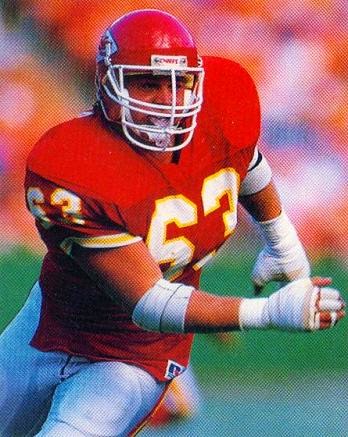
Rookie of the Year: Bill Maas, 1984

Nose Tackle, Kansas City Chiefs


Age: 22
College: Pittsburgh
Height: 6’4”   Weight: 265

Prelude:
Maas started for three seasons at defensive tackle in college and was a first-team All-American choice by The Sporting News in 1982. He was chosen by the Chiefs in the first round of the ’84 NFL draft (fifth overall) and moved into the starting lineup, although he was hobbled by a leg injury late in the season.

1984 Season Summary
Appeared in 14 of 16 games
[Bracketed numbers indicate league rank in Top 20]

Sacks – 5
Most sacks, game – 3 vs. Cleveland 9/30
Interceptions – 0
Fumble recoveries – 0

Awards & Honors:
NFL Defensive Rookie of the Year: AP

Chiefs went 8-8 to finish fourth in the AFC West.

Aftermath:
Maas continued to play very well in the middle of the defensive line. He had a seven-sack season in 1985 and again in ’86, when he was selected to the Pro Bowl for the first of two consecutive years and also received some All-NFL and All-AFC recognition. A knee injury limited Maas to eight games in 1988 and he broke his arm 10 games into the ’89 season, at which point Dan Saleaumua stepped in and excelled. Maas was thus moved to right defensive end in 1990 and adjusted well, garnering 5.5 sacks and four forced fumbles, although he lacked the speed to be a truly effective pass rusher. Following an injury-riddled ’92 season, Maas departed the Chiefs for the Packers as a free agent and moved back to nose tackle in what was his last season. Overall, Maas played in 130 games, recorded 40 sacks, returned two of his eight fumble recoveries for touchdowns, and was credited with two safeties.

--


Rookie of the Year Profiles feature players who were named Rookie of the Year in the NFL (including NFC/AFC), AFL (1960-69), or USFL (1983-85) by a recognized organization (Associated Press – Offense or Defense, Newspaper Enterprise Association, United Press International, The Sporting News, or the league itself – Pepsi NFL Rookie of the Year). 

September 1, 2014

Highlighted Year: Matt Bahr, 1984

Placekicker, Cleveland Browns


Age:  28
6th season in pro football, 4th (3rd complete) with Browns
College: Penn State
Height: 5’10” Weight: 175

Prelude:
One of two brothers to become placekickers in the NFL (his older sibling Chris kicked for the Bengals, Raiders, and Chargers), Bahr received All-America honors in college after connecting on 81.5 percent of his field goals and was chosen by the Steelers in the sixth round of the 1979 NFL draft. He also played soccer, in college and professionally with the Colorado Caribous and Tulsa Roughnecks of the North American Soccer League, before joining the Steelers. Bahr kicked 18 field goals and a league-leading 50 extra points for Pittsburgh in 1979, a season capped with a Super Bowl victory, and played a second year before being beaten out by David Trout in the ’81 preseason and moving on to the San Francisco 49ers. He was traded to Cleveland four games into the season and, while there were concerns about the length of his kickoffs, Bahr connected on a solid 13 of 20 field goal tries. Following a lesser year in 1982, he rebounded in ’83 to lead the NFL with an 87.5 field goal percentage (21 of 24).

1984 Season Summary
Appeared in all 16 games
[Bracketed numbers indicate league rank in Top 20]

Kicking
Field goals – 24 [4, tied with Mark Moseley & Gary Anderson; 1st in AFC]
Most field goals, game – 3 vs. New England 10/7, at Atlanta 11/18
Field goal attempts – 32 [7, tied with Gary Anderson]
Most field goal attempts, game – 4 vs. New England 10/7
Field goal percentage – 75.0 [9]
PATs – 25
PAT attempts – 25
Longest field goal – 50 yards at Cincinnati 10/21

Scoring
Field Goals – 24
PATs – 25
Points – 97 [17]

Browns went 5-11 to finish third in the AFC Central.

Aftermath:
Bahr spent another five seasons with the Browns, although injuries were a factor when he tore knee ligaments while making a tackle in 1986 that cost him the remaining four games that year, the postseason, and most of ’87. After kicking 143 field goals and 248 extra points, resulting in 677 points for the Browns, Bahr moved on to the New York Giants in 1990 and, in addition to 17 field goals in 13 regular season contests, booted five field goals against the 49ers in winning the NFC Championship game 15-13. He also was successful on both of his three-point attempts in the one-point Super Bowl win over Buffalo. After two more years with New York, Bahr started the 1993 season with Philadelphia, who waived him in December, and finished up with New England, where he kicked a career-high 27 field goals in ’94. He played one more season for the Patriots (and was cut in the 1996 preseason in favor of rookie Adam Vinatieri)  and concluded his 17-year career with 300 field goals out of 415 attempts (72.3 %), 522 extra points, and 1422 points, which ranked ninth in NFL history at the time.

--

Highlighted Years features players who were consensus first-team All-League* selections or league* or conference** leaders in the following statistical categories:

Rushing: Yards, TDs (min. 10)
Passing: Yards, Completion Pct., Yards per Attempt, TDs, Rating
Receiving: Catches, Yards, TDs (min. 10)
Scoring: TDs, Points, Field Goals (min. 5)
All-Purpose: Total Yards
Defense: Interceptions, Sacks
Kickoff Returns: Average
Punt Returns: Average
Punting: Average

*Leagues include NFL (1920 to date), AFL (1926), AFL (1936-37), AAFC (1946-49), AFL (1960-69), WFL (1974-75), USFL (1983-85)

**NFC/AFC since 1970

April 13, 2014

Rookie of the Year: Louis Lipps, 1984

Wide Receiver, Pittsburgh Steelers


Age: 22
College: Southern Mississippi
Height: 5’10” Weight: 190

Prelude:
Lipps excelled as a pass receiver and punt returner in college, catching 91 passes for 1477 yards and averaging 10.6 yards on 78 punt returns. He was chosen by the Steelers in the first round (23rd overall) of the 1984 NFL draft. With his great speed and a solid work ethic, he proved to be a good fit on a young and overachieving team.

1984 Season Summary
Appeared in 14 of 16 games
[Bracketed numbers indicate league rank in Top 20]

Pass Receiving
Receptions – 45      
Most receptions, game – 7 (for 118 yds.) vs. San Diego 11/25
Yards – 860
Most yards, game – 183 (on 6 catches) vs. Kansas City 9/2
Average gain – 19.1 [5]
TDs – 9 [7, tied with Paul Coffman & Mike Quick]
100-yard receiving games – 2

Rushing
Attempts – 3
Yards – 71
Average gain – 23.7
TDs – 1

Punt Returns
Returns – 53 [3, tied with Greg Pruitt]
Yards – 656 [1]
Most yards, game – 128 (on 4 ret.) at New Orleans 11/19
Average per return – 12.4 [3]
TDs – 1
Longest return – 76 yards

All-Purpose yards – 1587 [10]

Scoring
TDs – 11 [10, tied with four others]
Points – 66

Postseason: 2 G
Pass receptions – 8
Most pass receptions, game - 5 at Denver, AFC Divisional playoff
Pass receiving yards – 131
Most pass receiving yards, game – 86 at Denver, AFC Divisional playoff
Average yards per reception – 16.4
Pass Receiving TDs – 1

Rushing attempts – 1
Rushing yards – 0
Rushing TDs – 0

Kickoff Returns – 3
Yards – 73
Average per return – 24.3
TDs – 0

Punt Returns – 4
Yards – 16
Average per return – 4.0
TDs – 0

Awards & Honors:
NFL Rookie of the Year: NEA, Sporting News
NFL Offensive Rookie of the Year: AP, PFWA
AFC Rookie of the Year: UPI
1st team All-NFL: PFWA, Pro Football Weekly
2nd team All-NFL: AP
1st team All-AFC: Pro Football Weekly
Pro Bowl

Steelers went 9-7 to finish first in the AFC Central while leading the NFL in punt return yards (696). Won AFC Divisional playoff over Denver Broncos (24-17). Lost AFC Championship to Miami Dolphins (45-28).

Aftermath:
Lipps followed up with another Pro Bowl year in 1985, catching 59 passes for 1134 yards (19.2 avg.) and 12 touchdowns while averaging 12.1 yards on 36 punt returns that included two more TDs. Injuries hindered his performance the next two years, and he had just 49 receptions for 754 yards in a total of 17 games over that span. Lipps came back to catch an even 50 passes in each of the next three seasons, from 1988 to ’90, although his high for yards (973) came in ’88. While his speed began to diminish, making him more of a possession receiver than the deep threat he had been originally, he was still reliable and a good runner after the catch, regularly drawing double coverage. In 1991 he had 55 catches, but for just 671 yards (12.2 avg.). He departed for the New Orleans Saints, but appeared in only two games due to injury in what was his last year. Overall, Lipps caught 359 passes for 6019 yards (all but one catch and one yard coming with Pittsburgh) and returned 112 punts for an 11.0 average, scoring a total of 46 touchdowns.

--


Rookie of the Year Profiles feature players who were named Rookie of the Year in the NFL, AFL (1960-69), or USFL (1983-85) by a recognized organization (Associated Press – Offense or Defense, Newspaper Enterprise Association, United Press International, The Sporting News, or the league itself – Pepsi NFL Rookie of the Year).