January 17, 2016

1993: Cowboys Defeat 49ers to Win NFC Championship


The Dallas Cowboys were appearing in the NFC Championship game for the first time in ten years as they faced the San Francisco 49ers on January 17, 1993. The Cowboys had improved steadily under Head Coach Jimmy Johnson and topped the NFC East with a 13-3 record during the ’92 season. The offense was built around QB Troy Aikman (pictured above), RB Emmitt Smith, and WR Michael Irvin and the defense was outstanding behind a solid line that included DE Charles Haley and tackles Russell Maryland and Tony Casillas. Dallas blew out the Eagles in the Divisional playoff round to advance to the conference title game.

The 49ers, coached by George Seifert, finished first in the NFC West at 14-2, having bounced back from a 1991 season in which they missed the playoffs for the first time in nine years. QB Steve Young, emerging from the shadow of his illustrious predecessor Joe Montana, was coming off a MVP season and WR Jerry Rice, despite dealing with some injuries, was chosen to his seventh straight Pro Bowl. RB Ricky Watters, in his first season after having missed his entire rookie year due to injury, gained 1418 yards from scrimmage and also was selected to the Pro Bowl. San Francisco defeated Washington in its Divisional game the previous week and had not lost since November 1 for a string of nine straight wins.

There were 64,920 fans in attendance at Candlestick Park on a rainy day, and the field was muddy. The 49ers had the game’s first possession and had to punt following a series in which an apparent 63-yard scoring play to Jerry Rice was nullified due to a holding penalty called on guard Guy McIntyre. Dallas reached the San Francisco 48 before also having to punt, but the Cowboys regained possession at the 22 when CB Alan Grant fumbled on the return and FB Daryl Johnston recovered. Troy Aikman immediately threw to Michael Irvin for 21 yards to the one, but the 49ers held as Emmitt Smith was thrown for a one-yard loss and two Aikman passes were incomplete. Lin Elliott kicked a 20-yard field goal to put the visitors ahead by 3-0.

RB Marc Logan returned the ensuing kickoff 50 yards and San Francisco advanced 48 yards in eight plays during which Steve Young completed three passes and Ricky Watters had a 16-yard run. Young gained the final yard on a quarterback sneak and, with Mike Cofer adding the extra point, the Niners were in front at 7-3.

With the rain falling again, the Cowboys were forced to punt following their next possession and Grant returned it 15 yards to give San Francisco good starting field position at the Dallas 47. As the game entered the second quarter, the 49ers advanced to the 28 but came up empty when Cofer was wide to the left on a 47-yard field goal attempt.

Once again the Cowboys had to punt, but on the 49ers’ next offensive play Watters fumbled after being hit by CB Larry Brown at the end of a 16-yard run and CB Kevin Smith recovered and returned it 11 yards to the San Francisco 39. Smith carried three straight times for a total of 23 yards and two short passes got Dallas to the eight. Three plays later it was Smith running around end for a four-yard touchdown and, with Elliott’s conversion, the Cowboys were back in the lead by a 10-7 score.

The Niners came back on offense with 5:05 to play in the first half and Young completed three passes, the longest to Rice for 26 yards. The drive was finally halted at the Dallas nine and Cofer tied the game with a 28-yard field goal.


There was still time for the Cowboys, and after Smith (pictured at left) ran for 15 yards and caught two passes for another 14, Aikman threw to Michael Irvin for 14 yards to the San Francisco 22. Aikman was sacked by LB Tim Harris, however, and the visitors were forced to try for a 43-yard field goal with eight seconds left on the clock. Elliott’s kick was wide to the right and the contest remained tied at the half.

Dallas took the second half kickoff and drove 78 yards in eight plays. Smith again ran effectively and Aikman completed three passes, the biggest to WR Alvin Harper for 38 yards to the San Francisco seven. Johnston ran for a three-yard TD and, with Elliott’s point after, the Cowboys were back in front by a 17-10 margin.

The 49ers responded with a seven-play, 66-yard series that also featured a big pass play when Young connected with Rice for 36 yards to the Dallas 32. They had to settle for a field goal, and Cofer’s 42-yard boot narrowed the score to 17-13.

The Cowboys were in the midst of a long 14-play possession that covered 78 yards as the game headed into the fourth quarter. Aikman completed seven passes along the way, four of them on third down plays. That included the last, which was to Smith for a 16-yard touchdown. Elliott’s extra point put Dallas ahead by 24-13.

The next series for the 49ers ended with a Young pass being intercepted by LB Ken Norton and returned to the San Francisco 44. Smith burst up the middle for 28 yards on first down, but the Cowboys failed to add to their lead when they chose to forgo a field goal when facing fourth-and-one at the seven and Smith was stopped for no gain.

Young passed the 49ers down the field, connecting on seven throws as the home team went 93 yards in nine plays. Four were to Watters, including the first two that covered 17 and 10 yards, and the last was to Rice for a five-yard TD. Cofer converted to narrow the margin to 24-20 with 4:22 remaining in regulation.

On the first play following the ensuing kickoff, the Cowboys, choosing not to play it safe, came through with a huge play when Aikman passed to Harper, who beat the man-to-man coverage for a 70-yard gain. Three plays later, it was Aikman to WR Kelvin Martin, who dove and barely made it into the end zone for a six-yard touchdown. Elliott’s extra point attempt was blocked, but the visitors were ahead by ten points with the clock down to 3:43.

Young again came out passing, but after three completions to the Dallas 45 he was again picked off, this time by FS James Washington. It effectively finished off the 49ers as the Cowboys were able to run the clock down to 22 seconds before punting and won by a final score of 30-20.

Statistically, the game was very evenly played. Dallas outgained the 49ers by just a yard (416 to 415) and each team accumulated 24 first downs, although the Cowboys led significantly in time of possession (35:20 to 24:40). However, the 49ers turned the ball over four times, to none by the Cowboys.


Troy Aikman completed 24 of 34 passes for 322 yards and two touchdowns while giving up no interceptions. Emmitt Smith had a big day on the muddy turf as he rushed for 114 yards on 24 carries that included a TD and had 7 catches for another 59 yards and a score. Michael Irvin contributed 6 pass receptions for 86 yards and, thanks to the one long catch, Alvin Harper (pictured at right) gained 117 yards on his three receptions.

For the 49ers, Steve Young was successful on 25 of 35 throws for 313 yards and a TD but was picked off twice. He also rushed for 33 yards and a touchdown on eight attempts. Ricky Watters gained 69 yards on 11 carries and had 6 catches for 69 yards. Jerry Rice gained 123 yards on 8 pass receptions that included a touchdown.  

“We’ve played aggressive all year long,” said Coach Johnson of the Cowboys. “But that’s our style.”

“A lot of people would have been conservative, but they took chances and it worked for them,” said San Francisco’s Coach Seifert regarding the Cowboys. “They made good calls in key situations.”

Dallas went on to rout the Buffalo Bills in the Super Bowl. It was the first of two straight NFL Championships for the Cowboys (and three in four years), who repeated as NFC East champs in 1993. The 49ers won the NFC West and the teams met again for the conference title, with the Cowboys once more coming out on top.

January 16, 2016

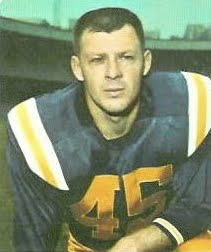
Highlighted Year: Dick Christy, 1961

Halfback, New York Titans


Age: 26 (Nov. 24)
3rd season in pro football, 2nd in AFL & 1st with Titans
College: North Carolina State
Height: 5’10” Weight: 195

Prelude:
Christy excelled on both offense and defense as well as returning kicks in college, and his dramatic 46-yard field goal against South Carolina gave NC State the 1957 Atlantic Coast Conference title. Named ACC player of the year while also receiving All-America honors from the Associated Press, Christy was chosen in the third round of the 1958 NFL draft by the Green Bay Packers but was dealt to Pittsburgh prior to the season. He primarily returned kicks as a rookie, averaging 9.0 yards on 17 punt returns and 24.0 returning 16 kickoffs and was released by the Steelers prior to the ’59 season. Christy joined the Boston Patriots of the new AFL in 1960 and gained 1321 all-purpose yards that included 363 rushing and 268 on 26 pass receptions. He was traded to Oakland in the deal that brought QB Babe Parilli to the Patriots, and was then dealt to the Titans during the preseason.

1961 Season Summary
Appeared in all 14 games
[Bracketed numbers indicate league rank in Top 20]

Rushing
Attempts – 81 [13]
Most attempts, game – 13 (for 21 yds.) at Oakland 10/29
Yards – 180
Most yards, game – 32 yards (on 7 carries) at Buffalo 9/17
Average gain – 2.2 [14]
TDs – 2

Pass Receiving
Receptions – 29      
Most receptions, game – 7 (for 103 yds.) at Houston 11/19
Yards – 521 [17]
Most yards, game – 145 (on 6 catches) vs. Dallas 12/3
Average gain – 18.0 [5]
TDs – 1
100-yard receiving games – 2

Kickoff Returns
Returns – 15 [9, tied with Ron Burton]
Yards – 360 [8]
Most yards, game – 131 (on 6 ret.) at Houston 11/19
Average per return – 24.0 [7]
TDs – 0
Longest return – 60 yards

Punt Returns
Returns – 18 [3, tied with Al Frazier]
Yards – 383 [1]
Most yards, game – 137 (on 3 ret.) vs. Denver 9/24
Average per return – 21.3 [1]
TDs – 2 [1]
Longest return – 70 yards

All-Purpose yards – 1444 [5]

Passing
Pass attempts – 1
Pass completions – 0
Interceptions – 0

Scoring
TDs – 5 [19, tied with eight others]
Points – 30

Titans went 7-7 to finish third in the AFL Eastern Division.

Aftermath:
Christy followed up with his best season in 1962, leading the AFL with 2147 all-purpose yards that broke down into 535 on 114 rushing attempts, 538 on 62 pass receptions, a league-leading 824 on 38 kickoff returns for a 21.7-yard average, and he again topped the AFL with a 16.7 average on 15 punt returns for 250 yards. However, he had a lesser season with the re-named Jets in ’63 and was cut during the 1964 preseason. Christy played in the minor league Atlantic Coast Football League and North American Football League in 1964 and ’65, leading the ACFL in kickoff returning (30.4 avg.) in ‘64. He died in a car crash in 1966 at age 30. Overall in the AFL, he rushed for 1166 yards, caught 125 passes for 1400 more yards (11.2 avg.), returned 50 punts for a 15.0-yard average and four TDs and averaged 23.6 yards on 101 kickoff returns, scoring a total of 19 touchdowns. Christy was chosen to one AFL All-Star Game. North Carolina State created the Dick Christy Award, which is given to the most valuable player of the annual game against South Carolina.

--

Highlighted Years features players who were consensus first-team All-League* selections or league* or conference** leaders in the following statistical categories:

Rushing: Yards, TDs (min. 10)
Passing: Yards, Completion Pct., Yards per Attempt, TDs, Rating
Receiving: Catches, Yards, TDs (min. 10)
Scoring: TDs, Points, Field Goals (min. 5)
All-Purpose: Total Yards
Defense: Interceptions, Sacks
Kickoff Returns: Average
Punt Returns: Average
Punting: Average

*Leagues include NFL (1920 to date), AFL (1926), AFL (1936-37), AAFC (1946-49), AFL (1960-69), WFL (1974-75), USFL (1983-85)

**NFC/AFC since 1970

January 14, 2016

1996: Steelers Overcome Upstart Colts for AFC Title


The Pittsburgh Steelers were hosting the AFC Championship game for the second straight year as they faced the Indianapolis Colts on January 14, 1996. Head Coach Bill Cowher’s team had been upset in stunning fashion by San Diego in the conference title game following the 1994 season and was looking to erase that memory. The conservative offense was efficiently directed by QB Neil O’Donnell (pictured at right), but it was the strong defense that was the key to success, despite the loss of star CB Rod Woodson in the season’s first game. Outside linebackers Kevin Greene and Greg Lloyd were both Pro Bowlers, as was CB Carnell Lake, who had been shifted from strong safety, and CB Willie Williams led the AFC with seven interceptions. After getting off to a 3-4 start, the Steelers hit stride by reeling off eight straight wins to top the AFC Central with an 11-5 record and defeated Buffalo in the Divisional playoff round.

Indianapolis was in the playoffs for the first time since 1987. Coached by Ted Marchibroda, who was in the fourth season of his second stint with the franchise, the Colts placed second in the AFC East at 9-7 and defeated San Diego and Kansas City on the road to reach the conference title game. QB Jim Harbaugh, formerly of the Bears and relegated to the bench early in the ’95 season in Indianapolis, had a career year, leading the NFL in passing and earning Pro Bowl honors. RB Marshall Faulk gained 1553 yards from scrimmage and also was a Pro Bowl choice, but he was out for the postseason with a knee injury. The defensive line was tough with DE Tony Bennett and tackles Tony Siragusa and Tony McCoy and the corps of linebackers, led by OLB Quentin Coryatt, was a good one. Still, the Colts had the look of an overachieving team and were 11-point underdogs against the Steelers.

There were 61,062 fans in attendance on a sunny and mild day at Three Rivers Stadium. The Steelers had the ball first but, on their third play from scrimmage, a pass by Neil O’Donnell was tipped by DT Tony Siragusa and intercepted by LB Jeff Herrod, who returned it 17 yards to the Pittsburgh 24. Three running plays netted seven yards and Cary Blanchard kicked a 34-yard field goal that gave the Colts an early 3-0 lead.

The teams traded punts before the Steelers put together a 40-yard drive in 11 plays. O’Donnell converted a third-and-six situation with a throw to RB John L. Williams for seven yards and he completed four other passes before the advance stalled at the Indianapolis 13 and Norm Johnson tied the game with a 31-yard field goal.


The Colts had the ball as the game headed into the second quarter. Jim Harbaugh (pictured at left) completed his first four passes, the longest to WR Sean Dawkins for 30 yards, and after a third down toss into the end zone under pressure from Kevin Greene was incomplete, Blanchard came on again to boot another field goal, this time from 36 yards.

Each team had a short series that resulted in a punt before Pittsburgh put together an 80-yard possession in 17 plays. O’Donnell had eight completions along the way, only one of which was longer than ten yards, during the methodical drive in which the Steelers converted four third downs. The last was on a five-yard touchdown pass from O’Donnell to QB/WR Kordell Stewart with 13 seconds remaining in the first half, although replays indicated that Stewart appeared to have stepped out of the back of the end zone before making the catch. Johnson added the extra point and the home team took a 10-6 lead into halftime.

Indianapolis took the second half kickoff and drove 61 yards in 10 plays. Harbaugh started off with a pass to TE Ken Dilger for 30 yards and followed up with a 14-yard completion to Dawkins. After reaching the Pittsburgh 12, Harbaugh was sacked by Greg Lloyd for a loss of eight yards on second down and, two plays later, Blanchard kicked a 37-yard field goal that made it a one-point contest at 10-9.

A short series by the Steelers ended with a punt and the Colts put together another promising drive. Harbaugh converted a third-and-six situation with a throw to Dawkins for 13 yards and converted another with a two-yard run. This time the advance was halted at the Pittsburgh 30 and the visitors came up empty when Blanchard was wide to the left on a 47-yard field goal attempt.

The Steelers responded by moving 44 yards in seven plays. O’Donnell threw to WR Yancey Thigpen for 14 yards and a pass interference call was good for 16 yards. The series resulted in a 36-yard Johnson field goal and Pittsburgh took a 13-9 lead into the fourth quarter.

Indianapolis went three-and-out on its next possession and WR Andre Hastings returned the resulting punt 33 yards to the Colts’ 42. O’Donnell passed the Steelers to the 22, but Johnson failed on a 40-yard field goal try. The Colts came back with Harbaugh firing two passes to RB Lamont Warren for a total of 13 yards and a completion to RB Zack Crockett gained another 10 before Harbaugh connected with WR Floyd Turner for a 47-yard touchdown. Blanchard converted and the visitors were back in the lead by a 16-13 score.

The teams exchanged punts, with Indianapolis failing to convert a third-and-one situation thanks to an alert play by Willie Williams to tackle Warren for no gain, and the Steelers, regaining possession at their 33, advanced 67 yards in eight plays. O’Donnell hit on his first two passes, missed on two (one of which was nearly intercepted), and then threw complete to Hastings for nine yards to convert a fourth-and-three situation. O’Donnell’s next pass was to WR Ernie Mills, who just beat CB Ashley Ambrose and kept his feet inbounds for a 37-yard gain to the Indianapolis one and, two plays later, RB Bam Morris scored from there. Johnson added the point after and Pittsburgh was ahead by four points with 1:34 remaining to play.

Starting from their 16 after the ensuing kickoff, the Colts moved down the field as Harbaugh went to the air on every play. A third-and-three pass to WR Brian Stablein gained 18 yards and, facing fourth-and-two at the Indianapolis 49, Harbaugh connected with Dawkins for 13 yards. Harbaugh ran for nine yards and then had to spike the ball with six seconds left at the Pittsburgh 29. A final throw into the end zone was tipped by FS Darren Perry and fell onto WR Aaron Bailey, who was on the ground. However, he was unable to maintain possession and the Steelers came away with a closely-fought 20-16 win.

The Colts had more total yards (328 to 285) but Pittsburgh led in first downs (21 to 16). The Steelers had three sacks, to one by Indianapolis, but also gave up the game’s only turnover.

Neil O’Donnell completed 25 of 41 passes for 205 yards and a touchdown while being intercepted once. Yancey Thigpen had 6 catches for 65 yards and Ernie Mills gained 52 yards on three receptions that included the big one to set up the game-winning TD. RB Erric Pegram topped the Pittsburgh rushers with 46 yards on 10 carries.


For the Colts, Jim Harbaugh was successful on 21 of 33 throws for 267 yards and a TD with none picked off and ran the ball six times for 29 yards. Sean Dawkins (pictured at right) caught 7 passes for 96 yards and Lamont Warren had 7 receptions as well, for 37 yards, in addition to leading the club in rushing with 53 yards on 15 attempts.

Pittsburgh went on to lose the Super Bowl to the Dallas Cowboys. While there were significant personnel changes during the offseason, the Steelers came back to top the AFC Central again in 1996 but lost in the Divisional playoff round. The Colts also underwent changes, most notably the departure of Coach Marchibroda, but they again compiled a 9-7 record and qualified for a Wild Card playoff spot. They met up with the Steelers in the first round and were soundly defeated.

January 12, 2016

1992: Bills Beat Broncos for AFC Title in Defensive Struggle


The AFC Championship game on January 12, 1992 featured the defending conference champions, the Buffalo Bills, hosting the Denver Broncos, a team that had reached the Super Bowl three times in the preceding five seasons.

Buffalo, coached by Marv Levy, had narrowly lost the previous year’s Super Bowl to the Giants and again topped the AFC East with a 13-3 record in ’91. The high-powered offense that led the league in total yards featured QB Jim Kelly, RB Thurman Thomas, and WR Andre Reed. The defense was strongest at linebacker, a group that included Pro Bowlers Cornelius Bennett and Darryl Talley, and had plenty of speed, but star DE Bruce Smith missed all but five games due to a knee injury and the unit as a whole was showing signs of wear. Still, the Bills easily dispatched the Chiefs in the Divisional playoff round and were 11.5-point favorites as they sought to win the conference title for a second year.

The Broncos, under the direction of Head Coach Dan Reeves for the eleventh season, bounced back from an off-year in 1990 to win the AFC West with a 12-4 tally. Denver had the AFC’s top-ranked defense, also boasting an excellent group of linebackers plus the fine safety tandem of Steve Atwater and Dennis Smith. As had been the case for the last decade, the key to the offense was QB John Elway. RB Gaston Green came from the Rams and had a career year with 1037 rushing yards. Denver narrowly defeated the Houston Oilers in its Divisional game to advance to the AFC title contest.

It was sunny and temperatures mild, although windy, at Rich Stadium with 80,272 fans in attendance. The Bills had the first possession and punted. The Broncos, starting from their 45, advanced to the Buffalo 39 before having to punt, but again had good starting field position at their 49 after the home team again had to kick from deep in its own territory. This time Denver reached the 34 before Gaston Green was stopped for losses on successive plays. Facing third-and-15, John Elway was sacked for another 12 yards by NT Jeff Wright, once again forcing a punt.

The Broncos got the ball back in short order when a pass by Jim Kelly that was tipped at the line was intercepted by NT Greg Kragen. Taking possession at the Buffalo 29, the visitors were still unable to gain ground and came up empty when David Treadwell’s 47-yard field goal attempt sailed wide to the left.

The Bills reached Denver territory for the first time on the ensuing series, but had to punt from the 44. Green ran for 18 yards and Elway passed to WR Vance Johnson for a gain of 10 more as the opening period came to a close. With the ball once more in Buffalo territory, an apparent interception by CB Kirby Jackson at the two was overruled by replay review. This time the visitors got to the 11 thanks to short completions by Elway, but Denver was moved back from there on a fumbled snap and sack. The game remained scoreless as Treadwell’s 42-yard try for a field goal hit the right upright.

The Broncos continued to win the battle for field position, but also continued to come up empty as Treadwell missed a third field goal attempt, this time from 37 yards, that again struck the right upright. Neither team threatened to score for the remainder of the first half. Thus far, Denver was doing a superb job defensively of pressuring Kelly and shutting down the Buffalo offense.  But while the Broncos were winning the statistical battle, having outgained the Bills (123 to 58) and accumulated nine first downs to Buffalo’s three, they had nothing to show for it on the scoreboard.

The situation remained much the same as the third quarter commenced and the teams exchanged punts. Finally, the Bills put together a promising drive. Thurman Thomas ran effectively, Kelly completed two passes, and Andre Reed gained 16 yards on a reverse. However, after getting to the Denver 26, Kelly’s next throw was picked off by CB Tyrone Braxton. The reprieve proved to be short-lived for the Broncos. Two plays later, an Elway pass that was tipped by Wright was intercepted by LB Carlton Bailey, who returned it 11 yards for a touchdown (pictured at top, Wright #91, Bailey #54). Scott Norwood added the extra point and Buffalo was ahead by 7-0 with 5:28 left in the period.

The teams traded punts as the game headed into the fourth quarter, and now backup QB Gary Kubiak was in for Elway, who suffered a thigh injury early in the second half and finally had to leave the contest. Kubiak completed two passes and Green had gains of ten and seven yards as the Broncos advanced to the Buffalo 31. LB Darryl Talley sacked Kubiak for a 10-yard loss on a second-and-nine play, and while the quarterback was able to regain eight yards of that on a scramble, a fourth-and-11 pass to WR Michael Young came up a yard short.

The Bills responded with a 50-yard drive in nine plays. Kelly completed consecutive throws to TE Keith McKeller, the second for 25 yards in a third-and-five situation. Runs by Thomas and a throw to Reed for 10 yards got the ball to the Denver 26 and Norwood booted a 44-yard field goal to put Buffalo ahead by ten points with 4:18 remaining in regulation.

The Broncos came back with an 85-yard series that took eight plays. Kubiak ran for 11 yards on first down and then completed three straight passes to Vance Johnson, the longest for 24 yards. Kubiak hit on two more throws to Johnson, for 23 and eight yards, and the quarterback finished the possession off with a three-yard carry for a TD. Treadwell’s conversion made it a three-point contest with the clock down to 1:43.


Denver succeeded on an onside kick that was recovered by Steve Atwater, but on the next play RB Steve Sewell fumbled after catching a pass and Kirby Jackson (pictured at right), who forced the fumble, recovered for the Bills. Buffalo was able to run the clock down to 17 seconds before punting, and while Kubiak completed two passes, time ran out on the Broncos at their 48 yard line. The Bills won by a final score of 10-7.

Buffalo’s offensive output was far below its regular season average as Denver led in total yards (304 to 213) and first downs (20 to 12). The Bills recorded four sacks to one by the Broncos. Each club turned the ball over two times. However, Denver’s David Treadwell missed all three of his field goal attempts while Scott Norwood of the Bills was successful on his one try.

Jim Kelly, who was harassed by Denver’s blitzing, completed 13 of 25 passes for 117 yards with no touchdowns while giving up two interceptions. Thurman Thomas rushed for 72 yards on 26 carries and had three catches for 15 yards. Keith McKeller led the Bills with 39 yards on his three pass receptions.

For the Broncos, John Elway was successful on 11 of 21 throws for 121 yards and was picked off once while Gary Kubiak (pictured below), the long-time backup who had already announced his retirement and was appearing in his last game, went 11-of-12 in relief, for 135 yards, and ran three times for 22 yards and a TD. Vance Johnson caught 7 passes for 100 yards and Steve Sewell gained 78 yards on his 7 receptions, although he also gave up the critical late-game fumble. Gaston Green compiled 53 yards on 19 rushing attempts.


“We did everything we could,” said a disappointed Coach Reeves of the Broncos in summation. “Our defense held them to three points. It’s a shame a turnover changed the game.”

The return to the Super Bowl did not bring Buffalo better fortune. The Bills lost to Washington in the second of what would turn out to be four consecutive Super Bowl defeats. Denver dropped to 8-8 in 1992 and next returned to the playoffs as a Wild Card entry in ’93. The Broncos did not advance as far as the AFC Championship game again until 1997, when they won their first NFL title.

January 11, 2016

Highlighted Year: Don Chandler, 1957

Punter, New York Giants


Age: 23
2nd season in pro football & with Giants
College: Florida
Height: 6’2”   Weight: 205

Prelude:
Chandler played halfback in college and also punted with distinction, averaging 44.3 yards as a senior to lead all major schools. He was chosen by the Giants in the fifth round of the 1956 NFL draft and became the team’s punter, averaging 41.9 yards on 59 kicks.

1957 Season Summary
Appeared in all 12 games
[Bracketed numbers indicate league rank in Top 20]

Punting
Punts – 60 [5]
Yards – 2673 [3]
Average – 44.6 [1]
Punts blocked – 0
Longest punt – 61 yards

Rushing
Attempts – 1
Yards – 2
TDs – 0

Passing
Attempts – 2
Completions – 2
Yards – 40
TD passes – 0
Interceptions – 0

Giants went 7-5 to finish second in the NFL Eastern Conference.

Aftermath:
Chandler, who averaged 44.0 yards on a league-leading 65 punts in 1958, remained with the Giants through 1964, a total of nine seasons. He added placekicking to his responsibilities in 1962, achieving career highs with 19 field goals and a 67.9 percentage of success. Chandler led the NFL in scoring in ’63 as he booted 18 field goals and 52 extra points for a total of 106 points. He was an All-Eastern Conference selection by The Sporting News as a punter in 1964, having averaged 45.6 yards on 73 punts, although his field goal accuracy dropped off. With the Giants, Chandler was successful on 46 of 78 field goal attempts (59.0 %) and added 131 extra points out of 138 attempts for a total of 269 points. He averaged 43.8 yards on 525 punts, making him the franchise leader in that category. Chandler was traded to Green Bay in 1965 and continued to handle both placekicking and punting in his first two years with the championship-winning club, receiving All-Western Conference honors from The Sporting News as a placekicker in ‘65. Chandler gave up the punting duties in 1967 and tied his career-best with 19 field goals and was named to the Pro Bowl in addition to receiving all-conference honors. He capped his career with four field goals, in as many attempts, in the Super Bowl II win over the Raiders. For his career, Chandler booted 94 field goals in 161 tries (58.4 %), was successful on 248 of 258 extra points, and averaged 43.5 yards on 660 punts. He was chosen to one Pro Bowl and was a three-time all-conference selection of The Sporting News.

--

Highlighted Years features players who were first-team All-League* selections or league* or conference** leaders in the following statistical categories:

Rushing: Yards, TDs (min. 10)
Passing: Yards, Completion Pct., Yards per Attempt, TDs, Rating
Receiving: Catches, Yards, TDs (min. 10)
Scoring: TDs, Points, Field Goals (min. 5)
All-Purpose: Total Yards
Defense: Interceptions, Sacks
Kickoff Returns: Average
Punt Returns: Average
Punting: Average

*Leagues include NFL (1920 to date), AFL (1926), AFL (1936-37), AAFC (1946-49), AFL (1960-69), WFL (1974-75), USFL (1983-85)

**NFC/AFC since 1970

January 9, 2016

1999: Falcons Edge 49ers in Divisional Playoff Game


The NFC Divisional Playoff game in Atlanta on January 9, 1999 featured two NFC West teams. The upstart Atlanta Falcons had topped the division with a 14-2 record while the San Francisco 49ers finished second at 12-4 and were the top Wild Card entry.

The rise of the Falcons had been stunning in that they were coming off of two losing seasons, and five of the previous six had resulted in records under .500. Head Coach Dan Reeves, previously with the Broncos and Giants, was in his second year with the club but underwent heart surgery in December and was just returning to the sideline a month later to coach in the playoffs. The offense was ball control-oriented, keyed by RB Jamal Anderson (pictured above), who rushed for 1846 yards on a record-setting 410 carries. QB Chris Chandler was unspectacular but efficient and a good leader. The defense featured a solid line plus Pro Bowlers in MLB Jessie Tuggle, CB Ray Buchanan, and FS Eugene Robinson.

San Francisco, coached by Steve Mariucci for the second year, was used to contending, having reached the playoffs for the seventh consecutive year in 1998 and 15th time in 16 seasons, with a Super Bowl victory as recently as 1994. The team was aging but still strong with 37-year-old QB Steve Young and 36-year-old WR Jerry Rice leaders of an offense that benefited from the presence of RB Garrison Hearst (1570 rushing yards) and third-year WR Terrell Owens. The defensive line was missing injured DT Bryant Young, but DE Charles Haley came out of retirement to lend his pass-rushing expertise.

The teams split their regular season meetings and the 49ers defeated Green Bay in the Wild Card round the previous week to advance to the Divisional game.   

There were 70,262 fans in attendance at the Georgia Dome. Things went badly for the 49ers on their first play from scrimmage when Garrison Hearst suffered a broken leg, which significantly affected their ability to run the ball for the rest of the game. The teams exchanged punts until, following a 36-yard return by WR Tim Dwight, the Falcons took possession at the San Francisco 38 and scored in six plays. Jamal Anderson ran for 14 yards on first down and Chris Chandler threw to WR Terance Mathis for 19 yards on a third down play to the three yard line. Two plays later, Anderson ran for a two-yard touchdown, Morten Andersen added the extra point, and Atlanta held a 7-0 lead.

The clubs returned to trading punts as the game headed into the second quarter. Starting from their 18 with 7:35 remaining in the first half, the Falcons advanced 82 yards in seven plays. Jamal Anderson rushed for 16 yards on his first two carries, Chandler (pictured below) again connected with Mathis for 19 yards, and then it was Anderson breaking away for a 34-yard TD. Morten Andersen again added the point after and the home team was up by 14-0.


The 49ers responded with an 80-yard possession of their own. A pass interference call was good for 16 yards and Steve Young completed passes to WR J.J. Stokes for 12 yards, but the advance was nearly derailed when RB Terry Kirby mishandled a lateral and, after DE Chuck Smith appeared to recover and ran for an apparent touchdown, it was ruled that Kirby had gained possession and was down by contact before the ball got away from him again. Making the most of the reprieve, Young then threw to RB Chuck Levy for 34 yards and TE Greg Clark for nine before hitting Jerry Rice for a 17-yard touchdown. Wade Richey narrowed the score to 14-7 with the successful conversion.

There was still 1:06 left before halftime as the Falcons regained possession, but after Chandler passed to WR Ronnie Harris for 22 yards, his next throw was deflected by Charles Haley and picked off by DT Junior Bryant. San Francisco now had the ball at the Atlanta 36 and Young threw to Stokes for 16 yards and ran once himself for seven to set up a 36-yard Richey field goal. Atlanta’s lead was 14-10 at the intermission and the Niners appeared to have the momentum.

The Falcons had the ball first and drove to the San Francisco 42, but attempting to convert a fourth-and-one situation, Anderson was stopped for no gain. Now it was the 49ers moving effectively as Young threw to Terrell Owens for 20 yards and to Rice for eight. But following a short gain on another completion to Owens, Young’s next pass was picked off at the Atlanta three by Eugene Robinson, who returned it 77 yards to the San Francisco 20. While the turnover didn’t lead to a touchdown, it did lead to a Morten Andersen field goal from 29 yards and, instead of the Niners potentially taking the lead, the Falcons were ahead by seven points at 17-10.

San Francisco had the ball heading into the fourth quarter and Young threw to Rice for a 38-yard gain to the Atlanta 44, but once again the Falcons came up with an interception. This time it was SS William White picking off Young’s pass intended for Clark and returning it 14 yards to the San Francisco 36. Chandler converted a third-and-eight situation with a toss to WR Tony Martin that picked up 16 yards and, while the drive bogged down inside the 20, Atlanta again came up with points on a 32-yard Andersen field goal.

With Young completing seven passes, the 49ers advanced 87 yards in 13 plays in response. Two were to Owens, one of which gained seven yards in a third-and-five situation, and two more were caught by Stokes, the longest for a 33-yard gain to the Atlanta 12. Young kept the ball himself on an eight-yard scramble for a touchdown carry and the Niners added an improvised two-point conversion when the holder for the placekick, QB Ty Detmer, had to leap for a high snap, rolled out, and connected with Clark. It was now a two-point contest with 3:57 to play.

The try for an onside kick failed and, with Anderson running on every play, the Falcons managed to hold onto the ball until punting with 49 seconds left on the clock. The 49ers had to start from their own four and, while Young was able to connect with Levy for a gain of 24 yards, the game ended with White intercepting one last Young pass to seal the 20-18 win for Atlanta.

The 49ers had more total yards (334 to 289), but without Garrison Hearst gained just 46 yards on the ground, to 136 for the Falcons, who had the edge in first downs (16 to 15). San Francisco also turned the ball over three times, to one suffered by Atlanta, and the 49ers were penalized eight times, to six flags thrown on the Falcons.


Chris Chandler didn’t go to the air often, completing 13 of 19 passes for 169 yards and giving up an interception. Jamal Anderson rushed for 113 yards on 29 carries that included two touchdowns. Terance Mathis (pictured at right) topped the Atlanta receivers with 5 catches for 71 yards and Tony Martin was right behind with his 63 yards on four receptions.

For the 49ers, Steve Young was successful on 23 of 37 throws for 289 yards and a TD, but also gave up three interceptions. He also led the team with 28 yards on six rushes that included a score. Terrell Owens caught 8 passes for 73 yards and J.J. Stokes contributed 76 yards on his five receptions. Jerry Rice had three receptions for 63 yards and a TD and set a NFL record by catching a pass in 23 straight playoff games. 

“It’s unbelievable. The whole year has been incredible,” exclaimed Atlanta’s Coach Reeves. “To get to this point is beyond our wildest dreams.”

The Falcons moved a level higher as they upset the Minnesota Vikings in overtime to win the NFC Championship. However, they lost decisively to Denver in the Super Bowl and returned to earth with a 5-11 record in 1999. The loss for the 49ers marked the end of a long and successful era as they dropped to 4-12 in ‘99. They next returned to the postseason in 2001.

January 8, 2016

Highlighted Year: Aaron Brooks, 2002

Quarterback, New Orleans Saints


Age: 26
4th season in pro football, 3rd active & with Saints
College: Virginia
Height: 6’4”   Weight: 205

Prelude:
Brooks passed for 5118 yards and 33 touchdowns in college and was chosen by the Green Bay Packers in the fourth round of the 1999 NFL draft. He made the team but, as a backup to Brett Favre and Matt Hasselbeck, was never activated during the ’99 season. Brooks was traded to New Orleans in 2000 to back up Jeff Blake, but when the veteran went down with a broken foot, he got his opportunity to start and played well, completing 58.2 percent of his passes for 1514 yards and 9 TDs and leading the Saints to a Wild Card playoff win, the franchise’s first ever in the postseason. With his strong passing arm and excellent mobility, he followed up in 2001 by throwing for 3832 yards and 26 touchdowns (although with a completion percentage of just 55.9 and 22 interceptions) and rushing for 358 yards. While consistency was an issue, Brooks was a fine athlete with the ability to make big plays.

2002 Season Summary
Appeared in all 16 games
[Bracketed numbers indicate league rank in Top 20]

Passing
Attempts – 528 [9, tied with Jeff Garcia]
Most attempts, game – 48 at Detroit 9/29
Completions – 283 [15]
Most completions, game – 27 at Detroit 9/29
Yards – 3572 [9]
Most yards, game – 318 vs. Cleveland 11/24
Completion percentage – 53.6
Yards per attempt – 6.8 [19]
TD passes – 27 [2, tied with Peyton Manning & Brett Favre, 1st in NFC]
Most TD passes, game – 3 at Chicago 9/22, at Washington 10/13, vs. San Francisco 10/20
Interceptions – 15 [10, tied with four others]
Most interceptions, game – 3 vs. Cleveland 11/24
Passer rating – 80.1
300-yard passing games – 1
200-yard passing games – 12

Rushing
Attempts – 62
Most attempts, game – 7 (for 28 yds.) at Chicago 9/22
Yards – 253
Most yards, game – 49 yards (on 4 carries) at Detroit 9/29
Yards per attempt – 4.1
TDs – 2

Scoring
TDs – 2
2-pt conversions – 2 [2, tied with four others]
Points – 16

Saints went 9-7 to finish third in the NFC South while leading the conference in touchdowns (49) and scoring (432 points).

Aftermath:
Brooks achieved career highs in 2003 by completing 59.1 percent of his passes with a rating of 88.8, giving up just eight interceptions while throwing for 24 TDs. His performance dropped somewhat in ’04 and after a dismal year both for him and the team in 2005, Brooks moved on to the Oakland Raiders. All eight of his starts were losses as he threw for just three TDs with eight interceptions in his last season. Overall, Brooks passed for 20,261 yards and 123 touchdowns and rushed for 1534 yards with 13 TDs. His 120 TD passes with the Saints made him the franchise’s career leader at the time of his departure (long since passed by Drew Brees) and, while his career was ultimately disappointing, he was elected to the Saints Hall of Fame in 2014. Another NFL quarterback, Michael Vick, is a cousin to Brooks.

--

Highlighted Years features players who were consensus first-team All-League* selections or league* or conference** leaders in the following statistical categories:

Rushing: Yards, TDs (min. 10)
Passing: Yards, Completion Pct., Yards per Attempt, TDs, Rating
Receiving: Catches, Yards, TDs (min. 10)
Scoring: TDs, Points, Field Goals (min. 5)
All-Purpose: Total Yards
Defense: Interceptions, Sacks
Kickoff Returns: Average
Punt Returns: Average
Punting: Average

*Leagues include NFL (1920 to date), AFL (1926), AFL (1936-37), AAFC (1946-49), AFL (1960-69), WFL (1974-75), USFL (1983-85)

**NFC/AFC since 1970