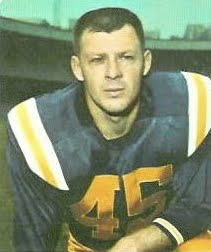
Showing posts with label Don Maynard. Show all posts

September 10, 2015

1967: Bills Rally in Fourth Quarter to Defeat Jets


The refurbished Buffalo Bills hosted the New York Jets in an American Football League season-opening game on September 10, 1967. Coached by Joe Collier for the second year, the Bills had won the last three Eastern Division titles but, after advancing to consecutive league championships in 1964 and ‘65, failed to win the AFL title game in ’66, thus costing them a spot in the first Super Bowl. The team made major trades during the offseason in an effort to upgrade at key positions. QB Tom Flores and split end Art Powell were obtained from Oakland and HB Keith Lincoln from San Diego.  All three were highly regarded veterans and Flores moved ahead of QB Jack Kemp (pictured above), who had been behind center during the previous successful seasons. The Bills even had a new placekicker in Mike Mercer, an experienced hand who performed ably for the Chiefs in 1966.

New York, entering the fifth year under Head Coach Weeb Ewbank, was coming off of a 6-6-2 record in ’66, which was a step up from four consecutive five-win seasons. Talented QB Joe Namath had a strong arm and quick release that could yield big gains through the air but also gave up many interceptions. There were outstanding receivers in flanker Don Maynard and split end George Sauer, and an effective running tandem in FB Matt Snell and HB Emerson Boozer. However, the defense had been a sore spot and would need to improve if the club was to rise further in the standings.

There were 45,478 fans in attendance at War Memorial Stadium and they saw both teams miss scoring opportunities in the first quarter. Mike Mercer attempted a 46-yard field goal for the Bills that was blocked by DB Cornell Gordon and New York’s Jim Turner was wide to the left on a 16-yard field goal try.

During the second quarter, the Jets put together a 10-play, 57-yard series that was helped along by a pass interference penalty on LB John Tracey. Three plays later, Joe Namath threw to Don Maynard, who outmaneuvered CB Booker Edgerson for a 19-yard touchdown. Turner added the extra point.


Buffalo responded with a promising possession, but after Keith Lincoln (pictured at left) ran for 23 yards to the New York 35, a holding penalty and two sacks moved the Bills back. On the next series, the Jets took just five plays to advance 71 yards. Namath again connected with Maynard, this time for a 56-yard TD with 21 seconds left in the first half. Turner’s conversion staked New York to a 14-0 lead at halftime.

The Bills were unable to put together sustained drives with Flores behind center and a twisted knee suffered late in the second quarter forced him to the bench. Jack Kemp took his place in the second half, although the results were not immediately different. One of his passes was intercepted by safety Jim Hudson, and the result was that the Jets increased their lead less than five minutes into the third quarter when Turner kicked a 32-yard field goal.

The home team continued to struggle on offense and another New York interception, this time by Cornell Gordon, who was injured on the play, nearly led to another score but Turner missed a field goal attempt from 40 yards.

Down 17-0 after three quarters, the Bills came to life early in the final period. They advanced 46 yards in five plays, although it nearly was for naught when Lincoln fell while running a pass route and Solomon Brannan, the replacement for Gordon, dropped a potential interception. On the next play, Kemp passed to Art Powell for a 24-yard touchdown and Mercer added the point after.

The Jets had to punt following their next possession and Curley Johnson’s 29-yard kick was returned seven yards by CB Butch Byrd to the New York 37. On the next play Kemp threw long to Powell in the end zone for another TD. Mercer’s conversion narrowed the tally to 17-14 with 4:39 on the clock.

New York fought back as Namath completed two passes and a personal foul penalty again moved the visitors into scoring territory. However, Turner once again failed on an attempted field goal, this time from 35 yards. The Bills were forced to punt but Paul Maguire’s kick traveled 50 yards and was downed at the New York one yard line. The Jets had to punt in turn, and while three plays by Buffalo gained nothing, Mercer kicked a 51-yard field goal (a new club record at the time) to tie the score with 2:27 remaining to play.

Another series by the Jets resulted in a punt and the Bills had the ball at their 18 with 1:20 to go. Kemp tossed a swing pass to Lincoln that gained 24 yards and then threw to TE Paul Costa, who made a leaping catch for 21 yards. With the clock down to four seconds, Mercer booted a 43-yard field goal and Buffalo won by a final score of 20-17.


New York had the edge in total yards (287 to 248) although the Bills led in first downs (15 to 14). Buffalo also suffered the only two turnovers of the game and sustained four sacks by the Jets while recording two of its own.  However, while Mike Mercer (pictured at right) kicked the two big field goals for Buffalo, Jim Turner missed on three of his four attempts.

Jack Kemp completed 12 of 23 passes for 167 yards and two touchdowns while giving up two interceptions in relief of Tom Flores, who was 6 of 11 for 40 yards and no TDs (or interceptions) in the first half. Keith Lincoln rushed for 81 yards on 13 carries and netted another 23 yards on three pass receptions. Flanker Elbert Dubenion caught 6 passes for 54 yards while Art Powell gained 91 yards on his 5 receptions that included the two touchdowns.

For the Jets, Joe Namath was successful on 11 of 23 throws for 153 yards and two TDs while having none picked off. Don Maynard caught 5 of those passes for 106 yards and two touchdowns. Matt Snell topped the rushers with 95 yards on 19 attempts and Emerson Boozer contributed 53 yards on his 16 carries.

While Buffalo fans might have felt optimistic following the come-from-behind win, particularly with newcomers Art Powell, Keith Lincoln, and Mike Mercer having starring roles (if not Tom Flores), the season went downhill from there. The Bills lost their next three games on their way to a 4-10 record that tied with Miami for third place in the Eastern Division that they had previously dominated. While Lincoln and Mercer performed well, Powell lasted for six games before going out with a knee injury that required surgery and Flores, suffering from a sore arm, completed only 34.4 percent of his 64 passes and threw for no touchdowns while giving up eight interceptions, thus being relegated to the bench. Adding insult to injury, QB Daryle Lamonica, the backup who was sent to Oakland in the deal for Flores and Powell, had a MVP season as the Raiders won the AFL Championship.


The Jets went 5-0-1 over the next six weeks and appeared to be the successors to the Bills, who they defeated in the rematch at New York, until a late-season collapse caused them to finish second to Houston with an 8-5-1 tally. Joe Namath passed for a record 4007 yards but threw for more interceptions (28) than touchdowns (26). Don Maynard (pictured at left) caught 71 passes, second only to teammate George Sauer, for a league-leading 1434 yards and 10 TDs.

September 9, 2014

1962: Grosscup’s 3 TD Passes Spur NY Titans to Win Over Raiders


In the opening week of the American Football League’s third season, two of the new circuit’s more problematic franchises faced each other on September 9, 1962. The New York Titans and Oakland Raiders had both suffered from difficulties in the front office, on the field, and at the gate.

The Titans had broken even at 7-7 in each of their first two seasons. Mercurial owner Harry Wismer replaced Head Coach Sammy Baugh, once an all-time great quarterback in Washington, with another ex-NFL great in Clyde “Bulldog” Turner, formerly of the Bears. The team had outstanding receivers in flanker Don Maynard and split end Art Powell, but veteran QB Al Dorow was dealt away and replaced by 38-year-old Butch Songin, obtained from the Patriots. Just a few days prior to the opener, Lee Grosscup (pictured above) was picked up after being waived by the Minnesota Vikings. Grosscup was a highly-touted passer out of Utah who failed to make the grade with the Giants and, cut by them at the end of July, had only been with Minnesota for a short time before his release.

Oakland had the AFL’s worst record the previous year at 2-12. Marty Feldman replaced Eddie Erdelatz as head coach during the season and was still at the helm. One positive change was that, after playing in San Francisco the first two years (Kezar Stadium in 1960, Candlestick Park in ’61), the Raiders finally had a home field in Oakland. A temporary stadium called Frank Youell Field had been erected until a projected new facility was ready. However, promising QB Tom Flores was out for the year with tuberculosis and Don Heinrich, formerly of the Giants and Cowboys, had been signed to take his place. Like the Titans, the Raiders had difficulty in signing rookie draft choices, thus making it all the harder to become more competitive.

There were 12,893 fans in attendance for the first Raiders home game actually played in Oakland. The teams traded punts to start the contest before the Raiders, starting at their own 38, drove deep into New York territory. HB Clem Daniels had a 12-yard run and a 12-yard reception on a swing pass from Don Heinrich, but after reaching the 18 yard line, Jackie Simpson’s 25-yard field goal attempt was wide to the right.

On the next play, Butch Songin threw long and was picked off by safety Tom Morrow, who returned it 29 yards to the New York 16. However, the Raiders again came up empty when they once more had to try for a field goal and Simpson missed from 16 yards.

The game remained scoreless heading into the second quarter. A fumble on a lateral gave the Raiders possession at the New York 41 and, spurred by a six-yard carry by HB Bo Roberson and an eight-yard run by FB Alan Miller, they drove 20 yards. This time Simpson successfully kicked a 28-yard field goal to stake the home team to a 3-0 advantage.

Following the kickoff, it was Lee Grosscup replacing Songin at quarterback for the Titans. With the ball at his own 20, he made a quick impression by going long for Art Powell (pictured below), who pulled the ball in at the Oakland 35, and the fleet receiver continued on for an 80-yard touchdown. Bill Shockley added the extra point for a 7-3 lead.


It didn’t take long for the Titans to regain possession and strike again. On the first play after the kickoff, LB Larry Grantham sacked Heinrich for a nine-yard loss and then a bad pass was intercepted by safety Billy Atkins to give the Titans the ball at the Oakland 19. Grosscup threw to HB Dick Christy, who was wide open on the left, and it was good for another TD. Shockley added the PAT and, in just two plays, Grosscup had accounted for two scores and New York was ahead by 14-3.

The Raiders moved methodically down the field on their next series, with M.C. Reynolds now in at quarterback. He completed two passes and had a nine-yard scramble, but again it came down to a field goal attempt by Simpson, and he missed badly from 36 yards. The score remained unchanged at the half.

Butch Songin was back behind center when the Titans started off the third quarter and, taking a cue from Grosscup, he threw to Powell for seven yards before connecting with Maynard, who broke an attempted tackle by CB Fred Williamson for a 64-yard touchdown. Shockley added the extra point and the tally stood at 21-3.

Miller fumbled the ensuing kickoff and DB Wayne Fontes recovered for the Titans at the Oakland 34, but the Raiders got the ball back on the next play when Songin’s throw was intercepted by Simpson, a linebacker as well as placekicker. Oakland had to punt, and Grosscup was back in at quarterback for the Titans, but this time the visitors were also forced to kick it away.

Taking over at their 17, the Raiders came alive on offense after Miller ran for four yards up the middle. Heinrich, returning at quarterback, fired a pass to end Max Boydston that picked up 58 yards and, on the following play, he threw to HB Gene White for a 21-yard touchdown. Simpson kicked the extra point and New York’s lead was cut to 21-10.

The Titans again had to punt following their next possession and Oakland moved into New York territory, helped by a pass interference penalty. Heinrich threw to HB Charley Fuller for 25 yards, but a throw into the end zone was dropped by Roberson. Three more passes fell incomplete and it was New York’s ball on downs. Four plays later, Grosscup once again went long for Powell, and it was complete for a 64-yard TD. Shockley added another extra point.

Oakland wasn’t finished yet, however, and in a series that ended early in the fourth quarter, Miller blasted into the end zone from a yard out. Simpson converted to narrow the margin to eleven points. On their next series after a punt by the Titans, Daniels took off for a 50-yard gain to the New York 14. But from there, the Titans took control on defense. Roberson was trapped for a six-yard loss, Heinrich was sacked for the loss of another 14 yards, a pass was incomplete, and on fourth-and-30, Heinrich’s pass intended for White was knocked down by safety Lee Riley.

The Raiders got the ball back on an interception at their own 26, but Heinrich was picked off by Fontes and the Titans were able to run out the clock, winning by a final score of 28-17.

New York had the edge in total yards (424 to 313) although the Raiders accumulated more first downs (20 to 13). The Titans hurt themselves with five turnovers, to three suffered by the Raiders, and they also drew 11 penalties, at a cost of 111 yards, while Oakland was flagged only twice. However, New York also registered six sacks on defense while giving up three. The Raiders were further hurt by their inability to reach the end zone when they had opportunities, and those failures were compounded by Jackie Simpson’s three missed field goals in four attempts.

In limited action, Lee Grosscup completed 5 of 8 passes, but they were good for 186 yards and three touchdowns, while he gave up one interception. Butch Songin was 7 of 16 for 114 yards and a TD as well as two interceptions. Art Powell had 5 catches for 175 yards that included the two long touchdowns and Don Maynard gained 85 yards on his three receptions that also included one for a score. Dick Christy ran for 106 yards on 10 carries and added another 40 yards on four catches that included a TD.


For the Raiders, Don Heinrich was successful on just 10 of 29 throws for 156 yards and a touchdown while being picked off twice. Clem Daniels (pictured at right) had 101 yards on 10 rushing attempts and caught three passes for 21 more yards. Alan Miller ran the ball 16 times for 56 yards and a TD and Max Boydston gained 82 yards on three pass receptions.

The Titans won only one of their next six games, finishing at 5-9 and at the bottom of the Eastern Division. Harry Wismer was forced to give up the team, which was operated by the league to complete the season, and that set the stage for new and more stable ownership. Oakland suffered through a dreadful 1-13 campaign and Coach Feldman was replaced by Red Conkright, although that also set the stage for the hiring of a dynamic new head coach and general manager in ‘63, Al Davis.

Lee Grosscup played well until sidelined by injury, passing for 855 yards and eight touchdowns against eight interceptions. Butch Songin saw less action, and it was ex-Bills QB Johnny Green behind center for most of the way. Art Powell went on to catch 64 passes for 1130 yards (17.7 avg.) and eight touchdowns and Don Maynard had 56 receptions for 1041 yards (18.6 avg.) and another eight TDs. Dick Christy was the AFL’s all-purpose yardage leader, gaining 535 yards on 114 rushing attempts, 538 on 62 catches and, with kick returns added in, totaled 2147 yards.

The Raiders also sought another answer at quarterback. Don Heinrich was done after the opening loss and a trade was made with the Dallas Texans for Cotton Davidson. Clem Daniels broke out to rush for 766 yards on 161 carries (4.8 avg.) and caught 24 passes for 318 yards (13.3 avg.), and would be part of the team’s dramatic improvement the next year. 

December 1, 2013

1963: Jets Defeat Chiefs for First Shutout in Franchise History


The American Football League’s New York City franchise, called the Titans in its first three seasons, was a financially precarious team that produced modestly on the field. Beginning in 1963, a new ownership group led by David “Sonny” Werblin began to radically transform the club. The team was renamed the Jets, given new Kelly green and white colors, and a new head coach in Weeb Ewbank, who had built the NFL Colts into a champion. There were some useful veterans on both sides of the ball, to be sure, most notably flanker Don Maynard, LB Larry Grantham, and safety Dainard Paulson.  But Ewbank feverishly worked to supplement the roster – there were 23 personnel changes in the week prior to the opening game. FB Mark Smolinski was brought over from the Colts, forcing the shift of the proven Bill Mathis to halfback, and another little-known ex-Colt, Bake Turner, was acquired to help fill the loss of departed veteran split end Art Powell.

The Jets got off to a 3-1 start but had settled back to 4-5-1 as they faced the Kansas City Chiefs on December 1, 1963, in a game that was postponed a week due to the assassination of President John F. Kennedy. The Chiefs, known as the Dallas Texans from 1960 to ’62, were defending AFL Champions, but were having a rough year in their new location. The preseason death of rookie flanker Stone Johnson following an on-field injury cast a pall over the team. HB Abner Haynes was only a shadow of the player he had been in his first three seasons as he dealt with a variety of ailments and injuries on the offensive line made star QB Len Dawson vulnerable to blitzes. The defense was sound but couldn’t overcome the offense’s sudden lack of scoring punch. Head Coach Hank Stram was making adjustments, but thus far to little avail – the Chiefs were at 2-6-2 and had not won since the fourth game of the year.

There were 18,824 fans in attendance on a chilly afternoon at the dingy Polo Grounds. The Chiefs had the first possession and started auspiciously when FB Jack Spikes carried twice for a total of 17 yards, but the series faltered and the visitors had to punt. The Jets went three-and-out and, following a punt, Kansas City started at its 36. The drive appeared to be promising for the Chiefs after Len Dawson threw to flanker Frank Jackson for 16 yards to the New York 36. But after advancing another four yards, the Chiefs were set back by an offensive pass interference penalty and ended up punting from near midfield.

Neither team got out of its own end of the field until the Jets took advantage of two carries by Mark Smolinski and a pass from QB Dick Wood to TE Dee Mackey to reach the KC 42 as the opening period ended. However, they came up empty when Dick Guesman missed a field goal attempt from 45 yards early in the second quarter.

Dawson threw to TE Fred Arbanas for 17 yards and Spikes ran effectively as the Chiefs moved into New York territory for a second time, but a field goal attempt by Spikes was short and safety Bill Baird returned it 60 yards to the Kansas City 33. The Jets made the most of the good starting field position as Wood converted a third-and-six situation with a completion to Smolinski for nine yards and, after two more passes fell incomplete, a throw to Don Maynard in the far corner of the end zone was good for a 20-yard touchdown. Guesman added the extra point and New York was ahead by 7-0.

The Chiefs crossed midfield on their next series and had to punt, but regained possession at the New York 11 when the immobile Wood fumbled when hit from behind while preparing to pass. FB Curtis McClinton ran for seven yards, but after the second-year fullback gained another two yards, Spikes fumbled while hitting the middle of the line. Dawson recovered for the Chiefs and they attempted to convert on fourth-and-two. Spikes tried again, this time heading around end, but was stopped by CB Clyde Washington for a four-yard loss and the Jets took over on downs. Having dodged a bullet, the Jets ran the ball three times and punted. Kansas City ended the half with Spikes trying for a 52-yard field goal that fell short.

The Jets took the second half kickoff and drove into Kansas City territory. Wood completed two passes to Maynard, for 16 and 10 yards, and Smolinski had a ten-yard carry along the way. But they came up empty when Guesman missed on a 45-yard field goal attempt.

Dawson immediately went to the air and his pass was intercepted by Dainard Paulson, giving the Jets good field position at the 50. Wood went to the air six times and had two completions, one to Mackey for 16 yards in a third-and-five situation, but when the Jets went for it while facing fourth-and-inches at the KC 19, Smolinski was stopped for a loss.

Eddie Wilson was now at quarterback for the Chiefs and had even less luck moving the team than Dawson. Following an exchange of punts, Wilson was picked off by Paulson, who lateraled to CB Marshall Starks. Starks reached the Kansas City 32 and the Jets got another 15 yards thanks to a personal foul. Taking over at the KC 17, the Jets took six plays to score, five of them runs by Bill Mathis. The last was good for a one-yard TD and, with Guesman’s successful conversion, New York took a 14-0 lead into the fourth quarter.

The Jets added three more points on a 37-yard Guesman field goal on their first series of the final period. The Chiefs moved impressively as Wilson completed passes to Arbanas for 18 and 26 yards, but after a pass interference penalty moved the ball to the New York one, HB Bert Coan fumbled and CB Tony Stricker recovered for New York to end the threat.

The defense was pressed again as, following a punt by the Jets, the Chiefs took over at the New York 44. But after reaching the 35, Wilson threw an incomplete pass and the Jets regained possession on downs. It proved to be Kansas City’s last serious threat to score, and New York came away with a shutout, winning by a final score of 17-0.

In a game that was primarily a defensive struggle, the Chiefs actually outgained New York (296 yards to 179) and had more first downs (13 to 10). But they also turned the ball over three times, to one suffered by the Jets, and missed two scoring opportunities inside the New York ten yard line. Kansas City was penalized on seven occasions at a cost of 103 yards, to one flag thrown on the Jets. Neither team had much luck on field goals, combining for one success in five attempts.


Dick Wood completed 13 of 29 passes for 112 yards and a touchdown with no interceptions. Mark Smolinski rushed for 65 yards on 21 carries and gained another 26 yards on three pass receptions. Don Maynard had four catches for 46 yards and a TD and Dee Mackey also caught four passes, for 37 yards. Dainard Paulson intercepted two passes.

For the Chiefs, Len Dawson was successful on 6 of 13 throws with one intercepted before yielding to Eddie Wilson, who completed 7 of 22 for 137 yards, also with one picked off. Frank Jackson had 6 catches for 110 yards and Fred Arbanas contributed four receptions for 68 yards. Jack Spikes paced the ground game with 55 yards on 13 carries and Curtis McClinton added 31 yards on 11 attempts.

The teams moved in different directions over the last three weeks of the season. The New York defense that shut out the Chiefs gave up 45 points to Buffalo the next week and the Jets lost all three games to end up with a 5-8-1 record, placing last in the weak Eastern Division (they were still in the race for the division title until the next-to-last game of the season). The loss to the Jets proved to be the nadir for Kansas City as the Chiefs erupted to put 135 points on the board in sweeping their final three contests – including a 48-0 payback to the Jets in the finale. The Chiefs ended up with a 5-7-2 tally and placed third in the Western Division.

September 18, 2013

1965: Namath Sees First Pro Action, But Chiefs Hold Off Jets


The American Football League’s New York Jets were coming off a 5-8-1 record in 1964 and slowly but steadily improving under the guidance of Head Coach Weeb Ewbank. Rookie FB Matt Snell made a big impact on the offense and, in the offseason, the Jets made a big splash by drafting and signing QB Joe Namath out of Alabama. His then-huge $400,000 contract, used to lure him away from the St. Louis Cardinals, the team holding his NFL draft rights, was enough to bring notoriety. While the Jets invested in other rookies, including Heisman-winning QB John Huarte of Notre Dame, it was Namath who got the big publicity and buildup. The only concern was that, while he had tremendous potential, he already had a bad knee that had required surgery.

Ewbank was determined to not rush his star rookie into the lineup and announced that QB Mike Taliaferro, a backup in ’64, would start the 1965 season behind center. Taliaferro went the distance in a Week 1 loss to the Oilers at Houston.

On September 18, 1965 the Jets played their home-opening game against the Kansas City Chiefs. The Chiefs, coached by Hank Stram, were 7-7 in ’64 and coming off a bad loss to the Raiders in their first game. The Chiefs had talent but had underachieved since moving from Dallas to Kansas City following a title-winning campaign in 1962. QB Len Dawson was a precision passer who led the AFL in that category for the second time in ’64. Curtis McClinton and Mack Lee Hill were productive running backs. The offensive line was solid and the defense, if all hands stayed healthy, was sound as well.

There was a crowd of 53,658 on hand at Shea Stadium for the Saturday contest. The Chiefs went three-and-out on their first possession and the Jets, getting into scoring territory on a series highlighted by FB Matt Snell’s 15-yard run, came up empty when Jim Turner was short on a field goal attempt.

Neither offense was moving effectively but a pass interference penalty gave the Jets a first down at the Kansas City 15 on their next possession. Mike Taliaferro overthrew flanker Don Maynard twice and was loudly booed by the home fans. This time they got points, however, as Turner booted a 19-yard field goal.

Early in the second quarter, the Jets again failed to move well on offense as Taliaferro missed receivers and Turner suffered a blocked field goal try. But following a punt by the Chiefs, Joe Namath entered the game to an ovation from the crowd.

The first series was quiet as the rookie quarterback handed off three times and the Jets had to punt. Kansas City CB Willie Mitchell returned the kick 54 yards to the New York 30. The Chiefs made the most of the great starting field position five plays later as Len Dawson connected with split end Chris Burford in the back of the end zone for a 19-yard touchdown. Tommy Brooker’s extra point was good and the Chiefs were in front by 7-3.


On the next series for the Jets, Namath immediately went to the air and hit Maynard for 18 yards, but the play was nullified by a holding penalty. Namath’s first official completion was to Snell and actually lost four yards as New York again failed to move effectively and had to punt.

The Chiefs moved the ball well on offense but, with a third down at the New York 47, Dawson was sacked for a 15-yard loss by DT Paul Rochester and they had to punt. The score remained 7-3 at the half.

The Jets started off the third quarter by driving into Kansas City territory, primarily thanks to Snell’s three carries for 21 yards, but dropped passes caused the series to stall and Jim Turner’s field goal try was partially blocked.

Following a trade of punts, the Chiefs had another short series and had to kick the ball away. However, Jerrel Wilson’s punt was deflected back to him by Rochester and his second kick went only 11 yards to give New York the ball at the KC 28. Snell ran for 9 yards on first down but the Jets could get no further. On fourth-and-one, they went for it and Snell was stopped for no gain by DE Jerry Mays and LB Sherrill Headrick.

The Chiefs moved well offensively until the drive finally stalled at the New York 48 early in the fourth quarter and they punted. Namath threw to Maynard for 14 yards but was again victimized by dropped passes. Following a penalty on the Chiefs, the rookie quarterback faded back and had the ball knocked out of his hand by LB Bobby Bell, who recovered and carried to the New York 24. Kansas City wasted no time in capitalizing as on the next play Dawson threw to Burford for a touchdown.

The teams once again traded punts before the Jets put together a scoring drive. Namath threw a pass to split end Bake Turner that gained 10 yards and then, looking deep for Turner again, the Chiefs were called for interference. Namath went long for Maynard and it was complete for a 37-yard touchdown. Jim Turner’s successful conversion made it a four-point game.

The Chiefs managed to eat up valuable time on the following series and the Jets got the ball back with just over two minutes remaining. Namath completed two passes but a long throw on fourth-and-three fell incomplete to effectively end the game. Kansas City held on to win by a score of 14-10.

The statistics reflected the closeness of the score – and the difficulty both offenses had in moving the ball. The Jets led in total yards (231 to 224) and first downs (14 to 9). They also sacked Dawson four times, while allowing just one sack themselves. However, New York gave up the game’s only turnover, and it led to a touchdown for the Chiefs. KC was penalized 7 times, at a cost of 117 yards, while New York was flagged only once. Kansas City also punted the ball 11 times, to just five by the Jets, but Jim Turner was unsuccessful on three of his four field goal attempts.

Len Dawson had a rather ordinary day by his standards as he completed 10 of 20 passes for 118 yards, but two of them were good for touchdowns and none were intercepted. Chris Burford had four catches for 58 yards and both TDs. Mack Lee Hill gained 65 yards on 13 carries and Curtis McClinton added 58 yards on 15 attempts.

For the Jets, Joe Namath was successful on 11 of his 23 passes for 121 yards and a TD, also without an interception. Several of his misses were on target but dropped. Mike Taliaferro was a woeful 4-of-12 for 24 yards. Bake Turner had 5 catches for 41 yards while Don Maynard gained 83 yards on four receptions that included a score. Matt Snell ran the ball 19 times for 82 yards.

Kansas City ended up at 7-5-2 to place third in the AFL Western Division. The Jets continued to struggle, losing two games, tying one, and then losing again before reeling off four straight wins (including one over the Chiefs in their second meeting at Kansas City). They went on to finish second in the Eastern Division, although they cooled off down the stretch and again produced a 5-8-1 record.

Joe Namath took over the starting job at quarterback for all intents, although Mike Taliaferro continued to see action. While Namath completed only 48.2 percent of his passes (he would never have high completion percentages throughout his career), they were good for 2220 yards and 18 touchdowns with 15 interceptions. He received Rookie of the Year recognition and was chosen for the AFL All-Star Game.  The big investment the Jets had made in the quarterback known as “Broadway Joe” would pay off in big years to come.

December 29, 2012

1968: Jets Defeat Raiders for AFL Championship


The two teams that met for the championship of the American Football League on December 29, 1968 had already met several weeks earlier with memorable results. In the so-called “Heidi Game”, in which television viewers on the East Coast had the last few minutes of the contest pre-empted by a showing of the children’s classic “Heidi”, the Oakland Raiders had scored twice in short order to defeat the New York Jets. Now they were matched up again at New York’s home venue.

The Jets, built into a winning team by Head Coach Weeb Ewbank, had topped the Eastern Division with an 11-3 record. The explosive offense was directed by QB Joe Namath (pictured above), who had outstanding targets in wide receivers Don Maynard and George Sauer as well as TE Pete Lammons. The ground game was sound with FB Matt Snell and HB Emerson Boozer. The overlooked defense was especially tough against the run and contained AFL All-Stars in ends Gerry Philbin and Verlon Biggs, DT John Elliott, and MLB Al Atkinson. PK Jim Turner, who kicked a record 34 field goals, added a further scoring dimension.

The Raiders, under Head Coach John Rauch, were the defending AFL Champions. Despite a spate of injuries, they had gone 12-2 but still had to defeat the Chiefs in a playoff to again win the Western Division. QB Daryle Lamonica was still highly effective with his passing and, in addition to WR Fred Biletnikoff, had a new and speedy deep threat in WR Warren Wells. Rookie HB Charlie Smith entered the starting lineup at midseason with good result. With CB Kent McCloughan out due to knee surgery, rookie CB George Atkinson showed potential but had been burned badly by Maynard in the previous encounter.

Weather conditions were windy and cold at Shea Stadium, where 62,627 fans were present. The Raiders had constructed a small makeshift shelter for their players, but AFL President Milt Woodard ordered it taken down because it was obstructing the view for several rows of fans.

Oakland had the first possession and was forced to punt, with Mike Eischeid’s poor 28-yard kick giving the Jets good initial field position. With Pete Lammons and Emerson Boozer spread wide, New York moved 44 yards in four plays. Namath hit Don Maynard twice for 14-yard completions, the second good for a touchdown. In between, a pass interference call on Atkinson helped the drive along.

The Raiders missed a scoring opportunity when George Blanda attempted a 45-yard field goal into the wind that hit the crossbar and bounced away. Late in the first quarter, Jim Turner added a 33-yard field goal to make it 10-0 in favor of the Jets.


Daryle Lamonica (pictured at left) got off to a poor start, completing just one of his first 13 passes. But the Raiders began to move offensively late in the opening period as Lamonica started to find the range. He completed a screen pass to HB Pete Banaszak for 11 yards and followed up with throws to Fred Biletnikoff for 15 yards and to FB Hewritt Dixon for 23 yards on the first play of the second quarter. A pass to Biletnikoff, running a post pattern, was good for a 29-yard touchdown as he outmaneuvered CB Johnny Sample (Sample was subsequently replaced by Cornell Gordon).

Turner missed a 44-yard field goal attempt but connected from 36 yards late in the second quarter. Blanda booted a 25-yard field goal just before halftime to narrow the tally to 13-10 at the intermission.

In the third quarter, Warren Wells caught a pass for a 40-yard gain before being brought down by SS Jim Hudson at the New York six. The aroused Jets defense held on the next three plays as Charlie Smith was downed at the three and again after another gain of a yard, and Dixon was stopped on the third down play at the one. Oakland was forced to settle for a Blanda field goal and a tie score of 13-13.

With just under a minute remaining in the period, the Jets culminated a 14-play, 80-yard drive with Namath tossing a 20-yard touchdown pass to TE Pete Lammons to re-take the lead. The Raiders surged back as Lamonica completed a pass to Biletnikoff for a 57-yard gain and Blanda kicked a 20-yard field goal.

On the first play following the ensuing kickoff, Atkinson intercepted a Namath pass and returned it 32 yards to the New York five. Banaszak scored a five-yard TD that put Oakland in the lead by 23-20. The Jets struck back swiftly. Following a 10-yard completion to Sauer, Namath fired to Maynard for a 52-yard gain and again to Maynard for a six-yard TD with 7:47 remaining in the game.

Oakland drove to the New York 24, but chose to try and convert a fourth-and-ten and Lamonica was sacked by Verlon Biggs. With two minutes to go, the Raiders were again threatening to move back in front. Lamonica passes to Biletnikoff for 24 yards and Wells for 37 advanced the ball to the New York 12. But a lateral intended for Smith went awry and LB Ralph Baker recovered it for the Jets to extinguish the threat.

The Raiders had one last chance with 42 seconds remaining as they took over at their 22 yard line but fell short after advancing to near midfield. The Jets were AFL Champions by a score of 27-23.

Oakland had the edge in total yards (443 to 400) although the Jets had more first downs (25 to 18). New York was effective against the running game as the Raiders gained just 50 yards on the ground. The teams punted a combined 17 times, with the Jets accounting for 10.

Joe Namath completed 19 of 49 passes for 266 yards with three touchdowns and an interception. George Sauer (pictured below) caught 7 of those passes for 70 yards while Don Maynard gained 118 yards and scored two TDs on his 6 receptions. Matt Snell rushed for 71 yards on 19 carries and Emerson Boozer contributed 51 yards on 11 attempts.

For the Raiders, Daryle Lamonica went to the air 47 times and had 20 completions for 401 yards and a touchdown. Fred Biletnikoff had 7 catches for 190 yards and a TD and Warren Wells added 83 yards on his three receptions. Hewritt Dixon ran for 42 yards on 8 carries and added another 48 yards on 5 catches. Charlie Smith was held to just a yard on five rushing attempts.

The Jets went on to pull off a huge Super Bowl upset of the NFL Champion Baltimore Colts and repeated as Eastern Division champs in 1969. Oakland again placed first in the Western Division in ’69 but, due to a revised playoff format for the AFL’s last pre-merger season that allowed second place teams to qualify, ended up losing again in the league title game, this time to the Chiefs, who had finished behind them in the standings. 


November 22, 2012

1962: NY Titans Pull Out Wild Win Over Broncos


As the 1962 American Football League season progressed, the state of the third-year league’s New York City franchise, the Titans, was precarious, at best. Flamboyant and controversial owner Harry Wismer was in serious financial straits and the club was a poor draw at the decrepit Polo Grounds. By early November the league had taken over the running of the Titans.

The team’s original head coach, all-time great quarterback Sammy Baugh, had been demoted to assistant coach following the ’61 season and replaced by ex-Bears star Bulldog Turner. Still, despite all of the chaos, the Titans were competitive and showing signs of life on the field. Starting out at 2-1, they lost four straight before running off consecutive wins against the Chargers and Raiders prior to succumbing to the Dallas Texans. Coming into their Thanksgiving Day matchup at Denver on November 22, New York’s record stood at 4-6.

The Broncos, under first year Head Coach Jack Faulkner, had gotten off to a 7-2 start but were losers their two most recent games. The passing attack, with QB Frank Tripucka primarily throwing to split end Lionel Taylor and flanker Bob Scarpitto, made Denver exciting and capable of putting points on the board, but the running game and defense were suspect. They very much needed a win against the Titans to remain in contention in the Western Division.

There were 15,776 fans in attendance at Bears Stadium for the nationally televised game. It was all Titans in the early going. FB Bill Mathis ran for a one-yard touchdown and HB Dick Christy caught a pass from QB Johnny Green (pictured above) for a six-yard score that put New York ahead by 14-0 in the first quarter.

It was 17-0 in the second quarter following a 28-yard field goal by Bill Shockley (pictured below) before the home team finally got on the board. Tripucka threw to Scarpitto for a 35-yard touchdown and Gene Mingo added the extra point. The Titans responded with another score, however, as Green threw to split end Art Powell for a four-yard TD. But Denver managed to whittle away at New York’s lead with two field goals by Mingo, of 45 and 8 yards, to make it 24-13 at the half. It still seemed to be a comfortable margin for the Titans.


In the third quarter, the tables turned in favor of the Broncos. First, star DT Bud McFadin picked up a fumble and ran 69 yards for a touchdown. Then QB George Shaw, in for the injured Tripucka, tossed a six-yard TD pass to Scarpitto. Denver was in front by a score of 27-24.

The Titans narrowed the margin to 27-26 when Shaw recovered a loose ball in his own end zone for a safety. New York regained the lead thanks to a Green pass to flanker Don Maynard for a 35-yard touchdown. While the attempt to run for a two-point conversion failed, New York was on top by 32-27 heading into the fourth quarter.

Once again the Broncos rallied. Shaw connected with Taylor for a three-yard TD, followed it up with a two-point conversion, and then CB Jim McMillin intercepted a pass and returned it 59 yards for another touchdown, followed by Mingo’s kick. When Mingo kicked a 49-yard field goal with the wind at his back, Denver held a 45-32 lead with six minutes remaining to play.

The Titans proceeded to drive for another touchdown, this time on a five-yard pass from Green to Christy. Shockley’s extra point narrowed the score to 45-39, but the six points still seemed formidable as time was running down. Denver took over at its own 20 following a long kickoff by Shockley and New York proceeded to get a huge break when HB Al Frazier fumbled a handoff and FS Lee Riley recovered for the Titans.

With the time now down to three minutes, New York capitalized when Green tossed his fifth touchdown pass, of three yards, to Powell. Shockley’s extra point was successful and the Titans were staked to a one-point lead.

The Broncos still had a chance, and managed to get into New York territory, but with time running out Mingo attempted a 52-yard field goal that was straight but too short. The Titans came away with a thrilling 46-45 win.

The Titans led in total yards (381 to 294) and first downs (25 to 19). Each club turned the ball over four times. Denver was especially hurt by penalties, drawing 11 flags at a cost of 130 yards to four for 27 yards on New York.

Johnny Green had a noteworthy performance, completing 22 of 46 passes for 292 yards with five touchdowns and three interceptions. Bill Mathis rushed for 49 yards and a TD on 13 carries. Dick Christy (pictured below) caught 9 passes for 82 yards and two scores, ran the ball 9 times for another 30 yards, and returned a kickoff 28 yards. Don Maynard had 105 yards on four pass receptions that included a TD and Art Powell had three catches for 57 yards and two touchdowns.


For the Broncos, Frank Tripucka was successful on 9 of 15 throws for 113 yards with a TD and two interceptions before leaving the game and George Shaw added 12 completions in 26 attempts for 117 yards with two TDs and an interception. FB Bo Dickinson was the leading rusher with 48 yards on 6 carries and also contributed 5 catches for 57 yards. Lionel Taylor had 6 pass receptions for 60 yards and a TD and Bob Scarpitto gained 89 yards and scored twice on his 5 catches.

The exciting win at Denver was the last for the Titans – they lost their remaining three games to finish at the bottom of the Eastern Division with a 5-9 record. The franchise was sold during the offseason to an ownership group headed by Sonny Werblin and was revamped and rechristened the Jets for 1963.

The loss wiped out any lingering hopes for the Broncos of winning the Western Division title. They, too, lost their remaining games and closed out at 7-7 for second place. It would prove to be their best record until 1973.

Johnny Green, formerly of the Buffalo Bills, saw the most action at quarterback for the Titans in ’62 and completed 49.6 percent of his passes for 1741 yards with 10 touchdowns and 18 interceptions. While he had a strong arm, he lacked accuracy and consistency and saw little action in his last year with the Jets in 1963.

As the numbers from the Denver game indicated, Dick Christy was a productive all-purpose halfback who led the AFL in total yards with 2147 (535 rushing on 114 carries, 538 on 62 pass receptions, 824 on 38 kickoff returns, and 250 on 15 punt returns). He was selected to the AFL All-Star Game.

Don Maynard caught 56 passes for 1041 yards (18.6 avg.) and eight touchdowns and went on to star with the Jets. Art Powell had 64 receptions for 1130 yards (17.7 avg.) and eight TDs as well. Disgruntled after three years in New York, he moved on to the Raiders in ’63 and also continued to excel. 

September 18, 2012

1966: Namath Throws 5 TD Passes as Jets Rout Oilers


The New York Jets had made a big splash in 1965 when they signed QB Joe Namath (pictured at right) to a huge contract out of Alabama. The young quarterback had shown plenty of potential during his rookie season, but both he and Head Coach Weeb Ewbank’s Jets were still a work in progress. There was a solid veteran core with flanker Don Maynard, FB Bill Mathis, G Sam DeLuca, and LB Larry Grantham, and they were joined by talented younger players such as split end George Sauer, FB Matt Snell, OT Winston Hill, G Dave Herman, and C John Schmitt on offense and DE Verlon Biggs and MLB Al Atkinson on defense. Two 1966 rookies would have an immediate impact on the offense in HB Emerson Boozer, who brought much-needed outside speed, and TE Pete Lammons.

The Jets won their first game at Miami and were hosting the Houston Oilers for their home-opening contest on September 18, 1966. It seemed as though the Oilers would provide a good test, for they had already played two games and were off to a strong start. Wally Lemm had returned as head coach after a four-year hiatus with the NFL Cardinals. He first became coach during the 1961 season and led Houston to ten straight wins, including the AFL Championship game. Now he was looking to turn around a team that had endured three straight losing years. The Oilers still had 39-year-old George Blanda at quarterback and 31-year-old Charley Hennigan at flanker. But defense had dominated in the early going, most notably the line that contained 6’5”, 270-pound Pat Holmes, who had played four years in the CFL, and 6’9”, 315-pound ex-Charger Ernie Ladd at the tackle positions. Houston had soundly beaten Denver and Oakland by a combined score of 76-7 and was expected to give the Jets a tough contest.

There was a big crowd of 54,681 on hand at Shea Stadium for the battle of unbeaten teams. Houston scored first on a 49-yard field goal by Blanda. But Namath, who had hyper-extended his right knee when the two teams played in the preseason, set the tone with a 67-yard touchdown pass to Sauer in which he had plenty of time in the pocket.

In the second quarter, Blanda booted another field goal, from 30 yards, to narrow New York’s lead to 7-6. Late in the period the Jets put together an 85-yard drive in 11 plays. A screen pass to Matt Snell was good for a 25-yard TD to cap the series with just over two minutes remaining in the half.

The Jets weren’t done scoring before halftime, however, as Al Atkinson intercepted a Blanda pass at the Houston 33 on the first play following the ensuing kickoff. Namath threw a 13-yard touchdown pass to Pete Lammons and the home team held a 21-6 lead at the intermission.

Less than two minutes into the third quarter, Namath tossed another scoring pass, this time to Don Maynard for 55 yards. The Jets had broken the game open in a span of four minutes of playing time, from the second to third quarters, and they were far from done. Namath threw another scoring pass to Maynard, this time covering 37 yards, and Jim Turner added a 32-yard field goal.

The Oilers didn’t penetrate deeper than the New York 30 until ten minutes into the third quarter. Blanda tossed an 11-yard touchdown pass to HB Sid Blanks, but it was a case of too-little, too-late. The Jets took a 38-13 lead into the final period.

Backup QB Mike Taliaferro came in for Namath in the fourth quarter and New York scored twice more. Emerson Boozer ran for a 39-yard touchdown and Taliaferro tossed an 18-yard TD pass to TE Curley Johnson (his only catch of the year - he was better known as the team’s punter). The Jets came away with a very convincing 52-13 win.

New York’s offensive line did an outstanding job of neutralizing Ladd and Holmes, and thus exposed Houston’s weakness in the defensive backfield. Defensively, another newcomer to the Jets, veteran CB Johnny Sample, had two key interceptions – the first of them stopped Houston’s deepest penetration of the first half after the Oilers had reached the New York 30.

The Jets significantly outgained Houston (466 yards to 207) and had more first downs (23 to 16). The Oilers turned the ball over five times and suffered four quarterback sacks while New York didn’t turn the ball over at all and the line gave up no sacks.

Joe Namath didn’t complete a high percentage of his passes, hitting on 12 of 31 attempts, but they were good for 283 yards and five touchdowns with none intercepted. Don Maynard (pictured below) was the top receiver with 7 catches for 156 yards and two TDs. Matt Snell rushed for 67 yards on 15 carries and also caught two passes for 28 yards and a touchdown. Emerson Boozer added 49 yards on five attempts that included a TD.


For the Oilers, George Blanda was successful on 15 of 34 throws for 144 yards with a touchdown and four interceptions before being relieved by Don Trull. Sid Blanks didn’t accomplish much running the ball, with three carries for six yards, but was the team’s top receiver with 7 catches for 61 yards and a TD out of the backfield. Split end Charley Frazier gained 64 yards on his three receptions. FB Charley Tolar ran for 34 yards on 10 attempts.

“Our whole offensive line was great,” enthused Weeb Ewbank afterward. “You have to especially give Sam DeLuca and Dave Herman credit for keeping Ladd and Holmes out.”

“I’m not too pleased about my accuracy,” summed up Joe Namath. “I’m not satisfied with those statistics but we won and that’s important.”

The win over the Oilers put the Jets in first place in the Eastern Division and they were 4-0-1 before finally losing – at Houston, no less. That was the first of four straight defeats and five in six games as New York finished up at 6-6-2 and in third place.

The defeat at New York was the first ever for Wally Lemm as coach of the Oilers, but it would prove to be far from the last. They lost twice more before beating the Jets at home and didn’t win again the rest of the way, ending up at the bottom of the division along with the expansion Dolphins at 3-11. Don Trull replaced George Blanda as the starting quarterback during the second half of the year and that marked the beginning of a major housecleaning that swept away such stalwarts as Blanda, Charley Hennigan, and Charley Tolar after the season.

Joe Namath’s development was apparent as he led the AFL in pass attempts (471), completions (232), and yards (3379) while tossing 19 touchdown passes. However, he remained very much a developmental project as he also led the league by tossing 27 interceptions.

October 24, 2011

1964: Bills Surge from Behind in Fourth Quarter to Beat Jets


The Buffalo Bills were undefeated at 6-0 as they hosted the New York Jets in an American Football League game on October 24, 1964. In their third season under Head Coach Lou Saban, Buffalo had a ball-control offense featuring the running of FB Cookie Gilchrist and the passing of QB Jack Kemp, who was frequently relieved by second-year backup Daryle Lamonica (pictured above) if the offense was bogging down or needed a change of pace. Another weapon, rookie Pete Gogolak, added to the team’s scoring potential with his then-unique soccer-style placekicking. The defense was the league’s best across the board.

The Jets were in their second season under the guidance of Head Coach Weeb Ewbank. The refurbished club was benefiting at the gate, having moved into the new Shea Stadium at Flushing Meadows. Rookie FB Matt Snell was Gilchrist’s rival for the AFL rushing title and there were outstanding receivers for strong-armed but immobile QB Dick Wood to throw to in flanker Don Maynard and split end Bake Turner. New York had played one less game than the Bills thus far and brought a 3-1-1 record into the game.

There were 39,621 fans present at War Memorial Stadium for the Saturday night contest. They saw the visitors score first as Wood threw to Turner for a seven-yard touchdown. Gogolak cut that to 7-3 in the second quarter with a 12-yard field goal, but New York responded with another TD, again on a pass by Wood - this time to Maynard from 12 yards out. The Bills cut New York’s lead with less than two minutes remaining in the half as Kemp connected with fleet flanker Elbert “Golden Wheels” Dubenion on a 44-yard touchdown play. The score was 14-10 in favor of the Jets at halftime.

Less than two minutes into the third quarter, the Jets extended their margin when Wood threw to Maynard for a 15-yard TD. Six minutes later, Jim Turner added another three points with a nine-yard field goal, and it seemed as though an upset was in the making with New York ahead by a 24-10 score.

Lamonica came on in relief of Kemp and led the Bills on an 80-yard drive in six plays. On the final play of the third quarter, rookie HB Bobby Smith finished off the possession when he ran off tackle for a 13-yard touchdown. With the successful extra point, the tally stood at 24-17 entering the fourth quarter.

It was all Buffalo in the final period. The Bills defense completely shut down New York’s attack. Lamonica threw to Dubenion for a 44-yard TD that, with Gogolak’s successful conversion, evened the score at 24-24 with 7:44 to go. The Bills went ahead to stay less than four minutes later as Lamonica dove into the end zone to finish off a three-yard run. Gogolak concluded the scoring with a 31-yard field goal and the Bills came away with a 34-24 win to keep their record perfect for another week.

Buffalo outgained the Jets (527 yards to 245) and had more first downs (20 to 15). However, the Bills also turned the ball over three times, to none by New York. The Jets averaged just 2.3 yards per carry on the ground (66 yards on 29 attempts) while Buffalo gained 180 on 37 rushes (4.9 avg.). In the anticipated showdown between the AFL’s top two rushers, neither Cookie Gilchrist (15 carries for 27 yards) nor Matt Snell (28 yards on 12 attempts) was a factor.

Bobby Smith was the rushing star for Buffalo, gaining 98 yards on 12 carries with a TD, and was especially effective during the second-half comeback. Elbert Dubenion (pictured below) had a huge performance with 5 catches for 218 yards and two touchdowns. Jack Kemp completed 8 of 16 passes for 220 yards with a touchdown and an interception while Daryle Lamonica was successful on 4 of 11 throws for 127 yards, also with a TD and one picked off, in his fourth successful relief effort of the year.


For the Jets, Dick Wood went to the air 40 times and completed 16 for 183 yards with three touchdowns and none intercepted. While Matt Snell didn’t accomplish much running the ball, he caught a team-leading 6 passes, for 48 yards. Bake Turner gained 74 yards on his 5 pass receptions and Don Maynard added four for 53 yards and two scores. HB Bill Mathis topped the running game, such as it was, with 34 yards on 12 attempts.

The Bills ran their record to 9-0 before being beaten by the Patriots; as it was, they finished first in the Eastern Division with a 12-2 tally and defeated San Diego for the AFL Championship. The Jets, after the promising start, won the next week against the Patriots but then lost six of their last seven games (including the rematch with Buffalo at Shea Stadium) as injuries accrued (especially in the defensive backfield) to end up at 5-8-1 and third in the division.

The quarterback combination continued to be productive for the Bills. Jack Kemp led the AFL in yards per attempt (8.5) and yards per completion (19.2 – a full three yards better than runner-up Cotton Davidson of the Raiders). The savvy 29-year-old veteran threw for 2285 yards and 13 touchdowns, as well as 26 interceptions, and was named to the league’s All-Star Game. Daryle Lamonica completed 55 of 128 throws (43.0 %) for 1137 yards with six TDs against eight interceptions. He also ran for 289 yards and six touchdowns (Kemp, also mobile, gained 124 yards and scored five times).

Elbert Dubenion caught 42 passes for 1139 yards (a gaudy 27.1 average) and 10 touchdowns. Like Kemp, he was named an AFL All-Star. While Cookie Gilchrist was the league’s leading rusher (981 yards), Bobby Smith, as he showed against the Jets, was an able change-of-pace runner and averaged 4.9 yards-per-carry (306 yards on 62 attempts). Pete Gogolak paved the way for more soccer-style kickers as he booted 19 field goals in 29 attempts and placed second in scoring with 102 points.

--

(NOTE TO READERS: Today's post marks the second anniversary of the launch of Today in Pro Football History. For regular readers, thank you, as always I hope you have enjoyed it and will continue to do so. For newcomers, I encourage you to take a look at the archived material. Feedback and suggestions are always welcome - there is an email link on my profile page.)

October 1, 2011

1961: NY Titans Overcome Early Miscues & Cappelletti to Beat Patriots


The Week 4 American Football League matchup at New York’s Polo Grounds on October 1, 1961 featured two division rivals, both with 2-1 records, that had already met in the first week of the season.

The host New York Titans, coached by former all-time great quarterback Sammy Baugh, featured an offense that could score points and a defense that gave up points just as readily. QB Al Dorow (pictured above) was mobile and had outstanding receivers to throw to in split end Art Powell and flanker Don Maynard. Much attention was drawn to the club off the field by colorful and controversial owner Harry Wismer.

The visiting Boston Patriots, under Head Coach Lou Saban, scored the fewest points in the AFL’s first season in 1960 and had taken steps to rectify the situation. QB Babe Parilli and FB Billy Lott were obtained in a trade with the Raiders, although Butch Songin, the starting quarterback in the inaugural year, continued to split time with the newcomer and was the starter against New York.

The Patriots had lost a close 21-20 decision to the Titans in the first week and considered the rematch to be a must-win game.

There were 15,189 in attendance at the decrepit venue. In the first ten minutes of the game, the New York offense played poorly and gave up the ball in its own territory on each of its first four possessions. The Patriots recovered three fumbles and gained possession after a poor snap on a punt made it impossible to get the kick away.

However, Boston was only able to get three field goals, of 34, 30, and 16 yards by Gino Cappelletti, and another attempt from 26 yards hit the goal post and was unsuccessful. Songin was 0-for-7 passing in the first quarter as the Patriots squandered the chance to bury the Titans early and the score was 9-0 after one period of play

The second quarter belonged to New York. FB Bill Mathis started the scoring with a two-yard touchdown carry. Dorow threw a five-yard TD pass to TE Thurlow Cooper, after which an attempted two-point conversion failed. Still, the Titans were ahead by 13-9.

Dorow had to leave the game temporarily later in the period due to a neck injury and backup QB Bob Scrabis threw a touchdown pass of four yards to Powell in his absence. New York took a 20-9 lead into halftime.

In the third quarter, and down by 11 points, the multi-talented Cappelletti threw a touchdown pass to HB Larry Garron on a fake field goal attempt to cut the Titans’ margin to 20-16. Bill Shockley responded with a 26-yard field goal for New York, but Songin threw to flanker Jim Colclough for a 33-yard TD, and with Cappelletti’s successful PAT, the score was tied at 23-23 going into the final period.

Mathis put the Titans back in front with another two-yard scoring run, but Cappelletti tied the game once more with a spectacular catch of a 32-yard Songin pass in the end zone, followed by his kick for the extra point.

With the tally now at 30-30, the Titans moved the ball down the field and were helped by an interference penalty that put them on the Boston 13. From there, Dorow tossed a touchdown pass to Maynard, who wrestled the ball away from FS Fred Bruney with six minutes remaining to play. The Patriots still had a chance, but a fourth-down pass was intercepted by FS Lee Riley, thus nailing down the 37-30 win for New York.

The Titans outgained Boston (353 yards to 239) and had more first downs (26 to 11). However, they also turned the ball over three times (all in the first quarter), to two suffered by the Patriots.


Al Dorow completed 14 of 29 passes for 195 yards with two touchdowns and none intercepted; he also ran the ball six times for 26 yards. Bill Mathis gained 109 yards on 19 carries with two TDs. Don Maynard (pictured at left) caught 6 passes for 87 yards and a score, while Art Powell contributed 5 receptions for 37 yards and a TD.

For the Patriots, Butch Songin went most of the way at quarterback but was successful on just 10 of 23 throws for 131 yards and two touchdowns, although he was not picked off. Babe Parilli added four completions in eight attempts for 25 yards while Gino Cappelletti tossed the one 27-yard TD pass (the third quarterback, Tom Yewcic, gave up the clinching interception). Altogether, Cappelletti scored 18 points (one TD, three field goals, and three extra points) and passed for six more. Larry Garron was the team’s leading rusher with 38 yards on 6 attempts while Billy Lott added 33 yards on three carries.

“Our defense kept us in the ball game in the first quarter,” said Sammy Baugh. “We never could have won if it hadn’t.”

As Boston’s Coach Saban saw it, “We blew our opportunity right there. We had four shots and didn’t score a touchdown. We never hit a pass. We should have been at least three touchdowns ahead right from the opening period.”

It was the third win in four games for the Titans and put them on top of the Eastern Division. They lost their next two contests, however, and ended up in third place with a 7-7 record.

Despite losing twice to New York, the Patriots managed to finish ahead of the Titans in the end. After falling to 2-3, Coach Saban was fired and replaced by Mike Holovak. The team responded by going 7-1-1 the rest of the way for a 9-4-1 overall tally.

Al Dorow ranked at the top of the league in pass attempts (438), completions (197), and more unfortunately, interceptions (30). His 19 touchdown passes ranked second and 2651 passing yards third. For the second year, he also led all AFL quarterbacks in rushing (317 yards). The 32-year-old veteran was chosen for the league All-Star Game.

Art Powell and Don Maynard weren’t as productive as they were in ’60, but still were among the young league’s best receivers. Powell caught 71 passes for 881 yards and five touchdowns while Maynard had 43 receptions for 629 yards and 8 TDs.

Gino Cappelletti (pictured below) continued to be productive as both a receiver and placekicker and led the AFL in scoring with 147 points. He also led in field goals (17) as well as three-point attempts (32) and caught 45 passes for 768 yards and 8 touchdowns.

December 24, 2009

1967: Joe Namath Becomes First 4000-Yard Passer in a Season


The New York Jets finished the 1967 season against the Chargers at San Diego Stadium on December 24, winning 42-31. Third-year QB Joe Namath completed 18 of 26 passes for 343 yards with four touchdowns and no interceptions. With his second consecutive 300-yard passing game (he threw for 370 yards in a loss at Oakland the previous week), he finished the year with 4007 yards, a new AFL record (Washington’s Sonny Jurgensen bested his own NFL record with 3747 yards that same season).

Namath thus became the first 4000-yard passer in either NFL or AFL history, and the only one to do so in a 14-game season (the record was first broken by San Diego’s Dan Fouts in 1979). Including the Chargers game, he had six 300-yard performances and one of 400 yards during the season. In addition to passing yards, he also led the AFL in pass attempts (491), completions (258), yards per attempt (8.2) and, on the negative side for the second year in a row, interceptions thrown (28). His 26 touchdown passes ranked second.

Overall, the season was a disappointing one for the Jets. After getting off to a 7-2-1 start, New York appeared to be cruising toward the Eastern Division title, but three straight defeats, including a stunning loss at home to the lowly Broncos, knocked them out of contention. Injuries to running backs Emerson Boozer and Matt Snell had a significant effect, forcing the team to over-rely on Namath’s passing and, thus, setting the stage for damaging interceptions as a result. There were also weaknesses in both the defensive line and backfield.

Namath, naturally, was the focus. A celebrity as well as a much-hyped passer out of college, he couldn’t help but draw attention, and his skills were outstanding. At 6’2” and 195 pounds, he had size, plus a strong and accurate arm that was made all the more potent by his quick release. He read defenses well, was a charismatic team leader, and stood tough in the pocket while taking many a hard shot from opposing defensive linemen. At the same time, Namath was not yet a seasoned quarterback, and while he could put up big numbers, he could also be erratic and try to force passes into coverage. In a tie against Houston, he passed for 295 yards but gave up six interceptions.

Namath came into pro football with one bad knee, injured in college; it required surgery before he ever played for the Jets, and again in 1966. Following the ’67 season he underwent surgery on his left, or “good”, knee. The resulting limitation on his mobility made him all the more prone to taking hits, yet he never missed a game because of injury in the five seasons prior to 1970 (after which time missed due to wear and tear increased significantly).

It helped that he had two excellent receivers to throw to: veteran flanker Don Maynard, who caught 71 passes for a league-leading (and career-best) 1434 yards and 10 touchdowns, and third-year split end George Sauer, who led the AFL in pass receptions with 75 and accumulated 1189 yards with six scores.

New York ended up at 8-5-1 and in second place in the Eastern Division, a game behind the 9-4-1 Houston Oilers, who succeeded with a solid ground game and strong defense. Head Coach Weeb Ewbank, who had built a championship team in Baltimore over the course of five seasons in the 1950s, took some heat for the late collapse by the Jets, but all would be forgiven the following season.

November 17, 2009

1968: Raiders Stun Jets in the “Heidi Game”


The November 17, 1968 contest at the Oakland-Alameda County Coliseum between the host Raiders and visiting New York Jets (both with 7-2 records) was a key showdown between two of the strongest contenders for the AFL title. The game was televised nationally by NBC, with a starting time on the East Coast of 4 o’clock, and it certainly lived up to expectations as it was an exciting contest that was decided in the final seconds. However, the decision by the network to cut away to scheduled programming before the completion of the game is what gave it a special distinction in pro football history.

Oakland, in a battle for control of the Western Division with Kansas City, scored the first two touchdowns on passes from gunslinging QB Daryle Lamonica of 9 yards to split end Warren Wells and 48 yards to TE Billy Cannon. The Jets, in control of the Eastern Division, scored on two field goals by Jim Turner and a one-yard run by QB Joe Namath; the extra point attempt failed and Oakland held a 14-12 halftime lead.

New York pulled in front in the third quarter on a four-yard run by FB Bill Mathis, but the Raiders came back with a three-yard rushing TD by HB Charlie Smith. With a successful two-point conversion, the Raiders led 22-19 at the end of the third quarter.

Oakland was three yards away from another score as the fourth quarter started, but on the first play Smith fumbled the ball away to the Jets, who took full advantage. Namath hit flanker Don Maynard on a 47-yard pass play to midfield, and then passed to Maynard again for a 50-yard touchdown that put New York back in front, 26-22. When the Jets next got the ball back, they scored again, this time on a 12-yard field goal by Turner for a 29-22 advantage.

The Raiders were hardly done, though, and the “Mad Bomber” Lamonica passed for a 22-yard TD to flanker Fred Biletnikoff that tied the score at 29-29. In this back-and-forth struggle, the Jets responded with Jim Turner’s fourth field goal of the game, from 26 yards out, to re-take the lead at 32-29 with 1:05 remaining in the contest.

However, a behind-the-scenes drama involving NBC was about to pull the plug on the game for the fans in the Eastern time zone. The network had allotted three hours, from 4 o’clock until 7, for the game, at which point a heavily-promoted production of the children’s classic, “Heidi”, was to air. The game in Oakland was running long, however. With lots of passing and a total of 19 penalties (the Jets were called for five facemask infractions alone), it was fast approaching 7 o’clock in the East when the Raiders got the ball back.

There was plenty of head-scratching afterward as to who made the call at NBC to end game coverage and shift to “Heidi” at 7 o’clock, but what football fans in the East saw was a Lamonica to Smith pass for 20 yards, followed by a penalty on the Jets that put the ball on New York’s 43 yard line with 50 seconds to go. As the teams were about to run the next play, screens went dark and then to commercial, after which the opening to “Heidi” began to run.

There was pandemonium on the telephone lines, and even NBC President Julian Goodman’s anxious request to cut back to the game got lost as the switchboard in New York was overwhelmed by calls. While fans on the Pacific Coast were able to see the end of the game, the Eastern fans – in particular, the Jets fans in the New York City area – were left in the dark.

What did they miss? First, they missed Lamonica’s go-ahead touchdown pass to Charlie Smith (pictured) that covered 43 yards. Then, on the ensuing kickoff, the Jets fumbled and Raiders reserve running back Preston Ridlehuber grabbed it and fell into the end zone for yet another score which made the final tally 43-32 in favor of Oakland.

On the field, Lamonica had completed 21 of 34 passes for 311 yards with four touchdowns and two interceptions. Fred Biletnikoff was the leading receiver for the Raiders with 7 catches for 120 yards and a score. On the New York side, Namath threw 37 passes and completed 19 of them for 381 yards with a TD and no pickoffs. Don Maynard was the pass receiving star, grabbing 10 passes for a club-record 228 yards and a touchdown.

Off the field, over an hour after the end of the game, NBC twice scrolled the score across the screen, which only angered the football fans all the more knowing that they had missed something significant, and, when the second crawl occurred during an especially dramatic moment during the program, managed to alienate the “Heidi” fans, too.

NBC President Goodman offered an apology the next day, and a new pro football/tv network policy took hold - while pulling away from games in progress had occurred previously, henceforth games would be shown until their completion.

The Oakland Raiders won the remainder of their games and finished the season at 12-2, tied for first in the Western Division with Kansas City. They defeated the Chiefs in the resulting playoff and faced the Jets, who also won the rest of their games while remaining easily in first place in the weaker Eastern Division with an 11-3 record, for the AFL championship. The Jets got their revenge for the loss in the “Heidi game”, winning 27-23 at Shea Stadium, and went on to face the NFL’s Baltimore Colts in a fateful Super Bowl encounter.