Showing posts with label George Rogers. Show all posts

April 26, 2016

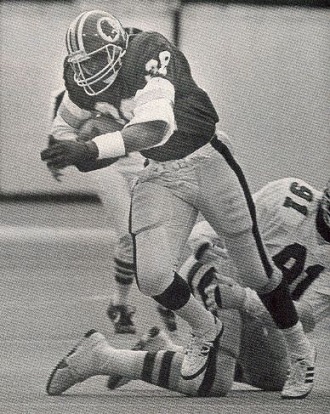
1985: Redskins Obtain George Rogers from Saints


A trade that had been widely rumored was finalized on the afternoon of April 26, 1985 as the Washington Redskins dealt their first pick in the upcoming NFL draft to New Orleans for RB George Rogers plus the Saints’ fifth, tenth, and eleventh-round draft choices.

The 26-year-old, power-running Rogers had won the 1980 Heisman Trophy while at South Carolina. Chosen in the first round of the ’81 NFL draft by the Saints, he had a big rookie season, rushing for a league-leading 1674 yards with 13 touchdowns. The 6’2”, 225-pound Rogers was a consensus first-team All-NFL choice and was named to the Pro Bowl, an honor he received again in the strike-shortened 1982 season when he rushed for 535 yards in six games and the Saints contended for a playoff spot.  

However, there were off-field drug problems and Rogers was further hampered by a knee injury in ’83. He still ran for 1144 yards in 13 games but, in 1984, found competition from newly-acquired RB Earl Campbell, who was obtained from the Houston Oilers and reunited with Bum Phillips, once head coach in Houston and now in New Orleans. Rogers’ rushing total fell to 914 yards and he scored only two touchdowns. After four seasons and 4267 rushing yards, the Saints were willing to swing the trade with Washington (and would find that the once-great Campbell was at the end of his Hall of Fame career).

The Redskins were still a fundamentally sound team under Head Coach Joe Gibbs, having won back-to-back NFC Championships in 1982 and ’83, with the former resulting in a Super Bowl victory, and topped the NFC East with an 11-5 record in 1984 before succumbing to the Bears in the Divisional playoff round.

However, Washington’s once-formidable ground game had become a source of concern due to uncertainty surrounding star RB John Riggins, who rushed for 1239 yards but was 35 years old and hindered by a back injury, and Joe Washington, who was 31 and missed nine games with a knee injury (and was separately traded to Atlanta for draft choices).

Riggins returned to the club for the 1985 season, but it was Rogers carrying most of the rushing load. He accumulated four hundred-yard performances, capping the year with 206 yards on 34 attempts in a win against the Cardinals. Overall, he gained 1093 yards on 231 carries, for a career-best 4.7-yard average, and scored seven touchdowns. Riggins contributed 677 yards and Keith Griffin, handling the third-down role that had been Joe Washington’s specialty, gained 473 rushing yards and caught 37 passes for 285 more (Rogers and Riggins had ten catches between them). The team went 10-6, but while the Cowboys and Giants did likewise, tiebreakers put Washington third in the NFC East and out of the playoffs.

With Riggins retired in 1986, Rogers carried 303 times for 1203 yards (4.0 avg.) and a league-leading 18 touchdowns. The Redskins grabbed a Wild Card slot with their 12-4 record and, in his first opportunity to appear in the postseason, Rogers added another 202 yards on the ground, but while that included 115 yards on 29 carries in a first round win over the Rams, he was held to 15 yards on nine attempts in the NFC Championship loss to the Giants.

Rogers spent an injury-plagued 1987 season running for 613 yards in 11 games and saw limited action in the Super Bowl victory over Denver in which RB Timmy Smith, a little-used reserve during the regular season, gained 204 yards on 22 carries. It was the end of the line for Rogers at age 29. He retired, citing nagging injuries. Overall for his three seasons with the Redskins, he ran the ball 697 times for 2909 yards (4.2 avg.) and scored 31 touchdowns. Rarely used as a pass receiver, he had 11 catches for 76 yards.

As for the rest of the transaction involving Rogers, the 1985 draft choices that Washington received were used to take RB Raphael Cherry from Hawaii in the fifth round, Texas RB Terry Orr in the tenth, and G Raleigh McKenzie of Tennessee in the eleventh. Cherry was converted to strong safety, started five games as a rookie when veteran Tony Peters was injured, and intercepted two passes in his only season with the Redskins. Orr was on injured reserve and thus saw no action in ’85 but, utilized at tight end, spent most of the next eight years with Washington and caught 52 passes. McKenzie didn’t contribute much in his first year but he ended up staying with the Redskins until 1994 and started a total of 113 games at both left and right guard as well as center. He moved on to the Eagles in ’95 and finished his career with Green Bay in 2000.

With the first round pick obtained from Washington, which was 24th overall, the Saints selected Tennessee LB Alvin Toles. He spent four seasons with the club, primarily as a reserve among a strong corps of linebackers, and his career was cut short by a serious knee injury during the 1988 season.

September 4, 2014

1983: Rogers Runs for 206 Yards as Saints Defeat Cardinals


The New Orleans Saints opened their 17th NFL season on September 4, 1983, and while they had yet to finish with a winning record, there was hope for continued progress following a 4-5 result in the strike-shortened ’82 season. Heading into their third year with Bum Phillips as head coach, the Saints had assembled promising young talent that included RB George Rogers, LB Rickey Jackson, DE Bruce Clark, and others who were making the club more competitive. Rogers, in particular, had rushed for 1674 yards as a rookie in 1980 after winning the Heisman Trophy at South Carolina, but was coming off of an injury-plagued ’82 season and was looking to bounce back. Another promising player, QB Dave Wilson, had missed all of the previous year due to knee surgery and was viewed as the heir to the starting quarterback job, although 37-year-old Ken Stabler had resurrected his career with New Orleans in ’82 and was still the quarterback of the present.

Opposing the Saints in the opener were the St. Louis Cardinals, coming off of a 5-4 record that had qualified them for the playoffs in the expanded tournament format adopted due to the strike. Starting their fourth year under Head Coach Jim Hanifan, the Cards were also in the midst of a transition at quarterback, with Neil Lomax having taken over the starting duties from 39-year-old Jim Hart. RB Ottis Anderson was highly productive and there were talented targets in WR Roy Green, a converted defensive back, and Pat Tilley, a fine possession receiver.  

There were 65,225 fans in attendance at the Louisiana Superdome. Following a short series by the Saints that ended with a punt (not to mention the loss of Ken Stabler due to injury suffered when hit by DT Elois Grooms while passing), the Cards, starting off with good field position at the New Orleans 47, drove to the game’s first score. Ottis Anderson carried four times for 29 yards and Neil Lomax completed two passes, the second for an 11-yard touchdown to TE Doug Marsh. Neil O’Donoghue added the extra point for a 7-0 lead.

New Orleans took possession and George Rogers carried twice for 16 yards before Dave Wilson, the replacement for Stabler, threw to TE Hoby Brenner for nine yards and then to WR Jeff Groth for a 42-yard gain to the St. Louis 35. However, the Saints came up empty when, three plays later, LB Bob Harris intercepted a Wilson pass.

The teams traded punts as the game headed into the second quarter and New Orleans then put together an 88-yard drive in seven plays. The big play along the way was a 36-yard carry by Rogers to the St. Louis 15, and three plays later RB Wayne Wilson ran nine yards up the middle for a TD. Morton Andersen’s extra point tied the score.

The Cards responded by moving the ball well on their next series. Lomax completed three passes, including one to WR Mike Shumann for 33 yards to the New Orleans 19 in a third-and-five situation. A penalty on the Saints advanced the ball inside the ten, but two Lomax passes fell incomplete and O’Donoghue’s field goal attempt from 24 yards sailed wide to the left.

Starting from their own 20, the Saints drove into St. Louis territory once again. Rogers carried three times for 24 yards and FB Hokie Gajan ran for 14 yards, but on a third-down play at the Cards’ 38, Wilson fumbled while being sacked by DE Al “Bubba” Baker and DT Mark Duda recovered. St. Louis made the Saints pay for the turnover, advancing 21 yards in seven plays that resulted in O’Donoghue booting a 47-yard field goal with 48 seconds left on the clock. The Cardinals took a 10-7 lead into halftime.

Lomax was out with a shoulder injury and the veteran Jim Hart was at quarterback when St. Louis started off the third quarter, and he completed his first four passes, most notably one of 26 yards to Pat Tilley. The drive bogged down after reaching the New Orleans 14, however, with Anderson being thrown for a loss on a draw play and Hart tossing two incompletions. The Cards came up empty when O’Donoghue missed on a 38-yard field goal try.

It didn’t take long for the Saints to turn the tables. On their second play, Rogers took a handoff, went through the middle of the line, and then cut to the right, breaking a couple of tackles along the way to a 76-yard touchdown. Andersen added the extra point and, instead of the Cardinals adding to their lead, New Orleans was in front by 14-10.

It got worse for the visitors on the second play after the kickoff when a Hart pass was deflected and intercepted by LB Dennis Winston, who fumbled after returning it 15 yards, but CB Rodney Lewis (who knocked the ball off course in the first place) recovered at the New Orleans five. Three plays later, Rogers scored again, this time from a yard out. Andersen’s PAT put the Saints up by 11 points at 21-10.

The teams exchanged punts before the Cardinals put together a long series that extended into the final period. Just before the end of the third quarter, Hart completed a third-and-19 pass to Roy Green for 20 yards to reach the New Orleans 46. Green picked up another 25 yards on a reverse, but once again the drive bogged down and a field goal attempt went awry, this time due to a bad snap that was batted away and gave the Saints possession at midfield.

The Saints capitalized on their good fortune, moving 50 yards in five plays. Wilson threw deep for WR Kenny Duckett in the end zone, who hauled it in for a 35-yard touchdown. Andersen converted and the Saints enjoyed a comfortable 28-10 lead.

The Cardinals fought back with a nine-play, 72-yard possession. Hart completed five passes, the last for 16 yards and a TD to Tilley, but that was it. There were just over five minutes remaining to play, and the visitors had the ball once more to no effect before succumbing by a final score of 28-17.

The Saints gained the most yards (383 to 340) while St. Louis had the edge in first downs (20 to 15). New Orleans was far more productive on the ground, gaining 272 rushing yards, while the Cardinals produced 225 net yards through the air. The Saints recorded four sacks, to one by St. Louis, although they were also penalized 14 times, at a cost of 101 yards, to 8 flags for 50 yards on the visitors. New Orleans also turned the ball over twice, to one suffered by the Cards, but St. Louis was damaged by failures on field goals, two by missed kicks and one on a bad snap.

George Rogers rushed for a team-record 206 yards on 24 carries that included two for scores. Hokie Gajan added six attempts for 34 yards and Wayne Wilson contributed 32 yards and a TD on his 10 carries. Dave Wilson didn’t go to the air often, completing 7 of 11 passes for 121 yards and a touchdown along with an interception. Jeff Groth, Kenny Duckett, and Hoby Brenner each had two catches apiece, for 50, 44, and 23 yards, respectively, and Duckett scored a TD on one of his. 


For the Cardinals, Neil Lomax was successful on 11 of 16 throws for 111 yards and a touchdown, while giving up no interceptions, before leaving the contest and Jim Hart went 11 of 20 for 141 yards with a TD and an interception in relief. Ottis Anderson ran for 60 yards on 18 carries. Roy Green (pictured above) caught 8 passes for 82 yards and added 25 yards on his one running play. Pat Tilley contributed 65 yards on four receptions that included one for a score.

New Orleans lost the next week but went on to post an 8-8 record and finished third in the NFC West, just missing out on a winning record and playoff spot with a loss to the Rams in the season finale. The Cardinals started out at 1-5 before surging during the second half of the year and ending up with an 8-7-1 tally and third place in the NFC East.

George Rogers injured his knee the following week and missed three games, but was productive the rest of the way as he rushed for 1144 yards on 256 carries (4.5 avg.) and scored five touchdowns. He went over a hundred yards three more times. After being dealt to Washington in 1985, Rogers matched his 206-yard rushing total, also in a contest against the Cardinals.

November 28, 2012

1982: Saints Overcome Late Rally to Beat 49ers


Under second-year Head Coach Bum Phillips, the perennially-losing New Orleans Saints were showing signs of improvement. They started off the 1982 NFL season at 1-1 before the whole league went on hiatus for eight weeks due to a players’ strike. Upon returning, the Saints defeated the Chiefs and headed to San Francisco for a matchup with the 49ers on November 28.

36-year-old QB Ken Stabler (pictured at right) had been picked up just before the season began after having been unceremoniously released by the Oilers. Taking the spot of injured QB Dave Wilson, “The Snake” had beaten out 11th-year veteran QB Archie Manning for the starting job. RB George Rogers was also a key player in the conservative offense that Phillips preferred to utilize. The defense had promising young talent, most notably DE Bruce Clark and LB Rickey Jackson.

The 49ers, under Head Coach Bill Walsh, were coming off a championship season in 1981 but had lost their first two pre-strike games in ’82 and, having also won their first post-strike contest, were at 1-2 as they hosted the Saints. While QB Joe Montana, who had emerged as a star in the title year, was still playing at a high level, the running game was insufficient and injuries on defense were a problem.

There were 51,611 fans at Candlestick Park on a rainy day in San Francisco. Things didn’t start out in promising fashion for the visitors. On their initial possession, a Stabler pass was deflected and intercepted by LB Willie Harper. While the 49ers weren’t able to capitalize on the turnover, they advanced to the New Orleans 34 and Jim Miller’s punt pinned the Saints down at their own one yard line.

However, Ken Stabler completed all five of his passes as the Saints drove 99 yards in the rain for the early lead. “The Snake” started with a 16-yard pass to TE Hoby Brenner from the one yard line, included another pass to Brenner for 25 yards, and finished off the series with a 10-yard scoring throw to FB Wayne Wilson.

San Francisco came back in the second quarter with a 57-yard drive in eight plays that ended with Ray Wersching kicking a 40-yard field goal. But later in the period, Rickey Jackson (pictured below) recovered a fumble at midfield and New Orleans capitalized as George Rogers ran for a 38-yard gain and RB Jimmy Rogers capped the five-play possession with a two-yard run for a touchdown. While Toni Fritsch’s extra point attempt hit the upright and was unsuccessful, the Saints were ahead by 13-3. Just before the end of the first half, Wersching booted a 45-yard field goal to narrow the margin to 13-6.


In the third quarter, New Orleans had first possession and methodically went 54 yards in 11 plays ending with Fritsch kicking a 27-yard field goal. Shortly thereafter, Jackson made another big play on defense as he intercepted a Montana pass and returned it 32 yards to the San Francisco six to set up a second scoring run by George Rogers, this time of just a yard. The extra point was good and the Saints held a seemingly-comfortable 23-6 lead.

The New Orleans defense stymied the 49ers until late in the fourth quarter and San Francisco also fumbled the ball away twice, once at the New Orleans 24. But with just over five minutes remaining to play, Montana and the 49ers caught fire. They drove 79 yards in nine plays that featured pass completions of 24 and 12 yards to WR Dwight Clark and 14 yards to WR Freddie Solomon. Following Montana’s completion to FB Earl Cooper for 13 yards to the New Orleans 17 in a second-and-15 situation, HB Jeff Moore ran for five yards and a first down and Montana fired a 12-yard touchdown pass to Moore

After a short series and punt by the Saints, the Niners got the ball back at their 41. A Montana pass to Solomon, who lateraled to Moore, got the ball to the New Orleans 29. It took a total of six plays to get into the end zone with Montana hitting TE Russ Francis from 17 yards out. But the score came with just five seconds remaining and San Francisco’s slim comeback hopes ended on the ensuing onside kick that WR Jeff Groth recovered for the Saints. New Orleans came away with a 23-20 win.

The 49ers gained more yards (376 to 324) and had more first downs (21 to 17) than the Saints, but also turned the ball over three times while New Orleans did so just once. San Francisco’s problems running the ball were also a hindrance, with 55 yards on 16 carries.

Ken Stabler completed 11 of 20 passes for 154 yards with a touchdown and an interception. George Rogers (pictured below) rushed for 97 yards and a TD on 17 carries, the biggest chunk of the 170 yards on the ground for New Orleans. Wayne Wilson, who ran for 25 yards in 8 attempts, had 53 receiving yards on his three catches to lead the club, and scored a touchdown. Hoby Brenner also had three receptions, for 49 yards.


For the Niners, Joe Montana was successful on 27 of 42 throws for 334 yards and two scores while tossing one interception. Dwight Clark pulled in 6 passes for 90 yards and Earl Cooper also had 6 catches for 68 yards to go along with his 15 yards on five runs. Likewise Jeff Moore, the team’s leading rusher with 23 yards on 8 attempts, gained more yards through the air as he caught four passes for 65 yards and a TD.

“That was one of the finest football games I’ve seen in the last few years,” said Bum Phillips. “The 49ers didn’t give up, showed why they are champs.”

“A lot of people had written me off, but I don’t ever remember leaving,” said Ken Stabler.

It was the high point of the abbreviated season for the Saints, who at 3-1 were off to the best start in franchise history and thinking playoffs. They lost their next four games and ended up with a 4-5 record, placing ninth and just out of the running for a postseason slot in the revised post-strike structure (no divisions with the top eight teams in each conference qualifying for spots in the playoff tournament. The Detroit Lions, also 4-5, came in eighth due to a better conference record than New Orleans). San Francisco had an even more disappointing year in going 3-6 to finish eleventh in the NFC.

Ken Stabler didn't have a big statistical season but helped the Saints with his leadership and savvy. He completed 61.9 percent of his passes for 1343 yards with six touchdowns and 10 interceptions. Injuries wore him down, as was also the case with George Rogers, who was nagged by a hamstring injury but rushed for 535 yards in six games and earned a second straight trip to the Pro Bowl.


September 10, 2012

Rookie of the Year: George Rogers, 1981

Running Back, New Orleans Saints


Age: 23 (Dec. 8)
College: South Carolina
Height: 6’2”    Weight: 220

Prelude:
Rogers rushed for 5204 yards and 33 touchdowns in a college career capped by winning the 1980 Heisman Trophy. He was taken first overall by the Saints in the ’81 NFL draft and moved directly into the starting lineup.

1981 Season Summary
Appeared in all 16 games
[Bracketed numbers indicate league rank in Top 20]

Rushing
Attempts – 378 [1]
Most attempts, game - 31 (for 113 yds.) vs. Cincinnati 10/25, (for 97 yds.) at Minnesota 11/15
Yards – 1674 [1]
Most yards, game – 162 yards (on 29 carries) vs. LA Rams 9/13
Average gain – 4.4 [16]
TDs – 13 [2, tied with Billy Sims & John Riggins, 1st in NFC]
100-yard rushing games – 9

Pass Receiving
Receptions – 16       
Most receptions, game – 3 (for 7 yds.) at Minnesota 11/15
Yards – 126
Most yards, game - 36 (on 2 catches) at Cleveland 10/18
Average gain – 7.9
TDs – 0

All-Purpose yards – 1800 [8]

Scoring
TDs – 13 [5, tied with Alfred Jenkins, John Riggins & Steve Watson]
Points – 78

Awards & Honors:
NFL Rookie of the Year: Sporting News
NFL Offensive Rookie of the Year: AP, PFWA
NFC Rookie of the Year: UPI
1st team All-NFL: AP, Sporting News
2nd team All-NFL: NEA
1st team All-NFC: UPI
Pro Bowl

Saints went 4-12 to finish fourth in the NFC West while ending up 25th in the league in total yards (4705) but seventh in rushing (2286).

Aftermath:
After showing an impressive durability as the primary offensive weapon for the Saints as a rookie, Rogers dealt with nagging injuries during the strike-shortened 1982 season, but was still chosen for a second-straight Pro Bowl. Knee problems kept him out of three games in ’83 as he rushed for 1144 yards, often in tandem with RB Wayne Wilson. Splitting time with aging star RB Earl Campbell in 1984, Rogers rushed for 914 yards and was traded to Washington in the offseason. Once again he was sharing time with a fading great player, RB John Riggins, and while he started just five games, he rushed for 1093 yards with a career-high 4.7 average gain per carry. Rogers took over the starting role in ’86 and gained 1203 yards while scoring a NFL-leading 18 touchdowns. But following another injury-marred year in 1987, Rogers retired. In all, he played seven seasons and ran the ball 1692 times for 7176 yards (4.2 avg.). Never much of a receiver out of the backfield, Rogers added 368 more yards on 55 catches. All 54 of his touchdowns came on the ground.

--

Rookie of the Year Profiles feature players who were named Rookie of the Year in the NFL, AFL (1960-69), or USFL (1983-85) by a recognized organization (Associated Press – Offense or Defense, Newspaper Enterprise Association, United Press International, The Sporting News, or the league itself – Pepsi NFL Rookie of the Year). 

[Updated 2/6/14]
[Updated 11/28/14]

November 2, 2009

1986: Schroeder and Redskins Overcome Kramer and Missed PATs


The game between the Minnesota Vikings (5-3) and host Washington Redskins (6-2) on November 2, 1986 at RFK Stadium was a hard-fought battle that went into overtime. Ultimately, it was a heartbreaking loss on a record-setting day for Vikings QB Tommy Kramer. The Redskins, who came into the Week 9 matchup in a three-way tie atop the NFC East, skirted with defeat but managed to come from behind to force OT and eke out the win.

Washington struck first with a two-yard TD run by RB George Rogers and a 25-yard Max Zendejas field goal to take a 10-0 lead. But the Vikings answered with two touchdowns of their own, including a 67-yard pass play from Kramer to WR Leo Lewis to lead 14-10 at the end of the first quarter.

Redskins DE Dexter Manley returned a fumble 26 yards for a TD in the second quarter, but the extra point attempt failed. A 39-yard field goal by Minnesota’s Chuck Nelson made the score 17-16 in favor of the Vikings at the half.

Kramer had two more long TD pass plays in the third quarter, first to TE Steve Jordan for 68 yards and the second to Leo Lewis once again, this time for 76 yards. In between, Washington added a field goal and 40-yard TD run by Rogers to make the score 31-26 at the end of three quarters.

When Tommy Kramer tossed his fourth touchdown pass of the day, this time a short one of only a yard to RB Darrin Nelson, the Vikings appeared to be in control with a 38-26 lead and just 5:16 remaining on the clock. But Washington QB Jay Schroeder hit WR Art Monk for a 34-yard touchdown (again the PAT attempt was missed) and, with 1:03 remaining in regulation, Rogers scored his third TD of the game from two yards out. However, for the third time the extra point attempt failed, thus taking the game into sudden death.

A Schroeder to WR Gary Clark pass play of 38 yards ended the struggle and gave Washington a 44-38 win. Drained Head Coach Joe Gibbs said afterward “I feel like we’ve been playing for twelve hours….like we won, lost, won, lost, and won all at the same time”. For Vikings Head Coach Jerry Burns it was a bitter defeat, “a very tough loss to take. I thought we had it.”

Tommy Kramer set a Minnesota team record with 490 passing yards, completing 20 of 35 passes with 4 TDs and an interception. Including the two long touchdowns, Leo Lewis ended up with 159 yards on just three receptions, but he wasn’t the highest yardage producer of the receivers – that was Steve Jordan with 179 yards on six catches and a long score of his own.

Both of Washington’s starting wide receivers, Gary Clark (123 yards) and Art Monk (102) reached triple figures, each with six catches. Schroeder, the second year quarterback, completed 24 of 47 passes for 378 yards with two TDs and an INT. George Rogers was the game’s leading rusher with 88 yards on 19 carries, including the three scoring runs.

The gunslinging Kramer ended up with an even 3000 yards in 1986 and led the NFL with a passer rating of 92.6, with an uncharacteristically strong ratio of 24 TD passes to 10 interceptions. Minnesota ended up with a 9-7 record, in second place in the NFC Central.

The Redskins went 12-4 and were a wild card entry in a postseason that saw them advance all the way to the NFC Championship before falling to the division rival Giants. Kicker Max Zendejas, of the three missed PATs, did not last that far – he was replaced prior to the regular season finale. Second-year quarterback Jay Schroeder had the best of his three seasons with Washington, passing for 4109 yards, although tossing as many interceptions as touchdown passes (22 each). On this day, he had skill enough to bring his team back from the brink and pull out a victory.